Researcher, author, speaker. Current affairs, inter-civilization, science. JOIN MY YAJNA: rajivmalhotra.com/get-involv…
Joined May 2011
- Tweets 25,903
- Following 526
- Followers 348,147
- Likes 10,559
2,045 Photos and videos







Rajiv Malhotra retweeted

Infosys missed the boat when Vishal Sikka was at the helm, had the money to invest. Atleast admit the miss in strategy @TVMohandasPai
Jobs could have been created with a R & D based approach also
2
4
30
5,305
Rajiv Malhotra retweeted

You did great work until now. But there is truth in Rajiv's words. R&D was only in IT processes not in technology itself. Even 10% of the profits were poured in tech r&d in separate companies would have seen results by now.
4
32
4,668
There you go again @TVMohandasPai. We went through this before and when I challenged you publicly to compare track records while I was in industry, you ran away. You avoid addressing the issue that you lack any tech background and expertise, being a mere bean counter/admin who exploited India’s tech youth with wage arbitrage to enrich yourself. The “big industry” you built was about exploiting our hard working youth as coolies. I advocated that Indian tech talent be channeled into Indian IP, and not rented out. You are obliged to suck up to the Murthy family without whom you were a nobody. History has proven that India should have followed China example of domestic IP and not the quick buck selfish approach. Compare Indian industrialists in tech with China’s. Why is India dependent on foreign licensing like a beggar? India has immense talent but its industrialists have been short sighted, selfish and arrogant. Now Indian youth face massive challenges unlike China’s as a result. The total market value of India’s tech industry is a mere 1% of the global tech market cap. Shameful for a nation of talented youth.

So says a big big failure and economic refugee @RajivMessage who did nothing useful in tech in his life and now points fingers at others. This failed fellow is now abusing others who built his big industries, created huge jobs.
114
440
1,677
108,040
Rajiv Malhotra retweeted

Sri Doval gets it and so do hundreds for bureaucrats and politicians who have read your work or listened to your talks when you’ve met them. Your influence is far reaching. Your work continues to be critical - it needs to be a formal part of their ongoing education and training.
1
2
20
4,640

Jun 12
Looking back at the launch of Indra’s Net, where Shri Ajit Doval, National Security Advisor of India, shared his thoughts on the book, underscoring India’s civilizational heritage and the continuity of Hindu thought.
• Indra's Net: rajivmalhotra.com/indras-net
@InfinityMessage @IFIMessage @Banyantree_org #AjitDoval #IndrasNet #IndianCivilization #IndicStudies
Watch now👇
3
69
260
7,544
Rajiv Malhotra retweeted
Thank you @RajivMessage for your paradigm shifting work showing original research, intellectual rigor and indepth analysis. Your huge output of published work speaks for itself. There are many who plagiarize your work and others who work to black your work. Both are contemptable.
1
3
16
2,249
Jun 11
True, yet missed by most Indians. IP must be grown, not bought or licensed.
Jun 10

India spent 39 years and over 2000 crore on the Kaveri engine and still cannot hit the thrust a fighter needs.
problem was never funding, GTRE had no access to how Rolls Royce or GE engineers think about single crystal blade metallurgy or combustion instability during flight.
That kind of knowledge sits inside people who have iterated on live programs for decades, You cannot download someone else iteration history. You have to be inside the program to absorb what it teaches
Every country that builds jet engines went through the same ugly loop, Test, fail, retest, discover something that fits nowhere in a textbook.
India had no high altitude test facility for the Kaveri. Had to ship the engine to Russia for every trial run. You cannot absorb the parameters that separate a working hot section from a molten one by reading papers.
That knowledge gets created inside the program itself. Miss the program, miss the knowledge. No workaround exists.
GE will transfer 80% of F414 manufacturing tech to HAL, The remaining 20% is where the real gap lives.
Core metallurgy, turbine cooling geometries, thermal margin tables that took forty years of flight data to build. Safran meanwhile is offering India full hot section know how for the AMCA engine.
Two competing offers from two different countries, both telling India the same story. You can buy the right to assemble, You cannot buy the intuition that shaped the design.
I love yur thought by the way, I watch few weeks Ago reel where he talked about how hard to make just blade :)
6
25
131
10,099

🚨NATIONAL SECURITY THREAT ON AMERICAN SOIL
A Pakistani imam and real-estate mogul, Jamil Ahmed Sukhera, has quietly turned a 165-acre former Holiday Inn just outside Chicago into V Resort Living - a $400 million self-contained Muslim gated city. (SEE VIDEO)
Mosque, school, halal restaurants, waterpark, golf course, Olympic pools, cricket pitch, marketplace - everything designed so residents never have to leave or assimilate into American society.
332 fully furnished units priced from $135k–$280k, marketed worldwide to foreign Muslim investors.
Part of his claimed $2.5 BILLION empire of hotels, Sharia-compliant investments (VAIRT), and properties across multiple states.
He also runs Vmigrant - a visa pipeline funneling foreigners into the U.S. - and brags that his Pennsylvania Islamic retreat (Marifah) sits directly beside the Raven Rock Mountain Complex (“Underground Pentagon”), America’s top nuclear-war continuity-of-government bunker.
In Urdu interviews (never meant for American ears), Sukhera drops the “love and inclusion” talk:
“The next war is of the merchants. Islam was spread by merchants… so that is why I am working on merchants.”
He openly calls this project the launchpad for a global “wave” of Islam, creating the “next generation of Muslim billionaires” who will “lead the world ethically [in Islam, this means under Sharia]” - on American soil, with American infrastructure, backed by overseas capital.
This isn’t a “resort.” We believe he is building parallel societies engineered for non-assimilation, funded in ways that scream for federal scrutiny.
Who is really bankrolling a money-losing $400M enclave?
Why the visa pipeline Sharia investment platform proximity to a top-secret military site?
This is economic jihad in a business suit - exactly as Sukhera describes it in his own words.
Americans deserve answers. Now. We are allowing Pakistanis to build massive infrastructure on our soil...WHY!?
Why would we allow Pakistan to build on our soil a country that harbors jihadists, persecutes minorities with blasphemy mobs, demands Sharia privileges in our military and cities, and colonizes our politics through diaspora operatives serving Islamabad instead of America?
Share this. Tag your representatives. Demand congressional hearings and an FBI/CFIUS review.
This is happening RIGHT NOW Wake up, America.
SEE FULL REPORT: rairfoundation.com/national-…
719
7,063
9,425
319,847
Jun 10
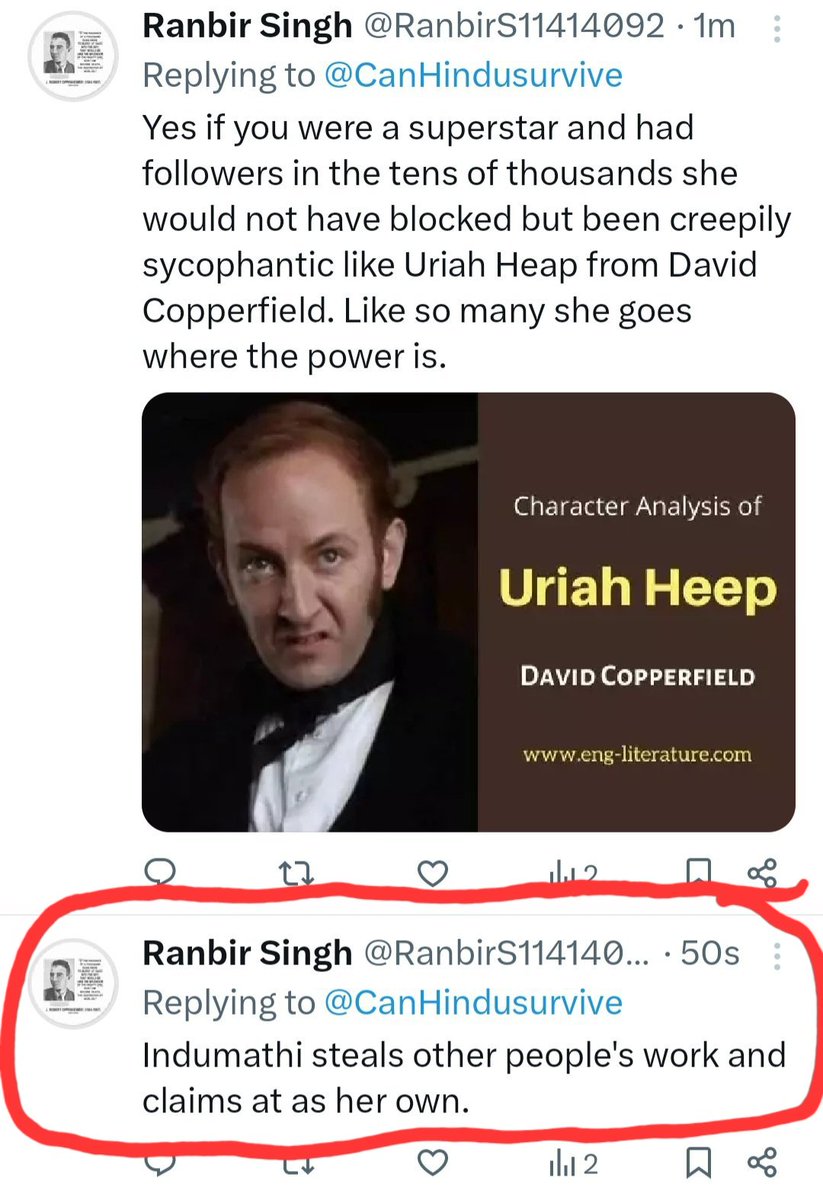
The series of articles “Who speaks for Hinduism?” in the most prestigious academic journal on religion was about a 2000 panel at AAR specifically set up to debate me. Organized by Jack Hawley in response to my criticisms. A quarter century later, @indumathi37 has failed to make any academic impact! Yet she considers herself academic but not me, even though I shook up the academy while she remains irrelevant! @kids4kids1233
Jun 10

From Examining Anti-Hindu Bias in American Public Education: The Endogenous Cycle of Hinduphobia, published in The Journal for the Council for Research on Religion in 2025.
"Intellectually honest scholarly interruption and critique of the master narrative about Hindus and Hinduism are discredited with ad hominem attacks on the Hindu scholars themselves. This phenomenon extends more broadly into the very study of Hinduism, where Hindu scholars can be methodically excluded.
As a simple experiment, I looked up the contributing authors to the following: the Bloomsbury Companion to Islamic Studies, the Bloomsbury Companion to Jewish Studies, and the Bloomsbury Companion to Hindu Studies.
One notable difference between the three Contributors sections is that the Islamic and Jewish Studies volumes include paragraph-length biographies describing the authors’ scholarship, service, and experience as they relate to the respective religions; the Hindu Studies volume only lists the authors’ names, positions, and institutions.
The most striking difference, however, is in the authors themselves.
Out of the eight listed contributors in the volume on Islamic Studies, three have Muslim names.
The Jewish Studies book includes twelve contributors, all of whom are Jewish.
The Hindu Studies book also includes twelve contributors; not a single one of them has a Hindu name.
While this is a limited examination, it is still compelling. Why are Hindu scholars uniquely excluded from a compendium of scholarly discourse about their own tradition?
While there is scholarly chatter about authority and voice in Hindu Studies, these conversations flip the script, so to speak, back onto Indian politics, claiming that the rise in Hindu nationalism threatens the academic freedom of non-Hindu scholars of Hinduism. “Who Speaks for Hinduism?” is a series of articles published in 2000 by The Journal of the American Academy of Religion, which begins with this premise. Twenty-three years later, as a callback to the earlier publication, Supriya Gandhi, a scholar with a Hindu name, extends this narrative:
[T]he succeeding years have witnessed the growing dominance of Hindutva as a cultural and political project of right-wing ethno-nationalism, which now looms large over academic inquiry into Hinduism. Today, Hindu nationalists leverage social media, capital, and the long arm of the Indian state to advance their claim of representing the authentic voice of Hinduism.
I want to emphasize that I am not suggesting that non-Hindus are disqualified from being legitimate scholars of Hinduism because of race or religion. Rather than “who speaks for Hinduism?” the more troubling question I am asking is, “Why aren't more Hindus allowed to speak for Hinduism?”
This is implicitly answered by the master narratives and evocative imagery of a looming, long arm of Hindutva reaching around the globe. Again, I am not suggesting that no Hindus are allowed to speak, but it does appear to me, a Hindu American scholar of education (not a scholar of religion or region), that the epistemic authority of Hindu scholars is recognized more readily if they espouse viewpoints that are tethered to the master narrative.
By contrast, Hindu scholars (with the requisite academic credentials and training) who seek to critique the established scholarship on Hindus and Hinduism experience visible epistemic injustice; one can only imagine the constraints faced by the broader Hindu community and their capacity to be seen and heard as legitimate narrators of their own experiences and interpreters of their cultural and religious landscapes. Hinduphobia arises from a perfect storm of all of these mechanisms, from stereotypes to epistemic injustice, securing the permanency of the endogenous cycle of Hinduphobia and creating a permission structure for the scholars and journalists at elite institutions and media houses to ignore, dismiss, and demonize Hindu Americans, a mostly immigrant community."
Download the full article here - creor-ejournal.library.mcgil….
19
42
142
14,369
Jun 11
The Hindu ecosystem suffer when people lacking merit hustle their way ahead. When mediocrity is rewarded the community suffers. Same in cricket, politics, business, academics.
1
20
65
3,196
Jun 10
That’s the issue.

10
39
4,561
Rajiv Malhotra retweeted

Jun 10
Breaking News ,
According to latest reports from Nushki, around 60 vehicles loaded with minerals and LP-Gas have been torched.
The sixty million people of the #RepublicOfBalochistan have stood to stop the loot and plunder of their resources form foreign troops of Pakistan.
Pakistan is soon going to be next Somalia without the resources of Balochistan, it can't survive a month.
76
655
2,211
58,981
Jun 10
A good decision in the interest of sovereignty. Space is now the biggest threat to the sovereignty of nations. There needs to be an international law on this and a neutral mechanism for enforcement.

India has effectively frozen approvals for Elon Musk’s space-based internet service Starlink to begin commercial operations, citing concerns over the use of its satellite terminals in the Iran war, according to people familiar. bloomberg.com/news/articles/…
10
83
427
13,497
Rajiv Malhotra retweeted

Jun 10
Are India's social debates being shaped thousands of miles away?
In Ganga Mein Vishdhar, @RajivMessage raises a provocative question: Are frameworks developed in American universities being applied to India's unique social and cultural realities?
#GangaMeinVishdhar #RajivMalhotra #BookReel #IndianCivilization
1
11
25
1,742
🚨 BREAKING: HHS Just Dropped the Hammer on CAIR
The Department of Health and Human Services - under RFK Jr. - is now investigating the Council on American-Islamic Relations for alleged terror ties to Hamas and the Muslim Brotherhood… and demanding answers on where $30 MILLION in taxpayer dollars for Afghan refugee resettlement actually went.
This is the moment we’ve been waiting for.
While others talked, Congressman Chip Roy and his team led the charge like no other office in Washington.
They took this fight head-on, exposed the radical networks, and refused to let American tax dollars fund groups tied to terrorism.
True heroes who put America First and never backed down.
Texas and Florida have already designated CAIR a terrorist organization. Now the feds are finally catching up.
❌ No more silence.
❌ No more slush funds.
❌ No more radical infiltration.
Thank you, Chip Roy and your incredible team - you are the warriors this country has been hoping for. 🇺🇸🔥
nypost.com/2026/06/09/us-new…

288
4,144
9,334
221,793
Jun 10
Shocking the military leaders are in this state of affairs!

The same general who admitted to this?
reddit.com/r/IndianDefense/s…
1
6
26
7,065
Jun 10
Important and sobering read. Not for feel good low iqs. Step one: face reality. We are still at step zero.
Jun 9

In Ukraine today, neither tanks nor artillery operate within 35 kilometres of the front line. Infantry is hunted by surveillance drones and finished off by attack drones in minutes.
Combined arms warfare, which used to mean infantry, armour, artillery and air working in concert, is now twelve soldiers riding three or four golf carts with drones overhead.
The economics have flipped too.
For every dollar Iran spends making a Shahed drone, the West spends 28 dollars to shoot it down. With the Patriot specifically, the ratio is 1:114. The defender now loses money on every successful kill.
Cheap attritable swarms are outperforming exquisite weapons.
This is the warfare India's new Chief of Defence Staff, General NS Raja Subramani, has walked into.
China can surge 10,000 cruise missiles a month from robotics-enabled munition factories.
Its shipbuilding capacity is 200 times that of the United States. Six to eight Chinese Navy warships are deployed in the Indian Ocean at any given time. India is on the Rocket Force's targeting charts.
Seven years after the CDS post was created, Theatre Commands are still on paper. The DRDO-PSU complex absorbs 77% of defence procurement. Weapons are still bought on the L-1 principle, where the lowest bidder wins.
American start-up Anduril, by contrast, beat Boeing, Lockheed and Northrop Grumman to build an autonomous fighter in 568 days. Palantir is now worth more than Boeing.
Lt Gen Raj Shukla in @SwarajyaMag with the deepest audit yet of the CDS institution and the non-negotiable list for General Subramani. Transformation through tinkering, he warns, will not do.
Below is the long-read by @Gen_RajShukla.
swarajyamag.com/defence/in-d…
5
16
84
9,264
Rajiv Malhotra retweeted

Jun 9
When @RajivMessage raised this particular issue, the IT vultures attacked him from all sides.
Apparently, all that ज्ञान of 6 days a week/12 hours a day is to keep us perpetually a labour class in the IT in order to profit from it.
1
4
31
6,277