
500 articles • Documenting my journey, observation, and insights on self-development, personal finance, and escaping the rat race • Pacers • Matt. 6:33
Joined January 2022
- Tweets 6,621
- Following 153
- Followers 727
- Likes 36,992
1,109 Photos and videos

Pinned Tweet

3 Jun 2025
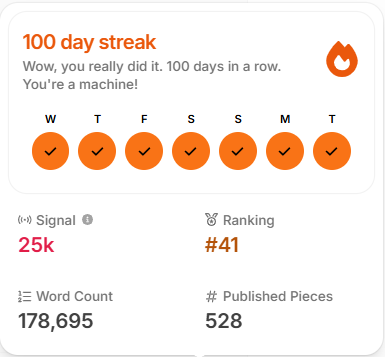
I'm on a 100-day writing streak after breaking my prior 365 days streak.
Streak Rank: 35
Signal Rank: 41
Word Count: 178,695
9
773
20 Dec 2025
"The art is not in making money, but in keeping it."
— Proverb
1
93
19 Dec 2025
A growth mindset will keep us from being complacent and prompt us to never stop learning.
84
18 Dec 2025
Knowing where your money goes is two-pronged:
1. Budget your income to know where your money should go.
2. Track your expenses to know where your money went.
80
17 Dec 2025
How to Find and Identify Your Personal Strengths:
1. Ask your close friends and relatives.
2. Take personality tests.
3. Introspect.
1
74
17 Dec 2025
"Life is really simple, but we insist on making it complicated."
— Confucius
1
107
16 Dec 2025
5 Benefits of Spending Time Alone I Discovered in My 20s:
1. It is easier to move.
2. It is easier to decide.
3. You can try new things without a companion.
4. You will have time to learn more about yourself.
5. You can think about working on solving your problems.
1
75
16 Dec 2025
3 Passive Income Opportunities That Don't Require a Big Capital To Get Started:
1. Interest income.
2. Dividend income.
3. Selling digital products.
Passive income is money earned without daily involvement, or, as the saying goes, "money you earn while sleeping."
79
14 Dec 2025
Learn to get rich slowly; trying to get rich too quickly can lead to scams and poor investments.
4
175
14 Dec 2025
4 Simple Ways For a Healthier Life And To Enjoy The Fruits of Our Labor:
1. Eat healthy.
2. Exercise regularly.
3. Sleep 8 hours every night.
4. Have an annual physical exam.
101
12 Dec 2025
3 Places to Put Your Emergency Fund:
1. Traditional Banks - for ATM and deposit machine access
2. Digital Banks - for high-interest rates
3. At Home - for quick emergency cash access
1
1
111
11 Dec 2025
3 Things To Do If You Owe Someone Money:
1. Pay them back (obvious answer).
2. Don't involve others with your debt.
3. If you can't pay immediately, try to negotiate.
1
201
8 Dec 2025
5 Ways To Spend Your Holiday Bonuses:
1. Pay off your debt (if you have any).
2. Start saving for an emergency fund.
3. Start investing or top up your investment.
4. Invest in yourself through learning and experiences.
5. Share with the less fortunate.
2
2
78
7 Dec 2025
The positive (and negative) money habits you build in your 20s will carry over in your 30s and beyond.
So, try to build more positive habits and avoid negative ones while you're young.
2
98
6 Dec 2025
We should have a deeper and higher purpose for doing our jobs.
Never just for the money.
If money is the primary goal, we can easily get lost in the system that drives many to abandon their principles and values.
1
111
5 Dec 2025
Budgeting tells you where your money will go, so you don't have to ask, “Where did my money go?” ever again.
1
93
4 Dec 2025
4 Personal Finance Tips for OFW If You Wish to Retire in the Philippines:
1. Have a long-term plan.
2. Communicate your plans to your family.
3. Buy assets, not liabilities; especially not liabilities disguised as assets.
4. Be careful with lending money.
1
1
79
4 Dec 2025
"A wise person should have money in their head, but not in their heart."
—Jonathan Swift
65
3 Dec 2025
"The future belongs to those who believe in the beauty of their dreams."
—Eleanor Roosevelt
1
59
2 Dec 2025
There are things better learned through experience.
There are things better learned from other people's experiences.
We need to know which is which; otherwise, we'll waste our time and resources.
1
4
145
2 Dec 2025
We don't have the mental and emotional capacity to process all the information coming our way, so we must be selective.
47