
Musician, frustrated sailor, reluctant gardener. No Tories please, thanks. @porttack@c.im. I stand with the NHS. No Crypto! @rcamatrix.bsky.social
Joined July 2010
- Tweets 7,920
- Following 2,379
- Followers 2,422
- Likes 10,673
14 Photos and videos








JP#FBPE🇪🇺🇺🇦#GTTO#REJOINEU#FBPPR retweeted

20 Sep 2024
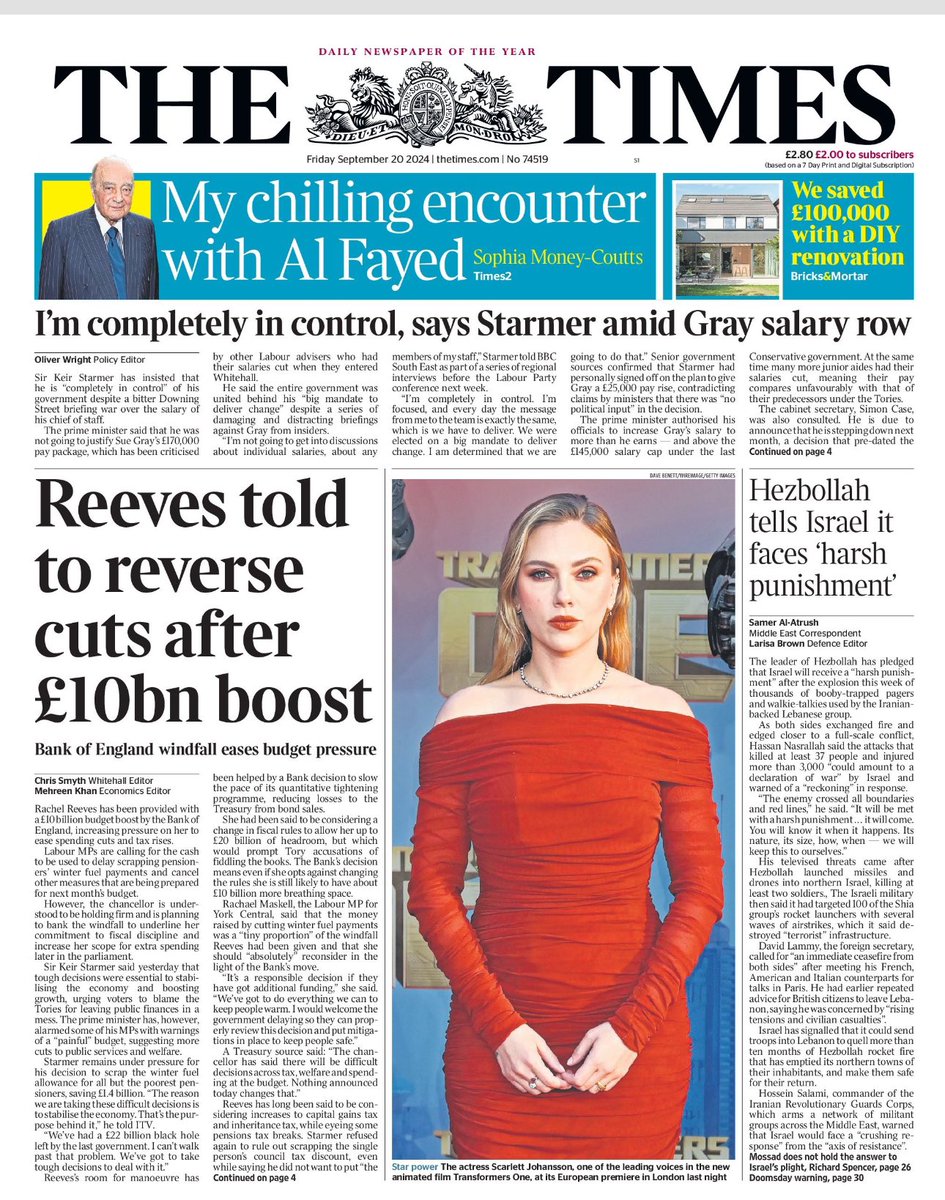
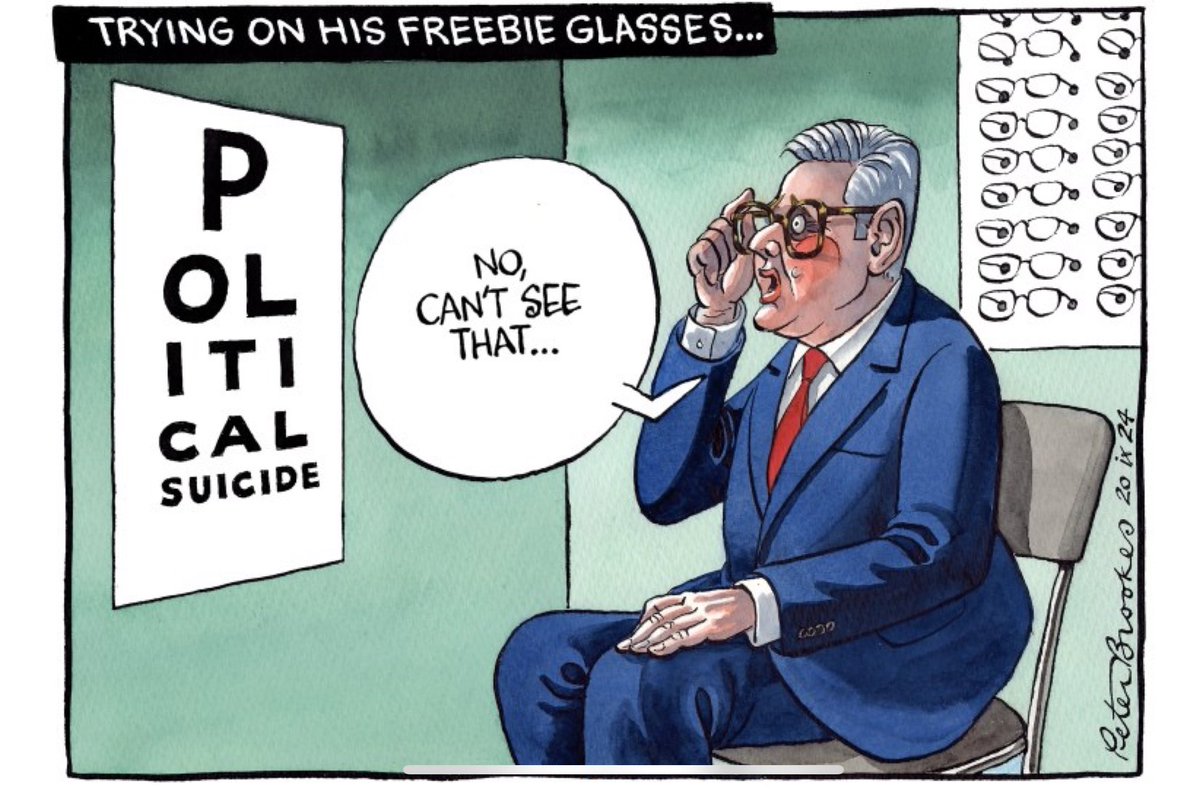
So let’s just get this right.
The new Labour leadership accept freebies, despite having their home/heating bills paid by the state and subsidised food/booze but have DECIDED to rob old people’s heating allowance.
6
6
24
1,483

18 Sep 2024
😂😂😂😂😂
18 Sep 2024

I was a council scheme boy but I became upper class when I started shoplifting at Harrods. It just takes enterprise
1
58
JP#FBPE🇪🇺🇺🇦#GTTO#REJOINEU#FBPPR retweeted
18 Sep 2024
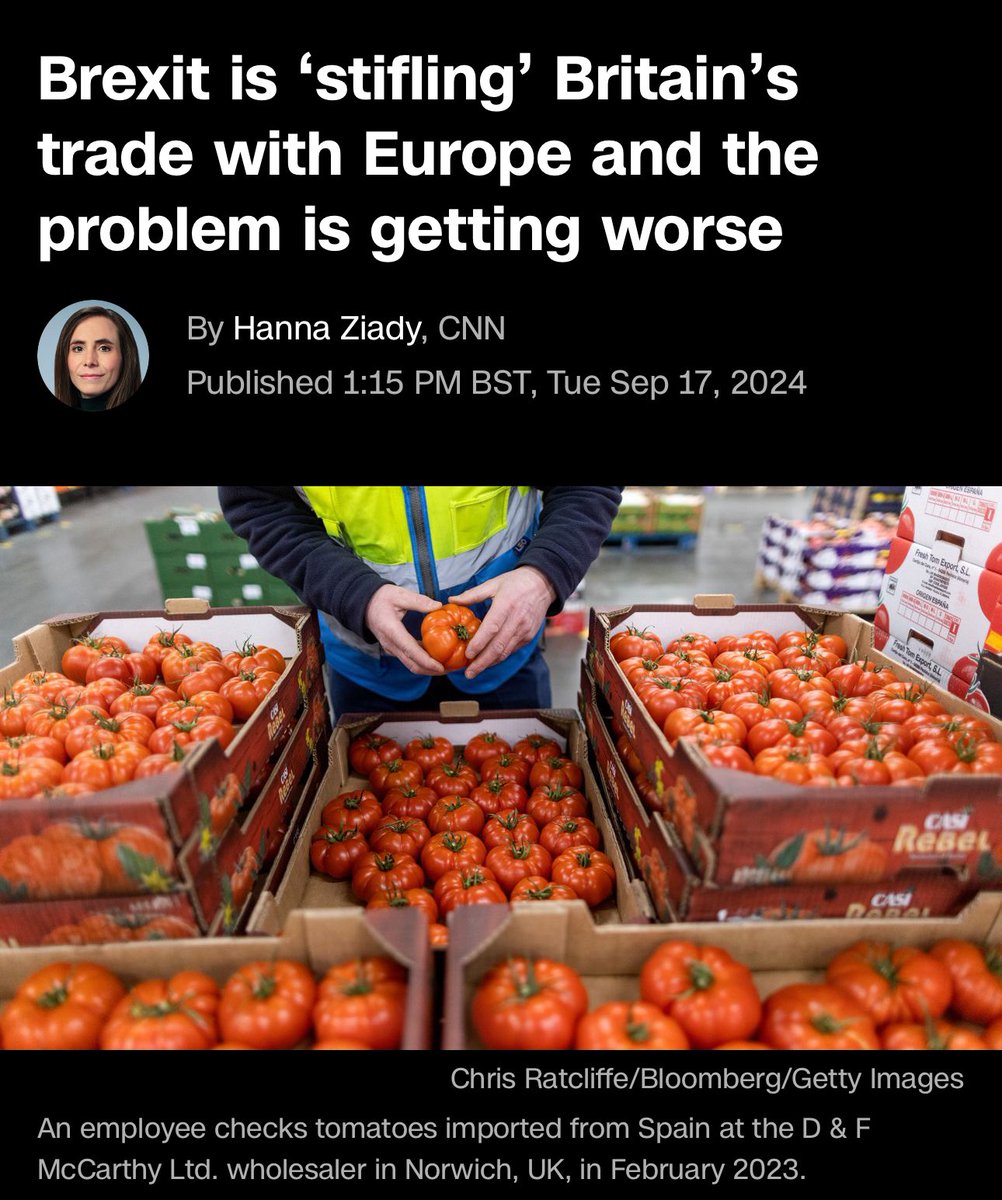
Britain self sanctioned itself with Brexit trade barriers, making it almost impossible to export and import goods to/from our biggest market.
The new deals with the RoW are worse and British businesses are suffering as there’s less trade, less variety and higher prices.
Labour claim to want boost growth, but are committed to ensuring the blockages ensure the opposite.
The only solution to our problems is to rejoin the single market and customs union. Nothing else will reverse the malaise.
cnn.com/2024/09/17/economy/b…
183
417
873
28,036
16 Sep 2024
Cheers Colin
16 Sep 2024

@Pooky_Blue @Abfabdawn @drmatthewhardy @haerthefall* @happylecinq @grahamnturner @ClaireFarhi @Rcamatrix @Two_Penneth @LisaSinNYC* @antoninaodessa* @DavidblogerICBW @mykolapastux* @karlanderson111 @whaleoilbefckd @FrontFroid* @DonMorrison15 @Cyfathrebwr @theRoxi007 @AgiBergman @CardinalBiggle2 @gemn_gavin_ @HackettTom @CatrinHDavies @DorneEdwards @jimharbertsonce @liligrowls @seegue92 @susywilkinson @kjk1954 @simcocd (' ' is follow back and '*' is NAFOFellas follows) #Top1000 --> x.com/SydesJokes/status/1834… -- Support me by BuyMeACoff.ee/SydesJokes

2
15
JP#FBPE🇪🇺🇺🇦#GTTO#REJOINEU#FBPPR retweeted

15 Sep 2024
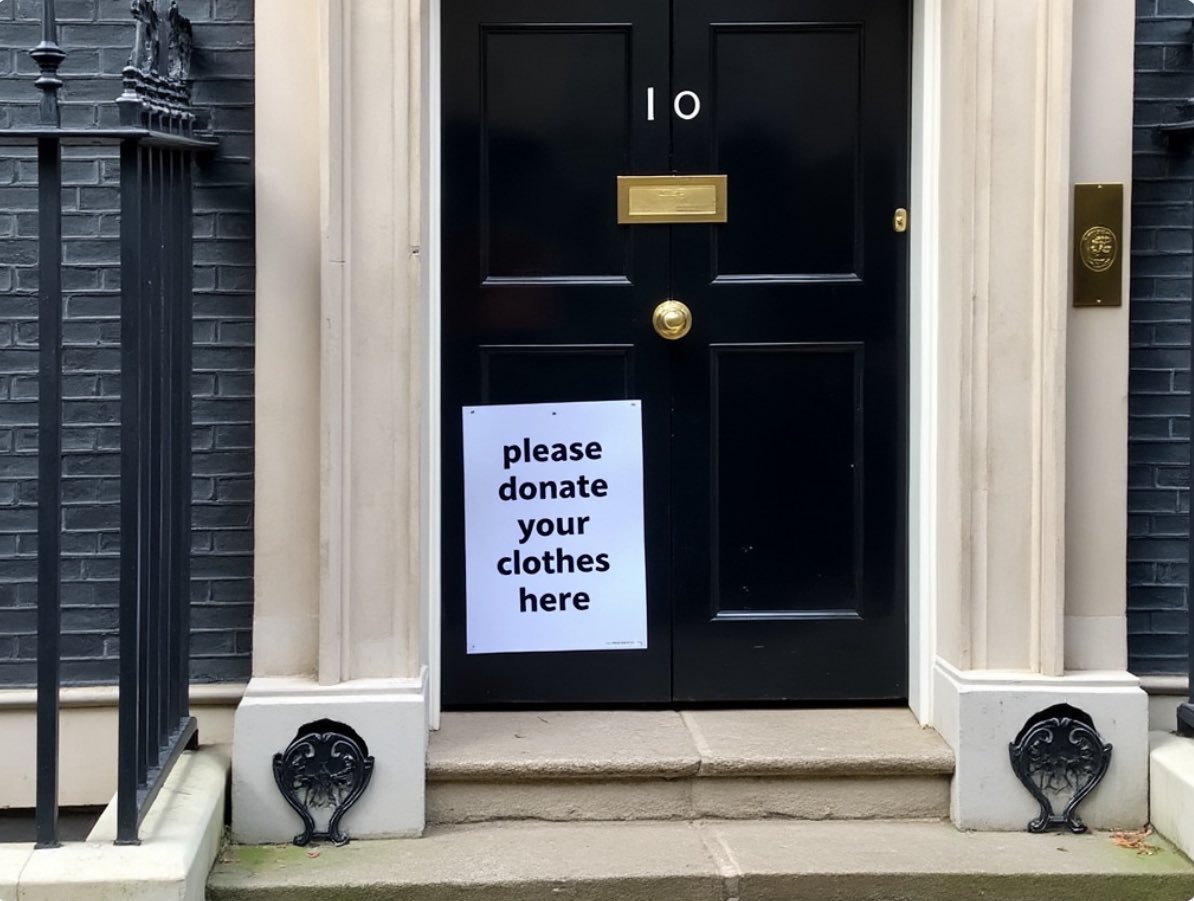
This Winter, please help the son of a toolmaker find clothes for his family.
Every Louis Vuitton bag donated will go to a vulnerable wife. 🙏🏽
292
3,599
14,445
322,387
JP#FBPE🇪🇺🇺🇦#GTTO#REJOINEU#FBPPR retweeted

16 Sep 2024
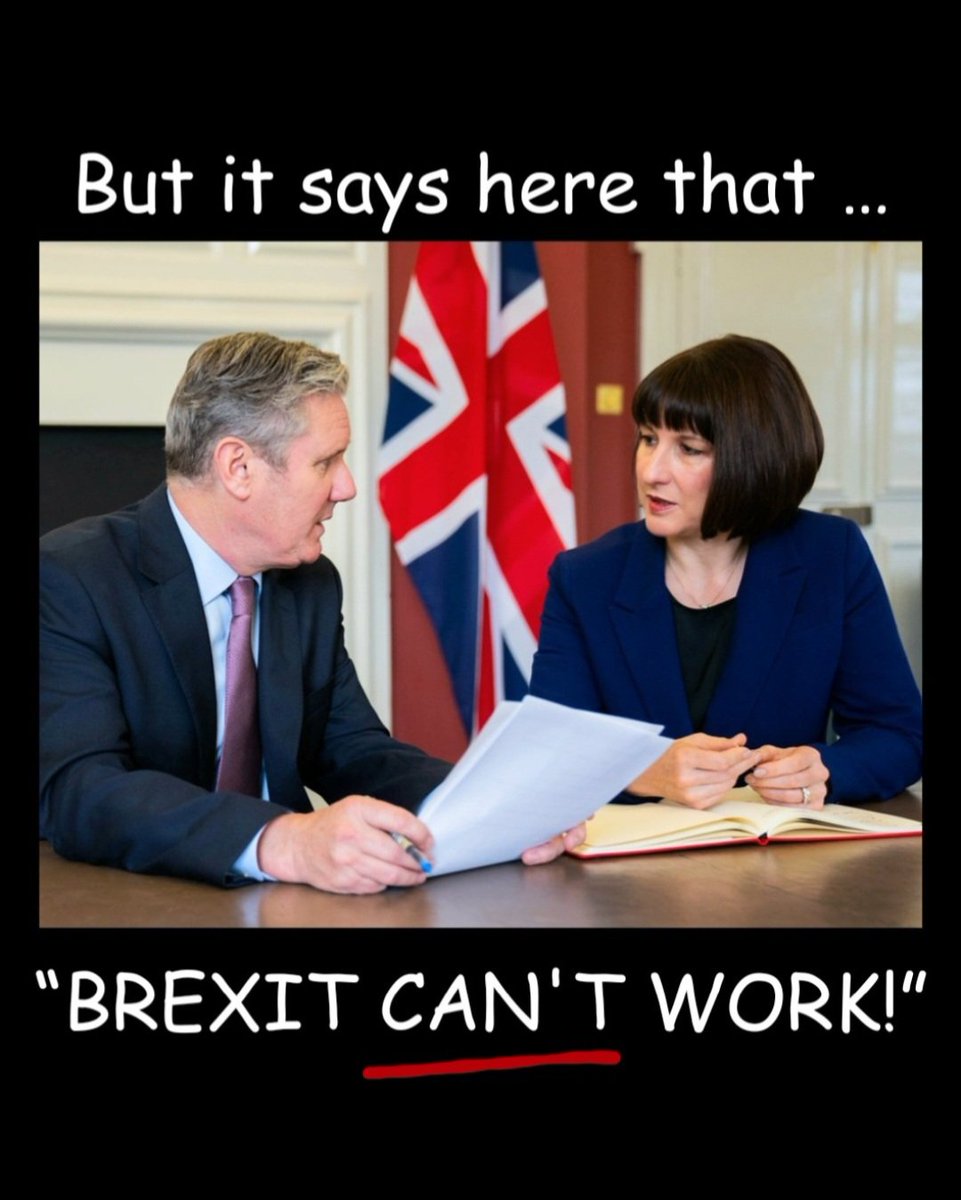
May, Johnson, Truss, Sunak, Starmer ...
All of them have refused to tell the truth about Brexit. All of them have lied about "making Brexit work". All of them have pandered to far right xenophobes. None of them have explained how staying out of the Single Market helps the UK.
25
266
634
11,694
JP#FBPE🇪🇺🇺🇦#GTTO#REJOINEU#FBPPR retweeted

15 Sep 2024
Pensioners freeze to death meanwhile Keir Starmer gets free designer dresses for his wife 🤷♂️ as well as free suits free glasses free house free heating free electric free travel free free free free everything the political gravy train while the rest of us get austerity
153
2,318
7,390
302,339
JP#FBPE🇪🇺🇺🇦#GTTO#REJOINEU#FBPPR retweeted

15 Sep 2024
Truth is still truth, even if no one believes it. A lie is still a lie, even if everyone believes it. #quote
sydesjokes.blogspot.com/2021…
2
14
34
649
JP#FBPE🇪🇺🇺🇦#GTTO#REJOINEU#FBPPR retweeted
15 Sep 2024
15 Sep 2024

It is worth remembering the Polish contribution to the UK's war effort in WW2. #BattleOfBritainDay
Read more: britishpoles.uk/polish-airme…

1
19
44
918
JP#FBPE🇪🇺🇺🇦#GTTO#REJOINEU#FBPPR retweeted

13 Sep 2024
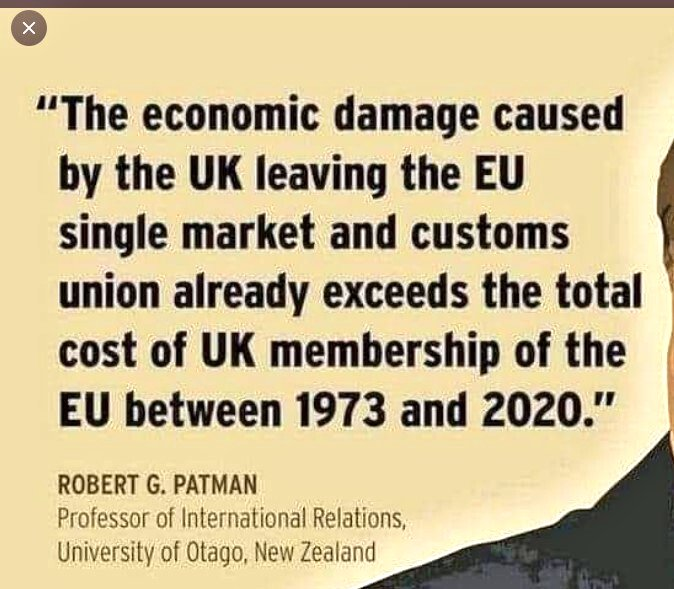
I know it.
You know it.
Brexiters continue to deny it.
(or be ignorant of it)
350
799
1,883
73,736
JP#FBPE🇪🇺🇺🇦#GTTO#REJOINEU#FBPPR retweeted
14 Sep 2024
This is what happens when you refuse to offer a vision or a narrative for the future beyond "get the Tories out" and "blame the Tories". People want and deserve more.
#BrexitHasFailed uk.news.yahoo.com/poll-shows…
10
95
202
4,766
JP#FBPE🇪🇺🇺🇦#GTTO#REJOINEU#FBPPR retweeted
13 Sep 2024
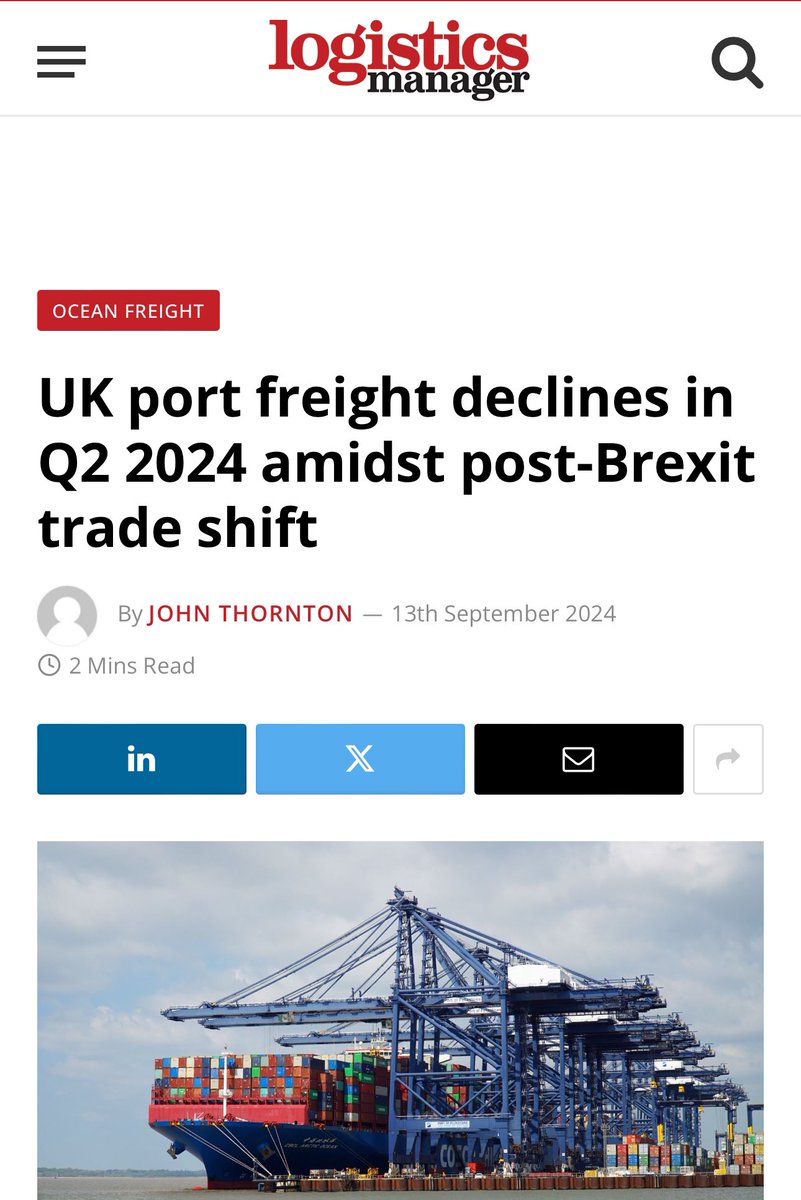
🛳️ UK major ports experienced a 1% year-on-year DECLINE in total freight tonnage for Q2 2024, handling 108 million tonnes, according to the ‘Port Freight Quarterly Statistics: April to June 2024‘ report from the UK Department for Transport.
🚛 Inward traffic decreased by 1% to 72.4 million tonnes, while outward traffic fell by 2% to 35.6 million tonnes. Despite these declines, unitised traffic remained stable at 5.4 million units.
🚢 Liquid bulk and container tonnage saw notable reductions, while roll-on/roll-off (Ro-Ro) freight increased by 4%, highlighting mixed trends in post-Brexit UK trade patterns.
🚚 The report shows a more pronounced 5% decrease in total tonnage over the rolling year to June 2024, falling to 418.1 million tonnes.
⛴️ Liquid bulk tonnage dropped significantly by 5%, driven primarily by a sharp 79% decline in LNG traffic at Medway port. Meanwhile, dry bulk tonnage also decreased by 3%, with Port Talbot, a key hub for dry bulk materials, seeing a reduction of 36% as Tata Steel reduced operations.
🚛 The report indicates that container traffic saw a 7% decrease in tonnage in Q2 2024, with London port experiencing the largest reduction, dropping by 14% to 3.6 million tonnes.
However, measured in units, container traffic grew by 8%, likely driven by an increase in empty containers or lighter cargo loads per container.
Ro-Ro freight, on the other hand, performed well, increasing by 4% to 24.3 million tonnes in Q2 2024. This growth was driven by London ports, where Ro-Ro tonnage increased by 39%, and Dover, which saw a 6% increase in Ro-Ro units.
While the UK’s port freight traffic shows resilience in some sectors, the overall decline underscores the ongoing adjustments in trade flows following Brexit rupture.
logisticsmanager.com/uk-port…
21
73
86
12,849
JP#FBPE🇪🇺🇺🇦#GTTO#REJOINEU#FBPPR retweeted

13 Sep 2024
Means testing was a product of the depression in 1931 it was abolished in 1942 with the arrival of the Welfare State. It was deemed too cruel in circumstances that prevailed then Poor Law of 1935 prevailed at a time of high unemployment. Mr Starmer is using antiquated law on us
2
2
55
JP#FBPE🇪🇺🇺🇦#GTTO#REJOINEU#FBPPR retweeted

13 Sep 2024
UK median annual pre-tax pay in August 2024 was £29,040, about the same in real terms as in 2008.
1% of the population has more wealth than 70% of the population combined.
Govts tax wages at higher rates than capital gains and dividends.
It is class war
ons.gov.uk/employmentandlabo…
28
307
572
18,904
13 Sep 2024
Thanks Colin. Have a great weekend everyone.
13 Sep 2024
@LondonItl @lyzchambers @Rcamatrix @GaryHogben @crazydart78* @kshaw58 @susywilkinson @JSusanHaines @Lucyna01 @rjones_sylvia @becynml @DomJNorth @2primates @AndaluciaSteve @BACOLL6 @bree1955 @martin_young @guyfoxy @moggsta01 @AleksandrX13 @OpenBritHighWyc @Dragonite198* @tga_tgoodfellow @KatCedro @ianw2000uk @Pressmoto1 @Piethagoram @first_dog* @poloserioz* @strangetruther @Joe7tinysteps @DirkvanLinth @IanRGee @g67dom @tonynairn @PShootLFWW (' ' is follow back and '*' is NAFOFellas follows) #FollowBackFriday #FBFriday #FBF #FollowFriday #FF #FBPE #FBR -- BuyMeACoffee.com/SydesJokes

200
12 Sep 2024
Well said.

Once someone is retired, their financial die is more or less cast.
They have little scope to recover from financial shocks or to generate new income from anywhere.
They are reliant on a fixed income based on their state pension plus income from any private savings they have had. An income which is vulnerable to inflation and also stock market returns, as final salary schemes have died away.
They don't know how long their remaining money needs to last, and don't know what ill health or care for elderly partners lies ahead. Their fate is unpredictable and, to a large extent, in the hands of others. A very vulnerable situation.
They may own a "valuable" property but it's probably their family home and selling up and moving is stressful at a time of life when health and mobility is often poor. Elderly people having lived in a family home for a long time have usually built up a support network of friends and neighbours, hard to replace when moving somewhere new.
If government starts breaking promises made to pensioners a decade or more ago, around which retirees based their retirement planning, trust in government and in retirement saving will quickly collapse, which would be an economic and humanitarian catastrophe.
There needs to be cross party consensus reached on pension funding so that today's working people can make plans for their future safe in the knowledge that future Chancellors won't fcuk everything up for some cynical short term political advantage.
And there needs to be a bit more compassion towards today's elderly people. Despite the wild fantasies of some young activists, it isn't pensioners' fault that property is unaffordable for first time buyers. It's the fault of politicians, past and present. Lay the blame where it belongs, please, and spare us the intergenerational hate.
1
17
12 Sep 2024
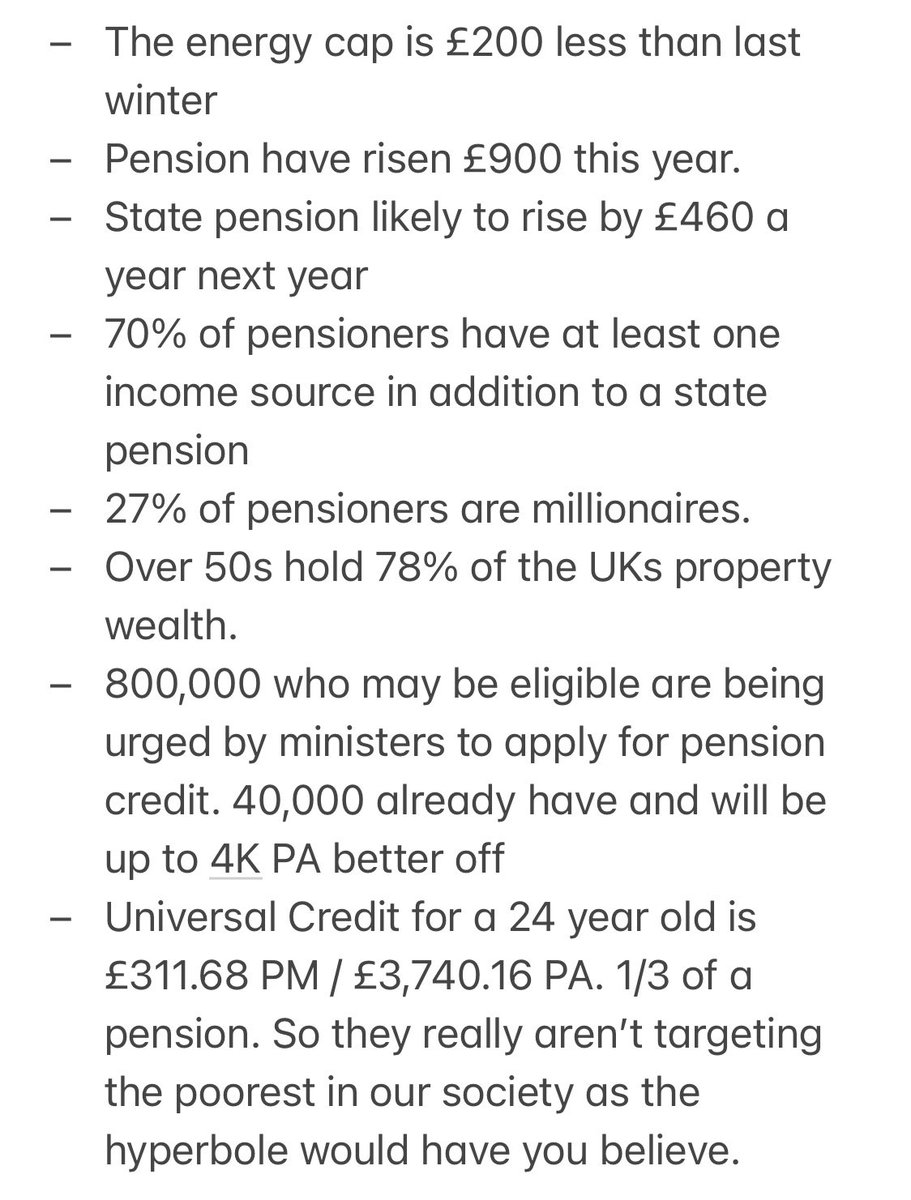
- The energy cap is higher than when the WFA came in.
- 0 real terms increase in pensions .
- Only 27% will get the full increase next spring
- Av pensioner income is £335/wk
- so what?
- pensions start @ 67 not 50.
- benefits for 24 yo has no connection to pensions
10 Sep 2024

This economic migrant is just out to cause division
Read the actual facts.
22
JP#FBPE🇪🇺🇺🇦#GTTO#REJOINEU#FBPPR retweeted
11 Sep 2024
Some 38% of Universal Credit claimants are in work.
That is 2.6m people
In many cases work doesn't pay enough and people's income is topped trough the welfare system.
Can companies not afford to pay higher wages? Did anyone means-test them?
gov.uk/government/statistics…
62
623
1,145
23,357
11 Sep 2024
I like many others voted #GTTO in the hope that Labour would bring positive change and restore hope. I’m beginning to feel I’ve been conned.
14
JP#FBPE🇪🇺🇺🇦#GTTO#REJOINEU#FBPPR retweeted

10 Sep 2024
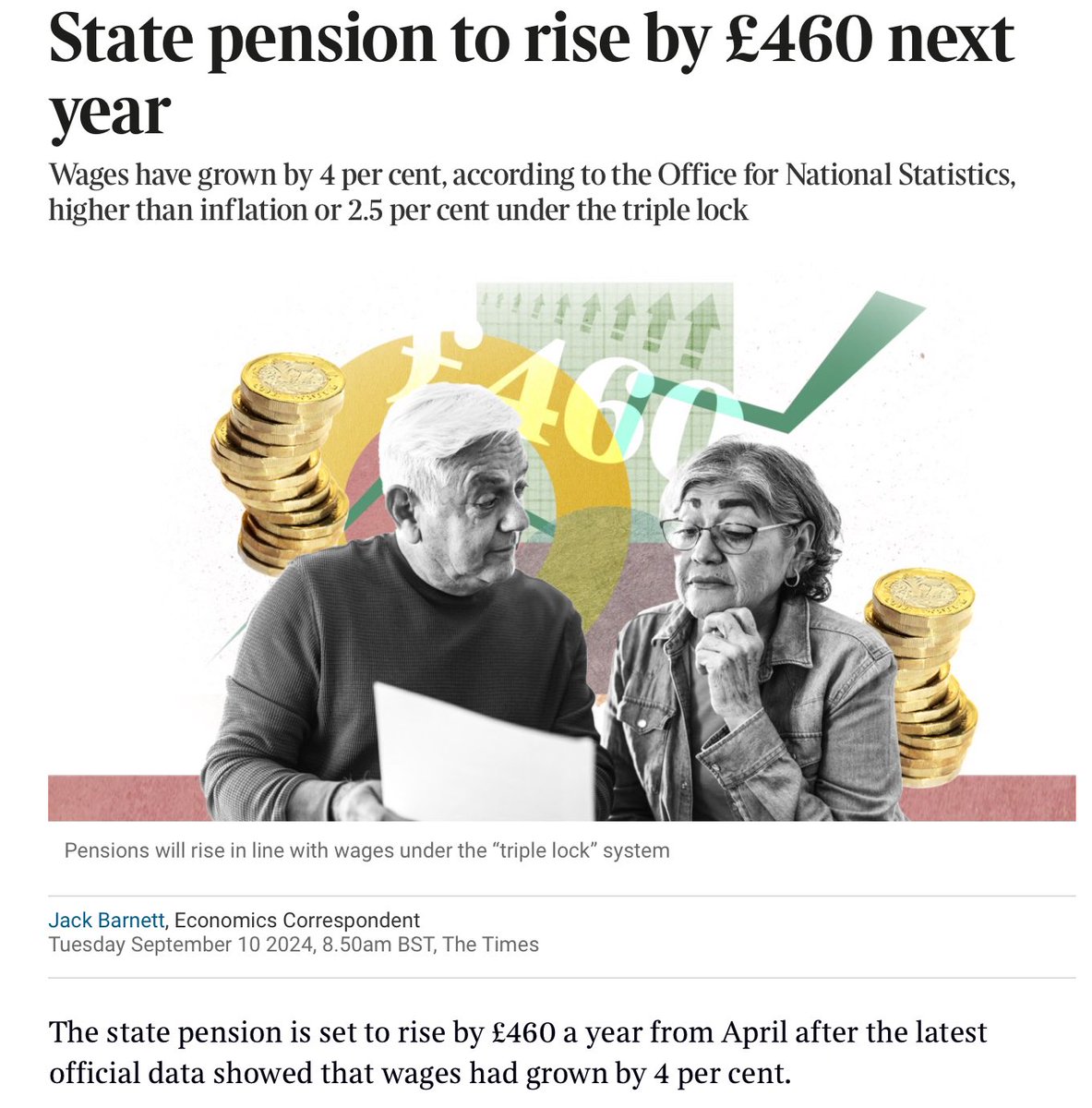
This is nonsense. The standard new state pension will rise by £460 a year but only 27% of pensioners get that. The rest get the old basic state pension which 73% get will rise by £354 a year. It is misleading and plays into the wealthy pensioners trope.
225
1,736
3,002
106,224