
Mission: End stressful siloed lessons by integrating phonemes, letters, morphemes & sentence writing from day 1. Poly-morphemic words! ReadingShift.com
Joined February 2009
- Tweets 2,866
- Following 1,559
- Followers 1,437
- Likes 13,376
101 Photos and videos

Pinned Tweet

13 Jul 2024
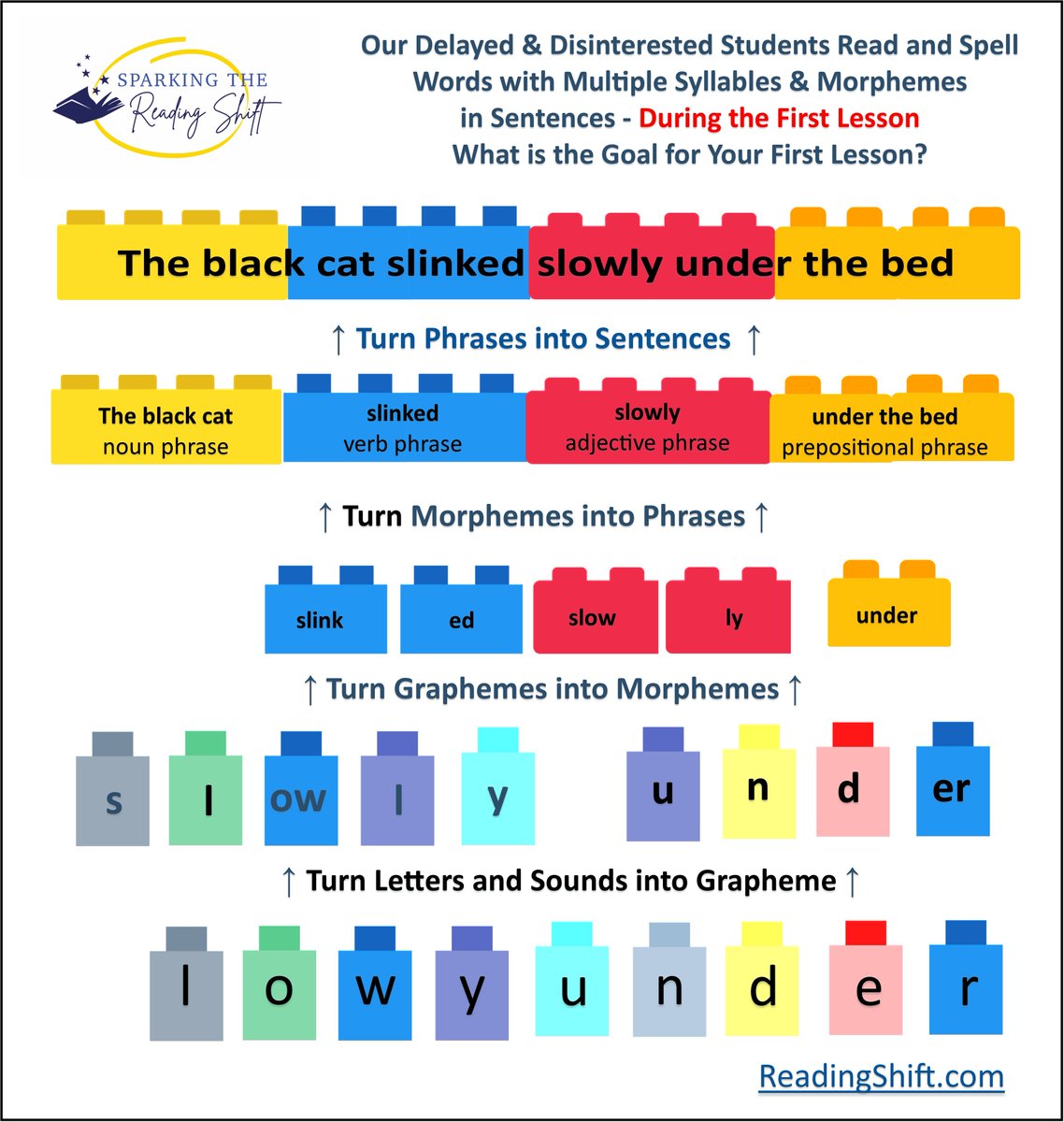
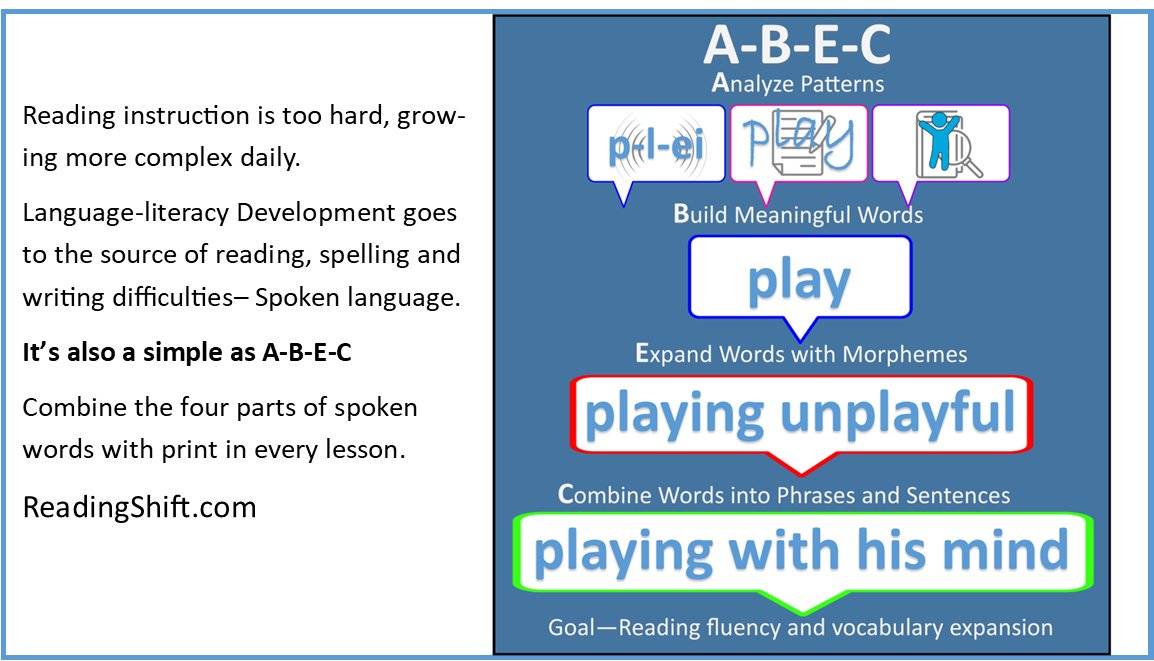
Stop teaching reading. It's too hard and grows more complicated daily. Many of the methods produce temporary results. Move up to Language-literacy development. Just focus on the four major parts of spoken language using A-B-E-C. Go from sounds to sentences in every lesson. ReadingShift.com
5
521
Bruce Howlett - Reading Shift retweeted

Jun 6
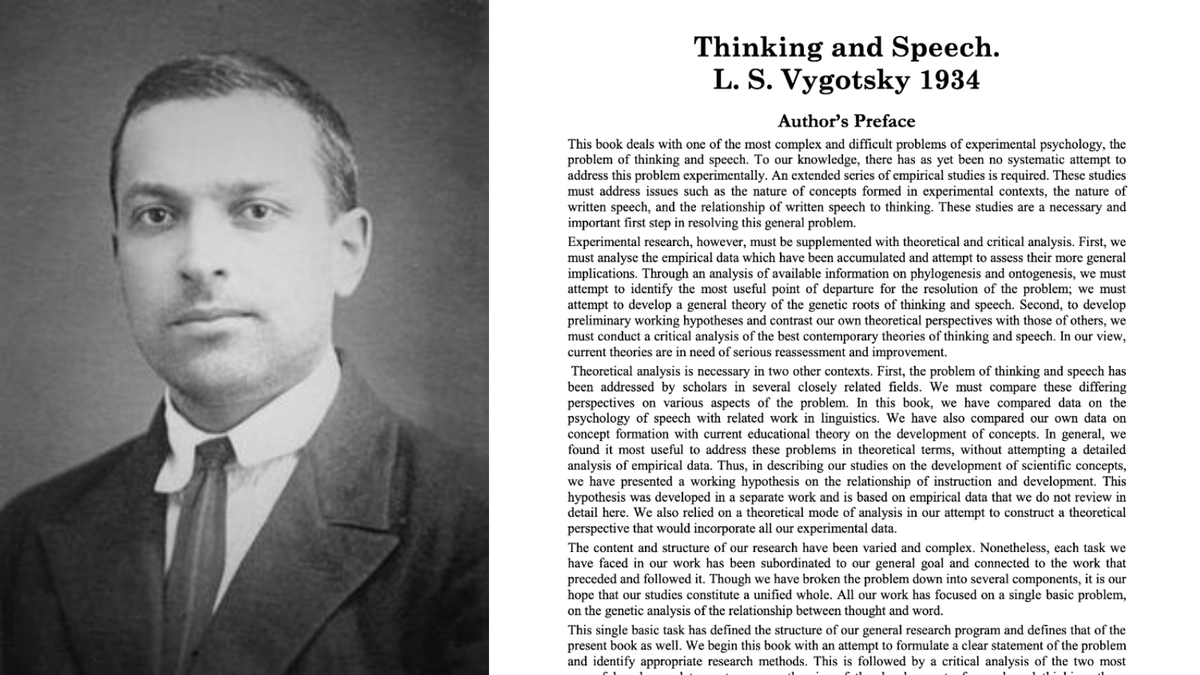
A Russian psychologist spent 10 years proving that the act of talking to yourself out loud is one of the most powerful cognitive tools the human brain has, and almost nobody outside his field has read the work.
His name was Lev Vygotsky.
He worked in Moscow in the 1920s and died of tuberculosis in 1934 at the age of 37. He had no laboratory, no funding, almost no English readers, and a body of work that the Soviet government suppressed for two decades after he died.
He produced the foundational theory of how human cognition actually develops, and the central piece of that theory was a behavior almost every adult is faintly embarrassed about.
Vygotsky noticed that young children talk to themselves constantly. They narrate their own actions, they argue with imaginary opponents, they instruct themselves through tasks out loud.
The dominant theory at the time, from the Swiss psychologist Jean Piaget, said this was a sign of cognitive immaturity that children would eventually grow out of as they learned to think properly.
Vygotsky said the exact opposite.
He argued that this self-directed speech was the most important cognitive event in the entire developmental window, because it was the moment a child first started to use language as a tool to control their own mind. The child was not failing to think. The child was learning how to think by externalizing the process and listening to themselves do it.
He predicted that as children matured, this out-loud self-talk would not disappear. It would go underground. It would become silent inner speech, which is the running monologue every adult has inside their own head for the rest of their life.
The voice you hear when you read this sentence is the direct descendant of a four-year-old narrating their own block tower.
For 50 years almost nobody outside Russia had access to his work, and the few researchers who did pick it up could not get funding to test it. Then in the early 2000s the experiments finally started to pile up, and what they found was that Vygotsky had been right about something even more important than he knew.
The first major study came from Gary Lupyan at the University of Wisconsin and Daniel Swingley at the University of Pennsylvania in 2012. They ran a simple visual search experiment. Participants were shown 20 images at once and asked to find a specific object, like a banana or a chair. In one condition they searched silently. In the other condition they were told to say the name of the object out loud to themselves while looking for it.
The participants who spoke the target name out loud found the object significantly faster, with higher accuracy, than the participants who searched in silence. The effect was strongest when the spoken word matched a familiar object the brain already had a strong category for.
Saying the word out loud literally tuned the visual system to detect that thing better. The researchers called it the label feedback effect, and the implication was that the act of vocalizing a goal physically changes how the brain processes the world while pursuing it.
The second major study came out of the University of Michigan and Michigan State in 2017. The lead researchers were Ethan Kross and Jason Moser, and they used both EEG and fMRI to record what happens inside the brain when people talk to themselves while emotionally upset.
They asked participants to recall painful autobiographical memories and reflect on them in two different ways. Some used the first person, saying things like "why am I feeling this way." Others used the third person, referring to themselves by their own name, saying things like "why is John feeling this way."
The brain scans showed that the simple act of switching from first person to third person, even silently, decreased activity in the medial prefrontal cortex, the region responsible for rumination and self-referential pain. Within a single second of using their own name instead of the word I, participants showed measurably lower emotional reactivity. The shift required no extra cognitive effort. It cost the brain nothing. And it worked.
Kross described the mechanism in his interviews. Talking to yourself by name creates a small amount of psychological distance from your own experience. Your brain processes the situation more like a problem belonging to someone else, which means it can analyze it instead of drowning in it.
What Vygotsky had intuited in 1934 turned out to be even more powerful than the developmental theory he built it into. The voice you use to talk to yourself is not background noise. It is one of the most precise cognitive tools the brain has, and you can change how it works just by changing the pronoun you use.
People who talk through problems out loud are not anxious or unstable. They are running an externalized version of a process the rest of us are running silently and worse. The kindergartener narrating their block tower, the surgeon muttering through a procedure, the engineer pacing a hallway describing a bug to nobody, the athlete repeating a cue to themselves before a free throw, they are all using the same ancient mechanism that builds and steers human thought.
You can run the experiment yourself the next time you are stuck on something hard. Stop trying to solve it silently in your head. Say it out loud. Describe what you are seeing. Walk yourself through the steps as if you were explaining it to a colleague who is not in the room.
And when something genuinely upsets you, switch to your own name. Ask why this person is feeling this way, instead of why I am feeling this way.
The voice you have been told to keep quiet your entire life is one of the oldest pieces of cognitive technology you own.
Most people are still embarrassed to use it.
255
3,044
11,159
405,036
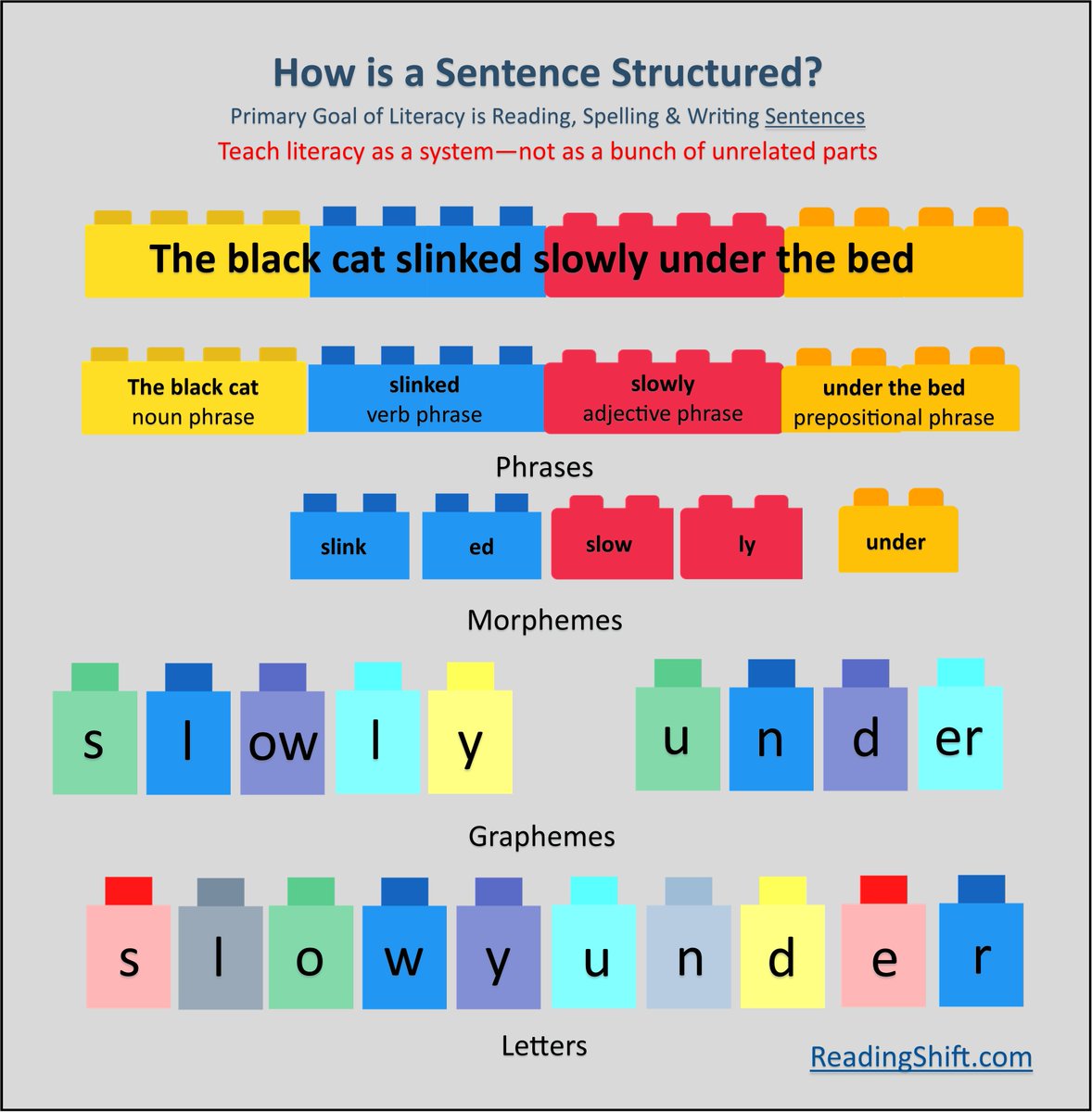
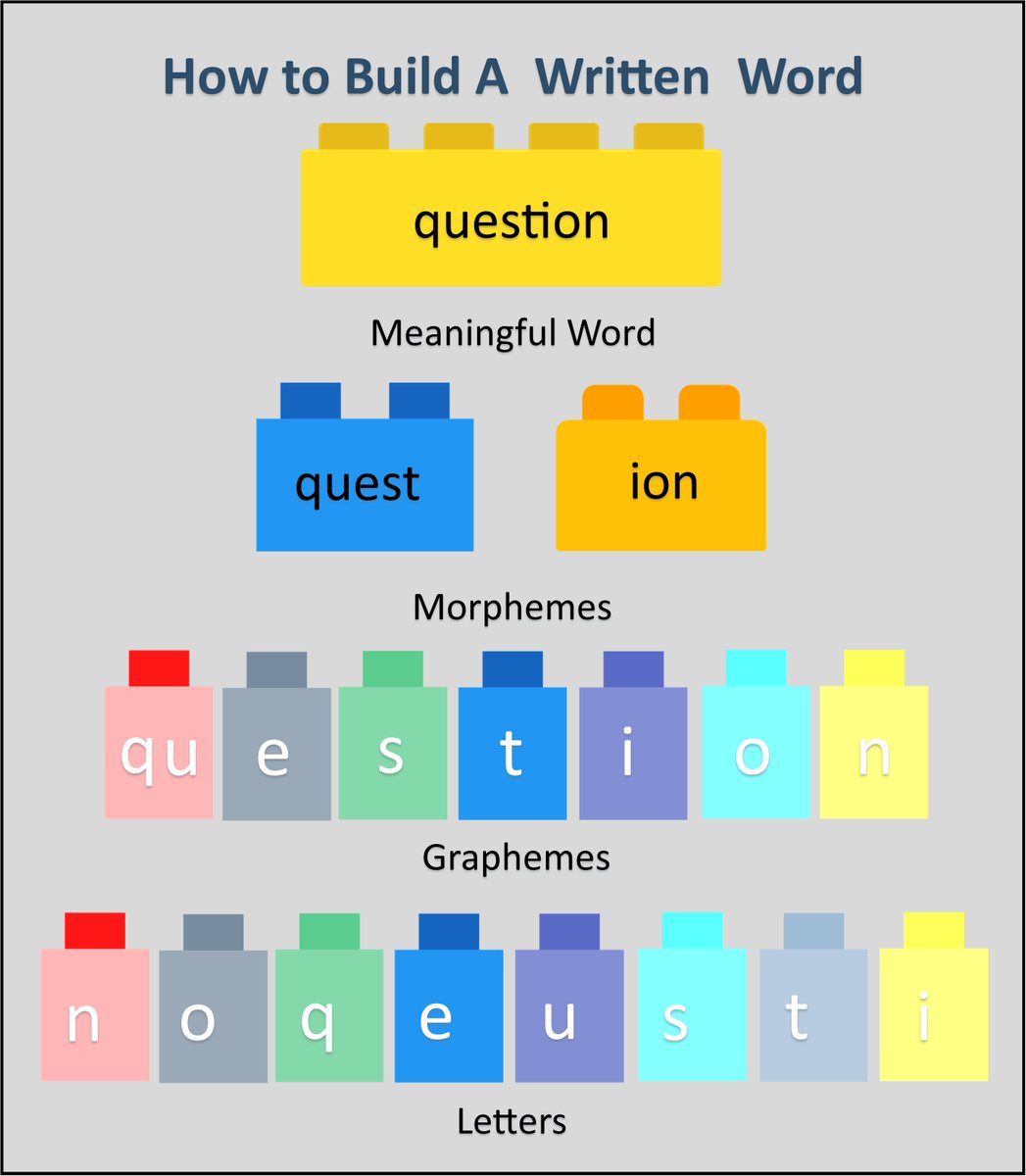
Let's stop focusing on decoding and start focusing on developing literacy. The three most important yet overlooked components of literacy are: morphemes (the building blocks of all words) phrases (the building blocks of sentences) syntax - the universal blueprint for build sentences.
1
8
994
Wondering how to provide integrated instruction? Listen to Australian teacher educator Meghan Hicks describe how word, sentence & text structures develop reading comp & written expression. "Four Powerful Word, Sentence, Text and Cognitive Routines for Teaching Writing" Apple Podcasts too open.spotify.com/episode/3DZ…
1
70
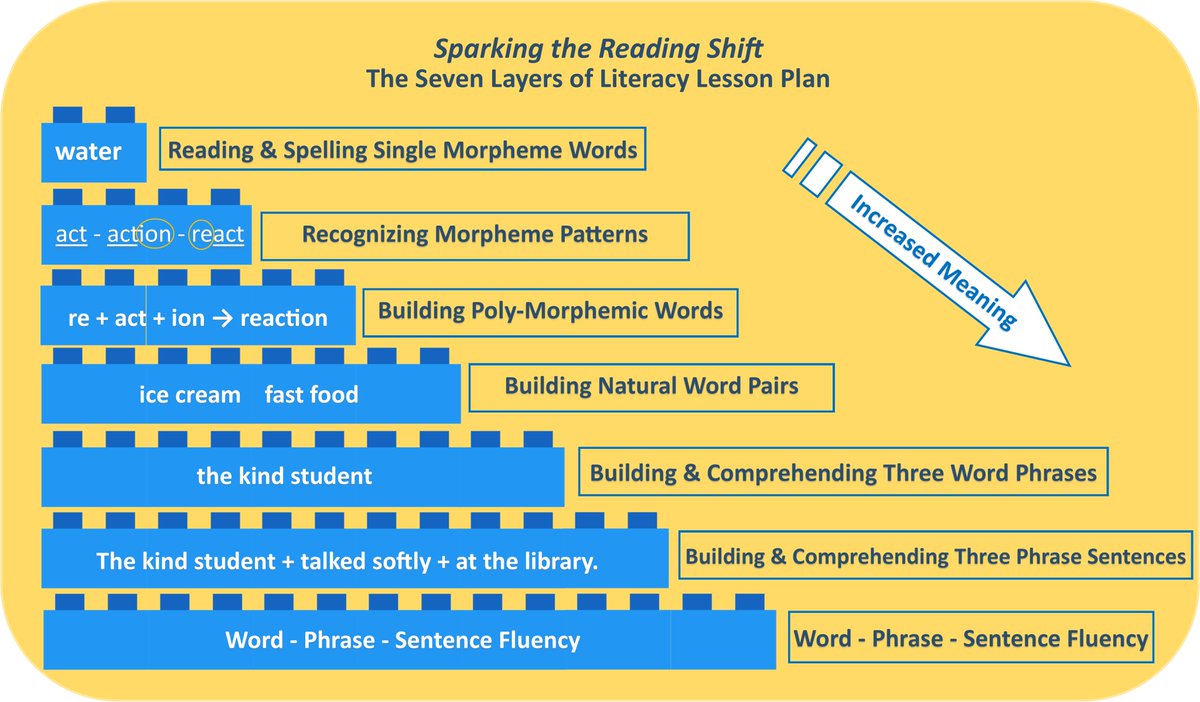
Still teaching reading, spelling & writing as if they are different things? The Seven Layers of Literacy lesson plan takes all students, including weak decoders & spellers, from single words to natural words pairs to phrases to sentence comprehension and writing in each lesson.
ReadingShift.com
1
122
Learn about the most important topic in literacy -- developmental language disorder DLD. Identify and support using practical methods students who struggle with language and literacy. Kathleen Love and Beth Gunshor will show you practical methods so you can be successful with these students.
47
8 Oct 2025
If you are looking for ways to teach in accordance with IDA’s current definition of Structured Literacy, A School Year Rich in Words, will interest you. The definition emphasizes the “systematic integration” of “the domains of oral language (phonology, morphology, semantics, and syntax) and their representation in written language (orthography).
In this podcast, two experienced Australian educators, Ann Whiting and Lyn Anderson, shows how they integrate the four oral language domains with English orthography into the daily lives of their students, from kindergarten and into secondary education. They discuss their book, A Year in Words, and how the spelling system is built by combining morphology (meaning), phonology (pronunciation) and etymology (history). From this approach to spelling, Reading instruction, sentence writing, and vocabulary enrichment develops.
You will come away from this For the Love of Literacy Podcast understanding how to integrate reading, spelling and writing as one process, offering your students deeply enriching language-literacy lessons. open.spotify.com/episode/1zZ…
1
64
Bruce Howlett - Reading Shift retweeted

15 Sep 2025
Reading expert Timothy Shanahan's new book, reviewed by Natalie Wexler, exposes a major flaw in how schools teach reading. Many teachers limit kids to "easy" books at their reading level, but this common practice isn't backed by research and may actually hold students back. While Wexler agrees with ending this approach, she emphasizes that students also need broad knowledge to become better readers.
open.substack.com/pub/natali…

1
8
17
1,830
Bruce Howlett - Reading Shift retweeted

1 Sep 2025
"Phonemes—the basic sound units of language—function as cognitive tools that shape and extend human thinking."
1 Sep 2025

Phonological systems first emerged (and are maintained) through an interplay between biology, physics, and culture = can be construed as cognitive tools
onlinelibrary.wiley.com/doi/…

4
7
679
Bruce Howlett - Reading Shift retweeted

31 Aug 2025
We wouldn’t be here if the universe were even slightly different.
This is what scientists call the fine-tuning problem.
The more we study the cosmos, the clearer it becomes: the physical laws of our universe are finely tuned – balanced precariously atop a hill.
If the strength of gravity were just a fraction weaker, galaxies wouldn’t form. If the strong nuclear force were slightly stronger, stars wouldn’t burn. If the expansion rate of the universe were off by one part in 10⁶⁰, matter would either collapse into a single point or spread so thin no stars could ever ignite.

444
606
4,815
430,200
Bruce Howlett - Reading Shift retweeted

28 May 2025
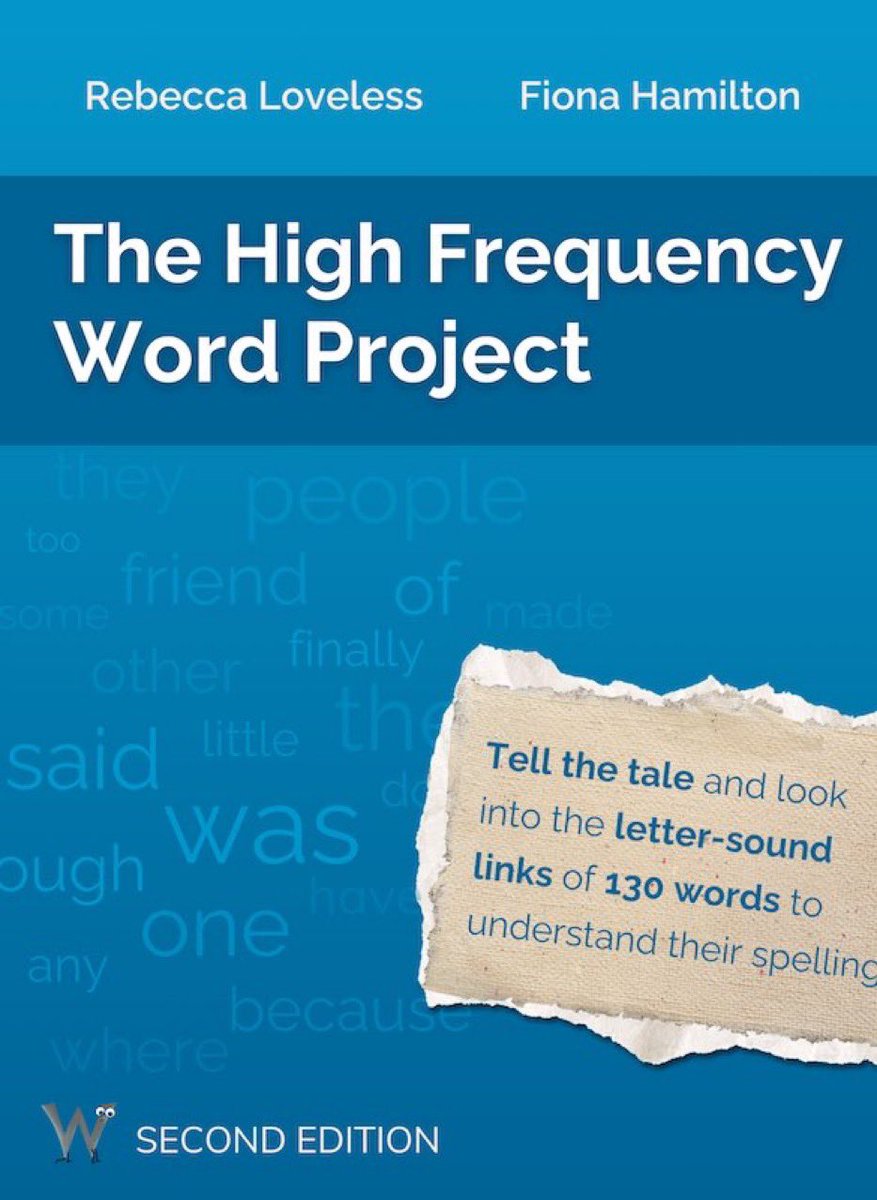
Get your copy now! Rebecca and Fiona use those high frequency words so often called "irregular" words to memorize, and turns them into spellings that help you understand the whole system. Get your soon!
28 May 2025

I have not visited here in ages
But am so excited about our new book I thought I’d jump on and share it with you. We are so excited to launch it into the world and really, really hope you’ll find it useful in your teaching of literacy.
a.co/d/50gldtI
1
2
2
273
Bruce Howlett - Reading Shift retweeted
5 Jun 2025
tinyurl.com/4kc578pb
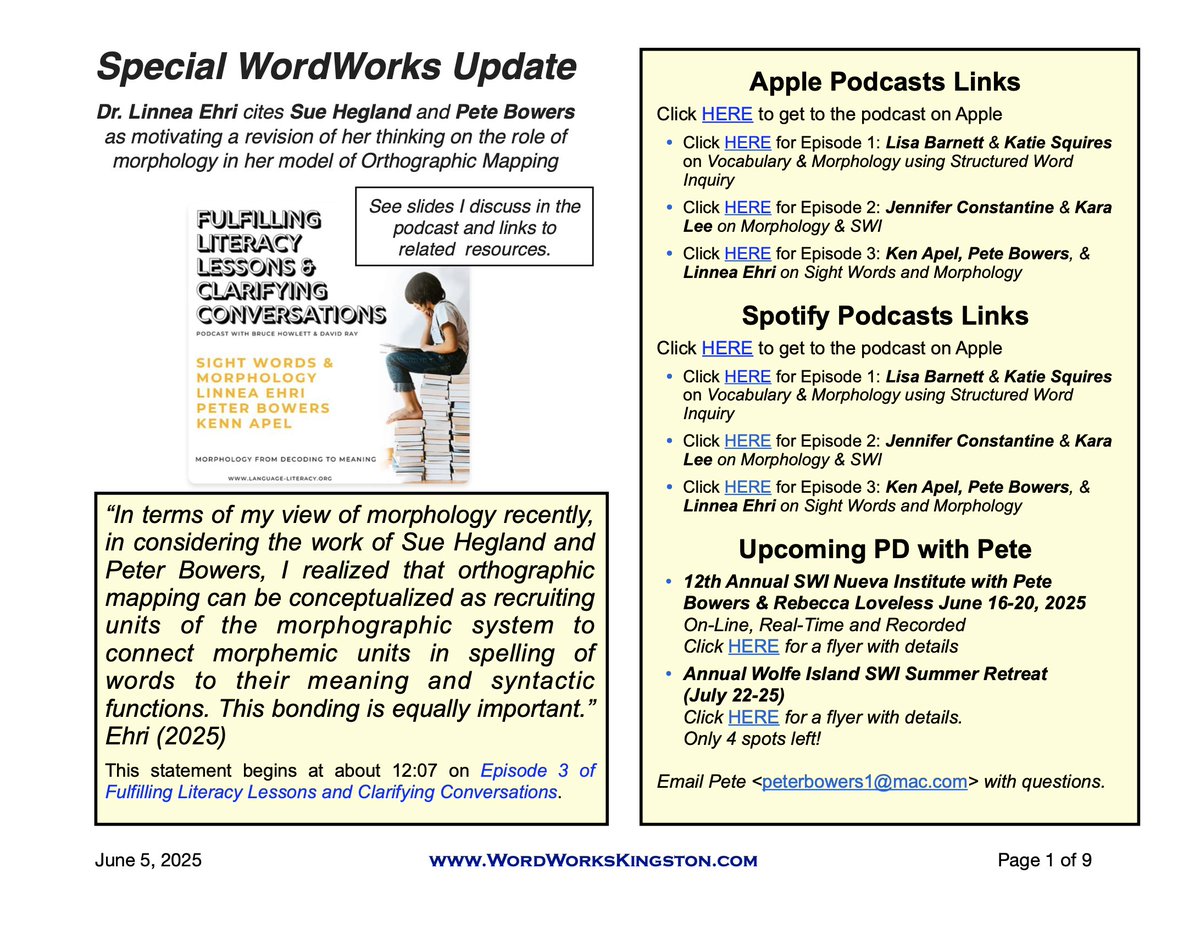
Ehri cites Sue Hegland me for shifting her thinking about the role of morphology in Orthographic mapping. The linked document points to the podcast, has a short reflection on this discussion, many resources, and graphics to reference while listening.
1
1
5
427
Bruce Howlett - Reading Shift retweeted
9 Aug 2025
drive.google.com/file/d/1QsN…
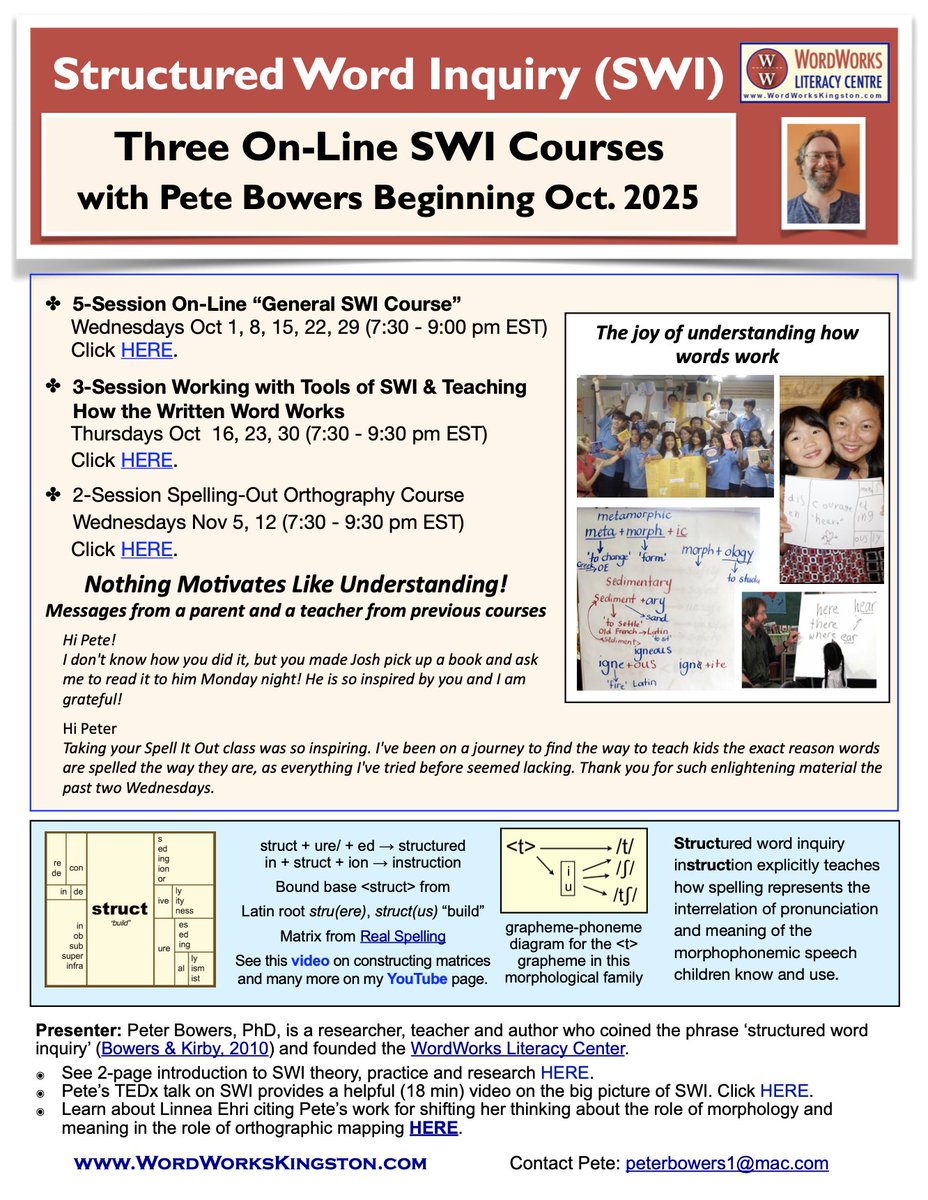
Study the logical way English spelling works to improve your literacy instruction. See why Ehri cites Sue Hegland and me for revising her thinking about the role of meaning and morph in orthographic mapping. More on SWI and these courses linked in flyer.
1
2
107
20 Aug 2025
Tonight’s The Reading League Talk by Sue Hegland, author of Beneath the Surface of Words, who will be introduced by Linnea Ehri, expands on a statement made by Dr. Ehri on this For the Love of Literacy podcast. This talk will explain the role that written morphemes, morphographs, as Dr. Ehri calls them, play in sight word formation.
Sue will also discuss the central role that morphemes play in vocabulary and spelling development. If you want to know where literacy instruction is headed then listen to this talk.
The For the Love of Literacy podcast with Linnea Ehri, Kenn Apel, and Pete Bower, who Dr. Ehri also credits for this shift, can be found on Spotify and Apple Podcasts
1
72
Bruce Howlett - Reading Shift retweeted

5 Jun 2025
Children demonstrated superior spelling performance with interleaved practice on trained words both immediately and eight weeks later. Crucially, the long-term benefits extended to untrained words following the same rules (transfer), but only for children with average to high prior knowledge. sciencedirect.com/science/ar…
6
16
55
6,893
5 Jun 2025
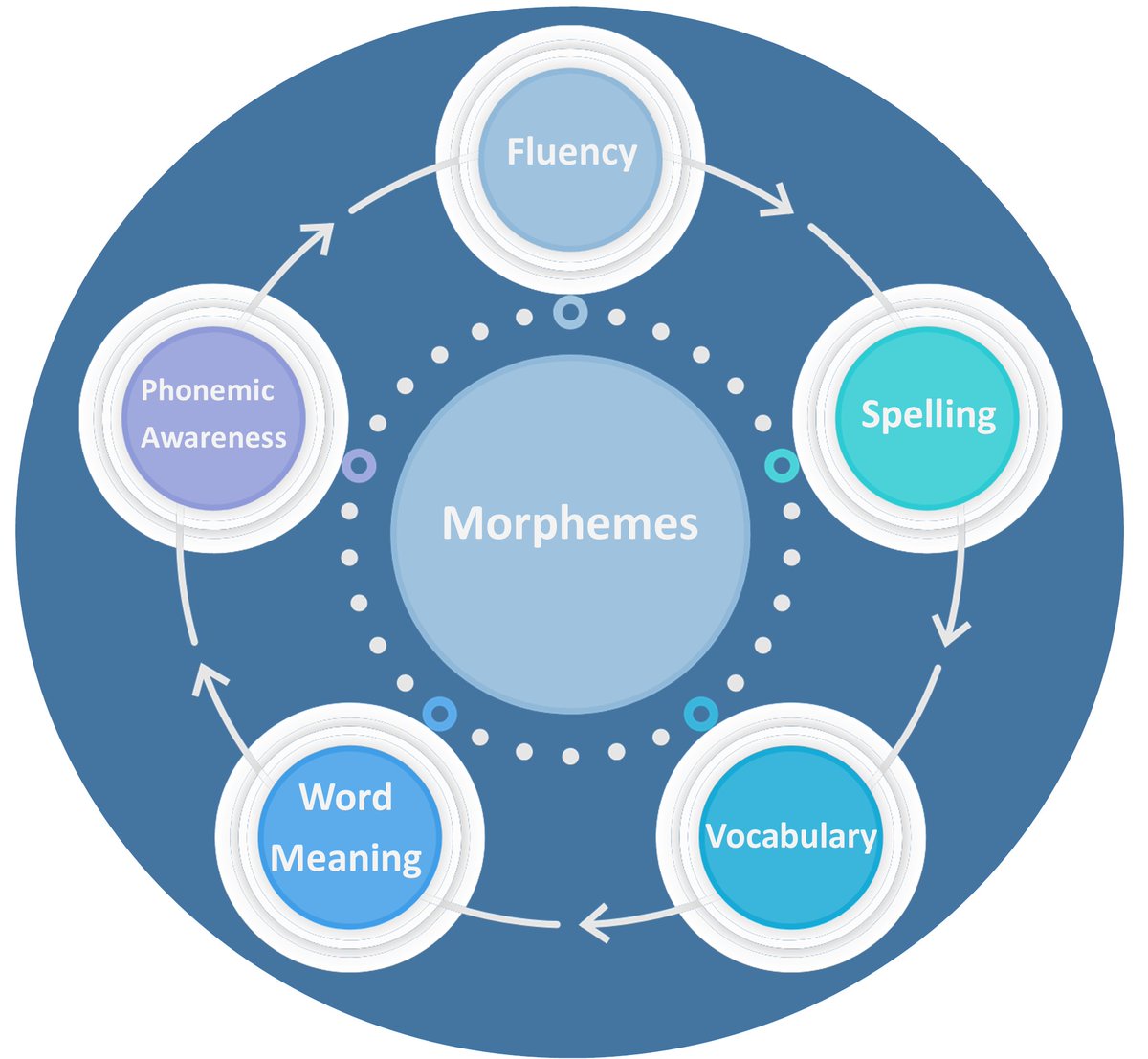
Linnea Ehri just updated her theory of orthographic mapping to say that the spelling of morphemes is an important way of bonding a words spelling, pronunciation and meaning in memory. If the word contains more than one morpheme use morphology to teach it.
5 Jun 2025

tinyurl.com/4kc578pb
Ehri cites Sue Hegland me for shifting her thinking about the role of morphology in Orthographic mapping. The linked document points to the podcast, has a short reflection on this discussion, many resources, and graphics to reference while listening.
5
390
2 Apr 2025
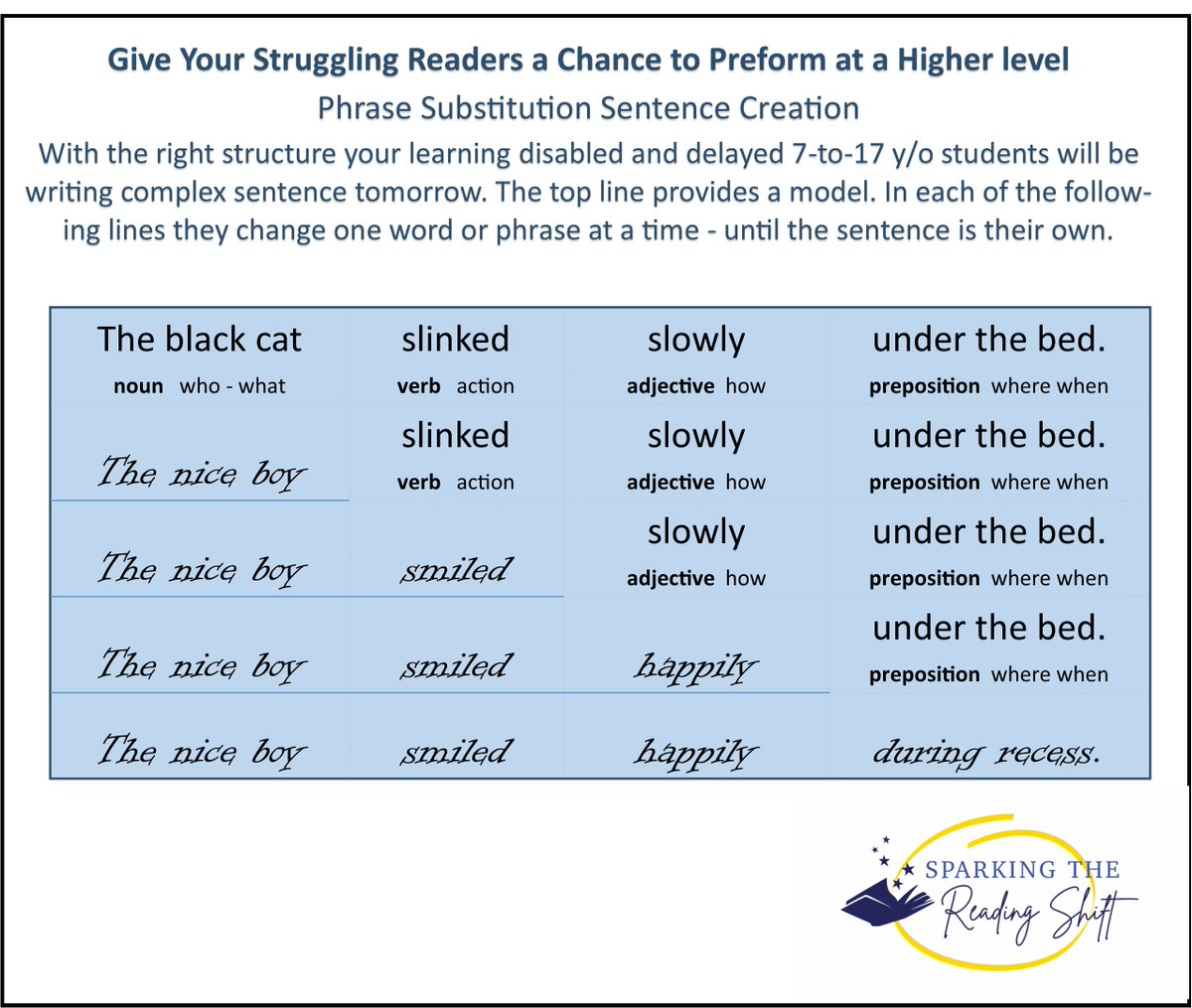
With falling NAEP scores and research showing how vital sentence writing is to reading growth, it’s imperative that students get a change to perform at a higher level - even if they are struggling with decoding.
Yes, writing success can motivate struggling readers!
See more linguistic challenges at ReadingShift.com
2
2
116
1 Apr 2025
You are using is current research if it conforms to:
1. Share's universal combining principle - symbols phonemes = morphemes which combine into words sentences
2. Duke and Cartwright's Active View- upgrades "The Rope"
3. Wolf's POSSuM in each lesson - phonemes, graphemes, morphemes, word meaning, sentence writing
4. cognitive principles including spaced retrieval and interleaved methods
5. An element of self-teaching in every exercise
1
1
112
30 Mar 2025
Integrated language-literacy instruction builds off children's growing language abilities, using the universal combining principle - all kids on the planet learn to read by combining symbols and sounds into morphemes (the core of every word), then words are combined into phrases and sentences. The first & every lesson in Sparking the Reading Shit raises expectations & motivation. ReadingShift.com
1
1
108
Bruce Howlett - Reading Shift retweeted

22 Mar 2025
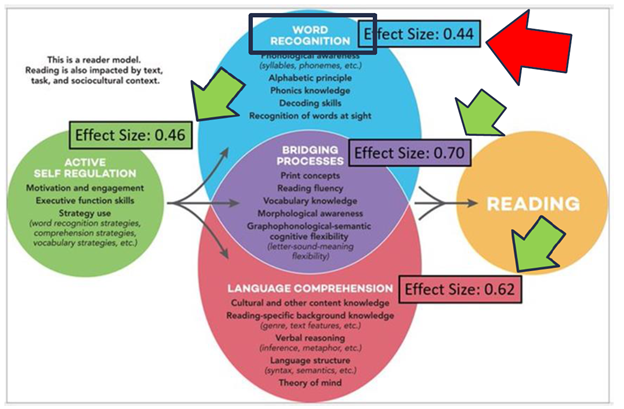
In today’s blog, I discuss the Hechingger Report on comprehension and make the case that comprehension strategies can and should be taught directly. We need to spend more time TEACHING comprehension! doctorsam7.blog/2025/03/22/m…
6
6
29
1,761