
Researcher @Cambridge_Uni. PhD in evolutionary psychiatry. Explaining neurodiversity, improving methods & stigma. 'Evolving Psychiatry' podcast host.
Joined February 2019
- Tweets 3,633
- Following 1,017
- Followers 2,506
- Likes 11,420
433 Photos and videos



Pinned Tweet

May 7
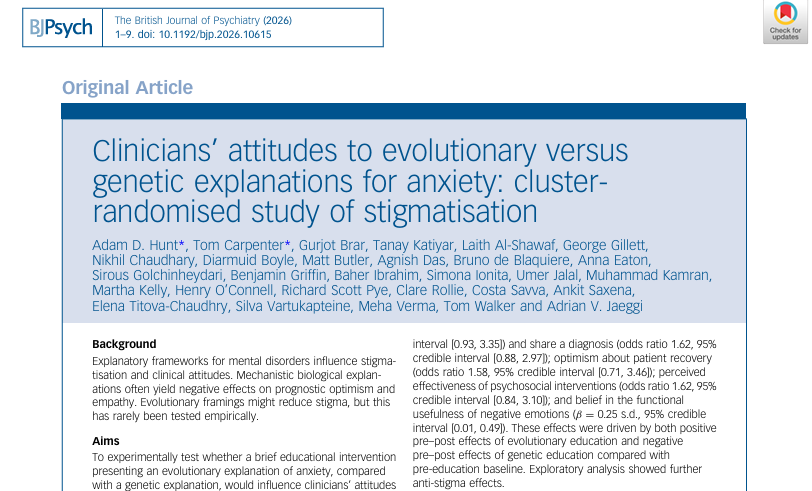
🚨Just published in the British Journal of Psychiatry!🚨
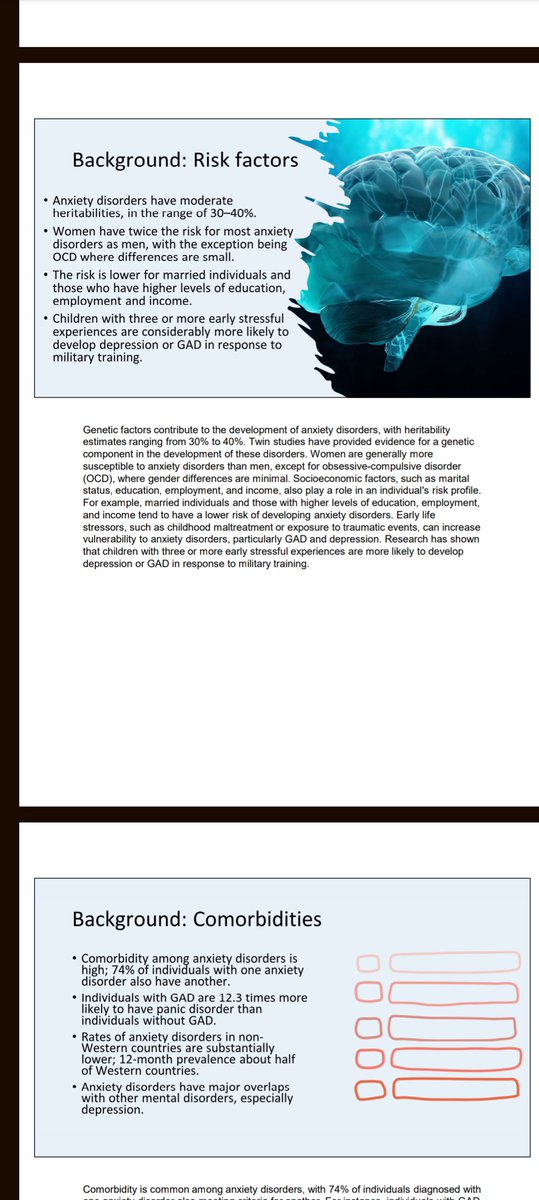
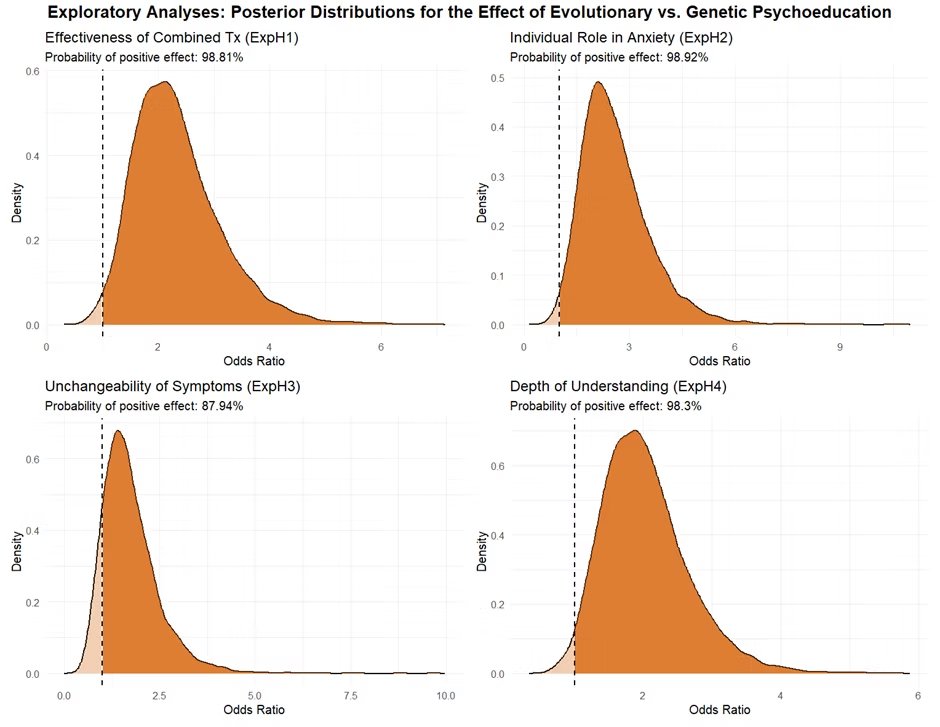
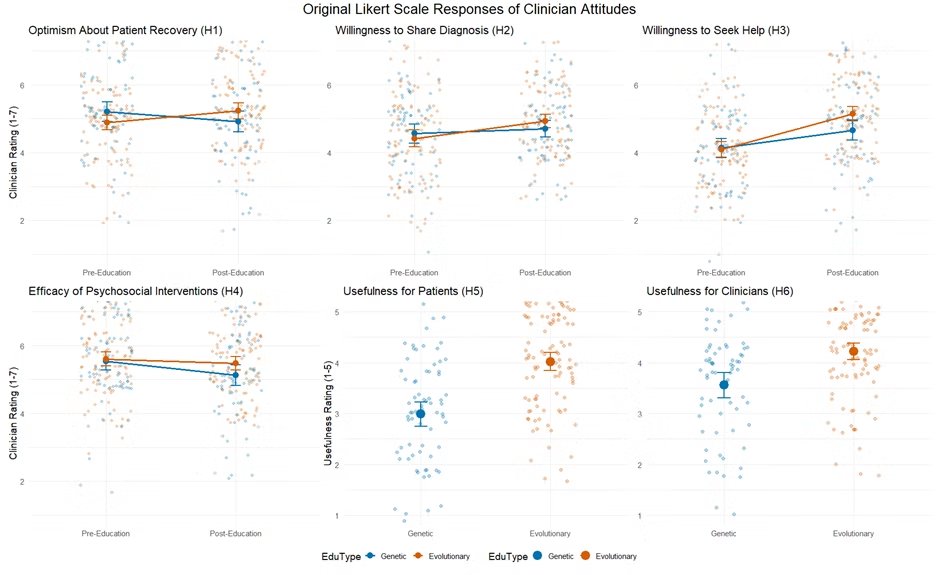
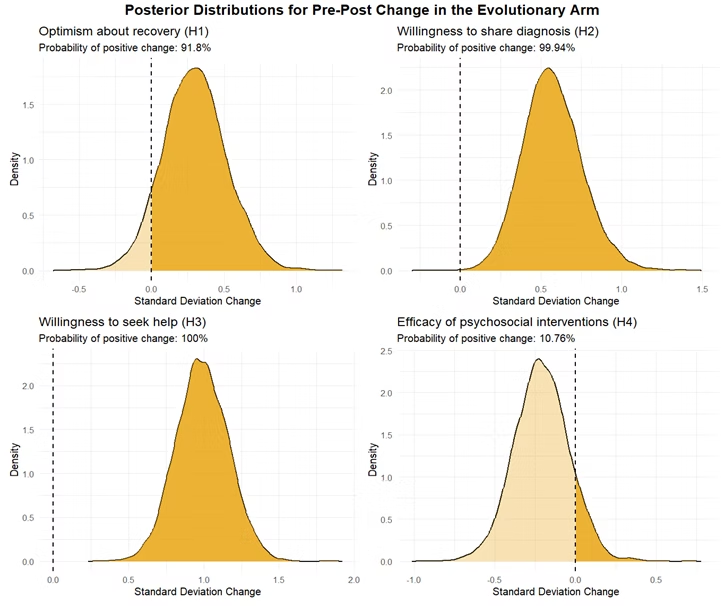
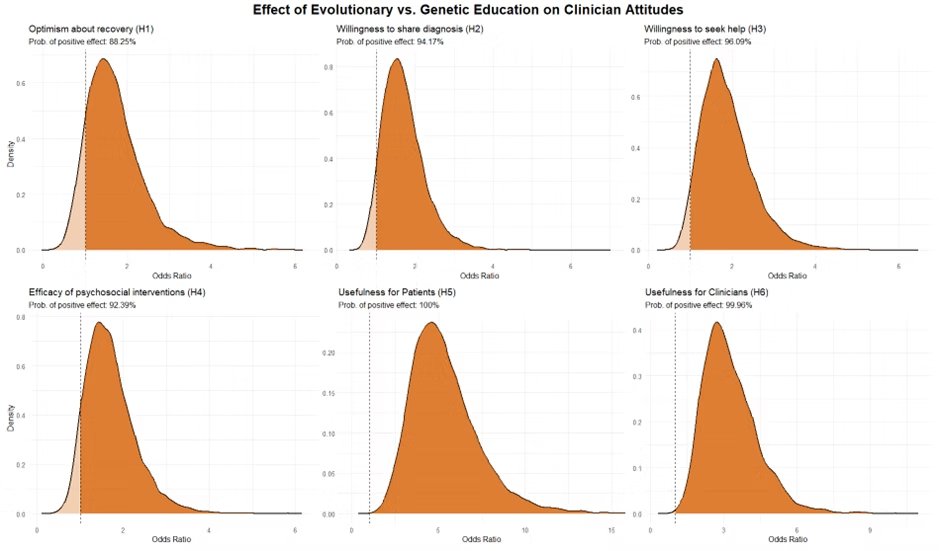
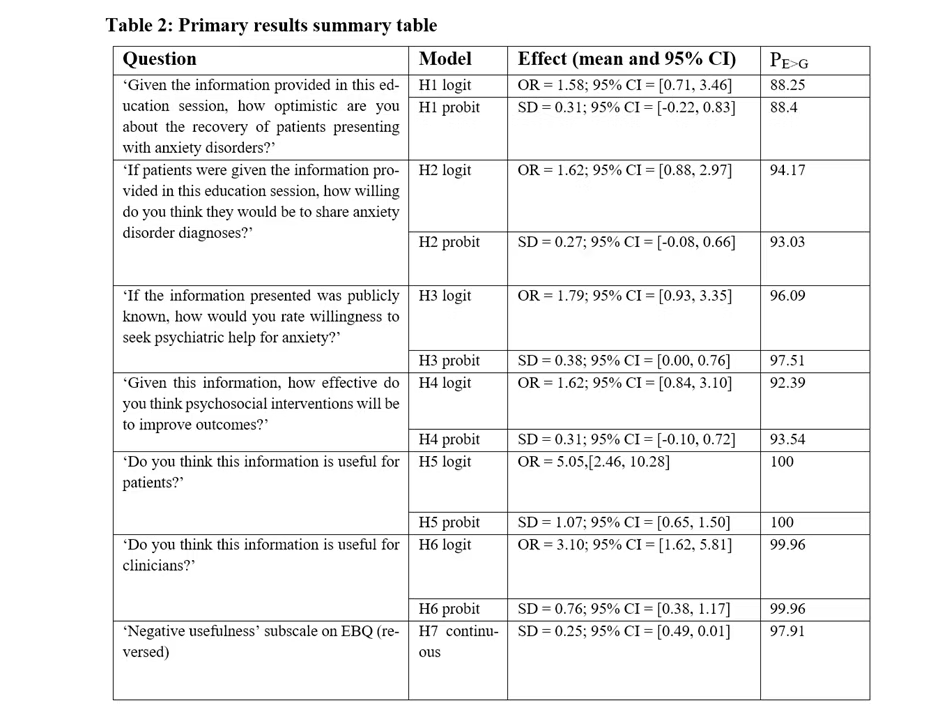
Evolutionary explanations of anxiety rated as 5x more useful for patients and 3x more useful for clinicians than genetic explanations of anxiety!
Our paper is the largest RCT of evolutionary explanations to date!
19
91
353
42,399
Status anxiety is rational in a species where status determined access to mates, resources, and allies for two million years. Social media didn't create the wound! But it did remove every natural ceiling on how many people you can measure yourself against.
3
9
363
Jun 12
Disgust evolved to keep us away from pathogens and toxins. Then it got recruited for moral and social judgement — contamination, purity, the "unclean" outsider. Perhaps a lot of human cruelty runs on an emotion that started as food safety. Worth knowing where your moral intuitions come from!
4
12
468
Adam Hunt retweeted

But, I’m honest when I tell you that an evolutionary explanation really helps soothing my struggles.
1
2
313
Jun 10
Proud to say that we were awarded Article of the Month by the Royal College of Psychiatrists!
Editor-in-Chief Gin Malhi: "The study is simple, elegant in design and has yielded interesting and translatable results that can potentially be implemented immediately – making it a must-read article."
cambridge.org/core/blog/2026…
May 7

🚨Just published in the British Journal of Psychiatry!🚨
Evolutionary explanations of anxiety rated as 5x more useful for patients and 3x more useful for clinicians than genetic explanations of anxiety!
Our paper is the largest RCT of evolutionary explanations to date!
5
13
44
6,965
Jun 10
We pathologise the kid who won't sit still, the adult who can't focus, the teenager who sleeps wrong, the griever who grieves too long, the worker who burns out. At some point the sheer number of "disorders" should make you suspect often the problem is the yardstick, or the environment , not the people.
3
6
18
735
Jun 9
What would psychiatry look like if we assumed humans weren't evolved? Samir Okasha's "methodological creationism" thought experiment is one of the most clarifying moves I've seen in this debate. Webinar coming up - 25th of June 6pm BST. Link Below:
2
1
13
642
Jun 9
1
268
Jun 5
Everything has been AI AI AI recently - but I do wonder if it's a distraction for some of these huge shifts going on underneath the surface: will the dollar still hold it's centrality in five years? ten? twenty? a hundred? And what will society look like afterwards...
Jun 5

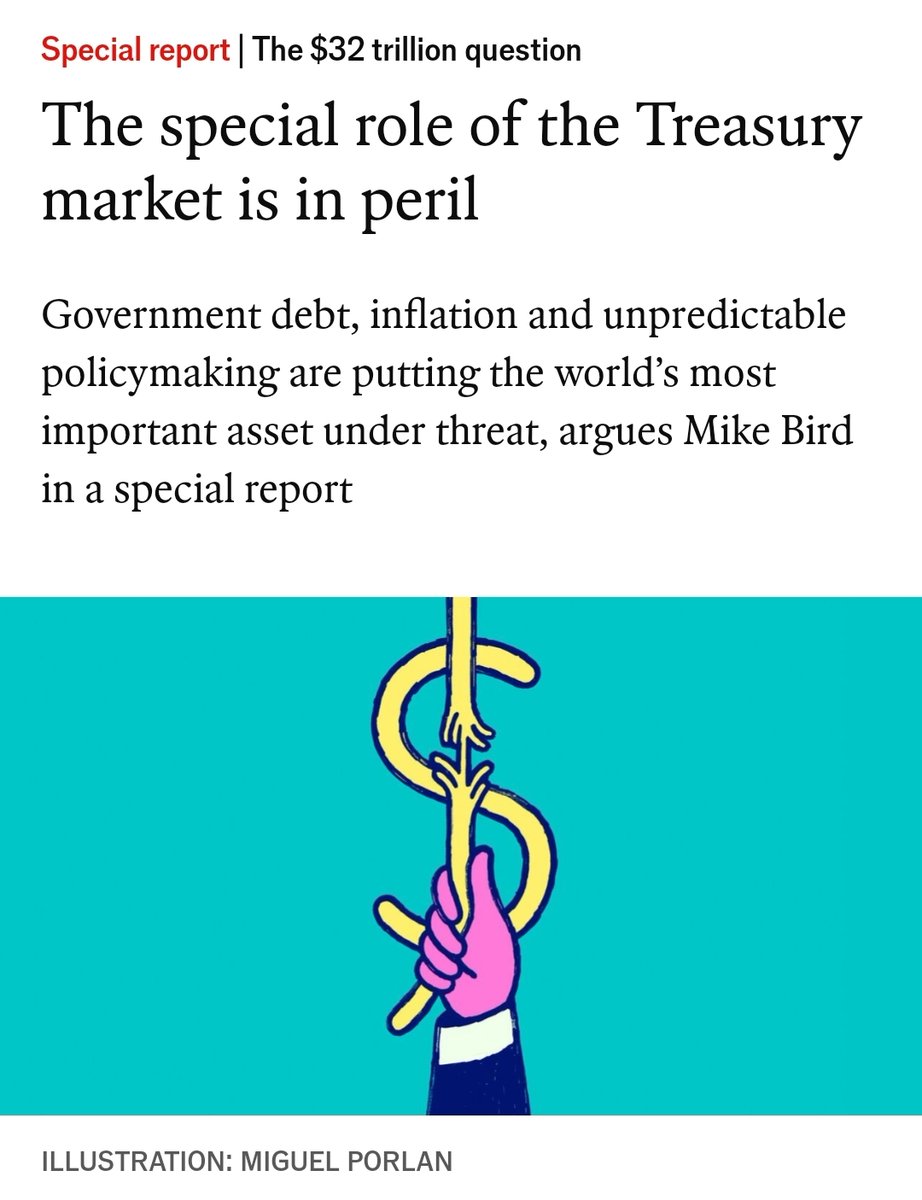
I've written our finance special report this year (one of the few bylined pieces in The Economist!) It's on what I see as the decaying status of US Treasuries, the world's only real safe asset, and the worrying long-term problems for global finance as that role is eroded.
1
137
Adam Hunt retweeted

1/9 🚨 BREAKING OUT OF STEALTH MODE 🚨
Multivariate GWAS in Genomic SEM now runs on a laptop!
New preprint package update: a closed-form analytic solution makes multivariate GWAS ~800× faster, cutting runtimes from hours on HPC clusters to minutes on a personal computer.
1
7
27
6,932
Adam Hunt retweeted

"On land, Clay Marzo struggled. Eye contact was hard. Small talk was harder. People thought he was rude, distant, difficult. In the water, he was untouchable. By 15 he had landed the first two perfect 10s in national surfing history. Coaches could not explain how he read a wave before it formed. At 18, Clay was diagnosed as autistic. Suddenly it all made sense. The intense focus, the obsession with the ocean, the way his brain locked onto patterns no one else could see. The thing that made him “different” on land was the exact thing that made him a genius on water" youtube.com/watch?v=6mMLSFVu…
4
20
2,562
Jun 3
Today is a very special day for me! It is marked in my calendar as the anniversary of 'The Talbot Thought'. And this year is the ten year celebration!
Ten years today, 3rd of June 2016, I was working as a night porter in The Talbot Inn, Ripley. It was an absolutely dream job. I was paid a decent bit above minimum wage to work alone in an old hotel from 11pm until 7am, four nights a week.
I was paid to be alone with my thoughts and the internet! It was the ultimate luxury. On 3rd June 2016, I was just over six months in. I had played with many ideas. It was that night that I came across the idea which I would dedicate myself to.
Browsing the Wikipedia for 'schizophrenia' on a whim, I recognised the schizophrenia paradox (how does a common, harmful, early onset condition persist so frequently in the population) and it set me off thinking about evolutionary explanations for mental disorders generally. I realized that this was a huge scientific problem of huge social importance. I threw myself into it from that day onwards. And it has now been ten years!
The personal progress I have made in those ten years - going from night porter to Norfolk countryside to write a book, to PhD in Zurich, to now, postdoc in Cambridge - has been a privilege at every stage, and incredibly gratifying. And I've come a long way.
There's still a long way to go, but year by year, I have been able to make progress in the key problems which I could see faced the implementation of these ideas: first and foremost I saw we needed better methodologies and concepts, so I worked on an improved scientific method for conducting evolutionary psychiatry, and a strongly reasoned argument for how and why neurodiversity evolved. That was the subject of my first book draft (never published - and never to be published in that form - but eventually turned into both my PhD and eventual book), taking from 2016-2019.
When finishing that first book I had no idea I would turn it into a PhD - but in the end that was the obvious option.
It was also when finishing the book that I faced the reality and realized that a good idea - even in book form - is not enough to change the world. It needs a lot of work to put into action - words need to not just be written, but heard, and listened to - cared about, made convincing, and improve people's lives.
This was 2019, and was when I started getting involved in the evolutionary psychiatry community - which hadn't existed three years previously when I had first had my epiphany in The Talbot Inn and had searched online for anything related to the subject. I would find out later that in fact 2016, the year of my own spark of interest in this field, had also been the year that EPSIG at the Royal College of Psychiatrists was established. Serendipity!
What I have been able to get done since joining Zurich is more part of the official record and my CV, so I won't dwell on it; but I will perhaps make note of my motivation and rationalisation.
After getting the improved method, concepts and theory out in solid form - which I saw as necessary foundations to be able to confidently approach the world - the question then became 'how do you actually change things for the better'. This is a hard problem, requiring more of an understanding of social dynamics, politics, academia, and lots of different incentive structures. There have been several missing pieces from the field, which I have now sought to fill. Firstly, public materials. There simply hasn't been enough accessible high quality content out there about evolutionary psychiatry. When I got interested in the field, I found basically nothing (a couple of old books and scattered academic articles were the exception). That backlog of content needed to be available for anyone to be able to deep dive if they wanted. I'm still working on this with the podcast, and with my colleagues via the EPSIGUK YouTube channel, which I was happy to revitalize and help create content for (...)
3
1
14
613
Jun 3
Secondly, research of direct practical impact of evolutionary approaches has been missing. Again, this is something that I've been working on, both in my postdoc and before, with the assistance of Tom Carpenter and many many UK psychiatric trainees who were willing to give their time. I'm keeping this up too. Thirdly, networks of researchers and clinicians who could convert the ideas into action were lacking - we have been slowly building this up, both in clinicians via EPSIG and academics through symposiums and workshops. Fourth, funding for the field and institutional support is weak - there are no departments, centers, or charities working on it. We've also now set this up, with the Foundation for Evolution and Mental Health, the first dedicated charity which can support research and education in the field. We haven't been able to support substantial work yet, but we have been active in creating high quality content which makes the case for the field and lays out a plan of action.
All these four elements are ultimately about buy-in. The mental health space is crowded, people are busy. Creating resources to educate is necessary; creating evidence that the ideas matter is necessary to encourage people to take up that education; having networks to collaborate on these problems is necessary; being able to fund those people is the next necessary step in allowing a fully fledged field to grow.
So, ten years on, where do I stand? I think I can be proud. The growth of the field is slower than I would have liked, but these are complicated problems. It's all moving in the right direction. I am not stopping.
We need more support - we need more people working in this field - but I am happy to say that it's definitely no longer just me. There are a few high energy, bright people who are now turning towards the field, and I am extremely optimistic about what we can achieve, with a relatively small team and relatively little funding. We know the directions to travel in! We just need to keep going. It won't be easy - it's a lot of work - and a lot left to do - but the excitement of working on such an important problem is more than enough to keep me motivated.
I had no idea all this would occur ten years ago on that night in the hotel. I just knew it was important enough that I had to make it work. That conviction remains - along with the lack of idea of exactly how it will all work out over the years ahead! But the ideas are still strong enough - so success is inevitable.
Happy anniversary of The Talbot Thought!
5
194
Jun 2
Of course, some of psychiatry's "treatment-resistant" cases may just be cases where the treatment was aimed at the wrong level. You can't always pharmacologically fix a problem that lives in someone's job, marriage, or total absence of community.
4
151
May 31
New podcast episode on a topic I've been captivated by recently...
It took 200ish years before engineering started using physics. It's been almost 200 years since biology got its fundamental theory. Applying it properly will unlock psychiatry youtu.be/1iNS9fdc480
3
8
748
May 28
Super interesting finding - and what you'd expect if dimensions & spectrums related to mental disorders are adaptive, with the extreme & most harmful cases as maladaptive vulnerabilities

Nature research paper: Distinct genetic architecture in the tails of complex traits
go.nature.com/4v6KGUa
4
5
663
May 28
Happening Today, 28 May, 6pm BST:
WPA Evolutionary Psychiatry webinar with Iain Campbell (Edinburgh):
"An evolutionary perspective on metabolic and circadian dysregulation in bipolar disorder"
Register: buff.ly/192izGf
2
152
Adam Hunt retweeted

May 26
For @PsychToday, I wrote about an extraordinary new study (led by @realadamhunt) showing that the stories we tell about anxiety are just as important as the anxiety itself - and how the conventional “broken brain to be managed with drugs” story harms patients. 1/4

7
19
99
12,955
May 24
Why do metabolic and circadian systems break down together in bipolar disorder?
Iain Campbell (Edinburgh) brings an evolutionary lens to this question — Thursday 28 May, 6pm BST. Free WPA EP webinar.
Register: buff.ly/192izGf
1
5
541
May 19
Reminder: free WPA Evolutionary Psychiatry webinar this Thursday 28 May, 6pm BST.
Iain Campbell (Edinburgh) on "An evolutionary perspective on metabolic and circadian dysregulation in bipolar disorder"
Register: buff.ly/192izGf
1
5
252
May 17
New season of the Evolving Psychiatry podcast is starting, released every Sunday, 12 episodes in the works! Kicking off with the renowned @AllenFrancesMD
youtu.be/P9iErs1i8FM?si=FW5V…
1
3
11
6,123