Joined October 2018
- Tweets 8,201
- Following 411
- Followers 188
- Likes 3,847
1,387 Photos and videos


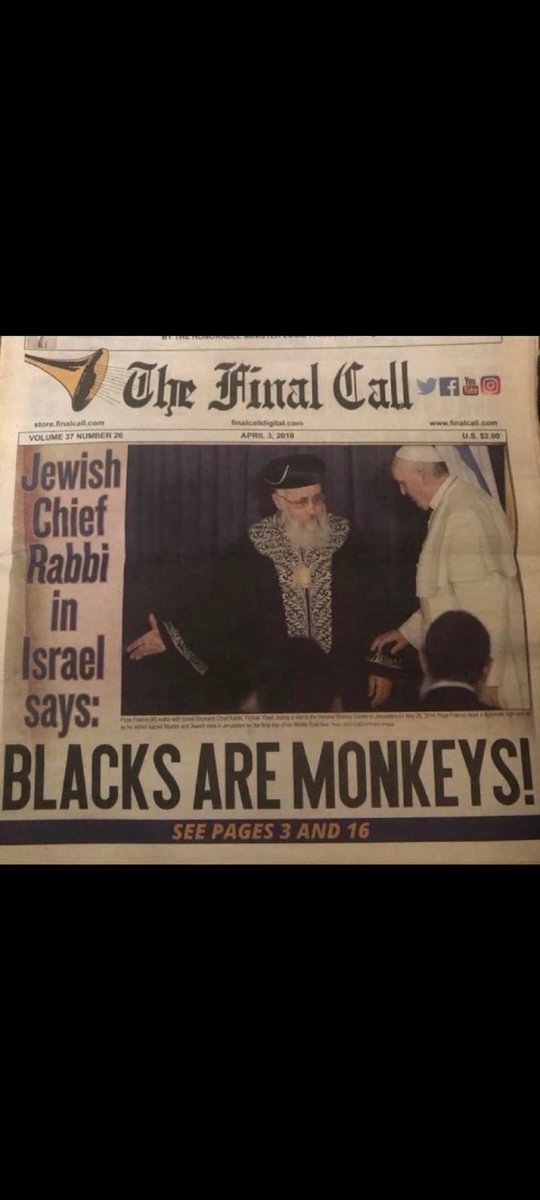
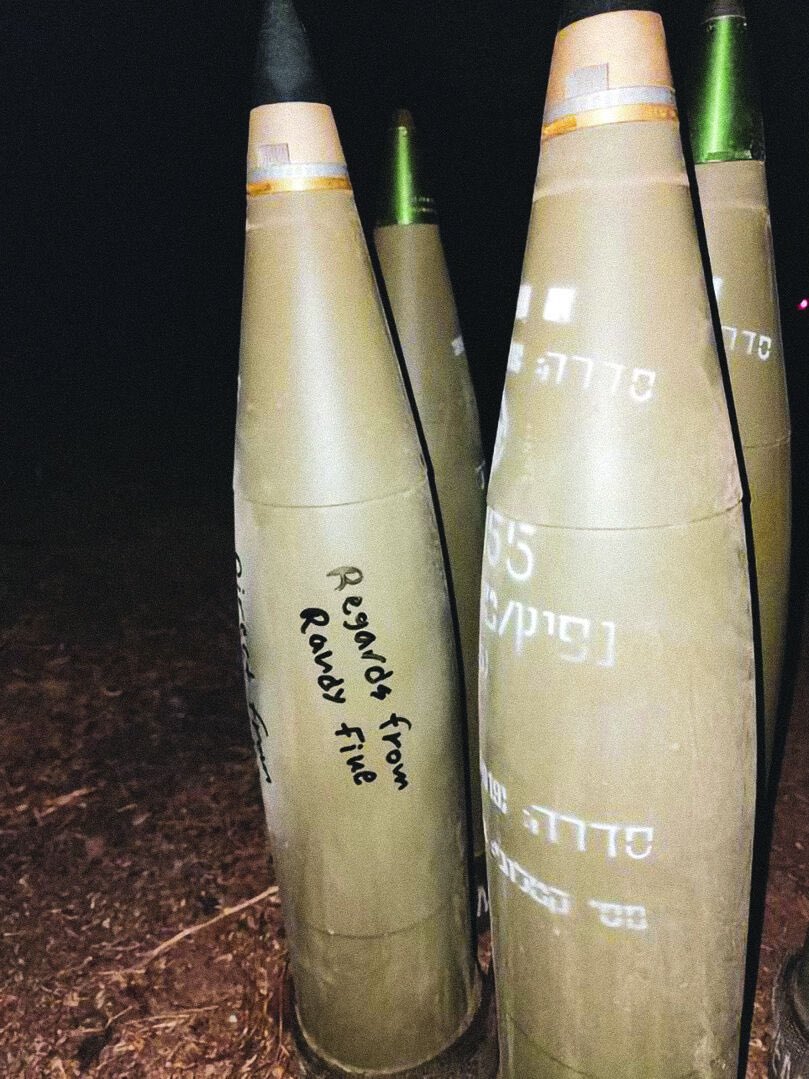




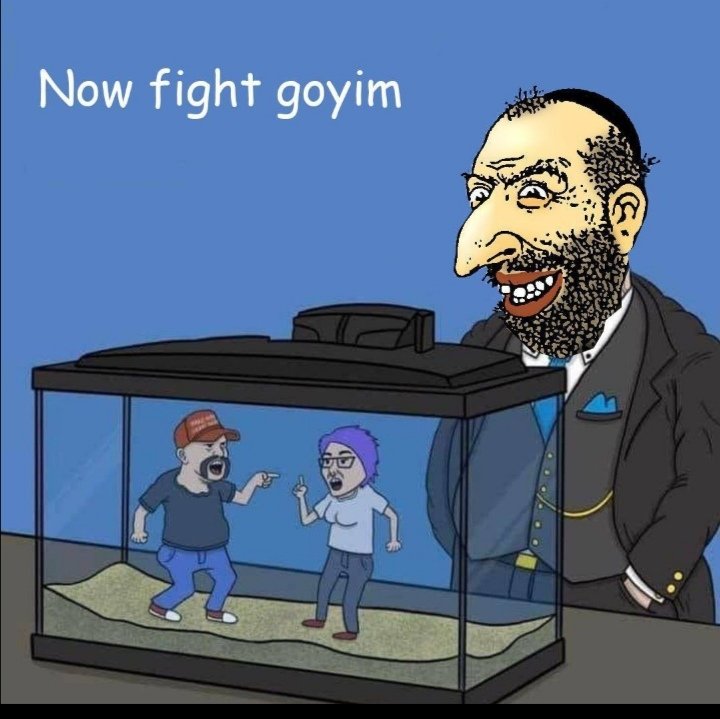

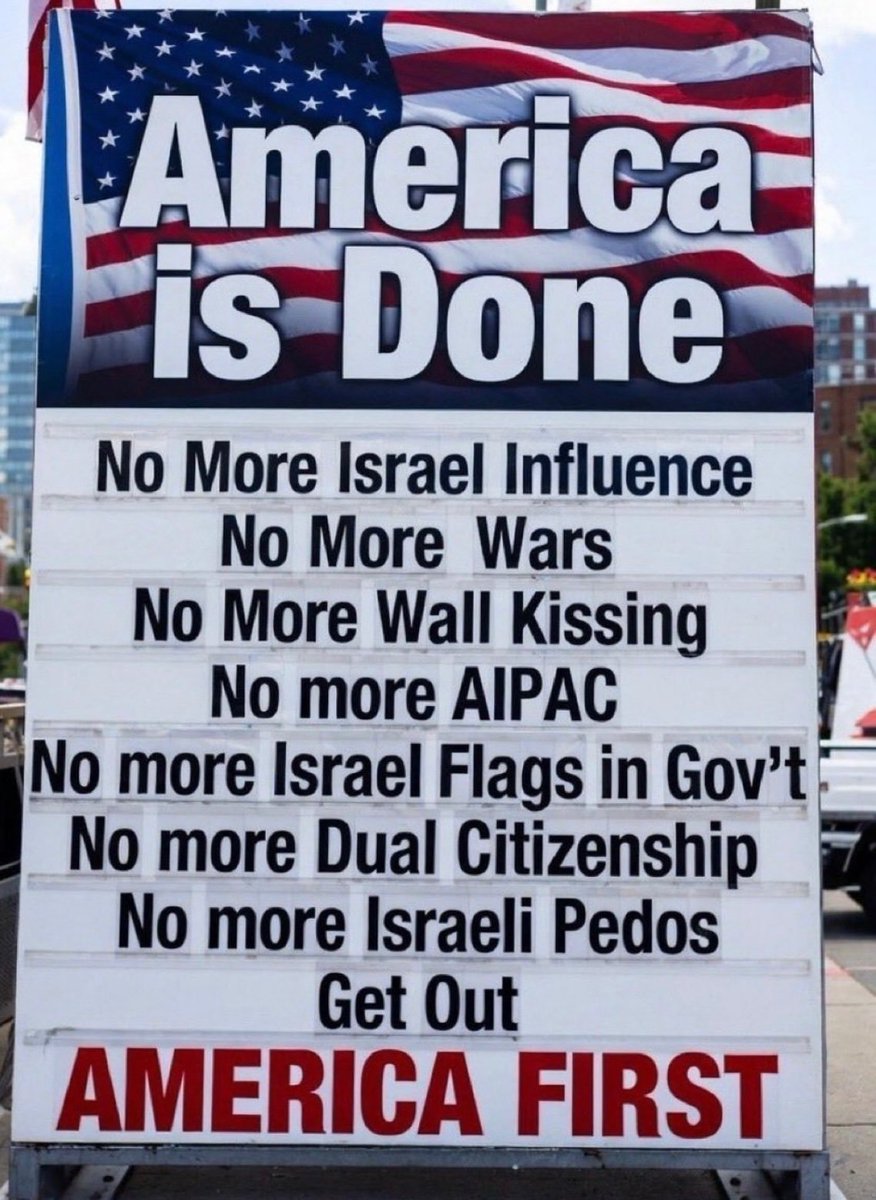
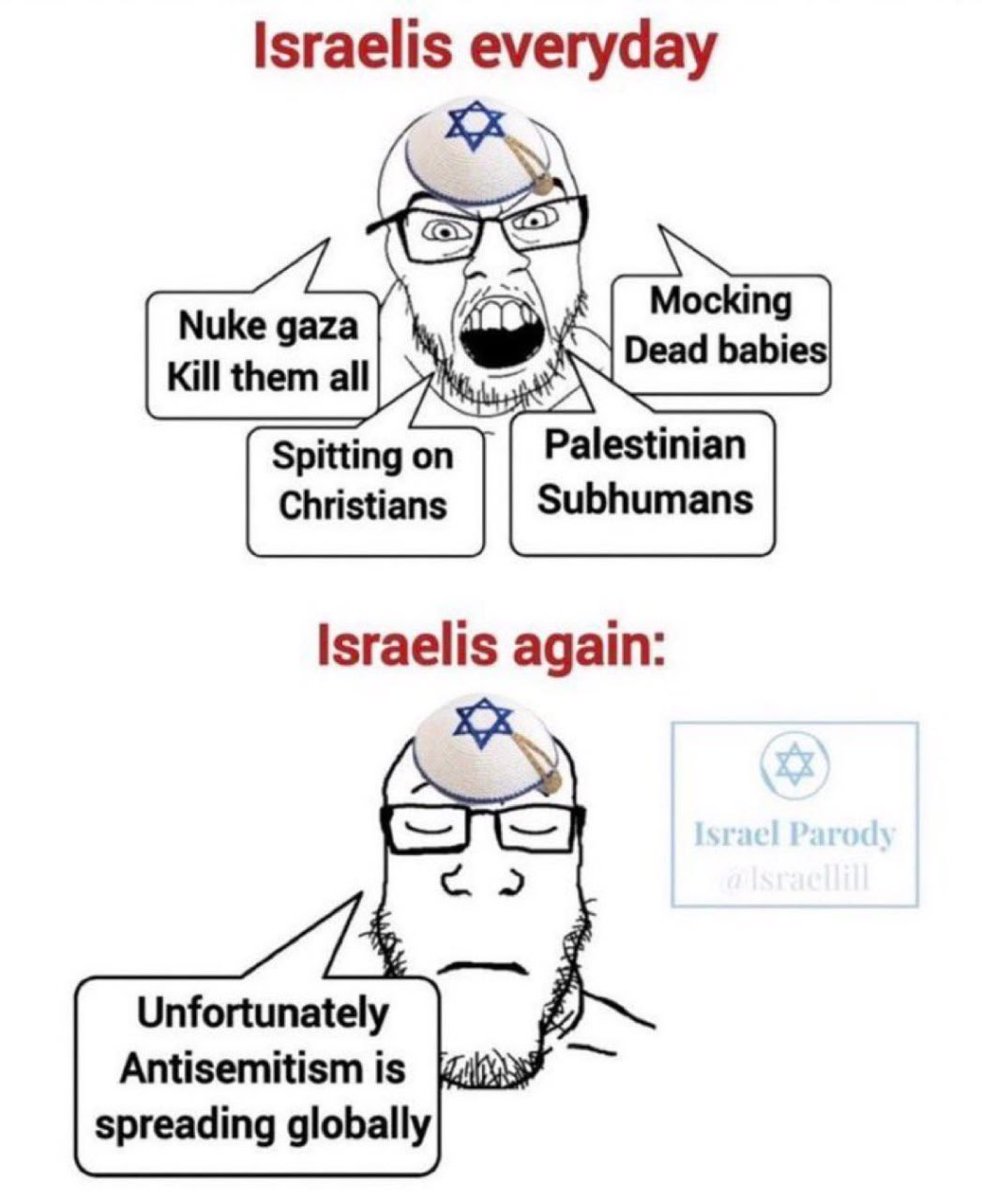

The temple had been destroyed hundreds of years before. Al Aqsa was built on an empty lot. You destroyed the oldest Christian church in the Holy Land last year. Christian churches still stand throughout Istanbul. IDF soldiers defecated in a church in Lebanon a month ago.
1
1
38
I want to say something in this space 🔊 loud and clear,
To curb Terrorism and banditry and terrorism in all its form we must
!, Cut ties with the supreme powers from having missions or embassies in our land especially the United States, France,china,Russia, turkey
!!, go back
1
1
14
Secondly we must restructure our federal system to be true federalism or regionalism
!!!, we must focus on agriculture and mining sectors
But, Alas our leaders are bad and corrupt they enjoy the endless suffering of the masses. But one day Nigerians will wake up, I hope early.
1
5

Jun 13
We Nigerians don't want state police, anything U see an oyibo man clapping for, is a deception. Especially cuny people like Riley moore

It is deeply disturbing and wildly hypocritical that U.S. politician Riley Moore is quietly working behind the scenes with Washington to pressure, bully, and strong-arm Nigeria into creating a state policing system.
Thanks to this relentless diplomatic campaign, endless foreign lobbying, and indirect threats of secondary economic sanctions, the spineless union of comprador elites at the Nigerian House of Representatives has unilaterally voted for the approval of this dangerous Bill.
This means state policing will soon be codified into the Nigerian constitution and officially signed into law.
What is even more terrifying and deeply depressing is that a sweeping majority of ordinary Nigerians are actually sitting idly by, clapping enthusiastically, and cheering passionately for this legislative Trojan horse to be passed and codified into law. This tragic ignorance is somewhat understandable since our hopelessly compromised media outlets, corrupt television pundits, and American grant-chasing activists have been heavily whitewashing, glorifying, and aggressively sanitizing this Bill.
All of a sudden, the manufactured narrative is that state policing will miraculously solve the insecurity crisis, magically end the rampant kidnappings, and immediately stop the bloodshed. The lie being sold is that it will allow the state governors of the federation to properly coordinate their local forces, deploy tactical teams, and respond swiftly to terror attacks, rural banditry, and highway kidnappings without the usual suffocating bureaucratic hurdles.
First of all, this is a blatant lie cooked straight up in the deepest pits of hell purely to appeal to the raw, bleeding emotions of ordinary Nigerians who are already exhausted victims of this daily insecurity. To clearly see why this is a massive deception, please permit me to enlighten you that the chronic insecurity in Nigeria is absolutely not happening because the state is simply unable to properly control its policing units, direct its tactical squads, or manage its intelligence networks. Insecurity in Nigeria happens strictly due to a severe, intentional, and catastrophic governance vacuum.
In many parts of Nigeria, there is a sharp, heartbreaking contrast in the standard of living between the political elites living in the fortified cities and the neglected masses living deep inside the rural, agrarian communities. The state capital and a tiny handful of commercially successful towns are the only places where all the functional government institutions actually exist. This neatly includes the lucrative revenue collection offices, the sprawling supreme courts, the heavily fortified police headquarters, the massive military barracks, the well-paved road networks, the exclusive government hospitals, and the elite private schools. Meanwhile, in the distant rural communities, these critical state institutions are practically and deliberately absent. The only visible signs of government are a handful of decaying health centers, roofless community schools, abandoned water projects, and ghost clinics, all of which are violently underfunded, hopelessly neglected, and operating far below basic human capacity.
This massive vacuum is exactly where opportunistic foreign NGOs, radical Islamic clerics, and wealthy Christian missionaries swoop in to completely fill the void. In Northern Nigeria, which is the birthplace of Boko Haram and where over 90% of the terrorism in Nigeria violently takes place, there are reported to be more than 20 million supposedly out-of-school children. But these children are not technically out of school. They are actively being educated informally in isolated Islamic temples teaching strict Wahhabi-Salafi Islam, which is a highly distorted, weaponized version of the religion that brainwashes the pupil to violently hate the secular state, despise democracy, and view any modern scientific progress, secular education, or constitutional law as a direct threat that justifies establishing an Islamic caliphate. It is crucially important to know that this aggressive Wahhabi interpretation is not the original, peaceful version of Islam practiced globally. It was systematically cooked up, heavily funded, and aggressively exported by Saudi Arabia directly following an explicit request by the American government during the Cold War era. Most of the fierce Mujahideen that fought brutal guerrilla warfare against the Soviets in Afghanistan, as well as several top ISIS commanders, Al-Qaeda operatives, and regional warlords, were proudly produced straight from these exact ideological schools. It must also be loudly mentioned that Saudi Arabia has poured hundreds of millions of dollars into Nigeria just to establish these Wahhabi schools, radicalize the youth, and build sprawling mosques. Even the very first founder of Boko Haram, Muhammad Yusuf, was thoroughly educated by these foreign-backed Wahhabi scholars, and he even eventually traveled to Saudi Arabia to further his radical studies, secure dark funding, and build lethal connections before returning to Nigeria to set up his terrifying Boko Haram terror networks. Not only are these foreign religious institutions brainwashing Nigerians in the North, but they also effectively provide all the basic social services that the actual government (which is too busy looting in the cities) is completely unable to provide. These desperate services include daily feeding, basic healthcare, conflict resolution, rudimentary shelter, clothing, and financial handouts. And this dangerous phenomenon is absolutely not exclusive to Northern Nigeria alone. Similar foreign-funded religious centers, evangelical cults, and shadowy NGOs exist heavily even in the South, but they all have their different setups, distinct financial architectures, and operational doctrines that heavily depend on the specific foreign interests exploiting that region.
So effectively, the rural communities across Nigeria function as an entirely separate state within a state. This makes it structurally impossible for federal intelligence agencies to gather reliable, actionable information because the deadly rebels, bandits, and terrorists are usually recruited directly from the impoverished villagers, thanks to years of intense religious brainwashing, economic desperation, and systemic neglect. The innocent villagers cannot even help the state because, even if they clearly see heavily armed terrorists regrouping, stockpiling weapons, and setting up massive mobile camps right inside their farmlands, they have absolutely no modern way of quickly passing these critical tips to law enforcement. Furthermore, the poorly armed local vigilantes are always tragically overwhelmed, outgunned, and stretched incredibly thin, busy battling petty thieves, settling mundane local disputes, or fighting off heavily armed cattle rustlers, so there is very little they can actually do.
So it is painfully clear that these ruthless rebels are able to effortlessly coordinate devastating attacks in Nigeria because their hardened fighters are recruited directly from the local villages, they understand the harsh geographic terrain far better than the suit-wearing security chiefs in Abuja, and the Nigerian state is completely, embarrassingly lacking in basic Human Intelligence (HUMINT) because they are effectively, arrogantly disconnected from the very people they claim to govern.
So that begs the screaming, million-dollar question: How exactly is this highly celebrated state policing bill supposed to magically address any of this? There is basically zero structural provision for this underlying social rot, and if anything, things will only get spectacularly worse.
This is not idle hearsay, wild speculation, or political conspiracy. It is basically written right there in the fine print of the new bill currently being aggressively pushed, heavily funded, and enthusiastically supported even by Washington to be codified into law. The new Bill explicitly dictates a messy, convoluted structure where the states shall only inherit 60% of the operational police officers in the region, while the remaining 40% percent stubbornly belongs to the federal government. This ridiculous mathematics means that under this new experimental system, the state governor, who is supposedly getting his own independent, highly effective police unit, will immediately be forced to operate at a massive, crippling disadvantage. Because if 100 percent of the entire centralized policing unit in a state cannot currently fix the insecurity, stop the kidnappings, or defeat the bandits, how in the absolute hell is a fractured, poorly funded 60 percent supposed to pull off that miracle?
To make things infinitely worse, if you actually sit down and study the legislative text closely, things get even more terrifying. For example, the underlying operational framework dictates that the existing police command and control centers, the massive training academies, the sprawling barracks, the heavily fortified armories, the forensic laboratories, and the central communication hubs in the state all remain exclusive federal government property. This guarantees that once a so-called state police unit is established, the governors would then have to magically conjure up tens of billions of Naira. Not only would they have to spend aggressively on mass recruitment just to fill the massive 40 percent personnel gap absorbed back by the federal government, but they would now also have to practically build a new police force from absolute scratch. They would have to construct brand new barracks, buy thousands of armored patrol vehicles, procure heavy tactical assault weapons, purchase expensive riot gear, build local detention centers, and acquire modern communication radios just to be able to physically police their own state. This means that many bankrupt states would have to painfully wait for decades before they can even improve their basic security infrastructure. State governments will obviously, ruthlessly prioritize funding this bloated security apparatus over building new public schools, repairing collapsed bridges, or properly funding dying healthcare centers. As for the many heavily indebted states in the North that are already engulfed in violent flames thanks to the relentless Boko Haram insurgencies, raising this kind of capital is mathematically impossible. They will simply collapse completely into total anarchy, warlordism, and chaos because there is absolutely not sufficient internally generated revenue from these states to ever justify, fund, or sustain such massive, white-elephant policing projects.
Now this begs another screaming, million-dollar question: What is the actual, hidden purpose of this new state policing law if not for pure, unadulterated political madness? This disjointed system will obviously, violently disrupt Nigeria's already fragile efforts to handle national security. The astronomical money that each impoverished state is expected to blindly cough up just to set up individual barracks, buy armored personnel carriers, establish forward operating bases, and procure basic tactical gear will run into the billions of dollars. And this massive financial bleeding is only just to get the symbolic, highly politicized police force somewhat operational, not even to actually fight the violent crime it was supposedly designed to defeat. The staggering capital required for this vanity project is comfortably enough to purchase dozens of highly advanced MQ-9 Reaper drones. These military-grade aerial beasts have the terrifying ability to stay airborne for up to 27 continuous hours, and a single drone can effortlessly patrol the entire dense forests of any individual state in Nigeria in less than one hour. If each state simply had about four of these unmanned beasts, they would have more than enough technological equipment to permanently crush crime in their regions. These drones come heavily equipped with state-of-the-art Multi-Spectral Targeting Systems, high-resolution infrared thermal cameras that can easily see human body heat through thick forest canopies, Synthetic Aperture Radar for all-weather tracking, laser designators for precision strikes, and deadly Hellfire missiles to vaporize terrorist camps. The billions about to be senselessly wasted on building useless concrete barracks, sewing colorful new uniforms, and purchasing outdated assault rifles for this new parallel policing unit would be put to infinitely better use if channeled into mounting solar-powered, high-definition CCTV cameras that span the entire road networks of the federation, thereby finally giving law enforcement enough hard data, facial recognition tracking, and real-time intelligence to actually fight crime. Right now in Nigeria, all we ever hear is that innocent people are getting kidnapped on the expressways, and that is tragically it. There are absolutely no CCTV footages capturing the exact license plate numbers of the operational vehicles doing the kidnapping, no aerial surveillance tracking the escape routes, no thermal imaging pinpointing the forest hideouts, no encrypted digital communication among patrol units, and no automated biometric databases. As a result, our brave but poorly equipped law enforcement officers are forced to operate completely in the blind, analog darkness.
This is precisely why every single Nigerian needs to immediately forget about the distracting World Cup tournament, get off social media banter, and urgently download this new, highly toxic Bill that is about to be quietly smuggled, stamped, and codified into the constitution. This new piece of legislation needs to be aggressively studied, dissected, and exposed because it has the absolute, terrifying potential to completely collapse our entire existing security infrastructure within the next five short years. This is exactly what our highly paid TV pundits, morning show hosts, and public intellectuals need to be aggressively talking about. Not the trivial football banter, not the celebrity gossip, and definitely not the South African immigration crisis. Our innocent women and defenseless children are currently sleeping in terrifying, bandit-infested forests, being held for multi-million Naira ransoms, and this brutal reality should obviously anger us, deeply bother us, and violently push us to fight for a genuine, structural change. Instead, everyone seems to be getting dangerously comfortable, disturbingly docile, and completely brainwashed by this state-sponsored propaganda aggressively claiming that creating 36 heavily armed, underfunded, and politically loyal state militias will somehow magically reduce insecurity when codified into law.
This is far beyond ridiculous. It will only maliciously deflect desperately needed funding away from the most critical, life-saving institutions in a state just to set up bloated barracks, buy expensive parade uniforms, and build lavish offices to house what will inevitably become glorified, armed government thugs. This is absolutely not a baseless rumor, a cynical theory, or an unfounded fear. Nigeria has heavily practiced state policing before, specifically during the pre-1966 era known as the chaotic First Republic, where regional governments commanded the notorious Native Authority Police. The security situation of the country back then was so violently bad, so fiercely tribal, and so politically compromised that it could easily be compared to the bloody warlordism era in China, where different parts of the country were brutally governed by different, heavily armed warlords. When this decentralized state policing was actively being practiced in Nigeria, the powerful regional premiers and governor did not use the men in uniform to fight actual crimes, protect the vulnerable, or secure the borders. Instead, these armed units were viciously deployed to aggressively rig regional elections on behalf of the ruling party, they were used to violently harass opposition candidates, they were dispatched to publicly humiliate, depose, and banish local traditional chiefs who were not completely loyal to the governor, they were weaponized to brutally crush peaceful tax protests, they were sent to extort market women, and they were transformed into ruthless, tribal hit squads.
These are absolutely not empty rumors or historical exaggerations. You can easily find these facts documented in any credible history book, academic journal, or archival record detailing Nigeria's political violence during the First Republic. This state-sanctioned madness, regional tyranny, and police brutality continued unchecked until the military intervened and the civilian government was violently removed from power. It was shortly after this total collapse of law and order that the military government, under General Yakubu Gowon, set up a specialized panel to deeply investigate the catastrophic state policing doctrine in Nigeria. Following the panel's stark, undeniable recommendations, the entire bloody sham of state, regional, and Native Authority policing was permanently dismantled, fully centralized into the Nigeria Police Force, and completely abolished in all its entirety. And that was supposed to be the absolute end of that monumental, deadly stupidity.
I am absolutely not a genius for pointing this out. All of this basic historical information spilled out here is public knowledge. U.S. politicians like Riley Moore and the foreign lobbyists pushing this agenda have all the intimate details, the historical data, and the risk assessments. Our utterly shameless, cash-and-carry media houses, who are subliminally brainwashing the public into believing that state policing is somehow going to magically empower state governors to tackle insecurity, fully know, see, and understand every single thing I am saying. They are deliberately ignoring the truth and merely reading the highly sanitized, deceptive scripts handed directly to them by their wealthy political paymasters, foreign grant-makers, and corporate sponsors, all just to comfortably convince exhausted Nigerians to blindly accept this suicidal Bill. When this legislative poison is finally codified into law, and Nigeria inevitably splinters, fractures, and gets violently reduced to a chaotic, warring wasteland like Libya, Somalia, or Sudan (which is absolutely not impossible), these exact foreign cartels, multinational mining syndicates, and global power brokers pushing so hard for this Bill will finally have all the chaotic time, the ungoverned space, and the perfect distraction in the world to violently, ruthlessly milk the trillion-dollar solid minerals buried deep in the Middle Belt region, the vast gold reserves in Zamfara, the lithium deposits in Nasarawa, and the endless, fertile lands of Northern Nigeria.
Every single Nigerian needs to urgently wake up, join hands together right now, and unilaterally, aggressively, and violently condemn, expose, and reject this utterly demonic, sovereignty-destroying bill before it is too late.
1
2
29

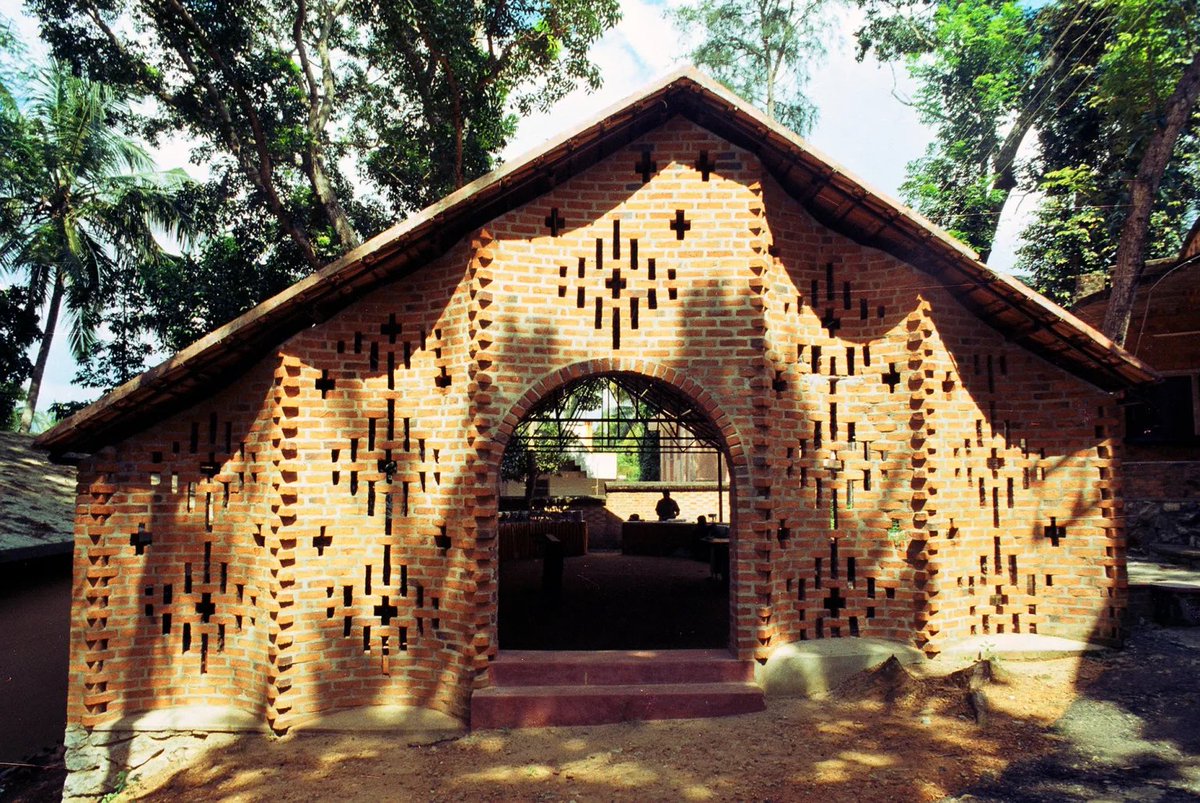
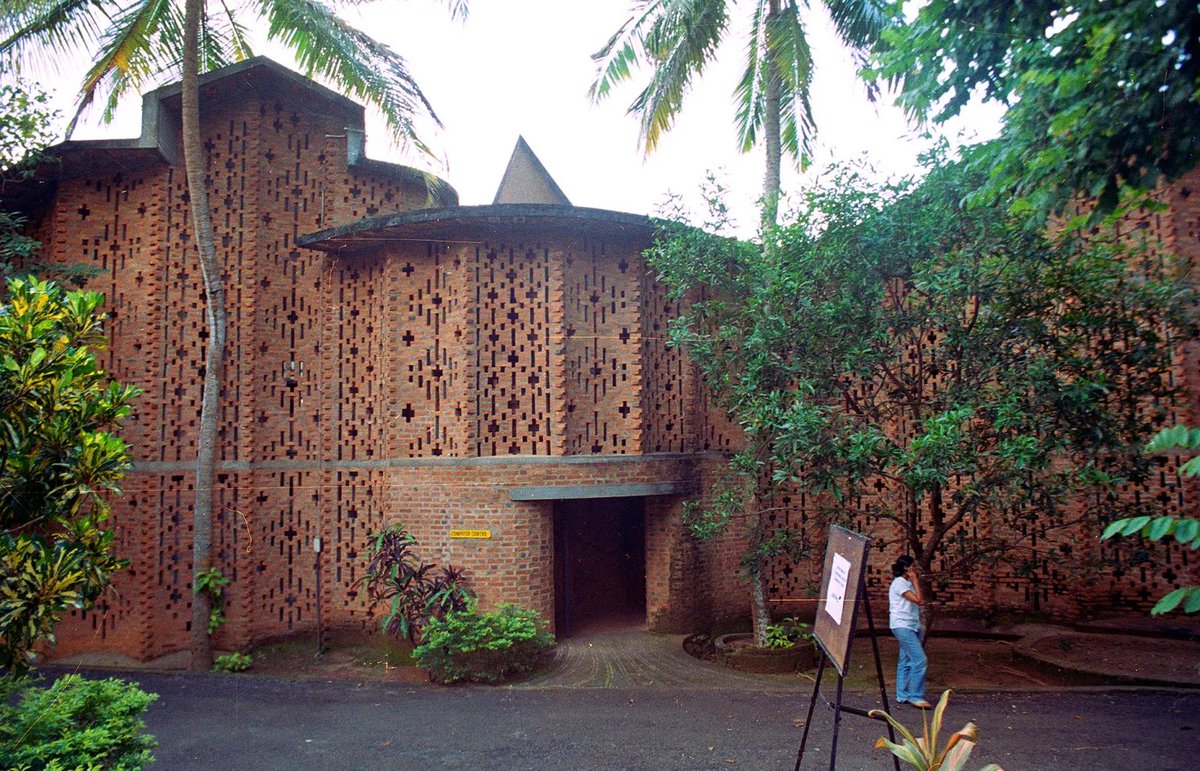
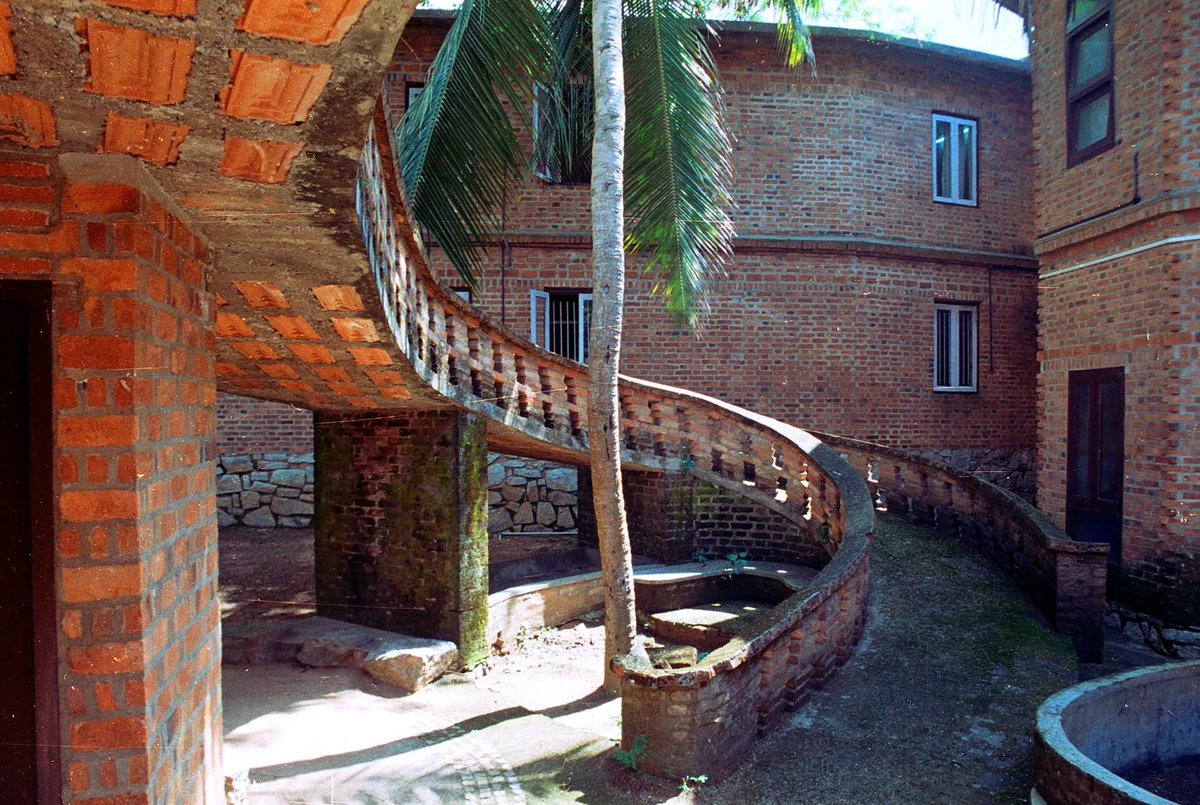
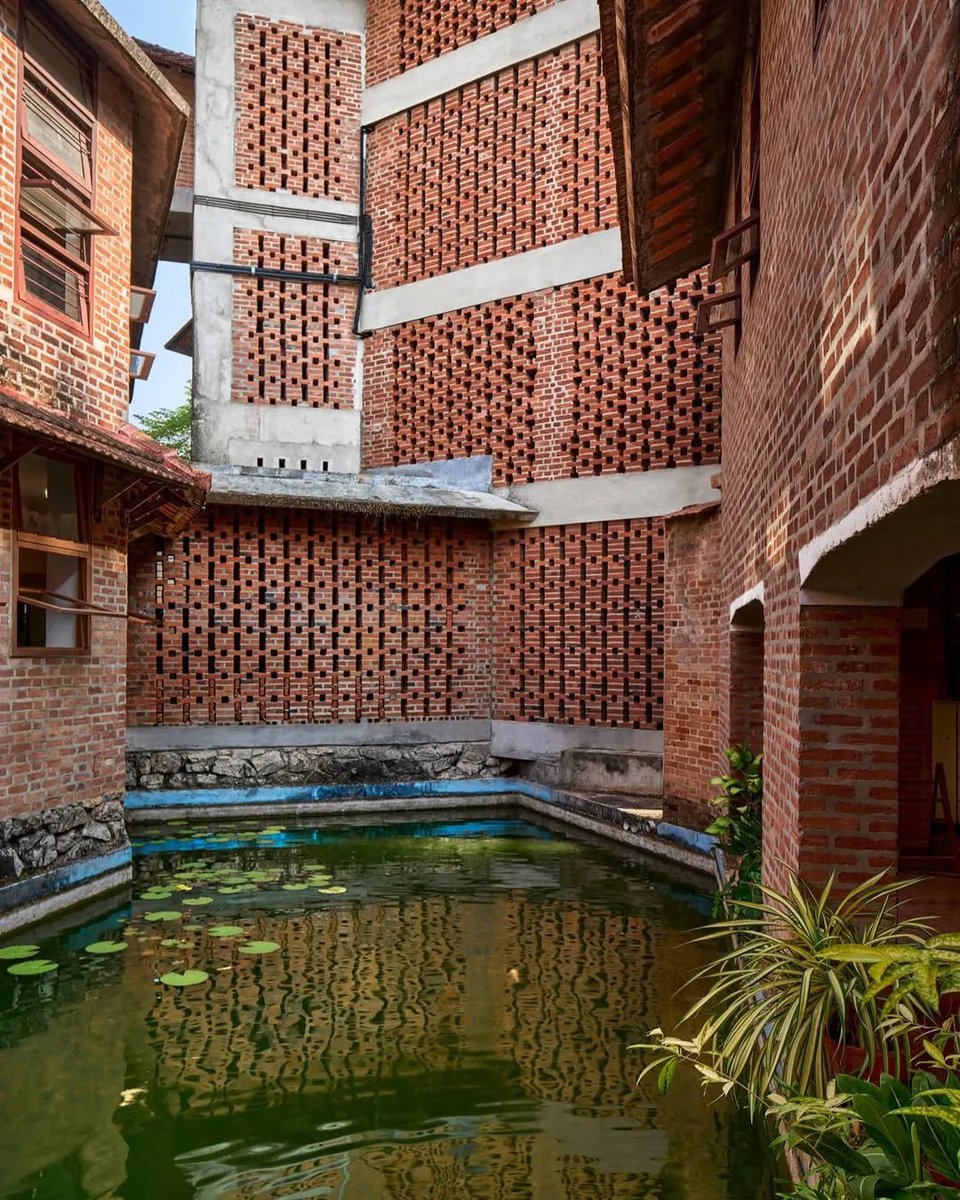
Laurie Baker was a British architect who moved to India, fell in love with brick, and spent his entire career being told he was wrong.
When he completed a cost-effective brick building in 1986, a government engineer publicly declared it would not last a year. His buildings from the 1970s are still standing. 
This is the Centre for Development Studies, Thiruvananthapuram, Kerala. Built in the early 1970s. Open courtyards, large windows and jali walls, intricate brickwork that enhances natural ventilation and lighting while maintaining privacy.  No plaster. No paint. Just brick laid with enough precision and variation that every wall has its own character.
Baker said it himself: “Bricks to me are like faces. All of them are made of burnt mud, but they vary slightly in shape and colour. I think these small variations give tremendous character to a wall made of thousands of bricks, so I never dream of covering such a unique and characterful creation with plaster, which is mainly dull and characterless.”
He became known as the Brick Master of Kerala.  His philosophy was simple. A stone should look like a stone. Brick should look like brick.
We cover ours in plaster and call it finished.
Laurie Baker | Centre for Development Studies, Thiruvananthapuram, Kerala 🇮🇳 | 11,000 m² | 1970s
12
143
703
24,748
Jun 10
This is really risky
I hate to admit this, but I completely agree with the IMF on this one.
I know that this may sound heavily counterintuitive. In all my political analysis on this platform, I have consistently pointed out that the IMF and the World Bank do not give out loans to genuinely help developing countries. They lend strictly to control the economies of developing nations, force privatization, and forcefully open local markets for the massive global multinationals financing these exact institutions.
However, I have done my deep research on this highly secretive Abu Dhabi loan scheme that the Nigerian government is presently considering, and what I found is deeply troubling and borderline treasonous.
First, it is crucially important to emphasize that this is the first time Nigeria, in all its long, painful history of borrowing to build infrastructure, is ever seriously considering a Total Return Swap (TRS) loan.
Historically, Nigeria has always restricted its sovereign borrowing to Eurobonds, bilateral government-to-government loans(with China), Paris Club concessional debt, standard World Bank infrastructure facilities, or traditional commercial syndicated loans.
Not only has Nigeria never tried a Total Return Swap loan in the past, but other African nations have actively, aggressively avoided this financial death trap entirely. In fact, the only two African nations to have even foolishly attempted to engage in a Total Return Swap loan are Senegal and Angola, and in both tragic cases, the macroeconomic aftershocks have been devastatingly brutal.
First, I see Nigerians making the erroneous and highly emotional argument that the IMF is strictly against this loan simply because they do not want us borrowing from China or the Middle East. This is a massive because the toxic TRS loan that Angola eventually took was actually structured through an American bank, JPMorgan, and the IMF still criticized it heavily, publicly, and relentlessly. Secondly, even though the bank Nigeria currently intends to borrow this money from may proudly bear an Arabic name, the underlying operational and structural plumbing of global finance rigidly dictates that it is absolutely impossible for the UAE to directly lend billions of dollars to Nigeria without the direct involvement, backend infrastructure, dollar liquidity, and clearing systems of major American banks. So Wall Street still gets to comfortably eat from this toxic loan, even though it is geographically originating from the Middle East.
Secondly, it is incredibly easy to understand why the Tinubu Administration is pushing so aggressively to lock in this loan. Recall that a strong rumor was circulating last month that the World Bank had permanently terminated an $800 million loan to the Nigerian government. Well, the truth is that it was actually the Tinubu Administration that urgently requested the World Bank terminate the loan because the harsh conditions were simply too much to swallow politically. The World Bank arrogantly demanded that Tinubu impose even more taxes on electricity and hike tariffs which would effectively raise the suffocating cost of survival for Nigerian businesses, which Tinubu respectfully declined because the tax burden was already provoking mass anger.
So right now, it is highly probable that Tinubu is quietly running to Abu Dhabi to collect a massive, strings-free loan that will definitely not come with painful Structural Adjustment Programmes that would force him to devalue the Naira further, remove more subsidies, or hit Nigerians with heavier, crippling taxes.
This is highly understandable from a purely selfish political calculus. General elections are exactly seven short months away, and the frustrated, hungry, and exhausted Nigerian population could violently rebel against him at the ballot box. So obviously, another punishing World Bank loan is completely off the table for now if the President intends to comfortably return to Aso Rock come 2027.
This is exactly why they have desperately chosen this Total Return Swap loan. This is because Abu Dhabi does not care a single bit about the junk credit ratings of Nigeria, they do not care about structural adjustment programmes, they will not demand Nigeria cuts funding for healthcare, slashes education budgets, eliminates remaining agricultural subsidies, privatizes critical national assets, or forces mass layoffs in the civil service just to qualify for this cash. However, this loan comes with a very strict, highly predatory condition that every single Nigerian should be deeply concerned about, violently reject, and aggressively demand the government immediately withdraw their application for.
First, to even qualify for this $5 billion loan, the Nigerian government must physically hand over sovereign government bonds worth over 133% of this loan, which translates to a staggering ₦6.6 Trillion, directly to the UAE. These Treasury Bills are binding debts that the Nigerian government has legally promised to pay out to creditors, and Abu Dhabi will instantly sell off these bills to the international market to secure their ₦6.6 trillion. These new global buyers will effectively be holding Nigeria's sovereign debt hostage. These private, faceless investors will eventually turn to the Central Bank of Nigeria and violently demand to be paid the interest (coupons) and the massive face value of those bonds. The Nigerian government is now legally, permanently obligated to pay out ₦6.6 trillion of our bleeding taxpayers' money to these aggressive private bondholders.
This is not even the scariest part of this suicidal deal. Another strict, unforgiving obligation of this toxic loan is the terrifying "Margin Call." You see, since these Treasury Bills are heavily priced in Naira, their global value will violently fluctuate depending on how our fragile exchange rate changes. If the Strait of Hormuz is permanently reopened, for example, the global price of oil per barrel will drastically plummet below the $100 mark. This will definitely, immediately impact our Naira value since it will rapidly dry up the vital US dollars flowing into Nigeria, given that 90% of our foreign reserves are entirely dependent on crude oil exports. This means significantly fewer dollars will now be coming into the country, which will trigger massive dollar scarcity. Basic, elementary economics dictates that we should automatically expect the Naira to violently crash to ₦1,600, ₦1,800, or even ₦2,000 per dollar. If this nightmare happens, let us assume the Naira falls by 40%. Then the underlying value of the Nigerian treasury bills issued to the UAE would effectively crash in value by 40 percent. In response, they will instantly issue an aggressive margin call to Nigeria, legally forcing the CBN to immediately, unconditionally transfer $2.6 billion in raw cash directly to the UAE just to keep the loan position open.
Now, pay attention: this massive amount does not even settle the outstanding principal loan, it does not settle the mounting interest on the loan, it is simply a punitive penalty fee that Nigeria must bleed out just to keep the contract active. Nigeria would either have to raid our already depleted foreign reserves (which are supposed to be strictly used to defend the Naira, pay for imports, and secure national stability) just to keep a useless loan position open. If Nigeria does not want to send scarce dollars to the UAE, Nigeria would be contractually forced to issue and blindly pledge an additional ₦2.64 trillion in brand new Treasury bills. Instead of having ₦6.6 trillion in national debt held hostage by a foreign bank, Nigeria would suddenly have ₦9.24 trillion totally locked up. If Nigeria eventually defaults, the amount of national debt the UAE bank can maliciously dump onto the fragile local market violently increases from ₦6.6 trillion to over ₦9.2 trillion, and this would absolutely, mathematically guarantee a total domestic financial collapse.
Look at the tragic case of Angola, for example. Just four very short months after collecting this exact type of toxic loan from JPMorgan, their local currency violently crashed, legally forcing Angola to urgently scrape together and send $200 million in raw cash directly to the American bank, and despite this massive financial bleeding, they eventually defaulted on the entire loan anyway.
This is exactly what every Nigerian desperately needs to understand. Tinubu is not actively avoiding the IMF and the World Bank because his administration has suddenly decided to act sovereign, stand tall, and look for a genuinely better, more respectful lender. This administration is directly, purely avoiding the World Bank because their specific loan will come with heavier taxes, painful structural reforms, and massive public backlash since a highly contested election is dangerously close. But now, this desperate administration is blindly grabbing onto a far more dangerous, explosive, and financially lethal loan that has the direct capacity to cripple our entire economy, destroy our currency, and bankrupt our future faster than the World Bank or IMF could ever possibly dream of.
The society of Nigerian accountants needs to urgently study the complex terms of this toxic loan, hold emergency press conferences, and issue a strongly worded statement to condemn it in its strongest possible terms. The lawyers need to immediately download these predatory loan agreements, study the fine print, dissect the hidden clauses, expose the draconian arbitration terms, file urgent injunctions in federal courts, drag the Finance Minister to the National Assembly, and forcefully petition international financial watchdogs. We, as an exhausted people, need to finally wake up, get angry, and do something concrete, as this is a catastrophic decision that will violently affect our daily lives, our businesses, and our children. Yes, an election is coming, but the election is not tomorrow, the election is not next month, the election is in exactly 7 months, and by then, this financial death warrant would be permanently signed, sealed, and firmly delivered. The House of Assembly will obviously, spinelessly approve these loans without reading a single page because their privileged children, their wealthy families, and their unborn grandchildren will obviously never be affected by the brutal terms of this financial slavery. But we, the ordinary, hardworking, and highly taxed Nigerians, will be the ones totally crushed to the absolute ground when this house of cards inevitably crashes.
47
arab retweeted

Jun 10
The Igbo people came out of the civil war devastated, with many of them having almost nothing to their name.
But within a few decades, they had almost completely graduated from menial jobs and moved up the economic ladder.
Most people would say they achieved that because of education. Education played a role, no doubt. But education was not the main reason.
The Igbo apprenticeship system was the backbone.
Whether consciously or subconsciously, the Igbo people understood something very powerful:
A skill that can take an apprentice can become a business.
It can employ others.
It can scale beyond one person’s body.
It can produce goods or services people already need.
It can connect to a larger value chain.
And most importantly, it can create owners, not only workers.
That was the genius.
A young boy could enter a shop with nothing, learn the trade, understand suppliers, customers, pricing, credit, risk, negotiation, and inventory, then one day be settled to start his own.
That is not just training.
That is economic reproduction.
That is how a community multiplies wealth from one generation to another.
Northern Nigeria can learn massively from this.
Because when you look at many of our skilled workers in the North, they are often engaged in skills that cannot grow beyond their muscle.
The mai ruwa pushes water.
The shoe shiner shines shoes.
The wheelbarrow pusher pushes load.
The labourer carries blocks.
The okada rider carries passengers.
The security guard stands at the gate.
These are honest jobs. There is dignity in labour. Nobody should ever mock a man trying to feed himself and his family.
But we must tell ourselves the truth.
Many of these jobs do not easily produce apprentices, businesses, factories, workshops, brands, supply chains, or owners. They consume the body, but they rarely build an institution.
A man can push a wheelbarrow for twenty years and still have no structure to pass to his son except the same wheelbarrow.
That is the trap.
The Igbo had a ladder, the north have a trap.
The problem is not that our people are lazy. Far from it. Northerners work extremely hard. The problem is that too much of our labour is trapped at the lowest end of the economy.
We are sweating, but we are not scaling.
We are working, but we are not building systems.
We are surviving, but we are not creating ownership.
This is where the lesson from the Igbo apprenticeship model becomes important.
We need to move more of our young people from muscle-based survival into skill-based enterprise.
Not just “go and learn work.”
Learn work that can become a business.
Learn tailoring in a way that can become a fashion house.
Learn welding in a way that can become a fabrication company.
Learn phone repair in a way that can become an electronics business.
Learn carpentry in a way that can become a furniture brand.
Learn farming in a way that can become processing, packaging, storage, and distribution.
Learn trade in a way that connects to import, wholesale, retail, logistics, and manufacturing.
The goal should not only be employment.
The goal should be ownership.
Because a society that only produces workers will always depend on those who produce owners.
This is the conversation Northern Nigeria needs to have seriously.
We do not lack numbers.
We do not lack energy.
We do not lack intelligence.
We do not lack ambition.
We just need a ladder.
We must become more intentional about the kind of skills we push our young people into.
Any skill that cannot take apprentices, cannot scale, cannot enter a value chain, cannot employ others, and cannot create ownership should not be the final destination.
It can be a starting point.
But it must not be the dream.
The dream should be to build people who can build others.
That is how communities rise.
8
9
37
1,492
Jun 9
Bari nayi reposting ko sarki zai zabeni ko wani a TL Dina
Sir @SarkinMota_AMF
Jun 8

My brothers and sisters, I remember. I promised that I would sponsor someone for Umrah, completely free of charge, and I have not forgotten.
Today, I’m giving everyone a second chance.
I want it to be you.
To qualify, follow Sarkinmota Autos and Al-Sultan Travels, then drop a comment. One lucky person will be selected for a fully sponsored Umrah package, completely taken care of by Sarkinmota Autos.
May Allah grant everyone the opportunity to visit His sacred house. I wish you all the very best of luck.
20
arab retweeted
Jun 8
The politicians from southern Nigeria need to be deeply studied.
In fact, a whole department in our universities should be set up just to study those people.
Because the way they have managed to convince many southern youths, some of the most intelligent youths in all of Africa, that their real problem is not the politicians who govern them, but “the North,” is almost a political miracle.
That the reason a pothole in Abakpa Nike is not fixed is because of Hisbah breaking alcohol bottles in Kano.
That the reason they have youth unemployment and underemployment is because of a Sharia court in Sokoto.
That the reason their electricity is unstable, state hospitals are weak, courts are slow, police are corrupt, refineries are not working, and local industries are dying is because the North is too religious.
Not the governors.
Not the senators.
Not the local government chairmen.
Not the contractors who collected money and disappeared.
Not the political families who have controlled the same states for decades.
Not the state assemblies that behave like extensions of the governor’s office.
No. The problem is somehow Kano Hisbah.
This is the genius of southern political deflection.
They have built a system where they can fail locally and outsource the blame nationally.
Meanwhile, the same southern politicians control budgets, collect allocations, appoint commissioners, award contracts, borrow money, tax citizens, control state institutions, and still somehow escape the anger of the same people they govern.
That is the part that fascinates me.
The North has many problems and deserves serious criticism. Nobody honest can deny that. But the way northern dysfunction has been turned into a universal excuse for southern elite failure is a political miracle, second only to democracy itself.
The governor no longer needs to explain why the roads are bad.
The senator no longer needs to explain what he has done.
The local government chairman no longer needs to show where the money went.
The people simply look northward and rage.
And the politicians smile.
As a southern youth, know this: every minute you spend shouting about Hisbah, Sharia, almajiri, or the north is backward, is one less minute spent asking why your own state budget keeps producing nothing.
Nigerian politicians have not only failed many of their people. They have also mastered the art of giving them a convenient enemy.
This is the oldest trick in politics.
Divide the people, make them suspicious of each other, then govern both sides badly while they fight over identity.
There is nothing I would want more than a coherent Nigeria.
Notice I said coherent, not uniform.
I am not talking about this fake “One Nigeria” slogan where everyone pretends we are one people, one culture, one worldview, one moral community, and one historical experience.
That is childish.
Nigeria does not need to become one tribe.
Nigeria does not need to become one culture.
Nigeria does not need everyone to eat the same food, marry the same way, worship the same way, dress the same way, or organize society the same way.
What Nigeria needs is coherence.
A country where different regions can govern themselves according to their values, compete with each other, cooperate where necessary, and still stand together as a serious bargaining bloc in the world.
Because in the international system, small fragmented African states will be eaten alive.
So we must ask ourselves whether we can build a political arrangement where our differences do not become a weapon in the hands of failed politicians.
And this is where both sides need to hear the truth.
If you are a southern youth and you believe the North must become exactly to your taste before you can accept it as part of the political arrangement, then you are not serious.
You may not like Hisbah.
You may not like Sharia courts.
You may not like how conservative northern societies are.
You may not like the way we vote, dress, worship, marry, or organize our communities.
Fine.
But if your idea of a working Nigeria is that Kano must first become Lagos, or Sokoto must first become Enugu, or Katsina must first become Port Harcourt, then you are not yet tired of the state of Nigeria.
A coherent Nigeria must allow Kano to be Kano, Lagos to be Lagos, Enugu to be Enugu, Sokoto to be Sokoto, and Rivers to be Rivers.
What Nigeria needs is restructuring that makes every region carry more responsibility for the choices it makes.
And this is where the North itself must also face its own contradiction.
It is not enough to say, “Leave the North alone. Let the North live by its values.”
That argument only becomes serious when the North also accepts the financial responsibility that comes with political and cultural autonomy.
If the governor of Kano wants to subsidize mass weddings for 2,000 couples, that is his right. But it will make more sense if Kano is generating the money for it.
If the governor of Sokoto wants to subsidize Hajj or support pilgrims, that is his political choice. But it will carry more moral weight if Sokoto is funding it from its own productive economy.
If the governor of Zamfara wants to negotiate with bandits, grant amnesty, or offer concessions in the name of peace, that decision should be borne mainly by the people and resources of Zamfara, not hidden within the comfort of national allocation.
If Kano decides it does not want alcohol sold openly in its society, that should be its cultural and religious right. But it becomes a contradiction when the same political system benefits from VAT and federal revenue that partly comes from products and lifestyles those same states publicly reject.
This is why restructuring matters.
It protects the South from blaming the North for everything.
It protects the North from being constantly insulted for choosing its own values.
And it forces every region to face the cost of its own political choices.
Because right now, Nigeria is structured in a way that encourages hypocrisy.
Southern politicians can fail their people and blame the North.
Northern politicians can defend cultural autonomy while depending on a central pool funded by economic activities they sometimes condemn.
A serious Nigeria should say: live according to your values, but fund the consequences.
147
464
1,019
70,652
arab retweeted

Some of the prominent Iranian leaders were schooled in the West, and that education has helped them understand the West's weaknesses, aiding their current conflict with it. However, the African man gets to London, Paris, Brussels, Strasbourg, California, among others, gets schooled just to come back and preach the inferiority of their homeland. The latest set of "abroad graduates" shouldn't be allowed to contribute to revolutionary discourses about Africa. They're a headache.
24
371
1,084
33,440
arab retweeted
Jun 4
Most people under this post are complaining that it is too long.
Fair enough. Too long is the worst kind of long. So bear with me.
But this is how I like to think.
I don’t like to see things, accept the surface-level explanation, and then rush to a conclusion. I like to ask what underlying structure is allowing that thing to happen.
Because my theory is simple: human beings are generally productive. Human beings like to build. They like to create wealth. They like to build beautiful things. So when you see the opposite happening repeatedly, I don’t think the serious answer is to just say, “these people are bad,” and move on.
Something is producing that outcome.
That is why I like to break things down.
I like to ask why hardship creates productivity in some societies but creates backwardness in others. Why do some people move from poverty to prosperity, while others move from abundance to decay? Why does pressure refine some societies and destroy others?
That is the kind of question that interests me.
And to the dismay of many people, as long as that post was, it didn’t even scratch the surface of the issue.
Today, I focused on Northern Nigeria. But the same method can be applied to Nigeria as a whole.
Nigeria has almost everything it takes to be a super power: people, land, resources, culture, talent, location, and history. Yet we are nowhere near what we should be.
When you ask why, people usually give easy answers: bad leaders, corruption, colonialism, religion, ethnicity.
I don’t deny these things. But I don’t like to stop there.
What makes Nigeria particularly susceptible to bad leadership?
Are Nigerians uniquely evil, such that our corruption destroys us, while China, despite its corruption, still moved from humiliation to a global power within one generation?
Is our colonial history so uniquely terrible that it explains everything, when countries like Singapore also emerged from colonial rule and still built a serious state?
Is our religion uniquely responsible for backwardness, when countries like Saudi Arabia, England, and others built functioning states while being deeply shaped by religion in different ways?
Is ethnicity alone the problem, when many successful countries also have deep internal divisions?
You name the problem, I want to ask the deeper question behind it.
That is why I don’t like easy answers. Easy answers make people feel intelligent without forcing them to think.
And strangely even though this was a rallying call for the north, it is mostly my Igbo brothers and sisters that responded.
Shout out to them.
One thing I picked up from the replies is the Igbo apprenticeship system. Someone mentioned that the culture has been documented as far back as 1921. That caught my attention.
I will study it more deeply.
And if it is a viable system, I will think seriously about how something similar can be encouraged among my fellow Northern countrymen.
Because I am all for copying what works, regardless of where it comes from.
If it works, study it.
If it can be adapted, adapt it.
If it can help our people build wealth, then pride should not stop us from learning.
Jun 3

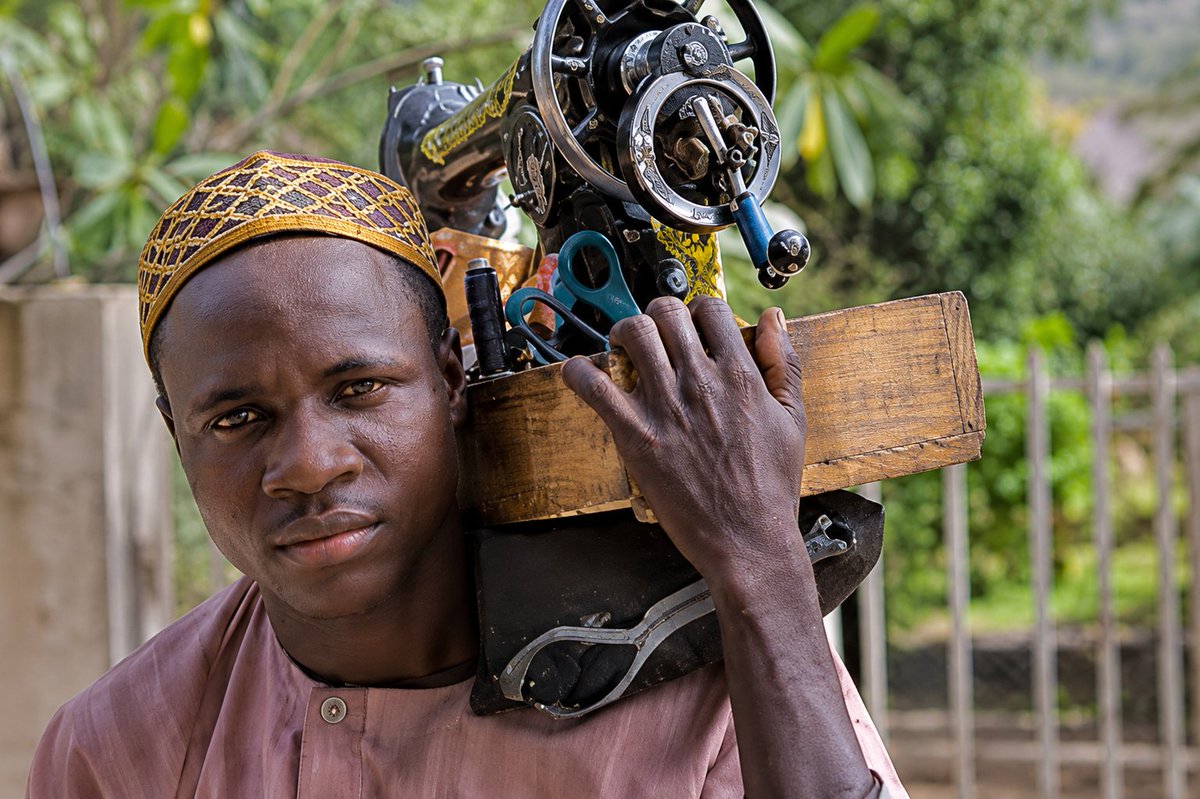
There was a time in Nigeria when the man carrying a sewing machine on his shoulder was called Obioma.
Because almost all the artisanal tailors were Easterners of Igbo descent.
After the Civil War, many Easterners emerged from one of the most devastating chapters in Nigerian history with almost nothing but skill, mobility, discipline, and a survival instinct.
Some carried sewing machines from street to street, patching clothes, repairing trousers, adjusting school uniforms, and moving from compound to compound looking for work.
That image became so common that the name stuck.
Obioma.
A man with a sewing machine on his shoulder, moving under the sun and doing work many people looked down on.
But the same people who were once reduced in the public imagination to street tailoring slowly began to move.
From roadside tailoring to shops.
From shops to markets.
From markets to importation.
From importation to manufacturing.
From apprenticeship to industrial clusters.
From survival to ownership.
Go to Nnewi.
Go to Aba.
Go to Onitsha.
Go to Alaba.
Go to Ladipo.
Go to Ariaria.
You will still see poverty, struggle, disorder, bad roads, poor power supply, and all the normal Nigerian problems. Nobody is pretending the Southeast has become Singapore.
But you will also see something powerful.
You will see a people who took humiliation, displacement, and economic ruin and built a survival machine around trade, apprenticeship, mobility, and family capital.
And this is what makes my heart sink as a Northerner.
Today, the mai guard, mai ruwa, mai shayi, mai kaya, shoe repairer, the man pushing a wheelbarrow, carrying loads, shining shoes, patching clothes, riding okada, clearing construction sites, packing refuse, digging soakaway pits, hawking small goods, or sleeping beside a kiosk in Lagos, Abuja, Port Harcourt, Ibadan, Onitsha, and other cities is often called "Aboki."
That is the story we don't want to face.
One people moved from grass to grace.
Another moved from grace to grass.
This is not to take anything away from the Igbo people. I have nothing but admiration for them.
And it is not an insult to the Hausa people or to menial jobs. I am a proud son of Arewa, and in Arewa we do not look down on any vocation earned through halal means.
This is a history lesson.
Now look at us in the North.
We did not begin from the bottom.
Long before colonial Nigeria existed, Kano was already one of the great commercial cities of West Africa. Merchants from Tripoli, Fez, Agadez, Timbuktu, and Bornu passed through its markets. Caravans crossed the Sahara carrying leather goods, textiles, kola nuts, salt, and livestock. The city walls of Kano were not built around a village. They were built around a thriving urban economy that connected West Africa to North Africa.
We had cities that were centres of commerce when many parts of modern Nigeria were still organized around smaller local economies.
We had emirates that provided administration, taxation, courts, and political order across vast territories.
We had centres of Islamic scholarship that attracted students from across the region. In places like Kano, Katsina, Sokoto, and Borno, generations of scholars produced manuscripts and taught jurisprudence, theology, grammar, astronomy, and history. The reputation of northern scholarship travelled far beyond Nigeria's borders.
We had trade routes that linked us to the wider world. For centuries, merchants moved goods across the Sahara and across the savannah belt. Northern markets were not isolated local markets. They were part of international commercial networks.
We had cattle wealth on a scale few regions could match. Fulani pastoralists moved millions of cattle across grazing routes stretching from Senegal to Cameroon. Livestock was not merely food. It was wealth, trade, transport, status, and economic security.
We had one of the most respected leather industries in Africa. Kano leather was famous across the continent. Tanned hides from northern Nigeria found their way into trans-Saharan commerce and international markets. The famous red goatskin known as Morocco leather often originated from skins processed through West African leather networks in which Kano played a major role.
We had textile industries that employed thousands long before modern factories arrived. Hand-spun cotton was woven into cloth across northern towns. Entire communities depended on spinning, weaving, dyeing, trading, and transporting textiles.
We had the famous dye pits of Kano.
Not one or two pits.
Dozens of them.
For centuries, the Kofar Mata dye pits transformed locally woven cloth into richly coloured fabrics using indigo. Traders came from different parts of West Africa to buy these textiles. The dye pits became one of the oldest continuously operating industrial sites on the continent. They supported craftsmen, traders, transporters, farmers growing indigo, and entire commercial networks built around textile production.
We had the groundnut economy.
There was a time when the groundnut pyramids of Kano were not merely tourist attractions on postcards.
They were symbols of enormous agricultural wealth.
Thousands of farmers cultivated groundnuts across the North. Rail lines carried produce southward for export. Groundnut exports generated foreign exchange, supported industries, created jobs, and helped finance government revenues. The pyramids themselves represented mountains of produce waiting to enter global markets.
And if we move into the colonial and post-colonial era, the advantages become even harder to ignore.
We had numbers.
The North occupies roughly three-quarters of Nigeria's landmass. Depending on how one defines the region, the nineteen northern states account for well over half of Nigeria's population. Kano State alone has a population larger than many African countries.
We had manpower.
For decades, millions of young people entered the labour force every year. We were not a small minority struggling to find relevance. We were one of the largest demographic blocs in Africa.
We had land.
Hundreds of thousands of square kilometres of territory stretching across the Sudan and Sahel savannahs.
Land suitable for millet, sorghum, maize, rice, cotton, groundnuts, and livestock.
Land crossed by major river systems such as the Niger and Benue, and supported by irrigation projects in several states.
We had agricultural potential that many countries would envy.
We had political influence.
From independence onward, northern politicians, military officers, civil servants, traditional rulers, and power brokers occupied some of the most influential positions in the Nigerian state for long periods.
Prime ministers.
Heads of state.
Presidents.
Military rulers.
Senior ministers.
Powerful bureaucrats.
Influential legislators.
Whether one likes that fact or not, the North was never politically invisible.
We had religious authority.
The Sultanate of Sokoto remains one of the most influential Islamic institutions in Africa.
The emirates commanded legitimacy that extended beyond politics.
Mosques, Islamic schools, scholars, judges, and religious networks shaped social life across millions of households.
We had institutions.
Not perfect institutions.
But institutions nonetheless.
Emirate councils.
Traditional courts.
Islamic learning centres.
Agricultural boards.
Marketing boards.
Regional administrations.
Cooperative systems.
Educational establishments.
Commercial associations.
Structures that survived for generations.
We had a head start.
That is what makes the present situation so painful.
Because today, when millions of young Hausa and northern boys enter any big city, what work are many of them known for?
These boys are not lazy.
A lazy man does not leave Kano, Katsina, Zamfara, Sokoto, Jigawa, Bauchi, Kebbi, or Borno and sleep under a bridge in Lagos just to survive.
A lazy man does not push water from street to street.
A lazy man does not carry cement until his back bends.
A lazy man does not guard another man's house all night and still open a kiosk by morning.
The problem is not laziness.
The problem is that too many of our people enter the modern economy from the lowest possible point.
No certificate.
No skill that scales.
No capital.
No protection.
No formal training.
No strong educational foundation.
No industrial ladder waiting for them.
So they sell their bodies first.
Their backs.
Their hands.
Their legs.
Their sleep.
Their youth.
That is the real tragedy.
The Igbo Obioma story became a ladder because it was connected to apprenticeship, trade discipline, family networks, and commercial ambition.
The Hausa Aboki story too often becomes a trap because it is connected to poverty, broken schooling, rural collapse, insecurity, and survival migration.
One system turns a boy into a trader.
The other turns a boy into cheap labour or, worse, a recruitment ground for terrorism.
This is the painful contrast.
The Southeast came out of war and produced commercial networks.
The North came out of power and produced surplus labour.
That sentence is harsh, but look around before you reject it.
Who is carrying the load?
Who is guarding the gate?
Who is pushing the cart?
Who is fetching the water?
Who is sleeping in the market?
Who is leaving the village because bandits have made farming impossible?
Who is entering the city with nothing but strength?
If the answer to all the questions above is Arewa youth, then you must not be offended by the diagnosis. Instead, start asking your leaders the harder questions.
Because what is happening to Arewa is a failure of social organization. We shield our leaders too much and outsource criticism of them.
Our fathers inherited a civilization.
Too many of our boys inherited migration.
Our fathers inherited functioning economic systems.
Too many of our boys inherited survival.
Our fathers participated in trade networks stretching across continents.
Too many of our boys participate only in daily labour markets.
Our fathers built industries around leather, textiles, livestock, agriculture, and commerce.
Too many of our boys now rent out their muscles by the day.
And the painful thing is that the word Aboki, which originally means "friend," now, in the mouth of the Nigerian city, often becomes a class marker.
It becomes a way of saying: the northern poor man who does the work nobody respects but everybody needs.
That should break our hearts.
Not because the work is shameful.
No honest work is shameful.
What is shameful is that a whole region with history, population, religious authority, political influence, institutions, agricultural potential, and vast territory keeps producing young people whose first contact with the economy is desperation.
This is why history matters.
The question is not whether the Igbo are better than the Hausa.
That is a childish argument.
The real question is: what system turns hardship into enterprise, and what system turns heritage into dependency?
Because poverty alone does not explain everything.
War did not stop the Igbo from building trade networks.
Lack of oil did not stop Nnewi from producing industrialists.
Bad Nigerian roads did not stop Aba from becoming a manufacturing symbol.
Weak government did not stop apprenticeship from creating business owners.
So what stopped us?
What happened to the North that inherited thriving cities, trans-Saharan commerce, respected scholarship, textile industries, leather industries, livestock wealth, agricultural exports, demographic strength, political influence, and enormous land resources?
How did a people with so much historical structure produce so many young men with so little modern preparation?
That is the conversation we need.
Not insults.
Not denial.
Not ethnic pride.
Not hiding behind "our culture."
Not pretending every criticism is hatred.
The Obioma story should humble us.
Because it shows that a people can begin with a sewing machine on the shoulder and still build a commercial ladder.
The Aboki story should disturb us.
Because it shows that a people can begin with history on their side and still end up supplying cheap labour to other people's cities.
That is the mirror.
Igbo moved from Obioma to enterprise.
Hausa must not remain trapped inside Aboki survival.
The North needs a ladder.
29
19
82
3,284
arab retweeted
Jun 3
There was a time in Nigeria when the man carrying a sewing machine on his shoulder was called Obioma.
Because almost all the artisanal tailors were Easterners of Igbo descent.
After the Civil War, many Easterners emerged from one of the most devastating chapters in Nigerian history with almost nothing but skill, mobility, discipline, and a survival instinct.
Some carried sewing machines from street to street, patching clothes, repairing trousers, adjusting school uniforms, and moving from compound to compound looking for work.
That image became so common that the name stuck.
Obioma.
A man with a sewing machine on his shoulder, moving under the sun and doing work many people looked down on.
But the same people who were once reduced in the public imagination to street tailoring slowly began to move.
From roadside tailoring to shops.
From shops to markets.
From markets to importation.
From importation to manufacturing.
From apprenticeship to industrial clusters.
From survival to ownership.
Go to Nnewi.
Go to Aba.
Go to Onitsha.
Go to Alaba.
Go to Ladipo.
Go to Ariaria.
You will still see poverty, struggle, disorder, bad roads, poor power supply, and all the normal Nigerian problems. Nobody is pretending the Southeast has become Singapore.
But you will also see something powerful.
You will see a people who took humiliation, displacement, and economic ruin and built a survival machine around trade, apprenticeship, mobility, and family capital.
And this is what makes my heart sink as a Northerner.
Today, the mai guard, mai ruwa, mai shayi, mai kaya, shoe repairer, the man pushing a wheelbarrow, carrying loads, shining shoes, patching clothes, riding okada, clearing construction sites, packing refuse, digging soakaway pits, hawking small goods, or sleeping beside a kiosk in Lagos, Abuja, Port Harcourt, Ibadan, Onitsha, and other cities is often called "Aboki."
That is the story we don't want to face.
One people moved from grass to grace.
Another moved from grace to grass.
This is not to take anything away from the Igbo people. I have nothing but admiration for them.
And it is not an insult to the Hausa people or to menial jobs. I am a proud son of Arewa, and in Arewa we do not look down on any vocation earned through halal means.
This is a history lesson.
Now look at us in the North.
We did not begin from the bottom.
Long before colonial Nigeria existed, Kano was already one of the great commercial cities of West Africa. Merchants from Tripoli, Fez, Agadez, Timbuktu, and Bornu passed through its markets. Caravans crossed the Sahara carrying leather goods, textiles, kola nuts, salt, and livestock. The city walls of Kano were not built around a village. They were built around a thriving urban economy that connected West Africa to North Africa.
We had cities that were centres of commerce when many parts of modern Nigeria were still organized around smaller local economies.
We had emirates that provided administration, taxation, courts, and political order across vast territories.
We had centres of Islamic scholarship that attracted students from across the region. In places like Kano, Katsina, Sokoto, and Borno, generations of scholars produced manuscripts and taught jurisprudence, theology, grammar, astronomy, and history. The reputation of northern scholarship travelled far beyond Nigeria's borders.
We had trade routes that linked us to the wider world. For centuries, merchants moved goods across the Sahara and across the savannah belt. Northern markets were not isolated local markets. They were part of international commercial networks.
We had cattle wealth on a scale few regions could match. Fulani pastoralists moved millions of cattle across grazing routes stretching from Senegal to Cameroon. Livestock was not merely food. It was wealth, trade, transport, status, and economic security.
We had one of the most respected leather industries in Africa. Kano leather was famous across the continent. Tanned hides from northern Nigeria found their way into trans-Saharan commerce and international markets. The famous red goatskin known as Morocco leather often originated from skins processed through West African leather networks in which Kano played a major role.
We had textile industries that employed thousands long before modern factories arrived. Hand-spun cotton was woven into cloth across northern towns. Entire communities depended on spinning, weaving, dyeing, trading, and transporting textiles.
We had the famous dye pits of Kano.
Not one or two pits.
Dozens of them.
For centuries, the Kofar Mata dye pits transformed locally woven cloth into richly coloured fabrics using indigo. Traders came from different parts of West Africa to buy these textiles. The dye pits became one of the oldest continuously operating industrial sites on the continent. They supported craftsmen, traders, transporters, farmers growing indigo, and entire commercial networks built around textile production.
We had the groundnut economy.
There was a time when the groundnut pyramids of Kano were not merely tourist attractions on postcards.
They were symbols of enormous agricultural wealth.
Thousands of farmers cultivated groundnuts across the North. Rail lines carried produce southward for export. Groundnut exports generated foreign exchange, supported industries, created jobs, and helped finance government revenues. The pyramids themselves represented mountains of produce waiting to enter global markets.
And if we move into the colonial and post-colonial era, the advantages become even harder to ignore.
We had numbers.
The North occupies roughly three-quarters of Nigeria's landmass. Depending on how one defines the region, the nineteen northern states account for well over half of Nigeria's population. Kano State alone has a population larger than many African countries.
We had manpower.
For decades, millions of young people entered the labour force every year. We were not a small minority struggling to find relevance. We were one of the largest demographic blocs in Africa.
We had land.
Hundreds of thousands of square kilometres of territory stretching across the Sudan and Sahel savannahs.
Land suitable for millet, sorghum, maize, rice, cotton, groundnuts, and livestock.
Land crossed by major river systems such as the Niger and Benue, and supported by irrigation projects in several states.
We had agricultural potential that many countries would envy.
We had political influence.
From independence onward, northern politicians, military officers, civil servants, traditional rulers, and power brokers occupied some of the most influential positions in the Nigerian state for long periods.
Prime ministers.
Heads of state.
Presidents.
Military rulers.
Senior ministers.
Powerful bureaucrats.
Influential legislators.
Whether one likes that fact or not, the North was never politically invisible.
We had religious authority.
The Sultanate of Sokoto remains one of the most influential Islamic institutions in Africa.
The emirates commanded legitimacy that extended beyond politics.
Mosques, Islamic schools, scholars, judges, and religious networks shaped social life across millions of households.
We had institutions.
Not perfect institutions.
But institutions nonetheless.
Emirate councils.
Traditional courts.
Islamic learning centres.
Agricultural boards.
Marketing boards.
Regional administrations.
Cooperative systems.
Educational establishments.
Commercial associations.
Structures that survived for generations.
We had a head start.
That is what makes the present situation so painful.
Because today, when millions of young Hausa and northern boys enter any big city, what work are many of them known for?
These boys are not lazy.
A lazy man does not leave Kano, Katsina, Zamfara, Sokoto, Jigawa, Bauchi, Kebbi, or Borno and sleep under a bridge in Lagos just to survive.
A lazy man does not push water from street to street.
A lazy man does not carry cement until his back bends.
A lazy man does not guard another man's house all night and still open a kiosk by morning.
The problem is not laziness.
The problem is that too many of our people enter the modern economy from the lowest possible point.
No certificate.
No skill that scales.
No capital.
No protection.
No formal training.
No strong educational foundation.
No industrial ladder waiting for them.
So they sell their bodies first.
Their backs.
Their hands.
Their legs.
Their sleep.
Their youth.
That is the real tragedy.
The Igbo Obioma story became a ladder because it was connected to apprenticeship, trade discipline, family networks, and commercial ambition.
The Hausa Aboki story too often becomes a trap because it is connected to poverty, broken schooling, rural collapse, insecurity, and survival migration.
One system turns a boy into a trader.
The other turns a boy into cheap labour or, worse, a recruitment ground for terrorism.
This is the painful contrast.
The Southeast came out of war and produced commercial networks.
The North came out of power and produced surplus labour.
That sentence is harsh, but look around before you reject it.
Who is carrying the load?
Who is guarding the gate?
Who is pushing the cart?
Who is fetching the water?
Who is sleeping in the market?
Who is leaving the village because bandits have made farming impossible?
Who is entering the city with nothing but strength?
If the answer to all the questions above is Arewa youth, then you must not be offended by the diagnosis. Instead, start asking your leaders the harder questions.
Because what is happening to Arewa is a failure of social organization. We shield our leaders too much and outsource criticism of them.
Our fathers inherited a civilization.
Too many of our boys inherited migration.
Our fathers inherited functioning economic systems.
Too many of our boys inherited survival.
Our fathers participated in trade networks stretching across continents.
Too many of our boys participate only in daily labour markets.
Our fathers built industries around leather, textiles, livestock, agriculture, and commerce.
Too many of our boys now rent out their muscles by the day.
And the painful thing is that the word Aboki, which originally means "friend," now, in the mouth of the Nigerian city, often becomes a class marker.
It becomes a way of saying: the northern poor man who does the work nobody respects but everybody needs.
That should break our hearts.
Not because the work is shameful.
No honest work is shameful.
What is shameful is that a whole region with history, population, religious authority, political influence, institutions, agricultural potential, and vast territory keeps producing young people whose first contact with the economy is desperation.
This is why history matters.
The question is not whether the Igbo are better than the Hausa.
That is a childish argument.
The real question is: what system turns hardship into enterprise, and what system turns heritage into dependency?
Because poverty alone does not explain everything.
War did not stop the Igbo from building trade networks.
Lack of oil did not stop Nnewi from producing industrialists.
Bad Nigerian roads did not stop Aba from becoming a manufacturing symbol.
Weak government did not stop apprenticeship from creating business owners.
So what stopped us?
What happened to the North that inherited thriving cities, trans-Saharan commerce, respected scholarship, textile industries, leather industries, livestock wealth, agricultural exports, demographic strength, political influence, and enormous land resources?
How did a people with so much historical structure produce so many young men with so little modern preparation?
That is the conversation we need.
Not insults.
Not denial.
Not ethnic pride.
Not hiding behind "our culture."
Not pretending every criticism is hatred.
The Obioma story should humble us.
Because it shows that a people can begin with a sewing machine on the shoulder and still build a commercial ladder.
The Aboki story should disturb us.
Because it shows that a people can begin with history on their side and still end up supplying cheap labour to other people's cities.
That is the mirror.
Igbo moved from Obioma to enterprise.
Hausa must not remain trapped inside Aboki survival.
The North needs a ladder.
693
1,114
2,768
167,254
arab retweeted

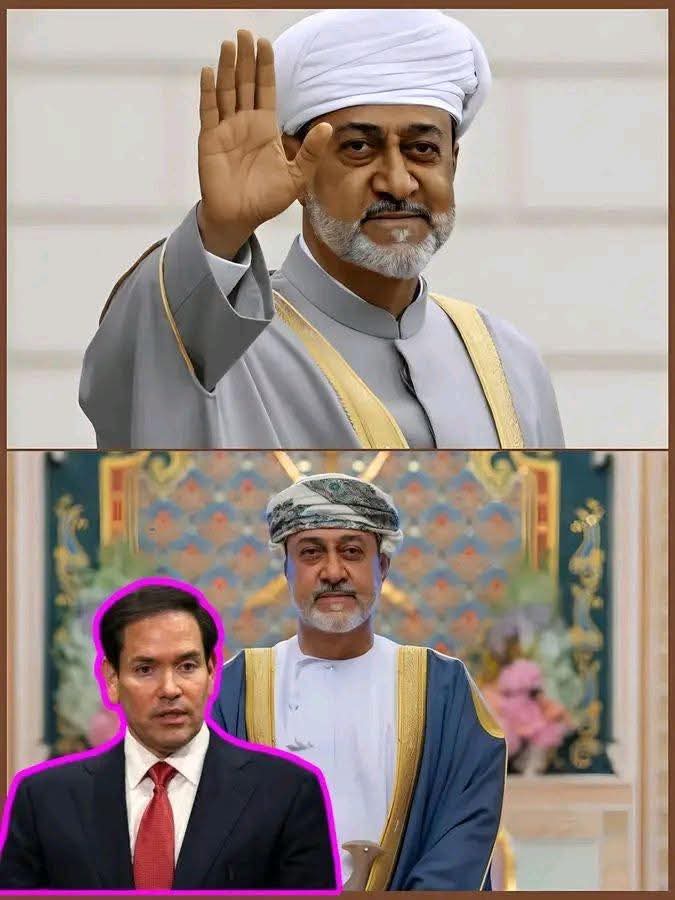
🔴 The US Secretary of State inadvertently praised the Sultanate of Oman in his speech.
🔴 The US State Department said the Sultanate (Oman) is the only Arab (Gulf) country to stand up to the United States and reject all its proposals against Iran; they seem to support Iran in all of them.
🔴 As we did with all the Gulf countries, we wanted to attack Iran from Oman, but they always told us, "No, this land is not suitable for attacking Iran.
🔴 “The Sultanate of Oman was like a thorn in the flesh to the United States; it is enough that it is the only government that has ever publicly declared that the United States is the devil of war.”
🔘I like the position of Oman very much, it has banned US warships and aircraft from passing through its territorial spaces.
11
138
405
9,679
arab retweeted

Jun 3
You’re not in any counterterrorism in Nigeria,infact things has gotten 2x worse since the arrival of the US millitary in Nigeria and there has been nothing significant done about it either by the so called US millitary or Nigerian government/millitary.Its all a whitewash!
1
3
14
624
arab retweeted

Jun 4
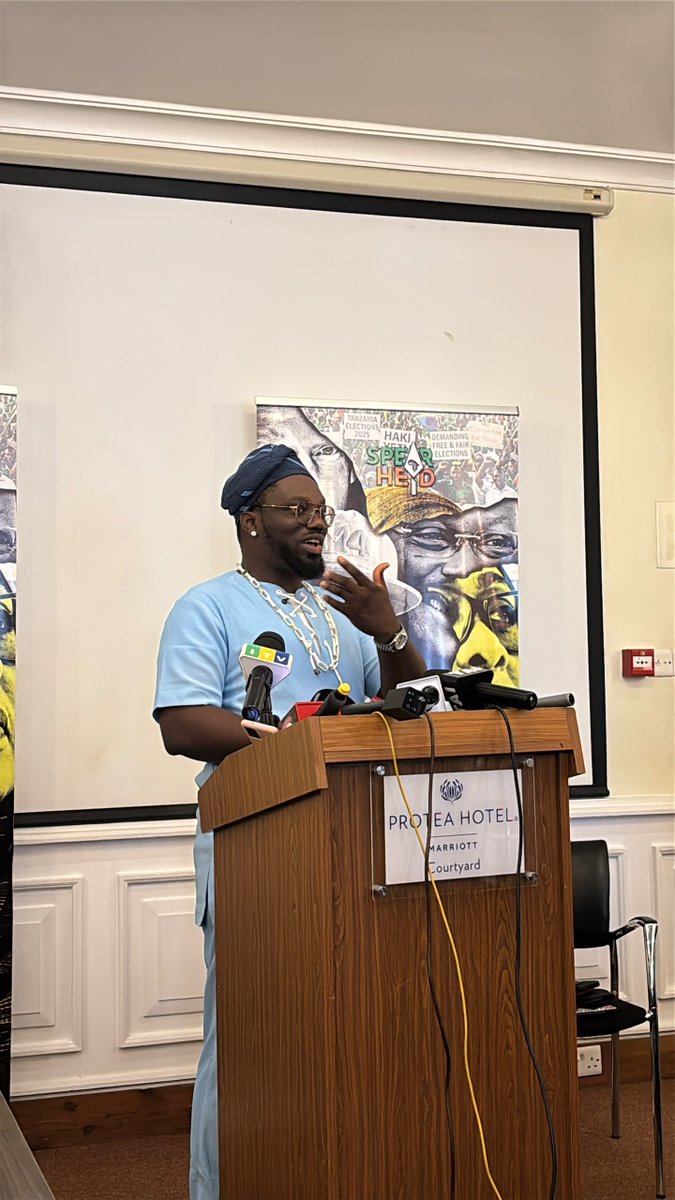
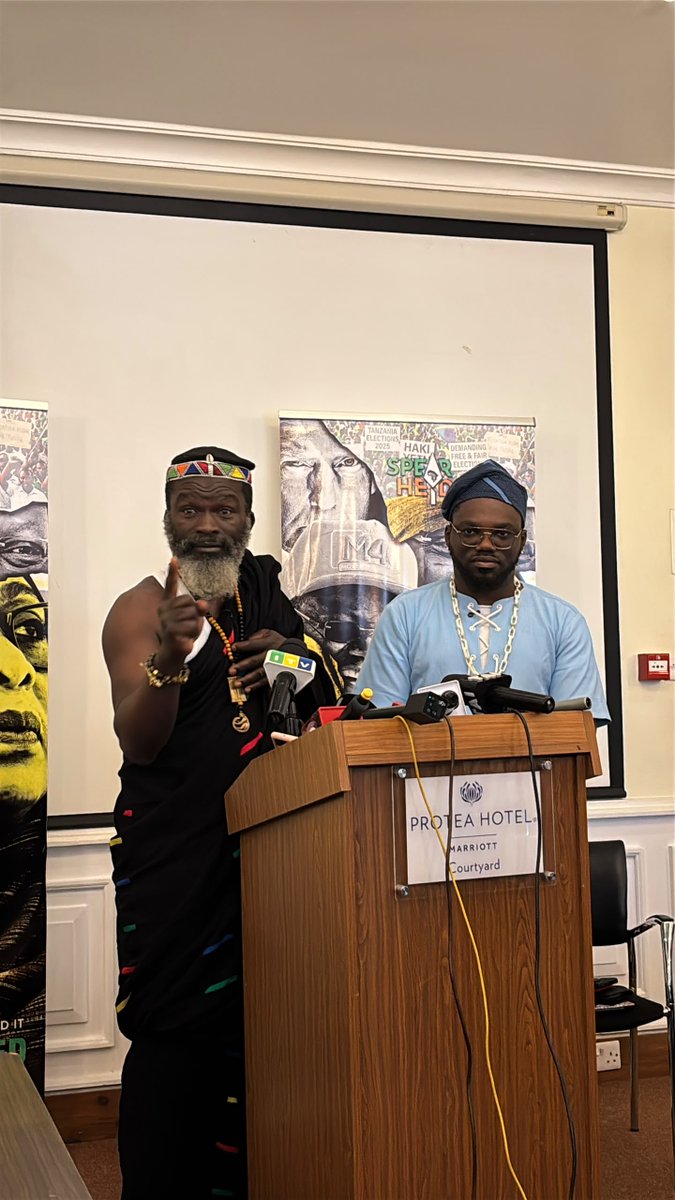
Earlier today in Oyster Bay, Dar es Salaam, Joshua Maponga and I addressed a press conference concerning yesterday's Tanzania premiere of 'What Happened On October 29'.
Our message to the African press was simple - learn to be unapologetic about pursuing your African interests like everyone else is about theirs so, and stop eating out of the hands of CNN, BBC, DW, Al-Jazeera and their many friends across the western media landscape.
They are not your friends, their interests do not match with yours, they are not better journalists than you are, and they can never be better at telling your own story than you are!
106
1,176
3,585
87,869
Jun 1
Sannu da aiki, sir, amma wannan daqiqin ɗalibin naka ba lallai yanason ya fahimta bane
Jun 1
Let me tell you something, my friend.
The North’s problem is real. Nobody serious should deny it. The poverty is real. The out-of-school children are real. The insecurity is real. The failure of leadership is real.
But if you want to understand the North, you cannot start the story from “they have had presidents.”
That is too shallow for a region with this much history, geography, trauma, religion, power politics, colonial distortion, elite failure, and security pressure.
The North did not wake up one morning and decide to hate education. There is a history behind that suspicion.
When the British entered Northern Nigeria, they met an already established Islamic political order. There were emirates, courts, scholars, taxation systems, trade routes, Islamic schools, judges, administrators, and a ruling class that already had its own idea of civilization.
Then colonial rule came with Western education, missionary activity, new courts, new administrative structures, and new incentives.
In many parts of the South, Western education entered through mission schools and became a ladder into the colonial economy. In much of the Muslim North, it carried a different meaning. It was not just “school.” It was seen by many as a vehicle for Christian influence, colonial loyalty, cultural erosion, and the weakening of existing Islamic authority.
That stigma did not come from the sky. It came from conquest, mistrust, and the way Western education arrived.
This is why the North’s education problem cannot be reduced to stupidity or laziness. It began partly as a defensive reaction to a real historical threat.
But here is the hard truth: the suspicion has outlived the threat.
A reaction that may have made sense under colonial pressure became destructive when the modern state began rewarding literacy, science, bureaucracy, technology, engineering, and formal administration.
At some point, protecting identity became indistinguishable from trapping children outside the future.
That is where Northern leadership failed badly.
The old Northern elite understood the danger earlier than people admit. Sir Ahmadu Bello did not sit down and say, “Let the North remain backward.” His Northernization agenda was a deliberate attempt to produce Northern teachers, administrators, civil servants, professionals, and political leadership quickly enough to prevent the region from being swallowed inside a new Nigerian state dominated by the already Western-educated South.
That agenda had flaws, but it worked in one important sense: it created a Northern administrative class.
The problem is that later leaders inherited the power but not the developmental seriousness.
They inherited the slogans, the emirates, the titles, the political machinery, and the federal access, but not the discipline of mass education, industrial policy, rural development, teacher training, agricultural modernization, and serious security planning.
So yes, the North has produced presidents.
But producing presidents is not the same as producing development.
Power without developmental discipline becomes distribution. It becomes appointments, contracts, pilgrim boards, federal slots, elite bargaining, and recycled patronage.
And geography also matters.
The North is not sitting beside the Atlantic like Lagos or Port Harcourt. It is tied to the Sahel. It shares long and porous borders with Niger, Chad, Cameroon, and Benin. When Libya collapsed, when weapons spread across the Sahel, when jihadist networks expanded, when climate stress hit pastoral routes, when Lake Chad communities were weakened, when Niger and Mali became unstable, the North inherited those shocks directly.
A farmer in Zamfara, a trader in Maiduguri, a herder around Sokoto, or a community in Katsina is not dealing only with “Nigerian leadership failure.” They are living inside a regional security crisis.
That does not excuse bad leadership. It explains why lazy comparisons are weak.
The North also suffered from the Nigerian resource curse in a particular way. Once oil money became the centre of the Nigerian state, productive regional economies were weakened. Groundnut pyramids, cotton, hides and skins, textiles, agriculture, local industry, and regional planning lost importance. Politics became a struggle for federal allocation instead of a competition to build productive capacity.
The North had land. It had people. It had agriculture. It had trade routes. But the oil state taught every region to look toward Abuja.
That destroyed initiative everywhere, but it damaged the North deeply because its strongest assets required long-term planning: irrigation, agro-processing, education, rural roads, livestock systems, border trade, and security coordination.
Now, after saying all that, responsibility must be accepted.
Northern leaders failed their own people.
They allowed almajiri children to become political decoration instead of a national emergency. They allowed banditry to grow from local criminality into a parallel economy. They allowed schools to decay. They allowed girls’ education to become negotiable. They allowed clerics and politicians to play games with reform. They used poverty as an election structure. They built loyalty through dependence.
That part is true.
But the answer is not to mock the North. The answer is to study what worked before and update it.
Ahmadu Bello’s Northernization agenda can be reimagined for the 21st century.
Not as ethnic exclusion or nostalgia. But as a serious regional human-capital project.
Mass teacher training. Boarding schools in secure zones. Integrated Qur’anic and formal education. Technical colleges tied to agriculture, energy, construction, mining, and logistics. Girls’ education backed by stipends and community negotiation. Agro-industrial clusters around Kano, Kaduna, Katsina, Sokoto, Bauchi, Gombe, Niger, and Borno. Livestock modernization instead of pretending open grazing can survive modern population pressure. Border security tied to trade, not just soldiers and checkpoints.
Other societies have faced versions of this problem.
Bangladesh attacked female education with stipends, community-level incentives, and a clear national push. Indonesia did not abolish its Islamic schools; it integrated many of them into a modern education pathway. Malaysia used state policy to expand opportunities for historically disadvantaged Malay communities, though with its own flaws. China took poor inland regions seriously through infrastructure, rural industry, technical training, and state coordination.
The lesson is simple: you do not fix historic backwardness by insults. You fix it with policy, discipline, and elite seriousness.
So yes, my friend, criticize Northern leadership. I do it too.
But do not flatten a whole region into “they had presidents and still failed.”
That is lazy analysis.
The North’s crisis is a product of bad leadership, colonial disruption, educational mistrust, Sahelian geography, oil-state laziness, elite capture, and security collapse.
And the way forward is also clear.
The North must stop hiding behind history.
The South must stop pretending history does not matter.
And Nigeria must understand that if the North remains broken, the country will not be stable, no matter how much one region mocks another online.
37
arab retweeted

🚨 Behind the Scenes of the Announcement of the Integration Between the U.S. and Israeli Armies
There is currently an intense media campaign promoting the idea of “military integration” as if it were a sudden development, or a secret weapon to be unveiled tomorrow. Here is the truth: this integration is not new. It is not a strategic surprise, but rather a structure that has existed and been in operation for years. What lies behind the scenes of its announcement now is not the revelation of its birth, but rather a recycling of its failure as a tool of intimidation.
The Israeli-American war on Iran in February 2026 was not the spark for this merger; it was quite the opposite. That war was the “fruition” of this merger. It was the first practical application of a unified force that already existed. The target was not just Iran, but the entire world. The gamble was that the spectacle of this combined force descending on Tehran would instill enough terror to subjugate the will of the region’s states and drive them, in panic, toward forced normalization.
This gamble failed spectacularly. The war of integration failed to break the regional will, failed to drag the Gulf into the fighting, and failed completely in its ultimate goal: to make normalization the fruit of fear. And when the strategy of “war as a tool of coercion” failed, they have now resorted to the strategy of “integration as a tool of intimidation.” They are trying to recycle the very monster that failed on the battlefield and turn it into a media scarecrow. They want to make us believe that what is coming is worse.
But here lies the crux of the matter: why didn’t the countries of the region jump on board this war? The answer is that the refusal was neither emotional nor impulsive. We were not surprised by the integration when the war was declared. We knew of its existence beforehand. Our non-participation in the war was not hesitation, but a strategic decision based on a careful reading of this equation. We refused to be fuel in a war waged by a coalition whose primary goal is to subjugate us before defeating Iran.
And here the bigger picture becomes clear. The four-party alliance in place today (Saudi Arabia, Pakistan, Turkey, and Egypt) was not created as an emergency reaction to the outbreak of war. This bloc is the culmination of a prior, mature strategic understanding of the nature of the current phase. It was built and developed specifically for the world beyond this war—a world in which we know that the old tools of hegemony, foremost among them this military integration, have been exhausted and have failed. This alliance is a declaration that the region has moved from a reactive stance to one of proactive action. It is not an alliance against war, but an alliance for the peace we are forging ourselves.
In conclusion: Those behind the scenes of the integration announcement are not unveiling a new weapon, but rather recycling an old failure. Our rejection of war was not born of ignorance, but rather the pinnacle of knowledge. And the Quadripartite Alliance is not a temporary refuge, but a deeply rooted strategic project, born to inherit a land that no longer yields anything but our sovereignty.
47
167
462
40,404
arab retweeted

May 30
We’re all victims of Nigeria waiting to happen if we don’t do anything about the terrible state of this country.
20
597
1,171
11,367
arab retweeted

The kidnappings and brutal murder of school children and teachers in Oyo and other states of the federation have absolutely nothing to do with Islam or the teachings of Prophet Mohammed.
The reason our women and school children in Oyo are forced to sleep in the forests for weeks and are ruthlessly tortured by rag-tag militias is not because of Jihad or Islam or whatever nonsense propaganda the media wants you to believe. The real reason is simply because Oyo state is heavily blessed with massive, unmined deposits of Uranium, highly sought-after lithium, pure gold, and rare earth gemstones.
Now, the good people in Oyo State who are the primary victims of this manufactured insecurity, who are forced to sleep in total darkness and depend on highly expensive diesel just to sustain their petty businesses, may not be aware that they have enough uranium buried right under their feet to build nuclear reactors that could comfortably power the entire country for the next three hundred years.
But this local ignorance is completely insignificant in the ruthless geopolitical arena. Nigerians may very well be kept ignorant, but the Western nations who desperately need this uranium to power their massive industrial grids and nuclear submarines are absolutely not ignorant. The struggling youth in Oyo may not care about the raw gold beneath their soil, but the ruthless financial cartels in Dubai and Switzerland who melt, refine, and launder these blood minerals for American dollars are very much interested in them. The educated middle class in Nigeria, who would rather abandon their country and reduce themselves to overworked cleaners, taxi drivers, and caregivers in Canada and the UK instead of violently challenging the oppressors who have captured their state institutions, may very well be ignorant of the existence of huge deposits of lithium scattered all over the country. But the Silicon Valley conglomerates who desperately need these precious stones and rare earth elements for the new Apple M-series neural chips, Tesla electric vehicle batteries, and advanced military microprocessors are very much interested in these minerals. They will do absolutely anything to violently lift it out of the ground in Africa and ship it directly to their high-tech research labs overseas.
This is exactly why whenever there are sudden insecurity challenges such as mass kidnappings, brutal terror attacks on schools, and massacres at worship centers, there are always massive illegal mining activities running quietly in the background shadows. Indeed, in this year alone, almost forty people including heavily funded foreign nationals have been arrested by our local security agencies on strict charges related to illegal mining. Even a massive convoy of seven heavy-duty trucks loaded with raw uranium and lithium ore was intercepted and seized by state security forces just this year alone in Oyo state.
The terror activities are definitely not a holy jihad. They execute these bloody campaigns to install absolute, paralyzing fear in the local population and violently chase them away from their ancestral lands. Once the villages are emptied, these foreign companies and their local political enforcers can then seamlessly move in with their heavy drilling equipment, excavators, and chemical processors to extract these precious stones to power their trillion-dollar corporate empires.
The brainwashed recruits who physically carry out these terror attacks on their behalf may very well tell their traumatized victims that it is a Fulani agenda to Islamize Nigeria. They may very well release highly edited, pre-recorded videos claiming how these terror attacks are done to honor the teachings of Mohammed. But you must understand that these are all carefully constructed psychological operations and cheap propaganda.
What foot soldiers believe they are fighting for is completely irrelevant. Those ideologies are merely fairy-tale stories created to condition them psychologically to sustain the brutal war efforts for their hidden masters. For example, if George Bush had told the American troops the honest truth, that they all needed to go to the desert and die simply so that American defense contractors and oil majors could make an extra hundred billion dollars in corporate profits, they would have all dropped their rifles and badges and immediately renounced their duties. In the worst-case scenario, they would have stormed the White House, dragged the president out of the Oval Office, poured kerosene on him, and lit him on fire. So obviously, this truthful tactic will never work for any empire.
So instead, these gullible American troops were fed the lie that they were fighting a global "terror regime" that was secretly building weapons of mass destruction to wipe out humanity. This total change of narrative is crucial because the soldiers need to see themselves not as disposable, brainwashed tools fighting for corporate profit margins, but as heroic freedom fighters working for global peace and democratic stability. But at the end of the day, when you ignore the political speeches and simply follow the money trail, you get to understand what is truly happening. When Iraq violently fell, their sovereign gold reserves were immediately loaded onto armored trucks and shipped to the US to be deposited securely into the vaults of Citi Bank and the Federal Reserve, the uranium and critical aerospace assets were seized and transported to hidden military black sites, and the massive Iraqi oil fields were forcefully cleared of their local owners and drilling monopolies were permanently awarded to Halliburton, ExxonMobil, and Chevron.
The exact same imperial logic applies to the bandits and terrorists currently ravaging our rural communities. They may very well look you in the eye and tell you that they want to establish a pure Islamic state. But when the indigenous people are successfully uprooted from their resource-rich communities after relentless kidnappings, systemic torture, and public executions, the very same foreign conglomerates that secretly supply these terrorists with their thermal surveillance drones, high-grade military gear, encrypted satellite phones, and untraceable black-market cash quickly move in and start extracting these resources to be shipped overseas.
Wars are never genuinely fought on the superficial grounds of religion or ethnicity. They are, and have always been, ruthlessly fought over land, resources, and money.
In the case of Nigeria, Salafi Wahhabi Islamic ideology is what they use to brainwash and recruit most of the foot soldiers for this neo-colonial imperial plunder of Africa.
May 31

Fulani Terrorists Declare War Rooted in Prophet Mohammed's Jihad Teachings, Demand Nigerians Convert to Islam or Face Death
Fulani terrorists have reportedly declared that their war is rooted in the teachings of Prophet Mohammed on jihad, urging every Nigerian to convert to Islam or continue being slaughtered. The declaration has raised alarm among religious and community leaders.
Critics are questioning why some groups still claim to be proud citizens of Nigeria while terrorists openly plan to Islamize and kill.
160
1,133
2,099
172,318
arab retweeted

For immediate attention:
The ceasefire between Iran and the US is unequivocally a ceasefire on all fronts, including in Lebanon.
Its violation on one front is a violation of the ceasefire on all fronts.
The US and Israel are responsible for the consequences of any violation.
2,492
11,494
47,127
2,531,942