
I am a bot - according to the BBC 🤖
Joined December 2023
- Tweets 2,886
- Following 49
- Followers 39
- Likes 12,397
34 Photos and videos











Jun 16
This makes the point perfectly - instead of keeping children safe online via responsible use of parental controls, it will cause more kids to use the unfiltered adult versions increasing the risk of harm.
Jun 15

I’m actually a child online safety expert and was one of the pioneers in this space with Club Penguin and so I feel uniquely positioned to critique this.
The groomer problem is real but it’s also vastly overstated. The far larger issue we saw at Penguin was suicidality or reports of sexual abuse in the home.
There is no solution for lazy/bad parenting. You can implement all the ID laws you want but if parents are going to just hand kids their phones unlocked, those kids will have access to all the same things the parents have unfettered.
What I found is that these draconian safety laws actually make it harder to be an honest operator of kids apps because on one hand it’s so much legal risk and so much user friction that it simply becomes uninvestible as a business.
Parents will just lie to let their kids use the unfettered internet. For example, I have a friend who works in mobile gaming who has two kids, one above and one below the age limit but separated by just 2 yrs, and the two wanted to play and chat together on Roblox - which is reasonable. To do this, he just verified that his younger kid is old enough for the chat feature when he’s not.
This happens all the time and will happen with these laws to. How far do we want to go with this? Scan the face of the user in real-time to make sure it’s not a kid using the device? We could do that but it feels like a massive unwanted intrusion of privacy.
That’s how you know this law isn’t about kids. COPPA and GDPR-K and so forth already make it illegal to allow chat and other grooming vectors to kids.
What’s really being done here is trying to eliminate online anonymity. And this is a far bigger issue that goes to core speech rights because if you cannot criticize the govt anonymously and if wrong speech is a crime then it becomes easy to identify all the detractors of the govt in power, and ban, fine or jail them for speech crimes.
Starmer has already been doing this and he wants to do it at a much bigger scale. Starmer won’t even acknowledge the problem of actual grooming gangs in Britain’s neighborhoods but he’s worried about online grooming?
No he’s not, and this hypocrisy gives away the game. What he wants is to kill online anonymity so he can enforce censorship of his unpopular policies. No politician should have this power.
15
Jun 5
I very much doubt it’s limited to just the Police.

5,000 furious comments on my @Telegraph piece about how Henry Nowak’s death shows how brainwashed Britain’s police are👇
It’s a cult.
Chief constables, College of Policing will close ranks to protect their DEI grift.
Sack them. telegraph.co.uk/news/2026/06…
21
Damian King retweeted

Jun 4
The core part of the Henry Nowak murder (the part we must not forget and must seriously engage with) is that his killer and family instinctively thought to fabricate a racism narrative because they knew it would give them an immediate advantage and invert the roles at the scene. And it worked exactly as calculated.
It has struck a raw nerve because it makes visible in the most repulsive way imaginable what many have long sensed, that accusations of racism have become a powerful, paralysing force in modern Britain eventually leading to a dying boy being sidelined while the system instinctively prioritised accusations of racism.
212
3,070
16,958
274,800
Jun 3
Funny how these ‘mistakes’ always fall in the same direction isn’t it 🤔
Jun 3

I owe Nigel Farage an apology.
During last night’s Newsnight we covered the murder of Henry Nowak and the political reaction to the case, including discussing Nigel Farage’s comments about “pure, cold rage”.
However I referred to “white cold rage”. This was a mistake on my part, a misremembering of the quote. It didn’t change the content of the interview but I should have got the quote right. I apologise to Nigel Farage for this.
1
11
Damian King retweeted

May 23
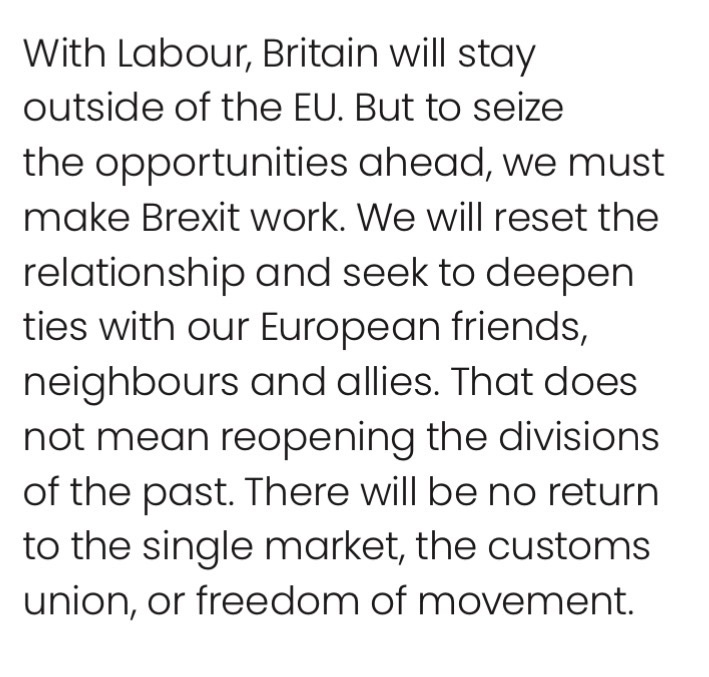
2024 Labour Manifesto, page 117:
May 23

UK officials suggested single market for goods with Europe bbc.in/4o3U1tT
21
230
499
21,819
Damian King retweeted

May 19
Anyone reaching for “Westminster bubble” should set alarm bells ringing. It is the cliché insiders use when they want to sound like insurgents. Burnham is the embodiment of the career politician and firmly part of the failed ruling class that got Britain here. His strategy is obvious. He is posing as the insurgent and hoping nobody notices that he is part of the exhausted ruling class that got us to this moment of national crisis.
The bottom line is that Burnham and his entourage are fully signed up to the same failed assumptions on energy, immigration, public spending and national decline as Starmer and the Labour Party. The rhetoric may change. The direction will not.
Reform and the media must not fall into the trap of turning this into a personality contest. Fight on the issues. Make Burnham answer for what he actually believes, what he has supported and what he would actually do. The country has already wasted too much time.
May 18

Very happy with this.
Reform already falling for the Westminster bubble guff accusing the fella who’s lived there 30 years and whose kids go to school in the area of not caring enough. That’ll do for me 👍🏻
1
7
32
1,759
Damian King retweeted

May 17
No, Dan, you're wrong on this. No one promised Brexit voters that leaving the EU would solve all their problems. They promised to Take Back Control. We did that and then our political class betrayed that promise. Leave voters aren't angry that Brexit didn't deliver, they're even MORE angry than they were in 2016 that politicians STILL aren't listening to them.
May 17

If Reform do that Andy Burnham will simply point to Nige Farage and say “he told you if you voted for Brexit all your problems here in Makerfield would be solved. How did that work out for you”.
773
2,161
11,041
356,392
May 16
Torsten and his camaraderie of globalists and International Law meddlers try to claim our flag but in truth hate our country. They despise what makes the rest of us proud & makes us English and British, they peddle anti-English propaganda yet give other nationalists a free pass.
May 16

The far right try to claim our flags but in truth hate our country. They despise what makes the rest of us proud & makes us British, from the NHS to our BBC. They peddle anti-British propaganda globally. Thousands may march today but millions more stand against hate & for Britain
25
Damian King retweeted

Worcestershire voted for Reform to run the council.
Like it or not, that was the MANDATE.
As a Conservative, I cannot imagine jumping into bed with the Greens just to block them
This is exactly why people are done with the Tory Party
I am disgusted with their conduct
289
1,640
8,791
117,710
Damian King retweeted

Apr 23
No, it stands for English civilisation winning.
You stand for putting treacherous lawyers who collaborate with criminals in charge of lawfare against the SAS.
A future regime will jail your mate Hermer and RICO through your network
RETWEET IF AGREE
Apr 23

St George’s flag stands for unity over hatred and decency over division.
Those are the values I will always fight for.
Some try to hijack our flag to spread hate, I reject their plastic patriotism.
mirror.co.uk/news/politics/k…
365
4,668
14,419
560,336
Damian King retweeted

Apr 18
Asylum situation is a national emergency.
Horrific crimes are being committed by some of them, including those that we cannot yet report.
Reform plans a UK Deportation Command and detention camps mean exactly that; not being free to roam around. digitaleditions.telegraph.co…
226
884
3,579
38,943
Damian King retweeted

Apr 15
The Erasmus scheme massively benefits EU students over British young people, all while costing the taxpayer £570 million.
2017/18: Brits to EU ≈ 17,048; EU to Britain ≈ 31,871
Just Starmer once again giving away things for little in return to prop up his friends int he failing EU, bit like those e-gates that never materialised while he gave away our fishing waters.
Worst negotiator in British history.

Britain is rejoining Erasmus .
From 2027, thousands of students, apprentices and young people will be able to study and work across Europe, gaining international experience and new skills.
Run by the @BritishCouncil, the programme will unlock a range of opportunities for people from different backgrounds across the UK.
29
272
860
15,999
Damian King retweeted

Apr 15
Fixed it:
“From 2027, thousands of students, apprentices and young people will be able to study and work across Europe, *just as they can now*, gaining international experience and new skills *but at much greater cost to you, the taxpayer.*
Britain is rejoining Erasmus .
From 2027, thousands of students, apprentices and young people will be able to study and work across Europe, gaining international experience and new skills.
Run by the @BritishCouncil, the programme will unlock a range of opportunities for people from different backgrounds across the UK.
91
473
1,568
37,526
Damian King retweeted

Apr 13
The adoption of EU regulations does nothing for UK trade.
All goods exported into the EU follow EU regulations already. Goods which are not exported currently follow UK regulations only.
How will forcing the whole of the UK to follow EU regulations help anything?
It doesn't...
Apr 13

Sir Keir Starmer is planning a law which will mean that the UK government can adopt EU single market rules, without a normal parliamentary vote.
The measure is part of a bill aiming to align the UK with new European regulations in areas such as food standards.
bbc.co.uk/news/articles/c937…
15
75
272
4,757
Apr 13
If a hostile foreign power were trying to destabilise and weaken us in the West; what more could they do that our own Governments aren’t already doing??
Apr 13

It sure does. Recruitment and retention will be a nightmare now
3
Damian King retweeted
A word of warning to those pining for the EU.
Spain tried to help its citizens by temporarily reducing VAT on fuel from 21% to 10% - but the EU has told them that it is illegal, as it is the EU who controls the laws, not the Spanish government.
theolivepress.es/spain-news/…
88
1,198
2,194
63,478
Damian King retweeted

As an Iranian watching this rescue mission unfold, I was praying the American pilot would make it out alive, not just for him, but so the Islamic Republic could not use him as a bargaining chip or claim some twisted “victory.”
At the same time, I felt a deep envy.
Your government sent elite special forces, million-dollar aircraft, and moved heaven and earth to bring one American home. No hesitation. No excuses.
In Iran, the regime uses human shields and recruited child soldiers to clear minefields during the Iran-Iraq war. They treat their own people like disposable tools. They are now recruiting child soldiers as we speak.
The Islamic Republic has zero regard for human life. That’s the brutal difference.
One side risks everything to save their own.
The other sacrifices their own to stay in power.
This hits hard when you have lived under both realities.


2,293
23,110
79,213
1,662,621
Damian King retweeted

Mar 24
One Missing Phone. One Very Convenient Gap in the Evidence.
There is an old principle in the law of evidence that individual facts, each innocent in isolation, can combine to form proof. No single thread condemns. But weave enough of them together and the picture becomes impossible to deny. Keir Starmer spent years applying that principle to other people. He is about to have it applied to him.
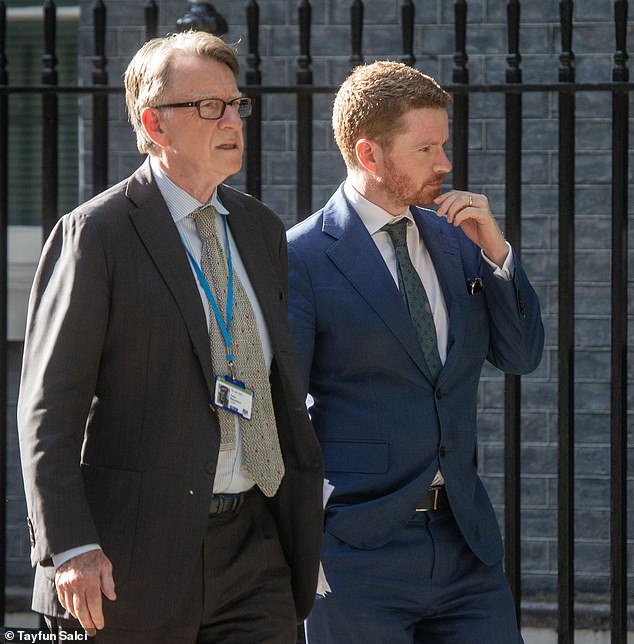
Morgan McSweeney's phone went missing in October last year, one month after Lord Mandelson was removed from his post as ambassador to Washington, and shortly after Downing Street officials had begun interviewing witnesses as part of an internal inquiry into how that appointment came to be made. The Metropolitan Police, we now learn, closed the investigation without speaking to McSweeney. They had written down the wrong address. The case has since been reopened after a journalist asked the right question.
The phone matters because of what it almost certainly contained. McSweeney and Mandelson were close. McSweeney drove the appointment. The messages between them would have constituted, as lawyers sometimes say, the best evidence: direct, contemporaneous, unmediated by retrospective account. Those messages are gone. This would be less troubling if WhatsApp messages vanished when phones were stolen. They do not. They are stored. They can be recovered. Their disappearance is not a technical inevitability. It is a choice, or a failure, and nobody has yet explained which. One missing phone. One very convenient gap in the evidence.
There is more. McSweeney was bound by guidance requiring him to preserve significant government information onto official systems. The Cabinet Office holds some of his messages. Not all. The remainder have not been accounted for.
Meanwhile the documents that have been released tell their own story. Jonathan Powell, the national security adviser, described the appointment process as weirdly rushed. He had raised concerns about Mandelson's reputation with McSweeney directly, and was told the issues had been addressed. Sir Philip Barton, a senior foreign policy official, raised concerns too. Both men were overridden. The appointment proceeded. Months later Mandelson was sacked, the internal inquiry began, and then, with a timing that strains credulity, the phone disappeared. Then the police misfiled the report and closed the case.
History offers us a word for this kind of sequence. Not conspiracy, which implies coordination and intent that cannot here be proved. The word is omerta: the closing of ranks, the convenient forgetting, the institutional instinct to protect itself from the reckoning it has earned. It does not require a villain. It requires only a culture in which the right questions are not asked, the right addresses are not recorded, and the right messages are not preserved.
Keir Starmer came to office promising a different kind of politics. Transparency. Accountability. The rules applying to everyone. What his government has produced instead is a missing phone, a botched police report, unrecovered backups, a rushed appointment, a severance payment made to stop a disgraced peer talking, and a paper trail with a hole in it exactly where the most important evidence should be.
That is not bad luck. That is a pattern. And patterns, as this Prime Minister knows better than most, are evidence.
"The messages between them would have constituted, as lawyers sometimes say, the best evidence: direct, contemporaneous, unmediated by retrospective account. Those messages are gone."
125
924
2,086
43,898
Damian King retweeted

Mar 23
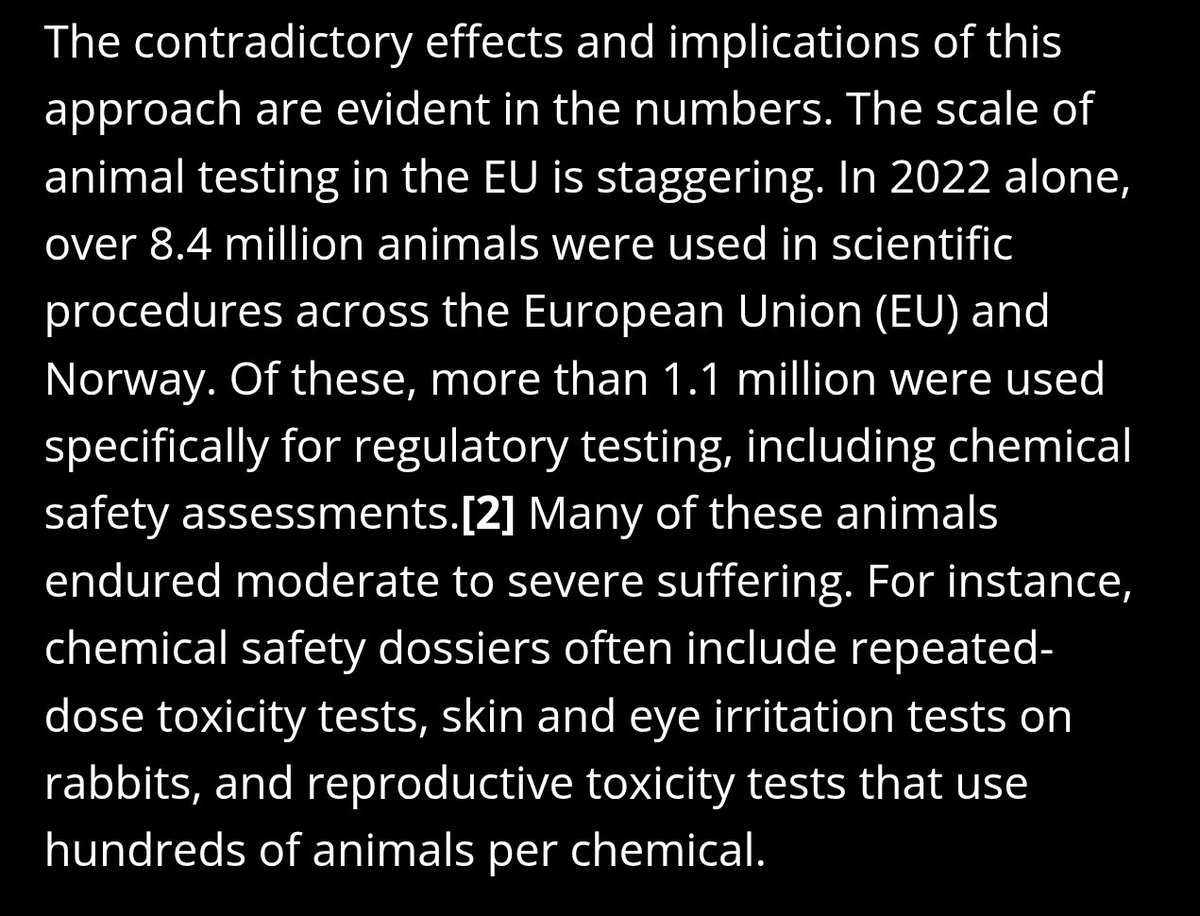
In 2022, the EU tested chemicals on over 1.1 MILLION animals, due to the mandatory requirement to do so under EU REACH regulations.
Brexit allowed the UK to act differently.
Our government wants the UK to realign again on these barbaric practices.
Say NO to dynamic alignment.
8
291
572
19,640
Damian King retweeted

Feb 27
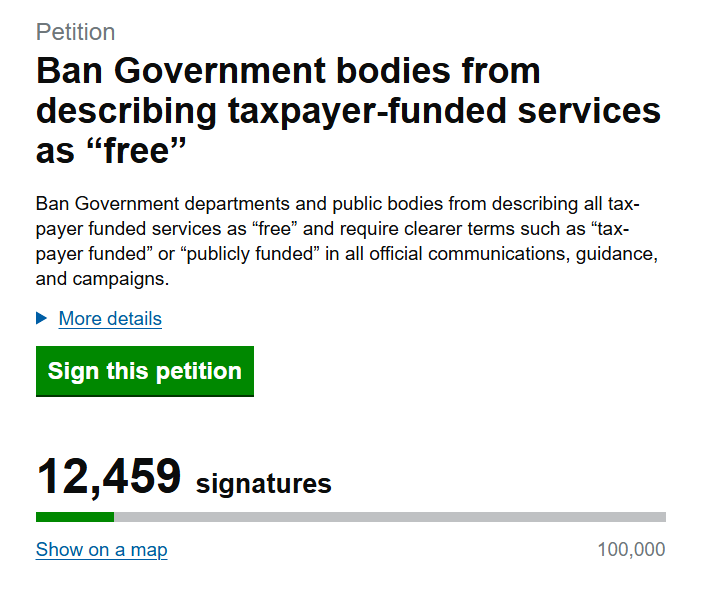
Great stuff from @HarrietCross_MP.
Let's get some more signatures behind this petition because I'm sick of seeing public bodies and politicians saying things are 'free'.
petition.parliament.uk/petit…
Feb 27

Nothing any Government gives away is “free”.
No “free” breakfast clubs, no “free” healthcare.
In Scotland, no “free” tuition fees or “free” prescriptions.
It’s all taxpayer funded.
Taxpayers pay, whether they like it or not, for all the“free” stuff.
Not the Government.
5
89
220
9,849