
620 Photos and videos







Pinned Tweet

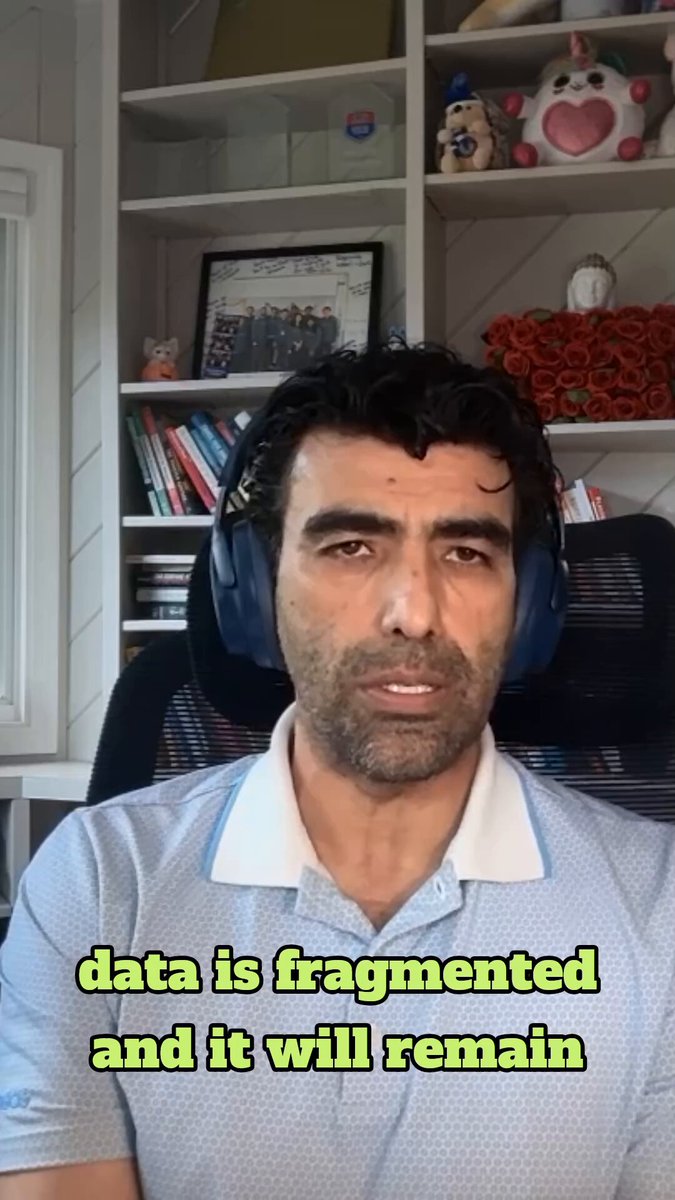
Everyone is talking about AI models.
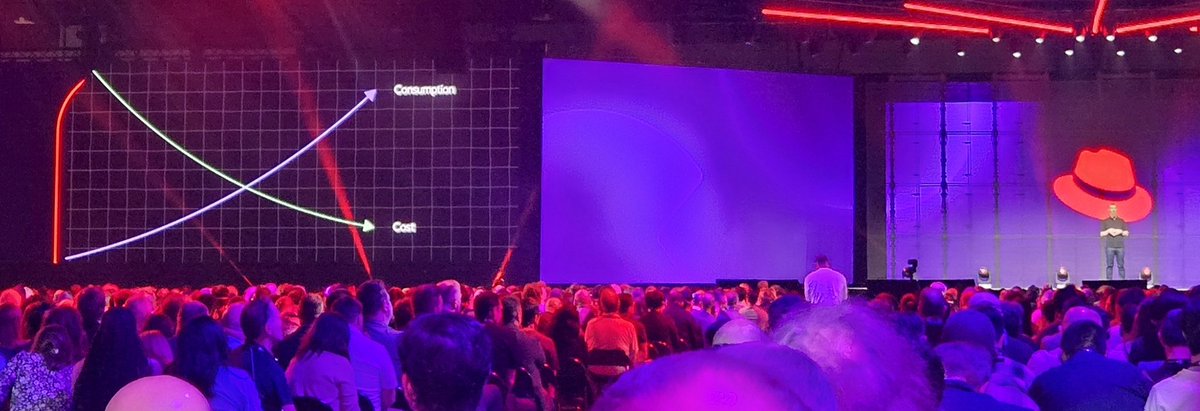
But after spending time at @VAST_Data's VAST Forward, one thing became very clear:
Agentic AI isn’t a model problem. It’s a data platform architecture problem.
As organizations move beyond copilots into AI systems that take action, the real bottleneck isn’t the LLM.
It’s the platform underneath:
• governed data access
• high-speed data platform services
• persistent AI memory
• GPU-accelerated data services
• distributed infrastructure that can manage fleets of AI systems
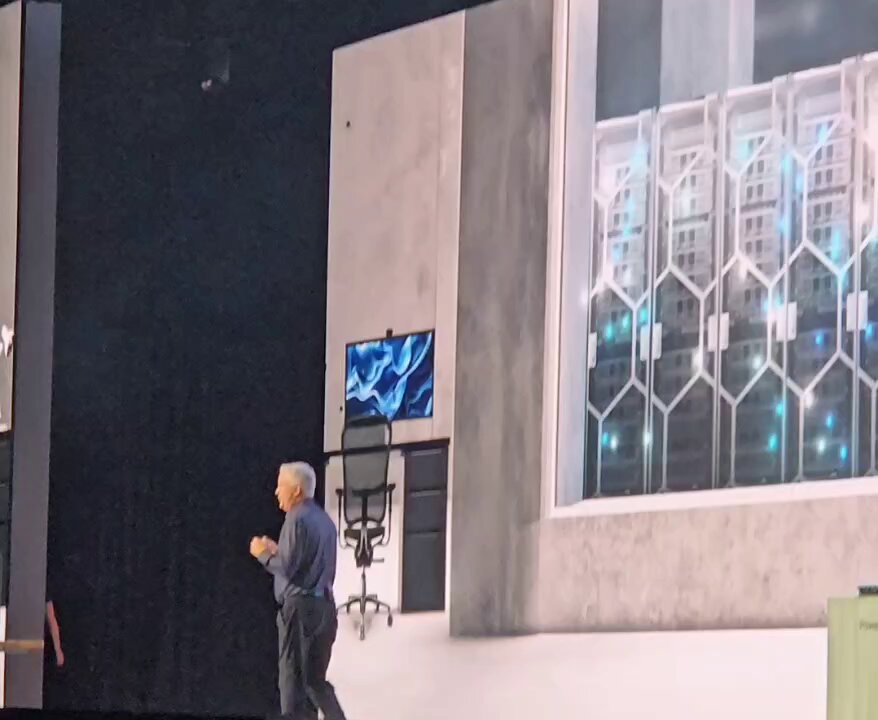
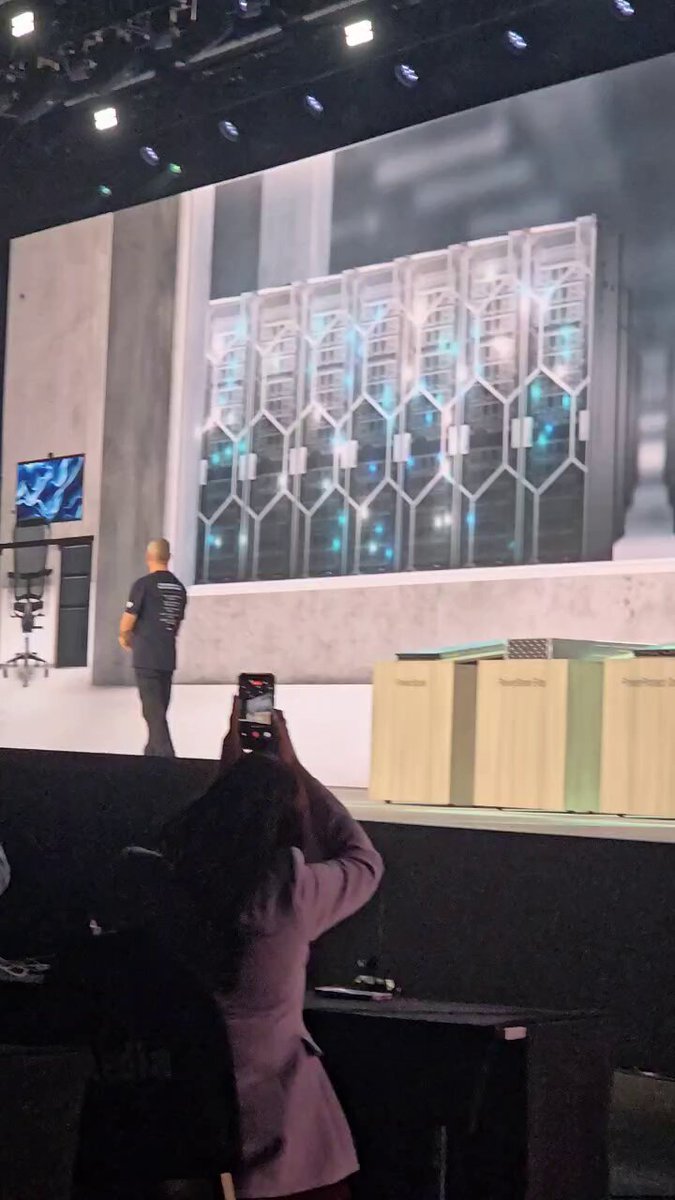
At VAST Forward, the conversation wasn’t about bigger models.
It was about how the data platform becomes the runtime for AI agents.
That shift is huge.
The companies that win in the next wave of enterprise AI won’t just deploy better models; they’ll build data platforms designed for agentic systems.
I break down the four architectural shifts emerging from VAST Forward and what they mean for platform teams, CTOs, and data engineers.
👇 Short video (6 min) and Full article below linkedin.com/pulse/agentic-a…
1
1
83
Some great analysis on the potential for AI hangover bleeding the market for the decade to come 👇

In the next few months, four companies are raising over $350 billion in equity.
– Google: $80B of net equity issuance to fund AI capex
– SpaceX: ~$75B IPO at near-trillion valuation
– Anthropic: raising at $965B post-money, up 53x from late 2024
– OpenAI: ~$100B at private market levels
That's a third of a trillion in fresh paper supply from four names alone.
Then there's the second wave.
An Anthropic employee who joined in late 2024 with $100K of equity is sitting on roughly $5.3 million on paper today. There are thousands like them at Anthropic, OpenAI, SpaceX, Databricks, Stripe, xAI.
Every single one is a future seller. At IPO, at lockup expiry, at the next tender. Founders, employees, and the earliest VCs are all trying to convert paper into cash at the same moment in history.
When the people closest to the asset are all sellers at the same time, the question isn't whether the technology works.
The question is who's left to be the bag holder.
This is what an exit liquidity avalanche looks like.
It doesn't crash a market in a day.
It bleeds it for years.

22
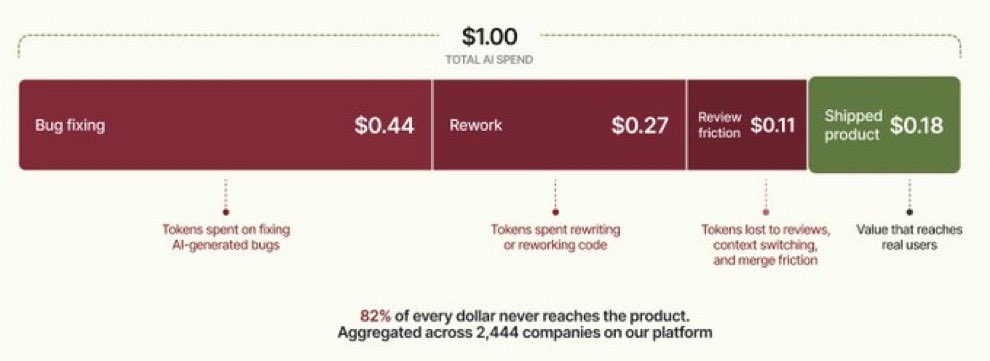
AI financial use case is not just about the cost of GPUs, power, and NAND, it's the human capital costs too. To get to ROAI (return on AI) companies need to figure out the AI slop code or thrashing. Detailed specs are key. More below sheds light on this.
May 27

A thought provoking new graph from @EntelligenceAI is making the rounds.
Ostensibly, it looks like most AI tokens being spent for app dev is going to waste. The issue is more complex however, and there is a lot of waste when humans code too.
Here’s my take on how it actually breaks down:
In “trad” software engineering, the cost of quality and rework numbers are significantly lower than what this graph implies for AI-generated code. But the comparison is nuanced because the graph is measuring token spend rather than labor hours or defect rates.
Historically, industry benchmarks — which I’ve tracked for years for norms and baselines for CIOs — for traditional software development generally look like this:
• Rework as a percentage of total engineering effort:
• Typical mature teams: 15–25%
• Average enterprise teams: 25–40%
• Poorly governed projects: 50%
• Defect fixing after initial coding:
• Often estimated around 20–30% of engineering capacity in normal enterprise environments.
• Actual “new value creation” reaching production:
• Commonly around 30–50% of total effort depending on bureaucracy, testing rigor, regulatory burden, and architecture quality.
So compared to the chart:
• The “82% never reaches the product” claim seems dramatically worse than traditional norms.
• Traditional engineering usually wastes around 40–70% of total effort when meetings, QA, architecture churn, compliance, integration, and technical debt are included.
• Elite software organizations historically get far better leverage, sometimes achieving 50% effective value delivery.
But there’s a much deeper issue here:
AI-generated code changes the economics because generation is nearly free, so orgs will tolerate *vastly* more speculative, low-quality, or throwaway code generation than humans would ever write manually. That inflates:
• Bug fixes
• Review burden
• Merge conflicts
• Architectural inconsistency
• Duplicate implementations
• Context switching
• Governance overhead
In other words, the whole graph is less an indictment of AI coding itself and more an indictment of immature AI software engineering operating models.
A mature agentic development organization should theoretically:
• Reduce boilerplate cost dramatically
• Compress rework cycles
• Automate testing and remediation
• Increase shipped-product ratio over time
But most firms are currently in the “AI code inflation” phase and are producing a lot…
• More code
• Code faster
• Lower coherence
• Rising governance burden
Which is exactly why CIOs and CTOs are suddenly obsessed with solutions for:
• AI app dev platform engineering
• Agent governance
• AI SDLC controls
• Code provenance
• Policy enforcement
• Automated reviews/QA
• Architecture constraints
• Token economics
The key takeaway from the chart is far more than “AI coding is inefficient.”
It must be:
“Unconstrained code generation without corresponding governance risks scaling entropy faster than productivity.”
cc @sarbjeetjohal @joemckendrick @DavidLinthicum @ThadOfSphere
1
38
Context is Key to Agentic AI: Listen to Where Code Meets Capital on Spotify for Creators open.spotify.com/episode/4pT…
1
19
Most organizations think Agentic AI is a model problem.
It isn’t.
It’s a context, governance, and data architecture problem.
linkedin.com/pulse/context-n…
In my latest conversation with @jaswani from @starburstdata we dive into why semantic layers, metadata, and contextual intelligence are becoming the real control plane for enterprise AI.
This ties directly into the momentum behind the Dell AI Data Platform with NVIDIA and where the market is heading next with Agentic AI and Sovereignty.
1
24
Top Ten changes in the past 12 months... DellTechnologyWorld Day 2 with @JClarkeatDell @DellTech
Thread 👇
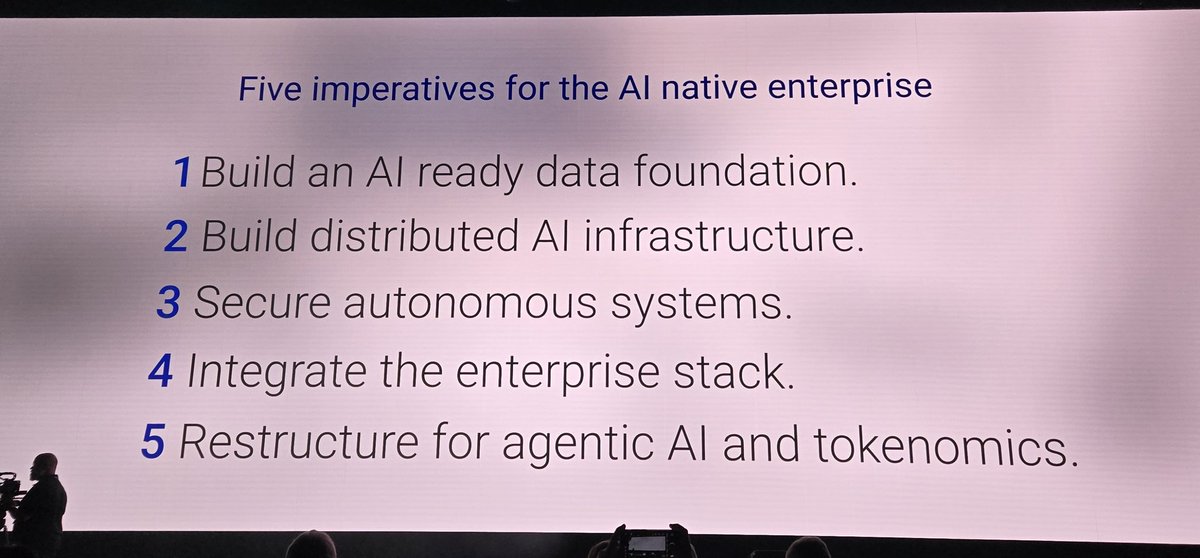
1/ AI as operator, not mere advisor
2/ model prices crater
3/ token consumption up 10x - seems low
4/ context windows cross millions of tokens
5/ train built models, now inference runs them
6/ GenAI spend tripled last year
7/ physical AI in production
8/ PC part of AI stack
9/ talent question flipped
10/ conversation changed
8
1
101
Dell Private Cloud is all about simplification of deployment and management
Typical HCI doesn't get you this, because of stair step cost - storage scaling separately is key
Multiple flavors with @openshift @nutanix ahv, and @VMware VCF 9.1
Dell Automation platform is key!
34
Protection for AI and the data is going ro be key.
Air-gapped security for backups will be key, like PowerProtect One - hardware root of trust and zero trust access - now driving down management overhead and massive data reduction.
35
Also Powers ale makes an appearance - talking Nvidia certification.
Next up is ObjectScale with RDMA over S3 - adding in S3 tables too.
Lastly Exascale with all 4 software defined storage in a rack - this makes sense as I talked to @PariseauTT about - but optimization will be key
1
28
Data is the life blood of AI - Arthur Lewis discusses the amount of data on-premises - Dell AI Data Platform using APIs and SQL across iceberg to bring structured and unstructured data to the AI
Talking about Lightening FS to help disaggregated inference...
62
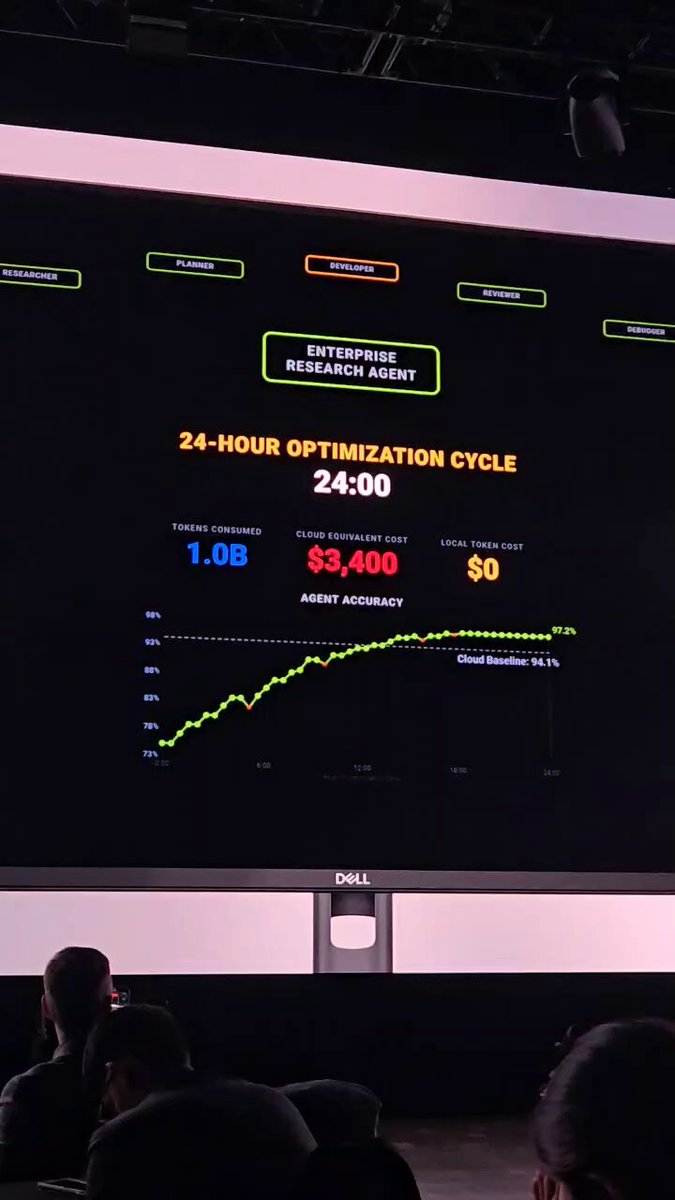
Most efficient AI is using the token produced closest to the data!
This makes sense.
GB10 with @nvidia nemo claw can save significantly
21
Now @openclaw discussion - Jeff about how Agents are changing productivity. Security and O11y are super important and a major fear of organizations.
1/ read-only
2/ O11y so you know what it is doing
Challenge is connecting data.
18
Observations
1/Token costs are falling fast.
Token use is exploding!
2/Productivity for individuals using AI is exponential
3/Tokens are a line item in P&L
11
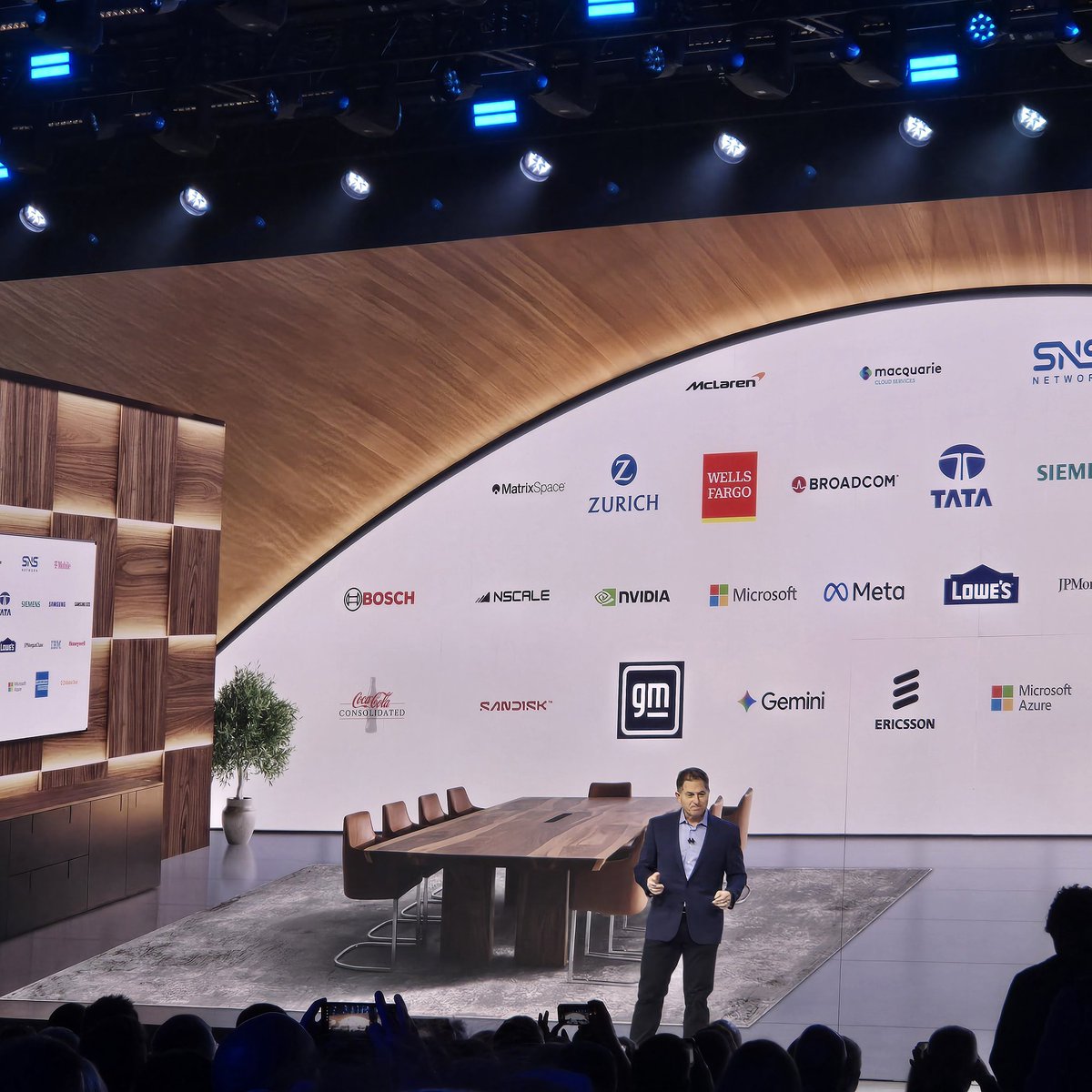
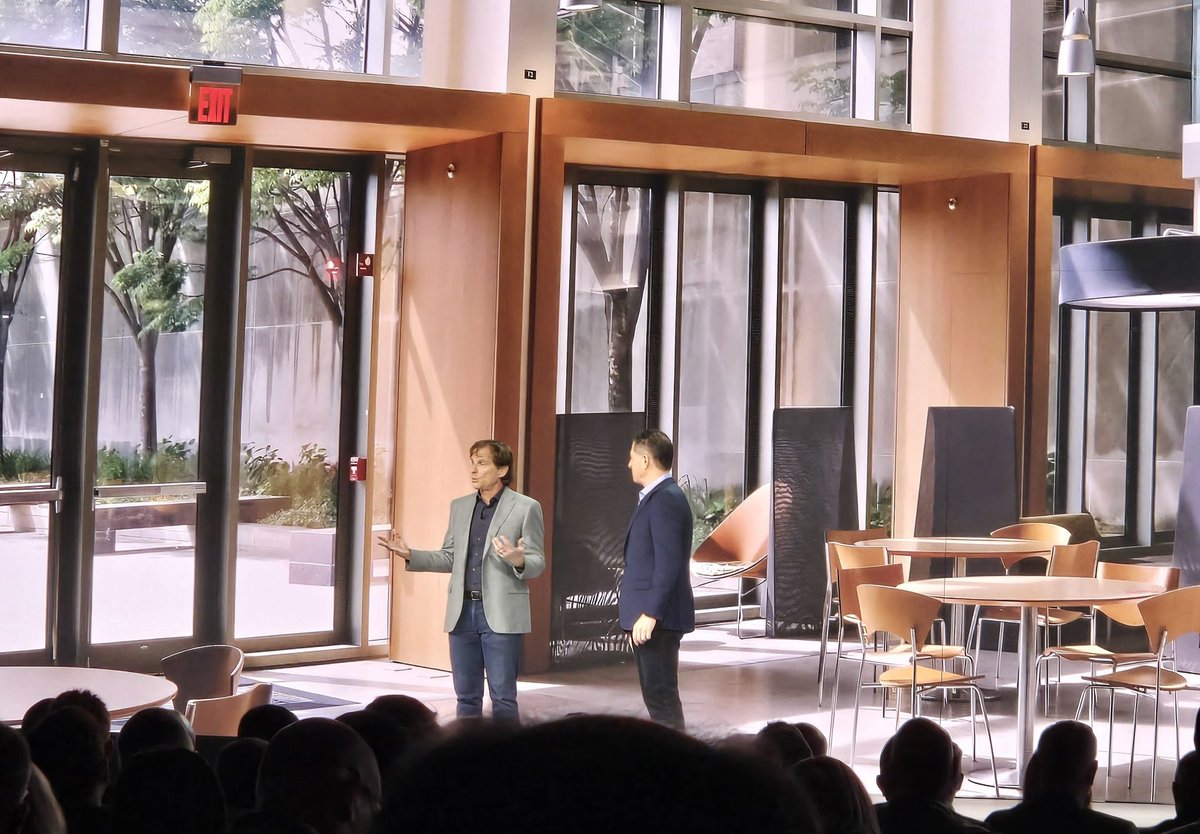
AI and Agents reinventing industries is a major theme for @MichaelDell @DellTech DellTechnologyWorld
First on stage is Eli Lilly talking about technology scaling pharma
Thread inbound 👇
8
1
8
34,538
MORE READING 👇
10/ For more on Token Economics, check out my article with data from @VentureBeat and a video with the CTO for AI of @LinkedIn
venturebeat.com/infrastructu…
1
36
11/ @PariseauTT's deep dive on @DellTech Day 1: Strechay said he expects agentic AIOps, which Dell also expanded for infrastructure management this week, to play a role in cross-vendor and cross-site data center orchestration.
"I would assume in the future the automation will obfuscate different systems through an MCP server or API set that will enable AI to make the determination of where the workload should sit," he said.
techtarget.com/searchdatacen…
2
59
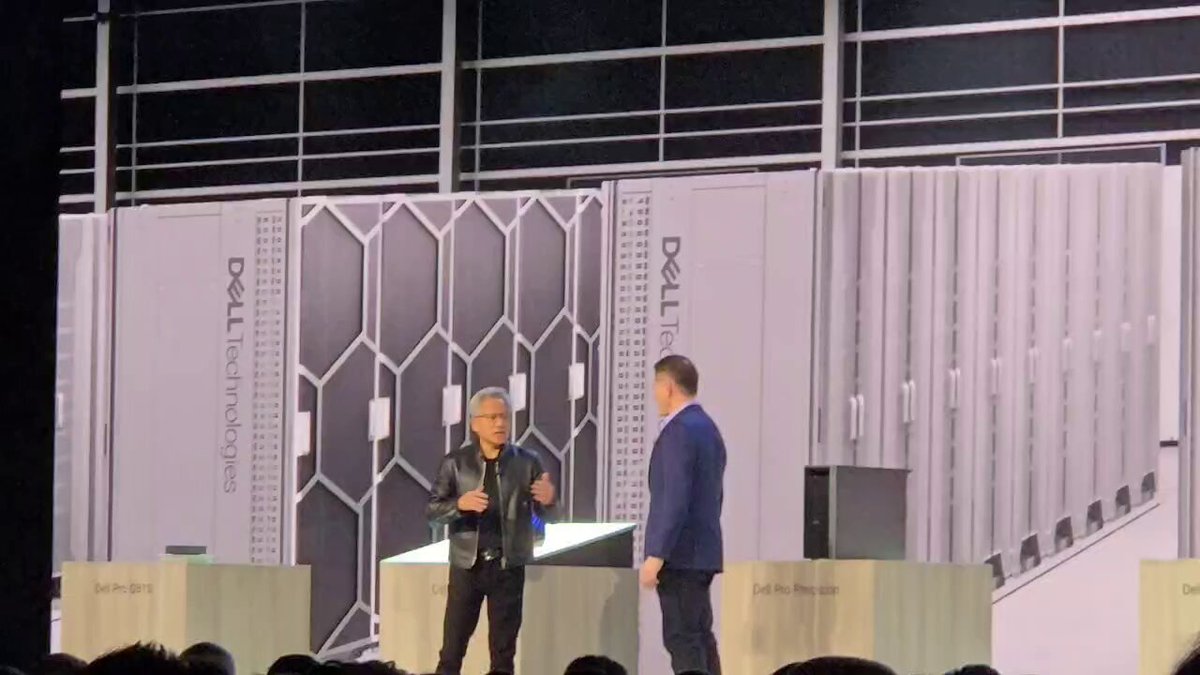
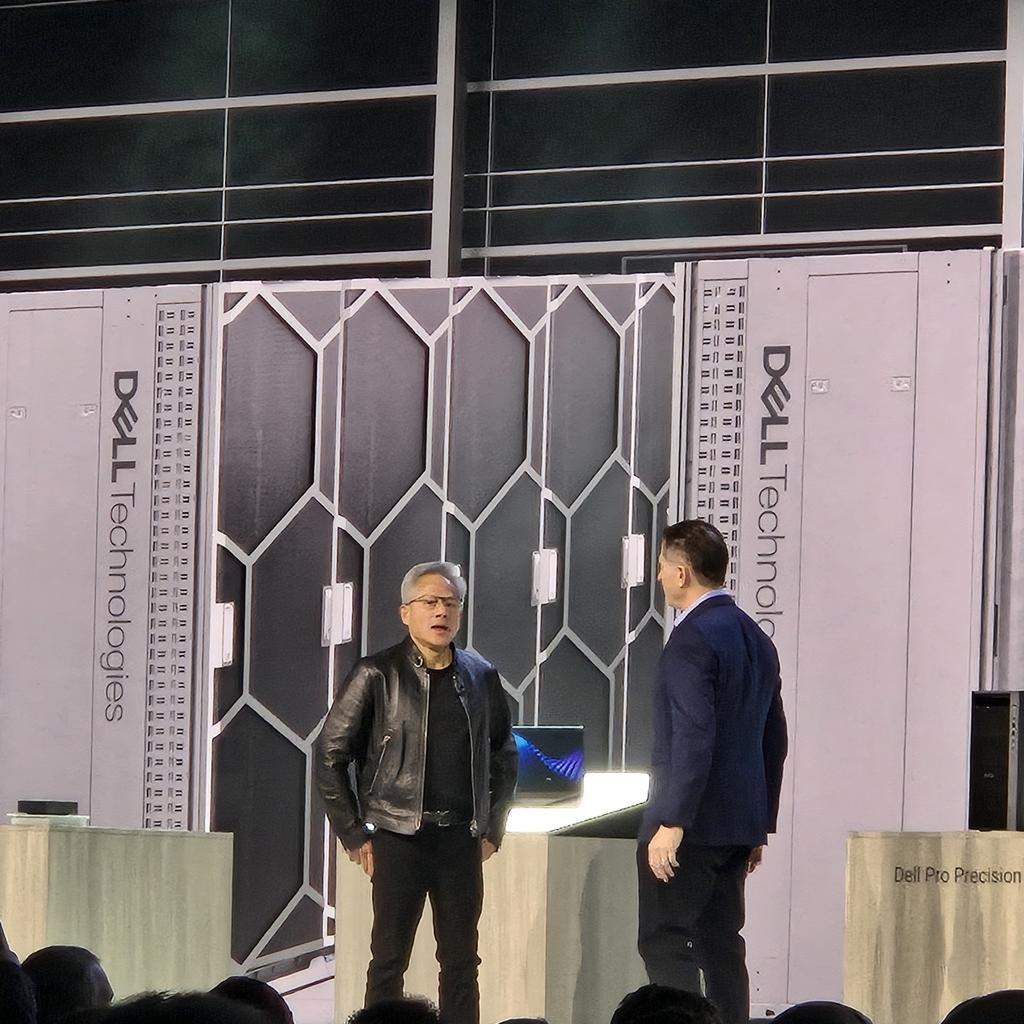
8/ would it be a DellTechnologyWorld without @nvidia Jenson Huang? Nope. Talking strategy of organizations doing Agentic AI at scale. Compression of innovation is his big topic theme.
1
55
7/ from Dell AI Factories to the desk top with GB10 - which has great airflow - to help limit tokens in the cloud, producing tokens from the data center to the desktop
41
6/ now to the meat of AI - Data with @nvidia Vera and Bluefield optimized with execution and context layer provided by @starburstdata - also lots of new storage stuff. Especially bring all storage personalities - all the file block & object including the LighteningFS network
1
82
5/ Token Economics is the most important bridge to ROAI success! I've been saying this for a while. Now @honeywell comes up to talk on this about how they move away from silos
1
48