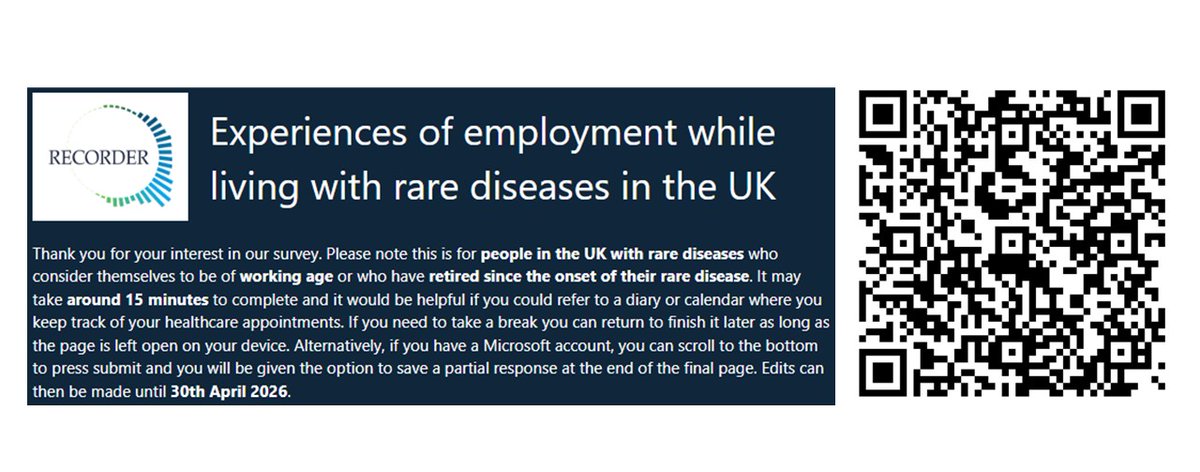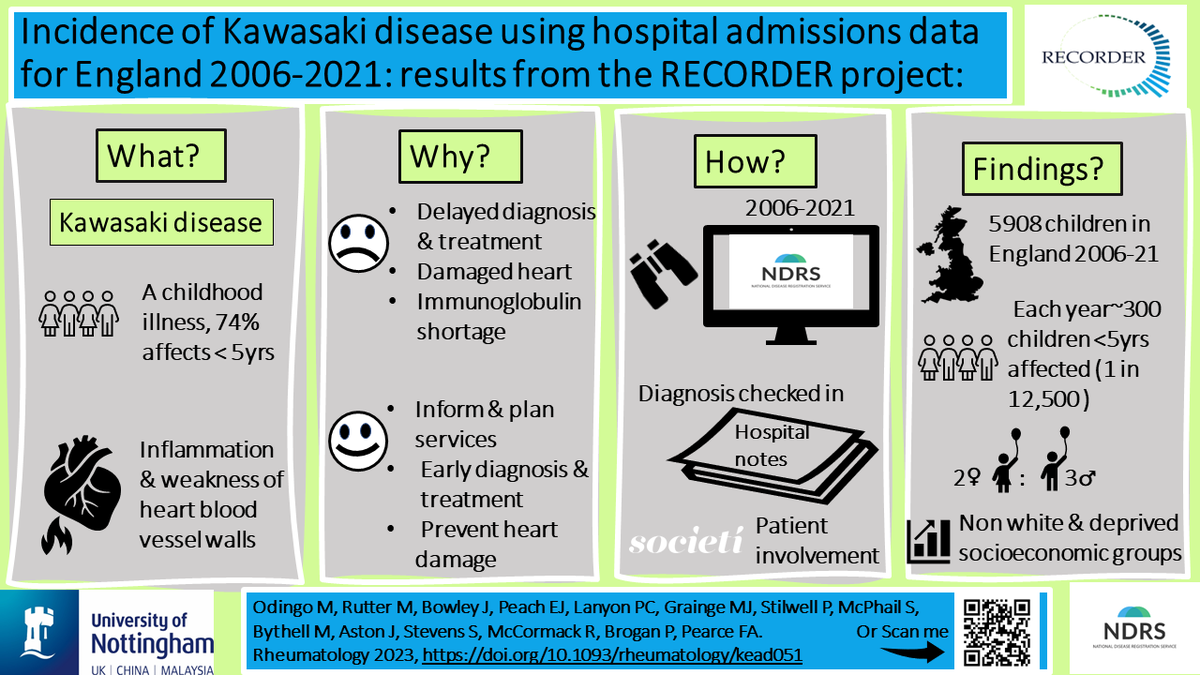
On #RareDiseaseDay, help shine a light on the realities of work with a rare condition.
If you’re in the UK and living with a rare disease (or retired since diagnosis), share your experience in our 15-min survey: tinyurl.com/RareDiseaseEmplo…
Your voice can drive change #RareDisease
📢 This #RareDiseaseDay, we’re launching a UK-wide survey on employment experiences while living with a rare disease.
Co-developed with people living with rare autoimmune rheumatic diseases, your voice will help spotlight the realities of work, barriers, and what needs to change.
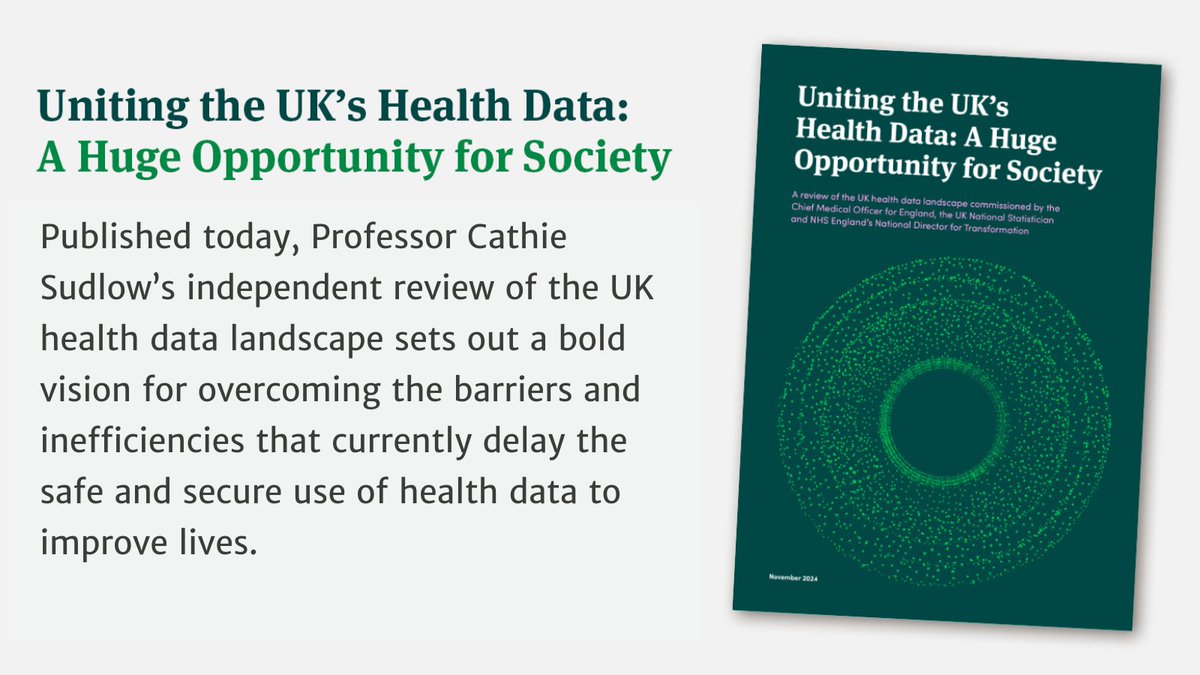
📢 UK health data should be recognised as "critical national infrastructure".
Published today, the #SudlowReview offers critical insights into how we can safely and securely use data science to improve health services across the UK.
➡️ Learn more: hubs.li/Q02XsMkh0
ALT Published today, Professor Cathie Sudlow's review of the UK health data landscape sets out a bold vision for overcoming the barriers that delay the safe, secure use of health data to improve lives.
New public opinion polling shows a majority of the public prefer the use of de-identified data over identifiable data for planning and population health, and are comfortable with the NHS having automatic access to data for these purposes.
Read more👇
understandingpatientdata.org…
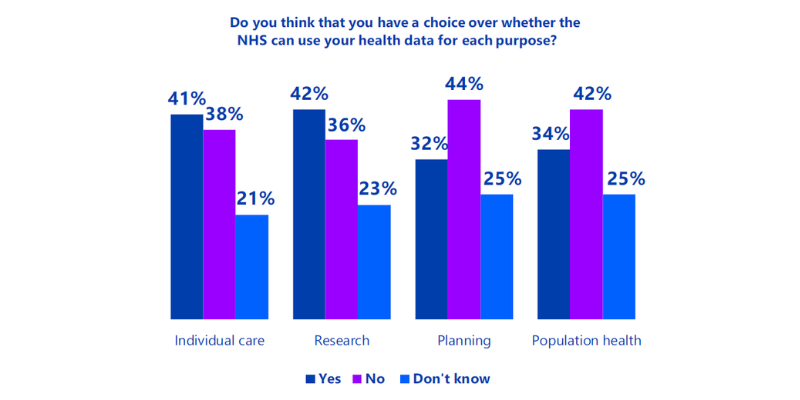
ALT Survey results for the question "do you think that you have a choice over whether the NHS can use your health data for each purpose?
Individual care 41% yes 38% no 21% don't know
Research 42% yes 36% no 23% don't know
Planning 32% yes 44% no 25% don't know
Population health 34% yes 42% no 25% don't know
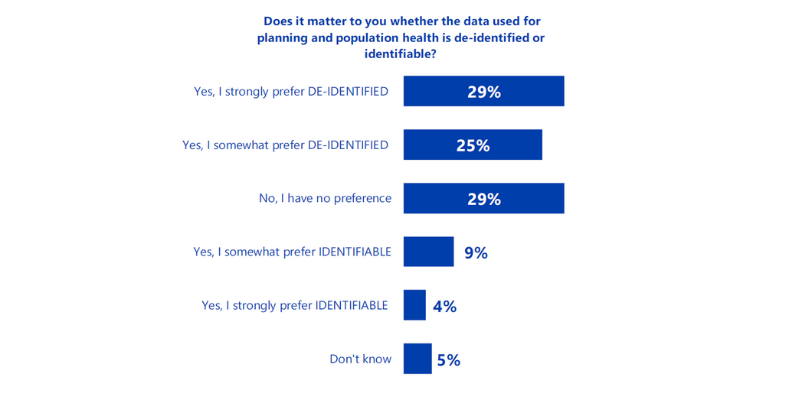
ALT Survey results for the question "does it matter to you whether the data used for planning and population health is de-identified or identifiable?"
Yes, I strongly prefer de-identified 29%
Yes, I somewhat prefer de-identified 25%
No, I have no preference 29%
Yes, I somewhat prefer identifiable 9%
Yes, I strongly prefer identifiable 4%
Don't know 5%
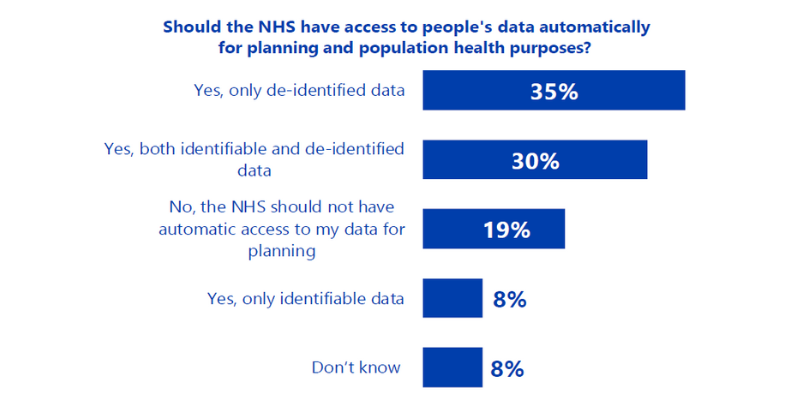
ALT Survey results for the question "Should the NHS have access to people's data automatically for planning and population health purposes?"
Yes, only de-identified 35%
Yes, both identifiable and de-identified 30%
No, the NHS should not have automatic access to my data for planning 19%
Yes, only identifiable 8%
Don't know 8%
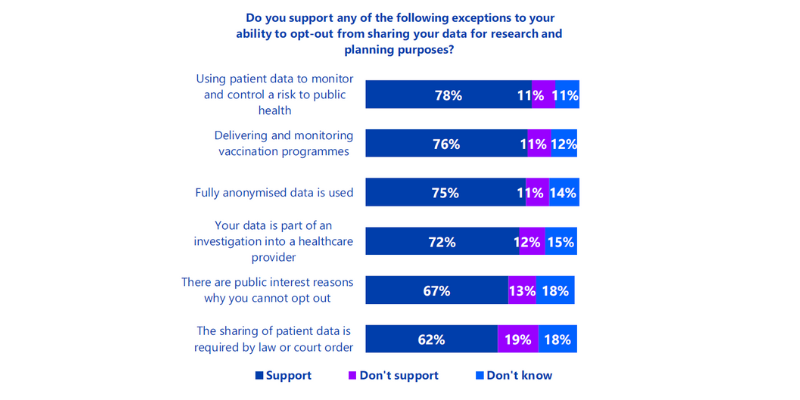
ALT Survey results for the question "Do you support any of the following exceptions to your ability to opt-out from sharing your data for research and planning purposes?"
Using patient data to monitor and control a risk to public health 78% support
Delivering and monitoring vaccination programmes 76% support
Fully anonymised data is used 75%
Your data is part of an investigation into a healthcare provider 72%
There are public interest reasons why you cannot opt out 67%
The sharing of patient data is required by law or court order 62%
Are you living with lupus, scleroderma, myositis or vasculitis? @RecorderUK are holding an event on Saturday the 15th June for patients and carers, to make sure their research is relevant to you - Visit their website for more information: shorturl.at/acuCS
#RareDiseaseDay is a great way to show support & raise awareness of rare diseases. I see a lot being done around rare cancers & genetic diseases but would love to see more being done for rare #autoimmune diseases. Do you agree?
On #RareDiseaseDay, @UniofNottingham is proud to share news of our Rare Disease Research Network, where academics and @nottmhospitals colleagues work together to improve the lives of the 3.5m people in the UK who have a rare condition.
bit.ly/3URR7M7
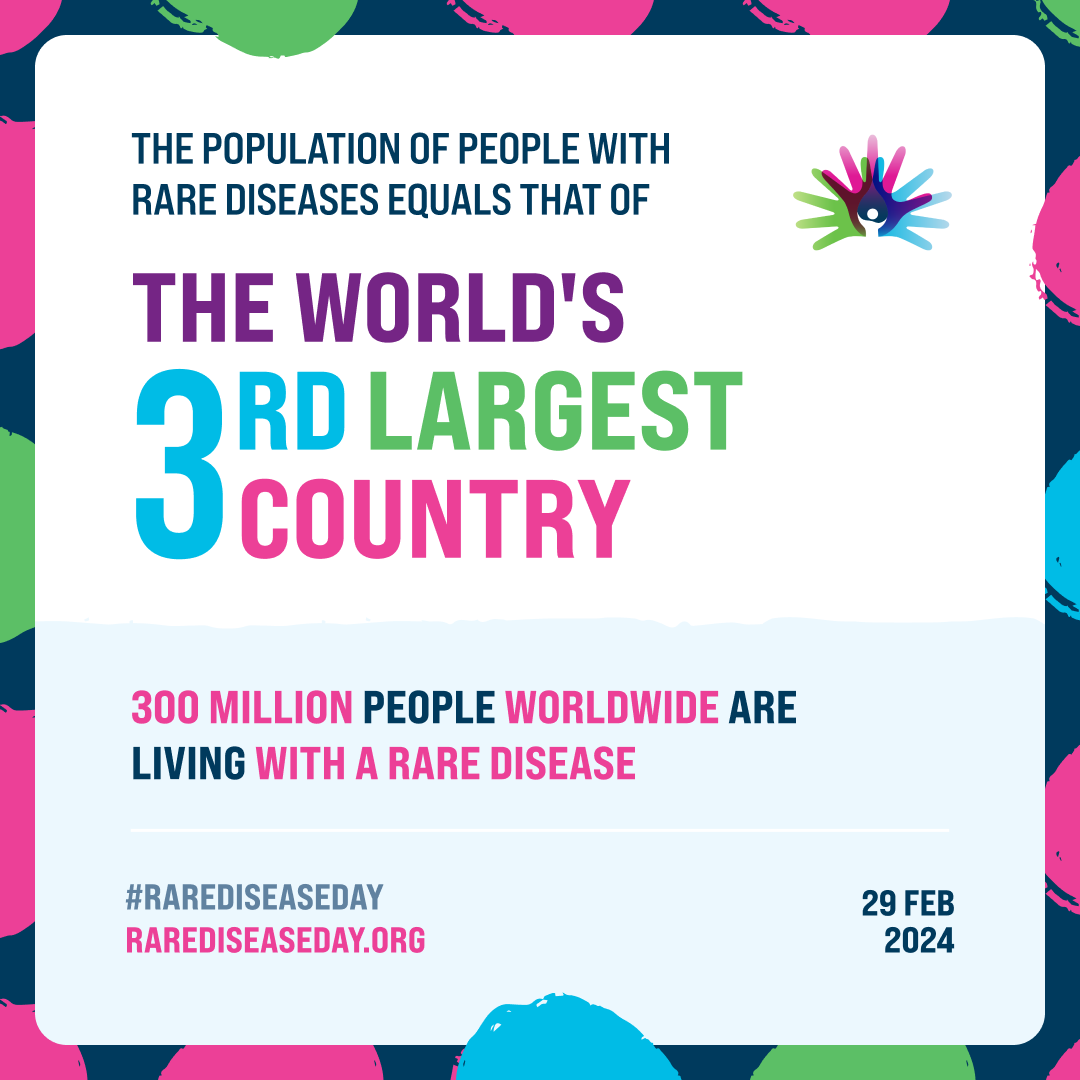
ALT Image reads: The population of people with rare diseases equals that of the world's 3rd largest country. 300 million people worldwide are living with a rare disease.
🚨 IT'S RARE DISEASE DAY GLOBALLY! 🚨 Join us marking #RareDiseaseDay 2024! Spread awareness, share stories, and support those living with rare diseases. Together, we make a lasting impact! #ShareYourColours
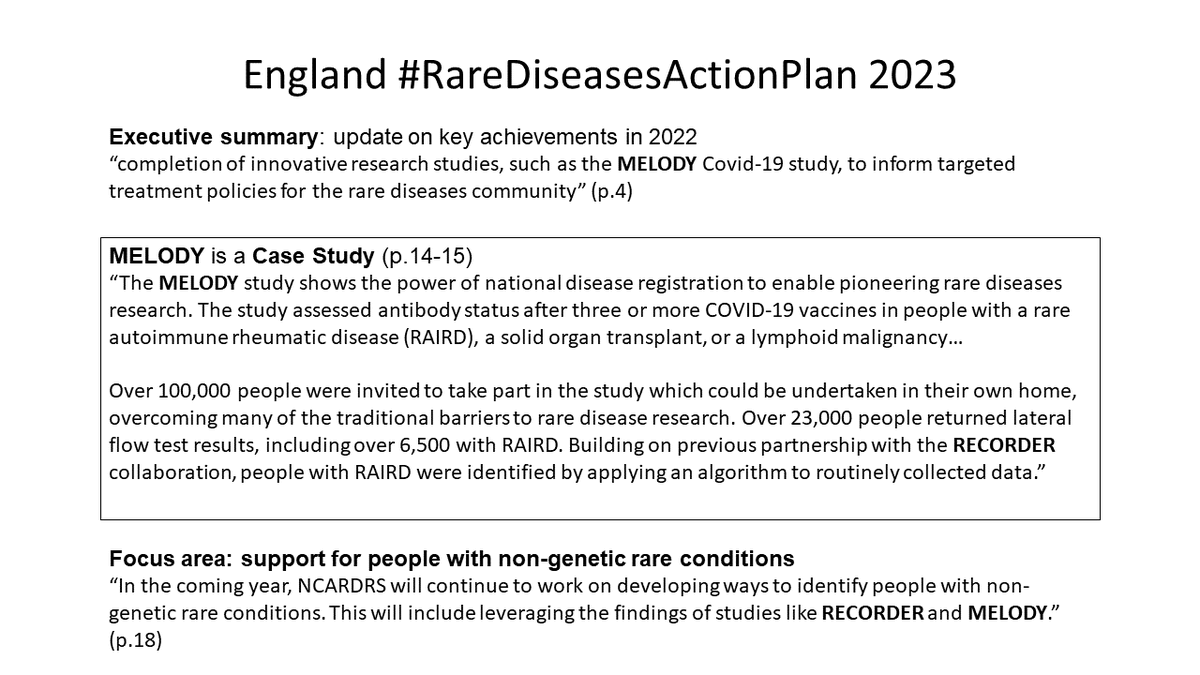
Baseline @MELODYStudyUK now published.
>100,000 immunocompromised people with organ transplants, rare autoimmune disease or blood cancer were invited 2 take part.
COVID-Ab results after 3-5 vaccines were reported in >23,000
sciencedirect.com/science/ar…
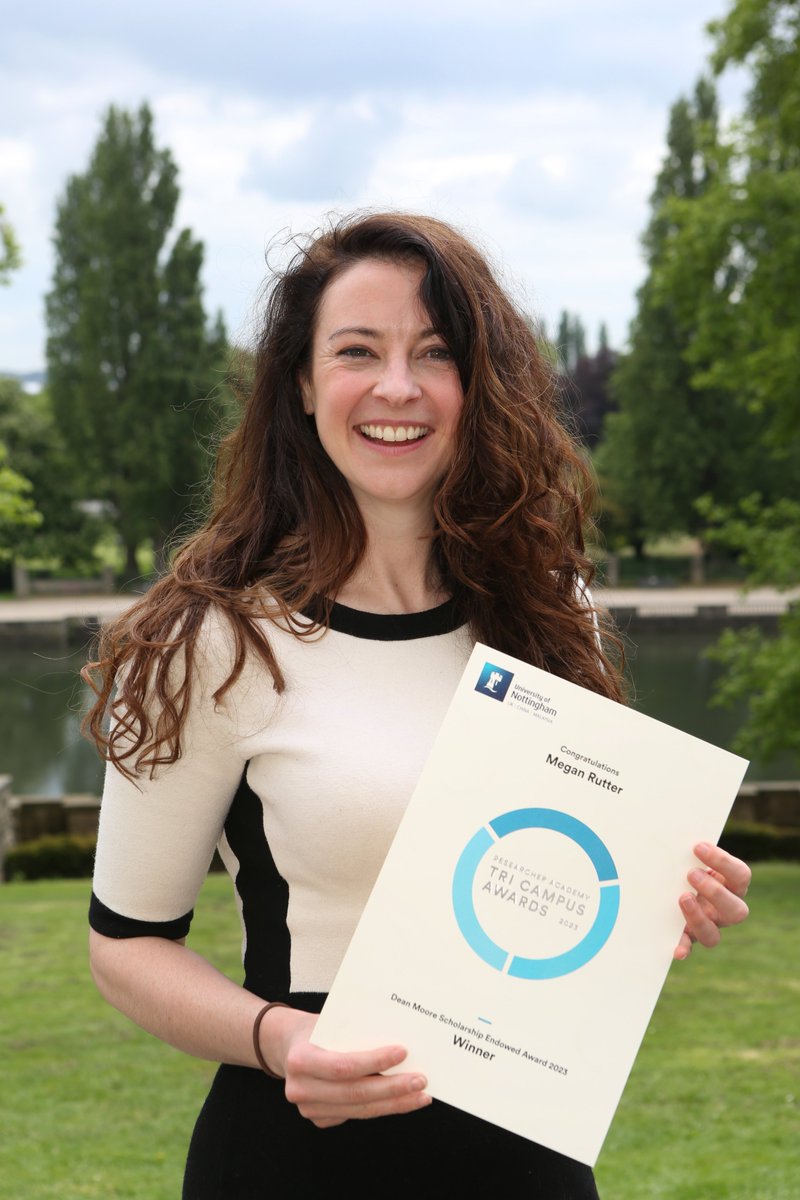
Dr Megan Rutter of the RECORDER group was awarded the Dean Moore Scholarship Award in the University of Nottingham Tri-campus Awards, recognising students who contribute to world-leading research, and their impact on the wider university community.
nottingham.ac.uk/research/gr…
To support #RareDiseaseDay we will be tweeting throughout the day
Check out our new website 🖥️shorturl.at/bhuXY
Take a look at our news, projects and people
See how we use #HealthData to support national disease registration and enable pioneering #rarediseases research.
Data from the @MELODYStudyUK 👇
doi.org/10.1101/2023.02.09.2…
14.1% of people with rare autoimmune rheumatic diseases #RAIRD had no detectable antibodies against #COVID19 after 3 or more #vaccine doses
More vaccine doses=better
14.5% no antibodies after 3 doses
⬇️10% after 5 doses