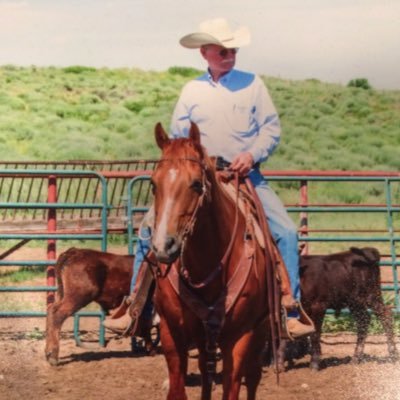
Northeast New Mexico rancher.
Joined November 2016
- Tweets 959
- Following 963
- Followers 831
- Likes 81,478
Photos and videos
Red Miller retweeted

May 29
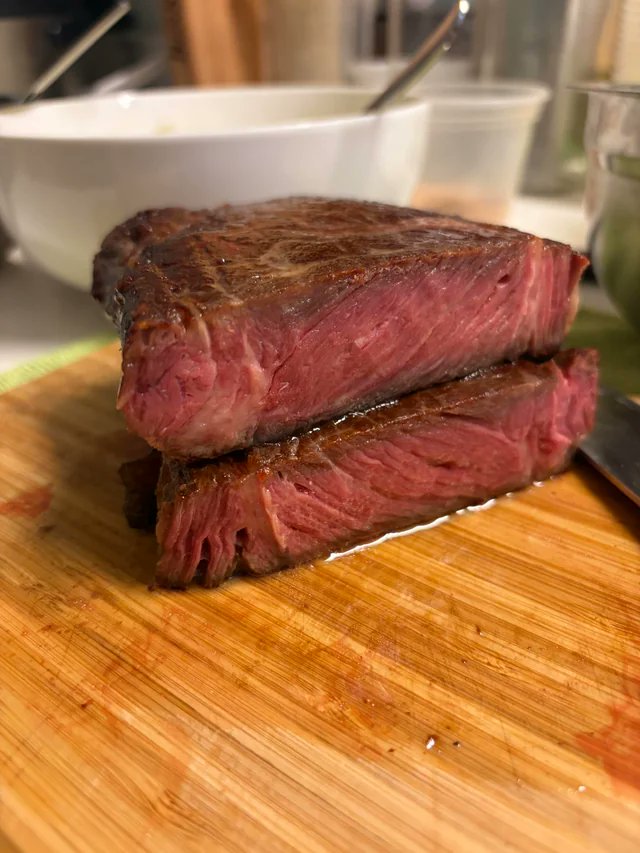
BREAKING: Scientists have discovered a food that meets every essential human nutrient requirement.
Complete protein with all nine essential amino acids in optimal ratios. Active vitamins A, D, E, and K2. Haem iron at 25% absorption. Zinc, B12, creatine, carnitine, CoQ10, choline, selenium, taurine.
No antinutrients. No lectins, oxalates, phytates, or saponins. No defensive plant chemistry to soak out, sprout, ferment, or boil into submission.
Requires no processing, no fortification, no chemical treatment, no marketing department. Apply heat. Eat.
No postprandial inflammation. No blood sugar spike. Exceptional satiety. The kind that means you skip lunch without noticing.
Available for 2.5 million years. Eaten by every traditional culture from the Inuit to the Maasai to the Welsh hill farmer.
It is red meat.
The scientists did not actually discover this. It was just there the entire time. On the hill. In every kitchen that ever fed a working population through a winter.
We were told to limit it. We did. The population got sicker. The guidelines stayed.
The cow has been waiting. The cow is still waiting.
131
1,700
5,560
121,481

The government created a law that deducted money from our paychecks every week. They then told us we could not have that money until we reached an age they decided on. They then decided we would only be given what they thought we should have of our money every month.
Social Security is a scam!
Why do we allow them to do this to us?
121
626
2,017
22,177
Red Miller retweeted
Apr 9
The Midwestern United States was, until relatively recently, sitting on top of some of the deepest topsoil on earth.
Ten thousand years of prairie. Bison, fire, deep-rooted grasses, the slow accumulation of organic matter into a layer of black soil sometimes two feet thick. Soil that farmers in other parts of the world would have wept at the sight of.
Then the plough arrived.
In 2021, a team from the University of Massachusetts used satellite imagery and LiDAR to measure what was left. Their finding: roughly a third of the Corn Belt, around 30 million acres, has completely lost its A-horizon. The carbon-rich topsoil is simply gone. Scraped off the hilltops by a hundred and fifty years of tilling and rain, washed downslope, into rivers, into the Gulf.
The USDA had previously estimated that none of those same fields had lost their topsoil.
None.
The satellites disagreed.
Every year, the United States loses around five tons of soil per acre. Ten times the rate at which it forms. A layer as thick as a dime, peeled off every twelve months, across tens of millions of acres, and sent downhill.
The crops being grown on this land, the corn and soy that replaced the prairie, are in large part used for ethanol, high fructose corn syrup, and livestock feed. The livestock feed portion is the only one that gets criticised in polite company.
The prairie took ten thousand years to build.
We scraped a third of it off in under two hundred.
The people currently telling us to grow more crops instead of raising cattle are, presumably, unaware that the crops are already eating the ground they stand on.
80
791
2,710
54,916

Red Miller retweeted

Mar 8
They want you to be ashamed of the American Dream
Your grandpa showed up with a suitcase and $40. Didn't speak the language. Didn't know anyone. Washed dishes until he could afford something better. Saved enough to buy a truck. Started a business. Then bought the building.
Your grandma watched it happen. And she raised four kids to believe they could do it too.
That's the American Dream.
It never mattered if you were born here or came on a boat. What mattered was what you were willing to build.
A kid grows up on a cattle farm in the middle of nowhere Nebraska. His dad never finished high school. His mom works the register at the only store in town.
Nobody in his family has ever left the state.
He tinkers with engines after school. Builds things out of scrap. Shows up to college with everything he owns in the back of a pickup truck.
Ten years later he's running a manufacturing company.
Not because his parents had connections. Not because someone handed him a trust fund or a last name that opened doors.
Because this is America. And in America, you're allowed to try. You're allowed to dream.
And the numbers prove it.
~23 million millionaires in this country. 79% of them are self-made.
902 billionaires. More than anywhere else on the planet.
13 out of the 15 richest people in the world are American.
73% self-made. They didn't inherit empires. They built them. In garages. In dorm rooms. In strip malls. On kitchen tables.
Jeff Bezos never knew his biological father. He started Amazon out of a garage and couldn't afford a desk so he bought a door from Home Depot and screwed four legs onto it.
Larry Ellison was abandoned by his mother at nine months old. His adoptive father told him he'd never amount to anything. He dropped out of college twice and built Oracle into a $200 billion empire.
Oprah was born into poverty in rural Mississippi to a single teenage mother. She became the most influential media figure on the planet.
Three people who had every reason to fail. Look what they built instead.
Tell me where else a broke kid with no connections can build a billion-dollar company and nobody asks who his father was.
You won't find it. Because every other system on this planet was built to keep people where they were born. Castes. Classes. Last names. Bloodlines. Old money. Old power.
America was built to break all of it.
An entire generation has been brainwashed into being ashamed of it.
They taught your kids that this country was built on nothing but slavery and genocide.
They put it in the textbooks. The movies. Every feed.
Until your 19-year-old can't say "I love my country" without feeling like he has to apologize.
They told you the American Dream was a lie sold to keep people down.
53 million people born in other countries chose to live here.
71% of them say they'd do it all over again.
They didn't pick France. They didn't pick Germany. They didn't pick China. They picked here.
Because they already know what you've been gaslit into forgetting.
Don't let them do this to you.
Don't let some professor who's never built anything tell your kids that the country their great-grandparents bled for is irredeemable.
Don't let some activist with a blue check convince you that a nation of 22.7 million self-made millionaires is a monument to oppression.
Don't let a politician shame you into believing that the people who build are the villains. Every time this country creates greatness, they tell us to apologize for it.
And don't you dare let a foreigner who's never set foot here tell you what your country is.
They've never watched a janitor's daughter become a surgeon.
They've never seen a single mom put herself through night school and end up running the department.
They've never sat at a Thanksgiving table where five different accents argue about football and nobody thinks twice.
That's not some ad, it's a Thursday.
Somewhere right now a kid is lying on the floor of a studio apartment doing homework while his mom works a double. He doesn't have a trust fund. He doesn't have a single connection that matters.
But he's got a shot. A real one. Because he lives here.
And if you let them take that from him, what are you even defending?
This is the country that looked at the moon and said "we choose to go, not because it is easy, but because it is hard."
So build.
I hope you understand what's at stake.

139
840
2,514
67,524
Red Miller retweeted

Feb 24
A big thing that would actually help would be opening crp to grazing though fall and winter.
Instead of ridiculous practices like light discing which only harms the land!
Graze cattle and regenerate the land!!
Feb 24

.@grok how many cow calf pairs could be supported on the 25 million acres of CRP in the US? What are the top 5 states for CRP enrollment currently?
Cattle
Restoration
Program
@SecRollins @SecKennedy
4
21
74
4,200
Red Miller retweeted

Feb 23
This exactly.
Feb 23

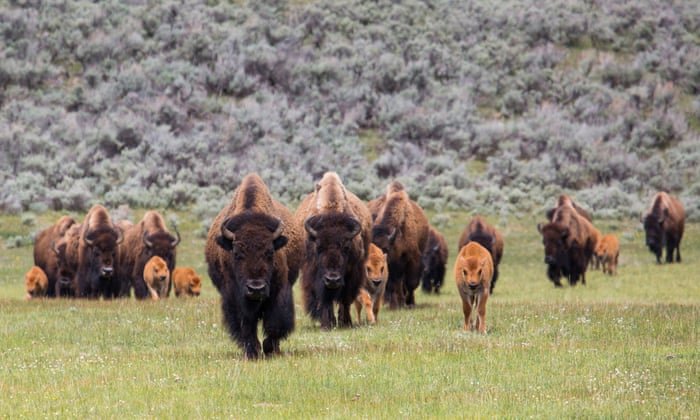
Before European settlers arrived, 60 million bison roamed North America.
Each bison produces roughly the same methane as a domestic cow.
That's 60 million methane-producing ruminants, grazing continuously, for thousands of years.
The prairie ecosystem didn't collapse.
It thrived.
It was the most biodiverse temperate grassland on earth.
The methane was always there.
The bison were always there.
The grassland needed both.
We didn't have a ruminant problem then.
We don't have one now.
We have a fossil fuel problem.
Those are different things.
4
13
135
3,102


Red Miller retweeted
Feb 13
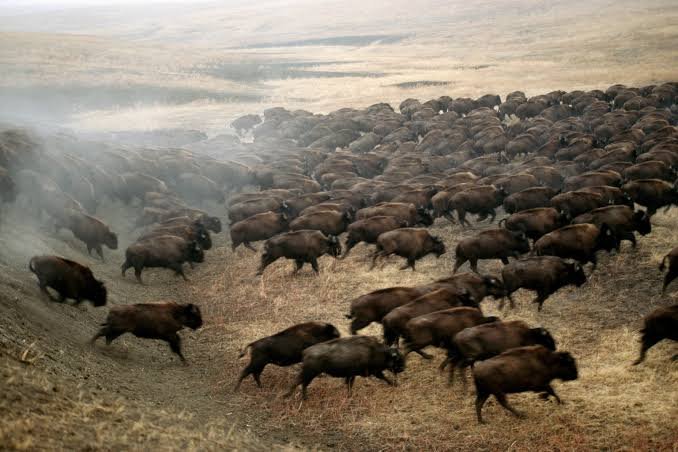
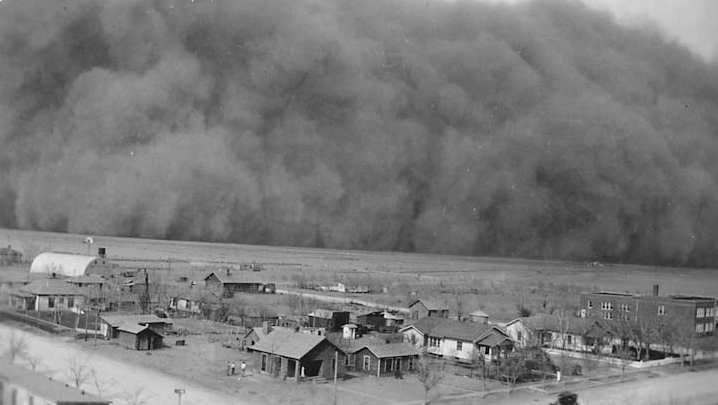
1930s: American Dust Bowl. Industrial farming ploughed up grasslands that had sustained buffalo herds for thousands of years. The grass held soil together. Remove grass, soil becomes dust. The worst environmental disaster in American history was caused by replacing grassland with crops.
The Great Plains evolved as grassland. Deep-rooted prairie grasses prevented erosion, captured rainfall, maintained soil structure. Buffalo grazed without destroying it. The system was stable for millennia. Then tractors arrived and farmers decided wheat was better than grass.
The result: massive soil loss, economic collapse, agricultural devastation, and human displacement. The land that successfully supported grazing animals for thousands of years couldn't handle five years of intensive crop agriculture. Breaking the grassland broke the ecosystem.
Eventually, some areas were returned to grassland and cattle grazing. The land recovered. The soil rebuilt. The system stabilized. The environmental disaster was caused by replacing grass with crops. The solution was returning grass and reintroducing grazing animals.
Modern environmental activists suggest converting grassland to crops. The Dust Bowl suggests this is catastrophically stupid. The land is grassland for ecological reasons. Fighting this reality causes environmental disaster. The cattle grazing that land aren't the problem. They're working with the land's nature instead of against it.
Grassland is grassland because that's what works there. The crops are the inappropriate use. The cattle are appropriate. The Dust Bowl proved this in the most devastating way possible. We're ignoring that lesson because admitting it contradicts current agricultural narratives.
56
400
1,136
29,954
Red Miller retweeted

One of the biggest SCAMS in the cattle industry is buying single open cows and putting a bunch of them together,
Throw a bull on them,
And sell them as a "Complete Ranch Dispersal"
They are actually a bunch of misfits that wouldn't rebreed,
Aborted, no milk, no Mothering.
13
1
109
13,474
Red Miller retweeted
Jan 28
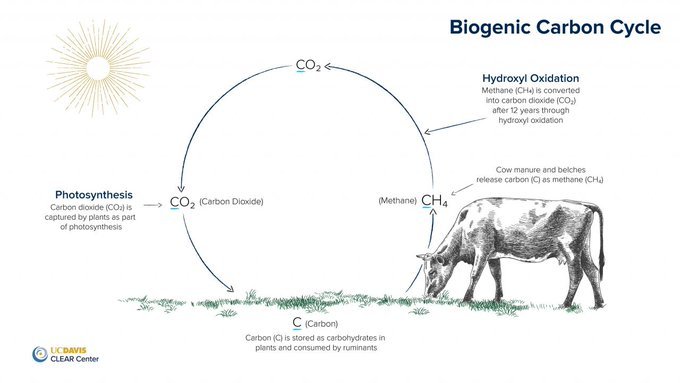
You can only think cattle cause global warming when you have no concept of how the biogenic carbon cycle works.
Ruminants and grasses have been evolving together for several million years, and the earth’s systems evolved to handle the methane.
Methane is short lived before being broken down into CO2, and all the methane emitted by cows was CO2 about 6 months before the cows ate it.
Hence in the blink of an eye (12 years), we have a cycle that does not add to atmospheric CO2 levels.
Not a single atom of Carbon can be additionally added to the atmosphere by cows.
9
56
161
3,231
Red Miller retweeted
Jan 12
A cow takes grass (inedible to humans) and produces:
- Meat (complete protein fats)
- Milk (complete nutrition)
- Leather (clothing, tools)
- Tallow (cooking fat, soap, candles)
- Bones (tools, broth, fertilizer)
- Organs (nutrient-dense food)
- Manure (fertilizer)
This is complete resource utilization from a plant humans cannot eat.
You cannot replicate this with any technology. The cow is performing chemical transformations we cannot industrialize.
Grass → complete human nutrition is alchemy.
The cow is worth more than any machine humans have invented.
It runs on rain and grass. Produces multiple products. Builds soil while operating. Sequesters carbon. Reproduces itself.
And we're told to eliminate them for environmental reasons.
While flying in almonds from California and soy from Brazil.
The stupidity is breathtaking.
653
9,300
32,741
974,978
Red Miller retweeted

Someday we'll all learn oil isn't made from dinosaur fossils.
It is naturally produced from within the earth, like the blood within our bodies. It is a renewable resource which can never run out.
The scarcity tactics is used by the elite to promote them as "fossil" fuel, because allegedly being fossil fuels, it means that it has to run out, therefore keeping the prices high.
Infact there is almost as much underground oil, as there is water here on Earth.
1,944
5,341
23,959
1,658,067
Red Miller retweeted

Jan 3
Selective outrage alert.
Obama launched weeks of airstrikes in Libya without Congress. Biden ordered repeated strikes in Syria, Iraq, Yemen, and Somalia the same way.
You do not get to call it illegal only when you dislike the president.
Be consistent or be quiet.

The White House is confirming U.S. military operations in Venezuela tonight. Let us be clear: these strikes are illegal. The President does not have the authority to declare war or undertake large-scale military operations without Congress. Congress must act to rein him in. Immediately.
808
5,682
20,372
476,430


Red Miller retweeted
27 Dec 2025
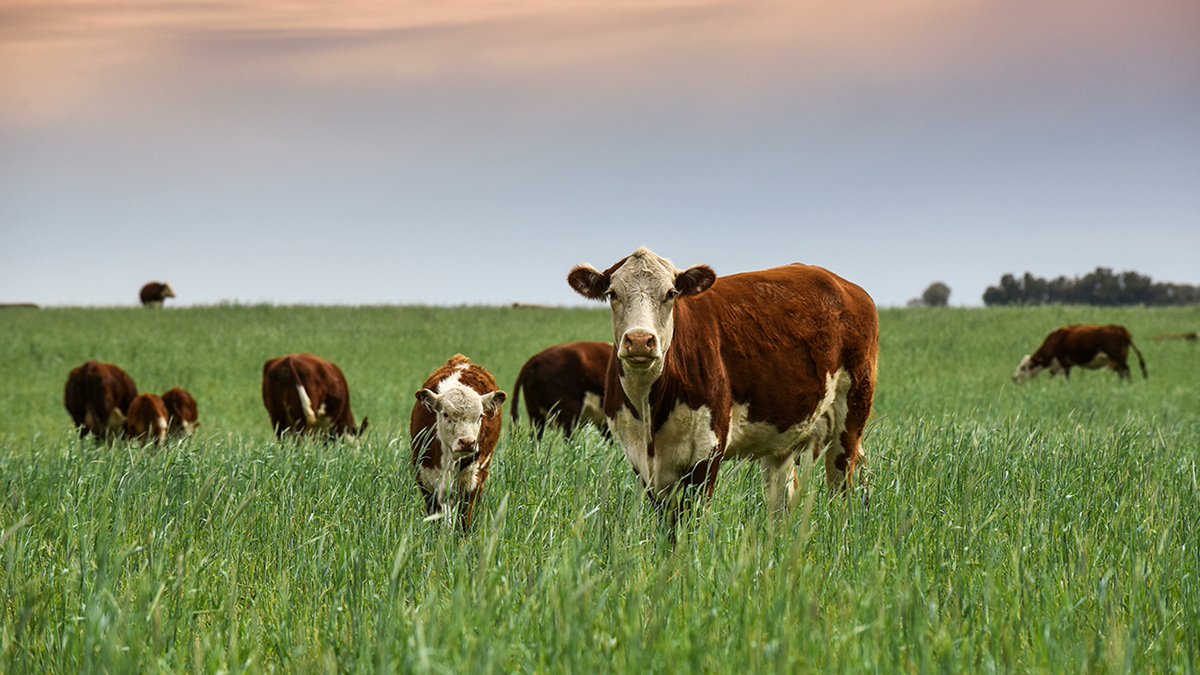
What people think cows do:
- Steal water
- Fart methane constantly
- Cause climate change
- Take food from hungry children
- Destroy rainforests
- Exist only in US-style feedlots
- Store dangerous fats
- An indulgence
What cows actually do:
- Drink rain and piss it back
- Participate in an ancient carbon cycle
- Sequester carbon in grassland
- Convert inedible grass and crop byproducts into protein
- Support entire ecosystems
- Spend 85% of their life on pasture
- Store stable fats
- Provide our keystone food
37
448
1,751
51,220
Red Miller retweeted

25 Dec 2025
Imagine the disappointment if a wolf knew his descendants would be a poodle.
That's how your grandfather feels when he sees your man bun!
101
294
2,114
14,132
Red Miller retweeted
26 Dec 2025
Humans can't digest cellulose. It passes straight through us.
Grass is 30-40% cellulose.
70% of Earth's agricultural land grows grass and not much else.
Without ruminants, 70% of agricultural land produces zero human food.
Cattle are the only way to convert that grass into nutrition we can actually use.
They're not competing with human food. They're creating food from resources we physically cannot digest.
This is the point everyone misses: Cattle aren't inefficient. Cattle are the ONLY way to make marginal land productive.
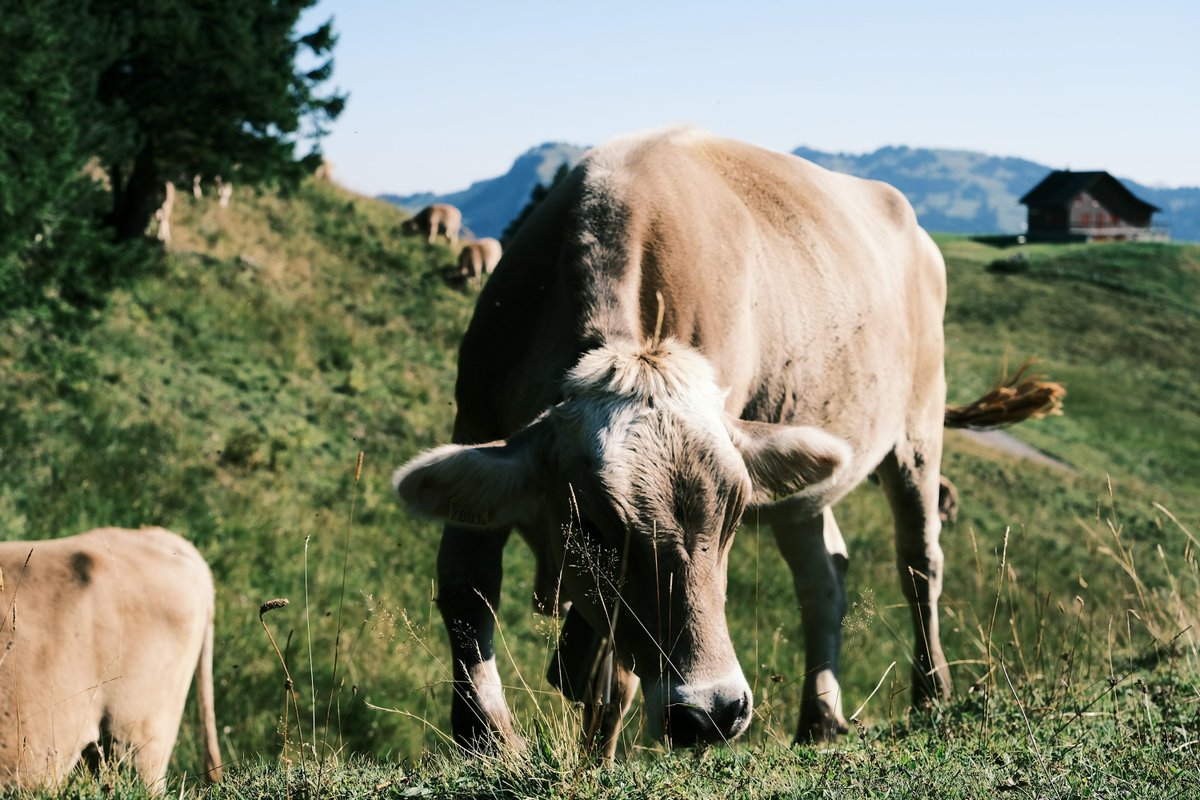
You can't grow quinoa on Scottish highlands. The terrain is too steep, the soil too poor, the climate too harsh.
But grass grows there. And cattle eat grass.
Remove the cattle and you haven't freed up land for crops. You've just made 70% of agricultural land completely useless.
459
5,468
20,042
345,955