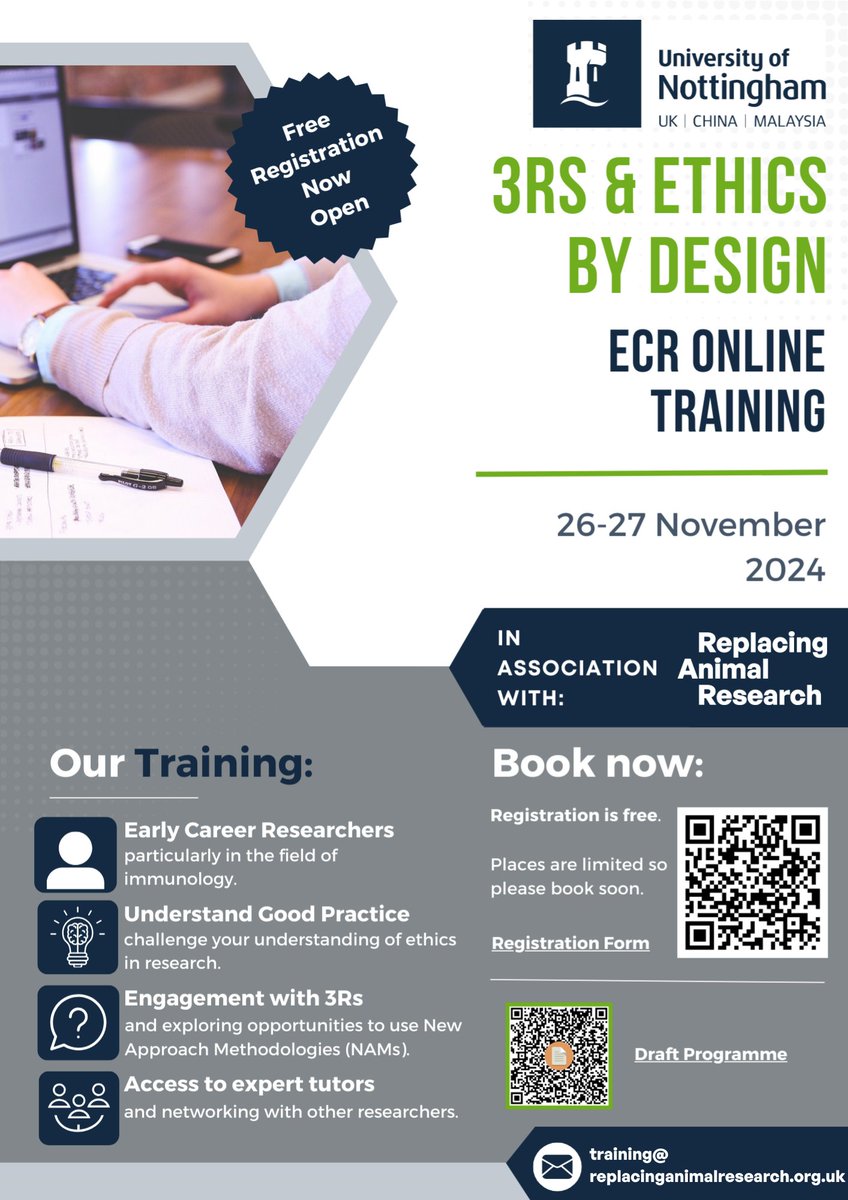
You might have known us as FRAME (Fund for the Replacement of Animals in Medical Experiments) but now it's time to (re)introduce ourselves:
Hi, we're Replacing Animal Research!
New name, new look, same mission: a better world for animals and humans.
🚨 Three years ago, decapod crustaceans (including crabs, lobsters, prawns & nephrops) were recognised in UK law as sentient beings – capable of experiencing pain, stress, and suffering.
❌ Yet, shockingly, they are still excluded from the Animal Welfare Act 2006. This means there is currently no duty of care to protect them - leaving thousands of animals vulnerable every year.
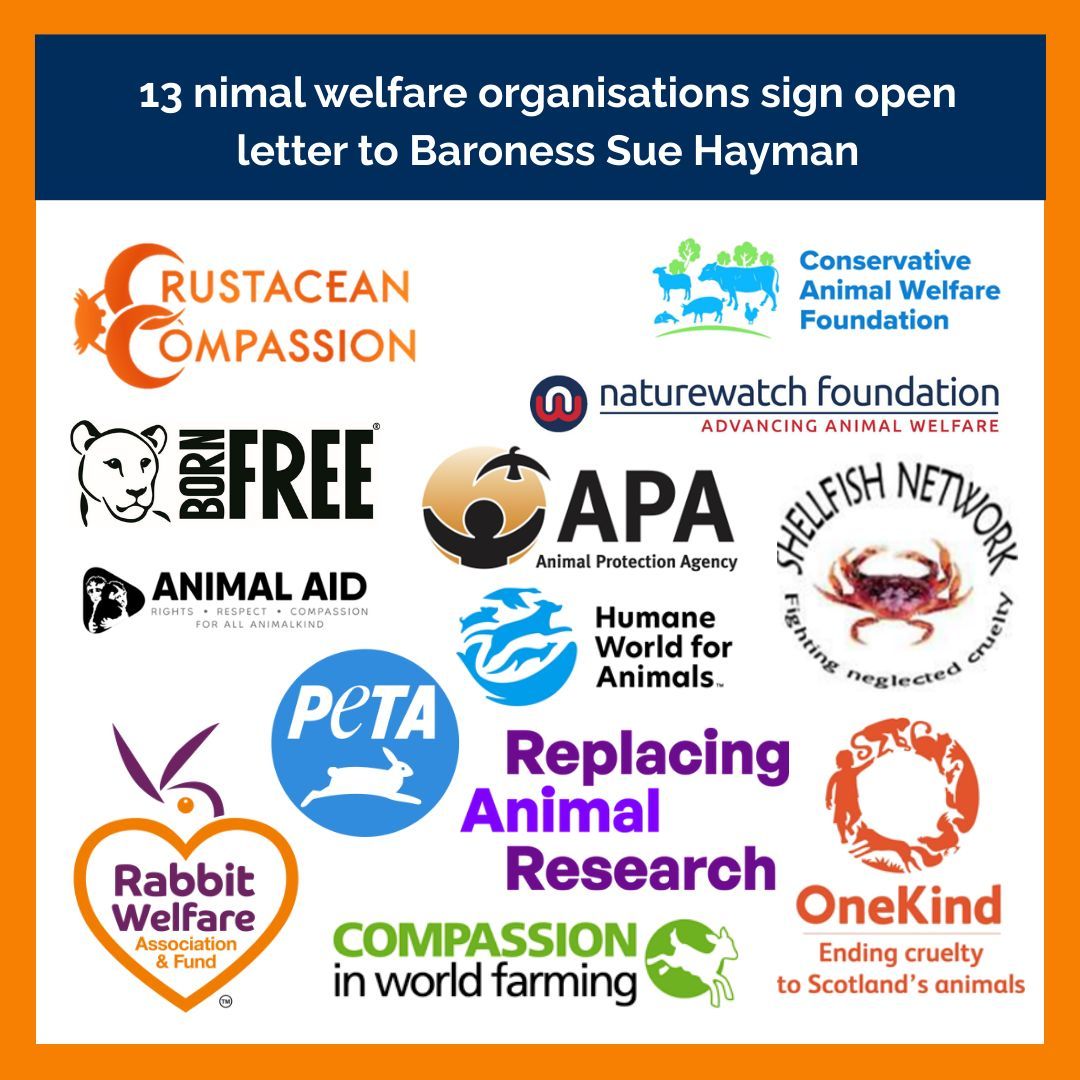
📢 Together with 12 other animal protection organisations, we’ve written an open letter to Baroness Sue Hayman, DEFRA Minister for Animal Welfare, urging the government to take the vital next step:
👉 include decapods in the Animal Welfare Act. It's time to ensure the law reflects the science - and that these animals finally receive the protection they deserve. 🦀🦞
#AnimalWelfare#CrustaceanCompassion@BornFreeFDN@AnimalAid@peta@PETAUK @CIWF_Globa @ReplAnimalRes@onekindtweet@humaneworldorg@apawild@Naturewatch_org@ConservativeAWF
📢 Must-have tool for researchers, grant reviewers, & IACUC members
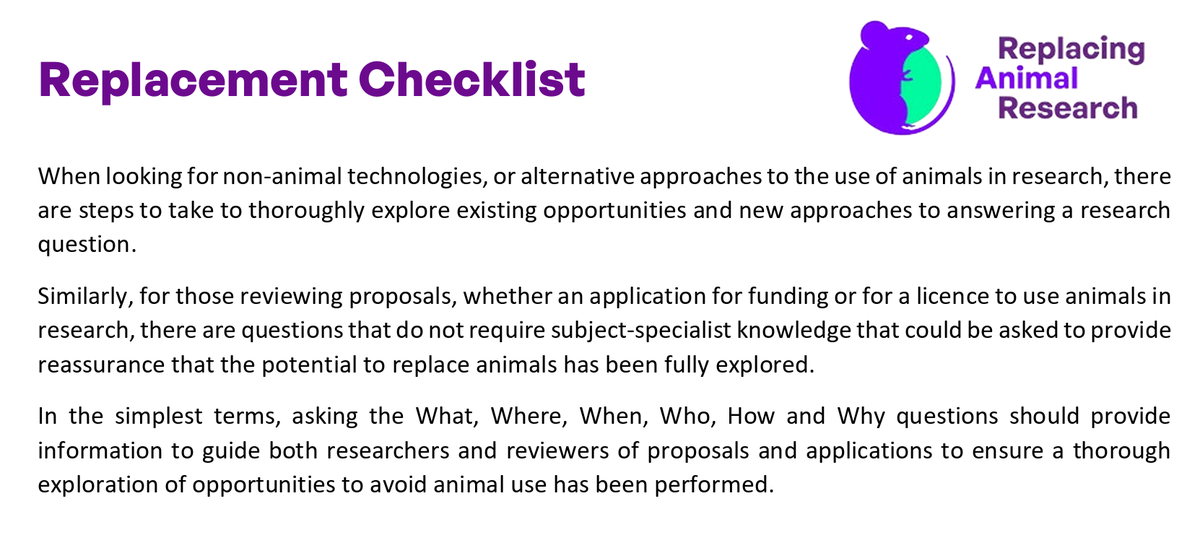
💡 @ReplAnimalRes's "Replacement Checklist" helps evaluate whether all possible alternatives to animal use in research have been properly considered.
replacinganimalresearch.org.…
Here's why it works 🧵
ALT Screenshot from page 1 of Replacing Animal Research’s Replacement Checklist. The text reads: "When looking for non-animal technologies, or alternative approaches to the use of animals in research, there are steps to take to thoroughly explore existing opportunities and new approaches to answering a research question. Similarly, for those reviewing proposals, whether an application for funding or for a licence to use animals in research, there are questions that do not require subject-specialist knowledge that could be asked to provide reassurance that the potential to replace animals has been fully explored. In the simplest terms, asking the What, Where, When, Who, How and Why questions should provide information to guide both researchers and reviewers of proposals and applications to ensure a thorough exploration of opportunities to avoid animal use has been performed."
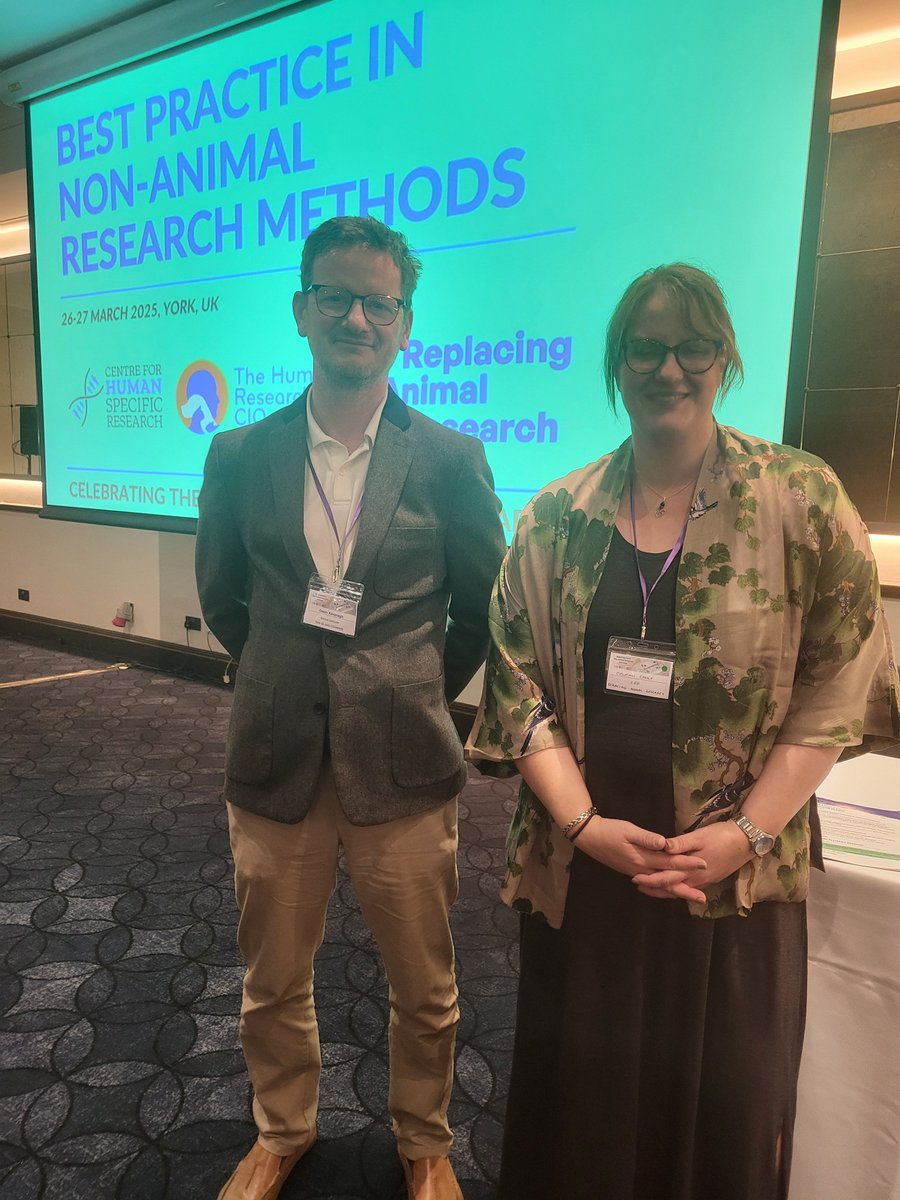
Last week, @owenvkavanagh represented @TheCOLAAB at the #BestPracticeInNAMs2025 conference in York, sharing the latest updates on our efforts to mitigate #AnimalMethodsBias in scientific publishing and funding. Thank you to the organizers for this inspiring event!
ALT Dr. Owen Kavanagh and Celean Camp stand side-by-side in front of a projected screen with the title of the conference, "Best Practice in Non-Animal Research Methods"
Great first day at the Best Practice in Non animal research methods conf, jam packed of interesting talks and inspiring research @ReplAnimalRes, @AFR_UK, @humane_research
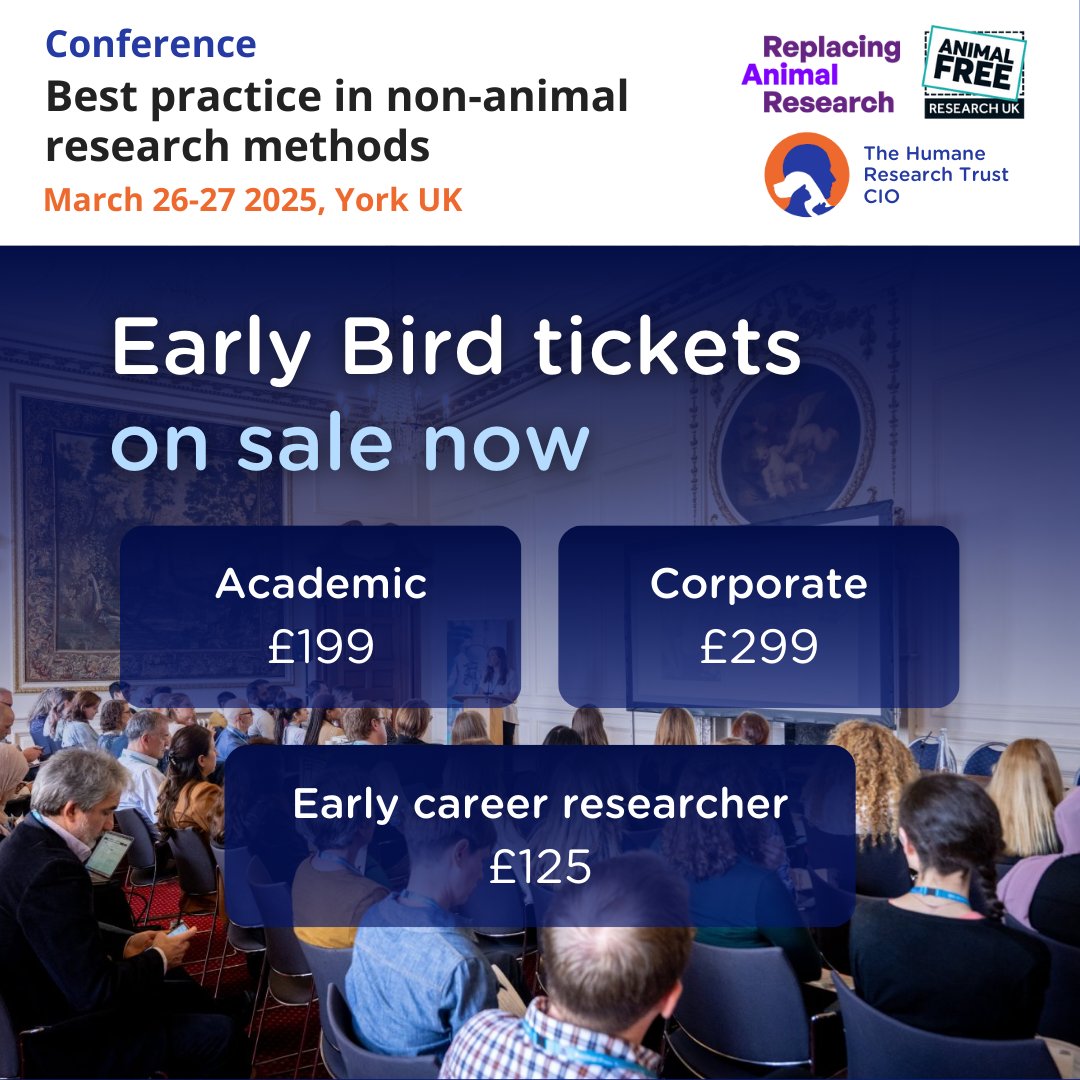
We're excited for our first jointly hosted scientific conference with @AFR_UK and @ReplAnimalRes 🔬
'Best practice in non-animal research methods' will feature expert talks, panel discussions and networking opportunities.
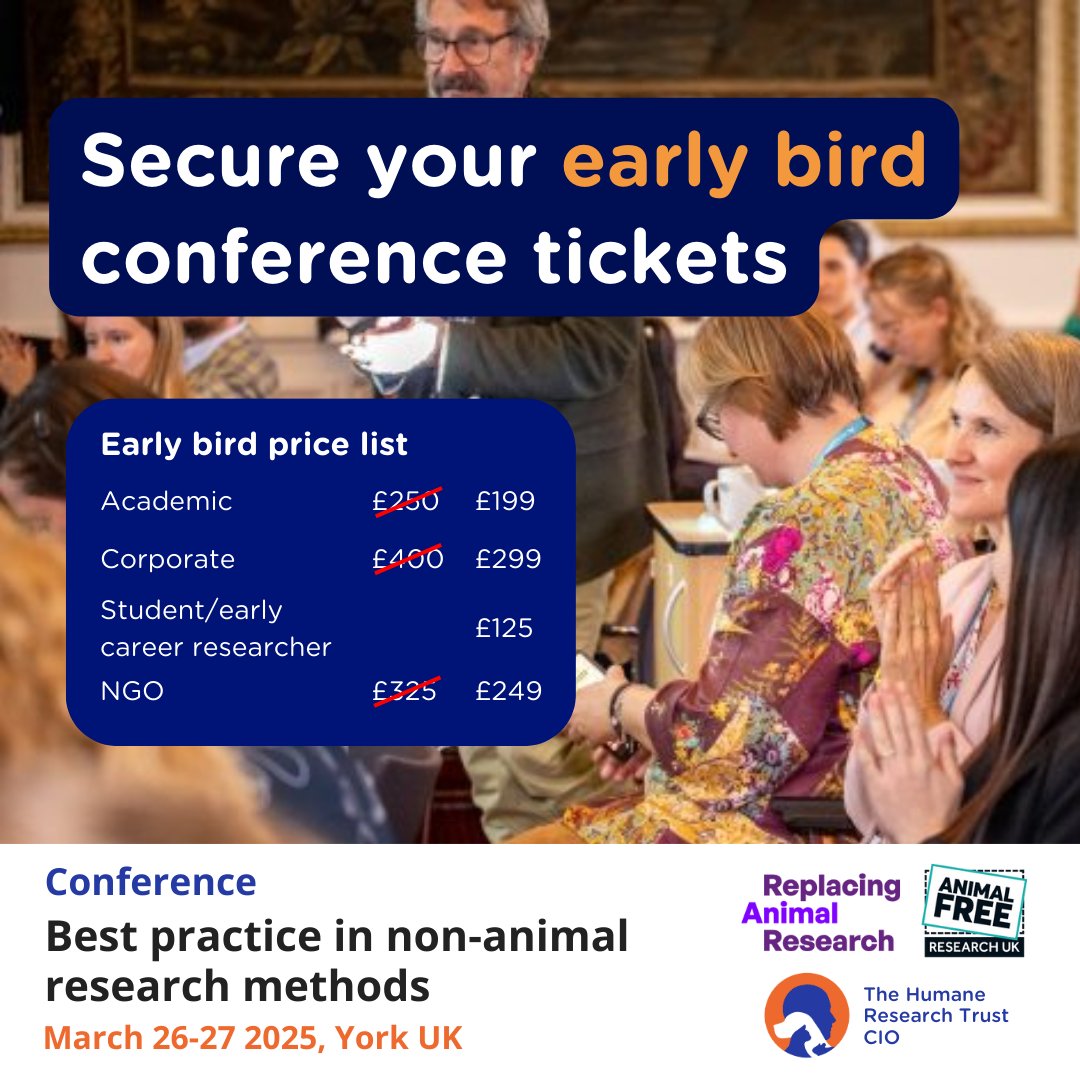
Get your early bird tickets: humaneresearch.org.uk/2025-j…
ALT Secure your early bird conference tickets:
Academic - £199
Corporate - £299
Student/ECR - £125
NGO - £249
Secure your early bird tickets to 'Best practice in non-animal research methods', a conference co-hosted by ourselves, @AFR_UK and @ReplAnimalRes 🧪
There's only a limited quantity of tickets available at this discounted rate - don't miss out.
Book now: replacinganimalresearch.beac…
ALT Interested in NAMs? Secure your early bird tickets for our 2025 conference.
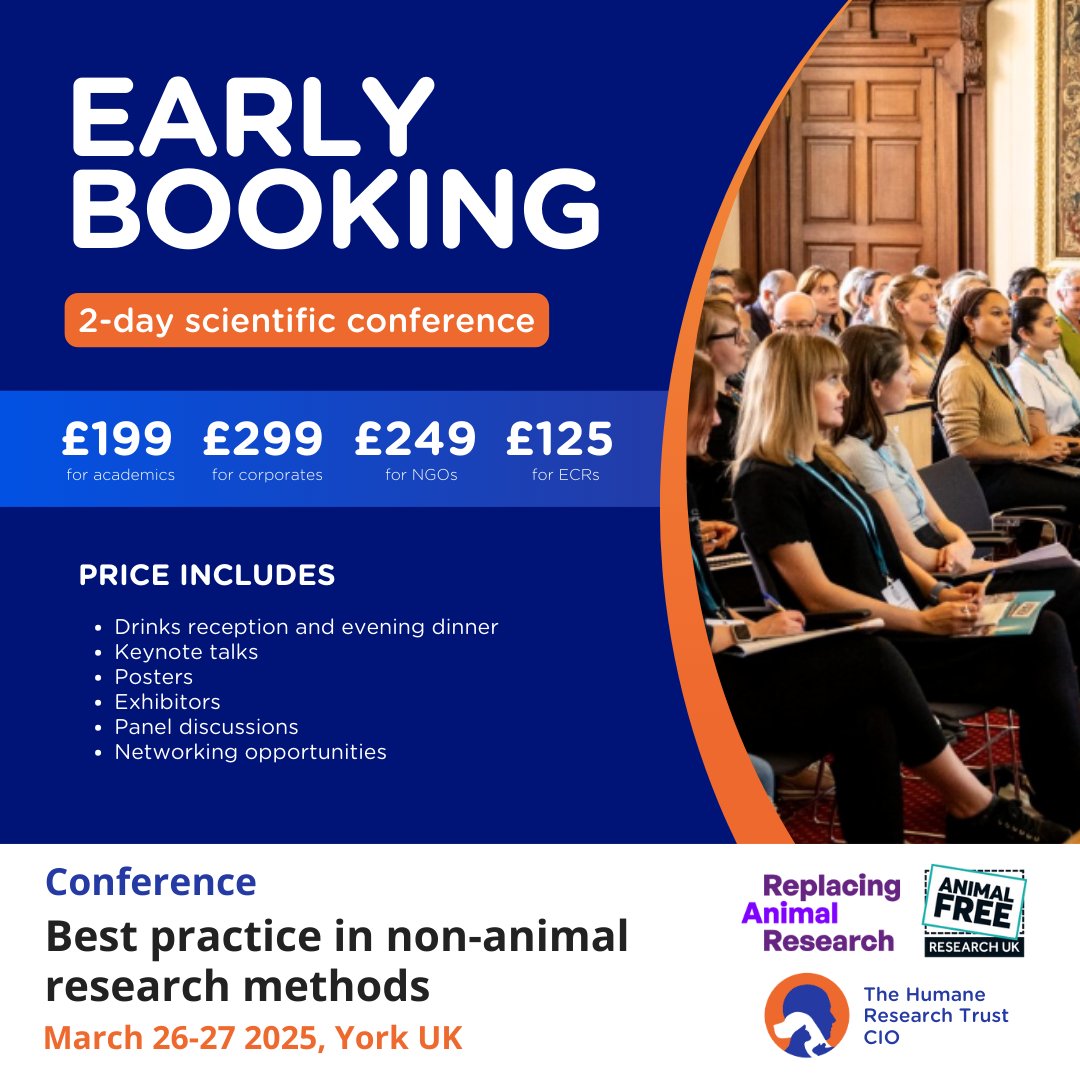
Secure your early bird tickets to 'Best practice in non-animal research methods', a conference co-hosted by ourselves, @AFR_UK and @ReplAnimalRes 🧪
There's only a limited quantity of tickets available at this discounted rate - don't miss out.
Book now: replacinganimalresearch.beac…
📣 DEADLINE EXTENDED!
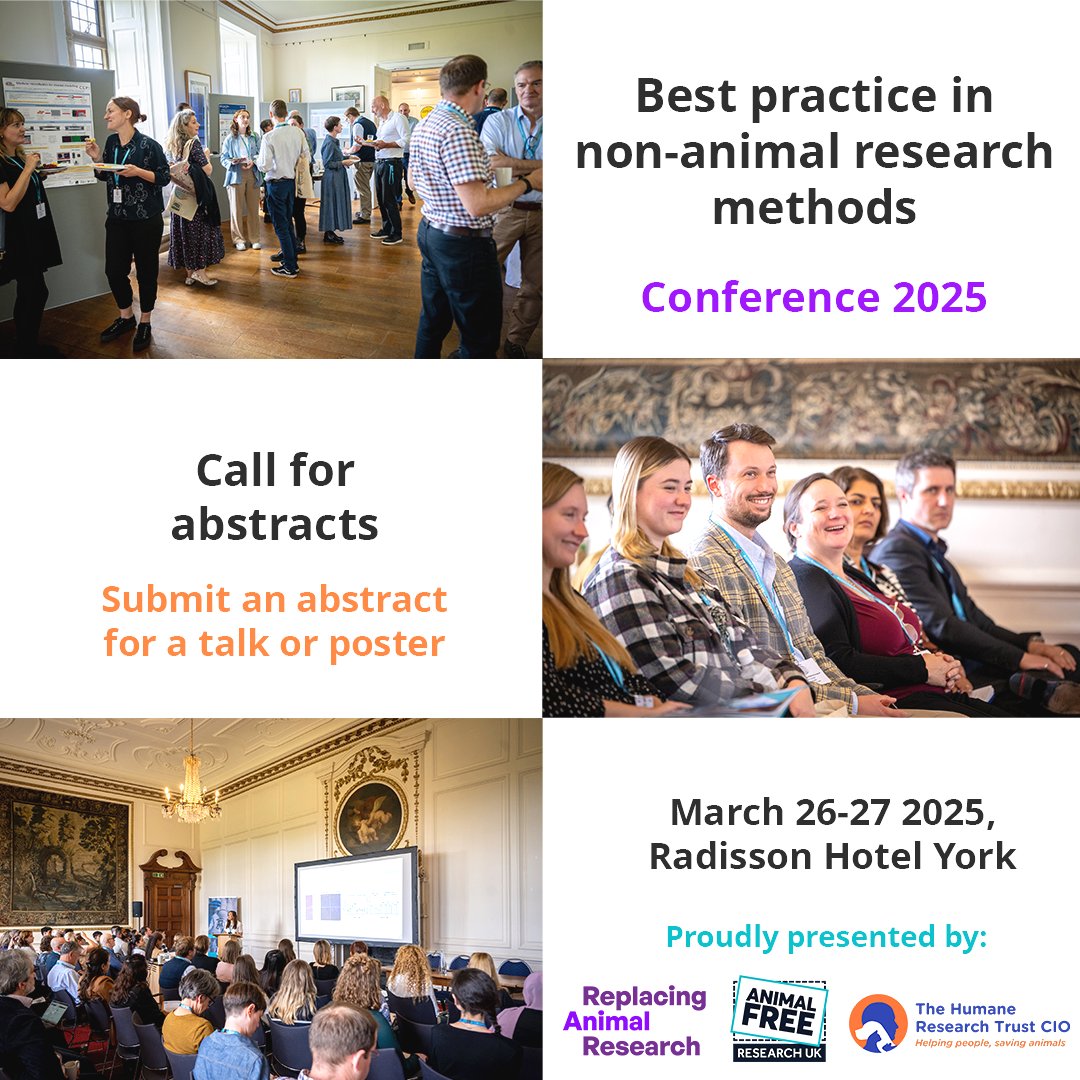
Submit your talk or poster abstracts for our upcoming joint conference, Best Practice in Non-Animal Research Methods.
The deadline for submissions is now Sunday 24th Nov 2024.
Find full event information here: lnkd.in/dhY3F7C#animalfree#science
Do you work with non-animal models? Have insights to share about your research methods, results, or experience?
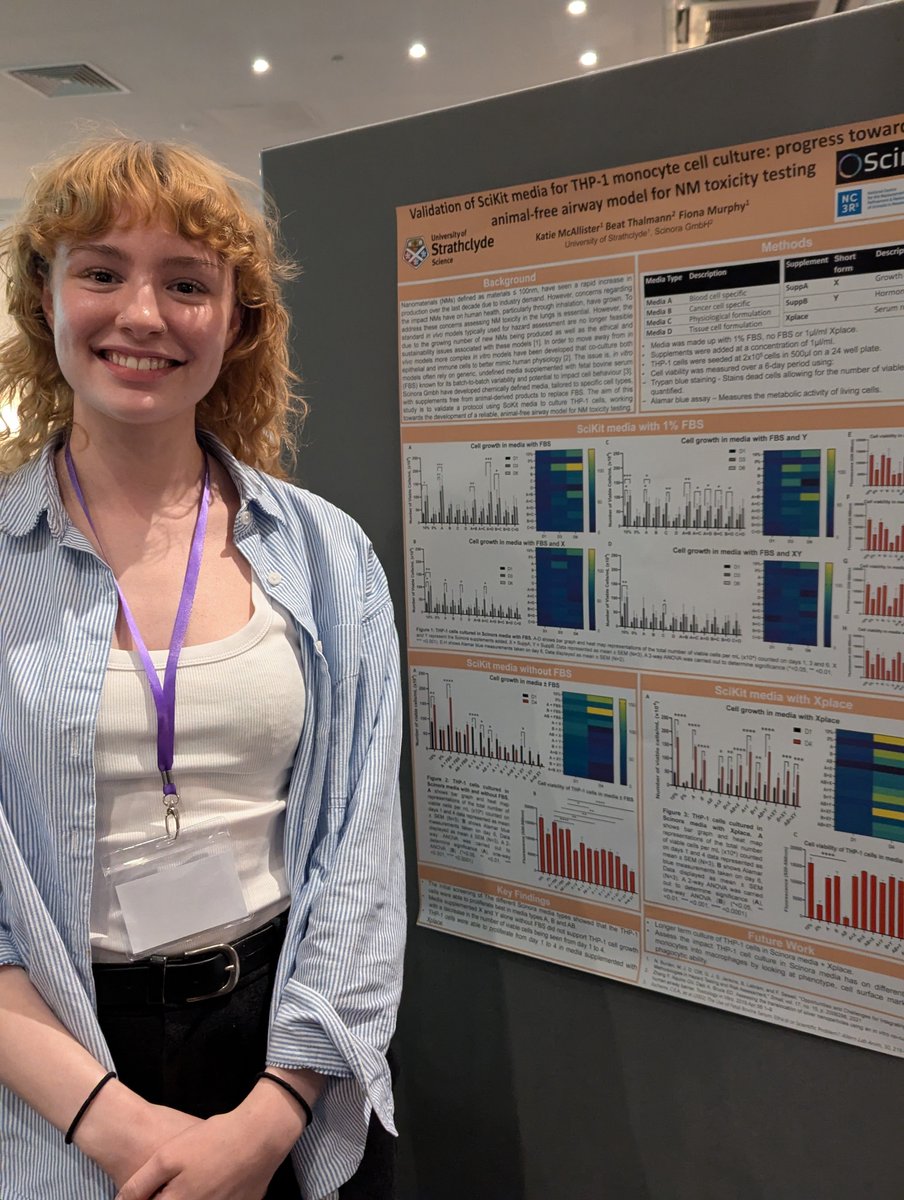
Apply to speak or submit a poster at our conference: Best Practice in Non-Animal Research Methods 🧪
Talks: forms.office.com/e/SmHNpVJej…
Posters: forms.office.com/e/cGLddv1b7…
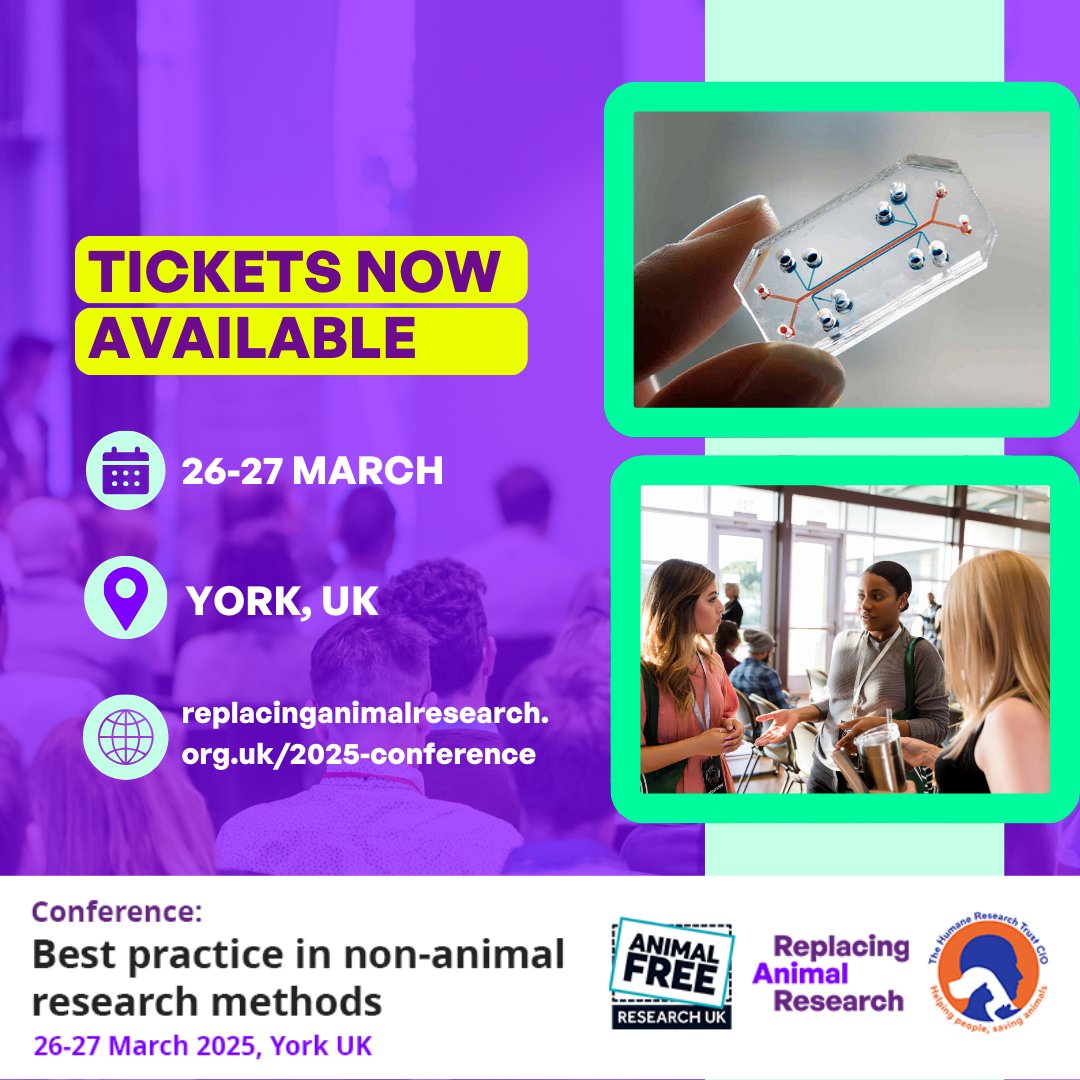
🌟 Exciting news! Tickets are now on sale for our 2025 joint conference on non-animal research methods with @AFR_UK and @ReplAnimalRes
📅 26-27 March 2025
📍 Radisson Hotel York
Early bird tickets available: replacinganimalresearch.beac…
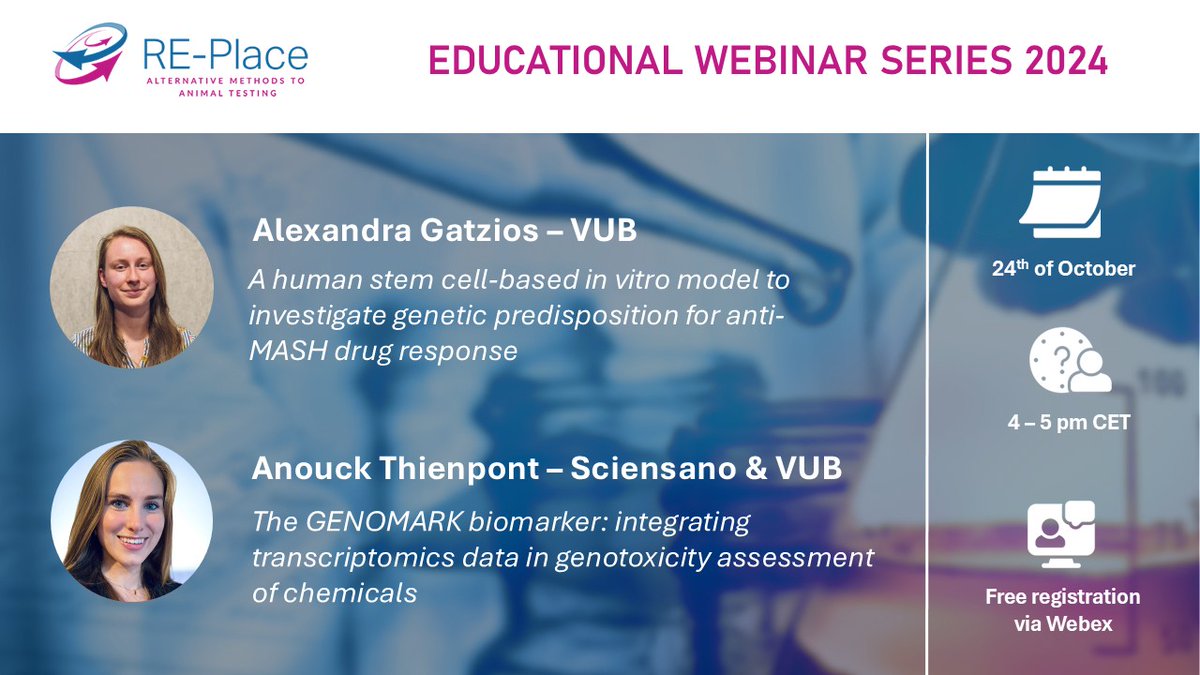
📢 You can still register for our next webinar tomorrow from 4 to 5 pm!
We will welcome Alexandra Gatzios (Vrije Universiteit Brussel) and Anouck Thienpont (Sciensano) to discuss their work on #NAMs
Register now for free via sciensano.webex.com/weblink/…
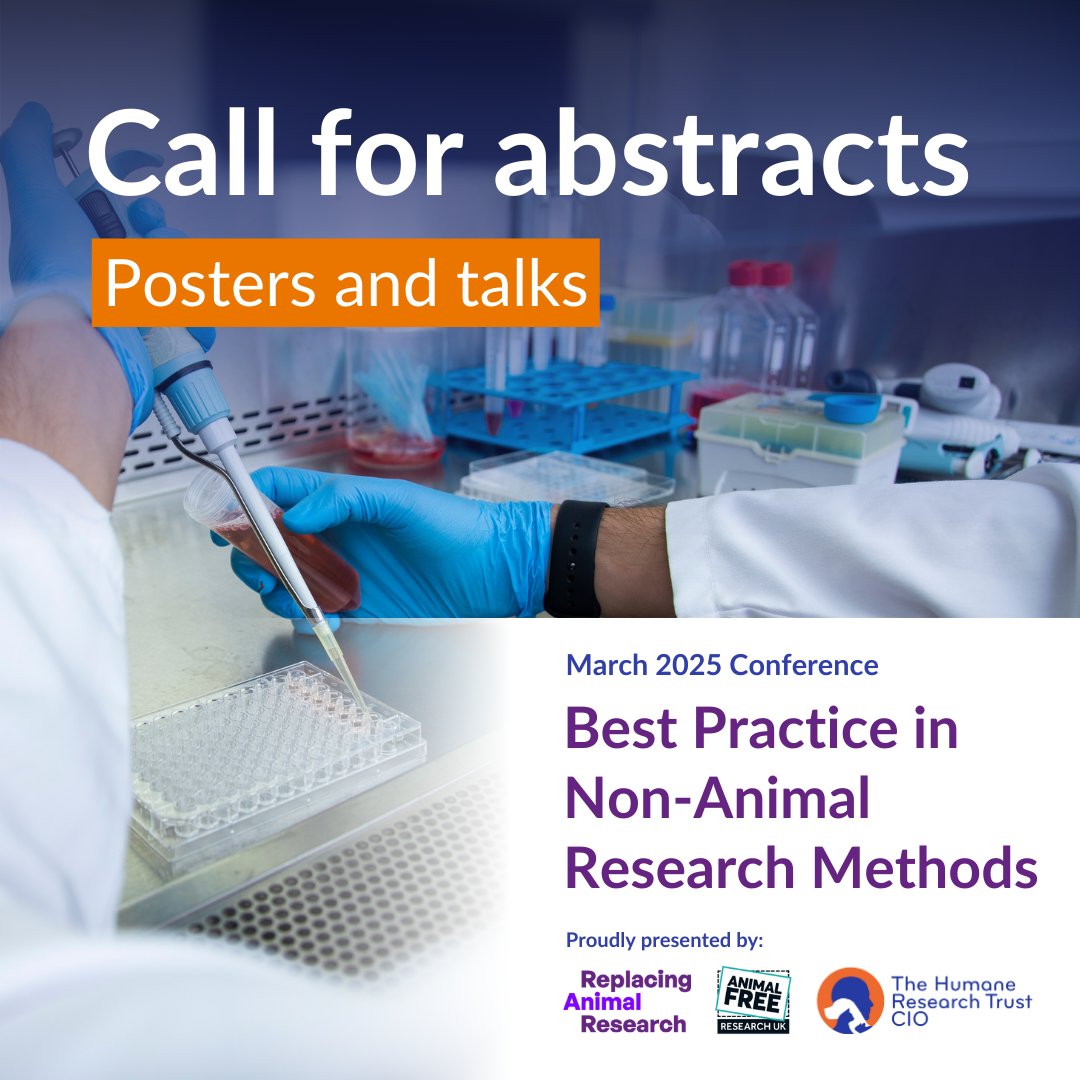
We're seeking submissions for talks and posters for our upcoming conference: Best Practice in Non-Animal Research Methods, hosted jointly by us, @ReplAnimalRes and @AFR_UK 🧪
Apply 👇
Talks: lnkd.in/eYJ2x9AQ
Posters: lnkd.in/ea2m9Hyq
Deadline: Sun 10 Nov 2024
ALT Photo of a cell culture scientist with overlayed text reading: 'Call for abstracts - Posters and talks
March 2025 Conference
Best Practice in Non-Animal Research Methods
Proudly presented by Replacing Animal Research, Animal Free Research UK and The Humane Research Trust'
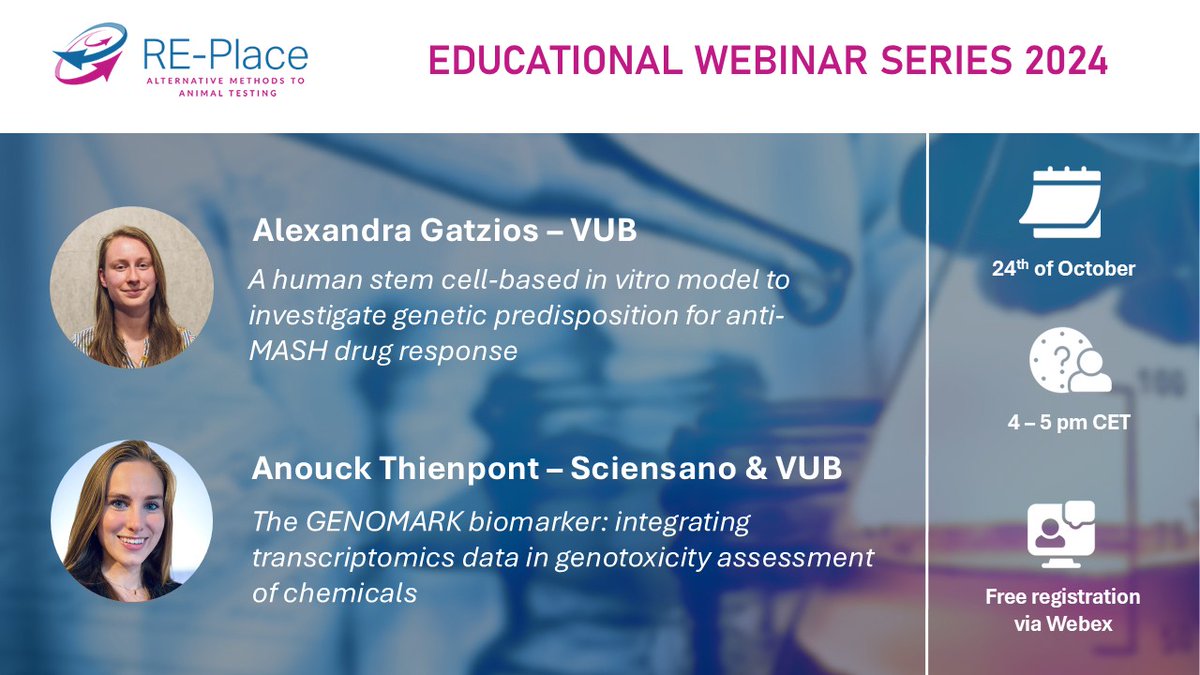
🆕🔔Happy to announce our next RE-Place educational webinar, during which we will welcome two speakers from the @VUBrussel and @sciensano 🤩
When? 24th of October, from 4 to 5 pm
Where? Register now for free via sciensano.webex.com/weblink/…
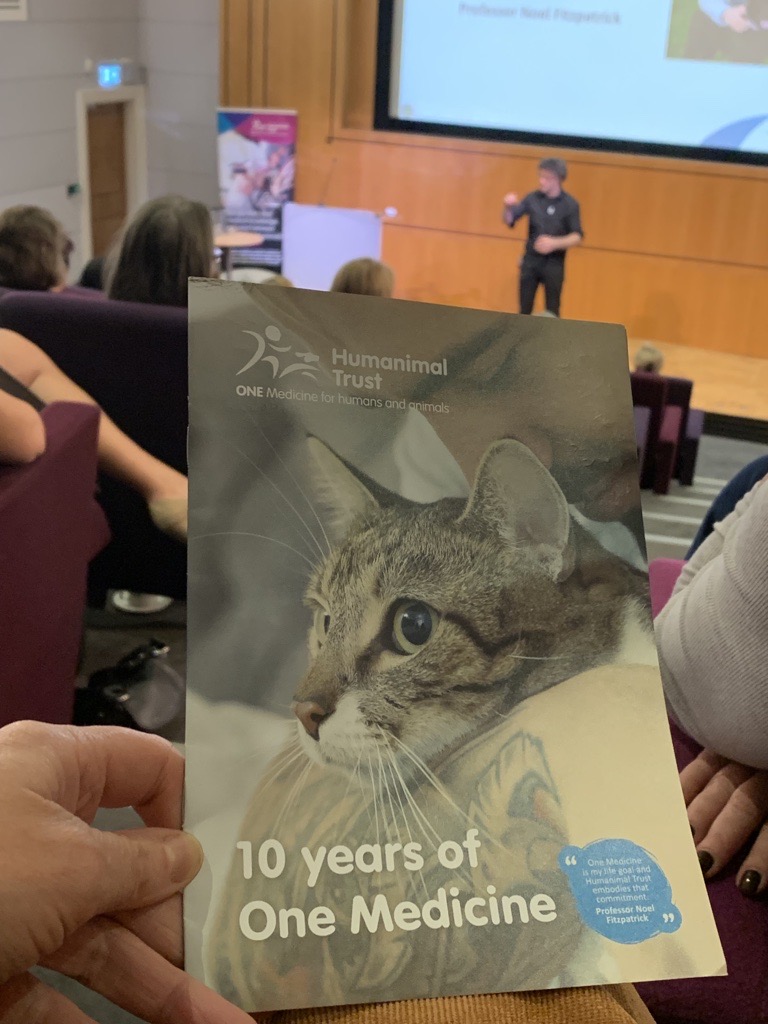
This week our Head of Policy and Programmes, Amy Beale, attended the @HumanimalTrust's 10th anniversary event, ‘One Medicine - Time to Innovate, Time to Act.’
As part of this vision, they share the view that conditions artificially created in animals living in laboratory conditions cannot offer true insight into the disease and support the replacement of the use of animals as experimental ‘models.’