
ResearchArk: AI-native ecosystem transforming research from idea to impact with integrated tools for funding, collaboration & discovery.
Joined February 2025
- Tweets 26
- Following 2
- Followers 2
- Likes 1
20 Photos and videos







Jun 12
Every great discovery starts with a question, but often, it gets stuck at "how do I fund this?"
That's why we built ResearchArk. Find funding. Write good applications. Build your network - all in one place.
Join our intro webinar to see how it works: beta.researchark.eu/events/f…
1
1
3
ResearchArk retweeted

Jun 9
Anthropic's long "fabled" Mythos 5 got genomics tools and about a week, mostly on its own. It assembled single-cell data for millions of cells across 138 species, trained its own machine learning model that beat one published in Science. It was one hundred times smaller.
Read that again. Largely autonomous. One week. Smaller and better than the published state of the art.
For most of the history of science, the binding constraint was us. Human hands, human hours, the years to learn a technique, the months to run the experiment. We built our entire research economy around that scarcity: the grant cycle, the slow accretion of papers. I spent years inside that machine, moving hundreds of millions of euros across borders, and I can tell you it assumes labour is the bottleneck.
That assumption is quietly dissolving.
The same family, Anthropic says, compressed a two-month code migration into one day for Stripe, produced drug-design candidates for nine of fourteen protein targets with no human guiding the work, and generated molecular biology hypotheses its own scientists preferred to the human alternatives four times out of five. One was later confirmed, independently, by a lab working on the same protein.
I want to be careful, because wonder makes a poor analyst. These are Anthropic's own results, and the world is more stubborn than a launch post. But even discounted heavily, something real has moved.
You can read that movement most clearly in what they chose not to release. The strongest version, Mythos 5 with its safeguards lifted, goes only to vetted cyber defenders and, for now, the US government. The model the rest of us can use quietly reroutes questions on cybersecurity and biology to a weaker one. The reason is plain: the same intelligence that designs a gene therapy can design a virus.
We have reached the point where access to capability is itself a question of governance. Not a hypothetical for a future ethics panel. A product decision, shipped today.
So here is what I keep turning over. If labour is no longer the scarce thing in science, then judgment becomes everything. Knowing which question matters, which experiment is worth running, which door to leave closed. The bottleneck shifts from the bench to the mind, and from the individual to the institution. Can our funding systems and our creaking research culture metabolise tools that no longer wait for us?
I build in this space, so I am not a neutral observer. But I did not get into it because I love software. I got into it because somewhere tonight a researcher is staring at a deadline with an idea that might change something, and for the first time in human history they may have a collaborator that never sleeps. What we do with that is still ours to decide. It always was. That is the frabjous, terrifying gift of this moment: the tools are finally ready. The question is whether we are.
ResearchArk researchark.eu
anthropic.com/news/claude-fa…

1
2
90
Jun 9
It’s the question every researcher asks themselves at some point. As you look to streamline your workflow and advance your #research #application, explore our open beta and see how ResearchArk can help you move faster - from idea to impact!
beta.researchark.eu/register…
#publicbeta
1
1
6
Jun 8
We built ResearchArk to connect you with researchers across the globe - opening doors to collaboration, mentorship, and new opportunities.
Looking for partners in your application? Check us out, we are in public beta as of June!
beta.researchark.eu/register…
#Research #PublicBeta
1
1
7
Jun 5
Writing a funding proposal? Check out ResearchArk AI-powered features - it helps you strengthen and maximize the impact of your application, getting you closer to that funding! 🚀
Now in open public beta - try it out and bring your proposal to life!
beta.researchark.eu/register…
1
1
7
Jun 4
Ever wondered what the future of research holds? ResearchArk is here to help you streamline your ideas and find the right funding for your project.
Check out our live beta, with features tailored to researchers needs, and sign up on the link below👇
lnkd.in/ds-9aCBM
1
1
10
Jun 2
Are you a researcher, tired of hunting for funding across the entire internet? We heard you! ResearchArk public beta opens this month - one platform with all the grant and cooperation opportunities, built to help you get funded.
Sign up below 👇
beta.researchark.eu/register…
1
1
19
ResearchArk retweeted
Jun 1
A new era of research is almost here. ⚡
ResearchArk: The agentic operating system for the innovation ecosystem. From idea to impact, with AI agents working under your direction.
Something powerful is coming. Follow to be first in line.
#ResearchArk #AgenticAI #FutureOfResearch #Innovation #DeepTech @researchark
1
21
May 22
Happy Friday! 🎉 As we get ready for our public beta launch, you can still sign up for the ResearchArk closed beta.
We’re building a smarter way to help researchers discover funding opportunities and accelerate their research projects.
Join the beta: beta.researchark.eu/join-bet…
1
1
12
May 18
Did you know many European research projects take ~18 months from application to project launch? That’s why we built Research Ark - accelerating the journey from idea to impact with intelligent tools for the research lifecycle. Join our beta/newsletter:
beta.researchark.eu/de/join-… .
1
1
7
Mar 30
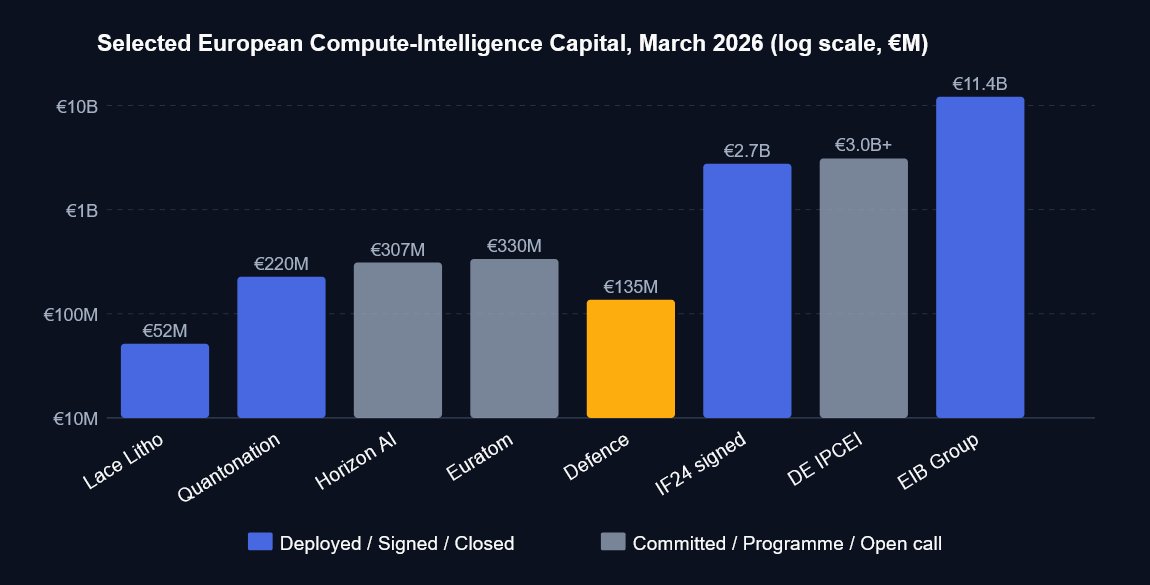
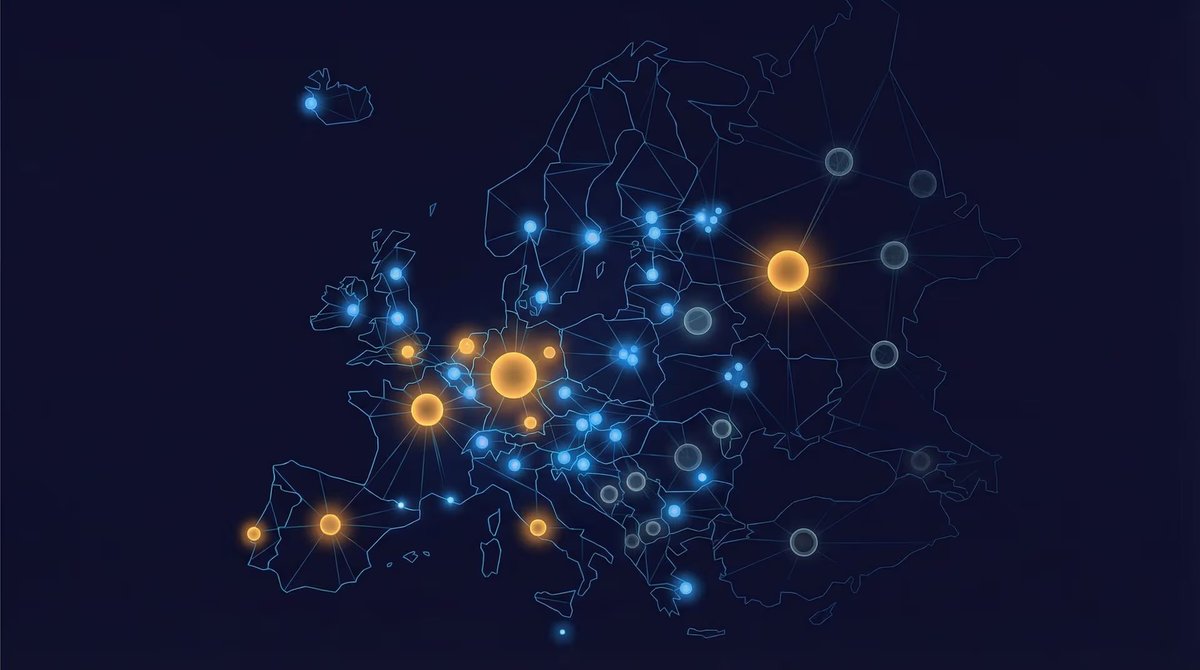
Europe's Compute-Intelligence Frontier: From Atom Lithography to Sovereign AI
pulse.researchark.eu/news/eu…
33
Mar 22
Europe's Innovation Paradox: Record Budgets, Broken Pipelines pulse.researchark.eu/news/eu…
11
25 Oct 2025
Reviewer coordination eating up weeks per funding call?
ArkNexus automates:
→ Expert matching
→ Conflict detection
→ Evaluation tracking
→ Consensus building
1
36
25 Oct 2025
Save administrative time. Improve evaluation quality.
#ResearchAdministration #Efficiency #FundingAgencies
Learn how: researchark.eu
24
25 Oct 2025
40 hours per month hunting for grants? 🔍That's a full work week spent on administrative work instead of actual research. ResearchArk's AI finds relevant funding opportunities for you automatically.
1
16
25 Oct 2025
Less time searching → More time discovering.
Find grants in minutes, not months.
Start free: researchark.eu
#ResearchFunding #AcademicTwitter #PhDLife
8