
🇹🇭 Writer of online Thai travel guides and travel news for 30 years. I tweet tips on where to go and what to do. I’m also on @ThaiTrainGuide.
Joined September 2009
- Tweets 111,350
- Following 193
- Followers 206,731
- Likes 16,096
56,063 Photos and videos



May 21
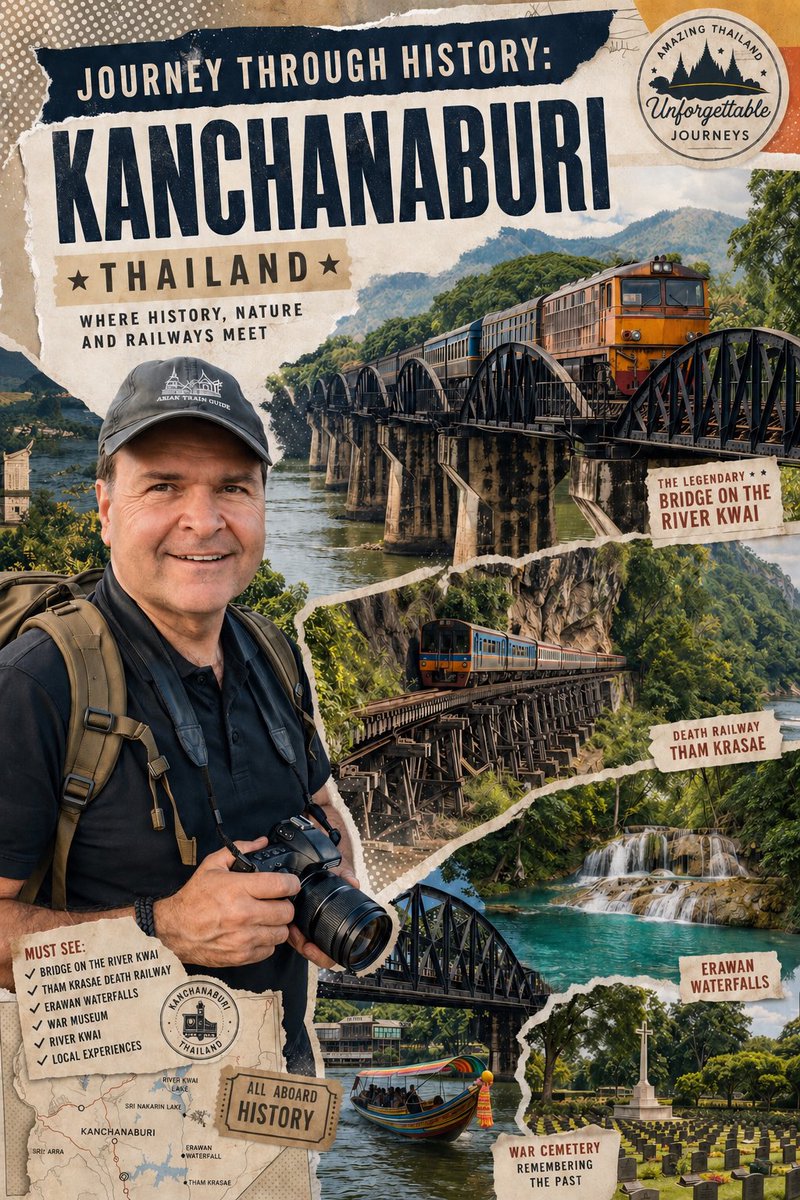
I’m excited to announce the launch of the first video on our new @AsianTrainGuide YouTube channel. This is a collaboration between @nonstopeurotrip and @thaitrainguide.
🎥 Watch: youtu.be/jIStvdlGzkM?si=CcFV…
#AsianTrainGuide #AsiaByRail #DiscoverAsiaByRail #RailTourism #Thailand
1
2
23
4,149
May 15
Asian Train Guide Now on YouTube!
I am excited to announce the launch of the @AsianTrainGuide YouTube channel which is a collaboration between @nonstopeurotrip and myself. We'll be guiding you through all aspects of Asia's railways & exploring the most incredible train journeys this vast continent has to offer!
👉 Intro video: youtu.be/AQBc0mPyNR0?si=8ZN_…
The first video will come out next week and is about Exploring the Death Railway.
Don't forget to click like, share and subscribe. Please tell your friends about this new partnership and new channel. Thanks! 🙏
#AsianTrainGuide #NonstopEurotrip #ThaiTrainGuide #AsiaByRail
1
30
3,938
May 9
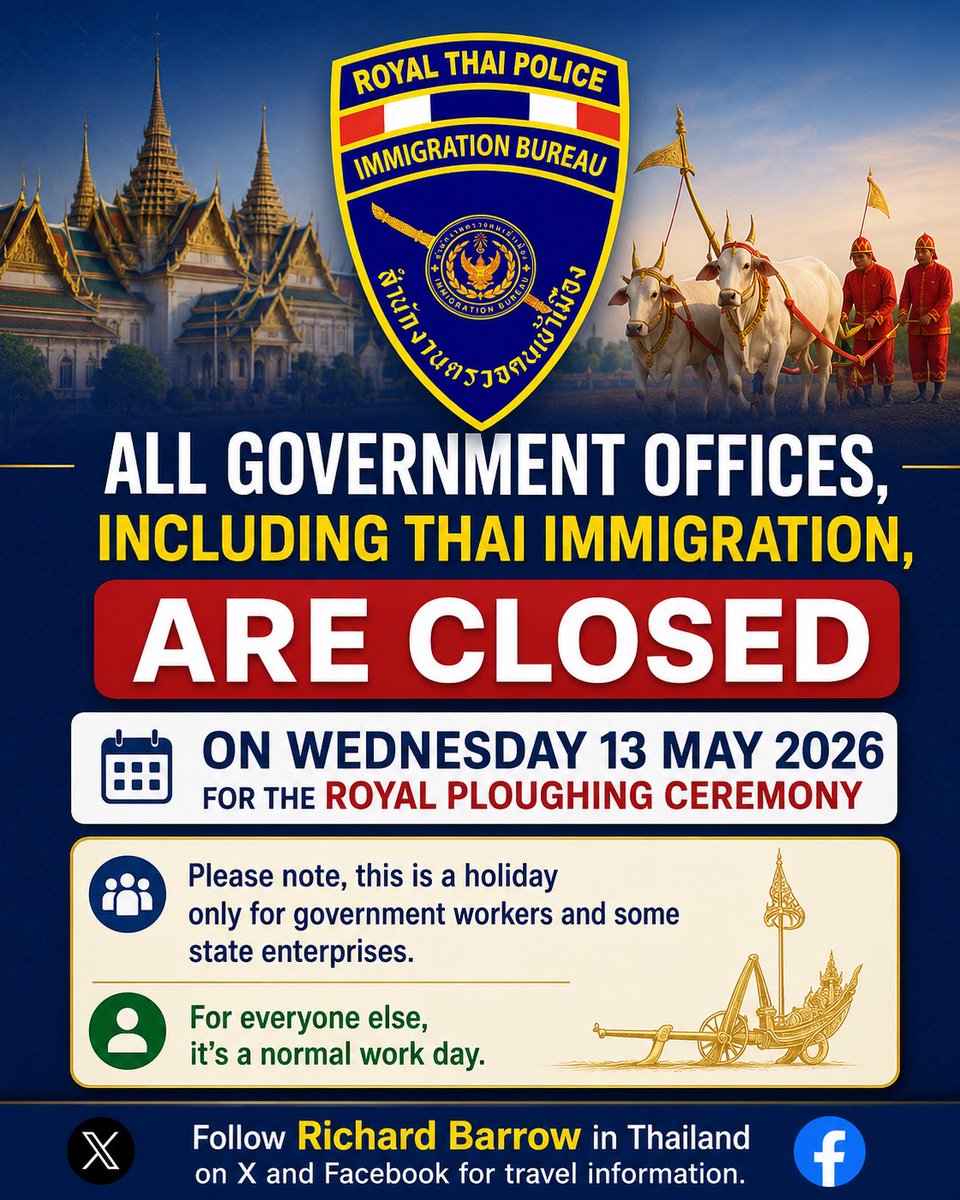
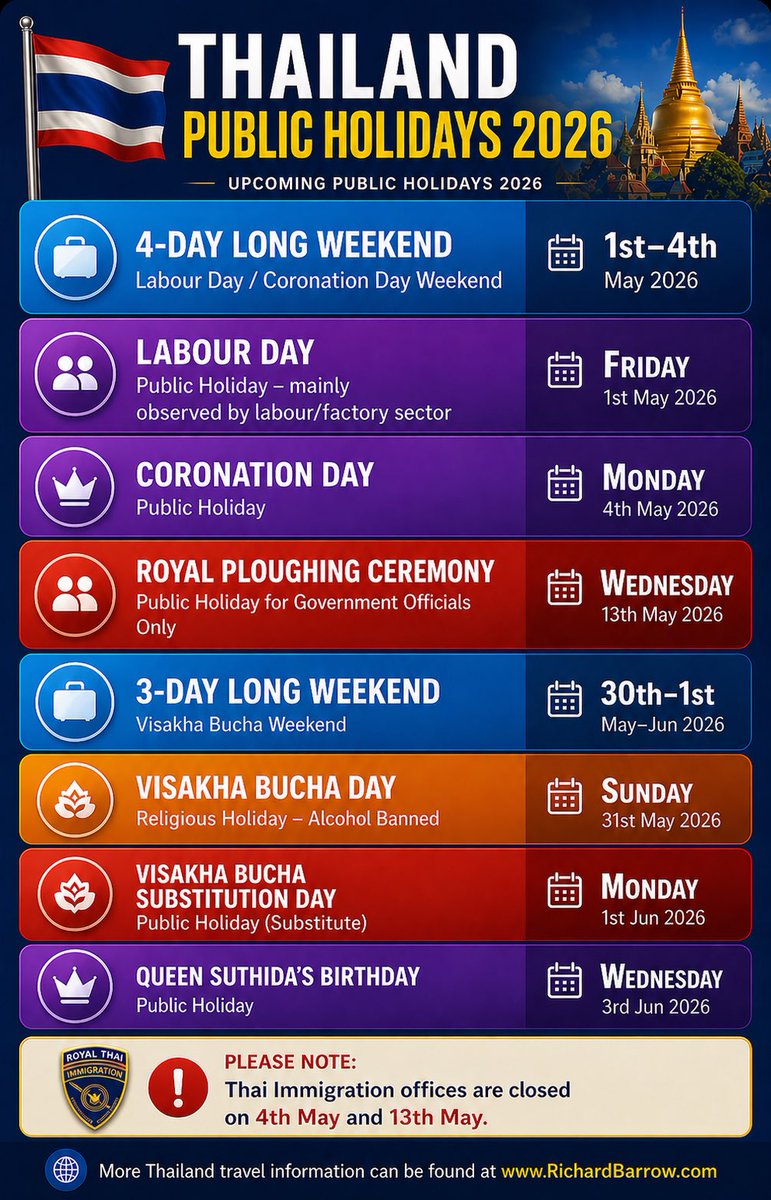
🇹🇭 Please note that all government offices in Thailand, including Thai Immigration offices, will be closed on Wednesday 13 May 2026 for the Royal Ploughing Ceremony.
This holiday mainly applies to government offices and some state enterprises. For most private businesses, foreign embassies, shopping malls, restaurants, and transport services, it will be a normal working day.
If you are planning a visa extension, 90-day report, or other immigration-related visit, it’s best to arrange this before or after the holiday.
#Thailand #ThaiImmigration #RoyalPloughingCeremony #ThailandTravel #ThaiHoliday #Bangkok #TravelThailand #VisaThailand #ThaiNews #RichardBarrow #AmazingThailand
7
32
7,374
May 3
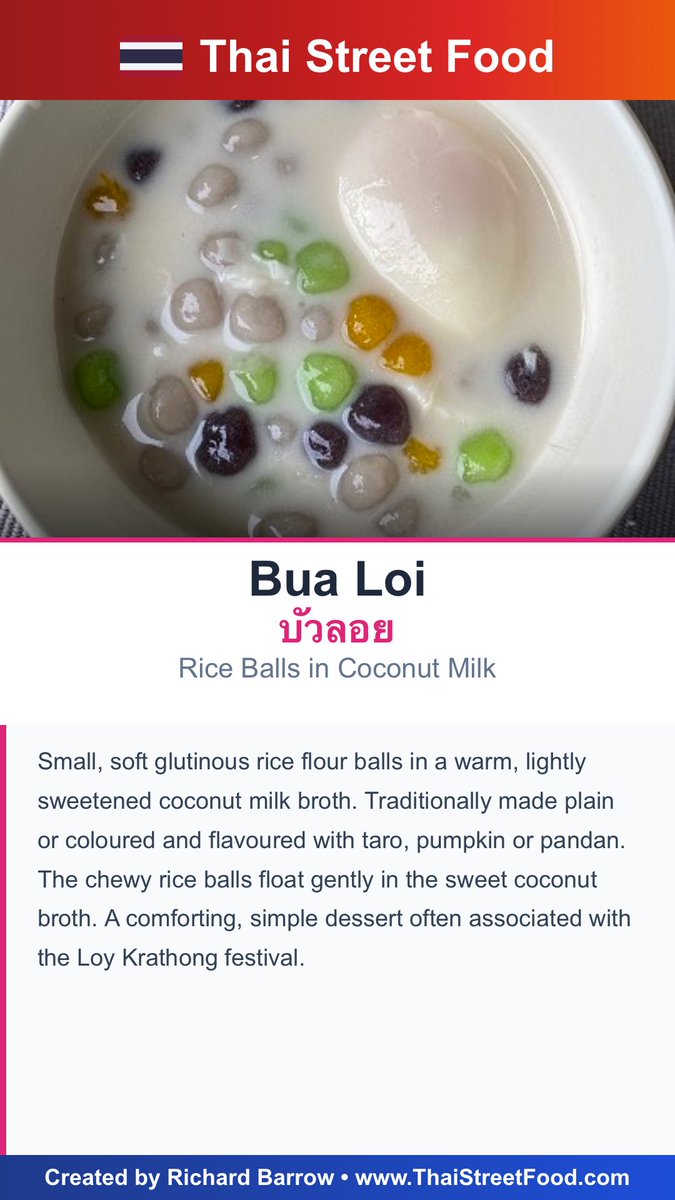
🍜 013/100 Thai Street Food Flashcards
Rice Balls in Coconut Milk (Bua Loi บัวลอย). This is one of those simple Thai desserts that’s easy to like. The small colorful balls are made from glutinous rice flour, usually mixed with natural colors like pandan for green or pumpkin for yellow. They’re boiled until soft and slightly chewy, then served in lightly sweet coconut milk.
The texture is what makes this dish stand out. The rice balls are soft but a bit chewy. Some versions add taro, black beans, or even an egg cracked into the hot coconut milk for extra richness.
❤️ Click like and share if you want to vote for this to be in the Top 10 of #ThaiStreetFood 2026. Follow me for 100 different #ThaiFood flashcards for #Thailand.
2
5
47
4,815
May 2
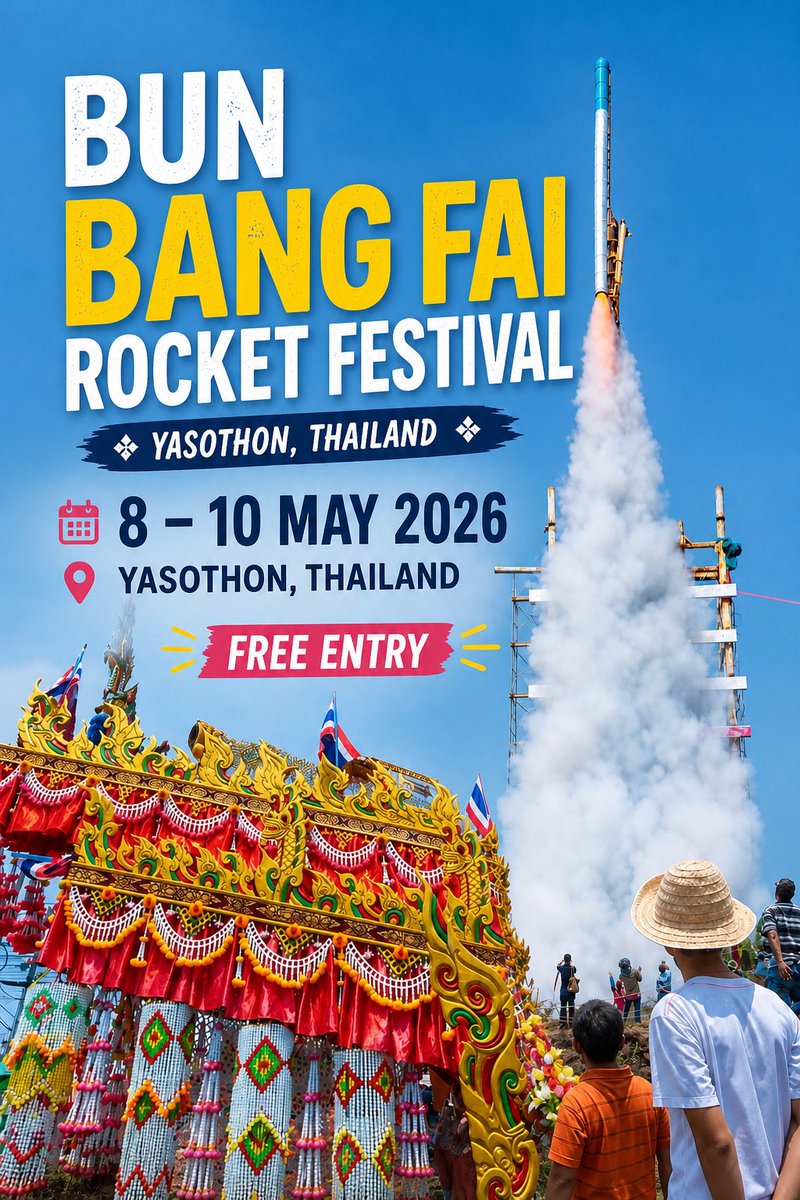
🇹🇭 Bun Bang Fai Rocket Festival
📍Yasothon
🗓️ 8-10 May 2026
Yasothon’s famous Bun Bang Fai Rocket Festival returns for three days, with parades, concerts, Isaan cultural performances, OTOP products, local food, and rocket-launching competitions at Phaya Thaen Public Park.
This traditional festival marks the start of the rainy season, with rockets launched as an offering to Phaya Thaen, the rain deity, to ask for seasonal rain and a good harvest.
Admission is free.
📍MAP: maps.app.goo.gl/zaS4jRAxQeDd…
#Thailand #Yasothon #BunBangFai #RocketFestival #Isaan #AmazingThailand #ThailandFestival #TourismThailand
1
6
29
5,177
May 2
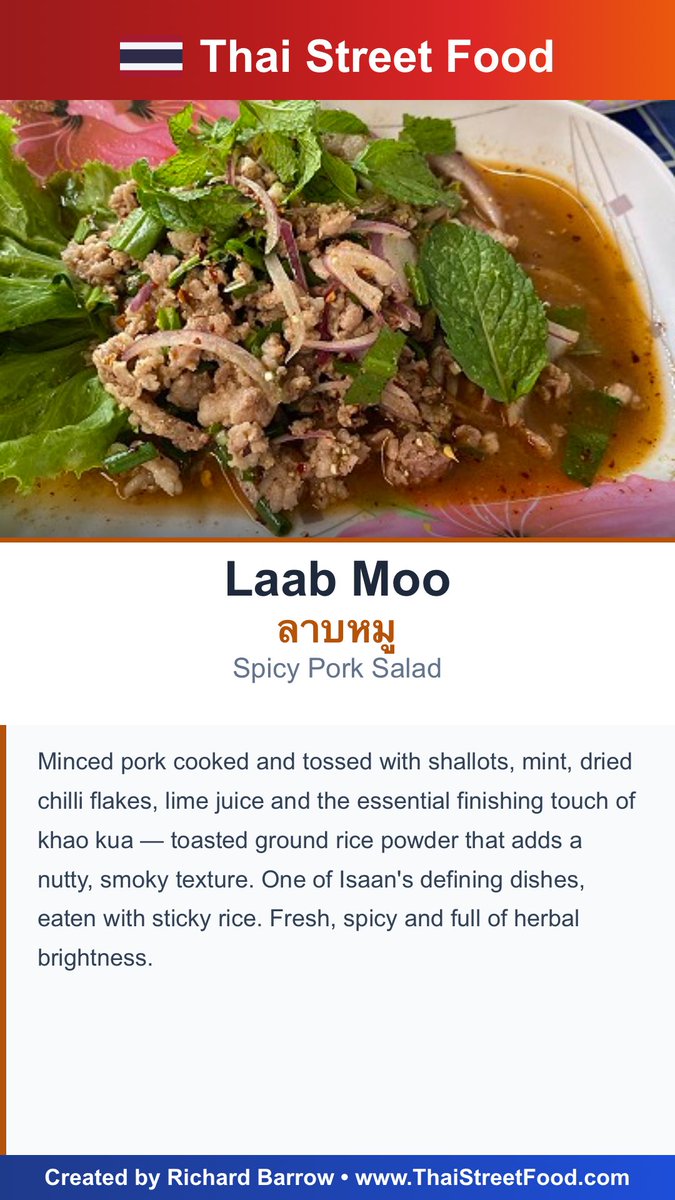
🍜 012/100 Thai Street Food Flashcards
Laab Moo (ลาบหมู) is one of those dishes you’ll see everywhere in Thailand, and for good reason. It’s a spicy pork salad that hits that mix of fresh, sour, and a bit salty all in one bite. The minced pork is usually lightly cooked, then tossed with lime juice, fish sauce, chili flakes, and toasted rice powder which gives it that slightly nutty texture.
What stands out here is how fresh it looks. You’ve got sliced red onions, spring onions, and a good handful of mint on top. The broth at the bottom is normal for this style, especially in central Thailand, making it a bit juicier compared to the drier Isaan version.
It’s usually eaten with sticky rice and some raw greens on the side, which helps balance the heat. Simple dish, but when it’s done right, it’s hard to stop eating.
❤️ Click like and share if you want to vote for this to be in the Top 10 of #ThaiStreetFood 2026. Follow me for 100 different #ThaiFood flashcards for #Thailand.
2
4
73
4,381
May 2
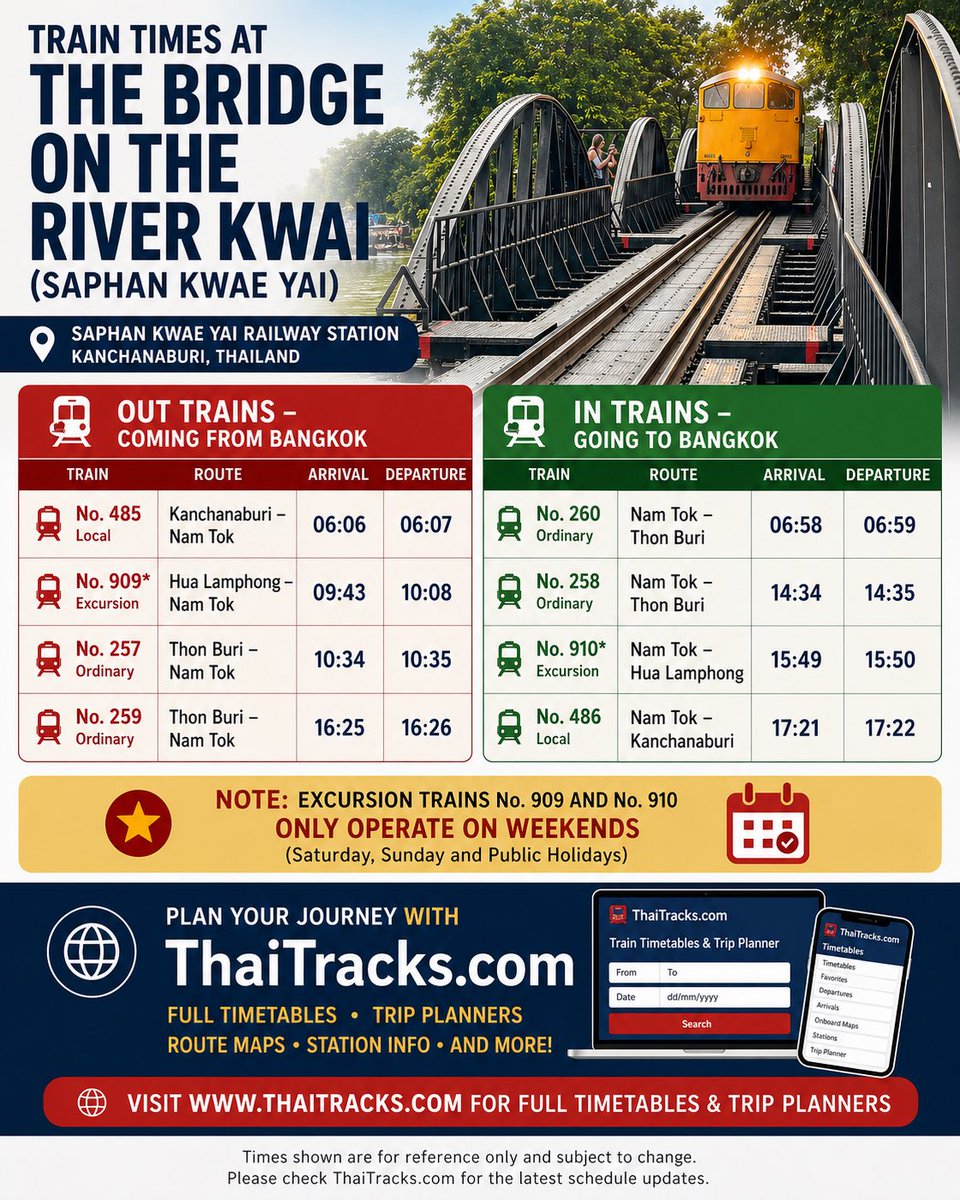
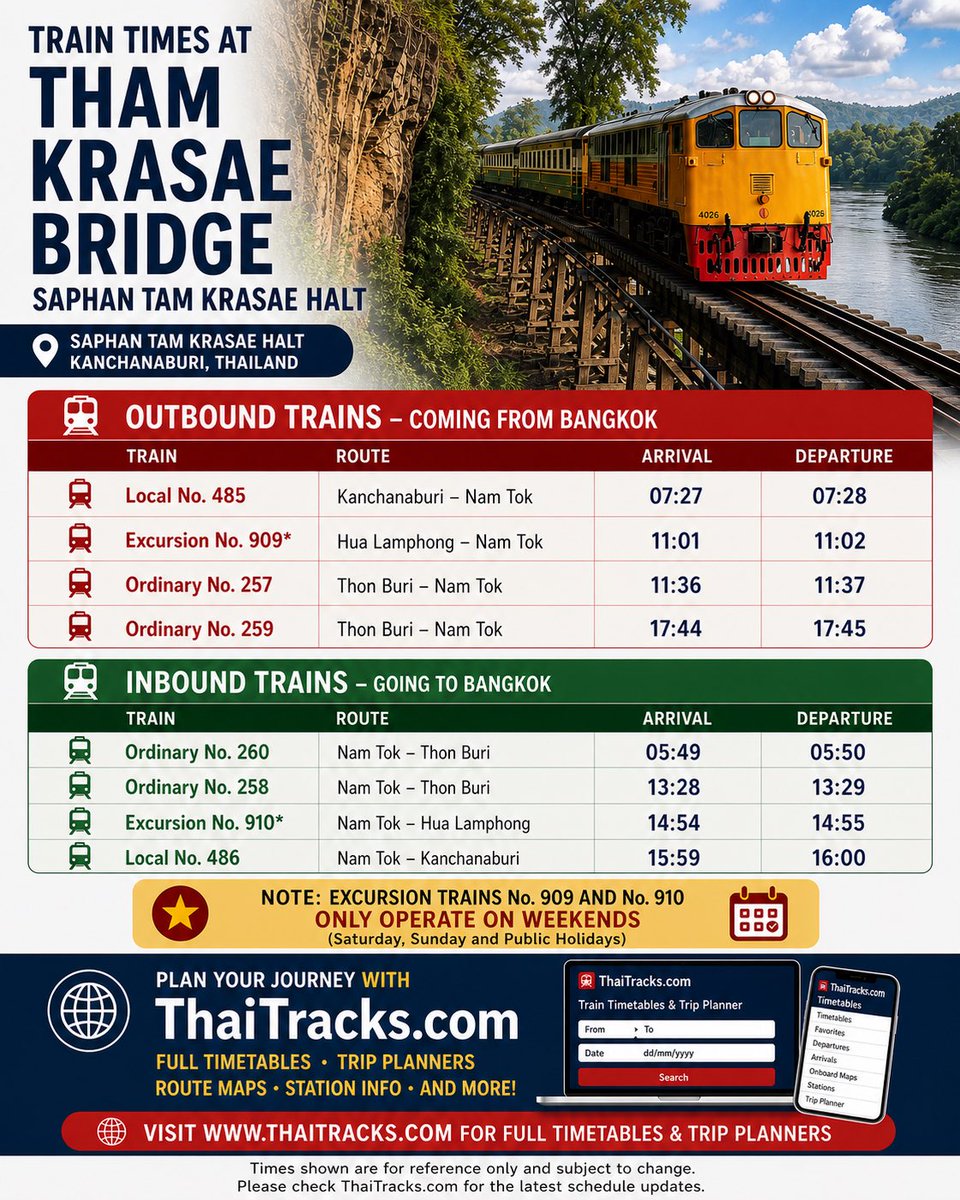
🚂 For photographers wanting to capture trains on the Bridge on the River Kwai (สะพานแควใหญ่) and the Tham Krasae wooden trestle bridge (สะพานถ้ำกระแซ), these are all the times you can expect to see trains.
Please note that excursion trains only run at weekends.
#DeathRailway
4
23
3,499
May 1
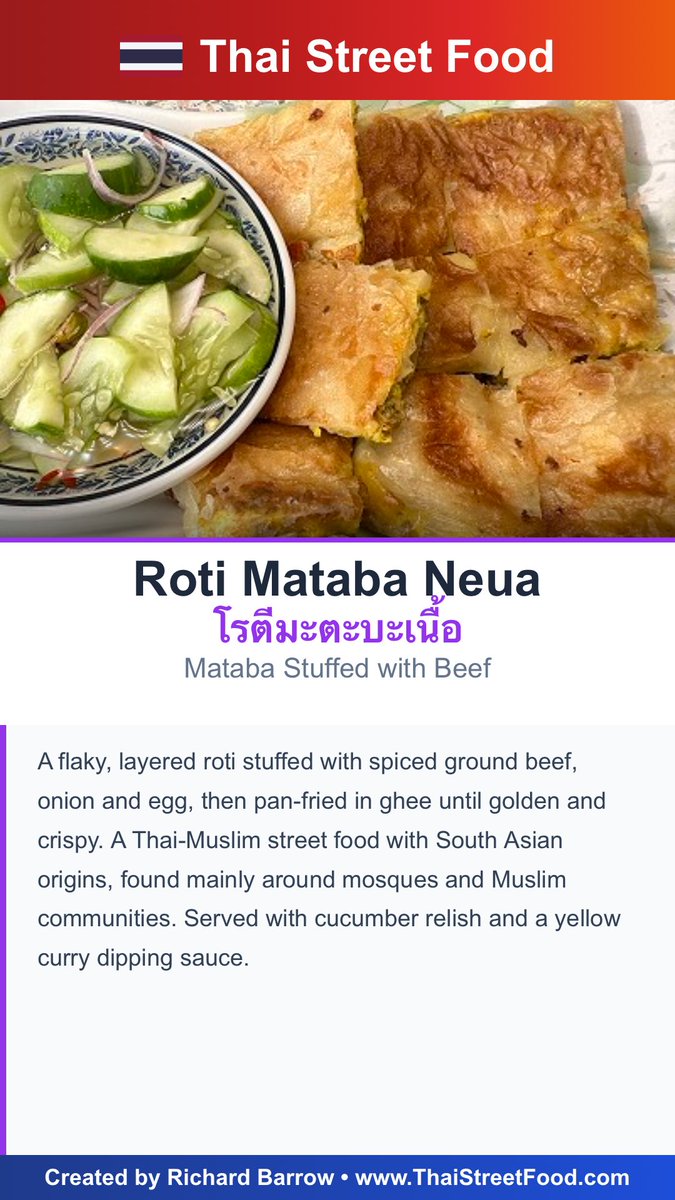
🍜 011/100 Thai Street Food Flashcards
Roti Mataba with Beef (โรตีมะตะบะเนื้อ) is one of those dishes that feels like a mix between a stuffed pancake and a savory pie. The roti is pan-fried until the outside turns crispy and golden, while inside you get a soft filling of minced beef cooked with curry spices and onion.
It’s similar to Indian-style stuffed paratha, but thinner and crispier on the outside. What makes it stand out is the side of fresh cucumber relish. The cucumbers are lightly pickled with vinegar, sugar, and chili, so you get that fresh, slightly sweet and tangy bite to balance the rich beef filling.
❤️ Click like and share if you want to vote for this to be in the Top 10 of #ThaiStreetFood 2026. Follow me for 100 different #ThaiFood flashcards for #Thailand.
3
4
47
5,058
May 1
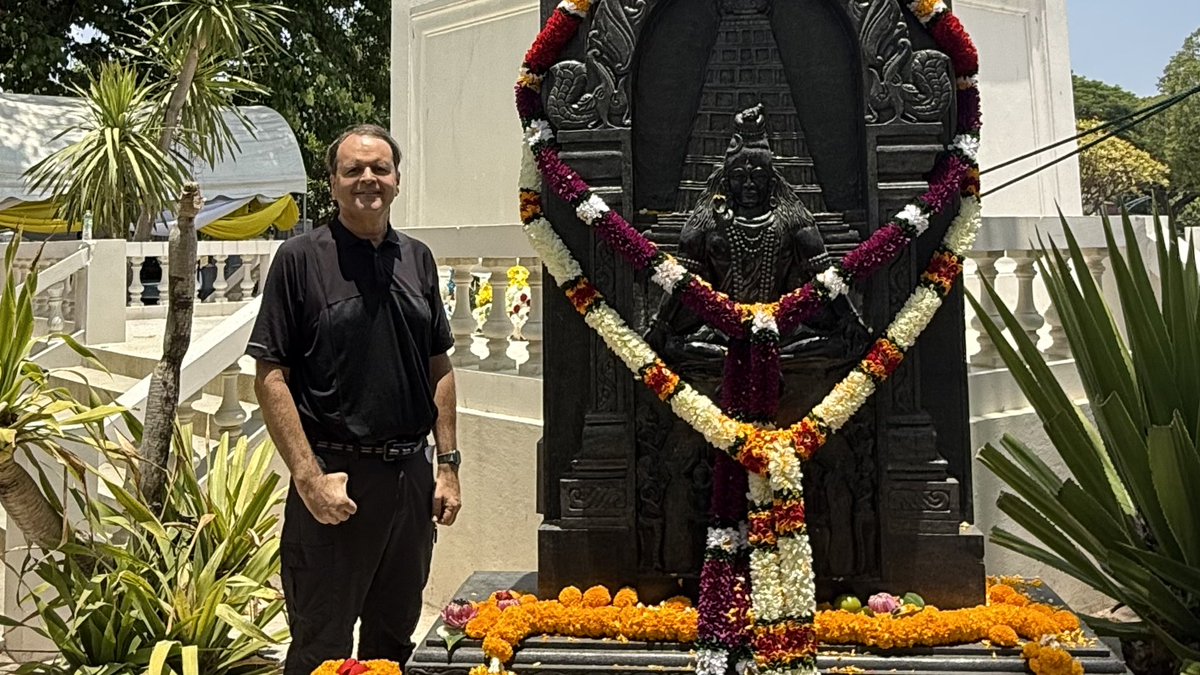
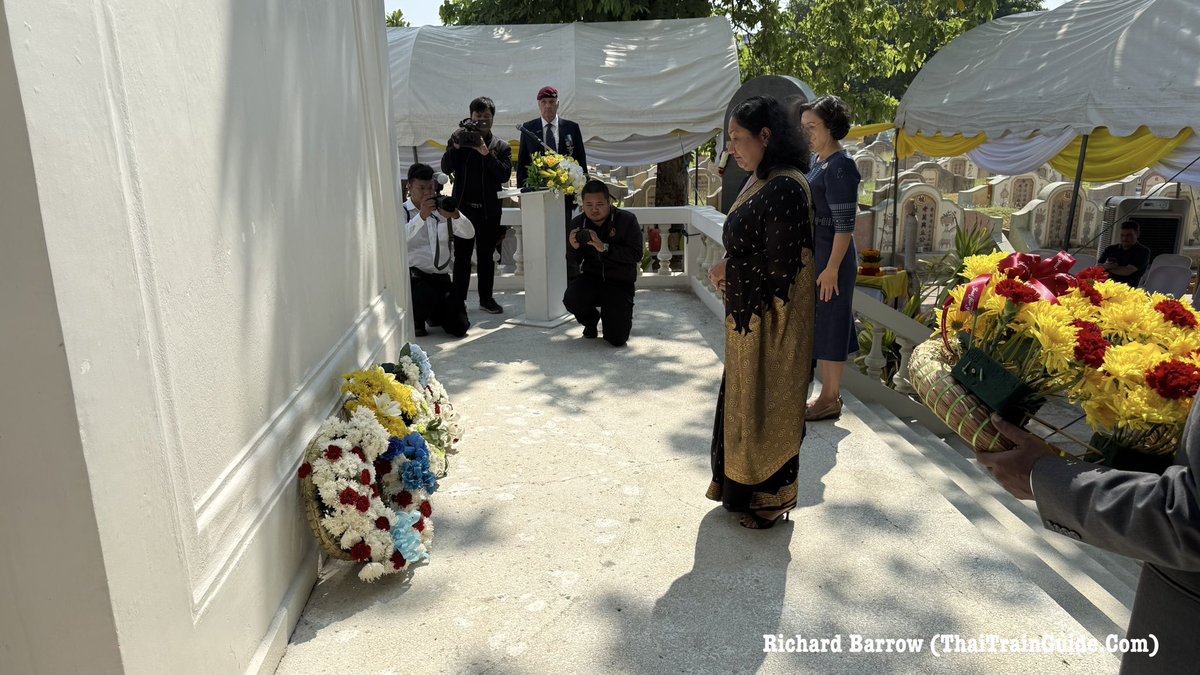
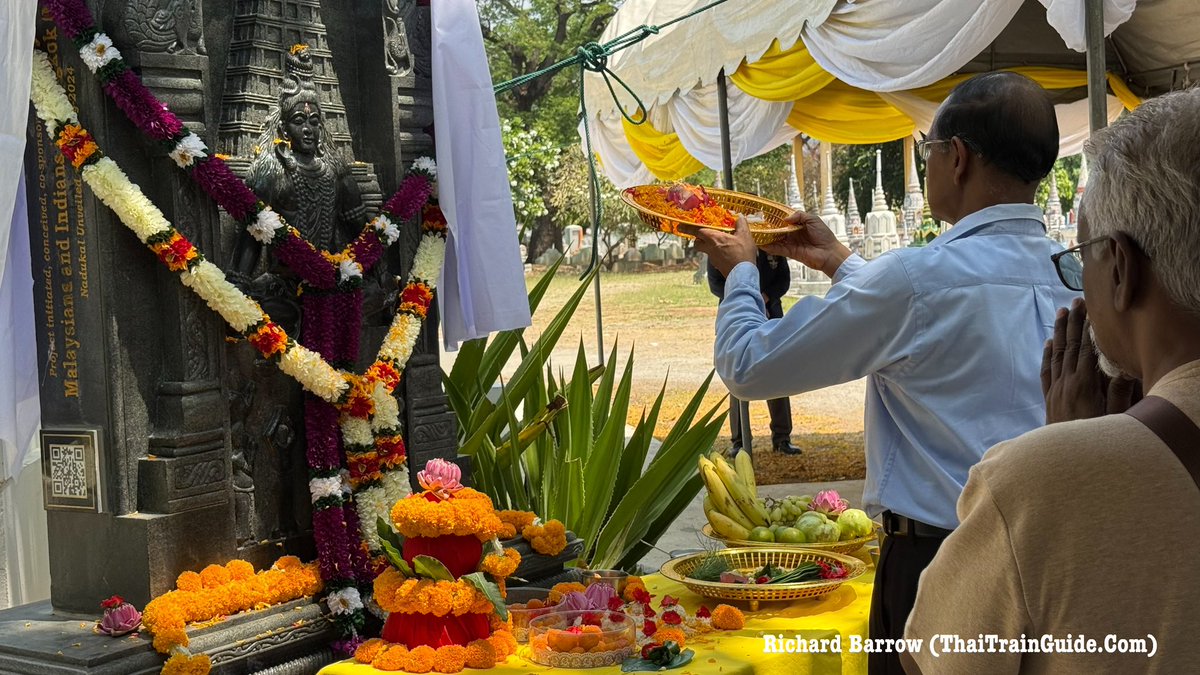
This morning on Labor Day, I took part in a small ceremony in Kanchanaburi. It did not draw crowds like the famous bridge or war cemetery. But it carried a weight that is easy to miss.
This was a service of remembrance for Asian forced laborers who died building the Thai-Burma Railway. An estimated 100,000 of them perished under brutal conditions. Many were Tamil workers from Malaya, promised good pay, then trapped in a system that turned them into slave labor for the Japanese war effort.
Most people know the suffering of Allied prisoners of war. That history is visible. It has books, films, memorials. But the Asian laborers, often called Romusha, remain largely unknown. Even their families never learned what happened. Many waited for years, hoping for a return that never came.
In the early 1950s, as roads were widened and new buildings went up, workers began to uncover graves. Not marked. Not recorded. Sometimes five or six bodies in a single pit. During the war, this area had been remote. The town itself sat further away.
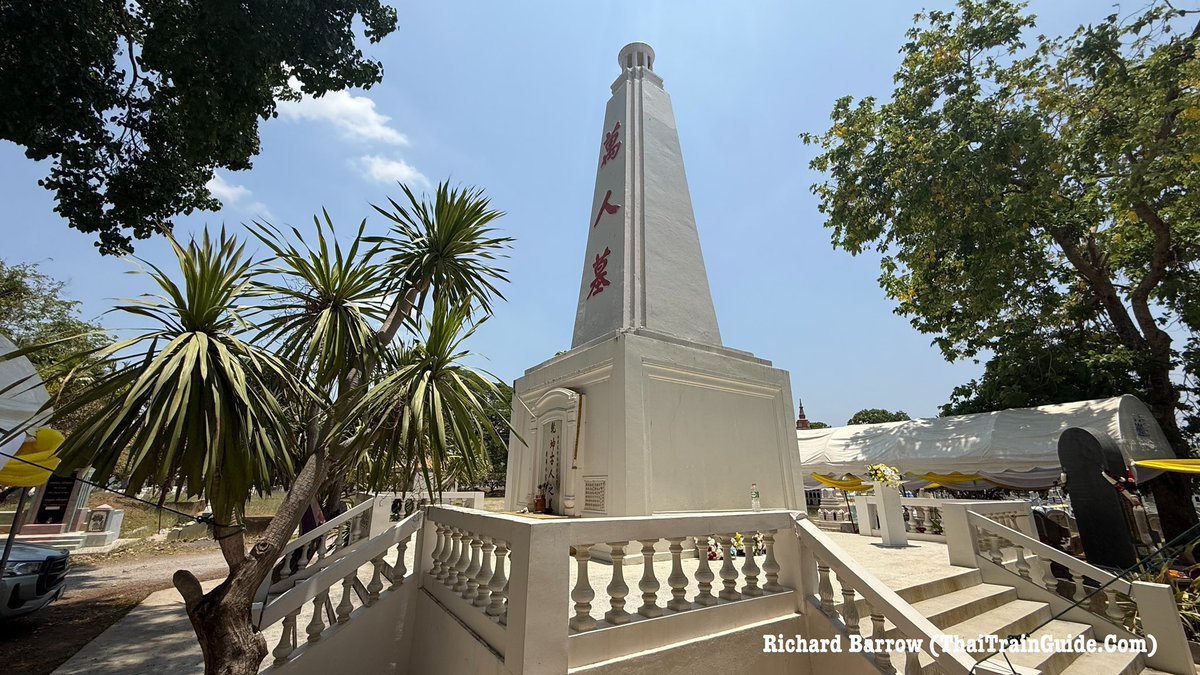
The land belonged largely to Wat Thaworn Wararam. Monks at the temple took responsibility. They gathered the remains and carried out cremations in three large batches. In the end, they collected what was believed to be the remains of around 10,000 people.
In 1957, they built a monument for what was then called “the unknown people”. It was a place for those with no names, no records, no identity. Beneath it sits a simple crypt, holding the remains of those lives.
Only later did historians begin to piece the truth together. This had been a labor camp zone. The dead were not strangers to history. While their individual names remain lost, their identity is now understood. They were the Romusha, the Asian laborers who built the railway and died here.
On 1 May 2025, a Nadukal, or Hero Stone, was installed in front of the monument. It stands as a marker of recognition, a way to give form to memory that was denied for decades. The site has now become a place not just of mourning, but of acknowledgment.
The ceremony I attended this morning marked the second anniversary of that effort. Among those present were the Ambassadors of Malaysia and Sri Lanka, alongside local officials and community leaders. Representatives from across Asia and Europe gathered. Prayers were offered in different faiths. Wreaths were laid. Silence filled the space where names should have been.
The message was clear. These people mattered. Their suffering mattered. Their story must be told.
This is no longer a one time event. The service will now take place every year on 1 May. A fixed moment to remember the forgotten workforce behind one of World War II’s most brutal railways.
I hope to see you there next year.
#ThaiTrainGuide #ThaiTracks #ThailandByRail #RailTourism #ThaiTrans #Thailand #DeathRailway #Kanchanaburi #Romusha #LaborDay #WWIIHistory
5
16
89
4,966
Richard Barrow retweeted

Video clip of Ordinary No. 260 (Nam Tok to Thonburi) crossing the bridge this morning at 6:58am. This is the return journey that I took from Thonburi yesterday afternoon. It stays in Nam Tok overnight. It leaves there before sunrise and so the first part of their journey is in the dark.
#รถไฟไทย #thaitrain #trains #RailTourism #railway #railfan #railfans #railwayphotography #trainphotography #DeathRailway #Thailand
1
3
42
5,240
May 1
🚉 Good morning from the Bridge on the River Kwai. I’m here in Kanchanaburi for the annual memorial service for the estimated 100,000 Asian labourers that died building the Thai-Burma Railway during the last war.
Everyone talks about the Allied Prisoners of War all the time but hardly anything is mentioned about the Asians that died. So I felt it was important for me to come here and shine a light on what happened to them.
#DeathRailway #Thailand
7
12
128
4,863
Apr 30
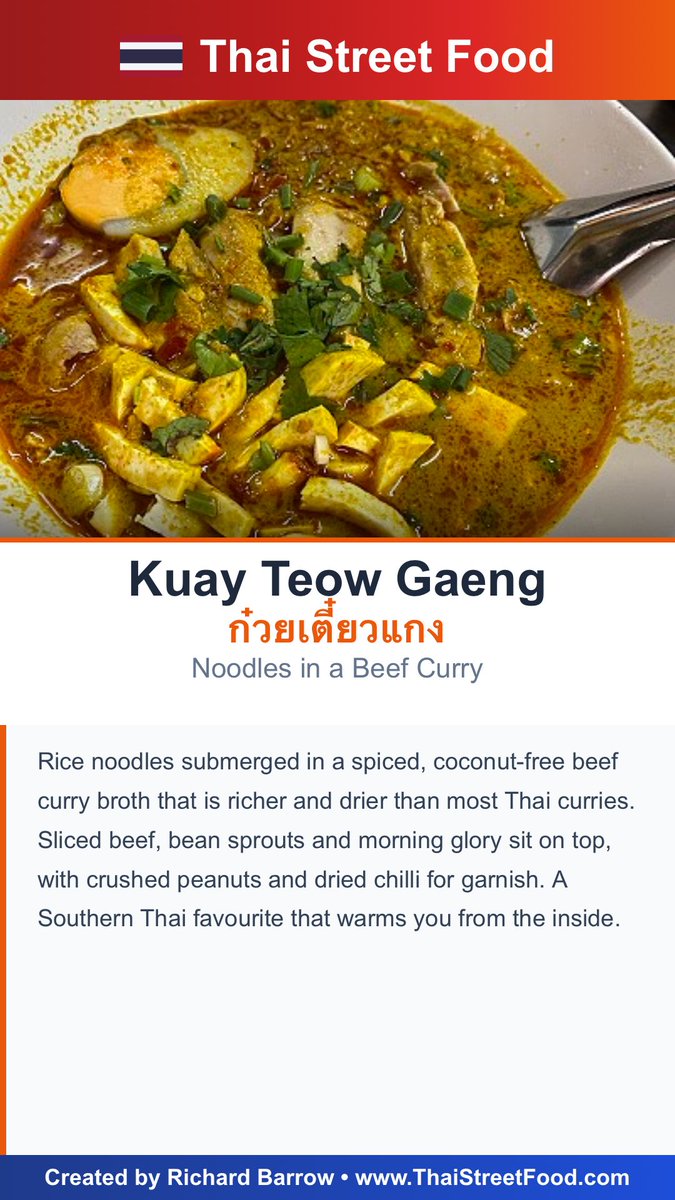
🍜 010/100 Thai Street Food Flashcards
Kuay Teow Gaeng (ก๋วยเตี๋ยวแกง) is one of those dishes you don’t see everywhere, but once you try it, it sticks with you. It’s basically noodles served in a rich curry broth, usually beef-based, with a mix of soft textures and bold spices.
There are chunks of beef, boiled egg, tofu, plus a sprinkle of chopped herbs on top. It’s a bit like combining a Thai curry with noodle soup, somewhere between khao soi and regular guay tiew, but heavier and more intense in flavor.
If you like curry and noodles, this is a solid pick, especially when you want something filling.
❤️ Click like and share if you want to vote for this to be in the Top 10 of #ThaiStreetFood 2026. Follow me for 100 different #ThaiFood flashcards for #Thailand.
6
62
4,047
Apr 30
This morning I had the honor of being invited again by @foundationthai to speak at the Expatriate Orientation for members of the diplomatic corp, business leaders, and other people new to Thailand. My session was called “Discovering the Four Regions of Thailand by Rail”. The words on the last slide of the presentation nicely summed it up:
“Travelling by train in Thailand is about more than just getting from point A to point B. It's about watching the changing landscapes, tasting regional specialties, and feeling connected to the people and places that make up this beautiful country.
“Whether you're heading north to the misty mountains of Chiang Mai or south to the tropical warmth of Hat Yai, the views from the train window are a reminder of Thailand's incredible diversity, in geography, culture, and spirit.”
Judging by the feedback at the end, I think I got quite a few converts to rail travel in Thailand.
#ThailandByRail #RailTourism #Thailand
4
3
71
3,574
Apr 30
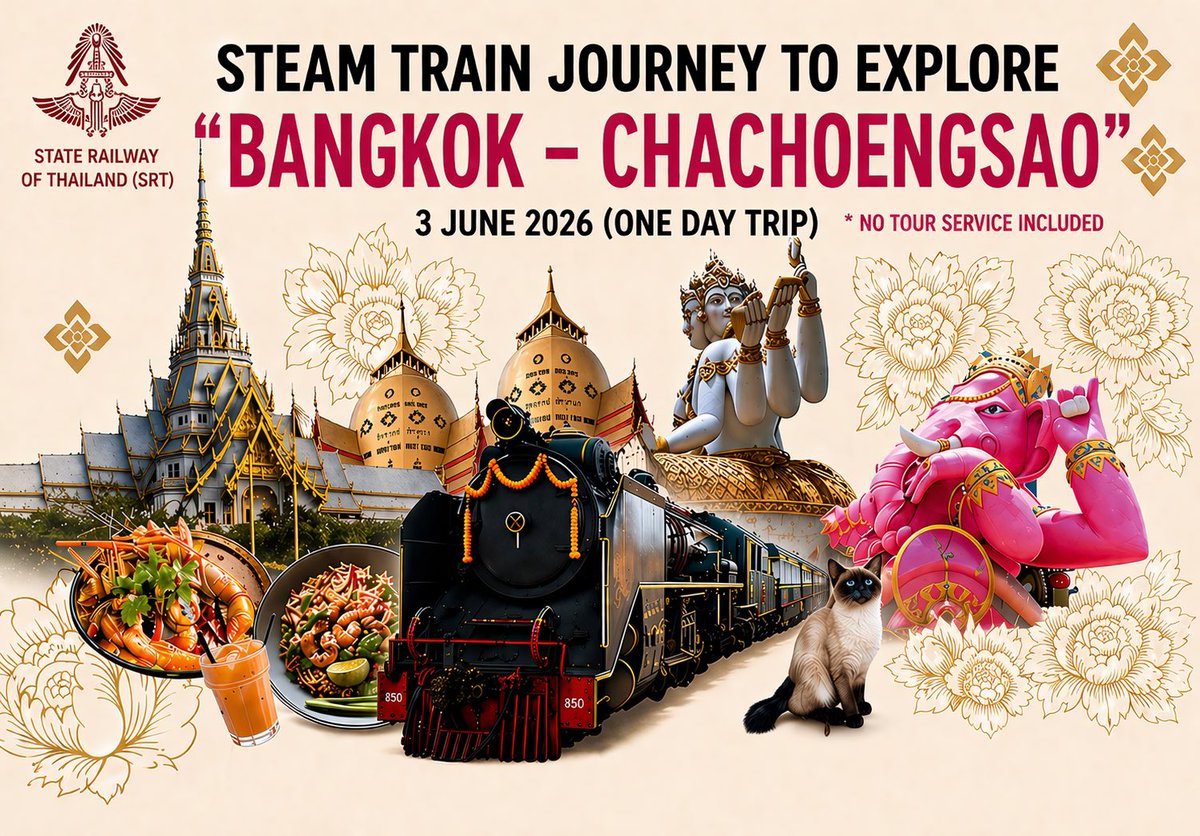
🚂 There are two steam heritage trips coming up in #Thailand. The first one is on Coronation Day on Monday 4th May. Even though tickets have already sold out, you can still go to Hua Lamphong Station from around 7:00am to 8:10am to take photos.
Just now, the State Railway of Thailand announced another steam heritage trip on the Queen’s Birthday on Wednesday 3 June. This trip is to Chachoengsao. Tickets go on sale nationwide on 4 May.
👉 Follow @ThaiTrainGuide for more information.
#ThaiTrainGuide #ThaiTracks #ThailandByRail #RailTourism #ThaiTrans #Thailand #SRT #SteamTrain #Chachoengsao
2
26
2,829
Apr 30
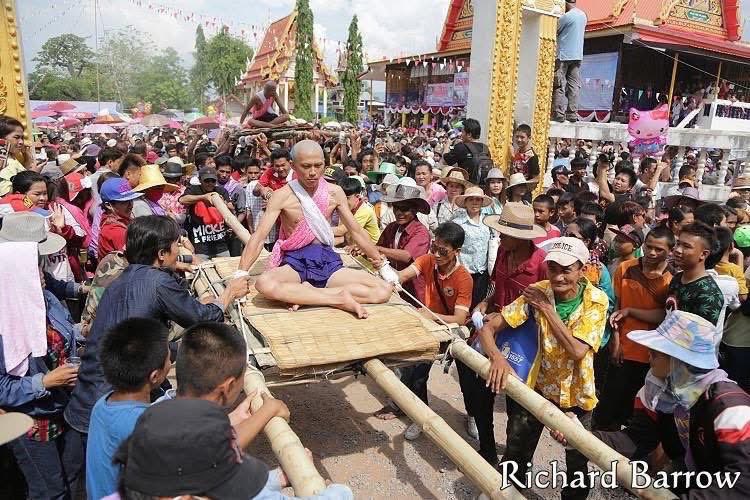
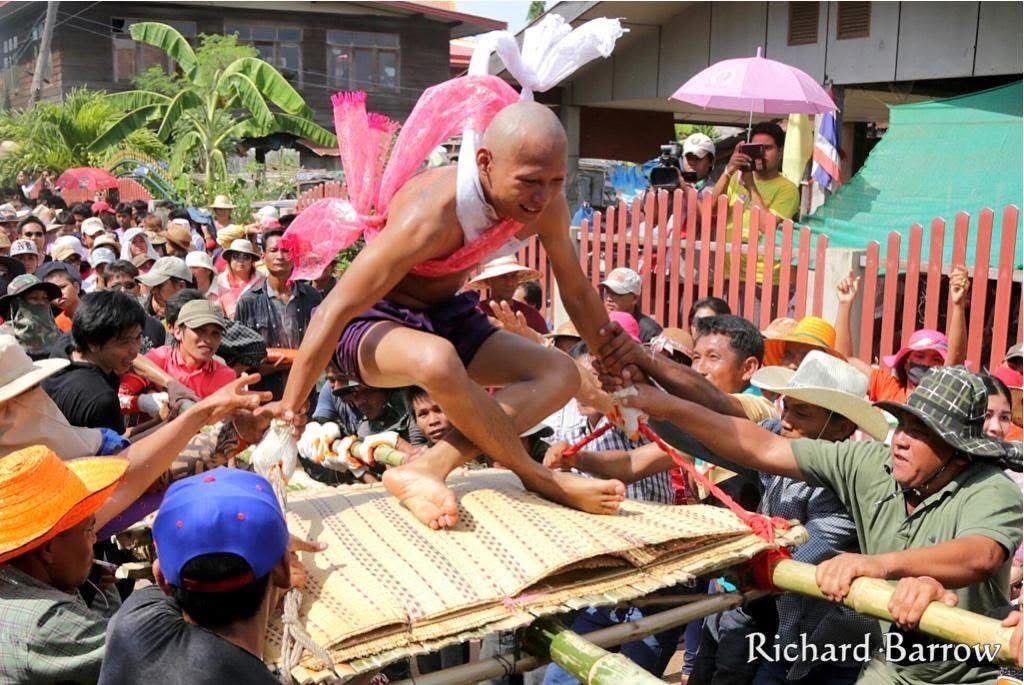
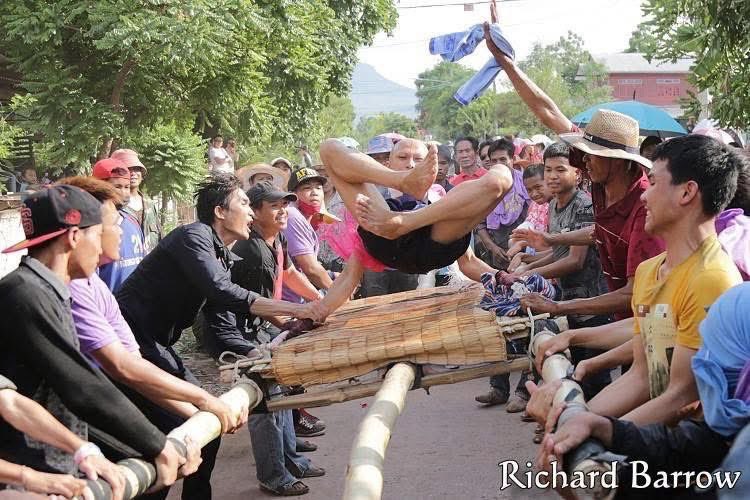
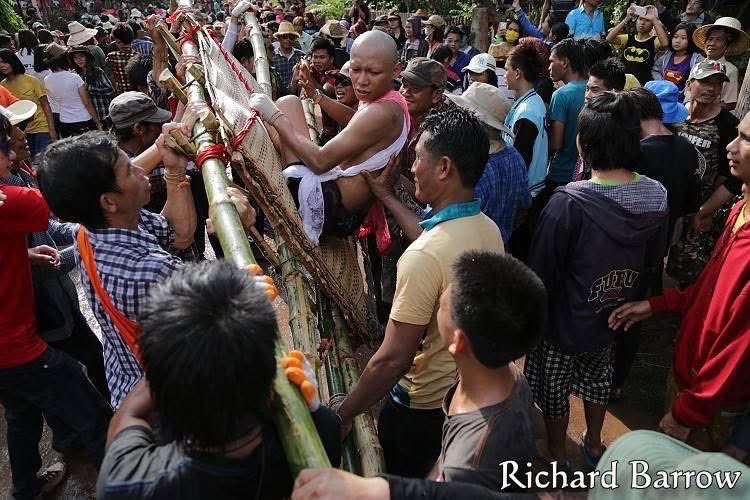
🇹🇭 One of the more unusual events I’ve experienced in Thailand is the Brutal Ordination Parade at Wat Takaek in Chaiyaphum Province. It is taking place this year on 1-2 May 2026.
This tradition is part of the local ordination ceremony, where young men demonstrate their determination to enter the monkhood in a truly unforgettable way. Participants are paraded through the temple grounds, often lifted, tossed, or challenged by the crowd and must keep their balance without falling. It’s a test of endurance and commitment before taking their vows.
Deeply rooted in Thai culture, the event blends spirituality with spectacle, drawing both locals and visitors who come to witness this intense rite of passage. While it may look chaotic, it carries symbolic meaning about resilience and readiness for the disciplined life of a Buddhist monk.
📍MAP: maps.app.goo.gl/tUNykQnpHpbW…
#Thailand #Chaiyaphum #ThaiCulture #BuddhistTraditions 🙏🇹🇭
10
66
8,621
Apr 30
🇹🇭 Upcoming holidays in #Thailand that include two long weekends. Where are you planning on going?
Share with friends who are visiting Thailand so they know when transport and hotels will be crowded with Thais travelling.
Please note that Immigration offices will be closed on 4th May and 13th May. Plan accordingly.
4
25
88
8,845
Apr 29
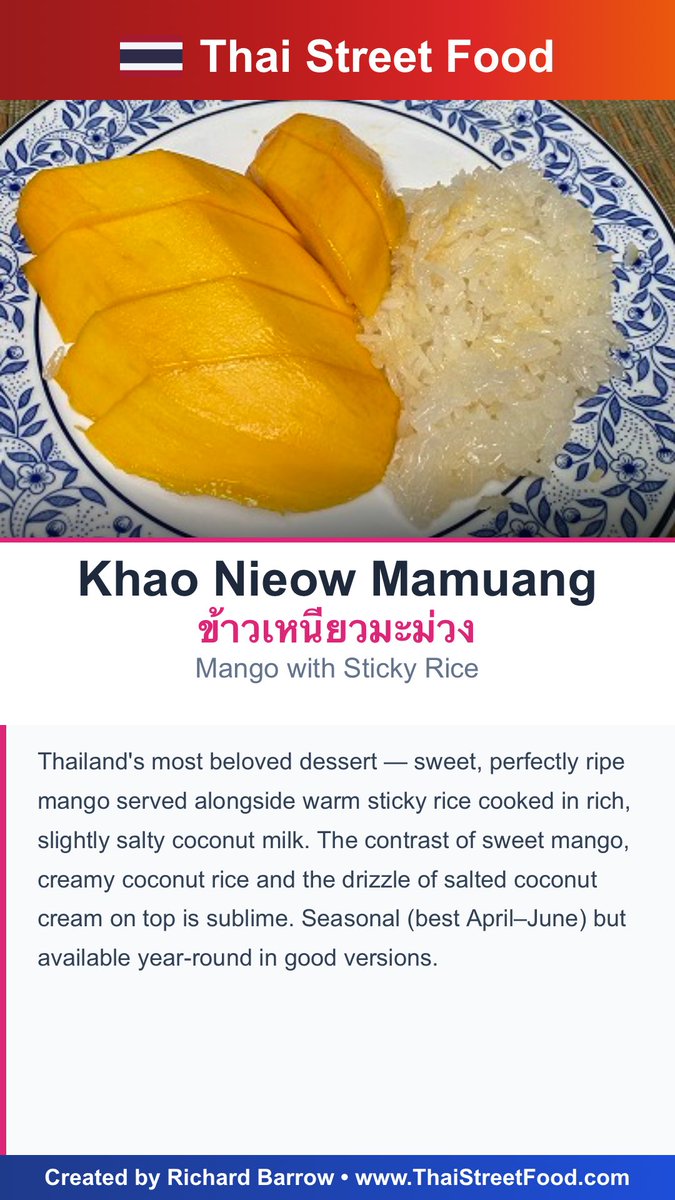
🍜 009/100 Thai Street Food Flashcards
Mango with Sticky Rice (Khao Niew Mamuang) is one of those Thai desserts you’ll see everywhere, and honestly, it never gets old. This plate is a simple combo of ripe yellow mango slices and sticky rice that’s been steamed and mixed with sweet coconut milk.
The rice is soft and slightly chewy, with a light salty-sweet taste from the coconut cream. When you pair it with the juicy mango, it balances out really well. Compared to other Thai desserts like coconut ice cream or fried bananas, this one feels lighter and more about natural sweetness rather than being deep-fried or overly rich.
❤️ Click like and share if you want to vote for this to be in the Top 10 of #ThaiStreetFood 2026. Follow me for 100 different #ThaiFood flashcards for #Thailand.
5
15
95
4,586
Apr 28
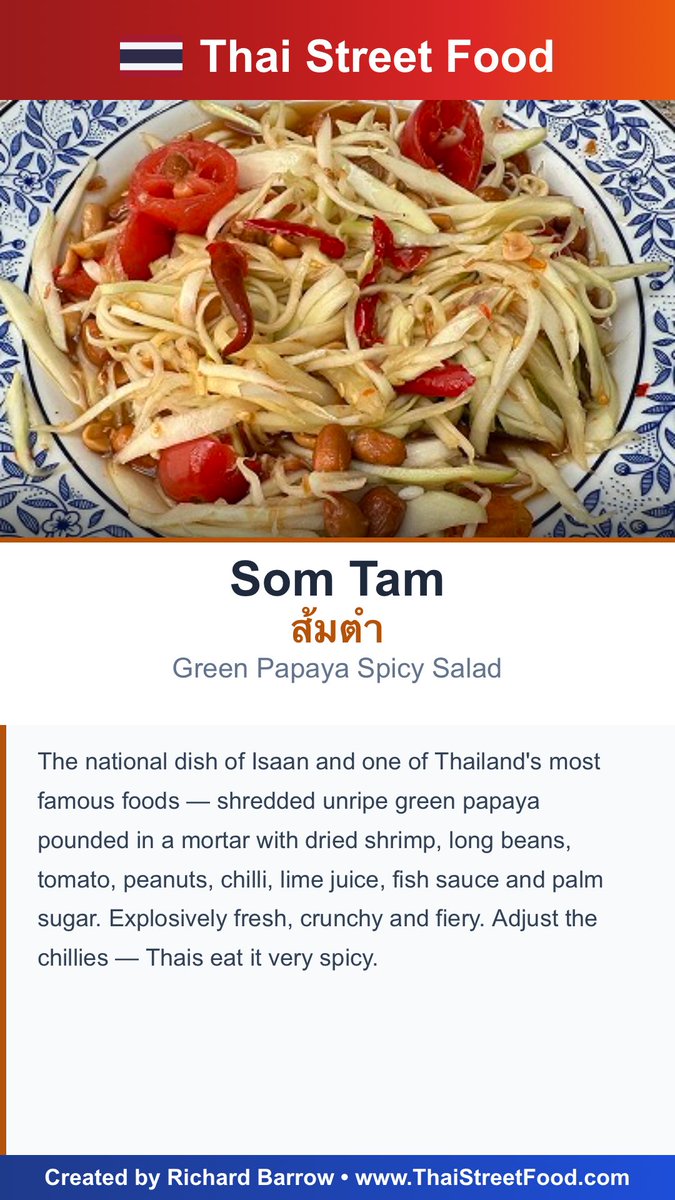
🍜 008/100 Thai Street Food Flashcards
Som Tam (ส้มตำ) is one of those Thai dishes you’ll see everywhere, from street carts to local restaurants. This plate is the classic version made with shredded green papaya, mixed fresh and pounded lightly in a mortar to bring everything together.
You’ve got the usual combo here: crunchy green papaya, cherry tomatoes, long beans, peanuts, and dried chilies. The dressing is a balance of lime juice, fish sauce, and palm sugar, giving it that mix of sour, salty, sweet, and spicy in every bite. Compared to something like Yam (ยำ), which is more of a tossed salad, Som Tam has a deeper flavor because of the pounding process that helps the ingredients soak up the dressing.
This version is the Thai-style Som Tam, which is lighter and more refreshing than the fermented, stronger Isaan-style variation. Good as a side, but honestly, many people just eat it as a full meal, especially with sticky rice or grilled chicken. How many chili’s do you like to add?
❤️ Click like and share if you want to vote for this to be in the Top 10 of #ThaiStreetFood 2026. Follow me for 100 different #ThaiFood flashcards for #Thailand.
8
8
79
4,103
Apr 28
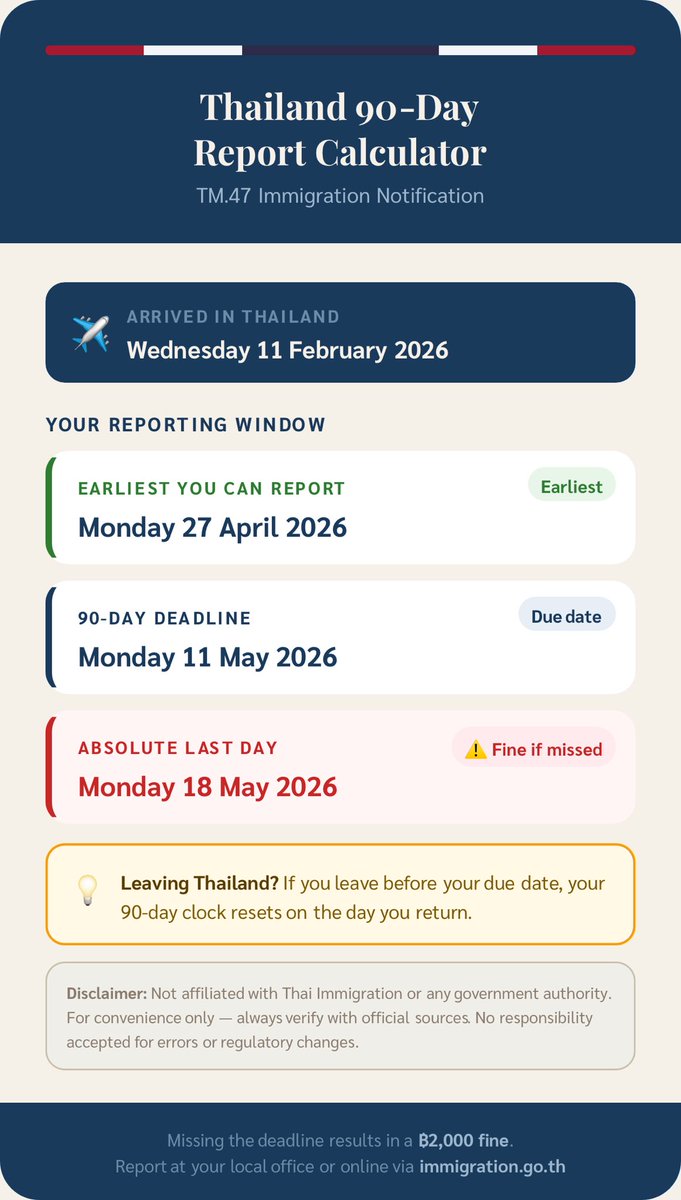
Last night, I was trying to work out when my next 90-day reporting was due, when just for fun, I decided to make an online calculator to work it out for me. It then saves as an image you can keep to remind you.
👉 Thailand 90-Day Report Calculator richardbarrow.com/90day/
14
8
96
12,122
Apr 28
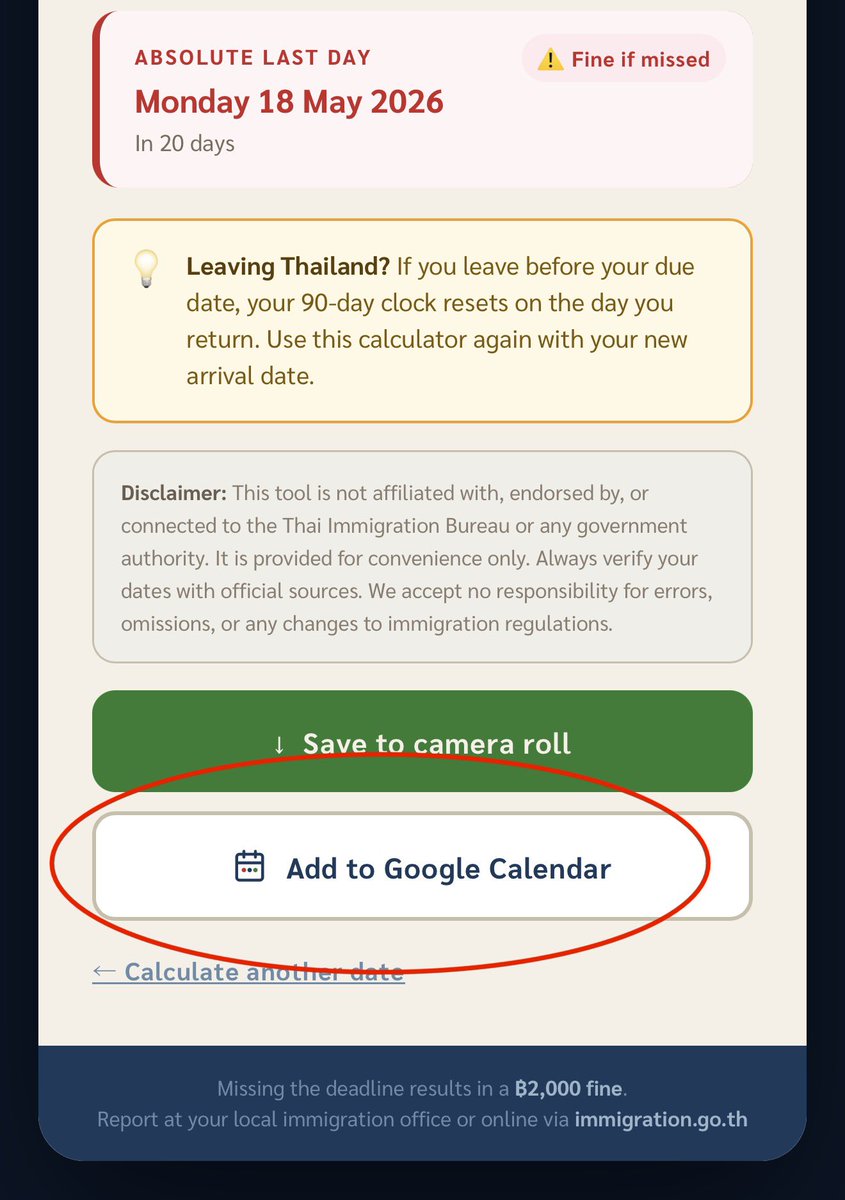
Following some feedback, I’ve now added an “add to my Google Calendar” button.
I only made this for a bit of fun. But if you have some constructive suggestions then feel free to send them through.
12
2,182