
Engineering math professor at @Virginia_Tech. Nonlinear dynamics, orbital mechanics, and the geometry of motion // @Caltech PhD
Joined July 2015
- Tweets 4,717
- Following 1,421
- Followers 4,752
- Likes 14,965
1,063 Photos and videos
Pinned Tweet

8 Aug 2025
What if a spacecraft could cycle between Earth and Moon orbits, performing multiple circuits of each, naturally and indefinitely, with zero propulsion?
We’ve discovered a new class of stable, prograde, low-energy cycler orbits that do just that.
Why these orbits matter:
Ballistic → fuel-free
Stable → long-term ready
Near-chaotic → agile with low ΔV
Low-energy → access to Earth/Moon, Lagrange points, Sun–Earth L1/L2, even heliocentric space
At the AAS/AIAA Astrodynamics Specialist Conference in Boston next week, I’ll present on a new family of ballistic Earth-Moon cycler orbits that are stable, prograde, and mission agile—unlike any cyclers in the current literature.
The example below is shown in both the Earth-Moon rotating frame and inertial frame.
Conference Paper: ross.aoe.vt.edu/papers/ross-…
178
578
4,657
419,134

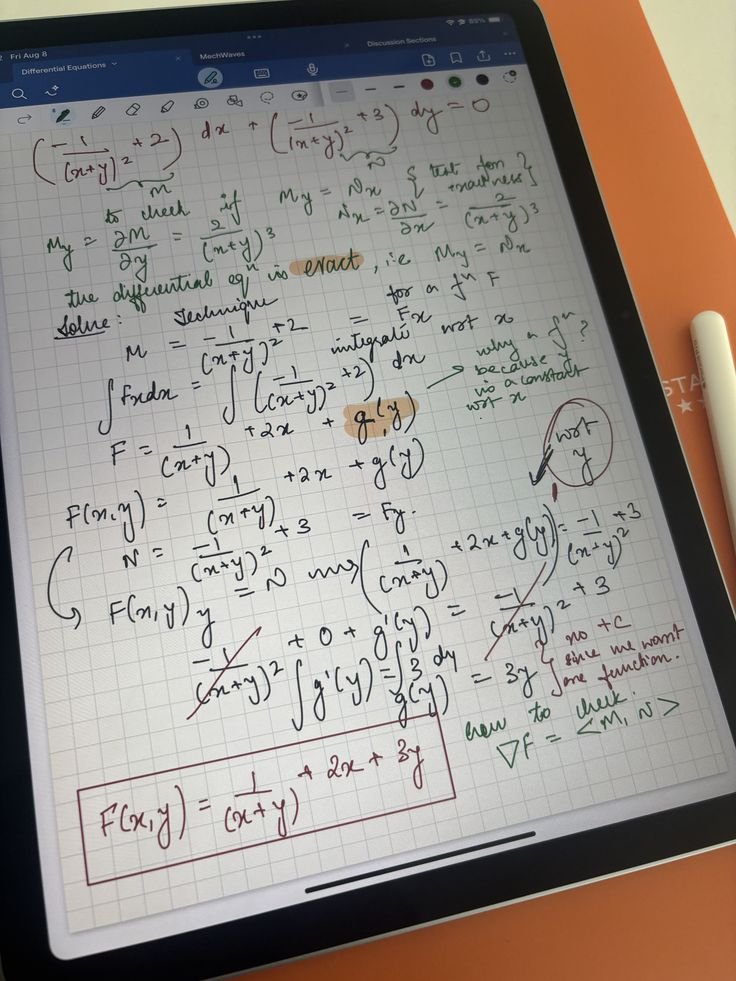
Study calculus.
not because exams exist.
because reality moves.
• derivatives → how things change
• integrals → how change accumulates
• limits → what happens at the edge
• gradients → where systems want to go
• differential equations → how nature evolves
motion, heat, fluids, control, optimization, robotics, ML.
all of it speaks calculus.
without it, you see outputs.
with it, you see dynamics.
48
582
3,581
115,964
Very interesting approach. Required UV dose depends on the pathogen, but could be tuned, depending on the crop.
Jun 12

autonomous robot driving through the field at night. no chemicals. no pesticides. just UV light killing pathogens and pests while everyone sleeps. this is @tricrobotics.
this is what chemical-free pest control looks like at scale.
2
2
12
1,010
Shane Ross retweeted

Jun 12
They did it.
SpaceX has now launched more satellites than the rest of humanity, combined, all time.
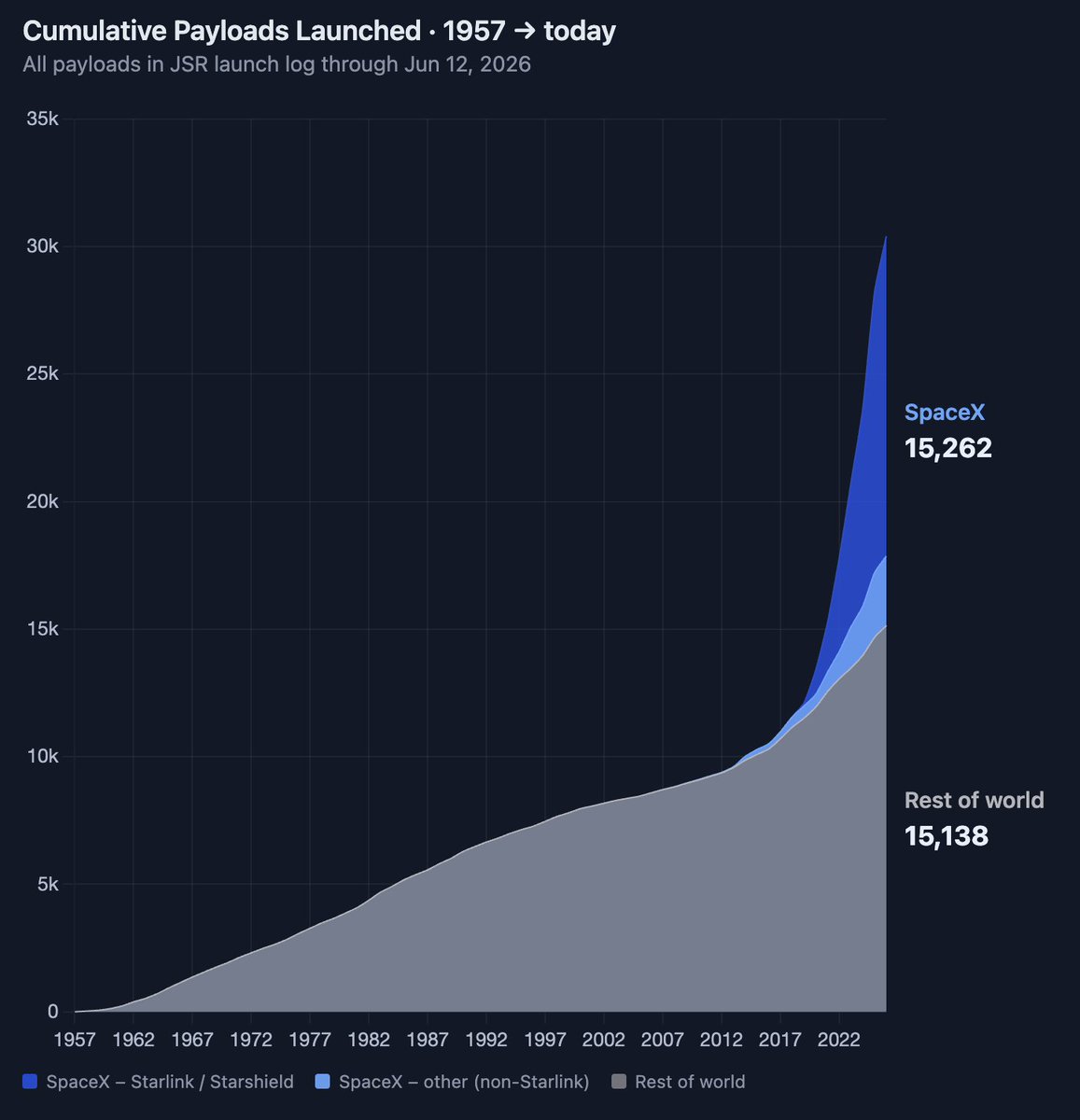
May 12

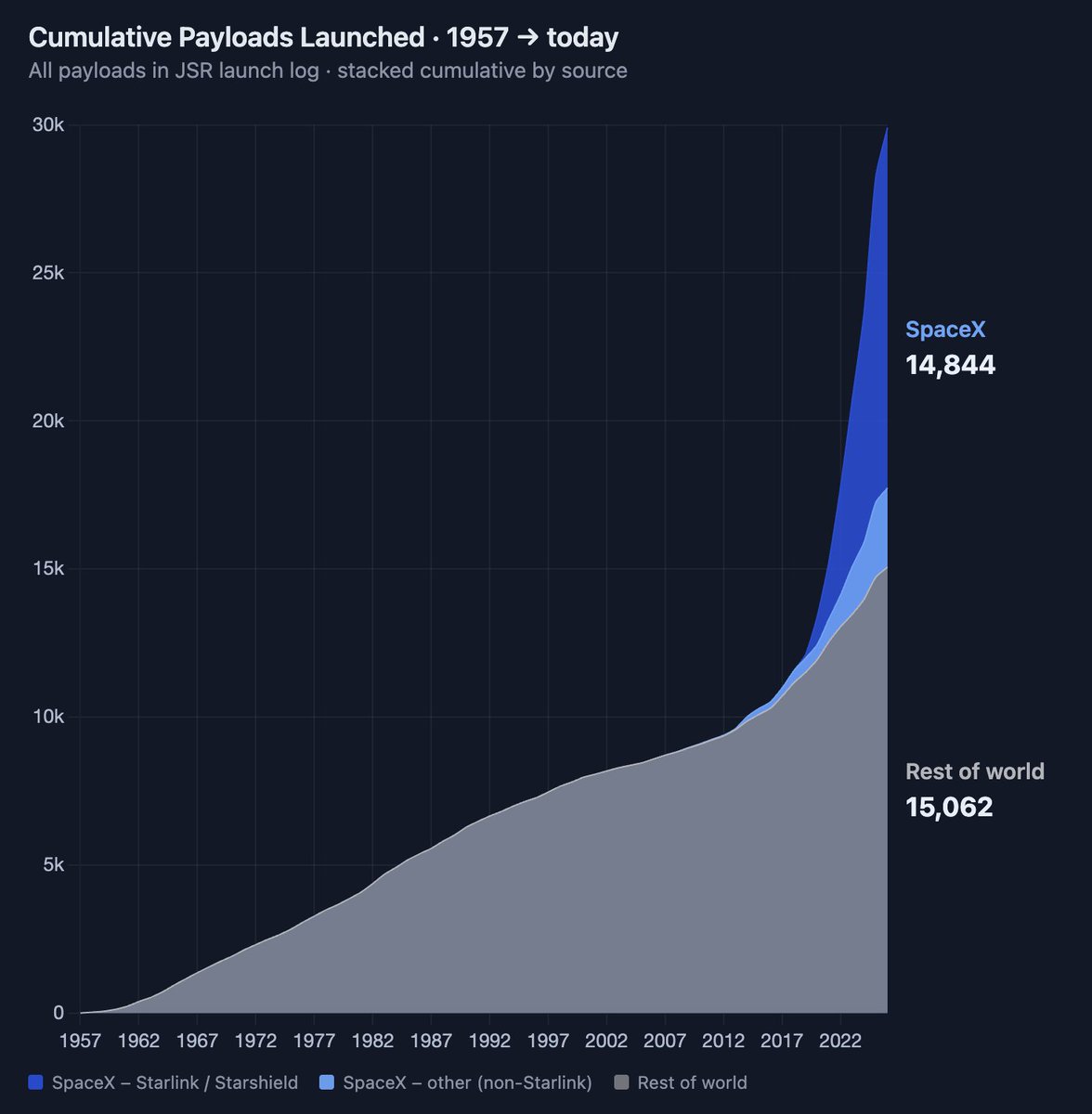
SpaceX is only ~200 satellites away from having launched as many satellites as the rest of the world combined
(despite giving the rest of the world a 61-year head start)
347
1,145
9,858
17,352,679
Jun 12
You’ve heard of the Interplanetary Superhighway and the Atmospheric Superhighway, but are you prepared for the Underground Fungal Superhighway?
Jun 12

Scientists Map 110 Quadrillion km of Underground Fungal Networks…
A billion Times The Distance From Earth to the Sun!
Earth’s Vast Underground “Carbon Superhighway”
A groundbreaking new study published today in the journal Science has revealed, for the first time, the global scale of one of Earth’s most important but hidden biological infrastructures: the networks of arbuscular mycorrhizal (AM) fungi.
These thread-like fungal structures, known as hyphae, form symbiotic partnerships with roughly 70% of land plant species—including major crops like wheat, corn, and rice.
In exchange for sugars from the plants, the fungi deliver essential nutrients (such as phosphorus and nitrogen) and water, while also playing a massive role in storing carbon underground.
Mind-Boggling Scale
Using data from more than 16,000 soil cores worldwide, machine-learning models, and high-resolution robotic imaging of fungal hyphae, researchers estimated:
•Total length: ~110 quadrillion kilometers (1.10 × 10¹⁷ km) of living hyphae in the top 15 cm of global soils—enough to stretch nearly a billion times the distance from Earth to the Sun (or about 10% of the diameter of the Milky Way if laid out in space).
•Biomass: ~300 megatons of carbon, equivalent to 4–6 times the biomass of all humans on Earth.
•These networks move about 1 billion metric tons of carbon per year into soils, acting as a critical “carbon circulatory system” that helps regulate the planet’s climate.
Densities are highest in grasslands, with notable hotspots in places like the Sudd wetlands in Africa and the Everglades.
The “Wood Wide Web” at Planetary Scale
This research builds on the popular “Wood Wide Web” concept, where fungi connect plants in shared resource networks.
The new global maps (available for exploration via the Society for the Protection of Underground Networks, or SPUN) show these connections operating at an ecosystem-wide level, supporting plant health, resilience to drought and disease, and food security.
These fungi are vital allies in the fight against climate change and for sustainable agriculture. However, they face threats from soil disturbance (like tillage), pesticides, and land-use changes.
The study also highlights gaps in sampling, particularly in undersampled ecosystems that need further research.
Read the full research paper (paywalled, but abstract freely available): science.org/doi/10.1126/scie…
Global density and biomass of arbuscular mycorrhizal fungal networks
Explore interactive maps and learn more at SPUN.earth.
This discovery underscores how much of Earth’s life-support systems remain invisible to the naked eye yet operate on a truly planetary scale.
Protecting these underground networks could be one of the most effective ways to sustain healthy soils, productive crops, and a stable climate.
5
384
Jun 11
Merge this idea with ocean current-based search protocols using TRAPs
nature.com/articles/s41467-0… @JavierGRocha @Mattia__Serra
Jun 11

【発明】空飛ぶ浮き輪が誕生した。溺れた人をGPSで追跡し時速50kmで水面すれすれを飛んで駆けつけ手の届く位置に着水する。救助隊が到着するまでの数分間を命綱に変える装置として水難救助の現場で実用化が始まっている。
4
545
Shane Ross retweeted

Captured by Anduril's network of 400 telescopes deployed around the globe:
The second stage of the Falcon Heavy launch of ViaSat 3-F3 performing a routine thrust event. This produced a spiraled-shaped plume effect, a nominal part of operations for a successful launch of Viasat's latest satellite.
99
430
4,610
653,721
Jun 9
If I was standing on the equator of that neutron star, would I feel the motion of 0.24c?
Oh wait! The extreme gravity gradient would destroy me in a fraction of a rotation.
I’d feel that alright.
Jun 9

Se o bater das asas de um beija-flor já parece desafiar os limites da natureza, o pulsar PSR J1748-2446ad leva essa ideia a uma escala cósmica. Enquanto o pássaro bate as asas cerca de 80 vezes por segundo, essa estrela de nêutrons gira 716 vezes no mesmo intervalo. Seu equador se move tão rápido que alcança aproximadamente 24% da velocidade da luz. O que é frenético na Terra torna-se quase imóvel diante de uma máquina cósmica como essa.
1
1
3
335
Shane Ross retweeted

Jun 7
Saint-Malo, Brittany, has one of the highest tides in Europe, with water that can rise 13 m over.
These houses are built as a sea wall and 4 layer glass on the front windows.
[📹 Easy Ride]
244
1,392
9,403
1,167,119

Bowls and Pringles お椀とプリングルス
[Math short write-up]
notion.so/kyndinfo/Bowls-and…
1
15
127
10,952
Jun 2
Don’t worry Massachusetts. Virginia’s got your back.
Jun 1

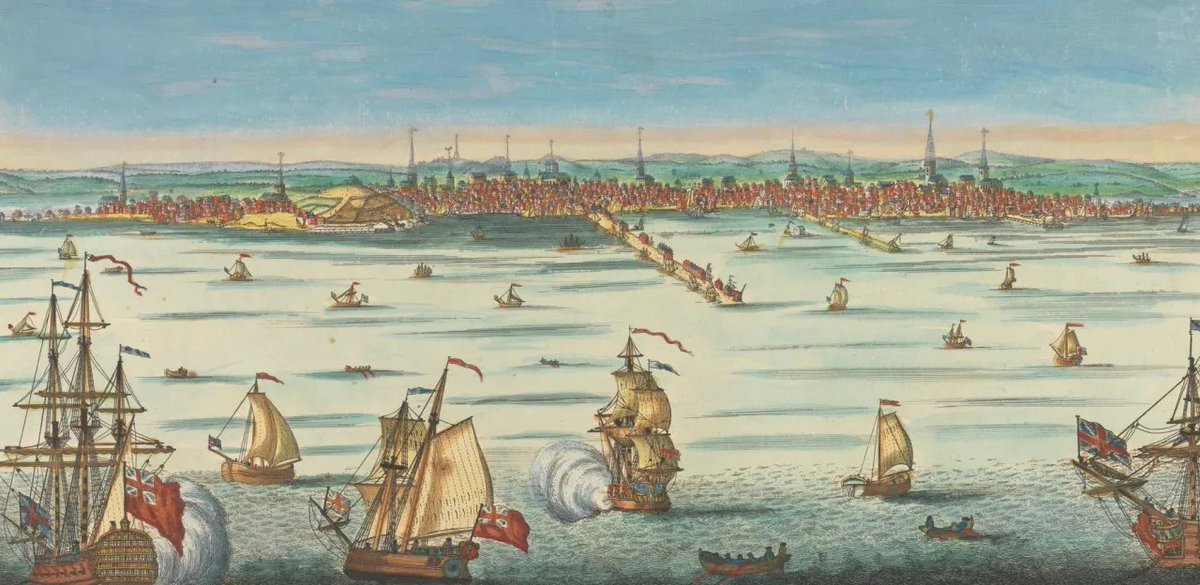
252 years ago today, the British Empire closed the busiest port in North America to teach one colony a lesson, and accidentally turned thirteen colonies into one country.
On December 16, 1773, a few dozen Bostonians had thrown 342 chests of East India Company tea into the harbor. The damages came to roughly £9,659. Lord North, the Prime Minister, decided to make an example. Parliament passed the Boston Port Act. King George III signed it on March 31, 1774. It took effect at dawn on June 1.
The Royal Navy moved warships into Boston Harbor and dropped anchor. Every dock was sealed. No ship could enter or leave. Not a barrel of flour, not a load of firewood, not a letter. The port would stay closed until Boston paid the East India Company in full and promised to behave.
The intent was to isolate Massachusetts and force her neighbors to watch her starve.
What happened instead is one of the strangest political miracles in modern history.
Down in Williamsburg, a 31 year old burgess named Thomas Jefferson and a few friends, including Patrick Henry and Richard Henry Lee, pulled a dusty old book off the shelf of the House of Burgesses library, a record of how the Long Parliament had once handled a tyrant, and proposed that the entire colony of Virginia observe June 1, 1774 as a day of "fasting, humiliation, and prayer" in solidarity with Boston.
The Royal Governor, Lord Dunmore, dissolved the House two days later for treason. The burgesses simply walked across the street to the Raleigh Tavern and kept meeting.
June 1 came. In Virginia, every Anglican church was draped in black. The bells tolled all day. Plantation owners shut their doors. Jefferson wrote later that "the effect of the day through the whole colony was like a shock of electricity."
The same shock ran through every colony south of New England. Wagon trains of food started rolling toward Boston from as far away as Charleston. The Marblehead fishermen offered to give the Boston merchants the use of their docks for free. A Quaker miller in Pennsylvania sent a hundred barrels of flour. Israel Putnam personally drove a herd of sheep from Connecticut to feed the city.
Three months later, 56 delegates from twelve colonies sat down together in Philadelphia. It was called the First Continental Congress. None of them had ever met under one roof before.
Parliament wanted to punish a city. It created a nation.
252 years ago today, in a harbor full of Royal Navy frigates, the American Revolution stopped being a Massachusetts problem.
1
3
198
May 31
New tracking on a classic old video of an immune cell hunting down and engulfing bacteria
May 30

I received a message in my direct messages asking how difficult it would be to use computer vision to track cell movement.
> SAM zero shot for the immune cell
> YOLO finetuned on a small dataset for bacteria
Realization time: ~2 hours
2
7
621
Shane Ross retweeted

May 30
🚀 Space exploration timeline:
1903 — Tsiolkovsky publishes the rocket equation
1904
1905
1906
1907
1908
1909 — Goddard writes first paper on liquid propellants as fuel for rockets
1910
1911
1912
1913
1914 — Goddard patents designs for a liquid-fueled rocket and a multi-stage rocket
1915
1916
1917
1918
1919 — Goddard publishes "A Method of Reaching Extreme Altitudes"
1920
1921 — Goddard begins experiments with liquid oxygen and gasoline rocket engines
1922
1923 — Goddard successfully tests first liquid propellant engine
1924
1925
1926 — Goddard launches world's first liquid-fueled rocket
1927 — VfR (Society for Space Travel) founded in Germany; von Braun joins as a teenager
1928
1929 — Goddard launches rocket carrying first scientific payload (barometer & camera)
1930
1931 — Korolev co-founds GIRD (Group for Study of Reactive Motion) in Moscow
1932 — Von Braun becomes chief engineer of German Army rocket program
1933 — Korolev leads launch of USSR's first liquid-fueled rocket
1934 — Von Braun's A-2 rockets reach 2.4 km altitude
1935
1936 — Korolev designs RP-318, USSR's first rocket-powered aircraft
1937
1938
1939 — Von Braun's A-5 rocket reaches 8 km altitude
1940
1941
1942 — Von Braun's A-4 (V-2) rocket becomes first human-made object to reach space (100 km)
1943 — V-2 production begins; JPL formally established in USA
1944 — V-2 used as weapon against London and Antwerp; first ballistic missile attacks in history
1945 — USA recruits von Braun
1946 — USA and USSR independently begin reverse-engineering V-2
1947 — First animals (fruit flies) launched to space aboard a V-2
1948 — Korolev's R-1 rocket successfully launched
1949 — Albert II, a rhesus monkey, becomes first mammal in space aboard a US V-2 rocket
1950
1951
1952
1953 — Korolev begins design of R-7
1954 — Korolev writes letter to Moscow advocating for an orbital satellite program
1955 — USA announces Project Vanguard
1956 — Von Braun's Redstone rocket successfully tested; R-7 development nears completion
1957 — Korolev's R-7 becomes world's first ICBM; Sputnik 1 — first artificial satellite in orbit; Sputnik 2 carries Laika — first living creature in orbit
1958 — USA launches Explorer 1; NASA founded; first US attempt at Moon probe (Pioneer 0) fails
1959 — Luna 1 (USSR) — first spacecraft to escape Earth's gravity; Luna 2 — first human-made object to reach the Moon; Luna 3 — first photos of Moon's far side
1960 — First weather satellite (TIROS-1) launched by USA; first communications satellite (Echo 1); two Soviet dogs (Belka & Strelka) orbit Earth and return safely
1961 — Gagarin — first human in space, April 12; Alan Shepard — first American in space, May 5
1962 — Mariner 2 — first spacecraft to fly by another planet (Venus); Telstar 1 — first active communications satellite
1963 — Tereshkova — first woman in space
1964 — Ranger 7 — first close-up photographs of the Moon's surface
1965 — Leonov — first spacewalk; Mariner 4 — first close-up images of Mars
1966 — Luna 9 — first soft landing on the Moon; first orbital docking (Gemini 8); Surveyor 1 — first US soft Moon landing
1967 — Apollo 1 fire kills three astronauts; Venera 4 — first probe to enter another planet's atmosphere (Venus)
1968 — Apollo 8 — first crewed mission to orbit the Moon; famous Earthrise photograph
1969 — Apollo 11 — first humans on the Moon; Apollo 12 — second Moon landing
1970 — Apollo 13 — Moon mission aborted after explosion; Luna 16 — first robotic Moon sample return; Lunokhod 1 — first lunar rover
1971 — Salyut 1 (USSR) — first space station; Mariner 9 — first spacecraft to orbit another planet (Mars); Apollo 14 & 15 Moon landings
1972 — Apollo 16 & 17 — final Moon landings; Pioneer 10 launched toward Jupiter; last humans on the Moon
1973 — Pioneer 10 — first spacecraft to fly by Jupiter; Skylab — first US space station
1974 — Mariner 10 — first gravity assist maneuver; first flyby of Mercury
291
1,485
4,435
846,253
Shane Ross retweeted

May 30
A Hamiltonian system is a way of describing motion where position and momentum evolve together as one coupled system.
The plot shows an energy landscape in phase space, with the motion of the system traced directly on top of it and projected onto the underlying phase portrait.
#HamiltonianSystems #PhaseSpace #PhysicsSimulation #DynamicalSystems #MathematicalPhysics
24
209
949
35,556
May 30
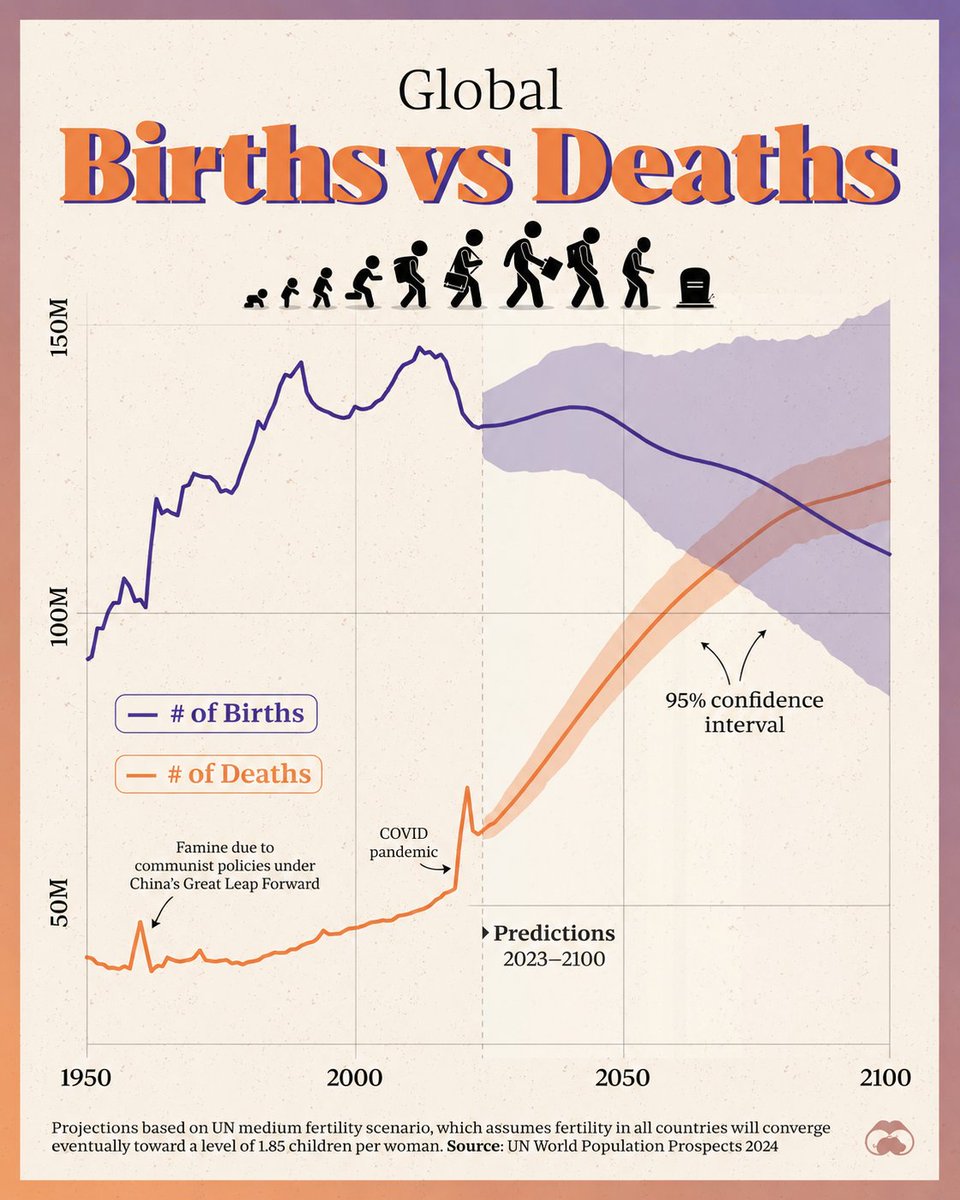
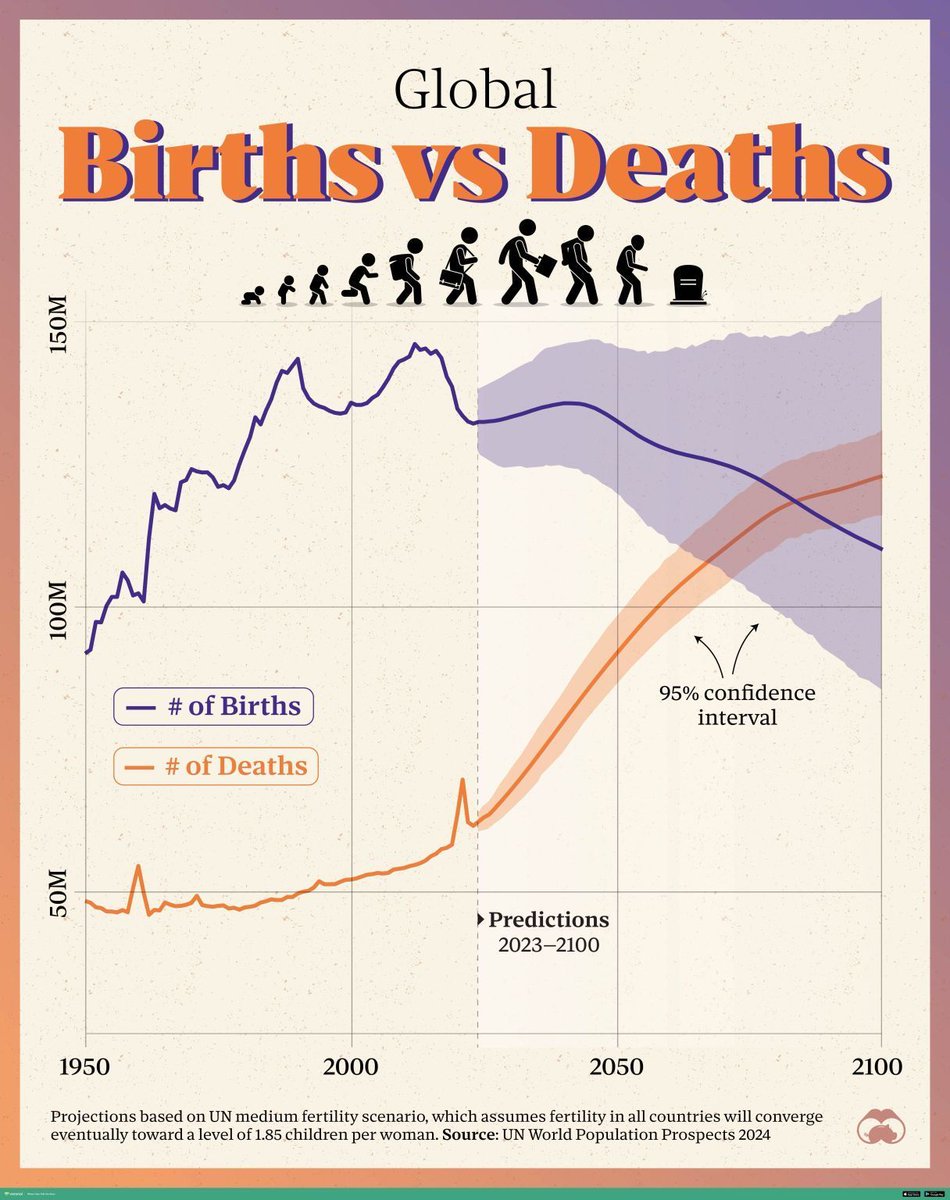
The death blips labeled

This visual shows nicely the uncertainty regarding when exactly global deaths will start to outnumber global births (and thereby kick off the shrinking of humanity). The UN data underlying this chart is much more bullish on human population than other institutes. I would be surprised if "peak-human" won't be reached before the 2080s. Source: voronoiapp.com/demographics/…
2
440
May 29
Reminder of the incredible amount of energy in a rocket

This New Glenn rocket explosion released 20% of the energy of the Hiroshima atomic bomb and that wasn't even the bad part:
→ The pad: LC-36 is the only pad on Earth that launches New Glenn and now it's gone. Over $1B to build. SpaceX needed 7 months to rebuild after a similar hit.
→ The deadline: Amazon needs 1,618 satellites up by July 30 to keep its FCC license. It has ~300. The rocket that was supposed to help fix that just blew up twice in a row
SpaceX made us believe that landing rockets on barges was a normal expectation. Turns out rocket science is hard after all. Wishing the team a speedy recovery 🚀
5
3
13
2,048
May 30
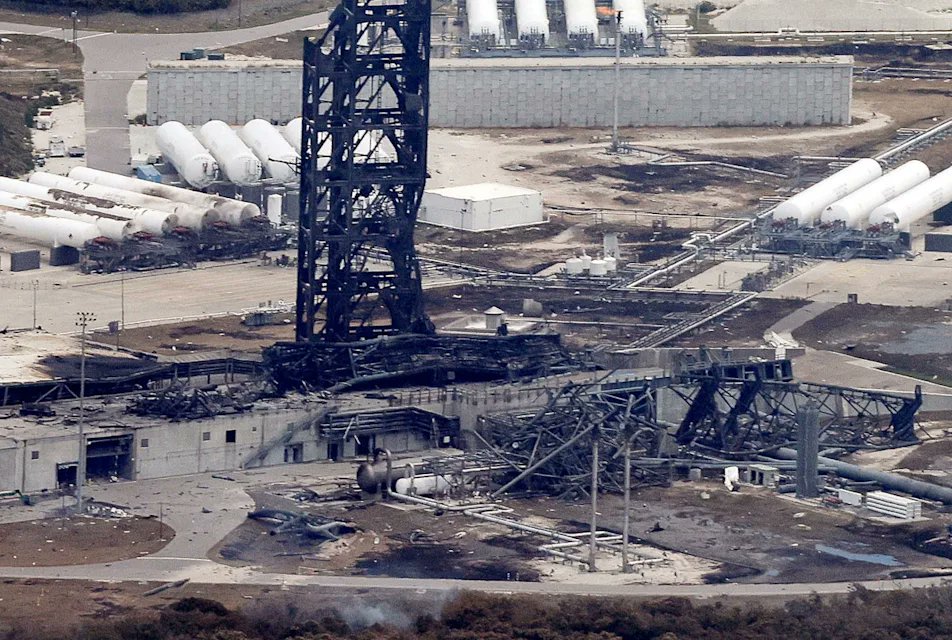
The damage to the launch pad
ALT Source: https://www.aol.com/news/public-warned-avoid-blue-origin-194650888.html
1
490
May 29
NASA was so groovy

1
12
1,508