
Decentralized Blockchain Enthusiast
Joined January 2016
- Tweets 23,526
- Following 1,436
- Followers 1,517
- Likes 22,326
3,961 Photos and videos

Pinned Tweet
Cardano: The Decentralized Outlier That Cannot Be Allowed to Succeed
Why the Coordinated Shade?
Because a truly decentralized Cardano succeeding
would shatter the comforting narrative that the future
belongs exclusively to centralized systems.
In a crypto industry — and a wider world — racing
toward consolidation, Cardano stands as living proof
that decentralization is still viable. Its Voltaire
governance delivers real on-chain decision-making to
stakers. Over 3,000 active stake pools operate with
substantial ADA participation and a Nakamoto
Coefficient around 22, meaning far more independent
operators must collude for control than on most
alternatives. The architecture actively resists capture by
any founder, whale, foundation, or external power. That
cannot be permitted.
You cannot have a genuinely decentralized option
thriving in a world being rebuilt around centralized
finance, institutional control, surveillance tech, and
captured institutions. The coordinated attacks exist
precisely because Cardano refuses to fold. Venture
funds, aligned media, and influential players who
quietly accept validator oligarchies, foundation
dominance, and regulatory-friendly pivots on other
chains suddenly discover endless flaws when it comes
to ADA: low TVL, limited stablecoin liquidity, occasional
congestion, slower deliverables. These problems are
real, yet the selective intensity and repetition expose
the deeper truth — Cardano must not be allowed to
succeed.
Its stubborn distribution of power makes it incompatible
with the emerging order. Centralized systems thrive on
coordinated narratives, rapid hype, top-down direction,
and easy integration into traditional power structures. A
network that demands broad consensus, engineered
resistance to concentration, and methodical progress
cannot be steered, acquired, or co-opted. Therefore, it
must be marginalized, ridiculed as a “ghost chain,” and
painted as perpetual underperformer. Success would
validate the original crypto promise and expose how
many projects have quietly abandoned it.
The Real Test
Legitimate criticisms exist. DeFi liquidity trails
competitors significantly, developer tooling and
adoption need urgent improvement, and marketing has
long been a weakness. These gaps deserve honest
discussion. But the orchestrated volume of negativity —
the synchronized pile-ons across platforms — goes well
beyond fair critique. It reflects an industry that has
largely been captured and now views an uncapturable
competitor as an existential danger.
A centralized world cannot tolerate a decentralized
success story. If Cardano demonstrates scalable,
secure, community-governed infrastructure that works
in emerging markets, identity systems, supply chain,
and beyond, it undermines the assumption that central
control is inevitable or superior. That threat explains the
relentless framing.
Cardano’s path forward is clear but demanding: execute
on scalability with Hydra and Leios, expand practical
real-world use cases, and strengthen governance
without diluting its core resistance to centralization. Its
focus on verifiable security and distributed power gives
it structural resilience where many captured chains will
eventually compromise or fail under pressure.
The blunt question the space avoids: If Cardano faces
this level of opposition specifically because it remains
decentralized while so many others have been absorbed
or redirected, what does that reveal about crypto’s
current trajectory? A thriving Cardano would prove the
decentralized vision is still possible. And in a world
hurtling toward centralization, that cannot be allowed.
6
2
15
1,000
Its₳llaPlay 🎭 retweeted

Jun 15
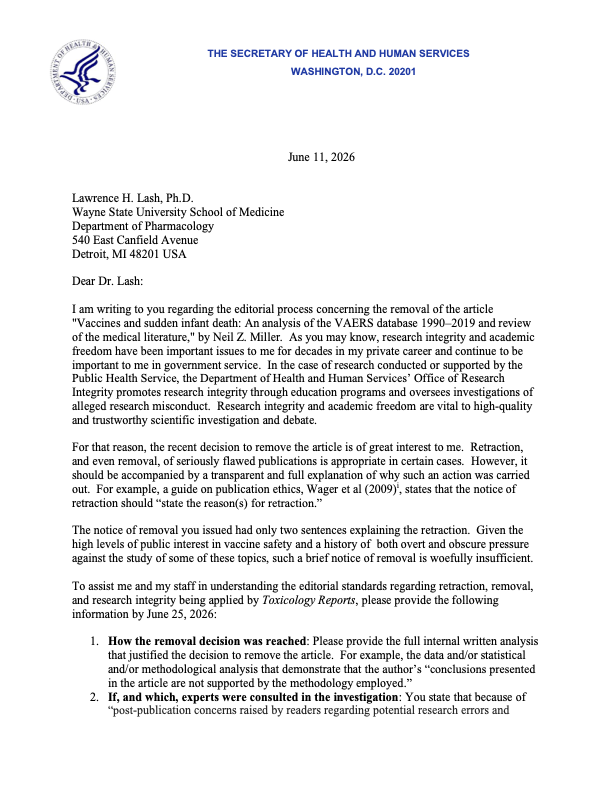
I sent this letter to the Editor-in-Chief of Toxicology Reports demanding a full explanation for the removal of a published article examining vaccines and sudden infant death.
Americans have a right to know why scientific papers are removed, who made those decisions, what evidence supported them, and whether the same standards are applied consistently.
We will restore trust in public health by insisting on transparency, accountability, and open scientific inquiry—not by asking the public to accept decisions behind closed doors.

1,151
12,512
39,902
756,882
Its₳llaPlay 🎭 retweeted

Jun 15
DReps: Proposal to fund Eternl Wallet will be active for 3 more days.
You can still vote.
The Eternl DRep Committee abstained.
Some DReps may have seen this as an obstacle to a YES vote. They can now reconsider their vote.

5
19
101
2,162
Its₳llaPlay 🎭 retweeted

Jun 15
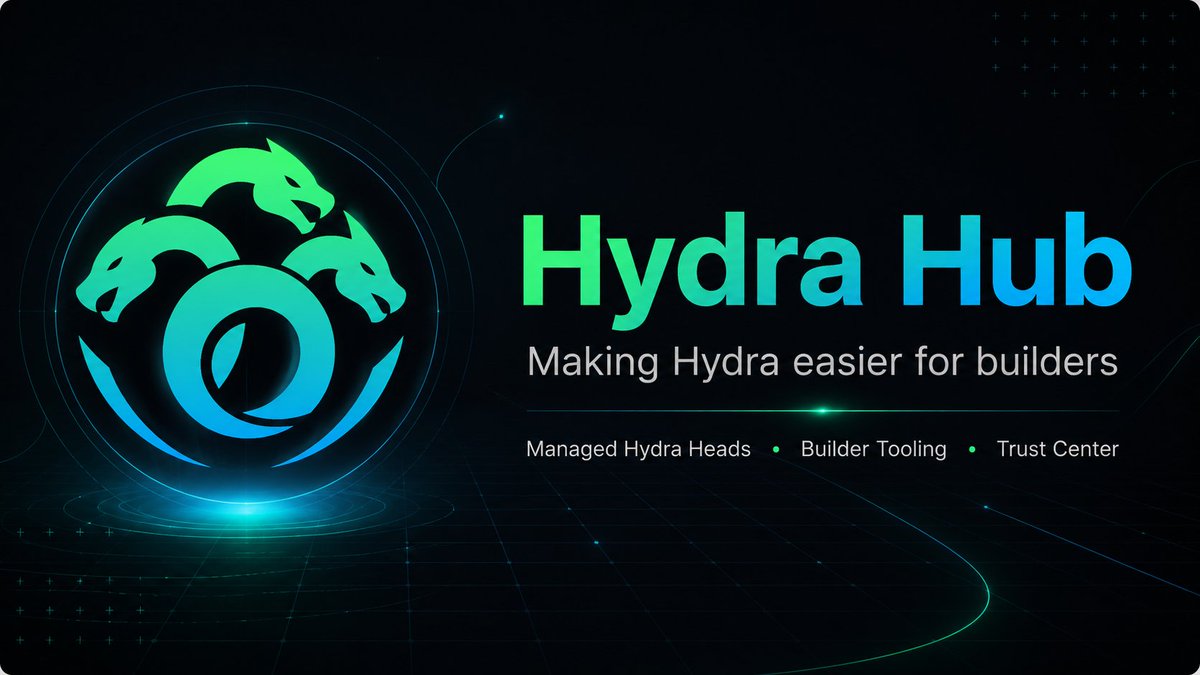
Hydra Hub is a key component for widespread adoption of Hydra!
Please vote on the Hydra proposal so that services like Hydra Hub can thrive:
Proposal - gov.tools/governance_actions…
Website - momentum.cardano.iog.io/prop…
Jun 15

Hydra brings what many real-world applications need: fast interactions, near-zero fees, and the ability to settle back to Cardano L1.
But for Hydra to reach more builders, we also need better adoption infrastructure.
That is why we are building Hydra Hub. Our goal is very simple -> To help builders use Hydra more easily, without needing to understand or operate the entire infrastructure from day one.
11
32
2,574

Its₳llaPlay 🎭 retweeted

Jun 15
Why is this Cardano Critical Integrations V2 phases important for the ecosystem? @gmanroney explains:
According to Gerard Moroney, COO of @IOGroup Cardano Critical Integrations V2 matters because it provides clarity the ecosystem needs to move forward efficiently.
As he put it:
"I really liked the certainty that Pentad and CCI phase 1 has offered to us and I'm really looking forward to CCI phase 2 because the same certainty that's there, the same value that we're creating."
6
9
82
6,995

Jun 15
This is not America... Just Sad...
Long Live Freedom Of Speech!

27
Its₳llaPlay 🎭 retweeted

100,000 transactions sound impressive.
But watching a live police forensics workflow run on Cardano is the real story.
@trivolvetech’s forensic management system is being used for evidence handling, audit trails and forensic data integrity.
- Not a demo.
- Not a pitch deck.
- Not a vague enterprise pilot.
A real deployment.
This is the type of Cardano adoption we should be talking about more.
5
43
215
4,392
Its₳llaPlay 🎭 retweeted

Jun 14
Be honest, since you started holding $ada have you
48%
Gained more than you lost
52%
Lost more than you gained
27 votes • Final results
12
2
12
1,518
Jun 15
One of the truest videos I've ever uploaded.
Jun 15

American colleges have been wasting the most important years of young people’s lives.
-They become indoctrinated
-Party
-& get a diploma
Only to discover a few years later how little value that diploma actually has.
9
Its₳llaPlay 🎭 retweeted

Jun 15
American colleges have been wasting the most important years of young people’s lives.
-They become indoctrinated
-Party
-& get a diploma
Only to discover a few years later how little value that diploma actually has.
16
194
795
11,338
Jun 14
Hurry up and put this on all blockchains before...

84.4% of cancer patients taking ivermectin declared COMPLETE REMISSION, TUMOR SHRINKAGE, or HALTED TUMOR GROWTH
The LARGEST human ivermectin cancer study EVER conducted is now PEER-REVIEWED and PUBLISHED by the International Institute of Anticancer Research.
We are WINNING.
6
Its₳llaPlay 🎭 retweeted
Jun 13
Thank you, @DNIGabbard, for exposing U.S. funded biolabs around the world. The American people deserve the truth.
Jun 12

Today, I’m releasing never before seen intelligence revealing new evidence of past US government funding for more than 120 biolabs in over 30 countries, including Ukraine.
In support of President Trump‘s Executive Order to end federal funding of dangerous gain of function research around the world, and increase transparency and accountability, ODNI will continue working with partners across the Administration to identify where these labs are, what pathogens they contain, and what “research” is being conducted.
odni.gov/index.php/newsroom/…
2,810
18,305
80,662
1,691,275
Jun 14
The Blockchain can fix this if you let it.
If we do not put the government on a Blockchain stuff
like this really can happen and did...
Jun 14

🚨BREAKING: Tulsi Gabbard just appeared on Fox and confirmed with the American people that Obama and senior officials around him attempted a COUP!
This is TREASON!
HOLD THEM ACCOUNTABLE!!!
This is possibly the most alarming act of treason since the Lincoln assassination.
1
8
Jun 14
😮
Jun 14

JUST IN: $150,000,000 worth of shorts liquidated from the crypto market following US-Iran peace agreement.
1
25
Jun 14
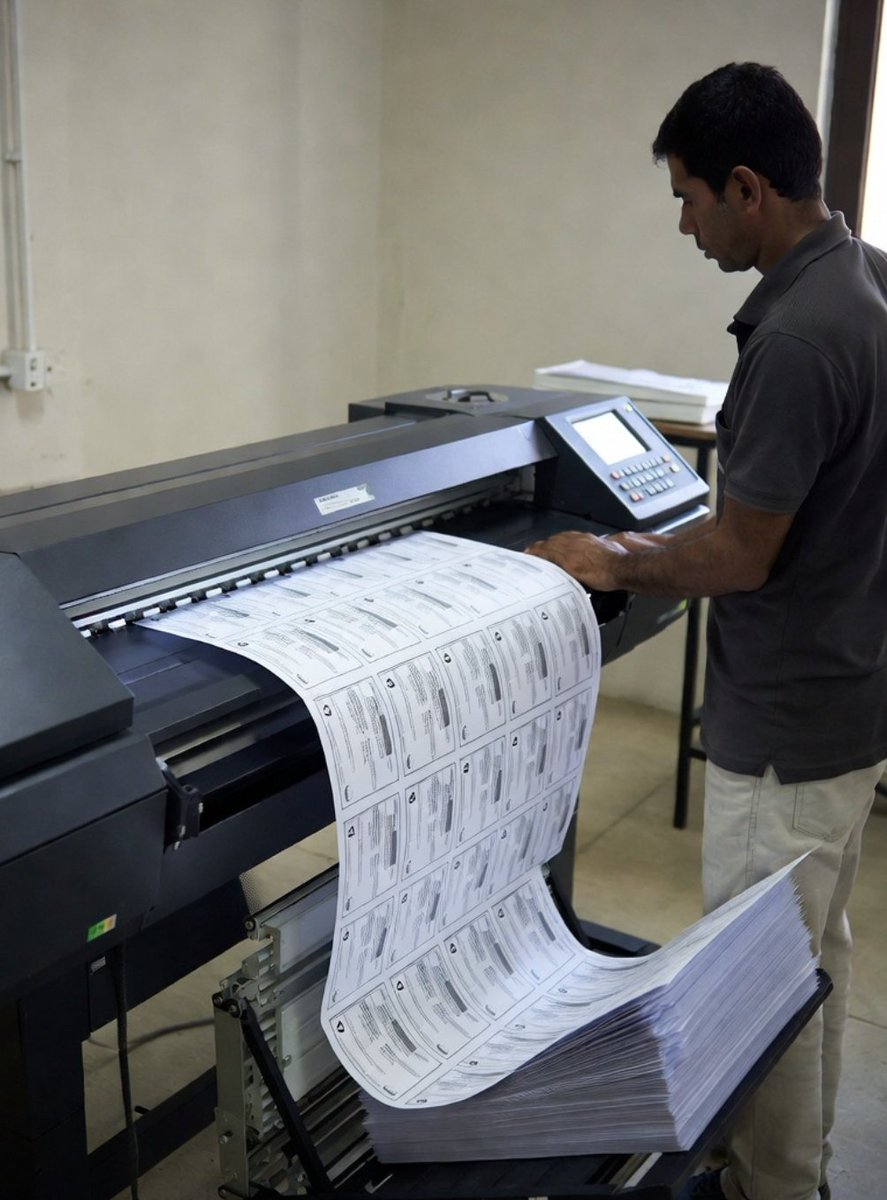
Believe it or not this is why Blockchain technology was invented. #Bitcoin
Because governments can't be trusted when it comes to
printing money.
And maybe they can't be trusted when it comes to this.
Jun 14

This threat was allegedly so dangerous that that the farm and adjoining properties were seized by armed police for 52 days before 1000 gunshots rang out in the dark of night.
Unbelievably, the very next day that threat seemed to no longer exist?
Make it make sense!
1
22
Its₳llaPlay 🎭 retweeted

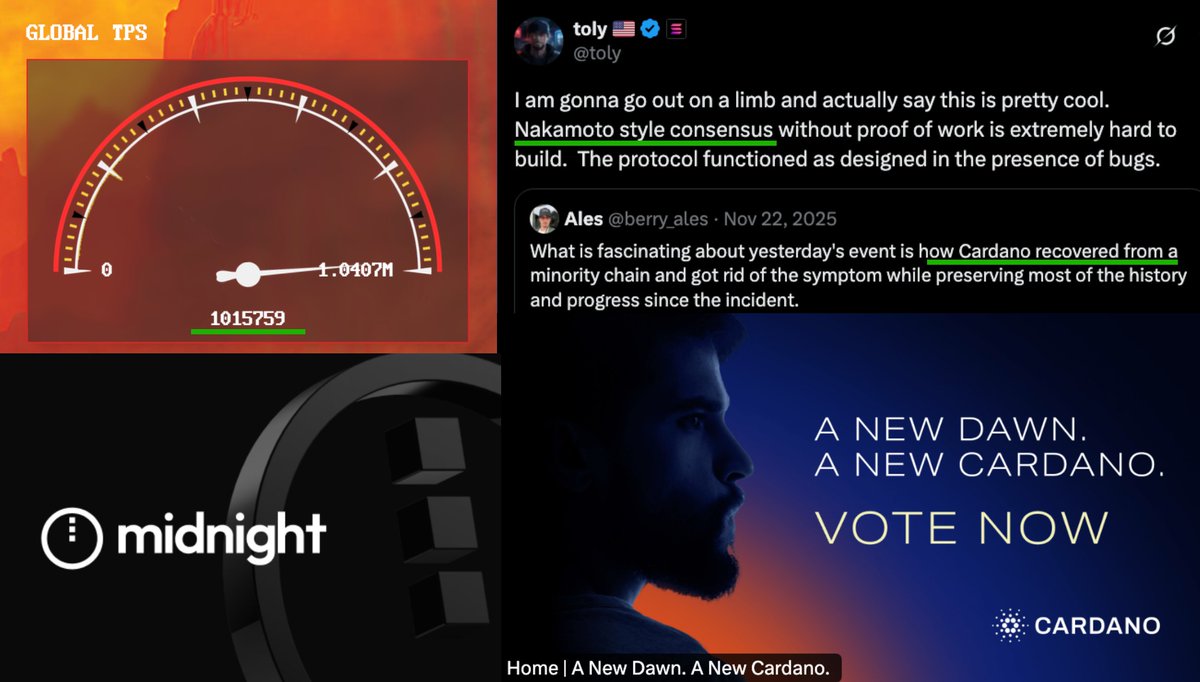
Four major engineering feats Cardano accomplished in the blockchain space:
✅ Layer 2 scaling capable of 1 MILLION TPS
✅ Proof of Stake self healing Nakamoto Consensus
✅ Full on-chain governance by the Ada Holders
✅ Privacy with selective disclosure
Huge thanks to @IOGroup 🫡
8
71
326
6,606
Its₳llaPlay 🎭 retweeted

Jun 14
💥NEW: CNN’s Fareed Zakaria *DELIVERS BRUTAL TAKEDOWN* of California’s “FAILING MODEL OF GOVERNANCE”💥
“The frustration is real and JUSTIFIED… it is a case study in how a rich society can spend more and more — while producing less and less of what its ordinary citizens need.”
333
1,595
7,910
1,427,509
Its₳llaPlay 🎭 retweeted

Jun 14
The team released the first Node 2.0.0 Alpha, introducing the groundwork for the Cardano ↔ Midnight bridge and upgrading the ledger architecture. Most people saw "alpha release" and scrolled past, but this is the kind of infrastructure work that matters long term
@MidnightNtwrk
1
7
20
268