
Infrastructure to collect, transform, and deliver customer data everywhere it's needed in real time.
Joined September 2019
- Tweets 1,991
- Following 1,781
- Followers 1,695
- Likes 1,581
857 Photos and videos
Pinned Tweet

16 May 2024
🆕 Introducing two new features for RudderStack Profiles: Cohorts and Activations
Bring business teams closer to the data than ever before without compromising control.
Read the announcement to get more details and check out an interactive demo 👇
bit.ly/3QIDHin
1
4
1,025
Jun 4
Introducing Lookout: AI-powered analytics and instrumentation for RudderStack. Ask questions about your data, build dashboards, generate instrumentation PRs, all through natural conversation. No SQL. No tickets. No waiting.
Read the blog to see a demo → bit.ly/3Q2NiDB
2
77
Jun 3
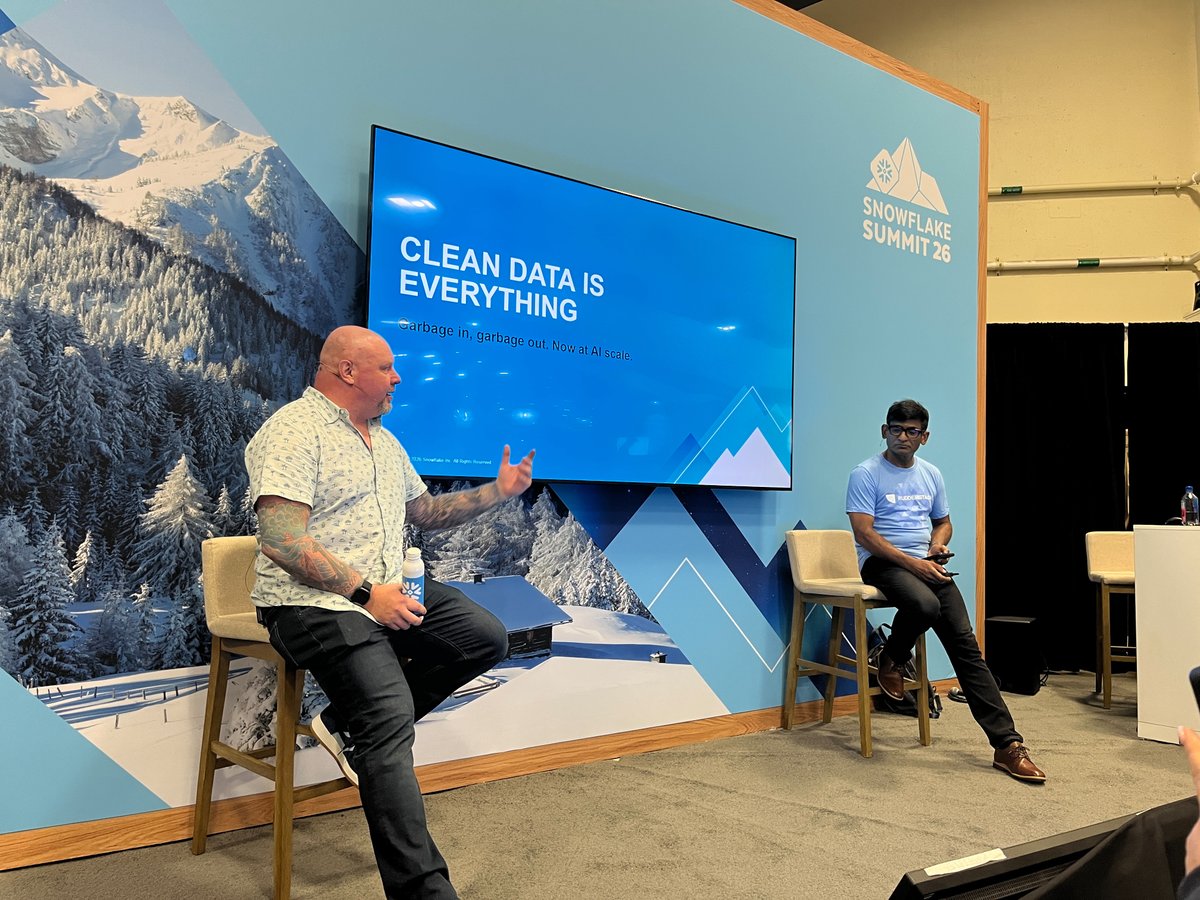
What a session! 🙌
Our COO @VenkatNagaswamy joined @Glassdoor at #SnowflakeSummit to talk bridging the dev/data divide with AI agents, and the room had a lot to say.
Still at booth #3007 if you want to keep the conversation going.
58
Jun 2
The data team shouldn't be the bottleneck between data, answers, and activation.
Today we're launching RudderAI: agentic power across the entire customer data lifecycle.
Get all the details → bit.ly/4alNNQ5
41
Jun 2
At Snowflake Summit this week? We're sponsoring a table at Club @Hex — coffee, breakfast, evening events, and good conversations about all things data 📊
Stop by between sessions. Sign up here → 🔗 bit.ly/4nVOJAd
#snowflakesummit
77
Jun 1
Snowflake Summit starts today! 🎉 Find us at Booth #3007.
Tomorrow at 3:30, our COO @VenkatNagaswamy takes the stage with @Glassdoor: "Bridging the Dev/Data Divide with AI Agents."
Come say hello or catch the talk 🔗 bit.ly/4tT9ezd
#snowflakesummit
61
May 22
AI will kill the analytics UI. But the infrastructure underneath (semantic models, ID resolution, data quality, governance) is more important than ever.
The casualty isn't analytics. It's the UI vendor that built a moat out of dropdowns.
Read the blog: bit.ly/4v1Yi35
1
43
May 18
Agents may finally close the analytics-to-activation gap.
Describe the outcome in plain language → agent queries, segments, and activates.
Near-term: operators prompt, agents act.
Next: agents that don't wait to be asked.
Read more → bit.ly/3Rclg9b
1
39
May 12
The “one context layer” idea breaks in the agentic era.
Event meaning lives upstream in pipelines and code. Centralized catalogs create copies that drift.
Agents need fresh context from the source, not one place.
Distribute meaning. Centralize policy → bit.ly/4npIUuR
37
May 8
SaaS isn't dying overnight. But the moat is eroding, from both sides:
As agents replace UIs, feature-heavy products become friction. What matters now is the infrastructure underneath: clean data, identity, and reliable pipelines.
See why → bit.ly/4niVWu6
69
May 7
AI agents aren't just assisting with data infrastructure. They're becoming the control plane.
The pattern is clear:
Write → Config CLI
Read → MCP
Separate them, and agents operate safely and reliably.
See how → bit.ly/49l1b6B
62
May 5
Analytics and activation were split across tools, data, and teams. That gap slowed everything down.
Agents change that. One instruction can query the warehouse and trigger activation.
But only if your data is consistent.
See how → bit.ly/4ut761B
53
Apr 30
AI's biggest impact isn't automation. It's speed of decision.
Cart checkouts drop 20%. A week later, you've found the cause. The window already closed.
Unified customer data lets agents detect, reason, and act before that happens.
See how → bit.ly/4t9O2Vg
30
Apr 29
The data community is focused on what AI agents consume. The harder question is what they produce and how to make it safe.
Decision traces are just events, and the infrastructure to handle them already exists.
Check out our latest post for details → bit.ly/4cERamW
39
Apr 28
Agents are removing martech bottlenecks.
Infrastructure, tracking, and analytics loops that took weeks now happen in hours, with PRs generated directly from intent.
Only works if the data is consistent.
See how → bit.ly/48b9Rfw
58
Apr 27
AI agents don’t remove the need for a warehouse. They expose bad data faster.
Claude can query across tools, but it can’t fix mismatched IDs or schemas.
Consistency, not centralization, is what makes agent workflows work.
Why this matters for your stack → bit.ly/4sZuXVG
42
Apr 23
AI can query across tools. It can’t fix inconsistent data.
If user IDs, schemas, and events don’t match, cross-tool workflows break fast.
Consistency, not centralization, is what makes AI usable
Read the blog → bit.ly/4vS4BYk
65
Apr 7
AI’s biggest impact isn’t automation. It’s speed of decision.
Most teams take days to go from signal to action. With unified context, that loop shrinks to hours.
That’s the difference between lost revenue and recovery.
See how → bit.ly/4mfBlpT
1
47
Mar 25
Better metadata won’t fix AI data pipelines.
If agents still output SQL, you get stateless execution, no contracts, and governance gaps.
The shift: Agents produce intent, not SQL. Compile it into reliable pipelines.
See how → bit.ly/3NMqZB9
1
94
Mar 12
Incremental SQL isn’t one problem. It’s nine.
Most tools solve time-grained incrementality for dashboards.
Customer 360 requires entity-grained incrementality with identity merges.
That’s where pipelines start breaking.
See the framework → bit.ly/4buED4R
52
Mar 9
Fan data across nine teams was scattered across web, app, streaming, ticketing, and merch.
The CFL unified it with RudderStack, Snowflake, and Braze.
Result:
9× higher conversions
2× more total conversions
3× better retention
Read how → bit.ly/4pN04md
39