Knowledge from data for everyone. Founder, @dataforin. Book: "Whole Numbers & Half Truths" (Westland '21).

Joined July 2011
715 Photos and videos
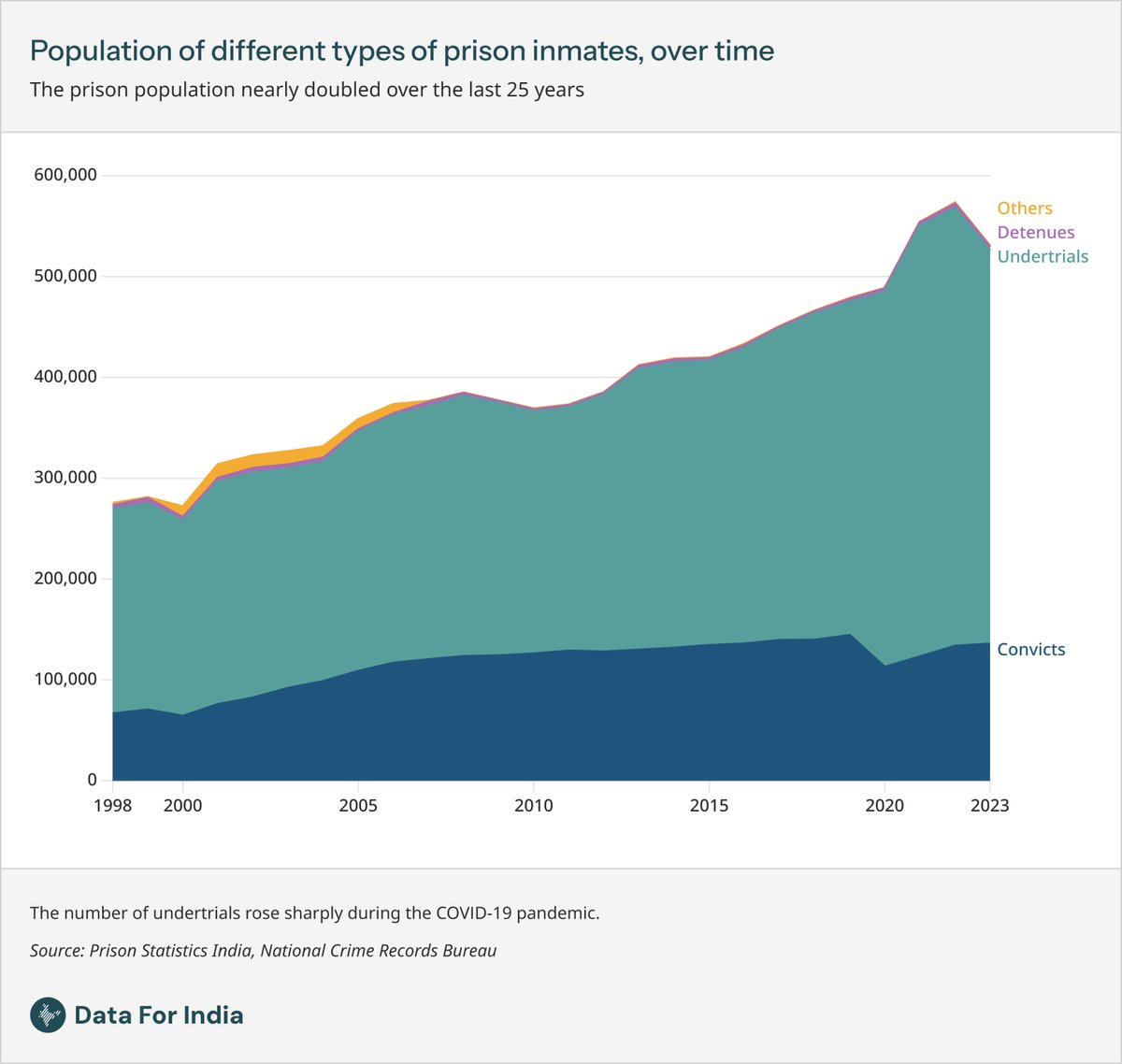
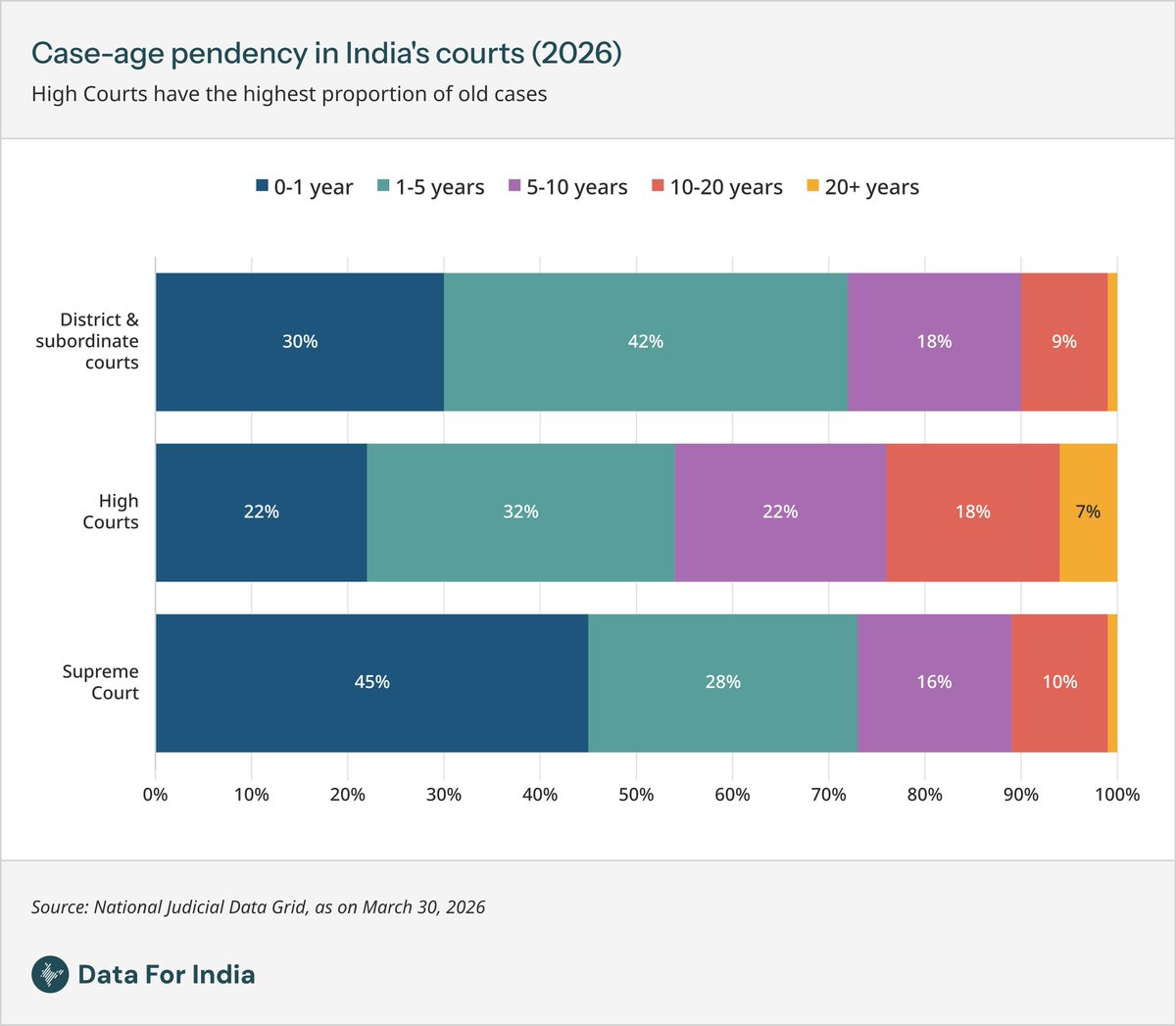
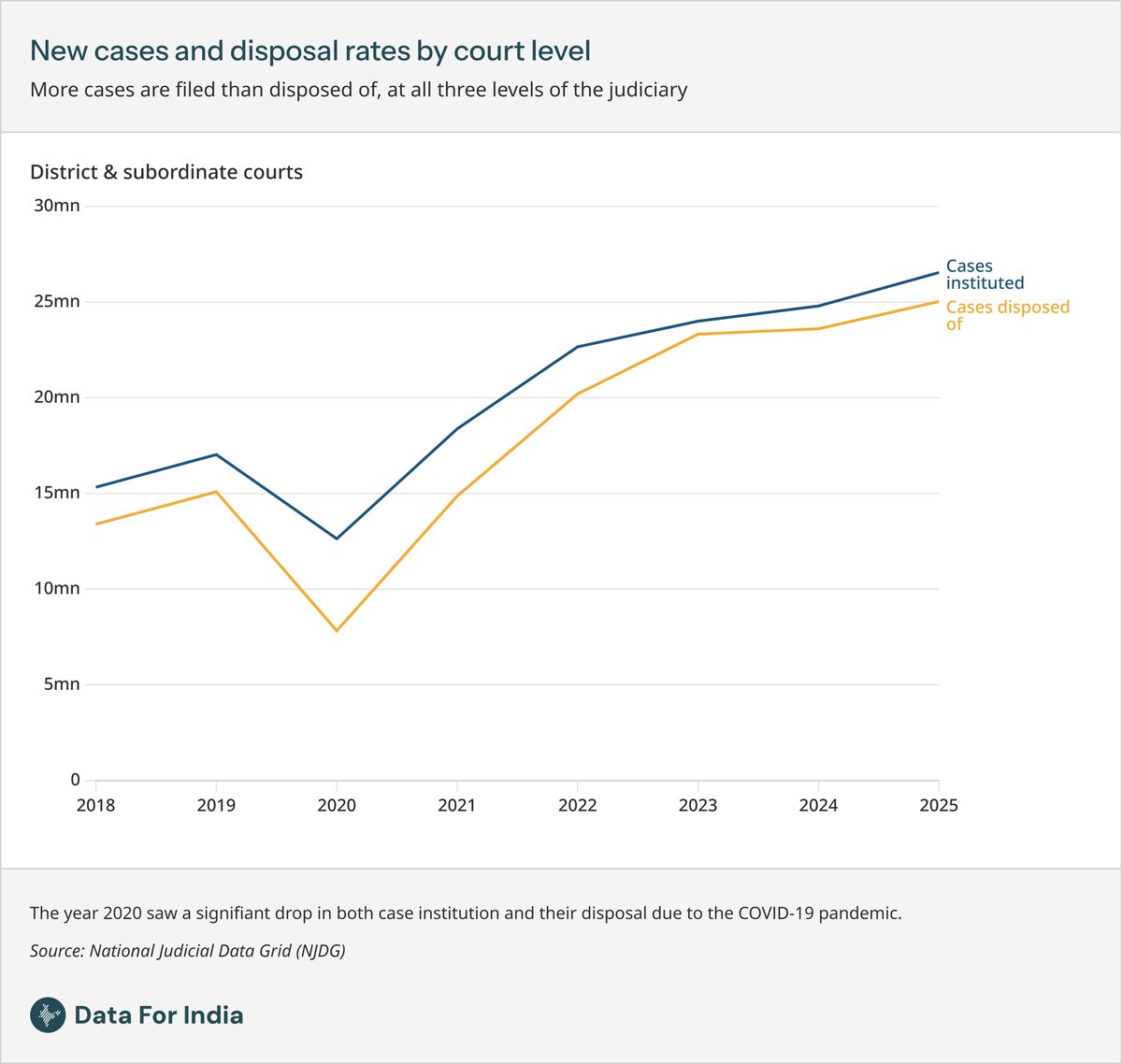
New on @dataforin: my colleagues Ameya Bokil and Apoorv Anand assembled the first public dataset of India's prison population to understand how many are incarcerated, where, and for what. Part of our new Law vertical dataforindia.com/prisons/
3
63
104
6,269
As always with our work: it is free to use, share and cite, with credit. This is a valuable dataset and we'd be happy for this work to be widely used in the law and policing communities dataforindia.com/using-our-w…
5
719
People who pull over when it starts raining to get into their full rain shirt pant/ raincoat that they had neatly folded into their bike's glove compartment: you are the only true adults and let no one tell you otherwise.
2
79
3,925
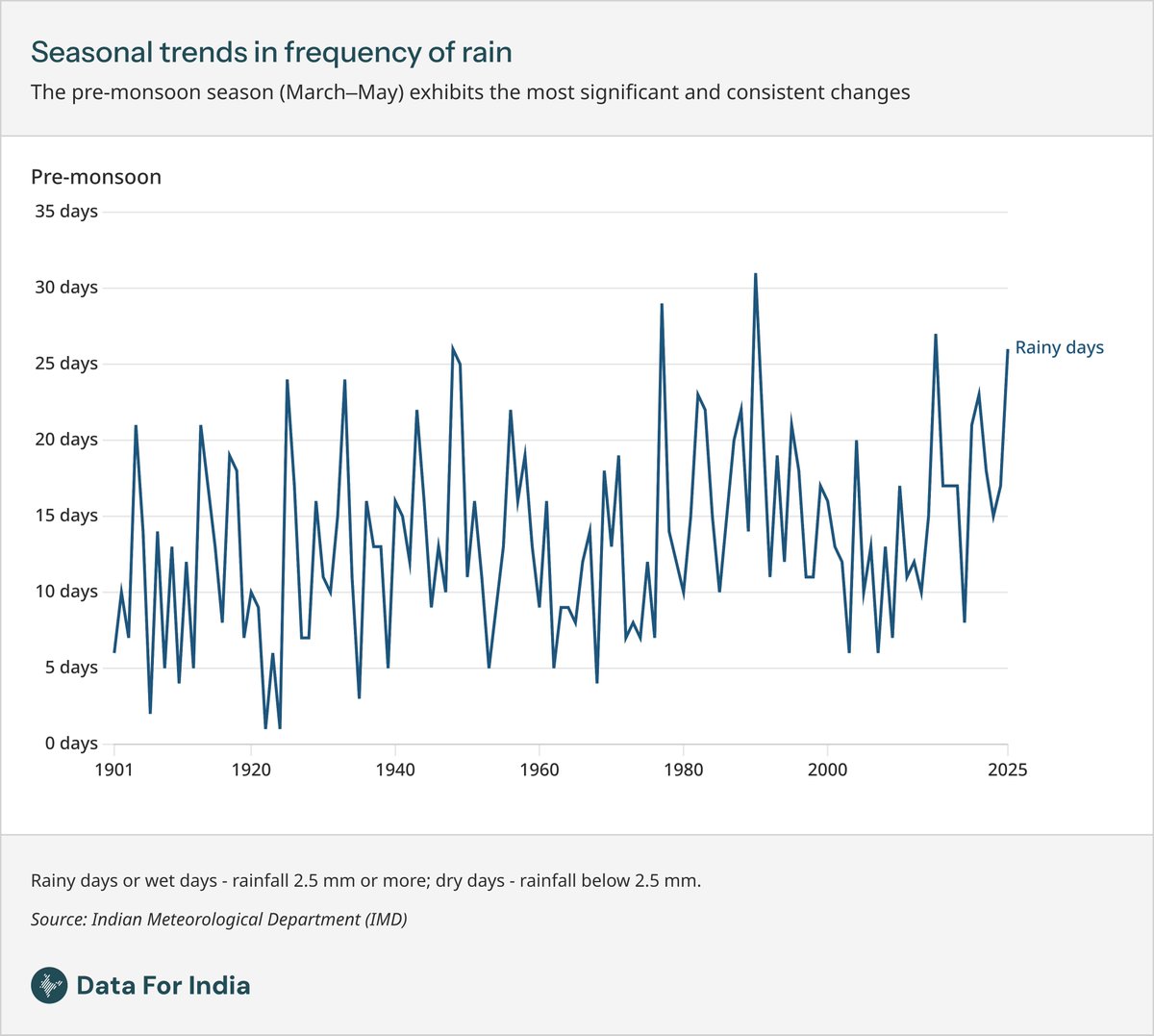
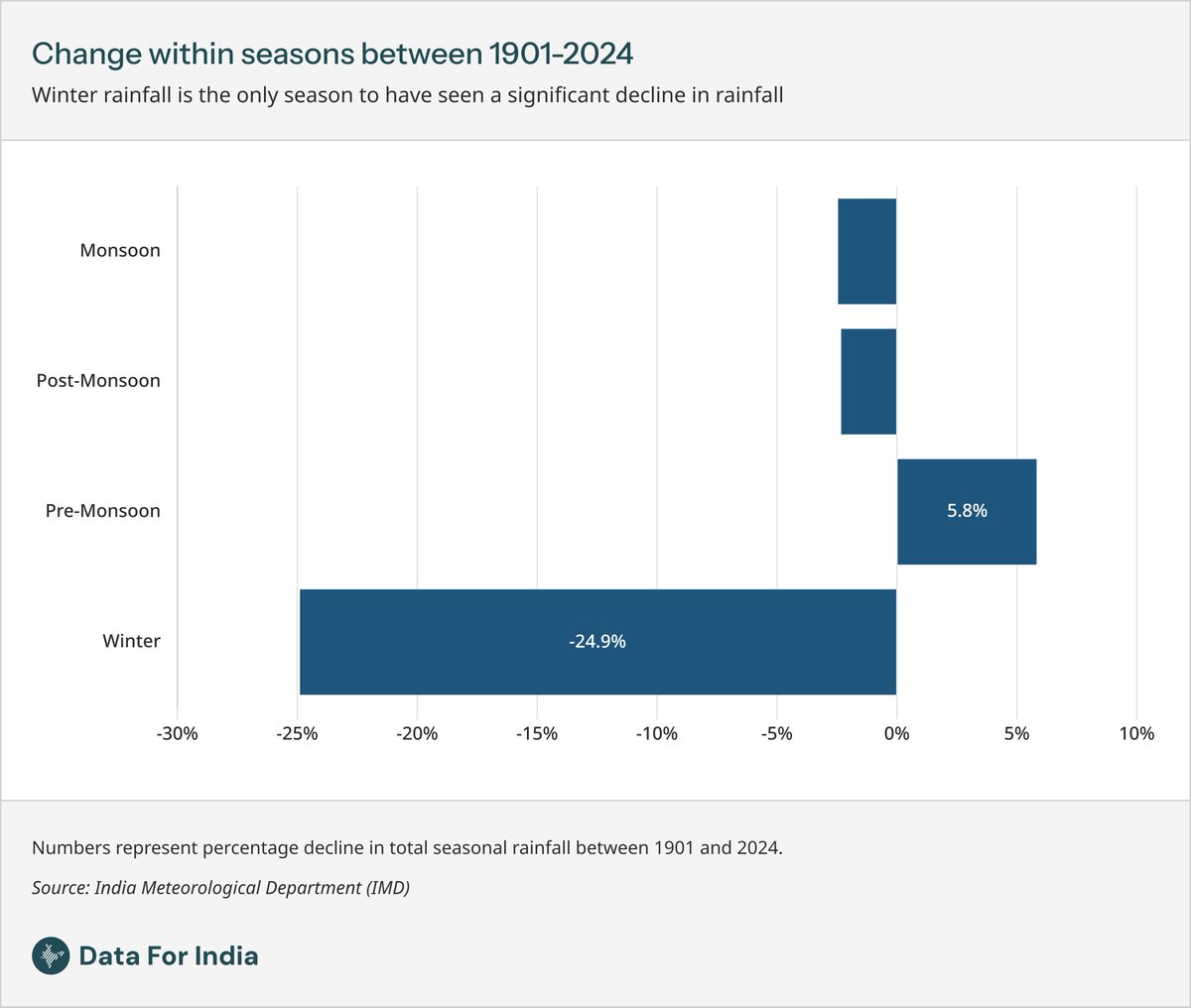
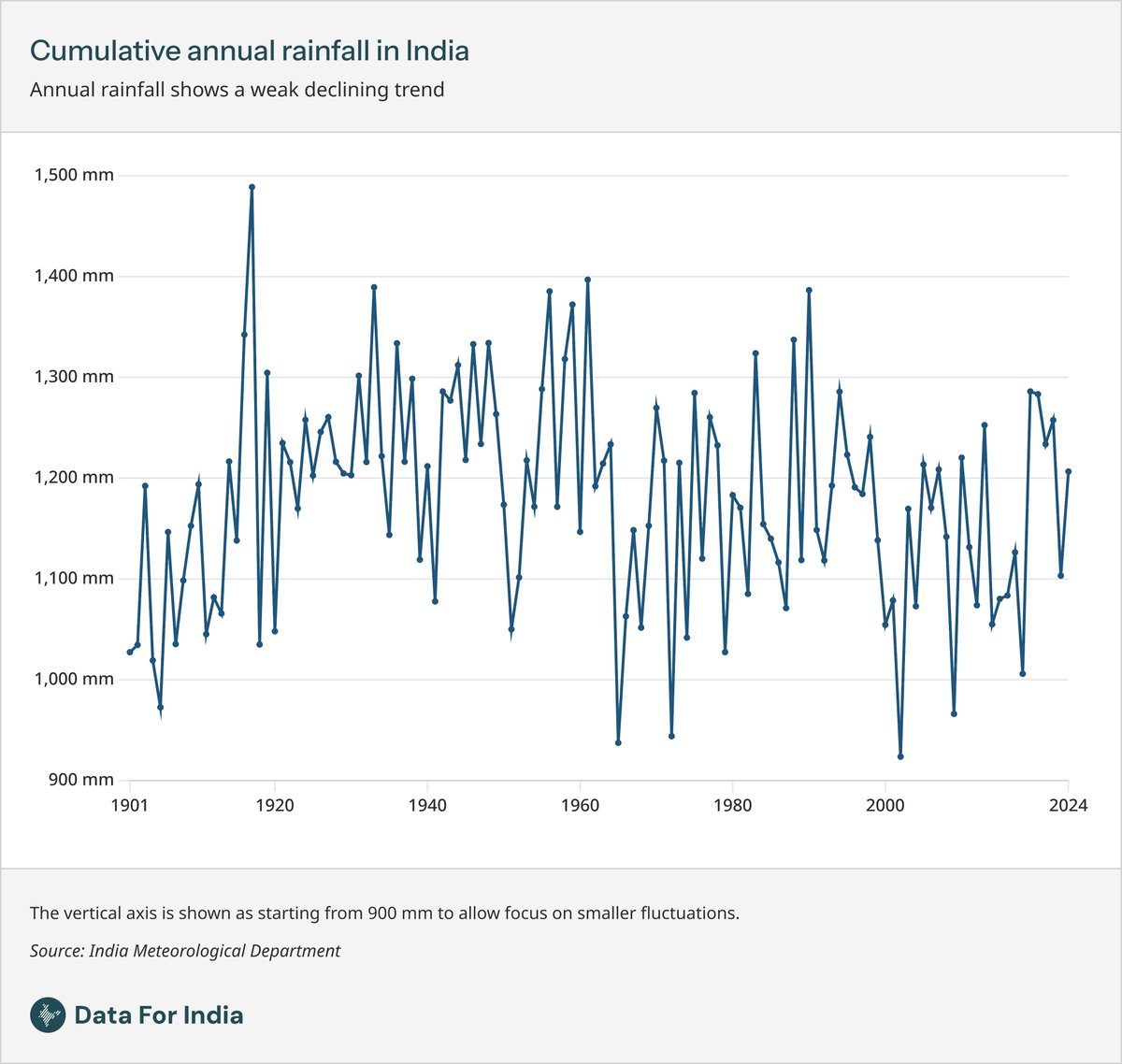
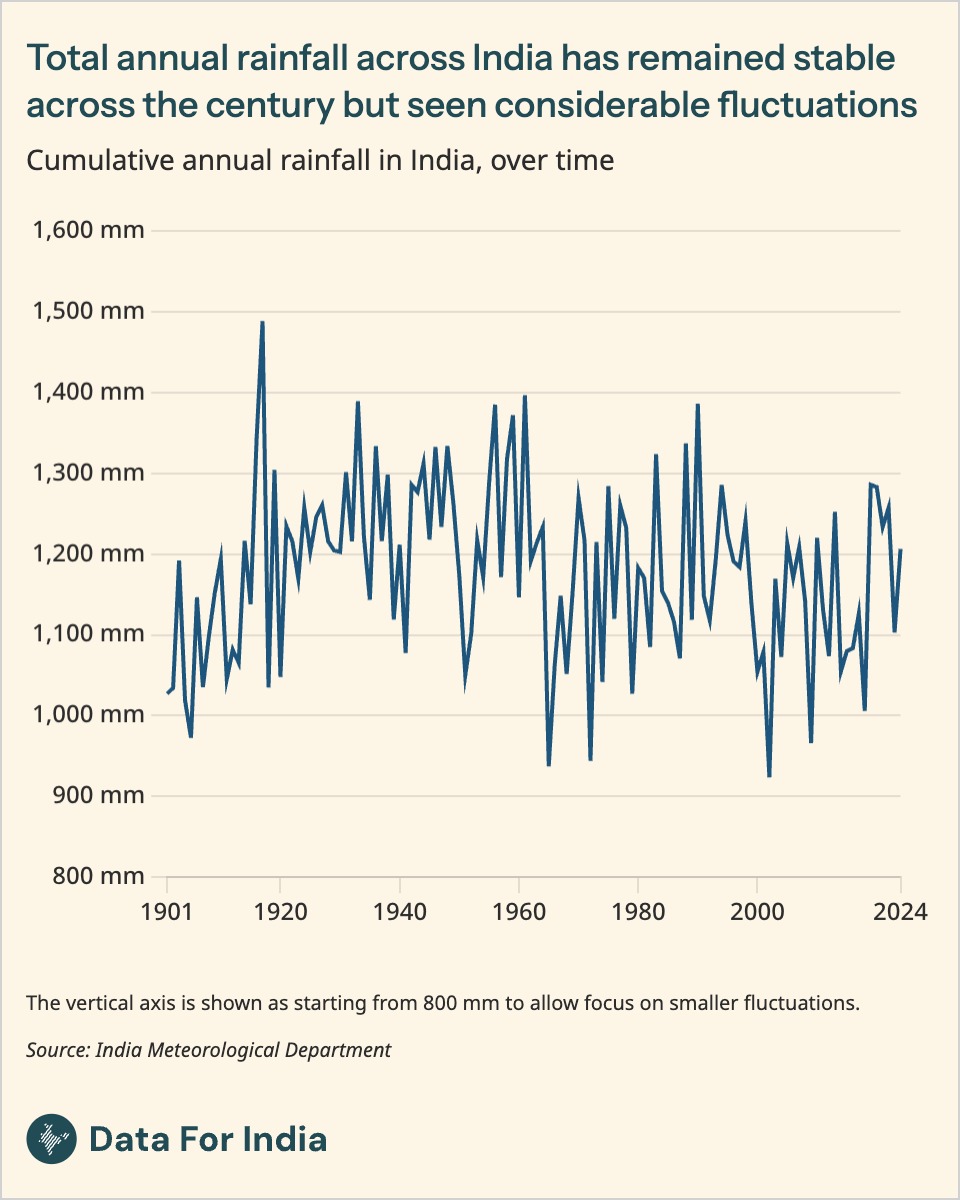
Unlike temperature trends, that rise clearly upwards, rainfall in India has not increased or decreases in aggregate terms over time. That apparent stability, however, hides some important variations and fluctuations
Rainfall shapes nearly every dimension of India's economy, ecology and food systems. Rain-fed agriculture occupies over half of India's cultivated land, making the timing and distribution of rainfall critical for agricultural production, rural livelihoods and national food security. Unlike India's temperature trends, where we see a clear increase in average temperatures over time, the total annual rainfall across India has remained broadly stable since the early twentieth century. On average, India receives between 1,000 and 1,300 mm of rainfall over the course of a year based on the all-India long-term average calculated over the period of 1901-2024. Over the past century, there have been considerable year-to-year fluctuations, but the cumulative annual rainfall has remained broadly stable, showing only a weak and statistically insignificant decline. Rainfall data in India comes from observational records maintained by the India Meteorological Department (IMD). These datasets combine observations from thousands of rain gauges across India and extend back to 1901. Despite this stability, rainfall is becoming more concentrated and erratic in several regions. How often has India’s annual rainfall diverged from long-term “normal” levels? Read Juhi Chatterjee’s analysis to find out: dataforindia.com/long-term-r… #Rainfall #Rain #Climate #India #DataForIndia
5
17
2,117
New on @dataforin: at the broad national level, we know that temperatures are rising. But if you break down the data at the regional level, what parts of the country are heating slower and faster? Using IMD's gridded data, my colleague Juhi's work for us dataforindia.com/regional-te…
4
23
60
7,159
Rukmini S retweeted
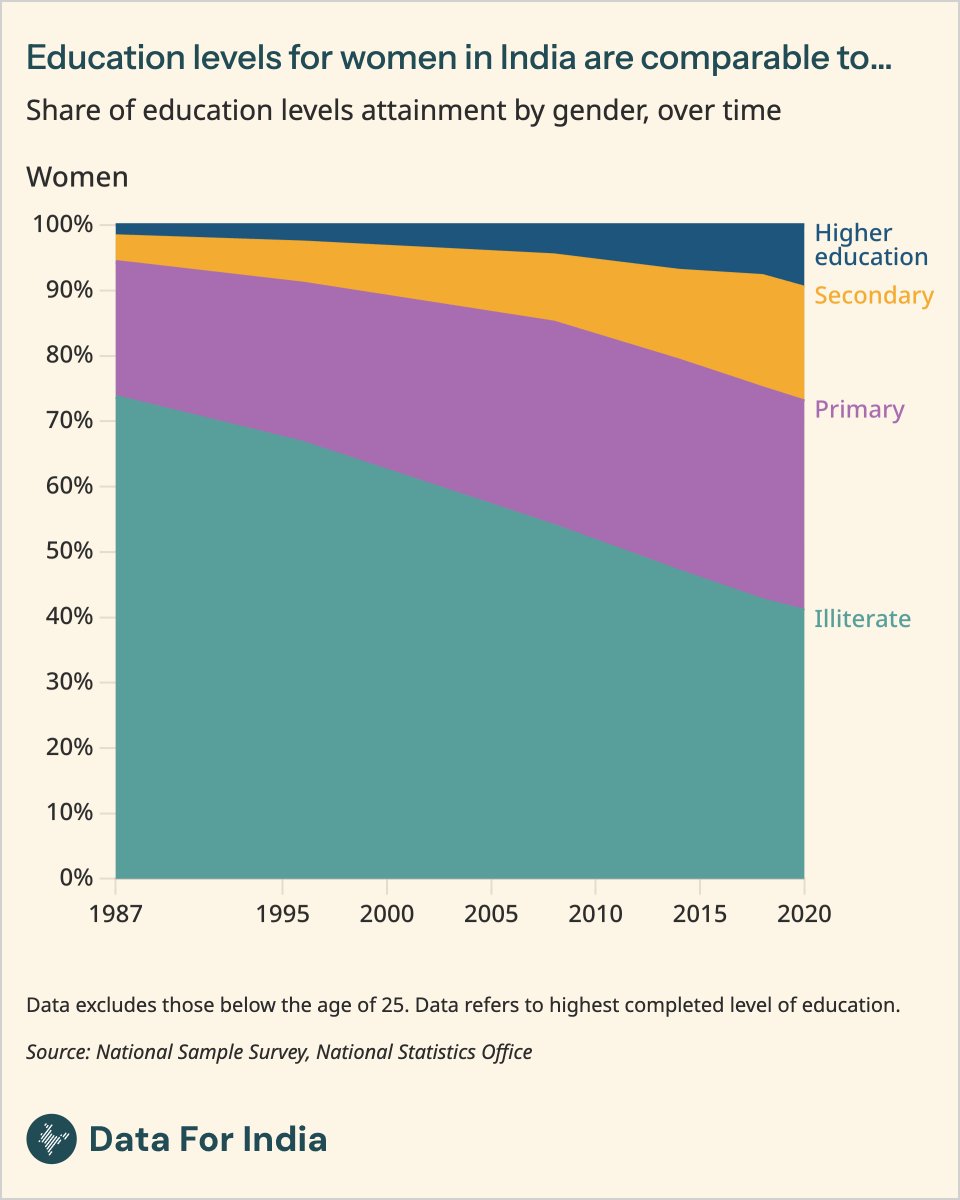
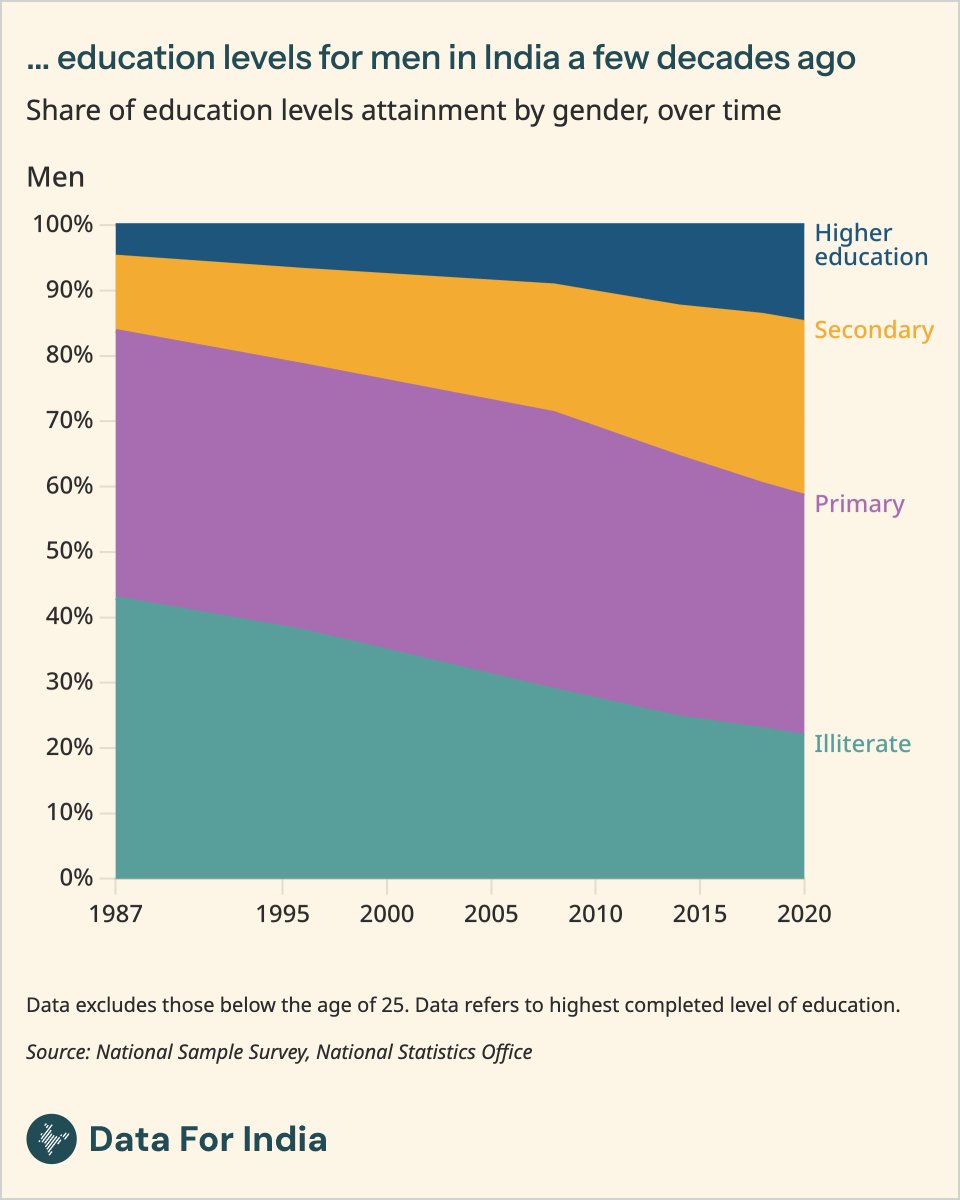
Education levels in India have improved consistently over time. The relative share of those who are illiterate has declined sharply over the years, while the share of those who go on to get a higher education has risen. However, the nature of improvement in educational attainment for women has been different from that of men in India. Illiteracy rates have fallen for both women and men, but gender differences persist. Decades of progress still separate women and men; illiteracy rates among women in 2020 were nearly equal to what they were for Indian men in the 1980s. At the higher education level, one in ten women had attained a higher education as of 2020, equivalent to the progress made by men by the late 2000s. But the data shows that these gaps might close in the future. Among younger Indians in their twenties, the education levels are comparable among men and women. #Education #Literacy #HigherEducation #School #College #India #DataForIndia
2
10
20
1,559
Many of you have told me that a newsletter is the way you keep track of new work. We hope you enjoy The Roundup, our new monthly newsletter that captures some of our work, tells you how you can better use the platform, and shares a little about what our team is thinking.
Introducing The Roundup - Data For India’s new monthly newsletter! Over the last couple of years, we’ve published dozens of in-depth analyses, built hundreds of new charts and built features to make our work easy to discover, share and reuse. But if you’re not checking the platform regularly, it might be easy to miss what’s new. The Roundup is our way of keeping you in the loop, a simple monthly note that brings together: 📝 The latest work we’ve published 🖥️ New platform features and updates 📊 One chart that our team thought you shouldn't miss Issue #1 is out now; every new issue will land in your inbox on the last Friday of every month. Read the first issue and subscribe here: dataforindia.com/the-roundup…
1
1
13
1,795
Just precisely what we're trying to do - make data accessible! Thanks Deepa.
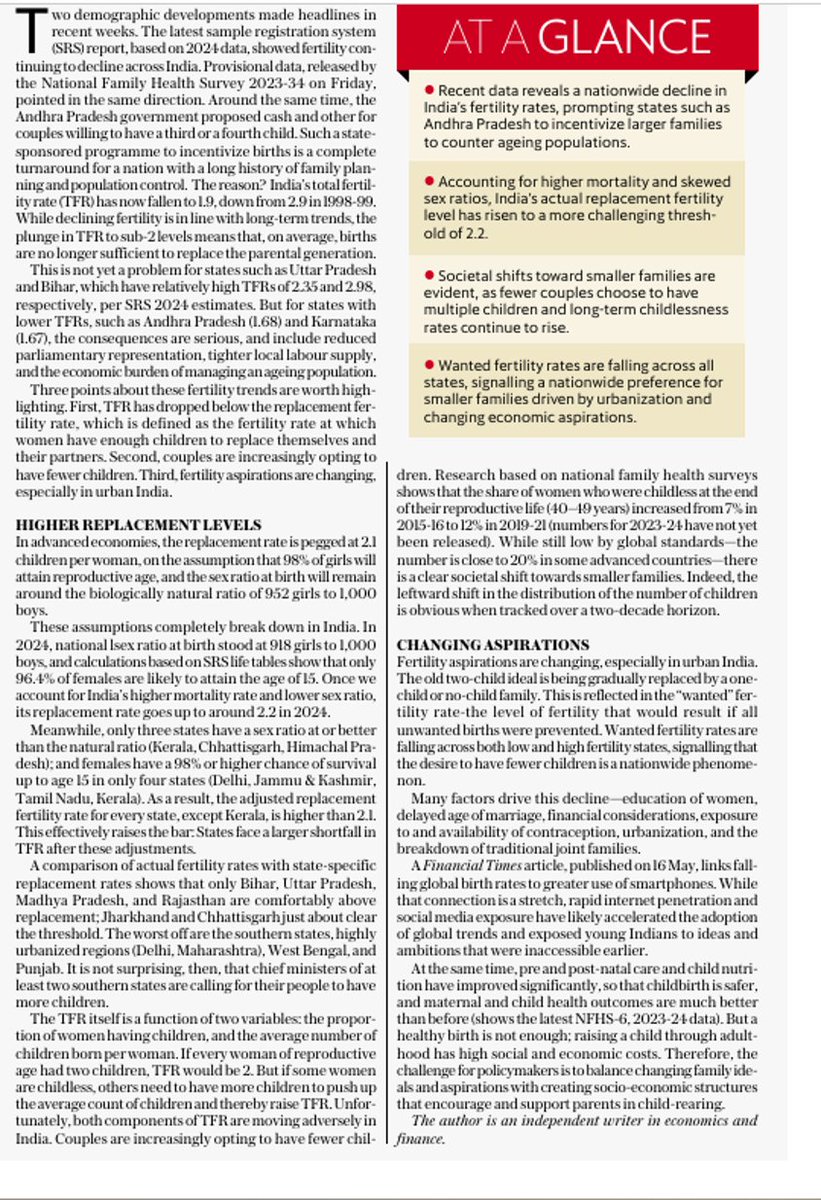
Why India'sfertility problem may be worse than we thought.. my piece in Mint today. Grateful to Prof Jesús Fernández-Villaverde @JesusFerna7026 for his wonderful explanation of TFR. Thank you @dataforin for making data easily accessible
3
30
2,182
Rukmini S retweeted
⏳ Just 1 month until #VizChitra2026! What happens when the people who find data, shape data, and show data are finally in the same room? Come find out. Join us for talks, workshops, dialogues, and an exhibition. 📅 3–4 July, 2026 📍 Bangalore 🎟️ tickets.vizchitra.com
1
474
Rukmini S retweeted
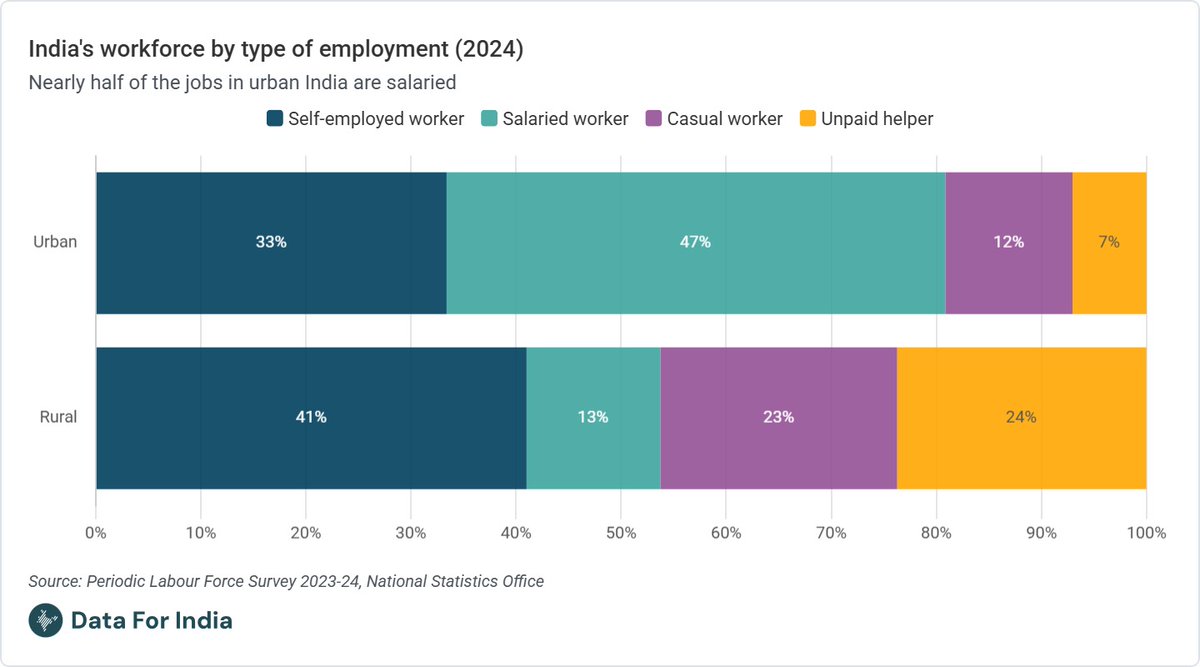
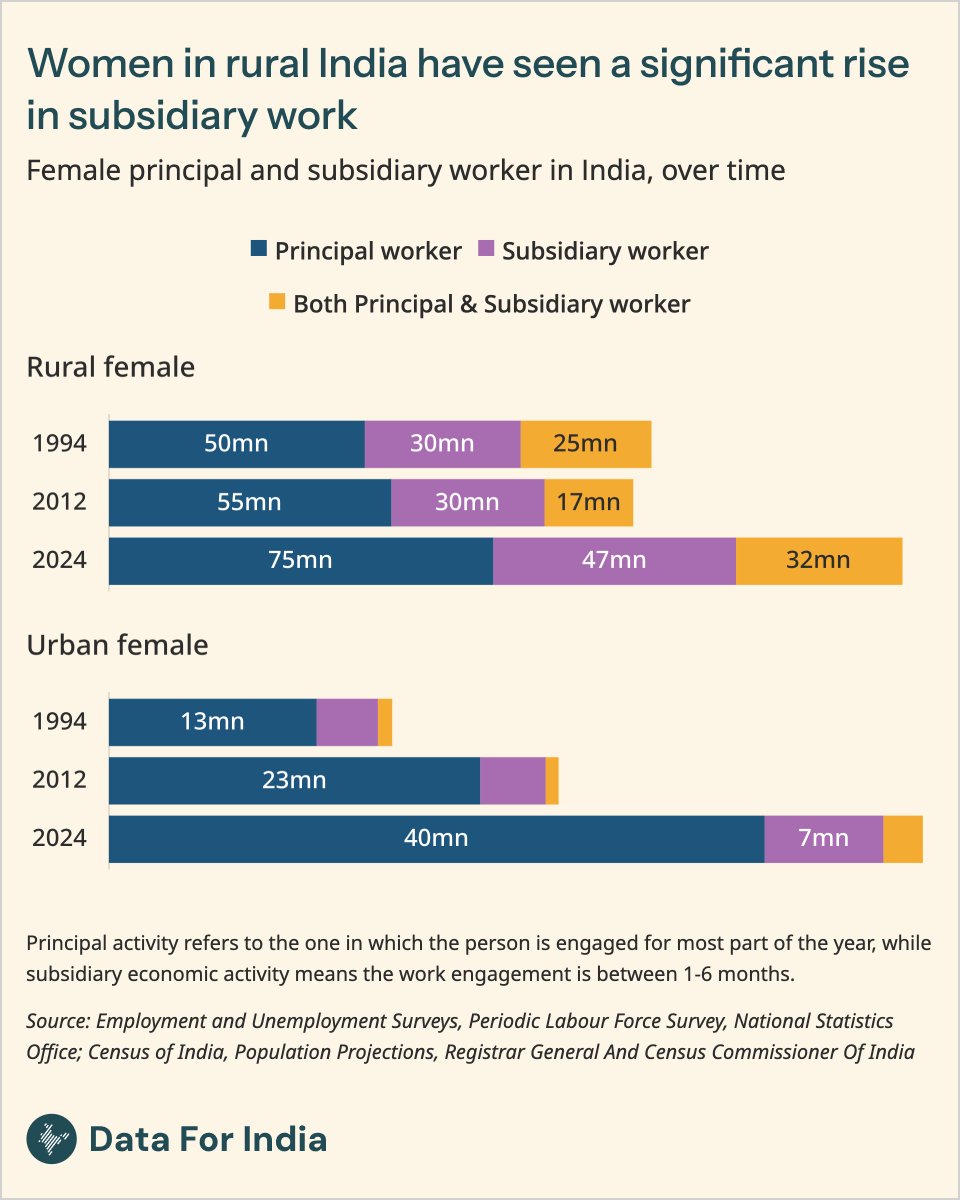
India's female labour force participation rate (LFPR) - the share of women who are either working or seeking work - is growing, but low by global standards. Historically, a majority of adult Indian women reported that they were attending to household duties and were not available for paid work. However, recent trends show an increase in female LFPR, particularly among rural Indian women. In 2018, about one in four women in rural India reported being in the labour force; by 2024, this number had climbed to nearly half of all rural women. Workers are classified by the time spent on work in a particular area as "principal workers" (persons who worked in one activity for a relatively long part of the last 365 days), "subsidiary workers" (persons who worked for more than 30 days but less than six months on a particular activity), and "both principal and subsidiary workers" (those who worked for most of the year on one activity, and for a small part of the year on another activity). Most Indian workers are only principal workers, meaning that they work on one activity for most of the year, and this category has steadily grown for both men and women. However, a large part of the recent rise in workers among women, particularly in rural areas, was in subsidiary, or part-time, work. #Work #Women #Employment #LFPR #India #DataForIndia
1
7
13
1,037
New on @dataforin: @akwaghmare's deep-dive into the informal sector. A thread: - Informality is a widely discussed topic in India's economy, but it's hard to track down exactly how it's defined and measured. That's what this piece does dataforindia.com/informal-se…
2
6
29
2,111
Now that we know how it's defined and how big it is, we look at what the informal sector really looks like - who works in it, what sectors are more formal, what wages are like, etc. dataforindia.com/informal-se…
3
2
4
709
The informal sector is the very heart of India's workforce, but we too often talk about it without really understanding who and what we're talking about. We hope our work is a step towards changing that. All of our work is here dataforindia.com/
3
413
Rukmini S retweeted
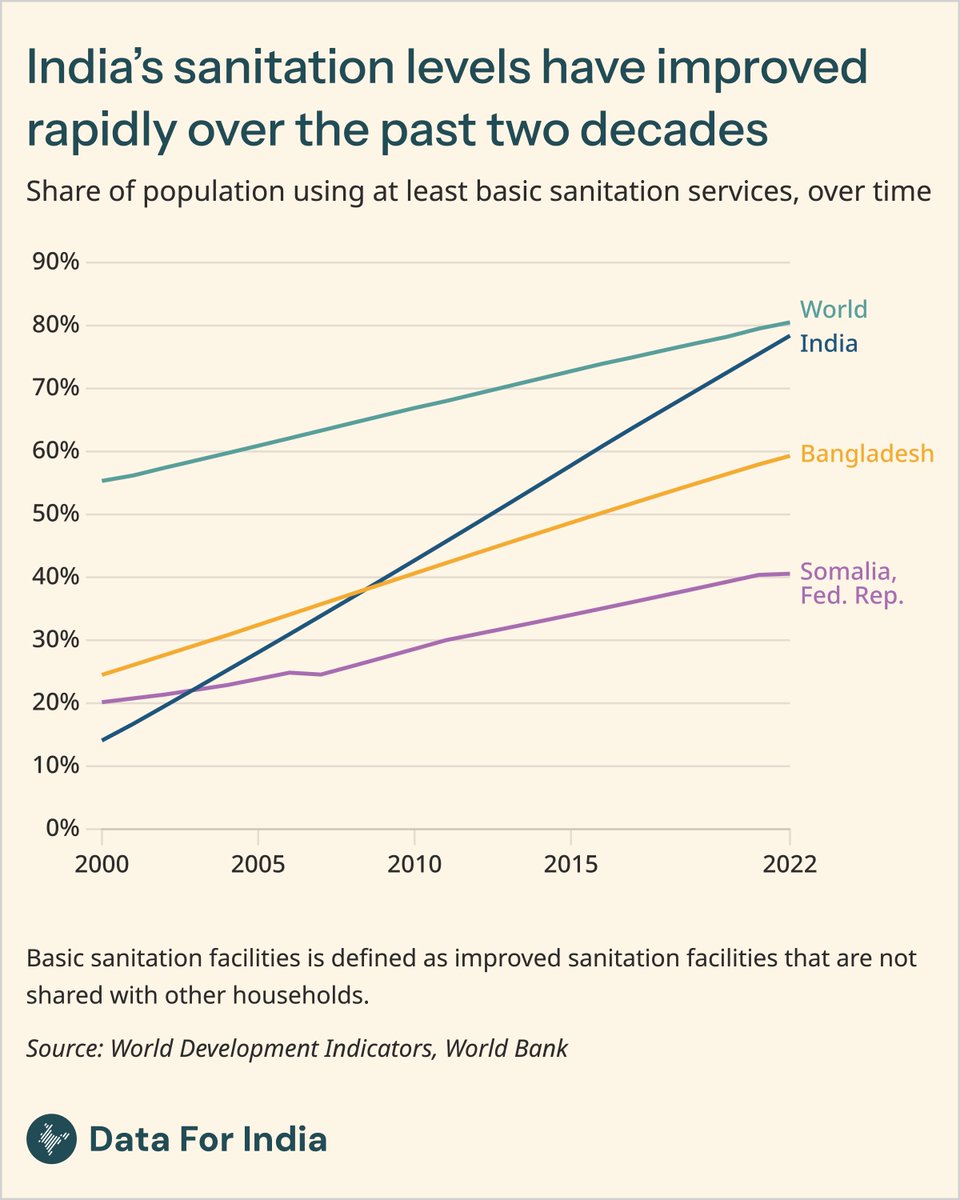
Access to safe, usable toilet facilities is a critical component of public health and safety. India has long struggled with very low levels of sanitation, significantly worse than many comparable countries. In 2000, only 14% of India’s population had access to at least a basic sanitation facility, placing it behind much poorer countries in Sub-Saharan Africa, such as Somalia. When people do not have access to a safe and usable toilet, they are forced to defecate in the open. However, over the next two decades, India made consistent progress in improving access to sanitation. By 2022, India had surpassed countries that were at a similar level in 2000, or were ahead at the time. Basic sanitation facilities are defined as improved sanitation facilities that are not shared with other households. These include flush/pour-flush to piped sewer systems, septic tanks or pit latrines; ventilated improved pit latrines, composting toilets or pit latrines with slabs. This categorisation is based on WHO and UNICEF's definition. What kind of toilet facilities do Indian households have access to? Read @nileena_suresh's piece to find out: dataforindia.com/sanitation/… #Toilets #Sanitation #WASH #India #DataForIndia
2
22
105
4,062
In many states, @nandlalsumit now finds that the CRS is more likely to get things right. It's possible that the SRS's sampling needs improvement (among other things.) For those states, we recommend using the CRS.
1
679
The SRS is used by not just India, but also the UN and many others to produce India estimates. Improving it is in everyone's interest. Additionally, we recommend releasing anonymised unit level data. The piece is here dataforindia.com/crs-srs-acc… (end of thread)
434
Rukmini S retweeted
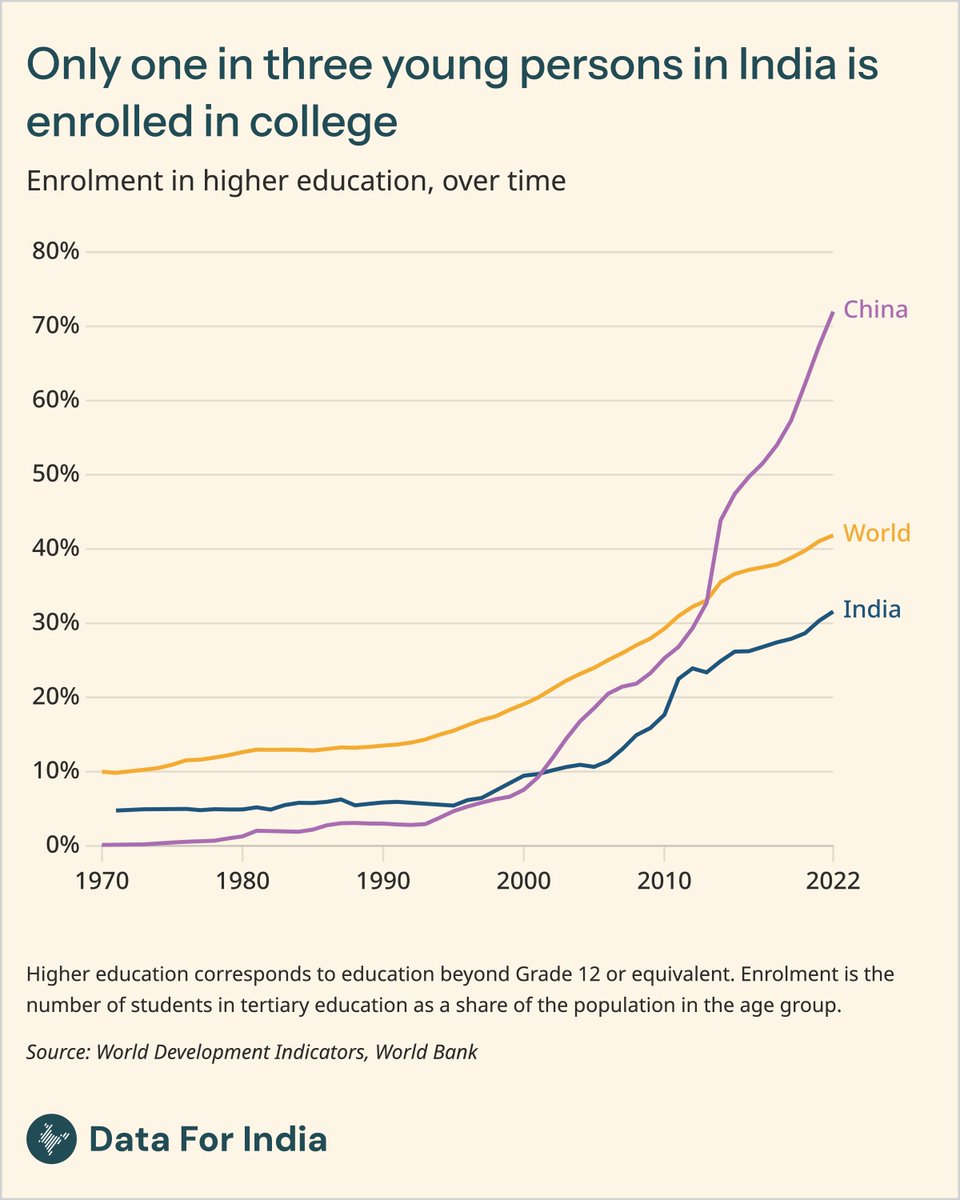
Higher education is seen as a key to getting young Indians into skilled, high-paying jobs and accelerating economic growth. Just under 40 million young people (aged 18-23) were enrolled in higher education programmes in India as of 2022. This included both undergraduate (or equivalent) and postgraduate (or equivalent) levels of study. However, at 32%, enrolment in tertiary or higher education in India is still below the world average. In the early 1990s, India’s higher education enrolment rates were similar to China’s, for instance. But in the two decades since, China has made big strides: more than seven in ten young Chinese adults are now in higher education, compared to three in ten young Indian adults. How does higher education enrolment look across states, and what disciplines do students choose to study in India? Read @akwaghmare’s piece to find out: dataforindia.com/higher-educ… #College #Undergraduate #Education #HigherEducation #India #DataForIndia
16
56
4,134