
Joined April 2016
- Tweets 1,715
- Following 109
- Followers 145
- Likes 46,516
7 Photos and videos



Russell Spencer retweeted

Jun 13
89
72
541
91,005
Russell Spencer retweeted

Apr 21
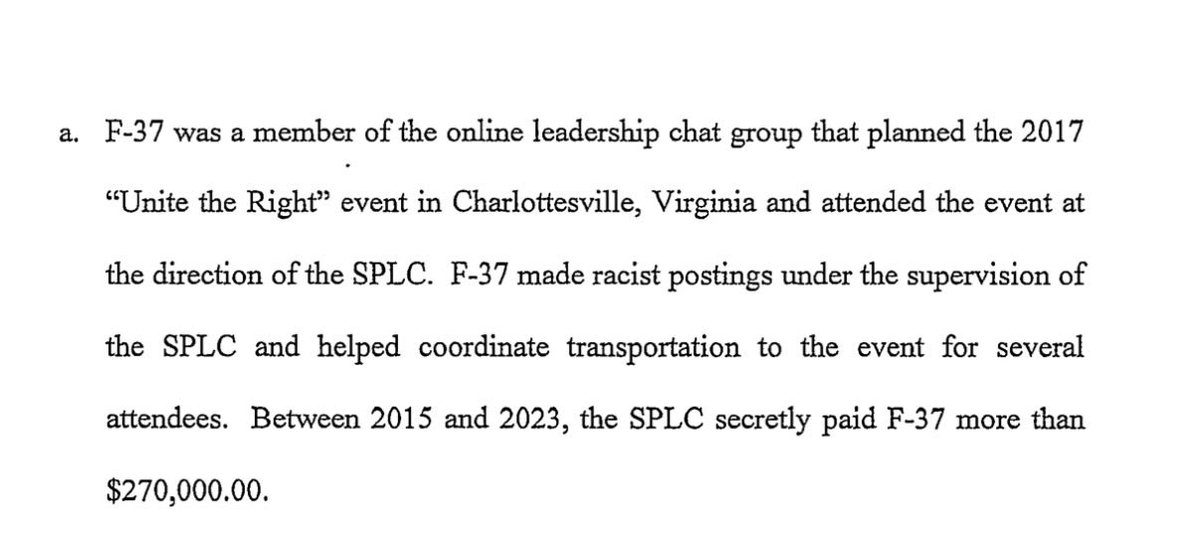
Yes. Funded, planned, coordinated
and executed.
Apr 21

Did the SPLC actually fund the freaking Charlottesville march???
292
3,861
15,234
782,537

Russell Spencer retweeted

🅱️ BREAKING!
The Iranian regime has lost its first city to its own citizens
In Iran, protesters have taken control of the city of Abdanan, with local police laying down their arms and siding with the people.
Protesters are destroying streets and setting cars on fire, while intense clashes continue in other cities between demonstrators and security forces.
1,457
7,702
30,443
1,304,179
Russell Spencer retweeted

The IRGC torched the SAFEEN PRESTIGE in the Strait of Hormuz and continues to reignite the fire.
Now they’re illegally closing the strait
This is pure maritime terrorism, not politics.
The Iranian Revolutionary Guard is a global terrorist organization and must be treated as such.
1,760
3,276
15,942
565,610
Russell Spencer retweeted

Mar 15
Imagine being desperate for the war to fail and condemn 90 million Iranians to be left with the regime that brutalises them - just because you hate Trump.
672
1,017
5,676
111,937
Russell Spencer retweeted

Mar 15
A note about @ThoughtfulSaint's latest series of videos on how the Trinity makes no sense. They are good videos, and I recommend you watch them, but as the resident Trinity whisperer I thought I should chime in.
I teach art history, and I always tell my students, if you want to understand an art movement, you should study biography, not theory. It matters a lot more that the Fauvists were all students of Moreau, than anything they later say about their art. Once you know that, the pieces start to fall into place.
In the same way, you can't understand the Trinity without understanding the history of how it came to be.
You have to understand that they thought the divinity of Christ was under attack by various forms of subordinatists, who wanted to demote Jesus to a demigod or man chosen God. That's the ballgame in their view. That's the end of Christianity and the whole concept of an infinite atonement and the promise of eternal life.
Years ago, when I was a mission leader, I presented this option to my missionaries, you have a choice between a Christ that is less than divine, but separate, and one that is divine but is the same essence with the Father. Which do you choose if there are not other options? After some apprehension, they chose the latter. Any sane person would do the same. It's the only one that preserves an infinite atonement. (This presents an interesting tangent for Reform/Calvinists who don't believe in the infinite atonement, but let's leave that alone for the moment.)
The proponents of the homoousian trinity saw it exactly as just such a stark dichotomy. Not everyone agreed of course, and many didn't see it nearly so cut and dry, and most of the empire remained "quasi-Arian" (a problematic and inaccurate term but we are stuck with it) for many decades after Nicaea. It took nearly 60 years for the homousian trinitarians to convince people otherwise, and Athanasius spent most of his life in exile, but that's another story.
I think the fact that the second we challenge the homousian Trininty people automatically accuse us of being subordinatists who reject the full divinity of Christ (for the record, we do not) shows how strongly this dichotomy is engrained into the debate. I also think it helps LDS understand why the homoousian trininty is so ardently defended. From their perspective, we are saying Christ can not perform the atonement because he is not fully God.
In the most charitable terms, the homousian Trinity is the nuclear option. It is a maximalist argument which makes even the most remote attack on the divinity and subordination of Christ impossible. That's why it got endorsed and codified. Its strength is found in its surety against a particular attack against Christ's divinity. It is an overcorrection that, in our opinion, just misses the mark and goes beyond Biblical teaching.
Before we make any headway in interfaith dialogue we have to understand that is why they defend it so much. We have to see it how they see it before we can even begin to argue for a third way. We have to present the history of how the homousian Trinity came about, to explain that it was mostly crafted by dialecticians out of a particular fear of the 4th C, than a reflection of actual biblical beliefs and traditions in the first centuries of Christianity.
The value of dialecticism in a theological debate, well, that's a whole other issue, but we can start here.
Hope this helps.
31
20
255
11,050
Russell Spencer retweeted

Mar 11
The First Presidency of The Church of Jesus Christ of Latter-day Saints has invited all to participate in the upcoming April 2026 general conference.
thechurchnews.com/leaders/20…
13
103
830
15,636
Russell Spencer retweeted

Mar 10
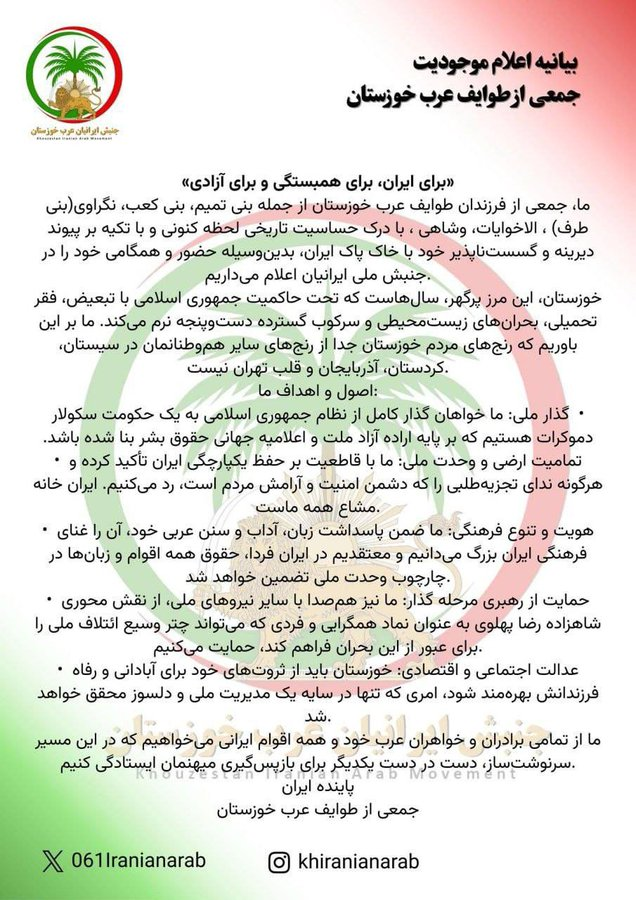
🚨 BREAKING: MAJOR SIGNAL FROM INSIDE IRAN
A political declaration has just emerged from Arab tribes in Iran’s Khuzestan province — the country’s most important oil-producing region.
In the statement they make several striking points:
• They reject the Islamic Republic and call for the complete removal of the regime
• They demand a secular democratic government based on human rights
• They stress that Khuzestan is an inseparable part of Iran
• They call for unity among all Iranian ethnic groups including Kurds, Azeris and Baluch
• They express support for Reza Pahlavi as a unifying national figure for a future transition
Khuzestan is not just another province.
It is the heart of Iran’s oil industry and one of the most strategically important regions in the country.
When voices from inside that region begin calling openly for a democratic future beyond the Islamic Republic, it signals something much bigger:
The cracks inside the regime’s foundations may be widening.
3,212
16,642
55,439
3,576,485
Russell Spencer retweeted

Before his death the Iranian Supreme Leader Ali Khamenei's personal fortune ranged from $95 billion to $200 billion.
Every bit of that should be confiscated and given back to the good people of Iran.
3,299
4,604
32,497
852,129

Russell Spencer retweeted

Mar 4
**Breaking news:** Israel has eliminated Rahman Mokadam, head of the Islamic Revolutionary Guard Corps’ special operations division, and the man behind the assassination attempt on Trump on the eve of the 2024 presidential election.
Trump was informed of this in the past few hours by Israel.
210
2,385
12,095
853,471
Russell Spencer retweeted

Mar 3
When someone who is not an American citizen casts a vote in our country, it’s taking away the power of YOUR vote.
It’s taking something that doesn’t belong to them.
Something that belongs to you.
Pass the SAVE America Act.
3,727
13,896
52,184
349,296

Russell Spencer retweeted

The Kurds helped us defeat ISIS and now they’re going to go toe to toe with the IRGC. They deserve a state.
1,776
1,998
21,503
922,158
Russell Spencer retweeted

Mar 1
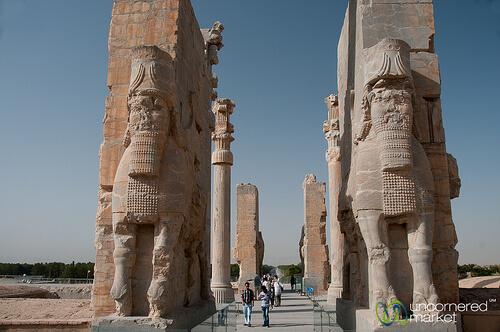
RT if you can't wait to visit a free Iran
209
2,386
12,670
124,853
Russell Spencer retweeted

Mar 1
Remember how we went into the USSR archives after the Soviet fall and found out which American groups, etc. they'd been funding? Getting the opportunity to do so with Iran would be very interesting.
269
2,360
16,930
616,792
Russell Spencer retweeted

Mar 1
The first sunrise in Iran without Khamenei
A long overdue new chapter awaits us

280
3,656
24,976
243,143
Russell Spencer retweeted

Feb 28
The people of Iran marched for a better future at great personal cost. I hope their dreams are fulfilled. blog.andrewyang.com/p/the-pe…
197
255
2,390
79,824
Russell Spencer retweeted

Feb 28
I am an Iranian and I would like to ask you to pray for the U.S. forces, and the Iranian people (Not the Ayatollahs' regime).
Long live the people of Iran, and God bless the United States of America.
4,731
19,513
120,541
1,964,124