
Climate & energy analyst @theBTI | Chemical and energy engineer | Science is cool!!
Joined January 2016
- Tweets 838
- Following 655
- Followers 324
- Likes 678
192 Photos and videos






Pinned Tweet

May 20
New from me w/ @theBTI
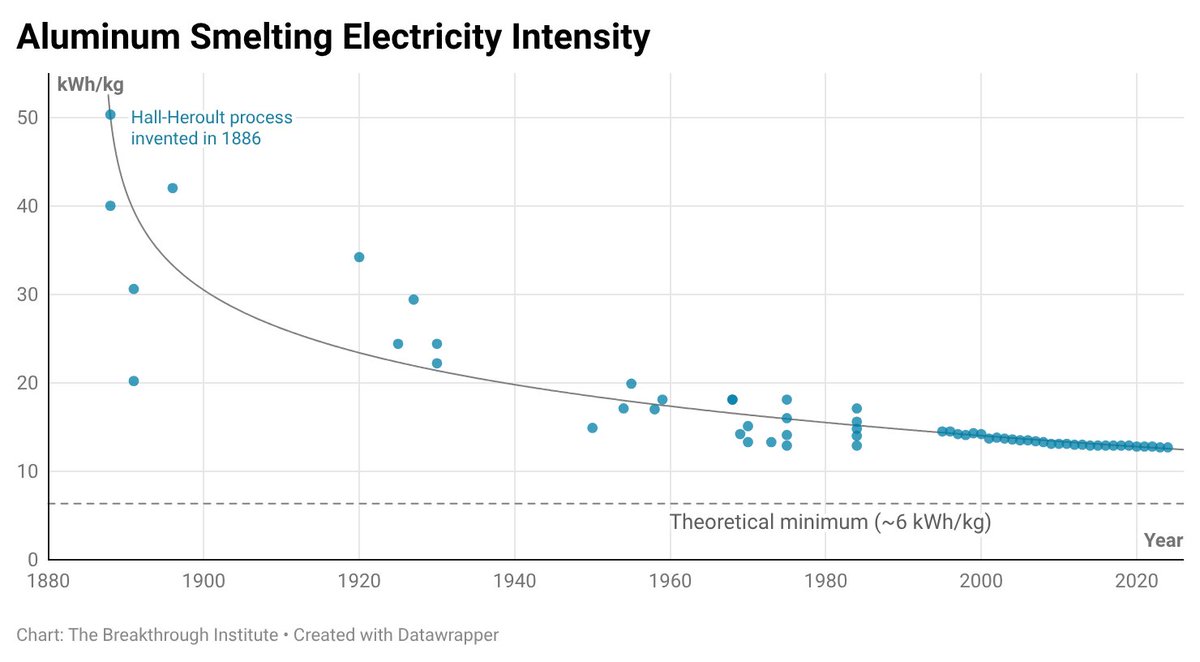
Disruptive innovation in heavy industry is exceedingly rare; we still smelt aluminum and make ammonia using 100 y/o processes. To reindustrialize, decarbonize, and grow the economy, we must formally study what drives innovation in heavy industry 🧵
4
15
33
3,840
Hindsight makes it easy to find evidence that innovation happens linearly. But this isn’t entirely appropriate to conclude unless we can also prove it’s not nonlinear, which afaik we can’t since disputing nonlinearity has a higher burden of proof bc it’s so much more complex
35
Ryan Alimento retweeted

Jun 14
One of the most underrated marvels in semiconductor fabs is the vacuum pump.
A high end dry vacuum pump can spin at 90,000 RPM, operate 24/7 for years, maintain ultra clean vacuum environments, survive corrosive process gases, and hold tolerances measured in microns.
These Turbo Molecular Vacuum Pumps cost $10,000 to $25,000 per unit.
Without them, there are no chips, no AI GPUs, no smartphones.
The semiconductor industry isn't just about EUV lithography. It's also about thousands of invisible engineering masterpieces quietly running in the background.
Video Source :- Leon Li-666
57
544
4,226
446,403
Jun 13
Petition to rename ARPA-E into Advanced Research on Energy Projects Agency: AREPA
1
2
85
Jun 11
Baffles me how people can go a whole flight without ever opening the window and marveling at the fact that you’re 40,000 feet in the air
2
88
Jun 11
Alexander Graham Bell built a hydrofoil boat in 1918 that could reach 70 mph. Wild.
1
62
Ryan Alimento retweeted

Jun 11
The way out is bilateral contracting at prices that reflect actual scarcity
The solar industry didn't scale on ISO market signals alone; it scaled because corporates signed 15-year VPPAs that gave developers bankable offtake
The battery equivalent is an emerging class of bilateral tolling agreements at prices negotiated between parties who know what reliable power is actually worth to them
2
2
5
166
Ryan Alimento retweeted

Jun 11
All of the post WWII infrastructure that is now being rebuilt with higher capacities and more resilient technology that the GETs people would have you believe isn’t already happening just because people aren’t buying their particular expensive thing.
2
3
7
673
Jun 11
Congress needs to harness the market push for 800V data center architecture to onshore manufacturing of SiC and GaN wafers and power electronics. Unlike the industry for traditional Si semis, SiC and GaN are relatively immature, and the US still stands a chance to claim a chunk of market share if it acts quickly and decisively. Might be missing some key points but here’s what I think needs to happen:
- aggressively fund R&D and commercialization for 8 inch SiC & GaN wafer growth
- bring back policy supports for EVs to increase demand pull
- lift permitting & regulatory barriers to grid expansion, partnered with financial support for modernization (another demand pull)
- get DoW to study the quantity of WBG semis they use to get headline numbers on the nat sec vulnerability (similar to X tons of REE magnets per fighter jet)
2
2
12
1,407
Jun 10
High electricity prices aren’t a glitch to be swept under the rug. They’re the market screaming that today’s technological and regulatory paradigm can’t support decarbonization, data centers, new manufacturing, and electrification all at once
2
11
44
6,486
Jun 10
The only way out of the affordability crisis is through it. High prices will either open a market opportunity for innovative tech to emerge or they will pressure incumbent politicians into fixing counterproductive policies, else they get voted out in favor of someone who will
9
378
Jun 10
Dynamic line ratings rely on wind to “unlock” capacity in transmission lines, so their potential maps onto wind potential. Naturally, most results you’ll see are from the states with tons of wind—results that can’t be reliably extrapolated to the whole country
3
226
Ryan Alimento retweeted

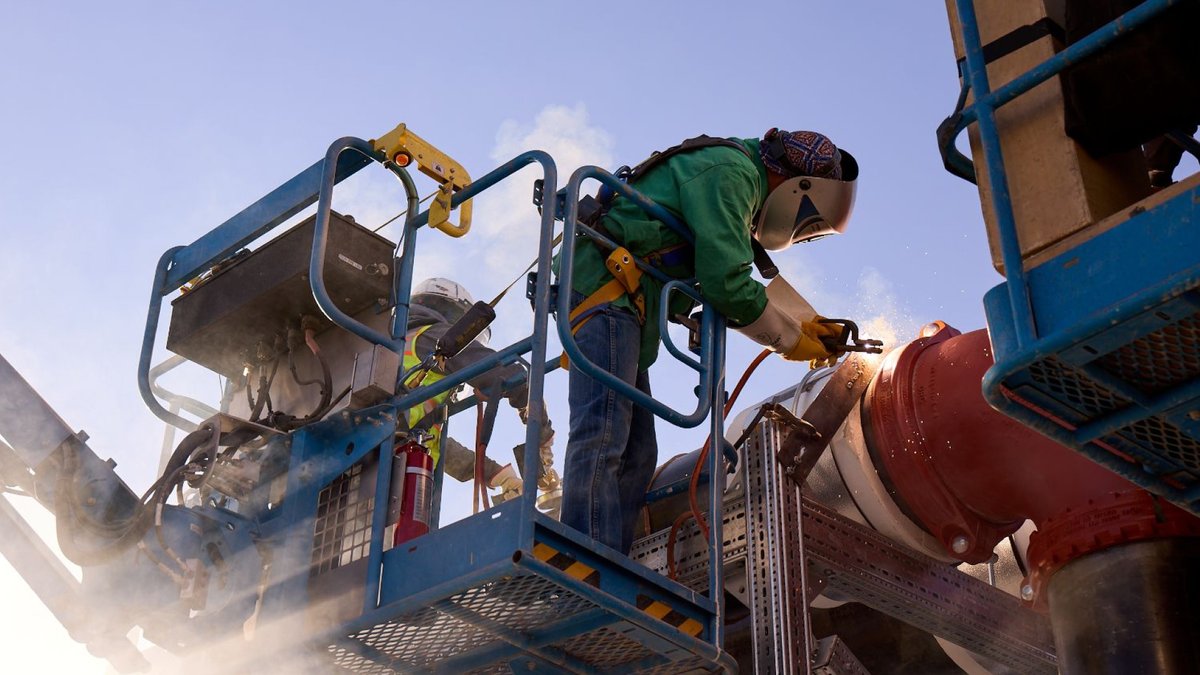
I didn’t have Facebook training welders on my 2005 bingo card

Today we're announcing America's Workforce Academy (AWA), the largest private-sector commitment to the skilled trades in American history, beginning with a $115 million commitment in the first year alone.
This cost-free program supports all participants while they learn and then guarantees a job for all graduates in high-demand fields such as electrical work, mechanical systems and plumbing. Every graduate will be guaranteed a job on a Meta construction site.
Learn more: meta.com/AmericasWorkforceAc…
1
3
9
2,039
Jun 10
Instead of using pipeline RoWs to site transmission, we should put transmission lines INSIDE pipelines. Hydrocarbons insulate the wire so we can run EHV, too. 🤯
82
Jun 10
imo data centers should be required to pay for upgrades they cause but nothing more. Cost causation for large supplies and loads alike. There should be a low barrier option (but not a mandate) to spend more via a community benefits agreement to get a social license
1
4
180
Jun 10
But even if a new policy were to require developers to make grid upgrades that lower local bills, they won’t obtain the social license by complying w regulation and pointing to numbers on Excel. The effort has to be organic.
1
1
79
Jun 10
An optional (but very low effort) route to go above and beyond simplifies the cost-benefit analysis btwn risk of community opposition and a single flat cost for grid upgrades
1
68
Jun 9
“All of the above” energy is equally relevant for T&D technologies as it is for generation
4
223
Ryan Alimento retweeted

Jun 9
My only benchmark for AGI is whatever model can produce an image that correctly conductors a transmission line
1
1
6
575
Jun 9
There’s a 5-10 yr delay btwn new grid policy or investment and seeing their impact in bills. Today’s affordability crisis began in 2015-2020. Bills will likely rise through 2030 bc of choices from 2020-today. The question is: can we reign in prices for the 2030s?
Jun 8

Electricity prices were rising before 2025 bc of grid maintenance, underinvestment, retirements, load growth, which are structural factors. They're going to continue rising. This is just the truth. And we've got real capacity adequacy problems. Again, it's just true.
2
3
841
Jun 9
We really need to stop applying just-in-time manufacturing mindset to infrastructure and heavy industry
2
2
208