
Joined March 2009
- Tweets 2,653
- Following 1,479
- Followers 213
- Likes 399
785 Photos and videos


4 Apr 2025
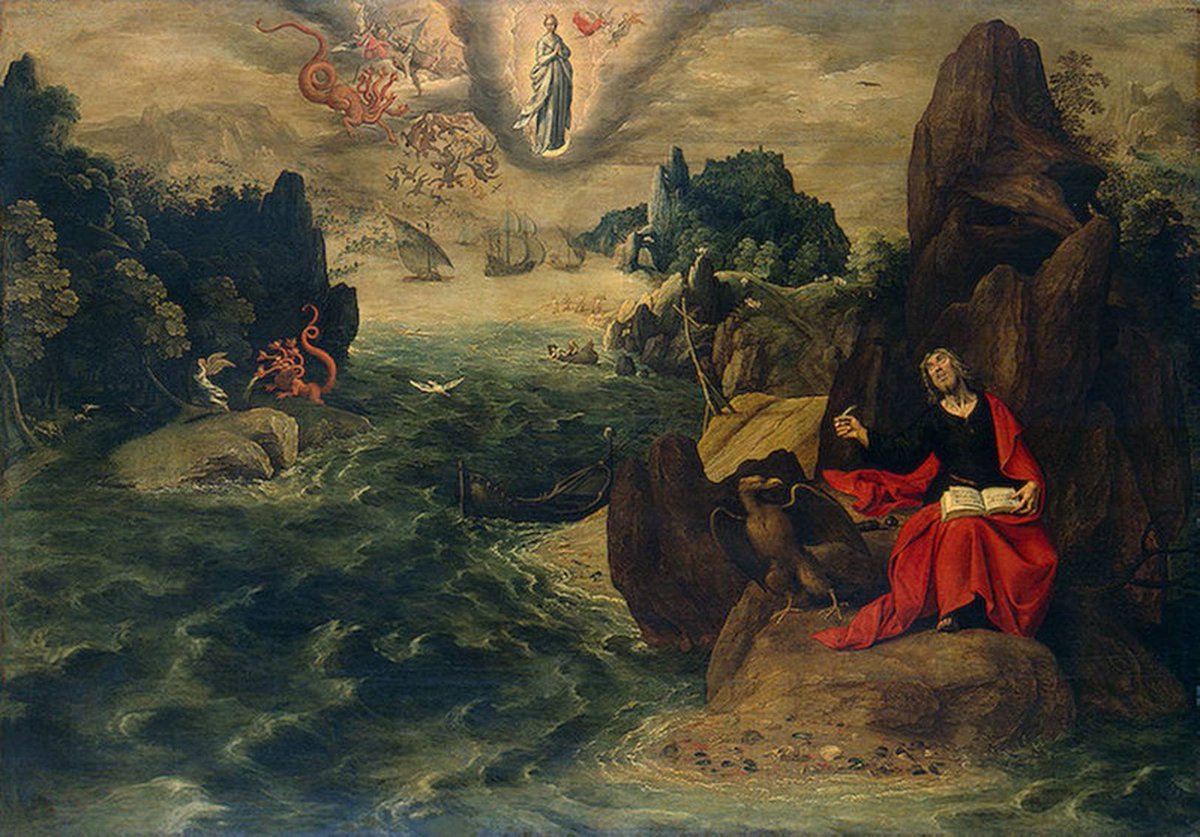
The Role of the Blessed Virgin Mary in the Latter Times
. . . What is the basis of Our Lady’s role in the latter times?
It is based on the decisive battle between the Virgin and the dragon (Apoc. 12). This is demonstrated by the obvious fact that in the measure that the spirit of atheism permeates the world, she appears and brings help to the faithful. As the ideals of masonry and the enemies of Christ are triumphing in the world, the cult of the Mother of God diffuses and becomes the cause of the greatest expansion of Catholic missions in the history of the Church.
The Apocalypse describes this battle with these words:
A great sign appeared in heaven: A woman clothed with the sun, and the moon under her feet, and on her head a crown of twelve stars: (12:1)…And there was seen another sign in heaven: and behold a great red dragon (12:3)…And the dragon stood before the woman who was ready to be delivered; that, when she should be delivered, he might devour her son (12:4)….And when the dragon saw that he was cast unto the earth, he persecuted the woman, who brought forth the man child: And there were given to the woman two wings of a great eagle, that she might fly into the desert unto her place, where she is nourished for a time and times, and half a time, from the face of the serpent (12:13-14)…And the dragon was angry against the woman: and went to make war with the rest of her seed, who keep the commandments of God, and have the testimony of Jesus Christ (12:17).
As has already been mentioned, St. Louis sees in this battle the culmination of the whole course of history beginning with the creation of man:
It is principally of these last and cruel persecutions of the devil, which shall go on increasing daily till the reign of Antichrist, that we ought to understand that first and celebrated prediction and curse of God, pronounced in the terrestrial paradise, “I will put enmities between thee and the woman and thy seed and her seed; she shall crush thy head, and thou shah lie in wait for her heel” (Gen. 3:15). God has never made and formed but one enmity; but it is an irreconcilable one, which shall endure and grow even to the end.
St. Louis continues by citing the famous text penned by St. Irenaeus of Lyon:
What Lucifer has lost by pride, Mary has gained by humility. What Eve has damned and lost by disobedience, Mary has saved by obedience. Eve, in obeying the serpent, has destroyed all her children together with herself, and has delivered them to him; Mary, in being perfectly faithful to God, has saved all her children and servants together with herself, and has consecrated them to His Majesty.22
Sister Lucy of Fatima, in an interview with Fr. Fuentes (1957) describes these latter times in grave terms:
Father, the devil is preparing for the decisive battle against the Blessed Virgin. And because he knows what offends God the most and that which will gain for him the greatest number of souls, he does everything to gain souls consecrated to God because in this way the whole area regarding souls will be free to him and therefore easier to overcome….Father, the Mother of God did not say to me that we are in the end times of the world, though she allowed me to understand it for three reasons:
Firstly, because she said the devil is preparing for the decisive battle with the Mother of God and whereas, the decisive battle is the last battle which will manifest on which side is the victory and on which the defeat.
Secondly, as she told my cousins, as well as myself, that God is offering to the world the last two remedies the holy rosary and devotion to the Immaculate Heart of Mary-and if these are the last remedies that means there are no others.
Thirdly, that in the designs of Divine Mercy, when God will punish the world all other means of conversion will have been exhausted. And when He sees that the world disregards these means, He offers the last means of salvation, His Most Blessed Mother. Especially if we scorn and disregard these last means then there will be no forgiveness for us since, as the Gospel says, we will have committed the sin against the Holy Ghost.
The Role of the Blessed Virgin Mary in the Latter Times
59
30 Mar 2025
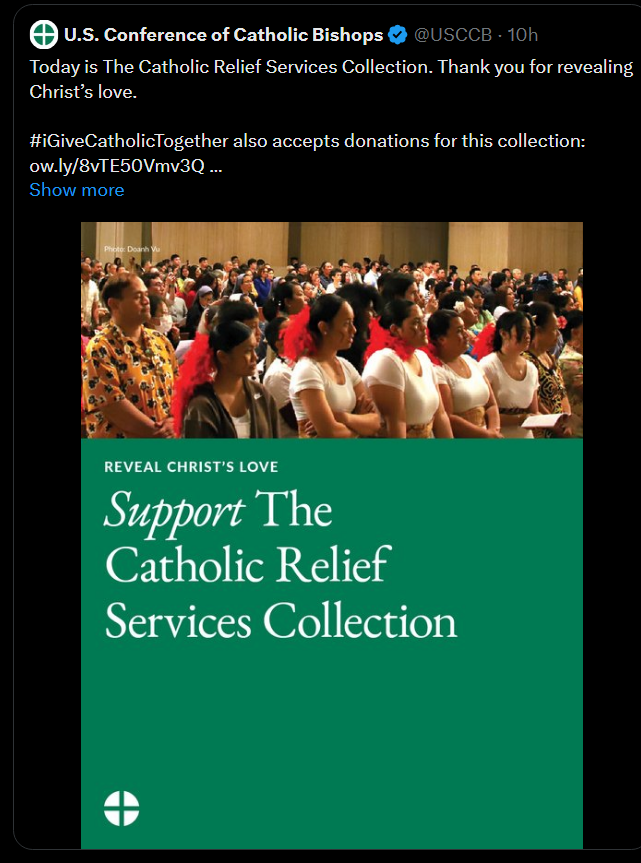
Don't give to Catholic Relief Services. Most of your money will go to professional Catholic democrats who support contraception, abortion and LGBT.
Consider cutting out the middleman and giving money directly to the poor and needy.
* * *
"We examined 47,000 public records for employees of those seven organizations over three reporting periods (2019-2020, 2021-2022, and 2023-2024) and included contributions received between 23 October 2018 – 27 February 2024.
What we found was that an overwhelming majority of this data set supported pro-abortion, pro-LGBT (Democrat) candidates and/or causes.
As can be seen in the chart below, 83% of the political contributions went to Democrat-affiliated Political Action Committees (PAC) like ActBlue, AB PAC, DNC Services, Biden for President, Biden Action Fund, Biden Victory Fund, and a long list of individual candidates.
Only 16% of the contributions went to Republican PACs or candidates, such as WinRed, Donald J. Trump for President, Inc, NRCC, and similar organizations.
Examining the political contributions of the employees belonging to these charitable organizations reveals that all but the Knights of Columbus (KoC) are completely dominated by hard-Left employees. While the political contributions coming from those working for the KoC (90%) went to Republican candidates or causes, such employees are clearly deep minorities for all the other organizations we examined. Conversely, 99% of political contributions coming from Catholic Relief Services (CRS) went to Democrat candidates or causes. And while only 76% of Catholic Charities’ employees contribute to Democrat candidates and causes, its employees constitute the largest donor base to political candidates of all Catholic charitable organizations: $180,090 for Republican candidates and causes and $592,872 for Democrat candidates and causes.
Catholic Political Contributions: A Deep Dive into the Data - The Lepanto Institute
55
30 Mar 2025
" . . . Defining consciousness
Most writers on this issue just assume that everyone knows what consciousness is. This is hardly the case. And if we cannot define consciousness, how can we claim AI will achieve it?
Believe it or not, the 13th century philosopher Thomas Aquinas deployed some very useful concepts for discussing AI when he examined the process of human knowledge. Let me describe how he tackled the problem of identifying consciousness.
First, Aquinas asserts the existence of a “passive intellect”, the capacity of the intellect to receive data from the five senses. This data can be stored and maintained as sense images in the mind. Imagination and memory are all part of these sense images.
Second, Aquinas says that an “agent intellect” uses a process called abstraction to make judgments and develop bodies of information. The agent intellect self-directs itself and operates on the sensory imaginations to make judgments. A body of true (that is, corresponding to the real world) judgments becomes “knowledge.”
Third, the will makes choices regarding the information presented to it by the agent intellect and it pursues goals in an actionable manner.
This leads to a working definition for consciousness: consciousness is the awareness of the cognitive and decision-making processes, including the steps involved in acquiring, evaluating and applying knowledge. A person is said to be aware of their sense of sound, sight, smell, etc., aware of their feelings, aware of their imaginations, aware of their judgments, aware of their knowledge, aware of their choices. Consciousness is and can be included in all or any of these steps.
Can AI become conscious?
When we compare the different levels of the human cognitive and decision-making processes to Artificial Intelligence it’s easy to spot big differences.
External experience. Humans experience emotions together with the acquisition of sense knowledge. AI simply acquires data. This emotional component adds to the knowledge of humanity in a way that computers can’t experience.
Sense images and memories. AI excels in recall and data retrieval, far surpassing human capacity. In this area AI excels, without a doubt.
Agent intellect. Humans actively direct their thoughts, and they abstract concepts from the raw sense data. This process is self-directed and autonomous. AI merely reveals patterns of information; it is not self-directed. The pattern is the result of an algorithm which has been programmed by a human. AI activity is prompted first by human inquiry.
Choice and will. Humans make conscious decisions with goals in mind, whereas AI does not exhibit characteristics of personal choice or intentionality.
AI exhibits behaviors associated with intelligence—memory recall, summarization, pattern recognition, prediction capabilities—but it lacks the element of self-direction which is characteristic of humans.
AI does not generate its own thoughts; it merely responds to its programming and responds to whatever it is prompted to. AI does not experience emotions conjointly as it gathers sense data which is merely installed into the computer.
Sometimes AI does seem to generate novel thoughts, but this is dependent on data that it already possesses and is the result of a learned pattern. Humans can reflect on their thinking. This allows them to correct themselves without external prompts. Humans can develop concepts that are not dependent on sense data.
In short, AI merely simulates human cognitive and volitional activities. This means it is not conscious.
Final Thoughts
Proponents of AI consciousness often fail to define consciousness adequately before making claims of AI consciousness. From a Thomistic perspective, human consciousness is multifaceted, involving perception, intellect, will, and self-direction.
To my mind, the most significant difference is found in “decisionality.” AI does not make the personal decisions which are a clear indication of consciousness. AI, while powerful in data processing, does not exhibit those core attributes that define human consciousness.
When I ask an AI chatbot a question and it states that it has other things to do and will answer tomorrow, then I will revisit the question."
How St. Thomas Aquinas can help us understand why AI can't become conscious - LifeSite
27
28 Mar 2025
Introduction
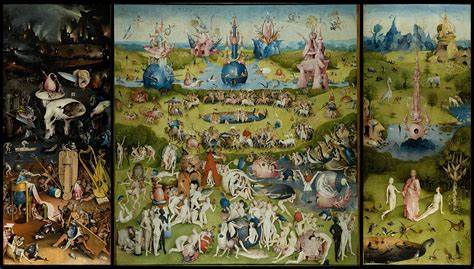
Sheol is a term found in the Hebrew Bible that refers to the abode of the dead. It is a concept that has intrigued theologians, scholars, and believers for centuries. In the Berean Standard Bible , Sheol is often translated as "the grave," "the pit," or "the realm of the dead." Understanding Sheol is crucial for comprehending the biblical perspective on life after death and the nature of human existence beyond the grave.
Biblical References
The term "Sheol" appears numerous times throughout the Old Testament. It is depicted as a shadowy place where the dead reside, regardless of their moral standing during life. In Genesis 37:35, Jacob mourns for his son Joseph, saying, "I will go down to Sheol to my son, mourning." This indicates that Sheol is a place where all people, righteous or wicked, are gathered after death.
In the poetic and wisdom literature, Sheol is often described in vivid imagery. Job 7:9-10 states, "As a cloud vanishes and is gone, so he who goes down to Sheol does not return. He will never return to his house; his place will know him no more." This passage emphasizes the finality and inescapability of Sheol.
The Psalms frequently mention Sheol, reflecting the psalmists' understanding of life and death. Psalm 16:10 expresses a hope in God's deliverance: "For You will not abandon my soul to Sheol, nor will You let Your Holy One see decay." This verse is often interpreted as a messianic prophecy, pointing to the resurrection of Jesus Christ.
Nature and Characteristics of Sheol
Sheol is often depicted as a place of darkness and silence. In Psalm 88:3-6, the psalmist laments, "For my soul is full of troubles, and my life draws near to Sheol. I am counted among those who go down to the pit; I am like a man without strength." This portrayal underscores the somber and desolate nature of Sheol.
The Hebrew understanding of Sheol does not align with later concepts of heaven and hell. Instead, it is a neutral place where all the dead reside. Ecclesiastes 9:10 advises, "Whatever your hand finds to do, do it with all your might, for in Sheol, where you are going, there is no work or planning or knowledge or wisdom." This suggests that Sheol is devoid of activity and consciousness.
Theological Implications
The concept of Sheol raises important theological questions about the afterlife and divine justice. While Sheol is depicted as a common destination for all the dead, the Old Testament also hints at a future hope beyond Sheol. In Hosea 13:14, God declares, "I will ransom them from the power of Sheol; I will redeem them from death." This promise of redemption points to a belief in God's ultimate victory over death.
The New Testament further develops the understanding of Sheol through the revelation of Jesus Christ. In Acts 2:27, Peter quotes Psalm 16:10, applying it to Christ's resurrection: "Because You will not abandon my soul to Hades, nor will You let Your Holy One see decay." Here, "Hades" is the Greek equivalent of Sheol, and the resurrection of Jesus is seen as the fulfillment of the hope that God will not leave His faithful ones in the realm of the dead.
Conclusion
The reality of Sheol in the biblical narrative serves as a reminder of the transient nature of human life and the certainty of death. It also points to the hope of resurrection and eternal life through the redemptive work of Jesus Christ. While Sheol represents the grave and the shadowy existence after death, the promise of God's deliverance offers assurance to believers of a future beyond Sheol.
Topical Bible: The Reality of Sheol
22

27 Mar 2025
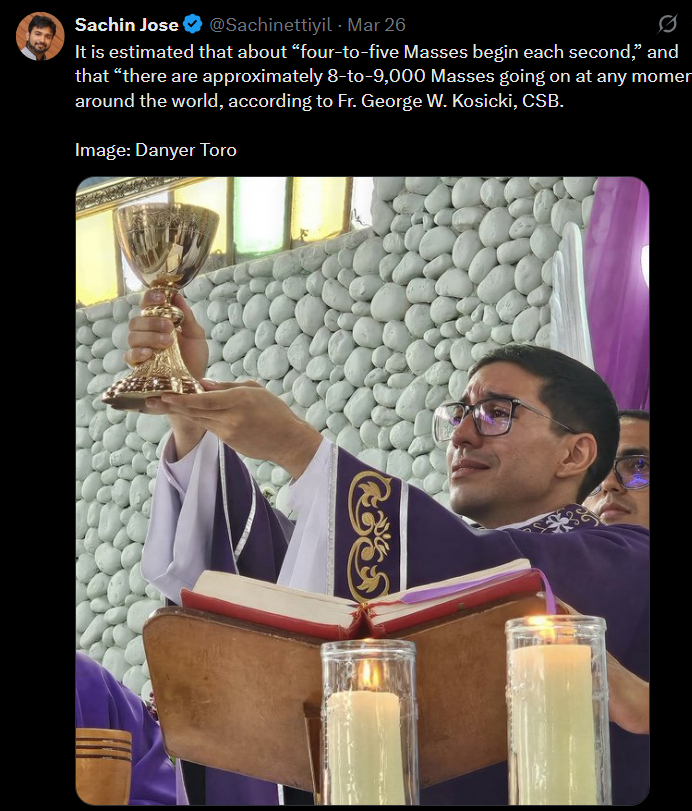
Rejoice always, pray without ceasing, give thanks in all circumstances; for this is the will of God in Christ Jesus for you.
1 Thessalonians 5:16-18
7
27 Mar 2025
The numbers on the growth of Christianity in the Roman Empire are very uncertain, but there are enough data points to hazard a reasonable estimate.
It is generally agreed that Christians, having started with a few dozen adherents in 30 AD, made up ten percent of the Empire by c. 300 AD, that is six million people, and that by c. 350 that figure was over thirty million, with Christians now a clear majority of the Empire.
Rodney Stark in The Rise of Christianity has a very interesting model that starts with 1,000 members of the Jesus Sect in 40 AD and projects a growth rate of 40% per decade up to the fourth century. As Stark lays out, this tallies with the available historical evidence, both the more impressionistic kind,[1] and a remarkable study on the growth of Christianity in Egypt, where we have the nearest approximation to births, marriages, and deaths records in the Roman world.[2]
Starks model means the trajectory was, roughly[3]:
7,500 Christians by the end of the first century (0.02% of sixty million people);
40,000 Christians by 150 AD (0.07%)
200,000 by 200 AD (0.35%)
2 million by 250 AD (2%)
Again, Stark’s numbers tally with what had long been known from a triangulation of the sources: there is a widespread sense of a massive explosion in Christian numbers in the second half of the third century—and there was, in absolute terms. The numbers do not seem to have, and do not need to have, changed in a relative sense at all. Stark underlines this point because it cuts against one of the standard arguments in the historiography, namely that miracles—either literal or illusory (depending on the historian)—are a necessary explainer of what happened, whereas “resorting to simple arithmetic” will do it.[4]
The growth model Stark presents, he freely concedes, smooths over some of the “bumps”.
There were undoubtedly periods of faster growth, and there were some very serious setbacks in the rounds of persecution, especially in the 60s AD when, exaggerated though some accounts might be about how many Christians the Emperor Nero (r. 54–68) killed after the great fire of Rome, even a few hundred deaths would be a severe blow to a community that consisted of at most 2,500 people. The Jerusalem community of Christians was, if not entirely destroyed, lastingly downgraded and diminished in this period by the persecution and its own political decisions during the Jewish revolt (66–73).[5]
As well as variations in time, presenting numbers for the whole Empire obscures the geography of early Christianity, which was very heavily concentrated in the Eastern half up through the third century, in Anatolia, Egypt, and North Africa, and Christians were concentrated in the cities. Acknowledging these caveats, it should nonetheless be obvious that providing a vision of the big picture—at the expense of some detail—is what averages are for.
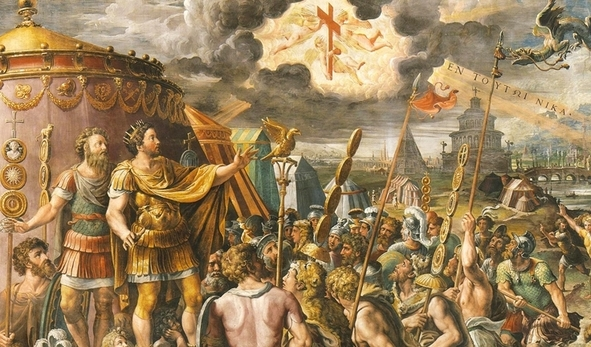
A key implication, drawn out by Stark, is that Constantine (r. 306–37) was following the Roman people rather than leading them in adopting Christianity in 312, and that whatever help it gave to the Christian cause for the restrictions and persecution to be dropped, and the social desirability of Christian belief to be raised, Constantine did little more than bring forward the date of something that was in train anyway and that he could not have stopped.
That said, contrary to some cynical historiography, at the time Constantine adopted Christianity the numbers were still too small to be any use in a bid for power. Indeed, even if the numbers are under-estimated, Christians were simply in no position to assist: an aspiring Emperor needed the senatorial class, the equites, and above all the legions; this aristocratic elite and the army were not only all pagan, but committedly so, making Christianity, if anything, a disadvantage.[6] Christianity, up to the beginning of the fourth century and for some time after overwhelmingly consisted of slaves, the peregrini (pre-212 “foreigners”, non-citizens), and lower-class urbanites; this coalition, the subject of relentless mockery in pagan polemic, counted for nothing in Rome.[7] It was only after Christianity had prevailed, and its moral assumptions had replaced those of the Classical world, that a concern for the views of the lowest became a norm, that weakness became a kind of strength.
Looking at how Christianity spread, logistically, Bart Ehrman in The Triumph of Christianity underlines two factors. First, Christianity, because of its doctrine, was a missionary faith—something entirely new to the ancient world—and Paul’s theological innovation, making it possible to be Christian without being Jewish, lifting the requirement for circumcision and the dietary laws, meant the Jesus Sect was no longer restricted to trying to convert the most resistant community (Jews) and instead had access to a universal recruitment pool of gentiles. “Pagan” religions did not proselytise because—and this is the second factor—pagans did not regard “religions” as exclusive. For pagans, defining themselves by which god they primarily worshipped would have seemed as strange as defining themselves by their favourite food, Ehrman argues. More seriously, in the pagan mental universe, “There was no sense that a person who turned to a new cult had to turn away from another”; to add a new god did not mean rejecting the old. By upending these assumptions, Christians proceeded in a manner that not only advanced their own cause but simultaneously killed off paganism; every convert to Christianity was a subtraction from paganism.[8]
What is most fascinating, relating very much to the issue of Constantine’s conversion and its role in Christian/Western history, is that while Christianity was a missionary faith in doctrine and outlook, it did not really have any missionaries after Jesus’ brother James and Saint Paul were executed in the 60s AD, and evangelists of the Pauline kind only really return to the scene after Christianity triumphs under Emperor Theodosius (r. 379–95).[9]
How, then, if not by organised missionary work with battalions of door-knockers, mass open-air rallies to convert multitudes, and the rest of it, did Christianity get so far in just three centuries? In the simplest way of all: through social interactions. Word of mouth between neighbours, co-workers, traders, even slaves, who were being transported all around the Empire, transmitted this new faith,[10] and because of the structural fact of what it meant to be a convert, the exclusivity of it, Christianity ate its way through the pagan world, the winner of a race the others didn’t even realise was underway.
How Many Christians Were There in the Roman Empire? | Kyle Orton's Blog
10
27 Mar 2025
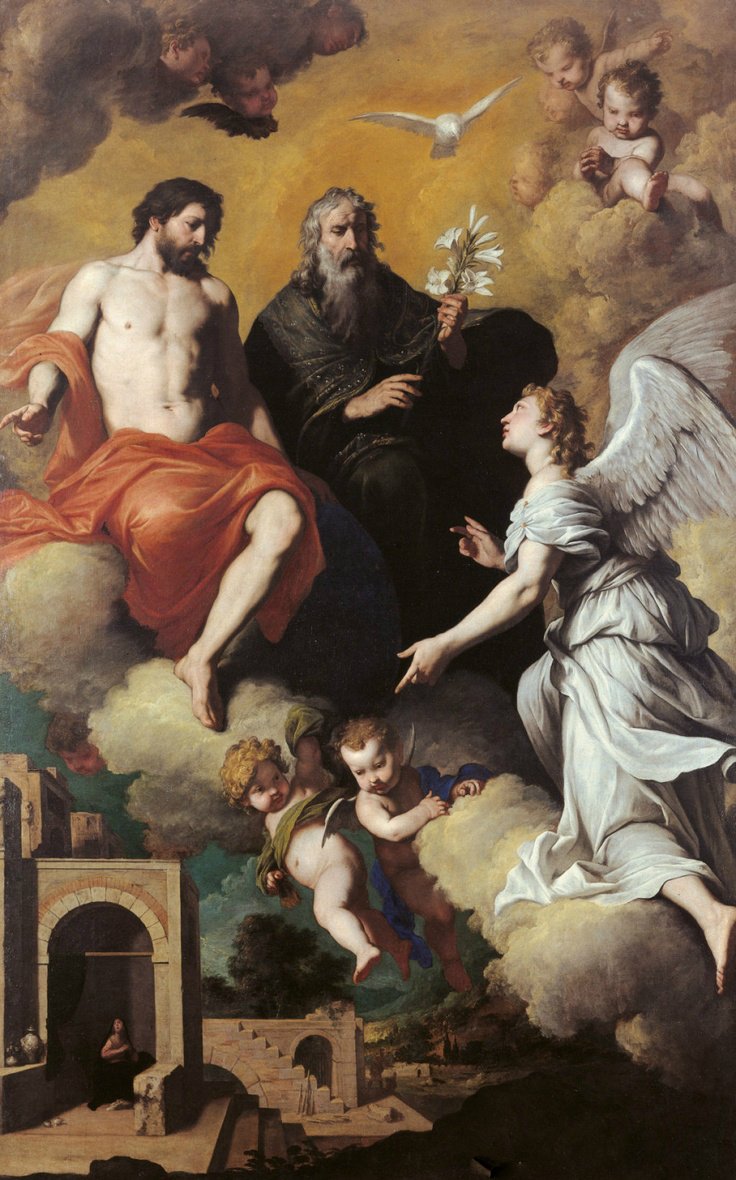
"In the National Museum of Capodimonte, in Naples, we can admire a painting by Pietro Novelli (1603-1647), from Palermo, in which the Holy Trinity is depicted in the foreground, sending the archangel to the Blessed Virgin Mary. The Eternal Father offers Gabriel a lily, so that he may bring that symbol of purity to the Ever-Virgin Mother of God, intact in her virginity before, during, and after giving birth. This splendid painting offers us the contemplation of the Incarnation from a different perspective, which is almost unique in Christian iconography.
Usually, the artist represents the Annunciation by showing the scene of the archangel bursting into the house of Our Lady, depicted while she is kneeling in prayer. In medieval paintings, the words Ave gratia plena come from Gabriel’s mouth, and the words Ecce ancilla Domini from Mary’s. Here, however, we see the chronologically preceding scene in which, almost with human dynamics, the Most August Trinity summons its divine messenger, giving him instructions. And the virgin is small and distant, almost unaware of what awaits her shortly thereafter.
The feast of the Annunciation always falls during the season of Lent, signifying that God works the greatest miracles when man recognizes himself in his real condition of misery, in his nothingness. And the more we are aware of depending totally on God – not only on a supernatural level but also on a natural – the more He deigns to fill us with His grace and His gifts.
Ecce ancilla Domini: the holiest of creatures, preserved from every stain of sin by a very special divine privilege, proclaims herself to be a servant, and becomes lady, queen, and mother of God precisely because her humility – and along with it the awareness of the need to travel with Christ along the royal Way of the Cross – is the necessary pre-condition for the Almighty to accomplish great things in her. Quia respexit humilitatem ancillæ suæ: ecce enim ex hoc beatam me dicent omnes generationes — “For he has looked with favor on his lowly servant. From this day all generations will call me blessed.”
Conversely, in pride the creature rises to compete with the creator, arrogantly usurps from Him that glory which is reflected to the humble by grace, and claims to have rights – a blasphemous dignitas infinita – that it cannot claim and which merits it not only being repelled into its nothingness, but being sunk even lower. Dispersit superbos mente cordis sui, deposuit poteres de sede, et exaltavit humiles. — “He has scattered the proud in their conceit. He has cast down the mighty from their thrones, and has lifted up the lowly.”
And as we contemplate the humility of the Blessed Virgin Mary and the destiny of glory and honor that the Holy Trinity has established for her, we cannot fail to contemplate the humility of the Eternal Word, who descends from the infinite glory of Heaven in order to incarnate Himself in the womb of the Virgin Mary, in obedience to the Father, to expiate on behalf of humanity for sins that are not His, to give His life for us miserable sinners, to restore the divine order that out of pride we have dared to violate.
This concept is made explicit in some representations of the Annunciation, in which a ray coming from heaven shows the Holy Spirit descending upon the Virgin, followed by a baby Jesus holding the Cross.
In Pietro Novelli’s painting we do not find the Virgin set aside, nor do we see her neglected or diminished in her providential cooperation in the work of redemption; on the contrary, we see the humility of the Word emphasized, who obediently accepts becoming flesh, in order to become the expiatory victim for our sins, and to become food: Whoever eats my flesh and drinks my blood has eternal life, and I will raise him up on the last day. For my flesh is true food and my blood is true drink (Jn 6:54-55).
That most holy body was formed in the womb of the Virgin Mother, so that that sacred flesh could be torn in the sufferings of the Passion and that Precious Blood could flow from the wounds and side of Christ as the perfect cleansing of our sins. In this mystery we recognize the compassion and co-redemption of the Mother of God – Regina Crucis – not only in union with the redemption of her Son, but even in having given to God, through the work of the Holy Spirit, that human body which made Him true man and true God; which in the theandric union makes Our Lord Jesus Christ the only King and Lord by divine right, both by royal lineage and by conquest. And which, in the magnificence proper to the Holy Trinity, makes Mary Our Lady and Our Queen: Daughter of the Father, Bride of the Paraclete, and Mother of the Word.
This regality of Christ and Mary finds its natural place in this time of Lent, because there can be no glory of the resurrection without first passing by way of Golgotha. If Our Lord and His Most Holy Mother have chosen to give us this wonderful example, we cannot help but take it as a model and prepare ourselves, with the help of Grace, to accept the crosses that providence assigns to us as a pre-condition for our eternal reward. And so may it be.
Carlo Maria Viganò, Archbishop
Archbishop Viganò: Our Lady's 'yes' at the Annunciation changed the world - LifeSite
1
39
27 Mar 2025
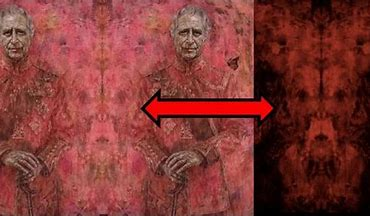
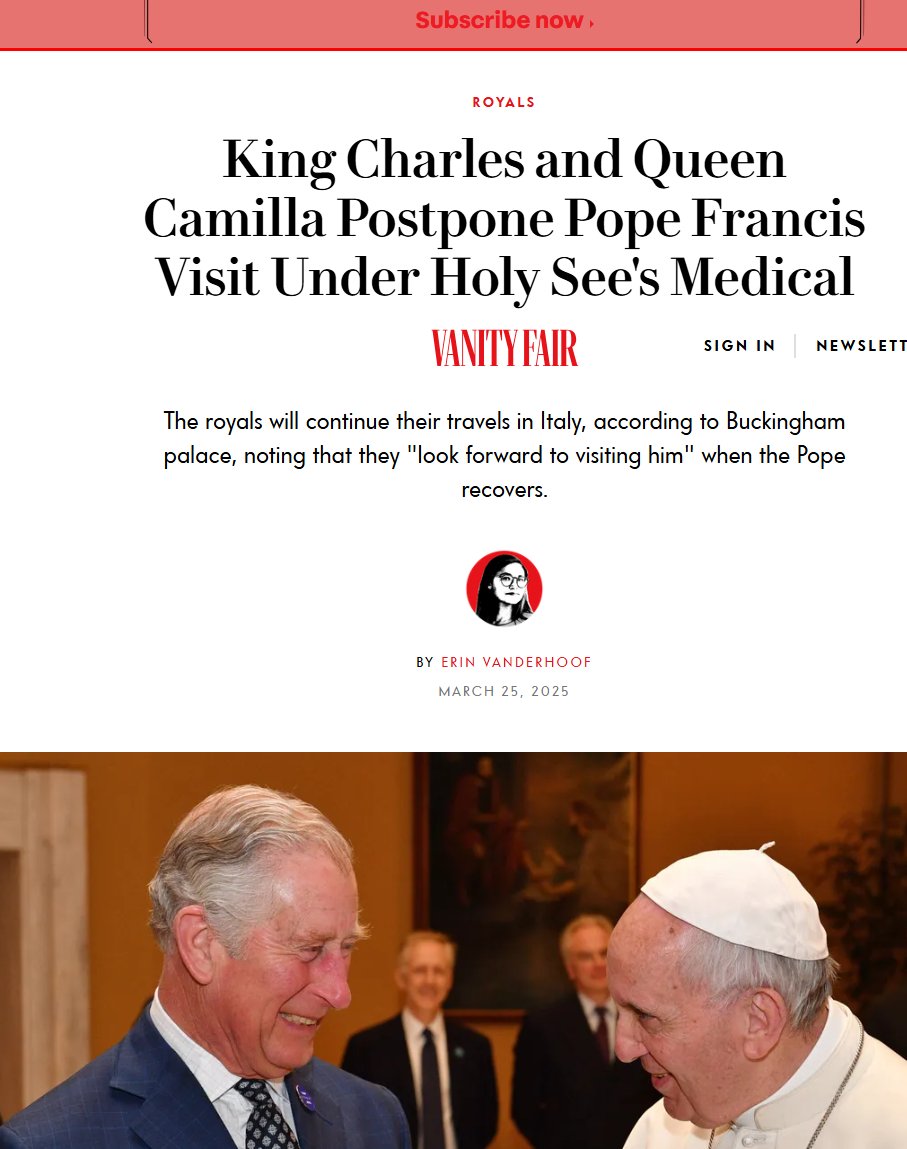
"Reports of the financial struggles and decline in membership among large American denominations have become so commonplace that they often elicit little more than a shrug. But every now and then, a report arises that warrants attention. A recent Religion News Service article gives helpful insight as to why “Protestant denominations are losing members, particularly the Episcopal, Presbyterian, Methodist and other historic mainline groups,” including the Southern Baptist Convention. The inclusion of the SBC is significant because, unlike the other denominations, which “have suffered schisms as they moved in more progressive directions,” the SBC is theologically conservative. Conservative Christians should take note.
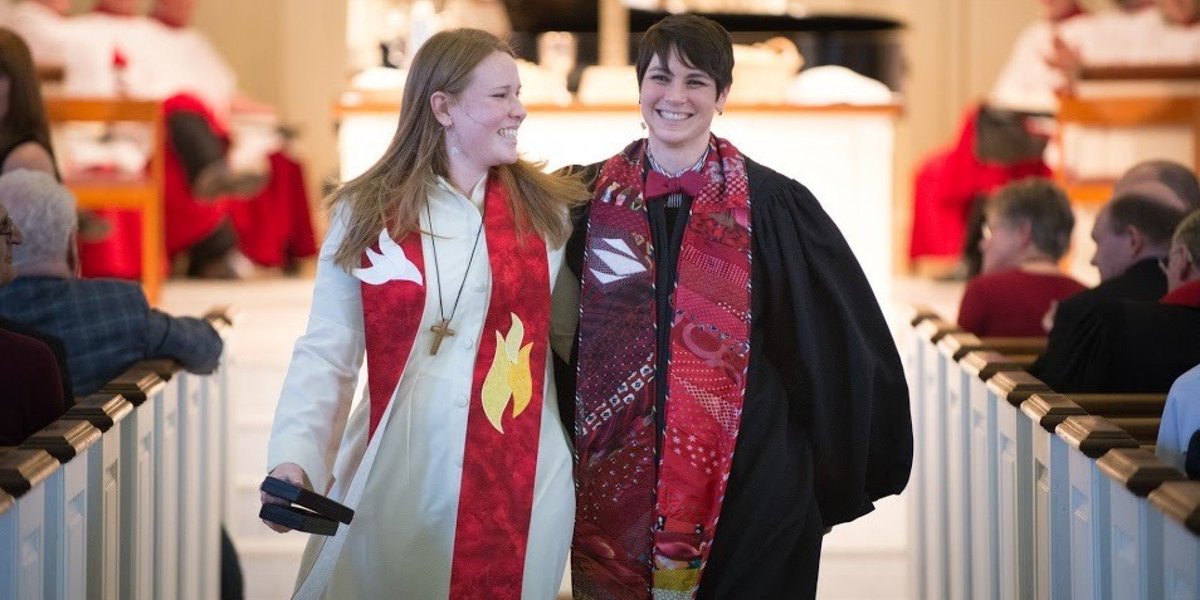
The article ironically features a photograph of two queer clergy. If ever one wished to render the church’s message obsolete and her existence pointless, adopting queerness would seem a most excellent way to do it. Queer theory is the perfect tool for demolishing any “oppressive” dogma or claim to transcendent truth. But if the church has no truth to proclaim, why does she exist? Or, more pointedly, why should anyone bother with her? H. Richard Niebuhr aptly summarized the irrelevance of liberal Protestantism: “A God without wrath brought men without sin into a Kingdom without judgment through the ministrations of a Christ without a Cross.” And yet even that seems quite robust compared to queer Jesus and a gospel with no apparent purpose other than decrying traditional Christianity and affirming the fluid identities of autonomous individuals. One reason for the dying of the churches is that God’s truth died in so many of them many years ago. We are merely living at a time when the interest payments have come due.
Cuts to the administrative structure of these denominations look set to be swift and sharp. Yet that hints at another problem in American Christianity: a decades-long creeping prioritization of church agencies over local church ministry. Following the money is a sound way to see who and what an organization deems most important. Overpaid administrative agencies are one good example of this. Now, this is not a monopoly of the liberal mainstream. In the conservative Presbyterian world there are denominations where agency heads earn in excess of $300,000, typically much more than the average congregant or even the most well-paid ministers. Yet it is the ministers who preach each week and do the work of frontline ministry." . . .
Lessons from the Decline of Protestant Churches - First Things

23

OsmosisX retweeted

24 Feb 2025
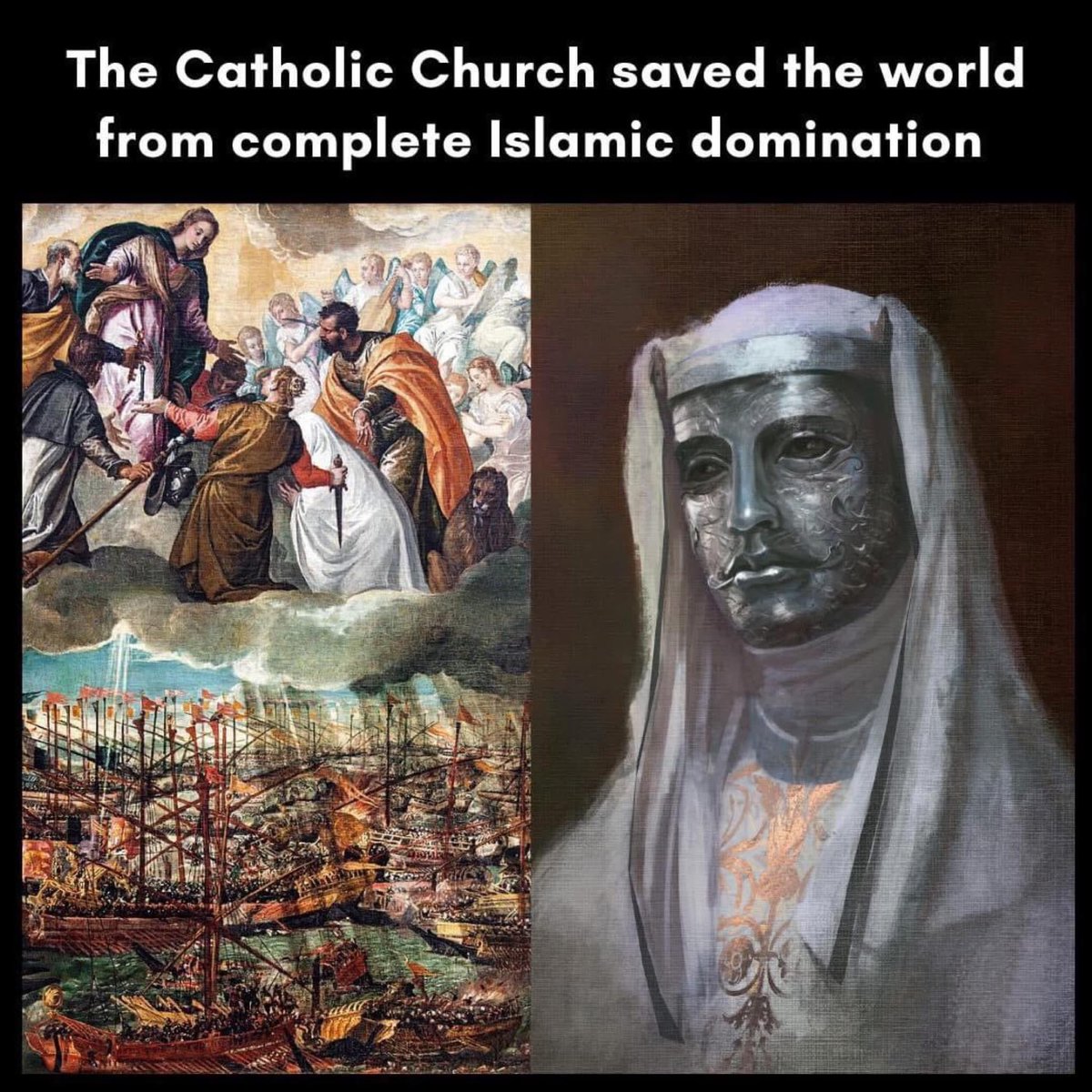
𝗥𝗲𝗺𝗶𝗻𝗱𝗲𝗿 𝘁𝗵𝗮𝘁 𝘁𝗵𝗲 𝗖𝗿𝘂𝘀𝗮𝗱𝗲𝘀 𝘄𝗲𝗿𝗲 𝗰𝗼𝗺𝗽𝗹𝗲𝘁𝗲𝗹𝘆 𝗷𝘂𝘀𝘁𝗶𝗳𝗶𝗲𝗱🇻🇦🕊️
The first Crusade began in 1095;
- 460 years after the first Christian city was overrun by Muslim armies
- 443 years after Muslims plundered Italy
- 427 years after Muslim armies first laid siege to the Christian capital of Constantinople
- 380 years after Spain was conquered by Muslim armies
- 363 years after France was first attacked by Muslim armies
- 249 years after the capital of the Christian world, Rome itself, was sacked by a Muslim army
By the time the Crusades finally began, Muslim armies conquered two-thirds of the Christian world.
88
646
3,476
71,968
OsmosisX retweeted

14 Feb 2025
Everyone is focusing on tariffs, especially with the VAT bomb Trump just dropped.
But the biggest problem for the EU (even if it will put a big growth drag) is not only reciprocal tariffs.
It’s mostly tax and regulation differentials. In a very fast moving recomposition of competitiveness rules, US is pulling the rug on everyone else.
EU starts from an unfavourable comparative position on both, and with Trump in full gear will end up being a fully undesirable place of business and / or living for anyone seeking innovation and entrepreneurial success.
As opposed to moaning and bitching about tariffs, it’s grand time voters realise that they need to vote in politicians able and willing to overhaul all the antiquated relics of the post WWII era of over-regulated socialism.
If the burden of taxes and regulations is not slashed rapidly, the future will be pretty bleak.
30
66
506
35,758
7 Nov 2024
Obama was the outgoing POTUS when he and Joe Biden agreed, in that well-documented Oval Office meeting --to go through with the Russian Collusion hoax in order to "limit the damage" that an ostensibly one-term Trump could accomplish.
Are we just going to let this race and gender hustler get away with that kind of treason?
x.com/dom_lucre/status/18542…
6 Nov 2024

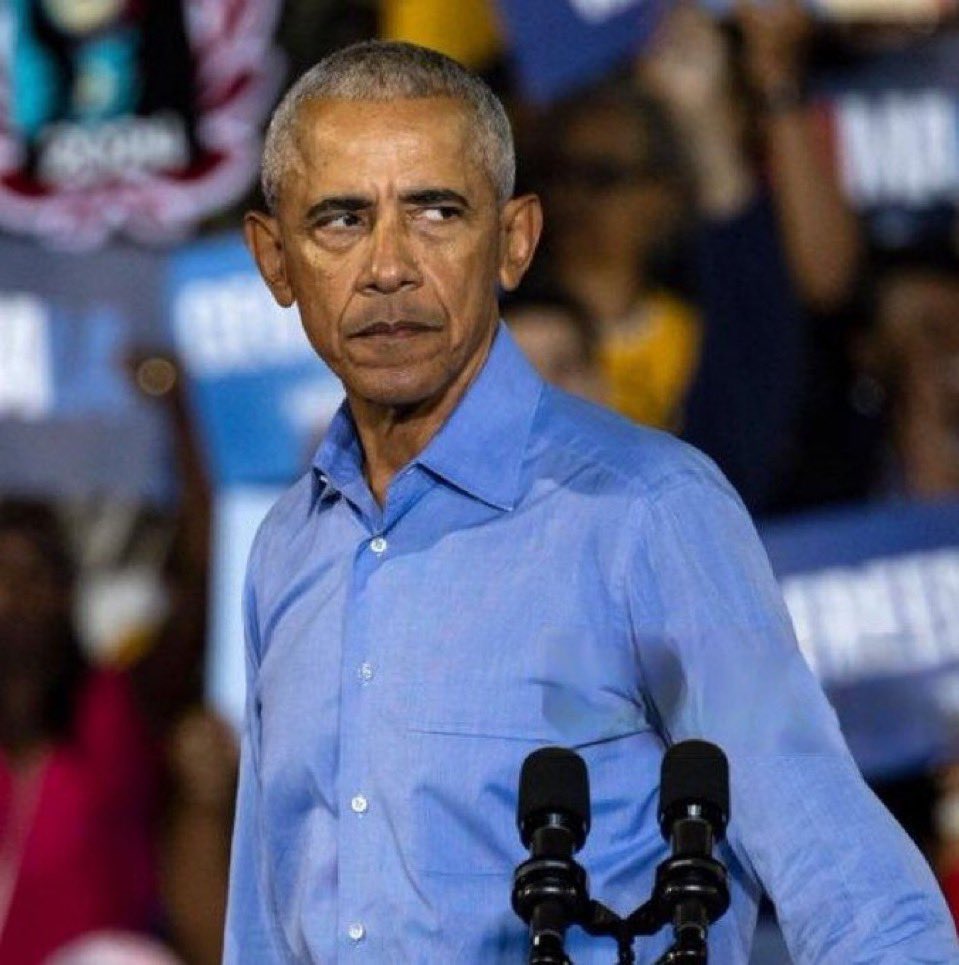
🔥🚨BREAKING: President Obama has reportedly disappeared. Obama’s team has refused to respond to any media request since Kamala Harris loss last night. Americans are anxious to hear what the 44th President has to say due to him being Kamala’s strongest supporter by attending more rallies with her than any Democrat politician.
1
2
150
7 Nov 2024
Michigan had 8.5M votes in 2020 and only 4M votes in 2024. People better go to jail for this kind of BS.
x.com/Charles05192071/status…
7 Nov 2024

She can account for 4 million, 8.5 million voted in Michigan 2020,4.5 million voted in 24,

2
3
179
23 Jul 2023
Hello @memdotai 👋 just setting up my Twitter flow. Here's my validation code: p4KIpJWb8sHXgBPI69O6
1
418
20 Apr 2022
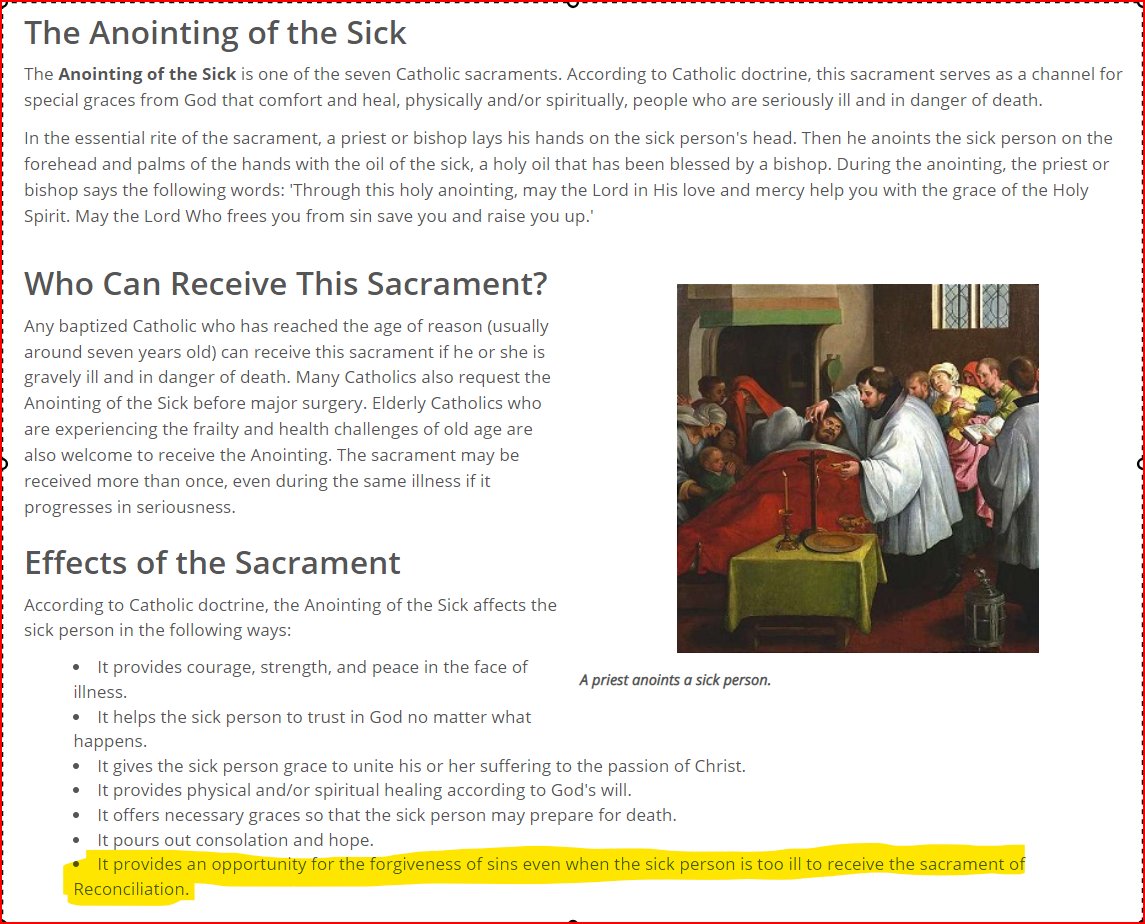
Please say a prayer for Jacqueline, my elder sister who passed away in her sleep tonight. Thank God the hospital had a Covid protocol in place for requesting a catholic priest to give her the final sacrament even though she was heavily sedated in the ICU a few weeks ago.
4