President, Church Answers. Lead Pastor, West Bradenton. Frequenter, Tropicana Field
Joined August 2008
- Tweets 26,657
- Following 806
- Followers 39,961
- Likes 48,041
2,242 Photos and videos

Sam Rainer retweeted

Jun 14
We are praying for St. Paul's Lutheran Church of Blossom in Elma, New York
churchanswers.com/pray/st-pa…
1
2
186

Jun 12
Love what you're doing in Texas! Keep up the good work!
Jun 12

Finishing up my Church Consultant Certification with Church Answers and @SamRainer. #TexasBaptists #GreatCommandment #GreatCommission
3
555
Jun 12
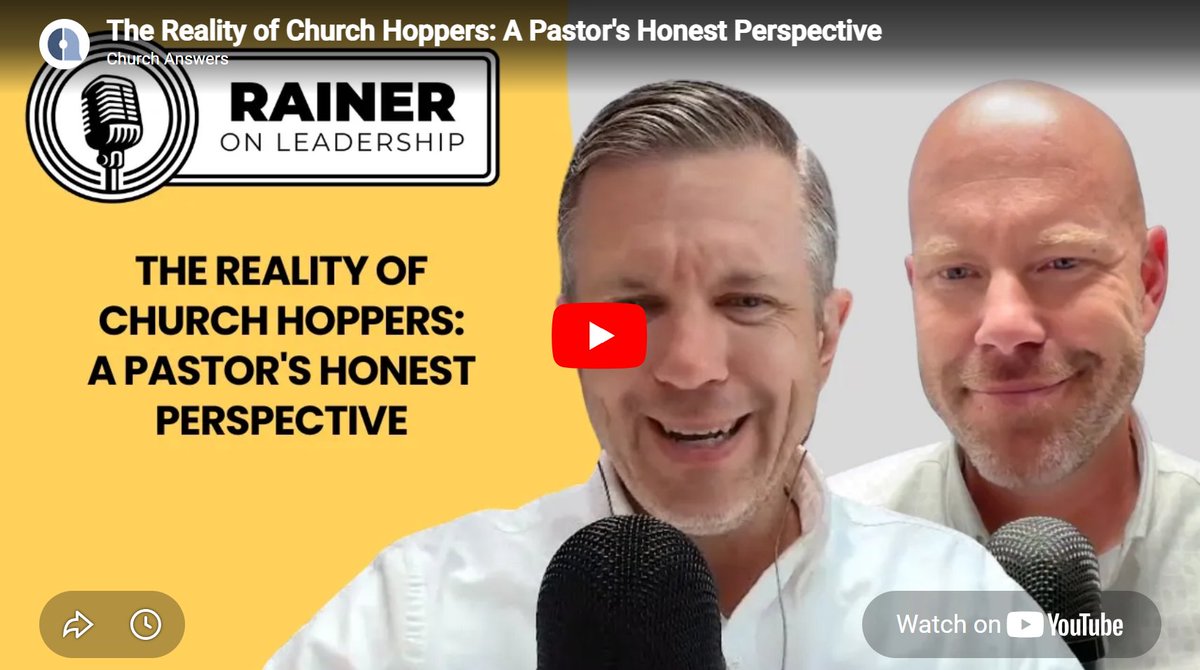
Summer often exposes a quiet reality in many churches: some members begin shopping for a new congregation. If you’ve faced it, you are not alone. Every long-tenured pastor has.
-Church hoppers hop. Often. You’re likely not the first.
-Summer and holiday weekends are the main Sundays for making the hop.
-Some departures reflect healthy doctrinal or philosophical alignment elsewhere. Others reveal consumerism, unresolved conflict, or family-driven priorities.
-You cannot please everyone. Trying to retain hoppers is often a losing proposition.
-Not all exits are negative.
-Consumer mentalities often drive dissatisfaction.
-Hurt and conflict require pastoral sensitivity.
-If happening too much, you should clarify membership expectations and assimilation processes. churchanswers.com/podcasts/r…
3
527
Sam Rainer retweeted

2
7
389
Jun 11
Church attendance in America is being propped up by one unusually large generation: the Baby Boomers. That is not conjecture. It is a demographic reality.
Boomers comprise roughly 40–50% of adult membership in many Protestant denominations, even though they represent only about 20% of the U.S. adult population. In other words, Boomers are about twice as prominent in churches as they are in society at large. This imbalance explains why many congregations feel relatively stable today. But it also explains why that stability is temporary.
The age distribution data is sobering. In several mainline Protestant denominations, roughly two-thirds of adult members are over 60. Evangelical denominations are not dramatically younger. Southern Baptists, for example, have only 6% of adults under age 30.
The future is not just about death rates. It is about replacement. Across denominations, the share of adults in “peak fertility years” (18–40) has declined sharply. For example, Southern Baptists fell from 28% in 2008–2010 to 19% in 2022–2024. Additionally, non-denominational evangelicals dropped from 39% to 27%. Similar trends appear across the mainline groups.
The bottom line is unavoidable:
-Birth rates are too low to offset losses.
-Transfer growth potential is largely exhausted as the median church size is half of what it was three decades ago.
-Many denominations are on pace to lose 30% of their adults in about 15 years and 50% in about 20 years.
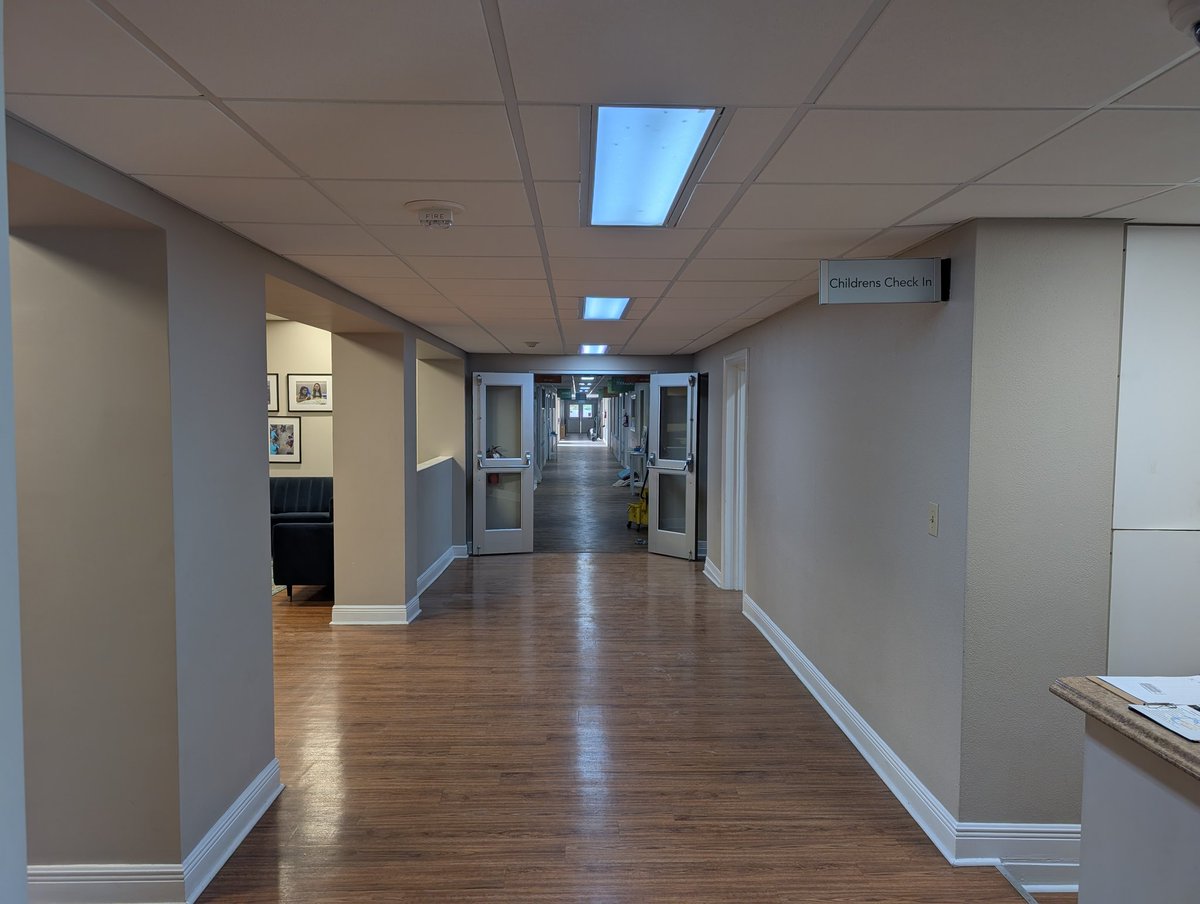
A church without a full nursery is not merely missing a ministry opportunity. It is facing demographic contraction. churchanswers.com/blog/what-…
4
13
1,151
Jun 11
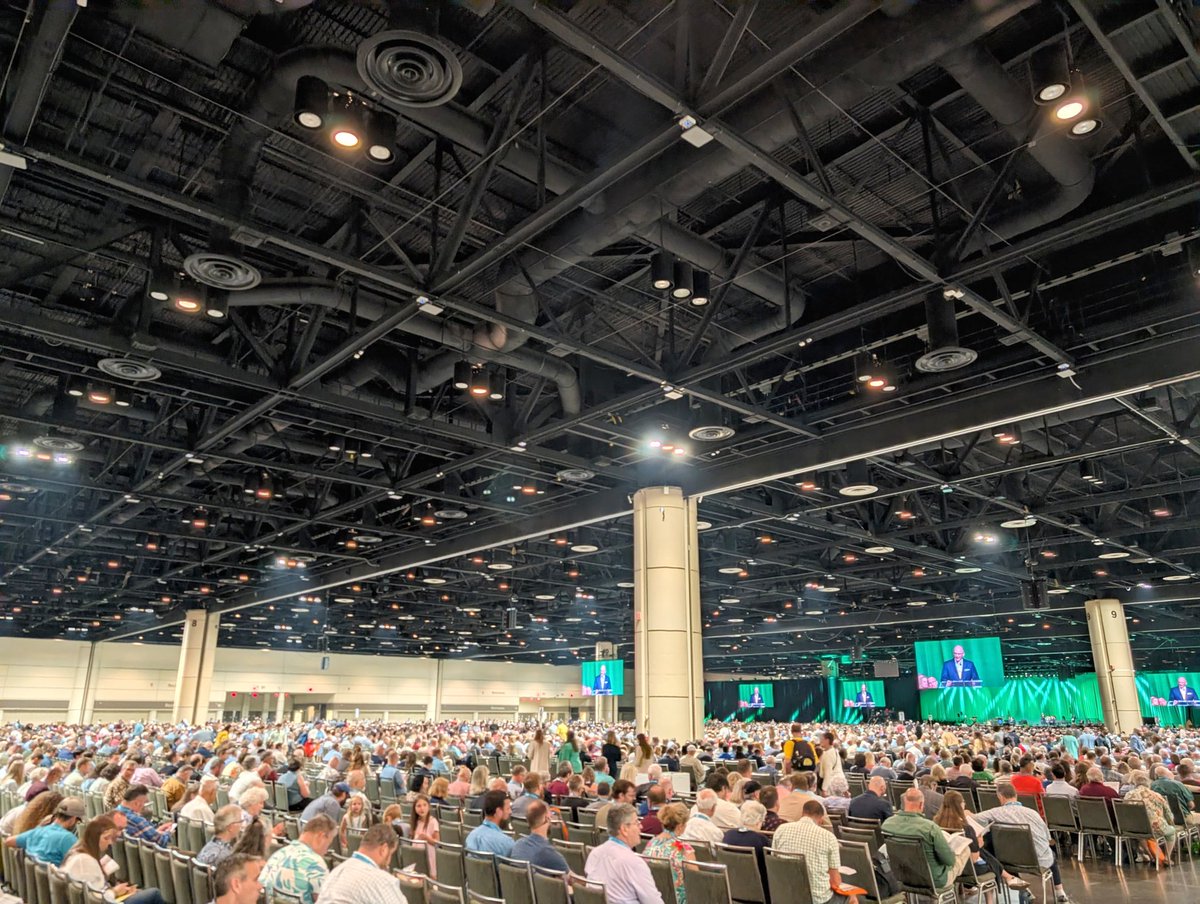
After a few days at #SBC26, it was good to get back to "normal" ministry at West Bradenton. Largest Summer Supper crowd we've ever had. Thankful for an amazing church and honored to serve with them.
10
868
Sam Rainer retweeted

WE WILL REBUILD!!!!!!

200
476
8,282
285,972
Jun 8
Pretty wild. It was felt in Manatee County.

Did you just feel an earthquake Florida??? Holy crap we just did on our ship. Literally we were on top of this earthquake just now. Everything shook. Panic definitely was in the air. Thought we lost a motor. 6.1 magnitude reported as of now. Craziest thing ever experienced no doubt.

1
2
847
Jun 8
Why do formerly active members quietly disappear for good? After years of research with people who once attended faithfully but haven’t returned to any church for at least two years, clear patterns emerge. Most departures aren’t dramatic or theological. They’re gradual.
Drift is the most common exit. Many people don’t leave over conflict. They simply fall out of the habit and never return.
Life transitions are major drop-off points. High school graduation, college, and leaving home often break church routines permanently.
Church hurt is real and lasting. Conflict, bullying, or petty disputes wound people deeply enough to walk away for good.
Consumer mindsets lead to chronic church shopping. When church becomes about preferences and personal needs, disappointment becomes inevitable.
Specific unmet needs push people out. A single moment—like lack of care during illness or grief—can permanently damage trust.
Disconnection predicts departure. Those not involved in groups or relationships rarely stay; belonging, not attendance alone, anchors people.
Financial investment often mirrors commitment. Many who leave were never giving or fully invested, signaling shallow engagement long before they disappeared.
Pastor loyalty can replace church loyalty. When attachment is to a personality instead of the body, people leave when the pastor leaves.
Relocation breaks continuity. After moving, many never prioritize reconnecting to a new church, and the habit quietly dies. churchanswers.com/podcasts/r…
3
8
1,003
Jun 8
The national debt gotta have something to do with this, whether people realize it or not. We've shifted such a financial burden on future generations, it will take decades for them to recover.
Jun 8

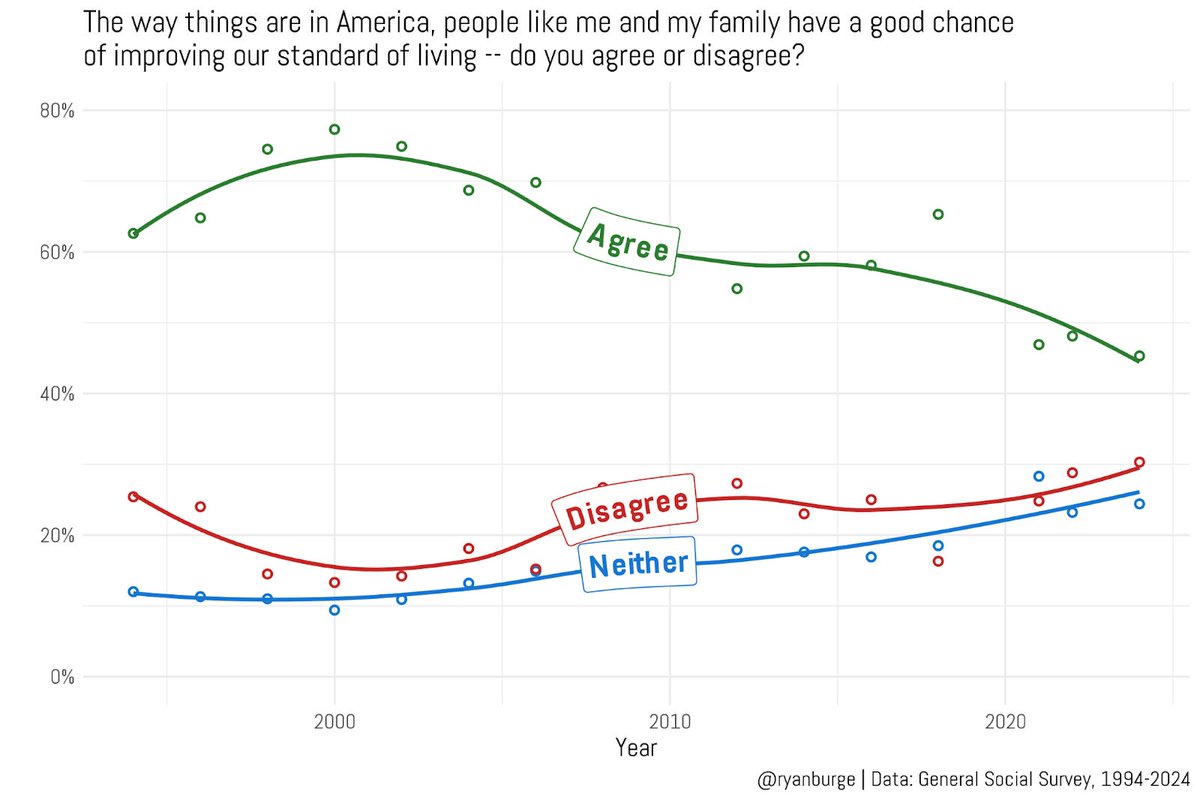
It is empirically true -- Americans have never been so pessimistic around their future as they are now.
In 2000, nearly 80% of folks agreed that "people like me have a good chance of improving our standard of living"
Today, it's around 45%.
What's religion got to w/it? 👇
2
761
Sam Rainer retweeted
Jun 7
We are praying for Faith Baptist Church in Lakeland, Florida
churchanswers.com/pray/faith…
1
3
242
Jun 5
What sets apart pastors who stay at one church for ten, twenty, or even thirty years and still lead with energy and joy? Long-tenured pastors aren’t just “hanging on.” They’ve built habits that sustain both their soul and their ministry. They’ve weathered criticism, resisted the lure of greener grass, and chosen faithfulness over constant movement.
-Daily prayer and Scripture are non-negotiable. Long-tenured pastors protect time with God first, fueling endurance through consistent spiritual renewal.
-They don’t sweat the small stuff. Critical comments and nuisances are treated like “gnats,” not crises, preserving emotional energy for what truly matters.
-They regularly pray for wisdom. Instead of reacting impulsively, they seek God’s guidance for decisions large and small.
-They dream beyond maintenance. These pastors refuse to coast; they believe God still has bigger plans for their church’s future.
-They cultivate gratitude for where they serve. By seeing the “green grass” in their own church, they avoid constant comparison and the temptation to leave.
-They maintain an outward, evangelistic focus. Long stays don’t lead to complacency; they continue reaching new people with the gospel.
-They prioritize family health. They understand that strong leadership at church begins with faithfulness at home. churchanswers.com/podcasts/r…
1
10
715
Sam Rainer retweeted

Jun 5
Important.

Net Worth Explained: What It Is and Why It Matters tinyurl.com/mv26xxck
1
1
382
Jun 4
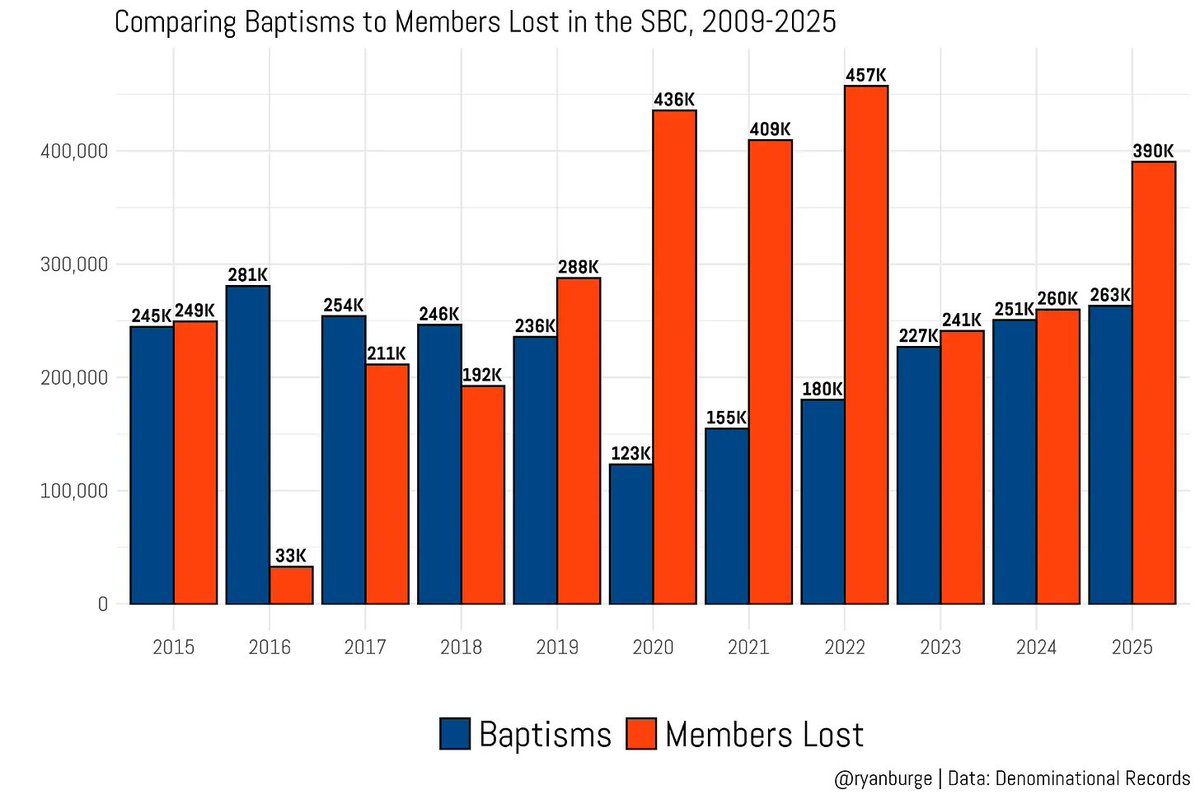
Another must-read from @ryanburge. In my view, the biggest issue facing the SBC is that membership losses are outpacing baptisms. I’m grateful that baptisms are up! But we’re still on a steep downward trajectory and facing an actuarial cliff as Baby Boomers age. The only way to turn around the SBC is to win more people to Christ AND retain those already in our churches, especially our children. graphsaboutreligion.com/p/th…
11
1
23
4,470
Sam Rainer retweeted
Sunset season in the Bradenton Area >>>>
📍Anna Maria Island
📸 IG sheaspencefit

2
7
472
Jun 2
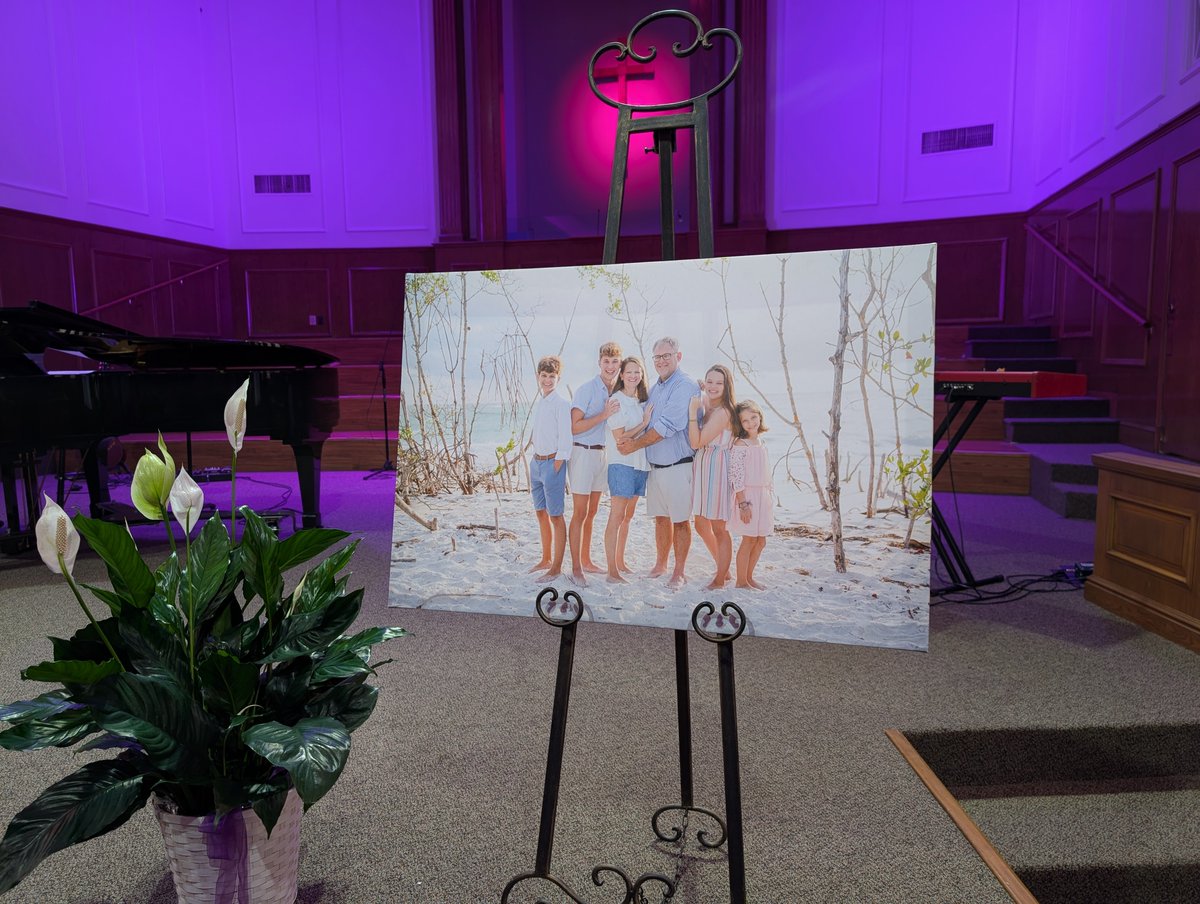
We should all pray for Dr. Mohler. He has served faithfully.
Jun 2

I’d like to share a personal word with those who have asked about my health.
8
2,364
Jun 2
First time in Koreatown in Los Angeles. Honored to speak to the Council of Korean Churches. I have no idea what they said about me, but I'm sure it's nice. Incredibly hospitable people.

6
604
Sam Rainer retweeted

Jun 2
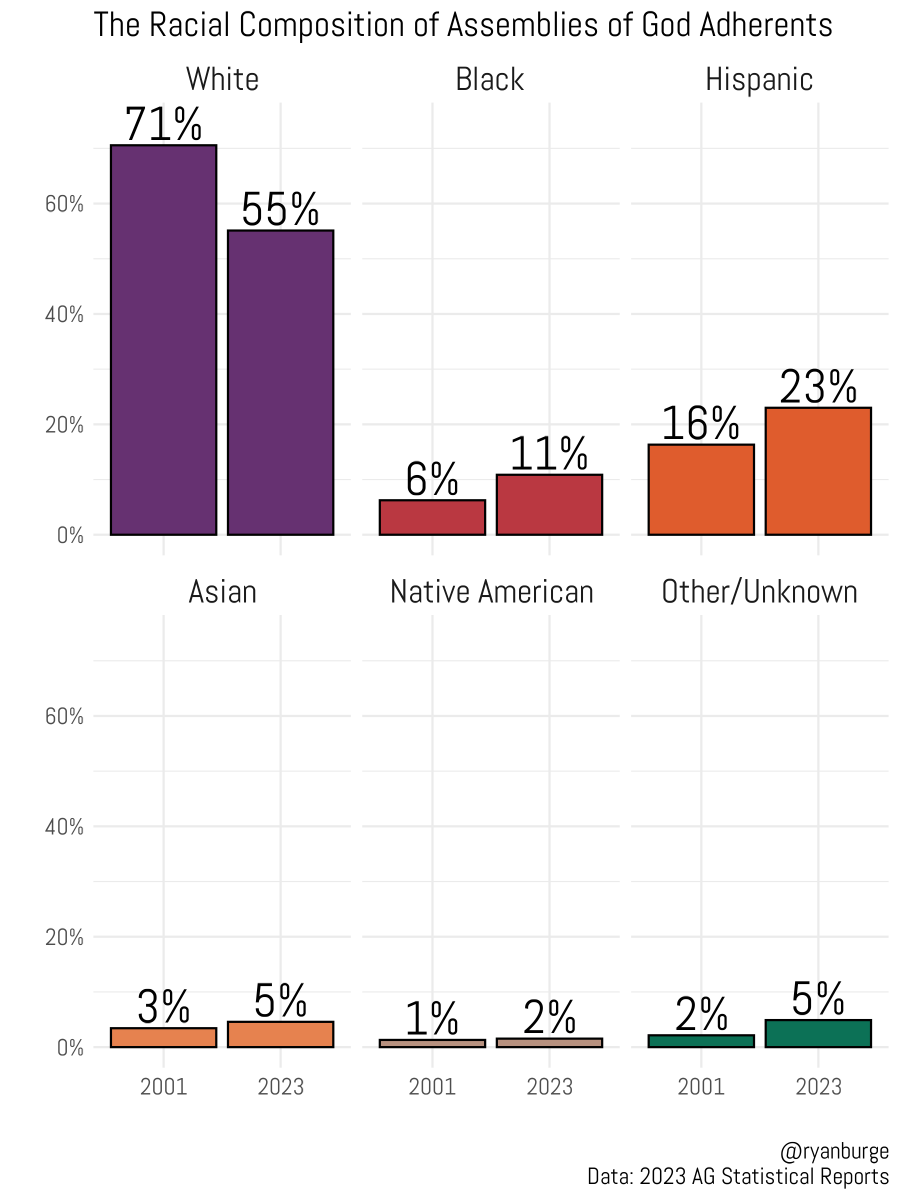
One of the most interesting stories in American religion is the Assemblies of God.
They are the only large denomination that has recorded consistent growth over the last 20 years.
One possible explanation for that growth is that they have become a lot more racially diverse.
12
22
94
10,616
Jun 1
We’re hearing it more at Church Answers. Church leaders are communicating, “We are not doing discipleship well.” It’s not due to neglect so much as to an outdated strategy. Most discipleship systems in North American churches were built for an era when people attended weekly, married younger, had more stable family rhythms, and Baby Boomers formed the backbone of both volunteering and giving.
That world is fading. Attendance frequency is declining, household formation is delayed and stressed, and the actuarial reality is unavoidable: Baby Boomers are aging out of active participation. Discipleship strategies built for the past will not carry the next generation.
What, then, are the shifts church leaders should pay attention to right now? churchanswers.com/blog/your-…
1
7
1,545