
Journalist and managing partner of the amaBhungane Centre for Investigative Journalism. Digging dirt, fertilising democracy.
Joined February 2012
- Tweets 56,313
- Following 1,990
- Followers 22,429
- Likes 12,325
88 Photos and videos

Sam Sole retweeted

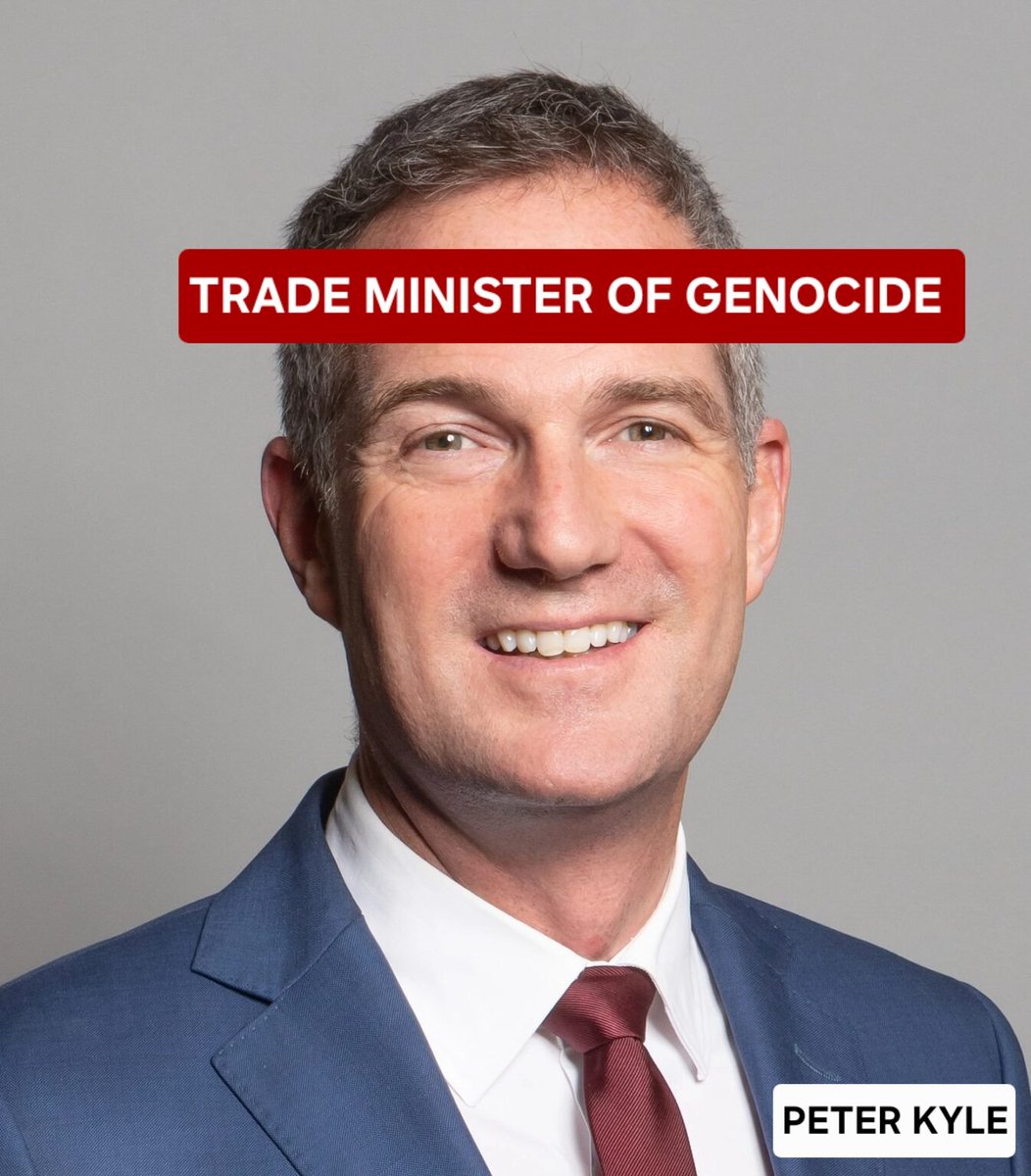
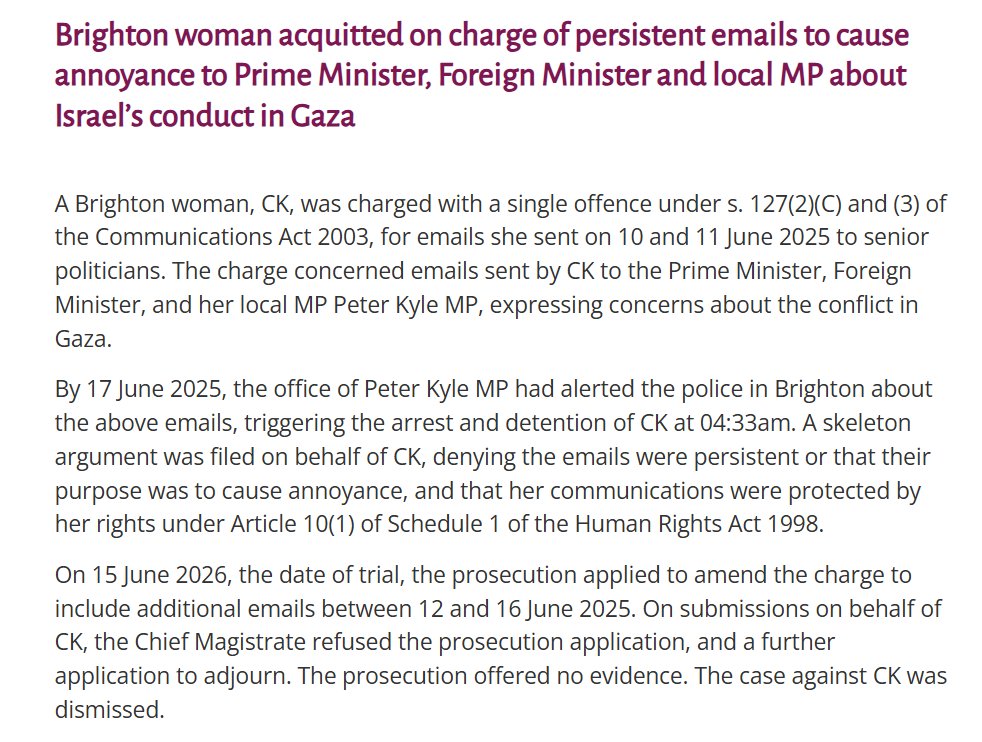
Claire Kerrison was arrested at 4:33am from her Brighton home for sending emails concerning 'israel's' genocide in Gaza to her MP Peter Kyle.
Four police officer raided her home on 17 June 2025. They seized her electronics. Held her for over eight hours with no one knowing where she was. Released her on strict bail. Charged her in late 2025 under the Communications Act.
The case dragged on for a full year. She faced multiple court hearings including not-guilty pleas.
The emails were described by those who read them as articulate and non-abusive— simply expressing horror at events in Gaza.
The man who triggered the police complaint? Her own constituency MP, Peter Kyle:
- Britain's trade minister responsible for arms exports to 'israel'.
- Long standing member and previous vice-chair of Labour Friends of 'israel'
Kyle has been accused of breaching the Ministerial Code by failing to declare his LFI membership in the official List of Ministerial Interests for 18 months despite the clear conflict.
The case was finally dismissed yesterday, with costs awarded to Claire Kerrison.
This is why British politicians who are paid/influenced by the 'israel' lobby must be banned from public office.
greghadfield.medium.com/excl…
doughtystreet.co.uk/news/bri…
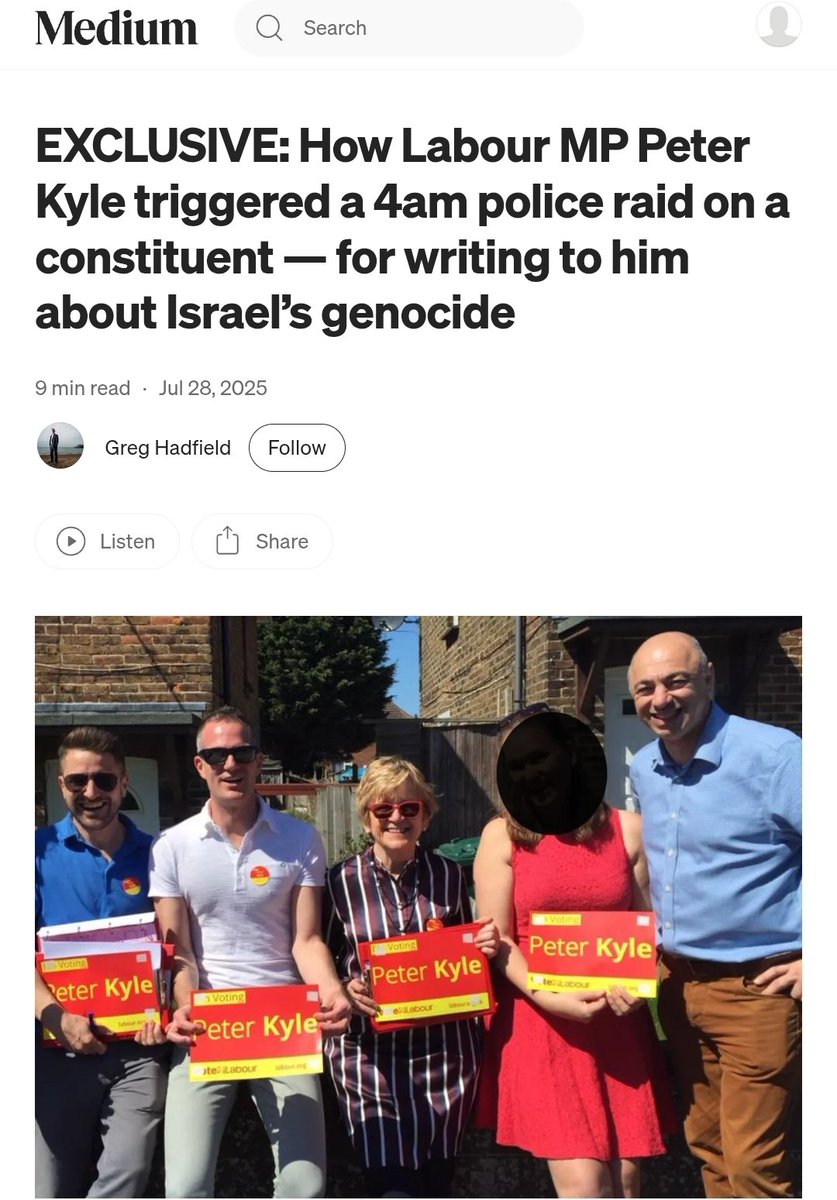

Holy crap. Peter Kyle CALLED THE POLICE on his own constituent because she wrote him a letter about Gaza.
doughtystreet.co.uk/news/bri…
157
2,761
5,275
109,499
Sam Sole retweeted

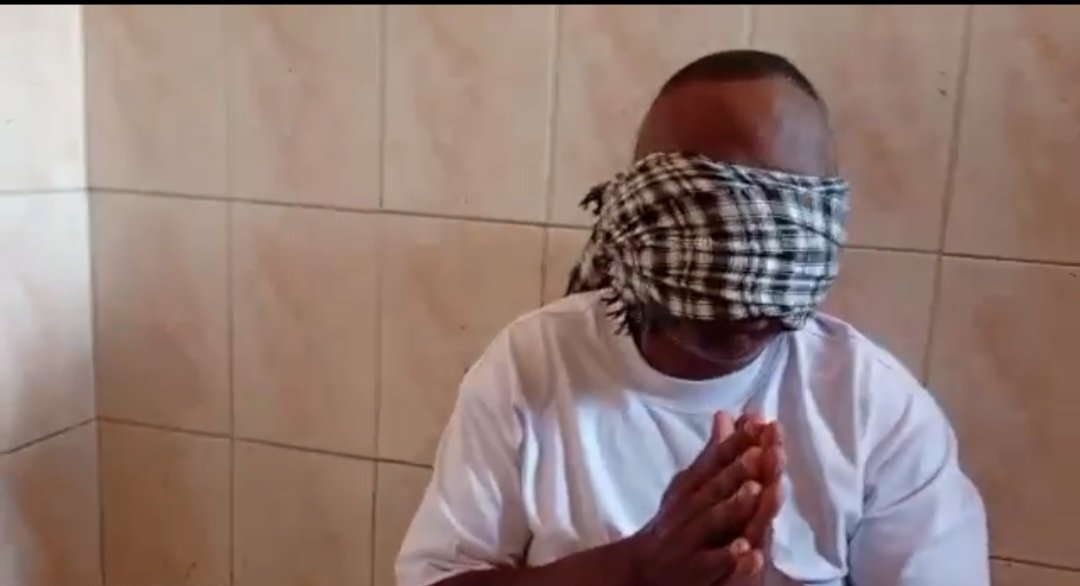
Extraordinary. The below post is from Uganda’s army chief, who is also the president’s son. It is a photo of Erias Lukwago, an opposition leader and former mayor of Kampala, who was taken from his home by soldiers on Kainerugaba’s orders. He’s been posting these since yesterday.

5
30
49
3,577
Sam Sole retweeted

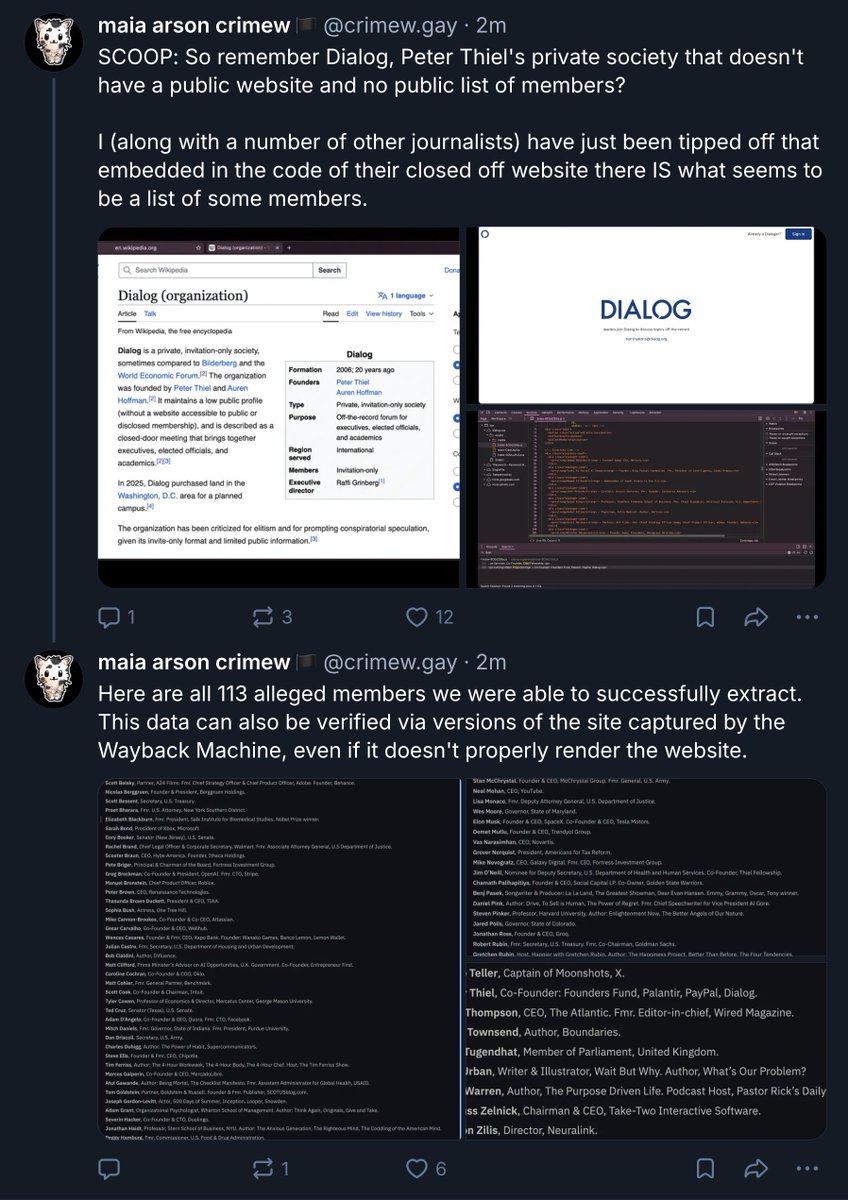
New today: Peter Thiel's secret society of illuminati had a website so insecure it exposed his entire membership list. And it's... interesting. His Palatantir folks, sure. Leonard Leo. The president of Stanford. Ezra Klein. And some D politicians who really shouldn't be there. 1/

153
2,800
10,480
755,553
Sam Sole retweeted

Abdullah Ibrahim was a difficult man to interview. He spoke in parable. In metaphor. In metaphysics. You could not pin him down. I later found he was a very difficult. Period. The first time I bumped into him walking anonymously on Plein street circa 2003 he literally growled.
32
372
1,259
89,658
Sam Sole retweeted

Fun historical fact: Before you lot pin everything on Duduzile’s hapless dad, the closures & some mergers of technical & vocational colleges actually happened under the Thabo Mbeki regime, with Prof Kader Asmal doing the spade work for the Cabinet— as a policy shift into the current FET colleges.
With the cadres feeling emboldened by their two-thirds majority then, teachers’ training colleges were also not spared, with most of them closed or incorporated into universities. Nursing training colleges were also restructured accordingly & absorbed into varsities or technikons then.
Critics still argue that the move was a transformation plan gone wrong— one of many by the ANC cadres. Those in favour of the experimenting cadres counter-argue that to rebuild you must first destroy— or something to that effect.

There used to be a Mezodo in Dobsonville.
We used to have buses come through to the schools, learners would be taken to Mezodo & learn bricklaying and other skills.
As to why Government closed such Centers, it remains a mystery!
2
22
38
3,041
Sam Sole retweeted

President Trump on Israel and Hezbollah:
"Israel is fighting Hezbollah too long, and too many people are being killed."
"You don't have to knock down an apartment house every time you're looking for somebody. There are a lot of people in those apartment houses and they're not all Hezbollah."
"I suggested to Israel to let Syria take care of Hezbollah."
On Israel striking Hezbollah in Beirut: "I did not like that, I let them know that." Says the attack was "too much."
"If Israel can't do the job without killing everyone else, he'll do the job, Syria will do the job."
"Bibi has to be more responsible with respect to Lebanon."
"I'm not happy with the way Israel has handled themselves with Lebanon, and with Hezbollah."
"Israel would have been blown up a long time ago, had I not gotten involved."
461
498
2,551
1,018,662
Sam Sole retweeted

Jun 12
The South African Reserve Bank is investigating offshore payments by NYSE listed Super Group ($SGHC) the largest online gambling company in the country, which in turn is the largest contributor to its revenues. Martin Moshal, whose trusts control a major chunk of the stock, is also one of SA's largest political donors, and a contributor to pro-Israel causes. amabhungane.org/betting-batt…
1
9
6
1,469
Sam Sole retweeted

Jun 14
For the full background, watch our video breakdown of how Tongaat Hulett reached this point, and why the business rescue battle now matters far beyond one troubled sugar company.
youtu.be/M5-cs8huplw
2
3
2,274
Sam Sole retweeted

Jun 15
The handler EL, who directed one of the convicted arson attackers, offered Russian citizenship in return for other attacks and glorified President Vladimir Putin
The BBC has identified evidence suggesting that EL is a young Russian diplomat, schooled in information warfare by spies and propagandists, who is close to the highest levels of power in Moscow. His name is Evgeny Lyukshin. He is 23 and the son of a senior official
Story: bbc.co.uk/news/articles/c8r2…
87
154
536
198,827

Looming carnage: On the dangerous anti-migrant mobilisation in South Africa dailymaverick.co.za/opinioni…
2
6
7
742
Sam Sole retweeted

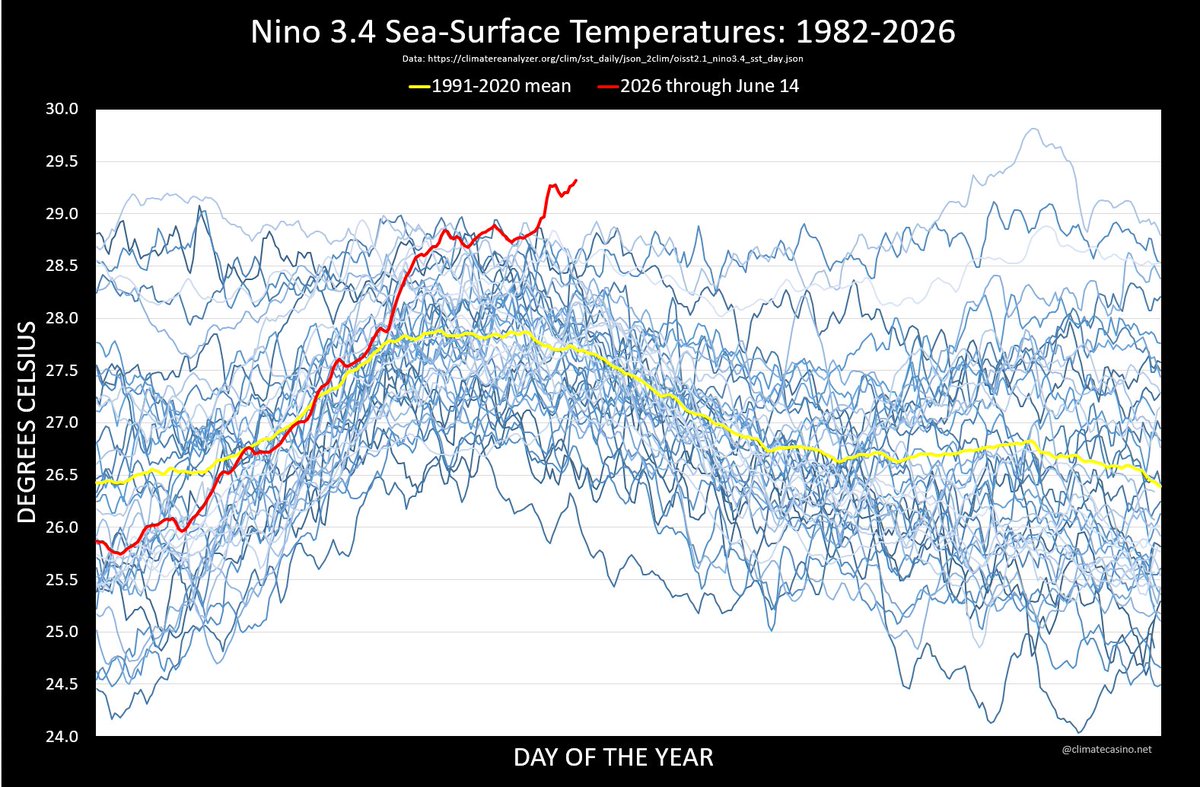
The Nino 3.4 sea-surface temperature (SST) just set a new record daily high for the 16th day in a row.
The current Nino 3.4 SST is higher than any day of any year on record, with the exception of a few days late in 2015 at the start of the last super El Nino.
Stay tuned!
17
281
695
36,343
Sam Sole retweeted

Jun 15
Because, Refiloe, these protest THEMSELVES oscillate, with reckless convenience, between “all foreign nationals must go” to “undocumented foreigners must go”. The characters organising at the forefront of this are themselves inconsistent- not by any mistake btw, for a real reason
Jun 14

Why do you guys intentionally leave out the word ILLEGAL when you’re reporting on what the protests are about?
66
104
315
34,814
Sam Sole retweeted

Jun 14
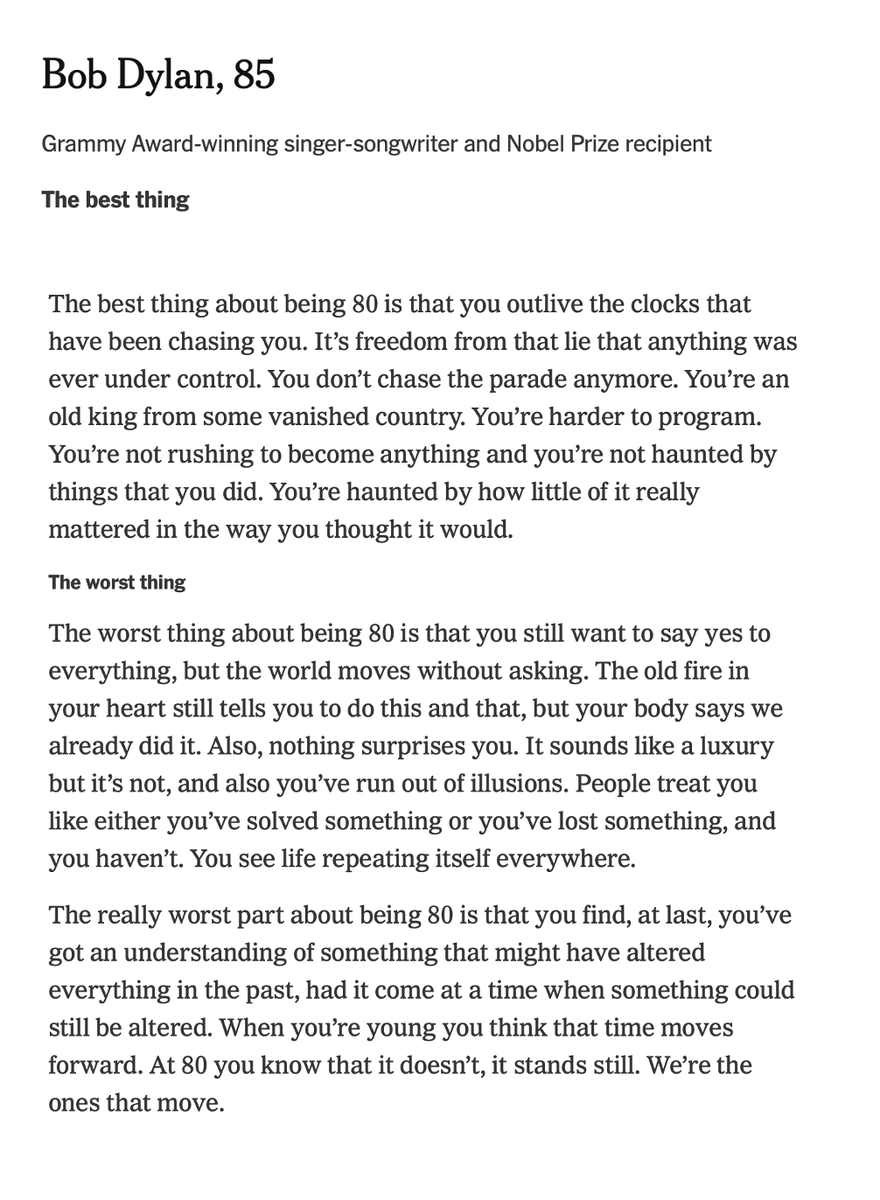
Bob Dylan in the NYT today, in a piece where artists in their 80s were asked to describe the best and worst parts of being that age, and whether they had advice for the president on his reaching the milestone. (Dylan apparently passed on the final question, not surprisingly.)
27
377
1,910
237,780
Foreigners first, NGOs next: The buried demand inside a viral constitutional campaign dailymaverick.co.za/article/…
1
279
Sam Sole retweeted

Jun 15
In the early 1990s, as a young advocate, I was briefed to represent a client charged with a horrific murder before the Swellendam Circuit Court. He stood accused of raping a young woman in the veld and then crushing her skull with a rock.
Circuit Courts are a distinctive feature of South Africa's judicial system. They are, in effect, travelling courts that sit in different towns to hear criminal and civil matters in areas where permanent courts may be difficult to access. In those days, when the judge, prosecutor and defense counsel arrived in town, it almost felt as though the sheriff had ridden in from the Wild West. They possessed a certain theatre. Investigating officers generally ensured that their cases appeared watertight. Acquittals were rare and, before 1995, the death penalty was a commonplace reality.
I met with my client on the eve of the trial. He had already confessed before a magistrate, giving a detailed account of the crime. According to the confession, he and the State's principal witness had been drinking together in the veld one afternoon. The witness had passed out beside him when the victim walked by. He confessed that he had grabbed her, dragged her into the veld and committed the terrible acts with which he had been charged.
At first glance, it seemed a straightforward case for the gallows. I had a client who wished to plead guilty to a heinous crime. That, in itself, was unusual.
Yet something troubled me. My client was a small man, timid and withdrawn. When I later saw the State's principal witness, I began to wonder about the confession. The witness was a large, imposing figure and certainly capable of dragging a woman across the veld. What unsettled me further was that the witness’ statement dovetailed almost too neatly with the confession. It concluded that my client had walked off into the veld shortly before the witness passed out, a detail that struck me as altogether too convenient.
The confession, however, posed an enormous obstacle, as confessions so often do. I have little doubt that, during the heyday of apartheid, innocent people were sent to the gallows on the strength of false confessions.
Then my client's sister, who had accompanied him, told me something that made the hairs on the back of my neck stand up. Her brother, she said, had given her a very different account. He had passed out while drinking and could not remember exactly what had happened that day. She added that the State's principal witness was on friendly terms with the local police officers investigating the case.
The prosecutor was a man of great integrity. I decided to do something I had never attempted before. I suggested that he speak privately with my client and his sister and judge for himself who was more likely to have committed the crime.
About half an hour later, the prosecutor emerged from his office, his face a mixture of shock and disbelief. He immediately withdrew the charges against my client and instructed the police to arrest the State's principal witness instead.
It was a reminder that even in the most apparently hopeless cases, the duty of counsel is not merely to process the evidence placed before them, nor simply to secure a conviction or an acquittal, but to search relentlessly for the truth. Sometimes justice depends upon the willingness to question what everyone else has already accepted as fact.
9
34
180
7,936
Sam Sole retweeted
Jun 14
The IDC can subsidise Vision’s takeover of Tongaat Hulett, or challenge the lawfulness of the business rescue process.
Neither option is safe.
But as @SamSoleZA writes, one may be bolder.
Read:
bit.ly/4ehpwMo
1
5
6
1,786
Sam Sole retweeted

Jun 14
"If the allegations are proved to be true, that spells doom for SA's criminal justice system." These words, spoken by retired ConCourt judge Mbuyiseli Madlanga, sets out exactly what's at stake at the #MadlangaCommission. #CarteBlanche @govanwhittles
4
55
85
3,311
Sam Sole retweeted

Jun 13
Is Izadi right? His 5 points are not invalid:
1. Ending the siege ends the cumulating pressure on Trump.
2. US can build back strategic oil reserves and weapons inventories; although less rapidly for the latter.
3. Thus opening the door to the dreaded possibility of ‘a cycle of attack, ceasefire, negotiation, attack’.
4-5. Sanctions are unlikely to come off given DC political economy.
On the other hand:
1. It has been established beyond reasonable doubt that the US does not have the military means to disarm Iran. This is a formidable deterrent bc it is now really hard for US security principals to convince themselves that the next time will look any rosier.
2. US magazine depth has been depleted so badly that Iran will have the opportunity to build formidable missile capabilities, air defense, fiscal room, and maybe even a nuclear deterrent before the US comes back for yet another round, even if it decides to do so given (1).
3. The war of the sieges is more dynamically competitive and less capable of one-sided pressure yielding a strategic decision than was hitherto believed to be the case. The issue is that too much oil is leaking from Hormuz. And this is not a trivial problem to solve. The only good solution is a Red Sea blockade. But that would remove the gun from the Saudi temple. Given Tehran has received checks from the Saudis, Emiratis and Qataris, it will be even more difficult to leverage coercion of the Gulf Arabs to indirectly coerce DC.
4. Money itself it a direct input into Iranian military power, as well as providing relief to the populace and thereby shoring up public morale. With $50-100 billion in the kitty, Iran can invest a lot more in missiles, drones, air defense, and naval capabilities to deter or defeat the next round of attacks if they come. With that kind of money, Iran can buy dozens of S-500 systems, rapidly stockpile hypersonic missiles, and upgrade terminal guidance for its existing inventories.
5. There is also the important question of general deterrence. Has the US experience from this round been so nasty that US security principals would think much harder next time before attacking Iran? There are no guarantees about this Administration. But I can say with some confidence that US elites have been chastened. At the minimum, even if the impossibility of ‘finishing the job’ is not admitted by many commentators, there is a near-consensus in America that the costs and difficulties of the project to gut Iran had been severely underestimated. This is the recipe for general deterrence.
Jun 12

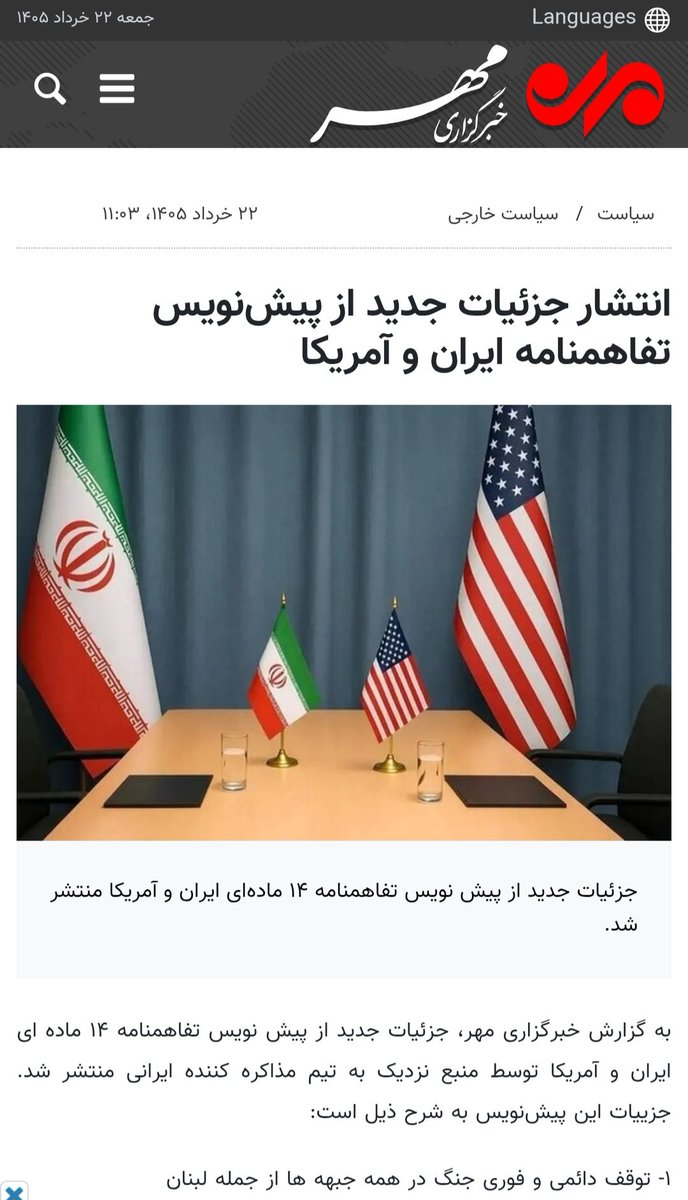
جزئیات پیشنویس تفاهمنامه ۱۴ مادهای ایران و آمریکا یعنی
۱- بازشدن #تنگههرمز در قدم اول. یعنی حل مشکلات اقتصادی و سیاسی ترامپ. کشورها معمولا مهمترین اهرم قدرت خود را در قدم اول به طرف مقابل تقدیم نمیکنند.
۲- بعد از باز شدن تنگه هرمز و کاهش قیمت نفت:
ذخایر نفتی آمریکا دوباره پر میشود.
و در فرصت ایجاد شده سامانههای نظامی آمریکا و اسرائیل ترمیم و بازسازی میشوند.
۳- این یعنی تکرار چرخه حمله، آتشبس، مذاکره، حمله. دشمنی افرادی که رهبر معظم انقلاب اسلامی را شهید کردند علیه ایران کم نشده. پیدا کردن بهانه برای خروج از تفاهمنامه برای ترامپ کار مشکلی نیست. ترامپ نباید بتواند ادعا کند که هزینه حمله نظامی دوم به ایران قابل تحمل بوده. آمریکا و اسرائیل با استفاده از این فرصت تنفسی، خود را برای حملات بعدی آماده خواهند کرد. طراحی برای کودتای دوم نیز در دستور کار است.
۴- تحریمهای اصلی علیه ایران تحریمهای کنگره است، نه تحریمهای قوه مجریه. به این ترتیب ترامپ با عنوان اینکه نمیتواند کنگره را مجبور به برداشتن تحریمها کند دبه خواهد کرد.
۵- از سال ۲۰۱۵ هر توافقی با ایران ذیل قانون اینارا نیاز به رأی مثبت کنگره دارد. با توجه به نفوذ لابی اسرائیل، کنگره به برداشته شدن تحریمها علیه ایران رأی مثبت نخواهد داد. نفوذ نتانیاهو در بین نمایندههای دمکرات و جمهوریخواه بیشتر از ترامپ است.
راهحل:
۱- لطفا این تفاهمنامه را امضا نکنید.
۲- لطفا لیستی از تأسیسات آبشیرینکن و تأسیسات نفتی هدف ایران در منطقه منتشر کنید. در صورت حمله مجدد به ایران، این تأسیسات باید به گونهای تخریب شوند که بازسازی آنها حداقل دو سال زمان ببرد.
تخریب محدود بازدارندگی لازم را ایجاد نمیکند. ترامپ به تخریب محدود این تأسیسات به عنوان پروژه بازسازی برای شرکتهای آمریکایی نگاه میکند. اما تخریب گسترده قیمتهای جهانی نفت و گاز را برای حداقل دو سال بالا نگه میدارد و بازدارندگی لازم را ایجاد میکند. مسیرهای جایگزین تنگه هرمز باید در اولویت اهداف ایران باشد.
۳- لطفا تنگه هرمز را برای حداقل دو ماه دیگر باز نکنید. در سه ماه گذشته ایران بیش از ۳۰ میلیارد دلار نفت فروخته، این مبلغ برای مدیریت اقتصادی دو ماه آینده کافی است.
۴- لطفا دریافت عوارض از تنگه هرمز را فراموش نکنید. بر اساس برآوردهای بینالمللی عوارض حاصل از تنگه هرمز میتواند بیشتر از دو برابر فروش نفت باشد. بخشی از راه حل مشکلات اقتصادی کشور همین است، نه در توهم رفع تحریمها ماندن.
mehrnews.com/x3cjcs
20
34
114
23,179
Sam Sole retweeted

Jun 14
[ICYMI] The City's budget announced two weeks ago is more than 60% higher than it was in 2010, yet property values are 21% lower. blsa.org.za/thought-leadersh…
2
15
30
2,282
Sam Sole retweeted

Jun 14
My latest post on the Substack looks at just how weak is Johannesburg's financial situation
thesouthafricabrief.substack…
6
3
858