
Creator of Echo Chess. Builder, product leader, ML practitioner.
Joined June 2014
- Tweets 637
- Following 234
- Followers 574
- Likes 1,954
42 Photos and videos




Apr 20
top 3 believers who'll go to war for you if you want to change the world:
- you as a 10yo
- your mom
- so-good-they-shouldnt-exist investors like @JoshLu and the SR fam
if you're building a thing getting great traction on your v0, HMU me for a referral / possible scout check.

There has never been a better time to be building a startup, and that's why you should be applying to @speedrun. We just opened applications for SR007. Link to apply is below
1/ Builders have more leverage to ship than they ever have
2/ Adoption of new products and tools (and willingness to pay) has never been higher
3/ We would like to give you up to $1M to go build a startup. We're also going to put you in an elite community of entrepreneurs, give you as many unfair advantages as we possibly can, and be there every step of the way to support you
14
2
47
4,263
Sami Ramly retweeted

I left VALORANT to make a co-op game where you pet and throw cats
After 1.5 years, it's purrfect
37
62
601
29,590
Sami Ramly retweeted

20 May 2025
Today we’re launching Prompt Adaptation, a state-of-the-art agentic system that automatically adapts prompts across LLMs. Prompt Adaptation outperforms all other methods and significantly improves accuracy over manual prompt engineering, saving you thousands of hours per year.
22
71
636
110,736

Sami Ramly retweeted

30 Sep 2024
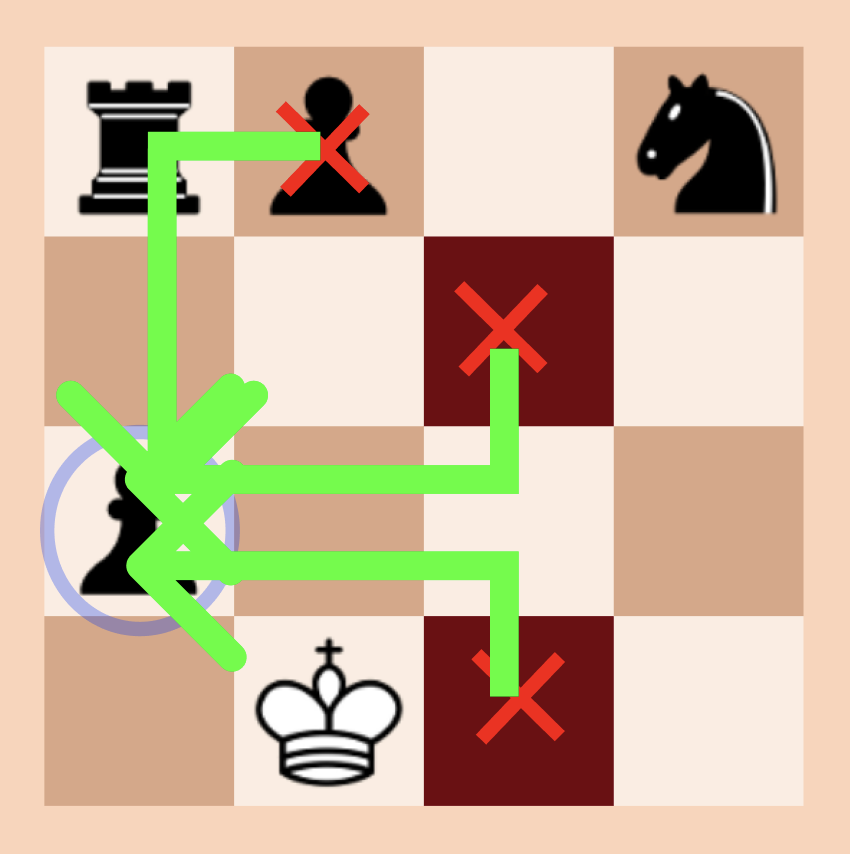
We came across @echochessgame today and downloaded the Bot into our discord at @strategicplay_
I have to admit when it comes to puzzles they have taken this to the next level.
Just watch the puzzle that @pet_rescueNFT had to go through to solve successfully.
#Chess #NFT
2
6
12
830
Sami Ramly retweeted

19 Aug 2024
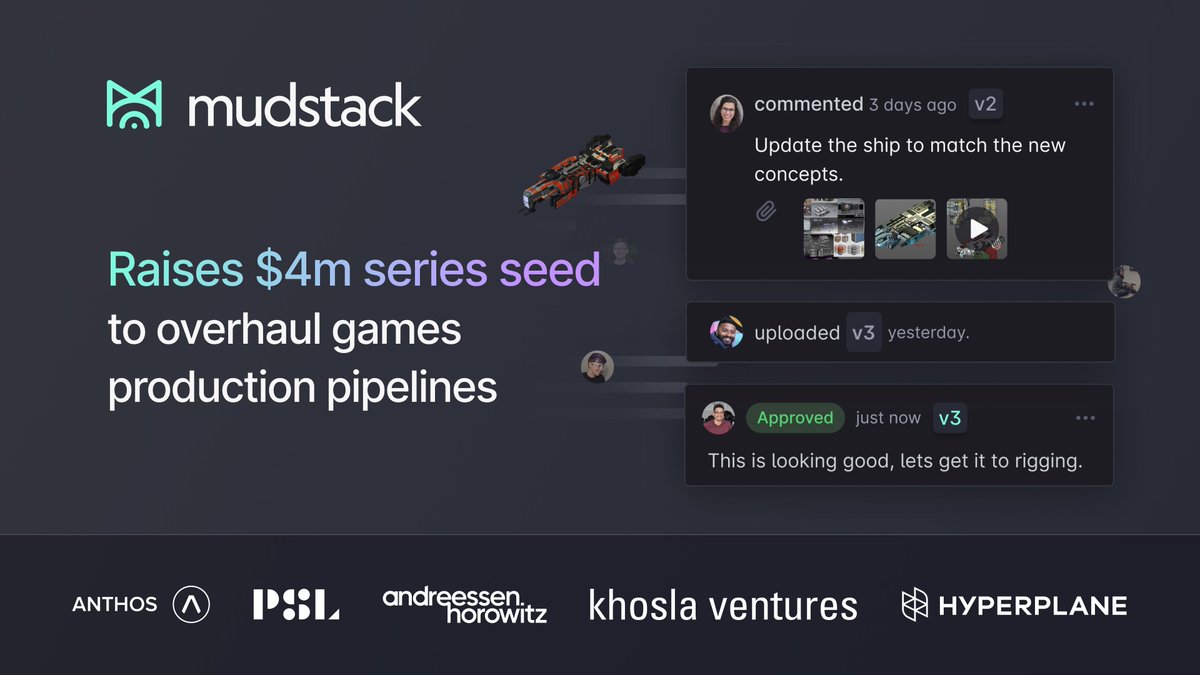
Excited to announce that I’ve joined Mudstack as CEO to help solve what I consider one of the big unsolved problems in the game industry – managing all the content needed to build a modern game. And that we've just raised $4M to accelerate our growth. Here's the whole story 👇
12
4
61
8,825
Sami Ramly retweeted
30 Jul 2024
Today we're releasing Not Diamond…
The world’s most powerful AI model router.
Not Diamond maximizes LLM output quality by automatically recommending the best LLM on every request at lower cost and latency.
And it takes <5m to set up.
Watch this to see how to start using it:
23
75
393
75,788
Sami Ramly retweeted

28 Jul 2024
Some of the puzzles are super hard.
It’s like wordle but for chess addicts.
1
1
278
Sami Ramly retweeted

22 Jul 2024
announcement:
a16z has opened it's LA office! woohoo!!
we're all so pumped for this -- it's in the heart of santa monica and we'll be inviting our startups, friends, angels, etc to events and to co-work from the office
Some fun features:
- 3 floors roof deck with ocean views
- PC bang for 5v5 competitive gaming sessions, playtests, and much more
- cozy bar/hangout on the roof with sofas/tables/etc
- podcast recording studio
- co-working space for startups and friends!
- tons of space for the several dozen a16z employees working from LA -- from games, crypto, venture, CLF, IT, and much more
189
76
1,630
263,828
Sami Ramly retweeted

16 Jul 2024
Echo Chunk, the AI startup behind the viral free-to-play, daily puzzle game Echo Chess, has raised $1.4 million in a funding round. venturebeat.com/games/echo-c…
4
5
1,831
10 Apr 2024
ECHO CHESS
Apr 10 (E)
🤴🏻🫅🏻🏰🙅🏻🐴♟️
🟨⬜️⬜️⬜️⬜️🟨
🟨✅✅✅✅🟨
🟨⬜️⬜️⬜️⬜️🟨
🟨✅✅✅✅🟨
✅✅✅✅✅✅
1:12 sec
6/8 tries
15 moves
echochess.com/
10 Apr 2024

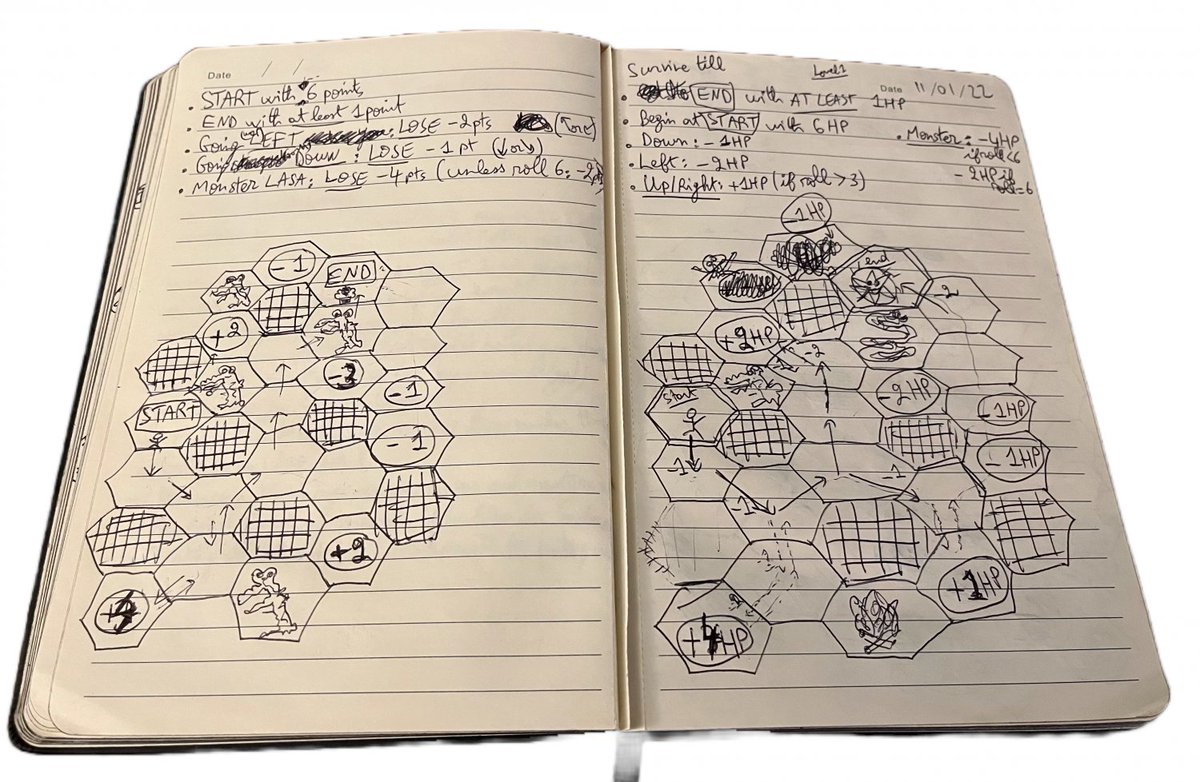
The founder of Echo Chess is hiring founding engineers #1 (backend python dev) #2 (frontend react native dev).
The game topped HN twice, and is experiencing explosive growth. DM or email (jmazer@a16z.com) if you're interested (US-based remote).
1
1
4
698
Sami Ramly retweeted
23 Mar 2024
Discovered wordle for chess nerds this week. 3 days old and it's growing like crazy. echochess.com/index.html
2
3
5
1,512
Sami Ramly retweeted

22 Mar 2024
I got connected to @samiramly via my blog post; fascinating how much further he's taken his side project - it's multiple RC batches work!
game: echochess.com/
blog: samiramly.com/chess
video: youtube.com/watch?v=4HOJwK7b…
Now out of beta with Classic, Epic and Zen modes
1
1
396
Sami Ramly retweeted

19 Mar 2024
My brilliant friend @SamiRamly built a fun new game. It's basically chess, but you are what you eat. Giving me Wordle puzzle vibes. 🟩🟨🟩
Check it. echochess.com/
2
1
4
477
Sami Ramly retweeted

14 Mar 2024
Introducing Cartwheel 🤸 a text-to-animation tool!
21
53
362
40,019
Sami Ramly retweeted

11 Jan 2024
fun research story about how we jailbroke the the chatGPT API:
so every time you run inference with a language model like GPT-whatever, the model outputs a full probabilities over its entire vocabulary (~50,000 tokens)
but when you use their API, OpenAI hides all this info from you, and just returns the top token -- or at best, the top 5 probabilities
we needed the full vector (all 50,000 numbers!) for our research, so we developed a clever algorithm for recovering it by making many API calls
important to know is that the API supports a parameter called "logit bias" which lets you upweight or downweight the probability of certain tokens. our insight was that we could run a binary search on the logit bias for each token to find the exact value that makes that token most likely, yielding the relative probability for that token
to get a full next-token probability vector, we run 50,000 binary searches (it's actually not as expensive as you'd think) – shout out to @justintchiu for coming up with this and implementing it efficiently!
and there's a bonus level: in the setting where openAI gives us the top-5 logprobs (available for some models), there's a much more efficient algorithm, with a pretty elegant solution
in this setting, to get the probability for a certain token, you just add a really large fixed logit bias to it. given its new probability (which openAI will give you, since that token will be in the top 5 now) you can solve for its original probability in closed-form.
since in this setting OpenAI provides probabilities for the top 5 tokens in a single API call, and we only have to run one call per token, this new method lets you get the full vector in 50,000/5≈1,000 queries
funnily enough, after we posted the code for the binary search algorithm we got an email from fellow researcher @mattf1n with the math for the top-5 algorithm. and he followed it up with a pull request. nice guy!
if you thought this was interesting:
- want to run the algorithm yourself? check out the code here: github.com/justinchiu/openlo…
- want to read about it? see Section 5 of our paper Language Model Inversion: arxiv.org/abs/2311.13647
15
62
588
124,317
4 Jan 2024
Awesome opportunity to join a stellar AI team with @tomas_hk 🔥 feel free to DM if you need an intro.
4 Jan 2024

Hiring a founding engineer: tomashernandokofman.notion.s…
Competitive salary, generous equity, robust benefits, and a guaranteed investment in a future startup if you ever decide to build something yourself down the line.
1
229
Sami Ramly retweeted

31 Aug 2023
Very cool to see Echo Chess on the front page of HN echochess.com/
One of the most fun chess variants I've played, it's like Chess was turned into an action game. Lots of gems in here from game design to procedural content generation with ML samiramly.com/chess
1
3
22
2,754
Sami Ramly retweeted

30 Aug 2023
I replaced my high school video game addiction with blitz chess in college, this is already more addicting than that
2
1
5
500
Sami Ramly retweeted
30 Aug 2023
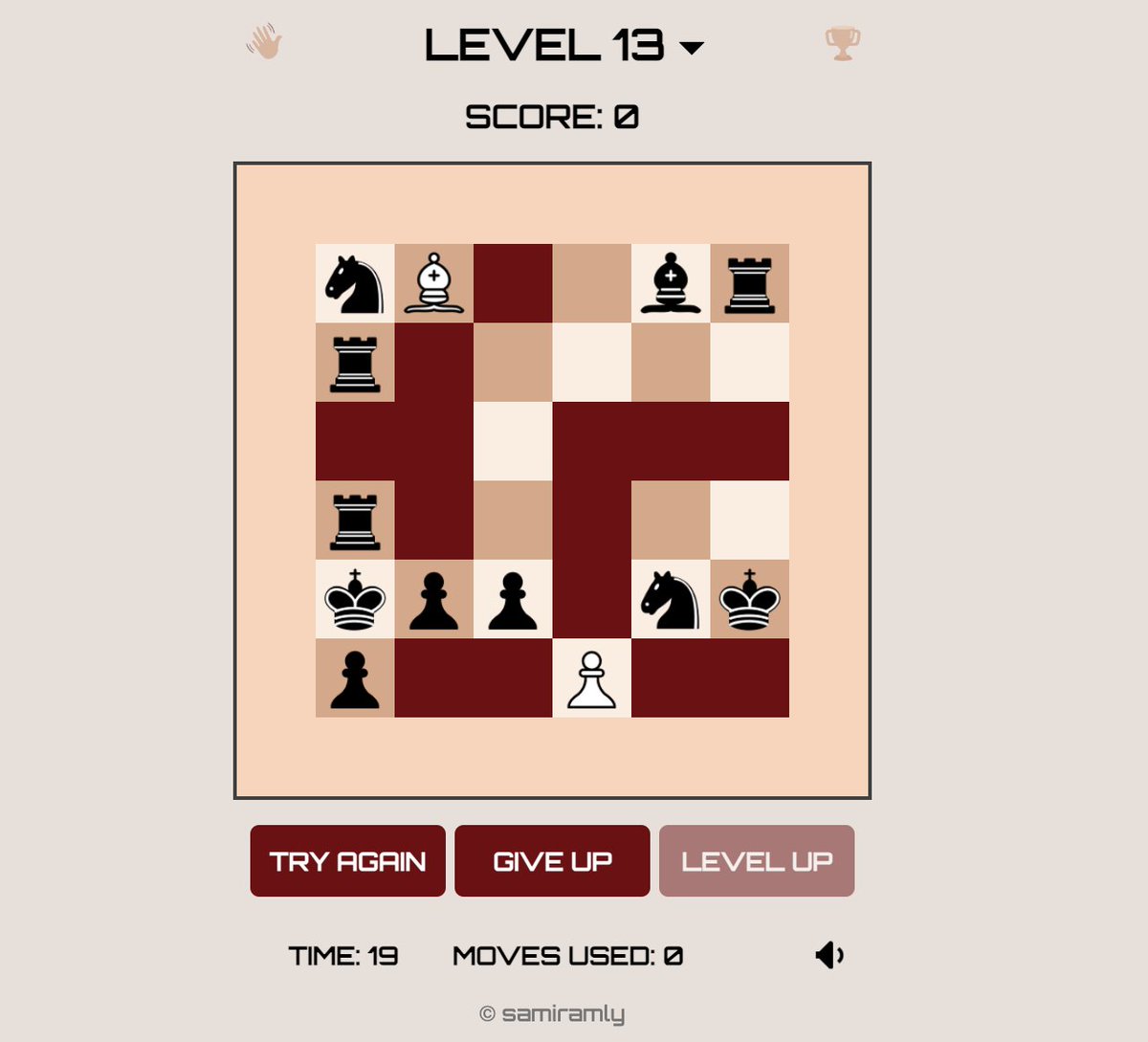
EchoChess, a cool chess minigame my friend made:
you're playing white, there's no opponent, and you need to clear the board to win. Every time you capture a piece, you become the 'echo' of that piece
super addicting and interesting, the complexity really increases across the levels
link to game: echochess.com/
post about it: news.ycombinator.com/item?id…
4
2
17
2,269