Save The Magic: Bringing back Walt Disney quality we grew up with. Honest daily takes on parks, lost classics & declining quality. Follow for unfiltered truth.
Joined May 2017
- Tweets 4,609
- Following 3,742
- Followers 7,535
- Likes 32,938
377 Photos and videos

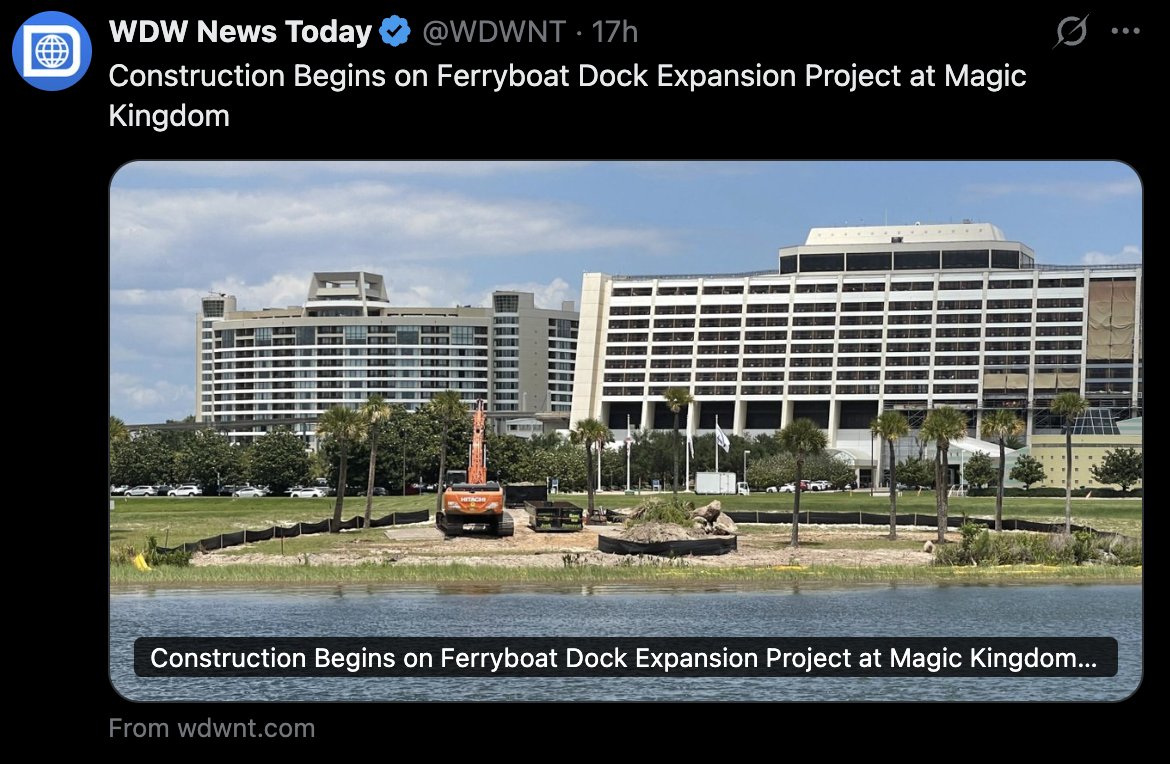
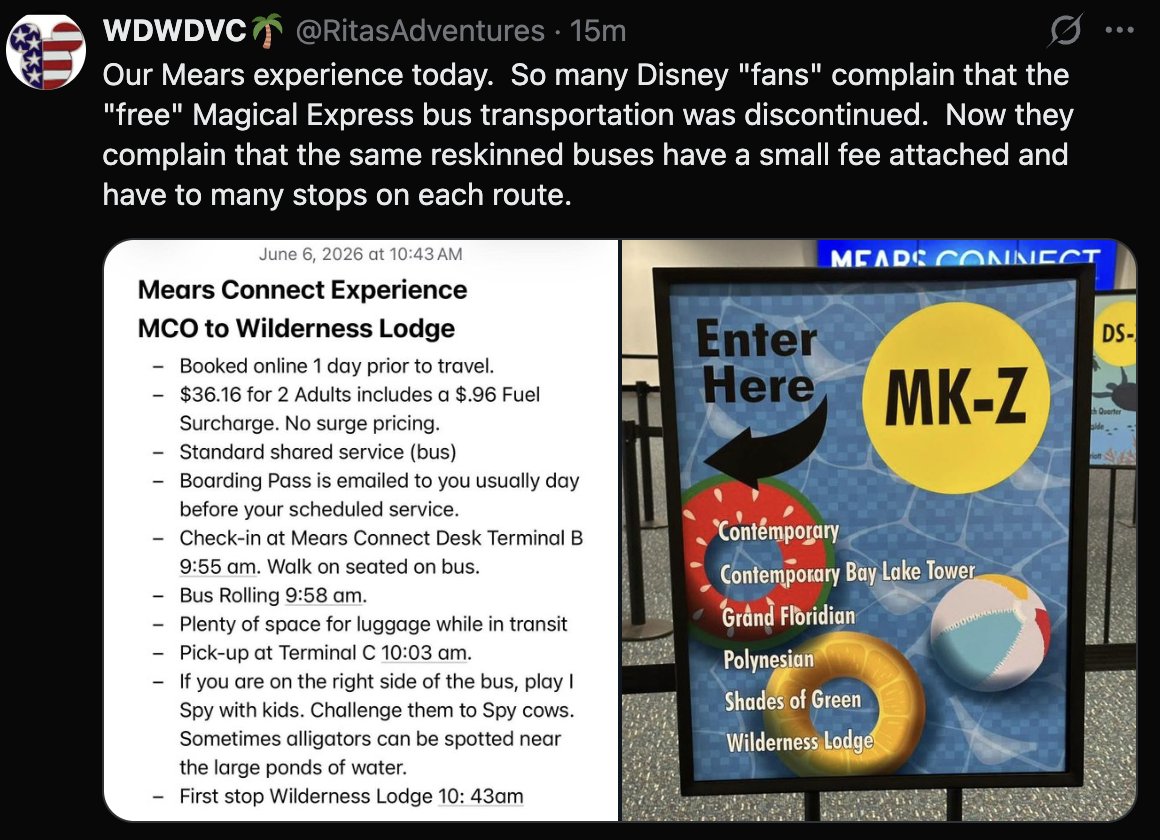
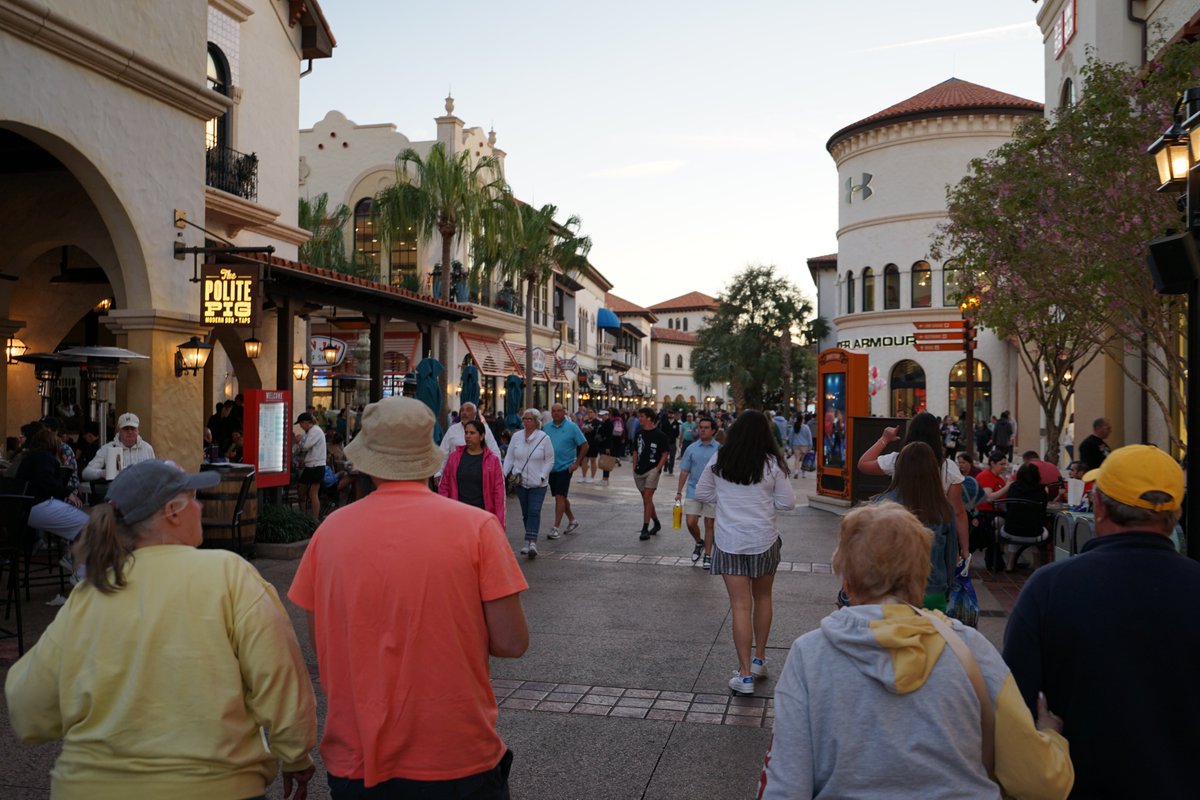

Jun 6
You know, when I look at the expense and cost Disney has to deal with because of the MK Parking situation. I am shocked that Disney hasn't created a "platinum" parking lot or garage near the MK. You know people would pay big $$ to skip the Ferry/Monorail and walk right in.
24
1
90
11,857
Jun 6
Disney’s Magical Express wasn’t just a bus. It was the moment your vacation began. You landed at the airport, stepped into the Disney bubble, and left the real world behind. Paying for a bus service doesn't feel the same, even if it's the same bus. This is why people complain.
13
2
77
2,801
Jun 6
Disney tried to turn Disney Springs into both a tourist destination and a locals' mall, and in the process, it failed at being either special or uniquely Disney. Most of the stores you can find back home. Meanwhile, the parks close earlier and earlier, funneling stranded resort guests into what is essentially an upscale outdoor shopping center. The older iterations of downtown Disney were more tourist-oriented, but that's never coming back - it's too much of a money maker for them now.
Jun 6

I spend so much money on airfare, hotels, food, and out of state AP. I’m not spending my time at the mall.
66
6
331
77,617
Jun 5
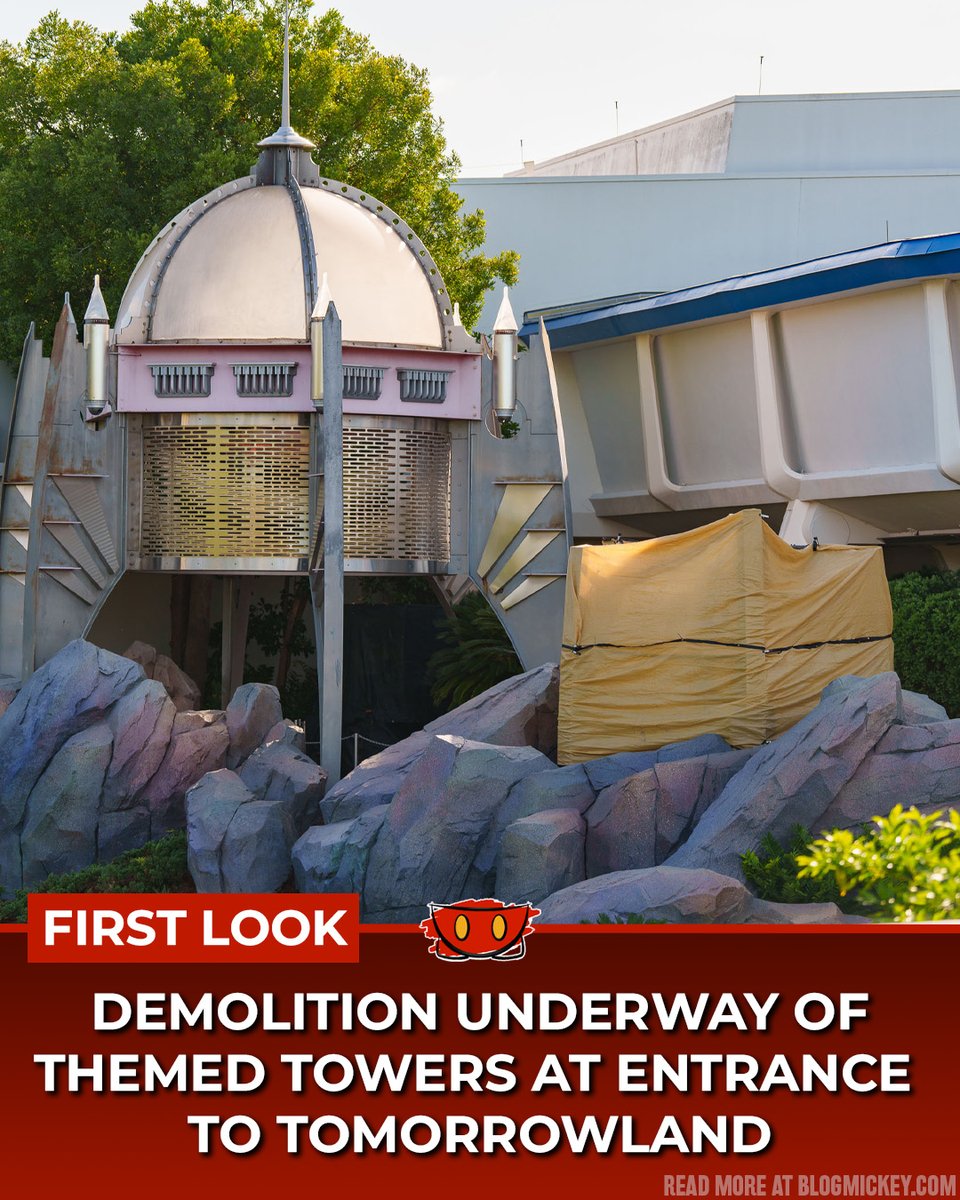
Really can't wrap my mind around this move by Disney. I don't get what spending the money on this demo gets them. I can understand redoing Tomorrowland, but this is an odd start to that if that's what they are doing.
Jun 5

Demolition is underway in Tomorrowland at Magic Kingdom, where themed towers are being removed
PHOTOS: blogmickey.com/2026/06/theme…
20
1
78
15,829
Jun 4
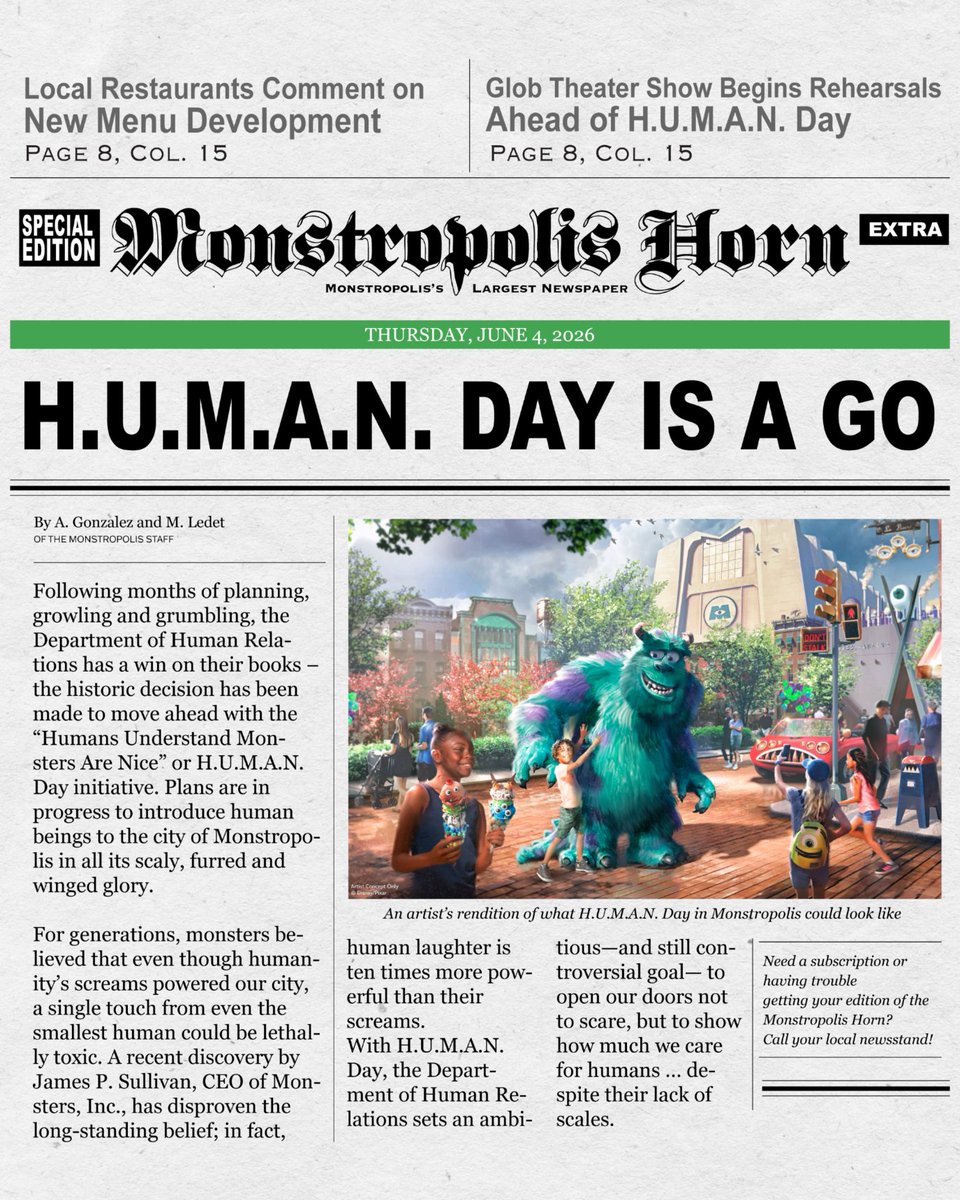
Great.. another party/celebration. How many times is Disney going to keep going with this same version of a storyline?
Jun 4

H.U.M.A.N. Day is a go 👍 Mike and Sulley are preparing to showcase life inside Monstropolis to humans ✨ di.sn/6018B8W4RO
13
74
7,282
Jun 4
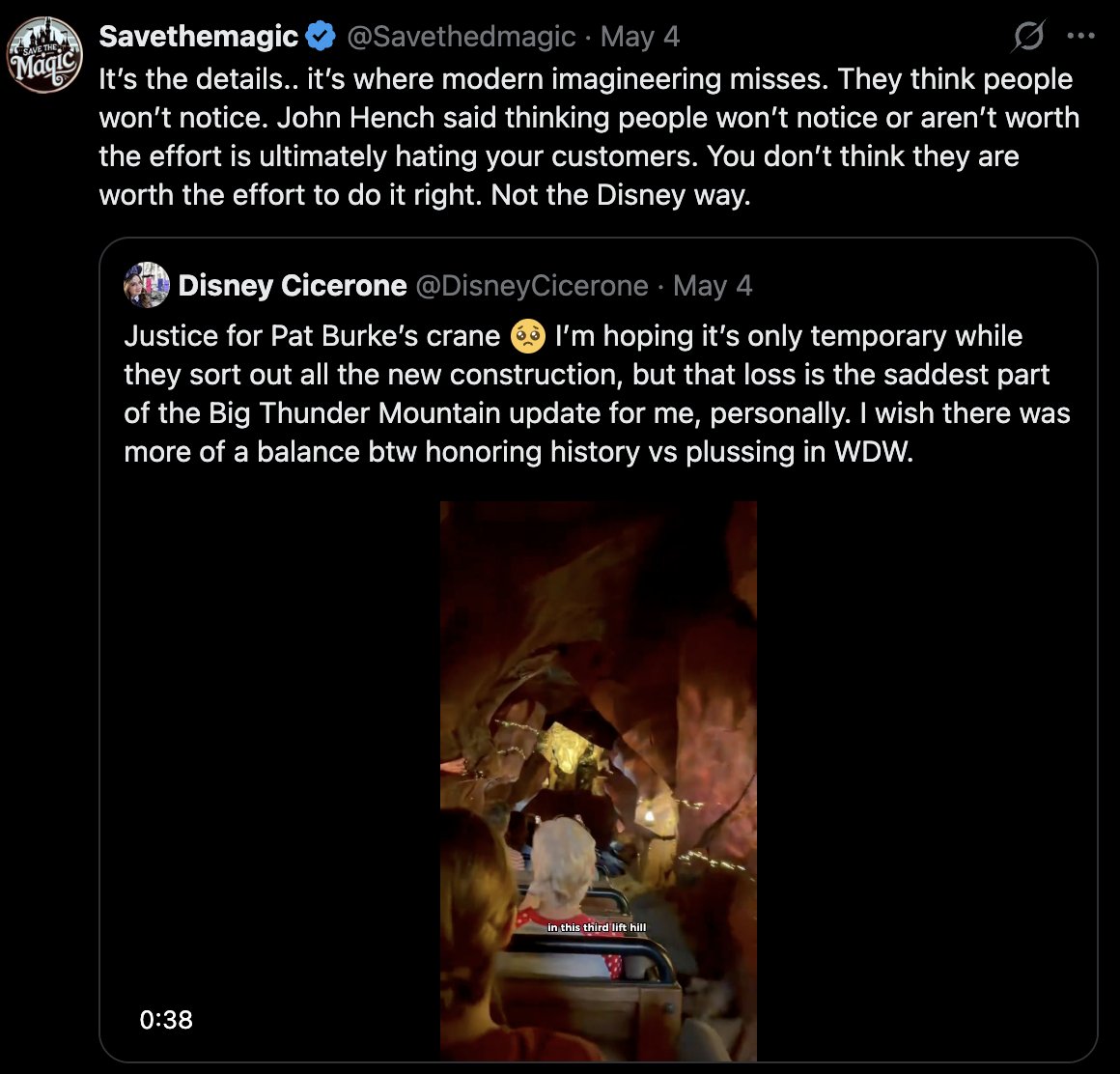
I've heard the Pandemic used constantly as the excuse. While I am sure it made it difficult, I dont think that the pandemic is all of it. There is a lot of junior talent with backgrounds that are not purely in imagineering, and I don't see that changing much. To my eye, they seem to lack the experience. This stuff is not easy. As I have shared before, the last big project Imagineering worked on (BT) missed Key Details. Yes, the coaster works, but many details were missed, and that matters greatly. Especially more so if they are going to touch COP. As for R&R, it has been a hit, but again, some of the details (especially with colors were missed) the ride was essentially unchanged, and the strength there was that the Muppets are so loved. Sure, scooter AA is nice, but it's an AA of a puppet vs the human form, which is much more difficult to animate (especially the masks). Animation Courtyard isn't technically challenging, and I am glad they stuck the landing on a meet-and-greet, but even there, there are some issues, like tripping hazards. Buzz was done well, but operationally, they have struggled, and again, it was a refresh/plus that didn't change what the ride was, which gives them guardrails. The closest project I can think of to this is Walt Disney — A Magical Life, but we all know how the Walt animatronic turned out. And COP is full of AA; it's a huge concern. I wish them well with this because it's important, but I just don't have confidence in it. They may surprise us here, and if so, maybe I will start to believe again - but with what I have seen, not now.
x.com/Savethedmagic/status/2…
Jun 4

I absolutely can. Imagineering’s Florida workforce is stronger than ever following Bruce Vaughn’s return with resources being distributed extremely efficiently right now. Sure, World Celebration is an absolute mess and I strongly dislike it, but the Imagineers on that project were handcuffed during the pandemic. I’m sure they aren’t happy with it either. I don’t think it’s fair to compare a project that was designed over virtual meetings during a pandemic to a beloved classic being updated with an incredible team behind it. Carousel of Progress should be a big home run.
7
1
34
5,370
Jun 4
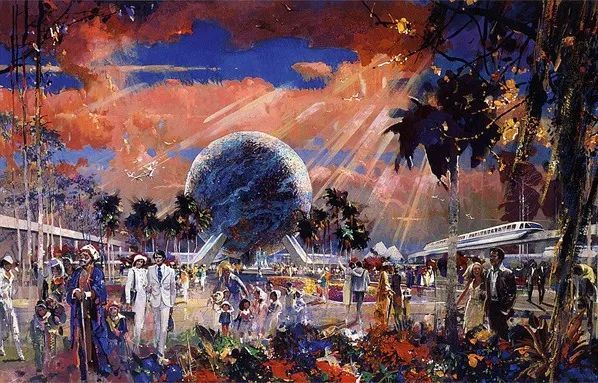
This was a park about progress, ambition, science, and the future. Turning EPCOT into a “celebration” is one of Disney’s most creatively bankrupt decisions. Once a vision of tomorrow. Now it’s about “celebrating” yourself while they bulldoze the future Walt believed in.

6
5
90
2,604
Jun 3
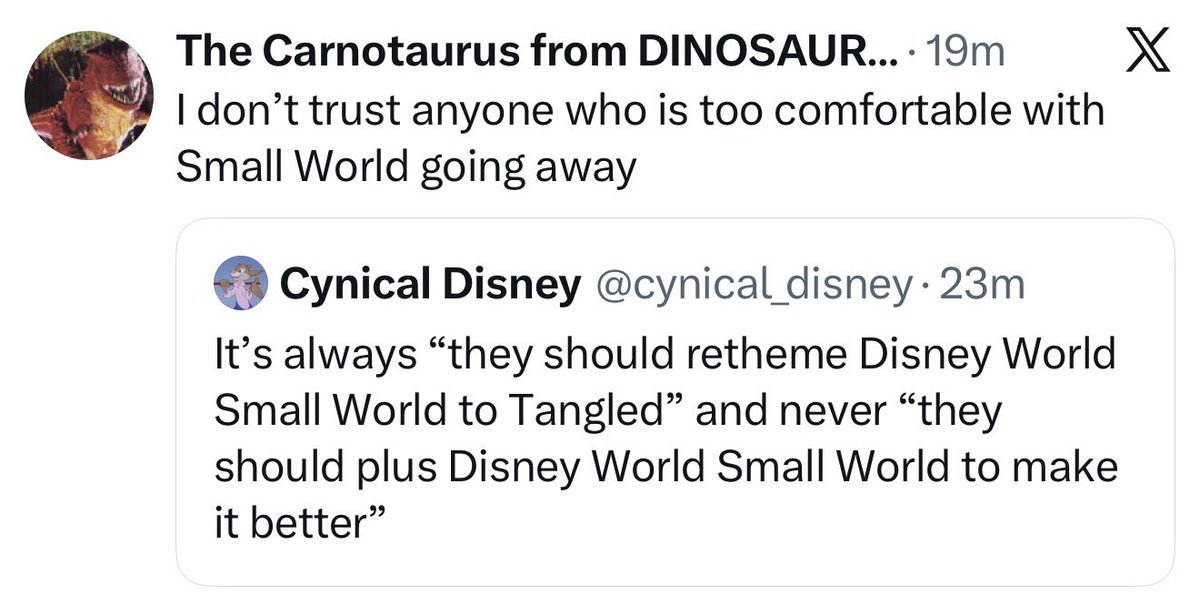
You have to look at the fact that certainly doesn’t seem to be any limits to what they will touch, and admit it’s at least possible that they could decide that it’s dated and doesn’t “resonate” with people today. How much merch does small world sell? They will destroy anything.

I don’t trust anyone who is too comfortable with Small World going away
4
50
2,591
Jun 3
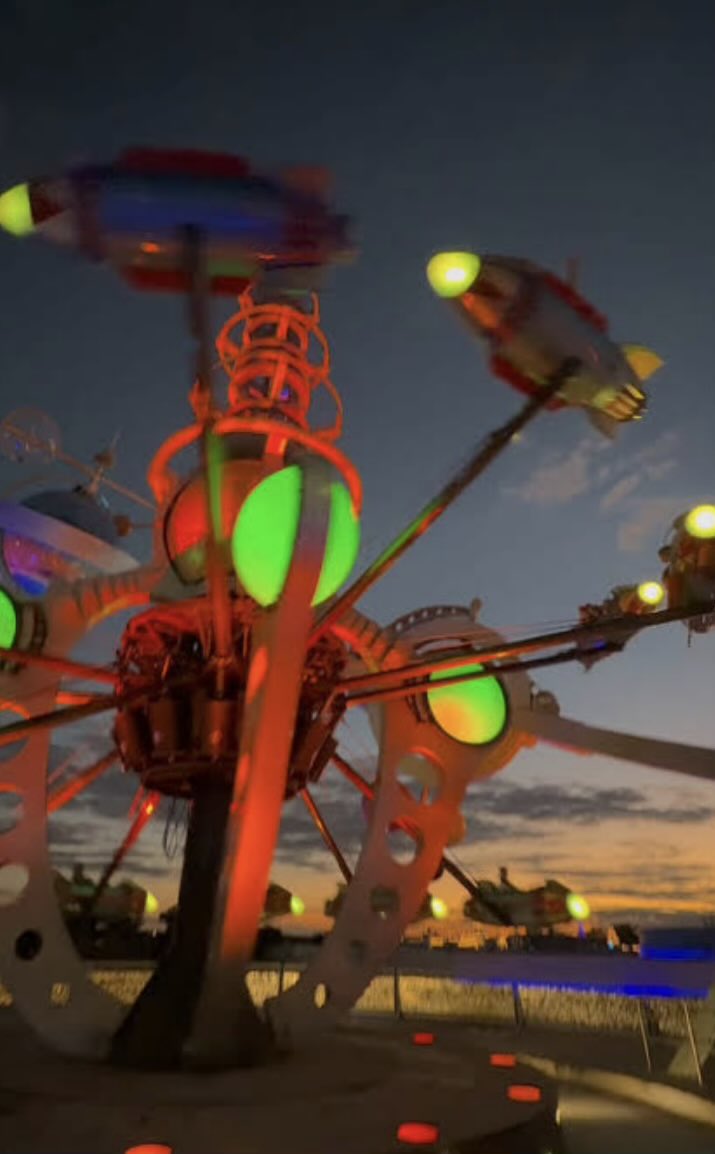
This is of course terrible. Everyone knows how much burnt out light bulbs was a major irritant to Walt. How can we trust Disney to do anything right when they can’t fix the lights on a newly refurbished ride. Doesn’t bode well for what’s coming.

The Astro Obiter nighttime lighting has not properly worked in several months.
First photo is how it should look, second photo is current look. None of the rockets light up as well as many of the lights on the structure itself. All the lighting that works is from the outside

8
4
97
6,635
Jun 3
Cars Land is next level immersive. Walking through Radiator Springs and you’re in the movie. We could’ve had that in Florida if Disney built the full expansion beyond Big Thunder like the original plans. Instead we’re getting this value cut Piston Peak National Park? Come on.

Few Disney moments are as awesome as watching Mater roll through Radiator Springs in Disney California Adventure!
7
2
75
4,933
Jun 2
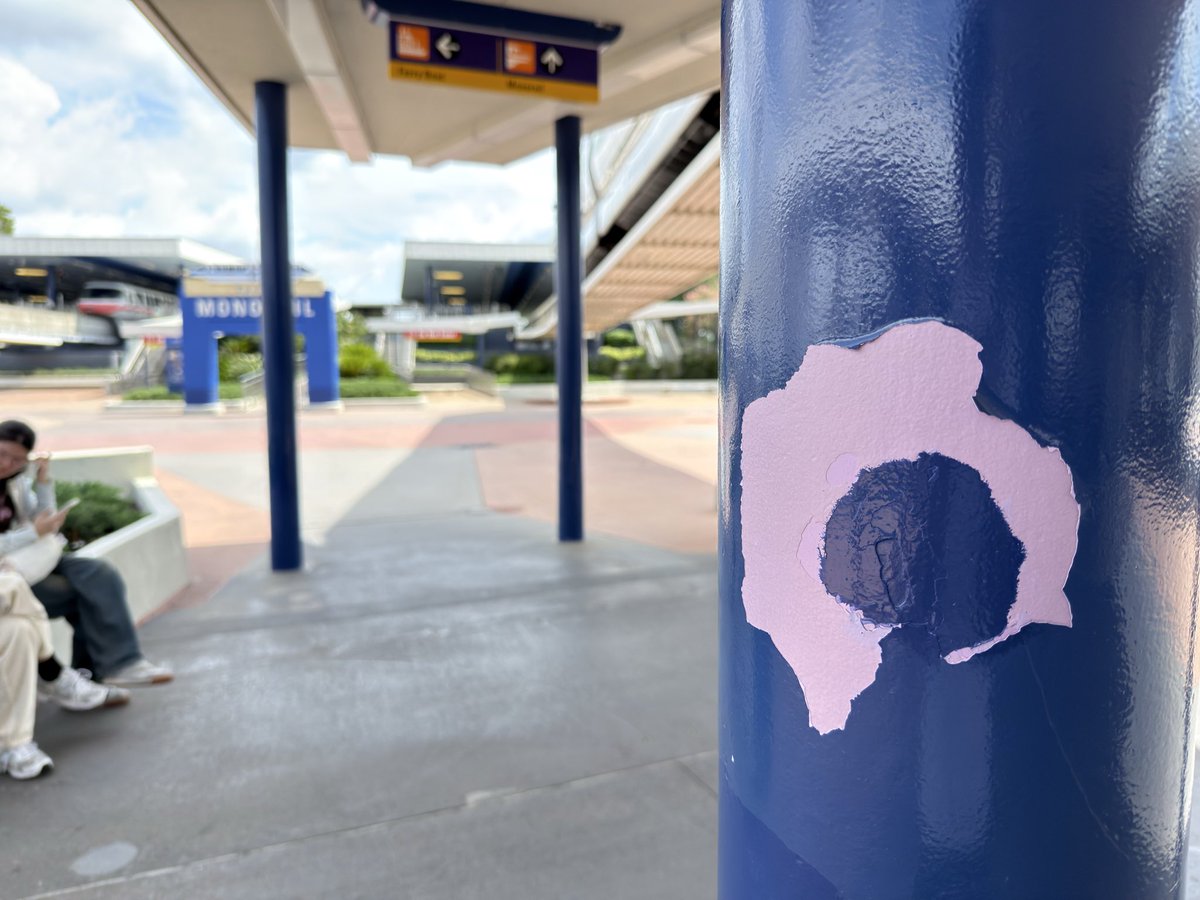
First a door at OKW then Aerosmith /Muppets now TTC? Who does Disney have painting these places? I’ve never seen so much peeling from fresh paint on property like this. Have they just given up on surface prep?
12
1
71
10,149
Jun 1
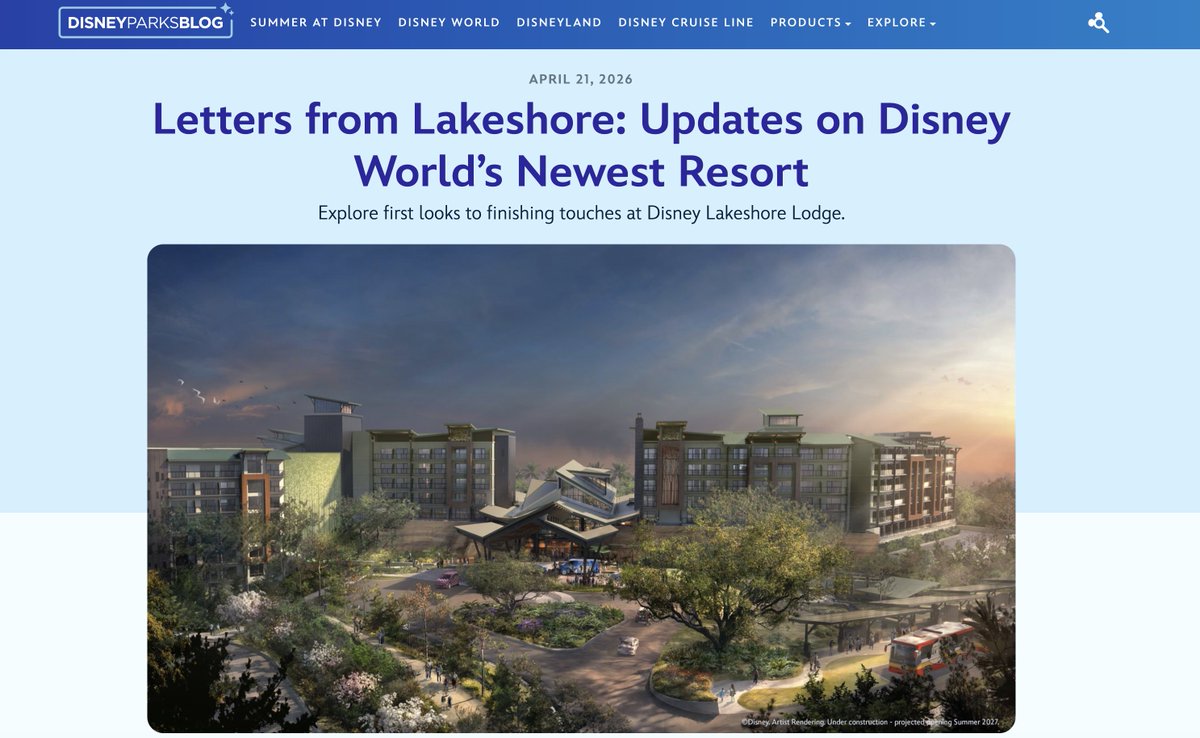
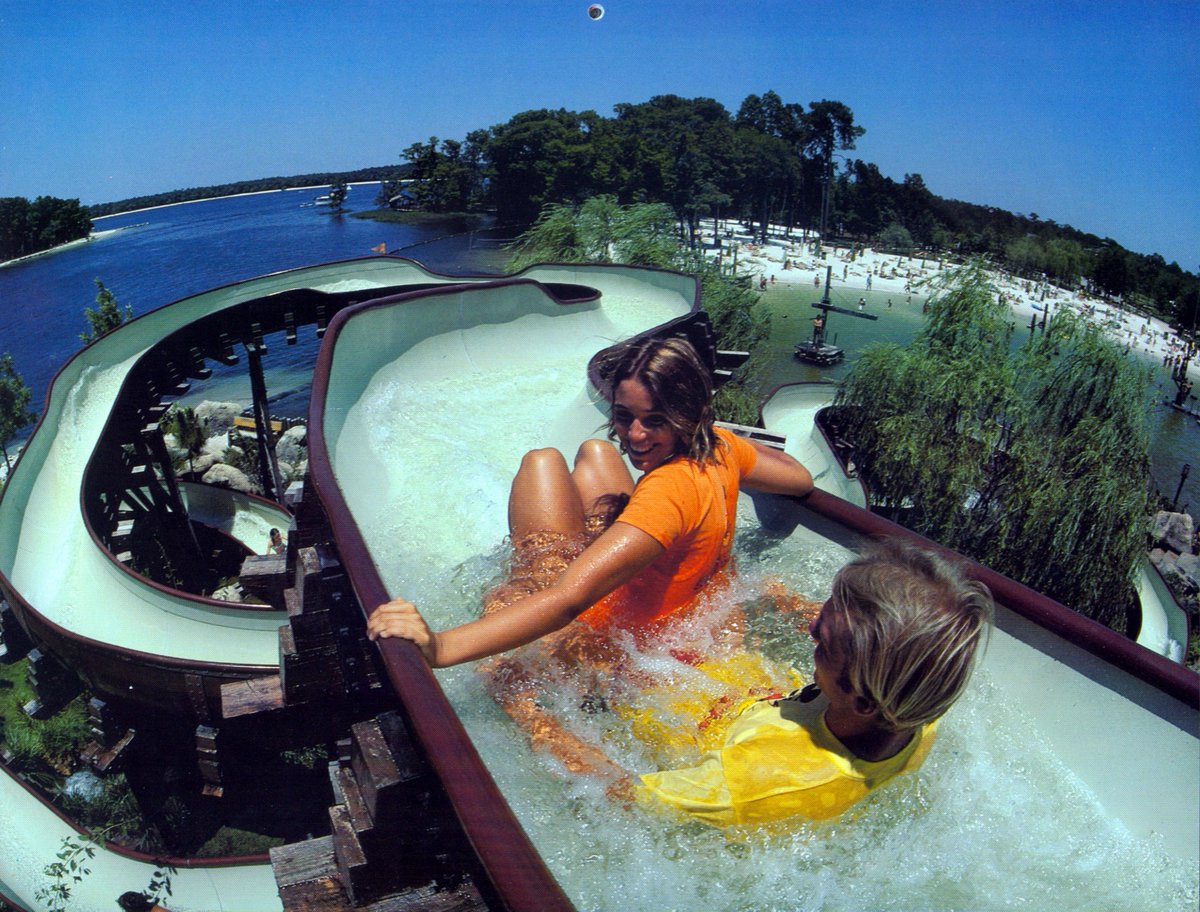
Looking at this photo honestly makes me sad. River Country had personality. It felt Disney. Today, this area is covered by a DVC Hotel that could be found almost anywhere. This picture captures something Disney no longer seems interested in creating: authentic fun without an IP. Disney lost something important here.

17
4
180
11,651
May 31
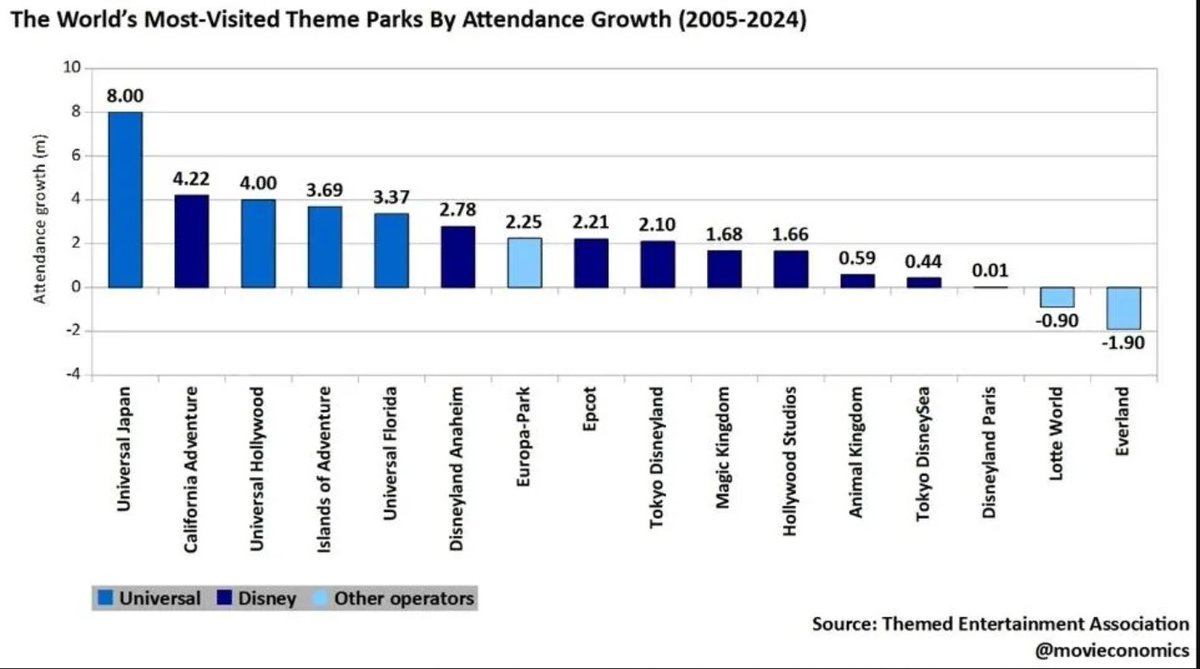
Wow. Clearly, Disney will take notice of this. I worry that Disney's reaction will just drive them to double down on Universal's IP playbook.
May 31

Our @forbes feature reveals that Universal Studios runs 4 of the top 5 theme parks with the highest attendance growth over the past 20 years. The only Disney park in the top 5 is California Adventure. $DIS has saturated the market with little room to grow
forbes.com/sites/carolinerei…
6
54
8,369
May 31
It's weird being a Disney fan now. It feels strange in a way it never used to. Honestly, after what I've watched unfold, I’ve never felt worse about the future of the Disney parks.
Not just because Carousel of Progress may be on the chopping block, but because I’m watching people I thought valued Disney history suddenly justify tearing it apart. It's the same playbook over again. “It’s outdated.”, “Progress means change.”, “If you oppose it, you’re the real problem.”, "It's misogynistic.", "Walt wanted it to be...", "You don't like change", "I want new", "This isn't the original, it has no value", etc.
Every discussion becomes moralized until preserving anything old is treated like a character flaw. I'm realizing how many fans seem completely comfortable with Disney losing its own identity.
Walt Disney dedicated Disneyland to the “hard facts that have created America.” Yet, modern Disney often seems uncomfortable with that very idea. History can contain struggle, imperfection, patriotism, industry, optimism, and tradition all at once. Instead of trusting guests to understand historical context, the instinct now often feels like simplification, sanitization, and removal. We will skip to the 80's, that's the solution. Get rid of it.
People keep saying the parks “need to evolve.”
Fine. Evolve into what?
If the end goal is to remove everything that could possibly offend anyone, the parks eventually become so sanitized, so cautious, and so creatively sterile that they lose the very personality that made people care about them in the first place. And I don’t think that version of Disney will truly satisfy anyone.
58
23
319
17,101
May 30
In case you haven't had a chance to read my other post, here is a prime example of what I am talking about. Once the new is done, they go right for the dopamine hit; they don't care about the nods, theme, or anything. Once the newness wears off, this is what they are. x.com/Savethedmagic/status/2…
May 29

Breaking news: people already dont care about the Muppet preshow 😂
29
2
221
44,702
May 29
"rapid easing of demand." Translation - they got bored with this. That didn't take long.
May 29

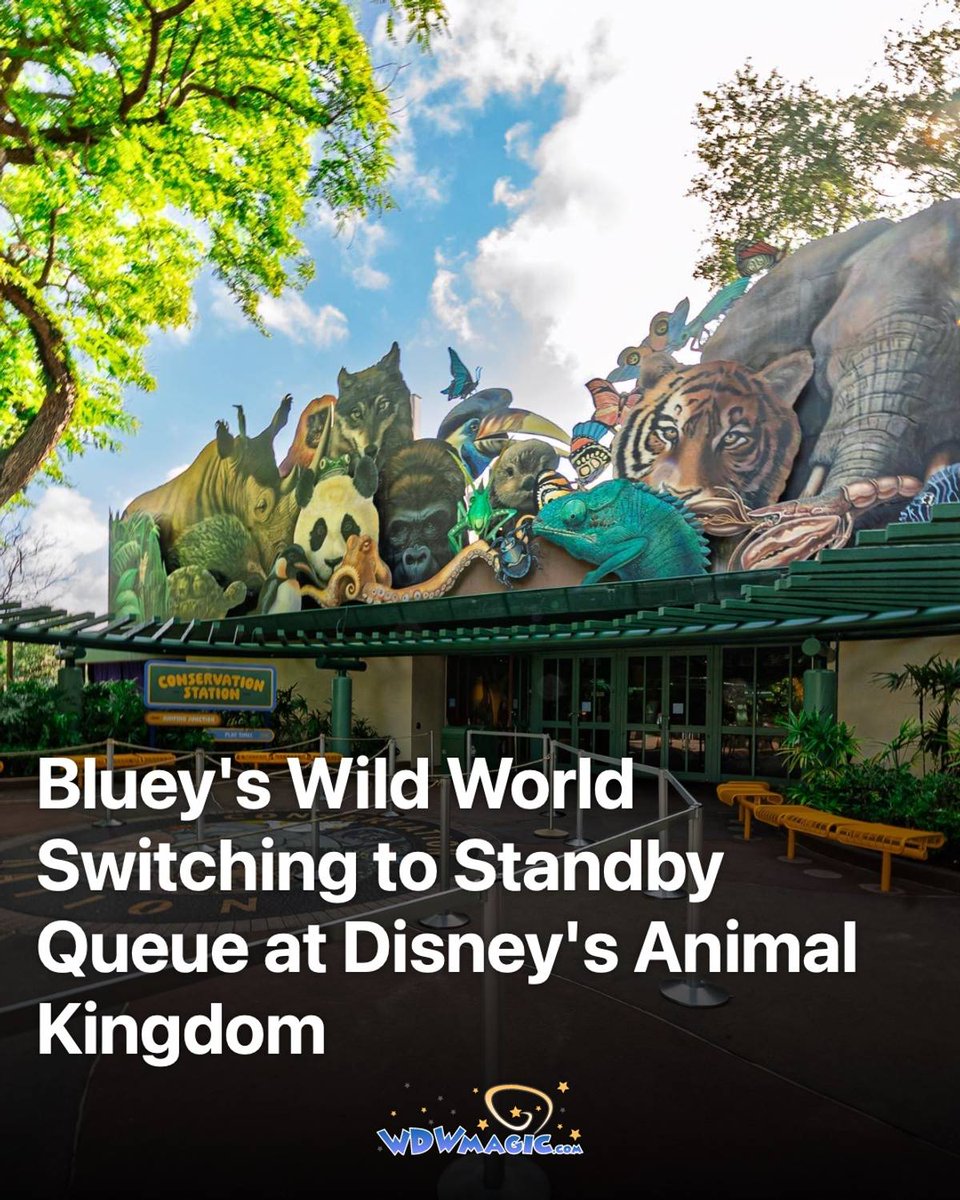
Bluey's Wild World at Conservation Station is switching to a standby queue on June 2. No more virtual queue drops - just walk up and wait in line like any other experience at Animal Kingdom.
6
47
5,969
May 29
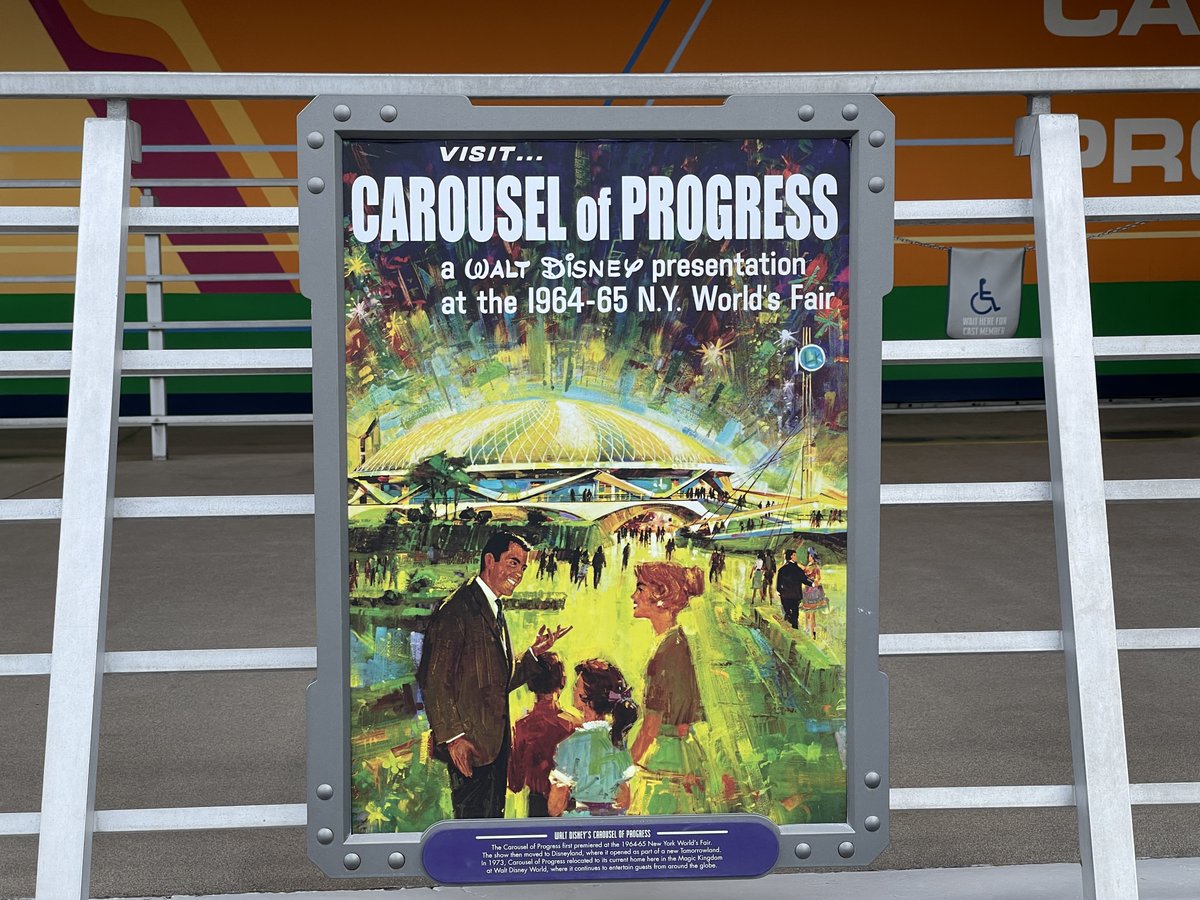
I'd like to take a bit of a deep dive with a longer post about Disney fandom claims that the current version of Carousel of Progress is "dated" and needs to be “more relevant to the modern audience.” What are they really saying, and what does it tell us about the fan's mindset?
Modern Disney fan culture is essentially internet-driven fandom. This reality rewards new, constant updates, and change. On the one hand, it's driven by large accounts and internet "influencers." New rides, demolitions, construction walls, rethemes, rumors, and announcements generate huge engagement. And ultimately, engagement is all influencers care about; they don't care about the original Disney park design philosophy, how to do atmospheric design correctly, placemaking-focused Imagineering, or Disney park history generally. They just want viewers and traffic so they can get paid.
Think about this - of all the large Disney accounts you may follow - how many of the influencers have come out and questioned if this proposed change is anything other than "Positive", "Needed", "Great", "Exciting"? It's exciting to them because it provides fresh content they thrive, and get paid on.
Many fans experience the parks digitally more than physically. From the moment they arrive, their faces are buried in an app, they are monitoring YouTube, TikTok, Instagram, line wait times, and Twitter/X. The majority of visitors used to experience Disney as an occasional pilgrimage. Now, Modern fans consume Disney content daily online. That changes expectations without the fan base even being aware that they are driven/influenced by the digital cycle. Fandom conversation becomes biased toward change and "New". If you are constantly watching park content, static environments begin to feel “old” faster.
Modern fan culture increasingly treats permanence and old as boring. (I just want the new) Can you blame people when they are fed a constant diet of app updates, streaming content, and endless new content driven by Influceners? The mindset today is that Disney should constantly “refresh,” “modernize,” and “evolve.” That attitude affects everything, and people have it without even realizing it. Modern fans see the parks more as an entertainment platform that should continually refresh to stay exciting. They bore easily. It's the digital cycle.
Disney itself has a share in creating this environment. Corporate marketing reinforces the idea that newer is automatically superior. The Walt Disney Company constantly markets “the next thing” because new additions drive attendance, media coverage, merchandise sales, and repeat visitation. Crowds at new launches also help sell lighting lanes, making it an exercise in return on investment for Disney. They are letting spreadsheets rather than Creatives drive their decision-making, and it shows.
There is evidence that constant new stimulation and rapid digital reward cycles can affect attention and reward sensitivity in the brain, aka “burning out dopamine receptors". Heavy exposure to fast-paced content, infinite scrolling, and rapid feedback can drive changes in sustained attention spans, tolerance for slower stimulation, impulsivity, and constant seeking of new things. Digital environments absolutely shape fandom expectations and behavioral conditioning. All of this is to say that people's brains are now being heavily influenced to demand that things are ever-changing, and when they don't get that, they react with a strong negative emotional response. This is where the attacks on us originate. They really want the new and are unhappy with anything or anyone that gets in the way of it.
Quiet spaces get undervalued. This is why something like Tom Sawyer Island or the Rivers of America, or a 21 Minute Carousel of Progress show is almost intolerable for them to experience. They literally can't sit still to enjoy it.
Subtle details lose attention against high-intensity stimulation. It's no wonder that Guardians of the Galaxy is constantly mentioned as modern fandom's favorite attraction. It's the stimulation that they crave. It's not about the placemaking. You can see this in the Guardians' preshow skipping phenomenon. They can't wait to go get the dopamine hit; they can't stand having to endure a preshow, they are seeking the thrill. Older Imagineering often relied on lingering presence, spaces you absorbed gradually. That sort of space design just doesn't work with this group now, and you can see Disney responding by slowly destroying the fabric of the parks.
Disney, for its part, because it doesn't have the budget to refresh everything all the time, opts for many cheap overlays, rethemes, and quick refreshes. This sort of thing is just a shortcut to get something "new", and it cheapens the park experience.
For those of us who want to preserve what makes the parks special, it's not hard to see how removing legacy environments people see as irreplaceable parts of the parks’ identity could be seen as a problem for us, especially when we run into the dopamine crowd who are just looking for their next "hit". Ultimately, they will be bored with the new very quickly (3-6 months), won't be satisfied, and move on to whatever else is "new". This leaves the rest of us stuck with an attraction that neither they nor we are interested in anymore. We've seen it time and again, Tiki Room under new management, Country Bears, Journey into Imagination, and so on. It's a really bad trend.
To sum it all up, I think the whole Carousel blow-up has ultimately revealed that Disney will have a problem in the future. Theme park build-outs are expensive, long-lived things, and really don't fit well in this quick update/bore/dopamine/influencer cycle. They are slowly losing the fans who really care about the legacy and history, and the fans that remain who are looking for a new quick hit have zero loyalty. That puts Disney in a very difficult spot. The next time you come across someone complaining about things being "outdated," I hope you will know what's driving them to say it.
19
9
102
3,632
May 29
"A Walt Disney Presentation"... The only thing Walt Disney about the new version will be the robot that they feel they must jam in there. What a loss.
8
1
107
3,548
May 28
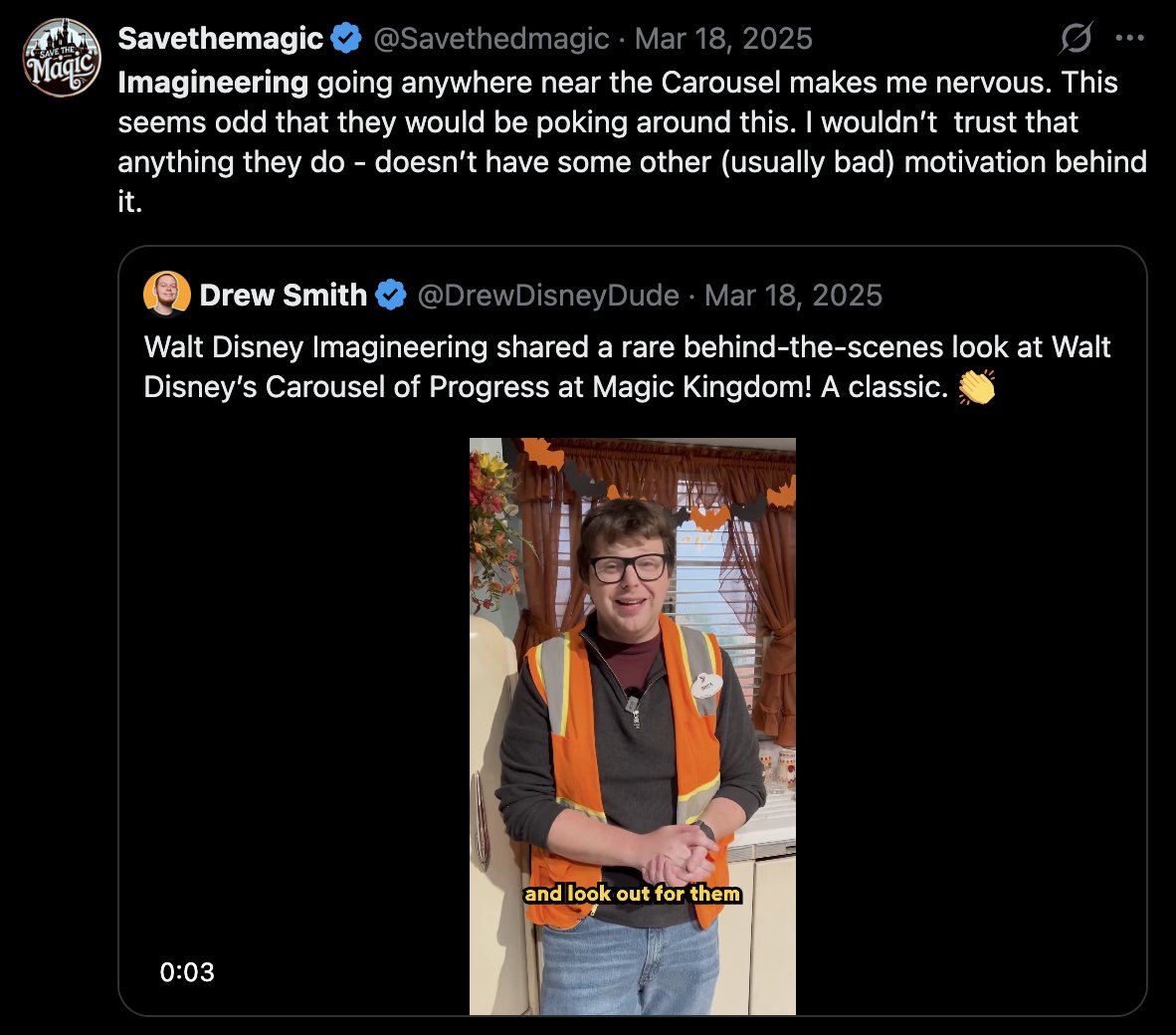
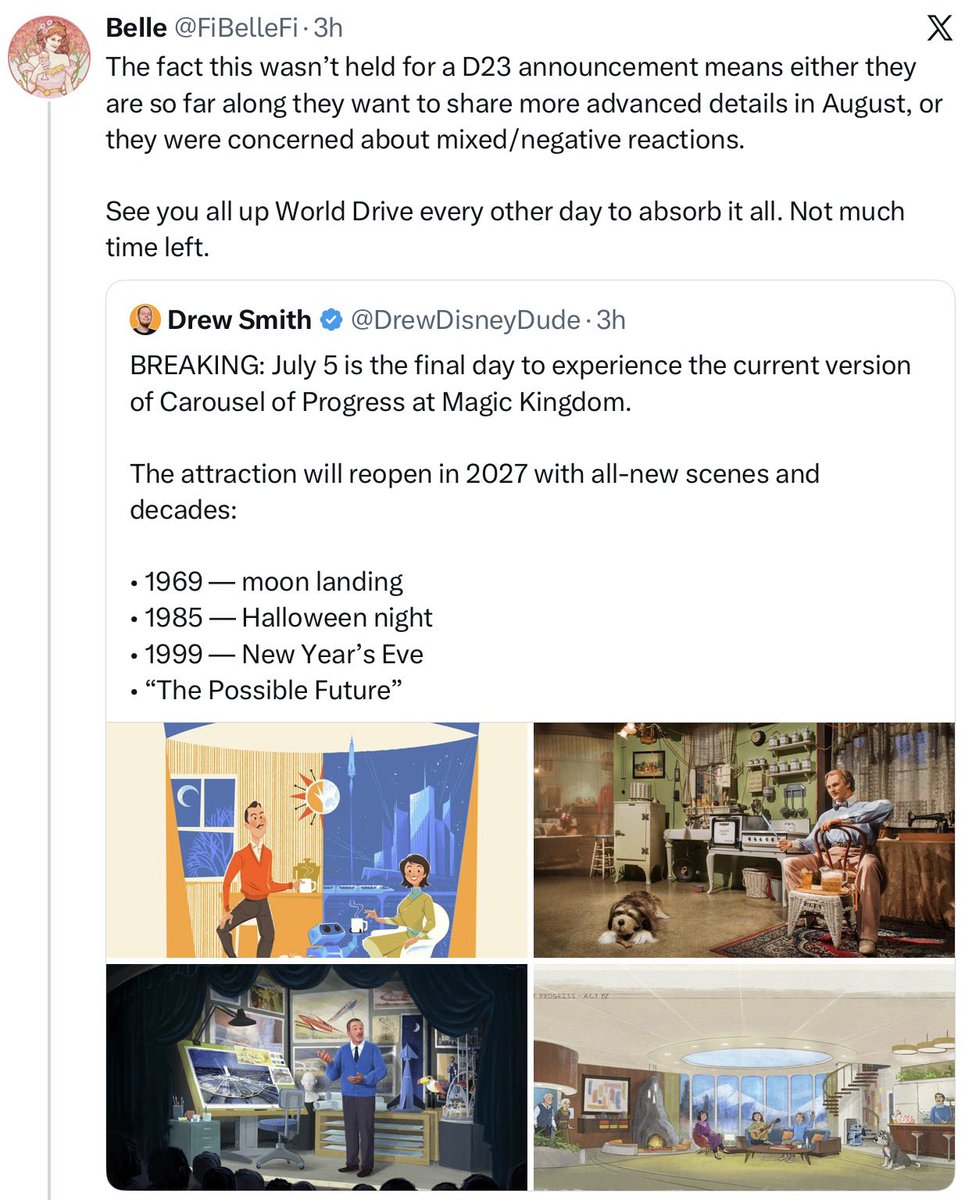
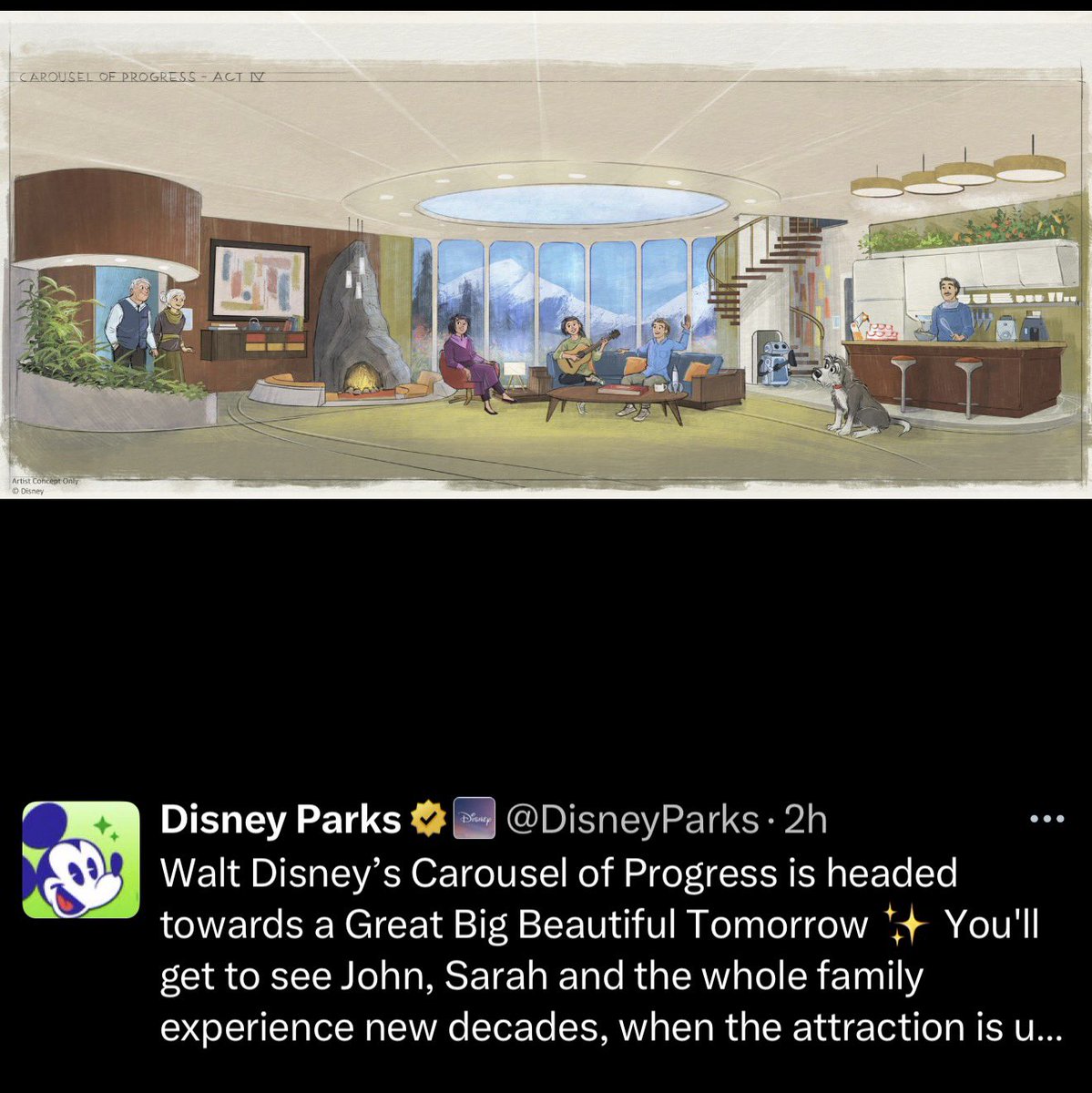
Yep - now we know what WDI was doing when they were so interested in COP back in March. Exactly what I feared. They weren't there to preserve the attraction - nope, they were there to figure out how to destroy it.
18 Mar 2025

Imagineering going anywhere near the Carousel makes me nervous. This seems odd that they would be poking around this. I wouldn’t trust that anything they do - doesn’t have some other (usually bad) motivation behind it.
11
3
87
5,779
May 28
This.. 100%!!!

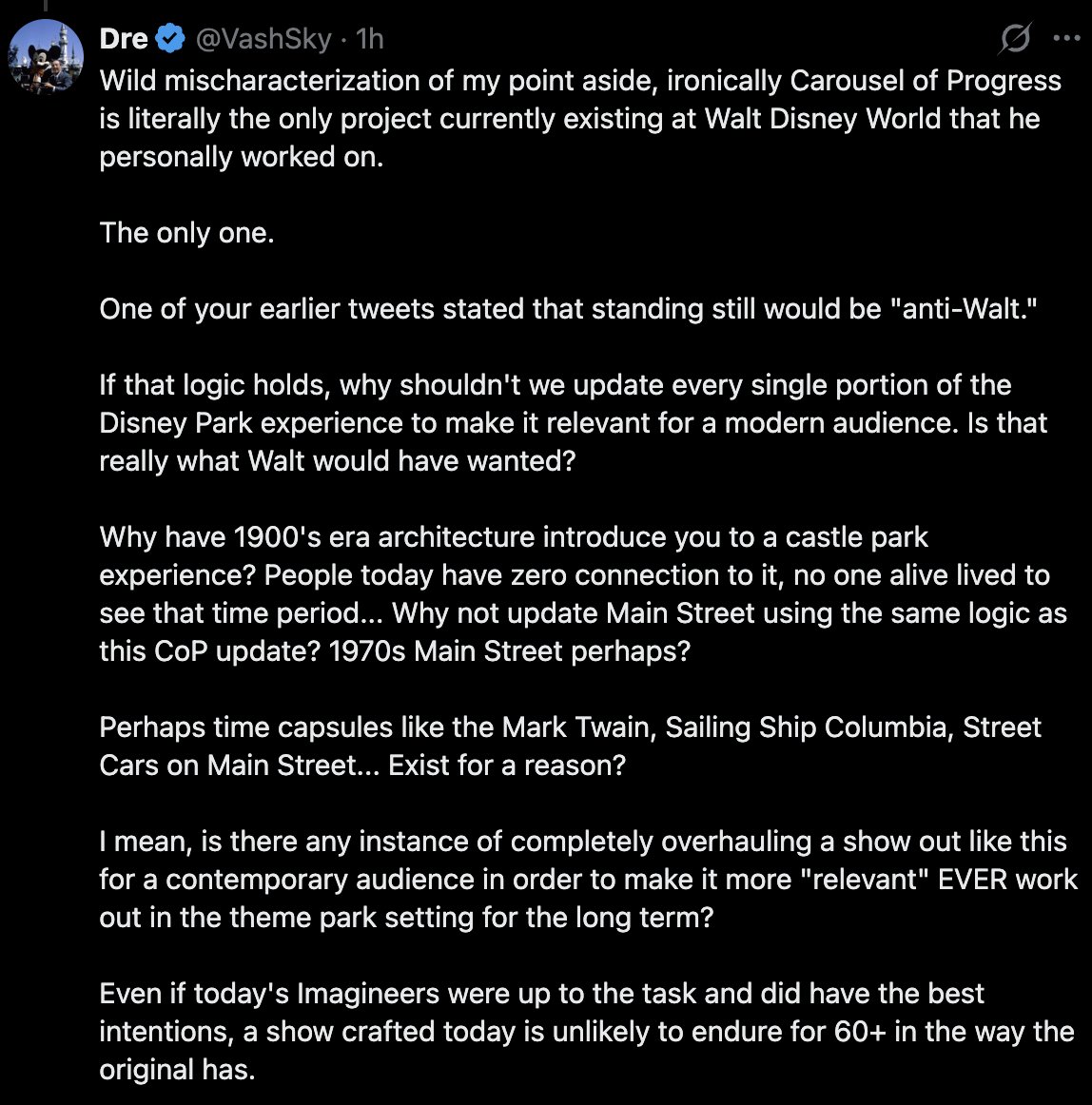
Wild mischaracterization of my point aside, ironically Carousel of Progress is literally the only project currently existing at Walt Disney World that he personally worked on.
The only one.
One of your earlier tweets stated that standing still would be "anti-Walt."
If that logic holds, why shouldn't we update every single portion of the Disney Park experience to make it relevant for a modern audience. Is that really what Walt would have wanted?
Why have 1900's era architecture introduce you to a castle park experience? People today have zero connection to it, no one alive lived to see that time period... Why not update Main Street using the same logic as this CoP update? 1970s Main Street perhaps?
Perhaps time capsules like the Mark Twain, Sailing Ship Columbia, Street Cars on Main Street... Exist for a reason?
I mean, is there any instance of completely overhauling a show out like this for a contemporary audience in order to make it more "relevant" EVER work out in the theme park setting for the long term?
Even if today's Imagineers were up to the task and did have the best intentions, a show crafted today is unlikely to endure for 60 in the way the original has.
4
4
65
3,175