Computational biologist. Professor. Co-Director of Disease Mechanisms and Therapeutics Training Area @IcahnMountSinai. Opinions are mine. #DrugDesign #AI
Joined September 2017
- Tweets 2,051
- Following 2,897
- Followers 2,673
- Likes 11,746
198 Photos and videos
Pinned Tweet

14 Oct 2025
Check out this excellent @cenmag piece by @AayushiPratap on how AI is transforming drug discovery.
Our work at @IcahnMountSinai Mount Sinai’s AI Small Molecule Drug Discovery Center is featured.
cen.acs.org/physical-chemist…
#AI #DrugDiscovery #Pharma
2
7
789
Avner Schlessinger retweeted

Allosteric Inhibition of PKMYT1 Induces a Unique, Inactive ATP Binding Site Conformation | Journal of the American Chemical Society pubs.acs.org/doi/10.1021/jac…
7
24
2,403
New paper from the lab. Using AI-guided modeling and experiments, we identified a hidden allosteric pocket in the cancer kinase PKMYT1. Led by @NHerrington24 in collaboration with @LazarusLab pubs.acs.org/doi/full/10.102…
2
7
15
519
AI accurately captured a known kinase conformation, but missed the cryptic pocket observed experimentally. We also found that subtle chemical changes can shift molecules between distinct binding modes, highlighting the need to combine computation and experiments in drug discovery
3
124
Great The Scientist piece: two harmful mutations can restore protein function—challenging how we view genetic risk. I share my take on the structural logic behind this and relevance to drug discovery.
My perspective the-scientist.com/two-harmfu…
Original study pnas.org/doi/10.1073/pnas.25…
6
395
23 Dec 2025
My interview with Technology Networks on rethinking target-based drug discovery. We discuss why target-first approaches often fail and how AI and structure-guided methods can better link targets to therapeutic impact.
tinyurl.com/5evzw7h8
#DrugDiscovery #AIDrugDiscovery
🔗
1
2
671
Avner Schlessinger retweeted

15 Dec 2025
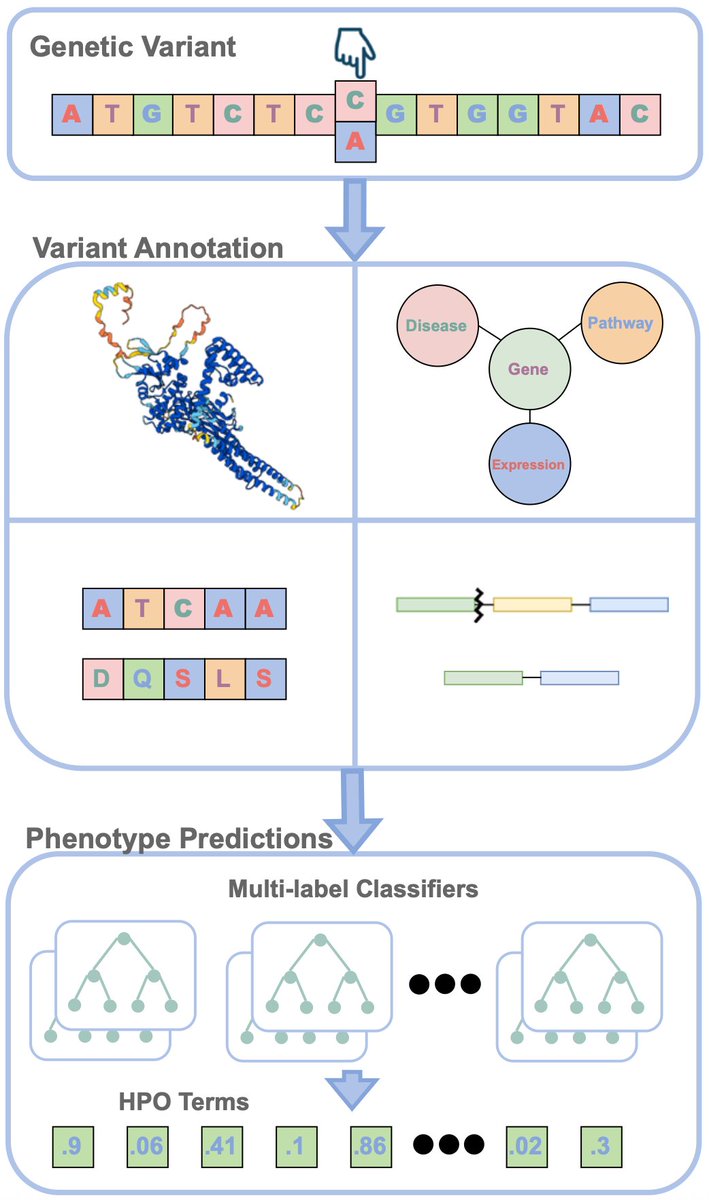
V2P (variant-to-phenotype) is live: nature.com/articles/s41467-0…
To our knowledge, first genomewide SNVs indels (coding noncoding incl. intergenic) model jointly predicting pathogenicity disease domain (23 HPO groups; e.g. cardiac/immune/metabolic).
@david_stientist @SchlessingerLab
1
29
86
9,372
16 Dec 2025
Check out our new paper introducing V2P — a method that predicts both variant pathogenicity and disease phenotype across 23 HPO categories. With @ItanLab and @david_stientist and others
nature.com/articles/s41467-0…
Server: v2p.ai
8
25
4,185
16 Dec 2025
Amazing collaboration. So glad to see it published!
15 Dec 2025

V2P (variant-to-phenotype) is live: nature.com/articles/s41467-0…
To our knowledge, first genomewide SNVs indels (coding noncoding incl. intergenic) model jointly predicting pathogenicity disease domain (23 HPO groups; e.g. cardiac/immune/metabolic).
@david_stientist @SchlessingerLab
4
258
Avner Schlessinger retweeted

28 Oct 2025
Do you know what a PhD in Biomedical Sciences or Neuroscience can do for your career? Join us tomorrow from 4-5pm ET for a special information session featuring alumni from the Graduate School of Biomedical Sciences: mshs.co/4eWFLxw
3
4
478
Avner Schlessinger retweeted

16 Oct 2025
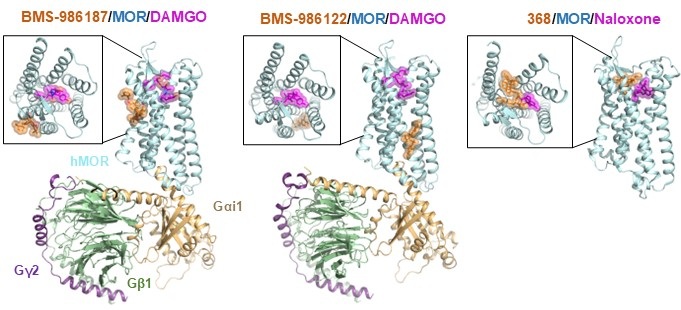
Our latest work: As it turns out different positive allosteric modulators bind to different sites at the mu opioid receptor. Find out more in our @biorxivpreprint.
biorxiv.org/content/10.1101/…
7
14
1,733
Avner Schlessinger retweeted

14 Oct 2025
Artificial intelligence and machine learning are being embedded in every aspect of the drug discovery and development process. Despite AI’s use at each step, the billion-dollar question is whether it can bring a larger number of novel drugs to market. cen.acs.org/physical-chemist…
1
3
1,071
4 Oct 2025
Interesting read: Structural insights into brain thyroid hormone transport via MCT8 and OATP1C1: Cell cell.com/cell/fulltext/S0092…
1
3
264
28 Jul 2025
RT @AyaOsman: Official announcement: this September 1, the Osman laboratory will be opening its doors in the biological sciences department…
52
Avner Schlessinger retweeted
23 Jul 2025
A postdoc position is open in my lab to develop AI/ML models for predicting functional effects of genetic variants and to lead large-scale PheWAS in major biobanks. Strong programming skills, a solid publication record, and a background in human genetics are required.
1
13
23
2,995
Avner Schlessinger retweeted

8 Jul 2025
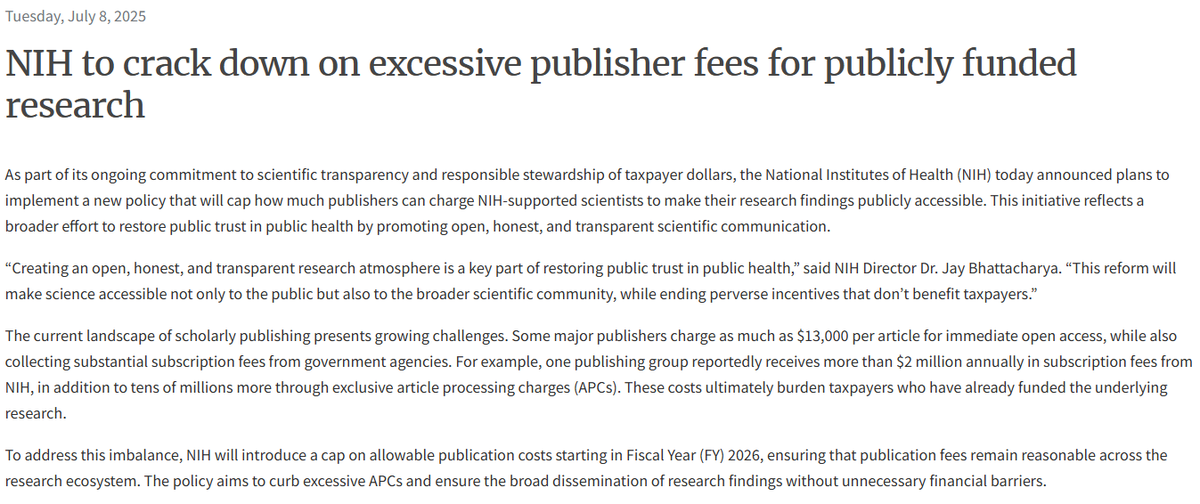
Today, @NIH announced a new policy to cap how much publishers can charge NIH-supported scientists to make their work publicly accessible. This reflects our broader effort to restore public trust in public health by creating an open, honest, and transparent research atmosphere.
Read more ➡️ bit.ly/4nCdIbl
104
444
2,583
190,093
8 Jul 2025
Excited to see our new AI Small Molecule Drug Discovery Center @IcahnMountSinai featured in GEN!
🧬🧠 Read more: genengnews.com/topics/artifi…
Thank you @xiaofei_lin and @GENbio #AI #DrugDiscovery #Genetics
2
1
22
601
Avner Schlessinger retweeted

Maybe @Google or @GoogleDeepMind should fund CASP, given their ample resources and how much they've benefited from the efforts of John Moult, Krzysztof Fidelis, Andriy Kryshtafovych, Nick Grishin, and many others.
science.org/content/article/…
1
30
125
16,847
11 Apr 2025
Thank you for chatting with me, @RS_Flinn ! It was great to share our new Center’s vision with you and your listeners.
10 Apr 2025

𝐀𝐈 𝐢𝐧 𝐁𝐢𝐨𝐭𝐞𝐜𝐡: @IcahnMountSinai has embraced AI as a drug discovery tool by launching this month its new AI Small Molecule Drug Discovery Center - @SchlessingerLab tells @RS_Flinn why.
Full video: biotechtv.com/post/mount-sin…
5
453