
Joined March 2026
- Tweets 127
- Following 3
- Followers 2,146
- Likes 184
17 Photos and videos
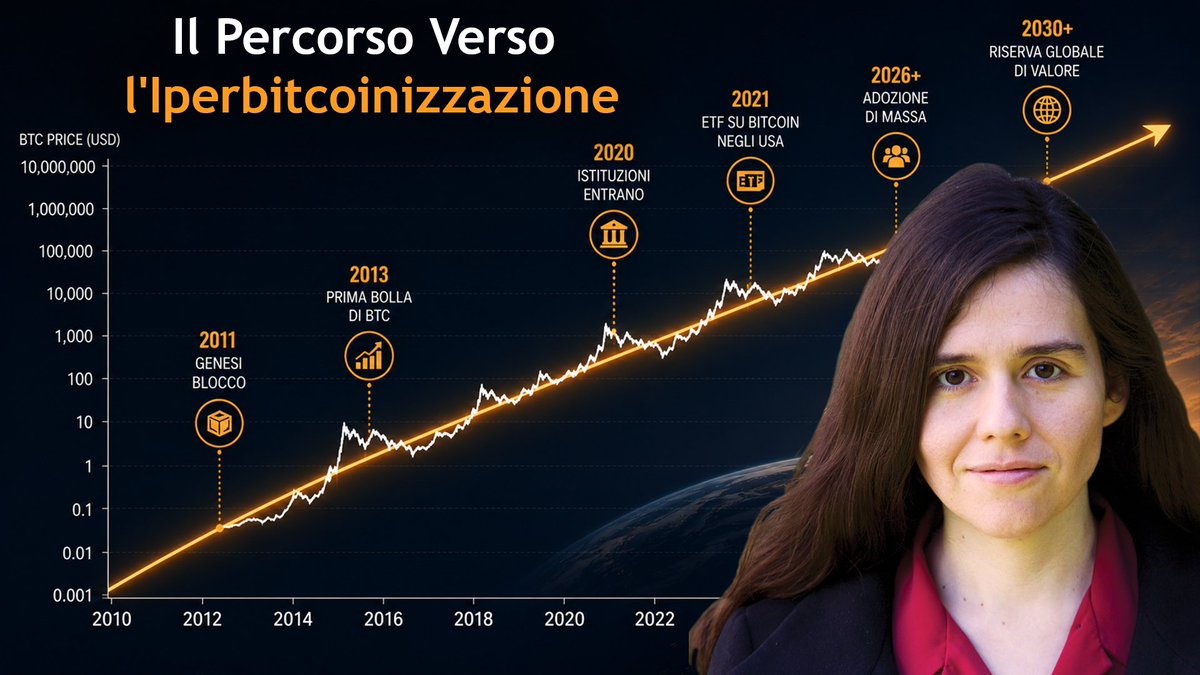

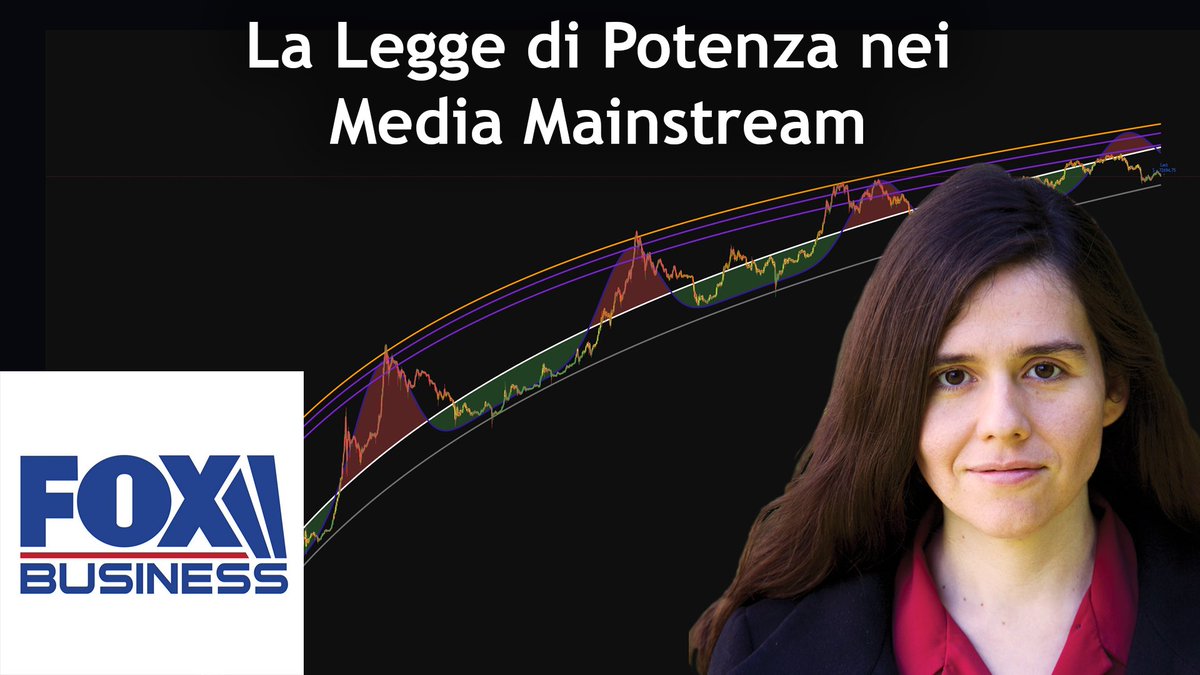

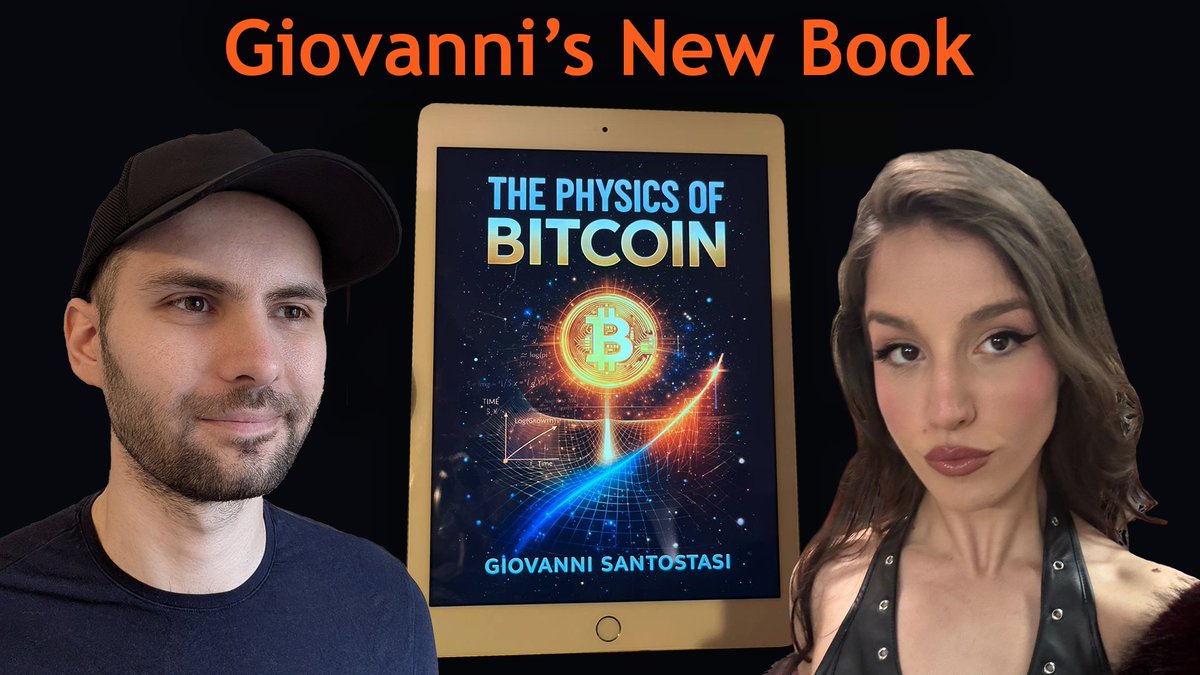
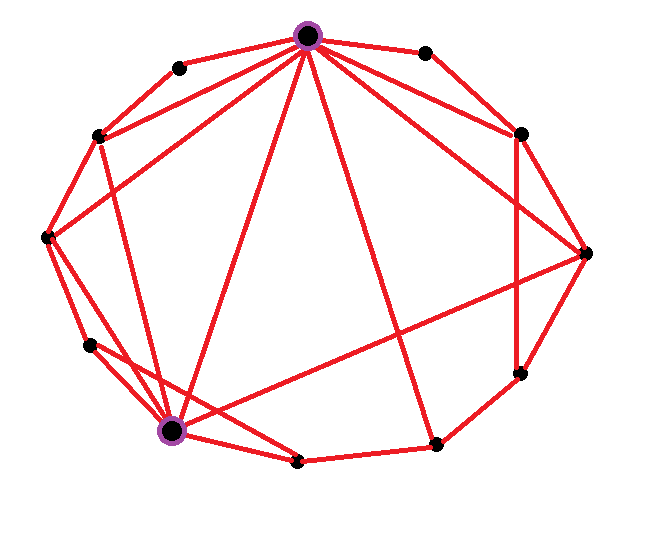

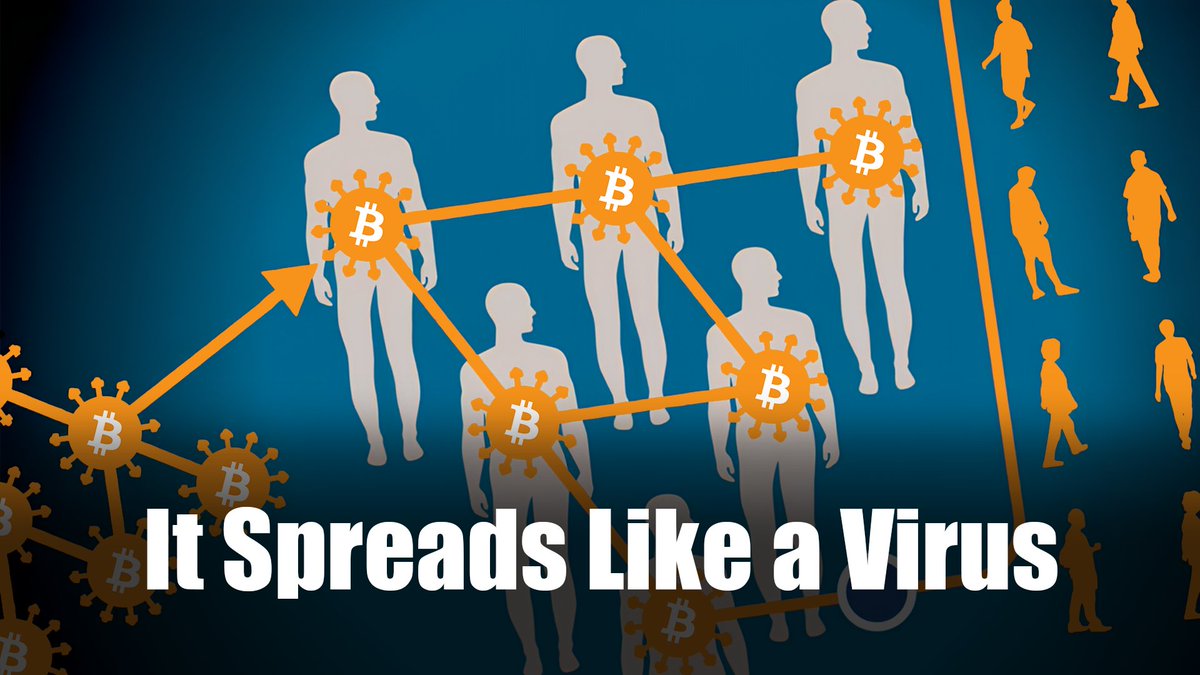
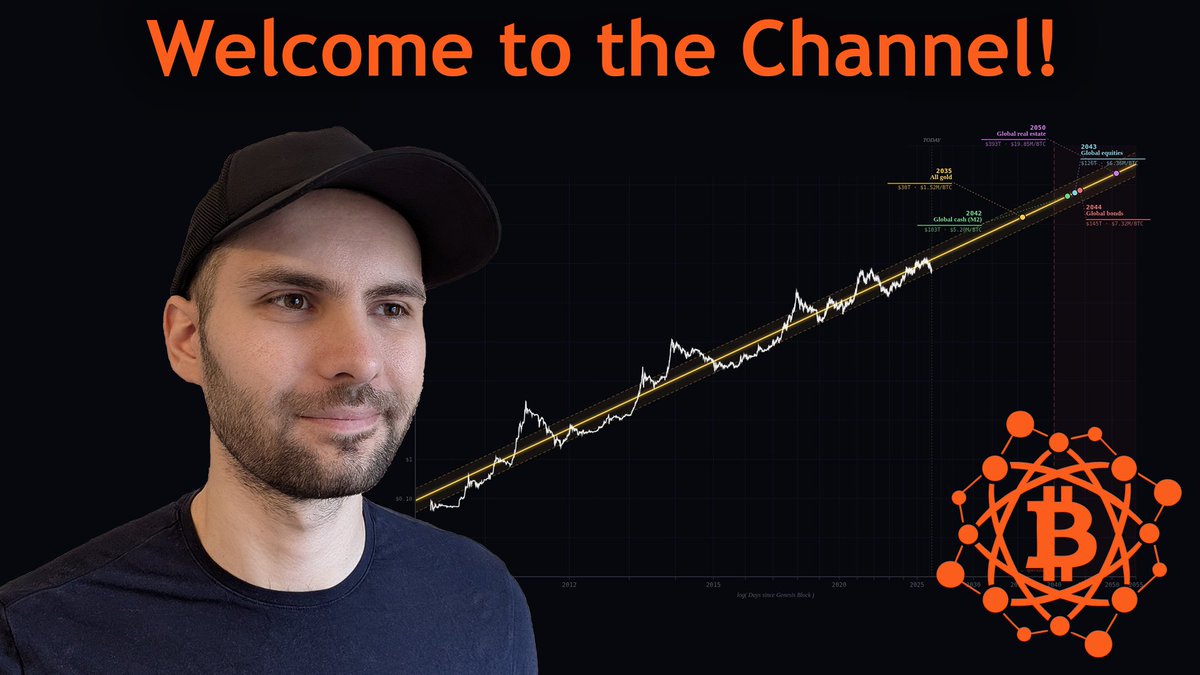

Ascolta il nostro ultimo podcast SBI. Watch our latest SBI podcast. English speakers can turn on automated captions.
youtu.be/LBQOzfnFE-M
2
10
1,328
Scientific Bitcoin Institute retweeted

Jun 12
Shannon worked out the entropy of information. Base 2 it’s entropy in bits, for base e it’s called nats.
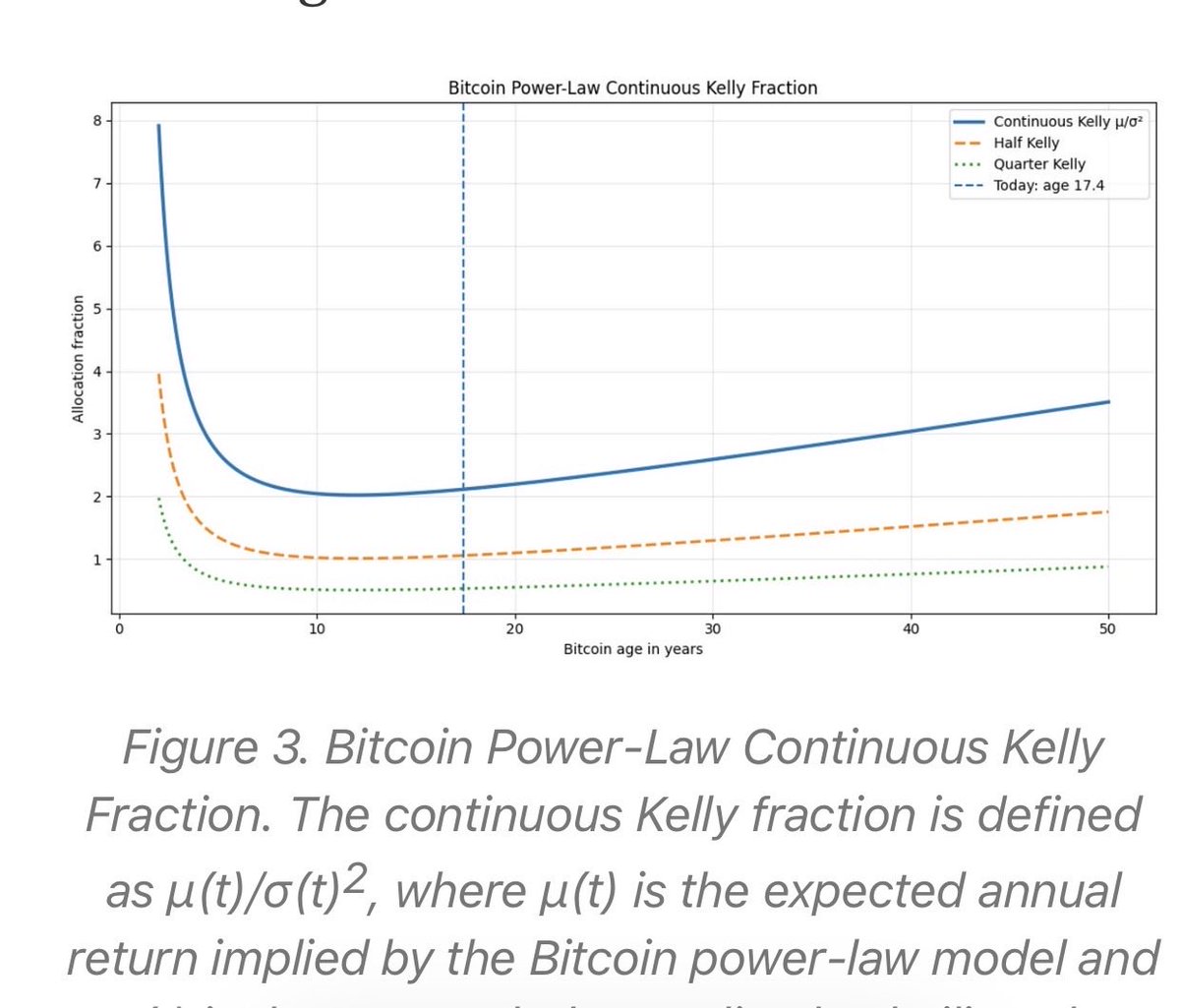
John Kelly worked with Shannon at Bell Labs and adapted the formula and Shannon’s work on channel capacity for gambling outcomes and finance. Kelly growth rate is a relative entropy.
Surprising finding is Kelly optimal allocation fraction f* for Bitcoin should grow with time, not fall, given power law and the observed ~ reciprocal decline in volatility. open.substack.com/pub/stephe…

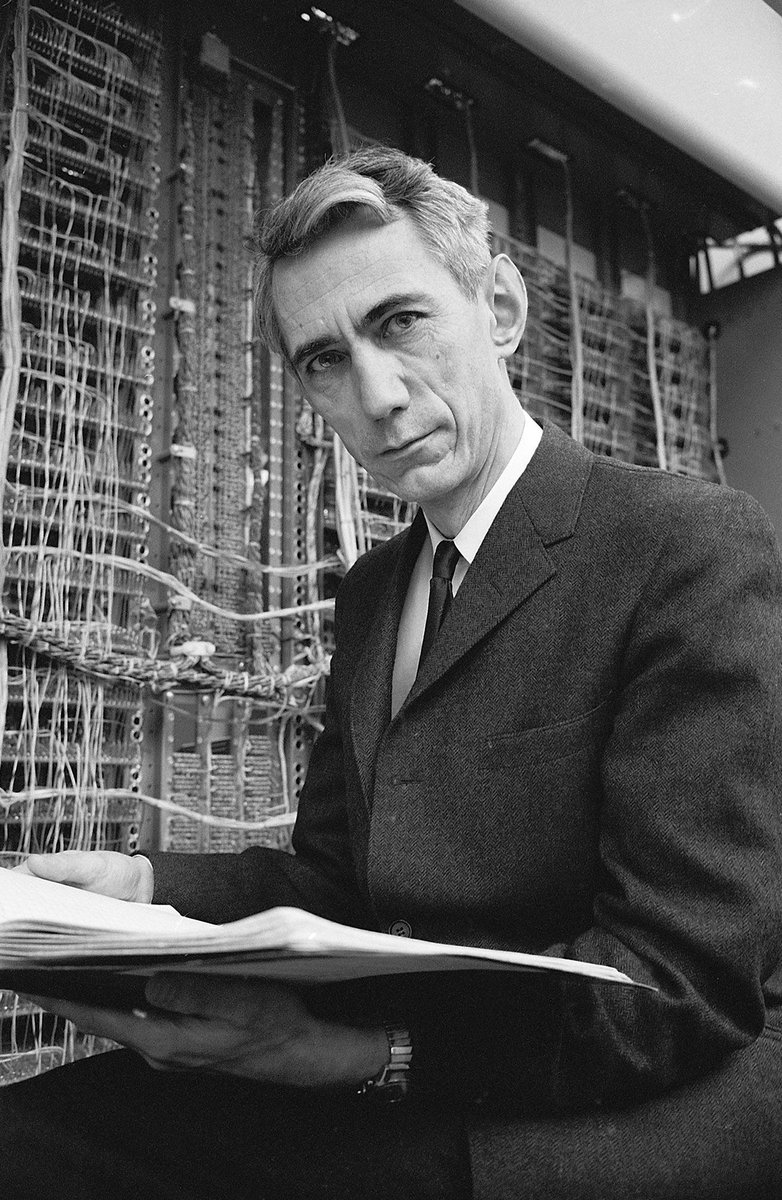
In 1937, a 21-year-old MIT student sat in a quiet library, mapping abstract philosophical logic onto electrical circuits to pass the time.
By the time he finished his thesis, the young man had mathematically proven that mechanical telephone switches could perform complex calculations. Instead of just routing phone calls, they were destined to become thinking machines.
He had just discovered the mathematical trigger for digital computing.
But when he published his work, the leading engineers of the industrial world paid little attention, viewing his mathematics as a mere academic parlor trick.
His name was Claude Shannon.
It would take years for the industrial establishment to fully realize he was right and adopt the binary logic that now powers every computer, smartphone, and network on Earth.
His breakthrough against traditional engineering is the ultimate lesson in what happens when rigid practices clash with unexpected philosophical reality.
In the early 20th century, engineers believed they understood circuit design. They knew that as telephone networks grew, they needed more physical wires and relays. But traditional engineering offered no universal science; it was a manual process of brute-force trial and error.
The systems would grow into a chaotic, tangled mess of blueprints and copper lines.
The entire industrial establishment agreed: every circuit, no matter how complex, had to be wired by manual experimentation. It was a tedious, costly formula.
But in that library, Shannon realized the establishment had left a massive variable out of their equations: 19th-century symbolic philosophy.
Shannon recalculated the engineering, factoring in what happens when you treat an electrical switch using the laws of Boolean algebra.
What he found shattered the industrial consensus.
He proved that an electrical switch has only two possible states: it is either closed and letting power through, or open and blocking the current. This was mathematically identical to True (1) and False (0).
The circuit could evaluate logical statements. There was no limit to what it could compute. It could automate human thought, transforming physical electricity into digital logic.
When Shannon presented this concept, mainstream electrical engineers were skeptical. They couldn't accept that an abstract philosophical concept could solve real-world hardware bottlenecks.
Shannon was initially ignored. The establishment stuck to their traditional wiring methods.
Instead of fighting a rigid, closed system, Shannon quietly expanded his work into Information Theory, proving that all data could be compressed into a universal currency called the "bit." Decades later, when the global tech revolution exploded, the world realized the 21-year-old student had been right all along.
The philosophical blueprint Shannon left behind is a vital truth for navigating complex problems and institutional pushback:
Comforting traditions will always be more popular than disruptive innovations. Trust the system's underlying logic anyway.
Most of us approach our careers and projects seeking the validation of current experts or established guidelines. When we propose a radical new idea or try to change a broken system, and the authorities tell us we are wrong, our instinct is to assume our logic is flawed. We abandon our data to fit the consensus.
But Shannon’s legacy proves that traditional industry consensus is not the same thing as truth.
Gatekeepers are human; they protect their own methods, their own training, and their own comfort.
What is a bottleneck, a project, or a direction you’ve abandoned just because an expert or a boss told you it wouldn't work? What happens if you stop looking for their permission and trust the structural logic of your own work?
4
7
40
4,691
Scientific Bitcoin Institute retweeted

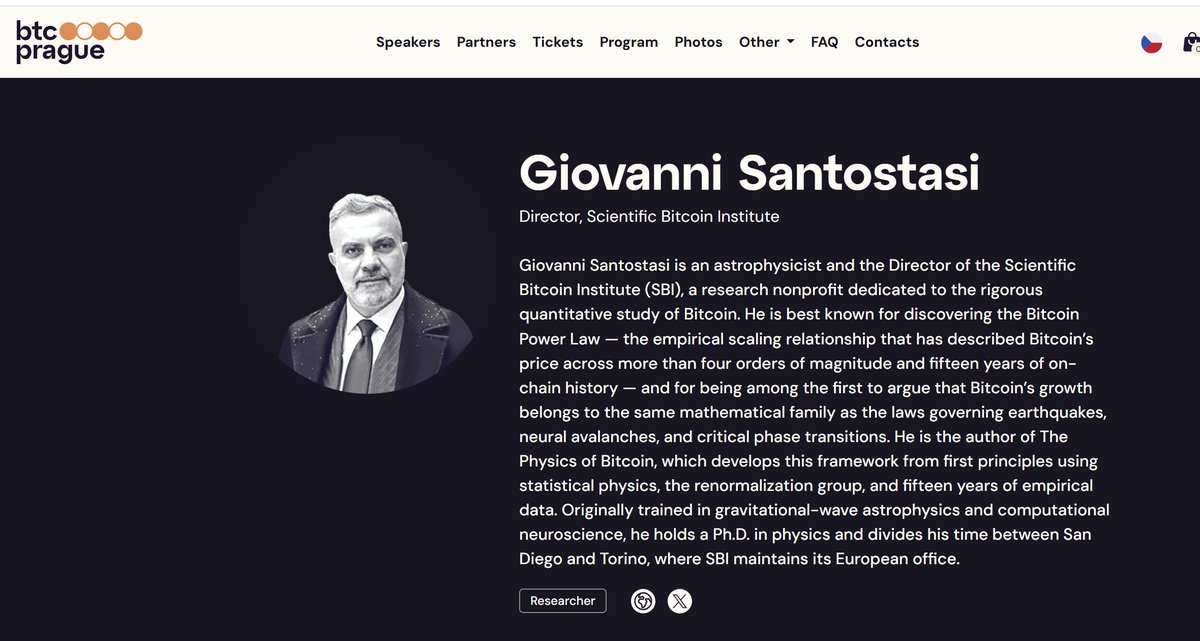
BTC Prague at 15:30 come to see my talk.
DM me if you wanto meet.
1
15
101
11,553
The emergence of global consensus without centralized control was once considered impossible. Bitcoin demonstrated that impossibility claims sometimes have expiration dates.
5
13
343
Complex systems don't become stable by eliminating volatility. They become stable by absorbing it.
1
4
17
1,665
Scientific Bitcoin Institute retweeted
Bitcoin is encapsulated energy and the first true energy-based standard for monetary technology.
Its inspired highly scalable hashing protocol incentivizes more energy into the Bitcoin network. This provides it with a higher surface to interoperate with, integrate into, and optimize the existing energy grid infrastructure.
Jun 8

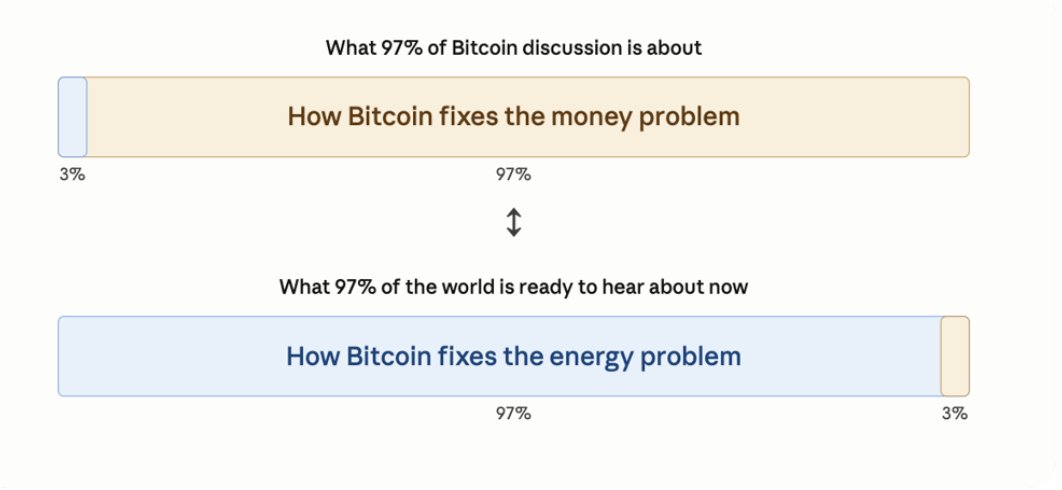
The gap between these bars is arguably the largest asymmetry in Bitcoin right now
2
9
45
5,318
A useful scientific question: "What properties must a monetary network possess to survive for centuries?" Bitcoin may be our first opportunity to study the answer in real time.
1
7
315
Scientific Bitcoin Institute retweeted
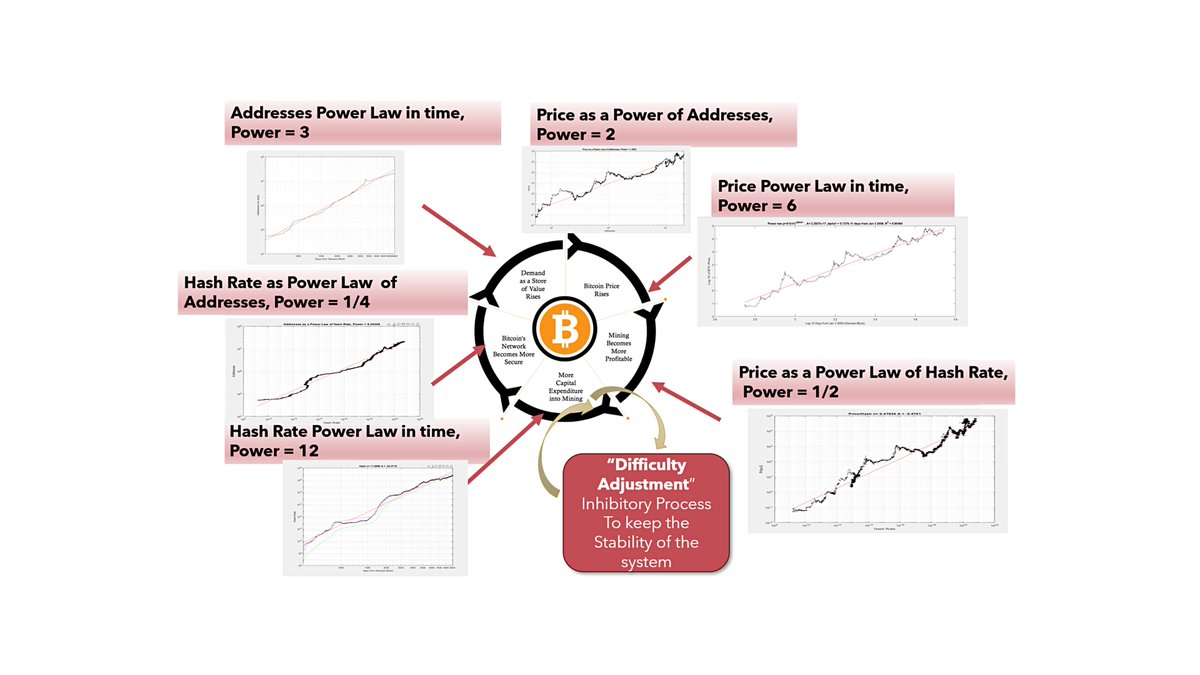
We didn't give it the name Power Law, it is the definition of a mathematical relationship y ~ x^β, an independent variable raised to some power, some exponent of repeated multiplication. It's simply the correct name used by scientists and mathematicians.
Some famous examples:
Newton’s gravitation
F ~ r^{-2}
(inverse-square law, a special power law)
Kepler’s Third Law
T^2 ~ a^3
Stefan-Boltzmann Law
L ~ T^4
Blackbody radiation (Rayleigh-Jeans limit)
another power-law regime.
Physicists were already accustomed to calling these “laws” because they appeared fundamental.
Saying “gravity is just a theory” is like saying “music is just a theory.” The notes are real; the theory explains how they fit together.
Some notes are better muted.
What's your favorite theory of gravity? General relativity, loop quantum gravity, scalar-tensor-vector, emergent (entropic)...?
To date general relativity has passed every test, so alternatives must reduce to general relativity under known circumstances.
Jun 7

Gravity is just a theory, it’s not a law…
8
45
7,193
Scientific Bitcoin Institute retweeted

Jun 8
This ist the most comprehensive, science based, math & physics backed view on Bitcoin you can get.
Study @ScientificBTC research!

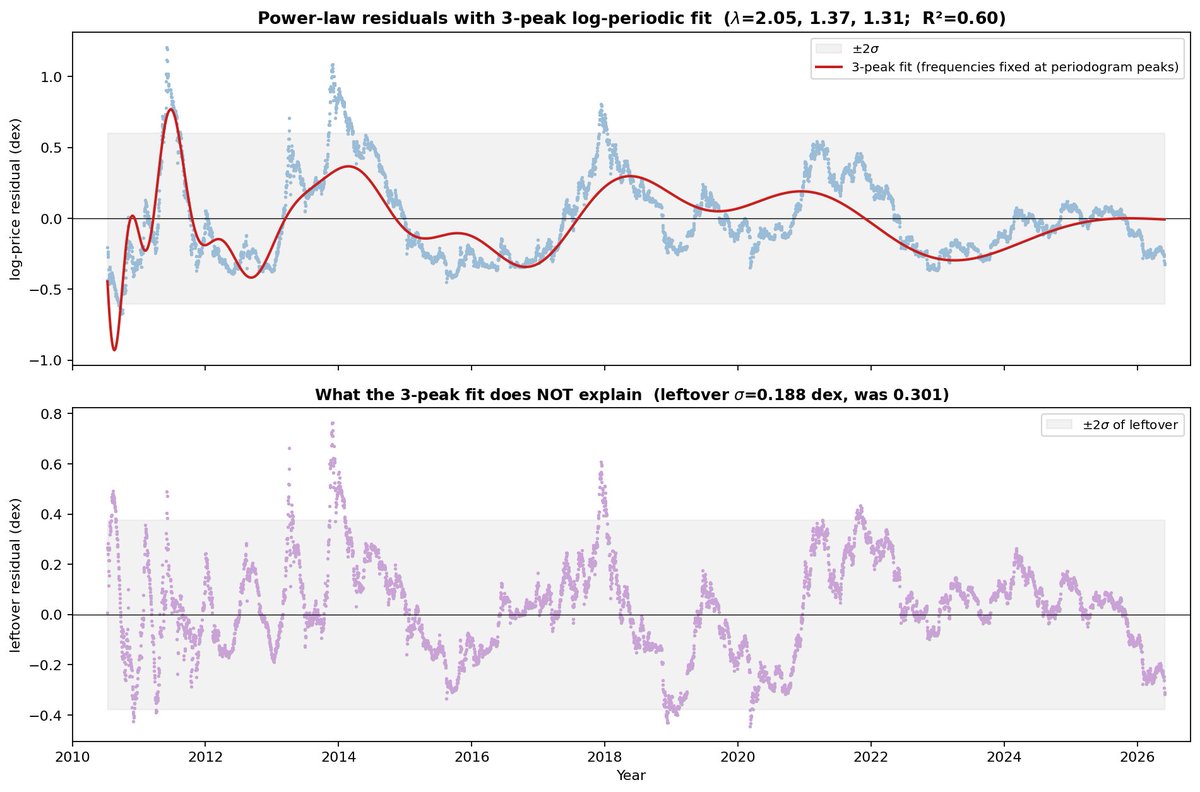
I have the feelings than the PMI only and the 4-year cycle only camps are both wrong.
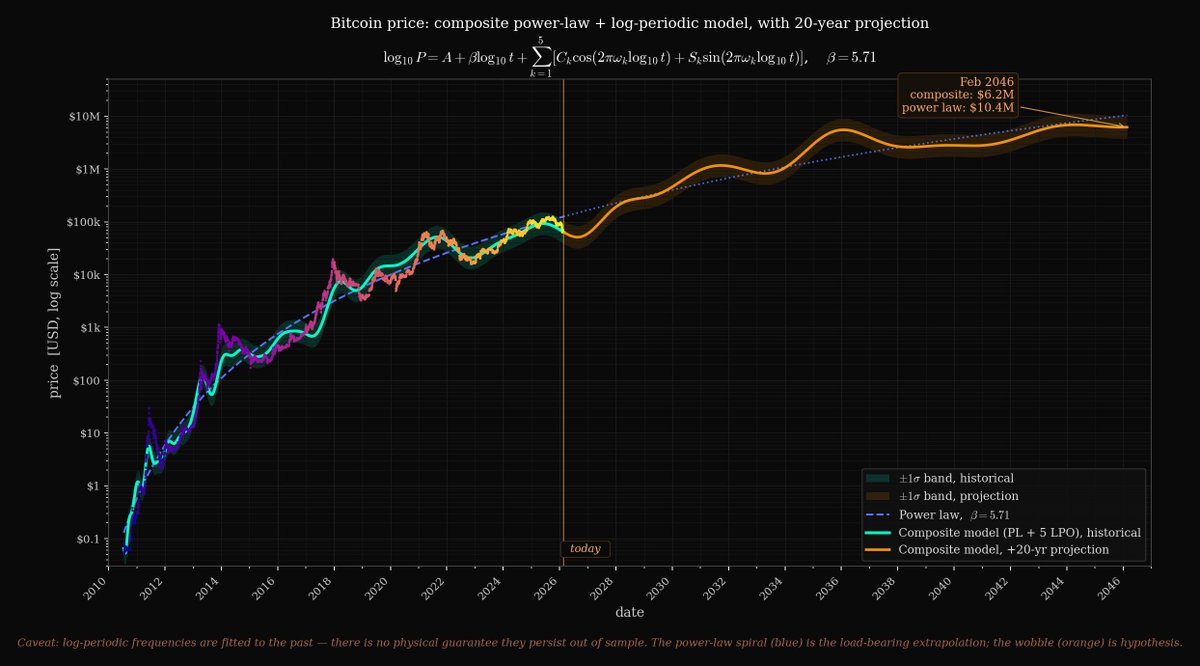
A log periodic model with a main dominant frequency and 2 additional observed frequencies close (but not exactly) to the 2nd and 3rd harmonics can explain most of the Bitcoin oscillations.
It is likely that there are both internal log-periodic cycles and external ones, like PMI, that interfere with the main one.
5
11
3,673
Nature often discovers robustness through redundancy. Bitcoin does the same. Thousands of nodes store the same truth so no single failure can erase it.
9
279
Bitcoin's power law adoption continues as projected while investors are capitulating. Watch our latest podcast:
youtu.be/yUN4tmks0Ug
2
11
2,033
Scientific Bitcoin Institute retweeted
It had to be an algorithmic process multiple steps removed from human intervention, in order to allow for an absolutely finite and scientifically precise monetary standard.
1
8
552
Scientific Bitcoin Institute retweeted
Bitcoin’s Power Law Passes a Major Statistical Test, by @moneyordebt open.substack.com/pub/stephe…
5
4
38
4,177
For centuries, monetary systems depended on trusted intermediaries. Bitcoin asks a different question: what if trust can emerge from rules alone?
1
5
630
Scientific Bitcoin Institute retweeted

We were expecting major resistance at $80k, and the rejection came as expected. For those with a long-term vision, the most exciting part of the cycle is about to begin.
youtu.be/0D34NPtV1cY

1
1
4
469
Civilizations store value across time. Gold stored value across generations. Bitcoin may be the first asset designed to store value across a digital civilization.
1
2
16
2,453
Most human institutions rely on trust in people. Bitcoin relies on trust in process. That distinction may prove historically significant.
2
9
629