
fellow @CarnegieEndow | frontier AI policy
Joined August 2019
- Tweets 1,365
- Following 1,097
- Followers 2,252
- Likes 2,207
65 Photos and videos


Pinned Tweet

May 12
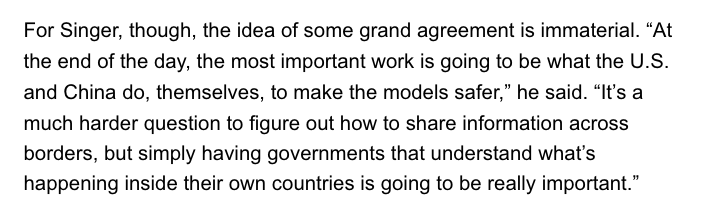
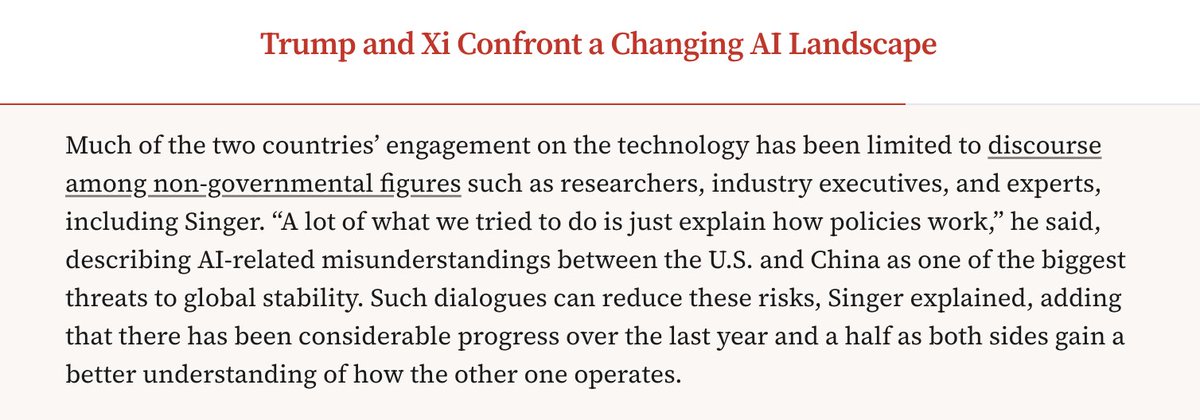
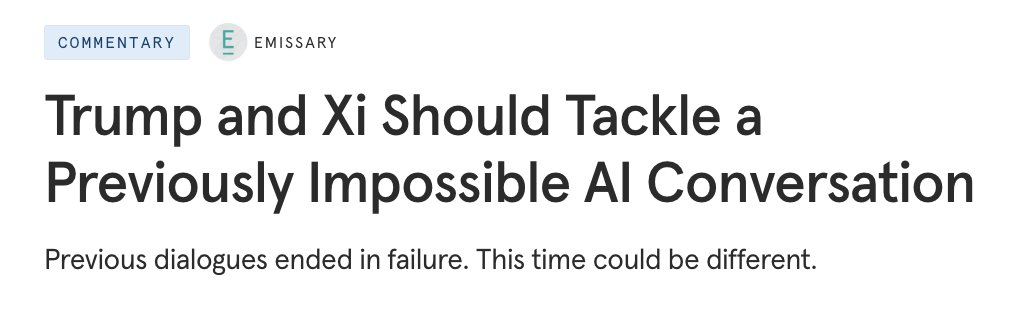
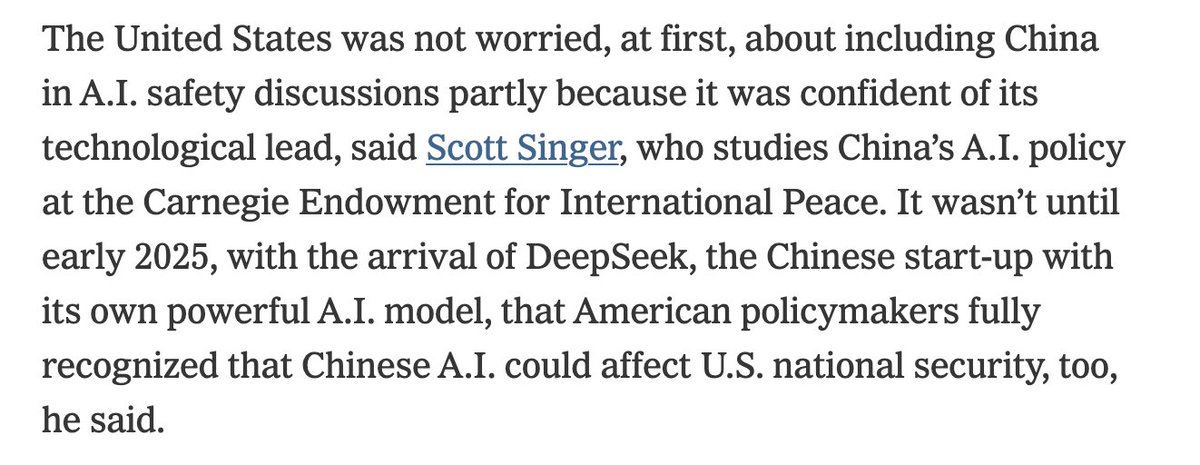
President Trump travels to Beijing this week to meet President Xi — and AI is on the agenda. This is a genuinely encouraging development.
In @ForeignAffairs, @cqknight_ and I argue that while Washington and Beijing compete fiercely on AI, they must mitigate the most extreme dangers it presents to the world.
Fortunately, working together is not only necessary, but with the right approach, it is also feasible. The key is to focus on how to look for risks rather than the specifics of what they find.
3
6
21
3,633
Scott Singer (宋杰) retweeted

Jun 13
good morning
May 13

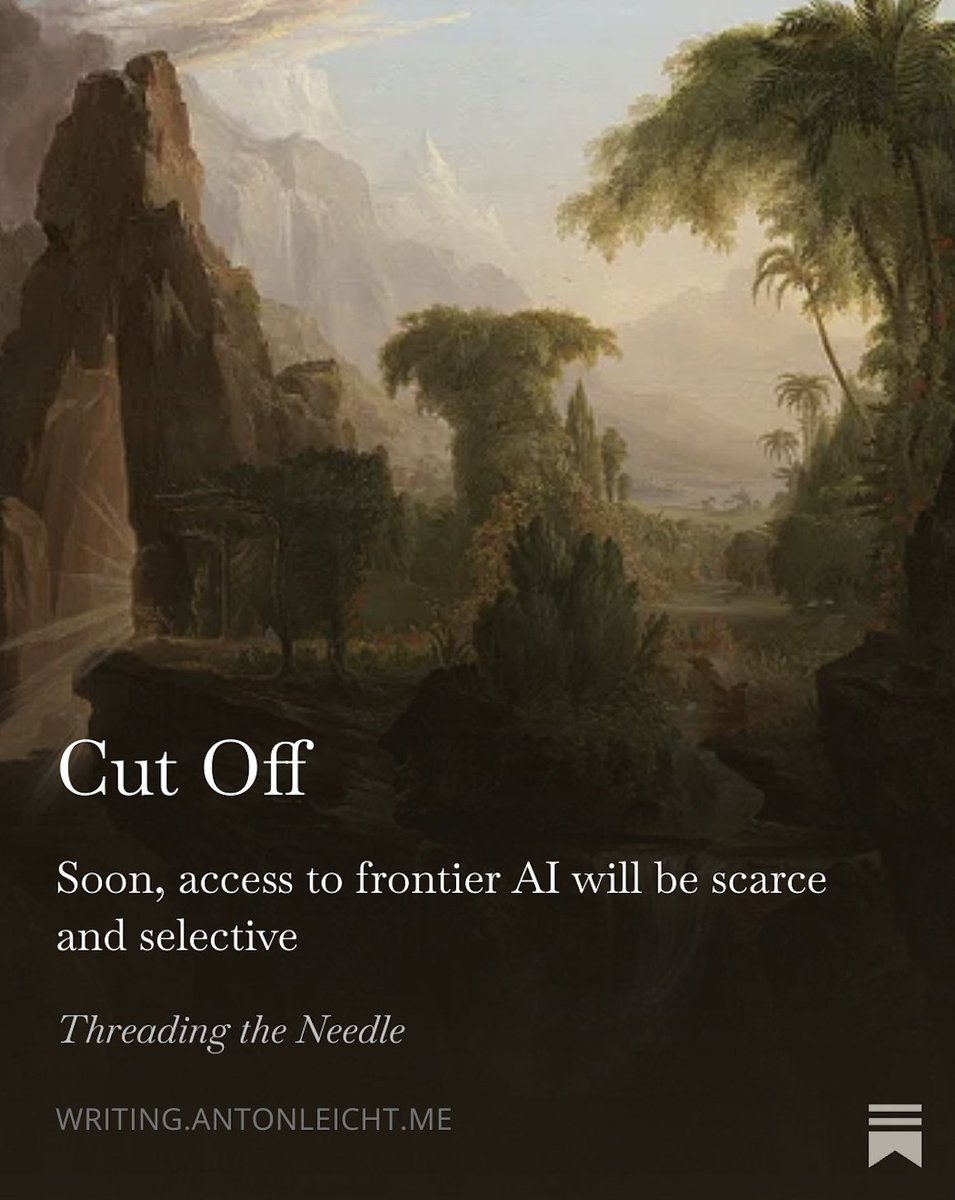
AI strategies everywhere hinge on widely available American frontier AI. Post-Mythos, amid compute crunches, security concerns and distillation crackdowns, that paradigm is under threat.
Today, I argue the era of widespread access to frontier AI is almost over.
5
14
146
6,100
And the profound but important irony that one of the most important groups that helps make models safer is the British government...
Jun 13

Beyond the obvious reasons why this is mad, citizen / noncitizen is a particularly odd axis to split this on. Plenty of nasty hackers with US passports, and surely foreign evil-doers wouldn’t find it that hard to spoof citizenship.
1
2
184
Scott Singer (宋杰) retweeted

Jun 11
In 2027, big tech companies expect to spend nearly $1 trillion on AI data centers around the world. Where they choose to build those data centers could help determine the global balance of power.
To learn more, @alasdairpr, @TawilTeddy, and I created a detailed financial model showing what drives these $10 billion decisions, and wrote about our findings in a new Carnegie report.

3
11
53
5,479
Scott Singer (宋杰) retweeted

Jun 10
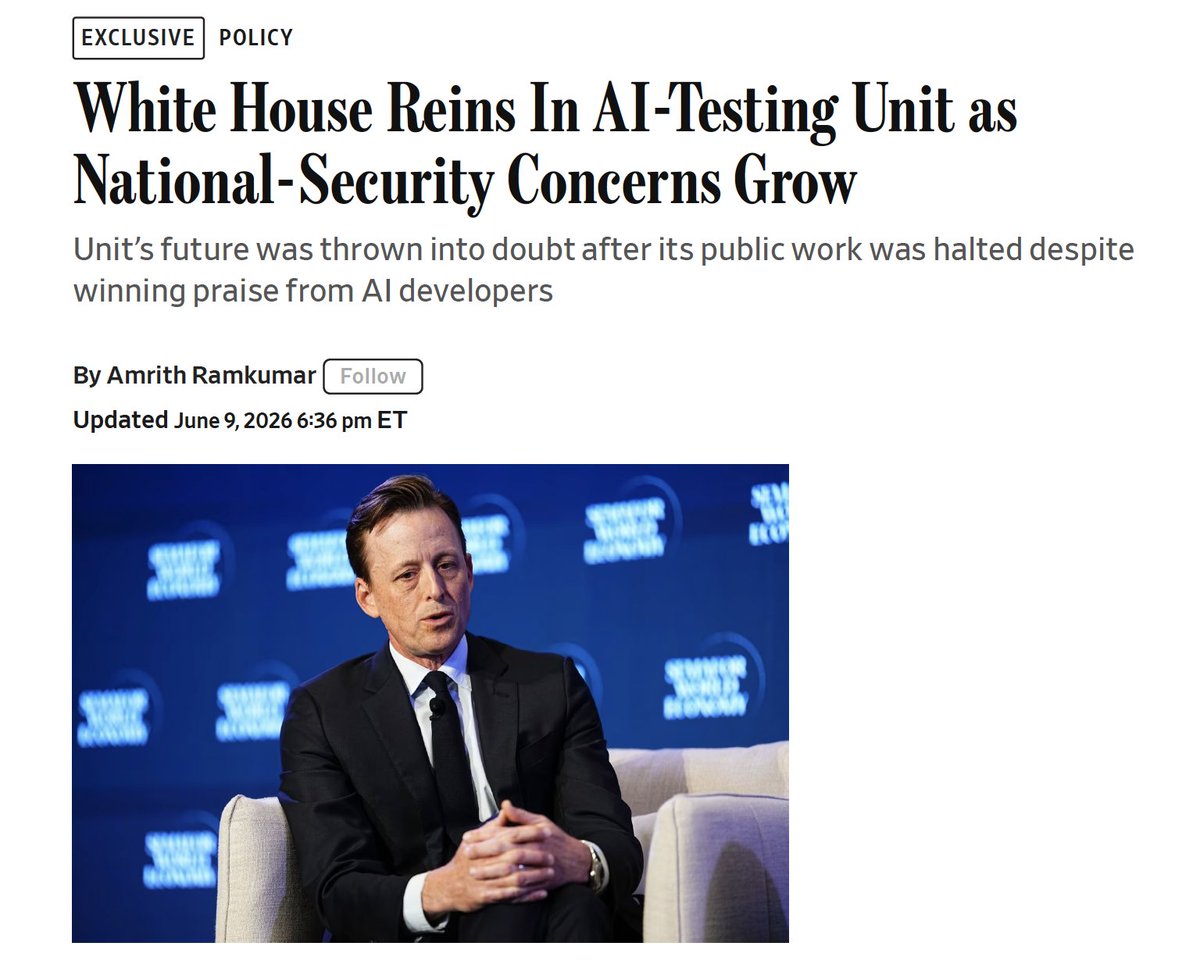
CAISI has reportedly been directed to stop publishing public model assessments as the new AI EO gets implemented.
Natsec engagement on AI is essential. But pulling CAISI's evals from public view doesn't make the field more secure. It just means fewer eyes on the science when we need more.
Openness and natsec don't have to be in tension here. We should be doing both.
9
44
311
102,246
Scott Singer (宋杰) retweeted

Jun 5
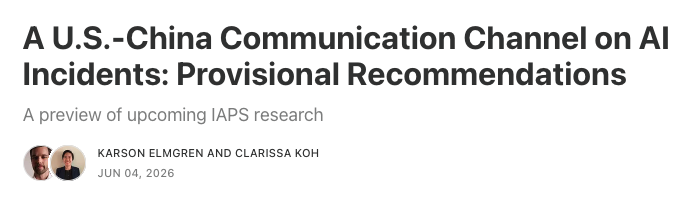
the US and China don't currently have great ways to communicate about shared threats from AI. perhaps we should at least have, well, something like a (rather bureaucratic) groupchat?
sharing some provisional thoughts from @Clarissa_Koh7 and myself, eager to discuss!
1
2
21
2,210
Such fabulous news. Critical that organizations as important as CSET have great leadership. Can't think of anyone better for this job than Helen
Jun 4

We’re excited to announce that @hlntnr has been named Executive Director of CSET, following her service as Interim Executive Director since September.
Helen has been with CSET since our founding in 2019, and we are looking forward to a great future under her leadership!
1
4
985
Scott Singer (宋杰) retweeted
Jun 4
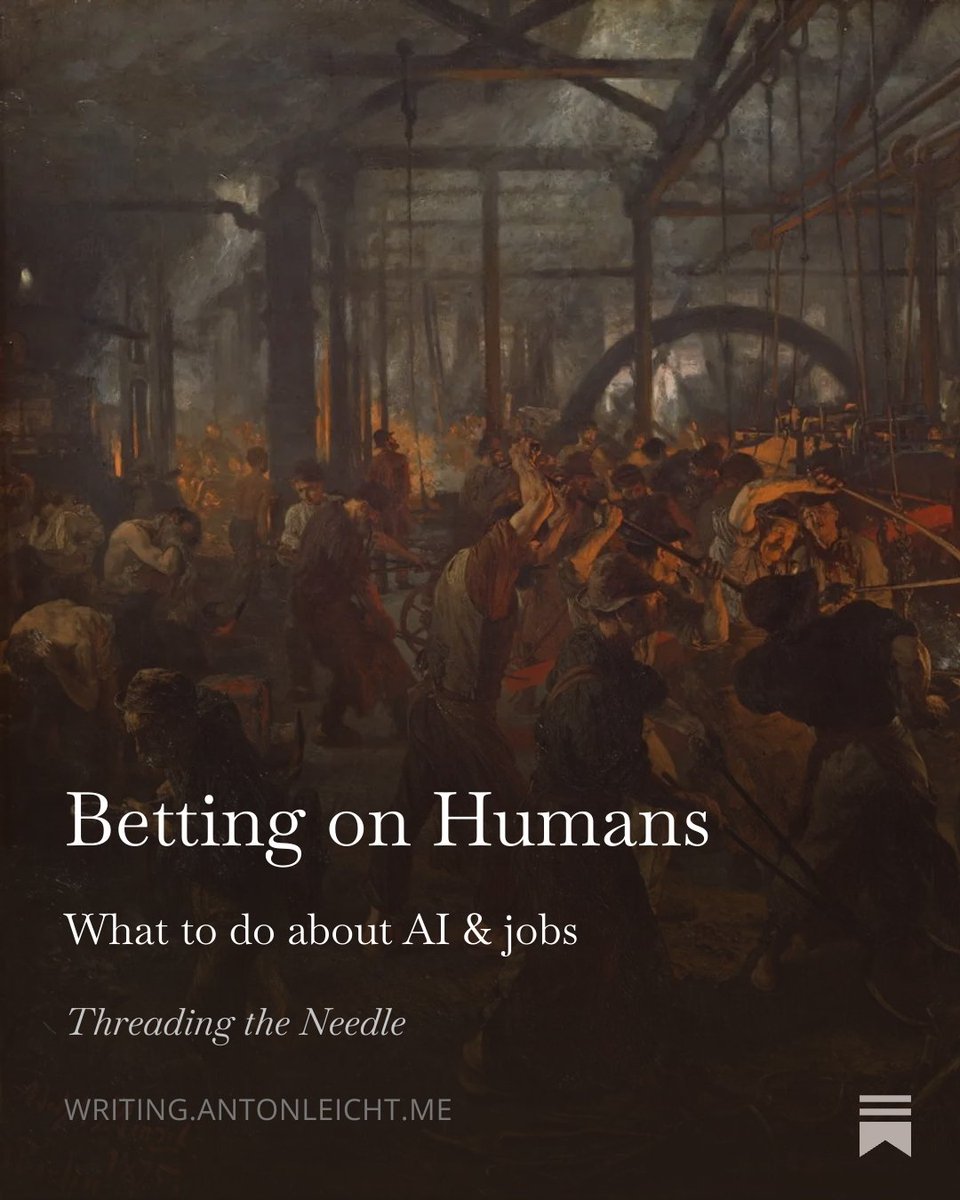
Political demand for policy solutions on AI labor disruptions is picking up, and it's outpacing our ability to measure, develop, and test responses.
Today's post with @deanwball lays out how, amid great uncertainty about economic futures, policymakers can bet on human work.
4
16
65
36,531
Scott Singer (宋杰) retweeted

The @AISecurityInst is hiring for a Director and for a Chief Research Officer. AISI is a remarkable organisation: doing globally important work, with a world-class team, in the heart of government.
These are some of the highest impact jobs in AI security anywhere. Do consider applying and sharing widely.
2
36
123
25,788
Scott Singer (宋杰) retweeted
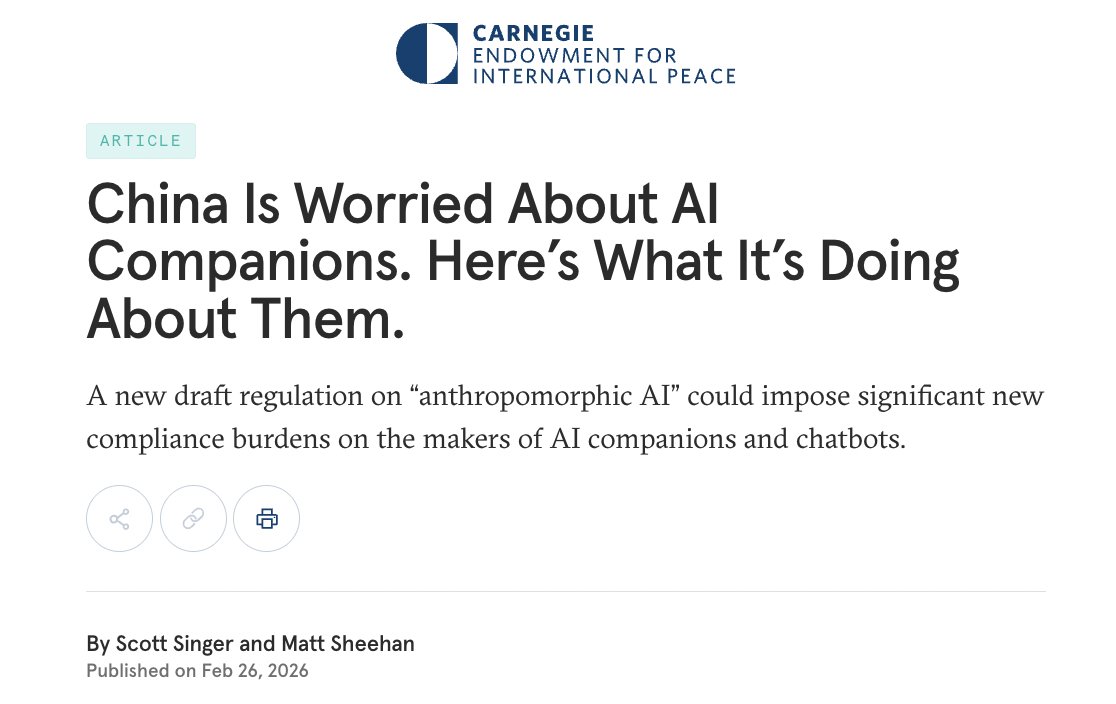
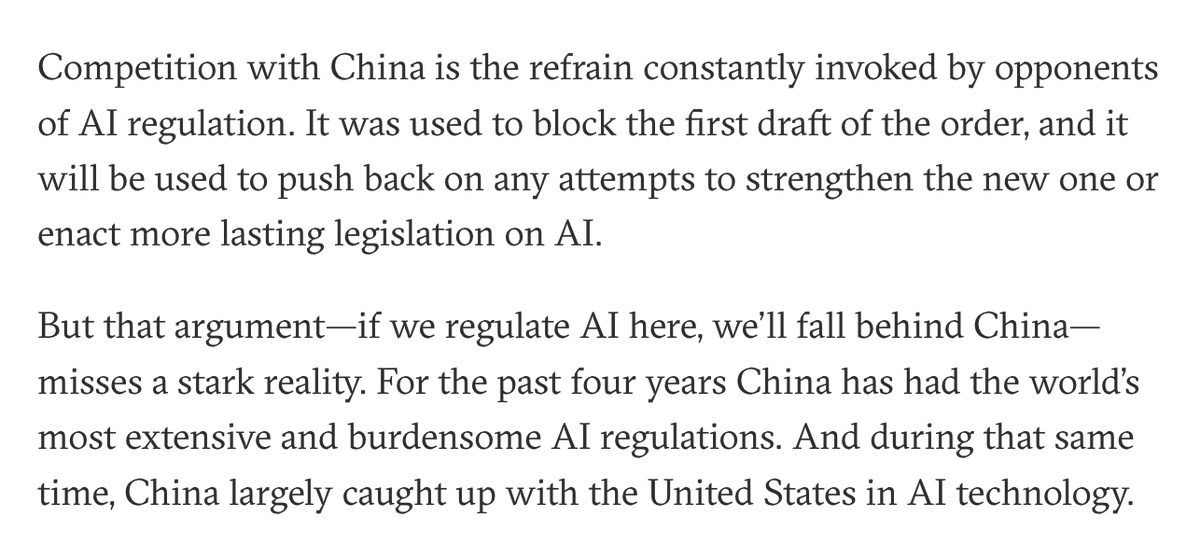
New piece from me in the wake of new White House EO on AI. It looks at a seeming paradox:
- For the past 4 years, 🇨🇳 has had the world's most extensive and burdensome AI regulations.
- During that same period, Chinese AI companies largely caught up w/ their 🇺🇸 peers.
Link below
5
14
46
7,627
Scott Singer (宋杰) retweeted
Jumped on @BloombergTV to talk growing concern in 🇨🇳 about AI x jobs.
One interesting bit: labor displacement likely comes down to scale/speed of transition. Chinese policy on not firing workers are targeting that transition period.
Starts at 5:30 mark
bloomberg.com/news/videos/20…
3
10
1,976
Scott Singer (宋杰) retweeted

May 29
Really enjoyed this one. We unpacked the announced 🇺🇸-🇨🇳 AI dialogue, China's approach to AI agents, and how it's thinking about labor displacement. Check it out!
May 29

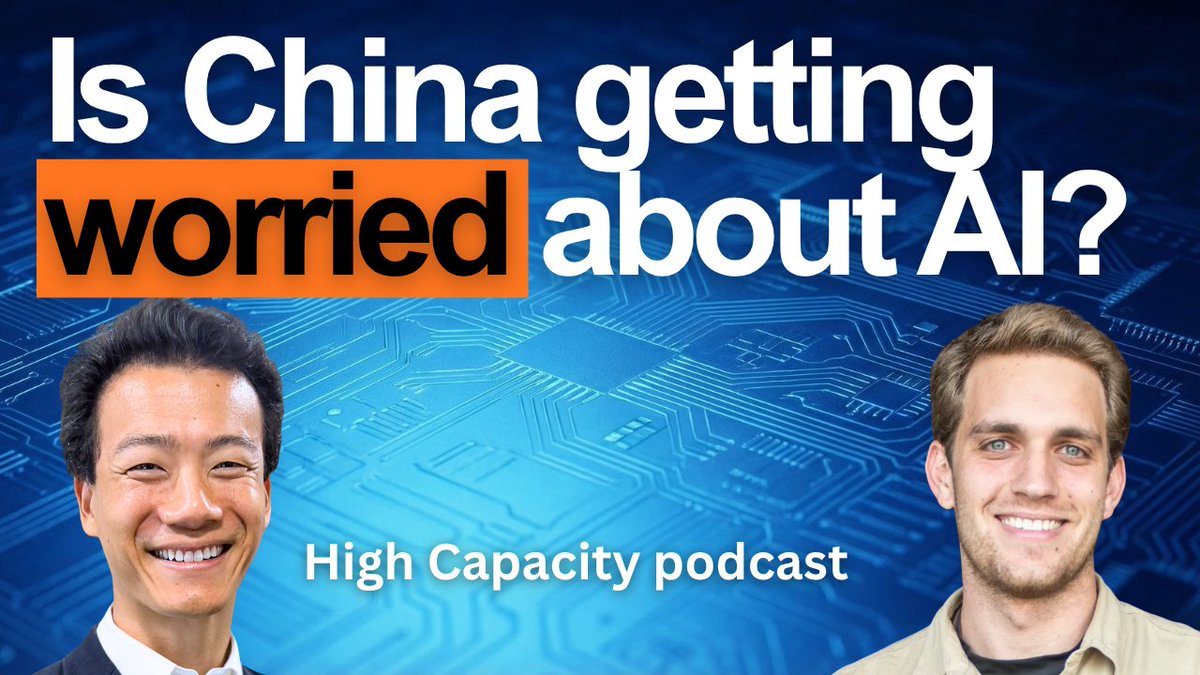
🚨 NEW High Capacity podcast episode 🚨
I had an awesome conversation with Matt Sheehan (@mattsheehan88) about what US-China talks on AI might look like and how China's attitudes toward AI risks are changing, especially on job displacement.👇
2
8
27
4,976
Scott Singer (宋杰) retweeted
May 27
New reporting from WSJ confirms what I'd heard about He Lifeng getting quite concerned about AI x jobs. Always helpful to get some corroboration on what you hear from the rumor mill.
My piece on the topic linked in reply.
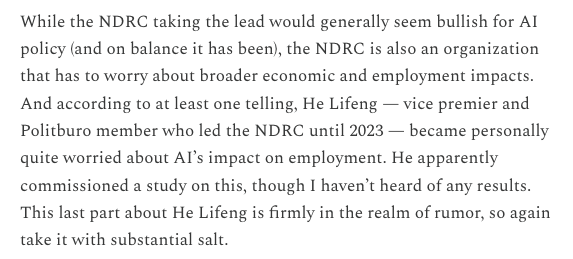
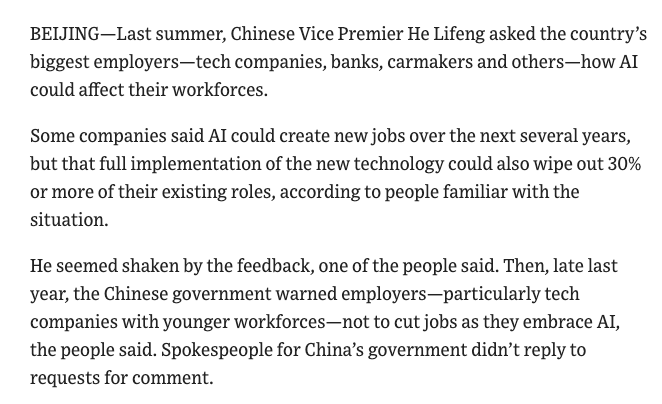

"Even as Chinese companies race to stay at the cutting edge of AI development, Beijing is warning companies against replacing workers with AI, suggesting concern that the technology could create instability" @hannahmiao_ @raffaelehuang
wsj.com/tech/ai/china-wants-… via @WSJ
4
43
175
86,055
May 25
What @AISecurityInst has built in such a short time is nothing short of remarkable. Many of the people in these roles have taken substantial pay cuts to be in government. The UK government has built something they, and many of us on the outside, believe deeply in
May 24

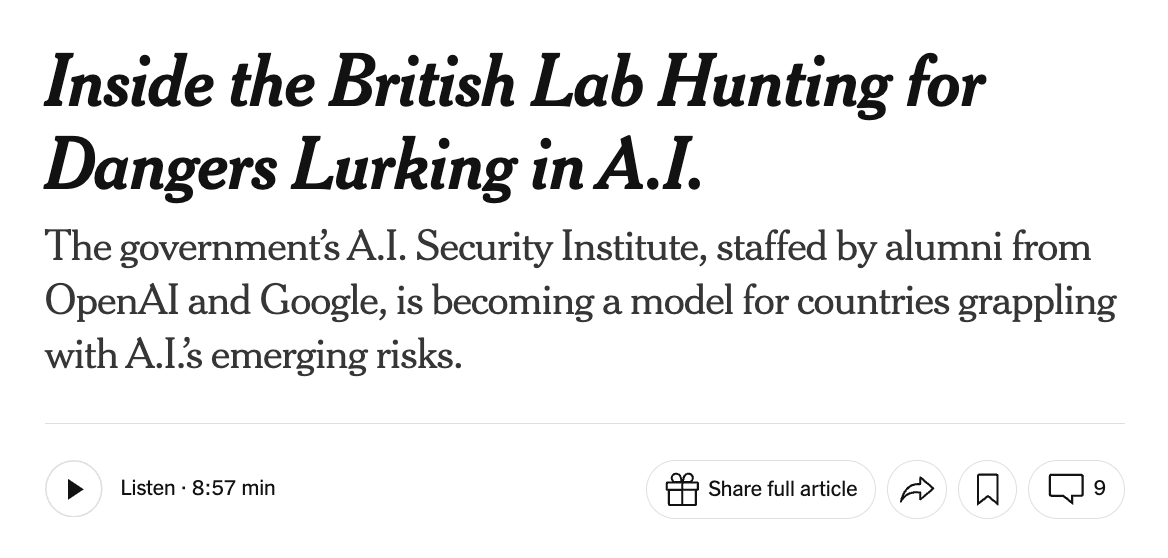
I moved to London 3 years ago to join @AISecurityInst, at the time a few people with visitor passes and a whiteboard. Since then AISI has become the world’s largest and best-funded group in gov focused on AI security & safety. Fun to be in @nytimes!
7
276
Scott Singer (宋杰) retweeted

On balancing safety cooperation with competition, Beth Knight and Scott Singer's article is one of a growing body of great pieces.
x.com/Scott_R_Singer/status/…
Bucknall et al is also essential reading.
arxiv.org/abs/2504.12914

As the two dominant powers in transformative AI, Washington and Beijing will determine whether it creates widely shared benefits or generates dangerous new risks. An AI model from either country could potentially be used to engineer a pathogen, launch cyberattacks, or create and disseminate realistic deepfakes — from anywhere in the world.
In @ForeignAffairs, @cqknight_ and I argue that a prudent U.S. risk mitigation strategy does not mean slowing down innovation. Instead, it means working with Beijing to come to an understanding of safety research priorities, to coordinate testing for vulnerabilities and implementing safeguards, and to jointly establish best practices to contain truly global risks.
Working together is necessary, and with the right approach, it is feasible. By focusing on how to look for risks rather than the specifics of what they find, Washington and Beijing can compete fiercely on AI while still mitigating the most extreme dangers it presents to the world.
1
4
787
May 20
Great to chat with @PuckNews's @IKrietzberg on Biden-Xi. It ultimately matters less right now whether the U.S. and China agree internationally for an agreement. What matters much more is whether the U.S. and China do a risk mitigation seriously themselves. It's time to get going.
1
3
11
1,083
May 20
1
105
May 20
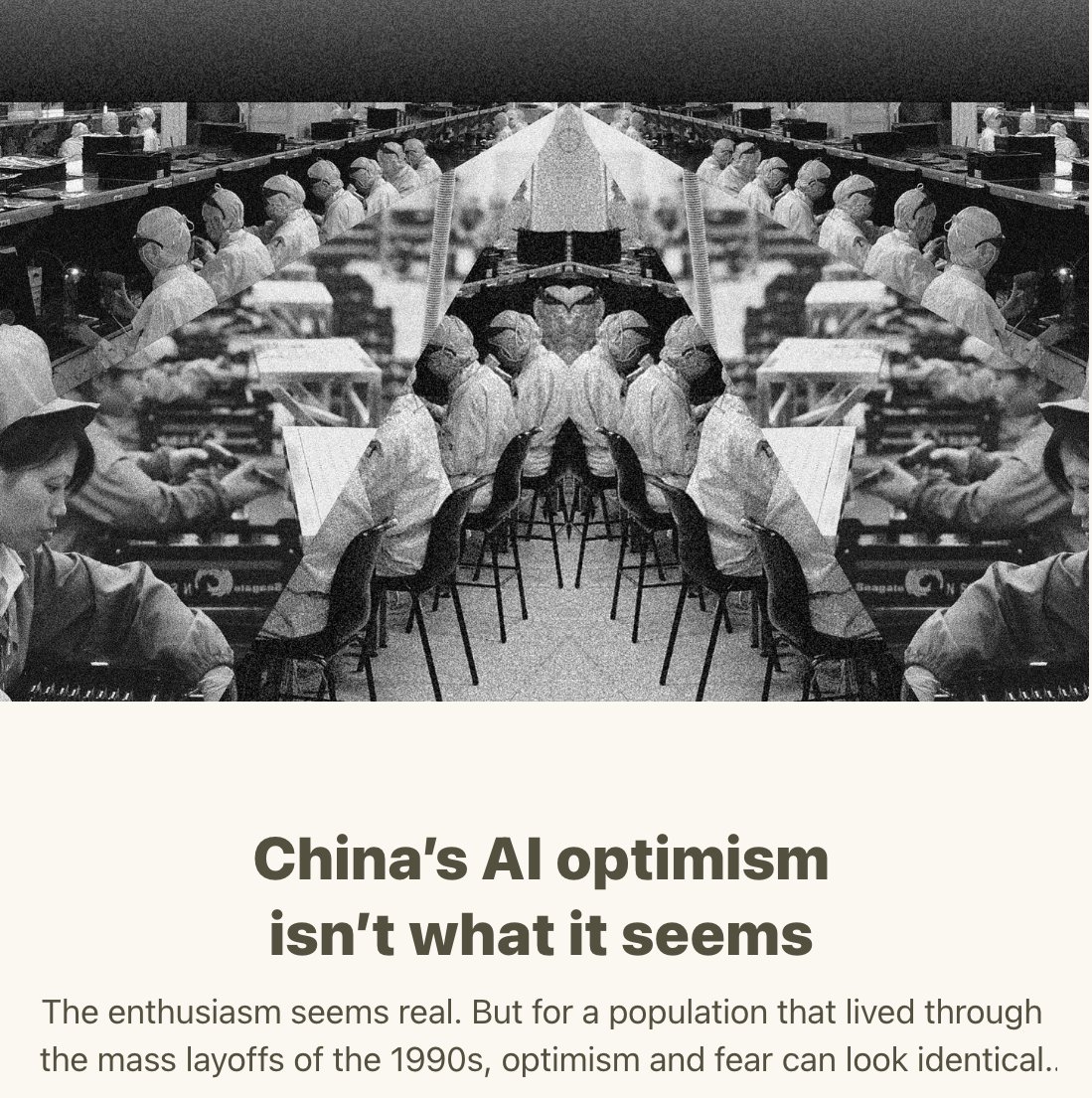
Super important and timely article from the remarkably talented @ZilanQian. Explains rapid individual-level AI adoption in China –– fear of job loss, grounded in the historical reality where that was a lived reality for the previous generation. The fear of AI dressed as techno-optimism lives in the U.S. too but with different history, culture, and economic systems.
May 20

Why is the Chinese public so optimistic about AI? Why are they not worried about job displacement? Why do so many people rush to use OpenClaw?
People in China and the US are not different species with opposite societal and technological expectations. It is because the massive layoffs three decades ago taught the Chinese that every transformation is "the last bus" — miss this one, and history will progress without you.
My new article @asteriskmgzn. Thanks @anton_d_leicht and @Scott_R_Singer for their feedbacks, and the editorial team for all the hard work.
2
6
595
May 20
It's time to build
May 20

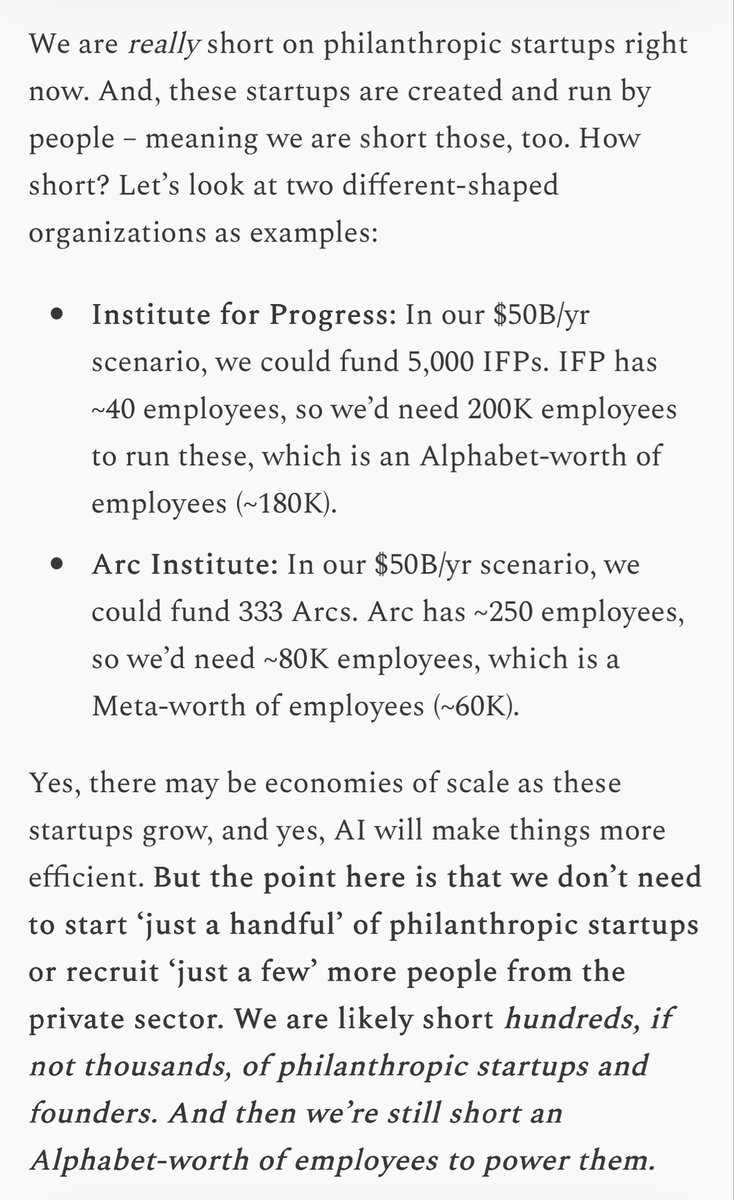
We are entering a new era where the binding constraint on philanthropic startups is no longer funding.
The scarce factors are good ideas & the talent who can execute on them.
Now is the time for entrepreneurial people to start new organizations that create public goods.
1
250
Scott Singer (宋杰) retweeted
May 19
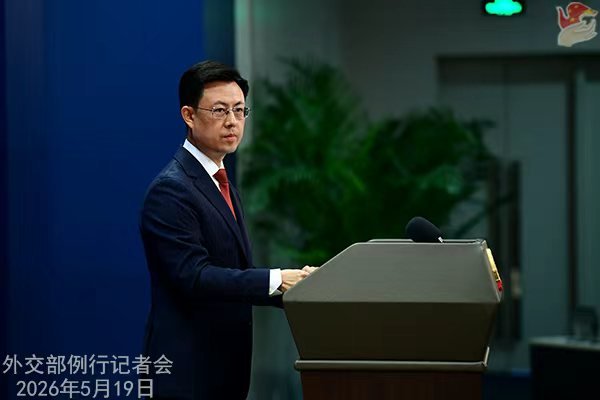
From China's Ambassador for Disarmament Affairs. I've heard that this dept at MOFA is leading on AI diplomacy, and they've beefed up their team a bit. If they are MOFA's lead for US-China talks, that'd be an improvement on the North America bureau people who led the 2024 meeting.
May 19

During President Trump's visit to China, the two heads of state agreed to launch dialogue on #AI between the two governments, as MFA spokesperson Guo Jiakun announced today.
As two leading AI powers, China and U.S. should join hands to promote the development & governance of AI, to ensure AI will better serve the progress of human civilization and common welfare of int’l community.
1
5
18
20,278
May 19
You can just do things
May 19

My new hobby is making oddly-specific AI-generated music.
E.g. one album about working hard, another about unsung heroes, and one about CrossFit.
I just put some on Spotify if you wanna listen.
95