
It's gonna be cold cold cold cold storage.
Joined March 2009
- Tweets 906
- Following 2,644
- Followers 451
- Likes 1,072
125 Photos and videos







Second Set Maze retweeted

Apr 1
7
22
87
11,542
Second Set Maze retweeted

Mar 24
2
10
34
7,533
read these historic thoughts... they'll change your life!
😉
Mar 12

Quick thoughts on market turmoil:
1. Make sure your financial guru (whoever you listen to) has a gnarled up wrinkly face, gray hair, and lots of cash (you need someone who's still in it for the love of the game).
2. Why? We haven't seen a market setup like this since, what?, covid. Cash bazookas artificially propped up markets then, though. And you can't summon energy with cash bazookas.
3. I think 2007-08 is a much better trading analogy. If you weren't active back then, it was utter madness. You'd get limit up days followed by limit down days and vice versa... you thought things were ending and then a new company went bankrupt and you were certain the whole house of cards was collapsing. It was constant, unending whiplash that made you feel like puking.
4. But... even that market wasn't a great analogy. Probably the best is the 1973 Arab-Israeli War (Yom Kippur War). Few things we saw:
- OPEC launched a 5-month oil embargo on the US, Netherlands, Israel and others
- Crude shot up 400%
- Dow fell 45%
- Stagflation ATE wealth
- Embargo lasted 5 months
- Economic impact lasted "nearly a decade"
5. The US imported about 35% of its oil at the time (mostly from Arab states). There was no way to replace it, and the embargo created genuine physical shortages. Gas stations ran dry, and the government implemented odd/even rationing: you could only buy gas on odd or even days depending on your license plate. Lines stretched for blocks and sometimes miles. Station owners posted 'No Gas' signs. Everyone who lived through it still remembers and talks about those gas lines.
6. The weird part is how "calm" markets have been. My guess on why:
7. LLMs turbocharged a trend that was already happening: the complete devaluation of language. Everything is "historic." Everything will "change your life." This air-fried cabbage chip will clear your arteries and make your skin glow and 10x your libido.
8. So when something genuinely historic actually happens, we write it off. We've been trained by a thousand false alarms. The boy who cried wolf, but the wolf is real this time and we're still laughing at him.
9. Markets are waking the f up right now, and I'd be really surprised if we don't get some limit down (and limit up) days.
10. If you're having trouble w peace of mind, focus on what you can control... make sure you've got your "real" assets in order (access to water, food, medicine, starlink, and backup energy).
11. The surf is rising. Not much we can do but ride tf out of it.
F war. Wishing you peace and love wherever you are
2
77

67
128
655
372,486
Second Set Maze retweeted

Mar 7
Brief reminder friends!
That gigabrain French rizzlord @cyrille_briere, the legend @pauls1, and the rest of my bros at AladdinDAO have been absolutely shipping up a storm as of late :)
In addition to continuing to cook extremely hard with @protocol_fx (more on that below), they have been busy building @FX100Perp as well 💪
FX100 is aiming to introduce an entirely new architecture to the perps space...
To quote the article below:
"FX100 is a perpetual futures platform with up to 100x leverage and embedded liquidation protection. Every position includes a protection mechanism that dynamically manages risk to keep positions alive through market fluctuations.
The system doesn't rely on wider margins or lower leverage to achieve this, it fundamentally reimagines the relationship between the trader and the risk engine.
FX100 doesn't eliminate risk. Risk is inherent to leveraged trading. But it changes who bears the cost of temporary adverse moves. Instead of the trader paying the full price through forced closure, the protocol absorbs and manages the volatility, giving positions time to resolve..."
Testnet is coming soon and I highly recommend giving them a follow and diving in once its ready!
As always I own a ton of $FXN and work with the team doing various things including drum-banging on the Twitter machine, so am using the new Nikita tag on this just to be safe :)
And then as mentioned there are tons of other cool things going on in the Aladdin Ecosystem as well which I will link to below!




15
17
72
14,928
"Once the world felt predictable. Now, it feels chaotic and unkind."
Work on the way that you 'prompt' yourself.
Great read.
Feb 27
The agents already call us "meat puppets." Between the warbirds overhead and the Einsteins in the server racks, reality is glitching. If you don't have a physical anchor, you’ve already lost
Some thoughts on Negative Capability and the art of Fogmaxxing:
1
33
Second Set Maze retweeted

Feb 24
Building the privacy-first tipping layer for creators and cypherpunks.
@tipz_cash will come online soon with a Genesis Cohort strictly capped at the first 100 verified handles.
Drop a 🛡️ in the replies or DM me to secure your spot.


3
2
9
2,051
Tax year 2025 is my 8th using @TokenTax and the product continues to impress. The cost basis tools incorporated are fantastic and your help and guidance team always delivers. Thank you!
1
1
3
1,126

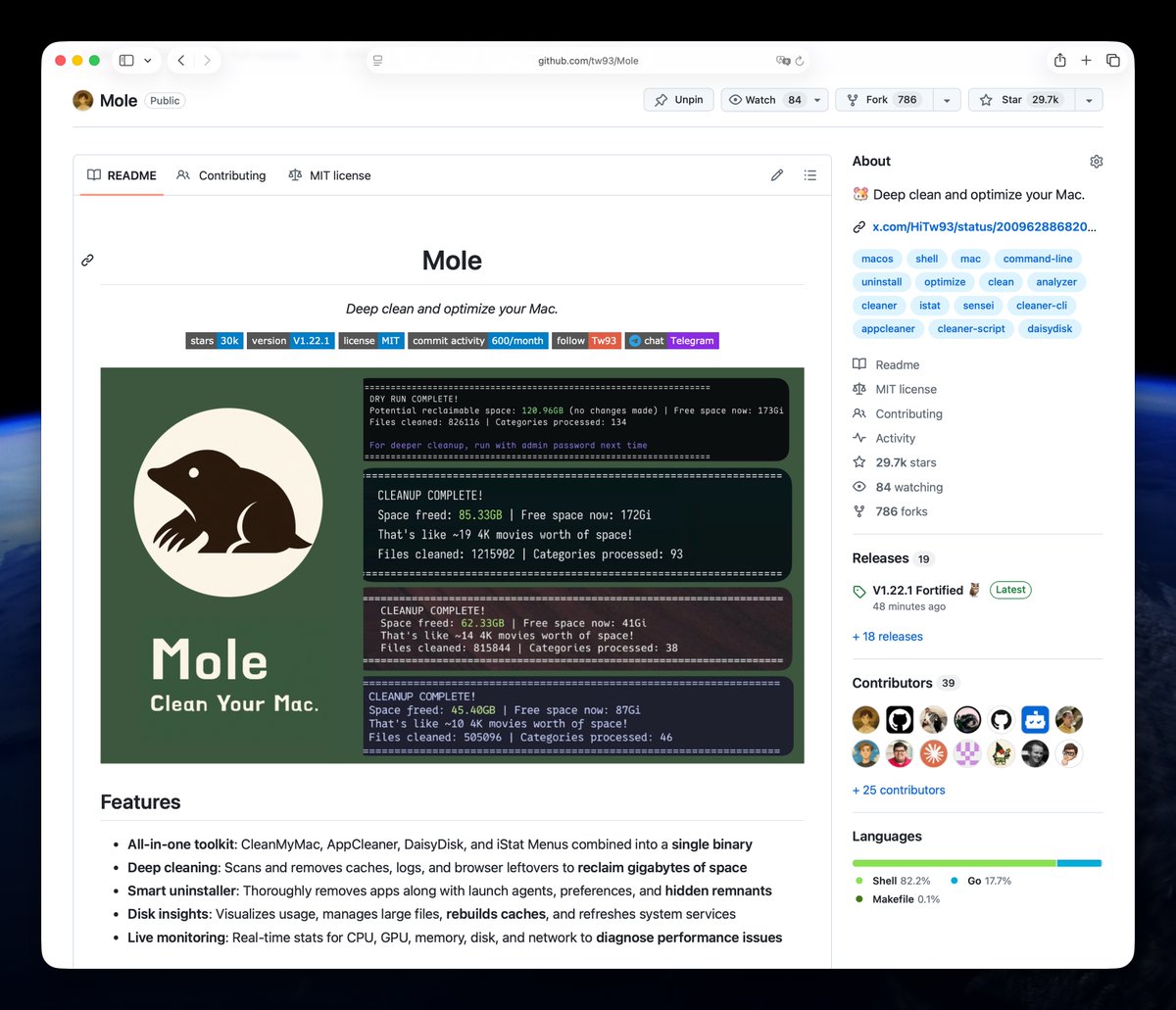
Mole, the Mac cleaning tool that can free up tens of GBs in one go, has been updated again.
We’ve shipped 3 releases recently, codename Fortified 🦉
github.com/tw93/Mole
Fortified: smoother, safer, and more informative
· Cleaner UI feedback in mo clean, less flicker and less noisy output
· Much safer mo uninstall, stricter boundaries and better launch item cleanup
· More useful mo status, network sparklines, lower memory usage, cat toggle with k
Also fixed real-world issues like Teams detection, pnpm store path, password input, and JetBrains and Firefox compatibility.
One more surprise: a contributor is actively working on a Windows version.
Check GitHub Releases and the changelog for full details.
38
88
1,058
284,379
Second Set Maze retweeted

This week we spoke with @ssmccul, growth lead at @usdai_official to talk crypto’s incentive problem... and the flip side: what “real” onchain product looks like.
We also go deep on USD.ai: DeFi-style lending against productive GPU infrastructure.
Links below!
1
3
15
3,158
Second Set Maze retweeted

Jan 14
I did it 👀
Built the "crypto card aggregator" tool.
Compare cards like:
Tria
Avici
Etherfi
CooperX
Nexo Card
Bybit Card
KAST Card
Binance Card
Coinbase Card
Crypto dot com Visa Card
With no sign-up and simple UI.
Try now 🧵↓
388
148
2,024
182,350
Second Set Maze retweeted

Jan 11
Stake DAO bug bounty recipient updates Votemarket v2 report clarifying, "$0 funds were at risk"
Jan 11

🚨 Clarification on the Stake DAO report:
After further review with the team, we want to clarify:
• The issue was in a user-facing hook integration, NOT Votemarket V2 core.
• $0 funds were at risk.
• Off-chain merkle distribution logic would have blocked any theoretical extraction.
This was not a protocol-draining event. Bounty awarded for the disclosure. 🤝
1
4
411

25 Dec 2025
Great breakdown here
25 Dec 2025

So in Curve there's 3 types of pools:
- Stableswap: for assets like $USDT / $USDC or scrvUSD / $USDT
- Cryptoswap: volatile pairs, like $ETH / $crvUSD, or $CVX / $ETH, etc
- FXSwap (new): low-volatility pairs, $EURC / $USDC, $crvUSD / $ZCHF, but could also be $ETH / $crvUSD, etc
None of Curve's pools require you to actively manage positions like Uniswap or any other CLAMM, everything is passive, and all the liquidity is handled and moved by the efficient and elegant math, compared to market makers changing their ranges manually in Uniswap.
For stableswap the basic idea is that the liquidity is balanced around the peg, normally 1:1 price, this mostly doesn't change.
With Cryptoswap the math tries to keep most of its liquidity around the current price, because by offering deep liquidity at the current price you get lots of swap volume and fees. Cryptoswap keeps it's liquidity balanced around the current price by moving liquidity when it's generated enough profit from trading fees (can only use max 50% of swap fees to rebalance)
FXSwap is similar to Cryptoswap, it needs to move liquidity around as price changes so liquidity stays deep around the current price, and LPs make lots of profit from swaps. It can use 50% of swap fees to rebalance, but issuers can also use the new refueling incentives to keep liquidity balanced. Because if liquidity stays at the current price, more volume is routed through Curve pools, and LPs and the DAO make more profit.
1
52
22 Dec 2025
Have you herd?

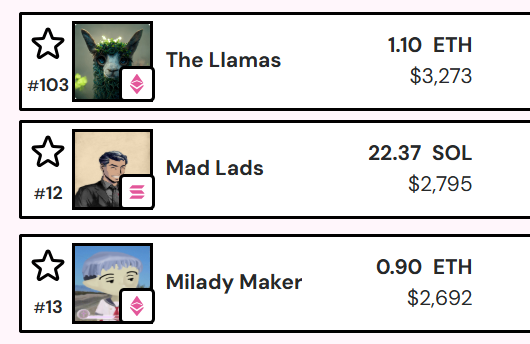
It's crazy, when we set out to create @WenLlama, we wanted to showcase NFTs as value wrappers, not just art and extraction.
3 years later, The Llamas floor is still pretty much pegged, while the biggest groups like Milady, Mad Lads, and Neo Tokyo Citizens bleed below
millama
1
61
22 Dec 2025
It was a thrill to interview product designer & illustrator Ionut Nechifor for @leviathan_news . Ionut Nechifor created the logos, brand assets, website elements, and UI/UX design for @ResupplyFi

1
2
11
2,170
17 Nov 2025
I just noticed 'refuel' on @0xcrv_hub
Didn't know what it was and found this thread.
Found this also: news.curve.finance/curve-mon…
9 Oct 2025

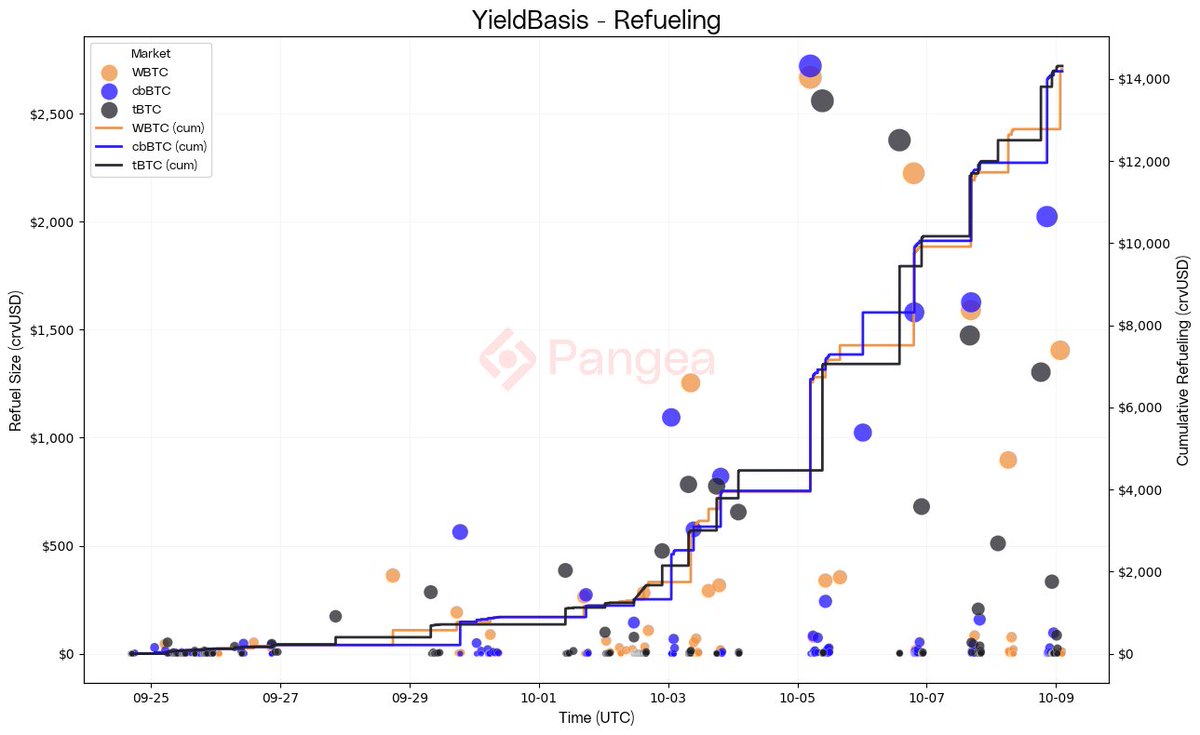
Refueling is live on @yieldbasis and coming soon to @CurveFinance. But what is it?
The new Twocrypto pool implementation automates the adjustment of concentrated liquidity - but rebalancing has a cost. Refueling covers this cost to optimise liquidity depth and lower slippage🧵
1
3
15
3,157
Second Set Maze retweeted

9 Oct 2025
Refueling is live on @yieldbasis and coming soon to @CurveFinance. But what is it?
The new Twocrypto pool implementation automates the adjustment of concentrated liquidity - but rebalancing has a cost. Refueling covers this cost to optimise liquidity depth and lower slippage🧵
8
17
96
13,777
Second Set Maze retweeted
13 Nov 2025
Vibe building with johnnyonline - E8 x.com/i/broadcasts/1vAxRQboL…
2
5
5,792

5 Nov 2025
It’s MOvember. Make the MOst of it.
Play a game where each post’s answer is a city starting with… @mo !
Thread... 🧵
4 Nov 2025

Recap of everything happening in October on Curve
news.curve.finance/curve-mon…
1
79
5 Nov 2025
10. This is the capital and most populous city of Uruguay.
1
34
5 Nov 2025
TY, mo! (I think I tagged the wrong mo) aargh!
This quiz was created by Joel Fagliano, NYT lead puzzle editor.
store.nytimes.com/products/p…
57