
Managing Consultant at SRSRM, Member of the Sy Inst. Can help with that sticky resilience & security problem. 25999/22301, 22361, 28000,31010 srsrm.co.uk
Joined March 2009
- Tweets 36,536
- Following 4,049
- Followers 2,421
- Likes 21,864
3,712 Photos and videos








Security Analyst @ SRSRM retweeted

Jun 12
Wow…immediately makes me think of the damage to and physical isolation of the Baxter IV fluids factory in North Cove, NC…60% national production of IV fluid supplies in US disrupted by Hurricane Helene
bbc.co.uk/news/articles/cz04…
#HurricaneHelene
#JustInTime #SinglePointOfFailure
2
3
3
69
Security Analyst @ SRSRM retweeted

Thanks to @Selyst for spotting this one
Good case overview from @TonySeruga
There will be a slew of root cause & compounding failures leading to such a catastrophic fire loss even
Recently banged my head with a clients team & fire engineer over legacy & emerging issues.
Jun 11

That's a hell of a situation unfolding in Tracy. A million-square-foot medical supply warehouse going up is no small thing — especially with the sprinkler system failing and hydrant pressure being garbage. Those two details are the kind of thing that turns a bad fire into a catastrophic one.
A few things worth flagging:
The sprinkler/hydrant failure is the real story here. A building that size in an industrial park should have a fully operational fire suppression system. The fact that it wasn't working on entry, combined with poor hydrant pressure, suggests either maintenance negligence, system design flaws, or infrastructure issues with Tracy's water grid in that zone. Fire chiefs don't casually mention that stuff to the press — it's a pointed comment.
Supply chain implications are non-trivial. Medline is one of the biggest medical supply distributors in the country. A ~1-million-square-foot distribution center represents a significant node in their West Coast logistics.
Depending on what was stored there — PPE, surgical supplies, gloves, gowns, etc. — this could ripple through hospital supply chains in the western states.
The healthcare system already runs on just-in-time inventory; a major node going offline for months (and this building is almost certainly a total loss if the roof is collapsing) will be felt.
The FedEx spread is concerning. Embers jumping to a neighboring FedEx building means this wasn't contained quickly. If that FedEx facility is a sorting hub, you're looking at cascading logistics disruptions beyond just medical supplies.
Air quality. Thick black smoke means plastics and synthetic materials burning — medical supplies are heavily plastic-packaged. That's nasty particulate matter. The "not currently expected to be severe" line from officials is standard early-stage messaging. Anyone downwind should be taking it seriously regardless.
The fact that no one's injured is genuinely remarkable given the timing (middle of the workday) and the speed of spread described. That's the one bright spot here.
Keep an eye on whether any official starts asking pointed questions about that sprinkler systems and potential sabotage. That's where this investigation is likely heading.
1
1
1
107
Security Analyst @ SRSRM retweeted

Jun 12
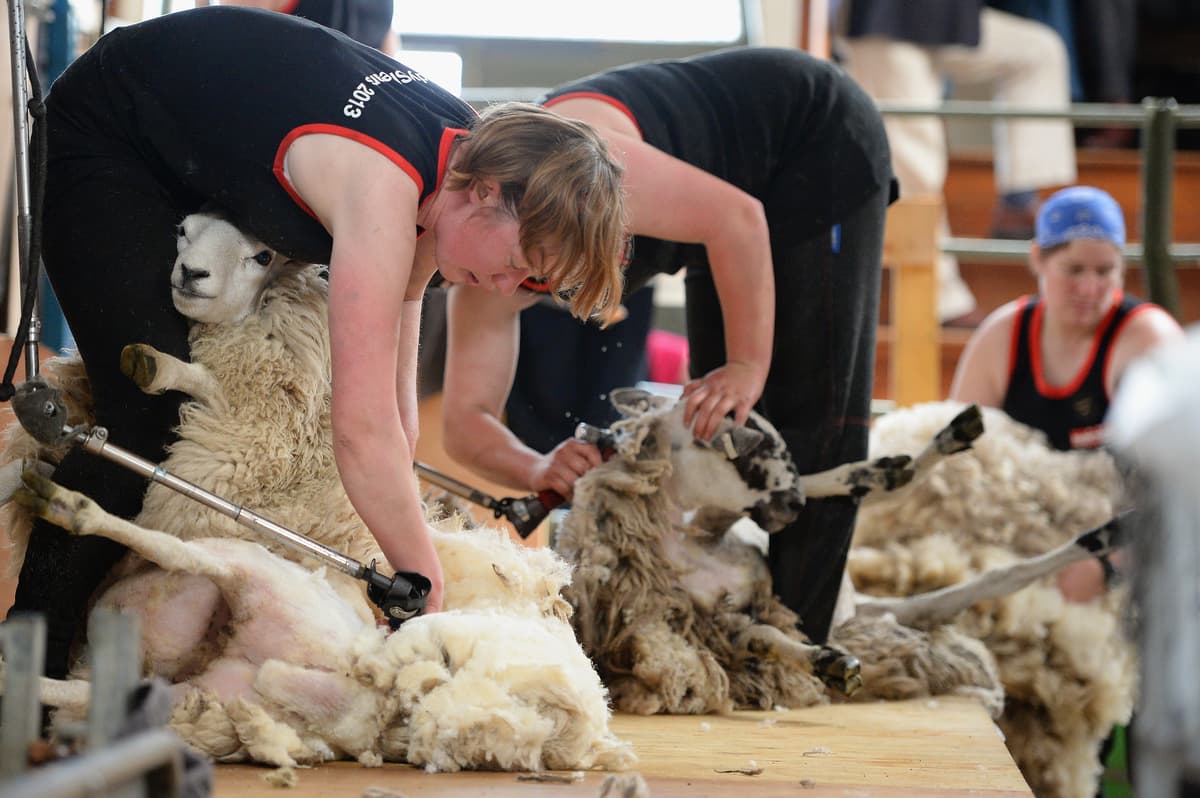
This year the Home Office moved to stop expert sheep shearers from Australia and New Zealand coming to shear British sheep.
The people who keep the animals comfortable were declared surplus to requirements.
For over a decade, around 75 of the best shearers on earth have flown in each spring on a simple visa concession. In a few brutal weeks they take the wool off up to two million sheep.
A top shearer clears a ewe in two or three minutes. Hundreds a day. Calm hands, no panic in the animal. It is a global trade and a young body's game, and Britain has never grown enough of its own.
The official line? Fourteen years to train Britons, so the door is closing.
Here is what that tidy sentence ignores. A sheep must be shorn every year or she overheats, cannot move properly, and gets eaten alive by flies and maggots. Shearing on time is welfare, plain and simple, written into law and into the animal's own skin.
So a government that lectures farmers without pause about welfare has quietly made the most basic welfare task harder to carry out. After the outcry they allowed one "final" year. Then the experts are gone for good.
A sector already losing money on every fleece, already burning wool it cannot sell, now told it cannot even get the people in to take the wool off.
You could be forgiven for thinking somebody wants the British sheep gone.
536
4,635
14,282
406,796
Security Analyst @ SRSRM retweeted

Jun 11
A JUDGE HAD NO WORKERS RIGHTS
Claire Gilham was a district judge in Warrington. She spent her days dealing with some of the most difficult civil and family cases in the North West. People going through divorce, debt, custody battles. The kind of work that matters.
The courts she worked in were a mess. Unsafe buildings. Overworked staff. Budget cuts so deep that basic safety was gone. Violent people in courtrooms with no security. She even received death threats.
She reported it. Formally. In writing. To the people above her.
Their response was remarkable. They told her the problems she was describing were not really problems. They were just her personal working style. She was then bullied and loaded with extra work for daring to speak up.
So she did what any reasonable person would do. She took the Ministry of Justice @MoJGovUK to an employment tribunal.
Here is where it gets truly absurd.
A judge in England has no whistleblower protection. None. The law that protects workers who speak out about wrongdoing did not cover judges because judges are classified as office-holders, not workers.
The person sitting in court enforcing the law for everyone else had fewer legal rights than almost anyone sitting in front of her.
She lost at tribunal. She lost at the Court of Appeal. She started a crowdfunding campaign just to keep the case alive. Most people would have stopped.
She did not stop.
In October 2019, after seven years, @UKSupremeCourt ruled in her favour. Unanimously. Five judges, zero dissent. The law was rewritten to protect judges who blow the whistle. And the ruling went further, helping workers across the public and private sectors who had been denied the same protection.
One judge. No institutional backing. Fighting the entire Ministry of Justice with a crowdfunding page. She changed the law for everyone.
@guardian @BBCNews @lawgazette @thetimes @UKSupremeCourt - Gilham v Ministry of Justice [2019] UKSC 44
23
356
844
15,362
Security Analyst @ SRSRM retweeted

Jun 9
November 1971. Chiswick, West London.
Erin Pizzey is 32 years old. She is not a lawyer. Not a politician. Not a doctor.
She is a woman who talked Hounslow Council into lending her a cold, rundown building on Belmont Road — a former community hall — for almost nothing. Her original plan was modest. A warm room. A cup of tea. Somewhere for mothers with young children to simply get out of the house.
Then the door opened.
A woman stood in the entrance. She was covered, head to foot, in bruises. She was holding two small children. She was shaking.
She didn't want tea.
She needed somewhere to hide.
Erin let her in. She didn't turn her away. She didn't tell her to call the police.
Because Erin had already called the police. They told her the same thing they told every woman in Britain at the time: they could not enter a private home over a "domestic dispute." That was the law. The home was private. What happened inside it was a family matter.
When Erin contacted a female civil servant to report what she was seeing, the response was astonishing. The woman told her flatly: "There wasn't a problem of battered wives until you made one."
Erin put down the phone. Then she went back to her residents and made sure they were fed.
Within weeks, 40 mothers and children were sleeping in four tiny rooms. No funding. No staff. No legal authority.
She didn't stop.
By 1973, word had spread through quiet whisper networks — one woman telling another, "There is a place. Go to Chiswick. She won't turn you away." That same year, Erin hosted the first National Women's Aid Conference in the UK. Women from across Britain arrived, and they all recognized the same thing at once: what she had built needed to exist everywhere.
In 1974, the council set a maximum of 36 residents. At peak times, 150 women and children were living inside those walls — sleeping on floors, on chairs, in hallways. The building smelled of cooking, fear, and something else entirely: relief.
Erin was taken to court for overcrowding. She appealed all the way to the House of Lords.
She kept the doors open the entire time.
That same year, she wrote a book. Scream Quietly or the Neighbours Will Hear. It was the first published account of domestic violence in British history. It used real stories from real women inside the shelter. Overnight, a problem that had no official name was on front pages from London to New York.
The movement spread. Refuges opened across the UK. Then Australia. Then Canada. Then the United States. The pattern she created in four small rooms in West London — no blueprint, no permission, no funding — had been replicated in hundreds of shelters across the Western world.
MP Jack Ashley stood up in Parliament and said: "It was she who first identified the problem, who first recognised the seriousness of the situation and who first did something practical."
She was ranked 14th in a poll of the 100 women who shook the world. She was awarded the Italian Peace Prize. She received a CBE. The charity she founded — Chiswick Women's Aid, which became Refuge — grew into the largest domestic violence charity in the United Kingdom, with over 460 employees and an annual income of more than £33 million.
Erin Pizzey passed away on October 4, 2025, aged 86.
She never stopped.
It all began with one woman, one borrowed building, and an absolute refusal to say no.
Forty women and children showed up with nowhere to go.
She made room.
Share this if you believe one ordinary person, refusing to look away, can build a shelter that holds the whole world.
Follow us Lost in Yesterday
204
3,547
10,401
218,923
Security Analyst @ SRSRM retweeted

Jun 5
A beautiful detail from the FT’s obit of Sir Alex Younger
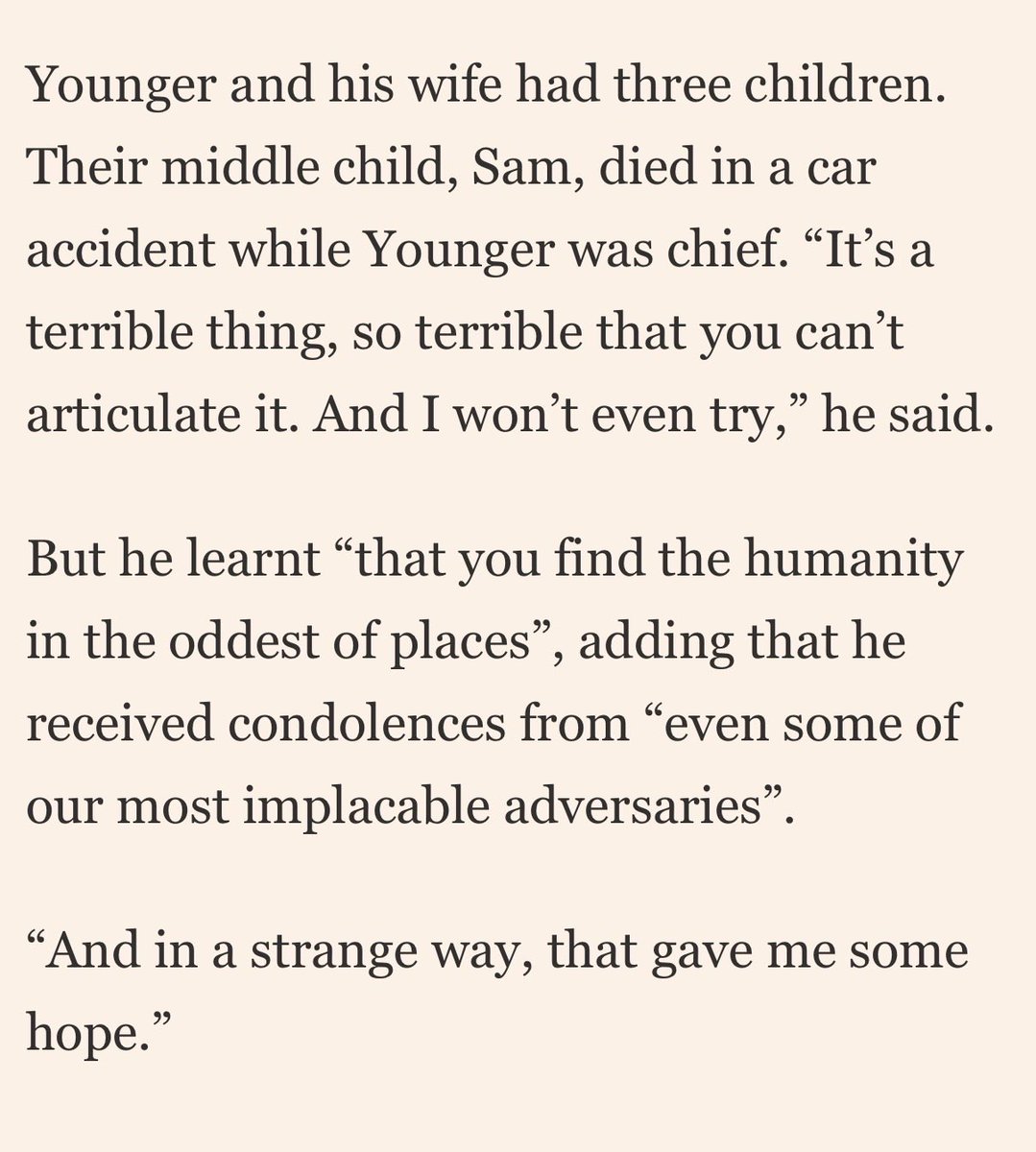

Phenomenal detail from @FT obituary of the great Alex Younger, from @charles_clover & @JP_Rathbone:
When Dominic Cummings called him for the first time, he asked Younger what he was doing. “Plotting evil shit,” Younger replied.
ft.com/content/59c9aab3-efa1…
1
100
964
113,543
Security Analyst @ SRSRM retweeted

Jun 4
I dreaded this news. So sad to get off a long flight and learn that my dear friend Alex Younger had died. Alex was the best of #MI6 - high intelligence, low ego, driven - beneath the affable exterior, deeply moral, kind, fun and irreverent. And an ace spy. RIP.
25
133
1,554
137,429
Security Analyst @ SRSRM retweeted

In these globally turbulent times one man has regularly acted as a wise, thoughtful and witty guide for listeners of @BBCr4today. The former Head of MI6 Sir Alex Younger has analysed, explained and contextualised the actions of Trump, Putin, Xi and the Ayatollahs. After he first appeared in the programme I was lucky enough to get to know Alex and call him my friend. I’m desperately sad to hear the news I’ve long feared was coming. Alex has died after months trying to cheat the
prognosis he was given whe. They discovered the tumour he nicknamed “Putin”.
We’re always told not to speak of a fight with cancer because it risks implying that only those strong enough survive. I understand that. I really do but sod it. Alex fought so hard to find a treatment to give him a little longer to be with Sarah and their lovely children. And he used every last minute of the short time he did have to be with family and friends and to do what he spent a lifetime in the shadows doing - using his intelligence to understand the world, to explain it but, above all, to keep us all safe.
61
251
2,124
248,121
Security Analyst @ SRSRM retweeted

Jun 3
Former MI6 chief Sir Alex Younger on Brexit: “Putin would have been absolutely delighted by our decision.”
“So would Xi. France has effectively eclipsed us. Brexit has marginalised us.” Most striking of all: “Just nobody mentions the UK.”
Very sad that Sir Alex Younger, chief of the Secret Intelligence Service, born on July 4, 1963, died of pancreatic cancer on June 2, 2026, aged 62
149
1,671
6,030
434,575
Security Analyst @ SRSRM retweeted

26 Aug 2025
Your Password is Your Power 🔐
💬 Caption:
Weak passwords = strong problems. 🚫
💡 Protect your digital identity:
✅ Use letters, numbers & symbols
✅ Avoid birthdays & names
✅ Change passwords regularly
👉 Stay cyber smart, stay cyber safe!
#CyberSecurity #PasswordSafety

2
1
55
Security Analyst @ SRSRM retweeted

Jun 3
So very sad to have learnt of the untimely death of a great friend and colleague, Sir Alex Younger. We were at St Andrews University together, had parallel careers and retired together in autumn 2020. He was an outstanding national security leader. I will miss him terribly. Love and condolences to Sarah and the family.
12
50
562
34,133
Security Analyst @ SRSRM retweeted

Jun 3
Former MI6 chief Sir Alex Younger dies aged 62 bbc.in/4vrvpgL
34
80
415
154,498
Security Analyst @ SRSRM retweeted

"He will be remembered by the many Ministers, colleagues, friends, and family for his utmost dedication to British public life and protecting our nation".
gov.uk/government/news/pm-tr…
4
26
122
4,318
Security Analyst @ SRSRM retweeted
Jun 1
NHS WHISTLEBLOWER SAYS PATIENTS MAY BE DYING. THE HEALTH SECRETARY DECLINED TO COMMENT.
A senior clinician at Barking, Havering and Redbridge University Hospitals NHS Trust (@BHRUT_NHS) went to LBC with a very simple message: the Trust's new electronic patient record system is broken, nobody in management wants to hear about it, and people may already be dead because of it.
One patient with cancer and Covid died after a haematology referral simply never reached the right department. The system swallowed it. The clinician said they knew of incidents where patients came to harm. They said it is keeping them up at night. Staff are in tears.
Appointments are wasted. Results go missing. The trust told LBC it has "no evidence" the IT system contributed to any deaths. Which is a great thing to say when your IT system is apparently very good at losing evidence.
A patient at King George Hospital waited nearly two months for biopsy results on a breast change. When they finally got through, they were told delays were because of a new IT system "no one knew how to use." Nobody called them. Nobody reassured them. Two months of silence while they sat at home wondering.
Clinical negligence solicitor Sanja Strkljevic from Leigh Day said the claims were "really quite shocking" and suggested the scale of the situation could justify a full inquiry.
The Trust's constituency MP was Wes Streeting (@wesstreeting), the former Health Secretary, the man who said NHS reform was his personal mission and that his head would be on the chopping block if things didn't improve. He declined to comment.
He has since resigned from the cabinet entirely.
Whistleblowers do not speak to the press for fun. They do it because they have run out of other options.
Source: @LBC
lbc.co.uk/article/nhs-east-l…
8
147
201
4,880
Security Analyst @ SRSRM retweeted

May 31
Every day, ships leave this russian owned factory in Ireland straight for St Petersburg carrying thousands of tonnes of raw alumina for the war machine.
There’s corruption everywhere. Locals tell me politicians are bought by oligarchs.
Ireland is no longer militarily neutral.
709
8,454
24,875
1,286,403

1/2 @NatPrepCom @LordTobySays @RachelReevesMP @LucyGoBag @CarolynOtley @DanJarvisMBE @HasisD @ProfPaulBehrens @cabinetofficeuk @NFUtweets @n_rh1992 @DefraGovUK
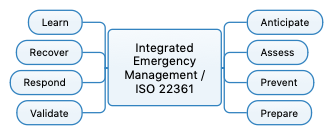
Integrated Emergency Management has been around for over 40 years should mean alignment between departments of state.
May 24

A farmer dies in April 2026.
His son inherits the farm. The farm has been in the family since 1847.
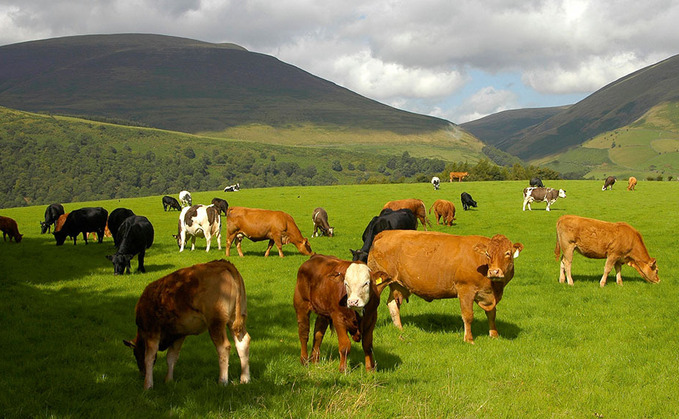
The farm consists of: 300 acres of grazing pasture, a farmhouse built in 1892, a barn, a milking parlour, two tractors of varying ages, a Land Rover that runs about 70% of the time, and a herd of 180 Hereford-cross cattle.
On paper, the farm is worth approximately £3.2 million. This is because land near him has been bought recently by a London hedge fund looking for carbon credits, which has dragged the comparable value of every field within forty miles upward to a number nobody local can justify.
In cash, the farm produces a profit of about £28,000 a year in a good year. In a bad year it loses money. The son also works as a fencing contractor three days a week to keep the operation viable.
The inheritance tax bill on a £3.2 million estate, even at the reduced 20% rate, comes to approximately £140,000 after the increased threshold is applied. The son does not have £140,000. The son has never had £140,000. The son has £4,200 in his current account and an overdraft.
The son sells 60 acres to a developer to pay the tax. The developer puts solar panels on the 60 acres. The remaining herd cannot be sustained on the reduced land. The herd is sold. The barn becomes a holiday let.
A different family eats Brazilian beef this Christmas without knowing why the price went up.
The Treasury collects £140,000.
The land never produces British food again.
2
433
ICYMI
More on #FoodSecurity
May 31
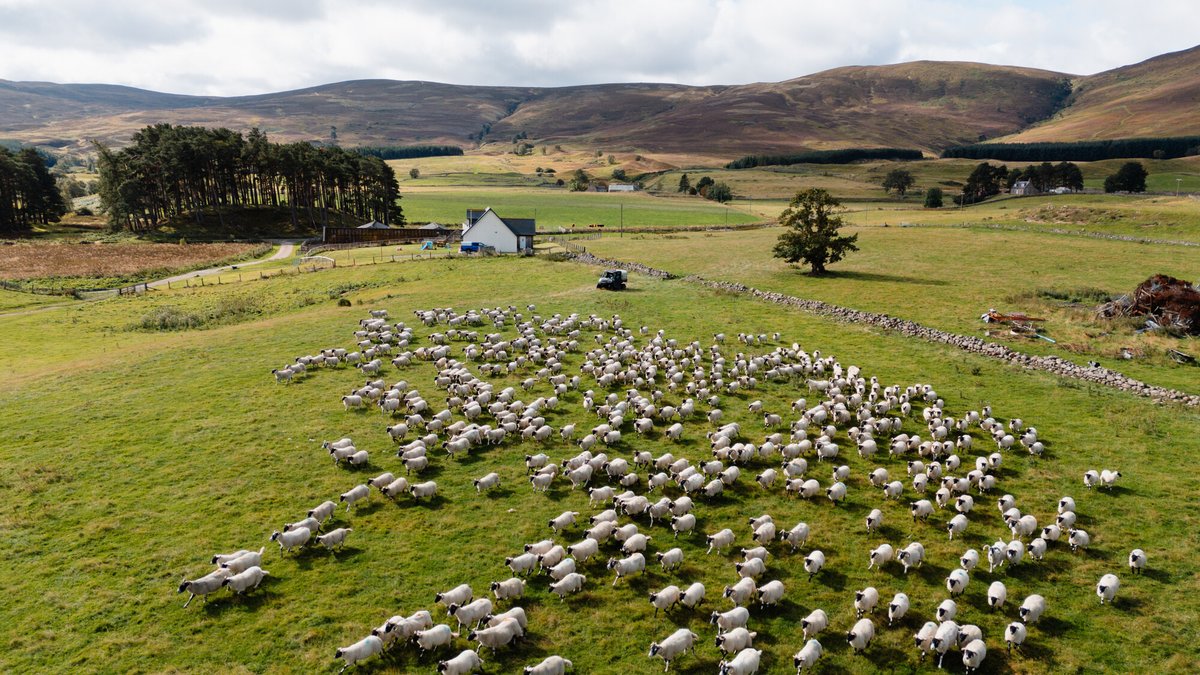
A tenant farmer in the Cairngorms says land that sold for £500 an acre a few years ago now goes for £5,000. He is being moved off ground his family has worked for generations, because he cannot outbid the people buying it. The buyers are corporations, and they have no intention of farming a single acre of it.
Here is how the trick works. A company keeps emitting carbon exactly as before. Same factories, same flights, same supply chain, same product. Then it buys a Scottish hillside, plants some trees, and announces to the world that it is now carbon neutral, or, if it is feeling brave, carbon negative. The emissions never fell. It simply bought a landscape to point at.
Take BrewDog. In 2020 it bought a 9,300-acre Highland estate, propped up with public grant money, and promised a million trees and the crown of the world's first carbon negative beer business, removing twice the carbon it emitted, forever. By 2023 roughly half of the 500,000 trees it had managed to plant were dead, killed by drought, with critics noting the planting was drying out the peat and releasing carbon of its own. The advertising regulator ruled its carbon-negative claims misleading. In 2024 it quietly dropped the badge and dismissed the entire carbon credit market as a flood of cheap schemes whose benefit was "questionable, maybe even non-existent." Then it sold the estate to a firm whose actual business is selling carbon offsets.
That is the whole model in one story. Public money in. Dead trees out. A green halo worn for four years and then dropped. The farmer who used to be on that land, gone. The hillside passed to a company that exists purely to sell other people the right to keep polluting.
This is no fringe case. In one recent year, half of every estate sold in Scotland went to investment funds, corporations and charitable trusts rather than anyone who would farm it. A third of the deals for plantable land are now done off-market, in secret, precisely so the local community never gets the chance to bid.
So this is what net zero looks like on the ground. A man who produced food is priced out of his own glen. A corporation that produced emissions buys the glen, calls itself a force for good, and sells the carbon. The land stops feeding anyone. Nobody's emissions actually went down by a gram.
The food was real. The farmer was real. The carbon saving is a line in a slide deck.
And we have somehow decided the villain in all this is the man with the sheep.
15
Liking the depth of this analysis by @aviatrixtrc of the Iranian attack of @StrykerEC back in March.
Have not seen anything to suggest p/t facing devices were directly vulnerable.

TRC analysis shows Handala actors wiped 200,000 systems at Stryker after moving laterally from initial public-facing app exploits. The Iranian-linked group exfiltrated 50TB of data before deploying destructive malware. Runtime segmentation could have limited blast radius across the medical giant's global network. #ThreatIntel
🔗 Full TRC analysis: aviatrix.ai/threat-research-…
38
1/2 Yesterday a small number came together in London to toast the immortal memory of the brave Czech parachutists involved in Operation ANTHROPOID 84 years ago.
Thanks to @PaulBasson9
Cc @CZinLondon @SOEhistory @SOE_Spirit
1
1
2
55
Are you still there @ausdronelawyer ?

Whoops beware of light show falling on your head
apple.news/AmXN1P9TfTRmoWSQ0…
@CtgIntelligence @Selyst
1
2
128