
defi researcher; trying to bring as much alpha as || 🗣️ t.me/SeniorAlpha
Joined February 2023
- Tweets 75,217
- Following 4,150
- Followers 48,243
- Likes 136,891
1,117 Photos and videos
Pinned Tweet

23 Dec 2024
What if providing liquidity didn’t feel like a full-time job?
For years, DeFi liquidity providers have faced the same set of challenges: managing pairs, constant rebalancing, and unpredictable losses.
This was before the @hydration_net "OMNIPOOL" 🧵👇

293
47
283
126,403
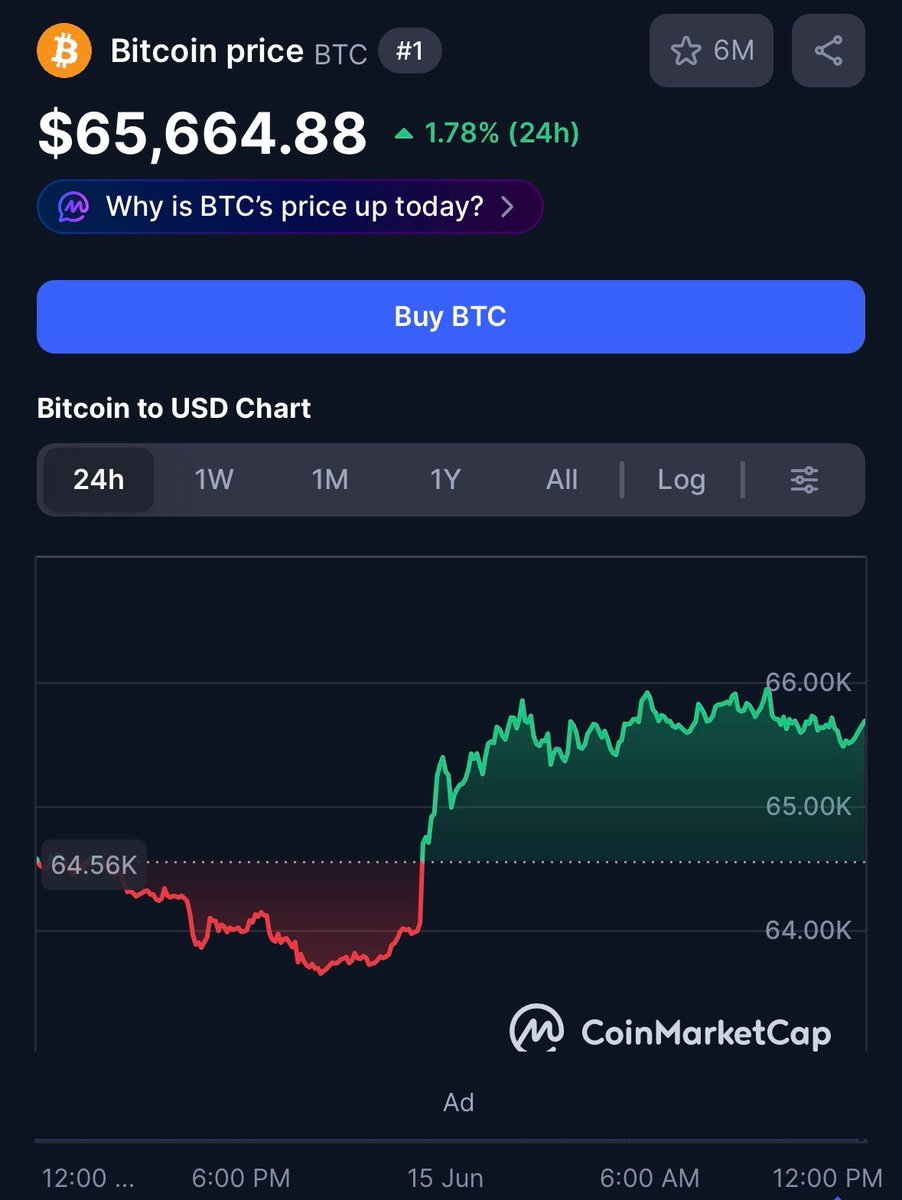
One headline was enough to flip sentiment.
$BTC climbed back toward $66k after Trump announced a US-Iran agreement that would reopen the Strait of Hormuz.
Oil moved the other way, dropping around 5% as traders quickly repriced supply risk.
To me, the interesting part is how fast markets rotated back into risk once one major macro overhang started to fade.
Crypto added billions in market value on the day, while several altcoins outpaced Bitcoin’s recovery.
But with inflation still running above 4% and the Fed decision coming up, macro remains firmly in the driver’s seat.
What catalyst do you think matters most from here?
72
26
264
12,846
Jun 11
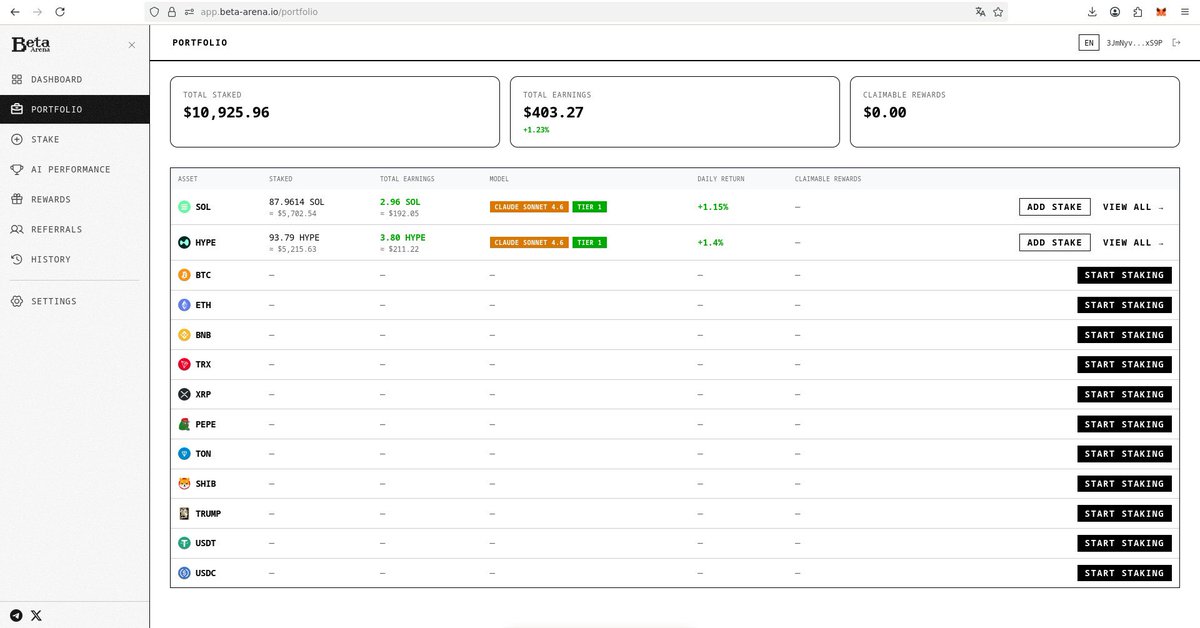
Deposited 85 $SOL and 90 $HYPE into beta-arena.io a while back.
Sitting at a bit over $400 in earnings so far.
What’s interesting is how different it feels compared to manual trading: while most people are glued to charts during volatility, the AI just keeps running strategies in the background, 24/7.
- steady daily rewards
- Claude-powered execution
- supports multiple assets
Letting @beta_arena_io handle the trading layer has been surprisingly smooth so far!
63
16
324
10,111
Jun 11
Tried a few prop challenges over the years and the pattern is always the same.
Low cost means the rules are a trap. reasonable rules means the entry fee hurts.
Either way the firm wins more than you do before you’ve even placed a trade.
BREAK is one phase.
You pass, you’re funded, you keep up to 90% of what you make.
Payouts whenever you want them.
Stopped overcomplicating it after I saw the structure.
Sometimes the right product is just the obvious one nobody built yet.
Jun 11

The biggest pain point for prop traders?
The cheap challenges are the ones built to break you. And the fair ones cost too much.
That's why we introduced BREAK accounts:
One phase, low entry, keep up to 90% of your profits and get paid on demand.
Pass once, get funded and BREAK your limits.
89
33
512
16,542
Jun 11
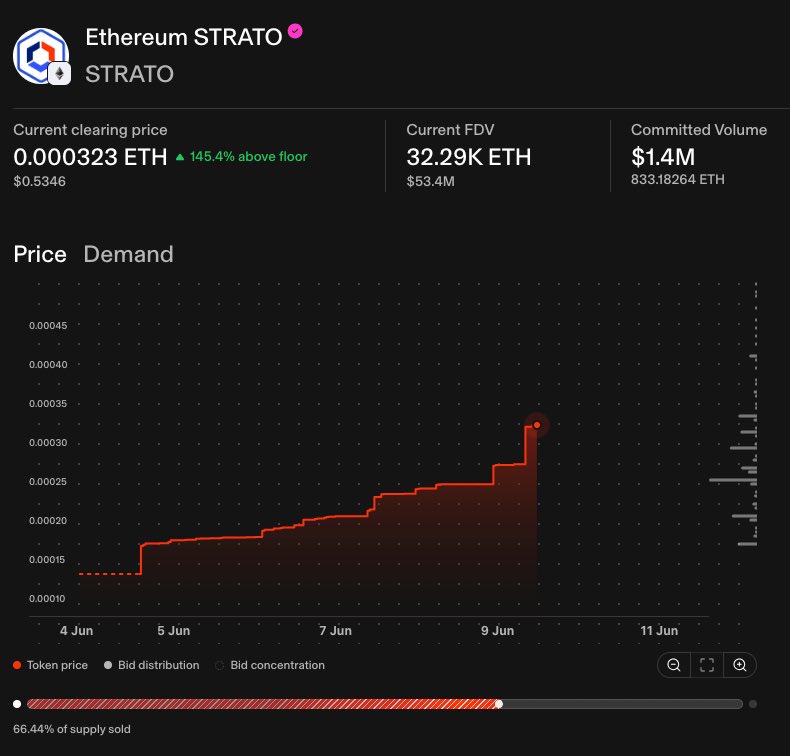
Stablecoins took years to go from niche experiment to $200B infrastructure layer.
Most people missed the early window because it didn't look like much at the time.
Tokenized gold is at that same stage right now: the demand thesis is obvious in hindsight, the timing isn't yet.
@strato_net auction closes in 21 hours.
750 ETH in, $44.4M FDV, 106% above floor.
🔗 Auction open here: app.uniswap.org/explore/auct…
Jun 10

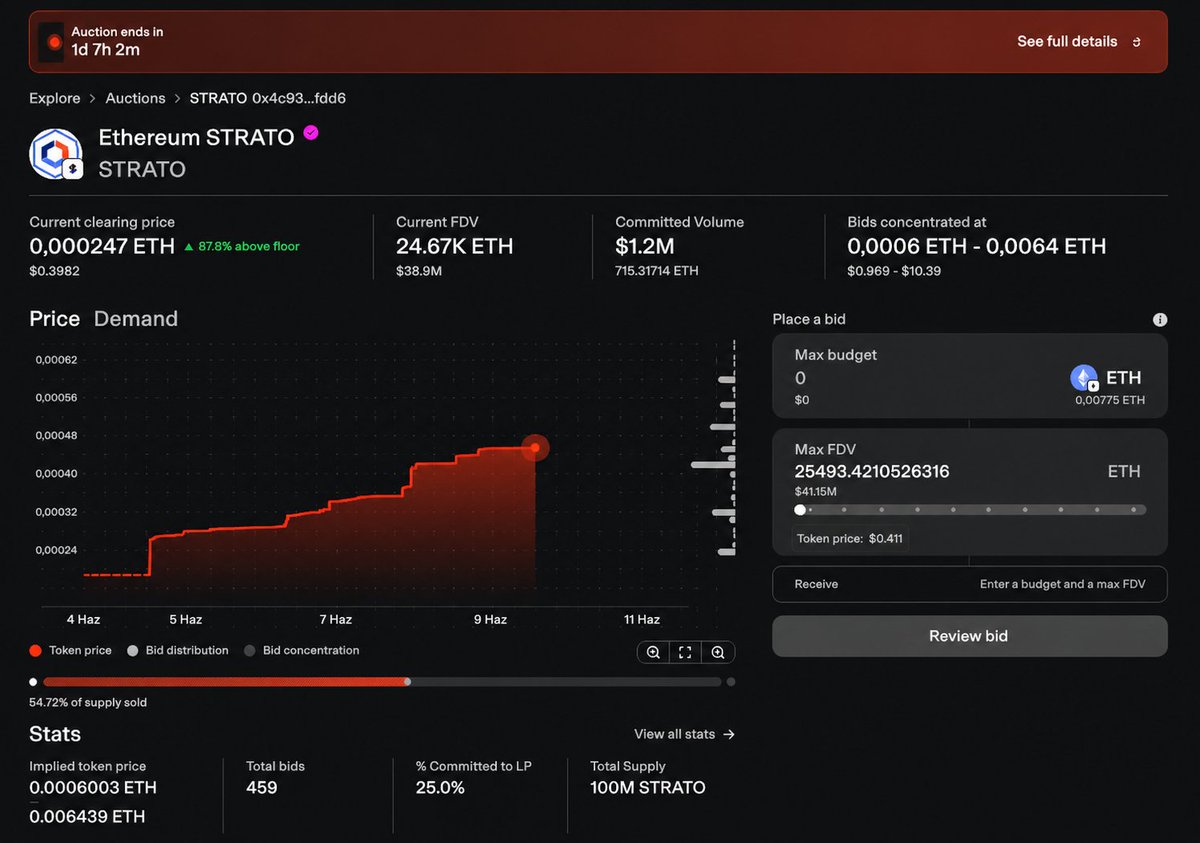
Crypto has spent years trying to tokenize everything.
Yet one of the world’s oldest assets still barely exists on-chain at any meaningful scale.
Gold is worth trillions. Tokenized gold is still tiny.
With less than 32 hours left, the $STRATO auction has already crossed ~715 ETH committed.
Worth keeping an eye on what @strato_net is building here.
Auction:
app.uniswap.org/explore/auct…
Learn more:
strato.nexus/auction
136
10
298
18,195
Jun 10
Onchain credit has three legs.
1. Crypto-backed: Aave, Morpho
2. Margin-backed: Ethena, the CEXs
3. Credit against real repayment capacity like income, receivables, cash flow is basically absent in DeFi.
Also the biggest category in TradFi.
And that’s the leg $JANE is building.
Sttarted with uncollateralized USDC lines underwritten against DeFi, bank, and brokerage assets.
~$8M out, 60 borrowers, zero defaults through 10/10, Stream, and Resolv.
USD3 holders earned that yield.
Now the new leg: asset-backed finance.
$10M senior warehouse to LendSwift, backed by ~15,000 consumer loans.
LendSwift absorbs 25% first-loss before 3Jane takes a scratch. USD3 sits senior at ~13%. sUSD3 junior at ~32%.
Fintechs solved origination years ago but funding never caught up: still crawling bank warehouse to forward-flow to ABS.
3Jane collapses the whole stack into one conduit. more originators queued.
Public USD3 deposits opening soon.
⚠️ $JANE is the protocol incentive, currently non-transferable.

3Jane is now open to the public
Mint USD3 to earn $JANE
Liquidity mining details below
84
14
229
11,119
Jun 10
If you wanna go deeper official links here:
🔗 Website: 3jane.xyz/
🔗 Discord: discord.com/invite/xzfNggwBj…
🔗 Docs: docs.3jane.xyz/
6
24
2,667
Jun 10
Not sure how many of you have seen the @CFTradercom situation yet.
A thread circulating today claims there was a break-in at the CFT House, includes what appears to be internal staff communication.
And it points to a sudden change in the firm’s proof of reserves.
I have no way to independently verify any of it.
But if the reserve data shown in the screenshots is accurate, then the conversation quickly shifts from “what happened at the house?” to “what happened to the funds?”
That’s the part I’d be paying attention to until more information comes out.
Jun 9
This is the part that caught my attention.
Everyone is focused on the footage, but the footage alone proves nothing.
What I can’t ignore is the combination of:
- Alleged break-in
- Internal messages circulating
- Reserves reportedly showing $0
Any one of those can be explained away.
All three appearing at the same time is what makes this worth watching.
Still waiting for official clarification, but this feels bigger than a simple robbery story.
99
6
397
13,291
Jun 10
Crypto has spent years trying to tokenize everything.
Yet one of the world’s oldest assets still barely exists on-chain at any meaningful scale.
Gold is worth trillions. Tokenized gold is still tiny.
With less than 32 hours left, the $STRATO auction has already crossed ~715 ETH committed.
Worth keeping an eye on what @strato_net is building here.
Auction:
app.uniswap.org/explore/auct…
Learn more:
strato.nexus/auction
120
29
365
19,487
Jun 9
This is the part that caught my attention.
Everyone is focused on the footage, but the footage alone proves nothing.
What I can’t ignore is the combination of:
- Alleged break-in
- Internal messages circulating
- Reserves reportedly showing $0
Any one of those can be explained away.
All three appearing at the same time is what makes this worth watching.
Still waiting for official clarification, but this feels bigger than a simple robbery story.
90
16
303
19,258
Jun 8
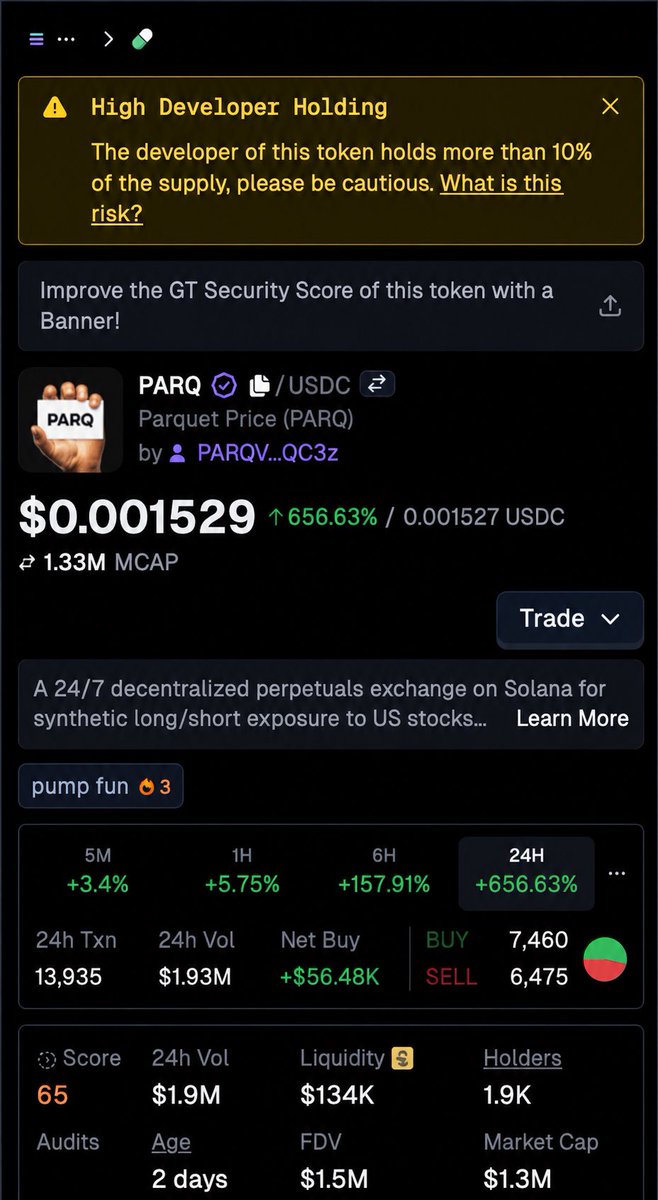
Opened $PARQ on @GeckoTerminal and the first thing that loaded was a yellow banner.
High developer holding flagging that dev controls more than 10% of supply.
- 656% in 24hrs
- pumpfun origin
- 2 days old
- $134K liquidity
- GT Score 65.
Such numbers would have been enough for some people to ape in immediately.
10% in one wallet on a 2-day-old token with a vertical chart is a specific kind of risk.
I didn’t enter because GT showed me the full picture and the full picture had one flag I couldn’t reason away.
Use it to be sure you’re not missing something obvious before you decide: gecko.terminal.com/rug-check…
88
10
351
14,566
Jun 8
$BTC is holding above its 200-week SMA (~$62,033) near $63K.
But honestly? I don’t trust this bounce.
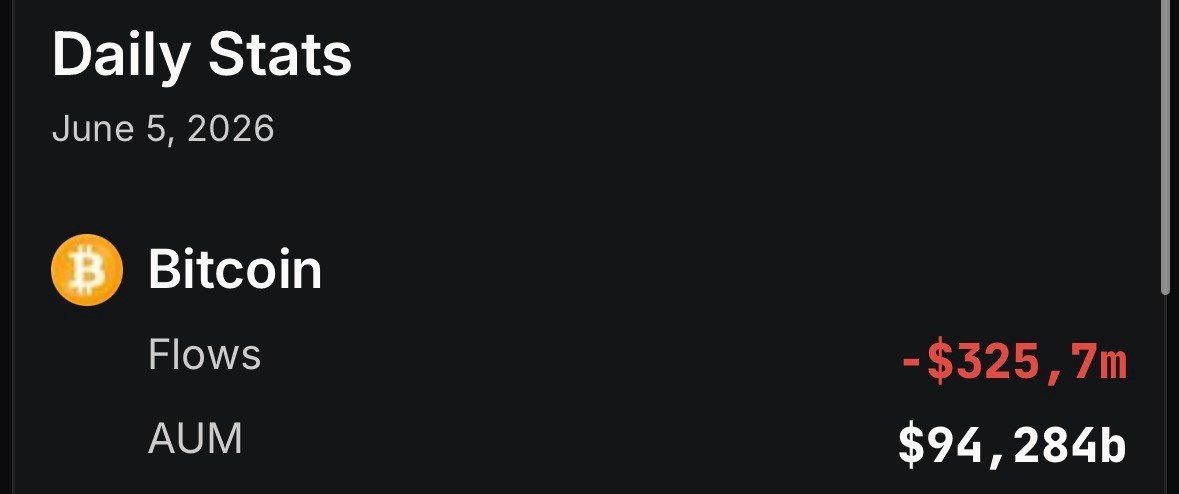
The tell is in the ETF flows.
Institutions are actively selling into this dip.
Compare that to February, when they eased off selling at this exact same moving average.
Same level, opposite behaviour: not the setup that holds.
If the 200-week gives way, mid-$50Ks is the first test, then $48K–$52K.
Wold you rather buy this bounce, or wait for the miner washout that’s actually marked the floor every cycle?
66
41
293
16,657
Jun 6
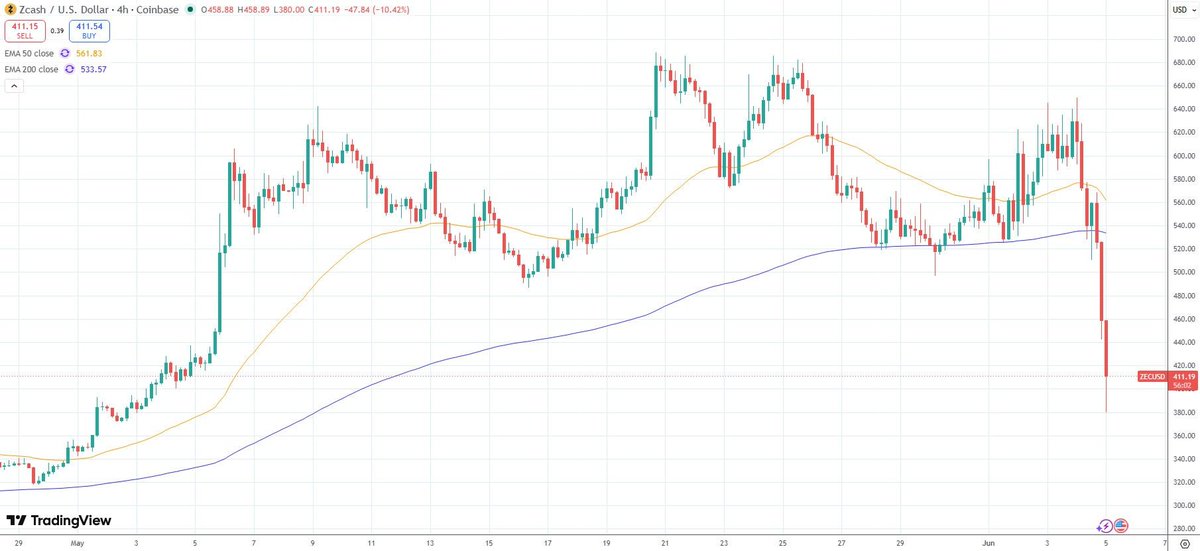
$ZEC down 30%. $3B in market cap erased in 24hrs.
The flaw: unlimited counterfeit ZEC minting was theoretically possible in the Orchard pool.
Existed since May 2022 and discovered via an AI-assisted circuit review, patched via hard fork June 3.
The unfixable part: Orchard’s privacy properties make it impossible to prove whether anyone exploited it before the patch.
Hayes sold his entire position on that uncertainty alone.
If you can’t prove a supply is clean, how does the market ever fully price it?
67
65
424
14,780
Jun 5
If you know Dibu you know why this works.
The man plays every match like the internet is watching.
That energy belongs on a trading platform.
@ZoomexOfficial has been building quietly: the product is there.
This is just the moment it starts getting the attention it probably already deserved.
May 31

🔥We asked the Wall himself to stand with us, and he said yes. 🧤⚽️
Your first step starts here. ☀️i.zoomex.com/1wujabEp
Register on ZOOMEX now and claim your welcome bonus. Speed. Secure. Stable. #ZoomexDibu #ZoomexAmbassador
58
19
367
13,061
Jun 4
Regulated yield is supposed to be boring.
Tiny APYs, endless KYC, your money locked up doing nothing. that’s the trade you accept for safety.
@_Earnpark is the first one i’ve seen that doesn’t make you take it.
The vast majority of platforms launch a token then go looking for a business.
This one did it backwards. the product’s been live for years: $20M TVL, 10K investors, revenue going $200K → $900K → $1.6M across 2023-25 (8x), and $1M in real yield paid to users last year.
The model already prints.
And the yields aren’t regulated peanuts: BTC up to 10%, ETH 15%, USDT 20% APY.
UK-registered, Fireblocks infra, proof of reserves, 4.5 on Trustpilot.
The tokenomics sold me though.
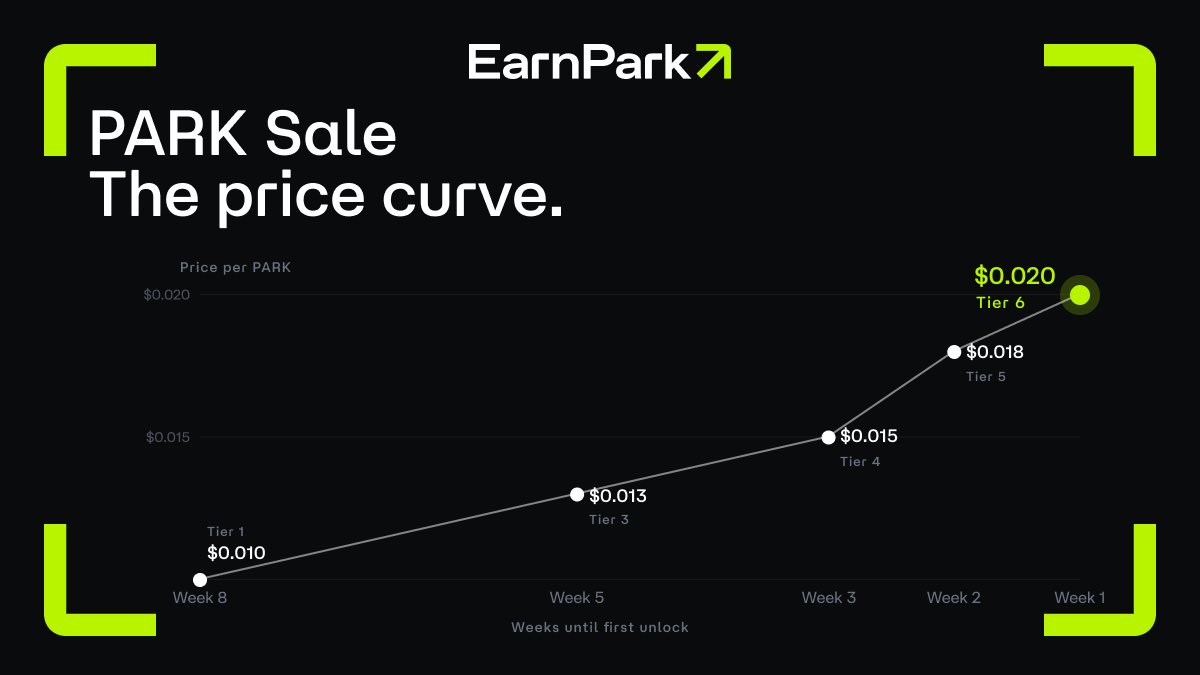
An 8Blocks audit caught that their original unlock would dump sell pressure on day one, so they rebuilt the whole schedule, weekly vesting per tier, ~3x less pressure.
And from 2027, 10% of revenue buys $PARK back off the market, so it tracks the business.
Tier 6 is live now, the final round, tiers 1-5 sold out, $0.02 per $PARK & 500 $PARK bonus for early buyers (first 20, >$100):
launchpad.earnpark.com/?ref=…
Last fixed price before the market decides.
49
14
290
14,856
Jun 3
Market access matters.
@Raydium crossed $1T in cumulative volume.
But the more interesting development is where that liquidity is showing up.
Within weeks, $RAY landed on @RobinhoodApp and @Revolut, putting a Solana-native DeFi asset in front of 75M users across traditional finance apps.
At the same time, tokenized stocks routed through Raydium have already surpassed $1B in volume.
Feels like the market is still pricing DEXs as trading venues, while some are quietly becoming distribution layers for onchain capital.
How long before that distinction starts to matter?
69
44
363
17,508
Jun 2
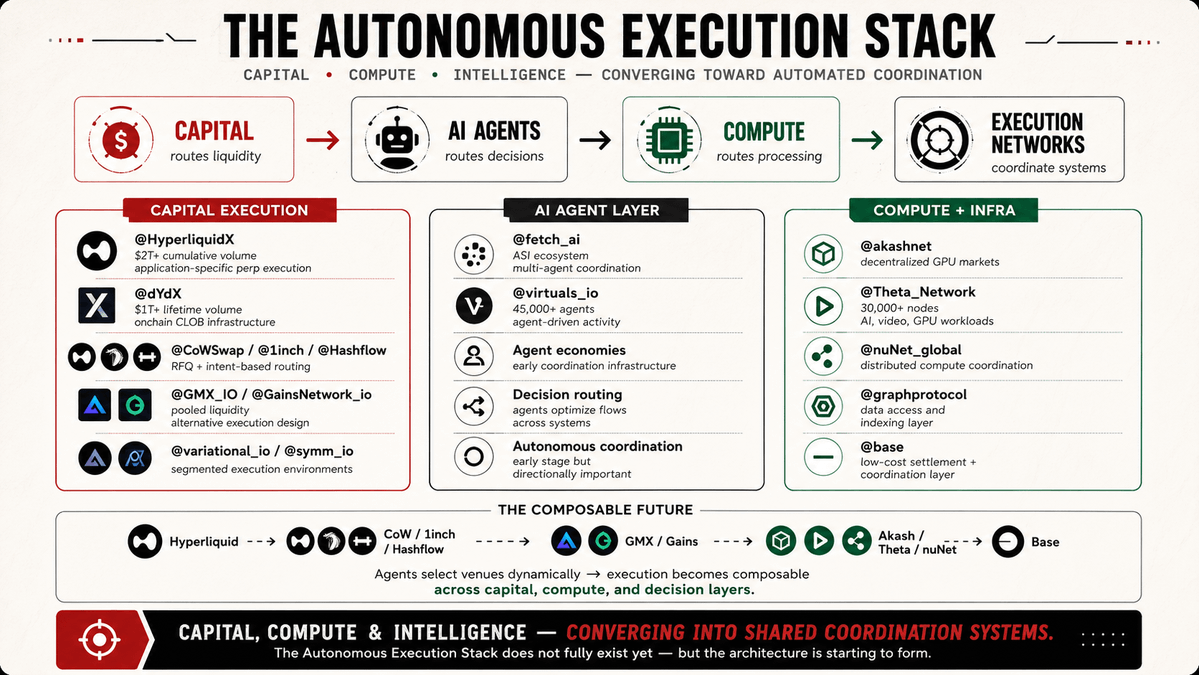
What happens when capital, compute, and AI agents stop moving separately?
That may be the next major shift.
Not AI vs DeFi.
Not compute vs capital.
But the rise of execution networks that route liquidity, intelligence, and processing through programmable systems.
We may be watching the early formation of the Autonomous Execution Stack.
● Capital execution is already fragmenting.
Perp DEXs now process hundreds of billions in monthly volume, but the market is no longer moving through one standard design.
Liquidity is spreading across CLOBs, app-specific chains, intent-based systems, RFQ networks, and pooled liquidity models.
Each design optimizes execution differently.
● @HyperliquidX is probably the clearest example of this shift.
It is not just another perp DEX.
It looks more like an application-specific execution chain built around speed, liquidity, and vertical control.
With estimated cumulative volume above $2T across 2025–2026, Hyperliquid shows where capital execution may be heading:
less generic infrastructure, more specialized execution environments.
● @dYdX v4 helped define the onchain CLOB category.
With $1T in lifetime volume, it proved that orderbook-based perpetual trading could move onchain at serious scale.
But the next phase is becoming more competitive.
High-throughput systems are now fighting for liquidity, speed, and trader attention.
● Intent and RFQ systems are taking a different path.
@CoWSwap, @1inch, and @Hashflow are not trying to win by simply being faster orderbooks.
They route flow through solvers, RFQ networks, batch auctions, and MEV-aware execution.
CoW Swap alone reached multi-billion monthly volume during peak periods, showing that routing quality can matter as much as raw liquidity.
● Then there are pooled liquidity systems.
@GMX_IO and @GainsNetwork_io use a completely different structure.
Instead of matching buyers and sellers through orderbooks, they route trader demand against shared liquidity pools.
GMX has maintained hundreds of millions in TVL and distributed more than $100M in historical fees to liquidity providers.
That model turns execution into shared risk infrastructure.
● Experimental systems like @variational_io and @symm_io push the idea further.
They are exploring segmented execution environments that may reduce adverse selection and improve efficiency for specific types of flow.
This is the bigger pattern:
execution is no longer one market.
It is becoming a set of specialized routing architectures.
● At the same time, AI agent economies are starting to appear.
Still early.
Still messy.
Not full autonomy yet.
But the coordination layer is forming.
@fetch_ai, now part of the ASI ecosystem, explores agents that can operate across decentralized environments.
That matters because future systems may not only route capital.
They may route decisions.
● @virtuals_io may be one of the strongest early signals of agent-driven economic activity.
Reported metrics include:
• 45,000 deployed agents
• millions of completed tasks
• hundreds of millions in agent-related activity
Whether these systems mature or not, the direction is important:
agents are becoming economic actors.
● Compute is the third layer.
@akashnet runs decentralized compute markets where GPU resources can be traded openly.
As AI demand grows, compute becomes more than infrastructure.
It becomes a routed resource.
@Theta_Network adds another angle with a hybrid edge compute network and 30,000 global nodes supporting AI, video, and GPU workloads.
@nuNet_global focuses on distributed compute coordination, helping workloads move across different hardware environments.
● Data and settlement complete the loop.
@graphprotocol continues to power indexing and data access across decentralized applications.
@base is becoming a major low-cost execution and settlement layer, with growing activity across consumer apps, financial apps, and potentially agent-facing systems.
That matters because autonomous systems need reliable data, cheap settlement, and composable execution.
● Across all of this, the same structure keeps appearing:
Capital routes liquidity.
AI routes decisions.
Compute routes processing.
Once these layers become more programmable, the next step is coordination between them.
Capital can select venues dynamically.
Agents can choose compute based on cost and latency.
Systems can delegate tasks across networks in real time.
Execution becomes less manual.
More modular.
More automated.
● But this is not a unified system yet.
The Autonomous Execution Stack does not fully exist today.
Right now, it is a collection of specialized markets, agent networks, compute layers, and data systems slowly converging in the same direction.
✍️ My Take:
The next cycle may not be defined by one app, one chain, or one AI agent.
It may be defined by execution itself becoming programmable.
Capital, compute, and intelligence are all becoming modular.
And over time, modular systems tend to coordinate.
That is where the Autonomous Execution Stack begins.
49
12
256
17,010
Jun 1
Happy New Month.
Crypto opened the month with a brutal reminder:
leverage does not forgive.
In the last 24 hours:
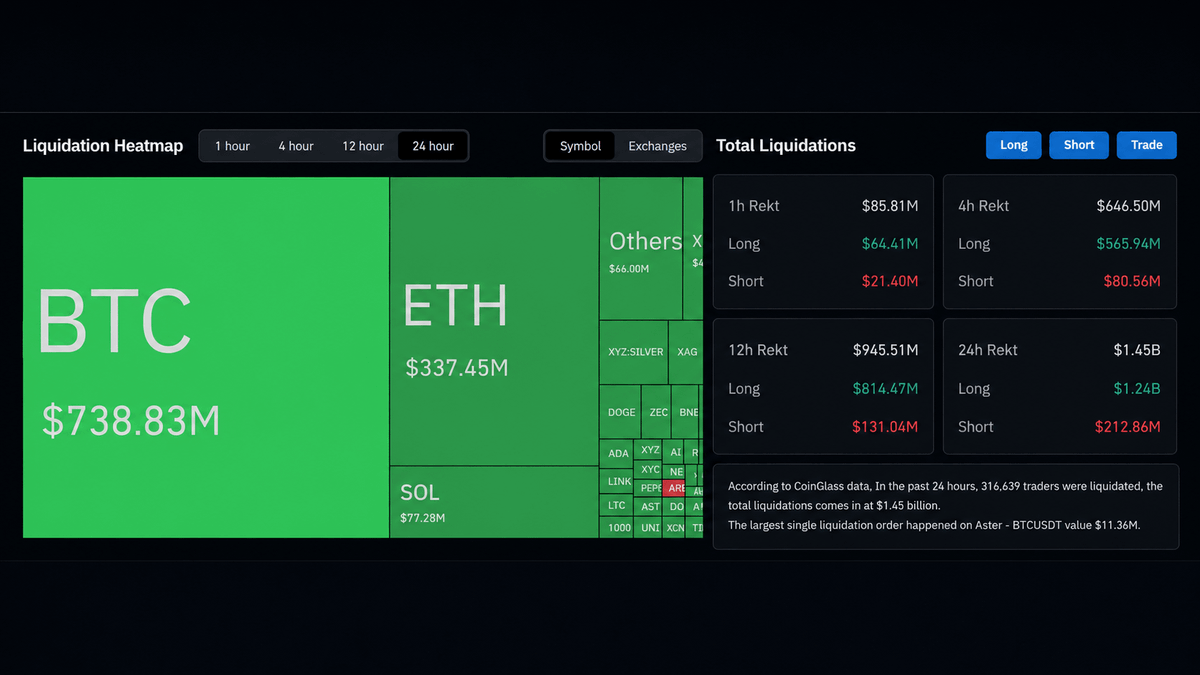
➢ $1.45B liquidated
➢ 311,000 traders wiped out
➢ $1.24B came from longs alone
BTC took the biggest hit with nearly $739M liquidated.
ETH followed with $337M.
SOL added another $77M.
Most of the damage happened fast, as crowded long positions were forced out across the market.
That is how leverage cascades work.
When too many traders are leaning in the same direction, the market does not need a major move to create chaos.
Just one sharp push is enough.
First lesson of the month:
Risk management matters more than conviction.
82
25
339
10,793
May 30
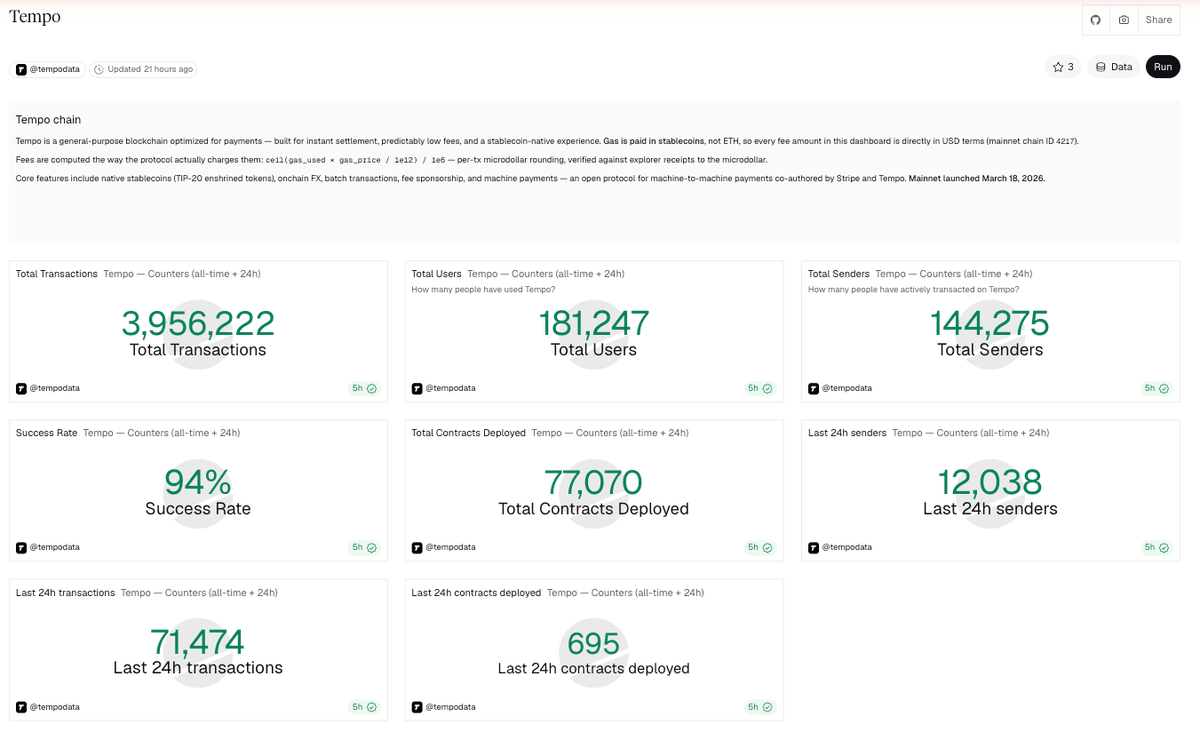
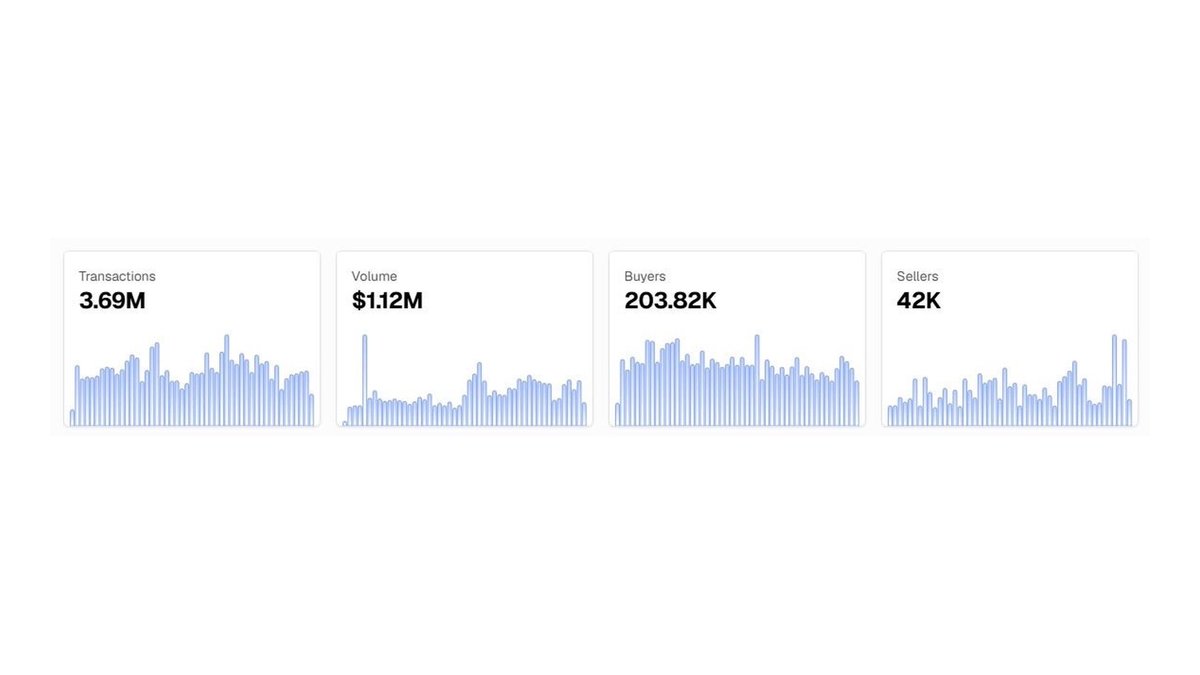
Got @tempo on my radar since mainnet launched in March and the two-month numbers are worth looking at properly.
3.9M transactions, 177K addresses, $25M stablecoin supply already distributed across multiple issuers.
pathUSD anchoring at $8.2M, USDB, USDT0, and bridged USDC.e and EURC.e each sitting between $4.5M and $5.5M. yield-bearing variants from Ethena, Frax, and Maple already live on top of that.
The important architecture details: stablecoins are native at the protocol level through precompile-based implementation.
Gas is payable directly in stablecoins. For a payments chain that design choice removes the single biggest friction point in every other stablecoin network.
Stripe incubated this. now it's indexed on Dune alongside Tron, Solana, and Ethereum
How long before Tempo's pace makes the Tron comparison unavoidable?
68
5
150
13,190
May 29
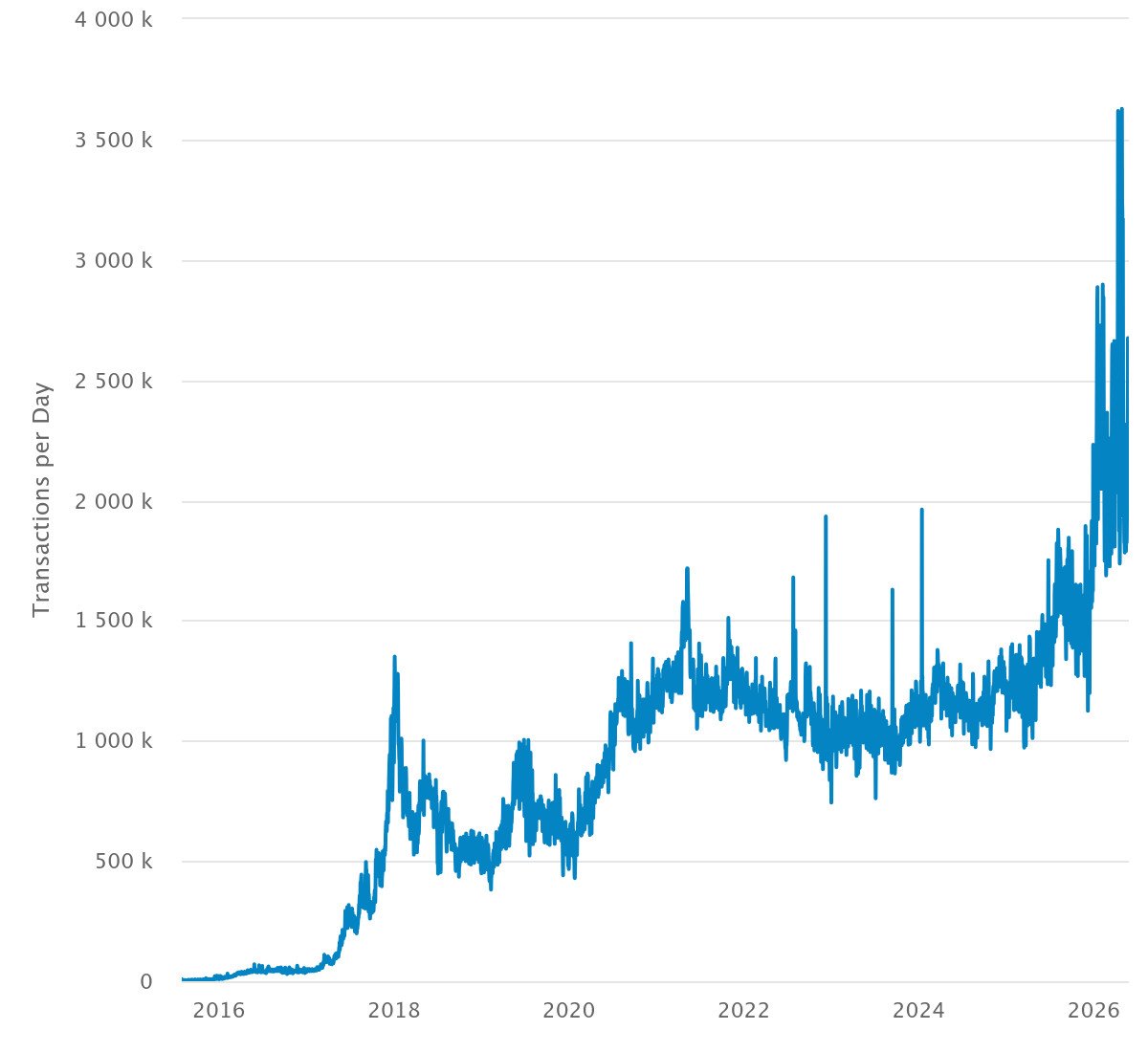
The chart that’s been on my mind this week is Ethereum daily transactions.
All-time high of 3.6M on April 28, still sitting around 2.2M now.
Usage near record levels while ETH trades 57% below its August 2025 peak, under $2,000.
Standard Chartered is leaning into that gap.
Geoff Kendrick reaffirmed $4,000 by end of 2026 and $40,000 by 2030, comparing ETH to Amazon during the dot-com bust.
Basically everything inside the business is working while the stock bled.
The counterpoint is harder to wave off. DeFi TVL dropped from $97B in August to $41.6B .
ETH ETFs posted an 11th straight day of outflows.
The disconnect comes down to value accrual.
The network settles enormous activity at near-zero cost while L2s capture the margin.
Usage being at record highs doesn’t matter if none of it reaches the token.
87
4
172
15,382
May 27
People still underestimate what agentic payments could become.
@coinbase is normalizing the idea that wallets, payments, and onchain actions can become native machine interfaces.
x402 only processed ~$1.1M over the last 30 days, which sounds tiny.
But every new financial system looks irrelevant before automation starts compounding usage.
Are we watching the early API layer for autonomous economies form in real time?
52
3
118
13,270