
🇯🇵 🇦🇺 DM for Consult. High Performance Mentor, Governing Bodies, Multiple Sports, Author, Coach, 15 Pro Wins, World No.7, Grand Slams
Joined June 2025
- Tweets 2,968
- Following 1,409
- Followers 148
- Likes 8,867
239 Photos and videos




Pinned Tweet

23 Jul 2025
DM for private consultation.
I DO NOT sell coaching courses.
I work "1-on-1" with teams, athletes, coaches, and parents of HP juniors.
I’ve coached Grand Slam champions, 15 pro wins, world No. 7s, and elite performers across multiple sports.
I’ve held managerial and head coaching roles at two international governing bodies and spent 8 years on the Dunlop International Advisory Board.
I know what it takes; not because I studied it, but because I lived it, led it, and delivered real results on the world stage.
You can train harder. Work longer. Have the best coach, the best gear, the best environment. But if your mind is working against you, none of it matters.
If you don’t do the inner Shadowwork, you will never reach your full potential. #sportsperformance #sports #HighPerformance #cycling #afl #nbl #coaching #shadowwork #mentorshipmatters #LeadershipMatters #LeadershipDevelopment #GoalSetting #Motivation #SelfImprovement #MentalHealthMatters #stayhard
1
5
2,876
Jonny Bakks retweeted

Jun 13
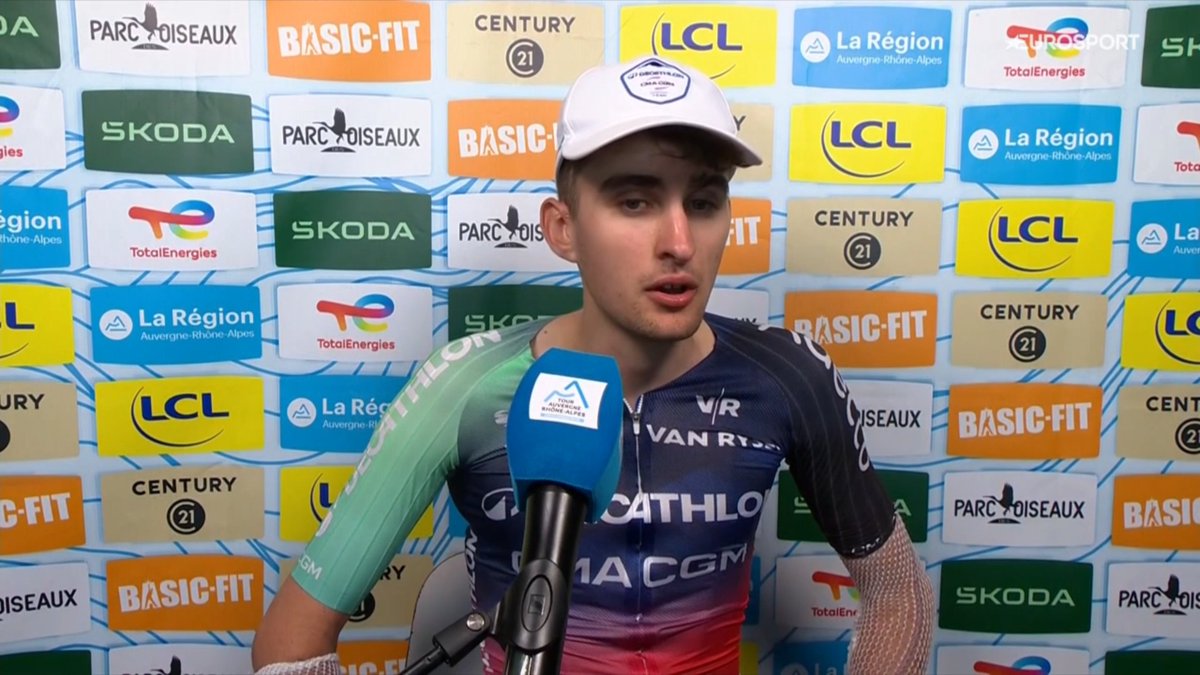
Paul Seixas on Eurosport: "The crash was my mistake. I wanted to overtake two riders on the descent, I took a corner too fast and my wheel slipped on some dirt. I want to apologize to the riders I put in danger."
#TourAuvergneRhoneAlpes
16
44
1,646
59,602
Epic 😄

18
I find myself within mere decimal points of agreement with this post.
Jun 13

If your carbohydrate intake does not vary in accordance with your training (in both directions), your training will be limited.
Metabolic flexibility begins with mental flexibility.
11
Jonny Bakks retweeted

Jun 13
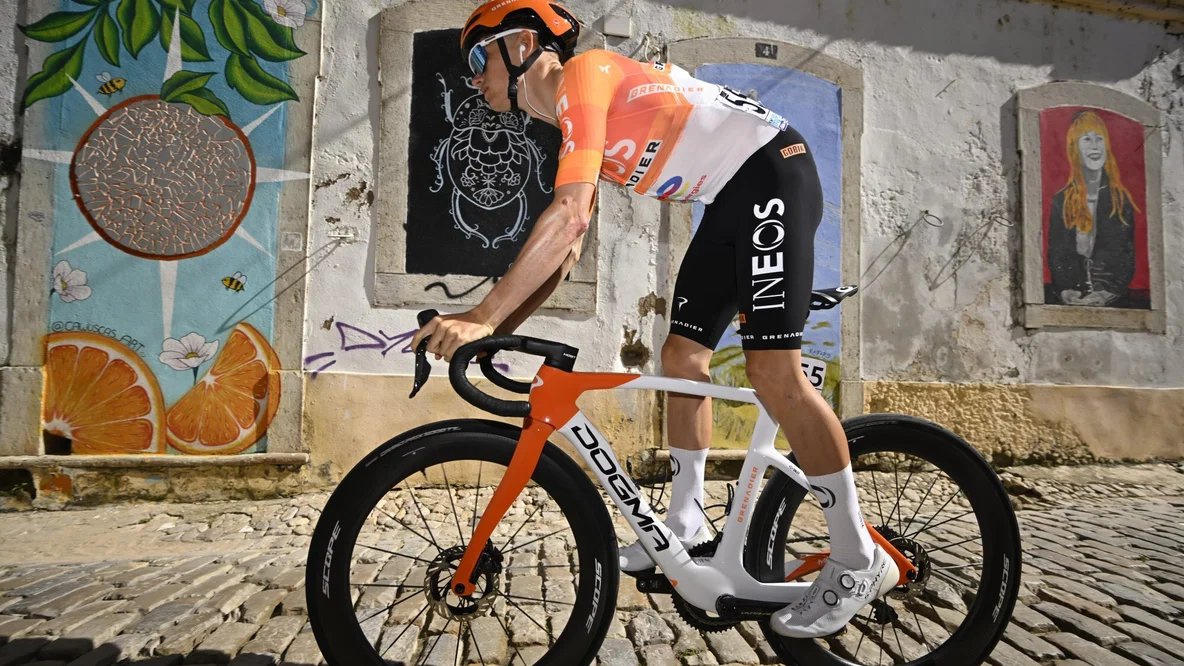
🇬🇧 Oscar Onley found hanging in tree above deep ravine after horror crash
📰 domestiquecycling.com/en/new…
📸 Cor Vos
4
24
393
95,269
Smart cunts don't understand stupid cunts because we assume there's logic behind what they're doing.
There isn't.
We think if we explain the facts clearly, stupid cunts will get it.
Then we realize they have the mental horsepower of a fucking shopping trolley.
2
13
Jonny Bakks retweeted

Jun 13
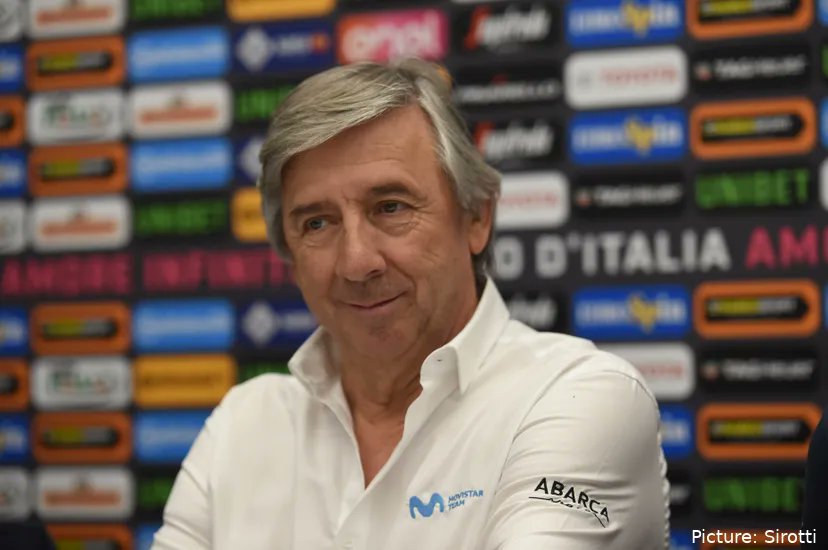
🚨"Telefónica deja herido de muerte al equipo Movistar al comunicarle que ya no le interesa el ciclismo y que dejará de pagarle los 25 millones que aporta cada temporada" Telefónica pide al equipo navarro que busque un nuevo patrocinador cuanto antes.😯😥 diariodeltriatlon.es/articul…
108
123
440
127,878

Jonny Bakks retweeted

🇦🇺 Luke Tuckwell : « Toute la journée j’ai pensé à ma petite soeur, qui est morte en septembre dernier, et je voulais vraiment le faire pour elle. Dans les derniers kilomètres je souffrais mais je pensais à elle. Ce @MaillotJauneLCL est en son honneur. » 💛
🎙 L'interview du nouveau leader du #TourAuvergneRhoneAlpes ⤵️
💛 Hear from the new overall leader ⤵️
12
105
1,718
111,880
Jun 11
A complete waste of time at that level.
Who is coaching the coaches?
What are their qualifications? And by that I mean, have they demonstrated the ability to develop, lead, inspire & win in an elite environment?
I’d be interested to hear the thoughts of @Thomo_Grant on this one. ☝️
Jun 11

The 14 coaches selected for the Level 4 coaching program are:
Josh Fraser (Carlton), Leigh Adams (Carlton), Mark McVeigh (Sydney), Corey Enright (St Kilda), Hayden Skipworth (Collingwood), Troy Chaplin (Melbourne), Daniel Pratt (WB), Xavier Clarke (NM), Zane Littlejohn (NM), Jamie Maddocks (WC), Murray Davis (Adelaide), Shaun Grigg (GC), Joel Corey (Fremantle), and Jaymie Graham (Fremantle).
Geelong, GWS and Brisbane didn’t recommend a coach, while Hawthorn’s applicant was unsuccessful.
@7AFL @1116sen
65
Jun 10
So he basically wants to indoctrinate his kids.

Shaquille O’Neal says his kids need three degrees to touch Daddy’s cheese
“In order to touch Daddy's cheese you gotta have three degrees because I believe in respectable nepotism”
“I was with the Miami Heat one day and this article came out. The grandmother leaves the son $250,000,000”
“This kid's on his knees scrubbing the bathroom floor and I'm looking at him. I'm like, hey man, didn't your grandmother just leave you $250,000,000?”
“Yeah, but Dad wants me to start from the bottom. Once I saw that I was like, you know what, that right there is respectable nepotism”
“I also have to teach my kids we're not rich, I'm rich”
96
Jonny Bakks retweeted

Jun 10
Tom Pidcock’s training process is no joke. 📉😳
(via IG/christopherblevs)
6
15
235
59,906

Jun 10
I generally post on LinkedIn, but will post here a bit more moving forward.
One of the most fascinating phenomena in professional sport occurs immediately after a coach is replaced. A team that looked flat, disorganised and incapable of competing suddenly wins three or four games in a row, as in the case of @CarltonFC
Energy returns. Effort increases. Players appear more engaged. The media inevitably credits the coaching change and, in fairness, the new coach often deserves some of that credit.
However, after more than 25 years working in high-performance sport, coaching athletes, building teams and leading organisations, I have come to believe that these situations reveal something far more interesting than the impact of the new coach. They reveal the motivational profile of the athletes.
The reality is that many athletes are driven predominantly by external motivators. Selection pressure, contract negotiations, public scrutiny, media criticism, the desire to impress a new coach, or the fear of being traded, delisted or overlooked. When a coaching change occurs, these motivators suddenly intensify. Players understand that every training session is being evaluated, every performance is being judged, and every decision may influence their future. Unsurprisingly, effort levels often increase.
While this short-term uplift is often referred to as a "dead cat bounce," I believe that description misses the deeper lesson. The more important question is not why the team improved but why the improvement only occurred after the coaching change.
If a team is suddenly capable of running harder, competing more fiercely, preparing more professionally, and executing more consistently, then leaders should be asking whether the issue was capability in the first place. More often than not, it is a question of motivation.
The challenge with external motivation is that it has a limited shelf life. Once the novelty fades, the pressure normalises and the new coach becomes the established coach, performance often drifts back toward previous levels. This is why so many organisations experience an immediate uplift before eventually settling into a pattern that closely resembles what came before.
The athletes who have always fascinated me are the ones who remain largely unchanged throughout the entire process; Zach Merrett of the @essendonfc comes to mind.
Their standards do not lift because a coach arrives, nor do they fall because a coach departs. They train with intent, prepare professionally, and compete relentlessly regardless of who occupies the head coach's office. Their commitment is not dependent on circumstance.
These athletes are driven primarily by intrinsic motivation. They pursue mastery rather than approval. They chase excellence rather than recognition. Their standards are self-imposed rather than externally enforced. In my experience, they are also the athletes most likely to sustain HP over long periods of time because their motivation is not tied to events around them.
This is not to suggest that external motivation is inherently bad. Every athlete is influenced by external factors to some degree. The best performers often harness both intrinsic and extrinsic motivators. The critical distinction is which source of motivation dominates when nobody is watching and when there is no immediate reward or consequence attached to the effort.
Ultimately, coaching changes do not simply reveal the quality of a coach. They reveal the quality of a team's motivational culture. When a team suddenly discovers another gear after a coach leaves, leaders should resist the temptation to focus solely on the incoming coach and instead ask a more confronting question.
Did the coach change the performance, or did the players simply reveal that they had more to give all along?
@Pivotonian1838 @SENBreakfast @1629senSA
@MrJohnnyRainman @Thomo_Grant @gregpeartpolish @1KingZ4 @davidking34 @CoachJoshKing @ncb_cfc #AFL #NBL #sports
62
Jun 10
Multitasking is BULLSHIT.
After more than 25 years coaching athletes, leading organisations, and working in HP environments globally, I’ve never met a true elite performer who could genuinely focus on multiple things at once. What most people call “multitasking” is actually rapid task-switching, and every switch carries a cost.
Attention is finite. Each notification, email, or wandering thought fragments our focus and reduces our capacity to deliver at the highest level. Yet modern culture celebrates being “busy,” juggling projects, and doing it all. In reality, many chronic multi-taskers are also chronic underachievers.
Elite performers do the opposite. They focus deeply on one thing at a time. When they train, they train. When they compete, they compete. When they recover, they recover. When they’re with family, they’re fully present. Their secret isn’t doing more; it’s directing their full attention with intention.
This is why presence is one of the most powerful (and misunderstood) performance skills today. It’s not a wellness buzzword. It’s a genuine competitive advantage: the ability to bring your complete attention, energy, and awareness to the task at hand; to become fully absorbed in what you’re doing.
People who pride themselves on multitasking often achieve less, make more errors, and experience higher stress. The path to sustained HP is rarely about doing more. It’s about doing fewer things with greater focus and discipline.
You can only ever be in one place at one time. The real question is whether you have the discipline to bring all of yourself there.
My work sits at the intersection of leadership, culture, and performance. I regularly advise on:
✅ Coaching effectiveness and leadership performance
✅ Organisational culture and accountability
✅ Athlete motivation, autonomy, and psychological resilience
✅ High-performance system design
✅ Talent pathways and long-term athlete development
✅ Professional athlete mentoring and performance coaching
✅ Parent education for emerging athletes
📩 If you’re a board, governing body, club, athlete, or family seeking independent guidance, I’d be happy to connect. Feel free to reach out. 📩
#HighPerformance #Leadership #Focus #Presence #ElitePerformance
17
Jun 9
If Greg Swan holds his position next year I’ll be amazed.
An absolute disaster in front of the camera.
But hey…. He’s a good bloke 👍🤡
@Thomo_Grant @gregpeartpolish @MrJohnnyRainman
2
3
190
Jonny Bakks retweeted

Old school TDF🍻
How much more entertaining would the tour be if this was still happening😂
2
13
1,393
Jonny Bakks retweeted

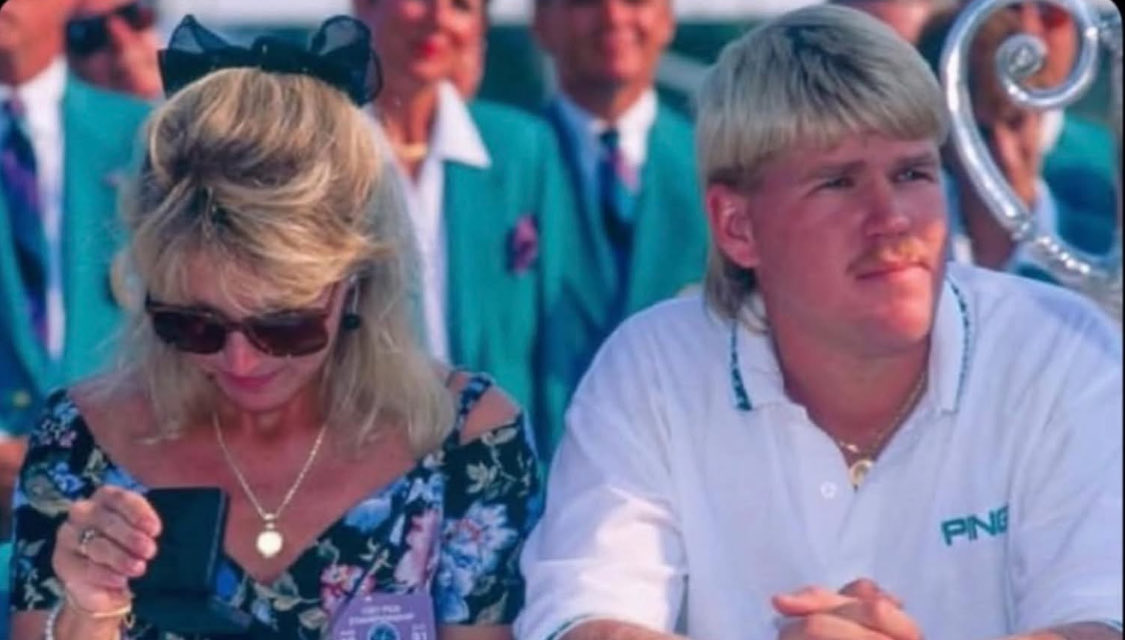
35 years ago, a nobody named John Daly got into the PGA Championship as the 9th alternate. He drove 7 hours from Arkansas, never saw the course until tournament week, didn't play a practice round... and won the major.
That week, the legend of John Daly was born.
Grip it and rip it!
33
261
2,886
65,228
Jonny Bakks retweeted

Jun 6
Stephen A Smith DESTROYS Lebrons GOAT Case
"He played 23 years,he still has 2 less titles than Michael Jordan, Michael Jordan played all 82 games 8 times, how many times did Lebron do it?, Michael Jordan is a 10x Scoring Champion, how many times did Lebron do it?, Michael Jordan is 9x All Nba defensive player, how many times did Lebron do it?, theres nothing to discuss. Michael Jordan averaged over 30 in the postseason 7 times, how many times did Lebron do it?, theres nothing to discuss, hes approaching year 24 and still has 2 less titles"
(Via The Late Run Show)
651
3,030
25,093
1,906,983
Jonny Bakks retweeted

Jun 6
What did Michael Jordan think about 3-point shooting?
“My 3-point shooting is something that I don’t want to excel at, because it takes away from all phases of my game. My game is a fake, drive to the hole, penetrate, dish off, dunk, whatever, and when you have that mentality, as I found out in the first game, of making threes, you don’t go to the hole as much. You go to the 3-point line and you start sitting there waiting for someone to find you. And that’s not my mentality, and I don’t want to create that because it takes away from my other parts of my game.”
117
493
4,857
551,978