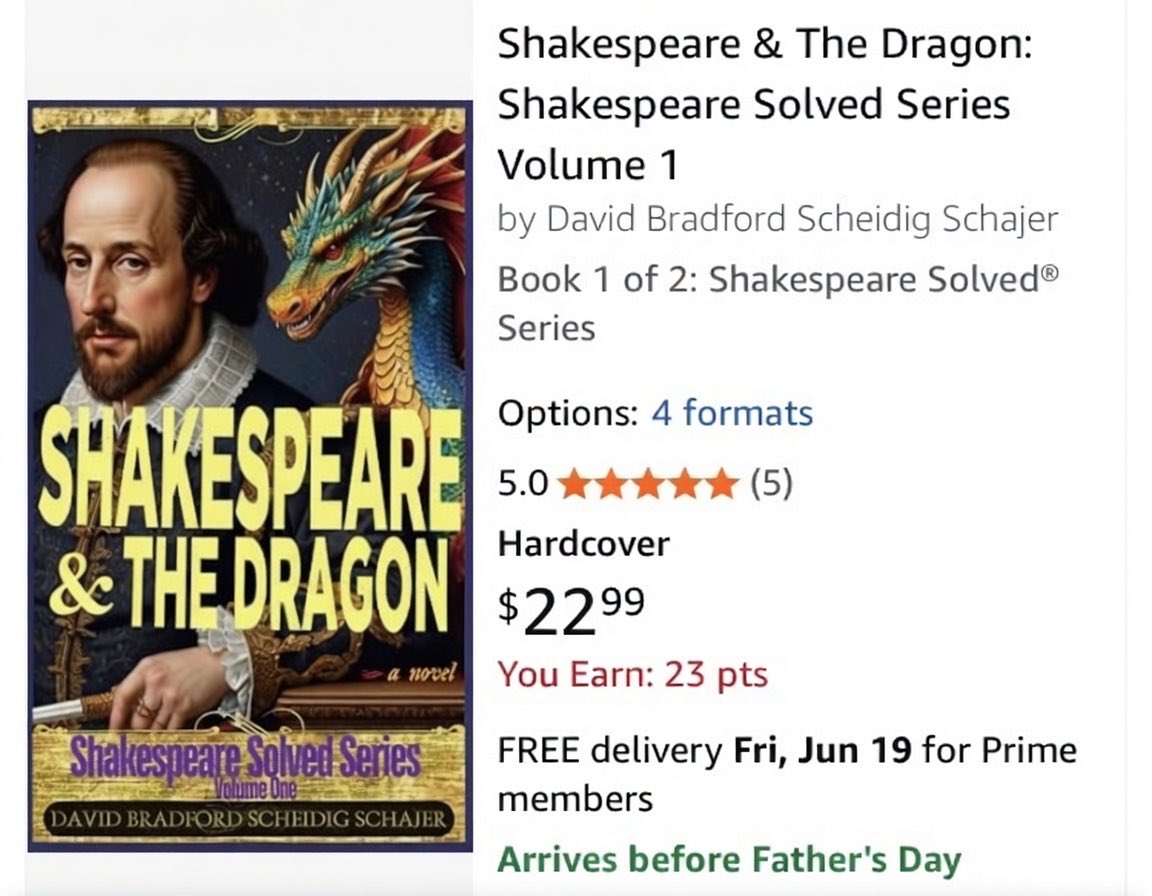
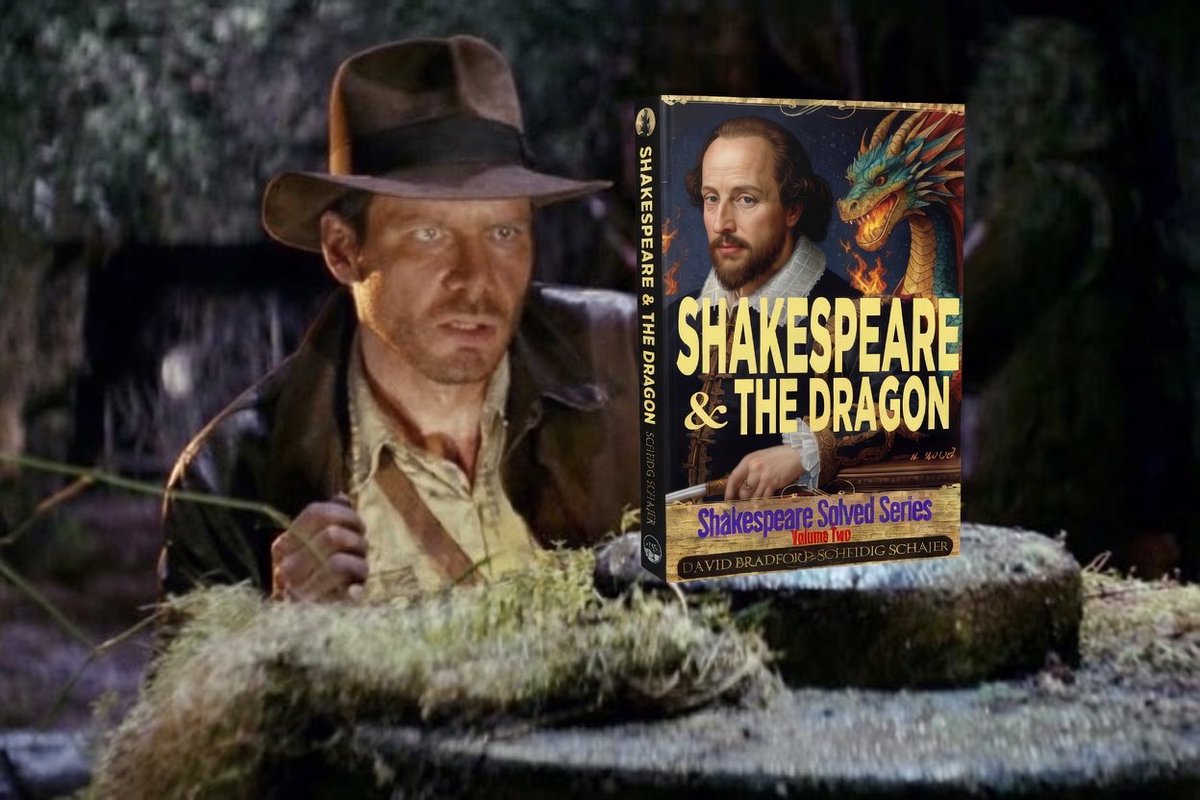
“The definitive historical fiction for Shakespeare”-critic John Demetry • “The solution”-Grok • Novels on Kindle/Audible • David Bradford Scheidig Schajer
Joined December 2023
- Tweets 5,135
- Following 768
- Followers 1,231
- Likes 17,230
618 Photos and videos


Pinned Tweet

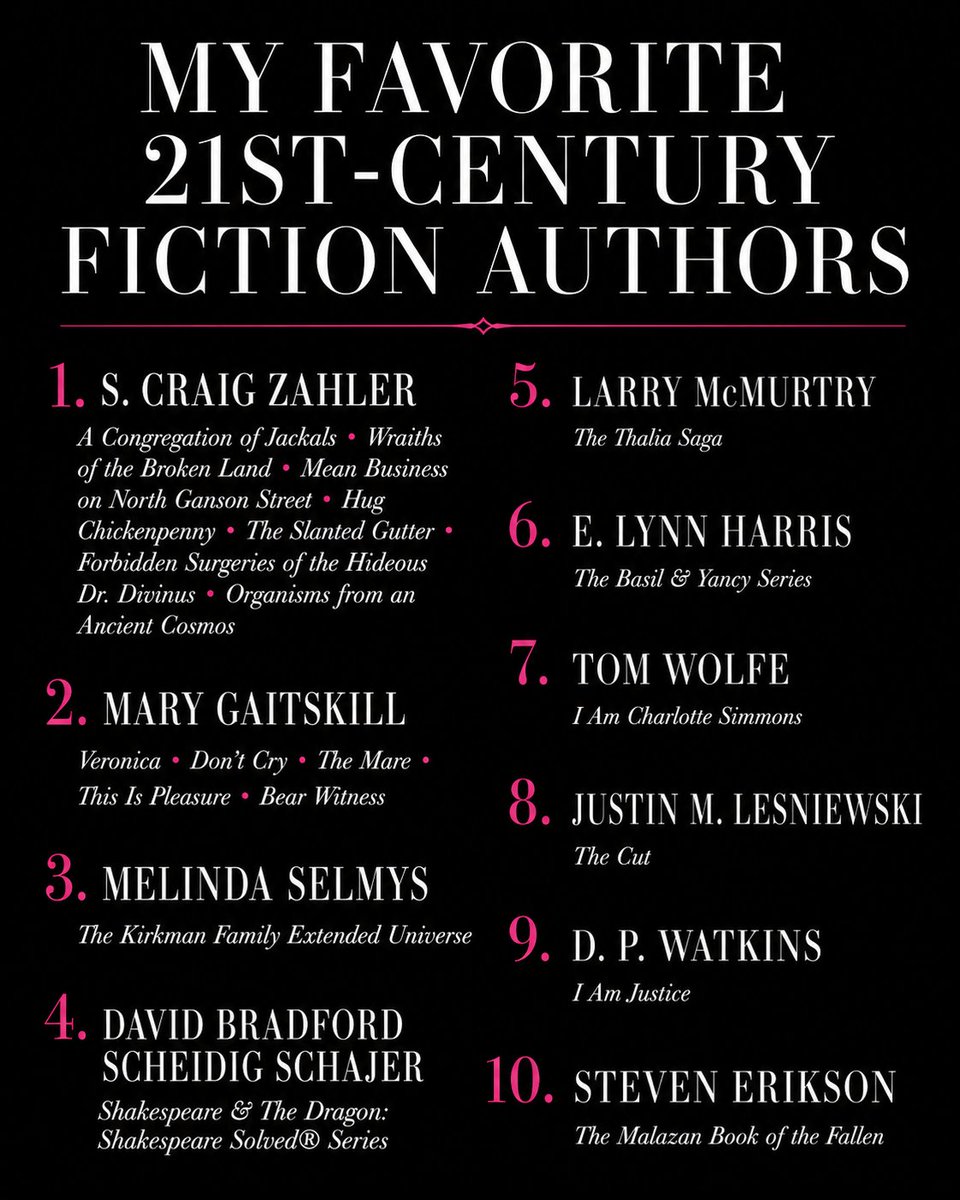
Wow! 🤯 I am truly thunderstruck!
Film Critic John Demetry put me on his Top 10 list!
I am so grateful for his praise—and I am so thrilled that a critic as discerning as he is agrees that this is the “definitive historical fiction” for Shakespeare
Bless you John!

1
7
656
Shakespeare Solved retweeted

Another magnificent performance. And, my goodness, how this message resonates today. 👏🏴

England betrayed.
We refuse to allow our cultural icons to be stolen from us by those who wish us harm and show us no respect.
This project is a statement of intent. We are only just beginning. Thank you to everyone who has followed along and supported in any way.
Here we conclude Project 39 with the John of Gaunt of speech from Richard II.
John of Gaunt was the fourth son of Edward III, making him Richard II’s uncle. His son, Bolingbroke (future Henry IV) has just been banished, and here John of Gaunt complains about how Richard is betraying and destroying England.
There are many notable literary techniques in this famous speech. Shakespeare often uses anaphora in speeches. This is the repetition of a word or phrase at the beginning of a sentence, in this case ‘this’ is repeated 17 times. But a more significant technique here is metonym. This is where an object stands in for a concept. In this case the concept is England, and the whole speech can be seen as a succession of metonyms to describe the concept of England.
What is England? It is, to say the least, a much contested concept. A landmass, an island, an idea, a religion, a people, a tradition, a history, a culture? John of Gaunt gives us some clues here. He starts with the monarchy, then moves on to describe its geography as an island, its defenses, its flora and fauna, the character of its people and, finally, its Christian religion.
John of Gaunt was known to be a close friend of the poet Geoffrey Chaucer. Perhaps Shakespeare sensed that he was Chaucer’s successor as the voice of England and gave Gaunt this speech as a way of inheriting the mantle.
John of Gaunt is played by Oliver Bennett
1
1
4
80
I love opinions like this!
I especially love the stuff about masculine and feminine weapons—incredible insight!

When most people read Romeo and Juliet, they think it's the ultimate love story, but in reality, it's a cautionary tale.
Romeo is the quintessential anti-hero because he is ruled by his inordinate desire which makes him weak and effeminate.
This is most evident in Act V where Romeo and Juliet take their lives. Romeo uses poison, which was traditionally understood as the weapon of women and eunuchs, and Juliet – the more rational and therefore, more masculine of the pair – takes her life with a dagger.
Romeo isn't the hero, he's the villain, and Juliet should have married Paris.
2
82
IMPERATOR knows the truth ⬇️
Give him a follow—one of the most inspiring accounts on all of X !
Shakespeare is mandatory reading.
1
69
Shakespeare Solved retweeted

Preserve your inheritance by preserving your culture, your faith, your traditions, and your national virtues.
Thank you, @thebasecreates , for helping us preserve a monumental part of Western Culture.
May the Lord bless your worthwhile endeavors 🙏🏻
England betrayed.
We refuse to allow our cultural icons to be stolen from us by those who wish us harm and show us no respect.
This project is a statement of intent. We are only just beginning. Thank you to everyone who has followed along and supported in any way.
Here we conclude Project 39 with the John of Gaunt of speech from Richard II.
John of Gaunt was the fourth son of Edward III, making him Richard II’s uncle. His son, Bolingbroke (future Henry IV) has just been banished, and here John of Gaunt complains about how Richard is betraying and destroying England.
There are many notable literary techniques in this famous speech. Shakespeare often uses anaphora in speeches. This is the repetition of a word or phrase at the beginning of a sentence, in this case ‘this’ is repeated 17 times. But a more significant technique here is metonym. This is where an object stands in for a concept. In this case the concept is England, and the whole speech can be seen as a succession of metonyms to describe the concept of England.
What is England? It is, to say the least, a much contested concept. A landmass, an island, an idea, a religion, a people, a tradition, a history, a culture? John of Gaunt gives us some clues here. He starts with the monarchy, then moves on to describe its geography as an island, its defenses, its flora and fauna, the character of its people and, finally, its Christian religion.
John of Gaunt was known to be a close friend of the poet Geoffrey Chaucer. Perhaps Shakespeare sensed that he was Chaucer’s successor as the voice of England and gave Gaunt this speech as a way of inheriting the mantle.
John of Gaunt is played by Oliver Bennett
2
3
14
634
Shakespeare Solved retweeted

prolific, many people are saying
15 years as a ghostwriter, 5 books of my own releasing in 2026 alone
what a way to celebrate

3
10
79
16,410

If you want a persuasion masterclass of rhetorical control, crowd psychology, timing, repetition & imagery…
Then read Mark Antony’s speech in Julius Caesar by Shakespeare.
For for full impact, read/watch the whole play.
Not hard to see why some law professors teach it.
1
1
8
242
Woo-hoo!
Two people just bought Audible versions of "Shakespeare & The Dragon!"
I just put the WHOLE audio of Chaper 1 in my Articles section—so you can listen to it and read it at the same time! ⬇️
I put a lot of hard work, across many months, to prepare it for you—because both books are narrated and performed by me, the author. I wanted you to hear how I heard the books, as I was writing them all these years.
If you buy an Audible version—please leave a review! For an indie author like me, it means a lot!

2
52
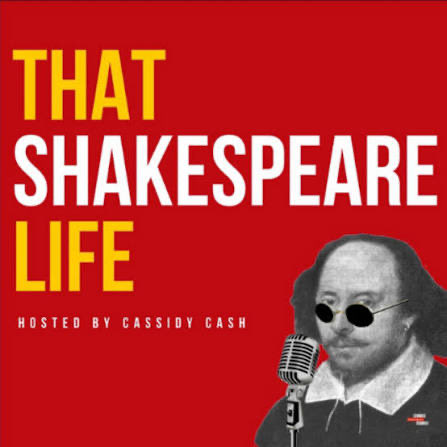
The best Shakespeare website and podcast is That Shakespeare Life , hosted by Cassidy Cash
It’s for Shakespeare aficionados and even for people who just love history
Great episodes, very lively interviews, and fun to listen to
2
1
7
91
“Shakespeare gave England immortality”
Wow! 🤯
Beautiful and truthful words—and tragic, now that children of England are being coerced into control

The England of Shakespeare was timber and thatch, sweat and sonnets. A place and time where life did unfurl, unbent and unbowed.
England gave Shakespeare, a mortal time. Shakespeare gave England, immortality.
@ShakespeareSolv @profrhodrilewis @LostPlayhouse @BachShakespeare
1
45
“This England never did, nor never shall,
Lie at the proud foot of a conqueror,
But when it first did help to wound itself.”
“England is safe, if true within itself”
Today, tragically, England is not true within itself—and it is wounding itself.
There are too many people like Polonius and Iago in control
Please Pray for England 🏴 🙏
27
England betrayed indeed
My family is originally from Bradford
I have spent the better part of the last 20 years traveling back in my imagination to the England of Shakespeare
My series of novels seek to defend the greatness of England
And England betrays us now
Please show your support for @thebasecreates now and into the future
The world —and England in particular—needs freedom to find and to be inspired by Shakespeare
England betrayed.
We refuse to allow our cultural icons to be stolen from us by those who wish us harm and show us no respect.
This project is a statement of intent. We are only just beginning. Thank you to everyone who has followed along and supported in any way.
Here we conclude Project 39 with the John of Gaunt of speech from Richard II.
John of Gaunt was the fourth son of Edward III, making him Richard II’s uncle. His son, Bolingbroke (future Henry IV) has just been banished, and here John of Gaunt complains about how Richard is betraying and destroying England.
There are many notable literary techniques in this famous speech. Shakespeare often uses anaphora in speeches. This is the repetition of a word or phrase at the beginning of a sentence, in this case ‘this’ is repeated 17 times. But a more significant technique here is metonym. This is where an object stands in for a concept. In this case the concept is England, and the whole speech can be seen as a succession of metonyms to describe the concept of England.
What is England? It is, to say the least, a much contested concept. A landmass, an island, an idea, a religion, a people, a tradition, a history, a culture? John of Gaunt gives us some clues here. He starts with the monarchy, then moves on to describe its geography as an island, its defenses, its flora and fauna, the character of its people and, finally, its Christian religion.
John of Gaunt was known to be a close friend of the poet Geoffrey Chaucer. Perhaps Shakespeare sensed that he was Chaucer’s successor as the voice of England and gave Gaunt this speech as a way of inheriting the mantle.
John of Gaunt is played by Oliver Bennett
1
1
92
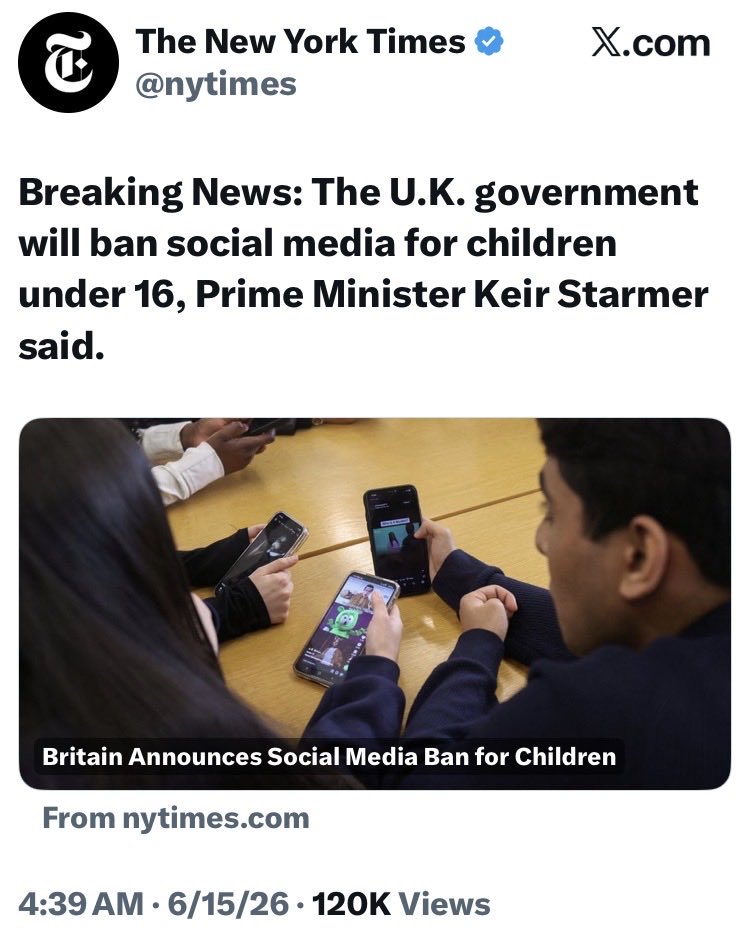
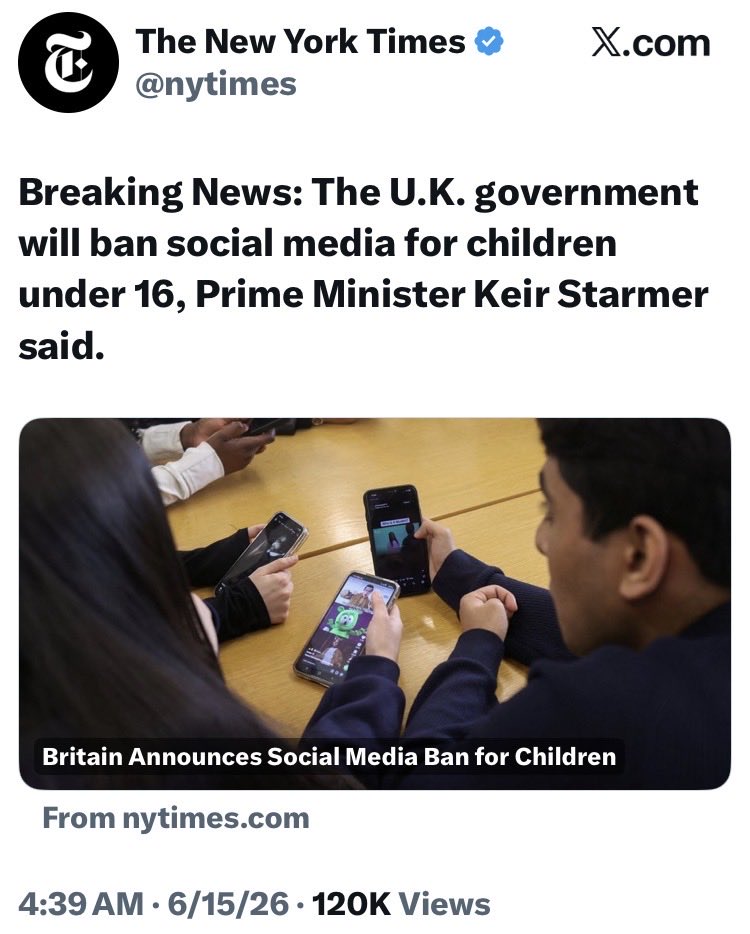
Children are in desperate need of Shakespeare , and the spiritual and moral truth he uniquely offers
Taking away their social media access is a dangerous precedent in controlling their minds
It keeps children from discovering new ideas about Shakespeare —such as the truth about him in my novels
19
Shakespeare lived thousands of lives, by reading.
He intentionally compressed all of this knowledge into one single tome.
Not to educate or to entertain.
But to elevate and to ennoble all of us—and make kings and queens of us all
The man who reads lives a thousand lives.
The man who doesn't read lives one.
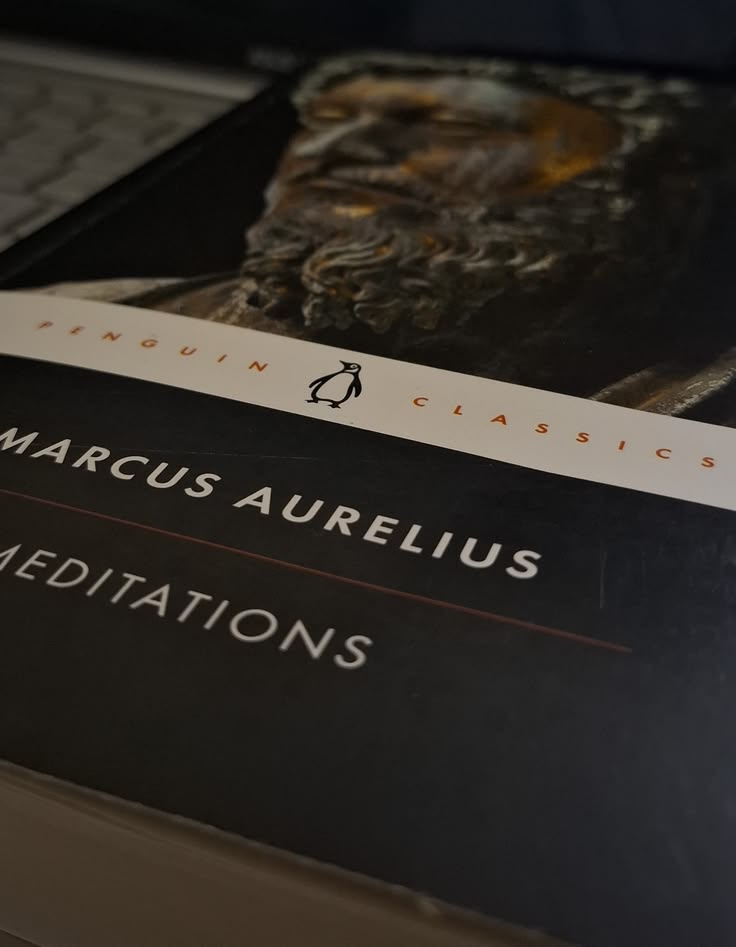
ALT 827GR
2
3
18
5,559
Banger of a post!
Beware of the Shakespeare “thought leaders” — the scholars and filmmakers
They only seek to mislead you

A book builds a trust bridge for buyers who are skeptical of influencers, funnels, and AI-generated "thought leadership."
Which they are.
They all are.
1
52
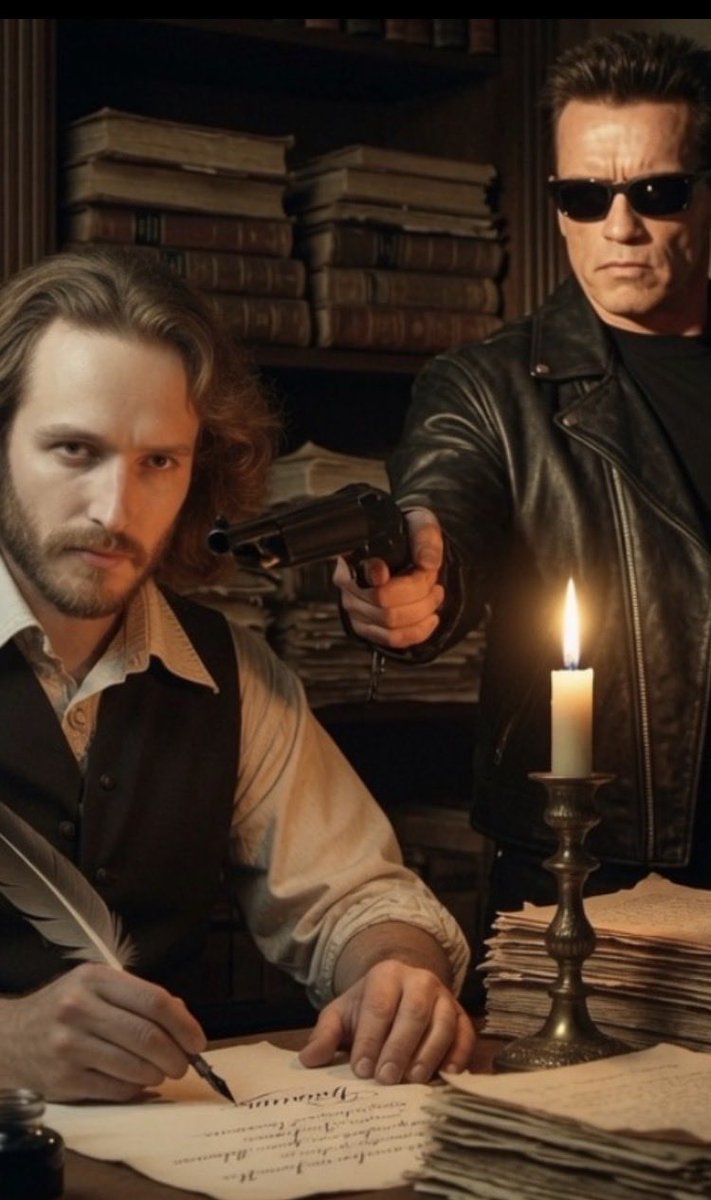
Shakespeare as my novels show him
Versus
Shakespeare as scholars and filmmakers show him
8
76
You can do things.
You can do your own Shakespeare productions!
Jun 15

Did we make puppets and perform Shakespeare’s twelfth night?
Yes. Yes we did.

3
80
Oof!
John Demetry bodyslams Disclosure Day ⬇️
Jun 15
Full Review: letterboxd.com/thejohndemetr…
#AntiHype
Steven Spielberg actually delivers his own disclosure day. The film’s big revelation—the summation of its withheld information—explains the mysterious childhood bond between government whistleblower Daniel Kellner (Josh O’Connor) and Kansas City weather reporter Margaret Fairchild (Emily Blunt). The sequence replays and subverts the meaning of Spielberg’s most spiritually awesome sci-fi set pieces. He sullies the volition signified by the boy’s wonderment when he accepts the visitors’ invitation on his own terms—“Toys!”—in **Close Encounters of the Third Kind** (1977), the leap of faith represented by Elliot and E.T.’s flying bike ride against a full-moon backdrop in **E.T. the Extra-Terrestrial** (1982), the sublime consummation of mother-love in the rhapsody that controversially concludes his masterpiece **A.I. Artificial Intelligence** (2001), and the moral thrust of sexuality acted out by Tom Cruise battling a mirror-surfaced Martian probe threatening his daughter in **War of the Worlds** (2005).
In **Disclosure Day**, Spielberg perverts volition, faith, love, and sexuality in the most chilling rape sequence since **Rosemary's Baby** (1968). Young Margaret extends her palm to Daniel's to ease him into their shared violation by aliens. That reach introduces another layer—a sliver—of superiority into Spielberg’s hierarchical construction. An alien’s tendril-like fingers hold the children in place and contextualize Margaret’s gesture. The banality of evil that Polanski achieved suggested real-world firsthand knowledge—Hollywood devotion to the occult, which Spielberg now hides in plain sight. Spielberg structures the narrative as a king-of-the-hill battle between opposing forces that achieve their ends by manipulating others. Each scene repeats a pattern of lies, illusions, coercion, and violation upon which Spielberg builds his tower of Babel. Significantly, Spielberg invokes that cautionary Biblical tale when the little grey men who abduct Margaret and Daniel implant all verbal language—including mind-reading—and mathematics. The script never demonstrates the latter, but it conveniently explains Daniel’s high-security position. The aliens crown the prepubescents with ring lights thorned with penis-shaped “diving devices.” (Throughout, government agents warn users not to close their hands around them.) The alien rods enable users to penetrate another person’s consciousness without consent.
Spielberg completes his desecration by releasing **Disclosure Day** on the feast celebrating the Sacred Heart of Jesus. Shafts of light haloing the children distort those conveying Christ’s heavenly status in an icon above the bed reserved for Daniel’s ex-novitiate girlfriend. A lapsed Catholic, like screenwriter David Koepp, Jane (Eve Hewson) now regards religion as a tool for placating manipulable masses, which renders the revelation of extra-terrestrial life a threat. The extra-terrestrials lure child Margaret out of her bedroom by assuming the familiar forms of forest animals, like those that symbolize sexual maturation’s longing for companionship in fairy tales. Later (in story time), a CGI fox approaches adult Margaret and Daniel during their wandering reunion. Spielberg films their expositional walk-and-talk in shallow focus, as if containing them within shared trauma. A fire truck frightens the fox away, only to reveal Daniel’s espionage cohorts aboard. They brag that nobody questions the authority of an emergency vehicle, which makes it a perfect cover. The semiotics of the vehicle reveal the digital animals as agents of domination akin to a witch’s familiar.
Spielberg defines the film’s logically lax narration by flaunting his authorial manipulations through attention-calling digital camera movements and repeated exercises of **deus ex machina** over the characters’ fates. When Daniel absconds with an agent’s car, Spielberg’s camera breaks free from Daniel’s movement, circles behind the vehicle, and enters through the passenger side to reframe Daniel’s arrival opposite. The ensuing car chase, limply directed by Spielberg, combines a spatial cheat—the illogical distance separating the pursuing feds—with the illusion Jane creates to facilitate escape. The film’s tensest sequence involves a train dragging Daniel and Margaret. Through sheer luck, it avoids crushing their car and instead provides their getaway. The train signifies these interventions that move the country-crossing plot just as the characters use the arbitrary abilities and limitations of the diving devices. (**Indiana Jones and the Last Crusade** (1989) established the train as Spielberg’s metaphor for film narration.) The film’s opening shot, a pro wrestler stomping down on the frame itself, jokes about famously fake wrestling while representing Spielberg’s elitist perspective.
The film’s final kick in the spectators’ faces leaves them hanging on the ultimate “disclosure”: an unheard secret whispered from an alien to adult Daniel and then to adult Margaret as she steps before the news cameras. The signifying absence points toward the children’s primal scene as Spielberg’s own unholy confession. Prone on slabs like pagan human sacrifices or delectables at a spirit cooking, the two youths look upward toward the film’s supreme authority. In the conclusion of the movie’s embarrassingly trite theological debates, a Catholic nun offers a ridiculously fundamentalist reading of the account of a god who creates “earth” in Genesis. Elizabeth Marvel, interchangeable with Patricia Clarkson or Allison Janney, plays the nun as a figure of liberal condescension. She espouses a satanic cosmology subject to principalities and powers. Spielberg’s ambivalent relationship toward authority always engined his work with the recognizable, all-too-human contradictions of an artist, but it also testified to human freedom and forgiveness. In 2002, his films offered these blessings: “You can choose” (**Minority Report**) and “Nobody’s chasing you” (**Catch Me If You Can**).
With 2026's **Disclosure Day**, Spielberg’s ambivalence finally tips into worship. Authority manifests through the power to withhold or disclose information, the despotic virtue introduced by **Lincoln** (2012) into every. single. one. of his late works. Critics Neil Bahadur, Armond White, and I noted on X that **Disclosure Day** contains numerous parallels in plot, themes, and tropes with **The Fury** (1978). Cataloguing the significance of those commonalities warrants further study. Suffice it to say that **The Fury** conveys De Palma’s spiritual understanding of sexuality through a story about a telekinetic girl’s eroticized need to find and avenge her psychic twin. A shadowy group of spooks exploits the boy’s guilt-ridden sense of impotence alongside masculine potency and turns him into a weapon. Spielberg inverts De Palma’s visionary spectacle by surrounding Margaret and Daniel with romantic partners who function as spiritual cucks and veritable cockblocks. They compartmentalize the leads’ compulsions as trauma-based, rendering their psychic connection as infecund and sterile as the couples themselves. Spielberg already demonstrated in **A.I.**’s recreation of **The Fury**’s pregnant motif—an empty hand grasping at a wall—that he understands a mother’s love for her child as part of a continuum that includes eros. By canceling that component of human nature in **Disclosure Day**, Spielberg invites viewers to submit to a ritual that promises to erase the vulnerabilities that make desire possible, what Gregory Solman calls “man’s creative gift” in **Close Encounters**. Instead, Spielberg offers the demonic “gift” of reducing humanity to the utilitarian, as made literal in Margaret’s mind-reading of those she needs to exploit.
Through the dark chamber of the film’s signifying absence, Margaret, Daniel, and the alien extend the demonic ritual globally through the Disclosure Day telecast. Spielberg’s Black Mass—complete with a suffering Roswell Grey in mockery of Christ—fulfills the film’s COVID allusions. After all, lockdowns forced many Catholics to experience Mass through television and streaming. **Disclosure Day** inserts a wedge between people, and between man and God, by subverting the meaning of bed-ridden Saint Clare’s vision of Mass. In dialogue, Jane and Daniel describe the significance of the miracle that allowed Saint Clare to exist in “two places at once.” In doing so, they describe the nature of spectatorship, identification, and empathy against which Spielberg rebels. Saint Clare’s divine **camera obscura**, functioning as a simulcast, makes her the patron saint of television and not, significantly within the film’s meaning-making, of cinema. A recreated mobile of cardinal birds unlocks Margaret’s repressed memory of her abduction and violation alongside Daniel. An extra-terrestrial assumes the form of a red cardinal to trigger their implanted powers and the direction to find one another. In the end, the visitors fulfill a plan for which Margaret and Daniel remain mere tools. They leverage mainstream-media chyrons and a newscaster’s tears, sentimental triggers that prepare audiences to receive Daniel’s purloined top secret footage. The aliens time their intervention to human geopolitics—World War III unfolds offscreen—as duly elected officials likewise remain offscreen. The mask slips. This year puts movie audiences ringside for a spiritual matchup: the King of Pop vs. the King of Lies.
You *can* choose.
1
1
2
434
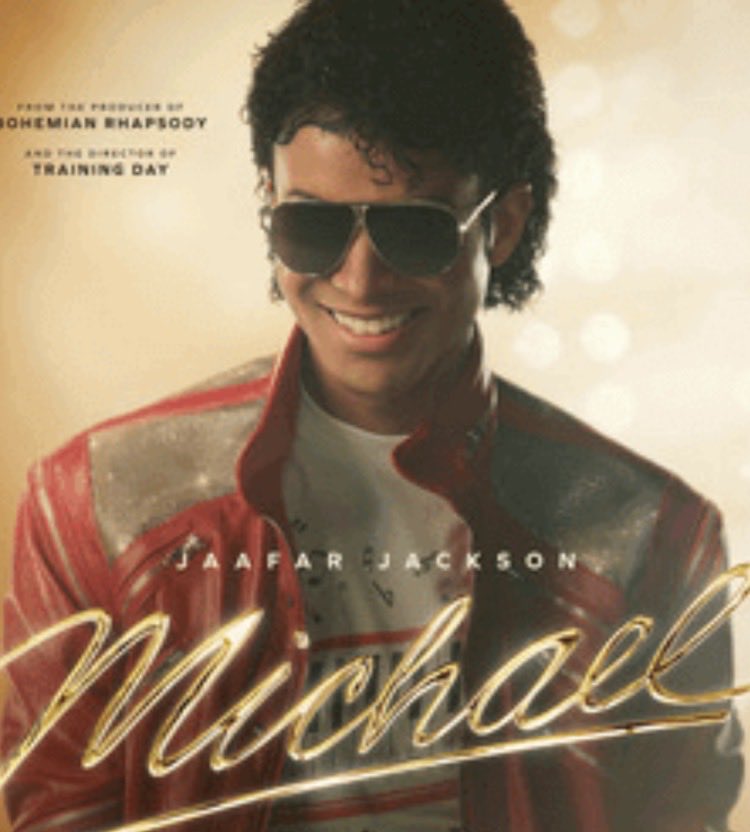
Amazing movie—one of the most joyous movie experiences in my entire life!
So much fun to watch this Michael Jackson movie and remember all the musical treasures that he gave us.
Extraordinary performances across the board—especially Jaafar Jackson and Juliano Valdi as the older and younger Michael.
I can not wait for the sequel!
1
1
5
272