
Exploring the world of data analytics & data science. Learn, apply, grow — every post adds value. #SQL #Python #Excel #PowerBI #DataAnalytics #DataScience
Joined March 2024
- Tweets 83
- Following 35
- Followers 2,523
- Likes 713
65 Photos and videos
Pinned Tweet
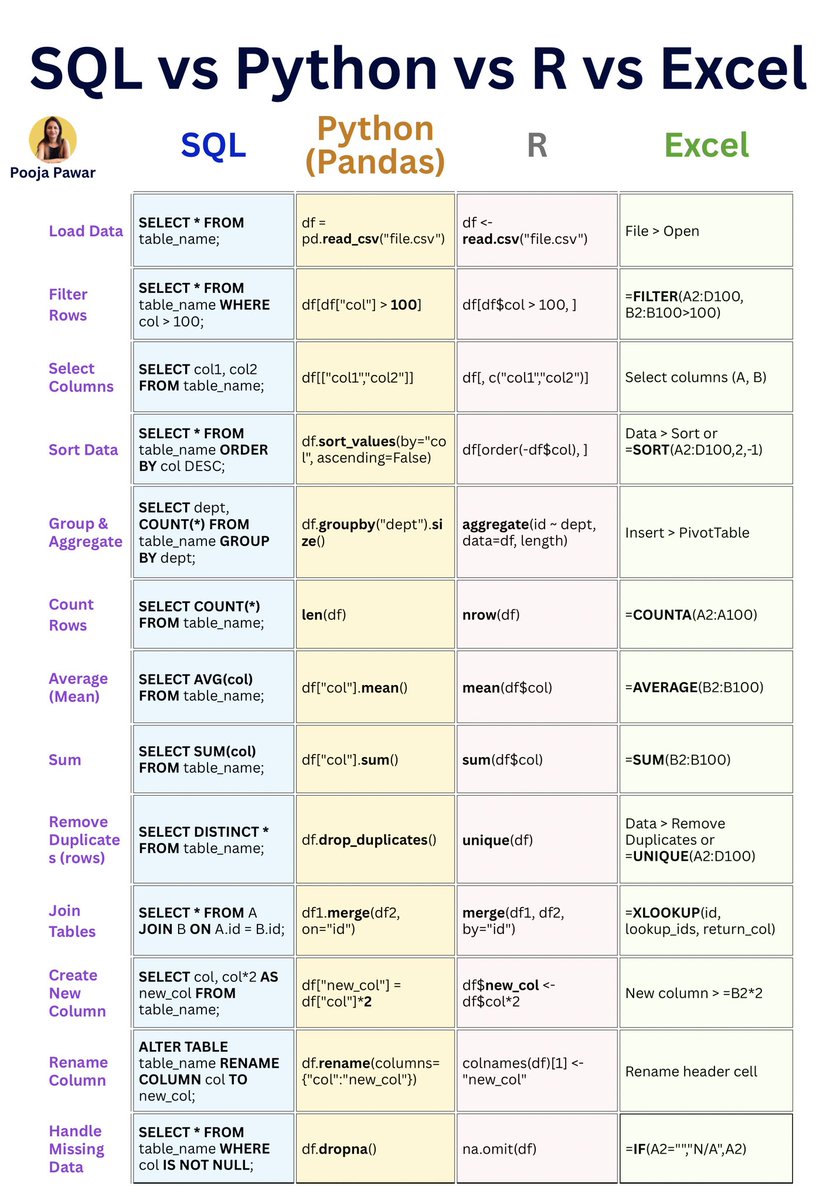
SQL, Python, R, and Excel all solve data problems, just differently. Knowing when to query, script, model, or spreadsheet is what makes a strong analyst. Tools change, fundamentals do not. #SQL #Python #RStats #Excel #DataAnalytics #DataSkills
3
16
76
1,589
Pooja Pawar, PhD retweeted

Jun 10
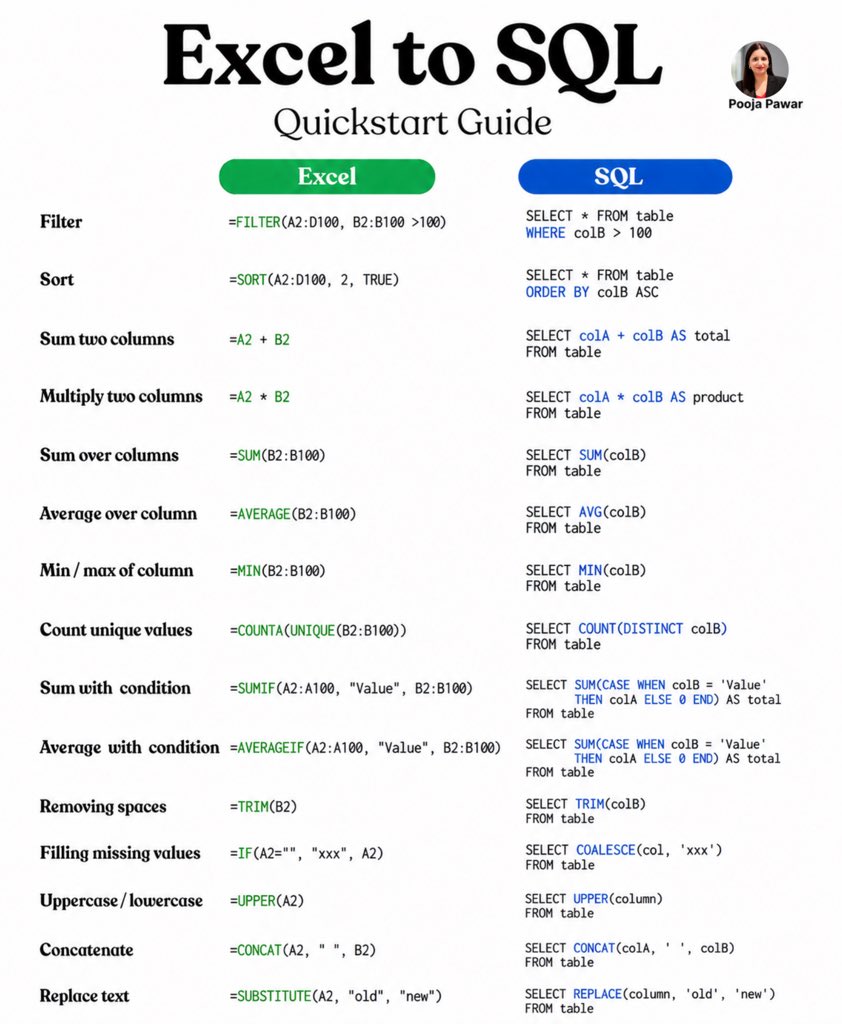
Excel teaches formulas. SQL teaches scalable data thinking. Professionals who transition from spreadsheets to SQL can work with larger datasets, automate reporting, and answer business questions much faster. Both skills together create a strong analytics foundation. #Excel #SQL #DataAnalytics #BusinessIntelligence #DataScience
2
18
84
1,458
Pooja Pawar, PhD retweeted
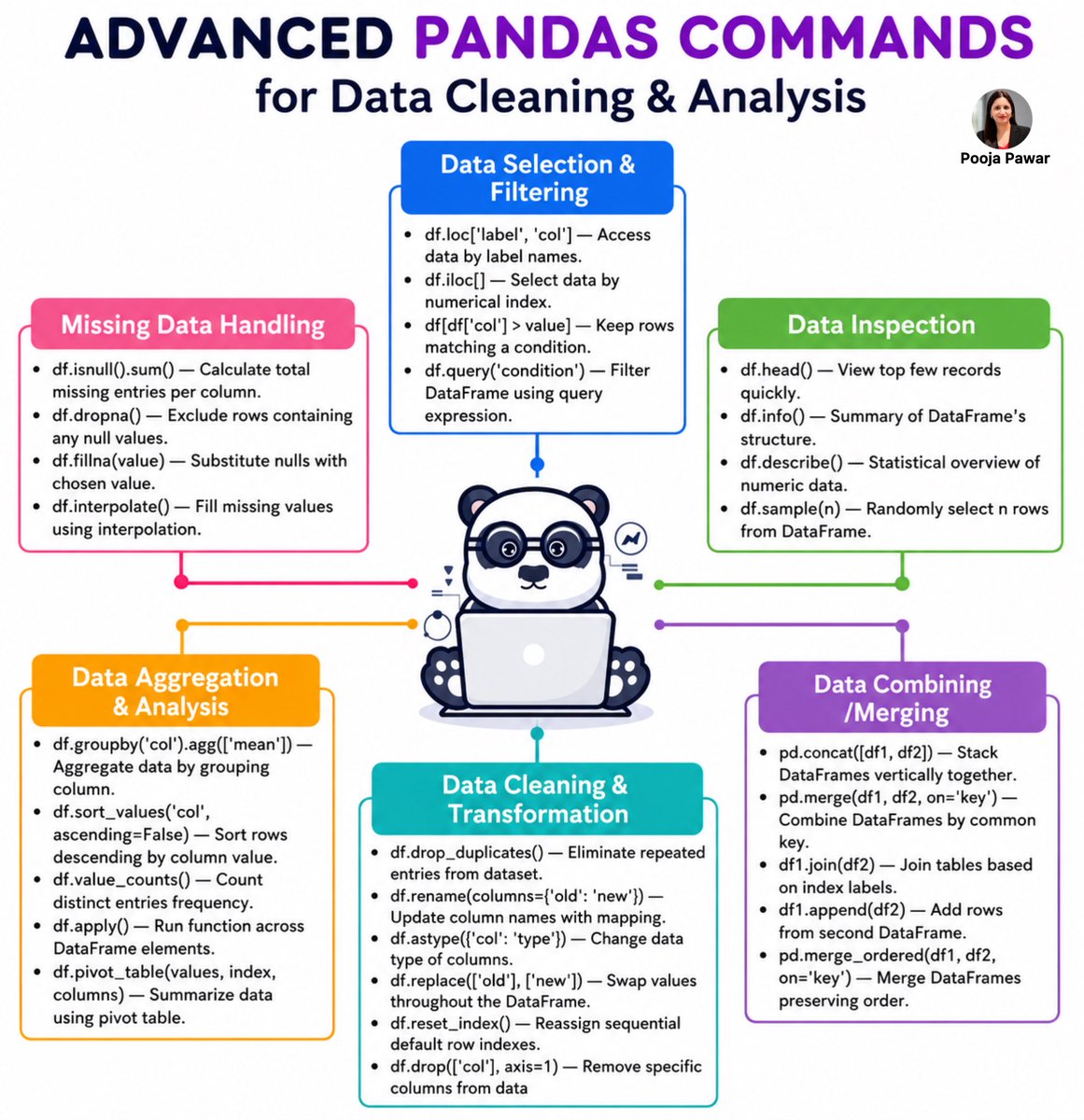
Advanced Pandas skills can dramatically reduce the time spent cleaning, transforming, and analyzing data. Mastering filtering, aggregation, missing value handling, merges, and pivot tables helps turn raw datasets into actionable business insights with greater efficiency. #Python #Pandas #DataAnalysis #DataScience #DataAnalytics #MachineLearning #DataCleaning #Analytics #Coding #LearnPython
3
14
64
1,161
Pooja Pawar, PhD retweeted
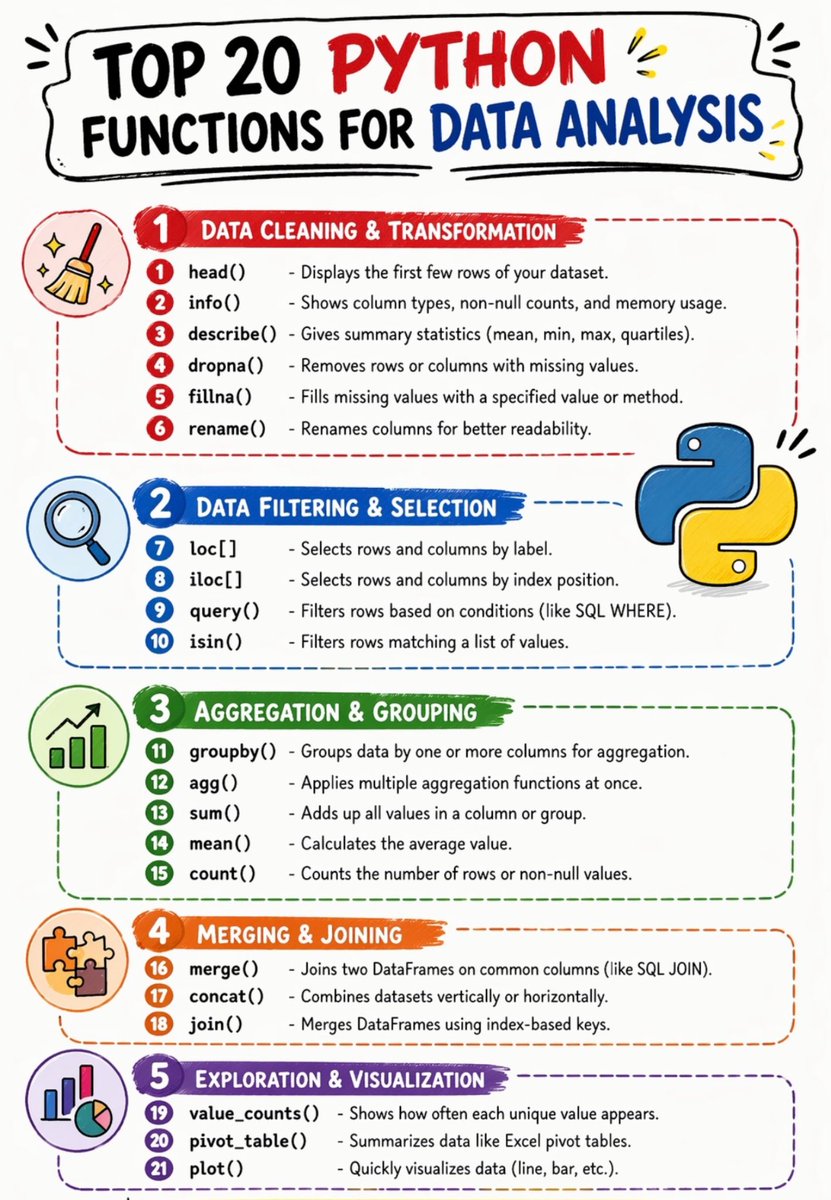
The difference between average analysts and high-impact analysts is often their command of core Python functions. Mastering data cleaning, filtering, grouping, merging, and visualization helps you move from raw data to actionable insights faster and with greater confidence. #Python #DataAnalysis #Pandas #DataScience #DataAnalytics #MachineLearning #Coding #LearnPython #Analytics #DataEngineering
1
13
60
1,176
Pooja Pawar, PhD retweeted
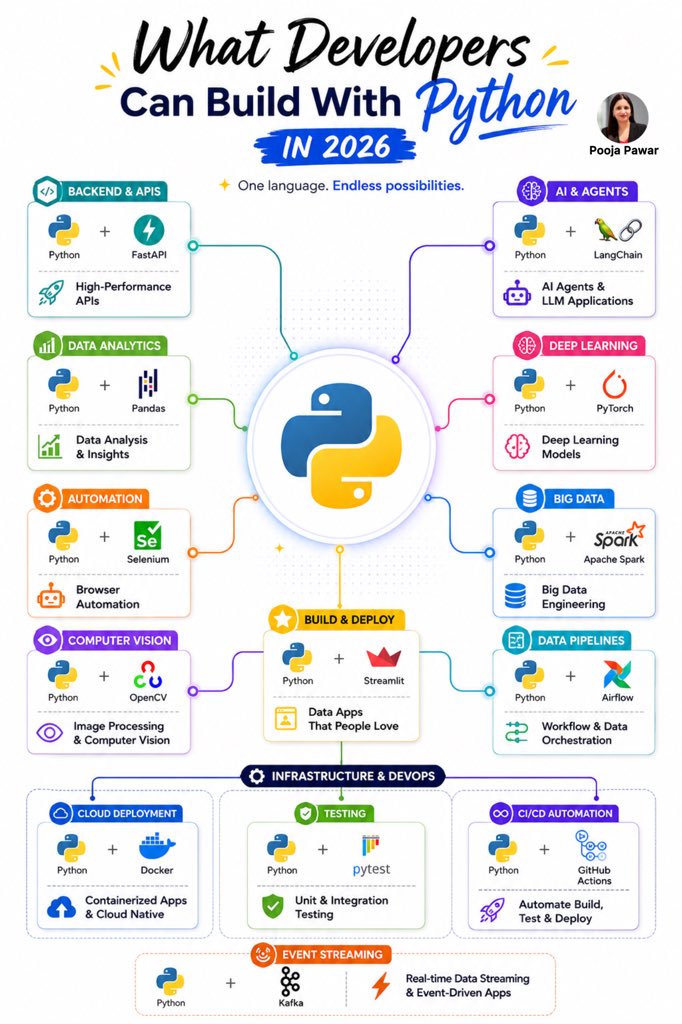
Python is no longer just a programming language. It is the foundation behind APIs, AI agents, data analytics, automation, computer vision, data engineering, cloud deployment, and modern DevOps workflows. Learning Python today opens doors across multiple technology domains. #Python #Programming #DataScience #AI #MachineLearning #DataEngineering #DevOps #Coding #TechCareers
8
41
832
Jun 12
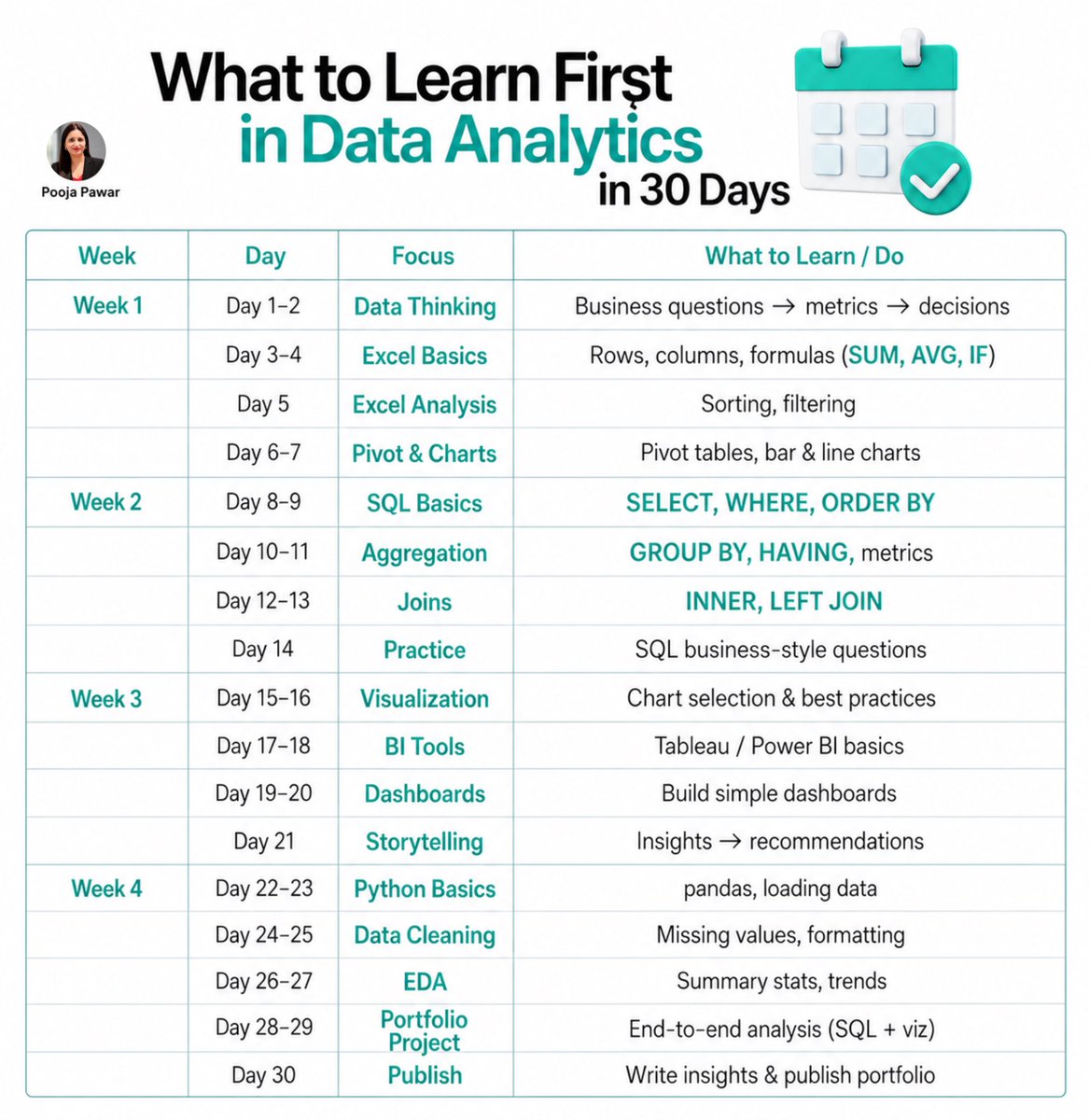
A strong start in data analytics comes from learning the right sequence: Excel, SQL, visualization, BI tools, Python, data cleaning, EDA, and portfolio projects. Focus on building practical skills and solving real business problems. #DataAnalytics #SQL #Python #PowerBI #Excel
6
41
646
Jun 12
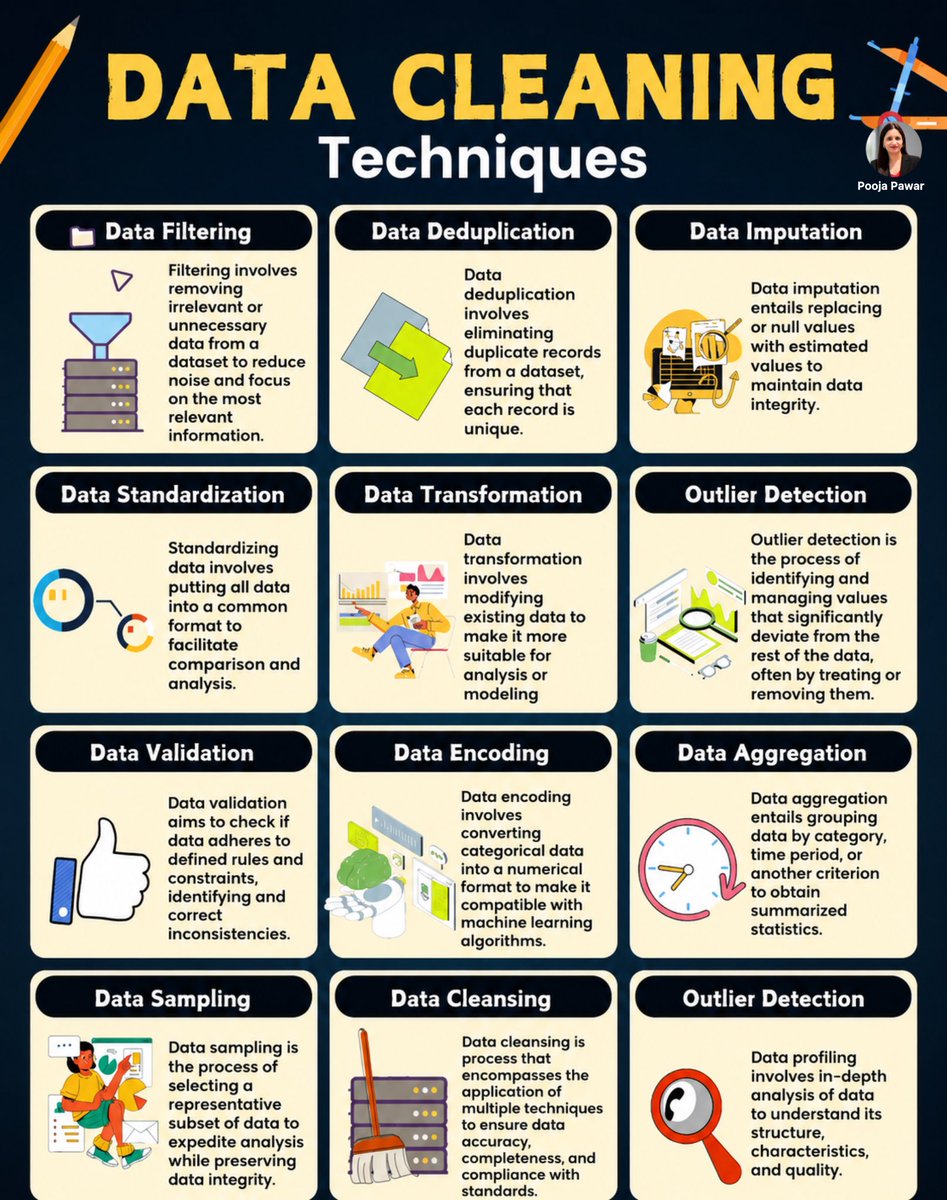
Data cleaning is where real analytics begins. Missing values, duplicates, inconsistent formats, outliers, and invalid records can destroy dashboards and ML models if ignored. Strong analysts spend more time preparing data than building visuals. #DataCleaning #DataAnalytics #Python #SQL #MachineLearning
4
5
38
614
Jun 11
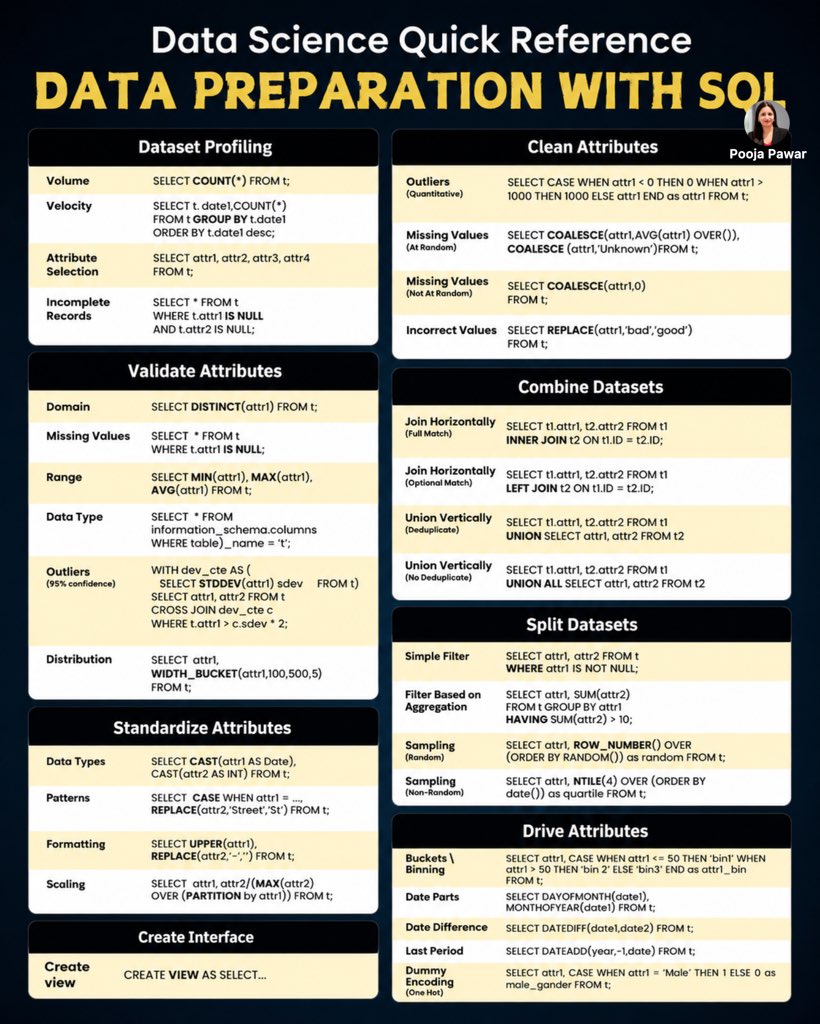
Data preparation decides the quality of every analysis and ML model. SQL remains one of the fastest ways to profile datasets, clean attributes, validate records, handle missing values, combine tables, and engineer features at scale. #SQL #DataScience #DataAnalytics #MachineLearning #DataEngineering
1
10
50
1,260
Jun 10
Learning a skill doesn’t require years—it requires consistency. Pick one skill, commit for 30 days, and start building opportunities before you feel “ready.” #Freelancing #SkillDevelopment #OnlineIncome #SideHustle #CareerGrowth #RemoteWork #LearnAndEarn #DigitalSkills #PersonalGrowth #FutureSkills
medium.com/activated-thinker…
1
1
2
101
5 Books That Will Teach You More About Money Than a Finance Degree Ever Will
medium.com/write-a-catalyst/…
1
2
132
Stop guessing what to post on Instagram. These 10 proven content ideas can help you create posts that get more reach, engagement, shares, and followers without chasing every trend.
#InstagramTips #ContentCreation #InstagramGrowth #SocialMediaMarketing #ContentStrategy #CreatorTips #InstagramMarketing #DigitalCreator #PersonalBranding #ContentCreator
medium.com/activated-thinker…
1
2
126
Why most writers still don’t make money on Medium in 2026, and why the problem isn’t Medium, it’s the strategy.
Read the full breakdown and rethink how you approach writing.
#MediumWriters #WritingCommunity #ContentCreation #MediumPartnerProgram #BloggingTips #OnlineWriting #DigitalCreator #WritingTips #FreelanceWriting
medium.com/activated-thinker…
1
2
114
10 Quiet Work-from-Home Jobs You Can Do with AI.
While many fear AI will replace jobs, smart professionals are using it to create new income streams from home.
Which opportunity surprised you the most?
#AI #RemoteWork #WorkFromHome #SideHustle #ArtificialIntelligence #Freelancing #OnlineIncome #CareerGrowth #FutureOfWork #Productivity
medium.com/activated-thinker…
1
3
129
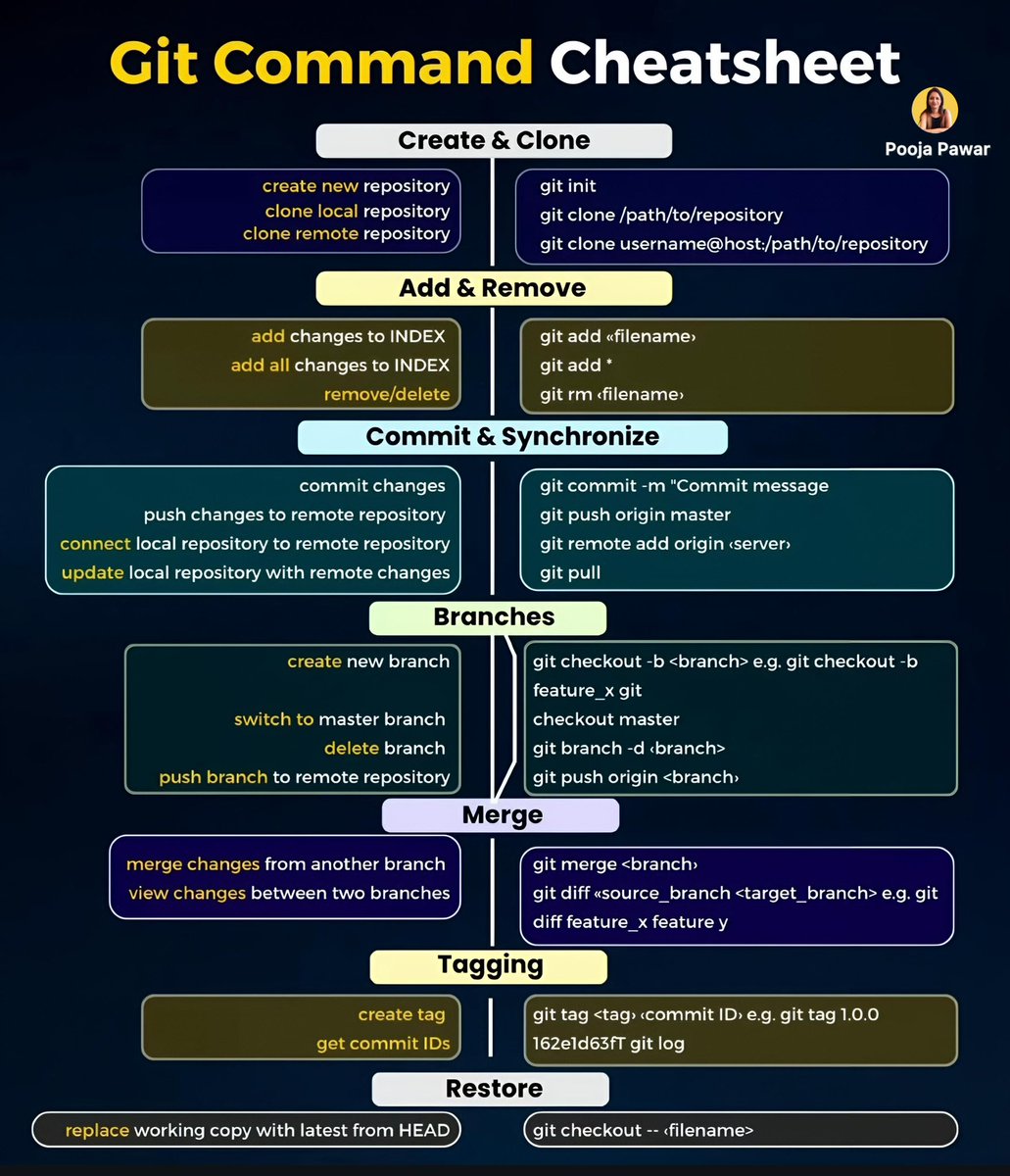
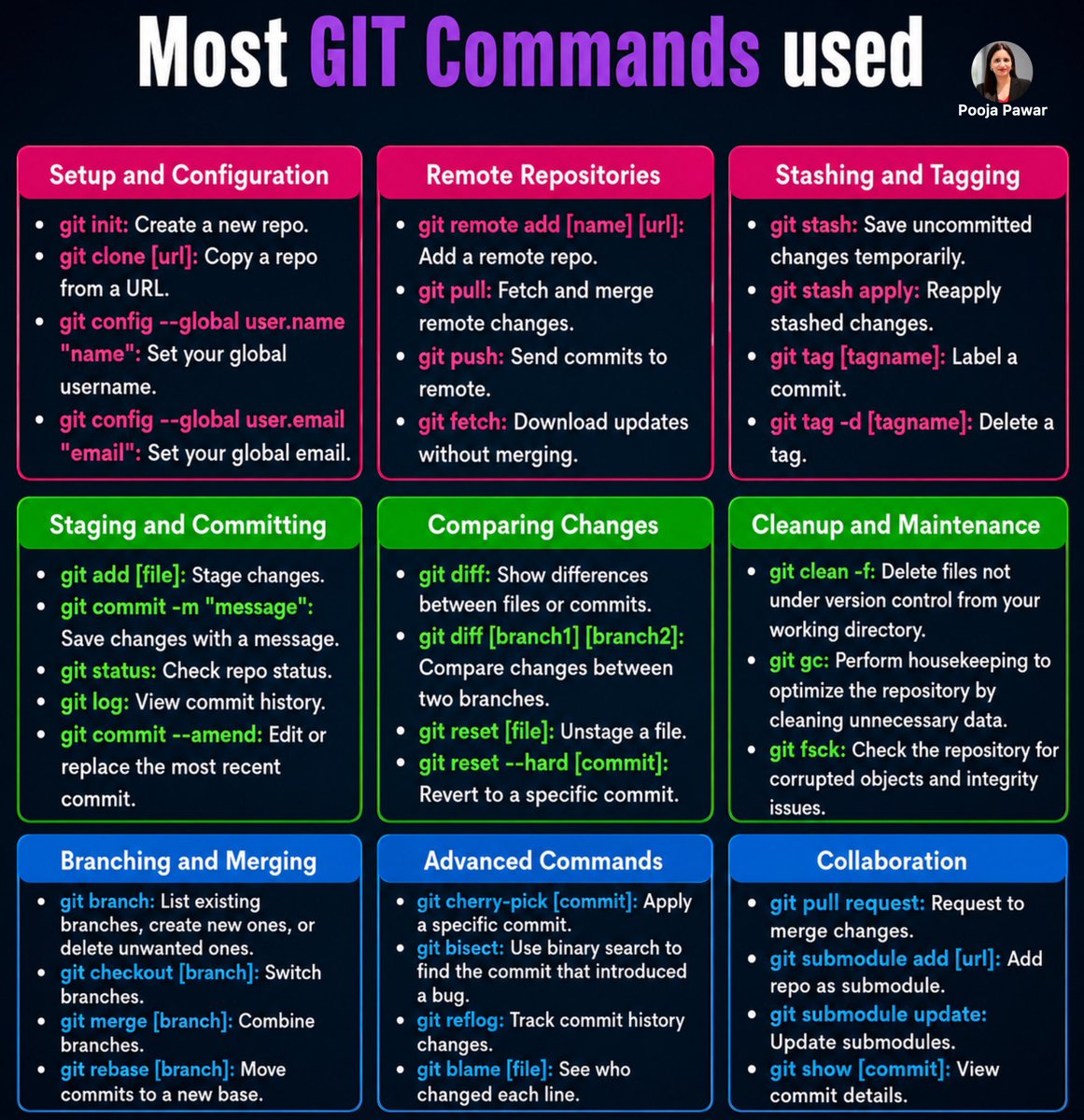
Git is not just for developers. Understanding init, clone, commit, branch, merge, and pull helps analysts, engineers, and teams work safely with code and data. Version control is a professional skill, not an option. #Git #VersionControl #DataCareers #DevSkills #DataScience
1
3
38
794
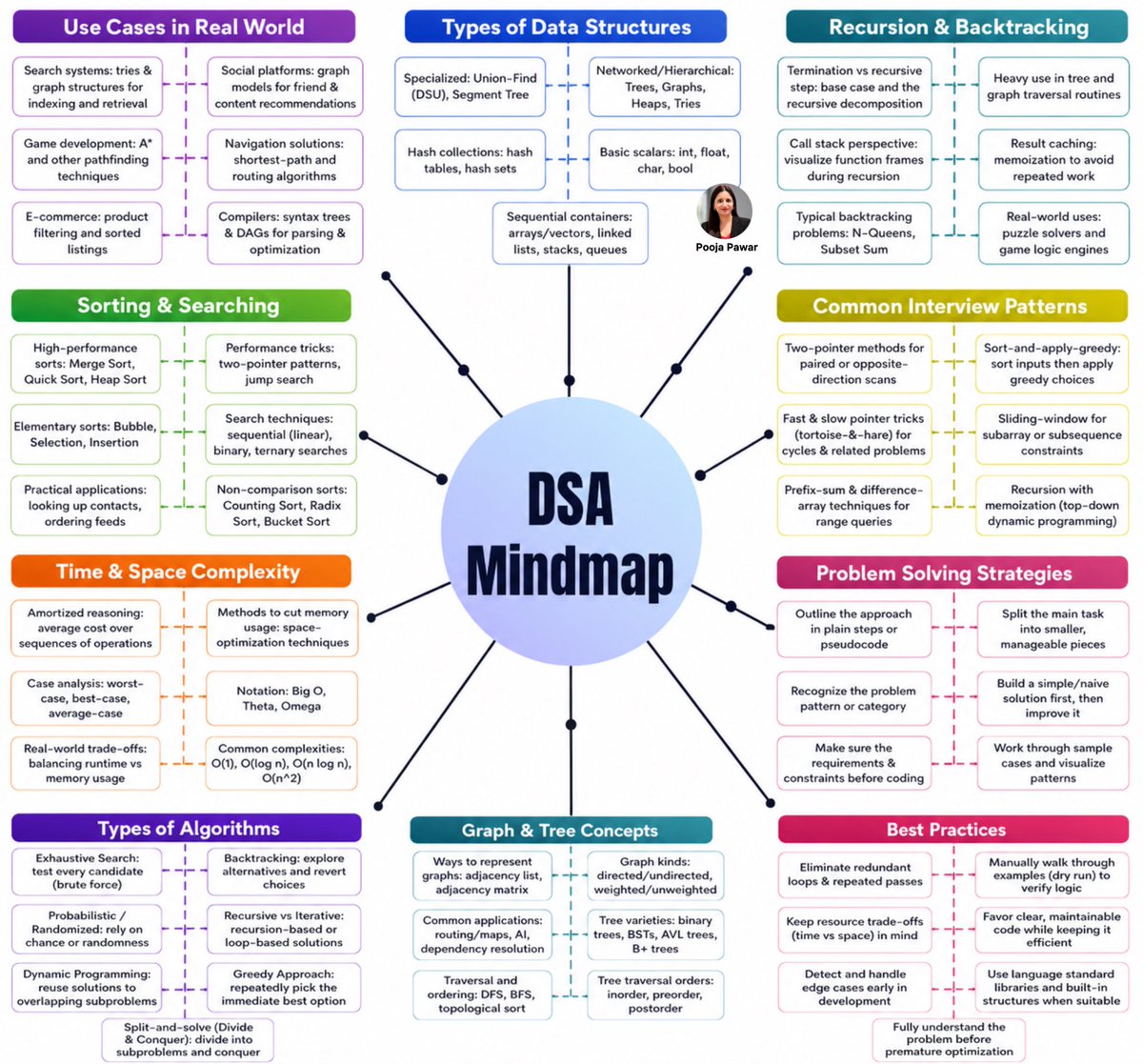
Data Structures and Algorithms are more than interview topics. They are the foundation behind search engines, recommendation systems, navigation apps, social networks, and scalable software. Mastering DSA strengthens problem-solving, coding efficiency, and system design skills. #DSA #Programming #CodingInterview #DataStructures #Algorithms #SoftwareEngineering #ComputerScience #Python #Coding #TechCareer
4
7
56
1,279
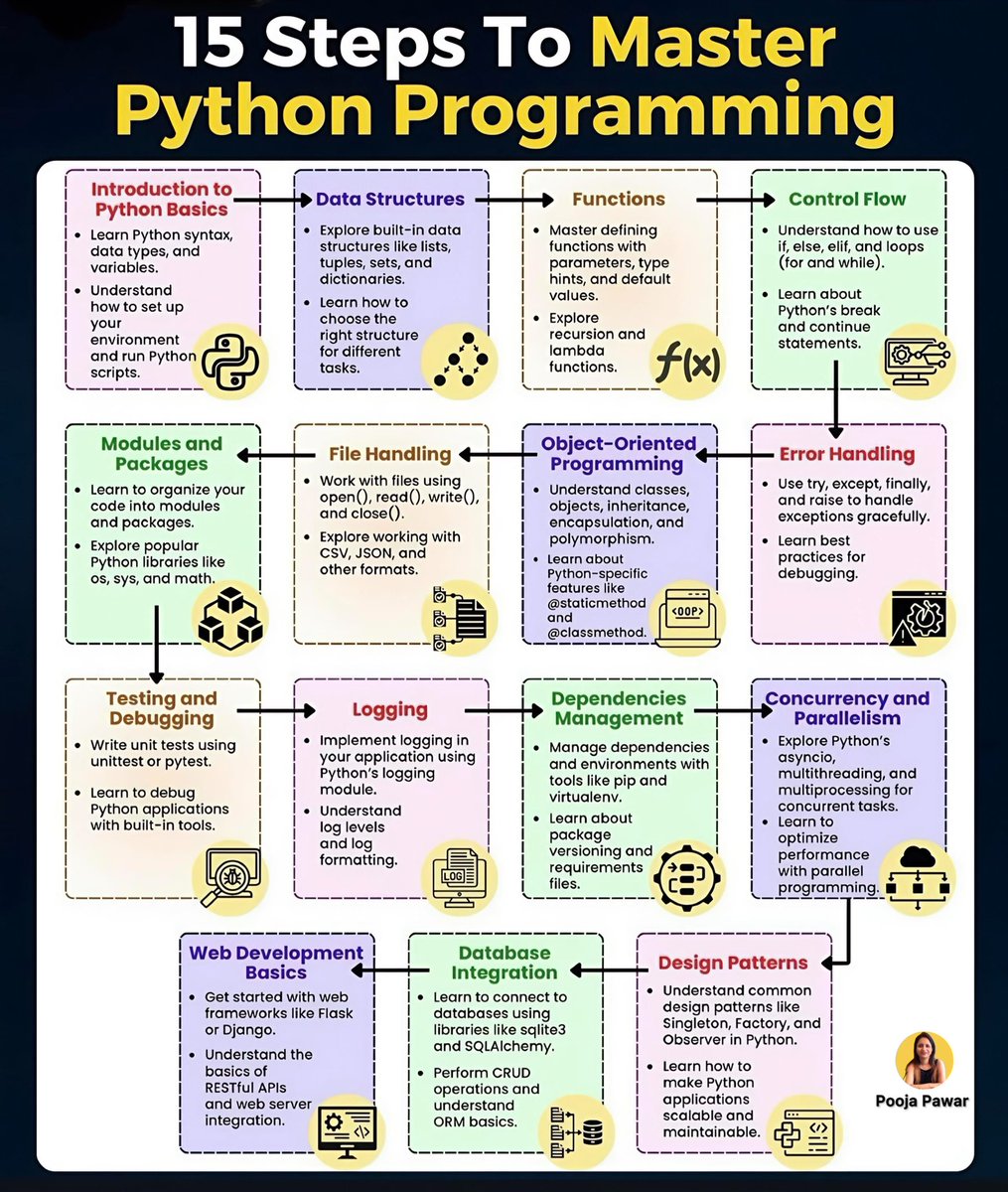
Mastering Python is a journey, not a shortcut. From fundamentals and data structures to testing, databases, concurrency, and design patterns, strong Python skills are built step by step. Consistency matters more than speed. #Python #Programming #SoftwareEngineering #DataCareers #Coding #DataScience
3
5
52
1,179
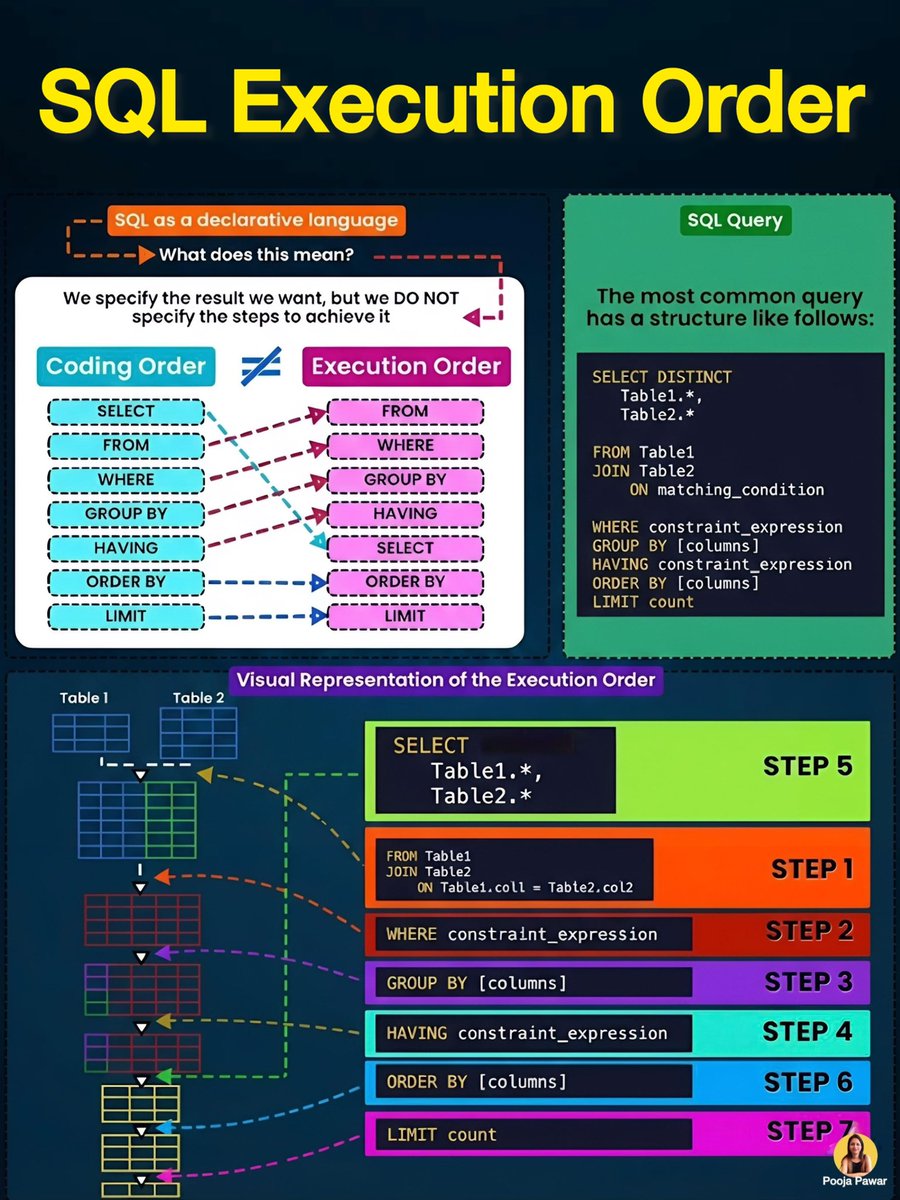
SQL execution order is not the same as the writing order. The engine processes FROM and JOIN first, then WHERE, GROUP BY, HAVING, SELECT, ORDER BY, and LIMIT. Understanding this sequence helps you debug faster and write accurate queries. #SQL #DataAnalytics #DataEngineering #BusinessIntelligence
2
4
41
765