
Joined November 2021
- Tweets 1,587
- Following 86
- Followers 1,833
- Likes 2,729
333 Photos and videos










Pinned Tweet

17 Feb 2025
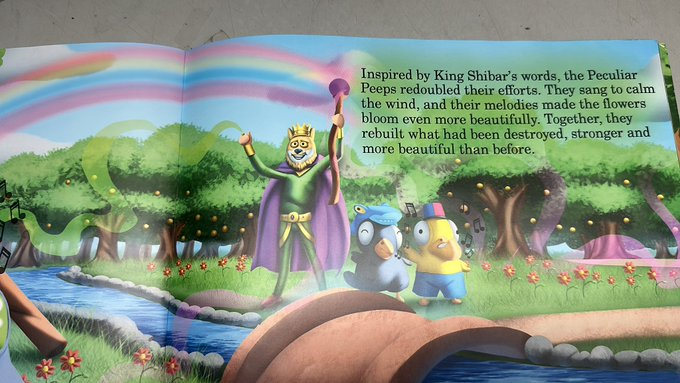
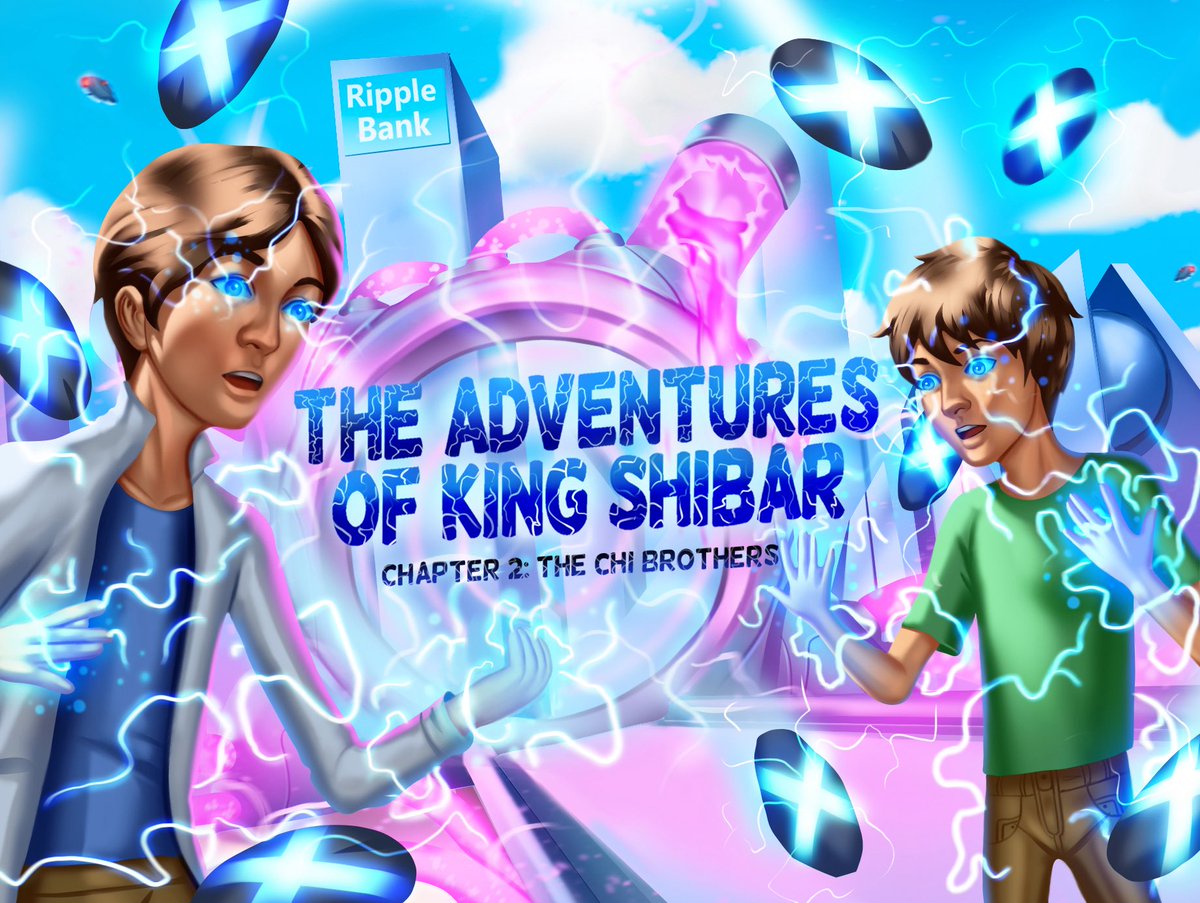
Hello #Shibarbarians!
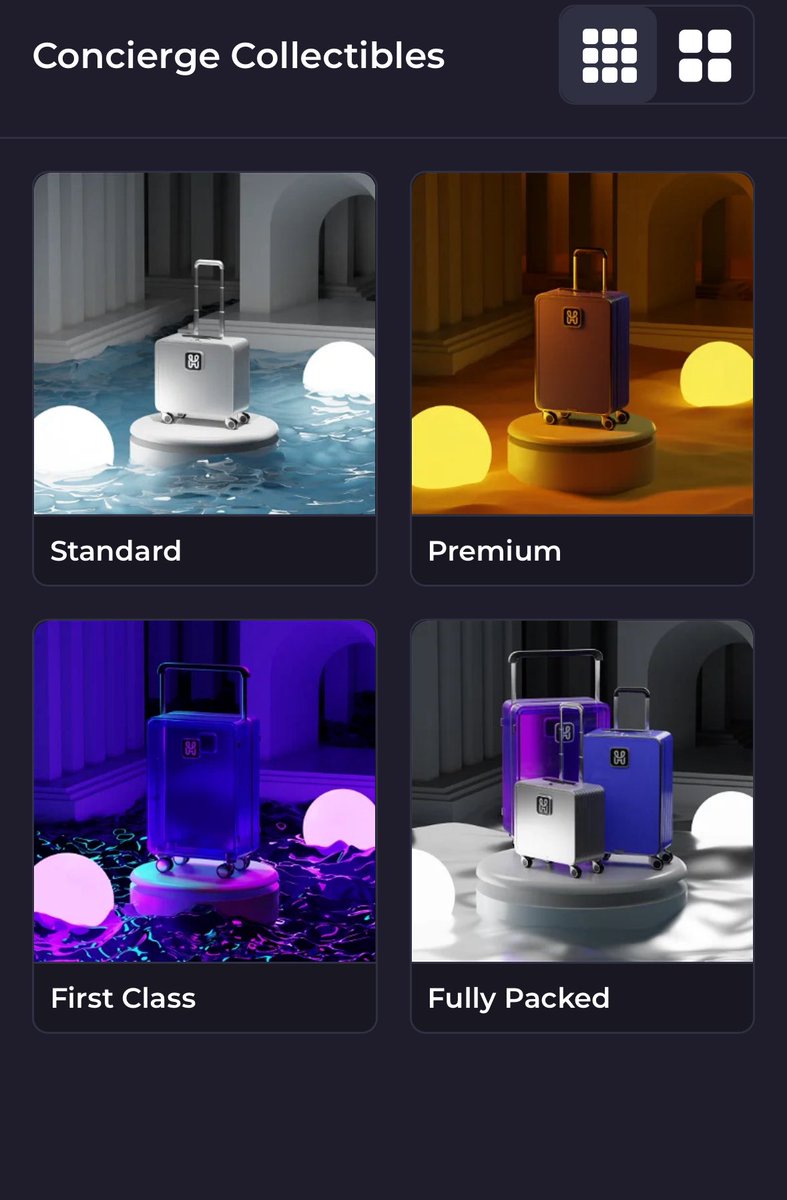
I'm here to share the results of the draws related to the King Shibar's Book NFT (0.0.7811910).
The drawing was conducted using the serial numbers of the NFTs.
---------------------------
👉Lucky winners of a Physical Book!!!
Serial Number - Account:
164 - 0.0.3927125
183 - 0.0.752776
163 - 0.0.1057434
184 - 0.0.1096712
160 - 0.0.835263
Please, DM for instructions.
--------------------------
👉Lucky winners of an Houdini's King Shibar Collection;
Serial Number - Account:
122 - 0.0.1116717
127 - 0.0.601681
196 - 0.0.3833800
185 - 0.0.6043274
169 - 0.0.5277275
Please, associate the NFT Collection ID: 0.0.5735022
Videos in the first comment


8
10
33
3,904
SHIBAR retweeted

Apr 29
Please read our latest news article regarding HSuite Node Runners. 👇
hsuite.app/news/smartnode-ne…
1
18
39
1,585
SHIBAR retweeted

Apr 29
Worth pausing to look at the shape of this thread.
The article cited:
→ Guardian / Die Zeit / SourceMaterial investigation, peer-reviewed in Science (West et al. 2023): ~94% of Verra's rainforest credits show no real climate benefit
→ Probst et al. 2024, Nature Communications, covering ~1B tonnes — one fifth of every credit ever issued: <16% represent real reductions across the whole voluntary carbon market
→ Carbon Market Watch / Oeko-Institut, Nov 2025: no proven link between offset purchases and corporate climate ambition
→ Brazilian Federal Police, Nov 2025: 31 people charged in Operation Greenwashing — projects sold to Nestlé, Boeing, Spotify, PwC
→ CarbonPlan's 14-protocol soil carbon review: BCarbon flagged for no additionality test, no sampling-depth specification, no non-CO₂ GHG accounting
→ BCarbon's own Sept 2025 stakeholder update: announcing they are now building an Additionality Framework, five years in, and applying to ICROA — a different, less rigorous body than ICVCM
Across the replies, in order:
- "Why do you care, this has nothing to do with you"
- "It's only the start"
- "Don't write off the whole space, look at crypto"
- "Shocking you'd post this"
- "The planet will survive without your nonsense"
- "Hedera is getting involved, that's the fix"
- "Your project will fail in 5 years"
- "Rice University, do your research"
- "Bashing the ecosystem isn't a good look"
- Invitation to discuss → counter-offer of written engagement → "don't have time to convince sceptics"
One person engaged the methodology directly with a real argument about removal vs avoidance credits. I responded in detail.That exchange is the only substantive engagement in the thread.
The rest is the pattern.
Methodology on one side. Vibes, deflection, personal attacks, and credentialism on the other.
The Probst figure hasn't been touched.
The additionality gap hasn't been touched.
The validation report's gaps on N₂O, calcareous-soil measurement, and lifecycle emissions haven't been touched.
If anyone has a counter to those — I'm here for it.
The written invitation stays open.
Otherwise the thread speaks for itself.
Apr 29

I've never bought a carbon credit. After looking at the data, I don't think I ever will.
The Guardian / Die Zeit / SourceMaterial investigation — now backed by peer-reviewed research in Science — found ~94% of Verra's rainforest credits had no real climate benefit.
Deforestation baselines overstated by ~400% on average. Over a billion credits issued.
The industry response hasn't been to fix the methodologies. It's been to tokenise them.
Projects like @dovuofficial on @hedera are positioning themselves as the "trust layer" for carbon — minting soil carbon and REDD credits on-chain via Hedera Guardian, with a flagship $1.1B / 2.5M-acre US farmland deal claiming 41M tonnes CO₂.
Worth asking some questions before celebrating:
— A blockchain records what it's told. If the underlying baseline is wrong, the credit is wrong, and now the wrong number is immutable. Does on-chain verification actually solve the measurement problem, or just the recordkeeping one?
— Soil carbon is among the most contested categories in the entire VCM. Reversibility, measurement uncertainty, additionality — all unresolved. Tokenisation doesn't change the science.
— Hedera's "public ledger" is governed by a permissioned council. For a registry pitched as the balance sheet of the planet, that's a governance question worth answering.
I wrote up the broader picture — the scandals, the incentives, where this is heading — here, in the quoted article.
Open to being wrong. Show me the audited tonnes.
8
23
1,374
SHIBAR retweeted
Apr 26
Origin — the “premier launchpad on Hedera,” funded by HBAR Foundation, hyped by Hedera VPs themselves — just announced its pausing operations.
14 months from “emerging from stealth” to closing doors.
Let’s read what they did with the grant money. In their own words.
👇🏼
Apr 26

The Origin team regrets to announce that we will be pausing operations until conditions allow us to relaunch our investment platform.
Our Hedera Grant was spent hiring the best marketing teams, KOLs, developers and operators to run an engaging, cross-chain airdrop campaign.
In addition, we built a fully functional HTS native investment platform that allowed for OTC secondary sales, participation in investment opportunities and distribution of tokens.
Unfortunately, we used much of the remaining balance of funds to invest in leading projects like Zoop and other promising projects. As it stands, these investments have not been suitable to be offered for investors on our platform. The potential sale of these investments was critical to allowing us to continue operations.
As such, we have made the difficult decision to pause operations until market conditions allow for us to relaunch our platform and provide world class investment opportunity to the Hedera Community.
We appreciate all of the support and will maintain our IP, platform and airdrop campaign until in the future when a good opportunity presents itself.
Sincerely,
Origin Team
13
10
52
4,270
SHIBAR retweeted
Apr 21
Please take a moment to read a community letter from our CTO & Founder, Tom. 👇
hsuite.app/news/the-hsuite-v…
8
28
63
4,723
SHIBAR retweeted
Apr 15
🚨Major news update for our community🚨
HSuite will now be publishing all our major announcements and anything news worthy from our official website!
We will still post everything within Discord and via socials like X, but our own official website will now come first and stand as our OFFICIAL channel for getting important updates to our community members.
Read more here: hsuite.app/news/announcement…
6
27
84
2,791
SHIBAR retweeted

Apr 13
🚨MAJOR SUPPORT SYSTEM UPDATE!🚨
✍️As you may or may not be aware, our support system was integrated into CLICKUP, to make life easier for us to manage and track, unfortunately this integration provided its own problems with CLICKUP not properly updating our users with our replies (your messages were getting through to us, but our replies were not reaching you).
👉We have decided to sunset this integration and have developed a simpler, in-house only solution.
👉From your side not much has changed, you MUST (so we can identify each user) log into your wallet from inside of the SILK SUITE dApp and use this link silksuite.app/#/support the SUPPORT link should be top right of the website screen.
👉This new system is only 24 hours old, if you created a ticket in the past and you need help, you will need to create a new one, also, if you had a ticket created within discord you will also need to create a new ticket as discord will no longer be used for support as its tedious to track users and not everyone uses discord.
🙏Thanks for all your support and patience in this matter.
3
15
34
1,287
SHIBAR retweeted
Apr 13
🚨MAJOR SUPPORT SYSTEM UPDATE!🚨
✍️As you may or may not be aware, our support system was integrated into CLICKUP, to make life easier for us to manage and track, unfortunately this integration provided its own problems with CLICKUP not properly updating our users with our replies (your messages were getting through to us, but our replies were not reaching you).
👉We have decided to sunset this integration and have developed a simpler, in-house only solution.
👉From your side not much has changed, you MUST (so we can identify each user) log into your wallet from inside of the SILK SUITE dApp and use this link silksuite.app/#/support the SUPPORT link should be top right of the website screen.
👉This new system is only 24 hours old, if you created a ticket in the past and you need help, you will need to create a new one, also, if you had a ticket created within discord you will also need to create a new ticket as discord will no longer be used for support as its tedious to track users and not everyone uses discord.
🙏Thanks for all your support and patience in this matter.
5
18
46
2,572
SHIBAR retweeted
Apr 8
Because a contract without informed consent isn’t a contract.
In any courtroom on Earth, that’s called fraud.
4
2
11
385
SHIBAR retweeted
Apr 8
When exactly did you consent to be governed?
Not your ancestors. Not “implied” by being born somewhere. Not “social contract” that nobody signed.
YOU. When did YOU — with full information, full disclosure, and the real option to say no — agree to this?
1/2 thread 👇🏼
1
4
16
557
SHIBAR retweeted
Apr 6
You were born a creditor.
Somewhere along the way, they convinced you that you were a debtor — that you owed something just for existing.
Your signature creates value. Your existence IS the collateral.
You are not a resource to be extracted. You are the source.
4
7
25
662
SHIBAR retweeted
Apr 6
The economy says your worth = your productivity.
That's a lie older than money itself.
You have value because you exist. Not because you produce. Not because you consume.
A system built on that single truth would look nothing like what we have now.
Some of us are building it.
5
21
509
SHIBAR retweeted
Apr 2
Another project is GONE!!
Another project unable to generate enough revenue to survive without the hbar foundation money.
Got paid since 2021, for 5 years, and now that funds are gone, an entire project is gone?!!
I still don’t get @hedera ecosystem works at all guys…
Apr 2

@hedera community, from the outset we want to share our love & gratitude to everyone!🌐
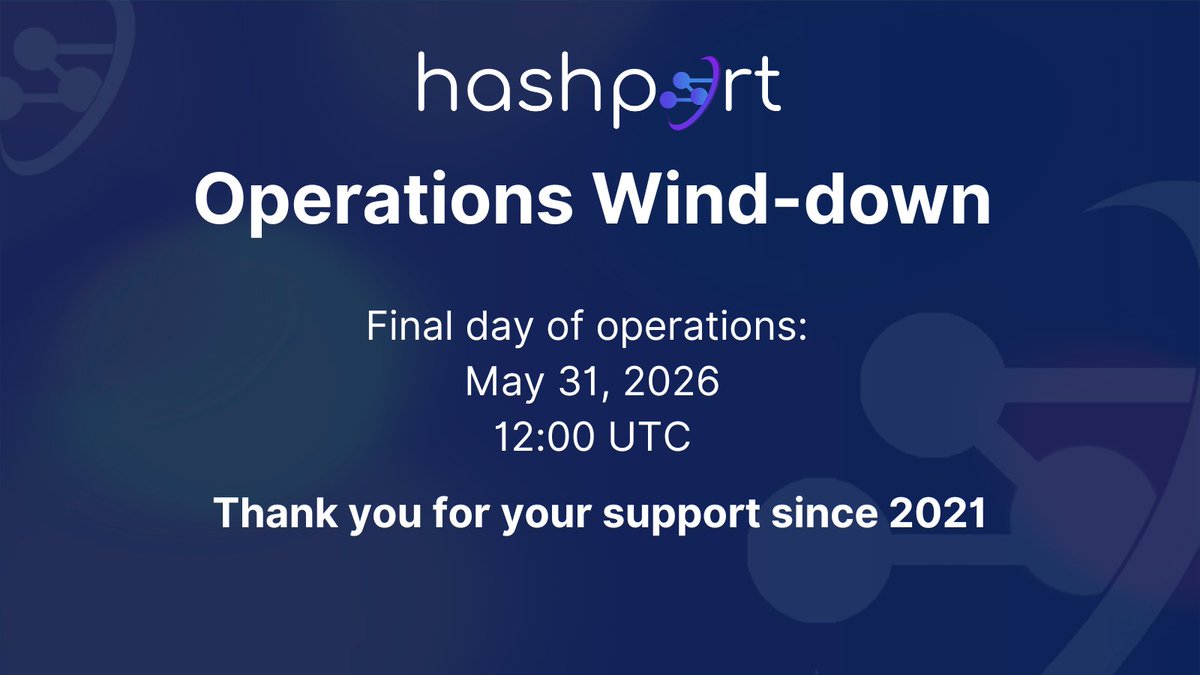
We have received notice that support for hashport will be ending.
As a result, all operations on the Hedera-native fungible public bridging utility will shut down on May 31, 2026 [12:00 UTC]. The Faucet will remain fully operational. 🧵1/6
9
4
44
15,966
SHIBAR retweeted
Apr 2
Nice post-quantum focus. Quick question though: are we talking about the SHA-384 hashing that secures consensus, or the Ed25519 wallet keys that actually protect people’s money? Because one of those is quantum-resistant and the other very much isn’t. Asking for every HBAR holder.

Post-quantum isn’t new, but even the experts don’t know what ‘resistance’ will actually entail. As the industry confronts what post-quantum means for security, the real challenge becomes clear:
How do you design systems that evolve without breaking?
At Hedera DevDay 2026, Dr. @LeemonBaird and @sinharo, Head of Cryptography at @hashgraph sat down in a 🔥fireside chat to unpack:
✅The cryptographic foundations behind hashgraph
✅What quantum resilience means in real systems
✅Why Hedera is post-quantum secure for hashing and encryption
✅The role of TSS in strengthening network security and verifiability
✅How dual-signing supports a safe transition to post-quantum security
The real story is not “fully quantum-proof,” but how DLT platforms like Hedera are approaching post-quantum as it relates to security, upgradeability, and long-term trust.
Watch the replay 👇
1
7
32
2,368
SHIBAR retweeted
Mar 27
HSuite & SilkSuite — Liquidity Pool Rewards: Important Update:
This announcement provides clarity on two related but distinct matters: the conclusion of HSuite's LP rewards program, and the independent rewards structure now operating under SilkSuite DEX.
HSuite LP Rewards — Concluded:
HSuite's weekly liquidity pool rewards distributions came to an end on February 15. While every effort was made to ensure all outstanding payments were fulfilled on time, a small number were delayed or missed due to mainnet errors and other external factors beyond our control.
We have worked hard to identify and resolve the majority of these cases, though we acknowledge one or two instances may have slipped through. We sincerely apologize to anyone affected and are committed to doing better. As we develop V3 and progress toward a multi-chain future, building greater resilience into our systems remains a key priority.
SilkSuite DEX — New LP Rewards Structure:
SilkSuite DEX assumed operational management of the 9 original HSuite liquidity pools on February 17. It is important to note that these pools remain the property of HSuite Treasury — SilkSuite manages their day-to-day operations only.
The first SilkSuite rewards cycle completed on March 19, 30 days after the handover, and this monthly cadence will continue going forward.
SilkSuite's rewards structure is different from HSuite's previous model.
Here is a clear comparison:
Reward Token → HSUITE Token vs SILK Token
APY Type → Fixed APY vs Dynamic APY
Payout Frequency → Weekly vs Monthly
For a full explanation of the reasoning behind SilkSuite's dynamic APY model, please read this post from Houdini:
👇👇👇
x.com/houdini_af/status/2031…
🚨 Action Required — Associate Your $SILK Token
A number of community members missed their March 19 rewards by not associating the $SILK token prior to the distribution. Retroactive payments cannot be issued due to the scale and complexity of processing across thousands of wallets.
To be eligible for the next rewards cycle (~April 18th), you must associate the following token ID with your wallet:
Token ID: 0.0.10174655 ($SILK)
This is a one-time step — but it must be completed before the next rewards date or you will miss out again.
The HSuite team is truly grateful for your continued support and patience during this transition. We are focused on building something meaningful for the long term — expanding beyond Hedera toward a multi-chain, chain-agnostic ecosystem that is built to last. The best is still ahead. Thank you for being part of it.
Additionally, both HSuite & SilkSuite would like to apologise for the lack of support via our ticketing system, we have a technical issue where users messages are coming through to us loud and clear, however our replies via the same system do not seem to reach the end user, making it appear as if we are ignoring you, this could not be further from the truth and is highly frustrating for both us and you.
We can assure you we care, we are doing our best, and we are currently working on a brand new support system which will make sure these types of issues are not a factor anymore.
Please understand, our support system is not functional until this new system is implemented, and so the best course of action is if you have an urgent matter you need help with is to send a DM to Sgt_Major (please check his profile is legit first) via discord and he will do his best to assist you.
Please accept our deepest apologies for this inconvenience.
Thank you.
Mar 11

Let’s talk about ‘Dynamic APY’ , whatever that means and how it helps to #gamefi #HBAR
The way DeFi works in general is by having two tokens paired together in a liquidity pool. In order for the pool to work it can’t be empty and folks need to provide the liquid. This largely comes from founders and secondly from holders that want to empower the token with TVL and sometimes earn rewards for providing the liquid. Many DEX only give rewards to a select number of tokens and getting on the ‘cool tokens list’ isn’t always easy…
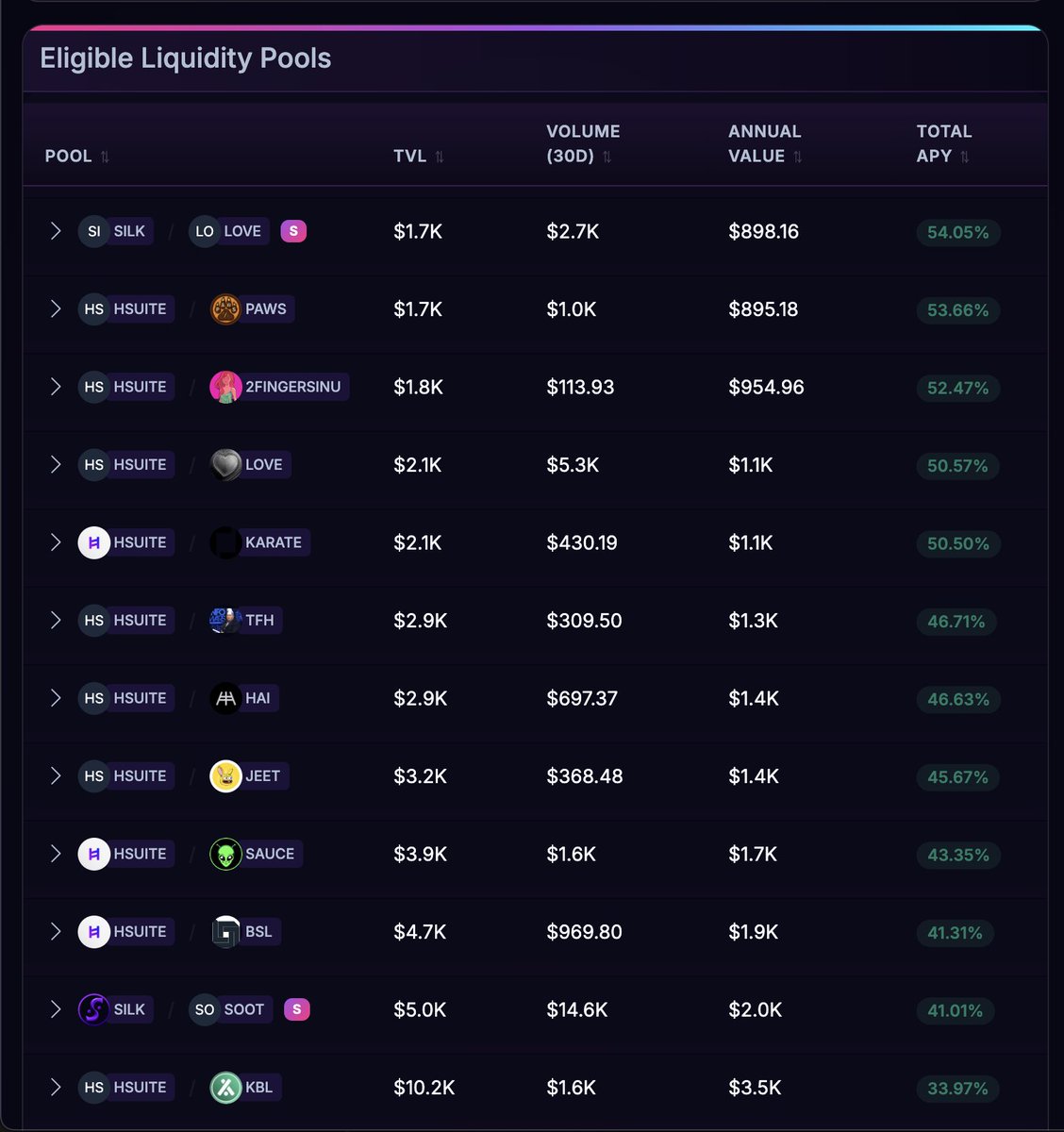
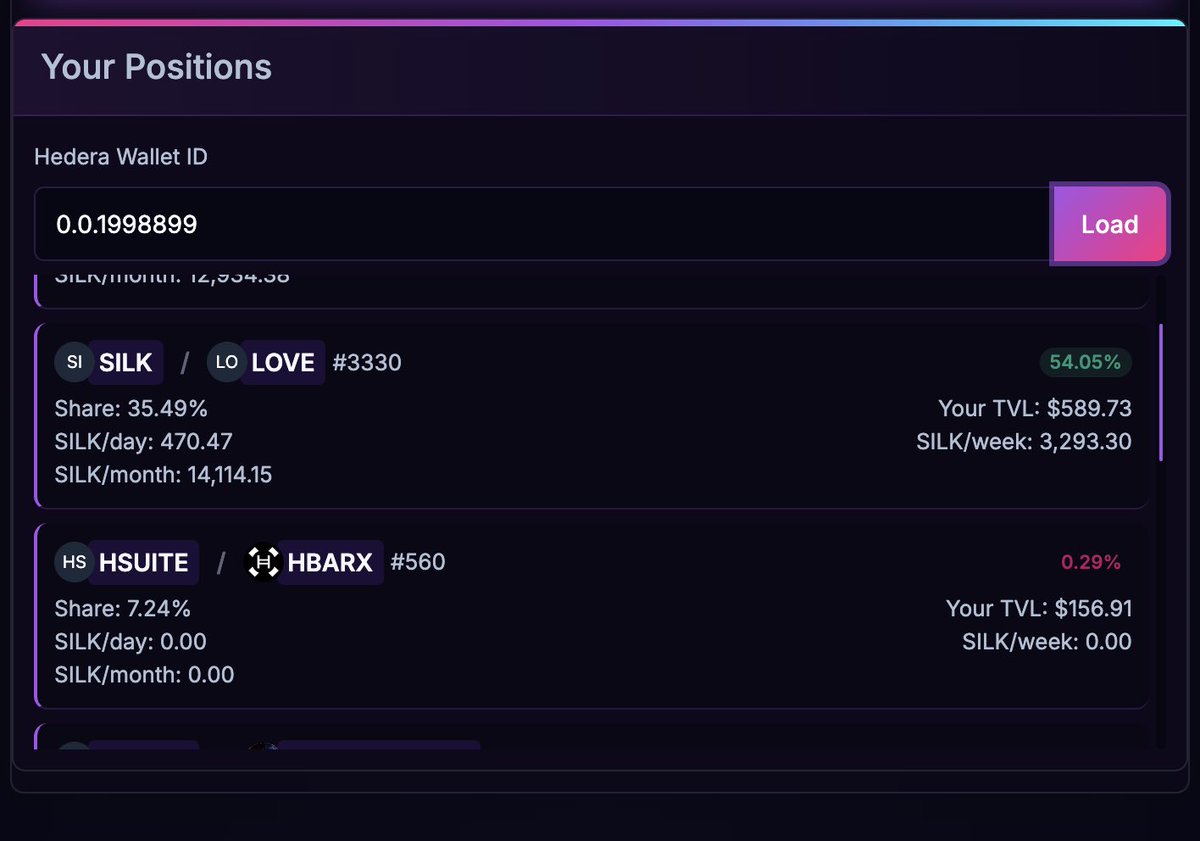
At SILK SUITE, the mission in general is to make all the things open and fair to everyone. This means in part that all token pools are automatically eligible to earn APY rewards. These rewards will be airdropped monthly to every provider of every eligible liquidity pool. Each provision is tracked with a SILK LP NFT, when you provide any amount of liquid to any pool you will get one of these NFT.
Provide liquid, hold NFT, get silk airdropped to you, as simple as that.
Now, how much does each NFT position earn? That’s when it gets Dynamic.
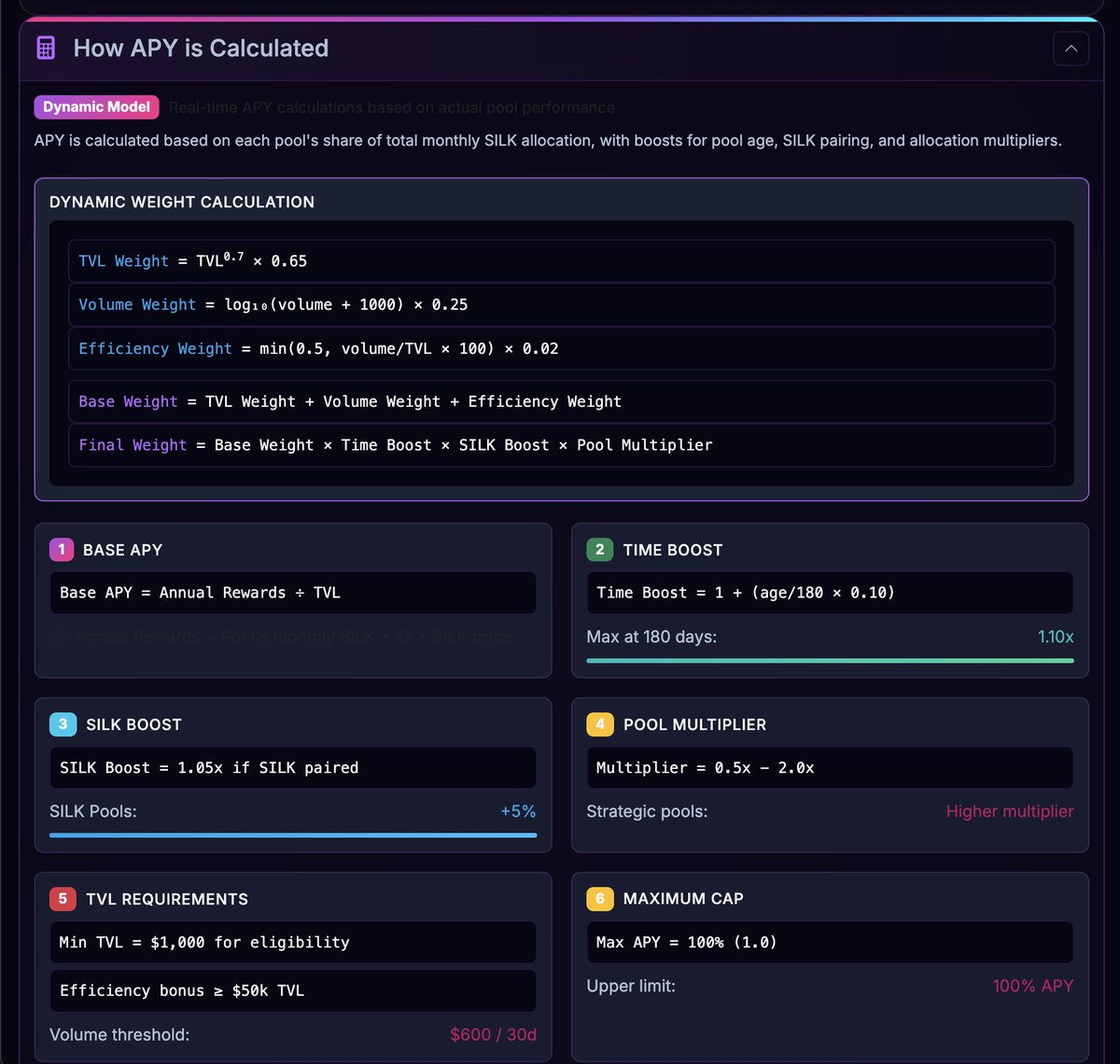
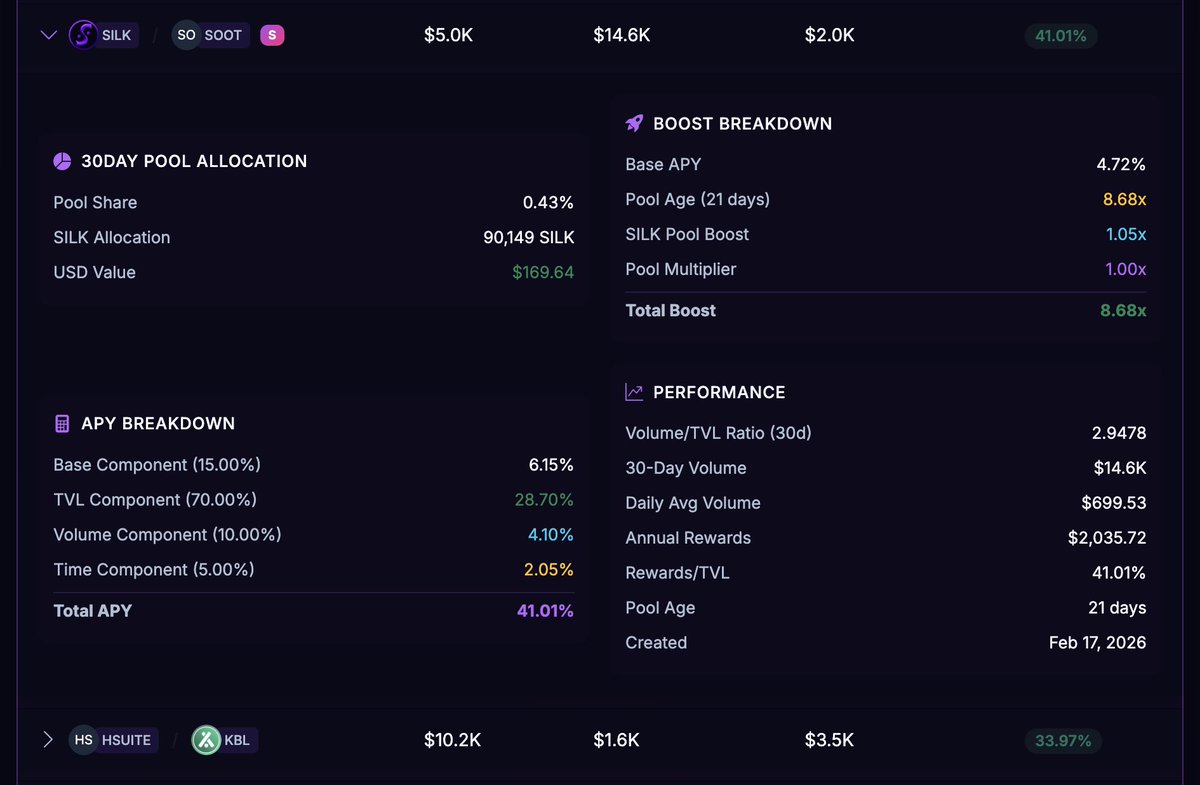
Traditionally one might expect to earn a fixed % based purely on the amount of liquid value provided. This is ok, but basic and mostly only rewards the top whales in whatever token. Not ideal. SILK dynamic APY is a bit less lame. The APY value for each pool is constantly changing based on real market activity. The TVL, trade volume, age and other factors all play a role in determining the APY. This means in general that a pool with low TVL and high relative trade VOLUME may earn high APY while a pool with high TVL and low relative trade volume may earn a lower APY. Combined with multipliers for age and being paired with SILK, things get a lot more exciting in APY land. APY updates live and SILK rewards paid monthly becomes a rolling average of all the chaos into provider wallets.
Why? Because DeFi has become to passive and its an awful look. Platforms are over diluting with unrealistic airdrops and collapsing their own tokens and holders values. No good for anyone involved aside from the first founders out. A fundamental flaw in the DeFi process to date. (IMHO)
To GameFi the space means in large part to engage the space in active participation. Rather than closet the space by motivating doing nothing. Dynamic APY will encourage founders to not only provide TVL but also motivate trading volume. Not only founders, but all holders of any HTS token, given an opportunity to not only participate but actually market make their own values.
The formula will continue to evolve but one thing is certain. All pools will be treated the same and fairly.
To be eligible a token needs to achieve a minimal threshold:
TVL: 10,000 HBAR value (currently ~$950)
VOLUME: 1000 HBAR value in trade volume (currently ~$95)
9
23
69
4,502
SHIBAR retweeted
Mar 24
Here is a fantastic post from one of #Hedera most respected community members and a highly valued and trusted member of the #HSuite treasury council.
Jasim Puthucheary/@trustchainlabs
Check it out 👇
linkedin.com/posts/jasimputh…
3
21
60
2,639
SHIBAR retweeted
Mar 20
Let’s talk about “Dynamic APY”
What it actually means and how it changes DeFi on HBAR
🔸️At its core, DeFi runs on liquidity pools; pairs of tokens that allow users to trade.
But there’s one requirement:
👉 Pools need liquidity to function
That liquidity comes from:
• Founders seeding pools
• Holders providing liquidity (LPs)
• Incentives (APY rewards)
🔸️Here’s the problem 👇
Most DEXs:
• Only reward selected tokens
• Gatekeep incentives
• Favour whales
• Make it hard for new or smaller projects to compete
Getting on the “reward list” isn’t always fair or easy 🟪
🧵 1/
8
37
73
3,693
SHIBAR retweeted
Mar 19
3.5M$ injected into @SilkSuiteDEX, what a wonderful way to start a new journey isn’t it? Let’s go silky!
Mar 19

Gm @Hedera 🟪
A Major Milestone has been achieved this month!
🔸️Our first APY rewards have officially been distributed to our early participants 🙏
Within the first 30 days:
522 unique wallets have received their monthly $SILK rewards for liquidity provision
🔸️Our first monthly Escrow rewards have also been officially distributed to early investors 🚀
To everyone who believed early, this is just the start.
Real yield. Real participation. Real DeFi.
Bigger incentives. Deeper liquidity. Gamification. More to come
6
18
65
2,881
SHIBAR retweeted
Mar 15
🚨HSuite is consolidating liquidity on decentralized rails as part of our multichain expansion.
📰We will no longer be listed on BitMart. We're going DEX-first.
💪The upcoming XRPL integration will bring HSUITE to a new level of on-chain accessibility.
🧠We're prioritizing markets aligned with the Smart Node ecosystem — where the community actually trades.
🙏Thank you to everyone building with us. More soon.
8
42
141
4,385