Joined March 2022
- Tweets 2,139
- Following 1,069
- Followers 1,540
- Likes 2,104
33 Photos and videos









Jun 13
Women like Drake because he’s a cosplay gangsta.
They don’t want a real bad boy any more than they want real rape.
41
Jun 7
It's women in the workforce in the context of money printing, inflation and a boomer gerontocracy that doesn't die off due to modern medicine.
Both parties spending increasing hours to just get by; no one's having sex that exhausted from life.
It will happen to every "developing" country as they adopt western economics and social norms.
Jun 7

No matter what your theory about birth rate collapse is, there’s some data point that disproves it. Japan didn’t have the pill when fertility collapsed. There are highly patriarchal countries where fertility is collapsing. It’s collapsing in countries that are still poor. It’s collapsing in places with more generous social support for families. It’s almost like a psychic alien just decided to phase humans out.
105
Dr. Grey retweeted

Jun 7
I'm imagining the bears who think that Bitcoin is so weak that if you buy 4% of it and talk a lot, you can destroy the whole network.
It's not even a person, but a group. Bought 4%.
Like, somehow the key weakness of Bitcoin is that if someone buys 4% of it, everything fails.
357
366
5,397
450,404
Dr. Grey retweeted

Long COVID serves a psychological purpose.
To be clear, I am not talking about cases where a viral infection causes demonstrable medical sequelae in specific organs or physiological systems. Those are real medical questions that should be investigated on their own terms.
I am referring to the broader cluster of symptoms often grouped under "Long COVID" that are predominantly psychiatric - subjective and nonspecific: fatigue, brain fog, anxiety, low mood, difficulty concentrating, and related complaints.
It helped keep the emotional world of the pandemic alive after the emergency had ended.
During COVID, being cautious was seen as virtuous. Avoiding risk meant being responsible and paying close attention to symptoms showed you were taking things seriously.
Public life reorganized itself around protection, accommodation, and the assumption that anyone could be gravely harmed.
In that sense, COVID accelerated the feminization of social norms: safety, emotional validation, vulnerability, and infantilizing care became the organizing principles of public life. Not helpful for those tending naturally towards neuroticism that was not only left unchecked but actively encouraged for over 3 years.
For those people, the end of the pandemic meant the loss of belonging, the dissolution of a social environment in which their concerns, anxieties, and risk assessments were widely shared and affirmed.
Long COVID allowed the crisis to continue in another form. It confirmed that all the fear and excessive care at the expense of others were justified. It preserved the sense that the extraordinary measures had indeed been necessary. It kept alive the emotional framework of the COVID years.
And in that framework, demonstrating concern for suffering becomes more important than asking the question: What actually helps people recover?
202
25
148
51,053
Dr. Grey retweeted
99
283
2,088
1,060,792
Jun 3
Jun 2

the performance of quantum resistant bitcoin today makes me think this is a big deal
83
Dr. Grey retweeted
May 20
That's exactly the point.
As a young doctor; you want people like me to work 5-6 days a week. There is no point punishing the 5-10% of professional High earners who work highly skilled fields.
These people have the capacity to work less which means less benefit to society as a whole.
Bracket creep needs to go.
Why would I spend the next 30 years working 60 hour weeks if 30 hours of that is taken right away. May as well work only 30 hours so I only have to give up 10 hours to the government.
There needs to be a fair exchange for the 30 hours I could just spend with family / working on myself then.
It not equality to take a disproportionate amount of ones time in the form of earnings.
I believe in fair taxation.
This is plain unfair and disheartening.
I have worked till 8 pm 5-6 days a week for the last 3 months - I would love to see the sun when I leave work and I miss it. I'm not depressed; I love what I do but I see the cost to my family. My wife understands because I'm doing it to try and offset our fairly new first home mortgage- modest family home in modest suburb yet with rising interest rates ; an eye watering monthly payment.
I see around 25-30 people a day. Most are bulk billed.
So tell me ;
Why is my sacrifice worth less?
Why should people like me be made to give away 30 hours of our time weekly for the next 30 years?
Would you rather that people like me work less and thus see less patients ?
All politics aside. I'm genuinely trying to understand what would the incentive to sacrifice that extra 30 hours a week if you are unfairly taxed for it.
1
1
108
May 13
If you think the boomers will be gone soon and the world can start to mend.. I have news for you.
Entresto and Ozempic will keep the lads going for another 30 years.
With what else is in the pipeline..
Millennials and gen Z in Australia are truly screwed.
We will work ourselves to the bone to fund another 20-40 years of an increasingly aging and larger boomer cohort and their social supports.
The average human life span will increase to the 100s.
So many boomers will spend DECADES in assisted care or nursing homes.
The costs will be astronomical.
You will need a pipeline of immigrant workers "willing" to care for them.
I say "willing" because aged care is hard. It's not the pay; it's the job - the smell of urine, feces and the sheer weight of your entire day revolving around the most depressing aspect of aging in humans.
Locals don't do it: hence the international nurses. They hate the job too. They do the 3 years in some country town nursing home for the visa then finally settle where they want.
Kinda like an unspoken indentured servitude agreement with the Australian govt; take care of our aged for three years and you get permanent residency for you and your family.
It's also a steady flow of tax dollars, and a steady flow of a servile class to prop up house prices and thus boost their blue chip property portfolios.
What's not to like for the Gerontocracy?
Latest budget is a slap in the face. It's like they don't even care about how it looks. Literally pulling up the ladder they used to build wealth.
Never have people lived this long.
Never in human history has this happened.
There are so many weird implications around this.. It's mind boggling.
25
6
100
6,638
Dr. Grey retweeted

May 13
Its not about the founders, its about investors. Why would any investor risk their capital in an Australian start-up if the government takes half of the upside while absorbing 0% of the downside?
58
75
1,050
49,986
May 13
Saw a patient.
Woman in her 20s with an autosomal dominant genetic abnormality that has a 50% chance of being passed down.
Newly pregnant.
Had a bender over the weekend - over 15 drinks each day.
Fetus only 5 weeks old. Highest amount of DNA damage at this stage. Undetectable with current tech.
Explained that her genetic condition NOR alcohol fetal syndrome has no way of being detected prior to birth.
The kid would potentially have a hard life.
Stunted Neuro developmentally from birth due to the individual / personal choices of its parents.
Will unlikely contribute to society
She doesn’t have a concept of such hardship- there has always been a helping hand for her personal bad choices via Centrelink, DSP, NDIS
Plans on having the kid.
Father never attends appointments- is a drunk himself.
Meanwhile…
Entire group of doctors in my group chats putting off kids because we are simply too exhausted working 12 hour days and no “feeling” of getting ahead due to taxes, insurance payments, costs of running a practice.
I wonder how many young professionals are in the same boat.
Evolution is rolling over in its grave.
Why are we promoting the procreation of the subpar in society while punishing our smartest and most productive?
Where does this future lead?
Is this an unkind truth that needs to be discussed?
How long will we ignore the obvious staring us in the face ?
Feels like some sort of collective societal delusion we are all going along with.
This is how civilisations collapse I suppose.
95
61
699
38,883
May 13
lol
My mates and I are doctors in our 20s/30s/40s starting off our careers.
Absolutely everyone is gobsmacked at the budget changes.
Genuinely feels like our generation will get punished for working smart or hard.
None of us own investment properties yet - what’s the point now?
How do we get ahead now?
What was the financial incentive to sacrifice our 20s to train?
It feels like all the worst aspects of communism with none of the benefits…..
No incentivised housing/travel/childcare for doctors
No one in my group is having kids
Yet our alcoholic patients are on their 4th or 5th - supported via government programs
What a joke
Speedrunning civilisational demise
577
432
4,746
186,680
May 7
I’m at a loss for words…
The more I work and help my community by seeing and taking care of patients…the more tax I pay…..
What’s the point of working 5/6 days a week? Half the hours in the working day go straight to the tax man who redistributes it to LITERAL terrorist scum.
This is so bloody demoralising
I have no words

While Australians are figuring out how to pay their mortgage, the Government's attention is on brining back *S*S Brides to this country.
I don't have the words to explain how angry and disgusted I am that this is happening. I am so concerned about the security risks and the cost to monitor them for the rest of their lives.
If they are dual citizens, they should be stripped of their Australian citizenship.
I also address the incident in Farrer with Chris Kenny in this segment.
Finally, One Nation has eyes on the lower house because we want to bring your voice to Parliament. We'll keep fighting to represent you wherever we can.
7
10
91
3,216
May 7
She will probably see a Bankstown bulk billed GP within the week to “get the ball rolling” on getting on the NDIS for her and any terrorist spawn she has.
I don’t have words to describe The moral injury that comes from being taxed to feed literal hell spawn.
May 7

ISIS bride Janai Safar, 32, being arrested in Sydney after flying back from Syria.
She will be charged with entering a declared conflict zone and joining a terrorist organisation.
Follow: @NoticerNews
35
124
854
17,793
Dr. Grey retweeted

May 7
ISIS bride Janai Safar, 32, being arrested in Sydney after flying back from Syria.
She will be charged with entering a declared conflict zone and joining a terrorist organisation.
Follow: @NoticerNews
188
209
1,424
67,925
Apr 25
One way to ruin a currency and the civilisation backing it.
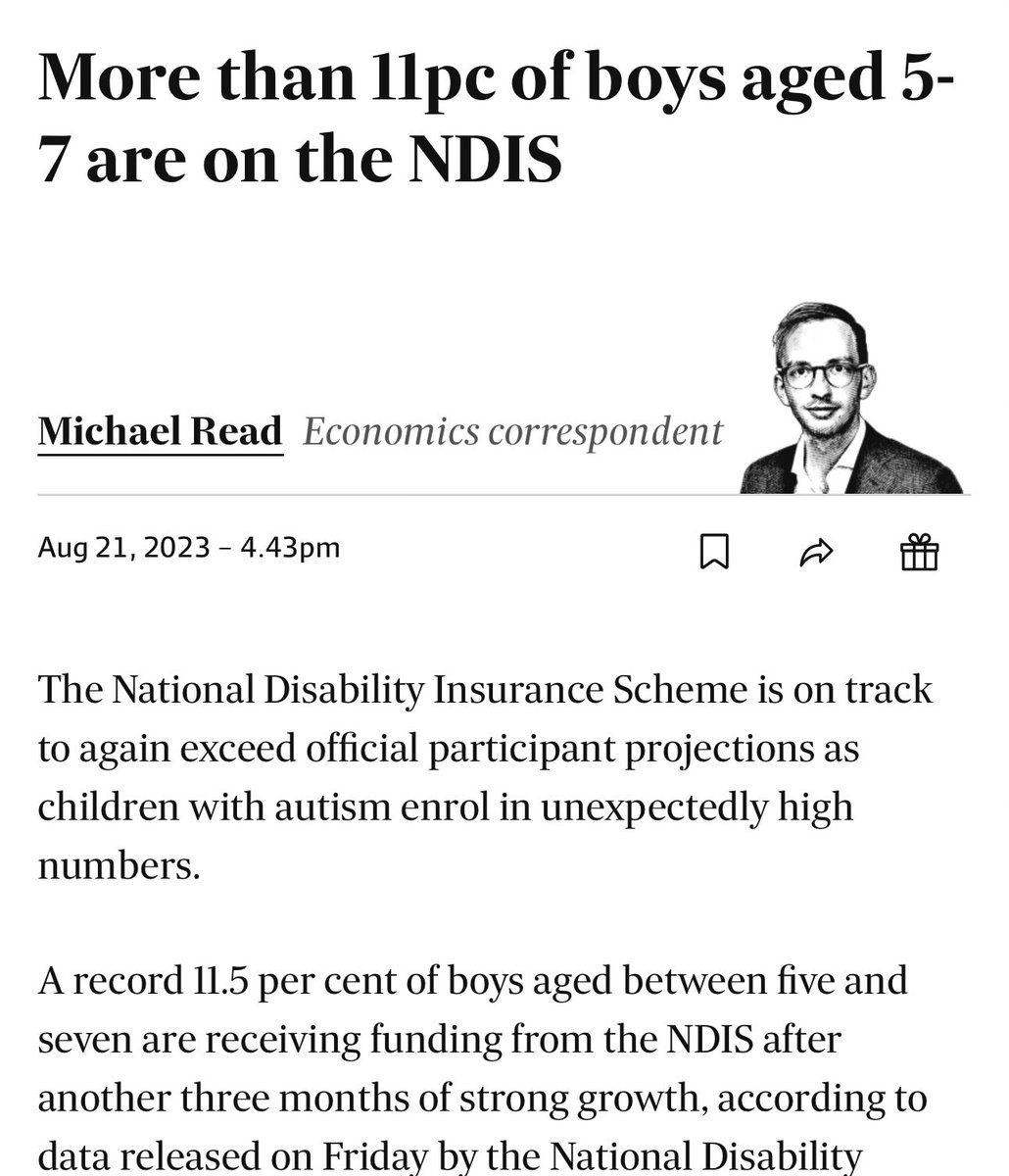
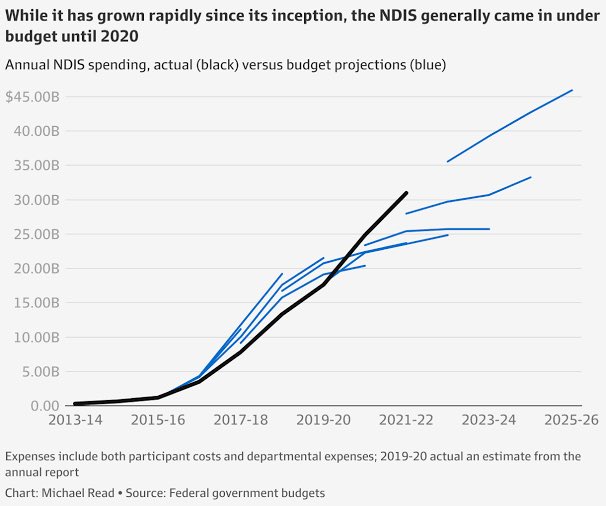
National disability insurance scam.
Apr 24

10% of australias businesses are NDIS
1
2
12
555
Apr 24
Lmao what a joke
I just saw a patient who is fighting to get NDIS so he can just chill on his farm and work on his hobbies
No issues tending to animals and doing work around his farm but too disabled to do paid work or pay taxes supposedly
His lawyers are abusive hassling multiple specialists for “reports” to support his claim with veiled threats of “summons” if not provided
Absolute disgrace of a scheme that literally steals from the honest/hardworking and rewards the corrupt/dishonest/lazy
20
52
441
26,877
Apr 23
Satoshis wallet was meant to be hacked one day. The final step to true decentralisation.
Bitcoin is perfect.
1
1
352
Dr. Grey retweeted

Apr 17
When simulation becomes the norm, it weakens the human capacity for discernment. As a result, our social bonds close in upon themselves, forming self-referential circuits that no longer expose us to reality. We thus come to live within bubbles, impermeable to one another. Feeling threatened by anyone who is different, we grow unaccustomed to encounter and dialogue. In this way, polarization, conflict, fear and violence spread. What is at stake is not merely the risk of error, but a transformation in our very relationship with truth.
1,574
13,924
81,918
8,848,517
Dr. Grey retweeted
Apr 19
Bro you use the word "invasion" in the same way "gender" is used now.
Think about a real invasion actually means; like the world wars etc.
Assumptions and world views that deviate to the extreme with no grounding are usually wrong.
Its a product of an over-active amygdala signalling "fear" "fear" "fight or flight".
Its basically an anxiety disorder.
you're choosing to fight.
it feels right because its your own brain telling you so.
the real question is;
who has realised this and is hijacking algorithms to cause mild-moderate anxiety amongst global populations - inevitibly leading to increased divisiveness.
Do you really believe that an entire nation of billions of people shit on the street? aren't you insulting your own intelligence?
Have you wondered if you are being manipulated subtly daily in order to induce such hate and anger?
Who benefits from this?
2
1
1
310
Dr. Grey retweeted

Feb 9
Bitcoiners have long viewed Bitcoin as the solution to currency decline. Better gold. Ultimate money.
Instead, the broader market has treated it like a software stock.
Painful, but this dip may be how Bitcoin stops trading like tech and starts trading like a hard asset.
229
248
3,195
161,554