
PhD Student at The Norwegian School of Sport Sciences
Joined January 2023
- Tweets 30
- Following 49
- Followers 6
- Likes 57
Photos and videos
Simen Leithe Tajet retweeted

30 Dec 2024
Anyone who takes Huberman too seriously might want to complete my Metascience course assignment where you get to dive into his understanding of statistics and his confirmation bias: daniellakens.blogspot.com/20…
30 Dec 2024

Starting tomorrow, and every Monday thereafter, full length episodes of the Huberman Lab podcast will be released on @X. Thank you for your interest in science!
2
22
153
17,271
Simen Leithe Tajet retweeted

28 Nov 2024
I really enjoyed reading this world view in @Nature about the importance of exploratory research in the social sciences by @BalazsAczel and am wondering what people think. Do you generally agree with his point? nature.com/articles/d41586-0…
2
17
61
15,126
Simen Leithe Tajet retweeted

15 Nov 2024
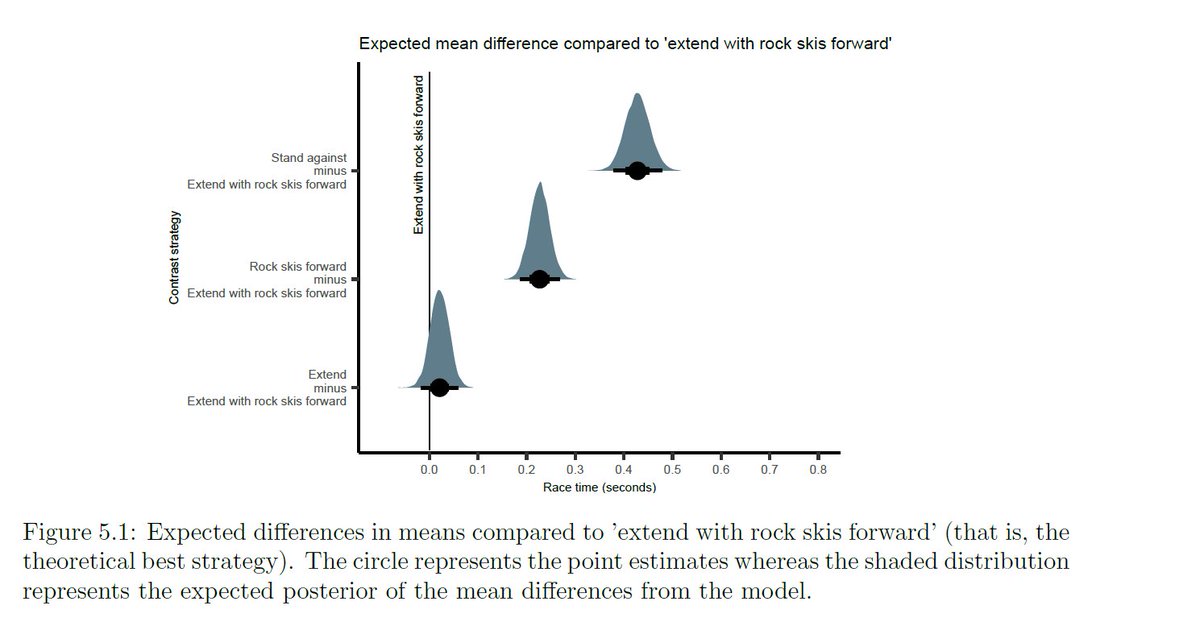
Time for the World Cup slalom in Levi, which features a long flat section. Remember to 'extend with rock skis forward' in this section to achieve the best race time! ⛷️⛷️⛷️
#worldcup #alpineskiing #reinforcementlearning
Full paper here:
biorxiv.org/content/10.1101/…
1
6
243

4 Nov 2024
🍿
2 Nov 2024

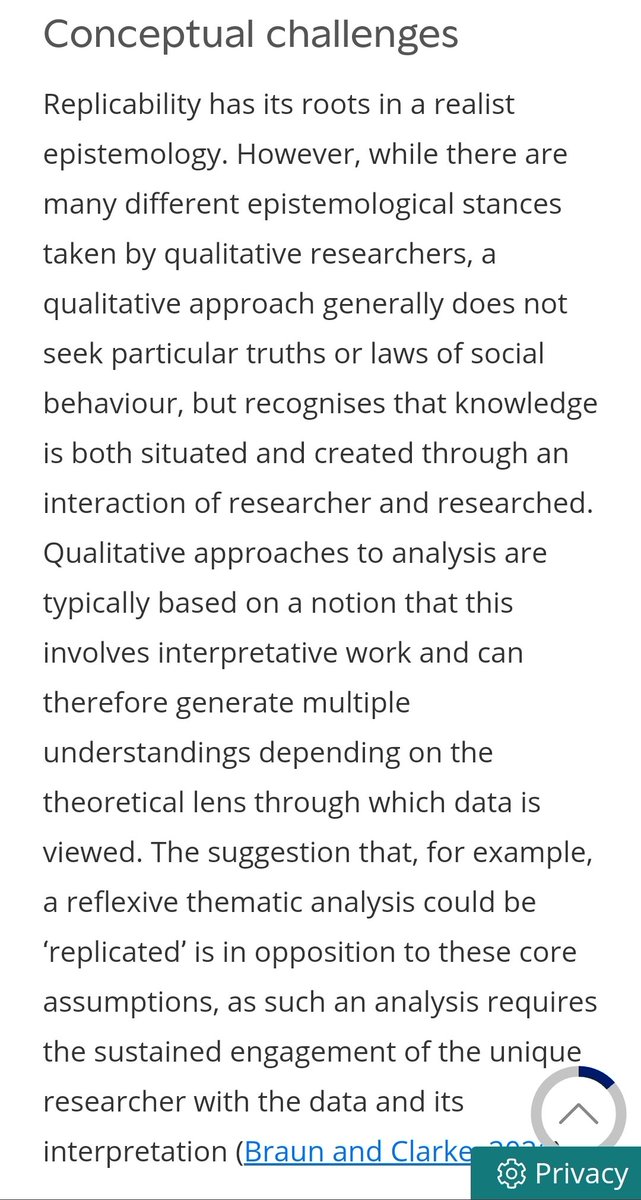
It is extremely sad to see some qualitative resesrchers take the epistemologicl view that truth is crested, and qualitative resesrch is in principle not replicable. These voices should be severely criticized within the qualitative research community, and preferably driven out.
87
Simen Leithe Tajet retweeted

30 Oct 2024
🚨New pub out now! 🚨In this study we showed that performance level moderated learners’ sensitivity to reward-prediction errors. For some insights into what this might mean for instructors interested in motor skill acquisition, grab a free copy here 👇
doi.org/10.3389/fnbeh.2024.1…
3
5
17
1,803
Simen Leithe Tajet retweeted
27 Sep 2024
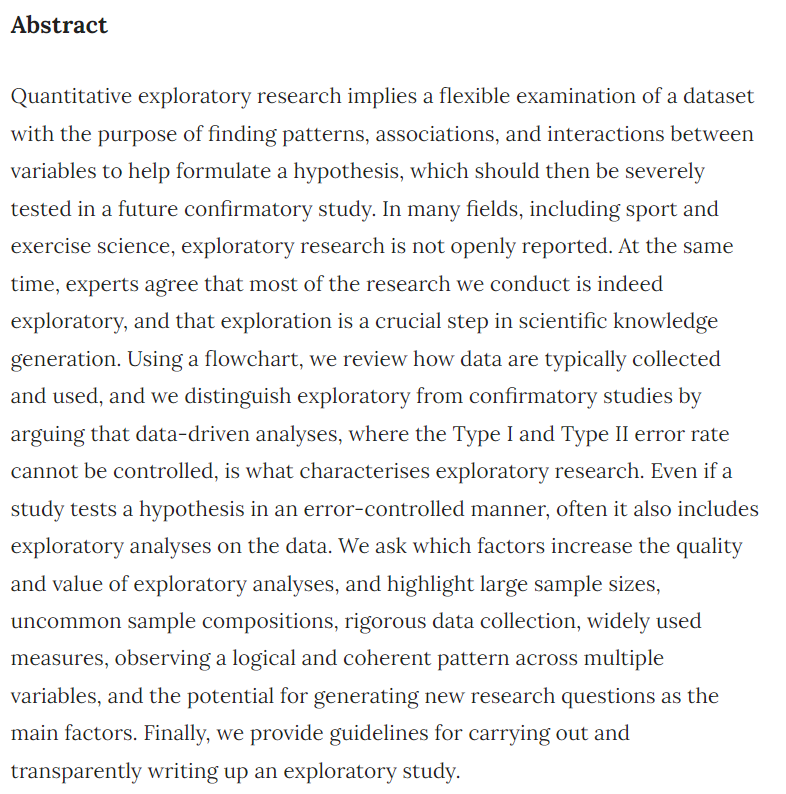
Time for a thread on our new preprint on exploratory analyses! This paper was started by Max Ditroilo during his sabbatical at my lab. It started from the observation that exploratory research is often not openly reported. How can we improve this? sportrxiv.org/index.php/serv… >
1
22
61
9,651
Simen Leithe Tajet retweeted
25 Sep 2024
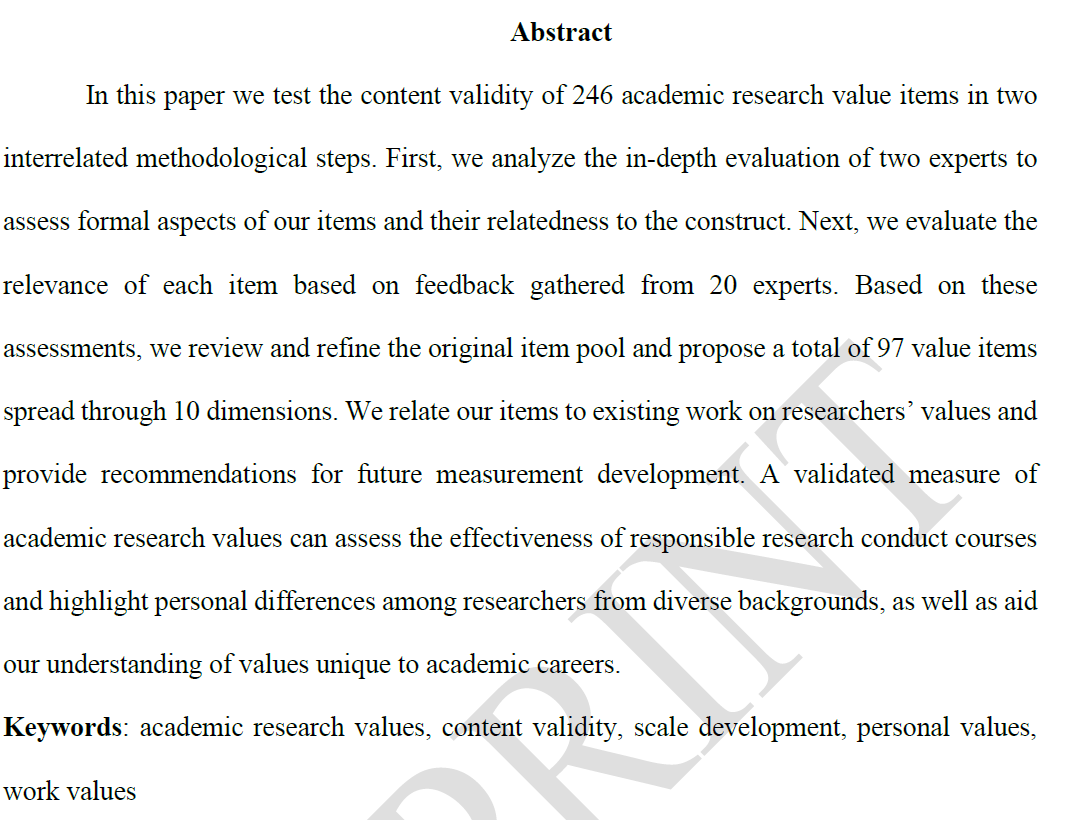
We have two new preprints up today! One is on exploratory research, written for sport scientists doi.org/10.51224/SRXIV.457, the other is on measurement development, reporting the next step in developing an academic research values scale by @andreakis_psy! osf.io/preprints/psyarxiv/c4…
5
13
63
11,614
Simen Leithe Tajet retweeted

13 Sep 2024
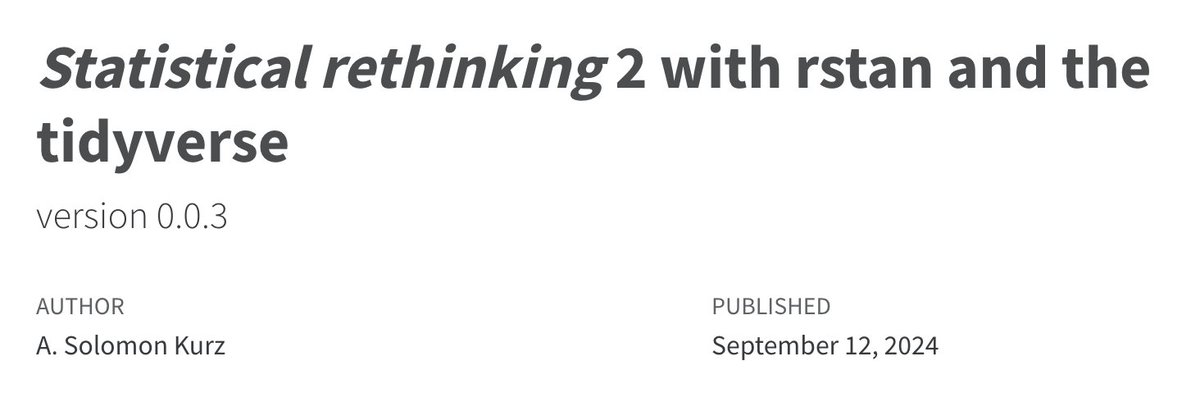
New book version up!
solomon.quarto.pub/sr2rstan/
This is the 0.0.3 version of the #rstan sibling to my #brms translation of McElreath's 2nd edition.
#Rstats
1/4
3
34
194
13,557

Simen Leithe Tajet retweeted
25 May 2024
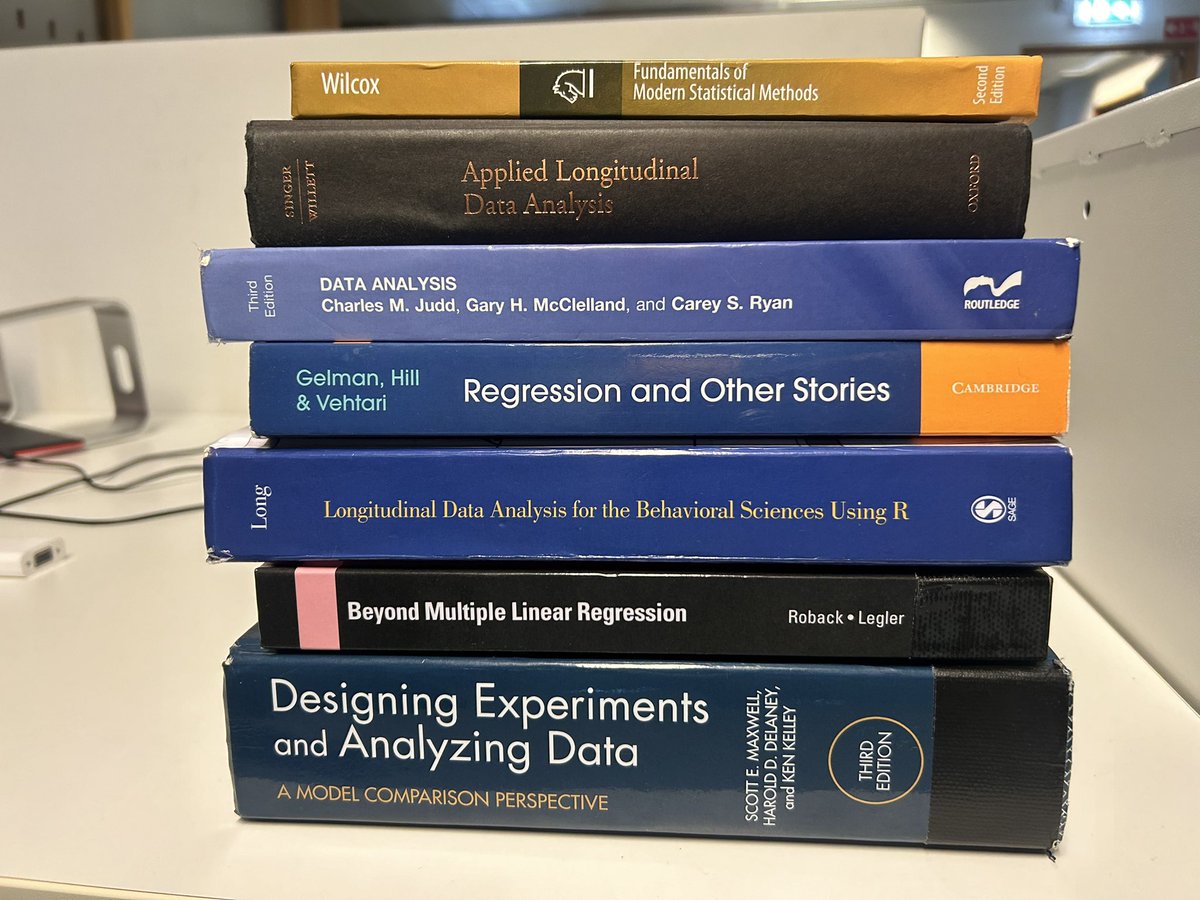
As my PhD comes to an end, I want to acknowledge the methods books that have been instrumental in my journey. *Missing from the list is statistical rethinking
This book by Dale Barr has also been exceptionally helpful:
psyteachr.github.io/stat-mod…
9
333
2,298
286,719
Simen Leithe Tajet retweeted
23 May 2024
We've received great and valuable inputs on our new preprint about using reinforcement learning to improve sports training ⛷️🏌️♀️ 🎾⚽️ - Thank you! We are still seeking feedback and comments before submitting it to a journal. Please retweet!
Link:
biorxiv.org/content/10.1101/…
29 Apr 2024

Do elite athletes benefit from instruction and feedback from a coach? In our new preprint (biorxiv.org/content/10.1101/…), we tested whether slalom racers learn to make better strategy choices and therefore perform better with reinforcement learning than with instruction-based learning
1
3
1,337
Simen Leithe Tajet retweeted
4 May 2024
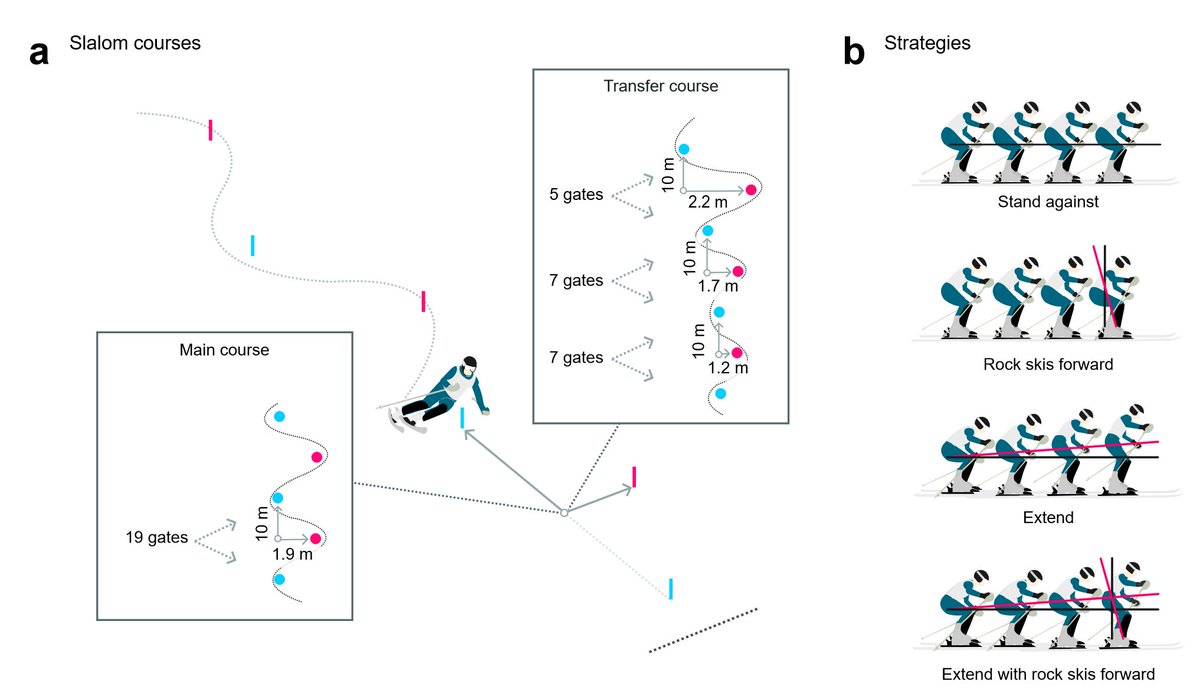
⛷️If you're a coach aiming to help your skiers perform better in slalom, our new preprint might be of interest: biorxiv.org/content/10.1101/…. In this study, 98 alpine skiers (13/98 ranked in the top 100 in the world 🏅) tested four strategies (panel b) (1/4)
1
2
7
1,719
Simen Leithe Tajet retweeted
29 Apr 2024
With @SimenLT, @LosnegardThomas, @froemero1, Reid, Gilgien and Haugen.
#motorlearning #skilllearning #reinforcementlearning #alpineskiing #slalom #expertperformance #decisionmaking
1
1
1
389
Simen Leithe Tajet retweeted
29 Apr 2024
We would very much like to receive feedback on the manuscript before submitting it to a journal. If there is anything you believe can be improved, please write to us. All code and data for the analysis are available at osf.io/uw986/
1
1
3
196
Simen Leithe Tajet retweeted
29 Apr 2024
Thanks to all skiers and coaches who participated in this project. Thanks also to @nih_sognsvann and @nih_physicperf and for their support. Thanks to all volunteers who have worked hard to make this study possible ⛷️
1
1
1
100
Simen Leithe Tajet retweeted
29 Apr 2024
Based on our findings, reinforcement learning appears to be an effective training strategy for skilled performers. We believe that reinforcement learning can serve as a valuable supplement to traditional instruction. More on this in the discussion.
1
1
1
102
Simen Leithe Tajet retweeted
29 Apr 2024
We have also analyzed the ranking and performance of each strategy. More details on this can be found in the paper. In summary, we found significant differences in race times between the strategies.
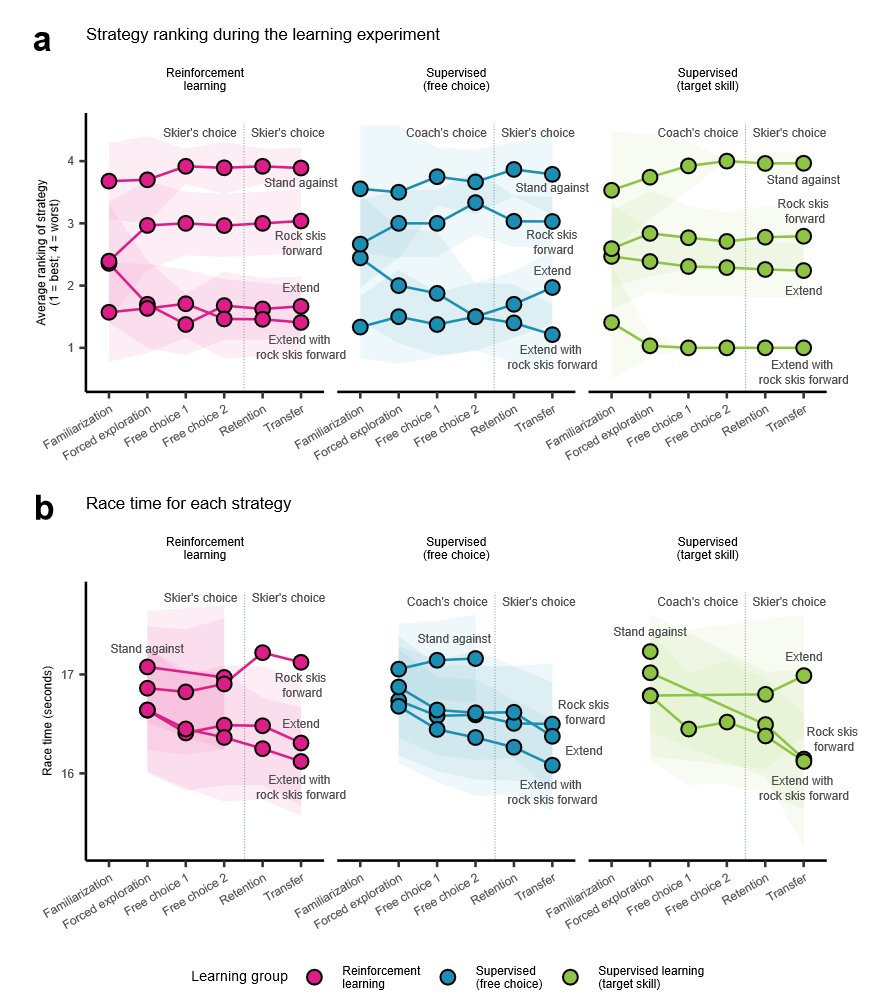
ALT Ranking and race times for each strategy
1
1
1
106
Simen Leithe Tajet retweeted
29 Apr 2024
What information guided the strategy decisions in the two learning groups? We found that both learning groups’ decisions could be accounted for by a ’win-stay, lose-shift’ heuristic. The difference between the learning groups was not statistically significant, however
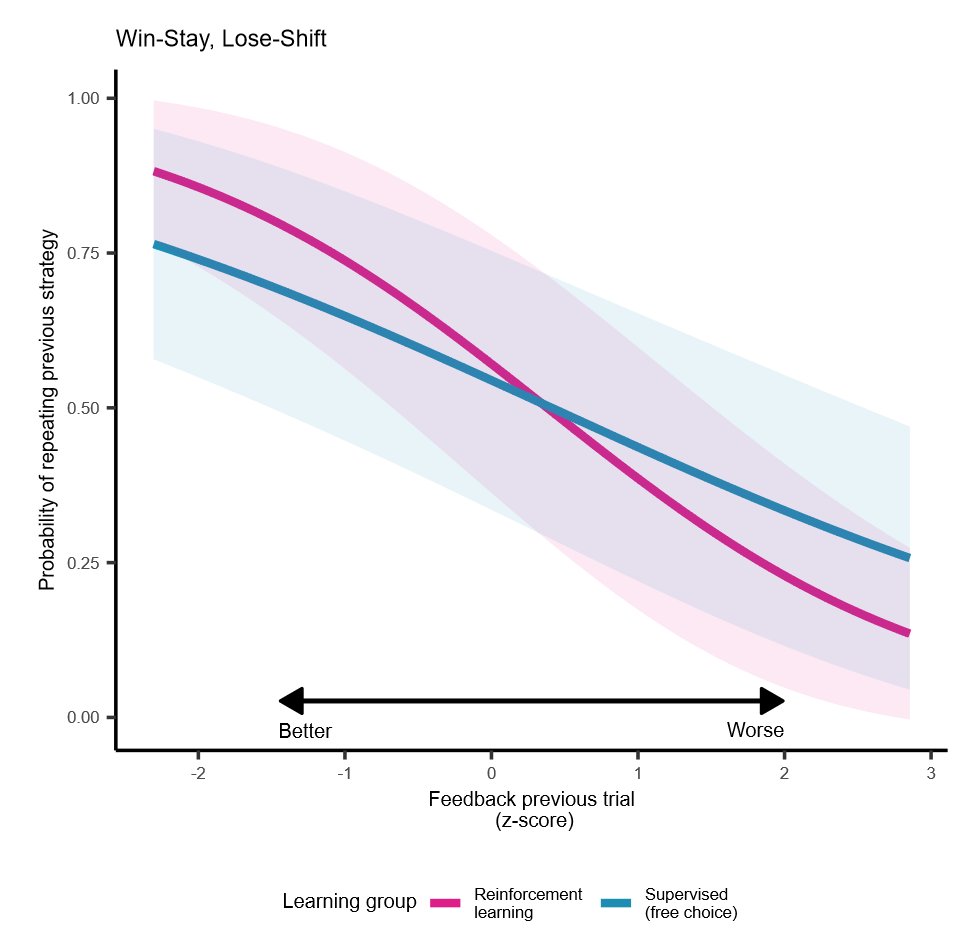
ALT Win-Stay, Lose-Shift
1
1
1
107
Simen Leithe Tajet retweeted
29 Apr 2024
We predicted strategy choice could explain our findings, but reinforcement learning did not show a greater probability of selecting the theoretically best strategy or each skier's estimated best strategy. However, they incurred lower costs for their suboptimal strategies
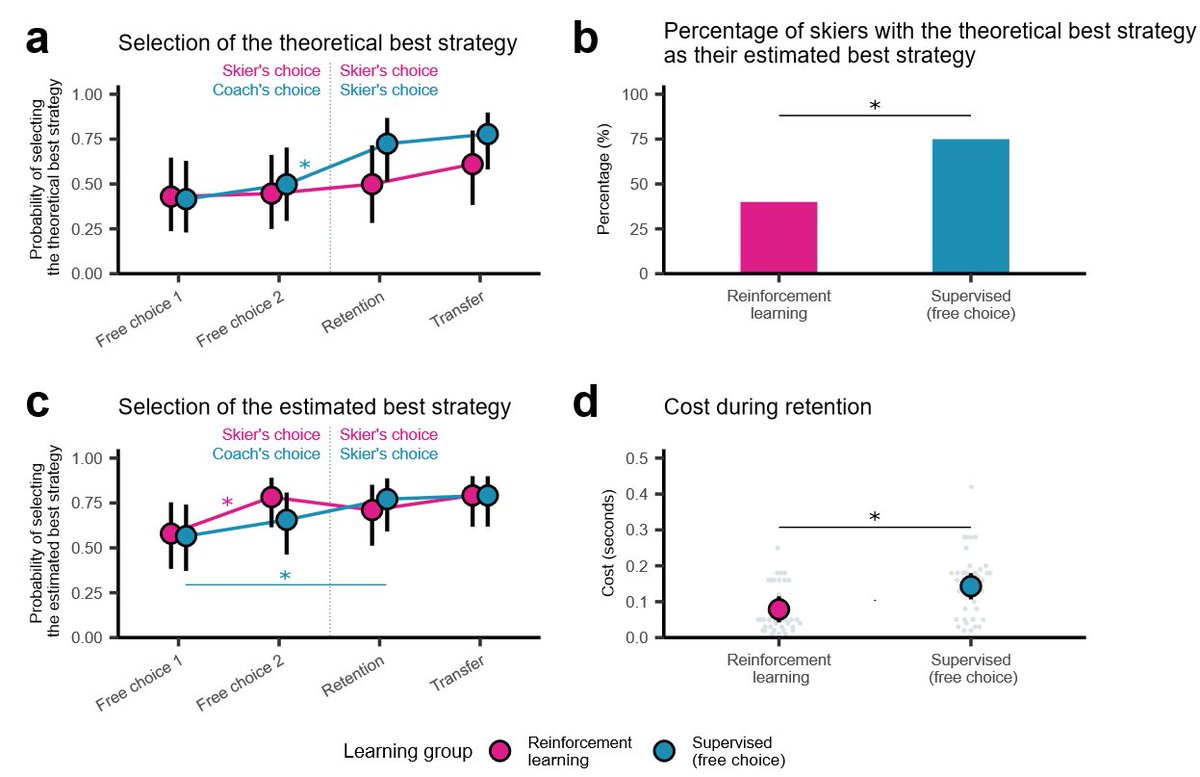
ALT Strategy choices during training, retention and transfer
1
1
1
127