
Joined August 2012
- Tweets 1,120
- Following 453
- Followers 813
- Likes 3,673
45 Photos and videos



Pinned Tweet

7 Aug 2023
My article on why people don't trust economists, and how we could do better @UTSEngage @1petermartin @UTS_Economics theconversation.com/6-reason… via @ConversationEDU
19
17
63
32,721
Peter Siminski retweeted

Mar 1
On Iran and Anthropic:
Robert Mugabe, Zimbabwe’s dictatorial president since 1987, won the big prize in the country’s lottery in 2000. Why did he go out of his way to concoct such a charade? A surface-level answer: Because he could. Once you destroy institutions constraining your power and behavior, you can act in largely unrestricted fashion, whether it is for personal enrichment, personal aggrandizement, or simply projecting even greater power.
But there is a deeper, more problematic answer as well: What better way to further decimate institutional checks on your power than showing how much of a farce the existing system of rules is.
It is not just a coincidence that such behavior can do damage to norms, institutions and security and stability of the country. It is part of the design.
Mugabe’s lottery win echoes in two fateful decisions by the Trump administration, which will have long-lasting and troubling implications, are just. Trump and his allies are pursuing these actions because they can and because these actions are consistent with their agenda of upending all rules and constraints on their future behavior.
The first problematic action is the US-Israeli attack on Iran and the killing of the country’s supreme leader Ayatollah Khamenei. Leave aside the loss of life and the immediate chaos, it should be obvious that such a move will trigger a long period of instability in the Middle East.
There should be no doubt that the Iranian regime was repressive, murderous and bad news for its own people’s economic and social well-being. The supreme leader, leading Iranian elites and the country’s feared Revolutionary Guard had blood in their hands and the repression had intensified lately.
But none of this justifies the United States and Israel initiating a war in the Middle East, without support from international allies or from the public in the United States (still considered a democracy where people’s views should in principle matter). But even worse, this act violates the sovereignty of another nation and risks plunging the entire region into carnage.
And however awful Ayatollah Khamenei’s track record may be, he’s no Nicolas Maduro (who had only a few diehard supporters even in the Venezuelan military). By virtue of his religious role, Khamenei enjoyed respect and authority among the Shiites and even the broader Muslim mission community, and his killing risks turning him into a martyr, which is the last thing that Iran or the region needs.
The second is the Department of Defense (it is still painful to call it the Department of War even if recent actions confirm that this change of name wasn’t just for optics) designating the AI company Anthropic a supply-chain risk. The official designation is typically used for companies from foreign adversaries, such as China’s Huawei. It bars federal contractors using the Anthropic’s models and heralds major restrictions on what the company can do in the future. The Secretary of Defense Pete Hegseth announced “Effective immediately, no contractor, supplier, or partner that does business with the United States military may conduct any commercial activity with Anthropic.”
The reason? Because Anthropic wanted safeguards against its models being used for mass surveillance of Americans and autonomous weapon systems. Neither of these two provisions would have put meaningful restrictions on the DoD in practice. Mass surveillance is illegal under US law and autonomous weapon systems are a not near-term possibility.
Yet, it is the showdown that matters, just like Mugabe’s lottery winning.
This action will also have major consequences, perhaps more far-reaching than the attack on Iran. Regardless of what one might think of current AI capabilities, there is little doubt that who controls AI will have momentous implications for democracy, business, communication and privacy. This designation can be interpreted by many in the industry that it will be the US government, not the private sector, that controls AI.
Even more far-reaching are the broader implications of this action: this administration, and perhaps future administrations, can now bring hugely disproportionate penalties on any contractor they disagree with. Security of private property rights, which has been a mainstay of American state-business relations for centuries, is now looking much shakier. It also sends exactly the wrong signal to the world that Pentagon is intent on mass surveillance and the development of autonomous weapon systems (why else bother about these two ineffective provisions in the contract?).
The absurdity of both actions is what harkens back to Mugabe’s lottery win. Trump came to power promising no foreign adventures, and now has spearheaded a potentially riskier one than the Iraq war, with even flimsier justification. There would have been no bite to the provisions that Anthropic wanted in the contract, since current AI systems are nowhere near reliable to be used in autonomous weapon systems and the US government has plenty of other tools that can be (and sometimes are) used for mass surveillance.
The shock value and the norm breaking are part of the intent. Mugabe’s lessons continue.
83
429
1,771
471,522
Peter Siminski retweeted

6 Nov 2025
Postdoc hiring at Economics Department for the ARC DP grant by @NathanKettlewe1:
recruitment.uts.edu.au/OA_HT…..
11
18
3,152
Peter Siminski retweeted
30 Oct 2025
Colleagues in our department were awarded 3 DPs and 1 DECRA last year, 1 Linkage recently, and 2 more DPs this round. Moreover, all 6 are large grants with postdoc funding. Way to go EDG!
30 Oct 2025

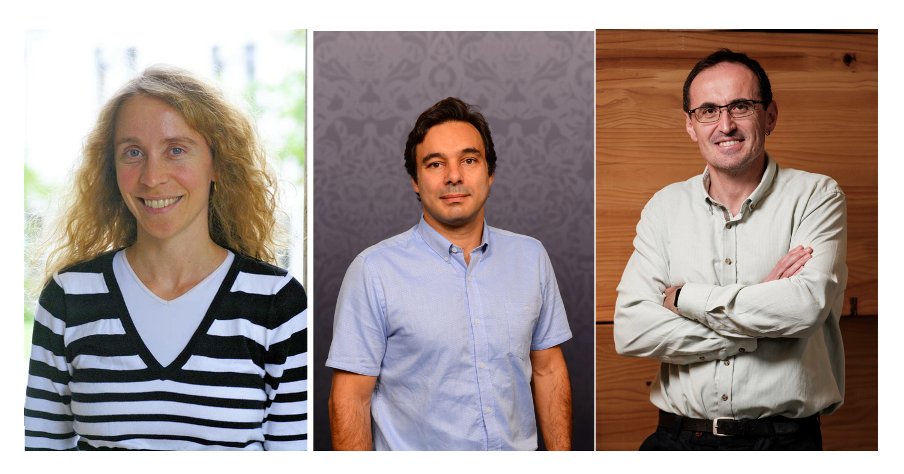
We are excited to share that two Discovery Projects from our department will be funded: arc.gov.au/discovery-project…
Congratulations to Professors Adeline Delavande & Luis Pontes de Vasconcelos as well as Isa Hafalir! A true testament to the hard work of our Economics colleagues!
1
2
9
1,024
18 Sep 2025
imo this is an excellent piece by @NickJGarvin from @E61Institute
18 Sep 2025

Why has housing become so expensive? Whatever the reason, it must square with the fact that price growth has far outpaced rent growth.
Nick Garvin applies concepts from asset pricing to point out that rising prices might be about housing demand generated by the expectation that buying housing will grow wealth. This could in turn relate to the fact that financial gains from housing are taxed less than other investments.
e61.in/should-housing-home-p…
2
156
13 Aug 2025
One of the most important think tanks in Australia is hiring
13 Aug 2025
📢 We’re collecting Expressions of Interest for research roles at e61 Institute!
If you’re passionate about economics, policy & making an impact, we want to hear from you.
🔗 More info: e61.in/expression-of-interes…

3
1
8
592
Peter Siminski retweeted
21 May 2025
A post-doc opportunity at UTS:
econjobmarket.org/positions?…
"We seek candidates ... with a focus on inequality and intergenerational mobility ... demonstrated experience in applied econometrics, working with administrative data, and survey research methods"
4
9
1,782


2 Mar 2025
I'm not a big socials user, but FWIW I'm moving to BlueSky, with the same handle. For any other late-adopters - the Sky Follower Bridge extension is very smooth for finding the same accounts you follow here
1
1
202
Peter Siminski retweeted

1 Mar 2025
It has been weirdly quiet on social media ever since the I4R dropped 2 of 15 reports about the questionable research practices of Asad Islam-GDRI and scores of his collaborators. Here is my take on what we know and need to know.
@AaronCharlton
a-ortmann.medium.com/the-asa…
5
12
3,720
Peter Siminski retweeted

6 Feb 2025
Sending my best wishes to all New Zealanders this Waitangi Day.
Australia and New Zealand are family - and we join in commemorating community and culture.
214
58
364
24,051
Peter Siminski retweeted

5 Feb 2025
An unscheduled but necessary intervention in @FinancialReview. afr.com/policy/economy/ross-…
11
8
50
5,984
Peter Siminski retweeted

3 Dec 2024
Great conference at QUT. Very honoured to have been invited to deliver a keynote speech.
@page_eco @UTS_Economics

1
10
343
Peter Siminski retweeted

28 Nov 2024
Dr Nathan Kettlewell, ARC DP 2025 recipient, will be: Comparing public and private provision of healthcare
You can learn more about Nathan’s prior work in the healthcare space here:
uts.edu.au/about/uts-busines…
1
1
10
467
Peter Siminski retweeted
27 Nov 2024
Prof Peter Siminski (ARC DP 2025) will be exploring: Inequality and intergenerational mobility: measuring what matters and why
You can learn more about Peter’s impactful research here: youtube.com/watch?v=phFUFMuk…
1
5
22
1,155
Peter Siminski retweeted
26 Nov 2024
It is such a great day for the UTS Economics Department, as 3 UTS-led DP projects were funded! Congratulations to our colleagues
@SiminskiPeter
@MAnufriev
@NathanKettlewe1
1
3
22
1,653
Peter Siminski retweeted

25 Nov 2024
Tomorrow, we’ll be announcing the outcomes of Discovery Projects 2025. All Lead Chief Investigators will receive a notification email to check RMS regarding applications.
Stay tuned for an update.
2
29
85
20,387
Peter Siminski retweeted

7 Nov 2024
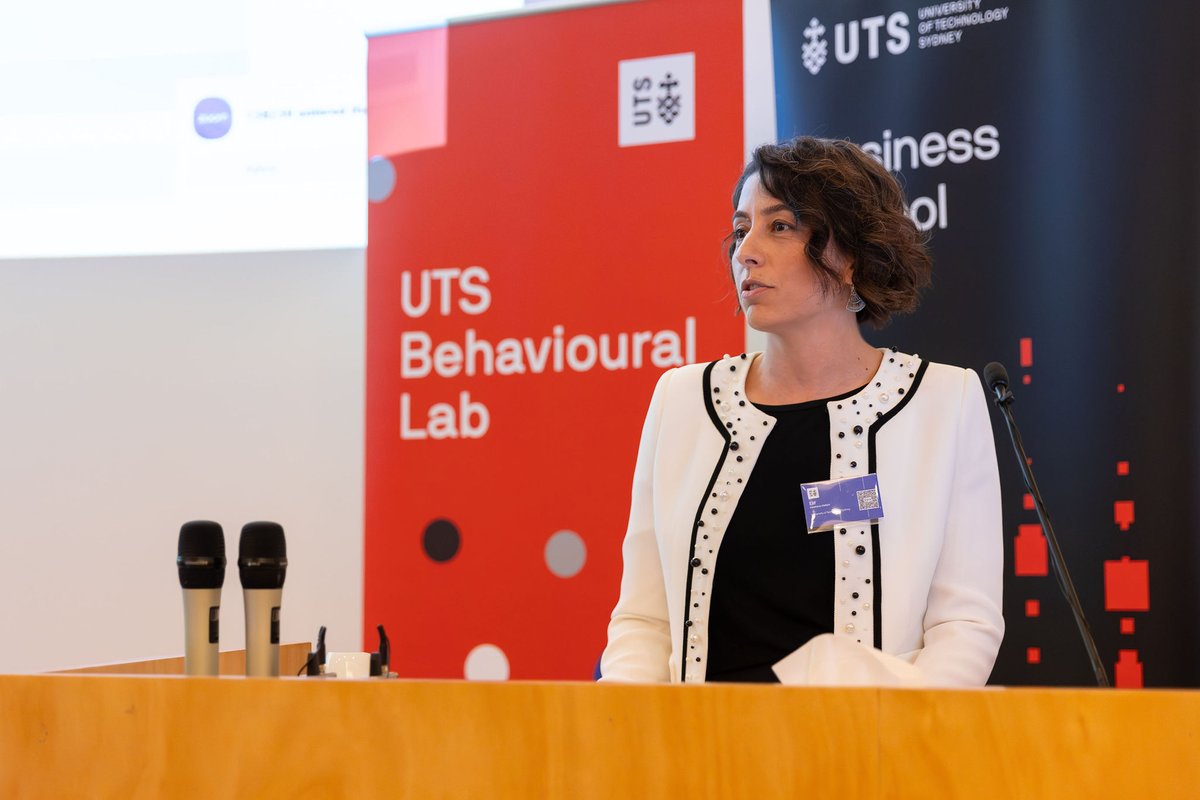
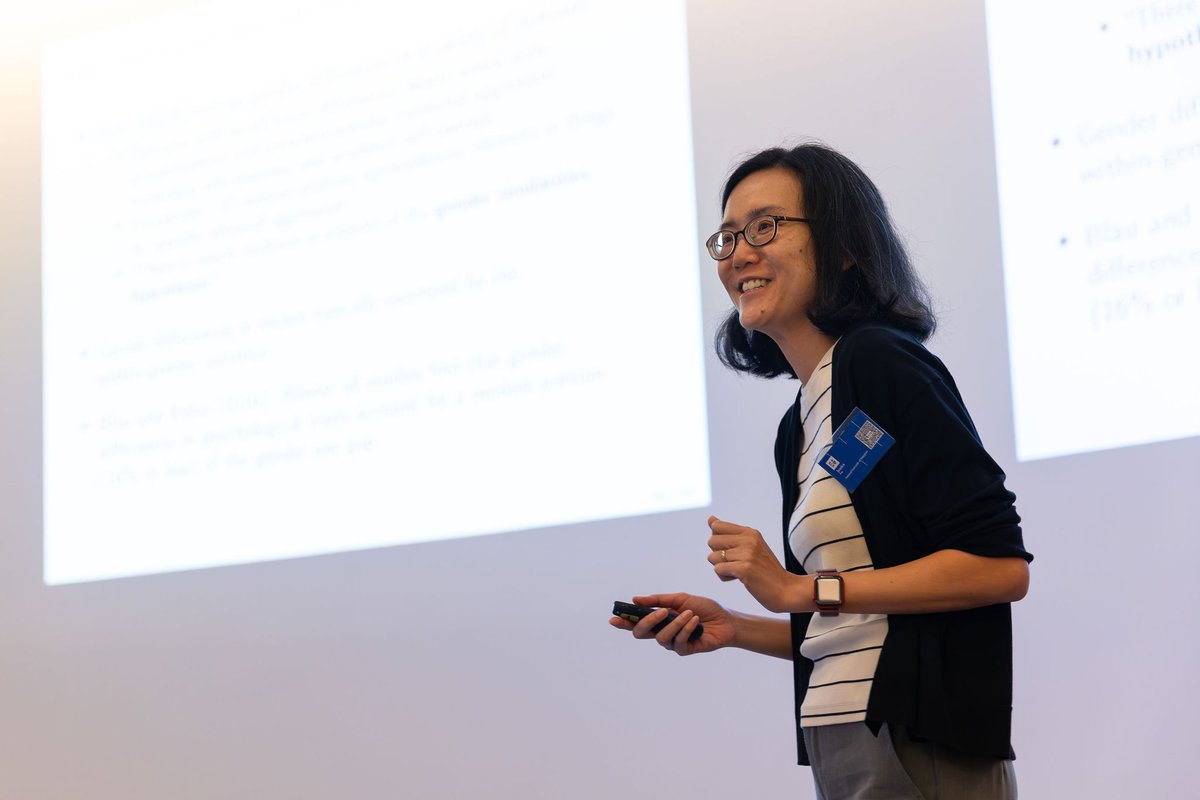
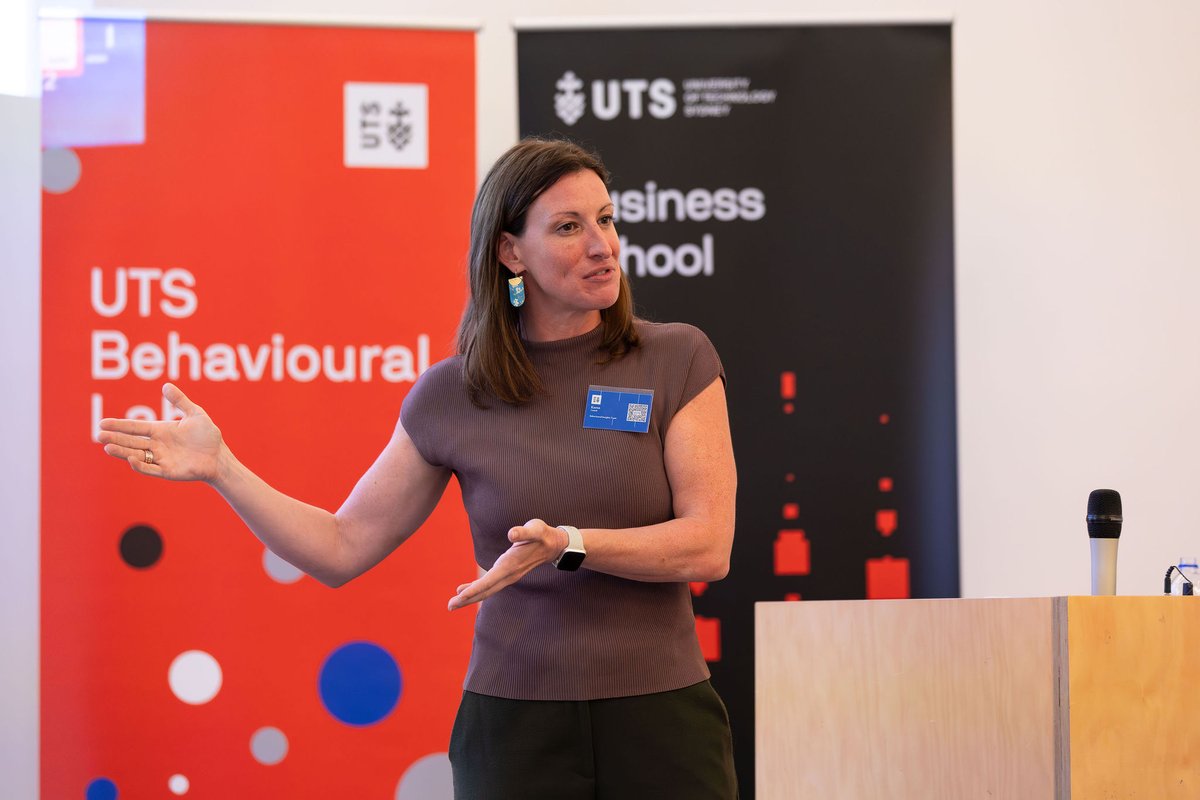
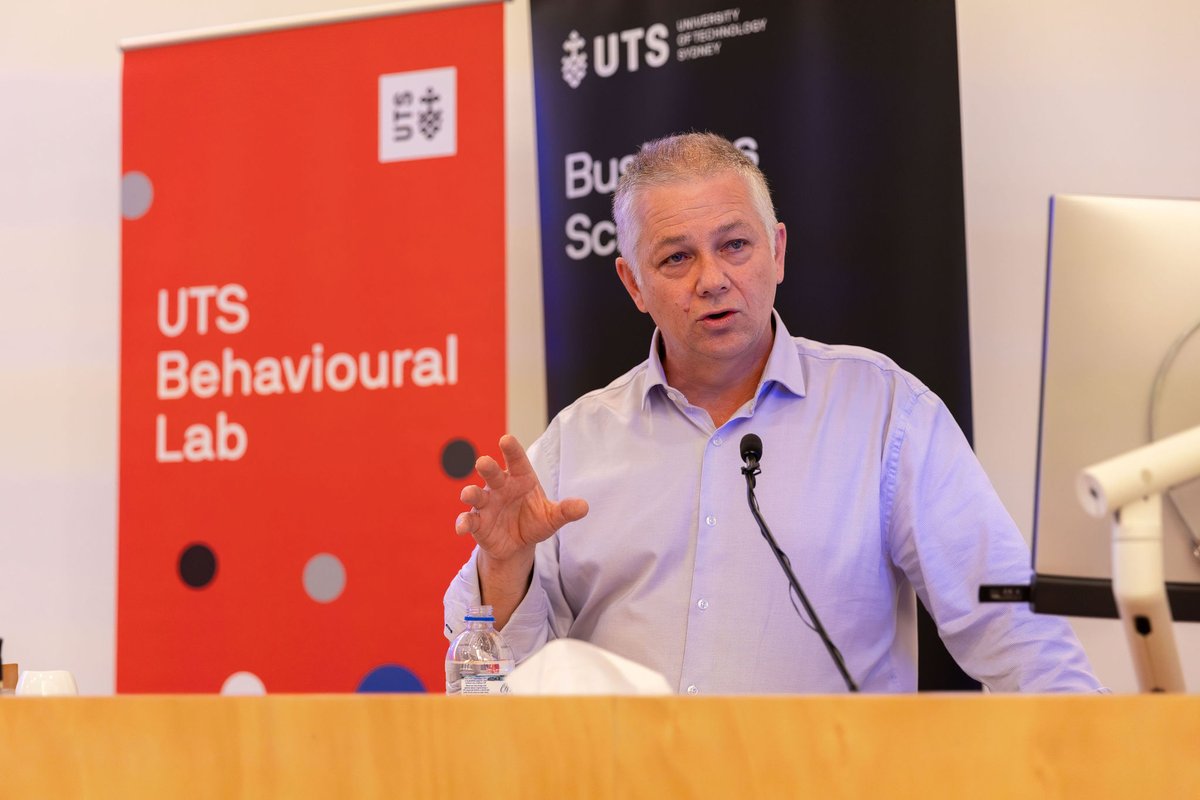
Organizing the 2024 UTS Behavioural Lab Conference with Dr. Saluja was fantastic! Huge thanks to @jesspan13, Prof Brown @UTS_Business, Dr. Tindall @B_I_Team, and all who presented and joined us for insights on #Diversity, #Equity, & #Inclusion 📸 @UTS_Economics
1
2
29
15,243
Peter Siminski retweeted
1 Nov 2024
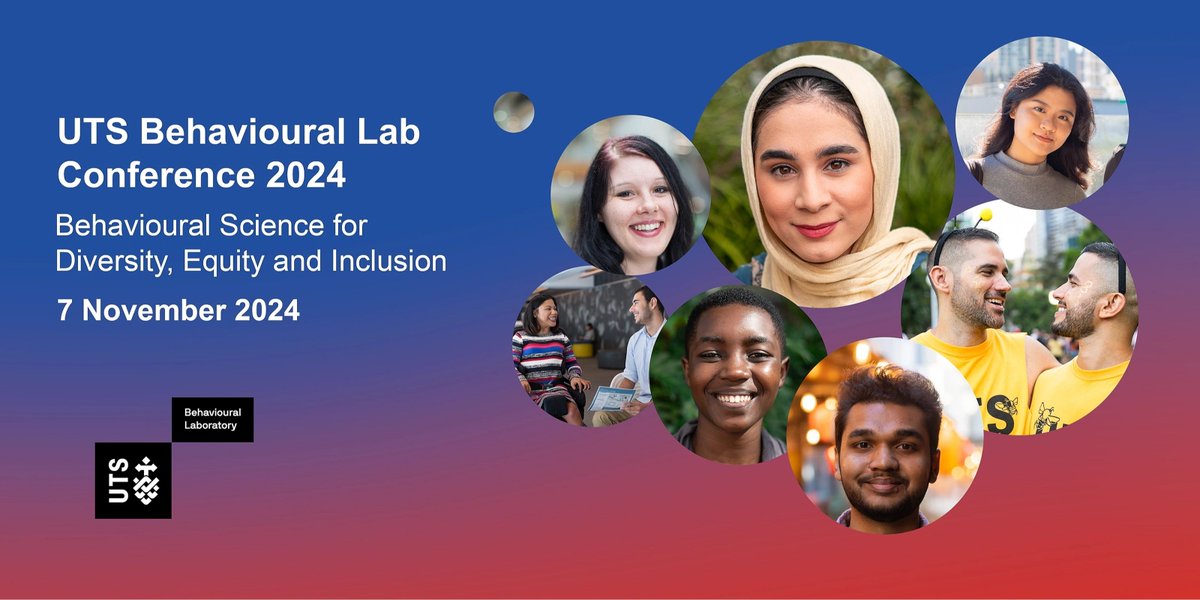
2024 UTS Behavioural Lab Conference: Behavioural Science for Diversity, Equity and Inclusion on Nov 7th (lnkd.in/gkrbW5za). An amazing lineup of speakers: @jesspan13 @NUSingapore, Prof Brown @UTS_Business, Dr Tindall @B_I_Team. @UTS_Economics
3
8
1,740
Peter Siminski retweeted

27 Oct 2024
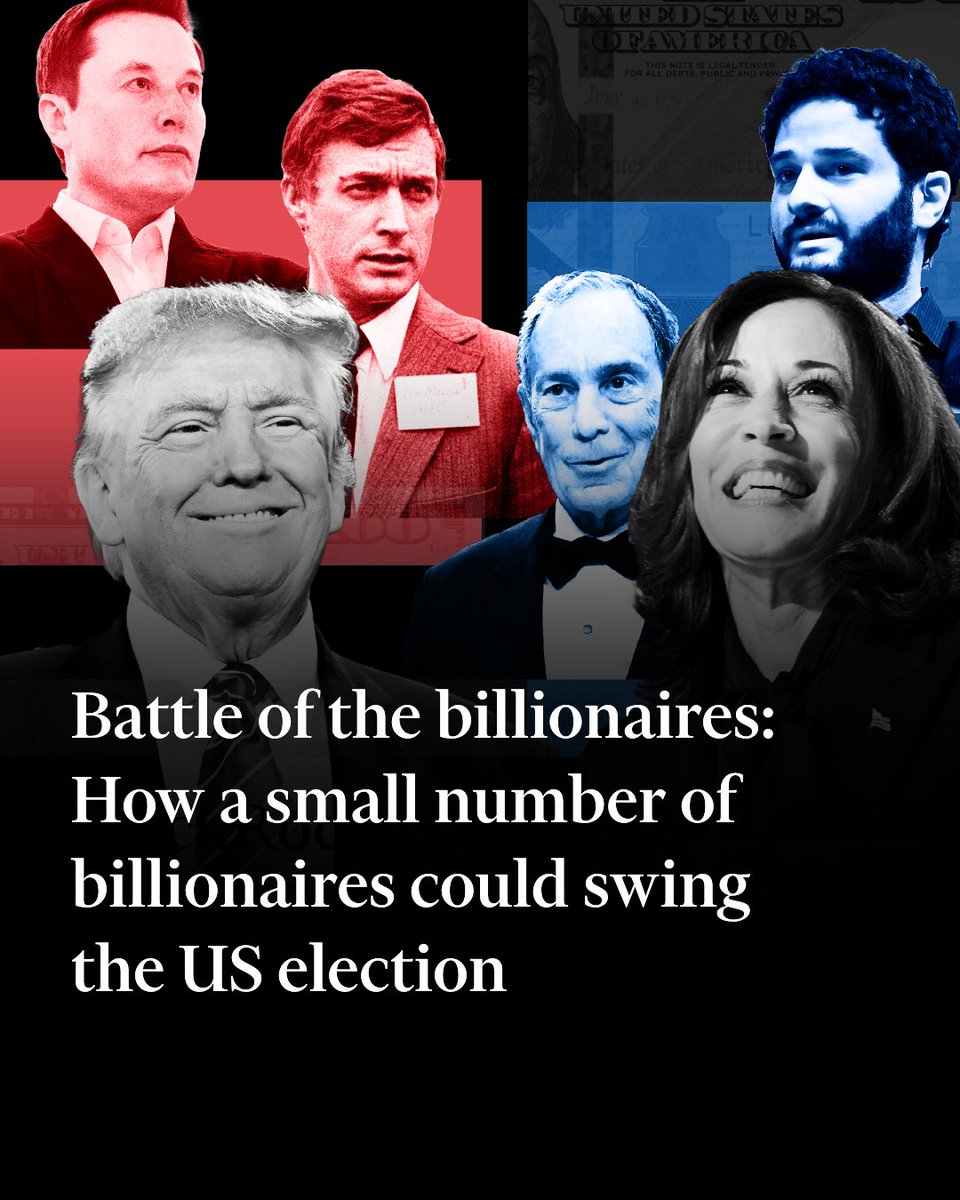
Billionaires own about 4% of US wealth, but contributed 1/3 of the money raised by Trump, a billionaire himself. The triumph of plutocracy, in real time
27 Oct 2024

An FT analysis of campaign finance filings found that roughly a third of all of the money raised by the Trump campaign and allied groups came from billionaires, while billionaires represented 6% of the money raised by Harris groups. on.ft.com/4e62tlo
21
349
888
140,585