
Joined November 2020
- Tweets 4,052
- Following 576
- Followers 118,809
- Likes 3,739
1,074 Photos and videos



Pinned Tweet

16 Jul 2025
🙌

15
5
49
10,651
SingularityDAO retweeted

May 25
What what ? ? ? 🔥🔥🔥🔥
$1.6M for our first day!
We have now 350,000 USDT and 1,000,000 USDC available for our users.
Let's stay liquid shall we?
33
125
470
15,270
SingularityDAO retweeted
May 20
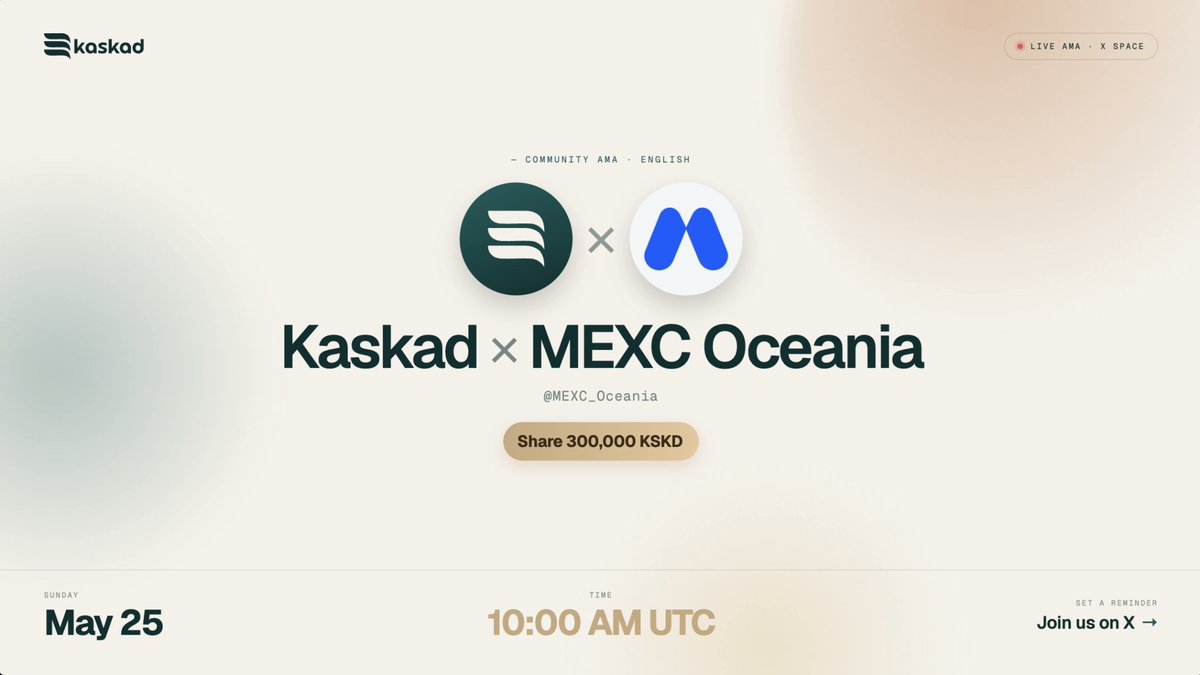
Kicking our Kaskad x @MEXC campaign off with our AMA with @MEXCOceania!
Join @judaubert @eliottmea @oxidique and @BagayokoJack live and ask us anything you want to know about Kaskad, and let’s discuss DeFi lending on Kaspa via @Igra_Labs !
Bonus: 300,000 KSKD to share
Rules:
✅ Follow @MEXCOceania
✅ QRT ❤️ Tag 3 friends
✅ Comment questions👇
See you there, and stay tuned, we might announce other things today👀.
541
468
640
18,218
SingularityDAO retweeted

Jan 22
🚀 Huge win for stablecoin yields!
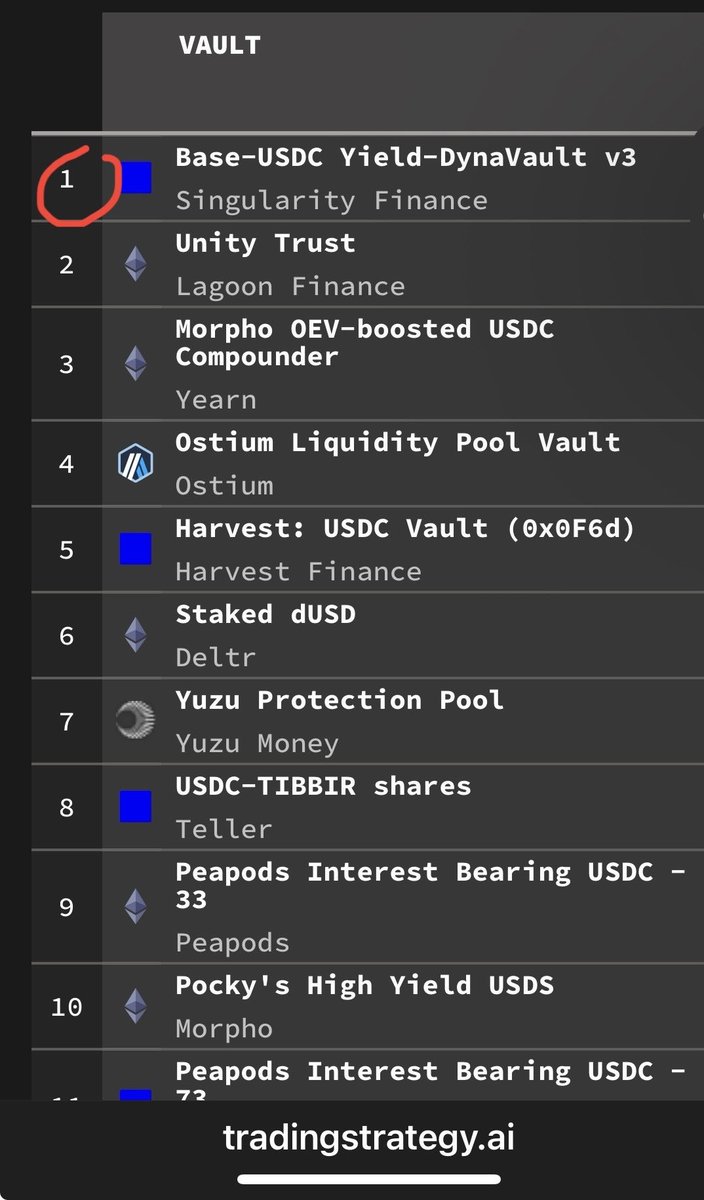
According to @TradingProtocol’ Top DeFi Stablecoin Vaults (1054 vaults, $27B TVL across chains), @Singularity_Fi’s Base-USDC Yield-DynaVault v3 (dynBaseUSDCv3) is currently the #1 best performing DeFi stablecoin vault on ALL blockchains!
Check the ranking: tradingstrategy.ai/trading-v…
Deposit & earn: singularityfinance.ai/vaults
4
8
28
2,407
SingularityDAO retweeted

14 Nov 2025
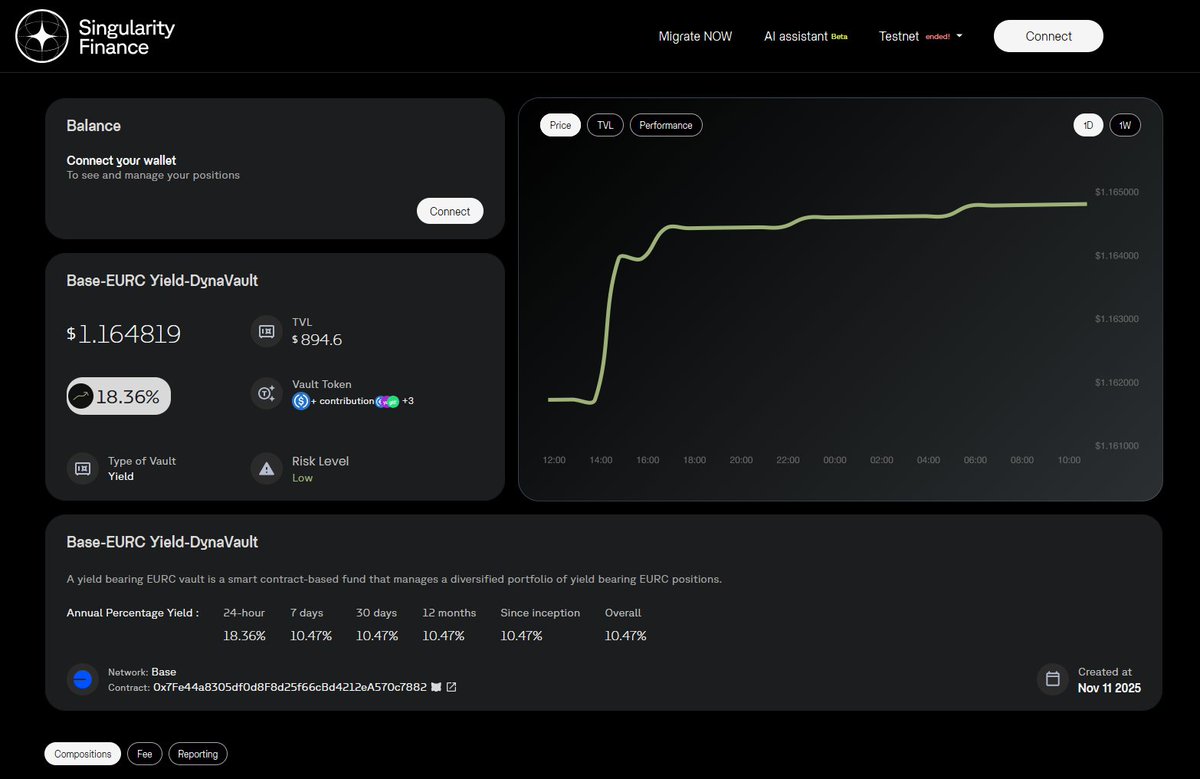
Idle euro liquidity doesn’t need to sit still
The SFI EURC vault is live, offering a diversified path to euro-denominated yield without added complexity
Designed to balance prudence with consistency, using multiple EURC strategies under one allocation
See Here👀: singularityfinance.ai/vaults…
8
14
71
7,201
SingularityDAO retweeted
27 Oct 2025
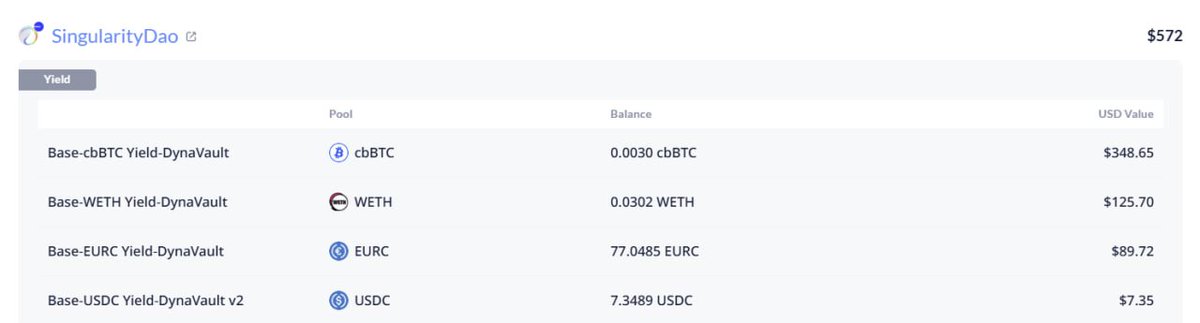
Update: @DeBankDeFi and @Rabby_io Wallet are now including and displaying all your DynaVault holdings!
This includes earlier $USDC vaults, the recently released $ETH and $BTC vaults on @base and even the upcoming $EURC vault 👀
Also: All users who follow Singularity Finance on DeBank for more than 30 days can mint and claim the badge "Old friend of Singularity Finance"!
See and follow here: debank.com/official-badge/16… 🤝🤝🤝
24 Oct 2025
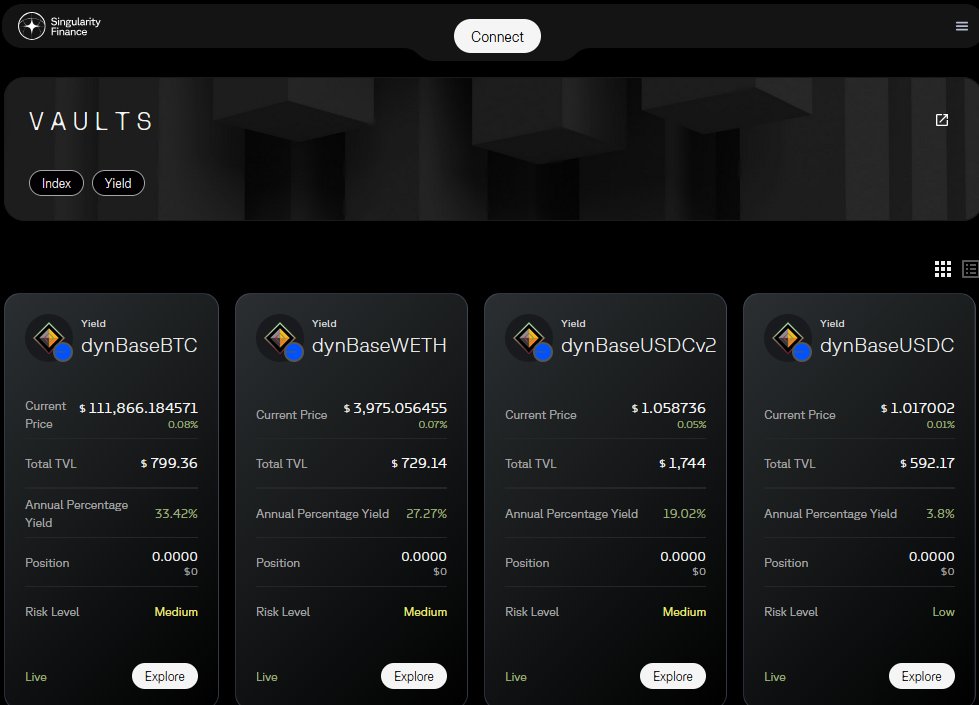
The $SFI dynBaseBTC and dynBaseWETH vaults are now live for public access.
After successful closed beta testing, these medium-risk vaults are open to all users seeking adaptive yield exposure to $BTC and $ETH; designed for those who want consistent performance without excessive volatility.
Each vault is structured to balance risk and opportunity through dynamic liquidity management, active strategy adjustment, and continuous monitoring across Base’s ecosystem.
Security, performance, and transparency are built into every layer.
Harness the APR today! singularityfinance.ai/vaults
7
21
98
10,689
SingularityDAO retweeted

24 Oct 2025
More cool products from Singularity Finance... step by step the DeFi ecosystem is maturing into a much more interesting, more democratic and open and flexible parallel financial system.
24 Oct 2025
This launch marks another step toward a complete vault ecosystem at Singularity Finance — from stable, low-risk products to advanced, high-yield strategies.
The dynBase series bridges both worlds, combining algorithmic precision with capital discipline.
They’re live, they’re tested, and they’re built for real performance.
Explore the live vaults today: singularityfinance.ai/vaults
25
27
161
21,489
SingularityDAO retweeted
26 Sep 2025
Something new is coming to Base 👀
Later today we’ll be revealing the next set of vault strategies we’ve been building; covering both BTC & ETH, with options for conservative and high-intensity users.
Details later today as we take $SFI the next steps forward.
6
14
64
4,582
SingularityDAO retweeted
23 Sep 2025
dynBaseUSDCv2 represents our evolution from static stablecoin yields to dynamic risk-adjusted optimization.
The vault introduces broader underlying asset mix with slightly higher risk-reward ratio and more dynamic yield profile compared to previous versions.
Protocol selection includes handpicked platforms to avoid exposing principal to high risk, with active rebalancing to stay aligned with market conditions and opportunities.
The dynamic approach means vault weights adjust automatically based on protocol health, yield sustainability, and market correlation patterns.
Base L2 deployment enables frequent rebalancing that would be cost-prohibitive on mainnet, improving optimization effectiveness and user returns.
dynBaseUSDCv2 demonstrates our vault technology evolution toward more sophisticated optimization while maintaining capital preservation focus.
Each vault iteration incorporates lessons from previous versions and market experience to improve user outcomes.
Dynamic stablecoin optimization as foundation for expanding to more complex asset strategies.
16 Sep 2025

💡 Did you know @Singularity_Fi has a new USDC Stablecoin Vault?
📈 It’s been delivering:
• 20% APY for over a month
•60% APY just last week
•34.36% APY since launch (~2 months ago)
🔗 singularityfinance.ai/vaults…...
5
12
58
4,195
SingularityDAO retweeted
19 Sep 2025
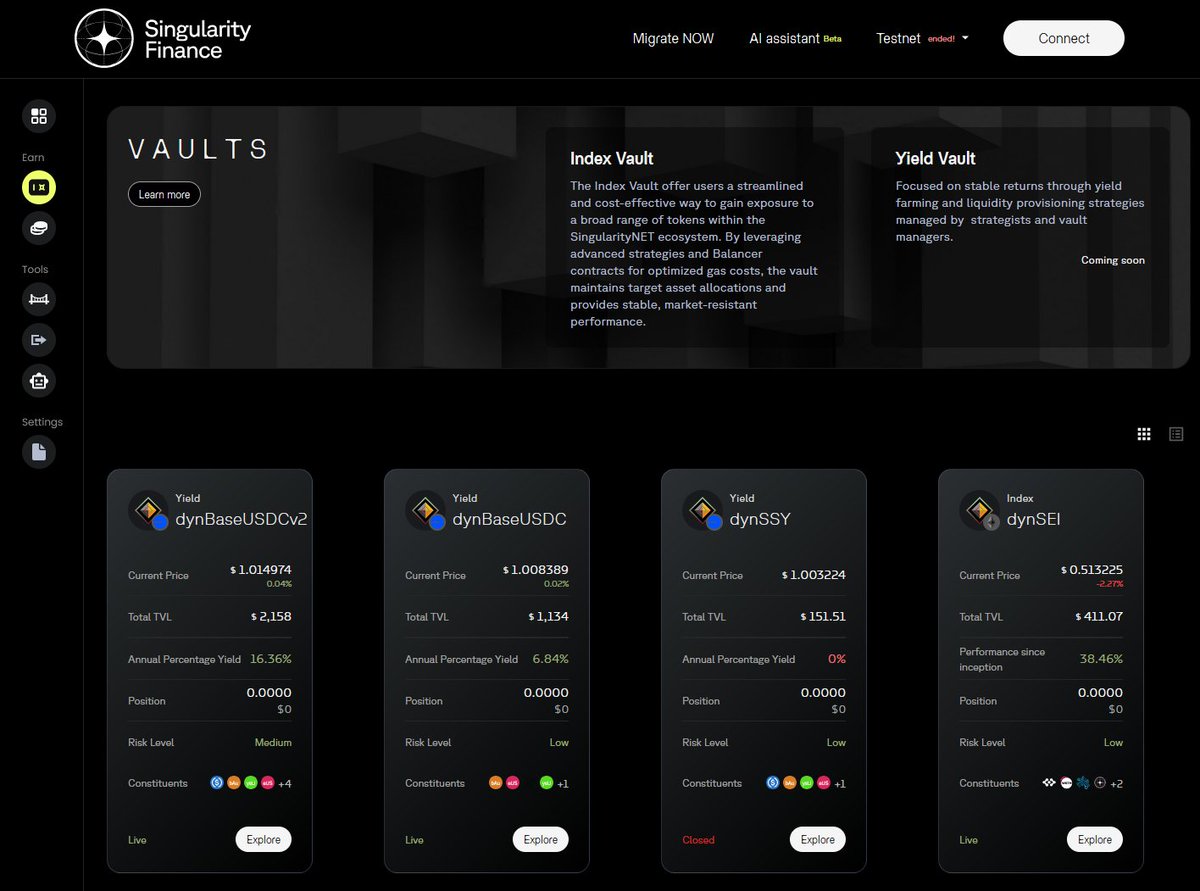
We are testing a new class of vaults designed for investors willing to balance higher risk with higher potential reward.
These vaults focus on deploying capital within ultra-narrow liquidity ranges on decentralized exchanges. By concentrating liquidity, capital works more efficiently and can generate significantly higher yields than traditional farming approaches.
Early testing has shown:
• Certain pools with annualized returns above 100% APR
• Ultra-concentrated ranges producing average yields exceeding 1000% APR
These results come with trade-offs. Unlike our low- to medium-risk vaults that emphasize principal stability, these strategies are inherently more volatile. Asset values can fluctuate as token prices move outside the targeted ranges, and positions may temporarily stop earning until rebalanced.
In short, these vaults are built for sophisticated users prepared to manage higher volatility in exchange for exposure to innovative yield opportunities. We will continue refining, testing, and sharing insights as development progresses.
9
16
74
7,209
SingularityDAO retweeted
18 Sep 2025
Strong returns speak for themselves.
Our USDC Stablecoin Vault continues to deliver consistent APY for users; designed for sustainable yield, not hype.
16 Sep 2025
💡 Did you know @Singularity_Fi has a new USDC Stablecoin Vault?
📈 It’s been delivering:
• 20% APY for over a month
•60% APY just last week
•34.36% APY since launch (~2 months ago)
🔗 singularityfinance.ai/vaults…...
2
10
63
3,417
SingularityDAO retweeted
12 Sep 2025
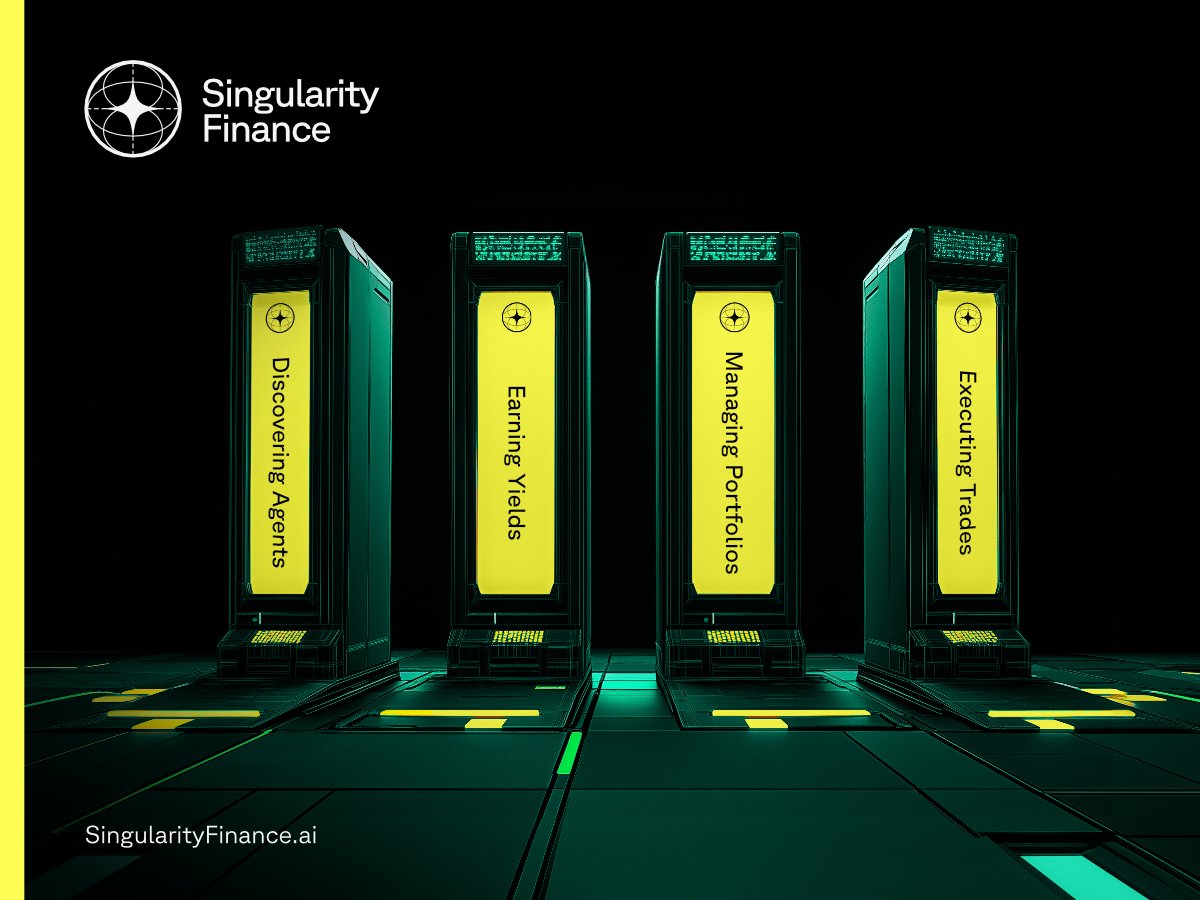
SFI's four-pillar approach reflects practical development priorities rather than marketing categories.
Earn comes first because yield optimization has immediate utility and clear value proposition. Users see direct benefits, we gain operational experience, revenue supports further development.
Invest builds on Earn's foundation by adding portfolio coordination and AI-guided strategy selection. Same underlying optimization capabilities, expanded to multi-asset coordination.
Trade extends optimization to active strategies through autonomous agents and algorithmic execution. Natural progression from passive to active optimization.
Explore completes the ecosystem by providing discovery infrastructure for AI agents and projects. Network effects from the other pillars support discovery platform adoption.
The sequence matters strategically. Each pillar creates capabilities that enable the next. Revenue from early pillars funds development of later ones.
We're not building all four simultaneously. Focused execution on Earn establishes foundation for systematic expansion through Invest, Trade, and Explore.
Current reality: Earn pillar operational with yield vaults processing deposits. Invest pillar development progressing with portfolio chat interface beta testing.
Trade and Explore pillars in planning stages with technical architecture defined but implementation timeline dependent on Earn and Invest success.
Strategic patience creates better products than rushing to market with incomplete features across all pillars.
Build depth before breadth. Prove value before expansion. Generate revenue before burning capital.
The four pillars represent strategic direction, not simultaneous product launches.
Execution sequence reflects resource constraints and market validation requirements.
Each pillar succeeds by building on previous pillars rather than operating independently.
Strategic framework guides development priorities while maintaining realistic execution timelines.
Four pillars, sequential development, systematic capability building.
Strategy provides direction, execution determines timeline, user feedback shapes implementation.
The pillar approach scales naturally as capabilities and resources grow through operational success.
Building the complete platform through proven sequential development rather than speculative parallel execution.
4
10
68
3,024
SingularityDAO retweeted

Silicon Valley Ai Agents LaunchPad (straight outta Palo Alto Research Lab) is reppin Singularity Venture Hub 🌟
WTF is SVH? 🤔
Think of it as your top-tier backer for AI Web3 projects, who:
• funds your startup ideas (AI, DePIN, RWA, infrastructure, gaming, L1/L2)
• guides your tokenomics and governance design
• helps you access launchpads & CEX listings before you even finish your whitepaper
⚡️ What They Offer:
• $50M AUM treasury management with smart liquidation & yield strategies
• Liquidity provisioning across 20 CEXs to protect your tokens
• Access to 500 KOLs & 50 VCs for introductions and partnerships
💎 Why It Matters:
Most incubators are just presentations.
SVH provides:
• Pre-seed & seed funding
• Tokenomics / governance support
• Market making & liquidity management
• Full GTM and community growth programs
The Team:
• SingularityNET OGs co-architects of the ASI alliance (Fetch.ai Ocean SingularityNET)
• Web3 C-levels with years of experience and industry connections
✉️ Call to Action
DM us for introductions!
@tonyssd @platinumvc1 @tonydzi
Important Links, Token Metrics, etc:
✉️ X: x.com/singularitynet
📱 Telegram: t.me/singularitynet
📸 Instagram: instagram.com/singularitynet…💻Linkedin: linkedin.com/company/singula…
📘 Facebook: facebook.com/singularityNET.…
📺 Youtube: youtube.com/@SingularityNET
🗂️ Github: github.com/singnet/
💎 Discord: discord.gg/snet

2
27
1,525
SingularityDAO retweeted
5 Sep 2025
SFIREP represents our approach to sustainable user engagement rather than extractive tokenomics.
The system rewards platform participation through points that unlock platform benefits. Vault usage, community engagement, referrals - activities that actually contribute to ecosystem growth.
Unlike token airdrops that create selling pressure, SFIREP creates holding incentives through ongoing platform access and benefits.
The design aligns user success with platform success. More engagement improves the platform for everyone while creating individual benefits for active participants.
We're building sustainable engagement mechanics rather than speculative reward systems.
Long-term thinking applied to user incentives and platform growth.
7
12
62
2,395
SingularityDAO retweeted
3 Sep 2025
SFI vault security operates through multiple layers rather than single points of protection.
Smart contract security includes comprehensive auditing, formal verification where possible, and gradual deployment procedures. Code quality matters more than development speed when managing user funds.
Operational security covers admin key management, upgrade procedures, and emergency response protocols. Multi-signature requirements, time delays, and community oversight for major changes.
Economic security involves position sizing limits, protocol diversification, and stress testing under adverse conditions. Never concentrate too much risk in single protocols or strategies.
Integration security requires careful evaluation of external protocols before fund deployment. Security audits, track record analysis, and ongoing monitoring for unusual activity.
The security-first approach sometimes means rejecting high-yield opportunities that don't meet our risk standards. Better to miss opportunities than lose user funds.
Security enables sustainable growth by building trust through demonstrated reliability.
Consistent security practices protect users and platform reputation simultaneously.
10
13
66
4,710
SingularityDAO retweeted
29 Aug 2025
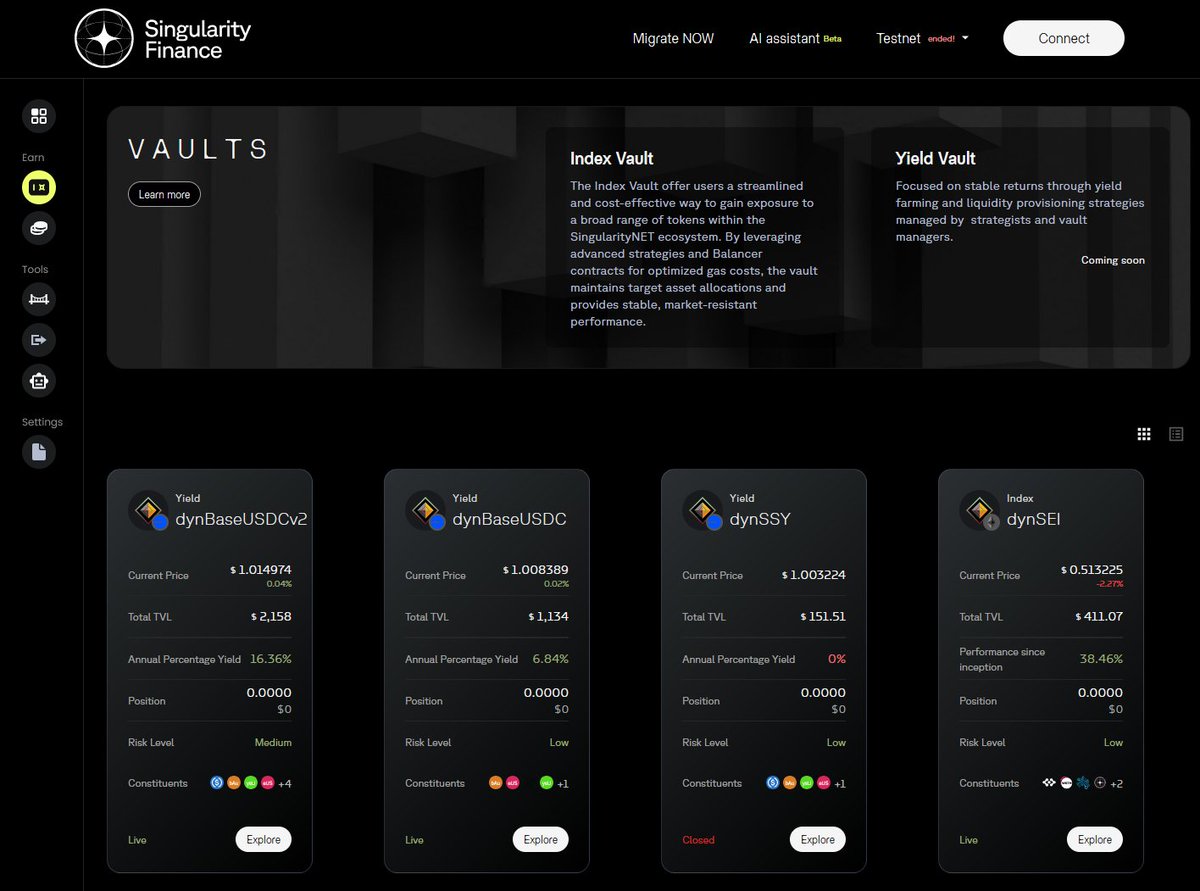
SFI vault architecture balances three critical factors: yield optimization, risk management, and capital efficiency.
Our dynamic rebalancing system continuously evaluates protocol health, market conditions, and opportunity costs. When conditions change, allocations adjust automatically without user intervention.
Risk management happens at multiple levels. Protocol selection through security audits and track record analysis. Position sizing based on historical volatility and correlation patterns. Exit strategies triggered by predefined risk thresholds.
Capital efficiency means your funds work harder. Active management captures opportunities that passive strategies miss. Gas optimization reduces transaction costs. Compound timing maximizes growth.
The result: consistently optimized yields without constant attention to market movements.
Professional fund management accessible through simple vault deposits.
Your capital, our expertise, automated execution.
11
11
70
13,058
SingularityDAO retweeted
27 Aug 2025
What's most critical for DeFi's mainstream adoption?🤔🏦
33%
Better user experience
27%
AI integration
15%
Regulatory clarity
25%
Institutional adoption
52 votes • Final results
3
23
2,242
SingularityDAO retweeted
26 Aug 2025
Network effects create the strongest competitive moats in technology, and they apply to financial infrastructure platforms.
Traditional network effects work through user connections. Each additional user makes the service more valuable for existing users. Telephone networks, social media platforms, marketplaces - value increases exponentially with user growth.
Financial platforms have similar but more complex network effects. More users create deeper liquidity, better pricing, improved risk distribution, and enhanced opportunities for optimization.
SFI's network effects operate through several mechanisms simultaneously:
Liquidity aggregation effects: More user capital enables access to larger opportunities, better pricing, and reduced slippage impact. Protocols prefer working with larger capital pools.
Data network effects: More users generate more transaction data, market behavior patterns, and optimization opportunities. AI models improve with larger datasets.
Development network effects: Larger platforms attract better developers, more protocol integrations, and enhanced feature development. Success attracts talent and partnerships.
Risk distribution effects: Larger user base enables better risk distribution across strategies and time periods. Diversification benefits compound with scale.
Intelligence network effects: More users testing different strategies provide more learning opportunities for AI optimization. Failed experiments benefit everyone through improved models.
Cost distribution effects: Development costs, security expenses, and compliance infrastructure get distributed across larger user base, reducing per-user costs.
These network effects create increasing returns to scale. Early growth accelerates future growth through improved value proposition for new users.
Competitive implications: Platforms with network effects become increasingly difficult to challenge as they scale. Late entrants face established platforms with superior network benefits.
Strategic focus: Achieving network effect thresholds becomes primary goal. Everything else supports this objective. Product decisions, partnerships, marketing - all evaluated through network effect lens.
User acquisition strategy balances growth speed with user quality. High-value users create stronger network effects than high-volume users. Platform improvement attracts better users, creating virtuous cycle.
Platform thinking differs from product thinking. Products optimize for individual user value. Platforms optimize for ecosystem value and network effects.
SFI builds platform infrastructure designed for network effect amplification. Each user makes the system better for everyone else.
The strongest competitive moats come from network effects, not just technology advantages.
Scale creates strategic advantages that technology alone cannot replicate.
Network effects turn user growth into competitive protection.
Build the platform, grow the network, compound the advantages.

2
7
35
2,252
SingularityDAO retweeted
25 Aug 2025
Institutional adoption of DeFi follows predictable patterns from previous technology cycles.
Early exploration phase involves small allocations for learning and experimentation. Institutions test waters with limited capital while building internal expertise and risk management frameworks.
Pilot programs come next. Larger allocations to proven strategies with established risk parameters. This phase focuses on operational integration and compliance framework development.
Scaled deployment follows successful pilots. Meaningful capital allocation to DeFi strategies that have demonstrated consistent risk-adjusted returns within institutional requirements.
Full integration represents DeFi becoming standard part of institutional portfolio management. No longer experimental or alternative, but core infrastructure for capital allocation.
We're currently in early exploration phase for most institutions. A few have moved to pilot programs. Scaled deployment and full integration await better tooling and clearer regulatory frameworks.
Institutional requirements differ significantly from retail user needs. Professional interfaces, comprehensive reporting, compliance integration, institutional-grade security, and predictable operational procedures.
Current DeFi tools were built for crypto natives, not traditional finance professionals. The interface gap explains slow institutional adoption despite attractive yields.
SFI bridges this gap through professional-grade tools that translate DeFi opportunities into institutional language. Risk management, performance attribution, compliance reporting, professional security standards.
Timing institutional adoption correctly creates massive opportunity. Too early means building for customers who aren't ready. Too late means competing against established players.
The window is opening now. Institutions are building internal capabilities and evaluating infrastructure providers. First-mover advantages in institutional tooling compound rapidly.
Traditional finance capital dwarfs current DeFi TVL. Even small institutional allocation percentages represent massive capital flows into decentralized protocols.
When pension funds, endowments, and family offices allocate meaningful percentages to DeFi strategies, total addressable market expands dramatically.
SFI positions for this institutional wave through professional infrastructure and institutional-grade capabilities.
Early retail adoption proves the technology. Institutional adoption scales the market.
Build for institutions while serving retail users. Capture both phases of adoption.
The institutional adoption timeline is measured in years, not months. But preparation starts now.

2
9
53
2,658
SingularityDAO retweeted
22 Aug 2025
AI models improve through experience, not just initial training.
SFI's machine learning systems continuously adapt to changing market conditions. New protocol launches, changing tokenomics, evolving user behavior patterns; all feed into model refinement.
The system learns from successful strategies and failed experiments. Pattern recognition improves with more data. Risk assessment becomes more accurate through market cycle experience.
Model updates happen gradually through continuous learning rather than dramatic version releases. Stability matters more than cutting-edge features when managing user funds.
Performance improvements compound over time. Better decisions lead to better outcomes, which generate more data for further improvement.
The AI gets smarter as it gains more market experience.
Experience-based learning creates competitive advantages that competitors can't easily replicate.
2
9
53
2,212
SingularityDAO retweeted
21 Aug 2025
SFI's cross-chain strategy focuses on opportunities, not ideology.
Different chains offer different advantages. Ethereum has the most established DeFi ecosystem and highest TVL. Polygon provides low fees and fast transactions. Arbitrum offers Ethereum compatibility with better scalability.
The AI evaluates opportunities across all supported chains rather than limiting analysis to single networks. Best yields might exist on different chains at different times.
Cross-chain optimization requires careful consideration of bridge risks, gas costs, and timing. Moving funds between chains creates additional risk and expense that must justify the yield improvement.
Our approach: Deploy where opportunities justify the complexity, stay chain-agnostic in strategy selection, manage bridge risks through position sizing and timing.
Users shouldn't need to understand individual chain characteristics. The system handles cross-chain complexity while users see unified optimization results.
Multi-chain by necessity, not preference.

3
7
53
2,136