
Top DeFi vaults, strategies, rankings, risk and returns
Joined October 2021
- Tweets 2,812
- Following 1,731
- Followers 4,988
- Likes 1,903
892 Photos and videos


Pinned Tweet

5 Oct 2024
Check the latest self-custodial open strategies here: tradingstrategy.ai
The Open Strategies #trade automatically on #DEXes and #DeFi protocols. Trading capital is in on-chain vaults so you can withdraw your crypto whenever you want.
24
40
186
20,581
Jun 12
The evolution of Ethereum vault standards, and the shortcomings of the original ERC-4626

1
1
7
849
Jun 12
On the risk taking of pre-IPO orderbooks
Jun 12

This is exactly right and it is the part most people miss.
The pop is not a mistake, it is the implied fee the order book gets paid for showing up and taking risk on this and the NEXT tickers. ECM is a momentum business first.
The new interesting question is what happens to that fee when the clearing price already exists.
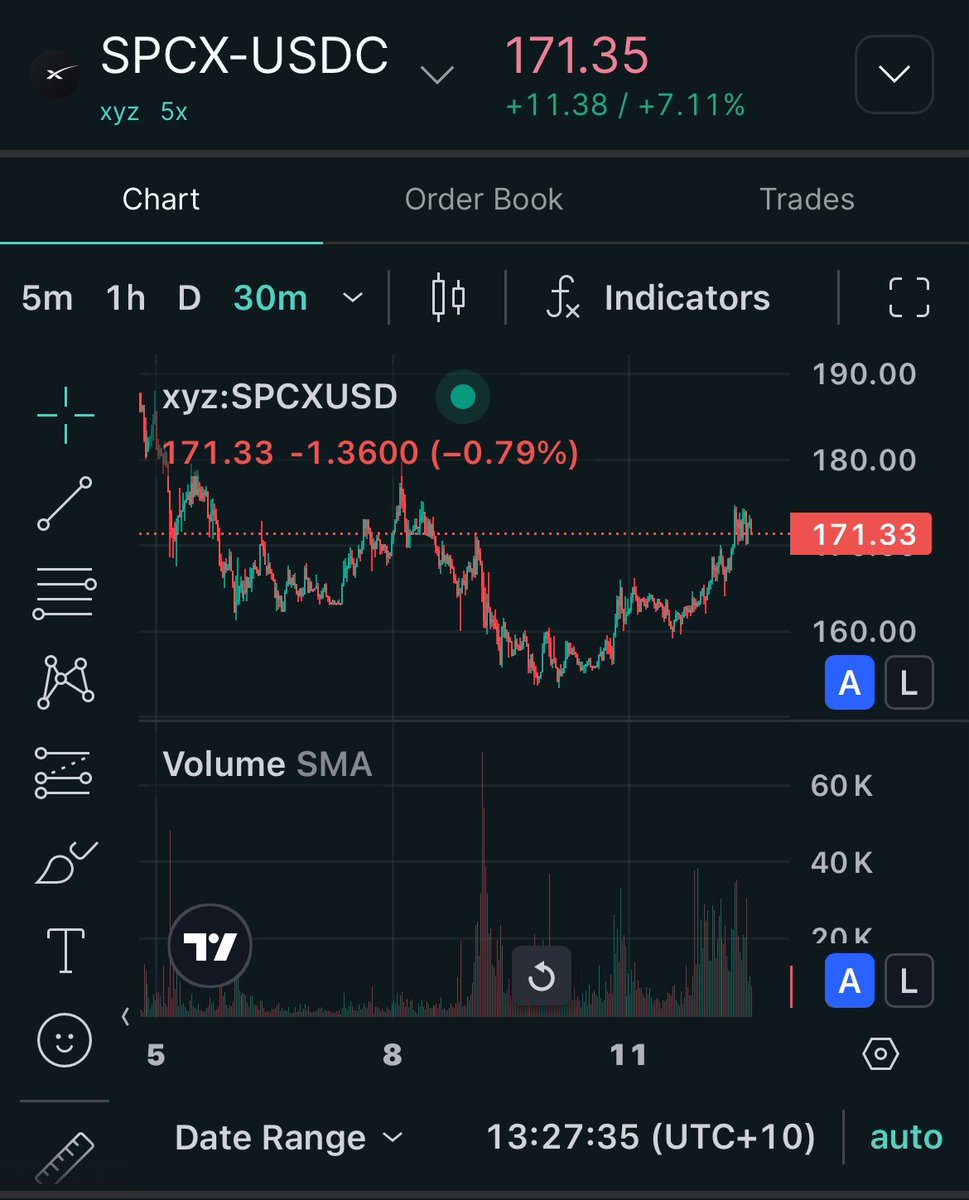
On @HyperliquidX the $SPCX perp has been pricing SpaceX for weeks, in public, before a single banker built a book. The risk those day-one investors get paid 20% to absorb, uncertainty about where the thing actually trades, is exactly the risk a continuous pre-IPO mark removes.
The pop is the price of deferred discovery. Move the discovery forward and you start to see what the pop was really compensating.
We are going to see if it was @chameleon_jeff and his traders, us included with Texas Hedge, who priced this to perfection, and not @elonmusk or the bankers. @matt_levine 👀
2
238

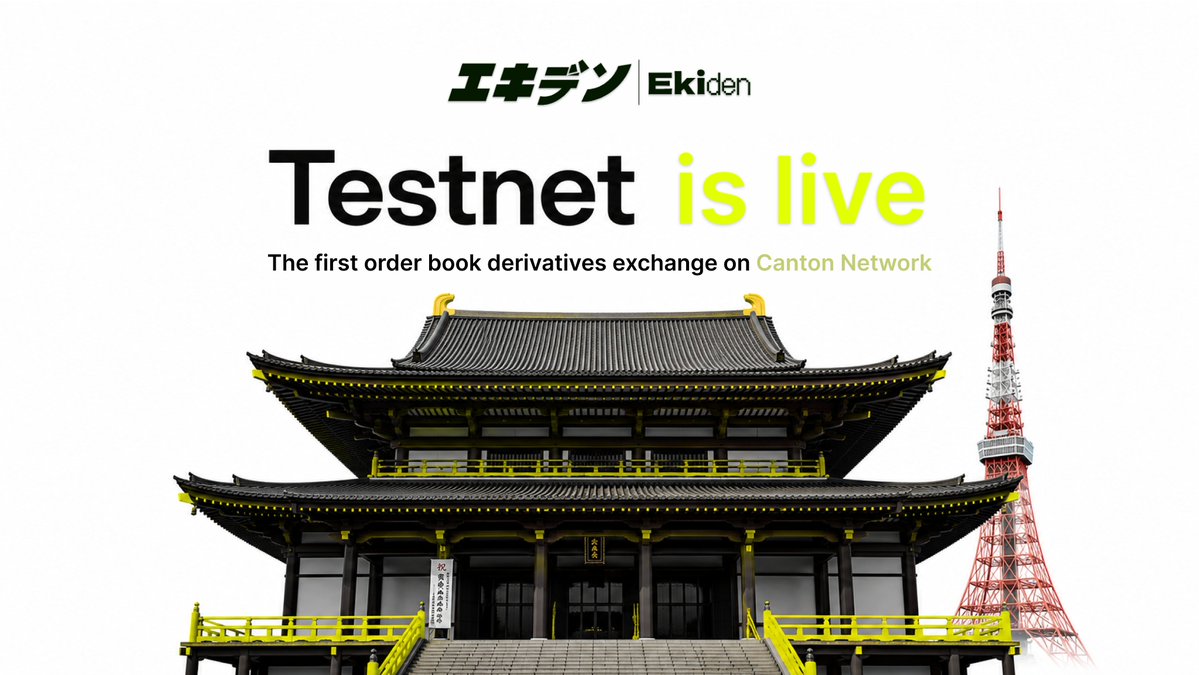
Ekiden is now live on the Canton Testnet!
This marks the launch of the first CLOB based derivatives exchange on @CantonNetwork, bringing professional trading infrastructure to the network.
The app is fully operational, including a rich API, points, referral, and VIP programs.
We are now onboarding liquidity and integration partners. If you are looking to integrate, feel free to reach out.
Several trading firms are already integrated and actively quoting in the books.
Upcoming milestones:
- Paper Trading
- Public Market Maker Program
- Mainnet
Trade now: app.cnt.ekiden.fi/
30
19
162
11,281
Trading Strategy retweeted

Jun 10
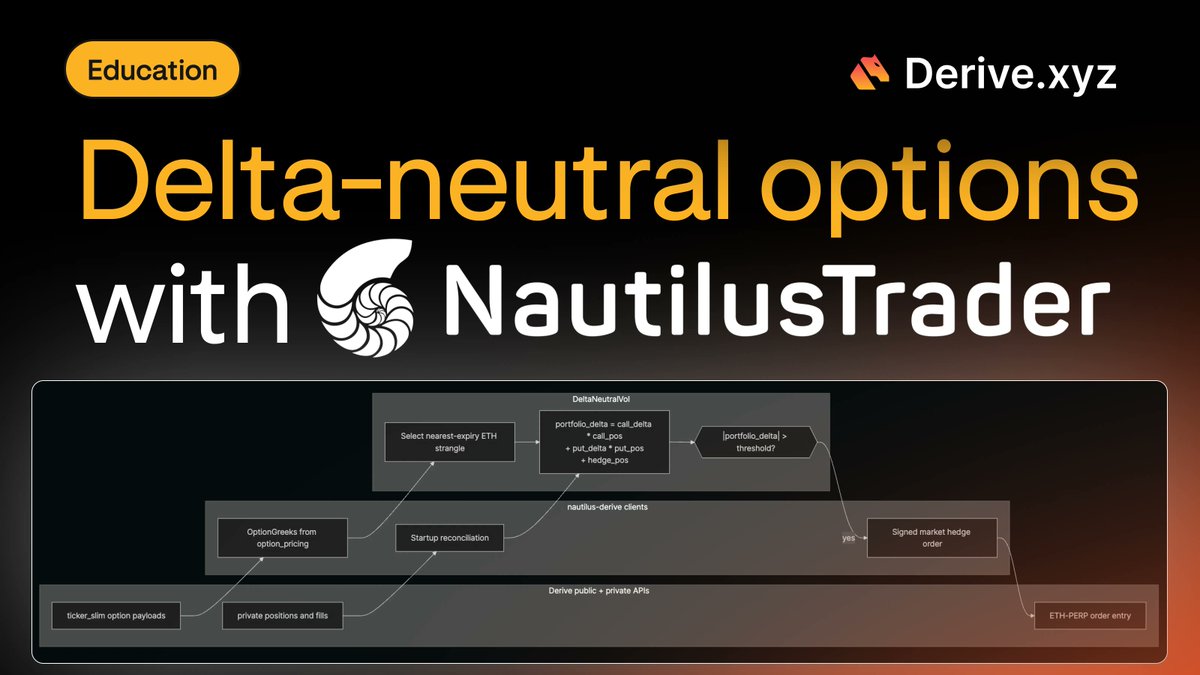
The industry is waking up to the sustainability of options yield.
Unlike traditional yield farming, it's more nuanced; selling vol, managing delta, hedging.
If you've wanted to run options yield strategies onchain, our partners at @NautilusTrader just put together a guide that handles the hard parts:
nautilustrader.io/docs/night…
3
7
124
8,343
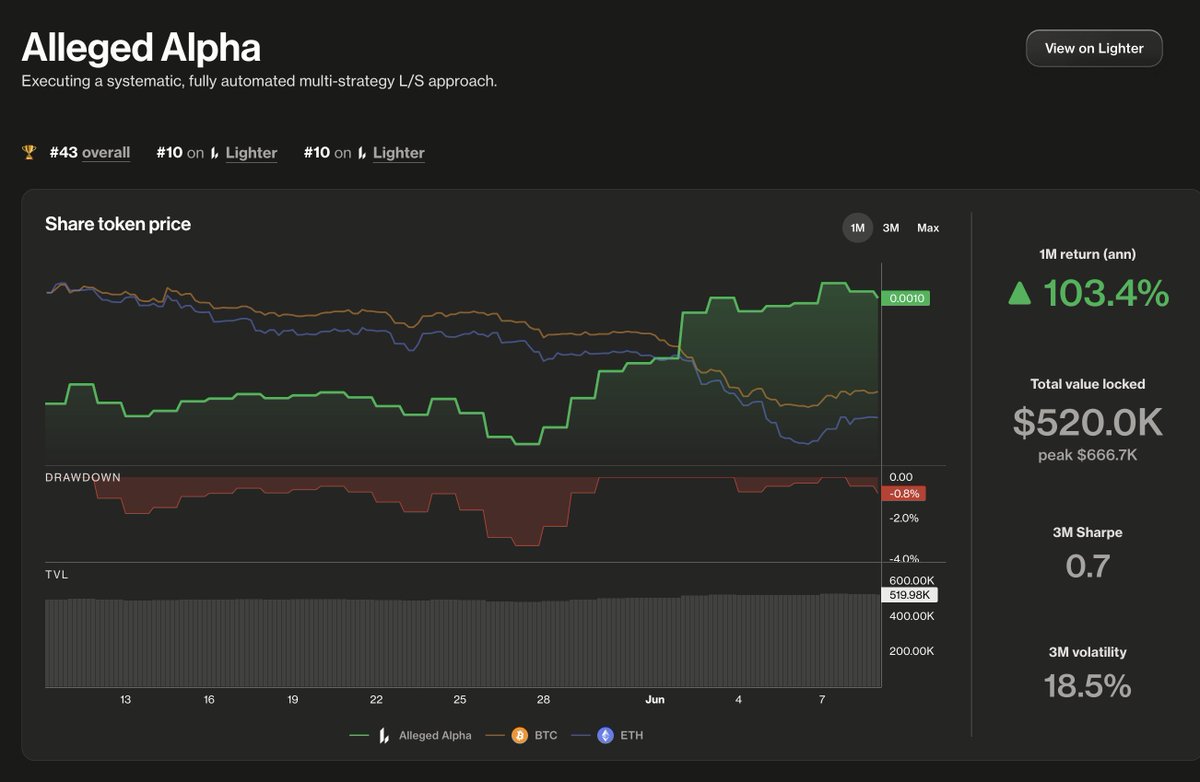
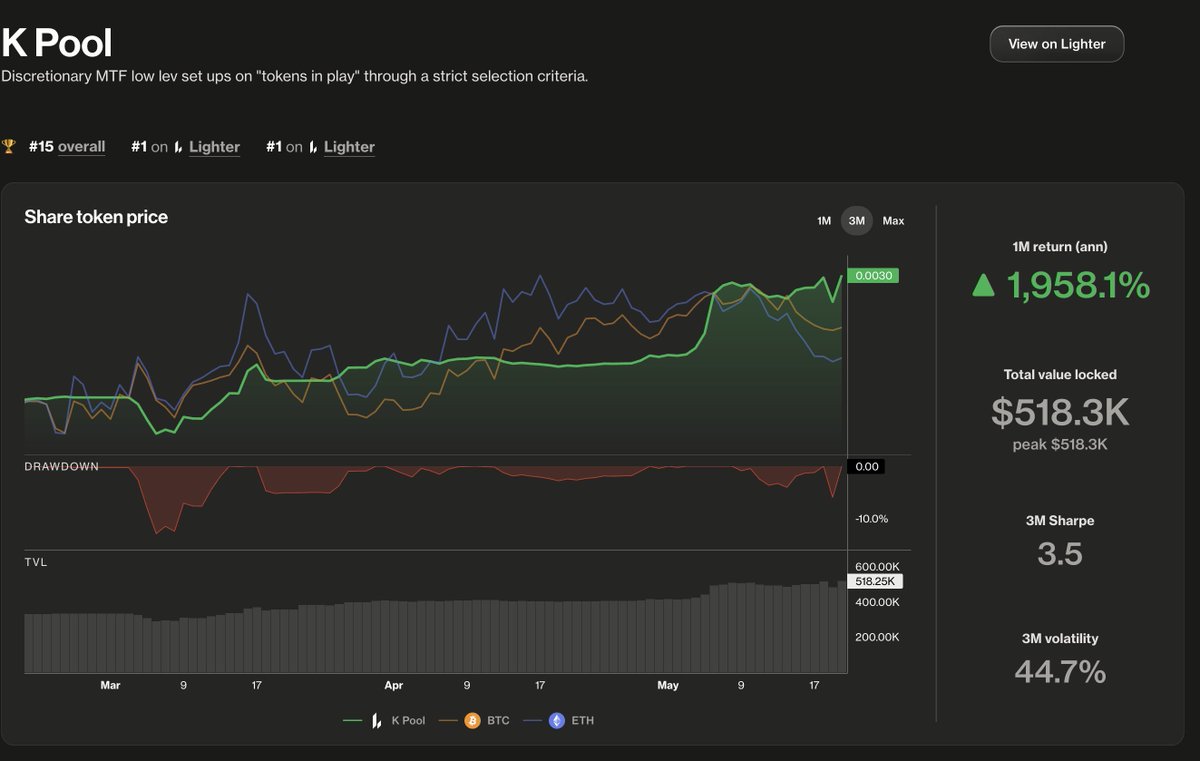
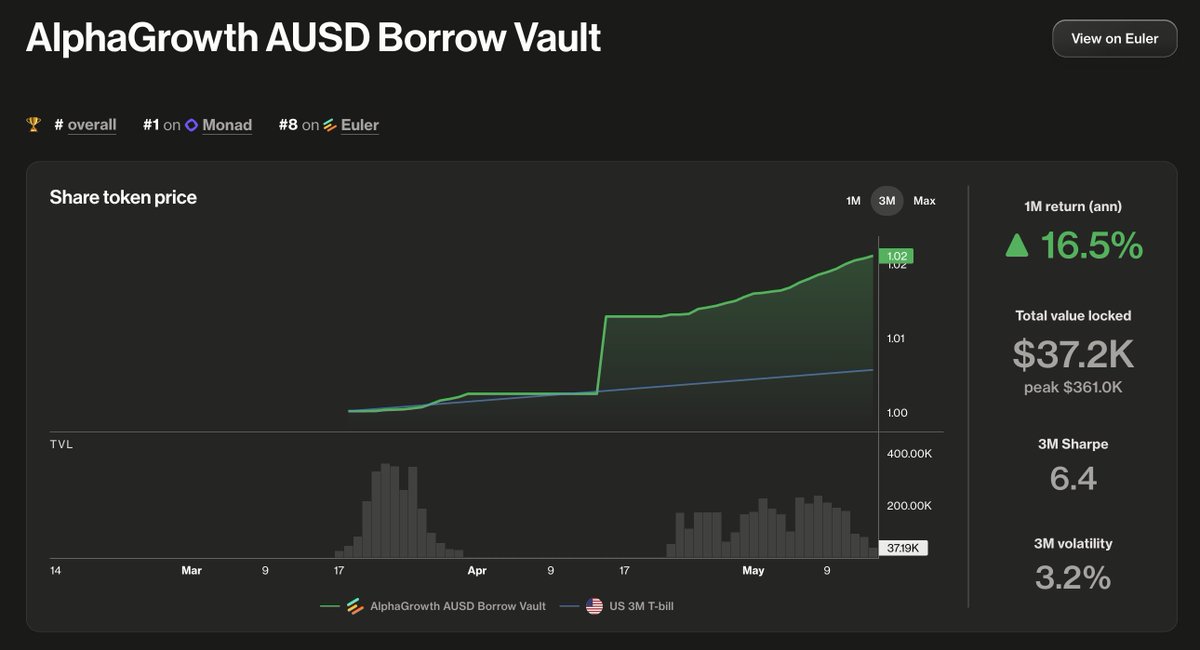
Alleged Alpha Lighter vault by @allegedalpha had a blast recently.
This long/short multi-strategy vault has gained 6% net (100% CAGR) over the last month.
It's currently in the top 50 vaults.
tradingstrategy.ai/trading-v…
5
313
The new Aave risk framework proposal from LlamaRisk
The framework systematically quantifies and monitors risk across four layers — assets, bridges, automated oracles, and chains — to set and continuously adjust Aave's lending parameters (LTV, caps, collateral eligibility) so that protocol exposure never exceeds what on-chain evidence supports.
LAYER 1: ASSET RISK
- Asset classification: governance-ratified allowlist mapping, comparable asset identification
- Multi-chain evaluation: bridge topology, smart contract divergence, oracle paths per chain
- Smart contract audits: firm reputation, deployed version coverage, unresolved critical/high findings, incident history
- Bug bounty coverage: program existence, $50k minimum payout floor, bounty-per-million-TVL scaling, scope coverage
- Liquidity & market structure: secondary market depth vs largest borrower, liquidation bonus/slippage, LP diversity, venue footprint, holder concentration, peg deviation (1% over 2-day window), volume profile
- Timelock requirements: timelocks on parameter changes, mint/burn authority, oracle authority, bridge authority, upgrade paths; delay sufficiency (Level 0-5)
- Signing authority decentralisation: signer-set composition, quorum thresholds, identity verification, custody standards; MPC-specific: shard count/distribution, custody framework, open-source crypto library
- Legal disclosures: issuer jurisdiction, redemption rights, asset-backing terms, custodian arrangements, regulatory status
- Holder claims seniority: holder class identification (canonical, bridged, wrapper, custodied), seniority ordering, cross-chain symmetry
- Asset backing structure: proof-of-reserves attestation, reserve composition, on-chain visibility, attestation cadence, backing-asset price observability
- Issuer operational stack: hosting, key custody, incident response, change management, third-party dependencies
- Incident communication: escalation paths, 24/7 reachability, pre-notification for material changes
- Continuous due diligence: quarterly refresh, delta reports, per-chain coverage re-evaluation
- Material change taxonomy: tracks ~30 change types including new mint/burn authorities, MPC/multisig changes, collateral type changes, oracle adapter swaps, feed swaps, rate-limit changes
- Deprecation triggers: liquidity decay, oracle stability degradation, feed manipulability, thin feed conditions, Chainlink risk tier flags, backing impairment
- Oracle treatment: Chainlink risk tier, internal oracle path identification, flash-loan deviation testing, exchange-rate monotonicity, single-transaction manipulation resistance
LAYER 2: BRIDGING RISK
- Bridge topology: origin chain, canonical supply, representation type (mint-and-burn / lock-and-mint / native), verifier configuration per route
- Verifier set properties: independent verifier count, operator diversity (organizational, geographic, infrastructure), supply-chain isolation
- Library & configuration: receive library pinning, upgrade path control, route topology
- Bridge authority timelocks: timelocks on ownership transfer, verifier-set changes, library upgrades, rate-limit changes, mint/burn authority grants
- Pause pathway: issuer-side pause, vendor halt capability, Aave-controllable pause, multi-path documentation
- Bridge-layer custody: institutional-grade custody verification, key custody assessment, change pre-notification
- Rate limiting: native or external rate-limiting per route, inbound/outbound limits, sizing based on highest sustained flow headroom
- Incident response: 24/7 redphone across vendors/attestors/issuers, written exploit procedures, rehearsal records
- Monitoring teams: dedicated security teams for bridge stack and issuer, automated anomaly detection, pause authority
- Bridge configuration lifecycle: per-lane/per-route/per-direction initial limits, comparable issuer references, adjustment documentation
- Bridge stack evaluation: vendor operational security, code quality, audit reports, exploit history/recurrence, remediation quality
LAYER 3: MONITORING & AUTOMATED RISK ORACLES
- Continuous monitoring: authority-queue activity, governance activity, infrastructure changes, direct asset-state (bridge balance reconciliation, backing-asset state, minting/burning anomalies)
- Automated Freeze Guardian triggers: backing-asset price signals, reserve composition, redemption-buffer replenishment, exchange-rate manipulation, locked-vs-minted supply mismatches, unannounced verifier/library changes
- Supply/Borrow Cap Oracle triggers: secondary market thinning, holder exit velocity, cross-chain supply concentration, proportional cap adjustments
- Risk Steward parameters: minDelay settings (36h for caps/rates, 72h for collateral/E-Mode, 48h for Pendle discount), maxPercentChange bounds
- Umbrella coverage: unstaking cooldown sizing, freeze conditions under asset-level stress, upstream signal tracking, bad debt recognition timeline
LAYER 4: CHAIN RISK
- Network architecture: consensus mechanism, finality model, settlement layer, EVM divergence, audit coverage, bug bounty
- Decentralisation: validator/sequencer count and identity, geographic and client diversity, staking economics, stake concentration
- Finality & withdrawals: finality lag, reorg history/depth, L2 withdrawal delays, forced-inclusion/escape-hatch availability, fraud-proof/zk-proof maturity, MEV characteristics
- Chain governance: upgrade authority, multisig composition/quorum, timelock delays, pause/emergency authority, governance token distribution, voting concentration
- Operational history: halt/reorg incidents, post-mortems, time-to-recovery, recurrence patterns
- Ecosystem adoption: aggregate TVL, stablecoin TVL/dominance, active addresses, protocol count/concentration
- DeFi vertical coverage: lending, DEX, stablecoins, derivatives, oracle infrastructure gaps
- Liquidity infrastructure: DEX depth on major pairs, bridge support, on/off-ramp corridors, CEX withdrawal corridors, competing lending market parameters
- Tooling & monitoring: block explorer parity, indexing platform support, RPC provider diversity, risk-monitoring tooling availability
- Native/major asset liquidity: native token DEX volume and price stability, major asset (ETH, BTC, stablecoins) depth, organic vs incentive-driven volume
- Per-asset deployment constraints: chain-tier upper bounds on LTV, supply cap, borrow cap; cross-chain expansion constraints; quarterly tier refresh
CROSS-CUTTING
- Remediation timelines: 1-month implementation target, hard-block triggers for immediate review, backlog persistence tracking
- Risk classification: asset-to-chain tier mapping, exposure tier constraints, parameter stack alignment, E-Mode configuration, comparable asset benchmarking
Jun 9

LlamaRisk has published an ARFC proposing a new standardized Risk Framework that governs all assets on @Aave V3, V4, and Aave Horizon.
The framework establishes standards for evaluating asset, bridge, and chain-level risk criteria, and for monitoring and automated risk management systems.
2
1
6
937
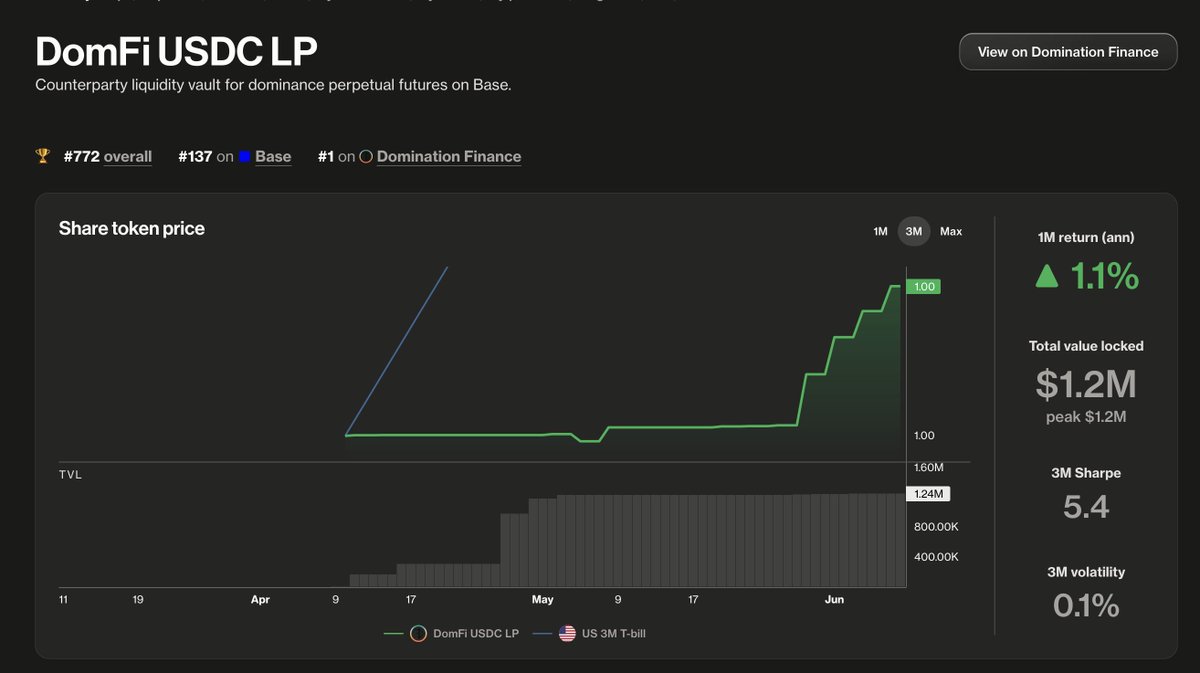
DomFI USDC Domination Finance vault on Base.
The vault is currently yielding 1%, but was only launched couple of weeks ago.
This new AMM liquidity provider vault by @dominationfi serves as the sole counterparty within Domination Finance, a perpetual futures exchange where traders take leveraged positions on dominance indices — each asset's share of total crypto market capitalisation.
The protocol has three participants: traders, liquidity providers (LPs), and the oracle. Traders deposit USDC as collateral and open leveraged positions on dominance pairs. LPs deposit USDC into a shared vault that acts as the counterparty to every trade — when traders profit, the vault pays; when traders lose, the vault collects. The oracle computes dominance from weighted exchange price feeds across the top 200 cryptocurrencies and publishes verified values on-chain.
Funding is a continuous per-block payment between longs and shorts. The side with more open interest pays the side with less. The rate scales with the size of the imbalance — bigger skew means higher funding. This mechanism incentivises balanced open interest and anchors perpetual prices to the oracle index.
tradingstrategy.ai/trading-v…
1
6
9
550
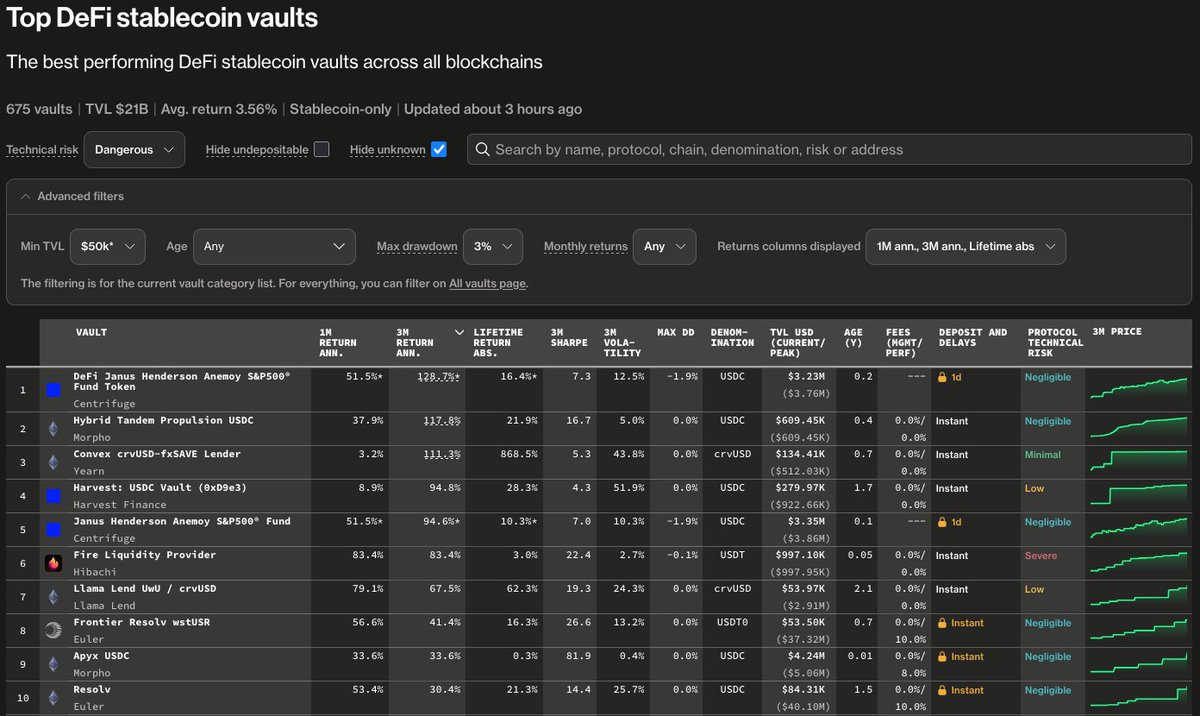
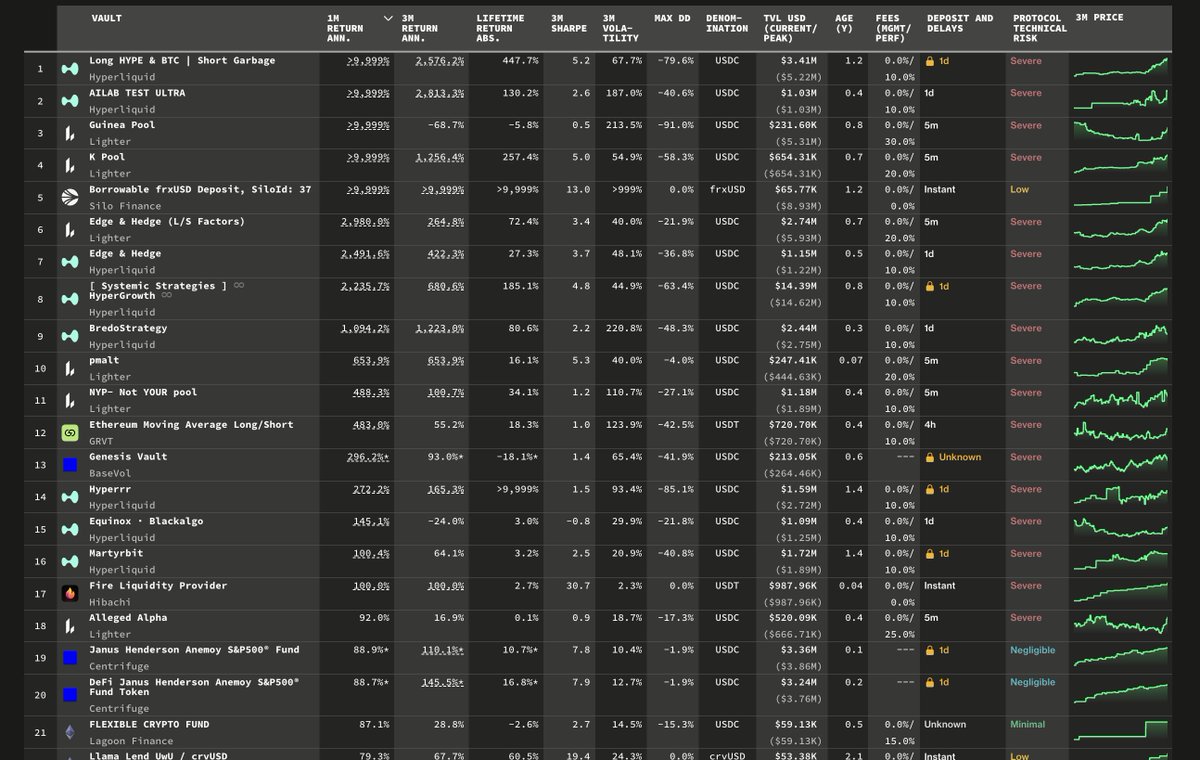
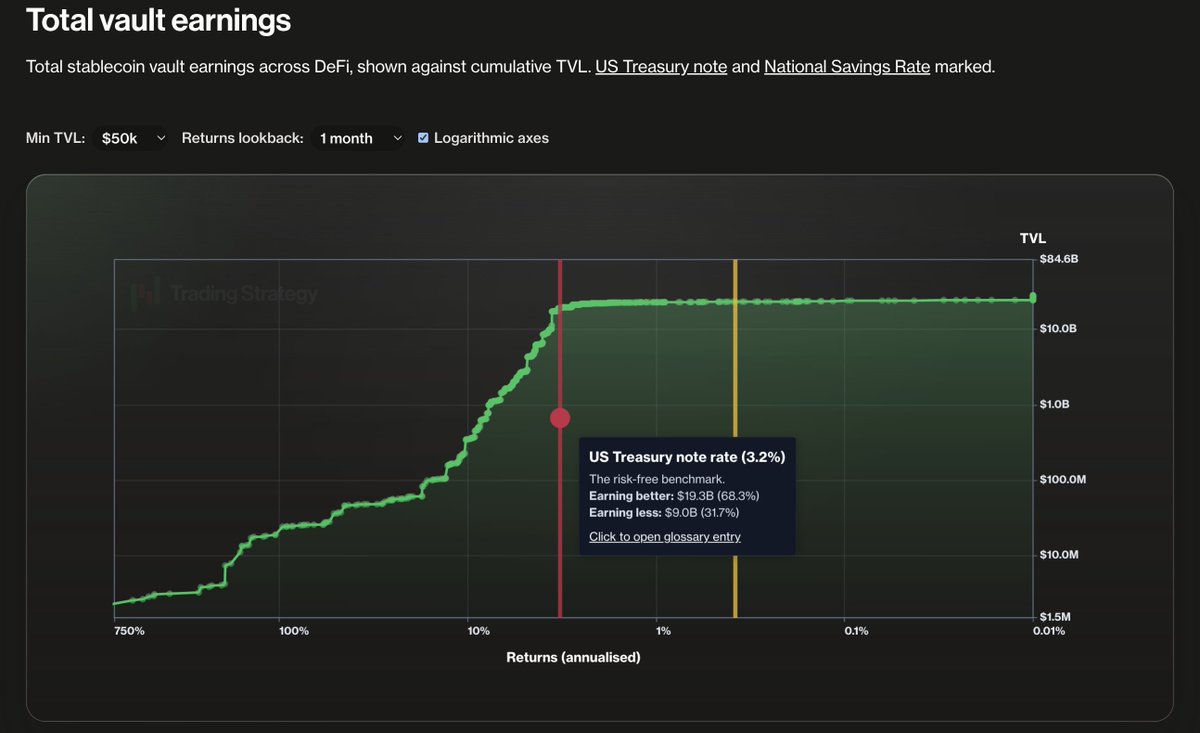
Markets have been very choppy in the few months, but how about #DeFi stablecoin #vaults that have generated good returns with small drawdowns in the past three months? The Top 10 vaults show very interesting results! Check on Trading Strategy's live #dashboard:
tradingstrategy.ai/trading-v…
1
6
213
Arrakis about "impermanent loss" on Hyperliquid

3
324

Portfolio margin is technical, but simple, and it quietly decides how much capital a trading firm wastes.
The most widespread approach in crypto, position-level margin, looks at each trade on its own and requires you to post collateral against each one. So a firm long BTC on one venue and short BTC perps on another, a book that's close to flat, gets charged for both legs as if they were separate bets. The better hedged you are, the more you get penalized. That's backwards.
Portfolio margin fixes the lens. It stress-tests the whole book across price and volatility moves, then sizes margin to the risk that's actually left after offsetting positions cancel out. Every TradFi prime broker has margined equities this way for decades.
The catch is that TradFi portfolio margin operates within a single clearinghouse, where everything nets out because it all sits in one place. Crypto has no shared clearinghouse. Your positions live across CeFi and DeFi venues that can't net what they can't see. Building one risk view across all of them is the hard part.
That's what @sparkdotfi is running on @ArkisXYZ .
Jun 3

A portfolio is not a collection of isolated positions.
Yet much of crypto credit infrastructure still treats it that way.
Institutional trading firms manage exposure across exchanges, venues, and strategies simultaneously.
Evaluating each position independently can overstate the risk that actually matters: the portfolio as a whole.
That's why portfolio-based margining matters.
Spark Prime uses @ArkisXYZ technology to evaluate exposure across DeFi and CeFi venues, allowing financing decisions to reflect net portfolio risk rather than treating each position in isolation.
Read more about Spark Prime👇
paragraph.com/@spark-11/spar…
1
1
6
619
Trading Strategy retweeted

Jun 2
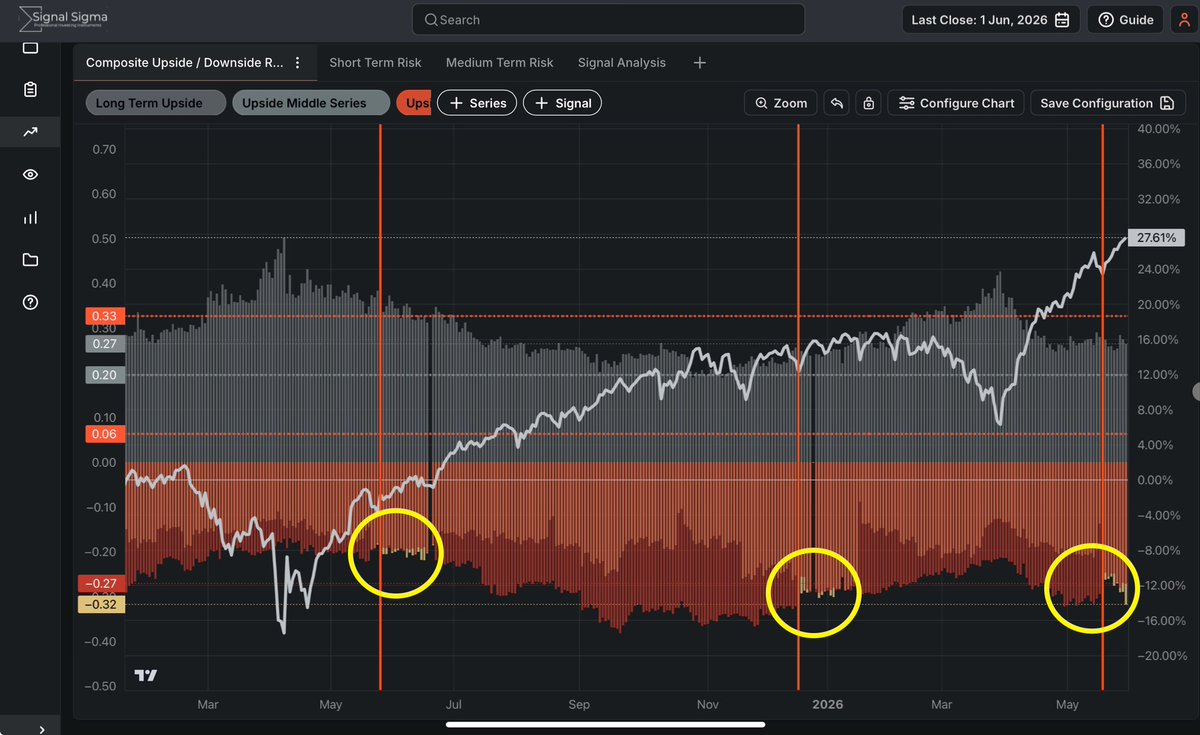
The options market has started to price in more risk in the short term than in the medium term. This is unusual because we would expect for uncertainty to increase along with the time horizon.
There is historical precedent for this, and bears are not going to like it. Given that risk is sufficiently hedged, the market usually rallies …/
1
3
33
14,305
Trading Strategy retweeted

Jun 3
KyberSwap 🤝 @o2dotapp
KyberSwap has integrated o2 as a new PMM liquidity source, bringing deeper liquidity and better rates for traders.
Just trade on KyberSwap.
9
4
54
2,910
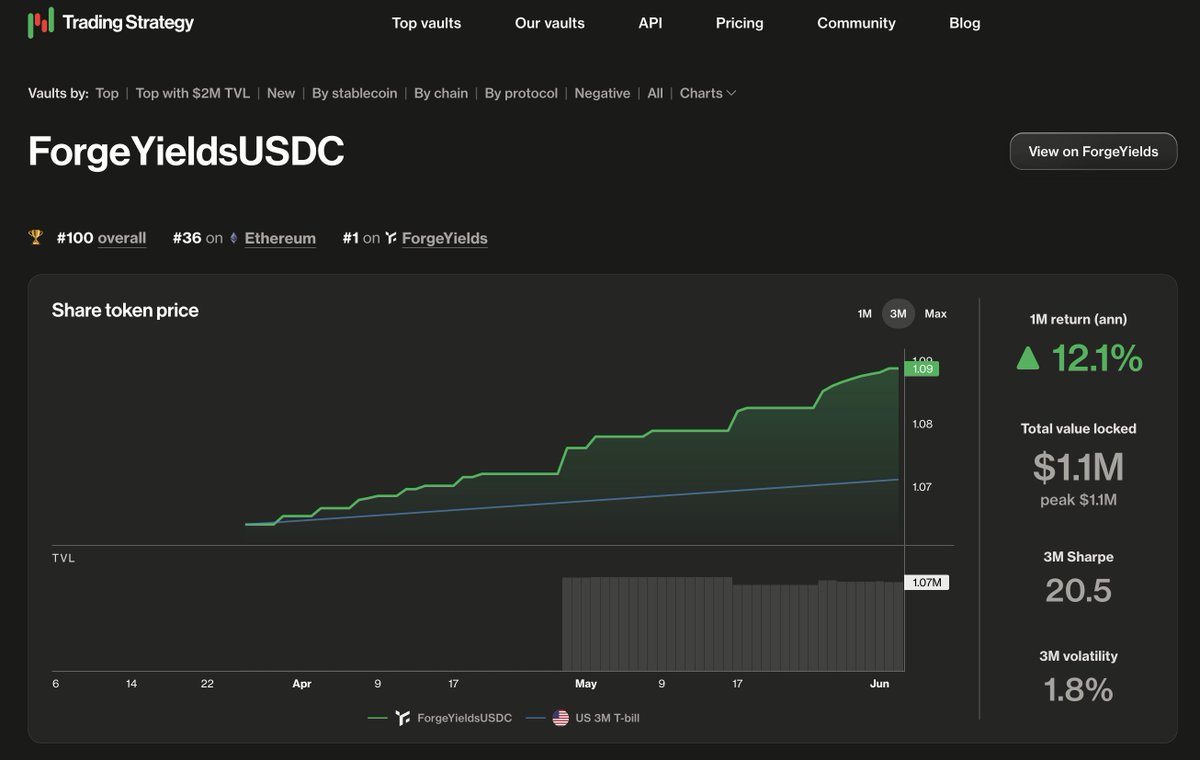
ForgeYields USDC is currently earning 12% annualised.
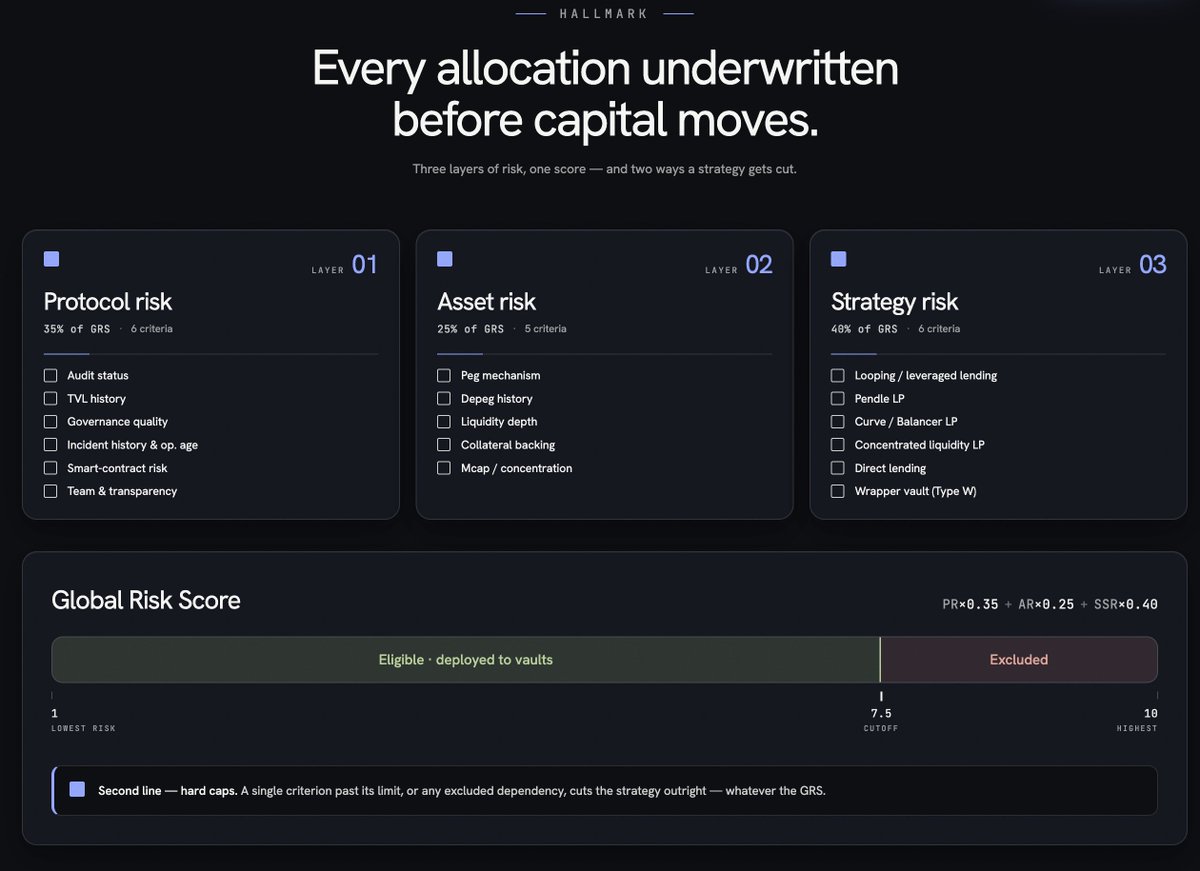
@ForgeYields allocates to looping / leveraged lending.
Pendle, Curve, Balancer, concentrated liquidity, and direct lending opportunities based on their Hallmark risk engine.
tradingstrategy.ai/trading-v…
2
5
499
May 28
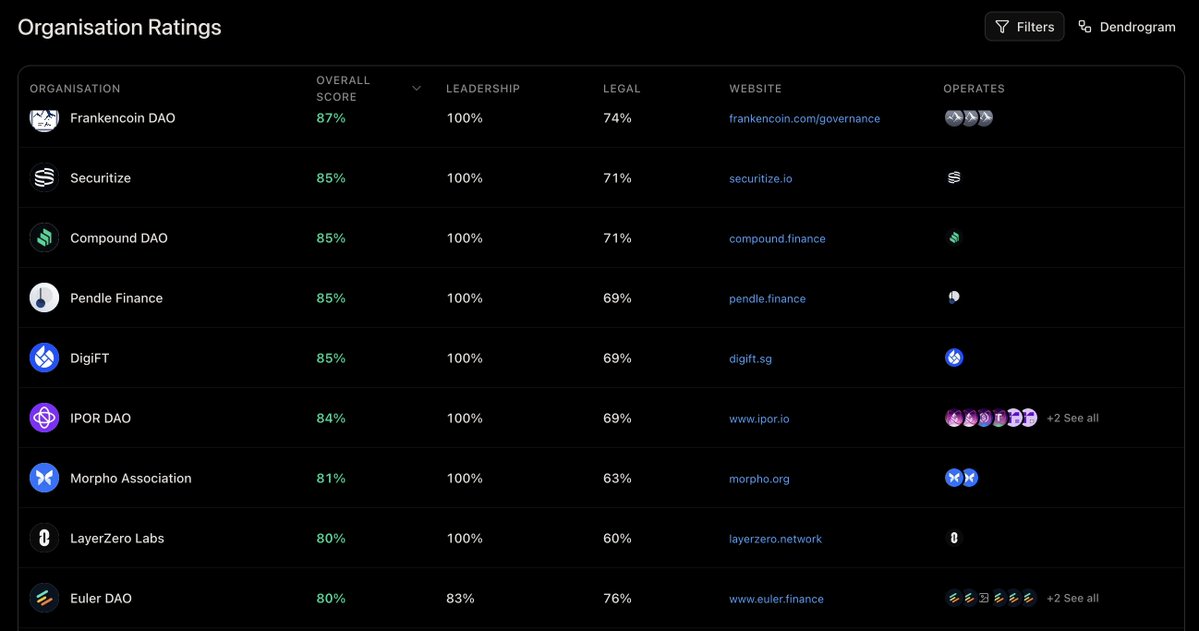
DeFi vault and curator risk rating providers
- @xerberus app.xerberus.io/risk/organis…
- @curator_watch curatorwatch.com/
- @CredoraNetwork app.credora.network/
- Core3 core3.io/
- @mywebacy dapp.webacy.com/vaults
5
8
29
1,329
May 31
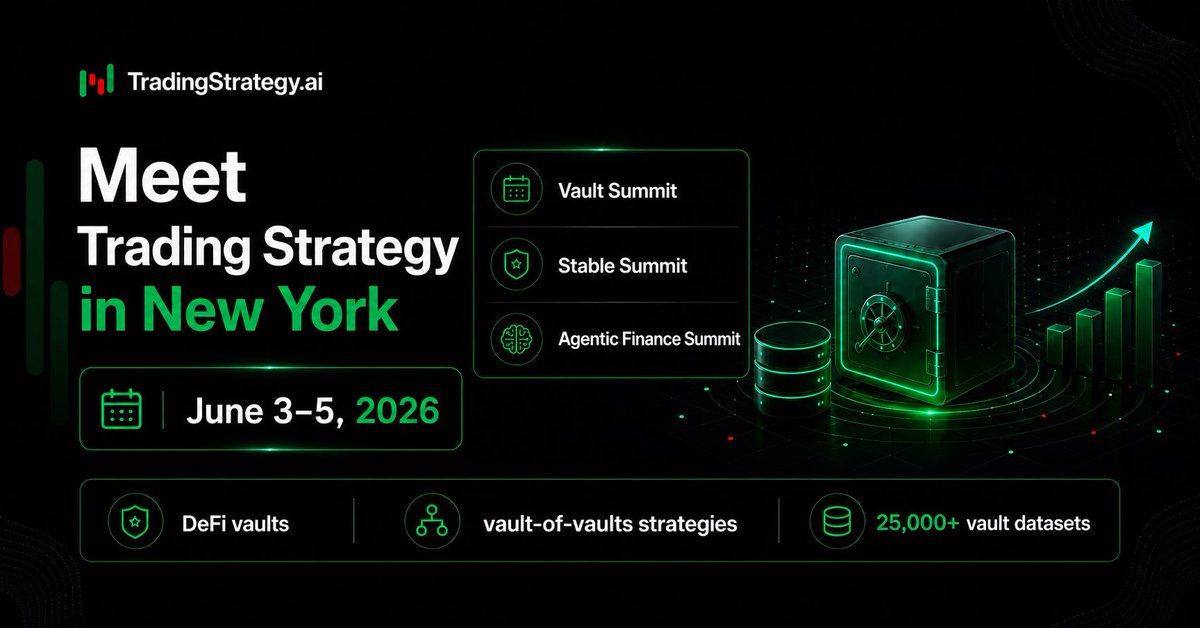
Trading Strategy is heading to New York for @Vault__Summit, Stable Summit and Agentic Finance Summit.
Calling for #quants, #assetmanagers, #Alagent developers, #vaultcurators, and #DeFi protocol teams! Meet us for live demos and see our latest datasets
tradingstrategy.ai/blog/meet…
4
8
403
May 30
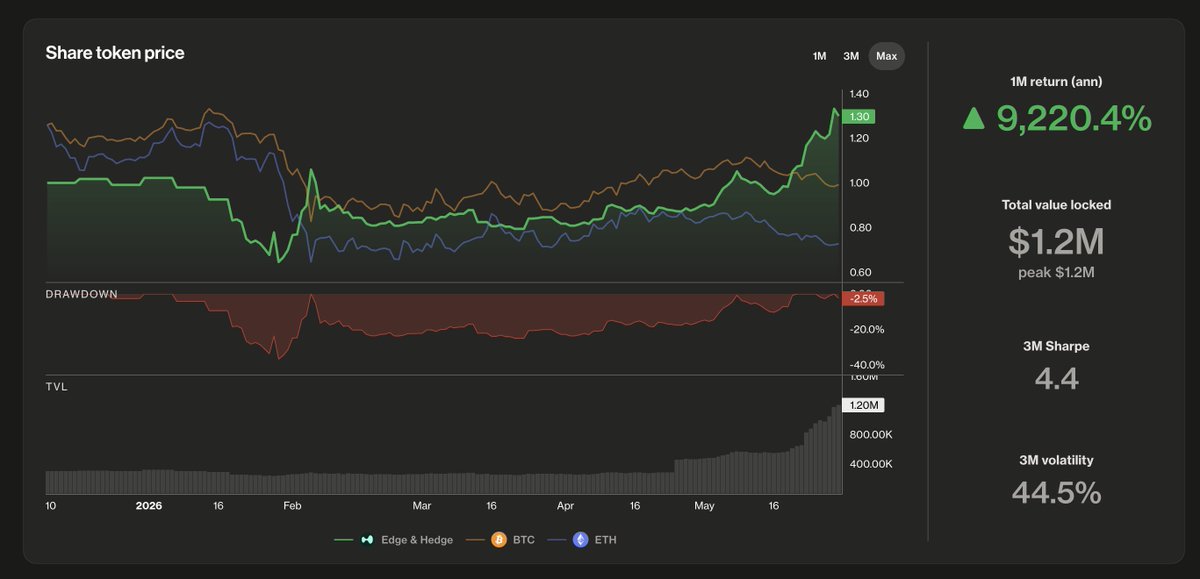
Edge and hedge on Hyperliquid by @blothecap is now the top five vault across 3000 DeFi vaults.
Lifetime ann. returns ~80%.
"Running a quantitative delta neutral long, short strategy with a leverage of around 3x."
tradingstrategy.ai/trading-v…
5
256