
Joined March 2021
- Tweets 2,122
- Following 1,193
- Followers 413
- Likes 2,316
180 Photos and videos



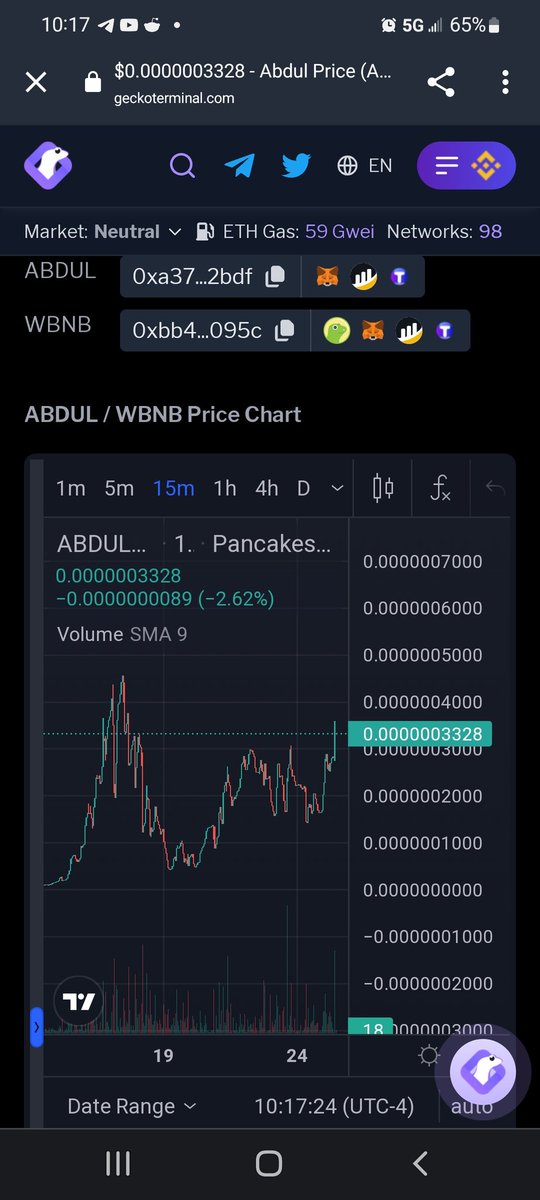
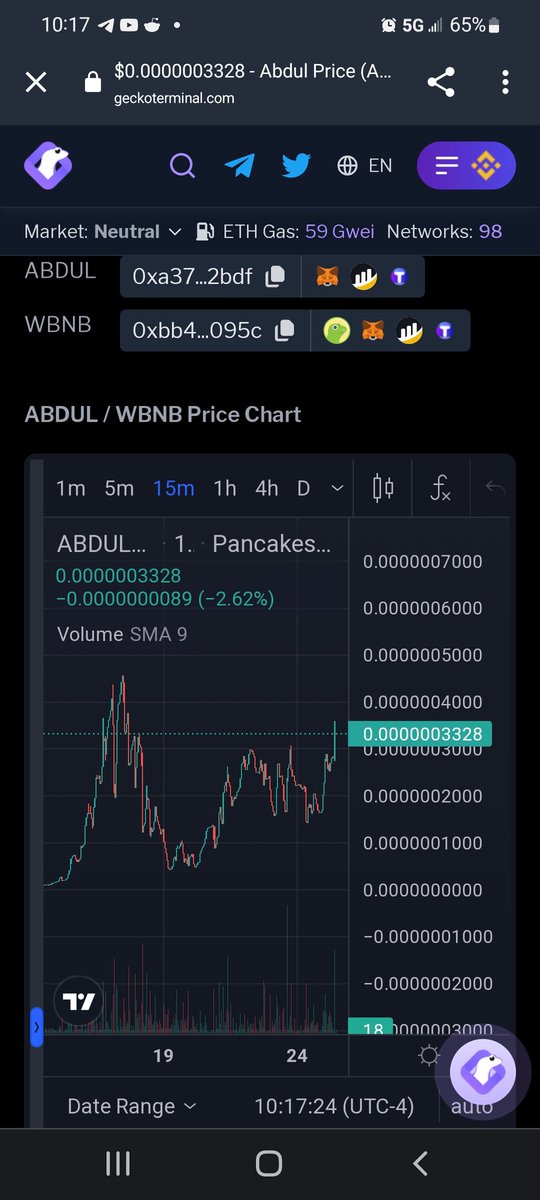
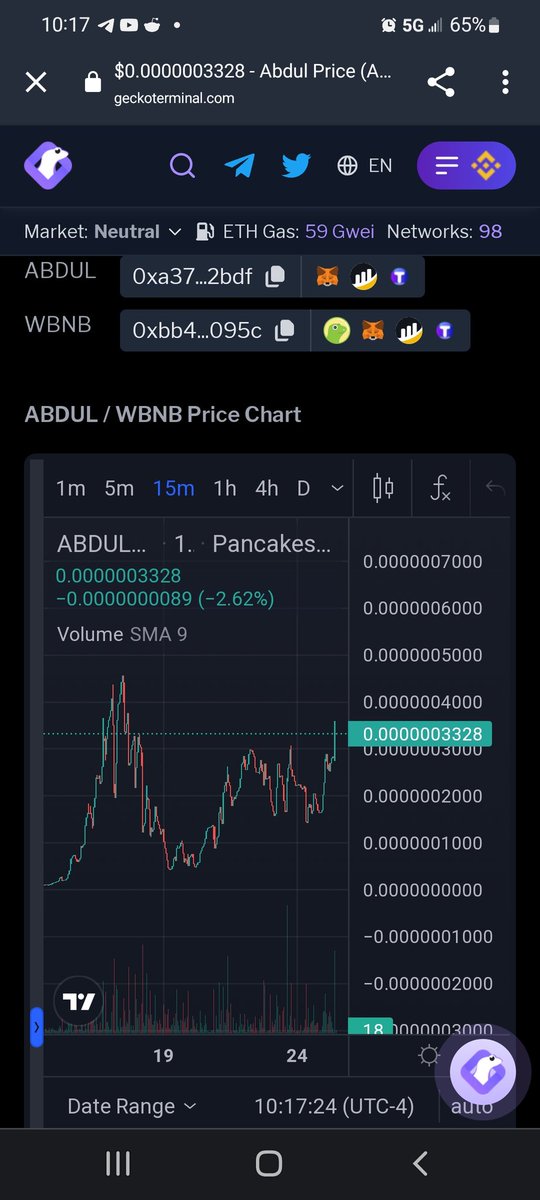
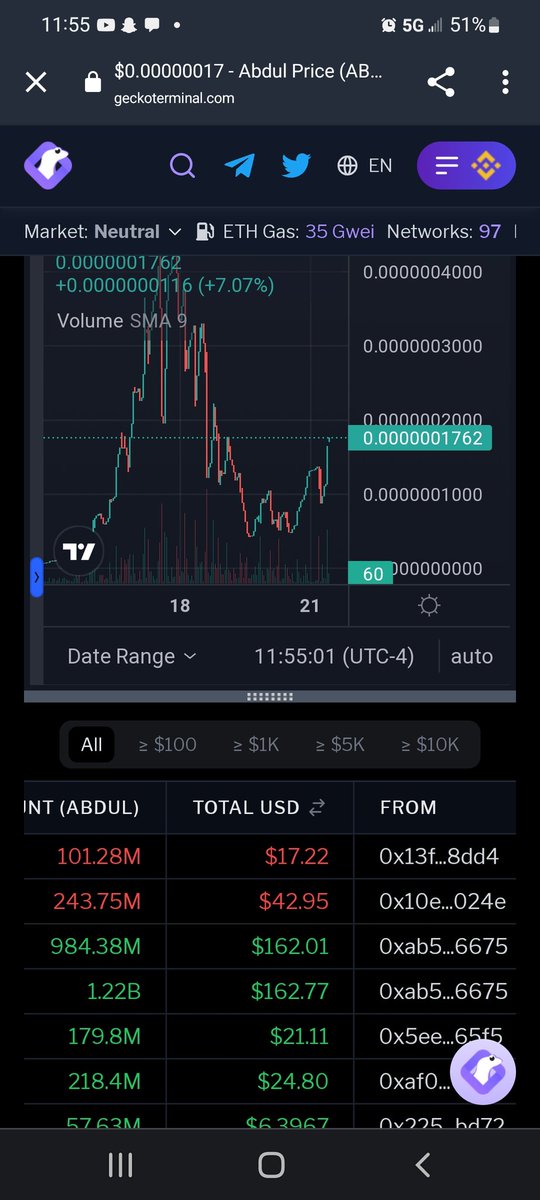




Skrypto7 retweeted

25 Jan 2024
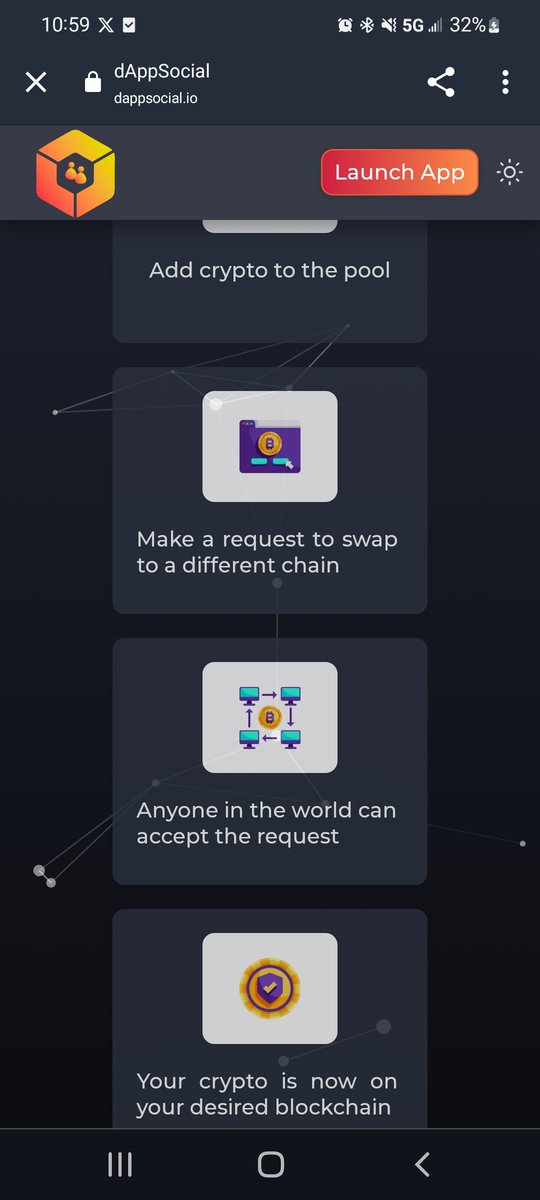
⚡ @EverRise EverBridge is designed to be able to scale to all major blockchains, adding more options to those projects wanting to go cross-chain.
⚡ EverBridge integrates blockchains to let individuals and projects move freely between networks within seconds.
🔽VISIT

🔒 EverBridge leads the way with our innovative lock and unlock mechanism. Security first: we don't mint and burn at #EverRise!
🌉 Bridge your DeFi project between #BNB, #ETH, #MATIC, #AVAX and #FTM.
🌐 Please visit everrise.com/everbridge/ to learn more.
12
42
67
6,924
Skrypto7 retweeted

9 Jun 2023
385
1,038
5,990
11,270,151
Skrypto7 retweeted
21 Jan 2024
Multi-chain "brain wallets" 🧠 will finally take off in 2024 thanks to chain key crypto:
– no wallet software
– undetectable
– compatible
– friendly!!
They're going to be HUGE in the developing world for security reasons, and more widely for usability, and censorship resistance reasons. Here's how they work...
To access a crypto brain wallet, you simply open a web URL in a browser "incognito window," for example on your phone, which naturally will leave no trace.
The URL connects you directly to an #ICP smart contract implementing a brain wallet, such as oisy.com (an Ethereum brain wallet prototype under development), which creates a web-based user experience in your browser window.
Next you authenticate using Internet Identity. To do this, you only need enter an easily-remembered Internet Identity number, which is a short string of digits, like 97437899.
Your device asks you to perform a hardware authentication step. Most commonly, this simply involves pressing the fingerprint sensor on your phone, but can also involve Face ID, or a PIN, as desired. You can connect any number of devices like phones and laptops to one identity (you can also connect external wallet hardware, like a Ledger or YubiKey, typically for identity backup purposes).
Once you have authenticated, your device performs the job of siging a secure session that identifies you to the smart contract providing the multi-chain brain wallet functionality.
The device uses a private key kept hidden and inaccessible – even from you – inside a special secure chip on its internal motherboard called a TPM (Trusted Platform Module). This key is created when you connect the device, and associated with the wallet smart contract URL and your identity number.
The open WebAuthn and FIDO standards are involved, but you don't need to know anything about their complex workings. You just need to press the fingerprint button.
Once you have authenticated yourself to the wallet smart contract, it displays the contents of your wallet, and provides access to functionality such as send and receive. The Ethereum prototype brain wallet at oisy.com can also be quickly connected to DeFi services such as Uniswap using WalletConnect functionality – it's fully compatible.
This technology already works with bitcoin, ether, ERC20 tokens, and ICP tokens, including fast and cheap chain key "twins" such as ckBTC. In the coming months, extensions to the chain key technology powering the Internet Computer network will make it possible to create brain wallets that work with nearly ALL blockchains – no insecure and inconvenient bridges, just advanced math and cryptography.
The magic behind the scenes involves the smart contract creating & signing transactions for OTHER blockchains, which is possible because the Internet Computer can sign in place of a private key – hence "chain" key.
Arguably, this new web-based brain wallet paradigm provides a much smoother user experience than traditional wallet software, and it cannot be blocked or modified by Big Tech, which web browser extensions, and software that must be downloaded and installed from app stores, can be.
The really really big thing, though, is that once the incognito window is closed, there's no trace of the wallet on your device – and there's no way that even you can see what's inside the TPM chip on your device, to see the private key there...
This will be a GAME CHANGER in the developing world, where crypto is rapidly taking hold.
Imagine being in country X, with poverty and instability. A mugger puts you up against a wall. A policeman wants a bribe at a traffic stop. They want to see what's on your phone.
If you have crypto inside traditional wallet software, you're done, they're going to take it all.
But you haven't. It's in your brain wallet: Undetectable, and safe from violence.
This is just the beginning.
DFINITY will propose more game changing crypto advances to the network.
Stay tuned!
96
291
812
58,807
Skrypto7 retweeted
6 Jan 2024
ICP is designed to revolutionise compute, and decentralization is key to its design.
The network runs under the direct control of an advanced DAO called the Network Nervous System (NNS).
Anyone can vote on proposals submitted to the NNS by locking up ICP tokens to create "voting neurons" (they are called neurons because they can be configured to vote automatically by following other neurons on a topic-by-topic basis).
Large numbers of proposals are being processed all the time, and they can be submitted by anyone. Some are related to general governance, and simply coalesce community opinion, for example regarding questions of network design.
Other proposals actually cause the network to do something in a fully automated way. For example, they can upgrade the node software running on node machines around the world, or adjust one of its internal subnet blockchains – the decentralized NNS directly manages and evolves the network.
The purpose of ICP is to revolutionise compute. You can build a social network on ICP, 100% on-chain (see OpenChat, oc.app, for a great example of what's possible). This raises the challenge of decentralization Vs efficiency.
The automation of the network by autonomous decentralized governance is essential to the network's application of "deterministic decentralization."
Deterministic decentralization is how the network solves the efficiency challenge: the Internet Computer is created by special "node machines" that are currently run by about 120 different "node providers" around the world, which nodes the NNS organizes into subnet blockchains in ways that create high-certaInty large Nakamoto coefficients, while minimizing replication, and thus cost.
When creating or reconfiguring a subnet blockchain (e.g. by adding or removing node machines), in applying deterministic decentralization, the NNS takes account of a lot of information.
It aims to ensure that the node machines that make up a subnet are a) owned/operated by independent node providers, b) installed in different data centers/co-location facilities, which are c) in dispersed geographies and d) different jurisdictions.
This can provide much more robust decentralization than anonymous PoS validators running on Big Tech's clouds, while – crucially – massively reducing replication cost, which is essential to the Internet Computer's mission of revolutionising backend compute on blockchain.
Last note: the configuration of subnet blockchains by the NNS also allows for the creation of specialist subnets e.g. recently a subnet was formed entirely from node machines running in the EU, which will allow canister smart contracts uploaded to the network to be tagged "GDPR-compliant."
Last last note: ICP subnet blockchains are true subnets, not standalone blockchains. They are combined into a single seamless blockchain environment, and are invisible to hosted smart contracts and users.
Last last last note: technically, the reconfiguration of subnets by the ICP protocol (Internet Computer Protocol) on direction of the NNS is highly complex, and involves a lot of specialized cryptographic protocols, including a "non interactive distributed key generation" protocol, "key resharing" protocols, and many other things.
TLDR; the Internet Computer is very decentralized by virtue of highly advanced unique crypto technologies
5 Jan 2024

SERIOUS: Is $ICP centralized?
116
348
980
113,116
Skrypto7 retweeted
9 Jan 2024
This is actually bonkers (in a very good way)
8 Jan 2024

400GB in a canister smart contract?! 🤯
"We did more testing with 400GB of stable memory and the tests were successful. DFINITY plans to propose in an upcoming replica version to increase from 96GiB to 400GiB. More increases are planned later this year"
forum.dfinity.org/t/increase…
26
96
445
29,511
Skrypto7 retweeted

15 Jan 2024
Many other DeFi founders ask us why did we ditch #EVM and build on #ICP. Here is why:
1) A super supportive @dfinity foundation
2) Robust infrastructure that is under appreciated by most in the space
3) Fully decentralised with no almost no compromise on speed and cost
12
111
369
46,816
Skrypto7 retweeted
22 Jan 2024
NOW: 26 billion personal records exposed 😱
Systems & services must be tamperproof, and not rely on fallible firewalls and cybersecurity.
Future: build them on #ICP networks:
- Internet Computer/public
- UTOPIAs/private [soon]
tomsguide.com/news/26-billio…
14
152
451
22,835
Skrypto7 retweeted
22 Jan 2024
Cybersecurity is a seminal issue of our time, like war and climate change.
A key #ICP thesis is that systems and services should be tamperproof and unstoppable – not hackable and fragile, and reliant on Rube Goldberg assemblies of firewalls, intrusion monitoring, anti-virus, etc
18
102
344
14,953
Skrypto7 retweeted
22 Jan 2024
#ICP security involves different thinking vs proof-of-stake networks, so direct comparisons are hard. Differences include:
1 "Deterministic decentralization" ⬆️ vs simple Nakamoto Coefficients
2 Games of life ⬆️ vs small-game fallacies
3 Hardware ⬆️ vs liquid stake
Big thanks to Justin Bons for his willingness to debate the ICP community on this subject – these days theoretical debate is sorely lacking – but he does not cover these differences in his analysis. He therefore provides a good opportunity for me to draw attention to the differences, and explain them to those interested:
/* Deterministic decentralization */
Decentralization, generally speaking, is a nebulous term that is difficult to measure – should we measure the decentralization of the Bitcoin network by the rather small number of mining pools that might double-spend by colluding, or by the much larger minimum number of individual miners that would need to collude, upon the assumption that miners would leave any pool involved in an attack? Or, should we measure the decentralization of Ethereum using the number of individual virtual validators nodes running in the cloud, or by the number of Big Tech clouds that control them? These are tough questions.
The Internet Computer uses a decentralization framework, which underpins the security of its protocols, known as "deterministic decentralization." This aims to calculate and create decentralization both with more certainty (more security) and also with less replication (more efficiency). It is more nuanced than basic "Nakamoto Coefficient" thinking.
The system is made possible because the network runs under the direct and exclusive control of an advanced permissionless DAO that is integrated into its protocols called the NNS, or "Network Nervous System," which currently has more than $3b of ICP staked and huge numbers of participants (it's the biggest DAO community around today).
The NNS adopts/rejects proposals that do many things, two of which are particularly relevant to decentralization: 1) it hands out "node provider" profiles to those who ask for them, and 2) scales the network by forming and configuring subnet blockchains by adding and removing node machine hardware operated by different node providers.
Node providers obtain profiles by submitting proposals that specify the data centers they will be installing node machines within, which information then gets associated with their profiles. Another type of proposal, which anyone can submit, forms new subnets from existing nodes, or adjust subnets by adding/removing nodes, with the requirement that "deterministic decentralization" is observed.
This involves combining node machines from 1) different node providers, 2) installed in different data centers, which are 3) in different geographies, and 4) different jurisdictions.
The purpose is to create subnets which would require a higher degree of node provider collusion to break, and which are also resilient to e.g. a nuclear bomb hitting data centers in a geography, or a government/regulatory area attack executed within a jurisdiction such as the EU. Some subnets also have special purposes, such as those hosting e.g. bitcoin, and have higher replication factors as needed – security is on a cost/benefit curve and tailored precisely to need.
It is important to compare this to traditional proof-of-stake practice, where validators are anonymous, and mostly run on Big Tech's cloud services. For example, the Hetzner cloud suddenly shutdown 40% of the Solana network, more than 1,000 of its validators, after deciding it didn't want them. By implication, it could also also have taken full control of the network. Further, consider that vast numbers of cloud validators on Ethereum are in practice sometimes created by one operator behind the scenes. Arguably, the cloud providers are the nodes, not the validators they host.
Deterministic decentralization does not depend on having huge numbers of anonymous validators running in the cloud, and I would argue provides more dependable decentralization that is also certainly much more efficient.
If required, the Internet Computer's network protocols allow for very large numbers of nodes to be combined into subnets. Where they are not, it is because analysis performed wrt deterministic decentralization indicates that it would be unnecessarily wasteful.
/* Games of life */
I don't always agree with Nick Szabo's thinking, but one of his pieces that I think is INCREDIBLY insightful and generally important for the crypto industry, and often overlooked, is his post titled "Small-game fallacies."
unenumerated.blogspot.com/20…
Small-game fallacies often occur in proof-of-stake modeling, which assumes that validator behavior is determined exclusively by incentives existing within the narrowly defined constraints of crypto economic systems e.g. that anonymously deposited stake ("collateral") is the primary determinant of validator behavior, including cheating/not cheating. This is incorrect.
Szabo draws attention to the fact that human behavior occurs within the much larger "games of life." For example, most validators won't cheat, not because of fear of losing their stake, but for reasons of personal integrity, professional pride, and fear of retribution (both from others in their industry seeking revenge, and from legal systems that with to punish them for their crimes). These incentives can exert much greater forces than anonymously staked cryptocurrency.
The Internet Computer considers the larger games of life by ensuring, among other things, that node providers (which are typically companies) identify themselves. Those colluding to defraud the network will be subject to much more than the loss of their stake. Indeed, they can be subject to the full force of the law around the world.
As the assets hosted by networks become increasingly valuable, it becomes harder and harder for proof-of-stake advocates to claim that they are sufficiently protected by validator stake. The larger games of life are required.
/* Hardware stake */
The Internet Computer runs on sovereign hardware called "node machines," which are built/purchased by independent "node providers" who install/run them from independent data centers around the world. In the "proof-of" terminology, it is "proof-of-useful-work" (PoUW).
This hardware-based approach is diametrically opposed to proof-of-stake, which typically sees validators running on Big Tech's cloud services, run by anonymous operators, who have joined them to the network staking some amount of cryptocurrency.
As per the preceding section, the thousands of validators running on Amazon Web Services should really be seen as one node, for reasons highlighted by the Hetzner incident, but that's beside the point – what we need to compare here is the *types* of stake involved in proof-of-stake vs Internet Computer nodes.
An ICP node is not joined to the network by staking ICP tokens, but rather by merit of being standardized hardware that can keep up with the nodes it is combined with (and thus not get expelled). This standardized hardware is expensive. It costs $20k per node machine (and those wishing to support optimized AI smart contracts will likely find the specs for those nodes will probably exceed $100k).
This hardware is of course a form of stake that the node providers put at risk, and it is not one that is not liquid. The cost fully includes both the cost of acquiring and installing the hardware, and the hosting contracts with data centers. If a node provider is kicked off the network for cheating, or running substandard hardware that can't keep up with the block rate, in practice they will have problems reselling their accumulated hardware, will be unable to recoup setup costs, and will often be stuck with contracts for co-location and bandwidth.
By contrast, a proof-of-stake validator node on Amazon can be spun up and down on a button click. Nothing is staked apart from the cryptocurrency. However, that can be hypothecated using liquid staking – in short, what is actually staked is a much more wooly subject.
While, as explained in the previous section, we believe that the larger games of life trump the small game fallacies of narrowly defined proof-of-stake crypto economic systems – not just in theory but technical practice – we also believe that it's often hard to determine what is actually staked when the stake is cryptocurrency.
We would argue, as with many things in crypto theory, that the truth is far more nuanced that the big brassy theory boilerplates justifying the design of major proof-of-stake networks would suggest.
In summary – the stability of hardware stake, and the forces created by the larger games of life unleashed via intelligent decentralized governance that carefully combines hardware operated by identifiable node providers in a scheme of deterministic decentralization, allows decentralization to be measured and tuned more accurately with far greater predictability, and therefore safety.
20 Jan 2024

1/9) Dfinity sacrifices decentralization for scalability
Despite their lofty & outlandish claims, ICP is highly centralized & insecure
You can attack & censor ICP subnets by only attacking a handful of known nodes in data centers
The problem lies with ICPs consensus algorithm:
90
261
746
96,414
Skrypto7 retweeted
23 Jan 2024
There's a crucial growth metric that's NEVER mentioned by leading crypto industry research organizations.
This stat is staggeringly important for our industry, and favors the ICP ecosystem. Everyone should know about it –
CPA, or "Cost Per Acquisition".
Some background first: the last significant thing I did before going full-time in crypto in 2013, was create an MMO game that grew to approx ~3M users. It was the first and only game I created, and its relative success rested in no small part on its super-low CPA metric.
CPA – or Cost Per Acquisition – measures how much money must be invested into growth activities, including marketing, to get a new user.
Essentially, at its peak, my MMO game was acquiring new users at a rate of about 1 for every 20 cents of marketing expenditure. That compared to around $4-12 for the rest of the industry. Our super low CPA provided enormous leverage from a disadvantaged position. First-time game designers/entrepreneurs usually do not succeed in creating hits of any kind, especially with limited resources, and from London.
The CPA metric reflects what must be spent to find users/customers/whatever that connect with a service, and persuade them to stick with it. The higher the CPA, the higher the costs of driving growth, and the less sustainable driving growth over the long-term becomes. This applies even if you have Sam Bankman-Fried and his merry band of VC (venture capitalist) followers backing you – resources are finite, and eventually the laws of gravity come into effect if CPA is too high.
So, circling back to the blockchain industry, why is this important?
I regularly hear of VCs, especially in Silicon Valley, who extol the merits of blockchain X or Y, on the basis of the number of developers they have building in their communities is the largest. Almost always, they largely base their thinking on a) group-think, and b) reading the reports of certain industry research organizations, without ever considering who their backers are, what their backers have invested in, and even what networks those research organizations (or their leaders) may have directly invested into themselves, largely as a result of historical relationships with their backers. They treat the reports that come from these crypto research organizations as though they come from Gartner.
The blockchains the VCs extol have ecosystems funded by billions of inward investment, which usually includes theirs too, which has often, to all intents and purposes, been used to pay developers to build there. In reality, contrary to the marketing, the blockchain's technology involved had very little to do with why the developers and their companies chose to build there – in fact they chose to build on these chains to obtain freely-flowing investment sometimes measured in the tens of millions per project deriving from bull market era "flywheel" growth engines.
CPA calculations need to include the cost of these investments. Having a low CPA is incredibly important.
SBF, through his instruments Alameda and FTX, was a key example of a crypto industry titan who was a practitioner of the flywheel model. The essential aim was to combine influence and capital (which could be acquired through murky means), in order to drive the value of tokens in which the titans were invested. In particular, the titans obtained highly discounted positions in layer 1 blockchains, in return for promoting them using various mechanisms – through social media, through influence over the crypto press, through influence over apparently neutral industry research organizations, through power projected through high-profile relationships with regulators, and control of key infrastructure such as exchanges and funds, and ultimately through vast injections of capital into their ecosystems, in which they were joined by traditional venture capital in grand schemes aiming to create the next Ethereum.
As flywheels spun faster, more and more hype was generated, more investors were sucked in, more investment was funneled into projects and developers agreeing to build on their chains, more parties became tribally aligned, more acclaim was generated, and the more their base tokens rose in value, making more liquidity available to spin the flywheels faster.
Was this a racket, or was this akin to Uber offering discounted rides to build its customer base? The truth is somewhere in between. Perhaps it's telling that those traditional investors sucked in will often share their honest belief that the developers that chose to build on these chains into whose flywheels they became ensnared did so because of the technology, rather than for the money, or other reasons, which is simply not true, as most true crypto industry insiders are fully aware (and arguments about "community" are misleading, since the availability of capital is often what that was about during the bull run). Many venture investors seem unsure of the game they joined, or even what the technological differences between chains are.
Certainly, these traditional investors have somehow now been hoodwinked to never to think about CPA, which is a key metric that those of us with prior backgrounds in tech before crypto, such as games, or Web 2.0 services, hold as crucially important, along with measures of viral growth.
Here's the rub. When you look at the aggregate capital flows into the ICP ecosystem, through DFINITY's developer grants program, investments by independent investors, and decentralized crowdfunding performed by projects the network itself, and compare that to the billions that flowed into some of the main flywheel chains championed as the future by interested parties, and then consider the fact that despite these huge capital inflows their developer ecosystems are not that much larger at all – and do the math – you see that the Internet Computer ecosystem's CPA ("cost per acquisition") is something like 200X lower.
Yes, you read that correctly, 200X lower!
This difference is simply staggering, and has very positive implications for long-term Internet Computer ecosystem growth. It's simply much more competitive thanks to the network's technology, and how it empowers developers to go far beyond simple tokens and NFTs, and if/when/as the capital flow changes course, it indicates that the Internet Computer ecosystem will race ahead very quickly indeed.
We can already see it happening. Many of the main chains acclaimed as the future by the flywheel system, plowed hundreds of millions into wasteful endeavors such as expensive sports sponsorships, which they are now quietly abandoning. One secretly paid an enterprise "customer" tens of millions to build a dubious beverage loyalty system on their chain, so they could proclaim they were being selected by industry, which approach they are also quietly abandoning. And they and their supporters often funded, for example, grand web3 games projects to the tune of tens of millions each, in the hope and expectation that they would become successful simply because they pressed NFTs on their users, and members of their own community would choose play them and kick off network effects. These projects are now already often seeking follow-on investments to cover their excessive burn rates, and solve for their shortening runways, because they did not begin as organic startup organizations, but were really edifices quickly bootstrapped with the hidden purpose of proclaiming to the world that the chain they were essentially paid to build upon had arrived.
We are now already seeing such projects quietly disbanding in the realization that the flywheel model that created them cannot support their continued existence, and others beginning to look around for the best tech on which to build genuinely self-sustaining futures, rather than gamble on how long their flywheel ecosystems can support them. Many who wish to remain, are now making calculations about the real power of the technology on which they are building, and what it can enable them to do before their money runs out – and they are now quietly looking at ICP. From my own direct experience, I can tell you this is accelerating.
My view is that in the long-term technology matters, and integrity matters. Despite having to weather extraordinary attacks from key players backing major flywheels – as can be read about on investigative journalism websites like Crypto Leaks – we at DFINITY have never wavered from our technology-first strategy, and since 2018 have continued to run crypto's largest layer-1 focused R&D operation at scale, to contribute technology to the Internet Computer network. The result is that the capabilities of the network are simply years ahead.
Moreover, our ecosystem is a relentless beast, and in the past year we have seen more than 20 independent ICP.hub organizations launch worldwide, which are expected to double in number this year. Meanwhile, the power of mutli-chain "chain key" crypto is slowly being unleashed, the capabilities of the network in important areas such as AI are expanding, and the forthcoming UTOPIA project focused on enabling secure computing in the enterprise and government sectors is expected to drive new network effects into the public ICP network.
Zooming out, there is one hidden statistic that tells the overall story, and it's CPA. We believe that organic ecosystems will ultimately outpace and outperform paid ecosystems that depend on flywheels that need a constant flow of inbound capital to keep them spinning. They are also far more robust: when an ecosystem depends on a flywheel, and it stops, much of what has been built on it begins to stop too.
For everyone who believes in ICP, 2024 will be a pivotal year. We may not yet have the backing of Silicon Valley players sucked into flywheels by yesteryear's crypto titans – although this is now changing – but we have incredible superpowers deriving from genuinely game-changing technology, resilience earned from weathering unimaginable storms of attacks designed to dissipate our disruptive potential, and an ecosystem with a CPA number unlike any other.
Those interested in what crypto ecosystems were meant to be, and the future of its technology and the internet, should join us as we begin a battle for the soul of our industry.
113
253
716
64,939
Skrypto7 retweeted
24 Jan 2024
Crazy: I keep meeting major crypto journalists, investors & project CEOs who are unaware that #ICP creates blockchain networks you can actually build systems and services on – not just host tokens and NFTs..
Largest R&D operation in crypto since early 2018 lol
#InternetComputer
103
212
778
42,871
Skrypto7 retweeted
24 Jan 2024
Just watched UTOPIA demo No. 1, including install of OpenChat as a private corporate Slack! 🔥🔥🔥
This will be immensely impactful.
UTOPIA = a private ICP network providing unstoppable, tamperproof serverless cloud, interoperable with Internet Computer.
See photos 🖼️👇
36
233
691
59,666

Skrypto7 retweeted

19 Jan 2024
7
15
199

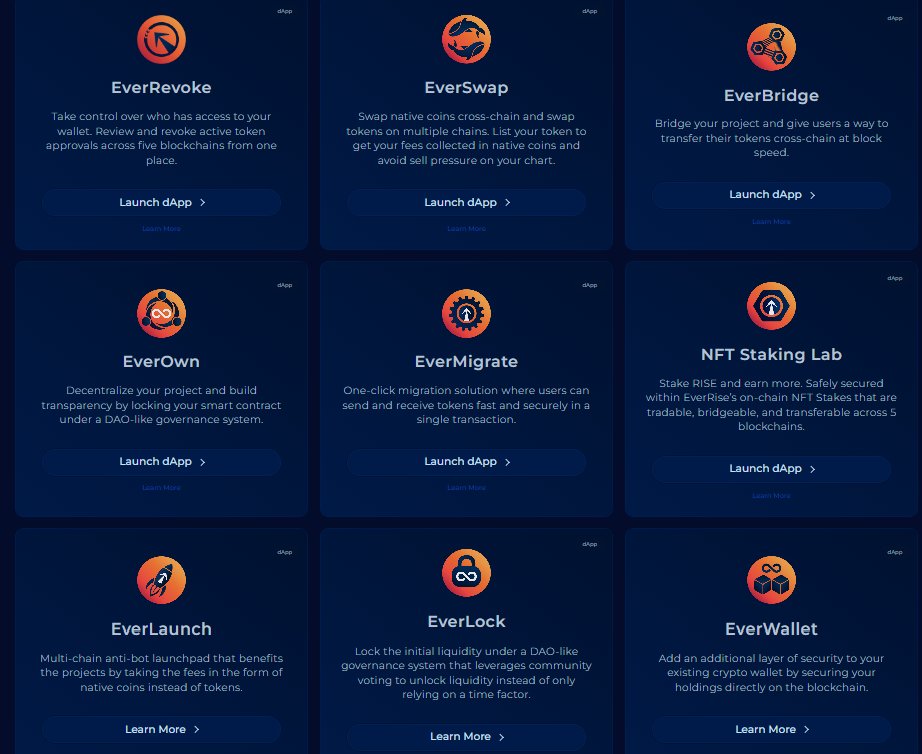
👀 Are you aware of all the token and #NFT approvals that are active in your #DeFi wallet?
🔒 Stay safe by easily reviewing and revoking them today with #EverRevoke.
Powered by #EverRise.
🌐 Learn more: everrise.com/revoke
7
51
112
2,520
🗳️ #EverOwn provides a security and decentralization solution for projects by locking the smart contract and newly generated liquidity on the blockchain in a locker accessed with a weighted community vote.
Powered by #EverRise.
🌐 Learn more: everrise.com/everown/

2
46
109
2,227

14 Jan 2024
I just got waitlisted for the community presale for $MON, the IP Ownership Protocol!🔥 presale.monprotocol.ai #monprotocol
1
1
28
9 Jan 2024
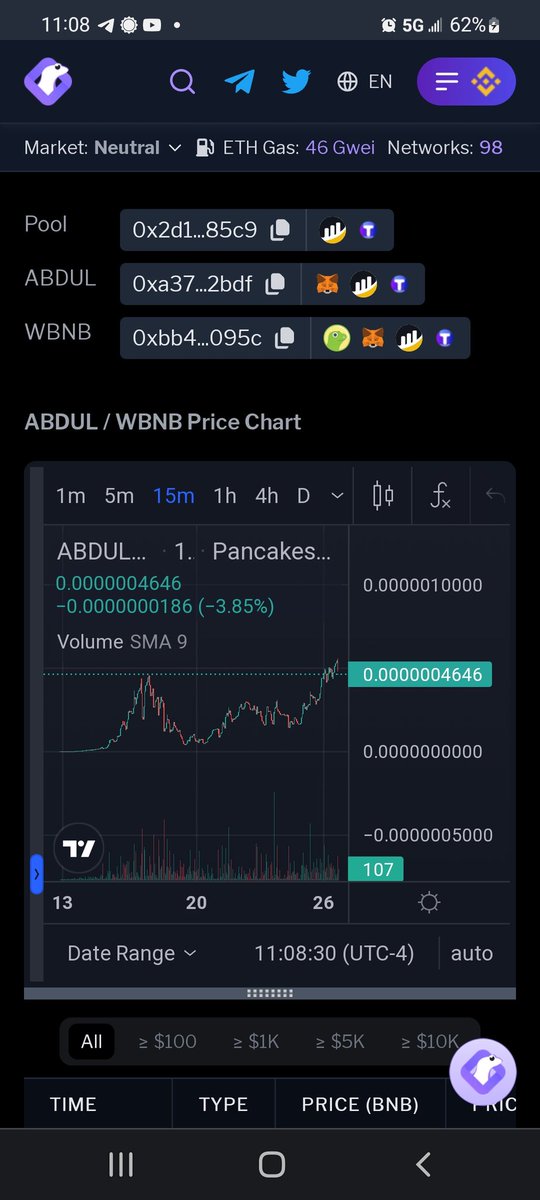
This thing has some serious volume.
Bullish narrative.
Sports betting and casino table/gambling platform.
Low market Cap
Volume is strong.
This one has been a wild ride. Holding strong.
Not financial advice
Do your own research
Join the telegram.
#ETH
1
3
71
Skrypto7 retweeted

7 Dec 2023
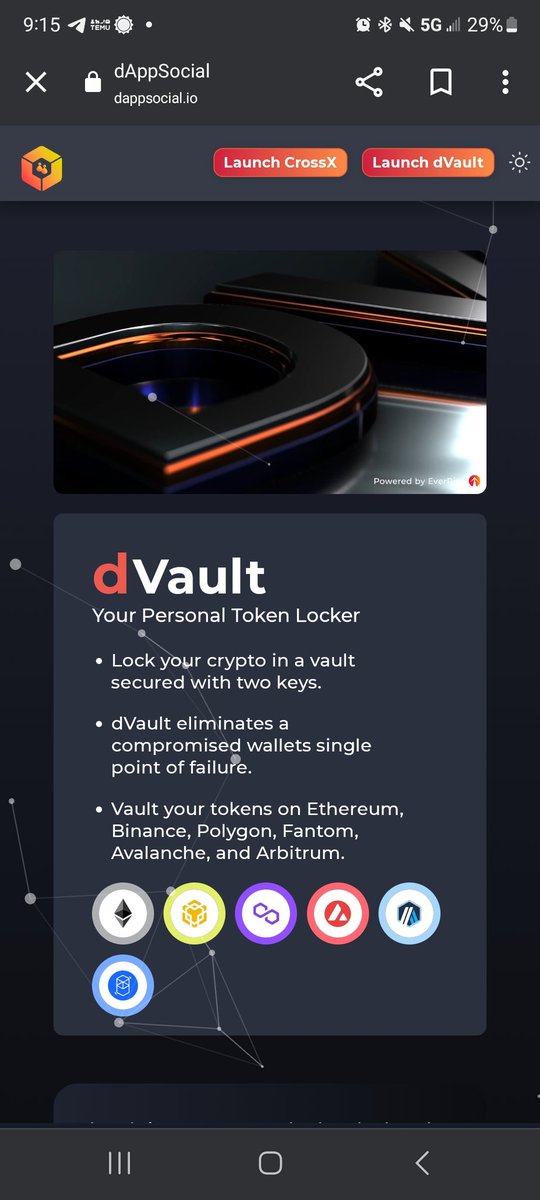
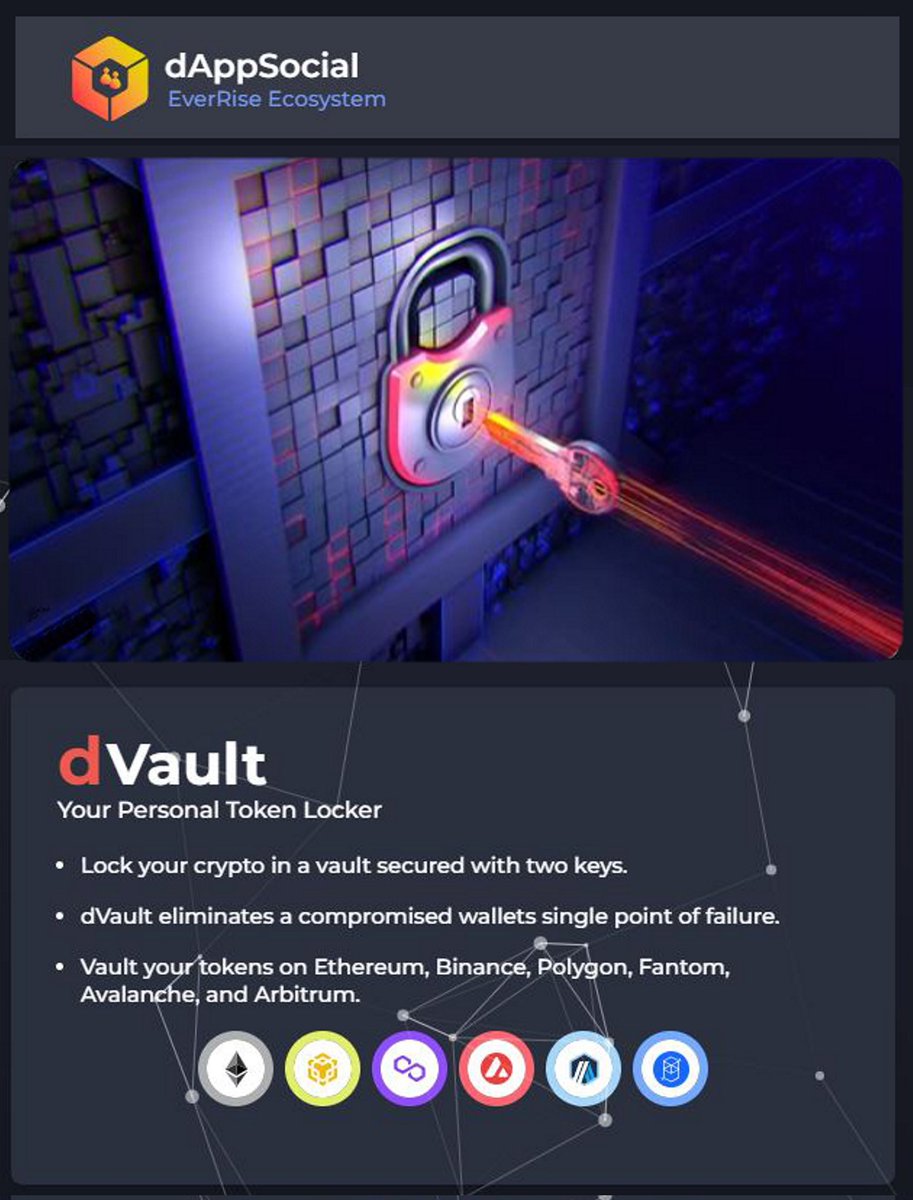
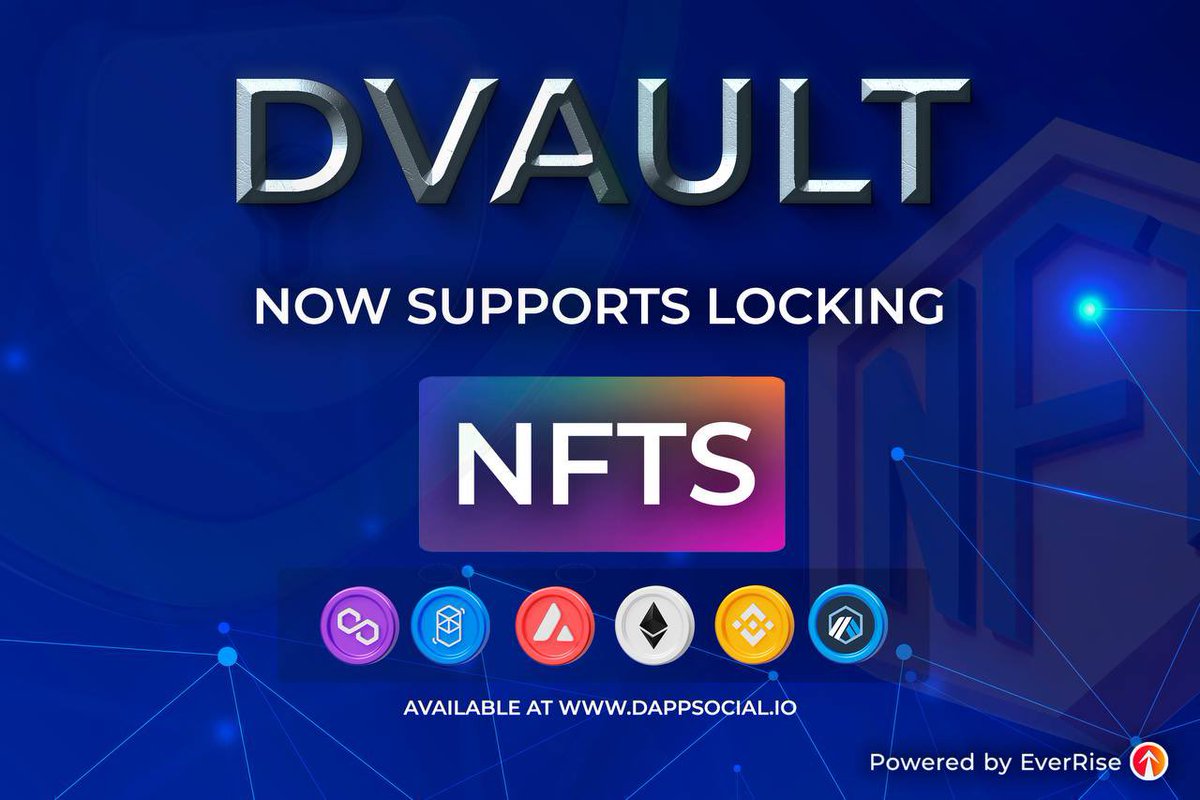
Lock your assets in #dVault and stay safe.
Tag your best NFT projects and spread the word.
#dAppSocial
#EverRise
$RISE
Lock your #NFTs now with #dVault!
Vaults now support locking NFTs on @dAppSocial!
Tag the NFT projects you’ll be locking 👇
13
84
126
11,298