Joined June 2021
- Tweets 652
- Following 7
- Followers 9,486
- Likes 855
404 Photos and videos








Pinned Tweet

Mar 19
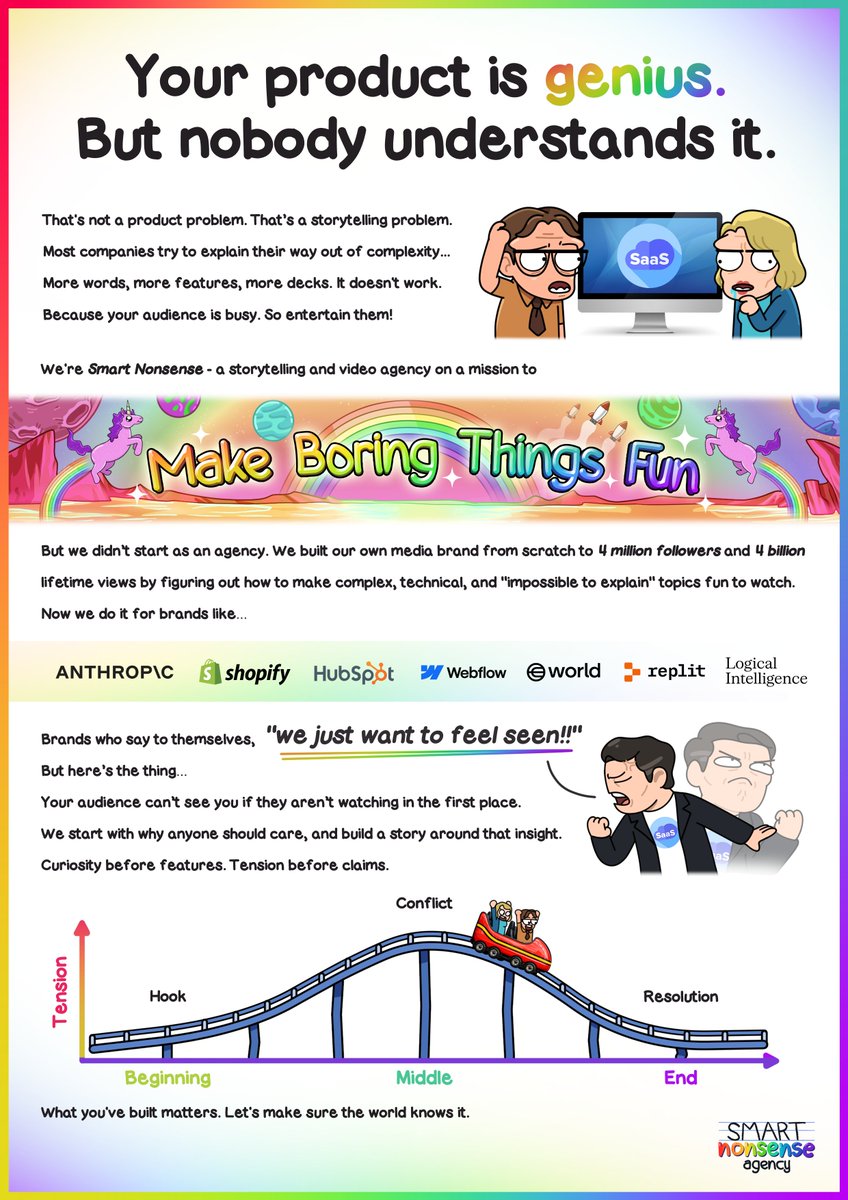
Tech founders 👀

Your product deserves a better explainer...
Whether it’s...
• Feature explainers that don’t feel like demos
• Launch videos that build hype, not just awareness
• Sales explainers to accelerate the sales cycle
• Paid ads that people don't swipe past
• Or even an owned YouTube channel
Let's explore how our unique storytelling can help you drive engagement, conversion, and retention🌈
5
620
Jun 8
How do windmills make ENERGY??
It's crazy..
So the Sun heats different parts of the Earth unevenly. Some areas get hotter, some stay cooler. That temperature difference causes air to move from high-pressure areas to low-pressure areas.
That's wind. And wind carries energy.
Kinetic energy.
The entire job of a wind turbine is to capture that moving energy.
If you zoom into a windmill, you'll see the blades aren't just giant fans. They're shaped like airplane wings. Curved. As wind flows around the blade, it travels faster over one side than the other, creating a pressure difference that pulls the blade forward and makes it spin.
The blades are also slightly twisted from root to tip, helping them capture more energy from the wind.
Okay. Now we're spinning.
But how does that become electricity?
Well, inside the turbine, the spinning blades turn a shaft. That shaft drives a gearbox. The gearbox takes a slow, powerful rotation and converts it into a much faster spin. Fast enough to drive a generator. And inside that generator, magnets spin past coils of wire. That motion creates an electric current.
So in just a few steps:
Sun → Wind → Spinning Blades → Generator → Electricity!
1
138
Jun 8
How does @Google Maps finds you the SHORTEST way to get anywhere, accurately, always?!?
It’s crazy..
Google first mapped the world by driving cars equipped with massive camera systems down streets across the globe—capturing roads from virtually every angle and combining that with satellite and aerial imagery.
But cars can't reach everywhere. So Google strapped those cameras to backpacks, bikes, boats... even camels.
The wild part isn't the maps, though. It's the traffic.
Roads are constantly changing—accidents, construction, congestion, events.
A static map would be useless. So Google uses real-time movement data from millions of phones and vehicles on the road.
Each device acts like a tiny sensor, anonymously feeding movement information into Google's traffic system. Their routing algorithms then analyze all of those signals in real time to determine which roads are moving, slowing down, or backed up.
That's why when you open Google Maps, it can instantly route you around traffic and find the fastest path to your destination.
@Google @googlemaps
1
2
172
Jun 4
You know those MASSIVE nuclear plants?
We built them from... ATOMIC BOMBS!
Because back in World War II, scientists learned that if you smash a tiny particle called a neutron into uranium, the atoms split, releasing a HUGE amount of energy.
That FIRES out more neutrons and smashes into more uranium atoms… creating a chain reaction. If nothing stops it, you get a nuclear bomb.
Now, during WWII, we just rely on coal, oil, and dams to make electricity. And THAT’S the problem. Because after the war, all of those things are scarce.
So scientists are like "Wait… if we can use nuclear energy to blow up cities… Then… maybe we can control it and use it for… electricity!"
So they build this machine with uranium inside it: a nuclear reactor. Surround it with water, and when the reactor starts up, a neutron shoots into a uranium atom… the atom SPLITS open and energy comes out!
But instead of exploding, the energy heats water, turning it into steam that rises up and spins a giant turbine. That turbine spins a generator, making electricity!
1
5
223
May 26
A founder solved his son’s sweaty football problem…
…and accidentally created one of the most iconic details in fashion.
Ever notice that little triangle near the collar of your sweatshirt?
Most people think it’s just decoration. It’s not.
Back in the 1920s, football players trained in thick wool sweatshirts. The problem? Wool was itchy, heavy, and once sweat soaked in, the sweatshirt basically turned into a weighted blanket.
Even worse, sweat always pooled around the neckline.
So Benjamin Russell — founder of what became @RussellAthletic — designed a fix for his son’s football jersey: a ribbed cotton insert stitched into the collar.
The “V-Notch.”
It absorbed sweat before the entire sweatshirt got soaked and reinforced the collar so it wouldn’t stretch out when pulling it over your head.
Fast forward to today: Modern fabrics made the V-notch completely unnecessary. But we kept it anyway. Because somehow, a 100-year-old sweat solution became a symbol of premium athletic wear.
1
4
400
May 22
This is Apple Maps. Floating inside a pair of glasses WHILE you still see the real world.
So how did @Meta actually pull this off??
Here's the problem AR glasses have always had: to get an image into your eye without blocking the real world, early designs used a tiny projector bouncing light off a chain of mirrors inside the frame.
It worked (technically), but every optical bounce killed brightness and clarity, and fitting all that hardware into a wearable meant the frames were huge. Stylish, it was not.
So Meta stopped trying to bounce light around the glasses and started routing it through them instead. A projector tucked inside the arm shoots light directly into the lens, where layers of partially reflective mirrors — invisible to the naked eye — catch it, redirect it sideways through the glass, and funnel it straight into your eye.
The whole system lives inside what looks like a normal lens. It's called a waveguide, and it's the reason "smart glasses" can finally mean glasses you'd actually wear in public.
@alexschultz @mosseri @boztank @finkd @jolivan @ray_ban
2
1
6
2,372
May 20
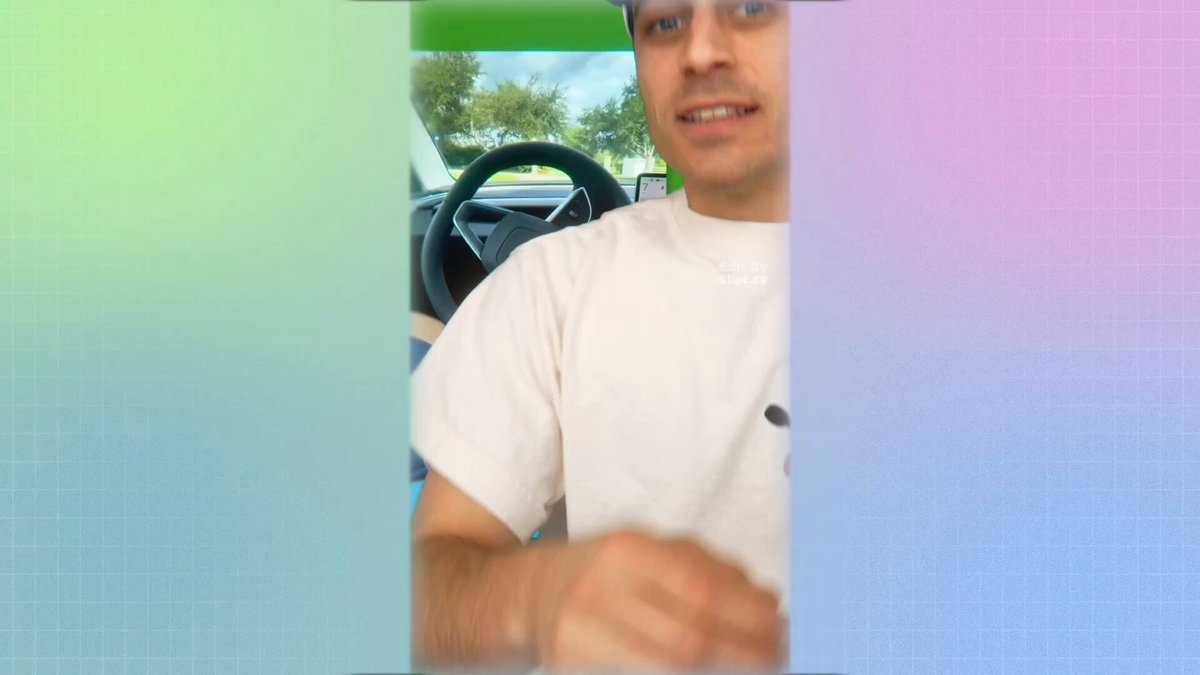
A @Tesla can drive itself anywhere now.
HOW?!
Well, let's first understand how YOU drive. Your eyes are constantly scanning for patterns: Cars, lights, people, the occasional hottie at the crosswalk.
Then your brain decides if you should slow, speed, stop, or swerve. So @elonmusk was basically like: "uhh, the car should just do that."
But, it doesn’t have two eyes and a brain no no! Tesla has eight tiny eyeballs AKA cameras that watch and record EVERYTHING around the car.
Then that visual data shoots into the Full Self-Driving Computer, a literal brain bolted to the car.
She stitches the visuals into one seamless 3D understanding of the environment, just like your brain does.
Then becomes even smarter by learning based on the BILLIONS of Tesla miles driven.
Like what a certain white line means, how traffic lights work, how the most common accidents unfold and how to avoid them. It predicts the future better and faster than a human ever could.
1
3
376
May 12
How do noise-cancelling headphones work?
First, you need to understand what a ~sound~ actually is—because it isn’t just “noise.” It’s waves of air molecules moving in ripples.
And every sound wave has peaks and troughs. What you hear is really just how those waves are shaped:
- High frequency = waves packed tightly together
- Low frequency = waves spaced farther apart
That wave travels through the air until it hits your eardrum, which detects those vibrations and turns them into sound.
Now here’s where it gets interesting...
When you put in AirPods, there’s a tiny microphone constantly listening to the outside world in real time.
So when noise comes in, the AirPods don’t just block it. They generate the exact opposite wave.
Every peak gets matched with a trough.
Every trough gets matched with a peak.
And when they meet… they cancel each other out.
The vibrations disappear before they ever reach you, so you hear NOTHING!
@Apple @gregjoz @mrfrzo
2
5
328
May 11
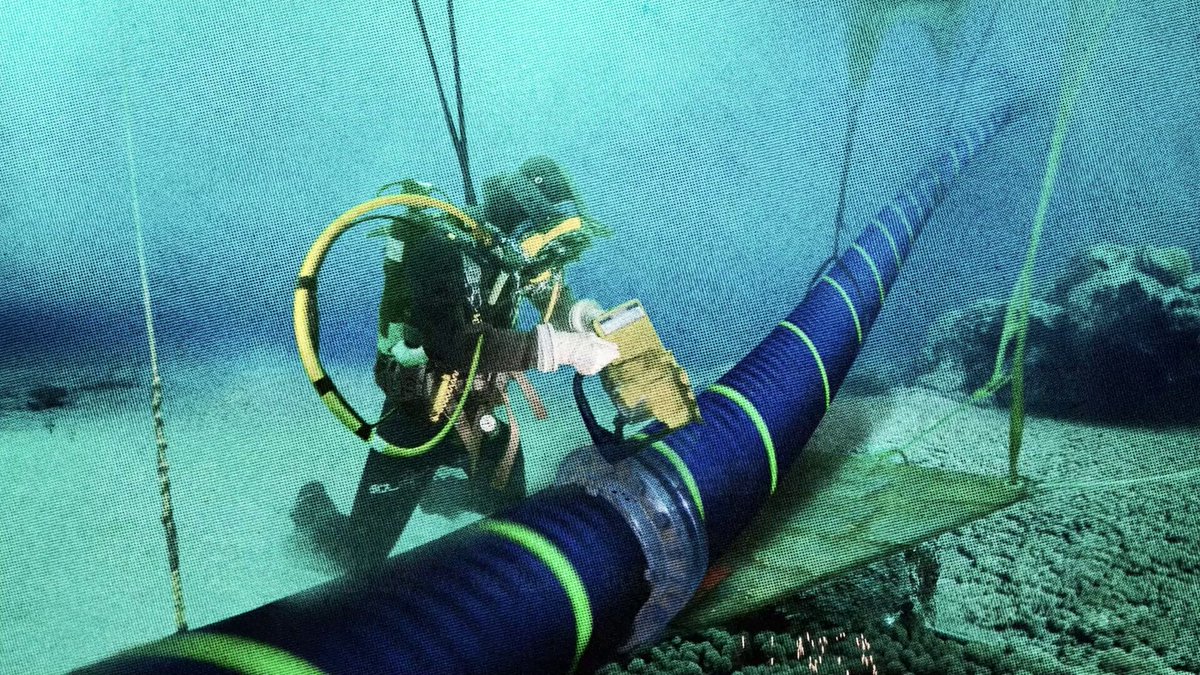
99% of global internet traffic is carried by cables...
AT THE BOTTOM OF THE OCEAN!
And @Google, @Meta, @Microsoft, and @Amazon own most of that infrastructure.
These cables stretch across the seafloor for thousands of miles. Inside each one: glass fibers thinner than a human hair, firing pulses of light between continents almost instantly.
The wild part? The first version of this existed in the 1850s.
During this time, people were trying to send messages across the Atlantic. So engineers wrapped a copper wire in tree sap and dumped it on the ocean floor between Ireland and Newfoundland.
It worked...
Queen Victoria sent a message to President Buchanan in ~16 hours. Before this, a letter took 10 days by ship!
The world lost its mind.
For the next 150 years, telecom giants like AT&T, BT, NTT, Tata, and Orange controlled the world's submarine cables. Most projects were massive consortia — dozens of companies splitting a $300M build.
Then Google changed the game.
In 2019, its private Curie cable went live, connecting California to Chile.
That cracked the model open.
Today:
— @Google owns Curie, Dunant, Grace Hopper, Equiano, and Firmina
— @Meta co-leads 2Africa, a ~45,000 km cable system wrapping around Africa
— @Microsoft, @Meta, and @telxius built Marea between Virginia and Spain
— @Amazon has invested in private subsea infrastructure supporting @awscloud globally
1
6
491
May 6
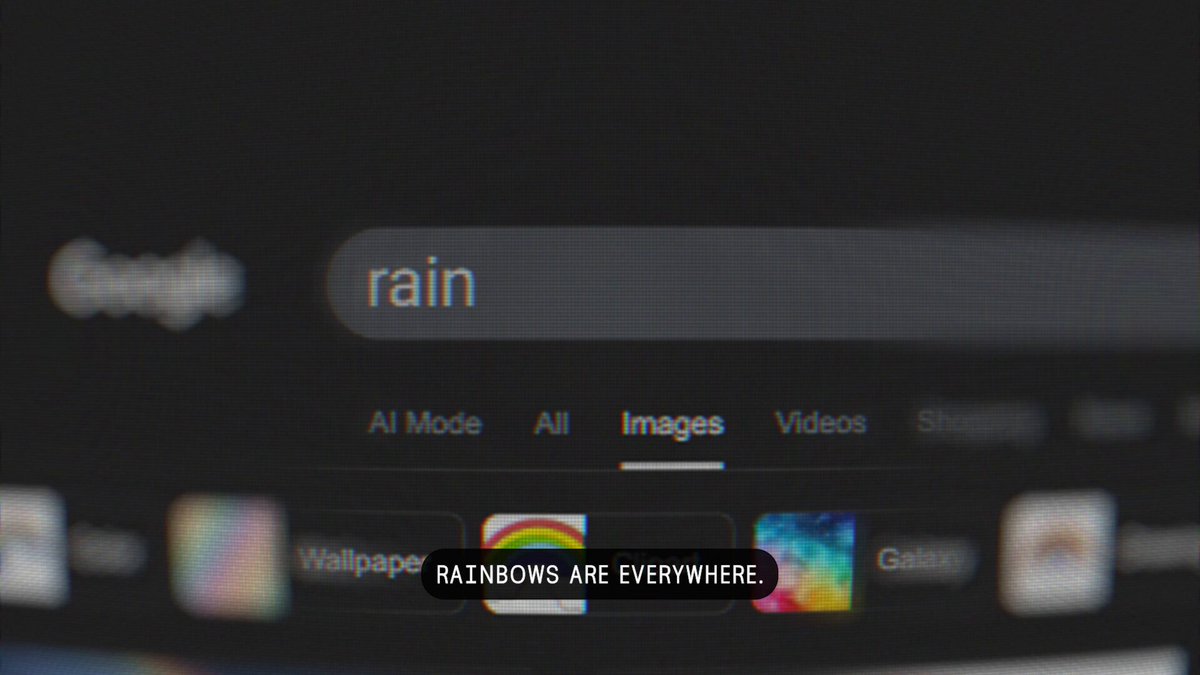
Why does a rainbow have those colors, in that exact order? 🌈
Turns out you only need 3 ingredients to make one:
- Sunlight
- A drop of water
- Your eyeball
That's the whole recipe.
Start with the sun. It shines "white" light at us all day — except white isn't really a color.
It's red, orange, yellow, green, blue, indigo, and violet, all stacked on top of each other like notes in a chord.
Play them together and your brain hears "white."
Now drop in some water.
When light hits that droplet, it slooows down.
And when light changes speed, it bends.
Red bends one way.
Violet bends another.
Every color in between gets sorted into its own lane and pops out the back of the droplet at its own specific angle.
That's refraction.
Now add ingredient #3...you!
Sun behind you, rain in front of you, and every single droplet up there is firing one color of light straight at your face from one specific angle.
You're not looking at "a" rainbow.
You're looking at millions of water droplets, each handing you one wavelength, assembled into an arc by your own line of sight.
So a rainbow isn't just a thing in the sky.
It's really a transaction between a star, some water, and you.
2
4
334
May 2
The shadiest business on Earth doesn't sell drugs.
It sells diamonds.
You see, diamonds aren't really rare.
They're literally just carbon.
You can grow a chemically identical one in a lab for like 30% of the cost of a "real" diamond.
So how the heck do they cost a fortune?
It starts in 1886.
A farmer in South Africa is just walking around when he finds a 22-karat diamond in a local riverbed.
Word gets out. Suddenly EVERY South African farmer is finding diamonds.
Mines pop up everywhere. Prices crater.
In walks our villain: Cecil Rhodes.
Bankrolled by the Rothschilds, he buys up nearly every failing diamond mine on Earth and consolidates them into one giant company: De Beers (1888).
Now Rhodes runs the entire global diamond supply.
But he's still got a problem — diamonds are everywhere. So he just… doesn't sell them all.
He stockpiles. Limits supply. And pretends they're rare.
Then De Beers opens satellite offices on every continent under FAKE NAMES so nobody knows it's the same company:
- Diamond Trading Company in England
- Diamond Development Corporation in Africa
- CSO in Europe
- The Syndicate in Israel
A literal global cartel. Operating in the open. For decades.
Now jump to the 1930s. It's the Great Depression.
Americans are broke. Nobody's buying diamonds.
So De Beers hires this American ad agency called N.W. Ayer and goes:
"Make them want it."
The agency's playbook?
→ Plant diamonds on every Hollywood celebrity.
→ Invent "A diamond is forever" (1947).
→ Invent the "two months salary" rule.
→ Slip diamonds into James Bond (Diamonds Are Forever, 1971).
Within a generation, Americans were convinced you couldn't get engaged without a diamond ring.
Now for the dark part...
This artificial demand fuels wars.
Conflict diamonds fund civil wars across Sierra Leone, Angola, and the DRC.
The cartel finally gets busted in the 2000s.
De Beers now controls only ~35% of the global diamond market.
2
8
550
May 2
Why does Apple love Ireland so much? (spoiler: it's not the weather)
In 2014, they paid an effective tax rate of 0.005% on billions in European profits.
How?
They used Irish subsidiaries like Apple Sales International to route global profits through Ireland.
Here's how it worked:
Apple assigned IP rights for sales outside the Americas to its Irish entities.
So when an iPhone was sold in China, Japan, or across Europe, those subsidiaries received internal "royalty" payments tied to that IP.
That shifted massive profits into Ireland.
But here's why it was sus:
A huge chunk of those profits wasn't actually taxed properly anywhere.
Some of it was allocated to a so-called "head office" that existed only on paper — no employees, no operations, no real base in any country.
So for a period of time:
- Ireland didn't fully tax it
- The U.S. didn't tax it either
It was basically trapped in a tax gap between systems.
In 2016, the European Commission said this structure gave Apple illegal tax advantages and ordered €13B in back taxes.
Apple appealed. The General Court sided with Apple in 2020.
But in September 2024, the EU's top court reversed that decision — and Apple had to pay the €13B after all.
4
480
May 1
In 2018, Amazon made $11 billion in profit, paid $0 in federal taxes — and got a $129 million rebate check from the government.
How?
Well, Trump cuts corporate rates from 35% to 21%.
This alone cuts Amazon's tax bill by ~$2B.
GOLLY.
So what does Bezos do with all this extra cash?
He doesn't pocket it.
He plows it back into the business:
- More warehouses
- Faster planes
- Electric trucks
- R&D on shipping
- More employee stock
This drives Amazon's profits down to zero, meaning they're operating at a loss.
6
440
Apr 29
Two months after 9/11, a plane carrying 260 people crashed into a Queens neighborhood in New York.
At first, everyone assumed it was terrorism. But the black boxes told a different story.
The aircraft’s first officer made a series of aggressive rudder inputs while trying to stabilize the plane after wake turbulence from a Boeing 747 ahead of it.
Those inputs put extreme stress on the vertical stabilizer — until the tail fin literally snapped off mid-air.
That flight was American Airlines Flight 587.
Black boxes exist because for decades, investigators had no way to understand what happened in the final moments before a crash.
Commercial aviation kept losing planes, and the cause often died with the aircraft.
So engineers built a solution: a device that would survive almost anything.
Today, every commercial flight carries two:
#1) The Cockpit Voice Recorder (CVR), which captures pilot conversations, alarms, and cockpit sounds.
#2) The Flight Data Recorder (FDR), which logs thousands of data points per second — from control inputs to speed, altitude, and heading
Together, they let investigators rebuild a flight second by second (sometimes even in full 3D) and understand exactly how a disaster unfolded.
1
5
900
Apr 28
Why does your phone battery die faster over time?
Well its actually NOT because it's getting old.
Here's what's actually happening inside:
Every time you charge your phone, lithium atoms travel through your battery to deliver electricity.
But some of them never make it back...
They get stuck, react with stuff they shouldn't, and permanently damage the battery's capacity.
A little bit each charge.
Hundreds of charges later, your battery that used to last all day barely makes it to lunch...
3
128
Apr 27
What actually makes drugs addictive?
Well, your brain has a reward system that's kept humans alive for thousands of years.
Eating, exercising, laughing with friends — every time you do something good for you, it fires off a signal that says do that again.
Drugs hijack that exact system.
Cocaine, nicotine, alcohol — they don't create a new feeling.
They're shaped almost identically to your brain's own chemicals, slotting into the same receptors, except hundreds of times stronger than anything your body produces naturally.
So your brain doesn't know it's being tricked. It just registers the loudest signal it's ever felt and codes it as the most important thing for survival.
1
6
320
Apr 21
AI image models are insanely good now.
But they still can’t reliably draw one thing...
Hands.
Seriously! Ask your favorite AI tool to generate a picture of a human hand.
WHY DOES IT HAVE SIX FINGERS?!
Ok, sometimes AI gets it right…
But hands and fingers are still one of the most consistent failures in image generation.
And that actually tells us something important about how these models work.
You see, AI image tools don’t “draw” images.
They don’t search Google.
And they don’t copy-paste anything.
So then what are they actually doing?
Well, they’re built using something called diffusion models.
It’s a bit complicated, but basically diffusion models learn to remove noise.
Here's how:
Take a real image.
Add static.
More static.
MORE.
Usually 50 layers of static until you’re left with pure TV noise.
The AI uses math to model each step of that static layering process.
But it also uses math to figure out how to run this process in reverse.
Static in → image out.
So when you ask ChatGPT to gender-swap your friend, it starts with total static, and removes it layer by layer until you get something… good??
And faces? Easy.
Two eyes. A nose. A mouth.
Roughly the same layout across millions of photos.
The model has seen so many faces that it basically has them memorized.
But hands??
27 bones. 29 joints. A million valid poses.
The statistical map for "hand" is enormous, which makes the mathematical variance high.
So when AI reconstructs fingers from static…
It’s not “drawing” them.
It’s guessing what should exist based on probability.
And sometimes, probability gives you six fingers...
AI model labs are actively working on this problem.
#AI #MachineLearning #DiffusionModels #GenerativeAI #TechExplainers
1
6
429
Apr 16
Your phone fires 30,000 infrared dots at your face every time you unlock it.
But how does this light recognize…your face?
Take a quick look at your phone, specifically the black notch toward the top, near the camera.
Apple calls this system TrueDepth.
Eight components packed into that little black notch, all firing in the fraction of a second it takes you to glance down.
One of those components: the dot projector.
It…projects dots. 30,000 in a fraction of a second, every time you need to open your phone.
So FaceID isn’t taking a picture of your face. It's building a 3D map of it.
The dot projector casts 30,000 infrared dots across your features, and because your face has contours, those dots distort in predictable ways.
The infrared camera reads that distortion and reconstructs the geometry of your face in three dimensions.
Remember when you had to roll your head around during phone setup? The 3D model gets compared to the mathematical face print you created during setup.
This process uses a TON of data, but it happens so fast.
How?
Apple built a dedicated chip specifically to run this.
The Neural Engine inside the A-series processor handles the face-matching math at a speed and security level the main CPU couldn't manage alone.
And your face data never leaves your device.
It lives in something called The Secure Enclave [*oooooh, ahhhh*], which is an isolated processor that even the operating system can't read.
This system has an error rate of roughly 1 in 1,000,000. Touch ID is 1 in 50,000.
All of that, before you've finished picking up your phone!
2
11
1,835
Smart Nonsense retweeted

Your product deserves a better explainer...
Whether it’s...
• Feature explainers that don’t feel like demos
• Launch videos that build hype, not just awareness
• Sales explainers to accelerate the sales cycle
• Paid ads that people don't swipe past
• Or even an owned YouTube channel
Let's explore how our unique storytelling can help you drive engagement, conversion, and retention🌈
1
2
9
3,341