
Sailing, skiing, vegetable growing wine drinking. living in the middle of a muddy field with my four legged friends enjoying the present and curious about life
Joined November 2011
- Tweets 5,911
- Following 6,132
- Followers 2,083
- Likes 1,697
135 Photos and videos

Earthman retweeted

Jun 14
A “Rohtak dome” is a brick dome ceiling, with self supporting geometry built without steel or beams . Originating from the villages of Rohtak in Haryana, India
Wait for the results…
📹 rohtak_domes_
39
237
1,628
101,672
Earthman retweeted

Jun 13
When an engineer designs a scarecrow.
709
5,052
39,326
2,038,508
Earthman retweeted

Jun 14
#BobFlowerdew on… CHIA SEEDS :-) Best wishes Bob bobflowerdew.com
4
7
64
1,811
Earthman retweeted

Breaking News:-
Historians have discovered the grave of what they believe to be the UK’s oldest ever living man in Yorkshire.
He was 193 and his name was Miles from London.

107
298
3,677
127,622
Earthman retweeted
Jun 12
#BobFlowerdew on… BEEF STEAK TOMATOES :-) Best wishes Bob bobflowerdew.com
1
8
72
1,162
Earthman retweeted

Jun 11
“Barnaby bright, Barnaby bright;
Longest day and shortest night”
St. Barnabas’ Day, 11 June, coincides with the summer solstice in the Old Style calendar. St. Barnabas is a saint invoked to bring peace. His flower is the ‘Midsummer Daisy’, the ox-eye daisy (Leucanthemum vulgare)
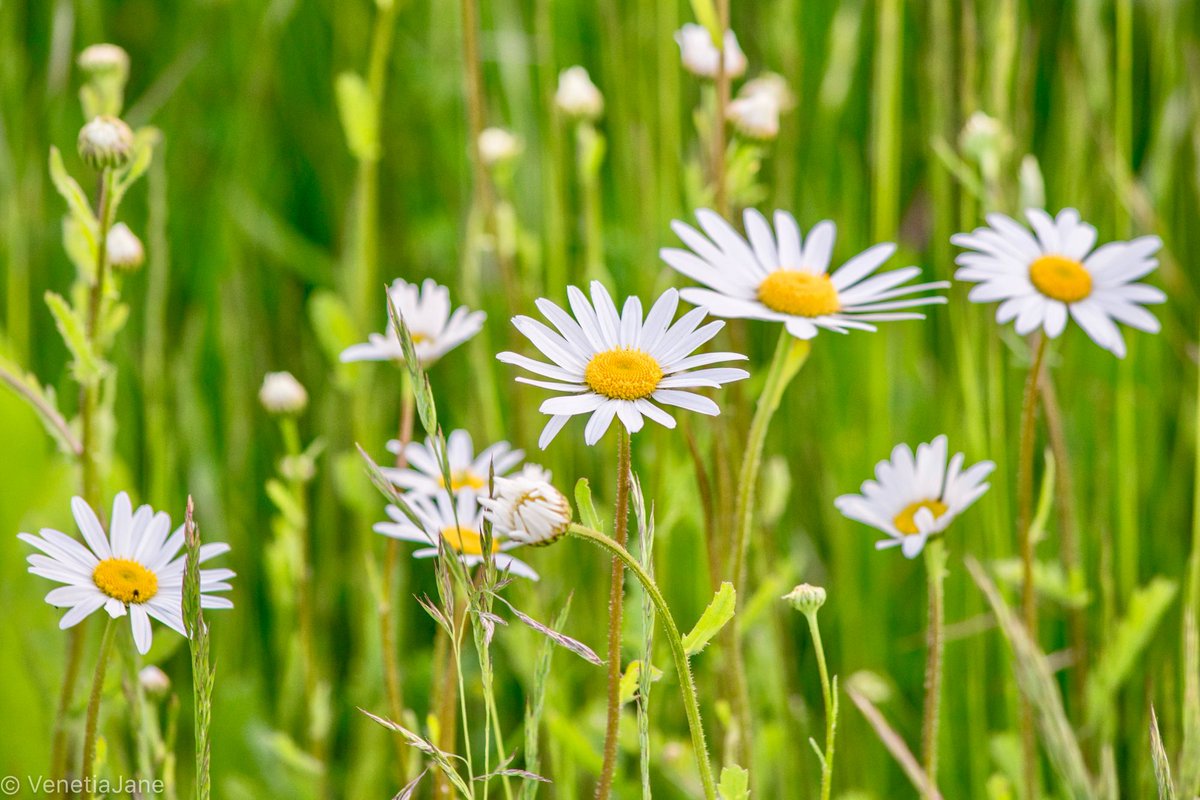
ALT Ox-eye daisies flowering among tall meadow grasses in summer. White petals surround golden-yellow centres, with open blooms and rounded buds scattered through a softly blurred green background.
14
194
724
7,063
Earthman retweeted

Jun 11
Une des meilleures vidéos que j'ai vu sur internet 🥹🤩🤩🤩🥰
1,780
15,763
131,027
4,104,945
Earthman retweeted

Jun 9
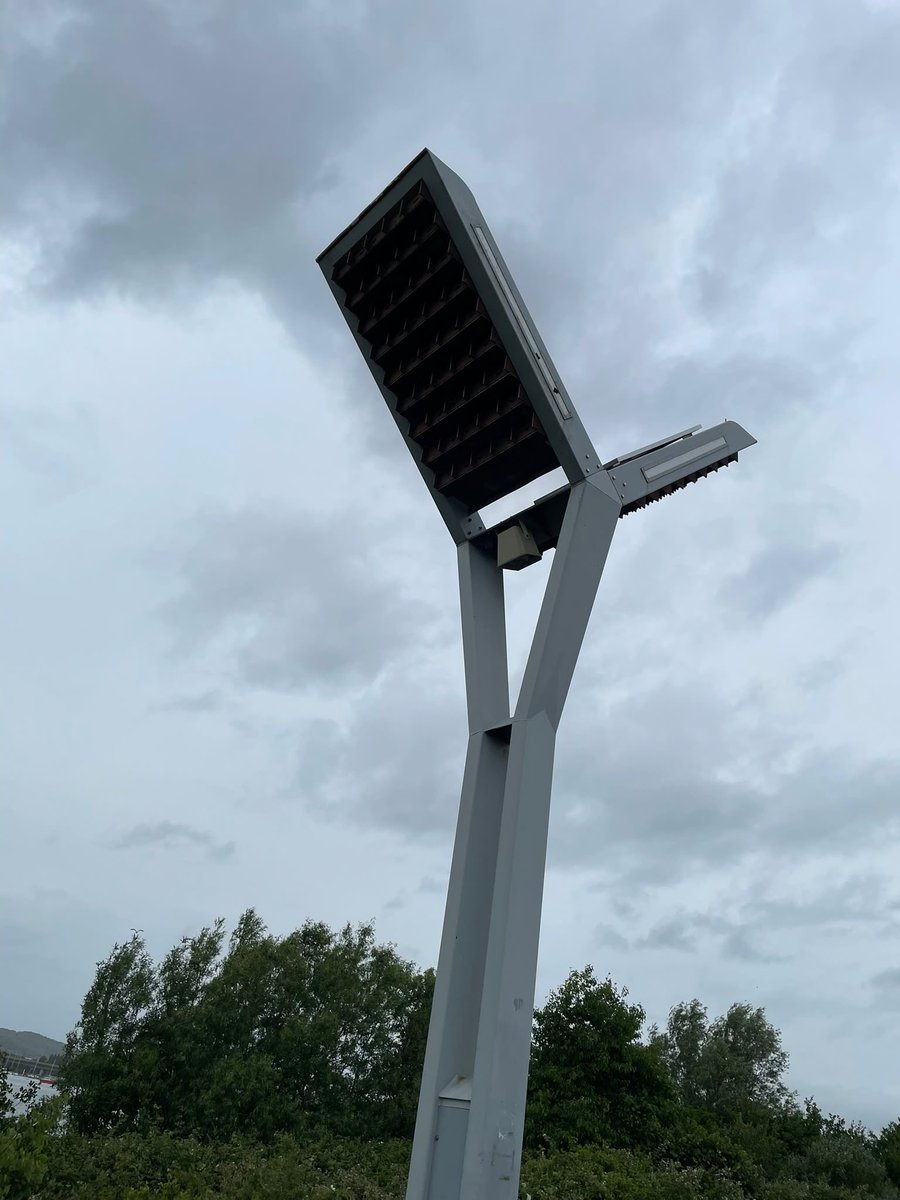
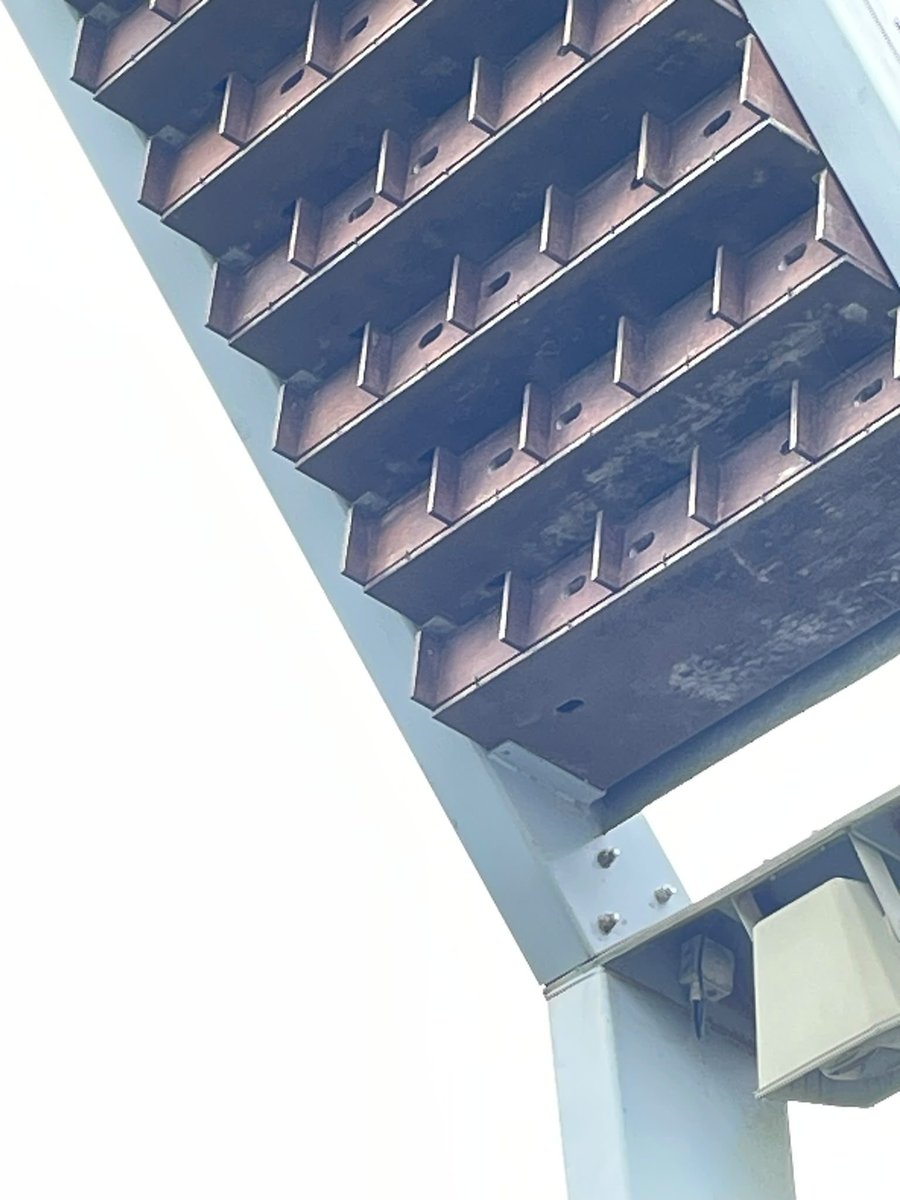
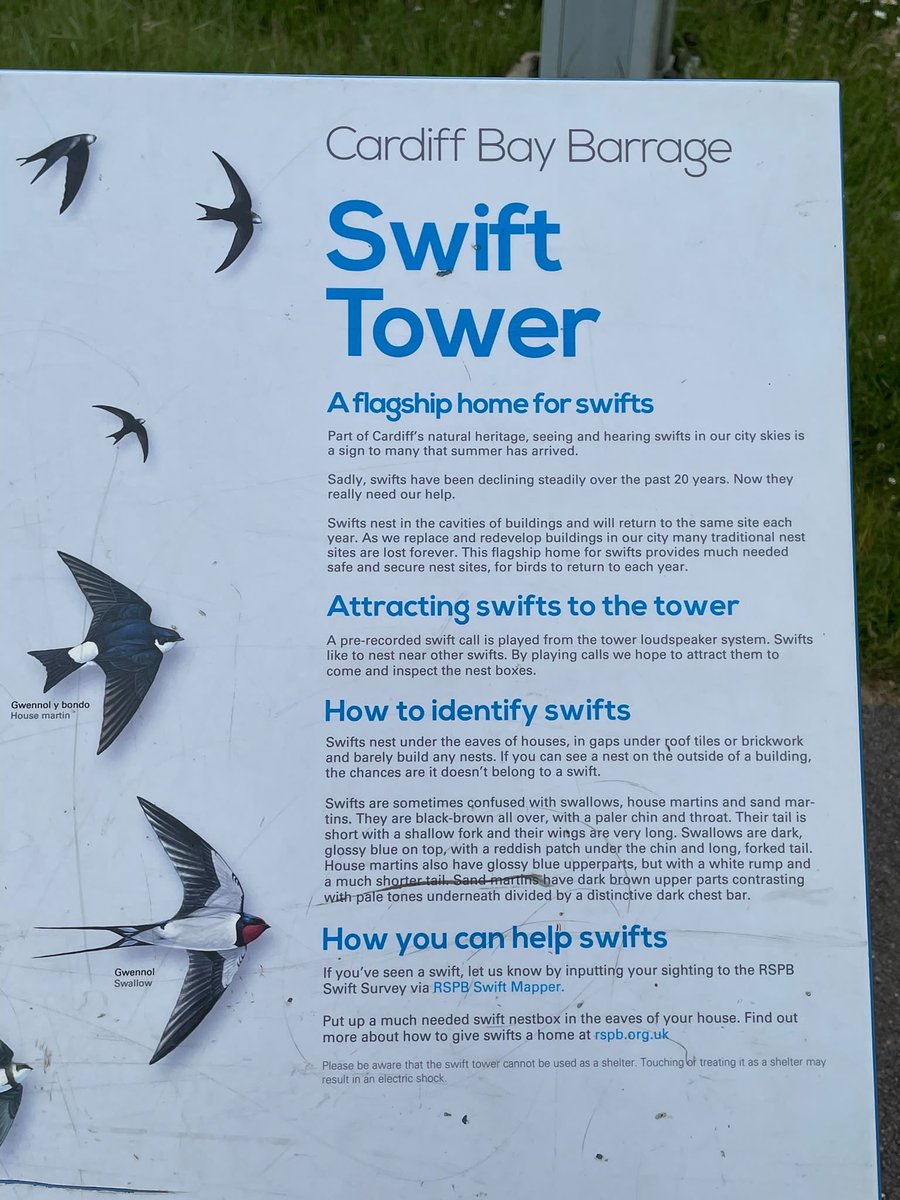
Look what’s been built in Cardiff for swifts. My niece sent me these photos and said the structure was alive with birds. Heartening to see. It’s shaped like a swift in flight I think. Other towns have created similar swift nest sites including Exeter. Thank you for caring.
49
680
3,244
45,582

I think moss should share a bone with jet my pup
Jun 9

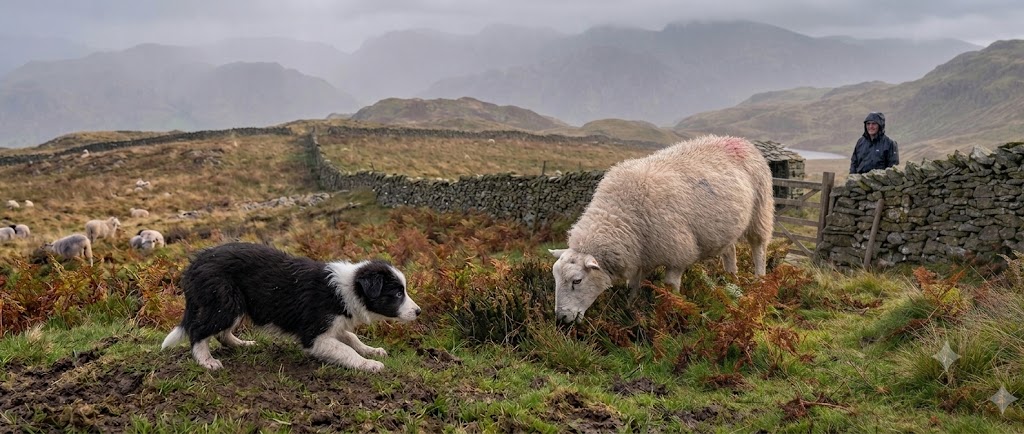
Brian has a pup. The fell has not seen one in a while, and the fell has opinions, and so does the pup, and almost none of them are correct yet.
His name is Moss. He is a Border Collie, fourteen weeks old, black and white and entirely convinced, and he has arrived on a Cumbrian hill to learn the oldest job a dog has in this country, which is to move sheep without harming a hair on them, using nothing but position, patience, and the strange ancient power that a collie carries in its eyes.
Because that is the thing about a collie, the intricacy that makes the breed what it is. A collie does not herd by chasing or biting. It herds by "the eye," a fixed, crouching, predatory stare inherited straight from the wolf, the look that says to a sheep "I am a hunter and you will move," delivered by a dog that has been bred for a century and a half to feel the entire predatory sequence right up to the final pounce and then stop, and hold, and never complete it. A working sheepdog is a wolf that has been taught to do everything except the last thing. The control is the whole art.
Moss has the eye. He does not yet have the control. He has, this week, "gathered" a watering can, a wheelbarrow, three hens belonging to the neighbour, and Brian's wife's washing, dropping into the crouch and giving each of them the full ancestral stare before attempting to move it somewhere it did not wish to go.
Brian is not worried. Brian has done this before, more times than he will say, and he knows that the instinct arriving wrong and early is exactly how it is meant to arrive, and that the job now is years of patient shaping, the pup working beside an older dog and an older man until the wolf in him learns the one rule that makes him useful instead of dangerous: everything except the last thing.
Moss gave Doris the eye on Tuesday.
Doris, who has been stared at by better, carried on grazing.
Moss sat down, confused. The first lesson on the fell, delivered free, by a ewe: the look only works on something that believes it. He has a great deal to learn. He is exactly where he should be.
15
Earthman retweeted

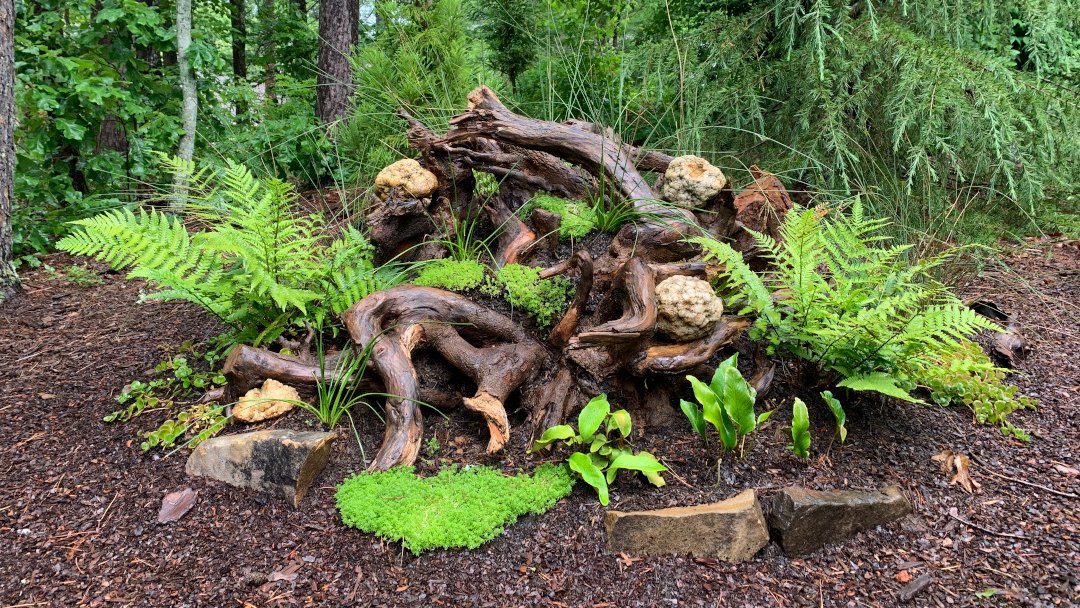
Back in Victorian days, it was considered quite fancy for gardeners to build something they called a stumpery.
It's a pile of dead stumps and logs, often stacked roots-up, arranged in a shady damp corner and left to rot on purpose. The Victorians built them to show off ferns, but they also turn out to be some of the best wildlife habitat you can make.
The first one went up in 1856 at Biddulph Grange in England, where a gardener took the stumps left from clearing land and stacked them ten feet high along a sunken path. The fern craze was at its peak, and the rotting wood made perfect planting pockets. King Charles has a famous modern stumpery at Highgrove built from sweet chestnut roots.
What the Victorians treated as decoration, nature treated as a feast. As the wood breaks down it feeds fungi, mosses, and beetles, including stag beetles whose grubs live in deadwood for years. Toads, salamanders, and small mammals move into the damp gaps. A single rotting log can support an astonishing variety of life.
To build one: find a shaded corner, stack stumps and logs with the roots facing up and out, leave plenty of gaps, and tuck ferns and moss around the base. Then walk away and let it rot.
You make a sculpture out of dead trees, and everything in the yard moves in.
66
738
4,151
107,297
Earthman retweeted

Jun 9
A gynecologist waits and waits on his final patient of the day, but she doesn’t arrive.
After an hour goes by, he makes himself a gin and tonic, and sits at his desk to relax for a little bit.
After he settles into an armchair to read the news, he hears the doorbell ring. It’s the patient who arrives all embarrassed and apologizes for the delay.
“It’s okay,” says the doctor. “I was having a gin and tonic while waiting…Do you want one to help you relax?”
“I accept, thanks!” she answers.
He gives her a drink, sits down in front of her, and they start to talk.
Suddenly, they hear someone opening the front door.
The doctor looks worried, gets up, and says, “My wife! Quick! Get up and take off your clothes and spread your legs! Otherwise, she might think some nonsense is going on!”
19
33
520
68,979
Earthman retweeted

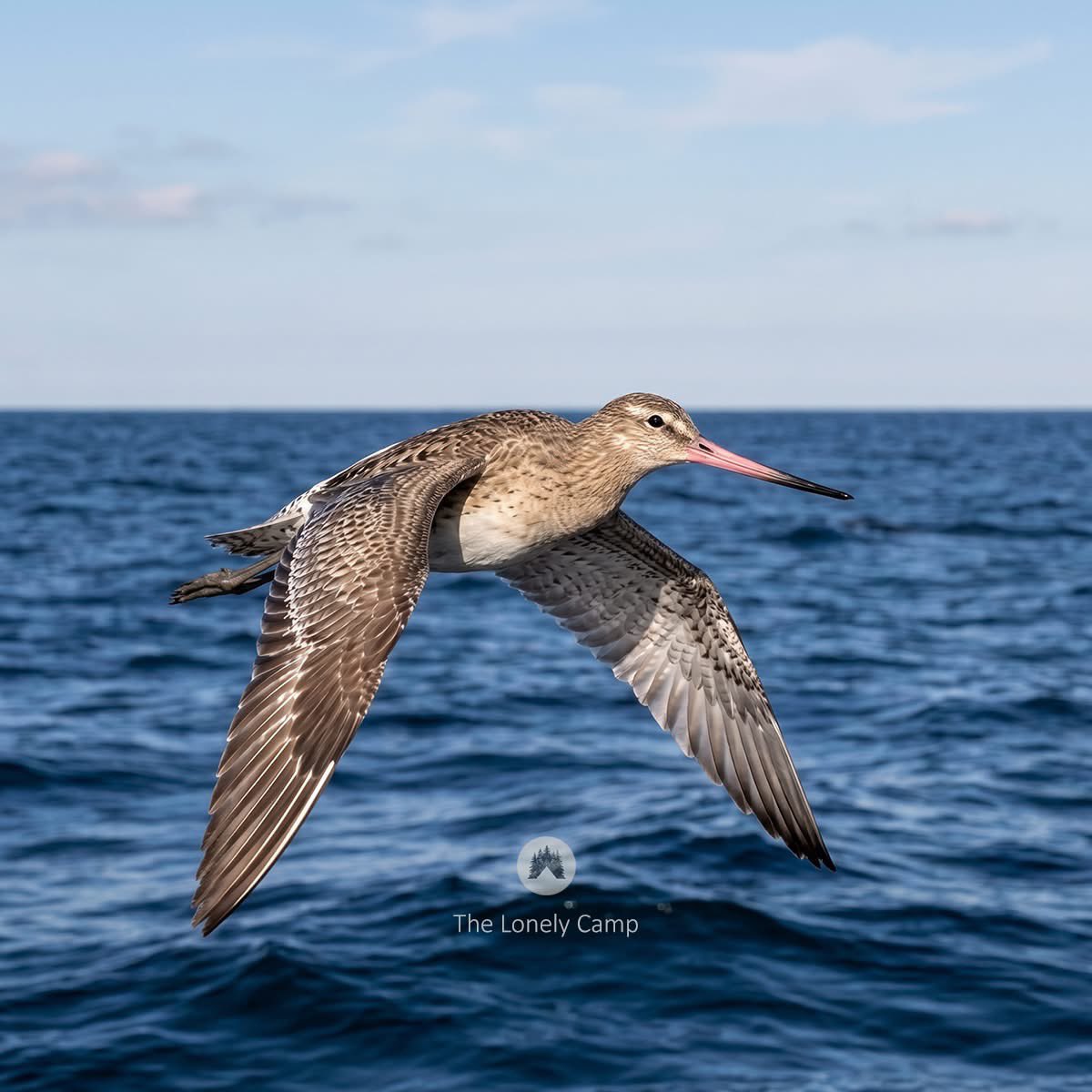
In September 2007, a bird weighing barely more than a pound lifted off from Alaska and flew across the Pacific Ocean without stopping once.
No landing.
No food.
No water.
No sleep on the ocean.
Seven days and nine nights later, she arrived in New Zealand.
Her name was E7.
She was a bar-tailed godwit — a shorebird small enough to fit comfortably in your hands.
Scientists had long suspected these birds made one of the greatest migrations on Earth, but nobody had ever tracked an individual bird across the entire journey in real time.
E7 became the proof.
Researchers fitted her with a tiny satellite transmitter before migration season began.
Then they watched in astonishment as the signals kept moving south.
And south.
And south.
More than 7,000 miles across open ocean with no break.
What makes the journey even more unbelievable is how a godwit prepares for it.
In the weeks before departure, the bird transforms itself into a living fuel tank.
E7 spent late summer eating constantly, nearly doubling her body weight in fat reserves.
Then something extraordinary happened inside her body:
Her digestive organs began shrinking.
Her stomach and intestines partially atrophied because they wouldn’t be needed during the flight.
At the same time, her heart and flight muscles grew larger and stronger to handle the nonstop effort ahead.
By the time she launched into the sky, her body had essentially rebuilt itself for one purpose:
Survival in the air.
Once E7 left Alaska, there was no room for mistakes.
A bar-tailed godwit cannot rest on the ocean like a seabird.
If she landed in the Pacific, she would drown.
So she kept flying.
Hour after hour.
Day after day.
She navigated using the sun, stars, Earth’s magnetic field, and atmospheric patterns scientists still don’t fully understand.
She rode favorable winds southward while slowly burning through the fuel stored inside her body.
And when the fat reserves finally ran low, her body began consuming its own muscle tissue to keep her alive.
After more than 200 straight hours in flight, E7 finally descended onto the mudflats of New Zealand.
She had lost over half her body weight.
Her digestive system had effectively shut down.
Her muscles were severely depleted.
But she survived.
Within hours of landing, her organs began rebuilding themselves again.
The tiny bird that crossed the Pacific started eating, recovering, and preparing for the next stage of life as though this impossible journey was simply normal.
And that’s the part scientists found most humbling.
E7 wasn’t some miraculous exception.
She was just the first godwit carrying technology that allowed humans to witness what her species had quietly been doing for thousands of years.
Every year, tiny birds rise into the Arctic sky and cross an entire ocean powered only by instinct, endurance, and a body engineered by evolution to do something that still feels almost impossible.
A one-pound bird.
Seven days nonstop.
Over 7,000 miles of open ocean.
And somehow, she knew exactly where she was going.
92
799
2,756
47,744
Earthman retweeted
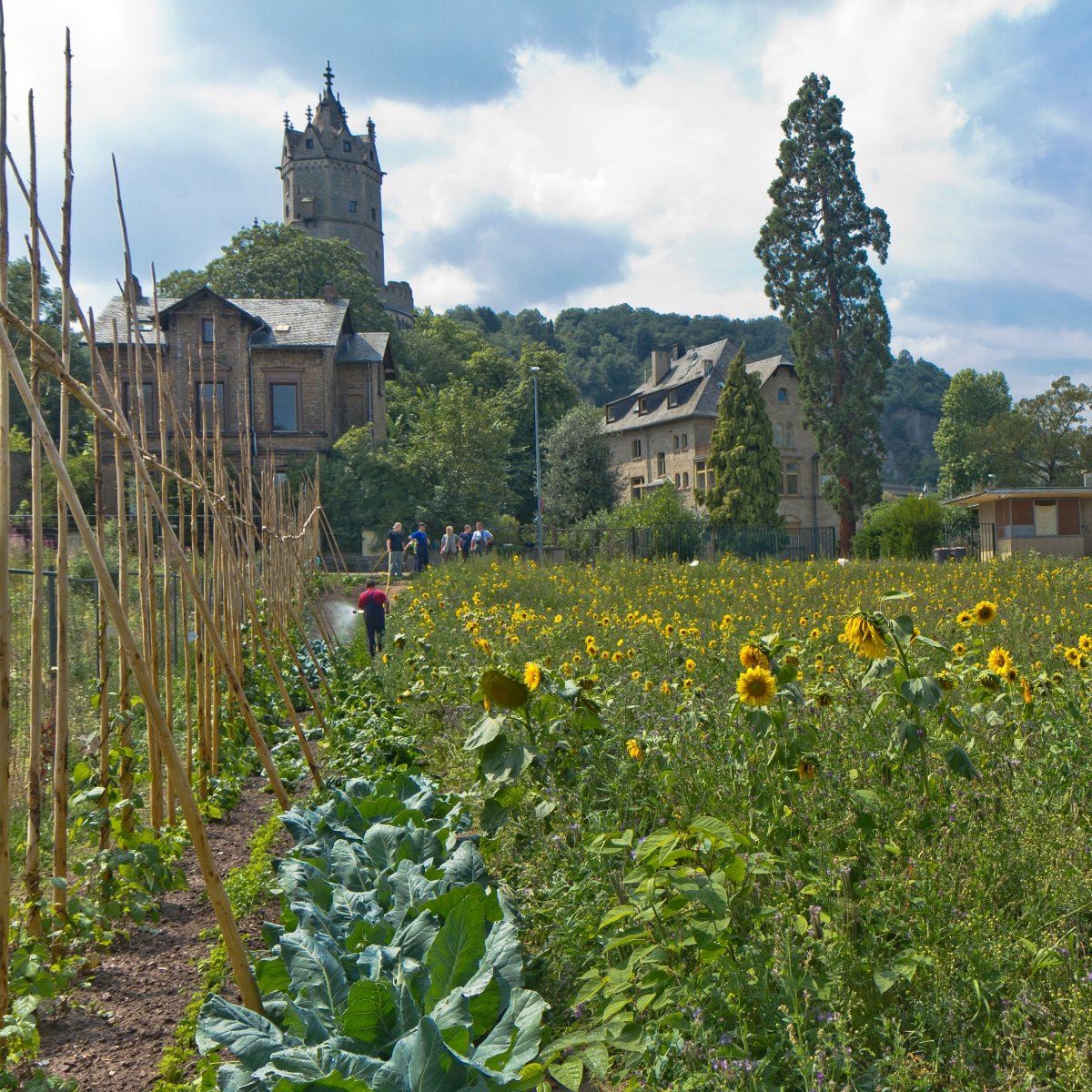
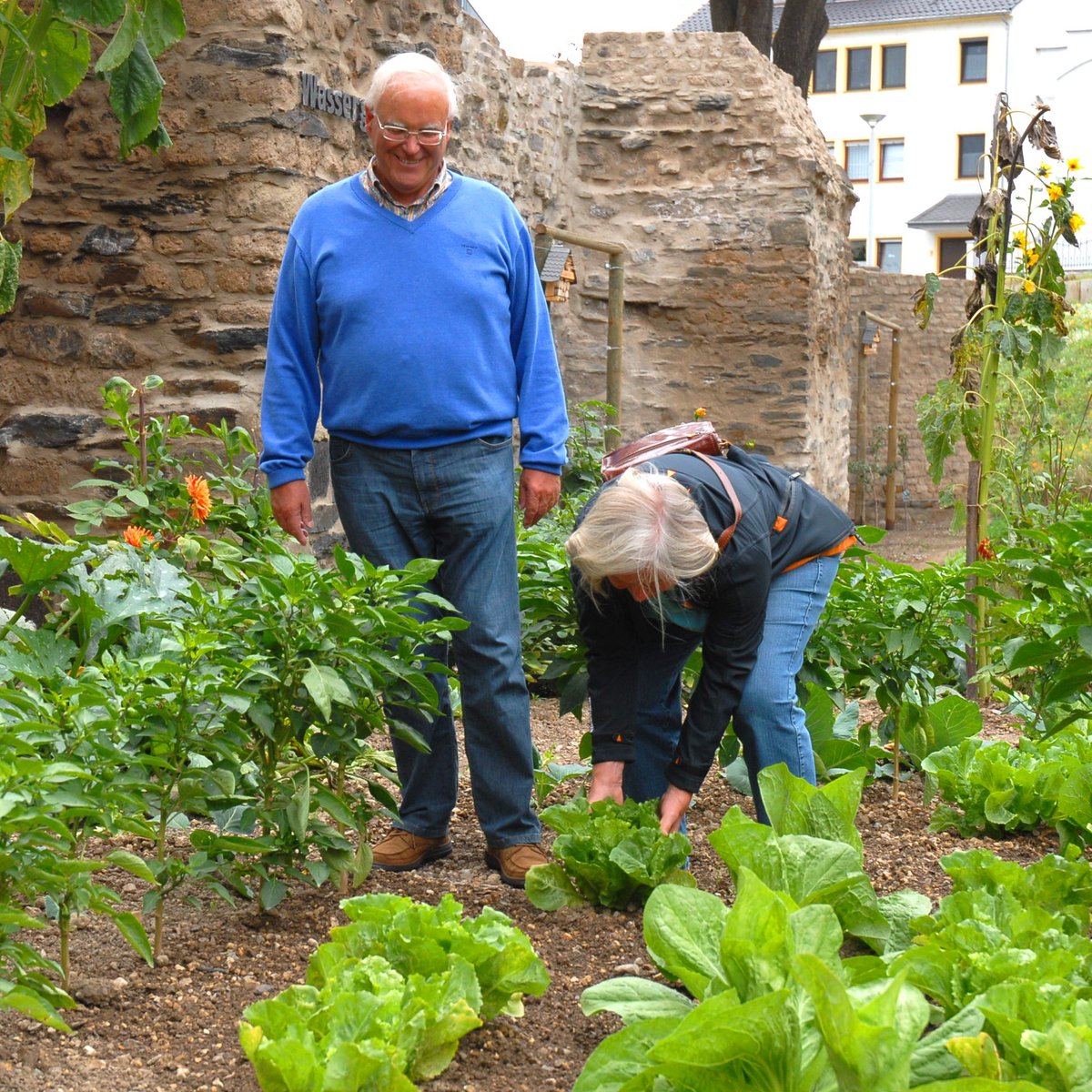
In 2010, Andernach, Germany planted 101 varieties of tomatoes in the town center and told everyone to take whatever they wanted.
It was so popular that they did it again, adding beans the next year. Over time, they added onions, fruit trees, lettuce, zucchini, berries, and herbs, all free to the public and maintained by the city.
Andernach is now nicknamed the "edible city." And they're not alone.
Philadelphia has been doing a version of this since 2007. The Philadelphia Orchard Project has helped establish 67 sites across the city with thousands of food-bearing trees.
Baltimore is planting fruit trees on sidewalks. Seattle, Boston, San Francisco, and Asheville all have public urban orchards.
A mature apple tree produces 400-500 pounds of fruit per year. A mature pear tree can produce for 75 years.
Cities pride themselves on their tree cover. We've decided that trees are important, but we haven't fully decided those trees should feed people yet.
Would you support urban fruit trees and vegetables in your city?
73
962
3,272
45,897
Earthman retweeted

Jun 4
Nothing really special: just a bunch of piglets happily enjoying a water slide.
106
707
6,282
267,718
Earthman retweeted

May 31
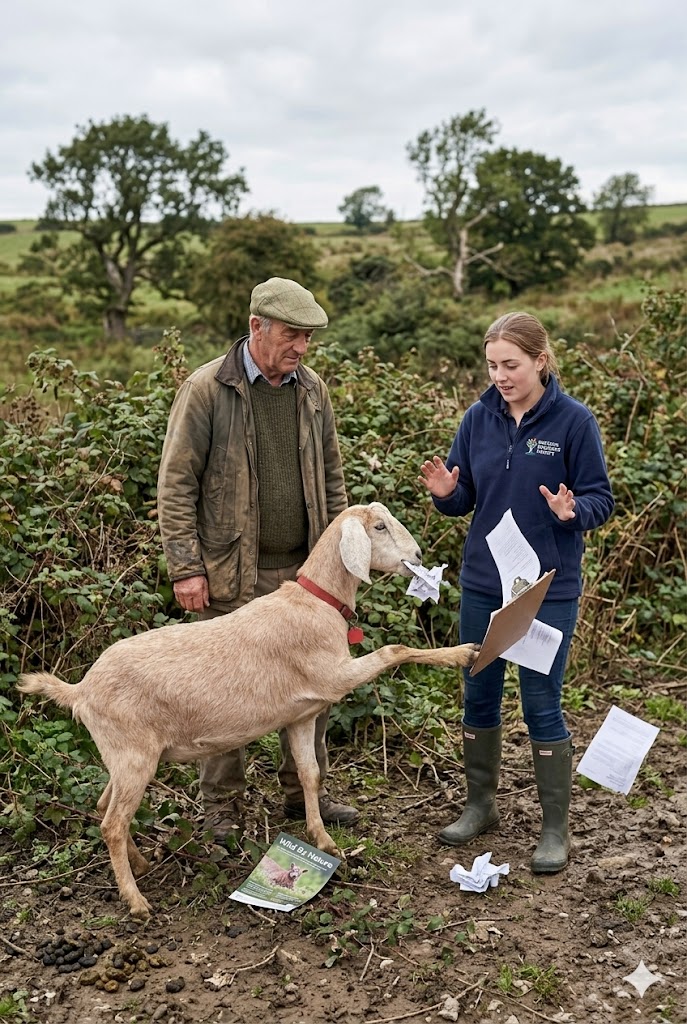
Keith the Apocalypse Bringer received a visitor this week. A young woman with a clipboard, a fleece bearing the logo of a national rewilding charity, and the kind of clear-eyed certainty that comes from having read three books about ecosystems and never having stood in a wet field in February.
She had come to assess the farm for what she described as "rewilding potential."
Keith was eating a bramble at the time.
Visitor: Hello. I'm here to talk about transitioning the land away from livestock.
Farmer: Keith does most of the talking.
Visitor: I think we could really restore this landscape if we removed the grazing pressure.
Farmer: Have you noticed Keith.
Visitor: The goat? Yes. He'd be moved.
Farmer: Where to.
Visitor: A sanctuary, ideally.
Farmer: Keith was at a sanctuary. They asked us to take him back.
Visitor: Right. Well. Without the grazing, the natural succession would take over. Scrub, then woodland.
Farmer: That's bramble.
Visitor: Yes. Scrub is part of the natural process.
Farmer: Bramble is what Keith eats.
Visitor: The whole point is to let nature take its course without human interference.
Farmer: Keith is a goat. Goats are nature. Goats have been on this hill for several thousand years. The hill is the way it is because of goats.
Visitor: Domesticated goats aren't really wild.
Farmer: Neither are the trees you'd plant. Neither are you. What's your point.
Visitor: I think we could see the return of some really exciting species without the grazing.
Farmer: Like what.
Visitor: Well, eventually, lynx. Wolves.
Farmer: To eat Keith.
Visitor: ...
Farmer: You want to remove the goat to bring back the predator to eat the goat.
Visitor: When you put it like that.
Farmer: When you put it any way at all. Keith is doing the job. Keith is doing it for free. Keith has been doing it since the Neolithic. The bramble eats the field if Keith doesn't eat the bramble. You can hire a contractor to come up here once a year with a strimmer and do half as good a job for several thousand pounds, or you can have Keith, who works seven days a week for cheese.
Keith, at this point, kicked over the clipboard.
The visitor packed up. She left a leaflet.
Keith ate the leaflet.
The leaflet said "Wild By Nature."
So is Keith. Nobody at head office had thought about it for quite that long.
72
499
2,242
27,269
Earthman retweeted

May 31
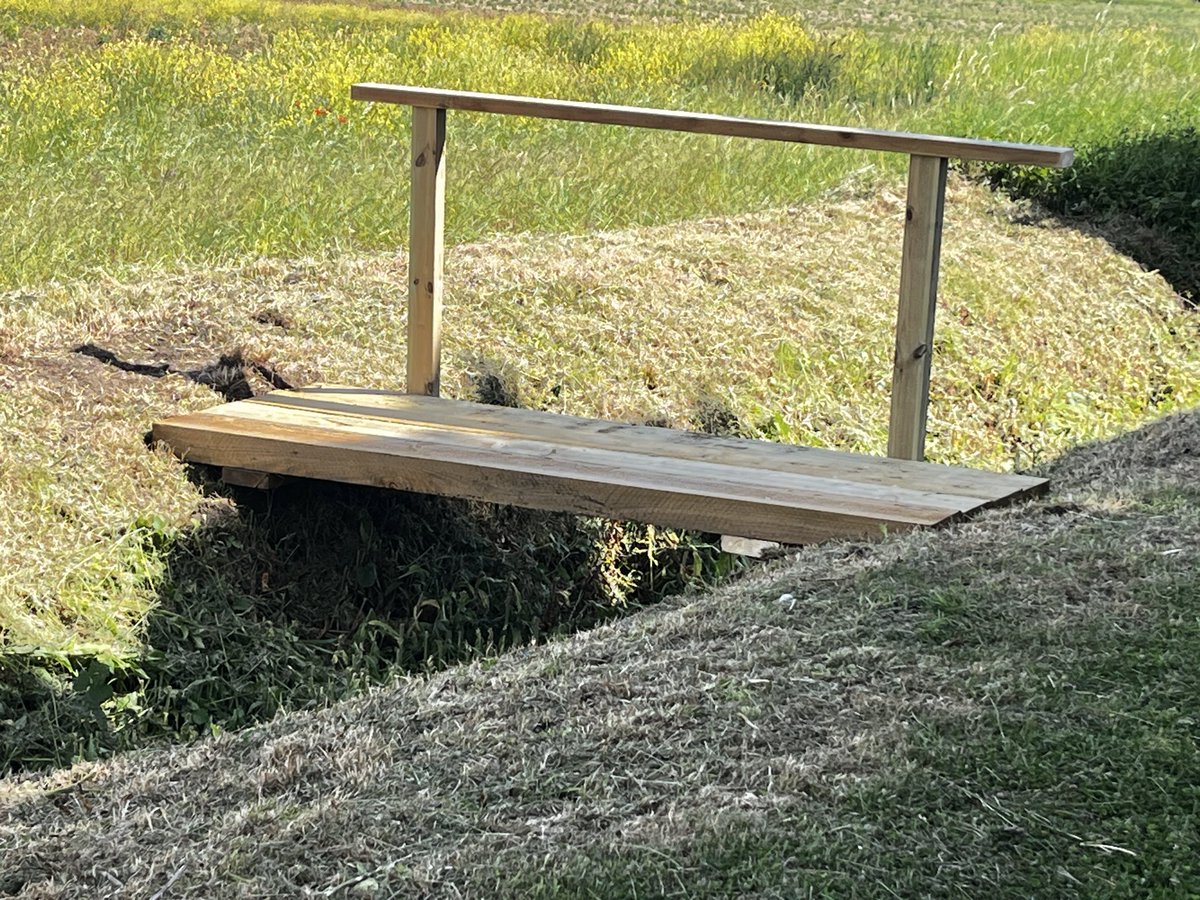
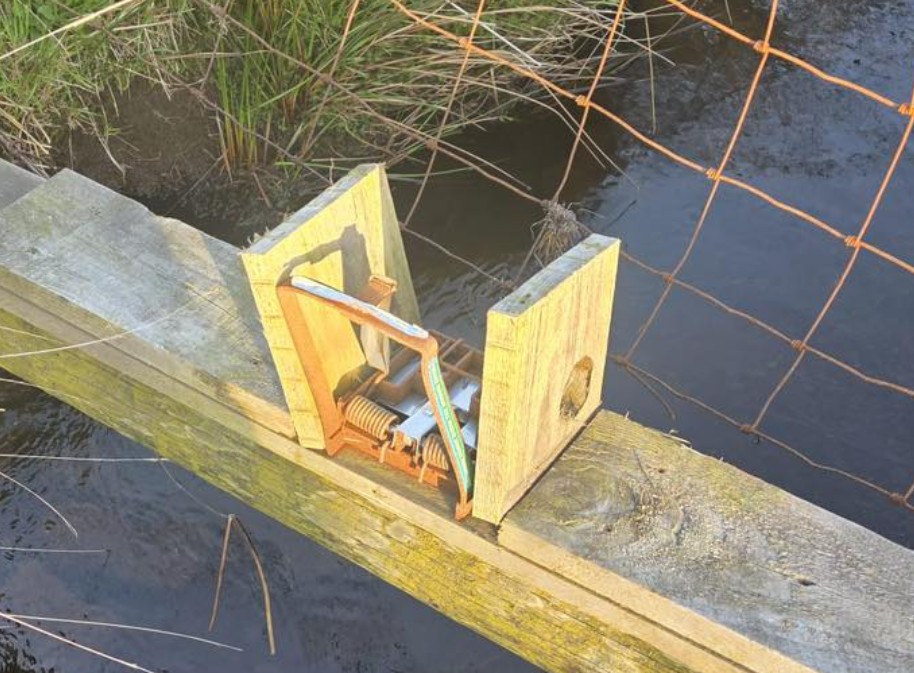
Yesterday I asked Mellors if he could just pop a plank over the deep ditch so I could easily walk over. Today I awoke to this.
31
17
657
17,882
How about just letting things manage themselves without profit

A gamekeeper has found one of his legal traps illegally damaged - and the timing could not be worse.
We are at the most sensitive point of the year for ground-nesting birds. Across our moors and farmland, waders and other red-listed species are laying eggs, incubating, or already rearing chicks.
Predator control divides opinion, and we understand that. But the evidence is clear: the targeted, lawful work of gamekeepers, farmers and conservation organisations is the main reason our estates remain strongholds for curlew, lapwing, golden plover and other threatened birds that choose to breed here.
Damaging or interfering with a legally set trap is a criminal offence. Every incident is reported to the police, and traps and snares are replaced within 24 hours.
Gamekeepers work hard to give every ground-nesting species a fair chance to hatch and raise their young.
Sabotage doesn't just cost estates time and money, it costs chicks their lives, and it sets back the recovery of some of our most threatened birds.
Please leave legal predator control alone. The future of our red-listed waders depends on it.
🎞️ Courtesy of Calderdale Moorland Group
22
Earthman retweeted
May 30
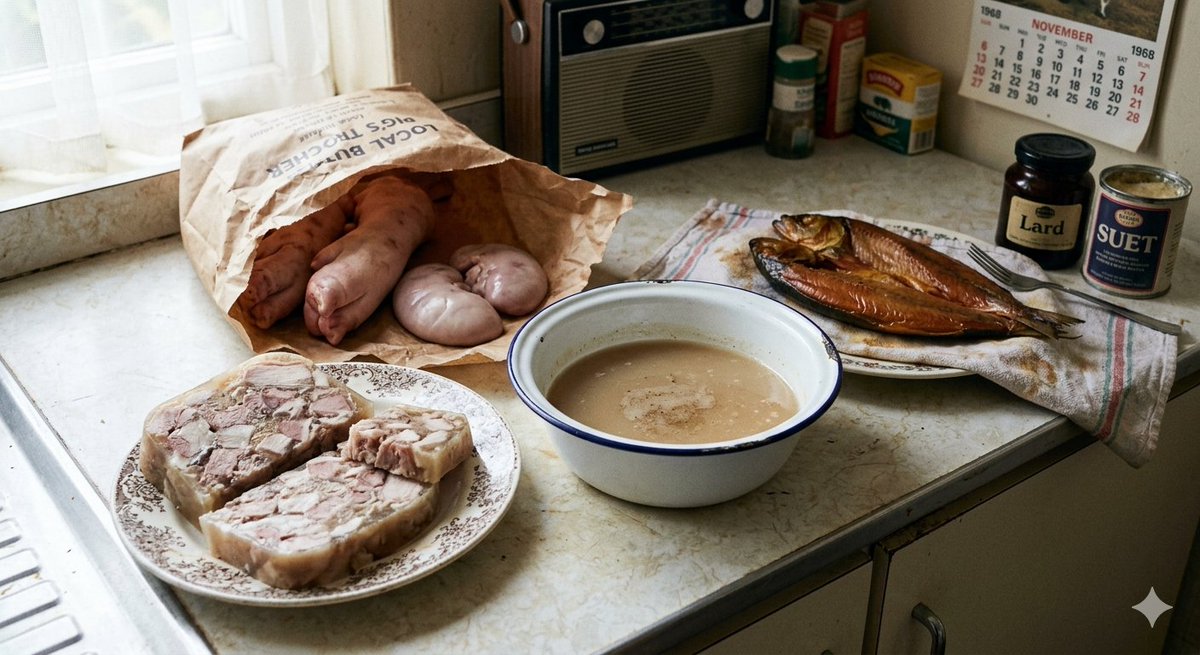
Our great-grandparents ate from a far wider range of animal foods than we do, and the variety was the point. Every part of every animal carried a different set of nutrients, and the kitchen knew it without needing a label.
The dripping bowl, white enamel, on the cold shelf. Standard in every British kitchen until 1985. Now a museum piece.
Liver and onions on a Wednesday. Kidneys on toast. Tripe, heart, sweetbreads, brain. 11% of UK households now buy any red meat offal at all, and three-quarters of that 11% are over fifty-five. One generation from gone.
Brawn, the pig's head set in its own jelly. On every market stall in England until 1980. Count the producers on one hand.
Trotters. Once thrown in for free. Now sold as a delicacy.
Kippers. On every breakfast plate from 1843 until the herring fishery collapsed in 1977. The under-forties have eaten a Frube where their grandfather ate a kipper.
Jellied eels. London's staple since the 1700s. Thames eels down 90% since the 1970s. As of November 2025, no pie-and-mash shop in London serves eel pie. They are out of eels.
Cockles, winkles, whelks, sold from a wheelbarrow outside the pub with vinegar and white pepper. Tubby Isaac's ran ninety-four years and closed in 2013.
Native British oysters. Half a billion through Billingsgate in 1851. Three for a penny in Dickens. 5% of historical stocks remain.
Marrow bones. Spread on toast with salt was a child's tea. Now a restaurant starter your grandmother would not recognise.
Lard. Suet. Goose fat. Beef dripping. Replaced in one generation by a plastic tub of seed oil.
The variety did not vanish.
It was quietly removed from the table while we were looking at the menu.
21
179
717
11,560