
some things matter more than others
Joined July 2018
- Tweets 10,849
- Following 1,348
- Followers 474
- Likes 37,447
108 Photos and videos














Shy Guy retweeted

This why these New World Order 🤡s want their populations disarmed.

🚨🇬🇧Massive arrests sweep across Britain after Keir Starmer's order to crush the patriots!
Brutal police violence erupts with pepper sprays and armored vehicles deployed.
Anyone loving their country and waving the UK flag is now a target!
3
13
26
260
Shy Guy retweeted

1
3
9
93
Shy Guy retweeted

Mamdani posts message in Arabic warning about traffic in NYC from his official Mayor account

1,051
2,226
7,309
435,022
Shy Guy retweeted

They are assimilating well.
Those are “ceremonial” weapons btw.
49
166
461
5,308
Shy Guy retweeted

Of course not, because BlueSky is a communist degenerate breeding ground meant to indoctrinate the youth.

🚨NEW: Bluesky will not be included in the under-16s social media ban
1
6
24
279
Shy Guy retweeted

🚨 The state of Canada’s economy 2026:
📉 Only G20 nation in recession
📉 GDP growth: -0.06%
📉 Real wages down 4 consecutive years
📉 Productivity growth: near zero
📉 Business investment: worst in OECD
📉 Dollar falling vs every major currency
💴 Federal debt: $1.4 trillion
💸 Annual deficit: $62 billion
💸 Interest on debt exceeds defence spending
🏠 Housing affordability: worst in G7
🏦 Homelessness up 62% in 5 years
🛒 Food bank usage: record highs
💳 Consumer insolvencies: record highs
🚗 Full time workers living in parking lots
📦 60% of mortgages renewing at 2x original rates
💼 200,000 TFW while 1.5M Canadians unemployed
🌍 $1 trillion in capital fled in a decade
🤝 Zero new trade deals signed
🇺🇸 CUSMA at risk — 2M jobs exposed
Mark Carney’s response:
🛒 Photo op at FreshCo
✈️ Speech in Ireland
💸 $266 grocery cheque
“Affordability has never been better”
“Our plan is working.” 🇨🇦💀
#CdnPoli #Carney
10
73
150
4,216
Shy Guy retweeted

Mark Carney CONFIRMED again he is NOT Canadian.
Liberal VOTERS are you seeing this 👀

Carney again for the second time on his trip to Ireland confirming Canada is not his home.
28
80
280
6,493
Shy Guy retweeted

Carney again for the second time on his trip to Ireland confirming Canada is not his home.
81
200
641
17,968
Shy Guy retweeted
TRUDEAU NIGHTMARE
Pierre Poilievre responds to Justin Trudeau picking AMERICA over Canada.
Like most Canadians I try to forget that Justin Trudeau even exist 🤣😭
30
57
494
9,096
Shy Guy retweeted
CANCELS 2 Billion Tree Program
WHY? The trees won’t save the planet🔥
NOW: Mark Carney plants a tree and acts as if this will save the planet.
The Photo Ops and Clown 🤡 Show continues
25
68
275
4,115
Shy Guy retweeted

Jun 13
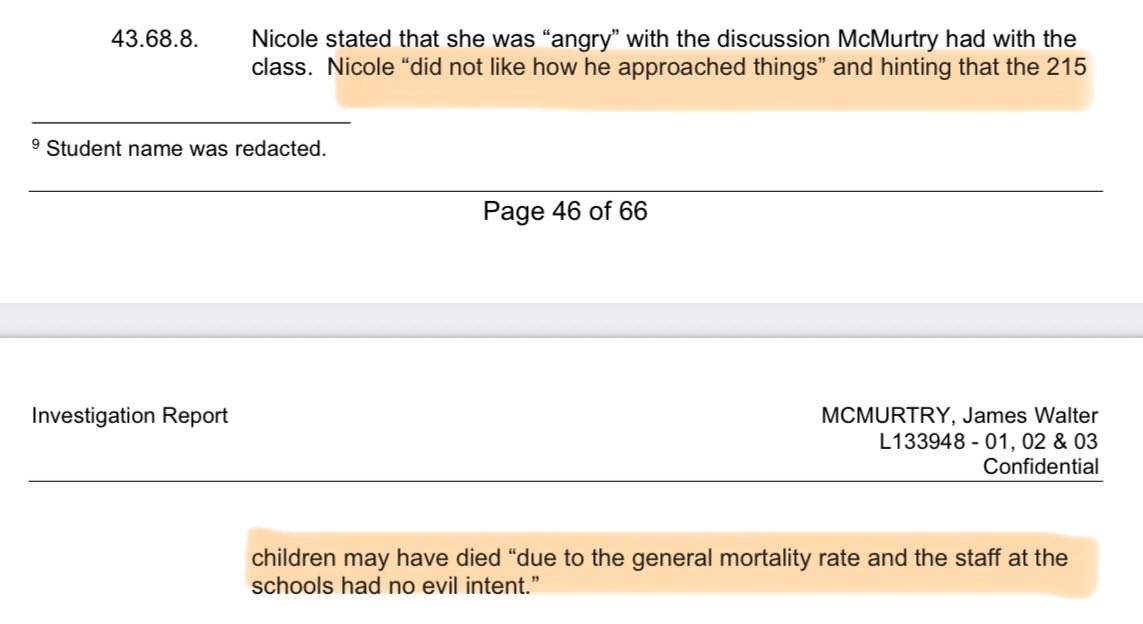
I lost my livelihood because one student “did not like” that I denied mass murder in Kamloops.
She reported me to a counsellor at Robert Bateman Secondary and I was frogmarched out.
79
355
1,169
10,662
Shy Guy retweeted
MAJOR BREAKING ‼️
Mark Carney thinks EU can replace the United States in Trade.
Adding hundreds of Billions in OVERSEAS trade.
This guy is 10x worse than Justin Trudeau.
Goodbye Canada 🇨🇦
312
494
2,101
28,474
Shy Guy retweeted

I have just been arrested by the police in Madrid, Spain.
My phone and passport have been seized but I had a second phone in my pocket so I’m writing this from the back of the police car.
I was at Puerta del Sol for just 5 minutes.
Police told me I cannot have conversations in the public square. I researched the law and spoke with a lawyer and.they are wrong.
749
4,859
26,459
977,418

Excellent post👇

Funny How The Answer Is Always More Government!
You know what finally annoyed me enough to write this? It wasn't Bill C-34.
That's the bill everybody is talking about right now. It's new. It's controversial. It's shiny. Politics loves shiny objects. The newest controversy gets waved around like a set of car keys in front of a toddler while everybody conveniently forgets the last five controversies that came before it.
What finally got under my skin was realizing I had folders full of screenshots from C-11, C-18, C-63 and C-27, along with enough bookmarked articles to make my browser history look like evidence entered during a public inquiry.
And somehow, every time Ottawa unveiled a completely different solution to a completely different problem, I noticed the same thing.
It's amazing how often the federal government investigates a problem and concludes the prime suspect is a lack of federal government.
The first couple of times, I tried to ignored it.
Governments do government things. Politicians make political arguments. Half the country gets angry. The other half gets angry that the first half is angry. Everybody writes think pieces explaining why democracy is either flourishing or collapsing. Then everybody moves on to the next outrage before the first one has even cooled off.
That's the normal cycle. But I found myself asking a question that wouldn't go away. Why do so many completely different problems keep leading Ottawa toward remarkably similar solutions?
Take C-11, or what I've come to think of as the Government Playlist Bill.
Officially, it was about modernizing broadcasting laws for the streaming age. Fair enough. Technology changes. Laws need updating. Nobody sensible argues otherwise.
What caught my attention wasn't the government's explanation. It was the argument underneath the explanation.
Discoverability. Visibility. Promotion.
The endless debate over who decides what Canadians are more likely to encounter online.
The government insisted nobody was trying to control content. Critics weren't convinced. After all, if somebody insists they're not touching the thermostat while simultaneously standing beside the thermostat with both hands on it, people tend to ask questions.
Or, as critics kept asking, why does "discoverability" always sound suspiciously like "we'll decide what you see"?
Months of arguments followed. And months of assurances followed. Next came months of accusations. Then everybody moved on.
Normal people have jobs. Kids. Hockey practices. Mortgage payments. Most Canadians don't spend their evenings reading telecommunications legislation while muttering at their laptop. I've made that mistake so you don't have to.
Then came C-18, or as I accurately dubbed it, The Facebook Divorce Bill. This one was supposed to save journalism.
Ottawa's solution was essentially to demand that platforms compensate publishers for sending them traffic. Which struck me as a bit like demanding that the Trans-Canada Highway pay businesses every time customers used the road to reach their parking lot. It was, and still is, utterly demented.
The government wanted payment for traffic, and Meta's response was essentially "Fine. Keep your traffic."
What followed was one of the more spectacular own-goals in recent Canadian politics. A bill intended to support journalism ended with millions of Canadians losing access to journalism through Facebook and Instagram.
The Facebook Divorce Bill ended the way many ugly divorces do. Both sides claimed victory. Everybody else pays the price for it.
At the time, I wasn't looking for or noticing a grand pattern. I just thought Ottawa had managed to drive another policy proposal into a ditch and was now standing beside the wreckage insisting the ditch had behaved irresponsibly.
Next came C-63, aka The Federal Feelings Bill. Officially, it was about online harms. In practice, it often felt like Ottawa had looked at the internet, sighed heavily, and concluded the country needed a national committee dedicated to the perpetual state of supervising human behaviour.
Every generation gets the government it deserves. Ours increasingly seems determined to become the world's largest hall monitor.
Before somebody accuses me of defending online abuse, let's deal with the obvious.
Online harms are real. Parents know it, teachers know it and yes, kids also know it. The problem isn't that Ottawa identifies real problems. The problem is that Ottawa keeps conducting elaborate investigations only to arrive at the same breathtaking conclusion:
More Ottawa.
Maybe I'm cynical. Years of watching politics will do that to a person. Politicians call it cynicism. I call it pattern recognition with a proven track record. Because the more I watched, the more difficult it became to ignore the inclination underneath all of this.
The government ISSUE changed, but the government INSTINCT didn't. It remained steadfast and unwavering.
Then came C-27 or the Data Harvest Bill as I like to call it. Now we're talking artificial intelligence. Privacy. Data governance. Compliance frameworks.
The whole thing carried the distinct aroma of a future in which increasingly important decisions are handed to systems, algorithms and compliance frameworks that somehow possess all the authority of a government department and all the accountability of a teenager who swears he definitely cleaned his room.
You submit the form. You answer the questions. You follow the process. Then somewhere behind the curtain, a decision gets made:
”Sorry ma'am, the computer says no.”
”Why”?
”That's a good question.”
”Well who made the decision?”
”Another good question.”
”How do you appeal it?”
”Yet another excellent question! But rest assured, a framework exists.”
And that's where my irritation started turning into something else.
Not outrage. Well, maybe a little. Ok, more than a little, but the heavy weight of suspicion was inescapable so who wouldn't feel like that? The overbearing sense of suspicion borne from my irritation became the predominant lens for viewing every little utterance or bill this government may proffer going forward.
Because once you stop looking at these bills individually and start laying them side by side, something becomes difficult to ignore...
The government always starts with a legitimate concern:
- Protect culture.
- Protect journalism.
- Protect children.
- Protect privacy.
- Protect Canadians.
All are worthy goals. And all are politically useful goals. Because once a bill is wrapped in an objective nobody can reasonably oppose, the political battlefield changes. Suddenly the Liberals have a new paintbrush to tar any hint of opposition in a skewed and ridiculous light.
👉🏻 Oppose the legislation and suddenly you're accused of opposing child safety.
👉🏻 Question the framework and you're portrayed as standing in the way of protecting Canadians.
👉🏻 Raise concerns about the mechanism and the conversation quickly shifts back to the objective.
It's an old political trick because it works. The objective becomes politically untouchable, and the details become politically inconvenient and the objective becomes the focus. But the mechanism quietly slips into the background.
And while everybody is arguing about the objective, another framework appears. Another authority appears. Another institution appears. Another mechanism of oversight quietly takes up residence.
Maybe that's necessary, but my gut tells me that it isn't, at least not always and not by shoving more Ottawa at it.
What interests me isn't whether government identifies real problems, because it does.
What interests me is how rarely we're encouraged to ask where the road eventually leads.
Instead, we're expected to discuss every bill in isolation, as though none of them exist in the same country, under the same government, during the same period of time.
At some point that starts feeling less like analysis and more like refusing to look at the whole puzzle because one corner piece happens to make people uncomfortable. I've been suspicious for years. C-34 didn't create the suspicion. It reinforced it.
By the time that bill landed on my screen, I'd already spent years watching Ottawa insist that completely different problems somehow required remarkably similar solutions. The subject changed. The sales pitch changed. The minister delivering the talking points changed. Yet the destination kept looking strangely familiar once the wrapping paper came off. And that's where things started getting interesting.
Because C-34 isn't just another bill. It's the Identity Bill. And protecting children sounds wonderfully simple right up until somebody has to explain how they're planning to determine who's a child and who isn't.
That's a discussion for part two of this.
For now, what C-34 did was force me to stop treating these developments as isolated events and start looking at them as part of a broader governing philosophy.
Not because the bill proved anything, but because it fit. It fit a little too neatly alongside everything that came before it. And that's where I keep getting stuck.
Not on the individual bills, and not on the daily political theatre either. Not even on the politicians themselves.
I'm stuck on the final destination. What is the end game for these authoritarians? And since when did we accept and expect government to regulate every aspect of our lives?
Because governments don't spend years building institutions, authorities, commissions and regulatory frameworks if they believe they'll never be needed. Structures are built to be used. Power is accumulated for a reason.
Which leaves me with a question I can't shake.
If culture requires oversight, journalism requires oversight, online harms require oversight, artificial intelligence requires oversight and social media requires oversight, then what exactly is the finished version of this project supposed to look like?
Not next year, not after the next election. The absolute end state. Because if this isn't the destination, then where exactly is the road supposed to lead?
That's the question Bill C-34 left me with. And the longer I sit with it, the less reassuring the answer feels. Because every road we've discussed so far eventually arrives at the same checkpoint.
Identity. And that's where Part Two begins.
Melanie
Links👇🏻
melanieinsaskatchewan.substa…
👇🏻
buymeacoffee.com/melanieinsa…
(Image created using AI)
1
1
26
Shy Guy retweeted

(PLEASE SHARE) I’m not exactly sure when police were allowed to start punching people in the face especially while handcuffed and detained! That’s assault #police #policebrutality
2,051
17,510
41,475
1,160,566
Shy Guy retweeted

NEW FOOTAGE: Newly released video shows Basij forces shooting unarmed Iranian civilians during the nationwide protests in January. While thousands of peaceful demonstrators were killed, the regime worked to conceal the crackdown and much of the international community looked away.
1
49
88
2,465
OMG 🤦♂️ how many people can’t recognize satire 😂😂😂

Disgusting greed of the US and FIFA crushed my son’s dreams
He was saving for two years to see Germany play in a World Cup
Yesterday we flew to Houston to purchase tickets for the first match
“That will be $2,400 plus tip” we heard in a ticket booth
“Tip?” I was sure this is a joke
“Yes, mandatory 25% tip is not included”
I froze from shock
“Total of $3,000. Cash or card?”
My son looked at me with crying eyes
“We cannot afford it, Heinrich” I said
“But papa, we came such a long way” he was sobbing
I hugged him, feeling my heart is breaking
“This would never happened in the EU” he whispered
“No son, it would not” I said while wiping tears off my eyes
America must never be allowed to interfere with European sports again
1
26
Shy Guy retweeted

Jun 13
These activists who hate the Middle East’s only democracy have no problem with:
— Afghanistan, where the Taliban instituted a gender apartheid system
— Iran, whose Islamic theocracy murdered over 40,000 people in days
— Yemen, where the Houthis insurgency has killed hundreds of thousands
These countries are also members of FIFA, yet no protest about their membership—why?
Could it be that they don’t actually care about human rights but just hate Jews?
What’s their interest in litigating foreign conflicts here on Canadian soil? Or could it be that their interest is foreign?
Jun 12

FIFA faces protests in Toronto over Israel ties ahead of Canada World Cup match ctvnews.ca/politics/article/…
34
195
703
13,036
Shy Guy retweeted
Justin Trudeau lives in America, cheering on America at FIFA, with his American girlfriend, drinking American BEER
Just 12 month ago he told Canadians F*€ the 🇺🇸. Boycott U.S. travel, don’t buy anything American and BOO the 🇺🇸 national anthem at GAMES
This guy is a POS
106
275
1,078
17,821