
War Scholar | Chair of War Studies Madison Policy Forum | Executive Director @urbanwarfareins | UWP podcast | Thoughts/Posts my own RT/Quote/Like ≠ Official Gov
Joined October 2016
- Tweets 43,916
- Following 1,419
- Followers 352,611
- Likes 109,457
3,225 Photos and videos



Pinned Tweet

Feb 19
PREORDER: Excited to announce my latest book, 20 Times I Almost Died: Life Lessons from the Edge of Survival, is available for preorder @amazon with reviews already from @jockowillink @LTGHRMcMaster @StanMcChrystal @maxbrooksauthor @DouglasKMurray amazon.com/Twenty-Times-Almo…
69
130
561
373,317
John Spencer retweeted

Can you handle the truth?
A fantastic must-read from the great @SpencerGuard:
Jun 12

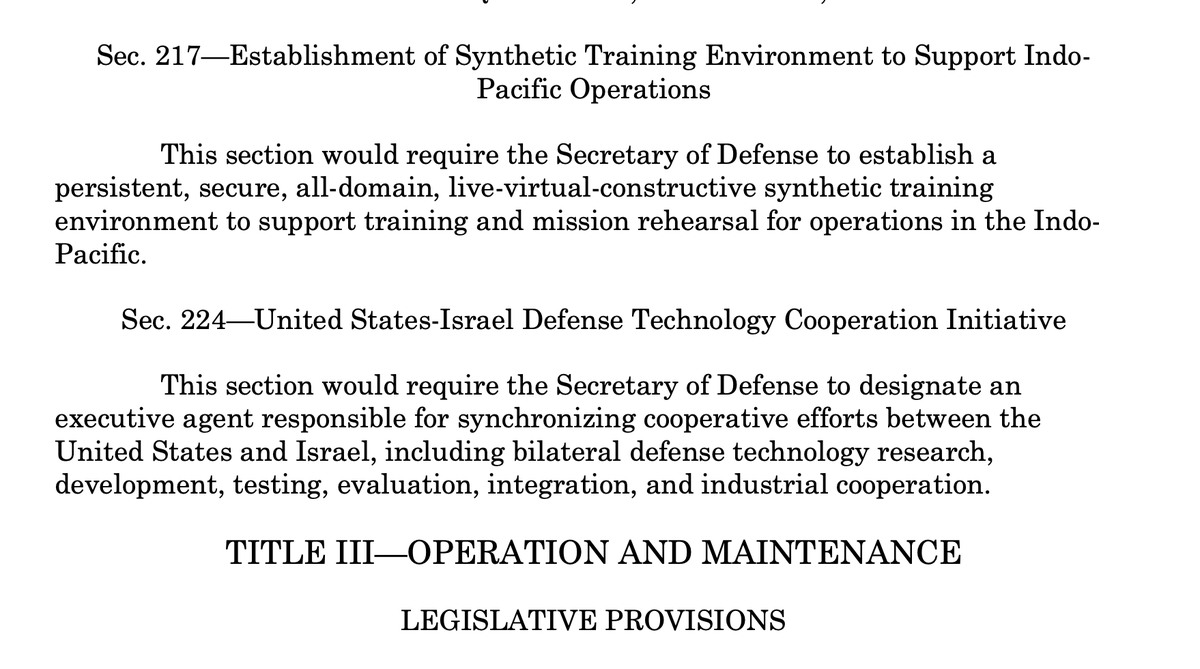
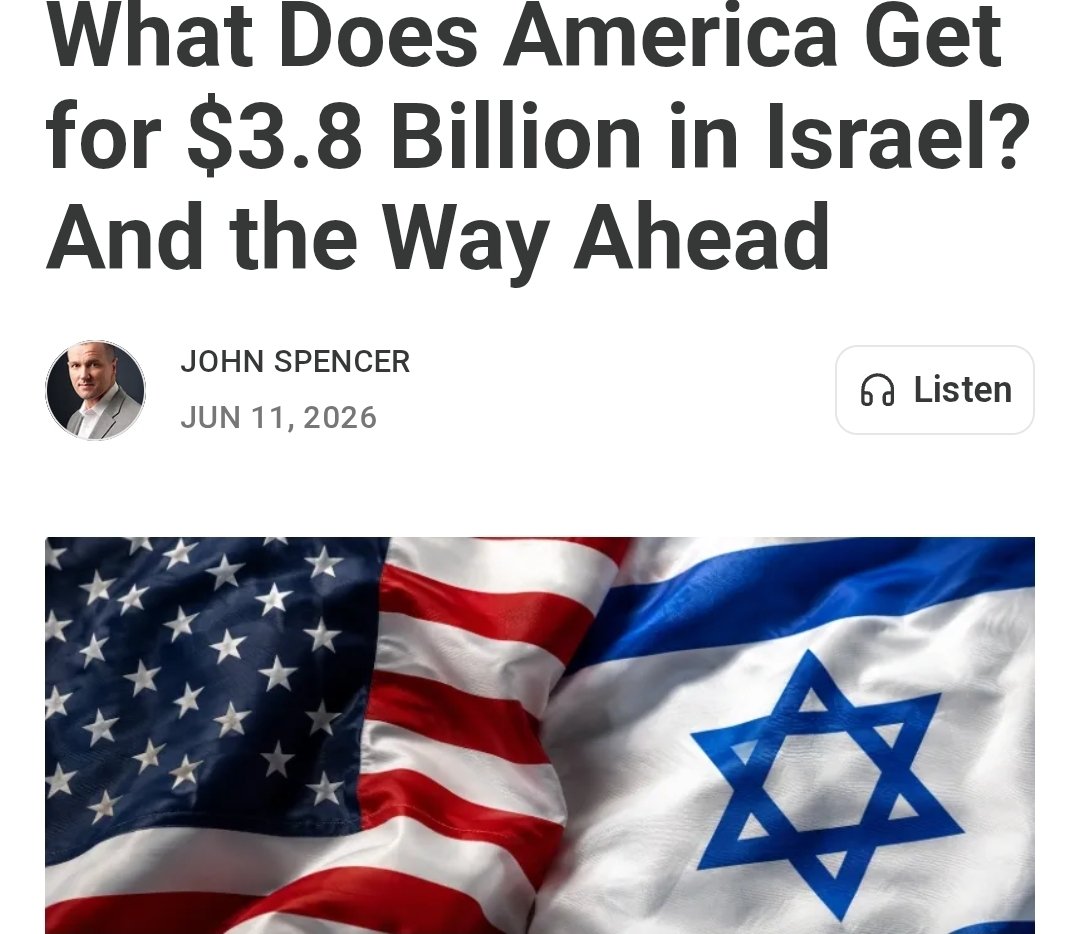
What does America get for $3.8 billion in military aid to Israel?
Short answer: economic, security, military, innovation, and strategic returns.
Long answer:
• Jobs: American jobs and manufacturing.
• Industry: A stronger U.S. defense industrial base.
• Intelligence: Information that helps prevent attacks against Americans and U.S. interests.
• Technology: Combat-proven military technologies.
• Laboratory: Access to one of the world's most active laboratories for modern warfare.
• Lessons: Battlefield lessons without paying for them in American blood.
• Innovation: A defense innovation ecosystem benefiting both countries.
• Ally: A capable ally helping deter common adversaries and maintain regional stability.
• Strategy: Greater freedom to focus on competition with China in the Indo-Pacific while preserving a favorable balance of power in the Middle East.
Full answer: Read the article.
3
46
9,180
Underground warfare remains one of the most understudied aspects of military operations (urban warfare a close second). Check out this 1969 U.S. Army training video for Vietnam. youtube.com/watch?v=R1wsbwdi…
Despite the U.S. military experience with over a thousand miles of NVA/VC tunnels in Vietnam. The Army school was closed, no expertise was maintained. Did you know one of the main reasons the U.S. military can't use tear gas as a form of warfare today is based on how it was used to deal with tunnels in Vietnam (watch the video, pumped into them) which drove a debate in the Senate and us eventually signing the Riot Control Act treaty.
We have ceded the underground to enemies like China, North Korea, Iran...non-state actors like Hamas, Hezbollah, Houthis. In Gaza the IDF saw what no army has ever seen. In Southern Lebanon. The story of the frontline in Ukraine is as much about both Ukraine and Russia digging tunnels, underground highways/hospitals/drone factories as it is drones.
Yes, the @IDF have developed some of the world's leading capabilities and expertise, to include counter-tunneling cooperation with the U.S., but it is still limited.
What little doctrine/capability that exists today in the U.S. military is about how to enter and clear a tunnels.
But with the lethality of the modern battlefield the future is not just our adversaries going underground, but the necessity for us to dominate that domain from every aspect of force protection, maneuver, offense, defense. @PalmerLuckey @yadinsoffer @wolfejosh @traysartech @sgblank
4
8
65
11,525
John Spencer retweeted

John Spencer, a great patriot, explains what the media, the Democrats/Marxists/Islamists and the Woke Reich isolationists do not want you to know. Well worth reading and sharing.
spencerguard.substack.com/p/…
114
159
733
31,971
John Spencer retweeted

Back to the Hezbollah “ceasefire” tracker - what did the last 48 hours look like?
💥 Over 50 rockets and killer drones fired at IDF troops.
💥 2 more barrages into Israeli territory, sending Israeli citizens to bomb shelters.
💥 Multiple encounters with Hezbollah terrorists moving back to the South Lebanon sector.
This is not what ceasing fire looks like. As long as Hezbollah keeps attacking Israel, like any other country, we will defend ourselves.
28
159
453
25,136
John Spencer retweeted
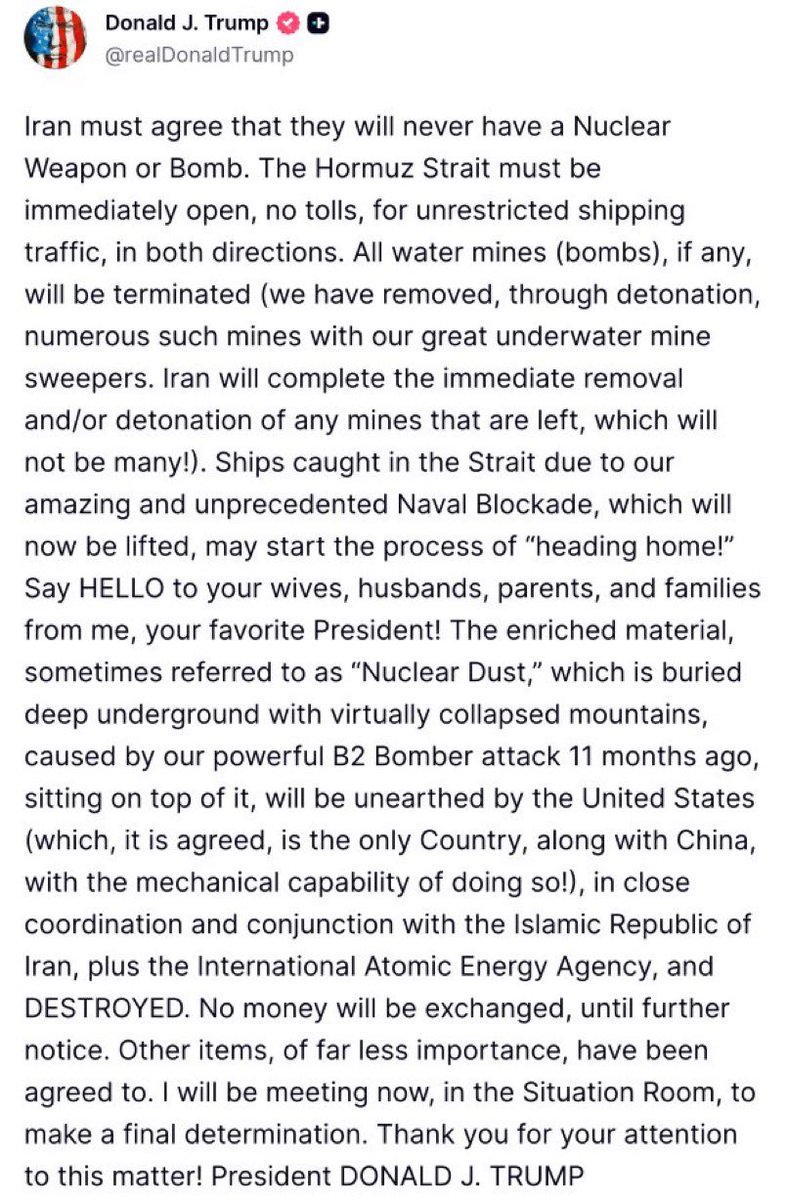
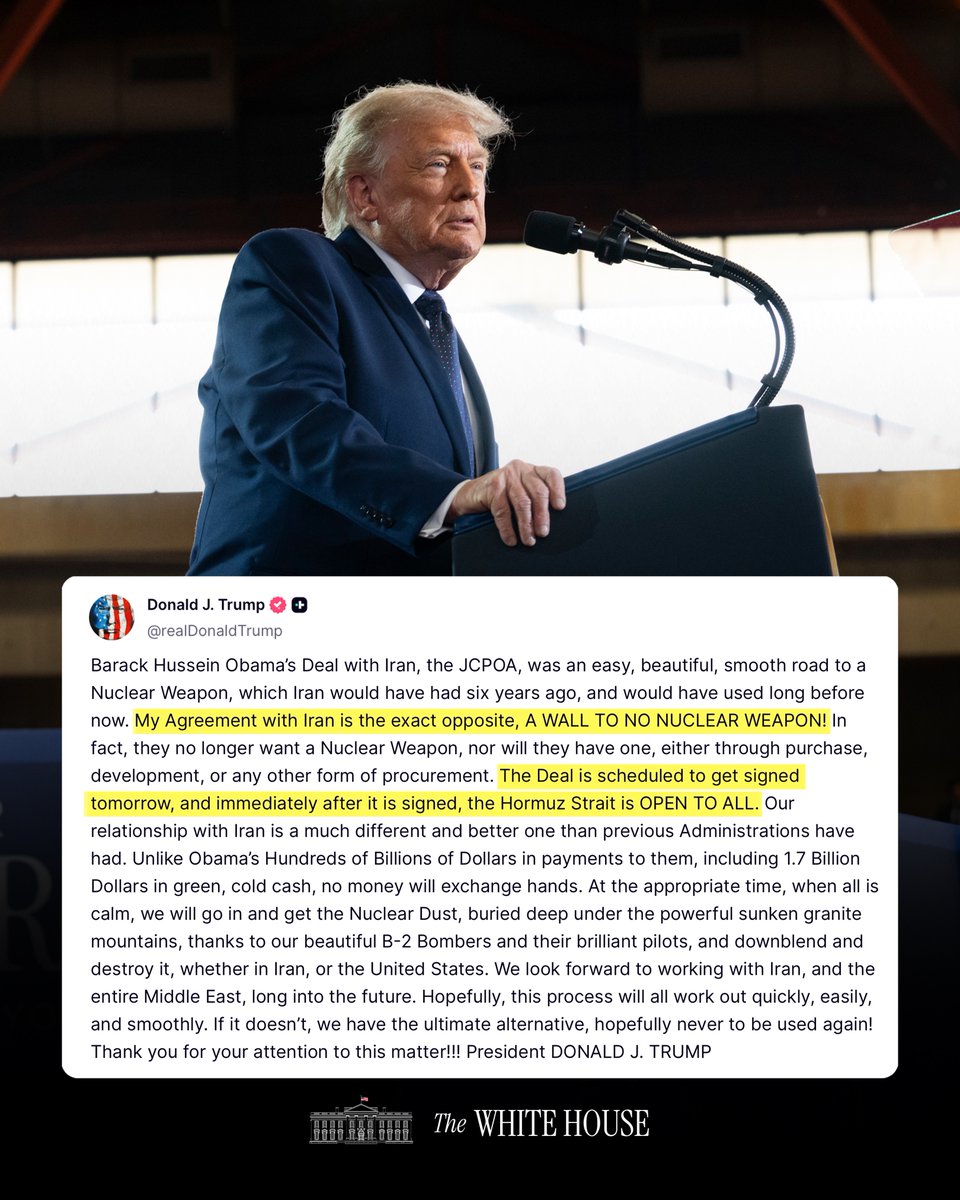
"The Deal is scheduled to get signed tomorrow, and immediately after it is signed, the Hormuz Strait is OPEN TO ALL." - President Donald J. Trump 🇺🇸
5,423
7,053
24,406
811,495
John Spencer retweeted

1/7
Short🧵with photos & case studies attached.
Current events have thrown into sharp focus the need to understand urban warfare & its historical lessons learned.
May I suggest the following case studies from the @WarInstitute written by @SpencerGuard, @LiamSCollins & myself.
1
11
19
4,478
John Spencer retweeted

🚨BREAKING: A potential U.S.-Iran peace deal may be on the horizon, with negotiations over Tehran’s nuclear program expected to begin soon.
But a new report suggests Iran was also preparing for a possible ground operation involving its enriched uranium.
@MaxGordenTV details the latest.
34
21
122
27,871
John Spencer retweeted

"American companies partner with Israeli firms because they recognize the value of that innovation cycle. American military organizations gain access to technologies, expertise, and operational insights that would be expensive and often impossible to reproduce on their own"
2
8
29
9,050
John Spencer retweeted

“War will never be a hard science, it is too multidisciplinary
… Soldiers, historians & strategists built foundational theories & principles drawn from battlefield historical analysis, experimentation, and experience over centuries”

Jun 12
“Military Science and the Intellectual Foundations of War,” my latest @smallwars Military science is not guesswork. It is the accumulated study of war built by soldiers, historians, statesmen, & theorists over centuries of conflict. Ones we all should read
smallwarsjournal.com/2026/06…
16
84
17,679
John Spencer retweeted
Jun 12
51
306
933
226,965
Jun 13
General Keane spot on as always. “This is who they are…Hezbollah must move north of the litani river or we don’t have a deal…must have compliance…this is about changing the regimes behavior”
Jun 13

🚨 NEW: RETIRED FOUR STAR GENERAL JACK KEANE SAYS THE AYATOLLAH MUST APPROVE TRUMP’S IRAN DEAL… AND IRAN IS MOVING IN THE RIGHT DIRECTION 🚨
“They want to survive. They want to recover what they've lost”
30
70
352
24,103
John Spencer retweeted

Jun 13
Maybe the most surprising thing about the subterra warfare domain is how it’s always been right there. Not new.
It’s a status quo we learned to live with. An accepted asymmetric weakness. That’s why simply saying “not anymore” is already a leap forward.
Jun 13
“The underground tunnel village where Vietnamese people lived for years to hide from war” @CNN 1 mile of tunnels, Cu Chi had about 155 miles, Saigon-Gia Dinh region 300 miles, compare that to over 500-600 miles in Gaza. cnn.com/2026/06/12/travel/vi… @yadinsoffer @traysartech
The tunnels span over a mile and and every tiny part of the complex was made for survival.
It’s estimated that around 400 people called the tunnels home from 1965 to 1972, and today’s tours show visitors their everyday life. “Daily routines were structured around survival,” says Văn Ngọc Vũ. “People remained underground during the day and emerged at night to farm, fish, and gather supplies.”
“Tunnel exits were essential to the system’s functionality,” says Văn Ngọc Vũ.. “They provided ventilation, emergency escape routes, and access to external resources.” Thirteen of them linked the complex to farmland and the sea. “Coastal exits enabled discreet supply operations to Cồn Cỏ Island, facilitating the logistics,” he adds. Wells were dug to provide fresh water, and exits on opposite sides provided cross-ventilation.
The complex is laid out in three levels, from 50 feet below ground to 75 feet, with narrow and low tunnels widening out into larger communal rooms. Niches in the walls acted as sleeping spaces for individual families.
2
6
43
13,422
John Spencer retweeted

Jun 13
“At my direction, the United States Southern Command delivered a swift and lethal kinetic strike to successfully execute Niño Guerrero, the infamous leader of Tren De Aragua, one of the most bloodthirsty Terrorist Organizations on Planet Earth.” - President DONALD J. TRUMP 🇺🇸
3,967
19,421
89,863
3,114,279
John Spencer retweeted

Jun 13
Iran launched multiple one-way attack drones in an attempt to strike commercial ships transiting the Strait of Hormuz. U.S. forces have downed all of them in recent hours as traffic flow through the strait continues unimpeded. The international trade corridor remains open for transit.
1,192
3,680
20,783
1,328,278
John Spencer retweeted

Jun 13
Many forget how dire Britain’s decline was in the 1970s—economic stagnation, union paralysis, and national malaise. It took Margaret Thatcher to break the grip of the socialist state, revive the economy, rebuild British strength, and stand alongside Ronald Reagan in defeating the Soviet Union. Britain needs another Thatcher.
Jun 12
The Revolt of Britain’s Defenders. Key ministers resign over Labour’s failure to fund the military. @WSJ Editorial Board. wsj.com/opinion/britain-defe…
It’s no secret that Europe’s welfare states jeopardize the continent’s ability to defend itself. The bracing news Thursday was the revolt of British defense officials who told the truth about the Labour government’s insufficient military funding.
The U.K. pledged last year to meet NATO’s new standard and spend 5% of GDP on national security by 2035, including 3.5% on the military. At the time Prime Minister Keir Starmer held forth on the need to act with “agility” and “speed.”
Yet on Monday he presented Defense Minister John Healey with a defense plan in which spending would rise to only 2.68% of GDP by 2030, up from 2.6% next year, the defense minister said in a letter of resignation to the Prime Minister.
Labour won’t fund defense because it puts a higher priority on welfare spending, which it refuses to reform. About one in 10 working-age people in the U.K. now claim a sickness or disability benefit, and nearly a million Brits under 25 aren’t employed, in school or in training.
16
29
236
18,375
Jun 13
“The underground tunnel village where Vietnamese people lived for years to hide from war” @CNN 1 mile of tunnels, Cu Chi had about 155 miles, Saigon-Gia Dinh region 300 miles, compare that to over 500-600 miles in Gaza. cnn.com/2026/06/12/travel/vi… @yadinsoffer @traysartech
The tunnels span over a mile and and every tiny part of the complex was made for survival.
It’s estimated that around 400 people called the tunnels home from 1965 to 1972, and today’s tours show visitors their everyday life. “Daily routines were structured around survival,” says Văn Ngọc Vũ. “People remained underground during the day and emerged at night to farm, fish, and gather supplies.”
“Tunnel exits were essential to the system’s functionality,” says Văn Ngọc Vũ.. “They provided ventilation, emergency escape routes, and access to external resources.” Thirteen of them linked the complex to farmland and the sea. “Coastal exits enabled discreet supply operations to Cồn Cỏ Island, facilitating the logistics,” he adds. Wells were dug to provide fresh water, and exits on opposite sides provided cross-ventilation.
The complex is laid out in three levels, from 50 feet below ground to 75 feet, with narrow and low tunnels widening out into larger communal rooms. Niches in the walls acted as sleeping spaces for individual families.
4
25
98
19,913
John Spencer retweeted

Jun 12
This.⬇️⬇️⬇️
Jun 12
What does America get for $3.8 billion in military aid to Israel?
Short answer: economic, security, military, innovation, and strategic returns.
Long answer:
• Jobs: American jobs and manufacturing.
• Industry: A stronger U.S. defense industrial base.
• Intelligence: Information that helps prevent attacks against Americans and U.S. interests.
• Technology: Combat-proven military technologies.
• Laboratory: Access to one of the world's most active laboratories for modern warfare.
• Lessons: Battlefield lessons without paying for them in American blood.
• Innovation: A defense innovation ecosystem benefiting both countries.
• Ally: A capable ally helping deter common adversaries and maintain regional stability.
• Strategy: Greater freedom to focus on competition with China in the Indo-Pacific while preserving a favorable balance of power in the Middle East.
Full answer: Read the article.
6
36
8,012

John Spencer retweeted
Jun 12
“Military Science and the Intellectual Foundations of War,” my latest @smallwars Military science is not guesswork. It is the accumulated study of war built by soldiers, historians, statesmen, & theorists over centuries of conflict. Ones we all should read
smallwarsjournal.com/2026/06…
2
33
114
27,858
John Spencer retweeted

Jun 12
This is a crucial essay by @SpencerGuard on the US-Israel strategic relationship.
Israel without a doubt benefits immensely from this relationship, but so does the US
1
4
45
11,579