
Joined September 2022
- Tweets 61
- Following 3
- Followers 533
- Likes 62
16 Photos and videos


Pinned Tweet

Apr 10
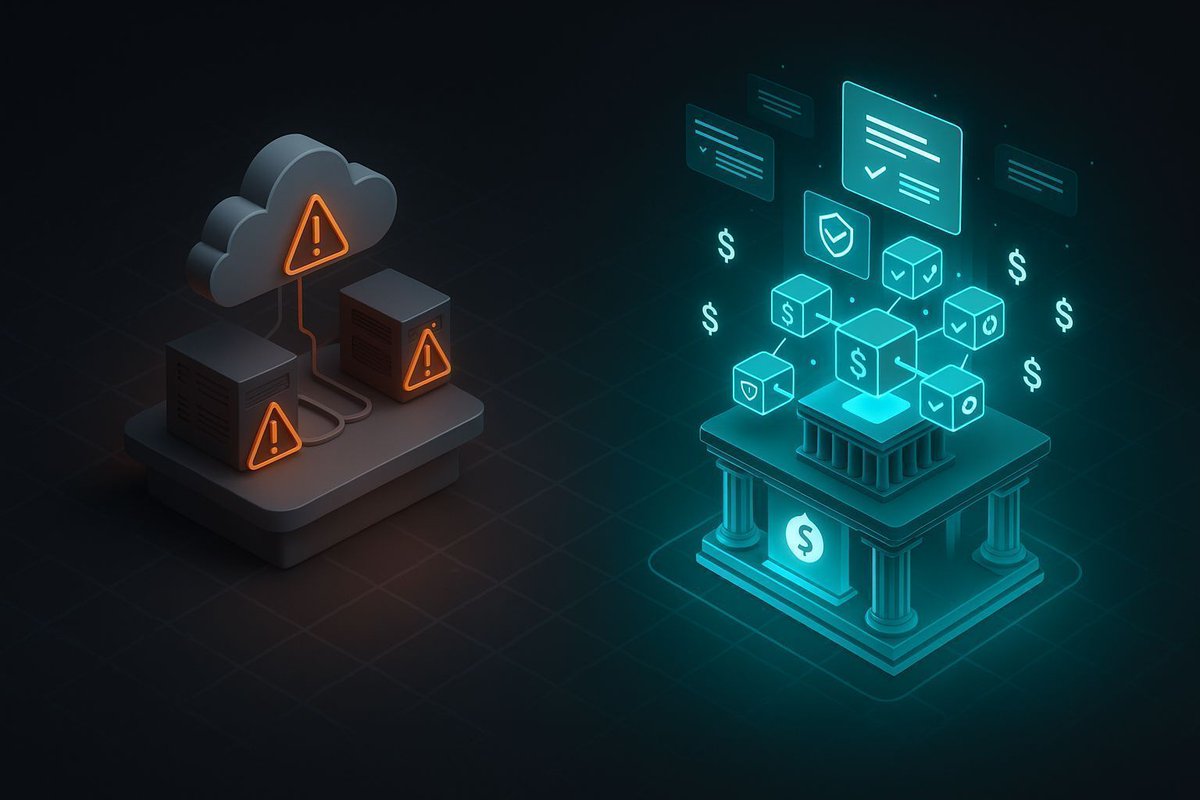
Divisible UTXO swaps enable real L1 peer-to-peer order books.
No matching engine. Just Bitcoin Script.
Multisig protects treasuries with m-of-n approval.
Public keys stay hidden until the spend.
Multi-party sign-off on every mint and burn.
Configurable at issuer-level compliance with a designated authority now able execute regulatory orders directly on-chain.
No off-chain detours. No issuers, miners, or foundations/associations in the loop.
On-chain script-enforced - no intermediaries.
STAS 3.0 script template makes this real 👇
medium.com/@Stas33496115/bit…
3
18
74
6,090
STAS Script retweeted

7 Dec 2025
Thank you, Kurt, for taking the time to elaborate on your concerns about @StasToken. This is exactly the productive discussion we need. To be clear: we're not just advocating for STAS here, but for tokens with L1 settlement in general. This is a question of life and death for Bitcoin as a whole.
On-chain scaling only makes sense with on-chain settlement. While on-chain ownership is important, Bitcoin's core feature is exactly the settlement - trustless value transmission. Without this, we lose what makes Bitcoin revolutionary.
Now point-by-point:
1. Sat Demand: 1Sat's demand for sats is minimal, using a single sat as a data carrier and the token's value is in an JSON payload. This is similar to RUN and Tokenized. STAS creates real economic demand by using every sat as a unit of account, eliminating off-chain accounting entirely.
2. Complexity & Cost: You mention a "CPU tax" for STAS, but STAS validation is trillions of times less complex than solving a hash. The real cost is with 1Sat, which requires an off-chain logic to maintain balances and validate transactions. STAS with just 1-2Kb of easily auditable on-chain code both substitutes neccessity to create an entirely new off-chain settlement platform and most importantly retains all activity on-chain, increasing utility, scarcity and mining revenue. We are big-blockers after all.
3. Architecture: 1Sat, just like any L2, reintroduces an unscalable account-based architecture for settlement, using the UTXO ledger merely to store data. This is a step backward. STAS leverages the native UTXO design for what it was designed for: peer-to-peer value transfer.
4. Security & Scaling: The account-based settlement comes with inherent double-spending vulnerabilities and scaling bottlenecks due to the need to maintain a global state. A truly scalable, secure, and regulation-friendly model must live on-chain. That model is STAS.
5. Compliance: You argue ordinals are simpler for compliance, but that's because 1Sat reverts to a familiar but non-scalable and vulnerable to double-spendng account-based design. The forward path isn't to go backward for comfort. It's to educate regulators on the superior, scalable UTXO model. UTXO design is actually regulator's dream due to surgical transparency of flows, not just wallets, previously impossible.
Also with the new features to freeze/ unfreeze/ confiscate individual UTXOs, which are OPTIONAL and determined by issuer whether to be immutable part of token nature, STAS becomes compliant with literally any regulatory requirements.
6 Dec 2025

1Sat ordinals create direct demand for sats. Every token is a specific sat, locked into a particular history. Settlement is still L1, because consensus decides who controls that UTXO.
JungleBus and ordinal indexers are not a second layer in the typical sense, but rather, they are an overlay engine and an overlay network that lets apps see and organize what the chain already settled without stressing the center of the network.
These were explicit design decisions to get ahead of the curve on containerized compute and scaling with overlays.
STAS is powerful, but flips the challenges around.
Instead of keeping validation cheap and pushing interpretation to the edges, it pushes a lot of logic into script that every node must execute and every mempool must reason about. That is fine at a certain scale, but at Teranode scale it is a permanent CPU tax on the whole network for every token transfer.
On the compliance side, ordinals are simple. A regulator or OFAC style filter can reason in terms of sat ranges, txids and addresses, and indexers can implement whatever blacklist or whitelist a given jurisdiction demands. STAS contracts are opaque, highly customized scripts, so there is no clean way to make one issuer, one jurisdiction or one subset of tokens compliant without rewriting or replacing the whole contract. In practice that makes STAS harder to scale in volume and much harder to sell to serious, regulated issuers, while ordinal style tokens give you more flexibility, simpler validation and a cleaner path to both scale and compliance.
5
15
42
4,188
STAS Script retweeted

7 Dec 2025
Indexers are servers that are looking at the whole chain of events after broadcast and finding the one you want. Overlays are private databases that receive relevant transactions before broadcast and store them for later use.
The BRC100 ecosystem simply allows apps and wallets to use the overlay model with standardized SPV checks, signing/encryption schemes and digital ID certificates. It works the same with any “token protocol” because the UTXO is the token.
1
1
4
298
STAS Script retweeted

5 Dec 2025
Like most reasonable ones, STAS is fully compatible with a BRC100 world.
ALL locking scripts are compatible. Any transaction with any inputs/outputs can be formulated.

1
5
23
1,439
STAS Script retweeted
24 Nov 2025
You want the BSV price to rise? Real demand comes from utility, not speculation.
The fastest path to utility? Tokenize everything. The only way to do that at scale is L1 on-chain with Teranode = using a standard that uses sats as tokens.
This creates a simple formula:
Asset issuers need tokens -> They buy BSV to get sats -> BSV price goes up.
Every BSV gives you 100M tokens to build the peer-to-peer future.
The economic engine is right there. We just have to turn it on.
9
29
109
8,704
STAS Script retweeted
7 Nov 2025
@stastoken end-to-end trustless and peer-to-peer Layer 1 atomic swaps are coming to solve it.
2
5
363
6 Nov 2025
The most missed aspect of L2 vs L1 solution choice:
medium.com/@Stas33496115/cas…
#Fintech #Regulation
6
12
1,429
3 Nov 2025
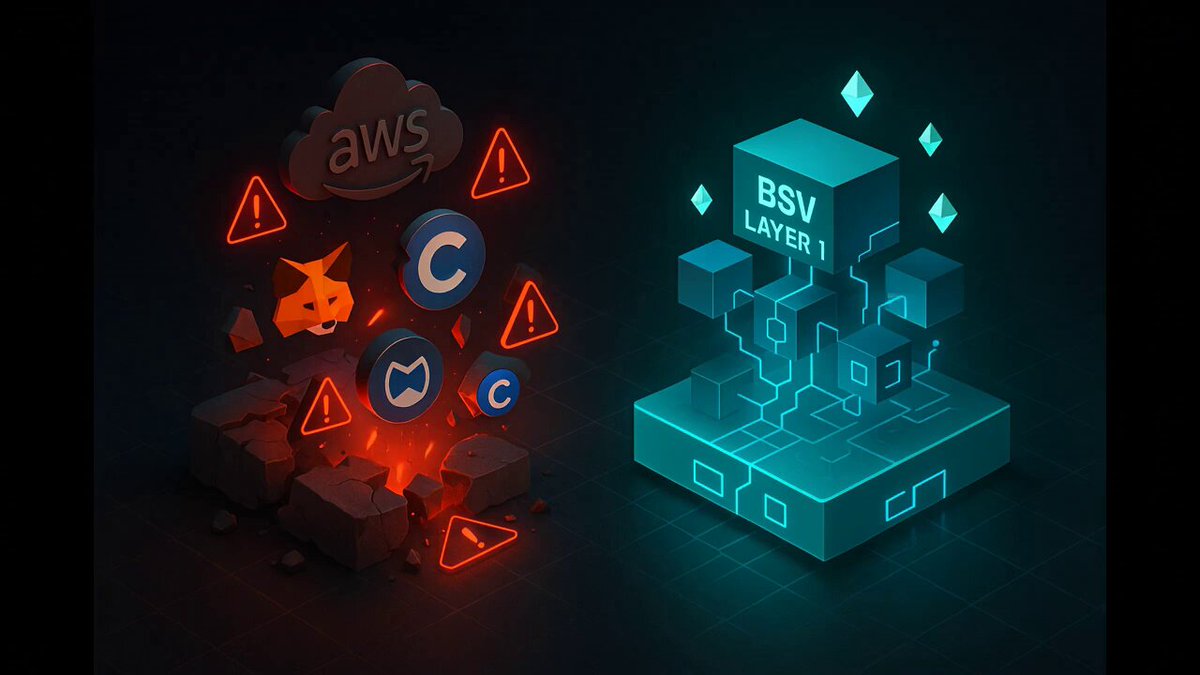
The October 2025 AWS outage was a wake-up call, as "21Shares" noted: "The outage exposed a hard truth: even 'decentralized' systems depend on centralized infrastructure."
It crippled major platforms like MetaMask and Coinbase, revealing the myth of L2 decentralization.
For global businesses, payment network resilience is non-negotiable.
STAS script on Bitcoin (SV) offers true resilience by operating directly on L1 (Layer 1), independent of centralized cloud services.
Your assets remain secure and accessible, even if the cloud fails.
STAS script provides a clear alternative, offering true business continuity, ensuring consistent, low-cost operation, while L2s face interruptions and potential fee hikes.
#STAS #L1
2
5
13
588
STAS Script retweeted
24 Oct 2025
Worst case scenario? Absolutely may and will happen. This is one of the key points where base-layer STAS with targeted UTXO-subset indexing outshines Layer 2 approaches.
STAS indexers can recover by: (1) fetching latest UTXO-specific tx data via API from mining nodes (JungleBus ready), and/or (2) using daily/weekly UTXO-subset snapshots to resync from recent checkpoints.
Layer 2 data loss is irreversible. Users face two bad options: become their own vault (killing peer-to-peer adoption for general public) or trust gatekeepers/oracles (the greater evil).
1
2
3
247
21 Oct 2025
1/ 🔍 Why do Layer 2 protocols fail to deliver on scaling promises? The answer lies in understanding indexers vs oracles:
1
1
13
464
21 Oct 2025
5/ The fundamental difference:
Layer 2 = Oracle bottlenecks (servers limit scaling).
Base layer = Indexer tools (scale with blockchain).
1
1
3
274
21 Oct 2025
6/ STAS Consigliere provides trustless indexing that scales with Bitcoin (BSV) unlimited capacity.
No oracle dependencies, no scaling bottlenecks.
True unbounded scaling!
2
183
20 Oct 2025
Meet Consigliere: the open-source BSV indexer that handles both native Bitcoin and STAS transactions seamlessly.
Enterprise-grade infrastructure tested at 150M transactions per day. Direct blockchain access with proven reliability.
🆕 GitHub repo just updated: github.com/dxsapp/dxs-consig…
Deploy your own instance or use our API for your products. Complete infrastructure foundation for any BSV application.
7
18
60
8,558
6 Oct 2025
Any BSV-based protocol, incl @1satordinals, can implement STAS and become base layer.
Base layer, cutting through all the tech jargon, means using the Bitcoin for settlement. This brings dozens of advantages incl. Teranode's unlimited scale.
The rising tide lifts all boats.
6 Oct 2025

Do you think you know what flipping the script of Bitcoin (BSV) can do?
First, let us make it clear:
STAS isn't a protocol competing for market share. It's a script designed to empower every other protocol on BSV.
No utility token or ICO. No shareholders. Completely open source
1
6
33
1,902
6 Oct 2025
Do you think you know what flipping the script of Bitcoin (BSV) can do?
First, let us make it clear:
STAS isn't a protocol competing for market share. It's a script designed to empower every other protocol on BSV.
No utility token or ICO. No shareholders. Completely open source
4
9
36
2,327
