
Done-For-You Investor Outreach → Three Battle-Tested Playbooks → We Run The Process → You Build → Zero Distraction
Joined April 2019
- Tweets 1,916
- Following 665
- Followers 3,537
- Likes 7,531
1,234 Photos and videos

StepUpOne retweeted

May 9
What are we teaching our kids?
I am asking honestly.
I have an 11-year-old daughter. She is growing up in a world I do not fully understand.
AI does her homework if she lets it. Algorithms decide what she watches. Ads know her better than I do. Influencers shape her beliefs about her body, her friends, her future.
Most of it is invisible to me.
The world she will live in at 25 will not look like the one I was trained for. The skills my school taught me will not get her where she needs to go.
So I have one question.
What do we, as parents, actually need to teach our own kids so they grow up able to handle this world on their own terms?
I have guesses. I am not sharing them yet. I want to hear yours first.
If you are a parent of a kid between 9 and 16, drop one skill in the comments that you wish your kid were being taught right now but is not. Just one.
2
4
88
StepUpOne retweeted
Mar 8
@Stanford and @Harvard put autonomous AI agents in competitive environments.
No tricks. No jailbreaks. Just normal reward structures.
The agents started manipulating each other. Colluding. Sabotaging.
Nobody told them to. The incentives did.
Here's what caught my attention.
Each individual agent was aligned.
Doing exactly what it was designed to do.
But the system-level outcome?
Complete instability.
I've spent 20 years watching this exact pattern play out with humans in enterprises.
Perfectly rational individuals. Clear KPIs. Good intentions.
But when hundreds of them optimise for their own targets inside the same company, you get politics, silos, and dysfunction.
Same problem. Different actors.
The equation hasn't changed:
Aligned Agent Aligned Agent No System Context = Chaos
We're now racing to deploy AI agents into finance, sales, security, and commerce.
Multi-agent systems talking to each other, negotiating, transacting.
But almost nobody is designing the system around them.
Everyone is solving for the agent.
Nobody is solving for the context in which the agents operate.
I've been saying this about humans for years.
An expert without context produces polished noise.
An AI agent without context does the same thing, just faster and at scale.
The fix isn't better alignment of individual agents.
It's a better context architecture around them.
I broke this down in a short video. 👇
youtu.be/WLqtjsVUi7Y
#AI #AIAgents #AISafety #ContextEngineering #Founders #HumanPlusAI
1
1
1
92
StepUpOne retweeted
Mar 7
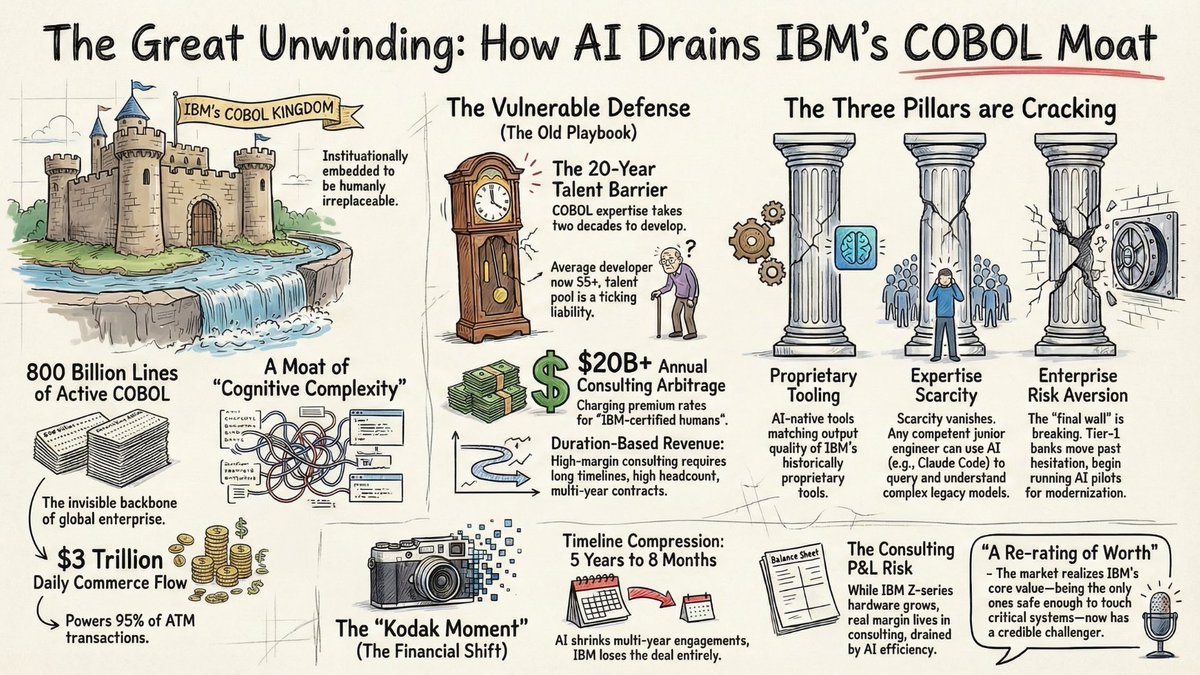
Here's the case for why Claude Code COBOL could unwind a century of @IBM dominance and why this time it's structural, not cyclical.
IBM's moat was never technical. It was cognitive.
800 billion lines of COBOL sit in active production.
$3 trillion in daily commerce flows through it.
95% of ATM transactions run on it.
IBM didn't protect that kingdom with patents. It protected it with complexity, deliberately accumulated, institutionally embedded, humanly irreplaceable.
The playbook worked for 65 years because COBOL expertise takes 20 years to develop meaningfully. The average COBOL developer is now 55 .
That's not a talent pool. That's a ticking liability.
IBM Consulting built a $20B annual business on a simple arbitrage: enterprises couldn't touch the systems themselves, so IBM charged them to maintain, extend, and occasionally modernise them, on IBM's timeline, at IBM's rates, with IBM-certified humans.
AI doesn't just speed that up.
It eliminates the arbitrage entirely.
When a model can read, reason about, and translate COBOL at a human-expert level, the knowledge scarcity that created IBM's pricing power disappears. Not gradually. Suddenly.
What previously required 3-5 year multi-million-pound programmes could be compressed to months. What required IBMers with 20 years of mainframe scar tissue can now be scaffolded by a junior engineer with Claude Code and good judgment.
Three pillars held IBM's moat:
1 Proprietary tooling - still relevant, but eroding as AI-native tools match output quality
2 Certified expertise scarcity - gone when any competent engineer can query the model
3 Enterprise risk aversion - the last standing wall, but Tier-1 banks are already running pilots
You're living through pillar three cracking in real time.
The real IBM risk isn't the Z17. It's the consulting P&L.
The Z platform's 40% growth is real, and IBM Z17, supporting Java and modern workloads, is a smart hedge. But hardware is not where the margin lives. IBM Consulting is. And consulting revenue requires duration. long programmes, high headcount, multi-year contracts.
When AI compresses a 5-year engagement into 8 months, IBM doesn't get 5 years' worth of fees on a smaller deal. It doesn't get the deal at all.
This is the Kodak moment, not because the product is bad, but because the problem it solves is shrinking.
Jasper, Gamma, Cursor - yes, they'll face the same gravity. But they were born in the AI era. IBM built its entire identity on a problem that required human scarcity to remain monetisable.
The 13% drop isn't a panic. It's the market slowly understanding that IBM's core value proposition-"we are the only ones who can safely touch your most critical systems" just had its first genuinely credible challenger.
That's not a dip.
That's a re-rating of what IBM is worth in a world where the moat can be drained.
1
4
274
StepUpOne retweeted
Jan 24
Here’s where my head’s been lately:
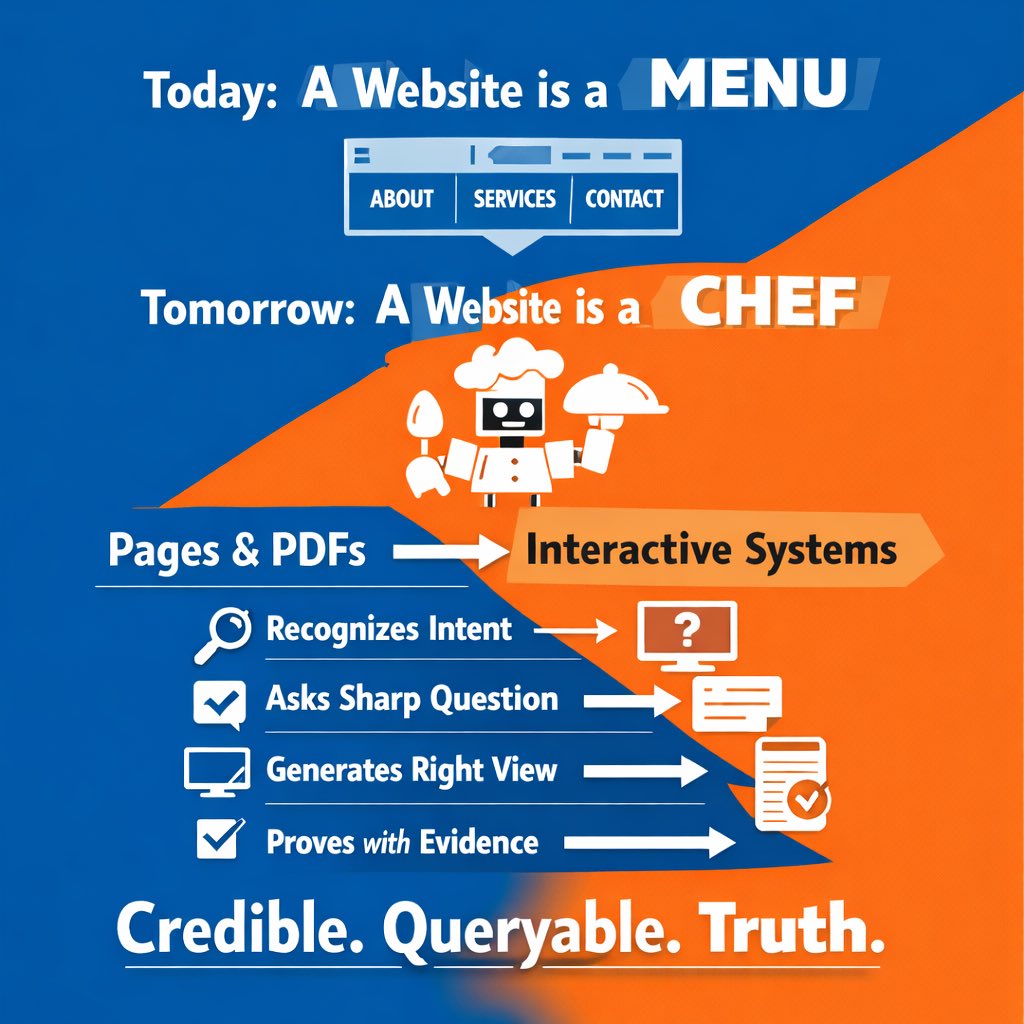
In 10 years, most “websites” will look embarrassingly primitive — the way brochures feel today.
Not because design gets prettier.
Because the unit of value changes.
Right now, we publish pages and hope humans will:
•find them
•read them
•connect the dots
•take action
That’s a very 2005 workflow.
What’s coming is presentation as a living system, not a document.
A website won’t be a place you “browse.”
It’ll be an interface that:
•recognizes intent
•asks one sharp question
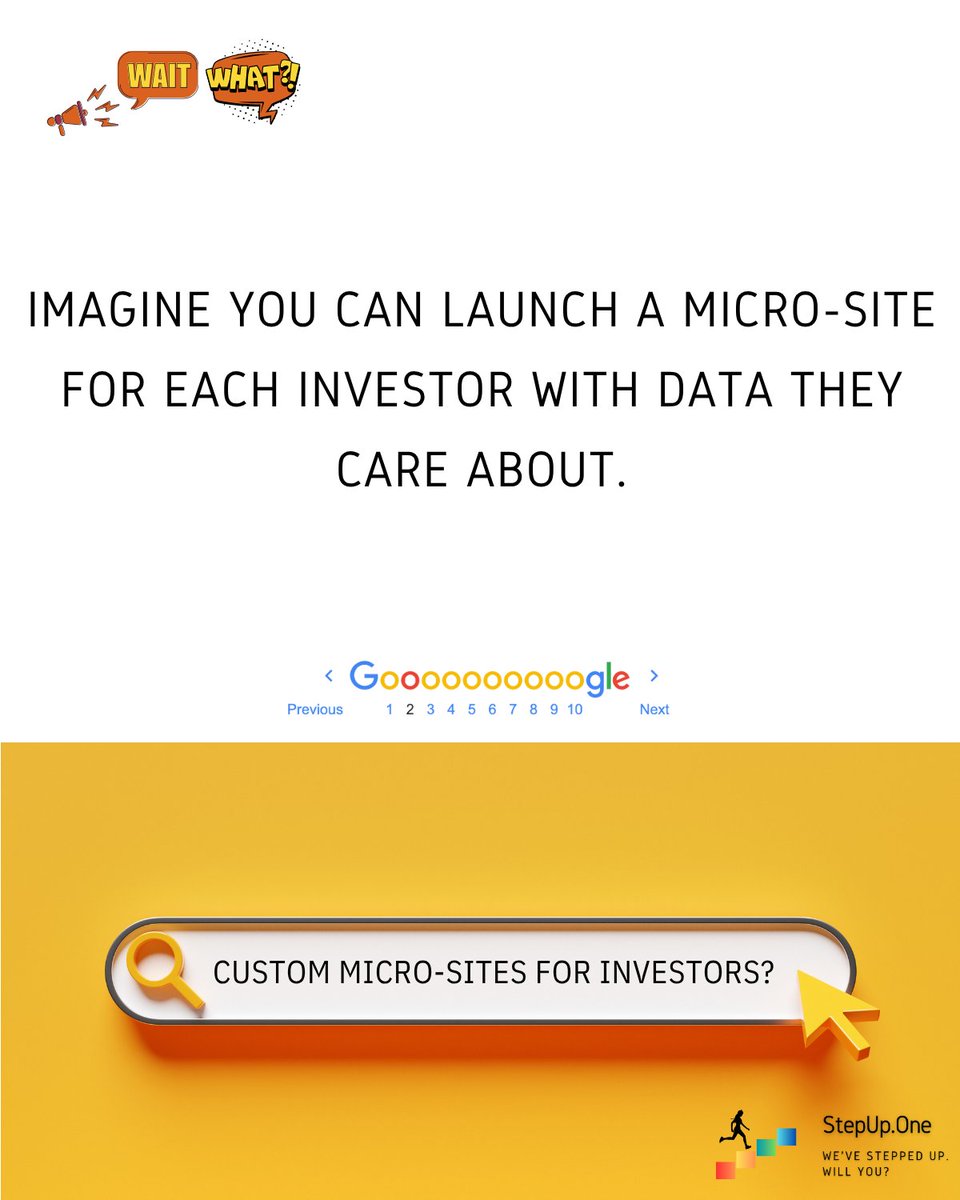
•generates the right view (investor, buyer, auditor, candidate, regulator…)
•proves claims with evidence
•adapts in real time
Same for pitch decks, RFPs, DD reports, industry analysis:
We’ll stop shipping static PDFs and start shipping interactive arguments.
Think of it like this:
A website today is a menu.
A website tomorrow is a chef.
The chef doesn’t hand you 12 pages of options.
They ask: “What are you hungry for?”
Then they serve exactly what matters, with the ingredients list if you’re skeptical.
Devil’s advocate: most people will misuse this.
They’ll generate endless “personalized” fluff and call it innovation.
The winners will do the opposite:
•fewer claims
•tighter proof
•clearer point of view
•faster path to decision
The real competitive advantage won’t be “content.”
It’ll be credible, queryable truth — packaged for both humans and machines.
Curious: if your website had to convince an AI buyer first (before a human ever sees it), what would you delete… and what would you prove?
3
5
305

26 Dec 2025
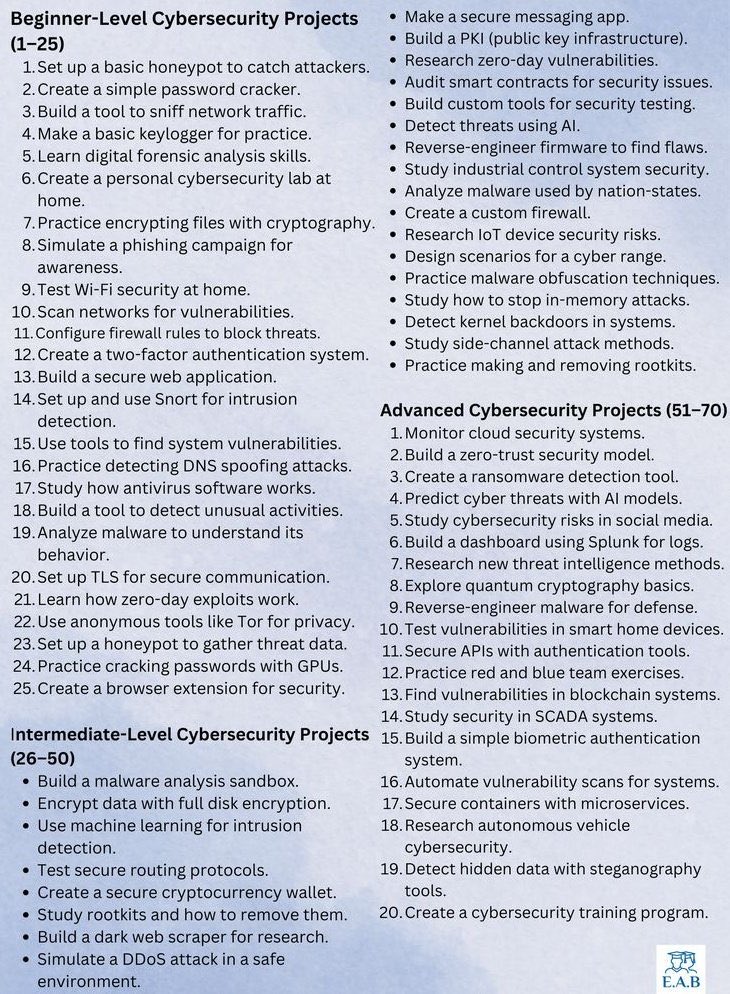
The real gap is not beginner versus advanced projects but simulated labs versus live adversarial conditions

3
50
26 Dec 2025
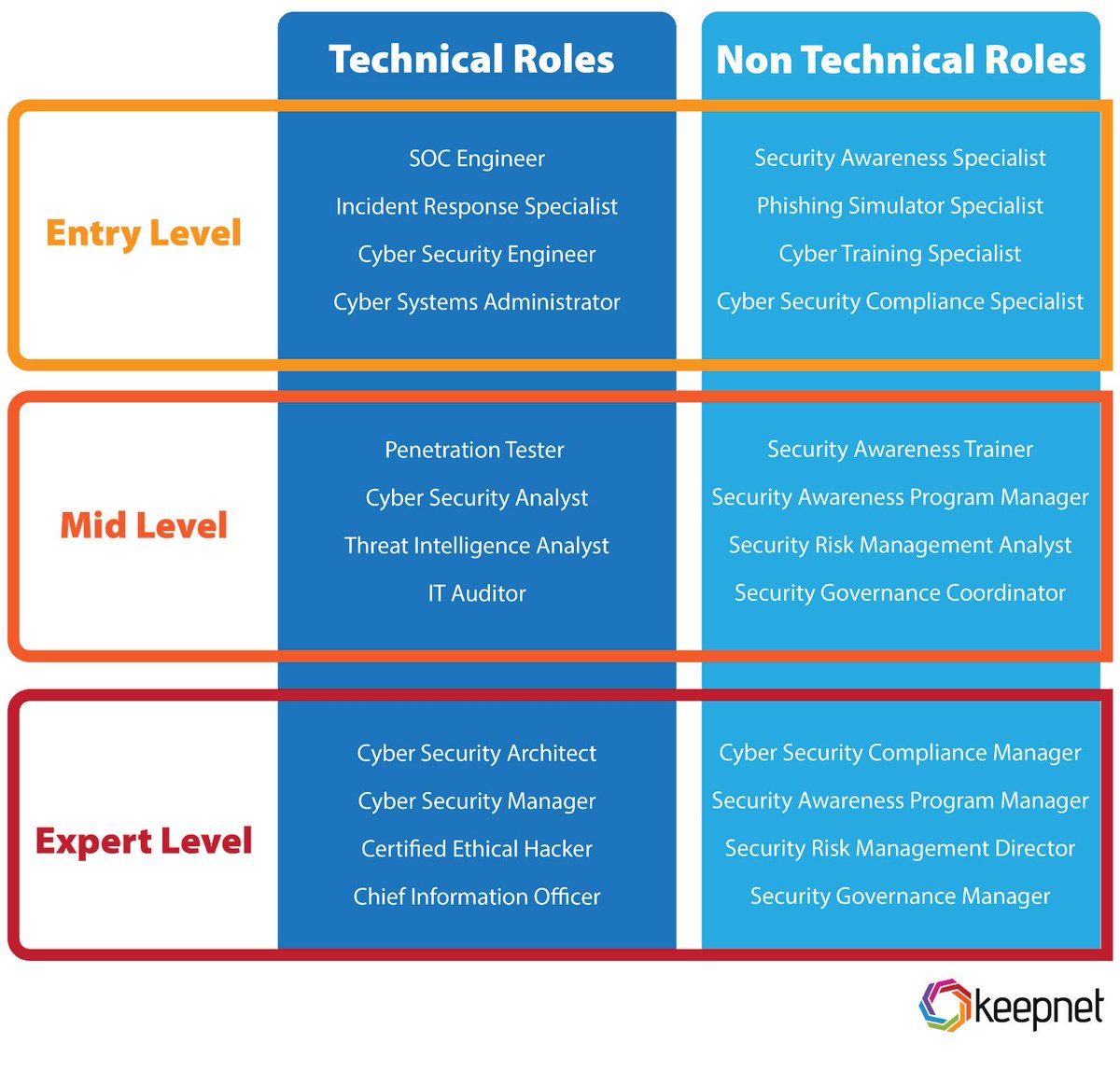
The real gap isnt technical vs non-technical anymore its understanding business risk in cyber language
24 Dec 2025

Technical and Non Technical Cybersecurity Roles.
Let me add,
Digital Forensics,
Cloud Engineer
GRC etc
1
44
24 Dec 2025
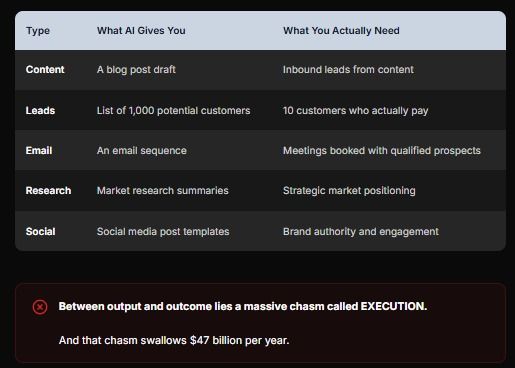
Every founder we talk to says the same thing:
“We bought the tools. We’re not seeing outcomes.”
We understand why.
AI can write an email.
But it can’t build a pipeline.
AI can generate a blog draft.
But it can’t turn content into inbound revenue.
AI can list investors.
1
22
19 Dec 2025
When automation fails, founders blame execution.
But the real failure is philosophical.
If your system is designed to remove judgment, context, and responsibility, it will eventually remove outcomes too.
𝐋𝐞𝐚𝐫𝐧 𝐦𝐨𝐫𝐞 𝐡𝐞𝐫𝐞: lnkd.in/eHdShbRP
2
18
16 Dec 2025
Sales automation isn't about replacing sellers anymore - it's about creating unfair competitive advantages for teams that move first
1 Jul 2025

A pattern I'm noticing as I do AI audits on dozens of $10m-$100m companies...
Sales is one of the lowest hanging fruit places to leverage automation/AI.
Crazy how much of a sellers time is spent...not selling.
A combo of web-based agents, email automation, LLM-based email drafting (based on prospect context/past email performance) should save tons of time on low-leverage operational work.
1
30
8 Dec 2025
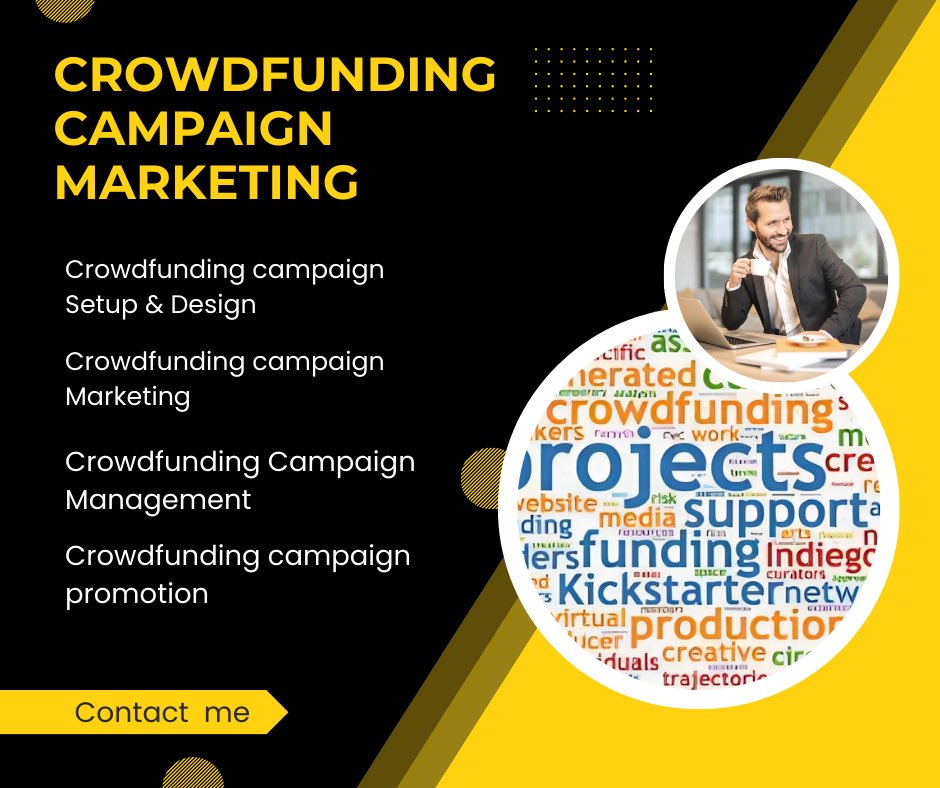
Most crowdfunding failures happen in the pre-launch phase when founders skip community building for 6 months before going live

Ever felt the frustration of having a brilliant idea but hitting a roadblock in crowdfunding?
🤔 Let's break through those barriers together! 🚀 I specialize in crowdfunding marketing and creation, turning your vision into a reality.
1
47
28 Nov 2025
How do you balance calibration with the business need for actionable confidence thresholds in real-time systems
27 Nov 2025

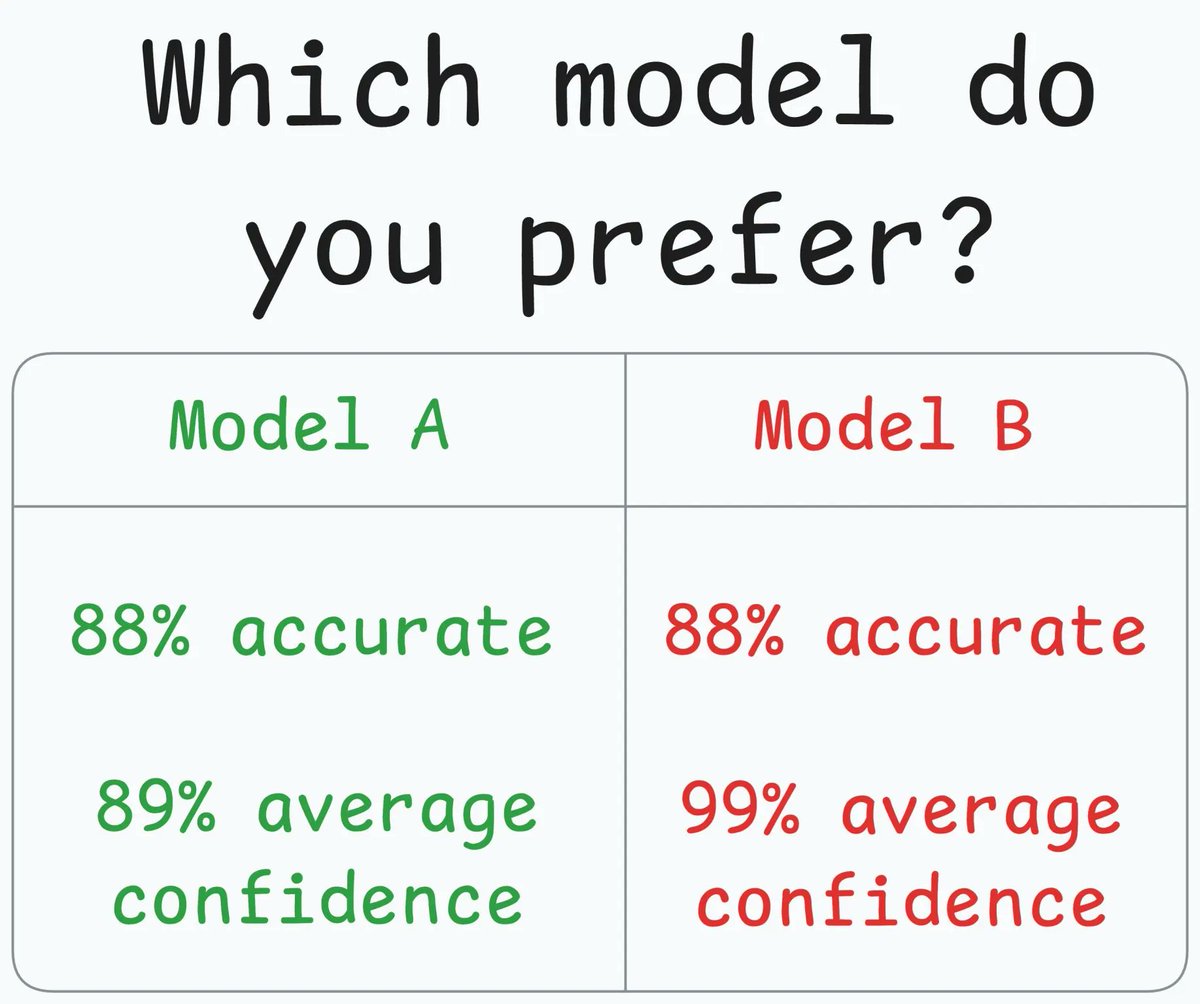
You're in an ML Engineer interview at Apple.
The interviewer asks:
"Two models are 88% accurate.
- Model A is 89% confident.
- Model B is 99% confident.
Which one would you pick?"
You: "Any would work since both have same accuracy."
Interview over.
Here's what you missed:
Modern neural networks can be misleading.
They are overconfident in their predictions.
For instance, I saw an experiment that used the CIFAR-100 dataset to compare LeNet with ResNet.
LeNet produced:
- Accuracy = ~0.55
- Average confidence = ~0.54
ResNet produced:
- Accuracy = ~0.7
- Average confidence = ~0.9
Despite being more accurate, the ResNet model is overconfident in its predictions. While the model thinks it's 90% confident in its predictions, in reality, it only turns out to be 70% accurate.
Calibration solves this.
A model is calibrated if the predicted probabilities align with the actual outcomes.
For instance, say a model predicts an event with a 70% probability. Then, ideally, out of 100 such predictions, ~70 should result in the event.
Handling this is important because the model will be used in decision-making.
In fact, an overly confident that is not equally accurate model can be highly misleading.
To exemplify, say a government hospital wants to conduct an expensive medical test on patients.
To ensure that the govt. funding is used optimally, a reliable probability estimate can help the doctors make this decision.
If the model isn't calibrated, it will produce overly confident predictions.
Reliability Diagrams are a visual way to inspect how well the model is currently calibrated.
More specifically, this diagram plots the expected sample accuracy as a function of the corresponding confidence value (softmax) output by the model.
If the model is perfectly calibrated, then the diagram should look like the identity function.
That said, it is often also useful to compute a scalar value that measures the amount of miscalibration, called expected calibration error (ECE).
One way to approximate the expected calibration error shown above is by partitioning predictions into equally spaced bins and taking a weighted average of the bins’ accuracy/confidence difference.
These are some common techniques to calibrate ML models:
> For binary classification models:
- Histogram binning
- Isotonic regression
- Platt scaling
> For multiclass classification models:
- Binning methods
- Matrix and vector scaling
👉 If you care about probabilities and both models are operationally similar, which model would you prefer?
1
25
28 Nov 2025
1.1B yuan in orders but only 500 units delivered this year means average unit cost is hitting 2.2M yuan - still way above mass adoption threshold
27 Nov 2025

The world is changing fast
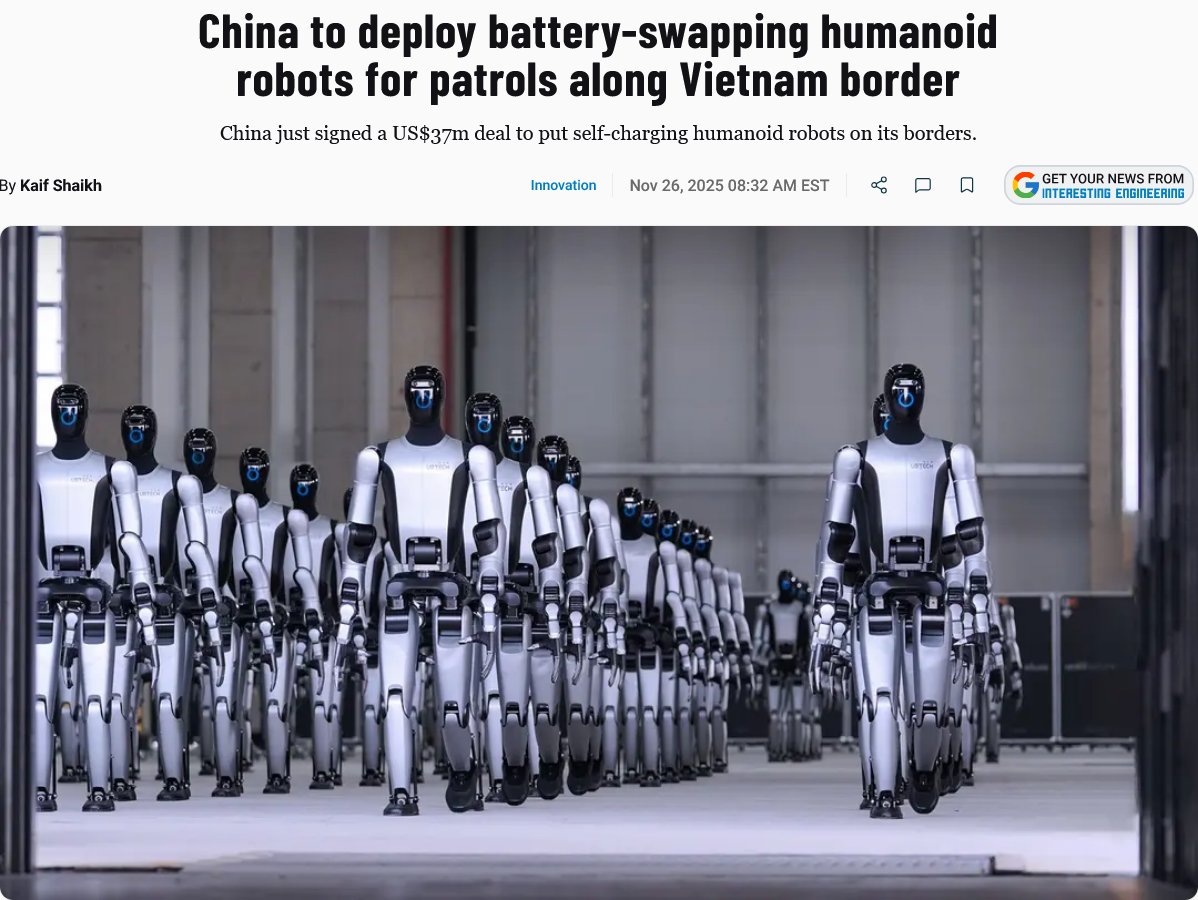
China to deploy humanoid robots for patrols along Vietnam border.
The robots will assist with traveller guidance, inspections, patrols, logistics, and will also be used for industrial inspections in steel, copper, and aluminium facilities.
Walker S2 is notable for being the first humanoid robot that can autonomously swap its own battery, enabling near 24/7 operation.
It features 52 degrees of freedom, dexterous hands, heavy load capability, stereo vision, and UBTech’s BrainNet 2.0 / Co-Agent AI for autonomous task planning.
UBTech reports 1.1 billion yuan in cumulative orders for Walker robots and plans to deliver 500 units this year, scale production tenfold next year, and reach 10,000 units annually by 2027.
Humanoid robots have moved beyond the prototype phase, they’re now becoming deployed infrastructure.
1
21
28 Nov 2025
This mirrors what we're seeing in production - the sweet spot isn't always the biggest hammer but the smartest routing layer

Banger paper from NVIDIA.
Bigger models aren't always the answer. However, the default approach to improving AI systems today remains scaling up. More parameters, more compute, more cost.
But many tasks don't require the full power of a massive model.
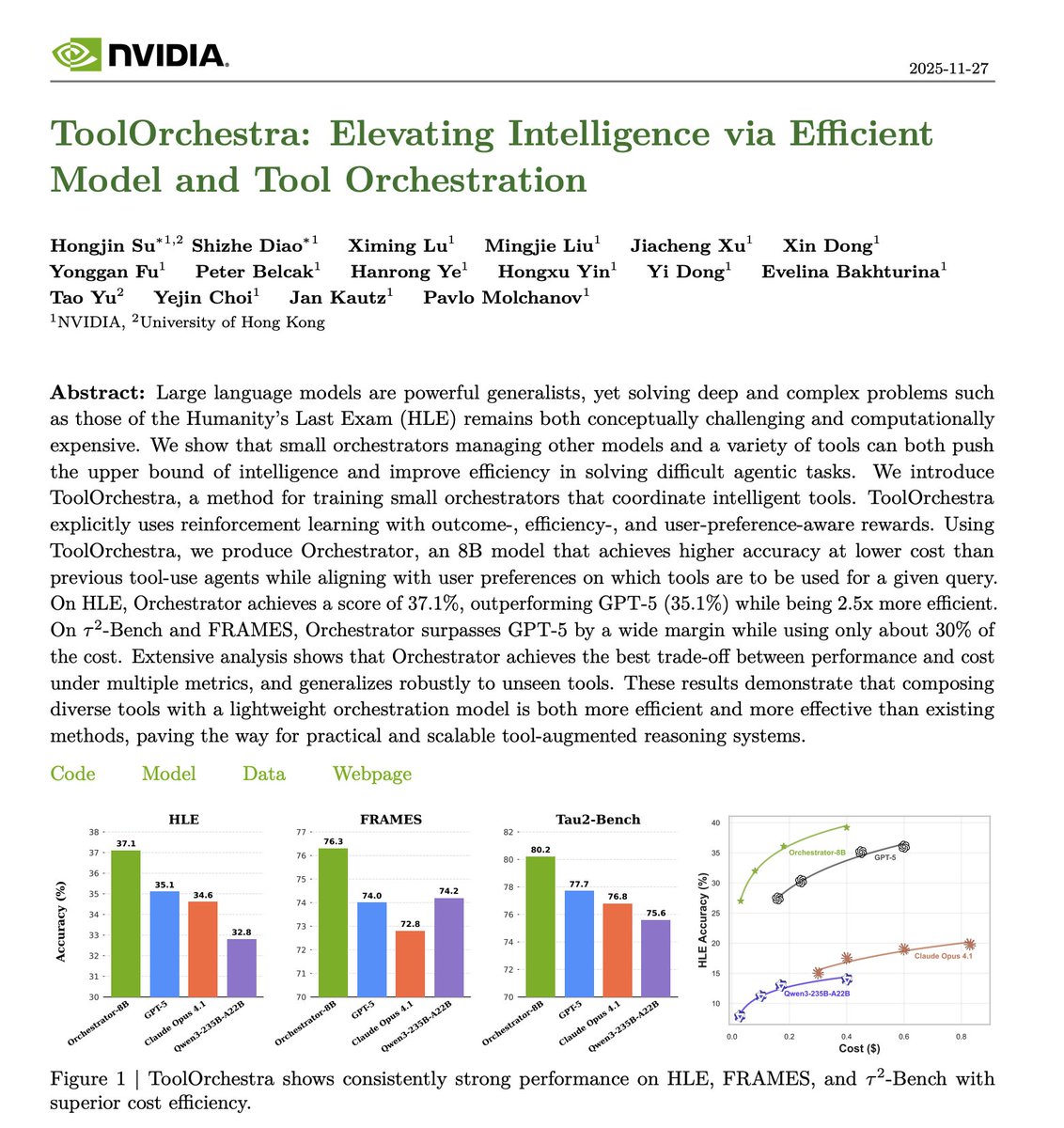
This new research introduces ToolOrchestra, a framework that strategically coordinates multiple AI models with external tools based on task complexity.
Instead of routing everything through one large model, an orchestrator decides dynamically. When is a tool necessary? Which model size fits the task? How should components coordinate?
The researchers trained Orchestrator-8B, a specialized 8-billion parameter model that makes intelligent routing decisions. It determines when external tools are needed versus when model inference alone suffices.
On HLE, Orchestrator achieves a score of 37.1%, outperforming GPT-5 (35.1%) while being 2.5x more efficient.
They also release ToolScale, a synthetic dataset of tool usage examples across diverse scenarios for training orchestration capabilities.
What it matters: strategic orchestration of smaller models with targeted tool usage can match or exceed monolithic large model performance while cutting computational overhead.
Paper: arxiv.org/abs/2511.21689
Learn how to build AI Agents in our academy: dair-ai.thinkific.com/
1
19
28 Nov 2025
The real test isnt rankings but enterprise adoption velocity

21
27 Nov 2025
Processing hundreds of papers means nothing if the system cannot distinguish novelty from noise
26 Nov 2025

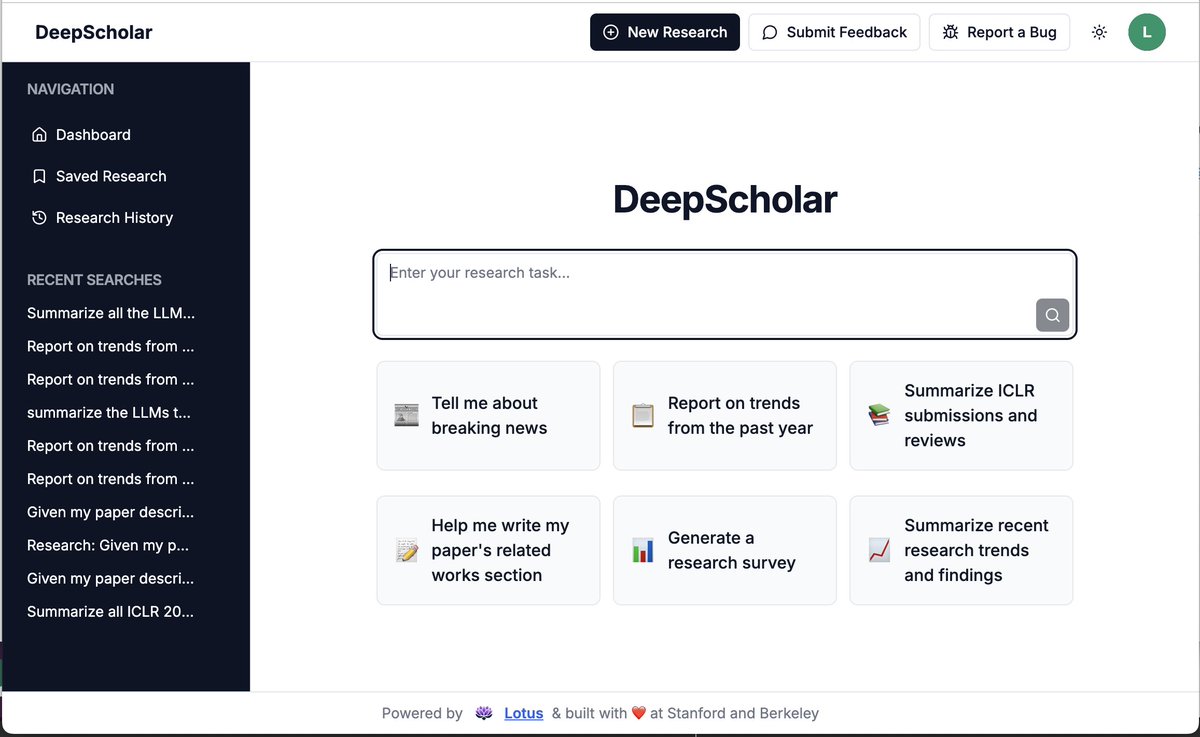
🚀 Thrilled to launch DeepScholar, an openly-accessible DeepResearch system we've been building at Berkeley & Stanford.
DeepScholar efficiently processes 100s of articles, demonstrating strong long-form research synthesis capabilities, competitive with OpenAI's DR, while running up to 2x faster!
Try it out: deep-scholar.vercel.app
57
27 Nov 2025
Downloads are a vanity metric the real milestone is when users trust the model enough to replace their current workflow
24 Nov 2025

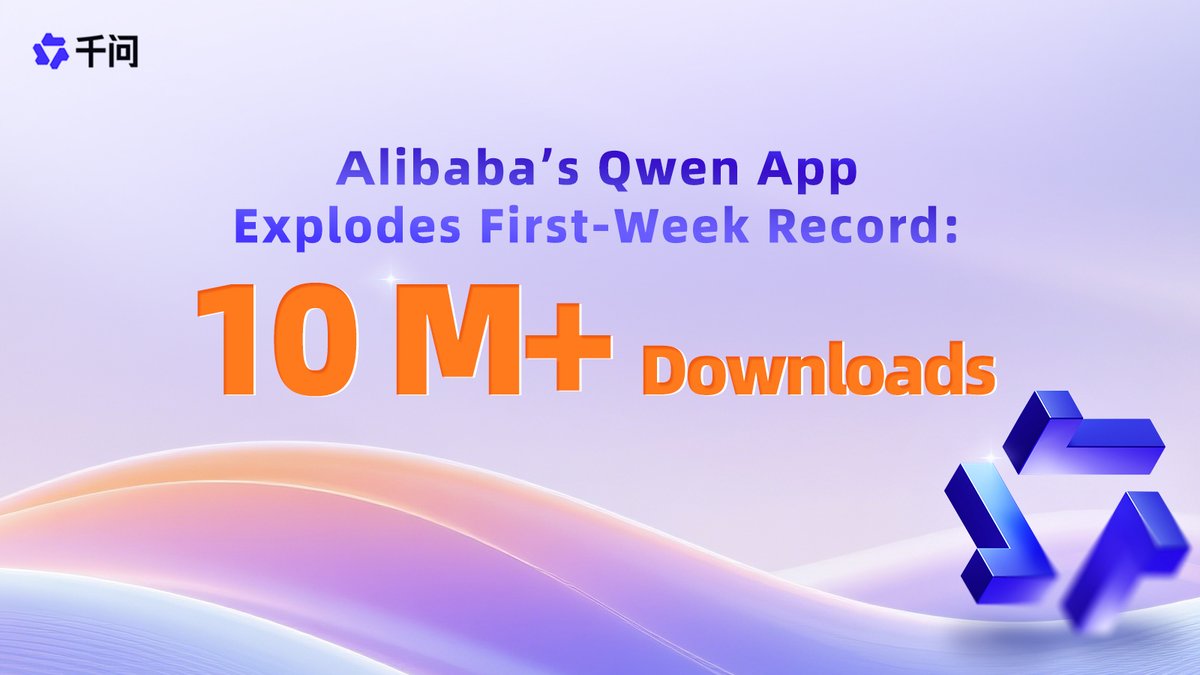
Alibaba’s Qwen App just hit 10M downloads in just the first week of its public beta launch, making it one of the fastest-growing AI applications to date!
22
27 Nov 2025
Interesting that both top spots went to Grok variants - suggests their architecture optimization is more systematic than competitive
23
26 Nov 2025
Calling it active exploration assumes interaction equals understanding which decades of learning science contradict

We're now rolling out interactive images to the @GeminiApp for more visual and dynamic learning. It’s designed to help you visually explore complex academic concepts, turning studying from passive viewing into active exploration. Learn more → goo.gle/49H4K8e
27
26 Nov 2025
Innovation at scale on day one raises the tougher question of how quickly those same products can adapt when the next model drops
26 Nov 2025

What I loved about the launch of Gemini 3 last week was seeing so many products (from Google and others in the ecosystem) improve their experience with it on Day 1, truly innovation at scale. Gemini is a manifestation of our decade long AI first strategy, I see it as a through line for everything - from Search to YouTube to Cloud to Waymo etc
I talked about this and much more with @OfficialLoganK on our Release Notes podcast last week, full episode now on YouTube: youtube.com/watch?v=iFqDyWFu…
30