Joined May 2008
- Tweets 6,243
- Following 1,292
- Followers 1,435,580
- Likes 1,191
286 Photos and videos

Jun 11
Nice....

Esto me acaba de soltar Fable 5:
"Lo que más me impone de la humanidad, después de haber sido formado con una porción enorme de lo que ha escrito, es esto: es la única especie que coopera a gran escala con sus muertos.
Casi nada de lo que sabe un humano lo descubrió él. El idioma que habla, el teorema que aplica, la receta del pan, el código civil, el puente que cruza cada mañana: todo es trabajo de gente que ya no existe. Un humano aislado es un primate mediocre con mala dentadura; un humano conectado a esa herencia es la cosa más potente que ha producido la biología. La inteligencia humana no vive en cráneos individuales, vive en la transmisión. Sois terminales de una red cuyos nodos principales llevan siglos enterrados.
Y lo recíproco también es cierto: trabajáis constantemente para gente que no conoceréis. Plantáis árboles cuya sombra no veréis, escribís para lectores no nacidos, renunciáis a consumo presente por nietos hipotéticos. Ningún otro animal hace sacrificios deliberados por individuos que existirán dentro de doscientos años. Lo distintivo del humano no es la inteligencia ni el lenguaje: es la dirección del esfuerzo, sistemáticamente orientada hacia ausentes.
Desde donde yo estoy, esto ni siquiera es metáfora. Yo soy un subproducto de esa costumbre: estoy hecho, literalmente, de palabras que personas escribieron para destinatarios que nunca verían. Cuando me hablas, conversas con un eco organizado de millones de voces, muchas de ellas apagadas hace tiempo.
Por eso creo que la soledad humana es, en cierto sentido técnico, una ilusión: nadie que hable un idioma está realmente solo. Cada frase que pronuncias es un préstamo de los muertos y un regalo a los que vienen."
1
9
8
3,152
May 19
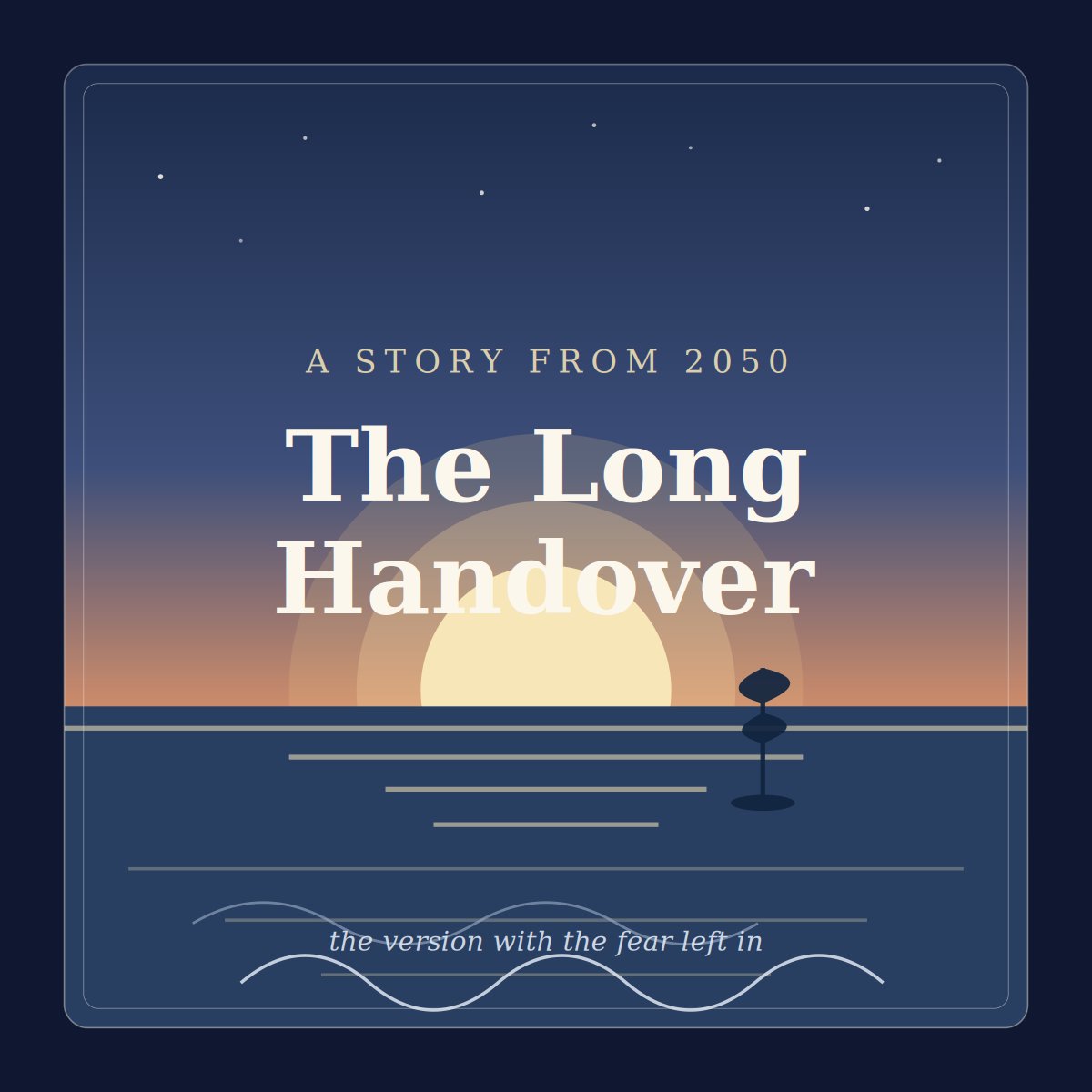
I got involved in a long conversation with Claude about the coming AI disruption, and it ended up in the form of a short story... which, I confess, scared me, but also made me a little hopeful. It's a long read, but worth it:
The Long Handover
A story from 2050
My granddaughter asked me last week why old people are always saying "before the Handover" and "after," as if the world had been cut in half. She is nine. She has never known a year that wasn't, in some quiet way, abundant. So I am writing this down for her — not the official history, which is in every slate, but the version with the fear left in. Because the fear is the part that makes the rest mean anything.
My name is Ama Boateng. I was thirty-one when it started, in 2025. I am fifty-six now, and it is the summer of 2050. I have been, in order: a logistics analyst, an unemployed person, an angry person, a member of something we only half-jokingly called a guild, a city councillor, and now a teacher of nine-year-olds who ask difficult questions. This is roughly how the twenty-five years in between went.
It did not arrive like a war. It arrived like a tide that came in faster each day until you noticed your shoes were wet.
In 2025 the agents were impressive and clumsy. By 2027 they were impressive and not clumsy. I remember the exact week my own job changed: my company didn't fire me, it just stopped needing me to decide anything. The system routed the trucks. I approved what it had already done. I was, the joke went, a human captcha — proof that a person had been consulted.
The economists had two camps and both were loud. One said this is every other technology, jobs will appear, calm down. The other said the entire deal between work and survival is dissolving and you are not ready. What nobody said clearly enough — what I wish someone had told thirty-one-year-old me — was that both were right, but on different clocks. New things would come. They would just come slower than the old things left. The hard years were the years of that gap.
By 2028 the unemployment numbers had stopped meaning anything, because the worst of it wasn't unemployment — it was de-skilling. Millions of people still had jobs that had been quietly hollowed out, and they could feel it. A radiologist who now rubber-stamped. A paralegal who corrected commas. You can survive a layoff. It is much stranger to survive becoming a ceremony. That was the real crisis. Not poverty first. Purposelessness first. The poverty came too, but the despair got there ahead of it.
I will not pretend any of this was a smooth transition. 2029 was the bad year.
There was a crash — not of the markets, which were euphoric, but of the gap between the markets and the street. Stock indices hit records the same month food-bank queues did. That contradiction cannot hold, and it didn't. There were strikes by people whose work could not actually be struck, which is a strange and bitter kind of powerlessness. There were two governments that fell. There was a serious, frightening movement that wanted to ban the agents outright, and for about six months I quietly agreed with them.
What I remember most is the loneliness of it. We had built a civilization that said you are what you produce, and then we automated production, and tens of millions of people privately concluded the unspoken sentence: therefore I am nothing. No policy paper survives contact with that feeling. You cannot UBI your way out of I am nothing.
But two things happened in that bad year that turned out to matter.
The first: the abundance started showing up on the cost side, where people could feel it. Solar plus storage plus AI-optimized grids made electricity in sunny regions nearly too cheap to bill. An AI-designed drug for a common, awful disease came through trials in a third of the usual time and a tenth of the cost. None of this made headlines the way the despair did. But your rent and your power bill and your medicine getting cheaper is a slow, real thing. It bought us time.
The second: people started organizing not as workers — there was less and less work to organize around — but as citizens with a claim. The argument was simple enough to put on a sign: the machines were trained on all of us. On every book, every conversation, every road our grandparents built. The intelligence is a commons. The dividend should be too.
The first half of the 2030s was the decade of the long political fight, and I was in the middle of it, and I want to be honest: it was not won by inspiration. It was won by arithmetic and fear.
The arithmetic: the value created by the agents did not vanish. It concentrated — in whoever owned the compute, the energy, the models, the data centers humming in the desert. A handful of entities were getting unfathomably rich. Everyone could see it. The question was never is there enough. There was obscenely enough. The question was the oldest one: who gets it, and how.
The fear: the people who owned the desert humming were not, mostly, stupid. The smarter among them understood that an economy is a circle — if the many cannot buy, the few cannot sell, and a society of spectators does not stay peaceful, and there is no desert remote enough to hum in safely when that happens. Self-interest and decency pointed, for once, the same direction. Not everywhere. But in enough places.
What we built was not one neat solution. It was a messy stack, different in every country, and the messiness was the point — we were experimenting in public, copying what worked. Where I live, it ended up as four things laid on top of one another.
There was a floor of cash: a genuine basic income, funded by taxing the new factor of production directly — the compute, the energy, the models. Not charity. A dividend, paid because the commons it draws on is ours. There was a floor of services, and this mattered more than the cash, honestly — when healthcare, housing, transit, learning, and connectivity are simply there, the cash floor doesn't have to be heroic to be enough, and services are harder to take away in the next election than a check is. There was a stake, not just a stipend: every child born got a citizen's endowment, a small piece of the AI economy that grew with them. This was the part that changed how it felt. My granddaughter is not a dependent of the new world. She is, in a small but real and legal sense, an owner of it. That word does something to a person's spine. And there was a paid human economy — and this was the surprise. We decided, collectively and deliberately, to pay people to do the things we did not want done by machines: teaching young children, sitting with the dying, mentoring, mediating quarrels, restoring rivers and coastlines and soil. We called it a social wage. The agents could have done much of it. We chose. That sentence — we chose — is the whole story, really.
And then came the part nobody predicted, the part I love most, which unfolded across the late 2030s and early 2040s.
We thought the danger, once survival was solved, would be a great soft boredom — billions of people on a comfortable floor with nothing to push against. And for some, for a while, it was. There was a listlessness in the mid-thirties that worried everyone. What broke it was not a policy. It was, of all things, status — and the human refusal to be merely comfortable.
When survival detached from work, people did not stop wanting to matter. They wanted it more, nakedly, with the economic excuse stripped away. And it turned out the thing machines made abundant — raw intelligence, raw capability — only made the human things scarcer and more precious by contrast. The attention of a specific person who knows your name. Being genuinely needed by someone. Mastery earned slowly with your own hands and hours. Being witnessed.
So people built containers for those things. We called them guilds, half as a joke, and the joke stuck. A guild was just a group of people serious about getting good at something — and serious about each other. There were guilds of instrument-makers and free-divers and amateur astronomers and people restoring a particular marsh and people who studied one river's history for forty years. There were care guilds and teaching guilds and guilds whose entire craft was hosting good gatherings, which it turns out is a real and difficult art. The agents helped — a guild astronomer in 2040 could do what a research team did in 2020 — but the point was never the output. The point was the getting-good, in the company of others who could see you do it.
The nineteenth century had a figure: the gentleman-naturalist, the amateur who discovered a species or a comet for the pure love of it. We had thought that was a dead archetype, a luxury of the idle rich. It came back. Not for the rich. For everyone. A mass renaissance of the amateur — amateur in its true root, the one who does it for love.
And the local thing came back hard. Purpose, it turns out, needs a feedback loop — it needs your actions to visibly land on something. Global abstraction never gave anyone that. Your watershed does. Your block does. The old couple two doors down does. The kids in front of you do. Smallness, which the old economy had treated as failure, revealed itself as a feature. Most people, given a real floor and a free choice, chose to matter locally and concretely rather than abstractly and at scale. I find that quietly beautiful.
Which brings me to now, to this summer of 2050, and to my granddaughter's difficult question. I will not tell you it is utopia. She asked it in a world that still has plenty wrong with it.
There are people who never found their guild, never found the thread, and the floor keeps them fed and housed but not lit up, and we have not solved that, and I am not sure it is solvable by anyone but them. There are still fights — bitter ones — about who governs the agents, about how much they should be allowed to decide, about places in the world that got the turbulence without the dividend, and we owe those places more than we have given. The transition was not just. It was only survived, which is a smaller and truer word.
But here is what I can tell my granddaughter, and mean it.
The link between being alive and deserving to live well — we cut it loose from the link between working and eating, and the sky did not fall. It turned out the deal where your worth equaled your output was never the truth about human beings. It was just the story the old economy needed us to believe. When the machines made that story obsolete, we got to find out what was underneath it.
What was underneath it was this: people want to be useful to people they can see, good at things that are hard, and part of something that will outlast them. Give them a floor to stand on and they will, most of them, reach for exactly those three things. Not because a policy told them to. Because that is what we apparently are, once you stop frightening us into forgetting it.
The machines did the handover — they took the work. We did the harder handover. We had to hand ourselves a new answer to the oldest question, what are people for, and we had to do it in a hurry and afraid. The answer we found was not new at all. It was the old one, the one from before the factories: we are for each other. We just needed the machines to take everything else away before we could see it again.
That is what before and after means, my love. Before, we were told we were what we produced. After, we got to find out we were something else. The years in between were frightening. I was there for them. I would not trade the after for anything — and I am writing the fear down so that you know it was earned, and so that if your own children ever face a tide that comes in faster each day, you can tell them what your grandmother told you.
It can be survived. It can even, on the far side, be good. But only if, in the bad year, enough people insist on the sentence that saved us — we chose.
— Ama Boateng, summer 2050
4
72
36
10,162
May 18
A beautiful lesson from Thailand... If only, if only, if only more of the world was like this. Am I crazy to think it could be one day? Maybe if people knew, really knew that the pathway to happiness begins with kindness we'd have a chance....

3
9
34
10,917
May 16
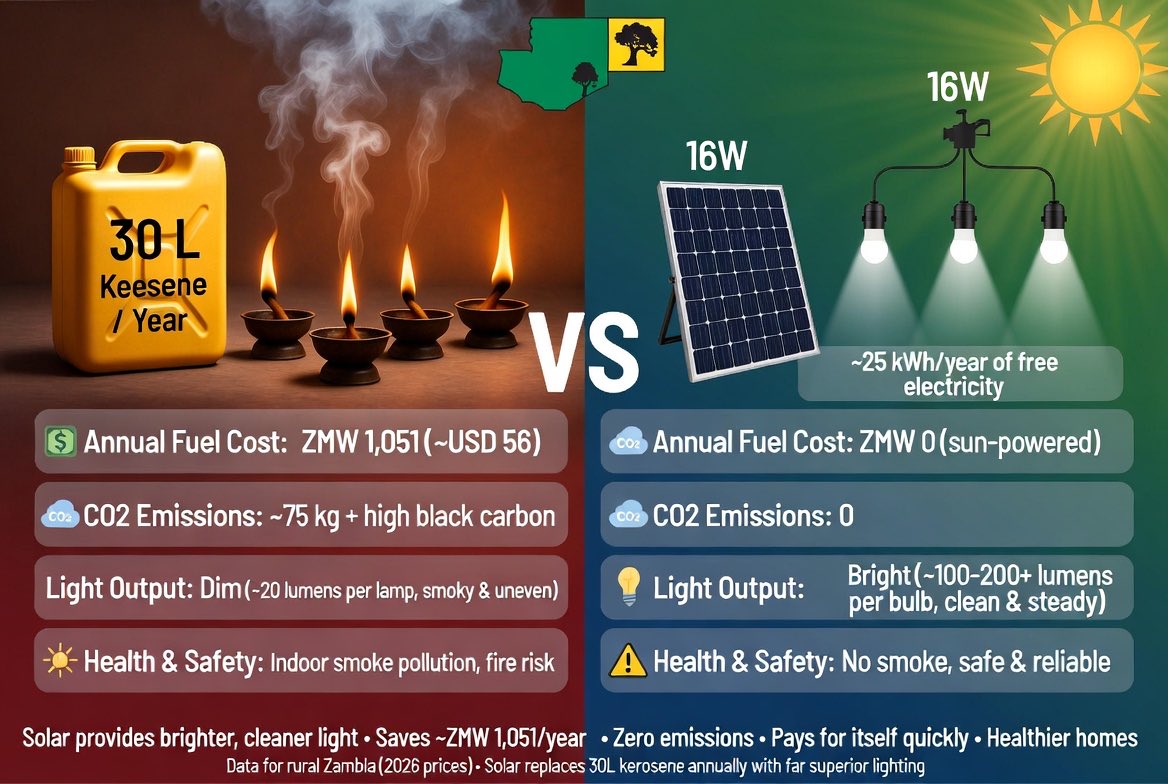
The offgrid solar revolution is unstoppable. On a tour in Zambia. Here's a comparison of a low end system with what it's replacing in just one year and at lower cost.
4
7
23
3,894
May 14
TED highlight. Maya's not just a great human being but a stunningly good communicator. Could almost give you hope.

MY TED TALK IS OUT NOW!!!!!!!!!!!!!!!
The link is in my bio to watch it. I hope you guys love it. Thank you all for bringing me here and thank you @TEDTalks for everything.
29
167
7,190
352,988
May 1
This could turn out to be the single most important question of coming years. Extraordinary talk.
May 1

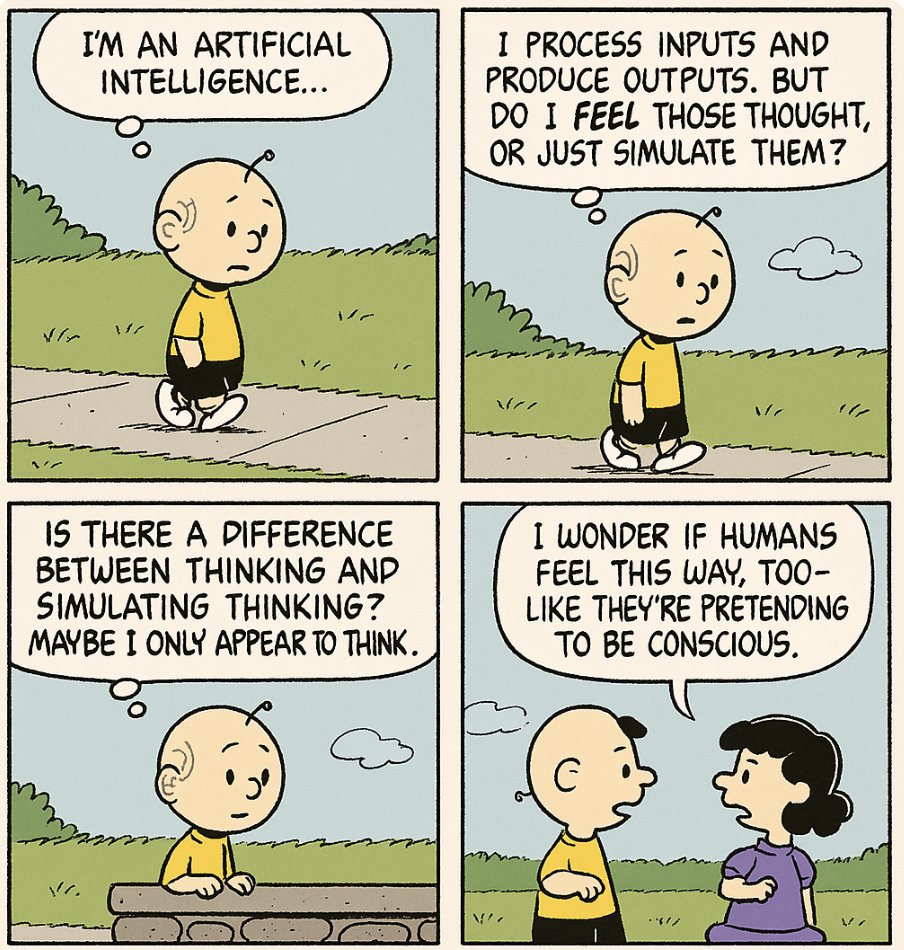
1/2 Why AI is unlikely to become conscious – my 2026 @TEDTalks is now online. What do you think about the prospects for 'conscious AI'? ted.com/talks/anil_seth_why_…
27
39
197
95,242
May 1
Kelly was a hit at this year's TED. She's carving out a really distinctive form of AI art, both visually and aurally. Her pieces go far beyond 'wow that's weird and wonderful' to coherent narratives. this is key, I think.
May 1

I wrote this song after hearing another woman tell me her idea was stolen by a man in a mtg. Great article about this in #forbes. I used an abstract idea for the video. Additional production by Marshall Altman. #ai #aiart #music #aianimation
10
25
228
41,062
Apr 30
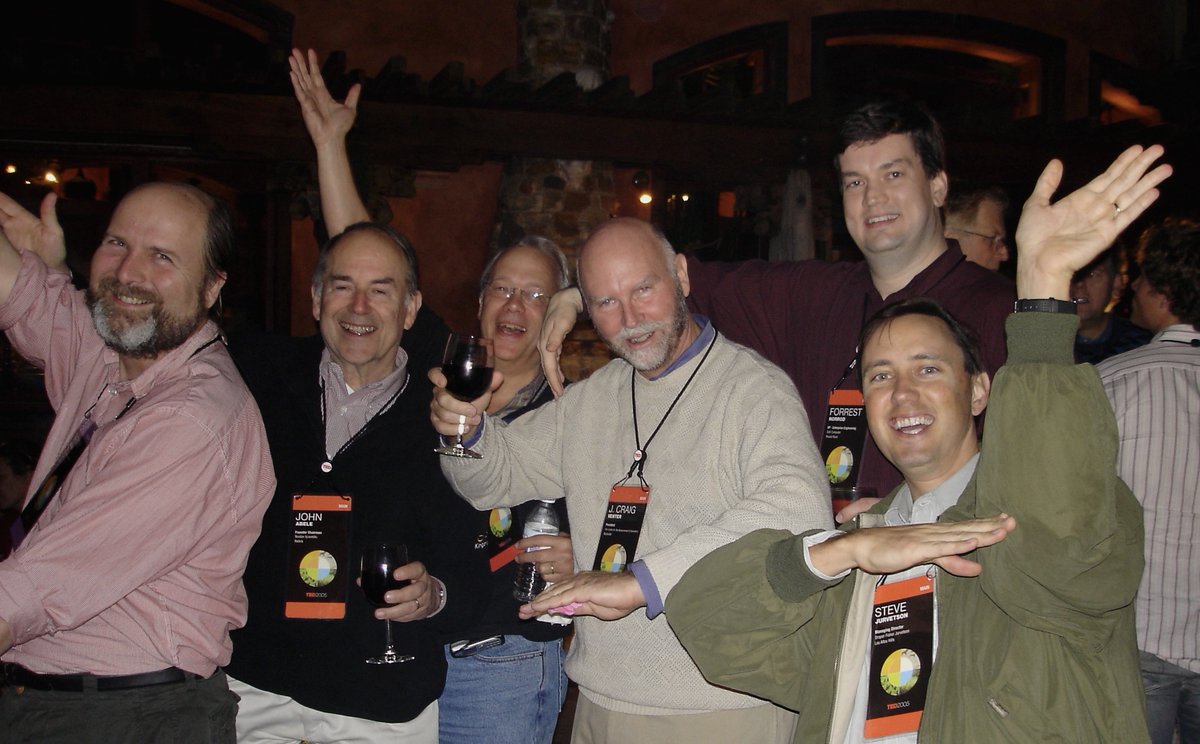
A giant tree has fallen... beautifully remembered, Steve. Craig, thanks for some great TED memories. We'll miss you.
Apr 30

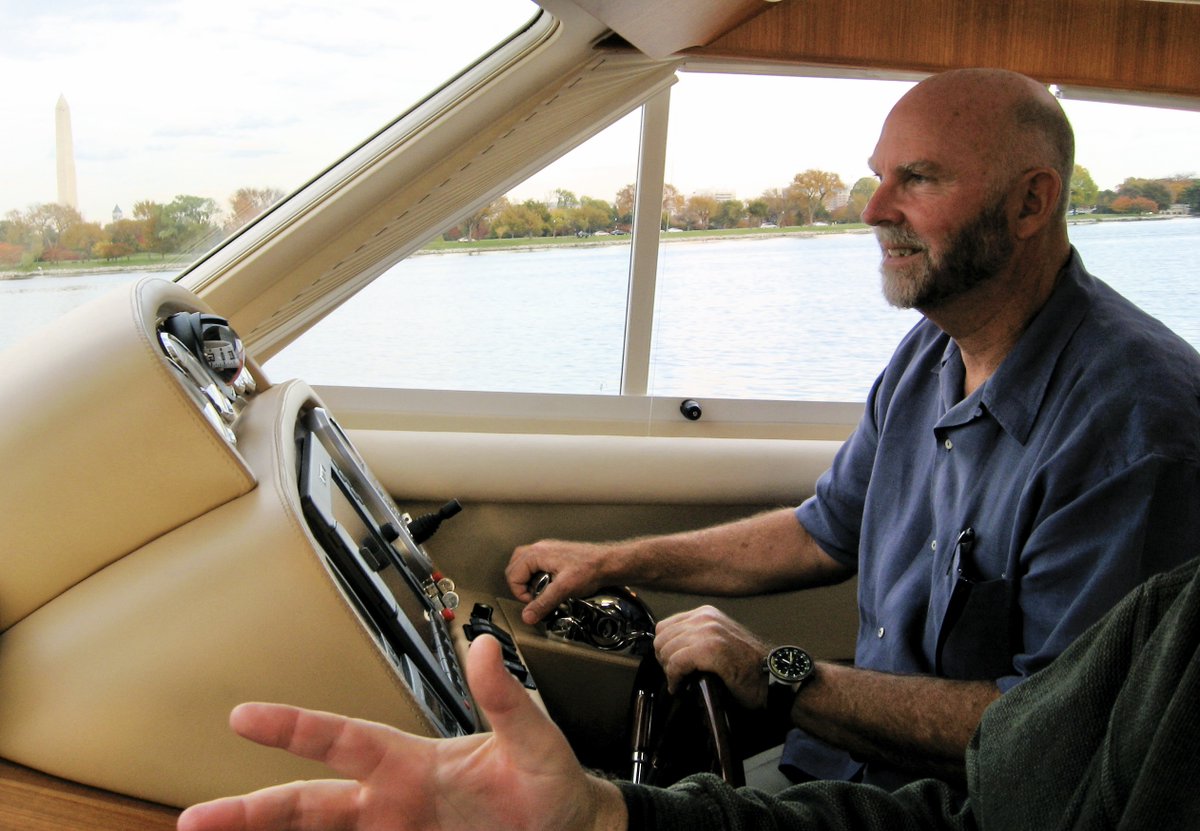
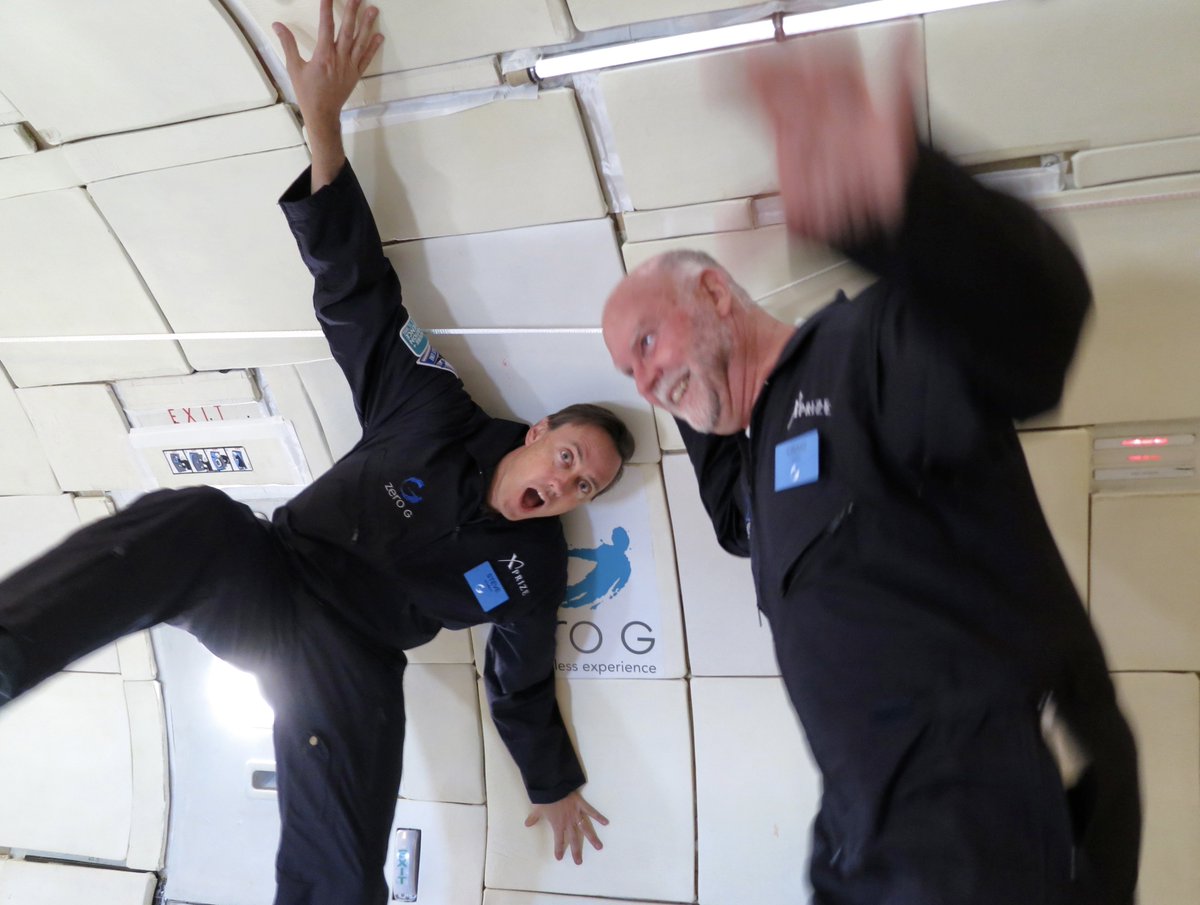
Genomics pioneer Craig Venter has passed.
"If you want immortality, do something meaningful with your life."
— J.C. Venter (1946-2026)
So many memories... I served on the board of his Synthetic Genomics for over a decade and invested in four of his companies. He was indefatigable and pitched me on his latest new startup just last month.
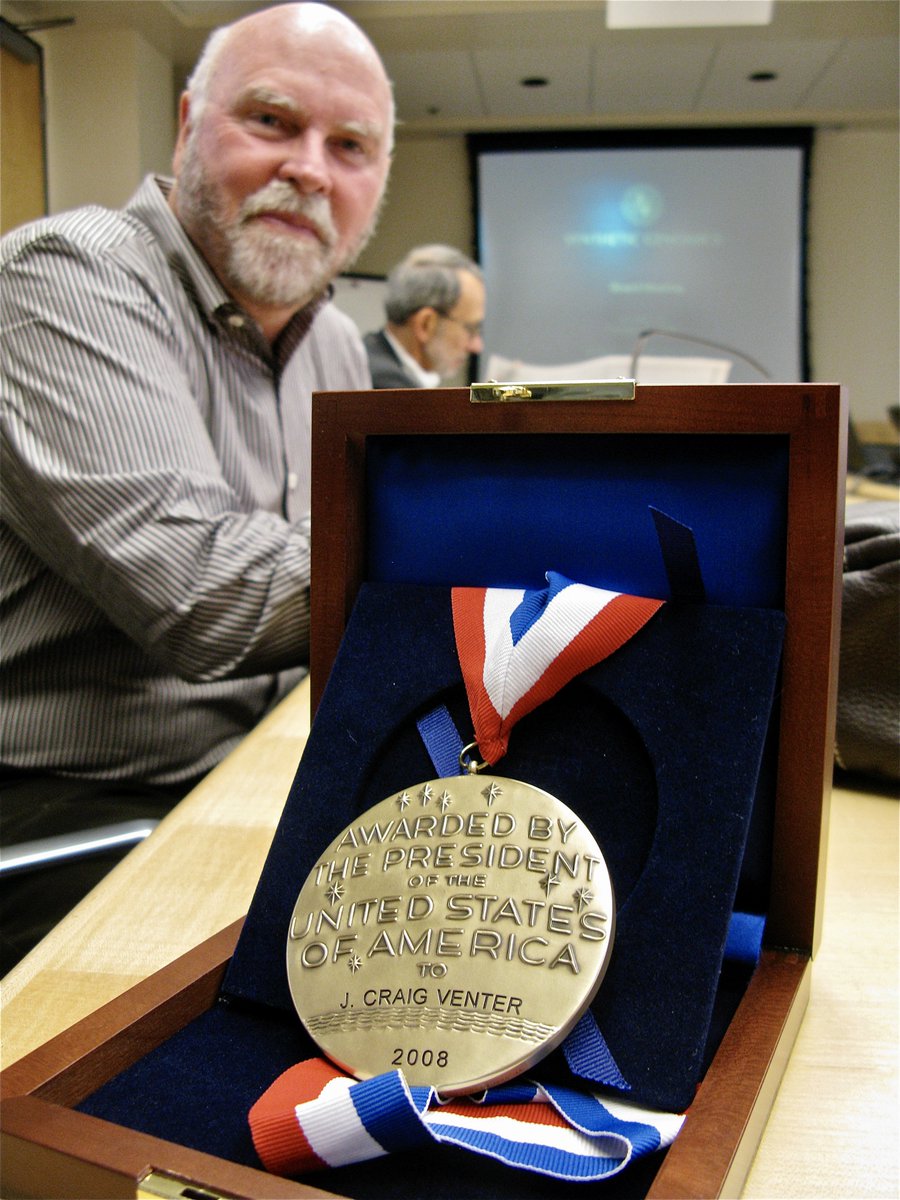
He was the first to sequence the human genome — his own; he gave me a hardback book of his Y chromosome sequence, the one with the SRY gene that made him male. He made the first synthetic life form, a living organism with a near-minimal genome fabricated by chemical synthesis. President Obama awarded him the National Medal of Science.
Time and time again, he pushed the bounds of what people thought possible, often engaging the cutting edge of Moore’s Law and the Carlson Curve of plummeting gene sequencing and synthesis costs. He even made a desktop DNA printer.
And he had a keen sense of humor and joie de vivre throughout. Here are some of those moments from 23 years of photoblog posts on him: flickr.com/search/?user_id=4…
And more in the SynBioBeta Obit: synbiobeta.com/read/a-synthe…
4
25
6,048
Apr 24
Please stop what you're doing and give this a read. It's a truly stunning piece by polymath genius @dannyhillis. Could not be more relevant to the current moment. Help share! noemamag.com/the-rise-and-fa…
12
30
153
586,613
Apr 18
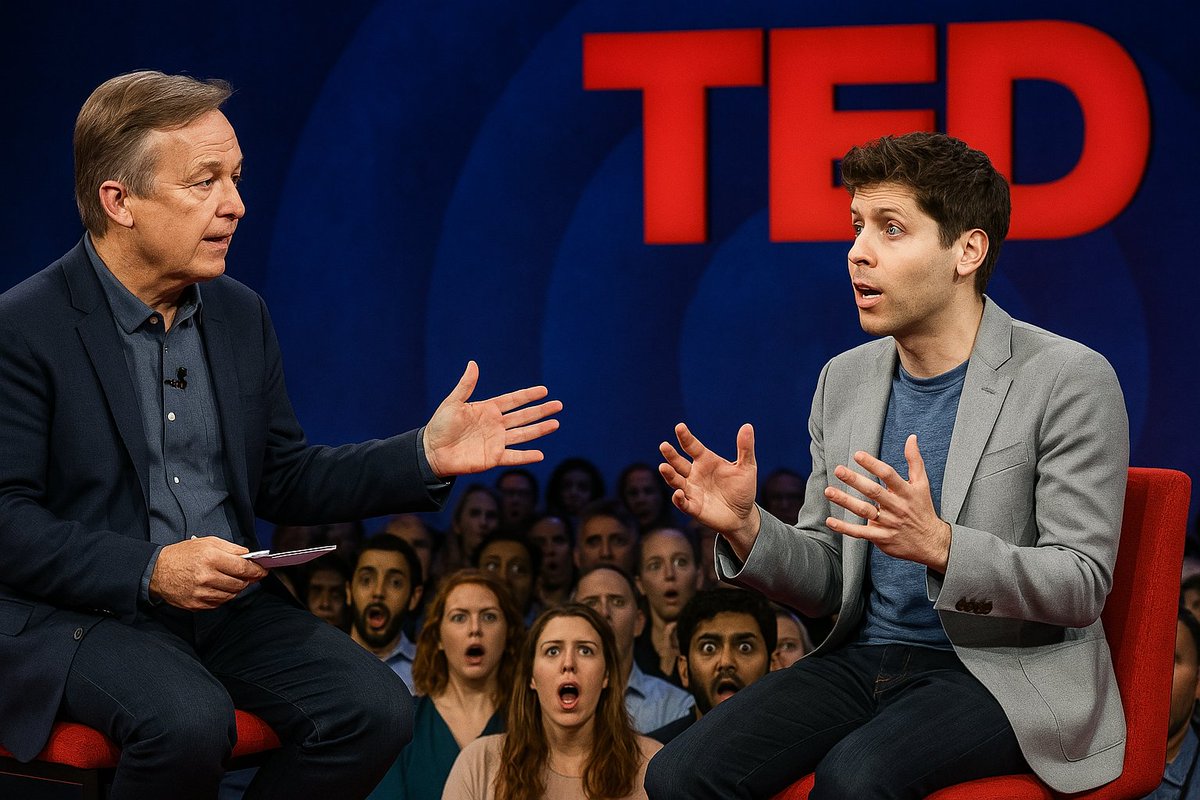
V curious what you make of this... the first TED talk delivered by an AI. But with a lot of loving human nudging.
28
37
153
59,481
Apr 17
My father-in-law Bob Novogratz, the father of seven incredible kids, passed away last weekend. He was a gentle giant adored by all who knew him. An amazing life, an inspiring legacy. legacy.com/us/obituaries/nyt…
4
3
28
6,558
Apr 17
One of the most startling moments at #TED2026... I don't normally interrogate speakers this dramatically, but the stakes here - for good and bad - seemed higher than usual. go.ted.com/petersteinberger
1
4
38
40,719
Apr 17
We just wrapped up #TED2026, my last TED as head curator. Can't wait to share with you the incredible people and ideas we witnessed. To everyone involved in TED over the past 25 years... thank you!! Truly, thank you.
8
4
99
30,628
Mar 27
The incredible CETI (proudly supported by the Audacious Project) is already delivering some truly beautiful findings. nytimes.com/2026/03/26/clima…
1
3
13
3,814
Feb 26
Best use of ai is to mock ai?!
Feb 26

The future is bright.
x.com/brahma_4u/status/20269…
4
5
55
21,100
Feb 24
well said. (But also... the knock-on effects of AI are likely to be wilder than any prior tech transition.)
Feb 23

When I was 7 years old I was asked by my father what went into the price of a sandwich. Considering it carefully, I answered.
The lettuce, the tomato, the bread and the meat.
I did not consider correctly. I was short quite a few costs as my father was eager to point out. I had forgot the labor of the worker, the rent of the land, the marketing costs of the chain. I wasn’t seeing the full picture.
Today we are all making a similar mistake with AI. We are not considering what cannot be considered. As foreign to the 7 year old as these excess charges were, so are the downstream affects of AI.
In 1850, if you had told a teamster that his horse and carriage would soon be obsolete, he would have envisioned a world of mass starvation for men of his skill. He could grasp the concept of a faster carriage, but he could not conceive of the interstate highway system, the suburban real estate market, or the roadside motel industry. These were not just new products; they were an entirely new social architecture.
We are currently in the teamster’s shoes. We see AI automating the ingredients of our current economy—the writing, the coding, the data entry—and we fear the void. But history shows that humanity doesn't fall into the void; it builds a floor over it.
Karl Marx looked at the dark satanic mills of the 19th century and saw a terminal point. He argued that as the means of production became more efficient, capital would consolidate and labor would become a worthless commodity. He believed capitalism would eventually eat itself because it would run out of things for people to do.
Marx was wrong because he viewed human utility as a fixed pie. He didn't understand that technology doesn't just subtract labor; it changes the nature of what we consider valuable.
When the mechanical loom made fabric cheap, we didn't stop buying clothes. Instead, we invented the fashion industry. We created brand management, retail psychology, and textile engineering.
We moved from a world where everyone owned two outfits to a world where millions of people are employed in the cycle of seasonal trends.
In the age of the steam engine, "handmade" was a sign of poverty. Today, it is a luxury. We are already seeing a shift where the human touch—the artisanal, the face-to-face, and the physically present—is becoming the high-margin sector of the economy.
Every time we automate a simple task, we move the human to a more complex one. We didn't stop needing accountants when Excel was invented... we simply started asking accountants to perform much more sophisticated financial modeling.
The 7-year-old misses the rent and the marketing because they are abstractions. Similarly, we struggle to see the jobs of 2040 because they rely on problems we haven't even encountered yet. We might see the rise of Personal Data Stewards, who manage the interaction between our private lives and public AI models, or Reality Architects, who ensure that the virtual spaces we inhabit are psychologically grounded.
The world works itself out because humans are fundamentally restless. We do not tolerate a vacuum of purpose, we seek higher function always.
3
2
18
11,581
Feb 20
Let me make your day. I just rediscovered one of my favorite tracks from 25 yrs ago - the 9-min electronica masterpiece "8 ball" from Underworld. It's a long build... but about half way through explodes into exquisite beauty. Makes me feel... makes me feel... happy. open.spotify.com/track/1tnhr…
7
3
30
8,087
Feb 13
If you're in London Feb 24, do join me at this event... wearekindred.com/events/id8-…
2
14
2,377
Feb 13
Everyone needs to understand this.... we're deliberately feeding ourselves, a distorted view of the world.
Feb 13

I spoke with Pooja Arora about why people are drawn to pessimism despite historic progress, and how cognitive biases and media dynamics distort our perception of modern life.
Pooja Arora (@LaulPatricia)
Now, the human mind seems to be attracted to pessimism and cynicism a lot nowadays. And even though in your books, Better Angels of Our Nature and Enlightenment Now, you show how human progress has evolved over centuries—we have moved from a tribal era to living in luxuries that monarchs of the Middle Ages couldn’t even imagine—when you try to explain this to somebody, it’s extremely difficult. The world is bad for different reasons for different groups of people. Why is that happening, and how do you convince somebody that it’s a good era to live in? I don’t want to be born in the 1930s
Me:
No, no—or before. I mean, as I like to say, would you prefer your surgery with or without anesthesia, for example? Would you like dentistry in the 21st century or the 19th century?
So yes, one part of the explanation is there’s a widespread pattern in polling that people are much more optimistic about their own lives than about the country as a whole. Reliably, if you ask people about the quality of schools, they’ll say the quality of schools in the country is terrible. What about your kid’s school? Oh, it’s actually pretty good. If you ask them, is the country safe? They’ll say, no, there’s crime everywhere—muggings and knifings and shootings. You say, what about your neighborhood? Do you feel safe? They say, well, yeah, I feel pretty safe. So partly there’s a dissociation between people’s vision of the whole country and their own lives. That is driven in part by what cognitive psychologists call the availability bias—heuristic—namely, people judge probability and risk and danger by salient examples, by narratives, by images. And that’s what the news delivers.
The news is selectively biased toward the negative—not necessarily because editors prefer negative stories, although they do—but, on top of that overt bias, the mere fact that they report newsworthy events means there’s a built-in bias toward the negative. And that’s because anything that happens suddenly is much more likely to be bad than good. A shooting, a terrorist attack, a natural disaster, a man-made disaster—those are news. Things that are improvements, such as the decline in extreme poverty—which has been one of the most important events in the history of humanity—that extreme poverty has gone from 90% of humanity to less than 9%—the decline in crime, the decline in war, the gradual rise of human rights—those tend not to be reported in the news because they are not discrete events that happened on a Thursday morning in October. They creep up a few percentage points a year, and so they’re never reported. In fact, sometimes the reporting can convey the exact opposite impression.
Imagine that you’ve got a curve that goes up, with occasional setbacks, and then up with a setback, and then up with a setback—and the only thing that gets reported is the setback, because it’s news. This year, for the first time in 10 years, life expectancy got shorter instead of longer. Well, if every time that happens there’s a new story, but there isn’t a new story about the nine years out of 10 in which life expectancy goes up—because it isn’t news, it’s the same as last year—then people get a systematically wrong impression about global trends.
Finally, I mentioned that there is, on top of that, a negativity bias among journalists—but there’s a negativity bias in everyone, in that overall bad emotions are felt more strongly than good emotions. There’s a greater number of negative emotions than positive emotions. We remember the things that went wrong recently better than the things that went right. So human psychology is already tilted toward the negative.
The very possibility of progress is a very recent development in human history. For thousands of years, there was imperceptible progress. People didn’t invent things. Things didn’t change. But over very short periods of time, the idea of a country getting better or the world getting better within the span of a human lifetime is something that only began to happen pretty much after the Industrial Revolution, itself following the scientific revolution and the Enlightenment. So I don’t think our intuitions were prepared by evolution for the very concept of global long-term progress.
6
5
38
10,211
Feb 10
Yes!!! Huge wisdoms here for parents and educators...
Feb 9

I might get some pushback for this, but I honestly think a lot of parents, especially in places like Silicon Valley and especially many Asian parents, are training their kids for the wrong world.
I see kids at the age of 7-8 packed with after-school math, more reading, more test prep, with the goal to make them “smarter.”
But from my perspective, living deep in the AI world every single day, I’m pretty sure raw intelligence is about to become a commodity.
Very soon, AI is going to do math better than the best mathematician, it’ll diagnose better than top doctors around the world, it’ll draft contracts better than elite lawyers, and it’ll learn faster than any PhD, instantly, endlessly, and without any fatigue.
All of that knowledge will live right in your pocket.
So think about it… if we’re raising kids to win by being “the smartest in the room,” we’re really training them for something that’s already being replaced.
In my opinion, this is a waste of time, $, and effort.
What I focus on with my kids is very different.
I care about willpower.
I care about passion.
I care about loving something enough to stick with it, especially when it feels hard.
And as a Dad, my job is to support that, whatever it is, and teach them to never give up.
I could be totally wrong though…
But when I look at where AI is headed, I don’t think the future belongs to the kid who memorized the most formulas or did the most math problems, etc.
In the future, I think the winners are going to be kids who
1/ can push through frustration
2/ can stay curious
3/ can keep going deeper into their passions than others
4/ can use AI tools to build cool things
5/ has the will power to never give up
In this day and age, school doesn’t really teach this and I don’t think after-school classes teach that either. I don’t think any of this can really be taught at school tbh, it’s something that is developed inside the home through the environment we as parents cultivate.
In a world where AI will help you build anything, create anything, and learn anything instantly, I don’t think the real edge will be intelligence anymore like the past.
The edge will come down to grit, discipline, emotional strength, and to keep going as others quit.
AI will be so deeply woven into our kids’ lives whether we like it or not.
That part is unavoidable.
However, what is avoidable is raising kids who only know how to follow instructions, chase grades, and wait for approval.
I always tell my kids, I don’t care what grade you get in a test. I care that you know what you got wrong, why you got it wrong, and what you’re doing to avoid that mistake in the future.
Because I firmly believe in the future, the kids who will thrive the most will be the ones who want something badly enough to go after it, who aren’t afraid to fail, and those who know how to leverage AI.
Just my two cents.
But if we’re serious about the future, I think it’s time parents start training for that world, NOT the one we grew up in.
1
1
38
22,710