
Lawyer, Author, Philosopher. I am a vibe. (RTs are not endorsements) (Views are purely personal)
Joined July 2024
- Tweets 7,413
- Following 187
- Followers 209
- Likes 872
148 Photos and videos
Pinned Tweet

Jan 30
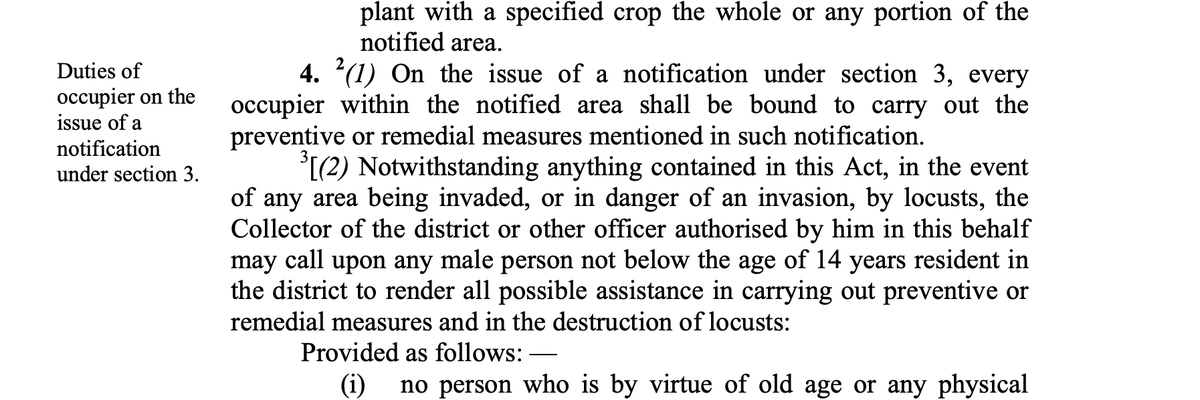
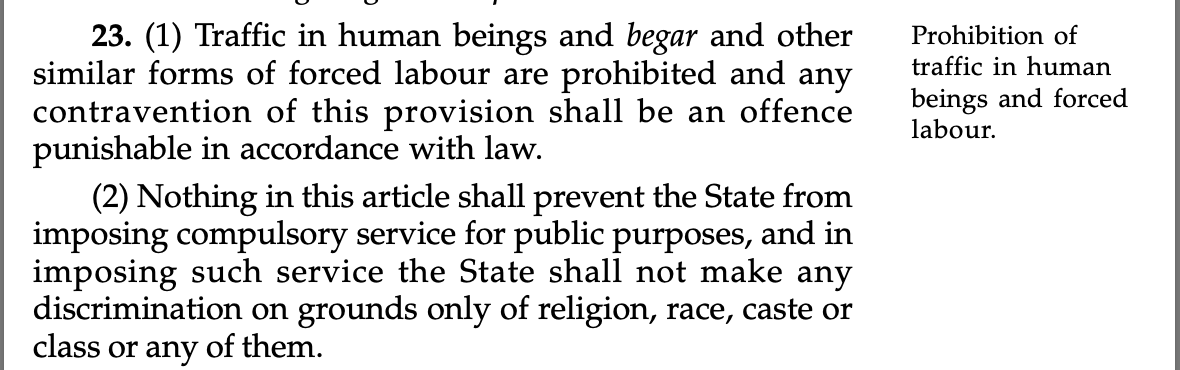
Looping in this hero @monn6111 since he wanted "facts" cause he was too lazy to read previous threads. Like the rest of you. Anyway here you go. Lamba Chauda Explanation. Read Fully.
One final time and then I block this fucker:
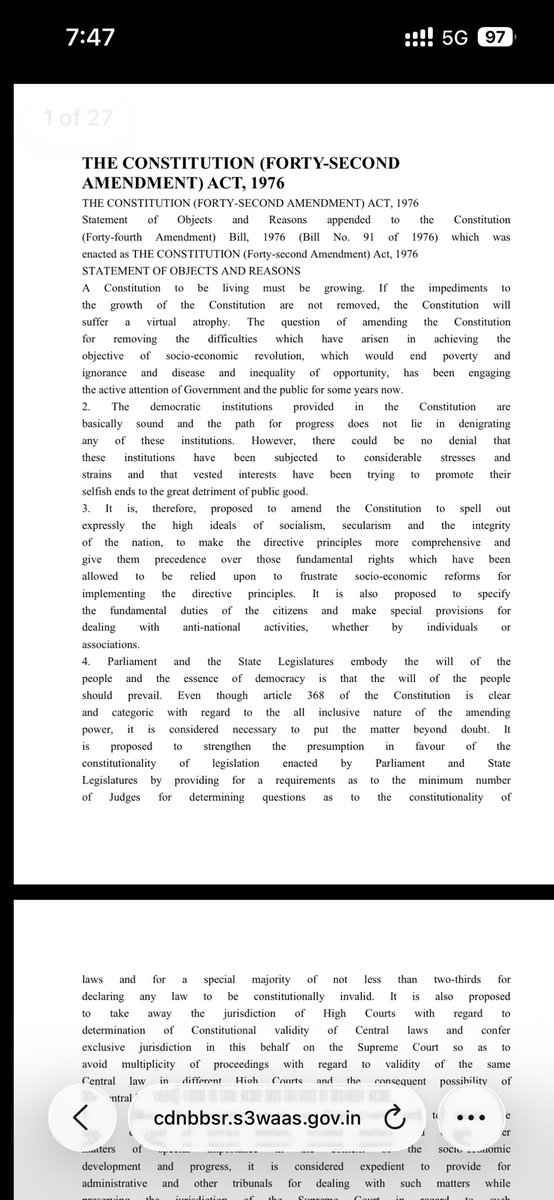
The Indian Constitution is not exhaustive. I know it sounds strange. But it is not. This is because we are a Westminster Democracy. Our Constitution is actual convention, constitutional text and in some cases statute (like General Clauses Act can be amended to effectively amend the Constitution like in Art 370 J&K. Citizenship Act is a constitutional amendment cause Part II itself says that Parliament can change the constitutional provision with an act not an amendment).
What does this mean? In a Westminster System you have the concept of a "Crown". The Crown is a Part of all three branches of Government. In the Executive Sphere we say King. In Parliament the concept is "King - In Parliament" and in the Judiciary its the "King's Courts".
In India this principle is maintained. I.e. The President is the Head of the Executive Branch. The President is also a "House" of Parliament. The Third house.
Article 79.
"There shall be a Parliament for the Union which shall consist of the President and two Houses to be known respectively as the Council of States and the House of the People."
On the Judicial Side the Power is the Power to Appoint Judges and also the power to issue mercy and clemency. She can even legally overturn a judicial verdict
Now the President is the Head of the Executive.
"53. (1) The executive power of the Union shall be vested in the President and shall be exercised by him either directly or through officers subordinate to him in accordance with this Constitution."
Other interesting things. The "State Emblem of India" was pre-constitutional. It was adopted by the Interim Government. On 26 January 1950 the "Government of India" adopted it.
The Government of India means the President and her Secretaries acting as advised the Cabinet. So to any person who follows along. When I say President of India, I mean the Government of India.
So now the question arises. Where do you actually get the power to adopt an emblem? Well it is an executive act and not a legislative act. The Definition of "Law" in India includes all manner of executive acts as well. Presidential Orders. This country's entire Foreign Direct Investment policy for example comes from a "Press Note" of the DIPP. A notice put-on a University Notice Board is also "Law".
So a resolution adopting the National Emblem makes it the National Emblem. Since it is fundamentally an emblem that is used by the Executive Branch. Parliament for example has its own Logo. The Lok Sabha and the Rajya Sabha have their own emblems which are adopted and used in accordance with the standing orders of the house. The source of power that creates the Emblem is an Executive Power.
Now coming to the two statutes and "Rules" that this "Man" has been harping about:
1. Emblems (Prevention of Improper Use) Act, 1950 (industries.delhi.gov.in/indu…)
2. The State Emblem of India (Prohibition of Improper Use) Act, 2005 mha.gov.in/sites/default/fil…
The first Act is concerned with "Improper Use". See Section 3 which creates the prohibition
"Notwithstanding anything contained in any law for the time being in force, no person shall, except in such cases and under such conditions as may be prescribed by the Central Government, use, or continue to use, for the purpose of any trade, business, calling or profession or in the title of any patent, or in any trade mark or design, any name or emblem specified in the Schedule or any colorable imitation thereof without the previous permission of the Central Government or of such officer of Government as may be authorised in this behalf by the Central Government."
If you read it you will see the prohibition is to use it for "any trade, business, calling or profession or in the title of any patent, or in any trade mark or design.". I don't think the Governor is planning on hosting a ticketed fancy dress party where people wear the Emblem. So the first act just does not apply.
On the Second Statute. The one that he seems to be quite agitated about. Again we must see Section 3. What does it actually say?
"Notwithstanding anything contained in any other law for the time being in force, no person shall use the emblem or any colourable imitation thereof in any
manner which tends to create an impression that it relates to the Government or that it is an official document of the Central Government, or as the case may be,
the State Government, without the previous permission of the Central Government or of such officer of that Government as may be authorised by it in this behalf."
Now two aspects here (a) you can't use it in a way that it "tends to create an impression that it relates to the Government " or (b) "or that it is an official document of the Central Government, or as the case may be, the State Government".
Now a "Hat" is not a document. This is perhaps something we can agree on. So (b) goes. Now (a). The Governor already relates to the Government. Since he is appointed by the President and is a part of the Government of a State. I.e. He is the Government. At the State Level the concept is same as the National Level. Govt is 3rd Chamber. He appoints State Court Judges. Can issue Clemency and is the head of the Executive Branch of the State. How can a Governor use an emblem to pretend to be the Government when he is the Government?
This circular problem is resolved by two key things. If you look at both statutes not one of them say "There shall be a State Emblem of India containing ......". They all treat the State Emblem as a Pre-existing fact. Because it is an executive decision.
But where does this power come from? It comes from the Prerogative Powers. The Executive Branch is the "Font of Honours". Here by Honour I do not mean Bharat Ratna (though that's where that power also comes from). By this I mean titles, symbols, heraldry etc. An Honour is always wishing the "Gift" of the President. This means after checking with the PM, the President can permit anyone to wear it. Cause that means the entire cabinet has granted that permission.
In all reality under our Constitution you only need an Act of Parliament for very few things. These are only largely when you set a policy into law (criminal law, company law etc). Otherwise you just need to go there to get money to run the executive branch (the budget, money bills). The House controls the Executive by the Power of the Purse.
On the Uniforms Point:
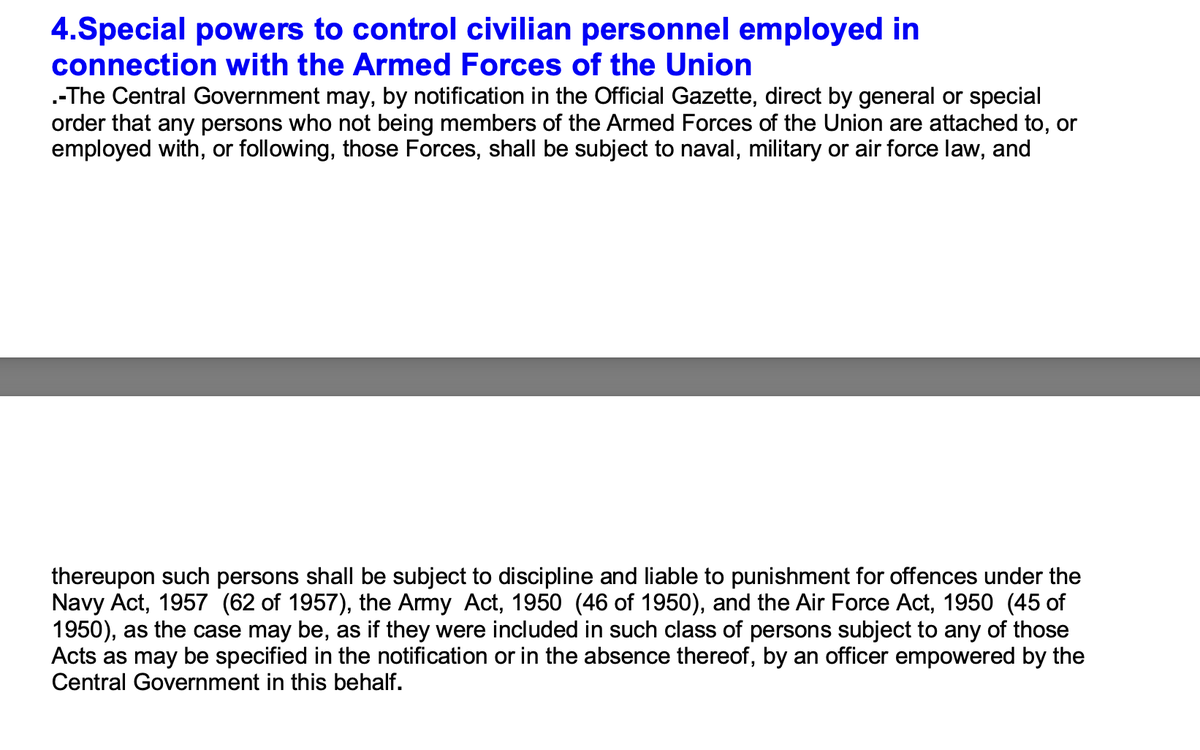
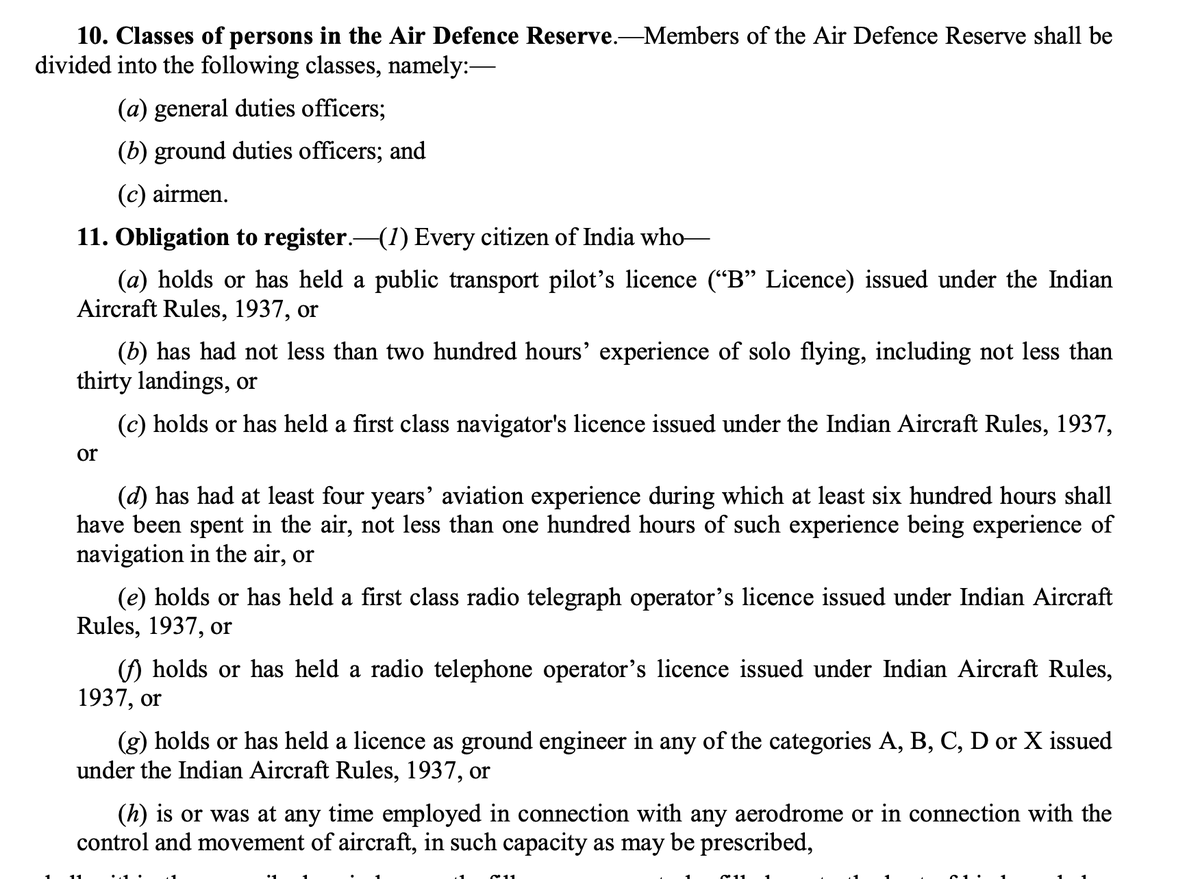
Go through the entire Army, Navy and Air Force Acts. Not one of them say "there shall be an Indian Army/Air Force or Navy". They assume these forces existed. These forces are "regulated" by this legislation, as post independence our constitution required court martial etc to come from statute and the British statutes on discipline no longer applied and the older regulations and statutes were found to be not fit for purpose. All three forces by the way have not been raised by a Statute but have always been raised by the Executive Branch via resolution. (The Indian Army for example was created when the Governor General decided to merge the three presidency armies).
The Armed Forces are governed by the Executive Branch. The Executive can govern them how it likes until there is a Parliamentary prohibition on this. The uniforms the is talking about. The Dress Regulations. They do not come from the Army Act. They come from the conditions of service when you enter the services. The dress regulations are compiled and circulated by the Adjutant-General who reports to COAS who reports to MOD. As you can see there is a hierarchy. MOD is the President acting through her ministers. So yes. If the President of India woke up, called up Mr. Modi and said "Wouldn't it be just posh if they all wore ball gowns" and Mr. Modi agreed, there is nothing the law can do to stop it.
She can take it further (the Executive Branch) and also has the power to authorise who ever she wants to wear the uniform. The uniform is therefore never laid down in law. Only defined in like an HR manual.
The uniform is protected so anyone who not in the forces cannot wear it and pretend to be from the forces. But even so, that has to be "unauthorised". If the Central Government gave the Governor a Hat. He can wear it. He can stitch his own logo on the hat.
Also his Hat did not have regimental insignia. Only the Emblem. Which means this "dressing like the army" thing no longer holds water.
Because the Governor:
(a) Is a representative of the President
(b) Ranks higher than the highest military officer in the Order of Precedence (4/8 v 12 for the Service Chiefs) en.wikipedia.org/wiki/Order_…
(c) Is literally the Government so he can't pretend to be something he already is
(d) The Rules he is talking about only prevent unauthorised (i) Use in Seals (ii) Display on Buildings.
(e) He says it is prohibited in terms of Rule 10. He says that even though TN has the Emblem in its logo. The Governor cannot be used. This is not the language of Rule 10 at all. Rule 10 talks about the Emblem and a Governor can use it if he is in a state that has adopted it. The Rule 10 does not say that the Governor must use the emblem as it appears on the State Emblem. Why? Just like we use the Chakra as a separate symbol sometimes etc, the rule of Heraldry is once you adopt the whole thing, you can use it in parts.
(f) Lastly and here is where it is critical. The offence is not possible. He can't pretend to be the Govt when is it. Section 119 of the Revised Evidence Act, provides that we have to presume he has permission. While I am sure he doesn't need one, even if he did. Before he can be attacked for unauthorised, you must prove no permission was given. Since he is the Governor. Since the State Government has said nothing (and they are quite vocal about things). We have to presume all protocol was followed.
There is thing call professional courtesy. You respect a qualification. I don't attempt to teach people how to fly a helicopter. Interpretation of law is something that takes lots and lots of hard work. The use of an emblem is not a military matter but purely a legal one.
Fun Fact: For the longest time passports were also issued under this power. The Executive Power I mean. Operation Sindoor is a classic case. We went and attacked Pakistan. No Parliamentary resolution needed. Dress is a service matters and are subject to the discretion of the employer. Here the employer is the President, she presides, she decides and it can be anything for the Forces as they have taken an oath to follow all orders even to the peril of their lives.
I hope this is enough fact and argument. This is the third time I am repeating all of this. If Mr. Lancer cannot understand even after this. I wonder why we allowed such people to ever carry guns.
1
1
1,798
May 27
I don’t know who needs to hear this. But the silent majority of conservative people in this country do not support the current administration.
1
53
May 27
Sir Winston Churchill (Winnie) once said "The best argument against democracy is a five-minute conversation with the average voter."
Growing up this quote used to make me laugh a lot. Here was the man, who led the charge to preserve democracy against the biggest threat of the 20th Century.
He succeeded when many others failed or gave up.
I always thought Winnie was making a bit of joke when he said this. But I guess now with time I realise that he was right.
Democracy is great when your issues are of limited consequence to your survival as a human being. But when food, clothing, shelter, education and healthcare aren't in place. Democracy loses its shine and I can see why people resent it (perhaps I too have come to resent it)
It is very difficult to convince the average person in this country that democracy means something. For many years have passed since we got it, and their lot is yet to meaningfully improve.
In fact it only improved when we had one major party (Nehru and Indira Gandhi premiership) We were able to stop famines that plagued our country and meaningfully change the lives of the poor.
But once Multi Party politics became in vogue in India, making sure that growth reaches the last person in the last hutment. No longer was a priority.
Politicians prosper by keeping people poor. This way they can exchange votes for "Relief" instead of "Justice".
This country may be just better off without "vibrant democracy".
Put a person in-charge and give them the time to do their job. Would you be able to fix long term problems if you had to re-apply for your job every five years?
South Korea, Singapore, Malaysia, Taiwan, Imperial Iran and many other nations had their massive growth spurts when there was no real democracy.
The Greeks and the Romans could have it cause they restricted who could vote. They had oligarchies.
I mean think about it. If you're plumber came to you and asked you how to go about plumbing. You'd fire the plumber cause knowing plumbing is their job.
Then how does it make sense for the Government whose job is to govern. To come to you and ask you what to do. There's a case for firing any Government that does that.
Maybe its time we as a people revisited the idea that India should be a Democracy. A professionalised Technocracy may make a lot more sense in this country. Cause that's what we were during the Raj and we modernised a rate that we haven't seen since the British Left.
Starting from what was recorded in the Arthashastra. We learn that the only way this country can be governed is by having a strong executive that crushes dissent.
That's our lot in life for us educated people. At least, till we reach the last person in the last hutment and ensure their lot in life improves.
(Views expressed are purely personal)
45

May 20
Hearing a rumour that our PM has asked his hero Donaldbhai to declare Press Conferences, Weapons of Mass Destruction.
22
Apr 22
The Mumbai Police is a Peelian police force. Remember this.
Apr 22

Slap section 221 and 224 of BNS. Writ of state needs to be respected and no citizen in any country can behave like this with cops without consequences.
84
Apr 17
Will this man be patriotic enough to ask why we have only 29 Squadrons of the IAF active against a sanctioned strength of 42? His hero has been in power for 3 terms now and the IAF has only gotten smaller not bigger.
This Armed Forces don't asked questions card nonsense has to end. As a Civilians we have to question why our Armed Forces don't have supplies they need the tech they need.
But he won't ask. This is because he is not a patriot. He is an anti-national Pak Agent. Like almost everyone in the Ruling Party.
Shame on Modi and his Govt. Shame on them all.

Ajay it's ok if you hate BJP
It's democracy, u should support whomever you want to,
But should do a bit of research before questioning the indian armed forces
Let's unite against terrorism and fully support our army men ♥️
Thank you
74
Apr 17
I had decided that I would stop caring about Indian politics. But I have had to reactivate myself. This delimitation exercise (or as I call it Gerrymandering) is nothing but an attempt to usurp power and entrench the BJP. Let's call it what it is. Vote rigging.
1
60
Apr 17
Southern People need to unite and agitate to protest this delimitation exercise. This is not delimitation, this is our disenfranchisement. After this South India will be a minority in the Indian Political Setup and trust me, Delhi doesn't treat minorities well.
1
82
Apr 3
RT @NMenonRao: There is a certain genre of writing that substitutes accusation for argument. It begins by assigning motive, then arranges f…
255
15
Apr 1
She still won't go out with you bro. Calm down.
182

Ajay Kumar retweeted

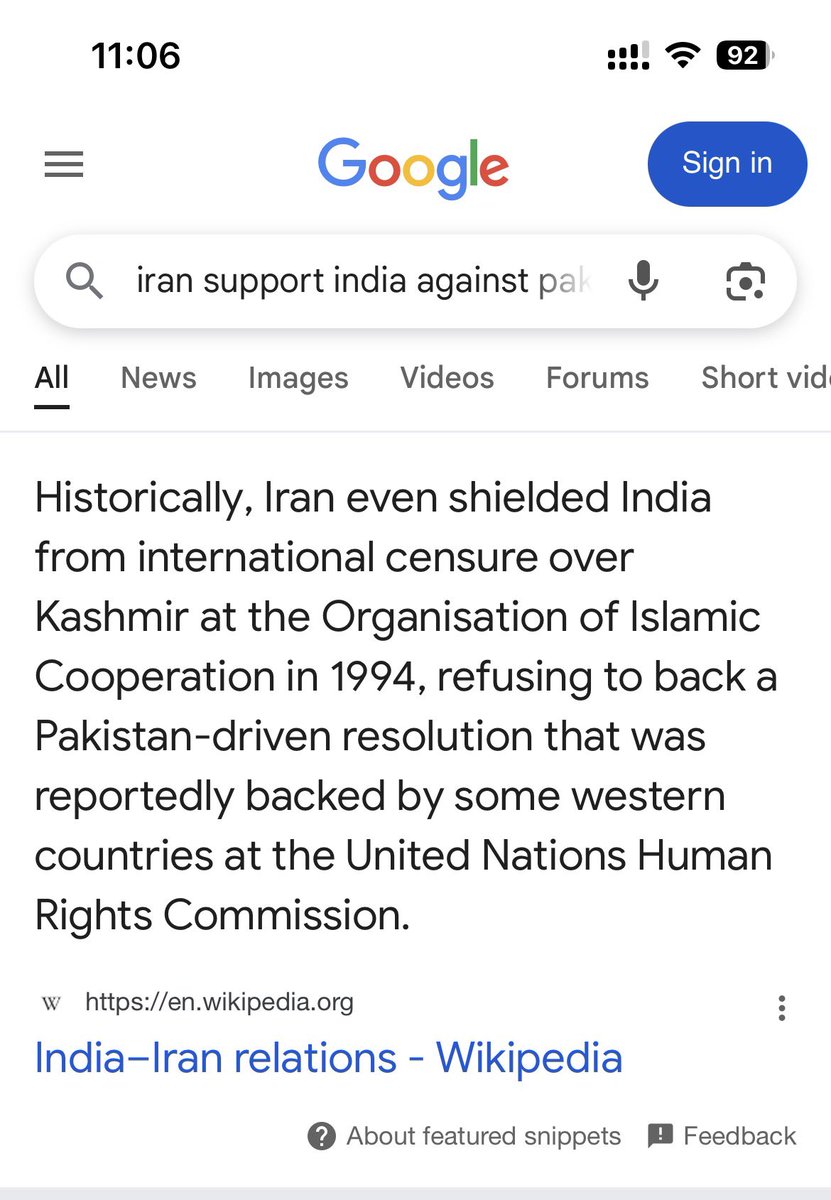
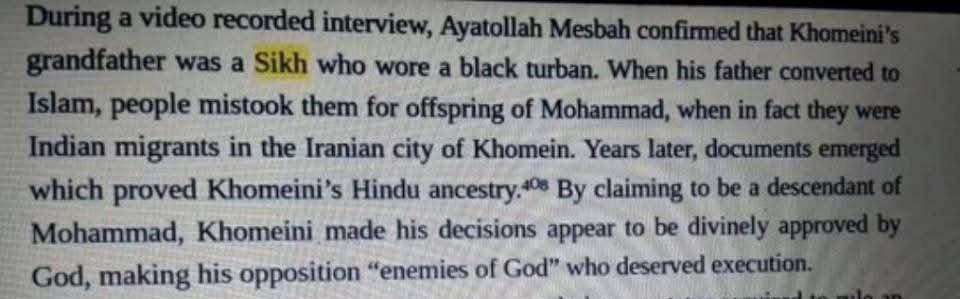
Muhammad Taqi Misbah Yazdi, a former export minister of Iran, stated that Ayatollah Khomeini’s grandfather was a Freemason Sikh from the Jatt/Khatri caste, grandmother was a Sabharwal Khatri, while grandfather belonged to the Dhillon Jatt clan.
Irani flag mirrors the Khanda.
44
243
873
83,698
Ajay Kumar retweeted

NEVER SPEAK ON BLACKPINKS MUSIC AGAIN
50
4,181
28,727
231,988
Ajay Kumar retweeted

Mar 12
one of the sickest comeback singles with the nastiest beat drop ever
14
368
3,744
140,770
Mar 12
The Iranian people will never surrender. No matter how loathsome their regime or how terrible their suffering. The Iranians are like us. They are a nation whose history dates back thousands of years. Not some 200 year old startup with its 70 year old subsidiary. This war will be ruin for the aggressors.
1
86
Ajay Kumar retweeted

Mar 10
‘British intelligence’….
429
4,942
15,761
259,943
Mar 10
Can't we just send the fleet to that region and strike down any drone or projectile that heads towards one of our ships? It is a small region. Surely we can use our Navy to give it air defence?
77