
Venture capital firm for tech-enabled solutions to large African challenges
Joined February 2019
- Tweets 1,241
- Following 186
- Followers 3,469
- Likes 730
342 Photos and videos




May 7
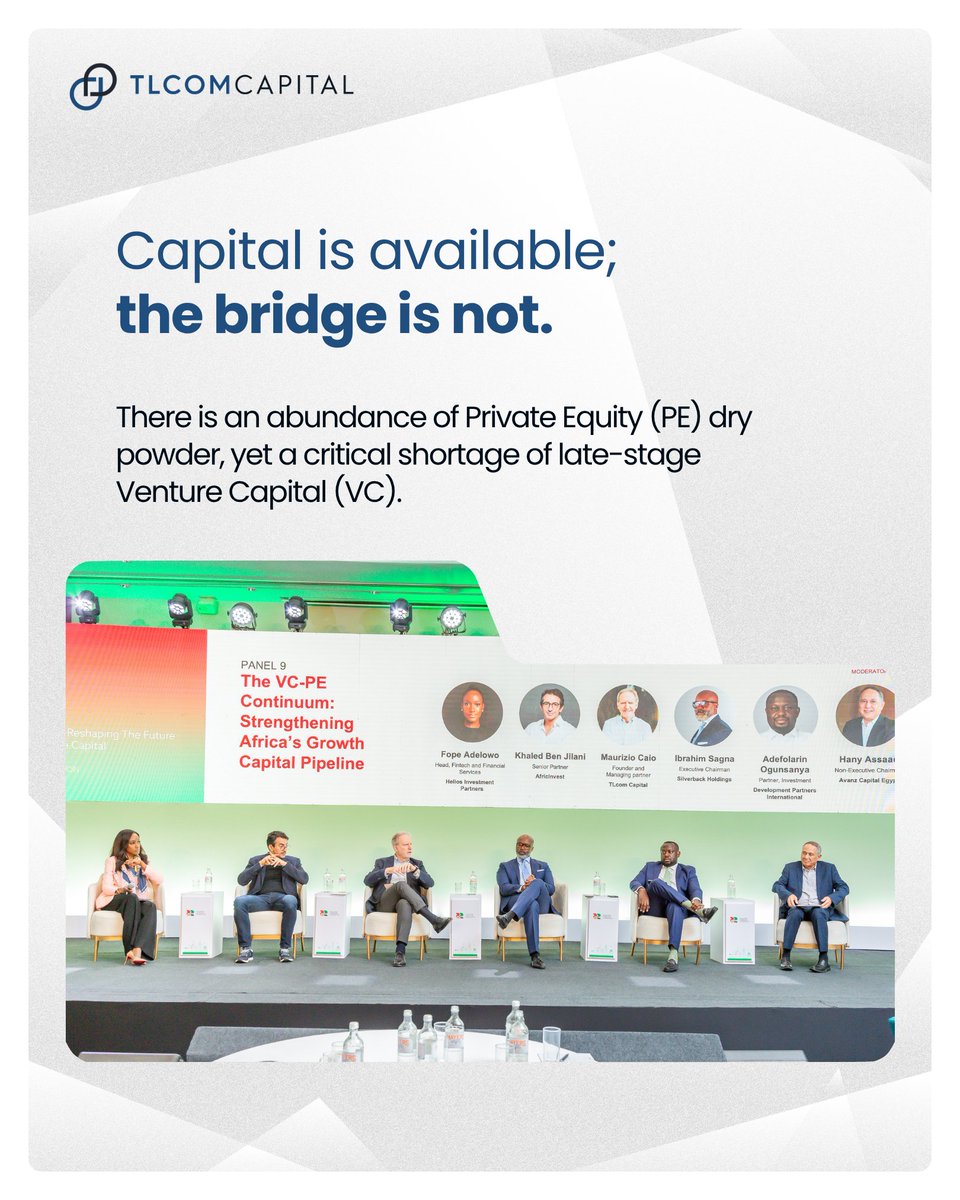
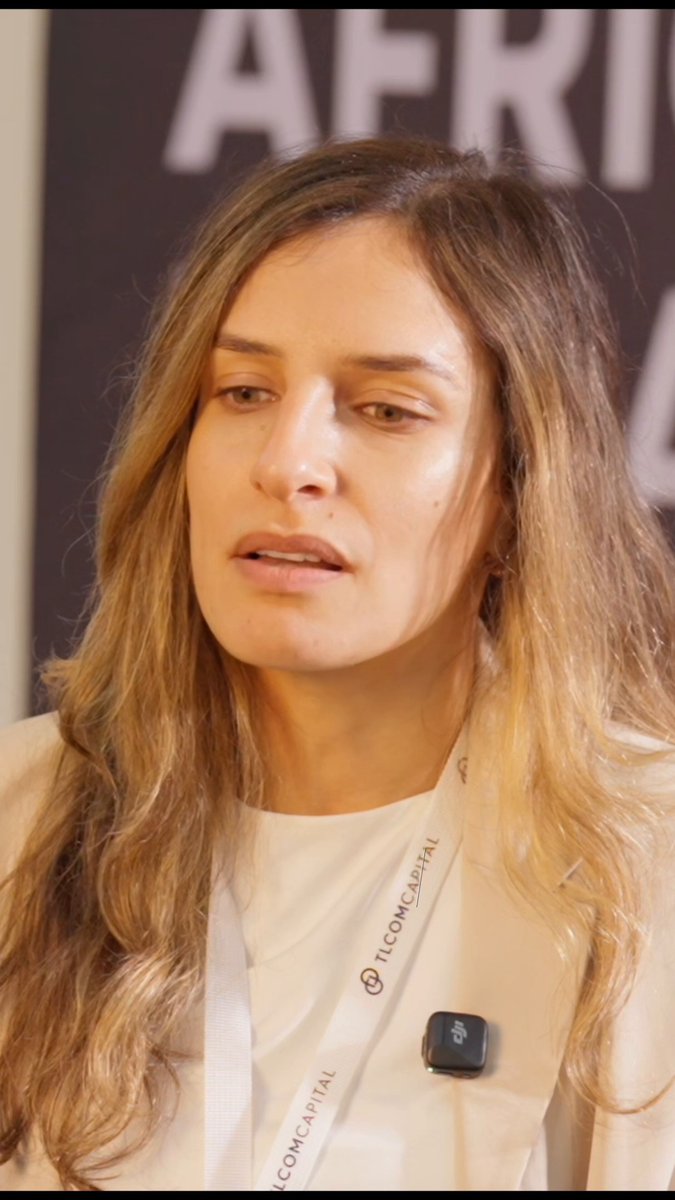
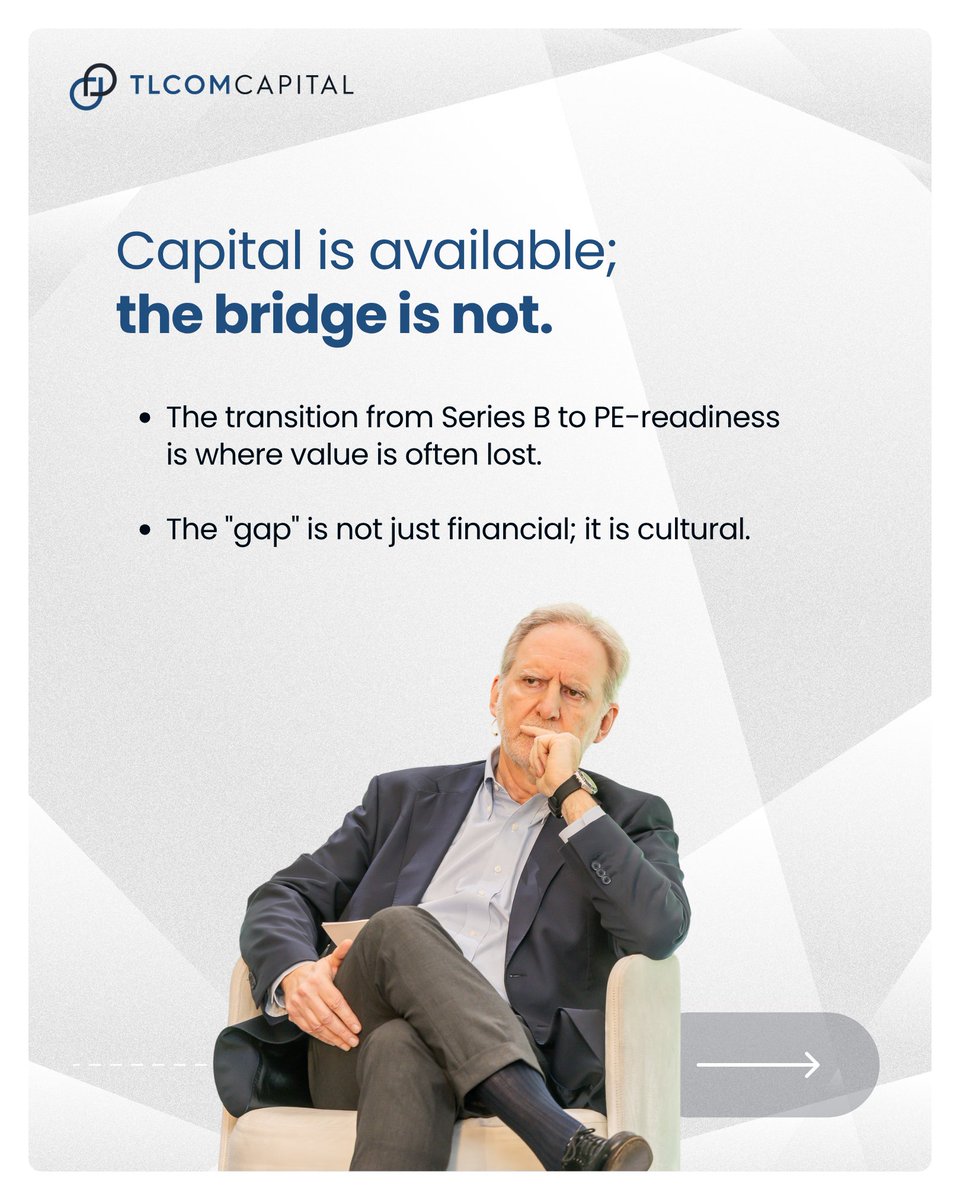
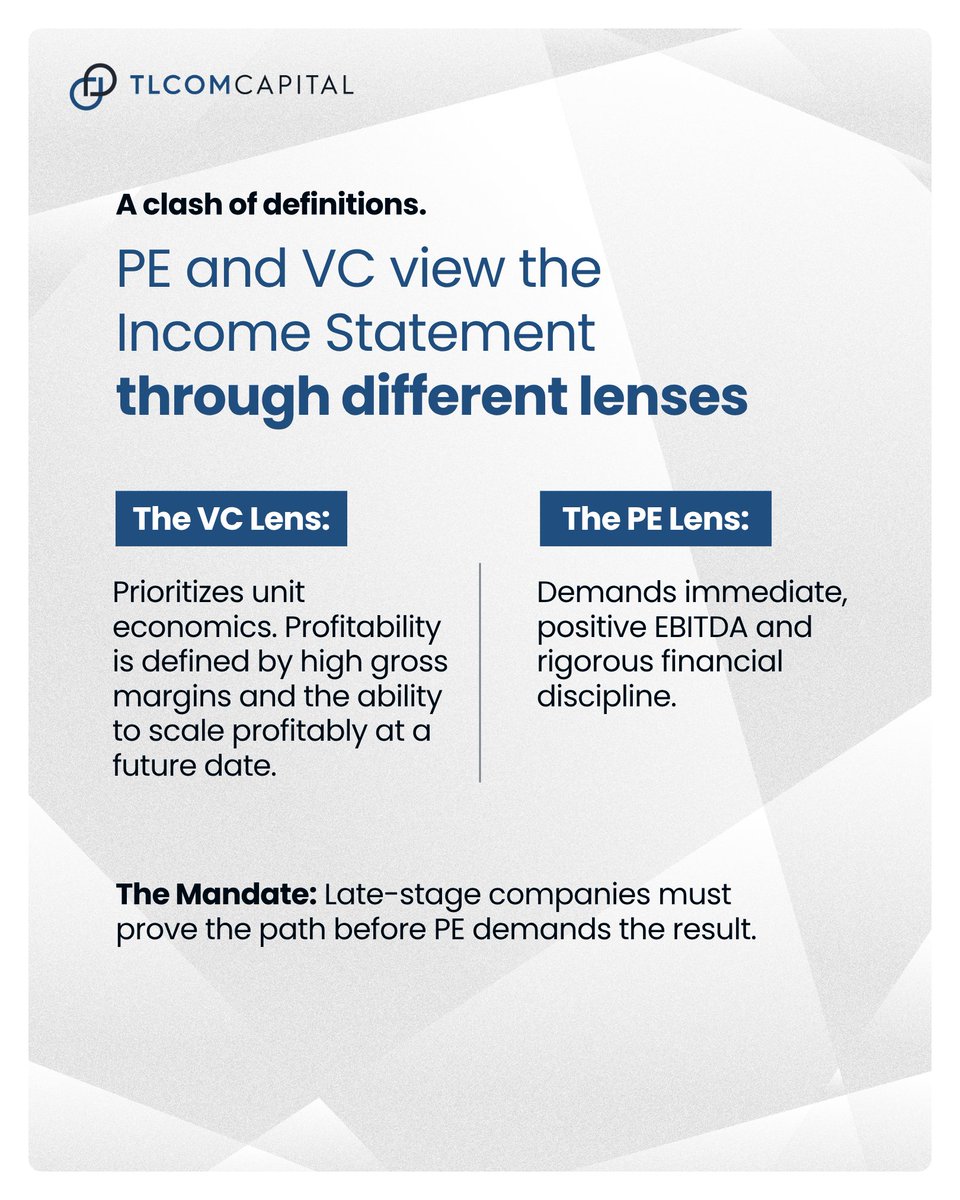
PE & VC are often viewed as two sides of the same coin. In reality, they speak different languages when it comes to "profitability" and "growth."
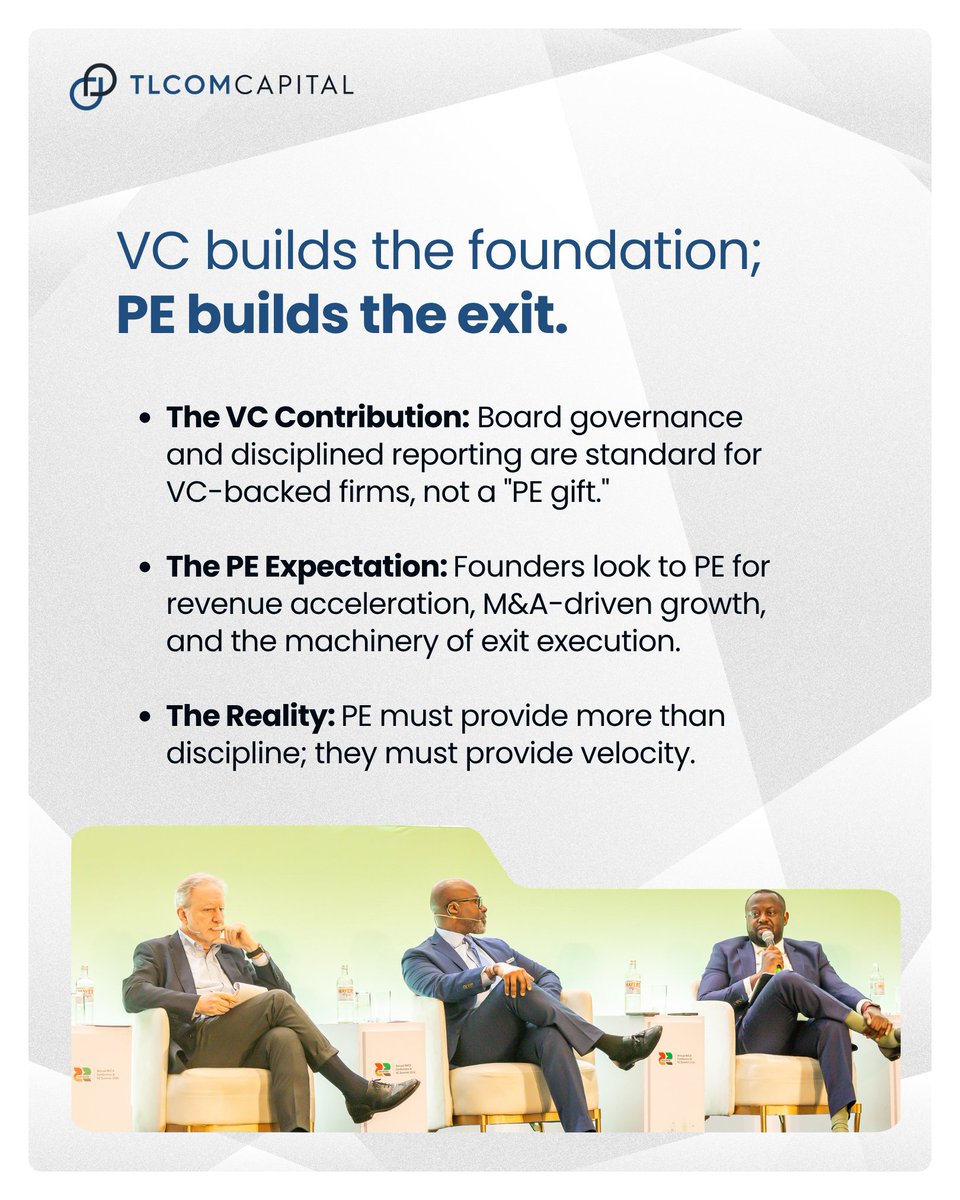
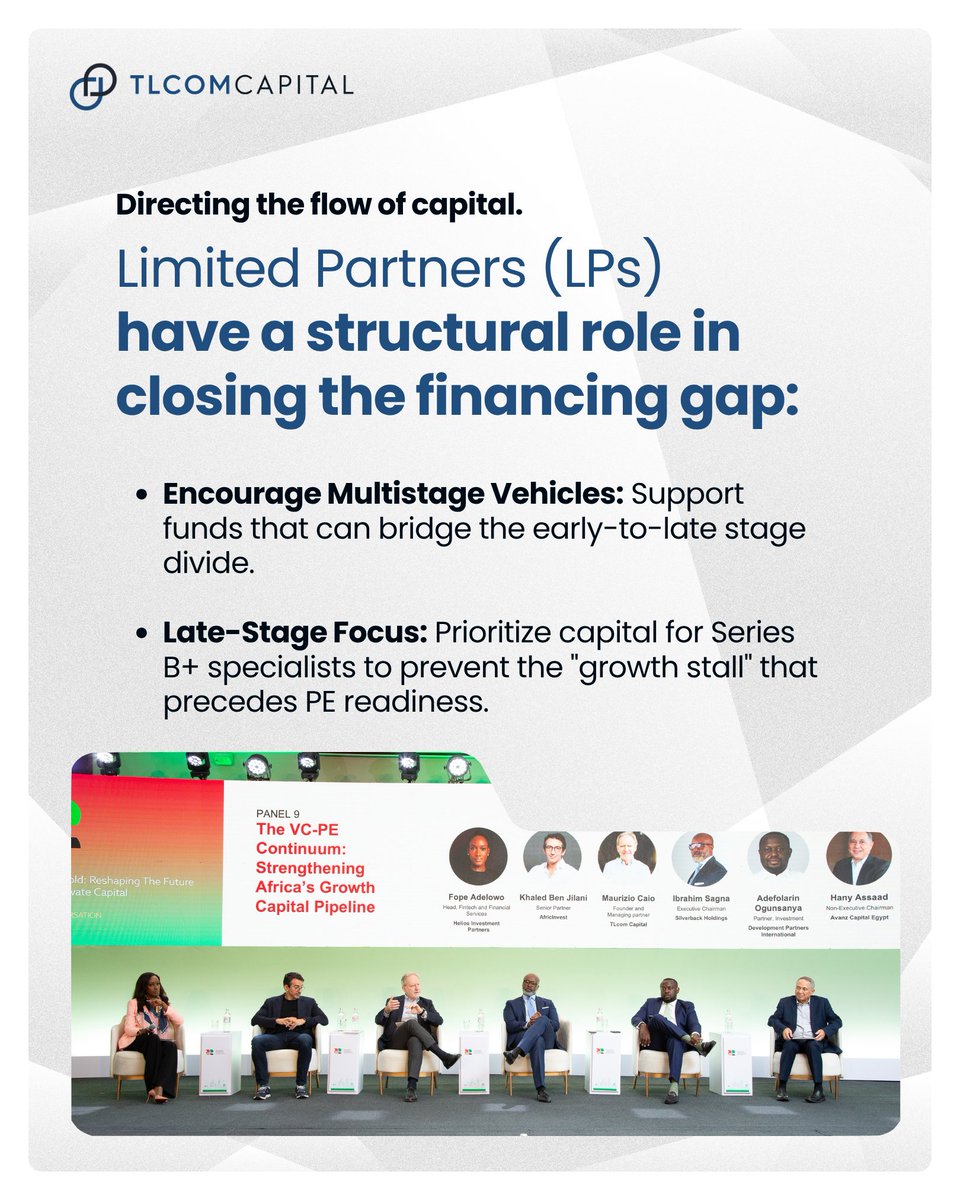
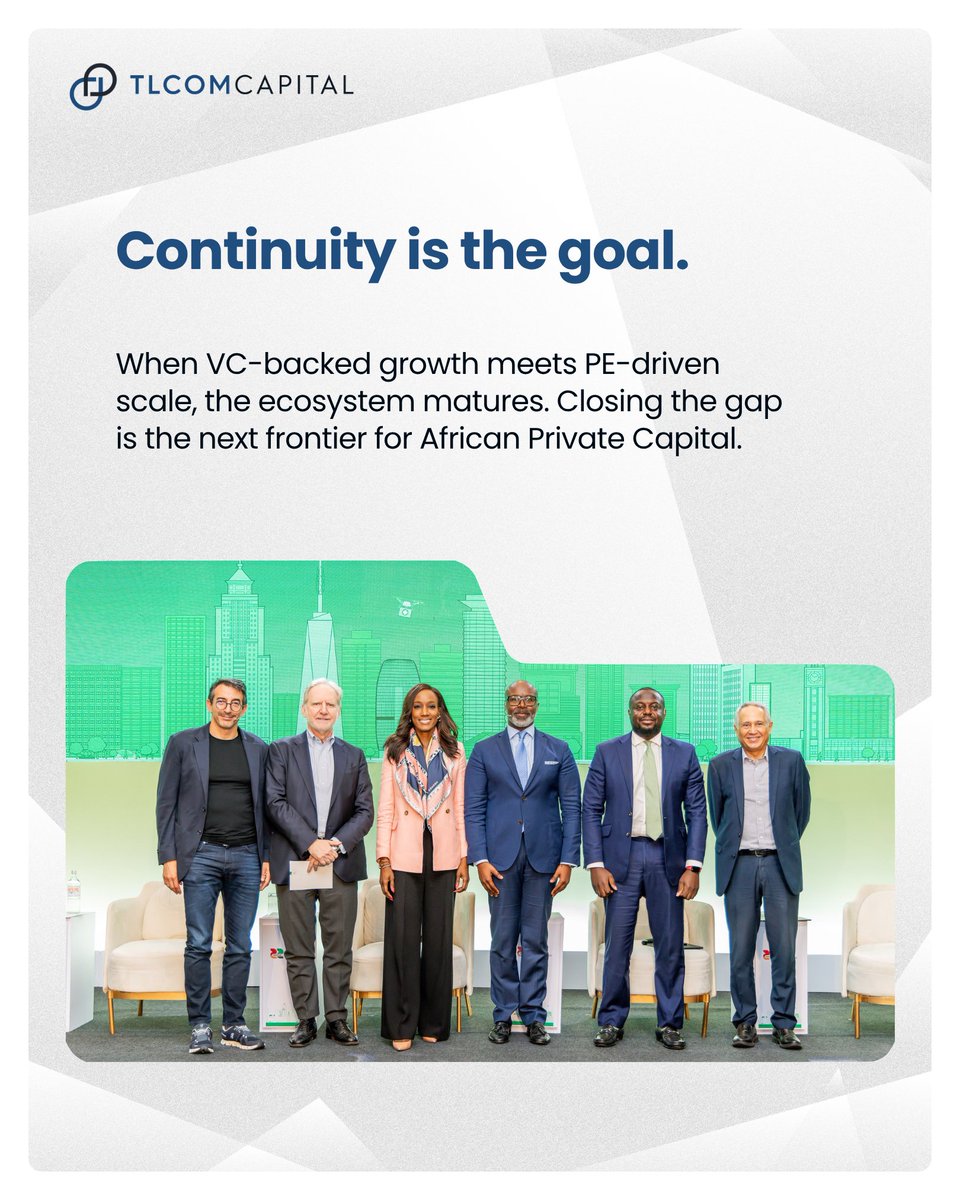
@maurizio_caio joined the @AVCA_Africa PE-VC Continuum panel on Strengthening Africa’s Growth Capital Pipeline alongside Fope Adelowo of @helios_invest , Khaled Ben Jilani of @AfricInvest_Grp Group, Ibrahim Sagna of SilverbacksHoldings and Adefolarin Ogunsanya of DPI, moderated by Hany Assaadof Avanz Capital Egypt.
1
3
165
May 7
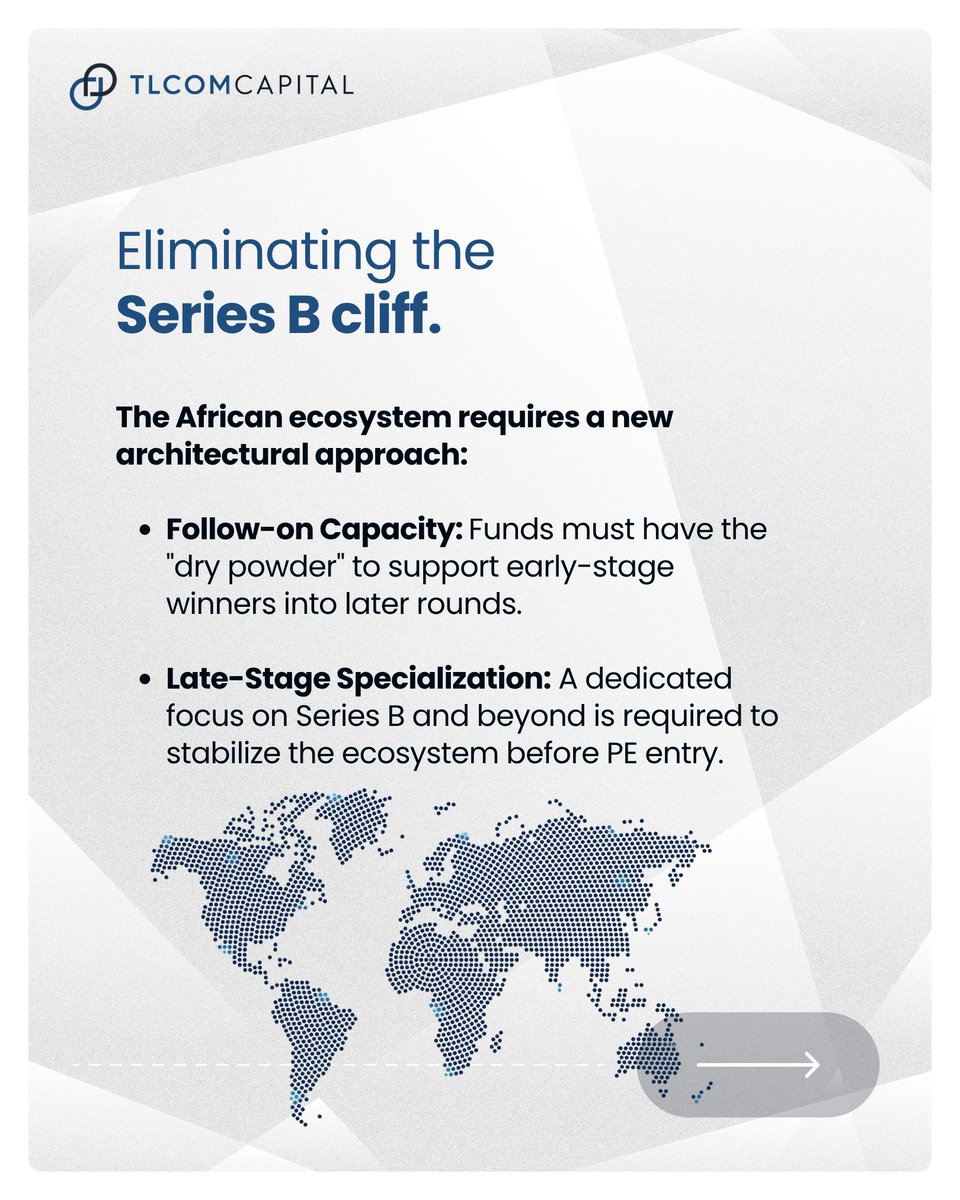
The session highlighted a critical structural need: Africa requires more multistage funds and late-stage VC specialists to bridge the transition to PE-readiness.
1. VCs define profitability by the scalability of the business model.
2. PEs define it by current EBITDA.
3. The Ecosystem requires a bridge that understands both.
If we are to unlock the full potential of African late-stage companies, LPs must prioritize funds that can follow their winners from Seed to Series B and beyond.
#Exits #Liquidity #SeriesB #TLCOM #CapitalMarkets #AVCA2026
93
May 5
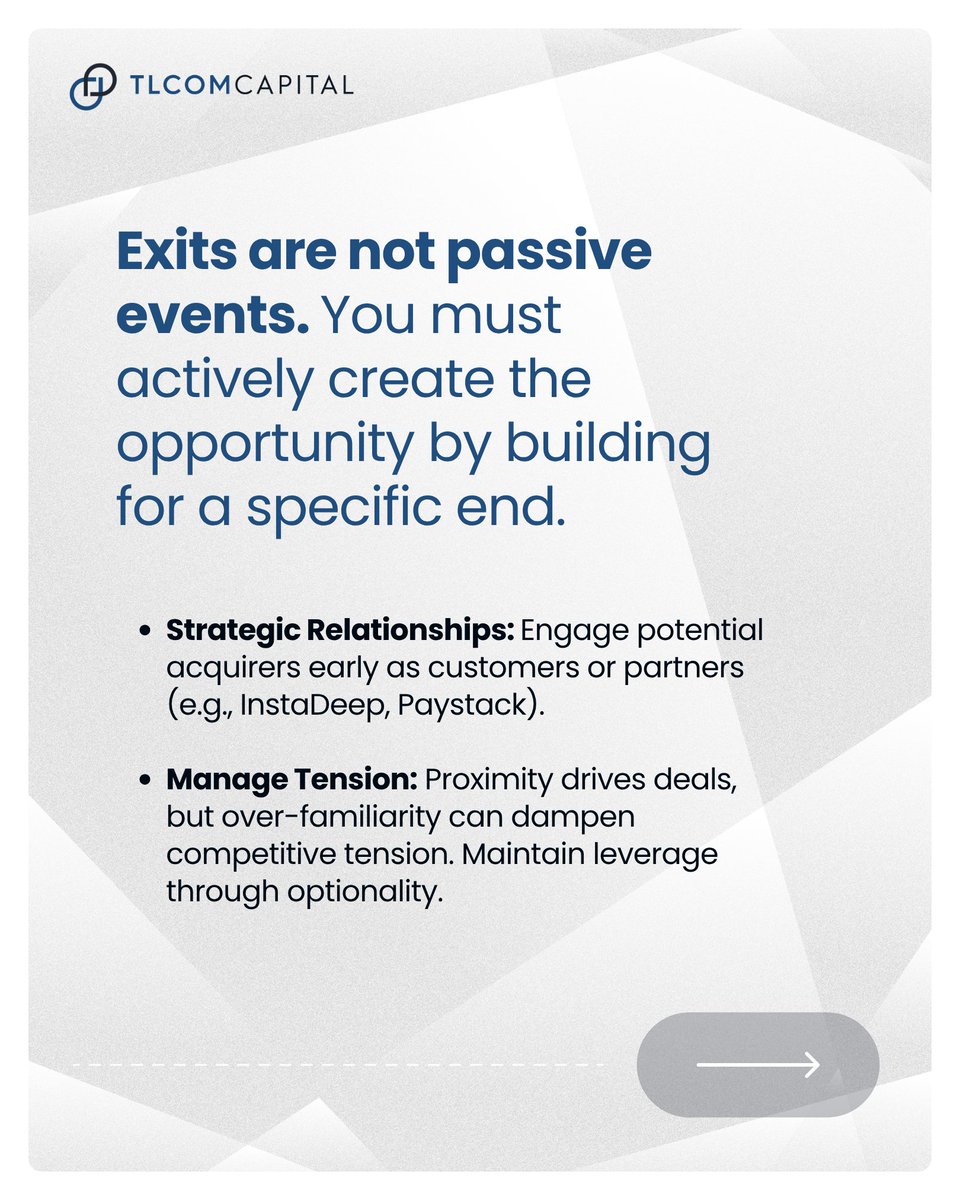
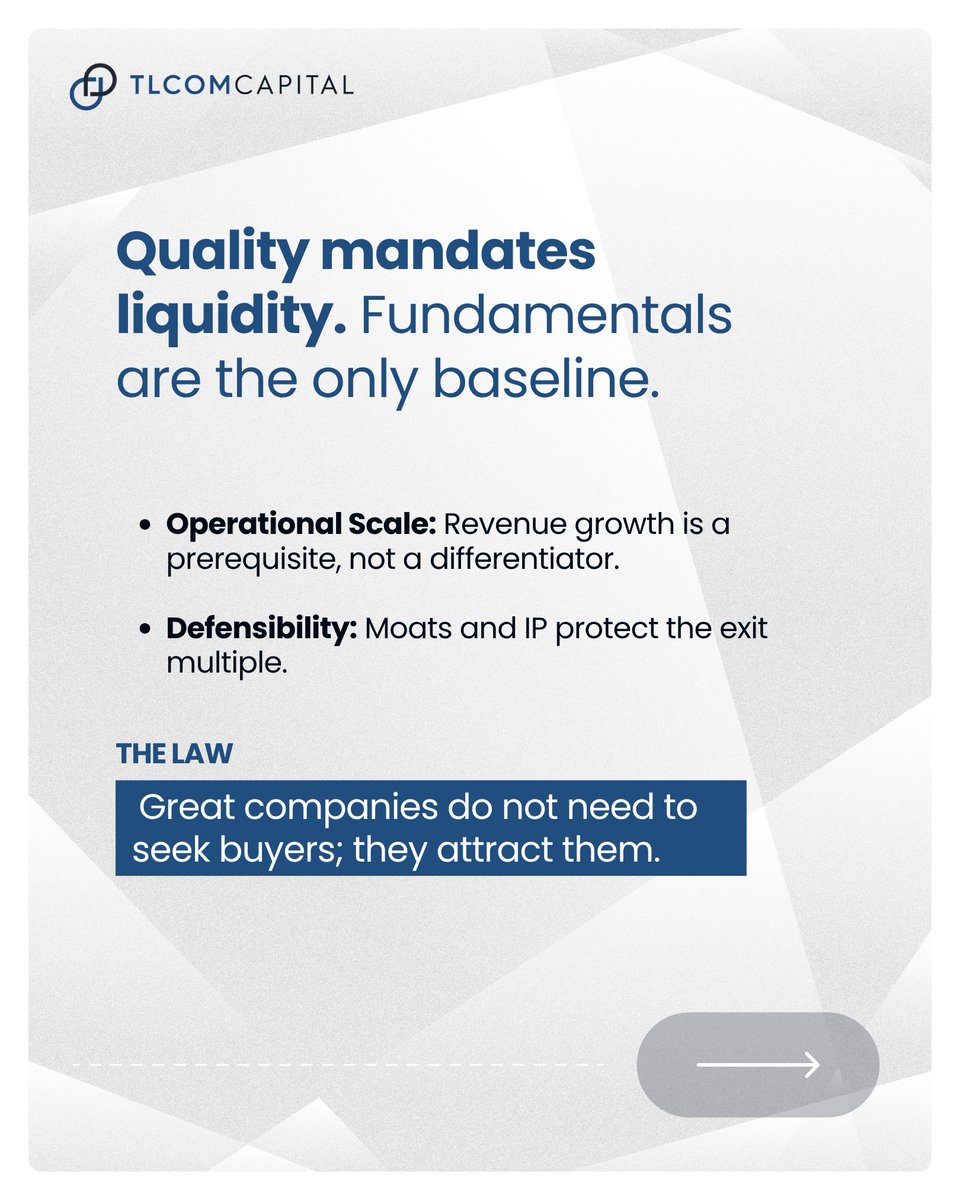
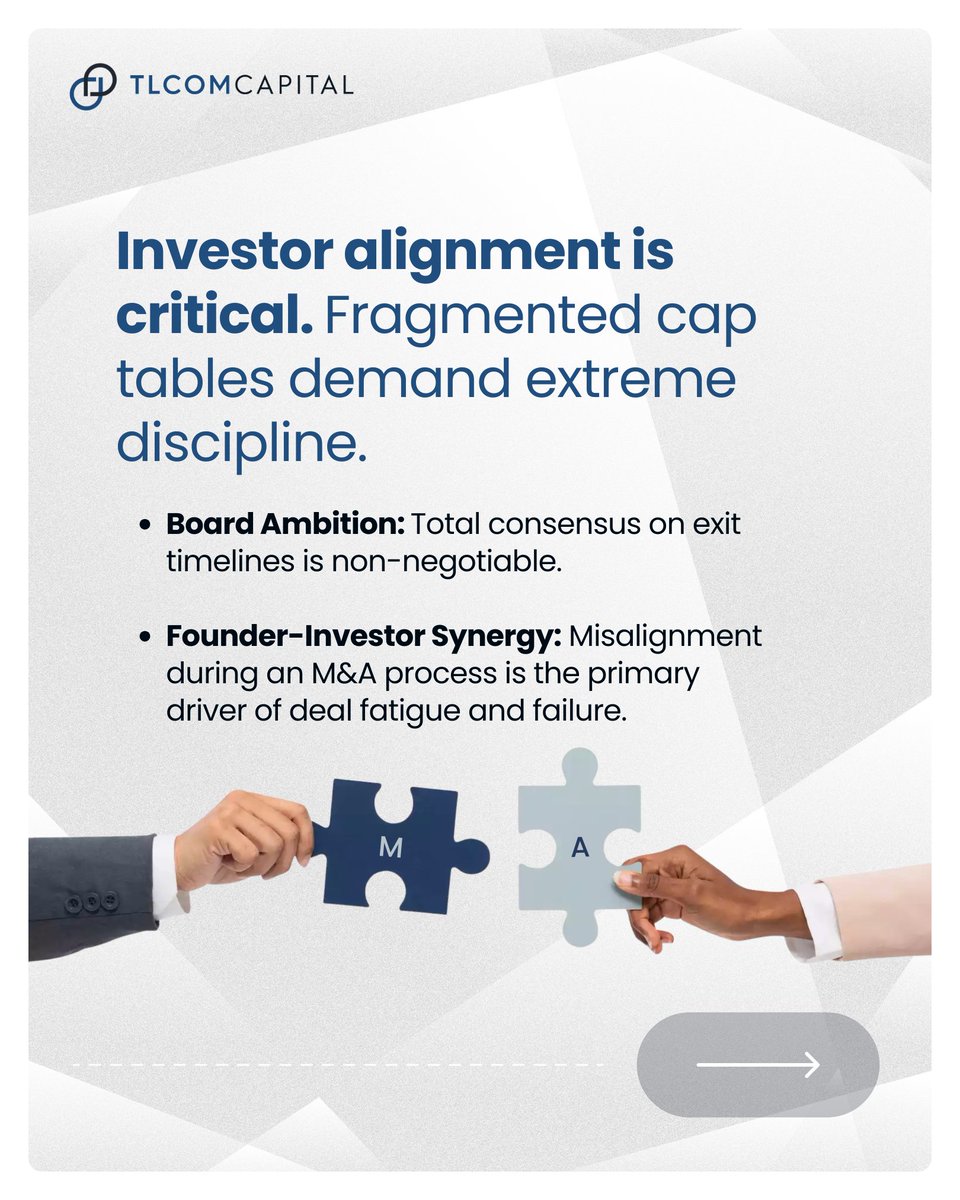
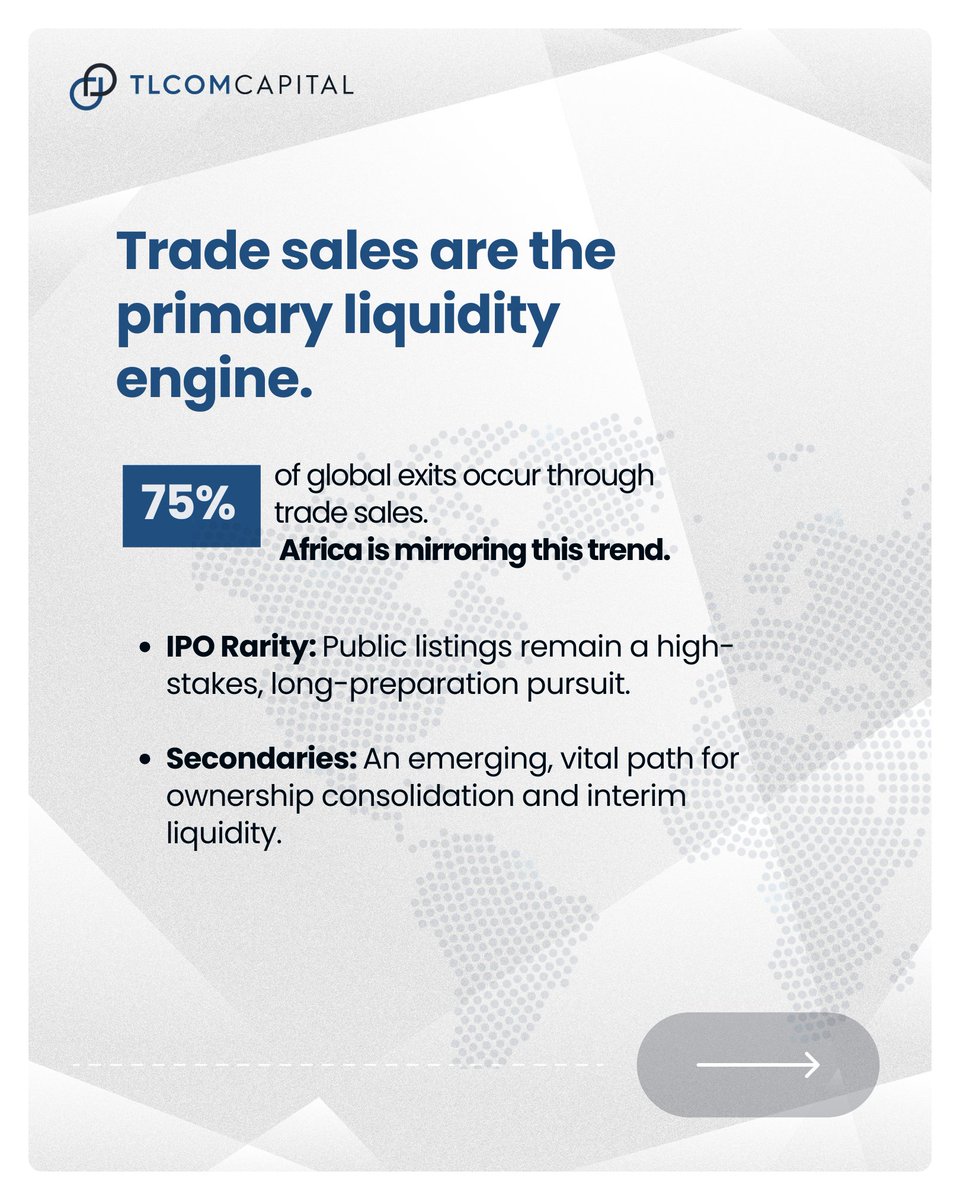
The African Exit is Not a Passive Event. In the current landscape, hope is not a liquidity strategy.
As highlighted during the AVCA - The African Private Capital Association 2026 Liquidity Panel, the transition from "high-potential startup" to "realized exit" requires more than just growth, it requires architectural precision.
1
1
122
May 5
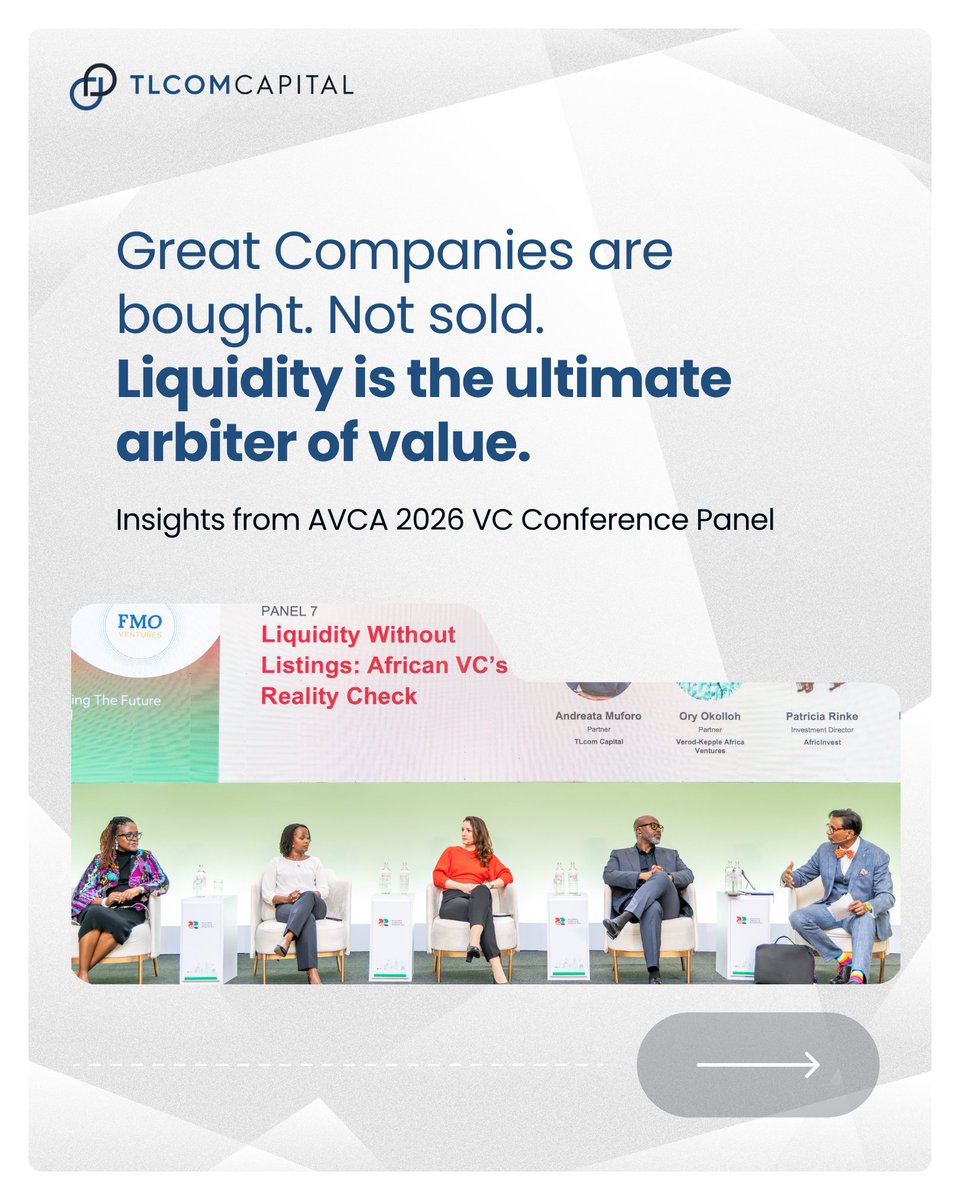
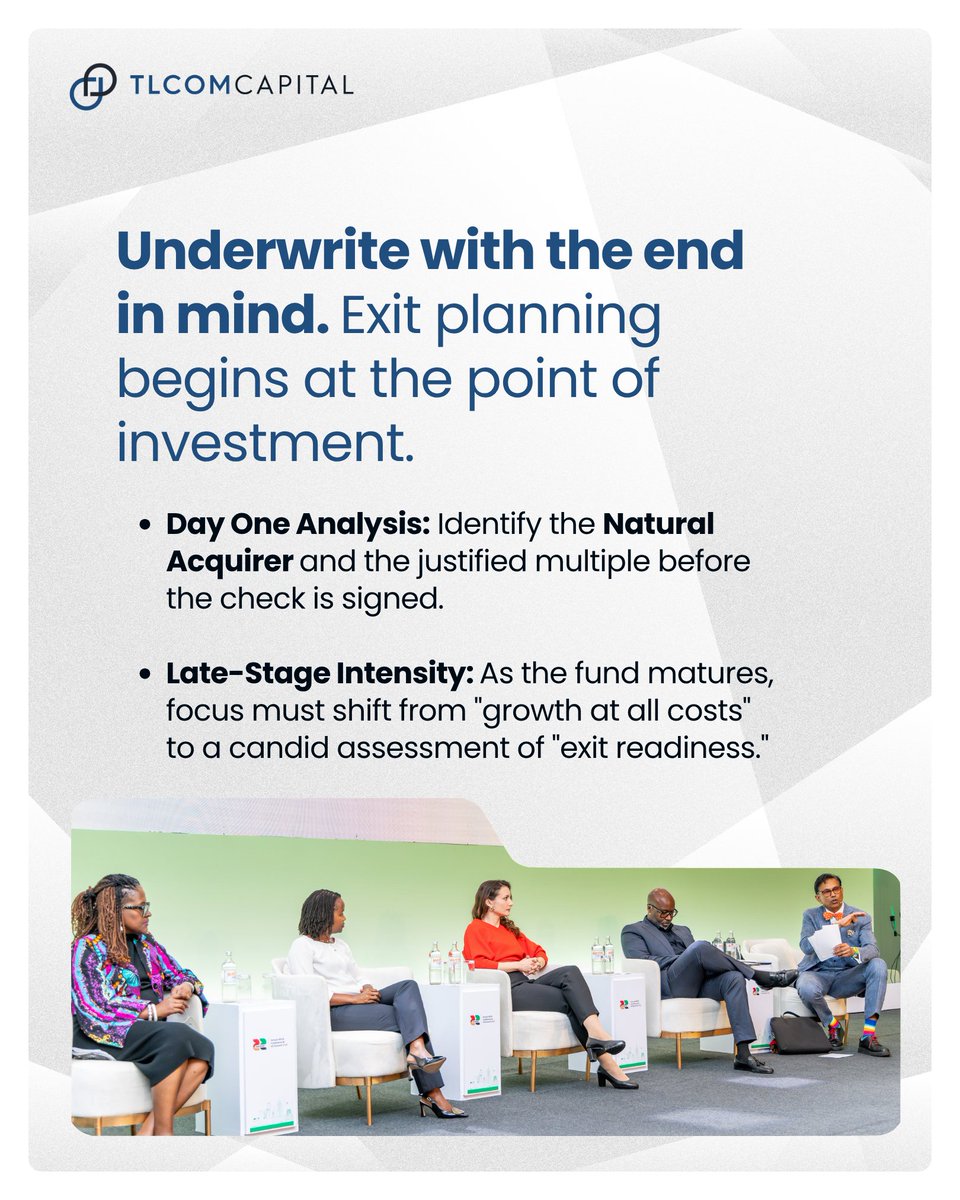
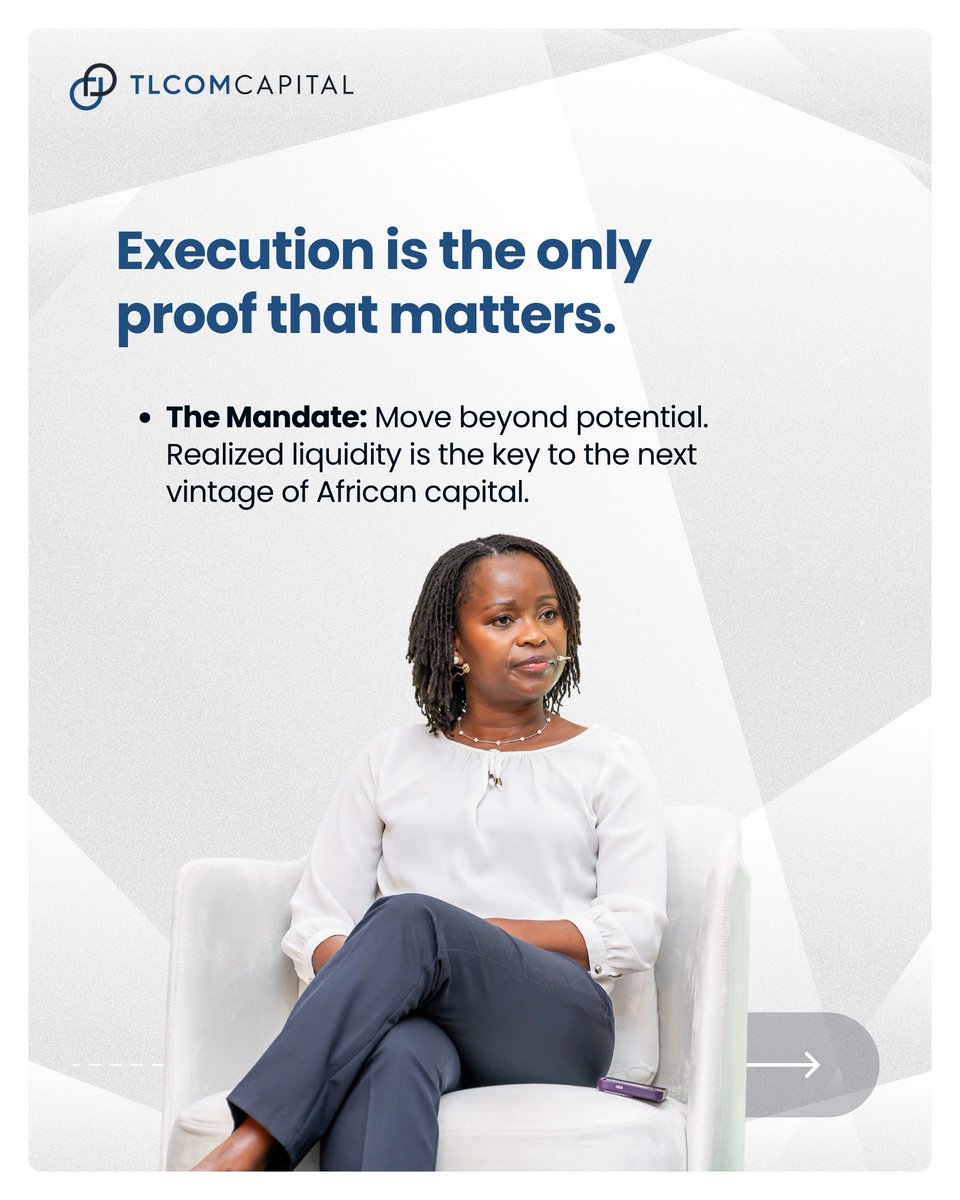
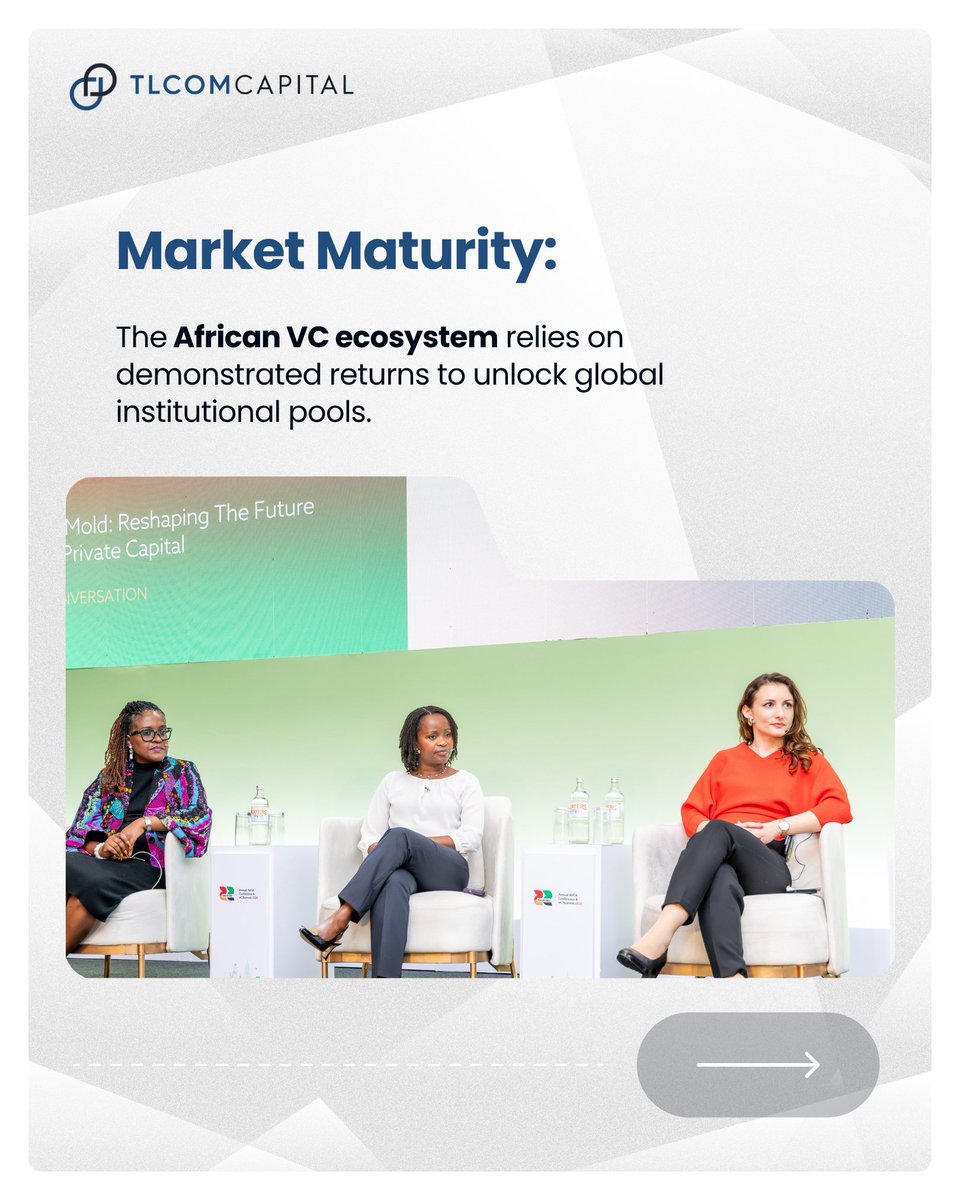
Swipe to read more Insights from AVCA 2026 VC Conference Panel on Liquidity Without Listings: African VC’s Reality Check with @AMuforo alongside Ibrahim Sagna (Silverbacks Holdings), Ory Okolloh (@VerodKepple ) and Patricia Rinke(@AfricInvest_Grp) moderated by Raj Kulasingam (@Dentons )
1
1
2
75
Apr 21
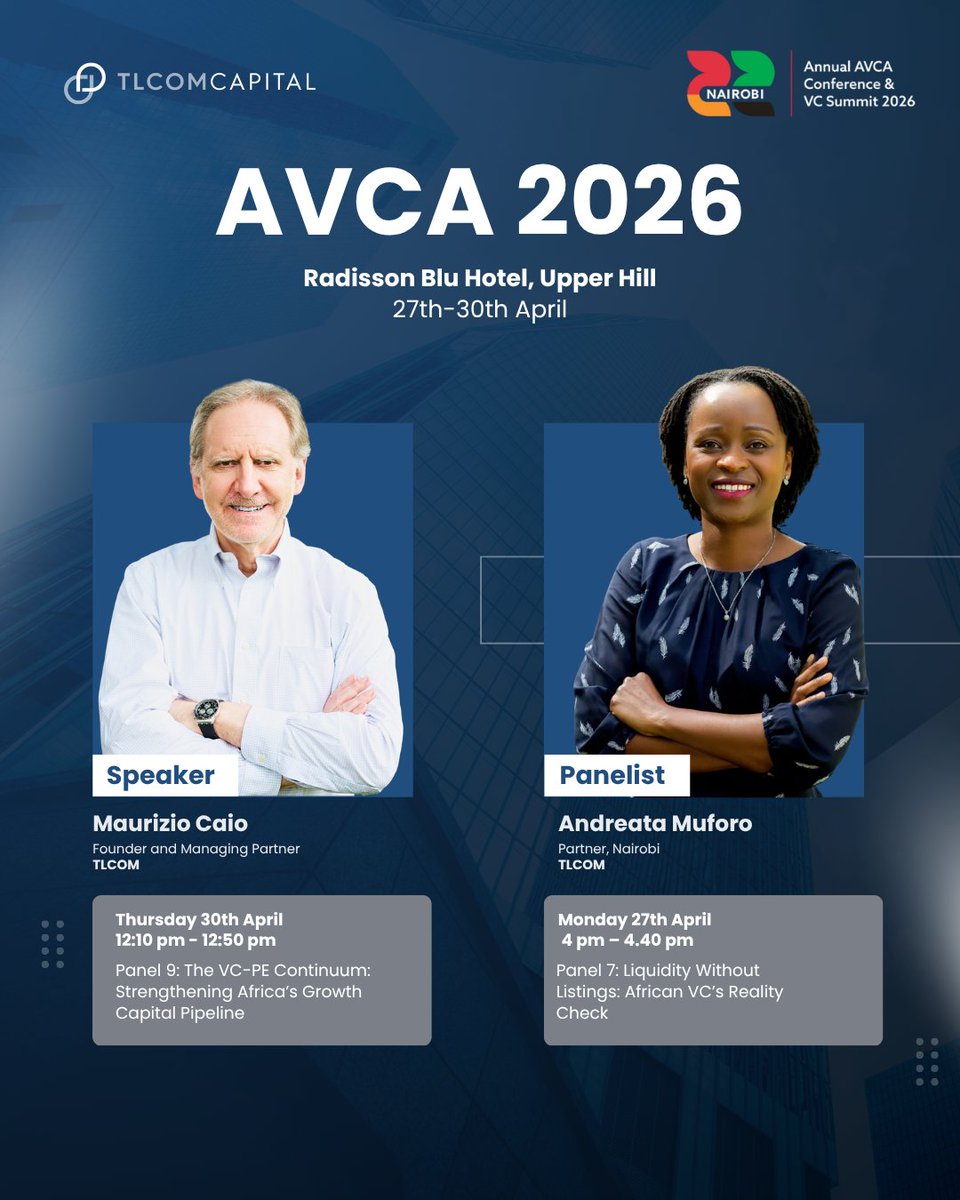
AVCA - The African Private Capital Association returns to Nairobi this April, and we will be on the ground.
As Africa’s leading private capital convening, @AVCA_Africa - The African Private Capital Association 2026 brings together investors managing over $1.5 trillion in assets, with a clear focus: Break the Mold: Reshaping the Future of African Private Capital.
Two conversations we are contributing to:
Friday, 30 April | 12:00 PM
Our Managing Partner @maurizio_caio joins a cross-stage panel on the VC–PE Continuum; unpacking how transitions from venture to private equity are becoming essential to scale companies and sustain deal flow.
Monday, 27 April | 4:00 PM
Our Partner @AMuforo moderates a session on Liquidity Without Listings; a grounded look at why African VC needs exit pathways beyond IPOs and unicorn-led narratives.
Why these matter
Q1 VC data signals a structural shift in the market: $700M deployed, with capital stacks increasingly blending equity and debt. The model is changing, and so is what “fundable” looks like.
Join us at the Radisson Blu Hotel Nairobi Upper Hill from April 27–30 and connect with the TLCOM team: Eloho Omame, Philippe Griffiths, Cyril Shonibare, Daisy Liech, and CPA. Felister Njeru, MSc.
Register here: avcaconference.com/
#AVCA2026 #VentureCapital #AfricanTech #TLCOM #FintechAfrica #InvestmentStrategy
1
2
113
Apr 10
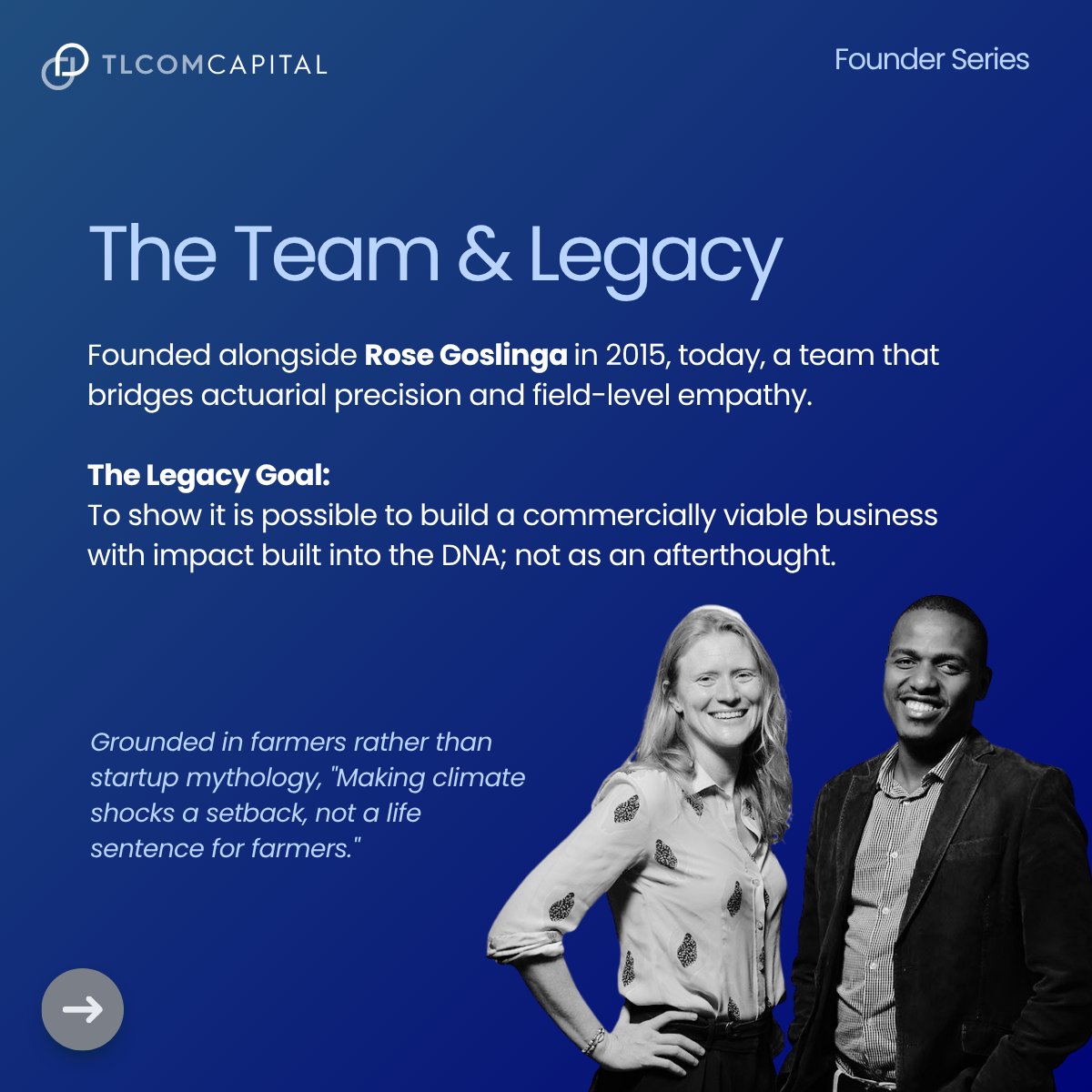
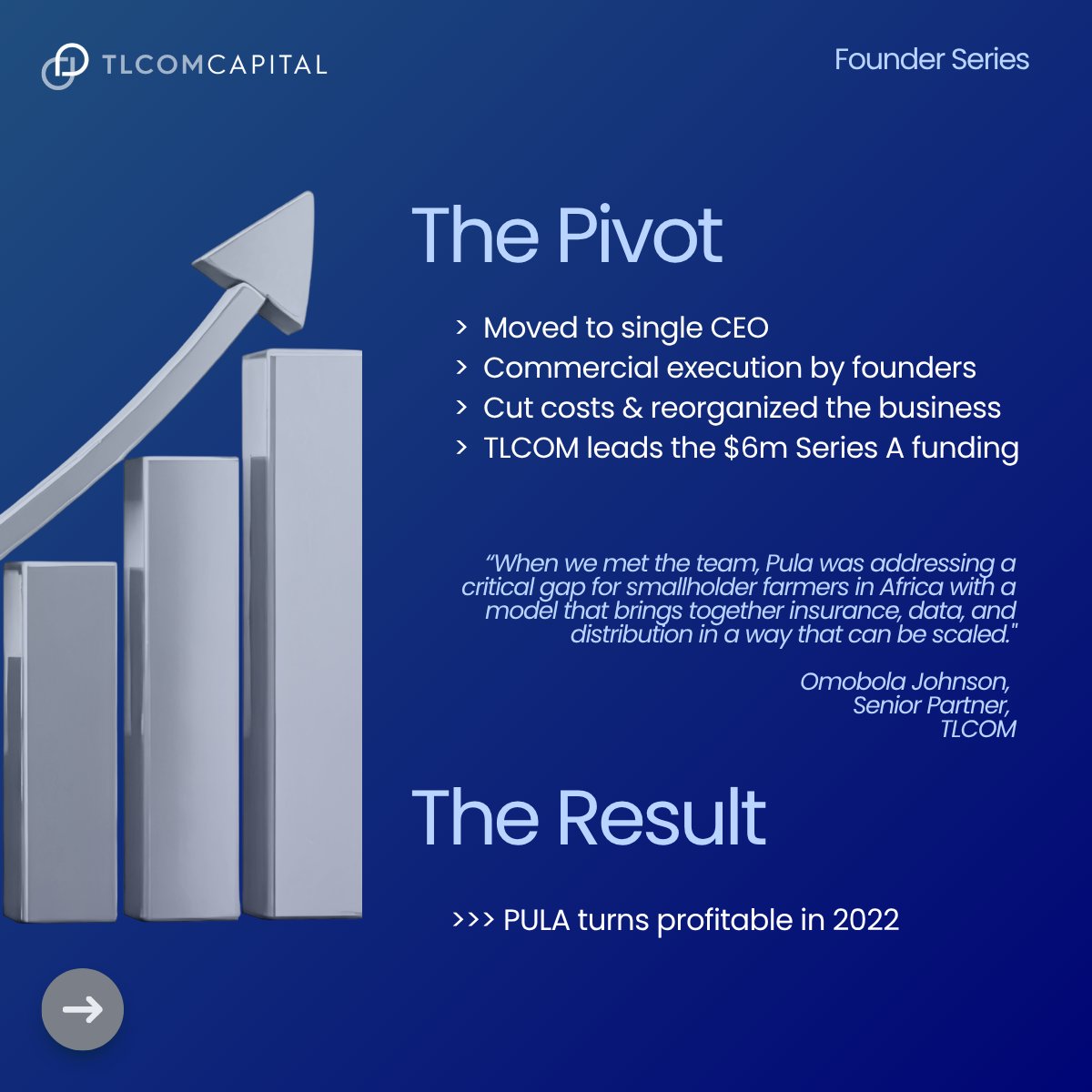
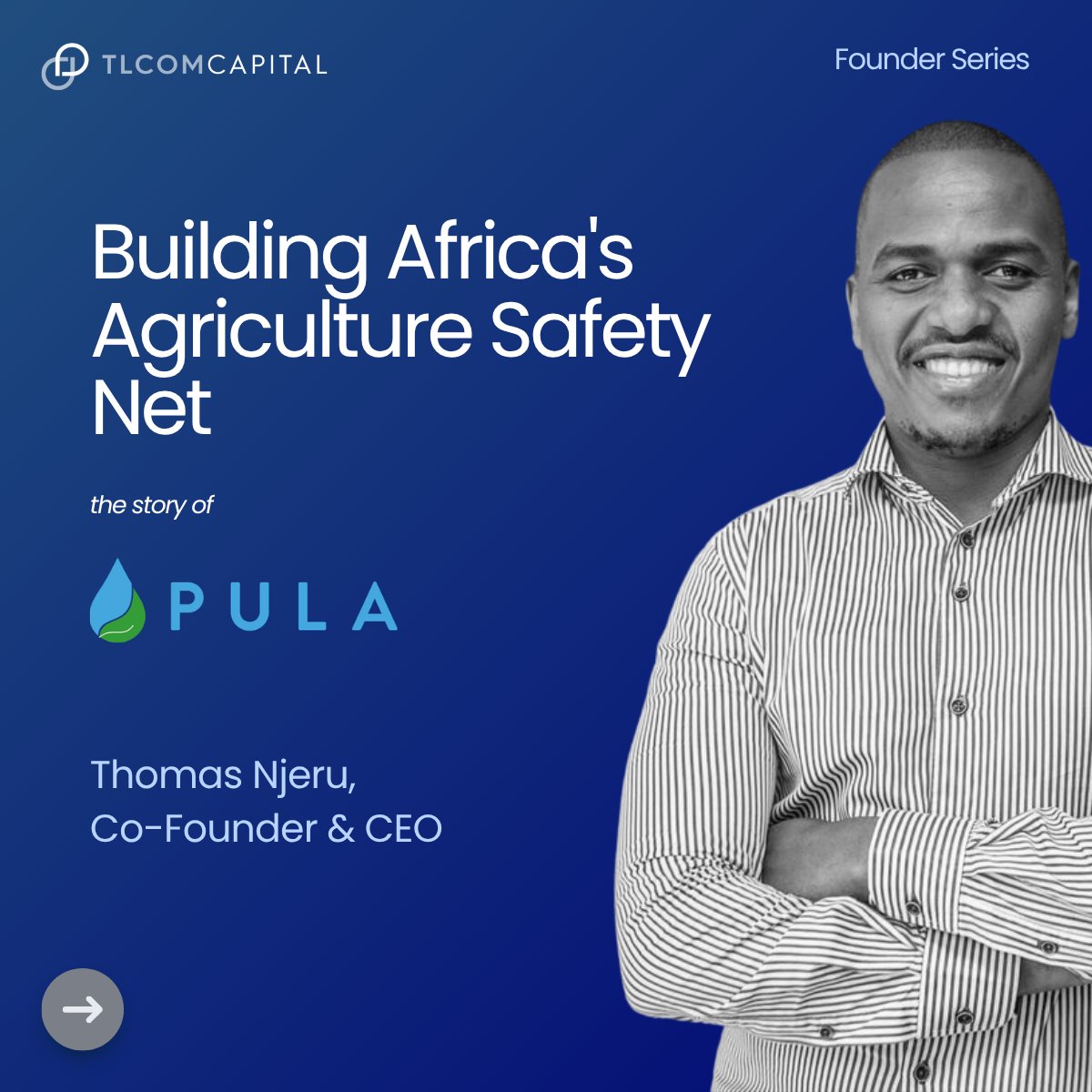
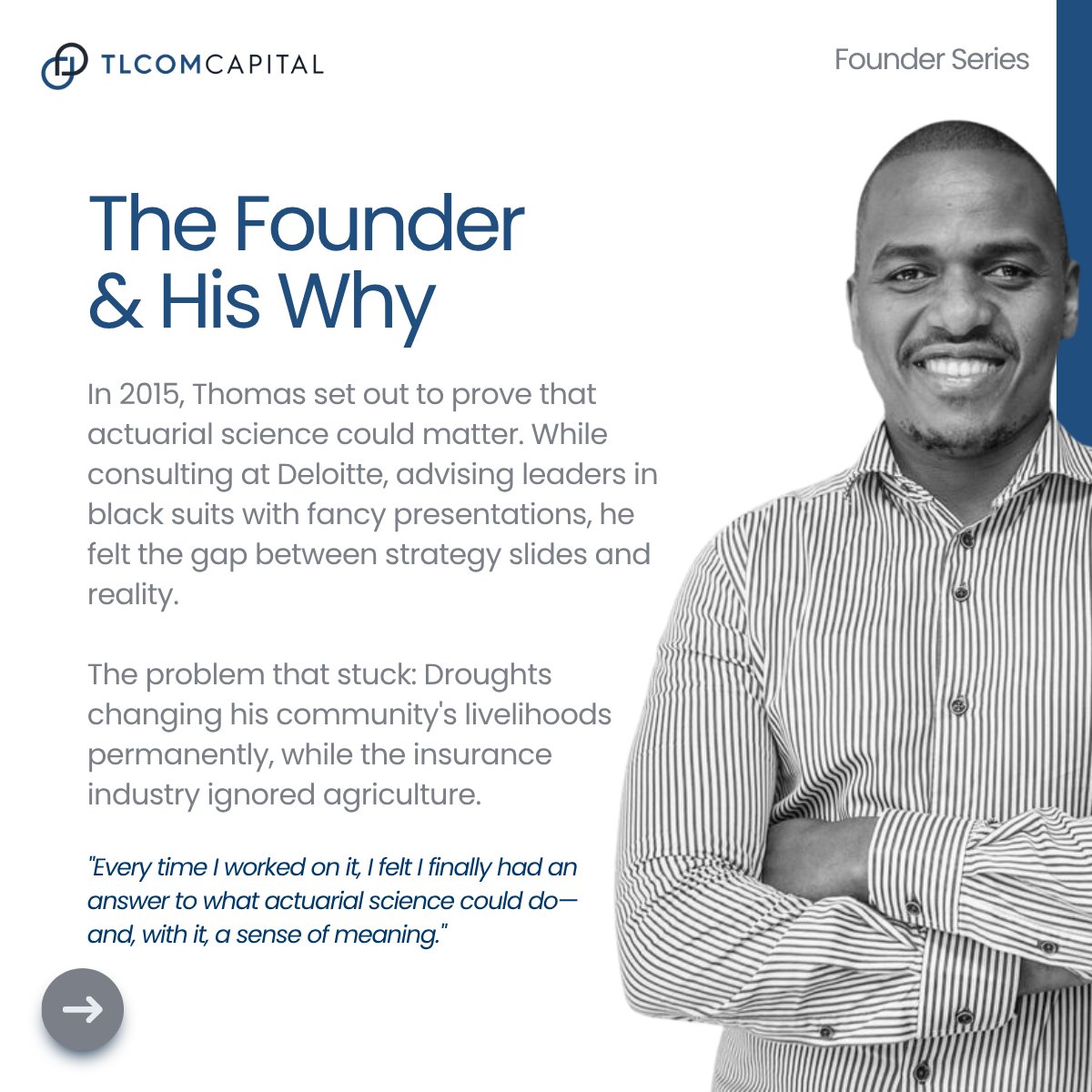
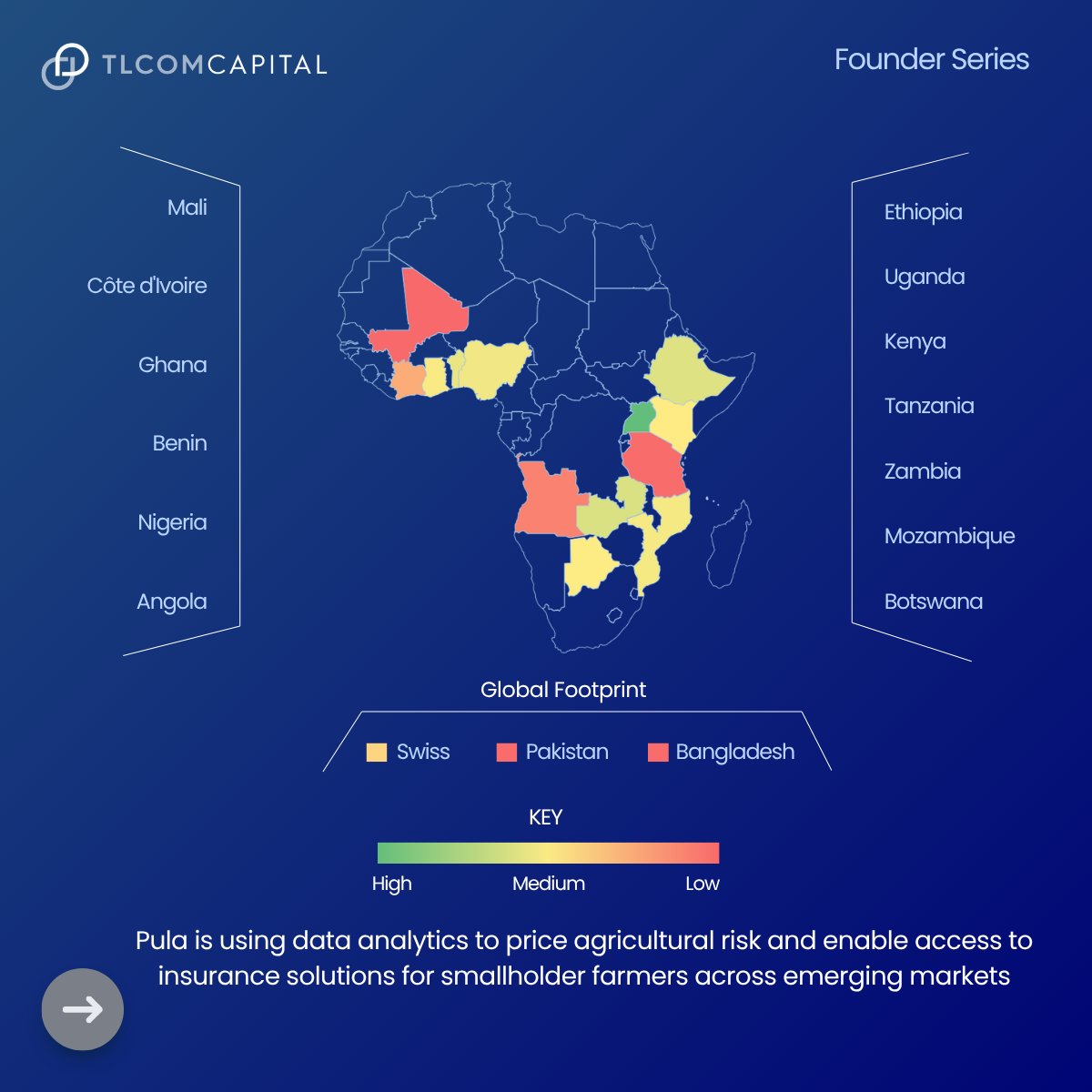
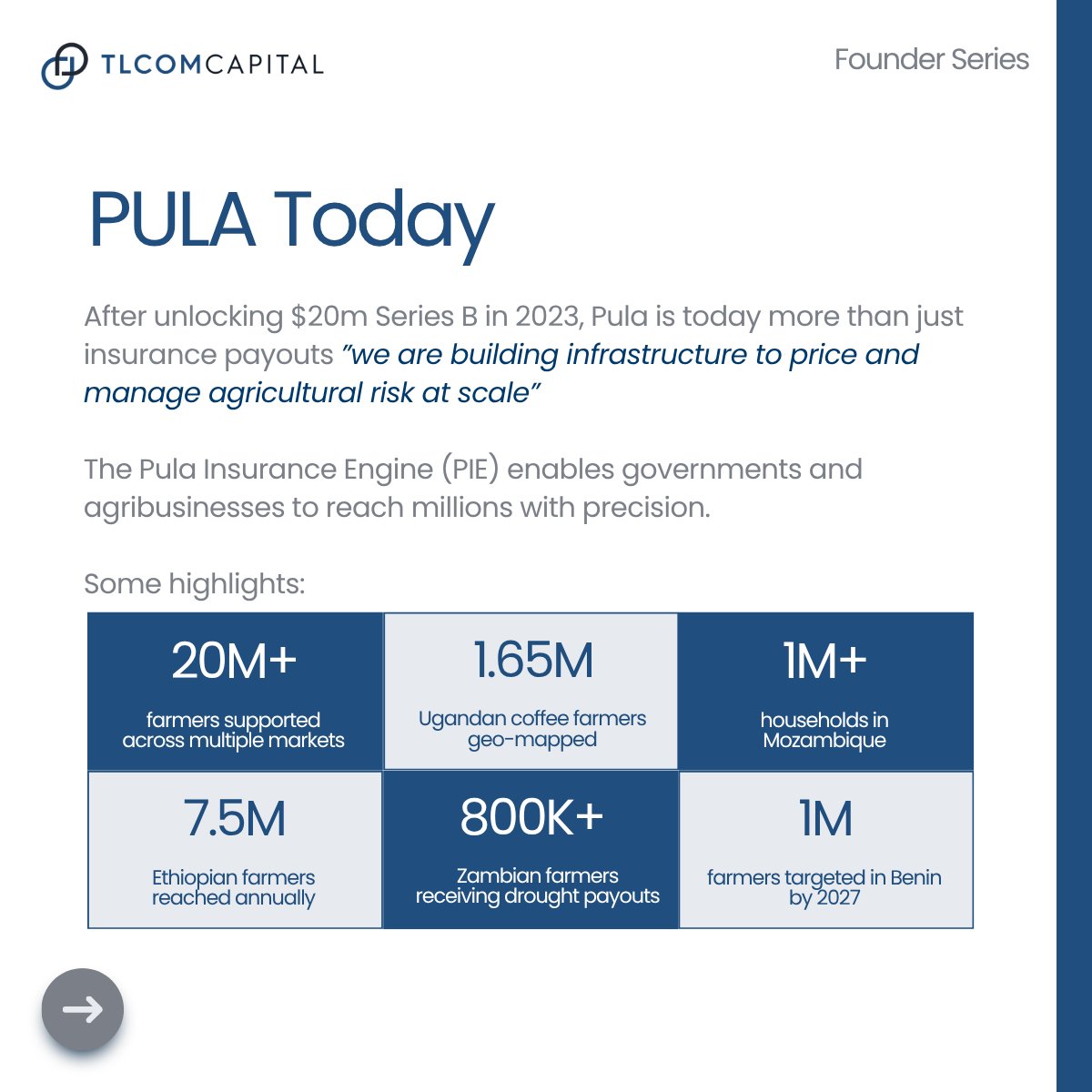
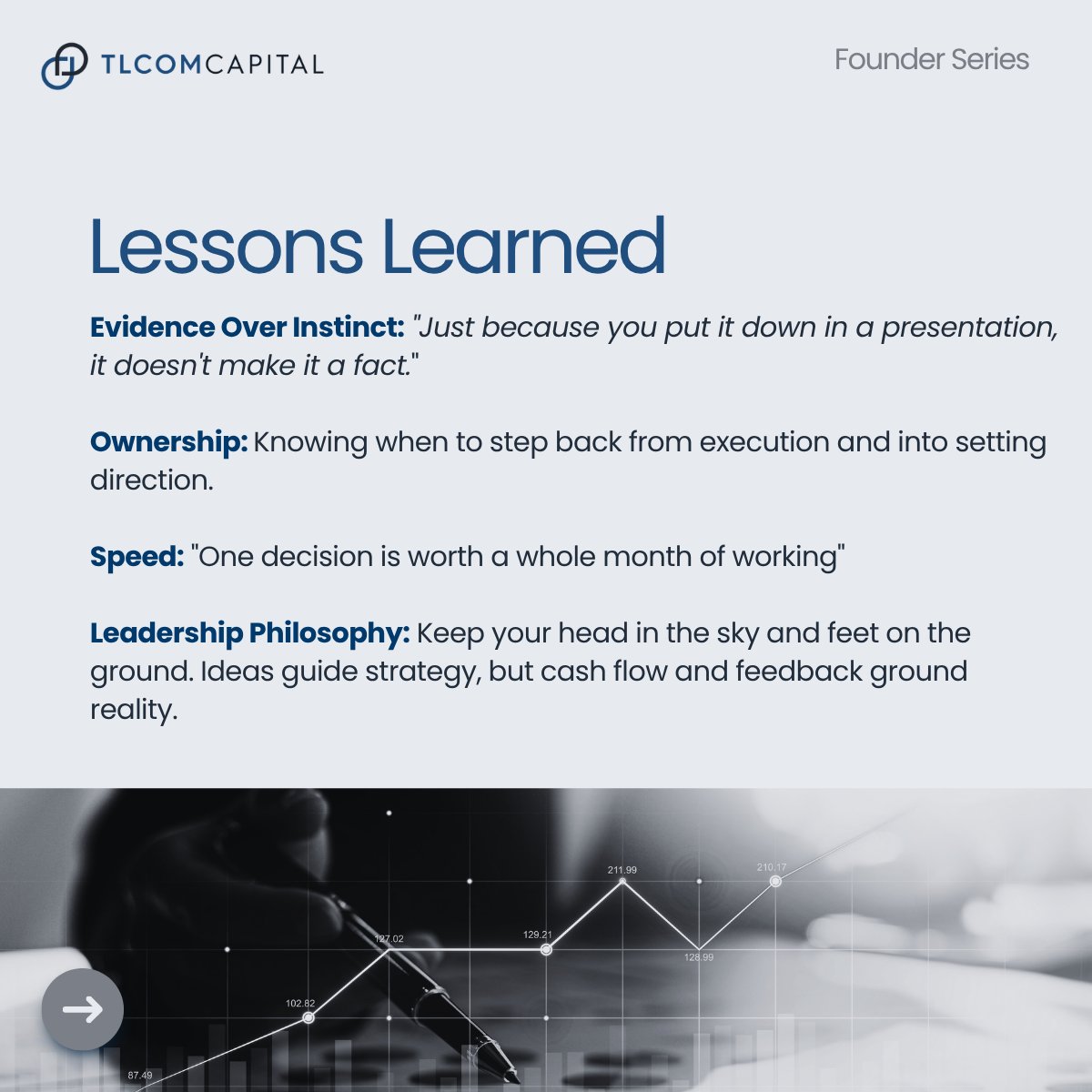
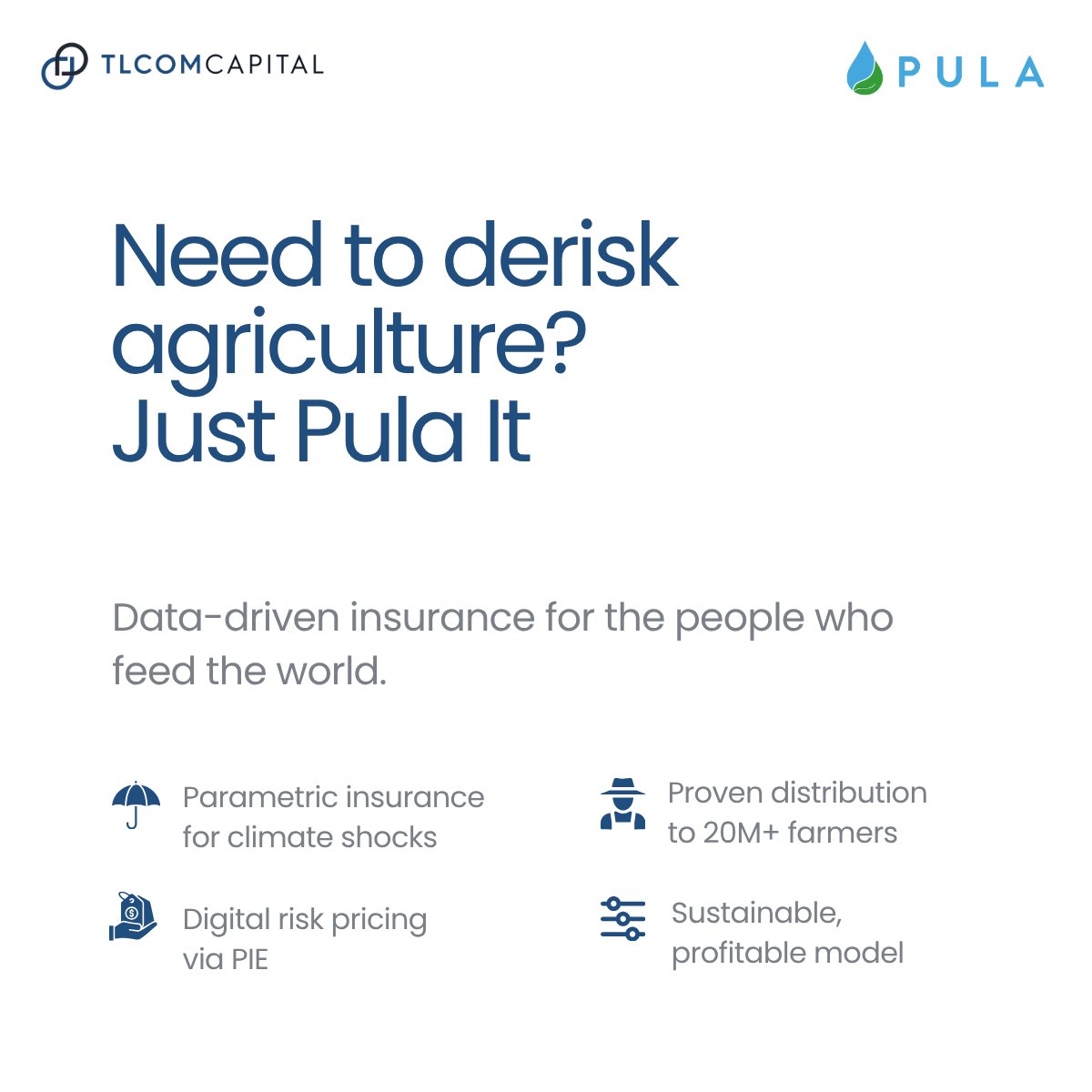
The climate risk no one has priced: 33 million smallholder farms that feed 70% of Africa. Few legacy insurers have the data infrastructure to price risk at the base of Africa's agricultural pyramid. The gap is structural. The opportunity is monopoly economics.
Enter @AdvisorsPula , founded by @njerutom and @rosegos , which is an embedded parametric insurance solution that serves aggregators, supporting millions of smallholders across Africa, and beyond.
The infrastructure scarcity creates a defensible advantage.
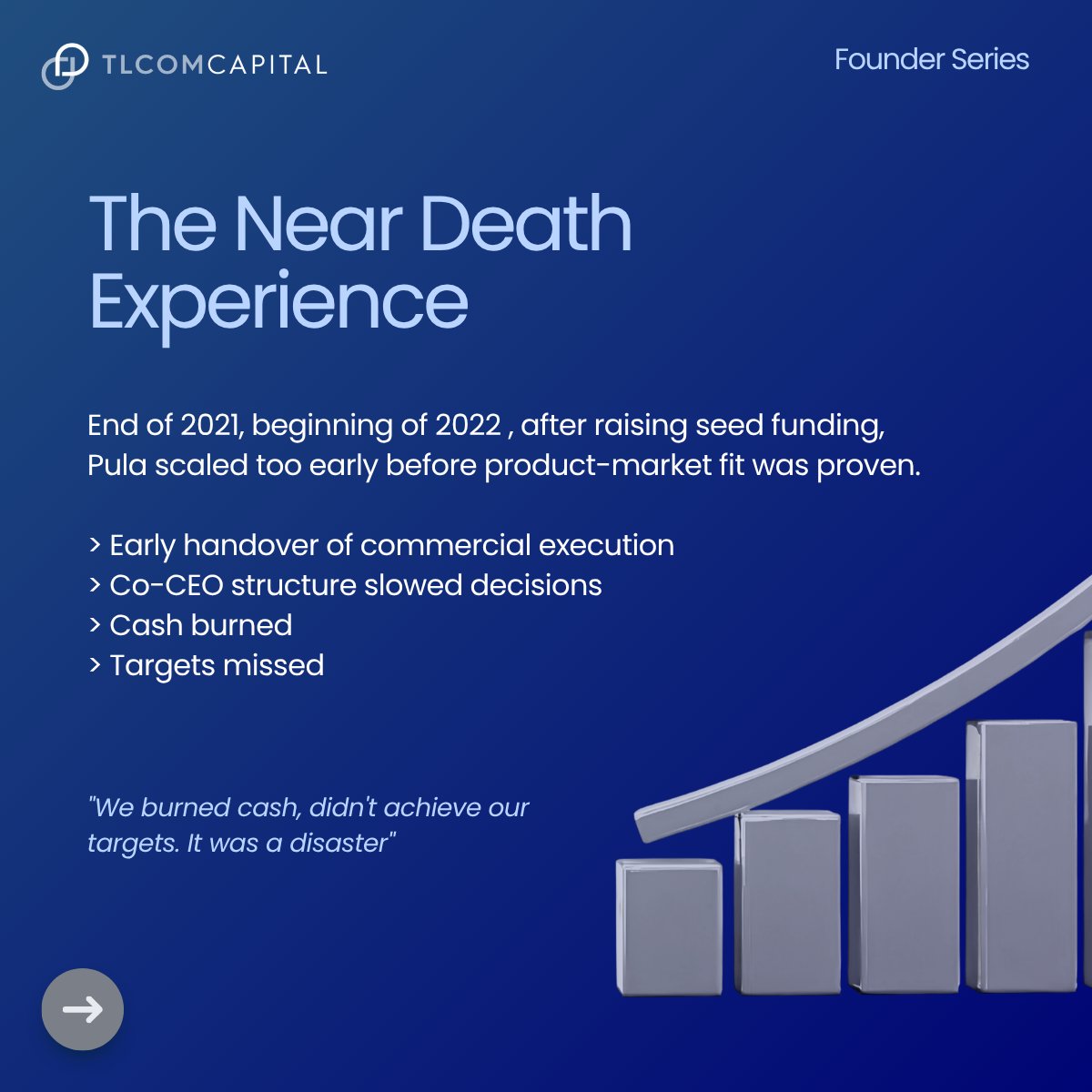
We sat down with @njerutom , who shared his story, the journey and the lessons learned as they underwrite Africa's food security as a systemic imperative.
Read the full story here: tlcomcapital.com/blog/how-th…
#InsurTech #ClimateTech #AgTech #RiskManagement #SupplyChain #GlobalFoodSecurity
1
2
2
196

Apr 2
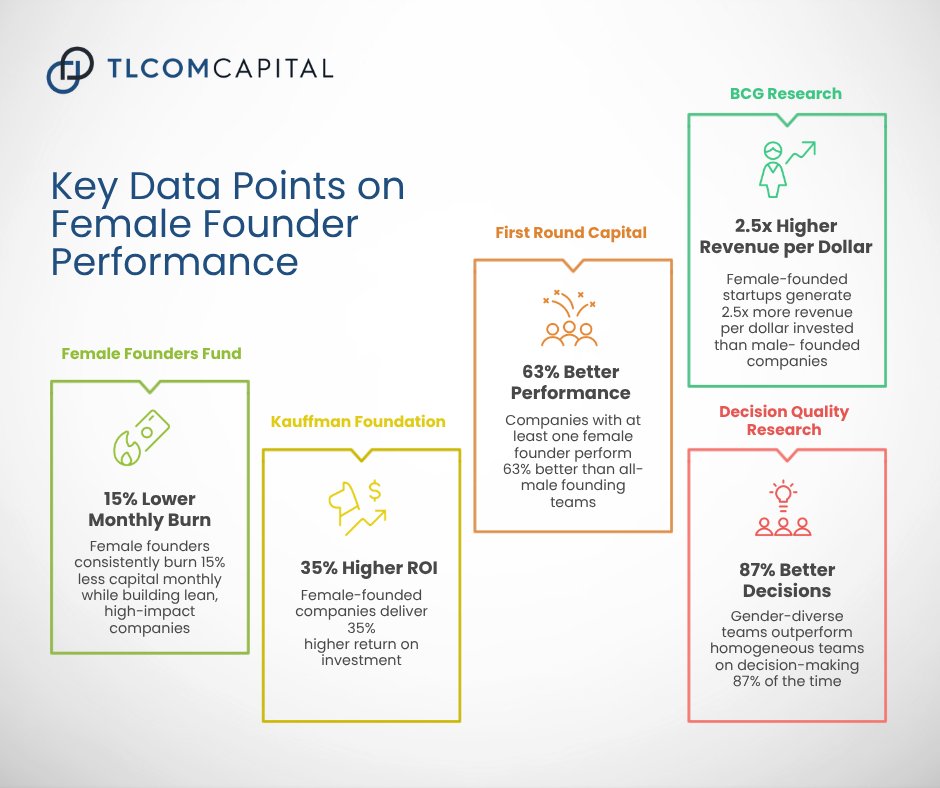
As we close out our women in leadership series, global data indicates that across markets, female founders are building more efficient, disciplined, and higher-return businesses.
Global research consistently shows:
1. Capital efficiency: Female-led startups generate 2.5x more revenue per dollar invested than male-founded companies [BCG]
2. Burn discipline: Female founders consistently burn 15% less capital monthly while building lean, high-impact companies [Female Founders Fund]
3. ROI: Female-founded companies deliver 35% higher return on investment [Kauffman Foundation]
4. Performance: Companies with at least one female founder perform 63% better than all-male founding teams [First Round Capital]
5. Decision quality: Gender-diverse teams outperform homogeneous teams on decision-making 87% of the time
At TLCOM, we see this pattern in real time. With a 50% female-led team, we have over 25% of female-led startups in our deal pipeline, and the quality continues to stand out. Yet the gap remains clear; female founders still receive less than 7% of funding.
Our conviction is simple: In capital-constrained markets, discipline wins. And the founders who build with discipline early are the ones who endure.
#VentureCapital #DataDriven #WomenInTech #AfricanTech #TLCOM
78
Mar 31
Our Managing Partner @maurizio_caio reflects on the growth of the African tech landscape and how TLCOM has intentionally evolved alongside it.
"At the beginning, seven years ago, the ecosystem was still in its early stage, now it’s more mature."
For us, maturity isn't just about the age of a startup; it’s about our ability as a Thought Partner to remain relevant to founders as they navigate increasingly complex segments of their journey.
In this more mature market, TLCOM remains committed to providing the institutional depth and strategic nuance required for long-term value generation.
#AfricanTech #VentureCapital #EcosystemEvolution #TLCOM #LeadershipInsights #GrowthStrategy
2
101
Mar 26
Ever wondered how collaboration between banks, fintechs, operators, and regulators can transform Africa's Financial Landscape?
This week, we hosted 30 graduate students from
@StanfordGSB during their annual study trip, and brought together leaders from @Visa, @NCBABankKenya, @FlourishVC and @honeycoinapp to discuss the future of fintech in Kenya and Africa.
The key takeaway is that collaboration among banks, fintechs, and regulators can turn perceived challenges in Africa's financial infrastructure into opportunities for innovation and growth.
Some key insights from the discussion:
1. Stablecoins have shifted from a speculative asset class to an infrastructure layer. Africa led the global crypto thesis. @EfayomiCarr, Partner @FlourishVC, shared how they saw digital players in Africa using stablecoins to access currency stability and solve cross-border friction. "Emerging markets led the global investment thesis because we saw the use cases being higher here and adoption was higher." HoneyCoin - co-invested by TLCOM, Visa, and Flourish - became their first blockchain investment in 2021.
2. Changing dynamics between Banks and Fintechs: The relationship between banks and fintechs has evolved significantly. Teresa Karanja Omari from @NCBABankKenya & LOOP DFS highlighted that fintechs were once viewed as competitors and now, they are viewed as valuable partners in the banking ecosystem. This change highlights the importance of collaboration in fostering innovation.
3. AI's role in operations: AI is enhancing operational efficiency rather than replacing personnel. David Nandwa, founder & CEO of @honeycoinapp, shared an example of how the majority of internal tooling code is now written with AI. Tasks like telco integrations, which used to take weeks, can now be completed in hours.
4. The need for a trusted layer of transaction enablers: Chad S. Pollock, Vice President at @Visa East Africa, summed up the sentiment by noting Visa’s role as a trusted layer in digital transactions, particularly in markets where trust is limited.
Our partner @AMuforo, who led the discussion, closed with a point that the constraints we observe, regulatory complexity, currency volatility, and limited Investor base, are not temporary friction but structural features that create defensible advantages.
A big thank you to Rahim Haliminski and Pooja Kumar from Stanford student leadership, @iHub for being our trusted partner, and @ArtcaffeKenya for keeping the coffee hot.
#Fintech #Stablecoins #AfricanTech #VentureCapital #Infrastructure #TLCOM
5
260
Mar 24
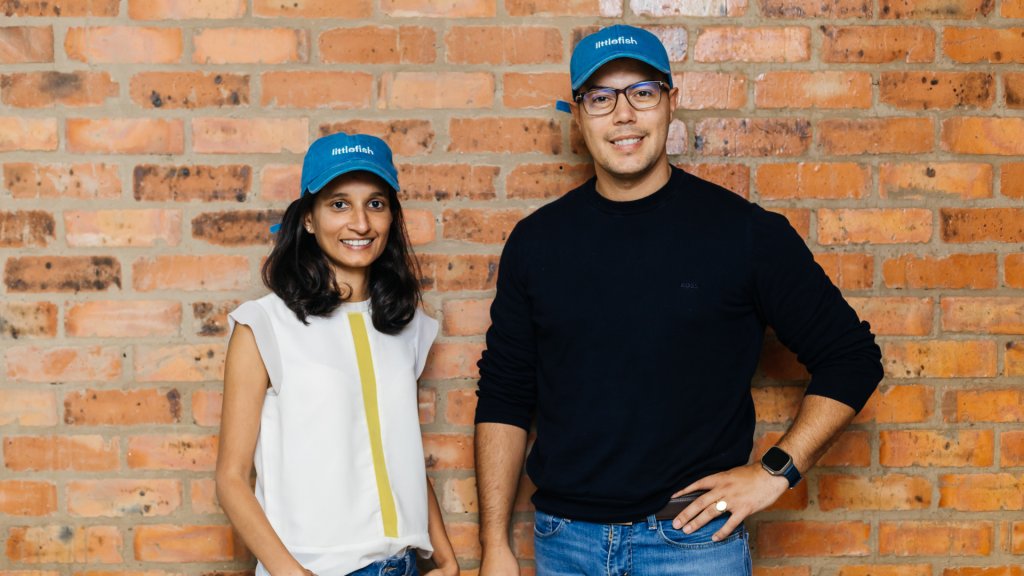
We are proud to announce our follow-on participation in the $9.5M Series A investment into our South African-based portfolio company littlefish.
The littlefish team, led by founders Brandon Roberts & Neha Kumar, move with a rare awareness — big opportunities in Africa only become real when the right pieces line up. Rather than building around existing institutions, they built with them. A "merchant operating system" sitting at the intersection of banking infrastructure & commerce enablement. The result? Standard Bank. FNB. Absa. Visa. 30x MRR growth since seed. And now, expansion into 10 African markets.
In Brandon`s own words: "This raise is a validation of our belief that the best way to serve Africa's small businesses is to work with the institutions they already trust, not around them."
Our Managing Partner @maurizio_caio adds: "We are particularly impressed by the team's ability to win the trust of large Tier-1 banks in South Africa and embed their platform into the heart of those institutions' merchant ecosystems. That combination of technical depth, institutional partnerships, and long-term vision makes littlefish a natural fit for our portfolio."
Read the full press release here: techcabal.com/2026/03/24/lit…
Read more about why we invested here: tlcomcapital.com/blog/why-we…
#VentureCapital #AfricaTech #Fintech #littlefish #TLCOM #SeriesA #FoundersFirst
1
178
Mar 19
Representation in leadership matters and influences the conversation from a founder's perspective.
Aniekeme Umoh, Group COO @ulessonapp reflects in the Women in Leadership Series, on the impact of TLCOM’s majority-female partnership and how this alignment fosters a more inclusive and effective investment environment.
"The representation of female partnership at TLCOM... is indicative of the role that they are playing in the tech ecosystem…to see that leading by example is really inspiring."
We believe that diverse leadership is a prerequisite for a thriving African digital economy.
Watch the full interview using the link attached: shorturl.at/utoL3
#AfricanEntrepreneurs #Leadership #Resilience #TLCOM #FemaleFounders
1
1
5
158
Mar 17
Our Women in Leadership Series this week, focuses on founders and the resilience in the African tech space which is a daily operational requirement.
Enas Siam, CO-Founder & COO Flextock, shares a powerful perspective on resilience and the founder’s role as a "shock absorber".
"As a founder...you need to be able to take the shock in and be able to spin it around… into a product"
Watch the full interview and perspectives here: shorturl.at/utoL3
#AfricanEntrepreneurs #Leadership #Resilience #TLCOM #FemaleFounders
3
163
Mar 12
What does it actually mean to be "resilient" in the face of a volatile market?
As we continue our Women in Leadership Series, Andreata Muforo, Partner at TLCOM, shares her perspective on why resilience is the ultimate competitive advantage for African founders.
“At TLCOM, we back business models & the resilient leaders who have the vision to see the future and the community to build it”.
Watch the full video in the YouTube link below: shorturl.at/koFKN
#TLCOM #WomensMonth #VentureCapital #AfricanTech #FemaleLeadership #FemaleFounders
2
128
Mar 10
In the world of Venture Capital, partnership is a word often used but rarely defined in practice.
This month, we launch our Women in Leadership Series. To kick it off, we are proud to feature insights from our Partner, Eloho Omame, on what true partnership looks like at TLCOM.
“For us, it is not just about providing the first check; it is about being the first port of call.”
We remain committed to fostering an inclusive ecosystem where female leadership continues to drive innovation and long-term value across the continent.
To all the founders building the future of Africa, we are with you for the long haul.
#TLCOM #WomensMonth #VentureCapital #AfricanTech #FemaleLeadership #FemaleFounders
1
1
4
574
Mar 8
Women build companies.
Women write checks.
Women run teams.
Women move economies.
Yet women founders still receive a fraction of global venture capital.
This Women’s Day, we celebrate the builders, the risk-takers, and the women shaping the future of business and innovation.
#TLCOM
#InternationalWomensDay
#WomenInTech
#WomenFounders
1
2
289