The official Twitter account of the Theodore Roosevelt Presidential Library #TRLibrary
Joined October 2016
- Tweets 1,580
- Following 114
- Followers 5,499
- Likes 181
1,397 Photos and videos
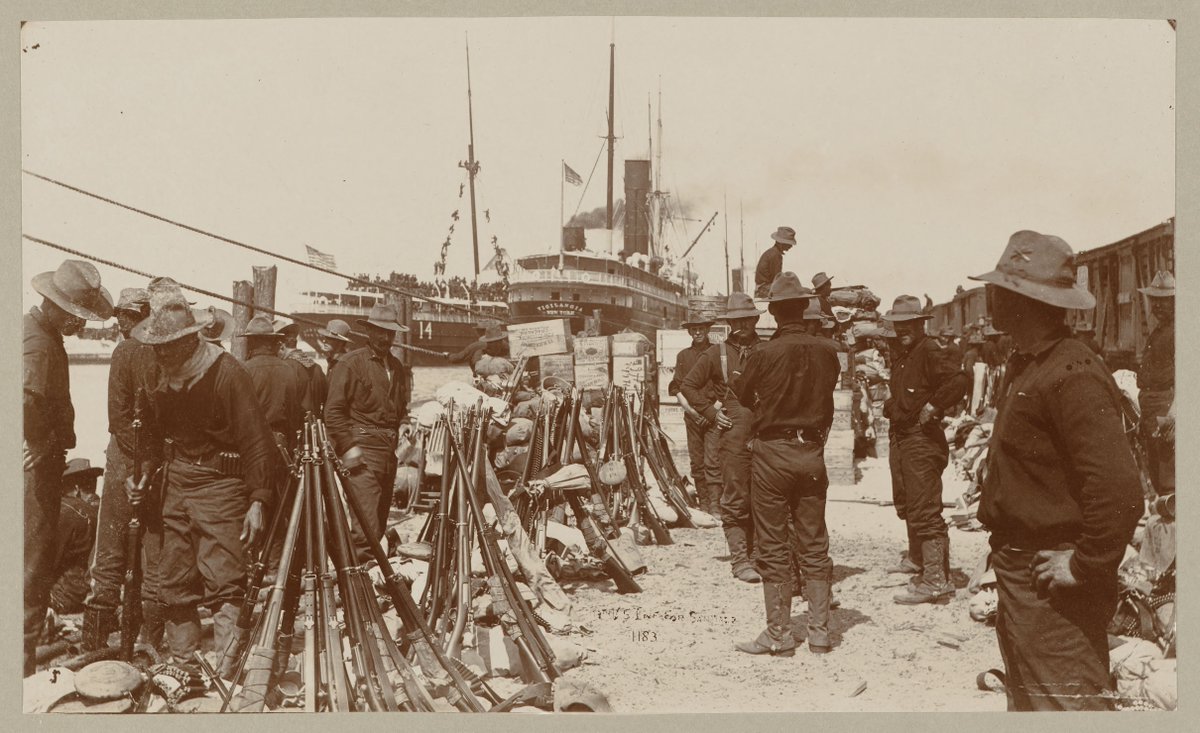

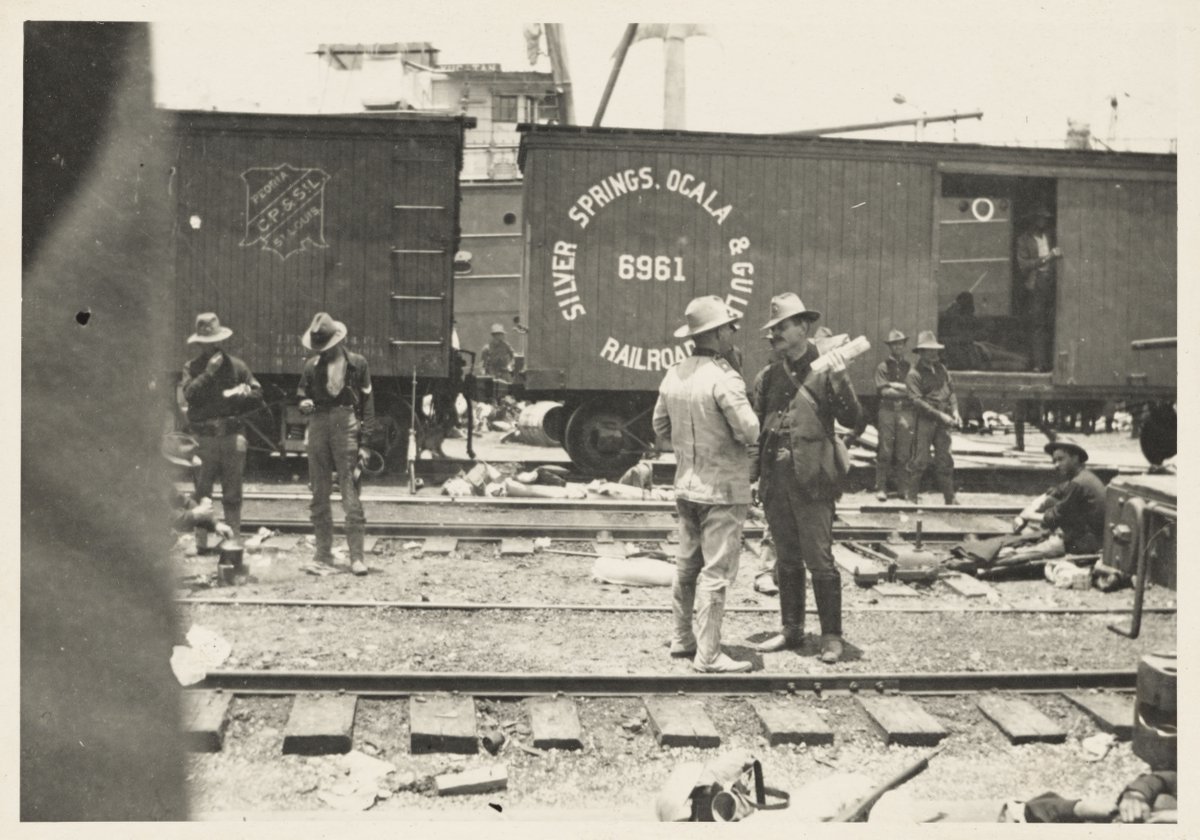
#OTD in 1898, after six maddening days at anchor, the largest invasion force the United States had ever assembled was finally turned loose.
Theodore Roosevelt and the Rough Riders had scrambled aboard the transport "Yucatán" at Port Tampa nearly a week earlier — and then nothing. Word had come that unidentified ships were lurking in the channel between Florida and Cuba, and the whole expedition was ordered to wait until the coast was, literally, clear. So they sat: thousands of men packed into ships in a hot, crowded bay, choking down stringy "canned fresh beef" most of them refused to eat. One Rough Rider, a former Wall Street trader, simply swam a half-mile to shore for a decent meal and swam back.
Then, on this day in 1898, the welcome news arrived: the mysterious "enemy" vessels were a pair of civilian ships. The fleet was free to go. That day thirty-one transports carrying nearly 17,000 men, more than 2,000 horses and mules, and ten million pounds of rations began moving out of Hillsborough Bay toward the Gulf.
On the quay stood three women and a group of sweaty stevedores — the only goodbye party for an army on its way to war.
#OTD #OnThisDay #TheodoreRoosevelt #RoughRiders #SpanishAmericanWar #DareGreatly
1
4
89
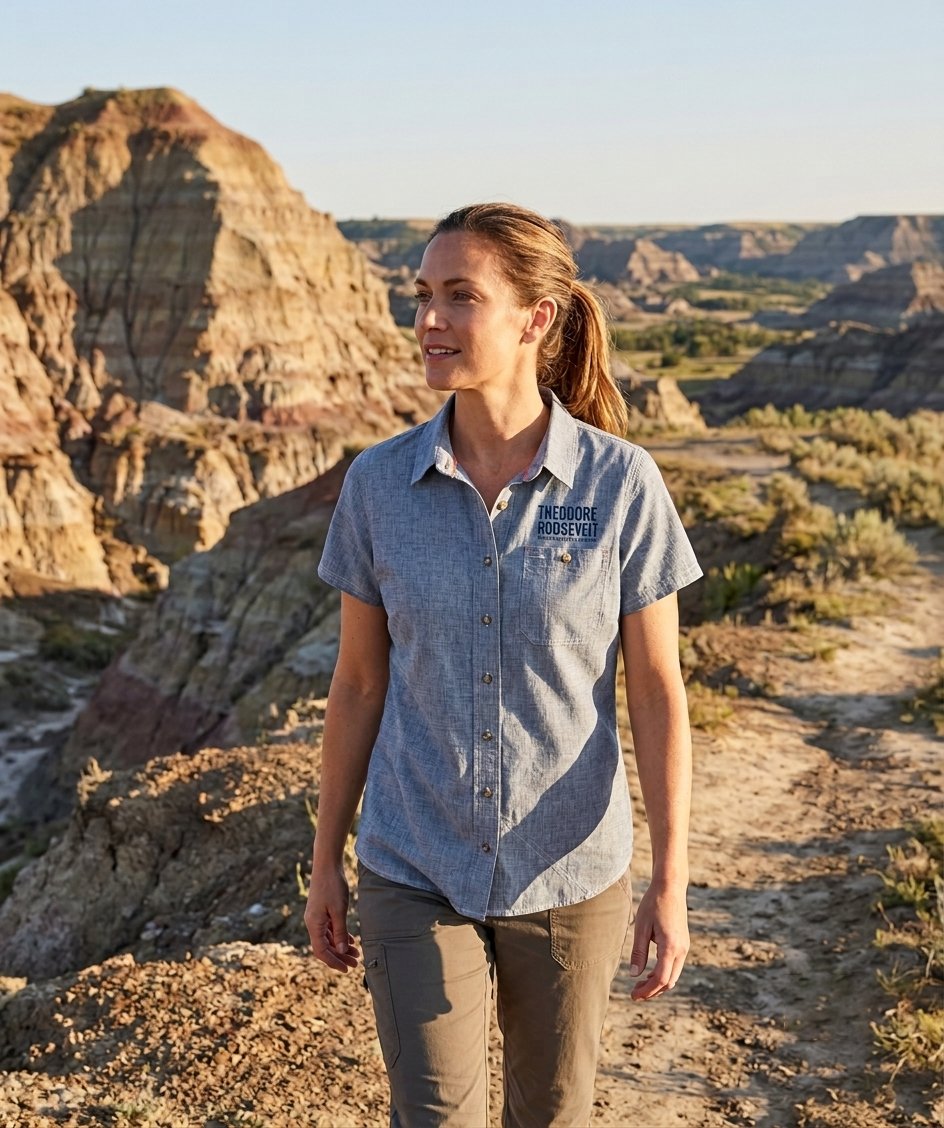
Theodore Roosevelt was never happier than when he was outside and busy — fishing, hunting, riding, rambling. He believed the outdoors wasn't a luxury but a birthright, something worth protecting for everyone who came after. Over his presidency he safeguarded roughly 230 million acres so they'd still be there for us.
This is a do-everything shirt in that same outdoor spirit. The Women's Blue Chambray Tech Short-Sleeve Shirt by Orvis is made from an eco-friendly performance fiber spun from recycled plastic and oyster shells reclaimed from the restaurant industry — soft, machine washable, sizes S–XL, in a versatile blue that's at home on the water or in town.
Get outside in it. And every purchase supports the Library.
🔗 shop.trlibrary.com/products/…
#TheodoreRoosevelt #TRLibrary #Orvis #Conservation #SustainableStyle
3
19
539
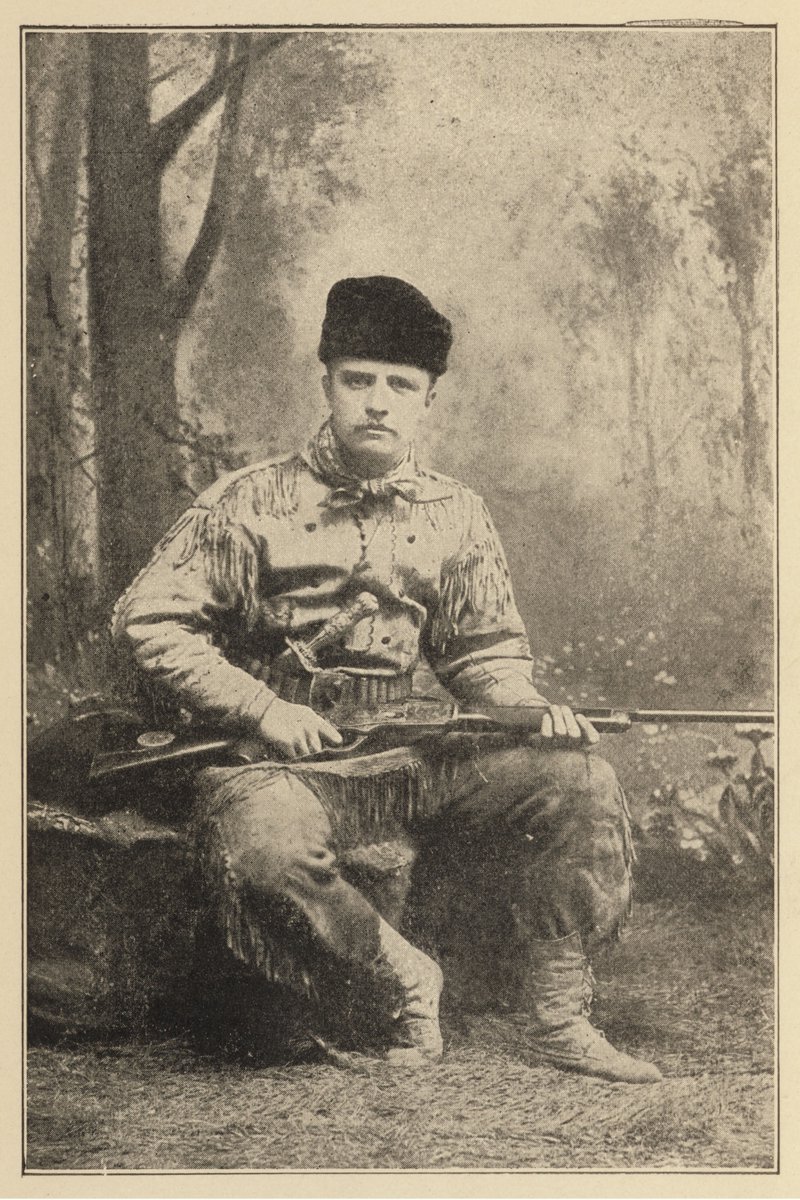
On this day in 1884, a young New Yorker stood in the Dakota Badlands and got measured for a suit.
Not a city suit. Buckskin.
Theodore Roosevelt was 25, and he'd come west carrying more grief than most people see in a lifetime. Four months earlier, on February 14, his wife and his mother had died on the same day, in the same house. He marked his diary with a heavy black X and the words, "The light has gone out of my life."
So he did what he always did when the ground gave way — he went to work, outdoors, hard. He threw himself into ranching along the Little Missouri River: riding, hunting, learning the country.
On June 13, near Gregor Lang's cabin, he spent the day hunting — a jackrabbit and a curlew, both dropped with his heavy express rifle. And a local woman, Mrs. Maddox, sized him up for a fringed buckskin suit.
That suit became one of the most famous outfits in American history — the one TR wears in the studio portrait where he looks every inch the frontiersman: rifle in hand, knife on his belt, jaw set. The dude from Manhattan was becoming something else out here.
He always credited this country with shaping the man he became. The leader who would help create the U.S. Forest Service and protect roughly 230 million acres of public land was, in June 1884, just a grieving young rancher being fitted for buckskin on the Dakota frontier.
That transformation is the story we tell. It happened here.
#OnThisDay #TheodoreRoosevelt #TeddyRoosevelt #Badlands #Medora #NorthDakota #Conservation #AmericanHistory
1
18
82
1,476
Theodore Roosevelt spent much of his life out under open sky — in the Maine woods as a sickly boy learning to push his body, in the North Dakota Badlands mending a broken heart on horseback, and later on the rims of canyons and the floors of forests he would fight to protect for the rest of us.
What he learned in those wild places he carried into the presidency. He believed the land was not ours to use up. It was held in trust — borrowed from the people not yet born.
Standing before the Grand Canyon, he put it plainly: "Leave it as it is. You can not improve on it. The ages have been at work on it, and man can only mar it. What you can do is to keep it for your children, your children's children, and for all who come after you, as one of the great sights which every American if he can travel at all should see."
That idea — that we are caretakers, not owners — is the heart of his conservation legacy: roughly 230 million acres set aside during his presidency, a gift still unfolding more than a century later.
Take a walk somewhere green this week. He would have told you it was the most American thing you could do.
#OTD #OnThisDay #TheodoreRoosevelt #Conservation #PublicLands #GrandCanyon #DareGreatly
1
15
57
897
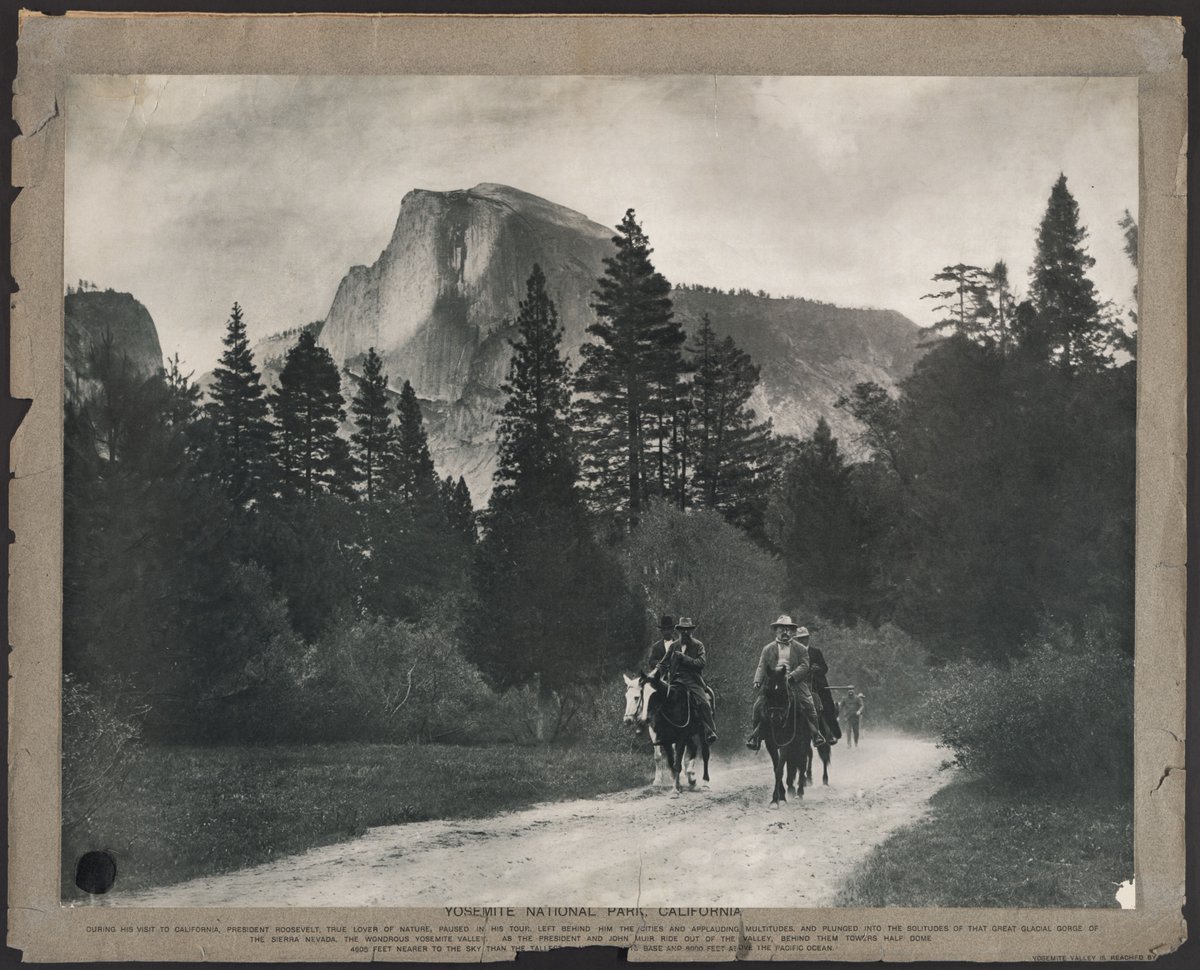
#OTD in 1906, a little over three years after he sat by a campfire with John Muir under the giant sequoias of the Mariposa Grove, Theodore Roosevelt signed the Yosemite Recession Bill.
The law did something Muir had spent much of his life arguing for. Yosemite Valley and the Mariposa Grove had been under California state control since 1864 — a strange administrative doughnut, with the federally-protected national park surrounding a state-controlled core. State management had been uneven; overgrazing, fire, and unchecked development had taken their toll. Muir had pushed for federal control for decades.
In May 1903, on a three-day camping trip with the President, he had finally found his audience.
The legislation Roosevelt signed on June 11, 1906, accepted California's "recession" of the valley and the grove back to the federal government, unifying them with the surrounding Yosemite National Park. It was the policy completion of a campfire conversation — and, in conservation terms, one of the most consequential signatures TR ever made, bringing the most iconic mile of American landscape under permanent federal protection.
Today, every visitor who stands at Tunnel View and looks across the valley — the granite walls, the falls, the meadows, all in their preserved state — owes that view, in part, to a camping trip and a bill signed on this day in 1906.
#OTD #OnThisDay #TheodoreRoosevelt #JohnMuir #Yosemite #Conservation #DareGreatly
19
71
1,351
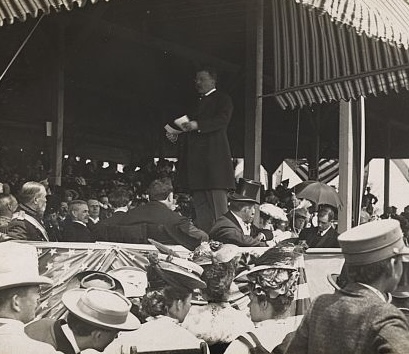
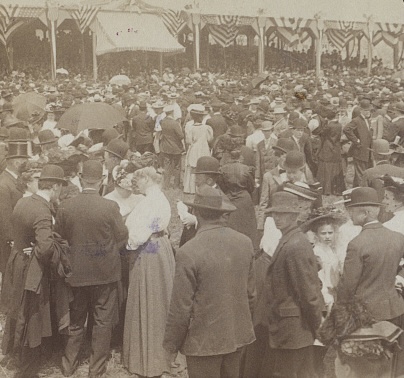
#OTD in 1907, at the Jamestown Exposition in Virginia, Theodore Roosevelt gave a speech that still reads like a mission statement.
It was Georgia Day at the great fair marking 300 years since the founding of Jamestown. Roosevelt — whose mother's family were Georgians — addressed the National Editorial Association, the country's gathered newspapermen. And he used the platform to talk about something he cared about more than almost anything: the land itself.
"The conservation of our natural resources and their proper use," he told them, "constitute the fundamental problem which underlies almost every other problem of our national life."
Then he put it in terms anyone with a family could feel. A farmer who skins the land and leaves it worthless to his children, he said, is a poor creature. The good farmer leaves it "a little better than he found it himself." And then the line that lands hardest: "I believe the same thing of a nation."
That was the heart of Roosevelt's conservation gospel — not locking nature away, but using it wisely and handing it on intact. During his presidency he protected some 230 million acres of American land. The idea behind all of it is right there in that Jamestown speech: we are caretakers, not owners.
#OTD #OnThisDay #TheodoreRoosevelt #Conservation #PublicLands #DareGreatly
9
42
942
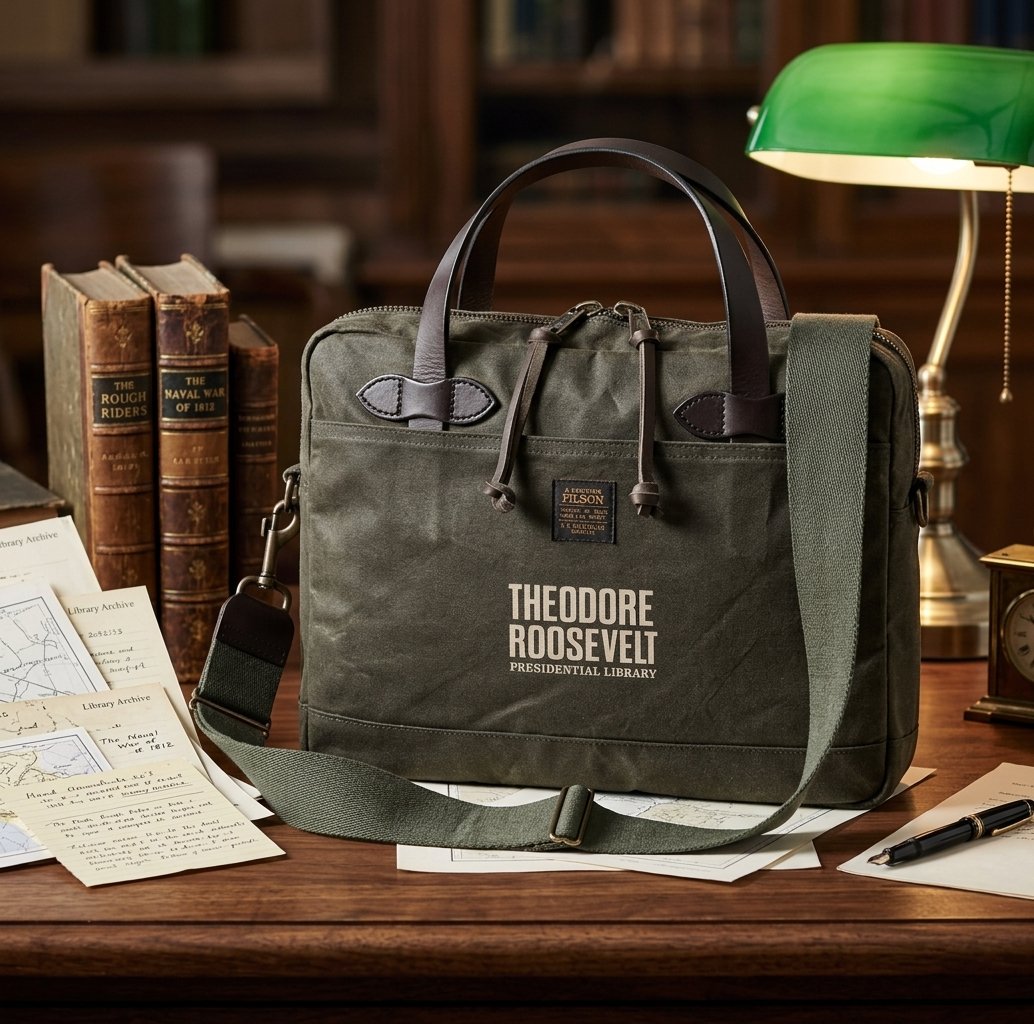
When Theodore Roosevelt set off on his great African expedition in 1909, he refused to leave his books behind. So he had nearly sixty of his favorites — Shakespeare, the Bible, Dickens, Tolstoy — trimmed down and bound in pigskin to survive the heat, rain, dust, and sweat of a year in the field. They called it the "Pigskin Library," and it came home intact.
That's the spirit of our Limited Edition Filson Tin Cloth Compact Briefcase. The waxed Tin Cloth shrugs off weather and abrasion, the bridle leather handles are built for decades, and the heavy-gauge YKK zipper is made for a lifetime of service. Padded inside for a laptop up to 15".
Carry it like T.R. carried his library: choose the thing made well, then use it hard. And every purchase helps support the Library.
🔗 shop.trlibrary.com/products/…
#TheodoreRoosevelt #TRLibrary #Filson #BuiltToLast #PigskinLibrary
5
43
1,655
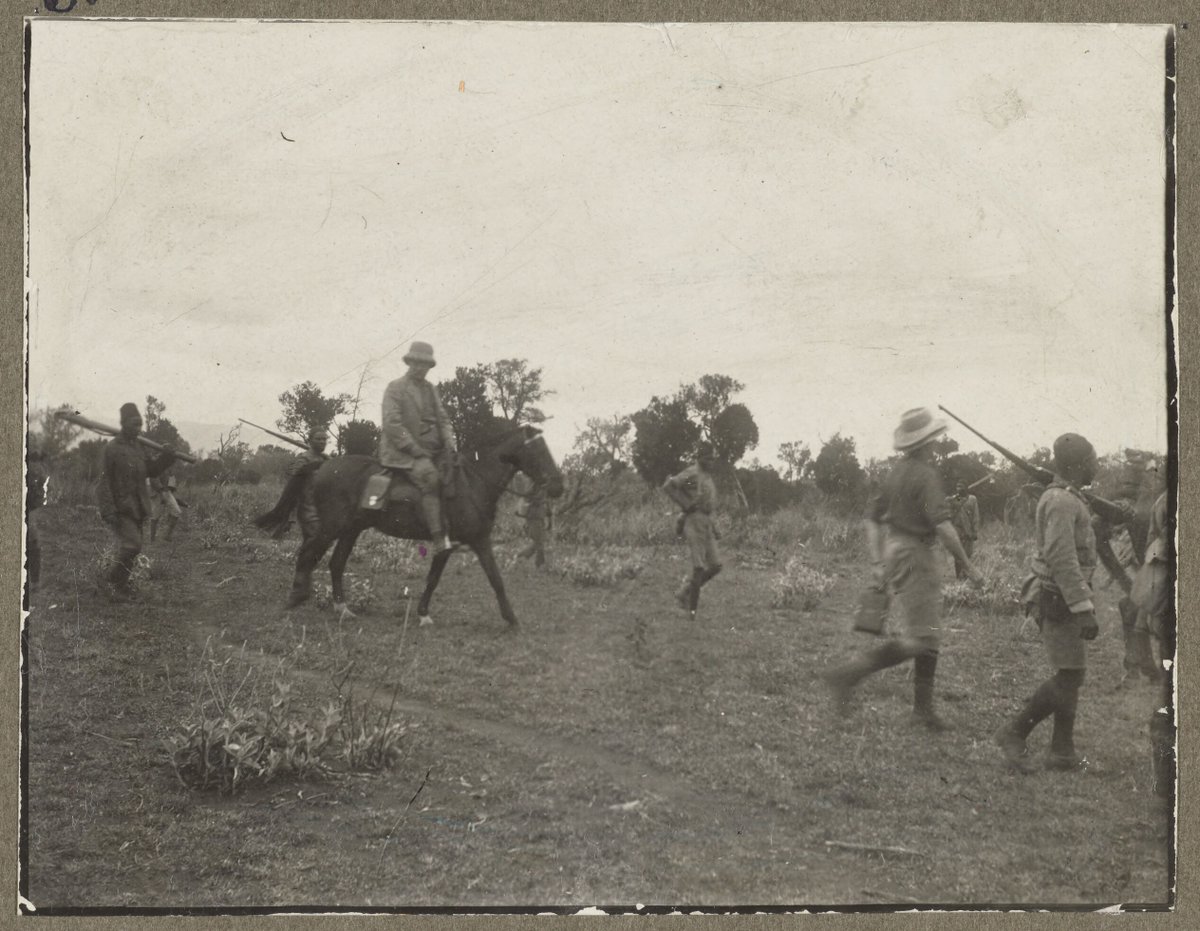
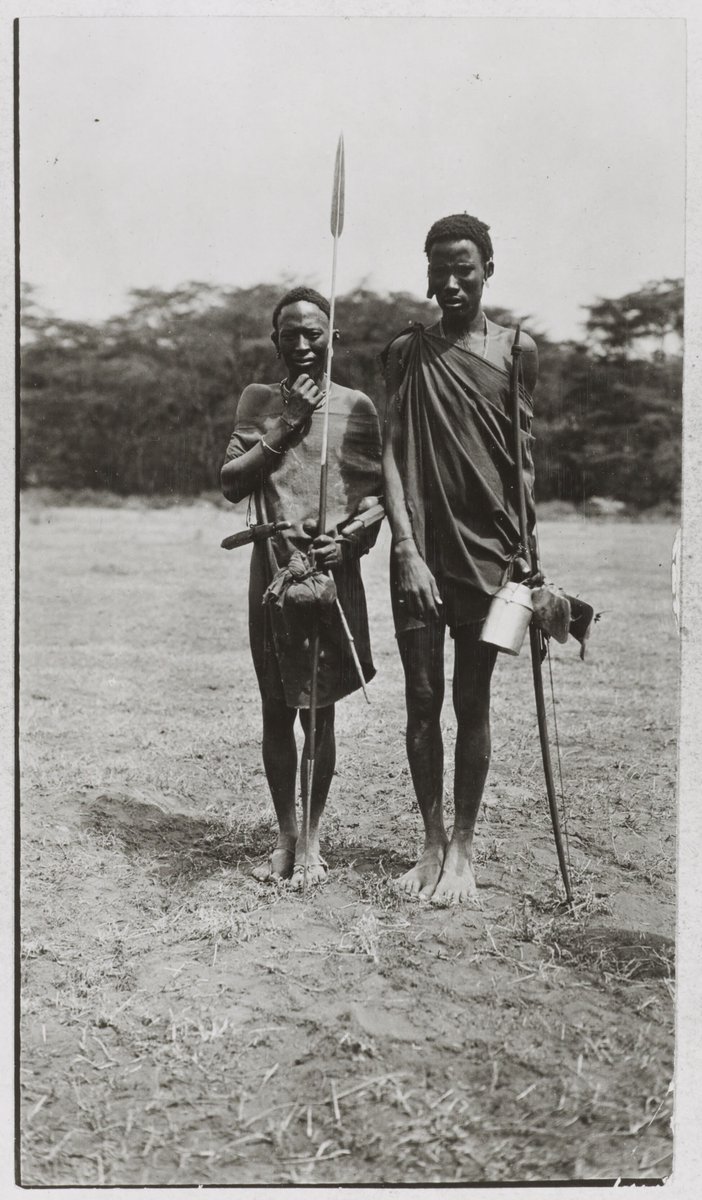
In the summer of 1909, just months out of the White House, Theodore Roosevelt was deep in East Africa — and loving every hard mile of it.
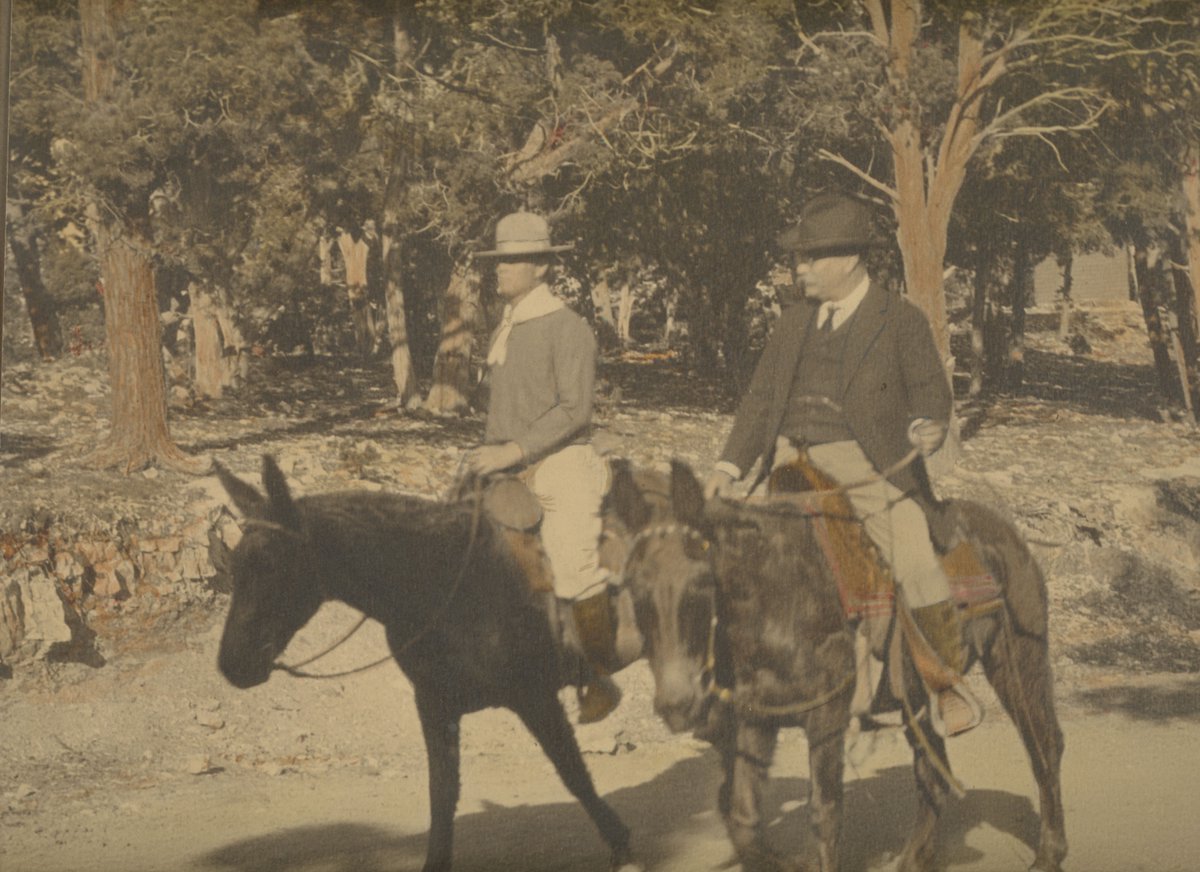
After nearly eight years as president, he wanted exactly one thing: to be a naturalist again. He set out across what the porters called "the thirst," a long stretch of waterless country, marching toward the Sotik plains with a line of men and ox-drawn wagons hauling their water. It was, by his own account, as wild as anything he'd ever done.
He wasn't only hunting. The expedition was a scientific collecting trip for the Smithsonian, and Roosevelt — who'd been mounting bird specimens since he was a boy — filled notebooks with observations on the country, its game, and the people they met along the way.
What comes through in his account isn't trophy-counting. It's joy: a man who had carried the weight of the nation for years, finally out under an enormous sky, glad to be tired and far from the cables and the crowds.
Most of us will never cross the Sotik. But the instinct Roosevelt trusted — that wild places restore us, that we are better for getting out into them — is one anyone can act on this summer.
#OTD #OnThisDay #TheodoreRoosevelt #Naturalist #StrenuousLife #Conservation #DareGreatly
8
32
607
#OTD in 1906, Theodore Roosevelt signed the Antiquities Act — and quietly handed every president after him one of the most powerful conservation tools in American history.
The law was short. Its operative clause gave the President authority to "declare by public proclamation historic landmarks, historic and prehistoric structures, and other objects of historic or scientific interest" as national monuments. No congressional approval required. Just a presidential signature.
Roosevelt would use that authority eighteen times before leaving office.
He used it three months later to create the first national monument: Devils Tower, in northeastern Wyoming. He used it to protect the Petrified Forest in Arizona. He used it on January 11, 1908, to draw a protective line around the Grand Canyon — over the loud objections of mining and grazing interests. He used it to safeguard Muir Woods, El Morro, Montezuma Castle, and a long list of places today's Americans visit by the millions and assume have always been protected.
They have not always been protected. They were protected because a President signed a piece of paper on June 8, 1906, and then used the pen it gave him.
The Antiquities Act has been used by every president since — Republican and Democratic, conservative and progressive. The places it has saved cover tens of millions of acres. It is, by almost any measure, one of the most consequential conservation laws in the world.
It started here.
#OTD #OnThisDay #TheodoreRoosevelt #AntiquitiesAct #Conservation #PublicLands #DareGreatly
3
32
101
4,204
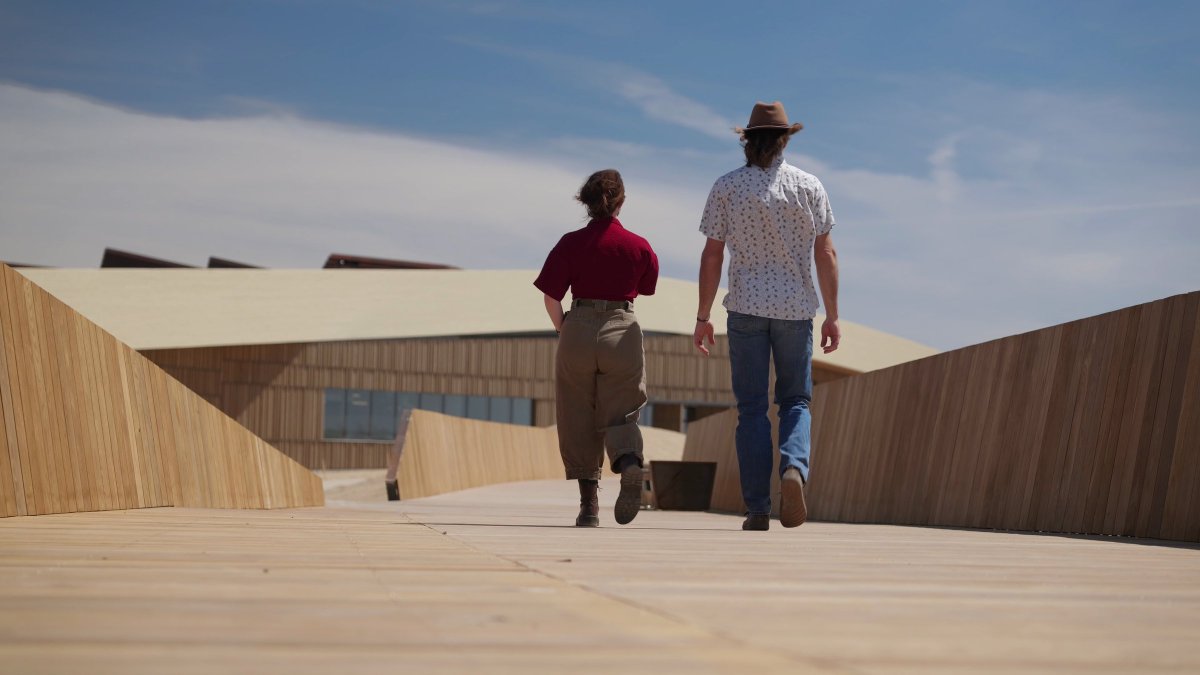
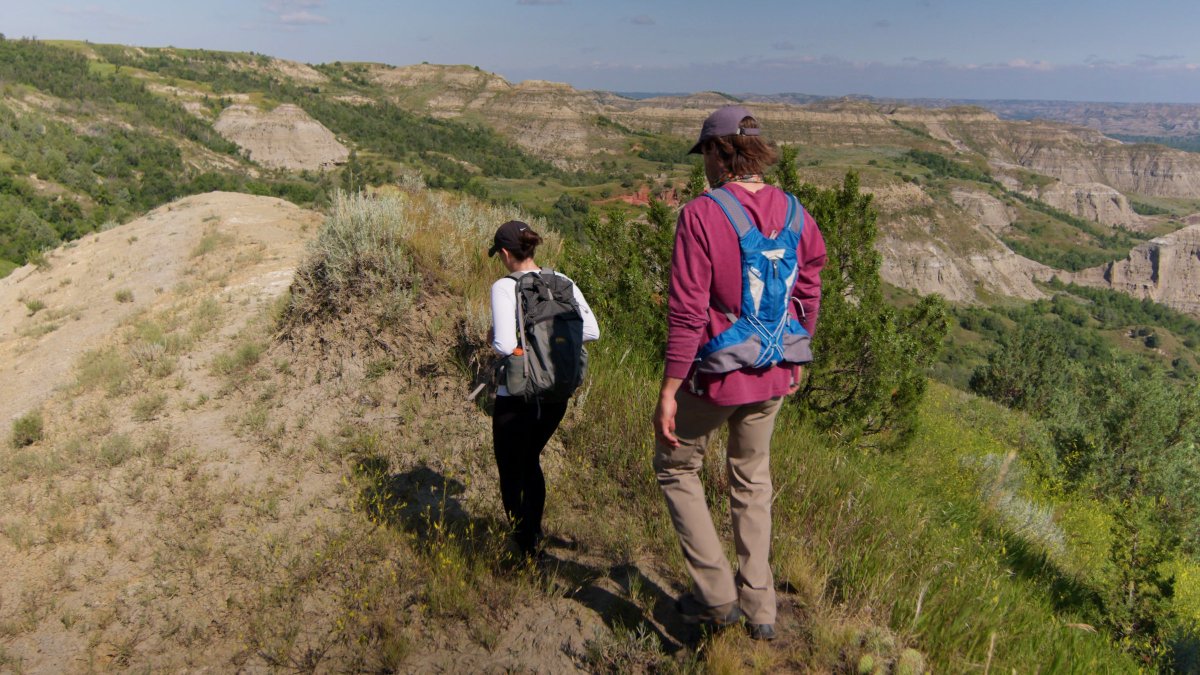
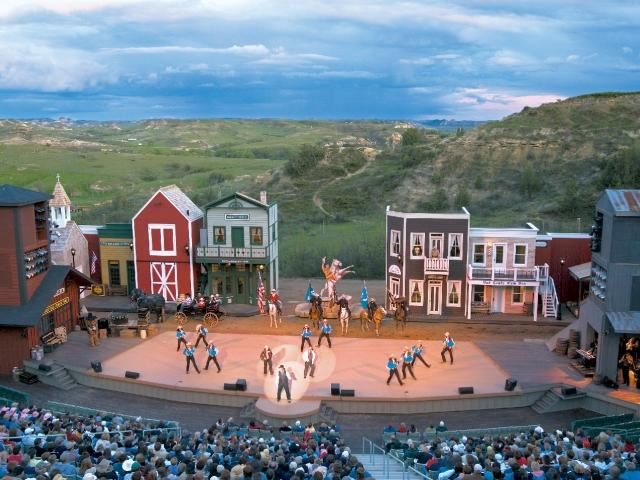
Don't make this a drive-by. Make it a weekend.
Plan your Library day around a timed-entry ticket — exhibits, the boardwalk, a ranch-to-table
lunch. Then stay for Medora itself: a real Western town tucked into the Badlands, with the
Medora Musical playing under the open sky on summer evenings just up the road.
It's the rare trip where the destination and the drive are both the point. You came for
Theodore Roosevelt; you'll leave with the whole place in your bones.
Book your Library tickets first — that's the piece with timed entry and limited daily
capacity — then build the rest of the weekend around it:
trlibrary.com/tickets
#VisitMedora #NorthDakota #Badlands #RoadTrip #TheodoreRoosevelt #DareGreatly
7
23
874
#OTD in 1910, Theodore Roosevelt stood in Oxford's Sheldonian Theatre and delivered the Romanes Lecture — the most prestigious annual address at the university and one of the most prestigious in the English-speaking world.
His subject was history.
Roosevelt called the lecture "Biological Analogies in History," and used it to argue that civilizations rise and fall by the same kinds of forces that govern the natural world: pressure, adaptation, succession, decay. He drew on a lifelong interest in natural history — the boy who kept a "Roosevelt Museum of Natural History" in his bedroom, the young man who hunted in the Badlands, the older man just emerged from a year-long expedition in East Africa with thousands of specimens for the Smithsonian.
He was not in office. He had been out of the White House for fifteen months. But he was, at that moment, possibly the most famous man in the world — fresh from the African bush, on a tour of European capitals, less than two weeks from his return to New York.
Oxford granted him an honorary doctorate, and the lecture was published immediately by Oxford University Press. It joined a small library of addresses Roosevelt delivered between his Sorbonne speech in April and his homecoming in June — some of the clearest statements he ever made about civic duty and the demands of citizenship.
#OTD #OnThisDay #TheodoreRoosevelt #Oxford #DareGreatly
8
71
1,778
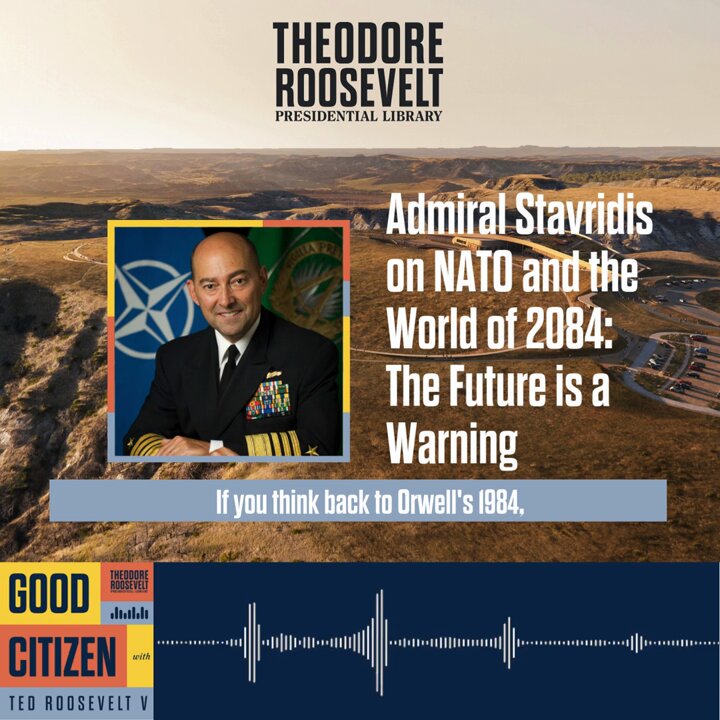
NEW EPISODE: Admiral James Stavridis — NATO and the World of 2084: A Future Warning
Admiral James Stavridis (@stavridisj) spent 37 years in the Navy, served as Supreme Allied Commander of NATO, and has published 16 books. But it's his newest work of fiction that cuts the deepest.
On the latest Good Citizen, Admiral Stavridis joins host Ted Roosevelt V to discuss 2084, the final novel in a trilogy co-written with former Marine Elliot Ackerman. It imagines a world 60 years from now — ravaged by climate change, torn apart by a global war orchestrated by A.I. — and it's designed to be uncomfortable enough to spur action.
But Ted can't stay in the future for long. Not with the former Supreme Allied Commander sitting across from him. Their conversation moves between fiction and the world right now — from NATO's composition and why its approval rating outpaces Congress and the presidency, to the case for a centrist political party, to what 250 years of American history tells us about our capacity to overcome division.
"The hope of all three of these books is that by understanding the challenges of the 21st century, we still have time to correct course and avoid a collision."
Listen now: ow.ly/PSap50Z8nBR
#GoodCitizen #TheodoreRooseveltPresidentialLibrary #TRPL #AdmiralStavridis #2084 #NATO #Leadership #Citizenship
1
6
20
2,601
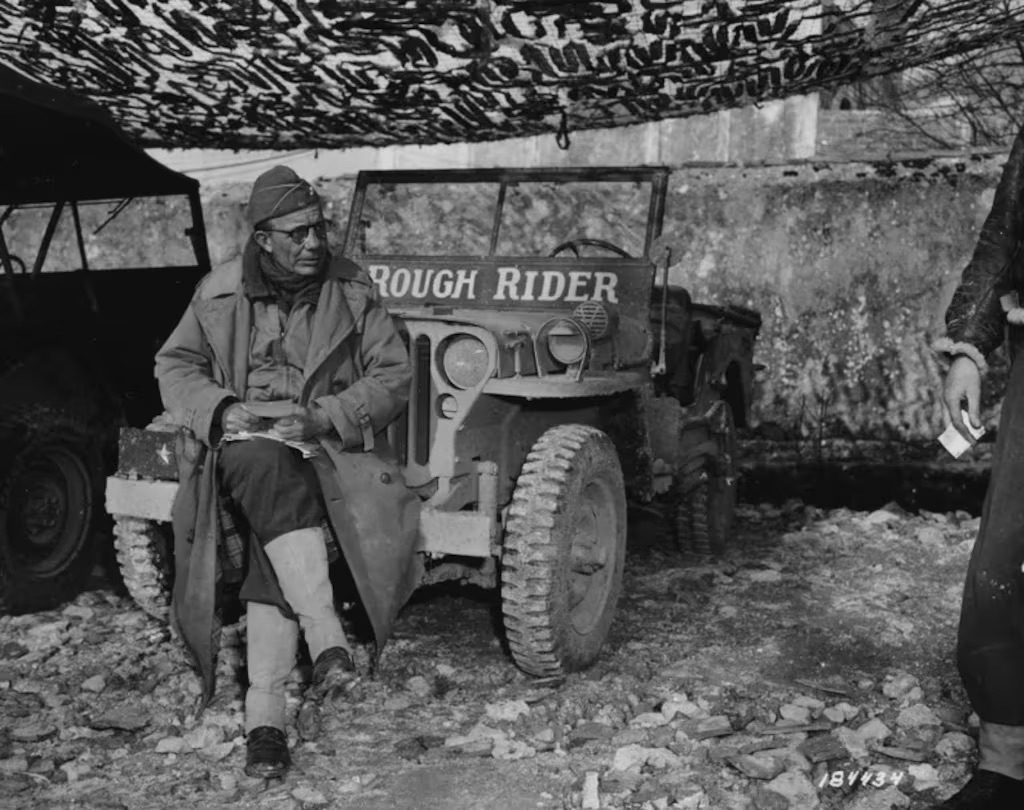
#OTD in 1944, a fifty-six-year-old brigadier general waded ashore at Utah Beach, walking with a cane.
He was the oldest man in the D-Day invasion, and the only general to land with the first wave at Utah Beach. He was Theodore Roosevelt Jr. — eldest son of the twenty-sixth president, a soldier who had been wounded and gassed in the trenches of the First World War a quarter-century earlier, and who had asked three times for permission to lead the assault before the Army said yes.
The currents at Utah Beach pushed the first landing craft about a mile off course. The men who came ashore looked up to find an unfamiliar shoreline and no clear plan. Roosevelt walked the beach, took his bearings against the landscape, and made a decision: they would attack from where they were. "We'll start the war from right here," he said.
Thirty-six days later, on July 12, 1944, Roosevelt died in his sleep of a heart attack in Normandy. He never made it home. His Medal of Honor was awarded posthumously — for the morning he steadied a beach full of men under fire, on terrain that was not the terrain he had been promised, and decided the war would go forward anyway.
He was the son of a man who once charged up Kettle Hill at the head of the Rough Riders. He died serving the country his father had served, in a war his father did not live to see.
#OTD #OnThisDay #DDay #TheodoreRooseveltJr #UtahBeach #MedalOfHonor #DareGreatly
11
122
527
9,227
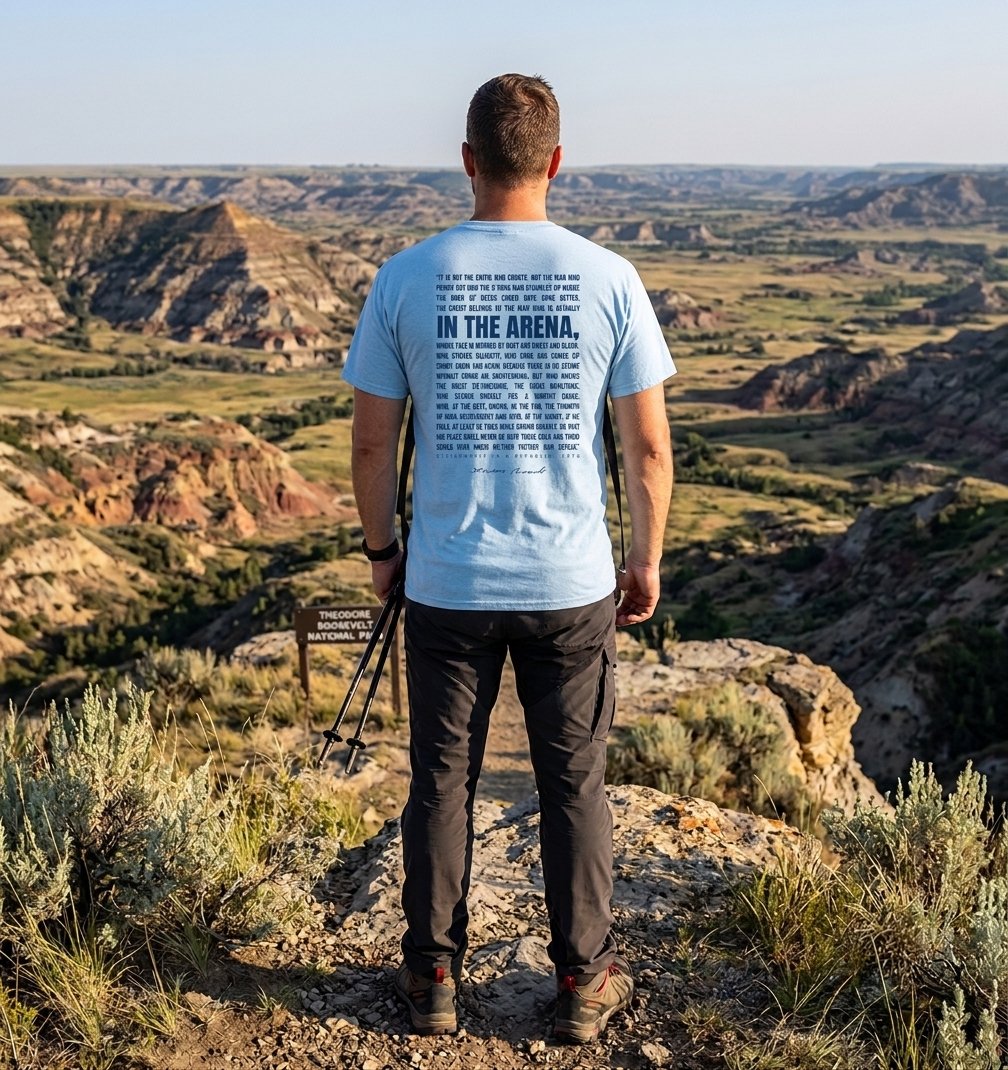
In 1910, at the Sorbonne in Paris, Theodore Roosevelt delivered the lines that became "The Man in the Arena":
"It is not the critic who counts… The credit belongs to the man who is actually in the arena, whose face is marred by dust and sweat and blood."
He meant it literally. Two years later, while campaigning in Milwaukee, T.R. was shot in the chest — and, with the bullet still in him, told the crowd, "It takes more than that to kill a Bull Moose," and spoke for nearly an hour and a half before going to the hospital. That's a man in the arena.
Our Ice Blue "Arena" Quote T-shirt carries the idea on a soft everyday tri-blend with a classic crew neck and tear-away label. Get in the arena — and support the Library while you're there.
🔗 shop.trlibrary.com/products/…
#TheodoreRoosevelt #TRLibrary #ManInTheArena #DareGreatly
8
36
716
#OTD in 1903, after roughly fourteen thousand miles, two dozen states and territories, and more than nine weeks of speeches delivered from the back of a presidential train, Theodore Roosevelt came home.
The Western Tour had taken him from Washington west to Yellowstone, from Yellowstone to the Grand Canyon, from the Grand Canyon to Yosemite, and back across the southern half of the country. He had ridden through the Mariposa Grove with John Muir and slept under the giant sequoias. He had stood on the South Rim of the Grand Canyon and asked Americans to leave it as it was. He had spoken in the Salt Lake Tabernacle about water and reservoirs and forests. He had spoken to thousands more in towns most presidents had never visited.
By the time he climbed off the train in Washington, more Americans had seen a sitting president in person than at almost any earlier point in the country's history.
What he carried back was a sharpened conservation conviction — formed partly under the trees with Muir, partly looking across the canyons, partly hearing Westerners describe what was at stake when public lands went unprotected. Within three years he would sign the Antiquities Act. Within seven, he would have protected more than 230 million acres.
It started with a train.
#OTD #OnThisDay #TheodoreRoosevelt #Conservation #PublicLands #DareGreatly
23
90
1,935
One month from today.
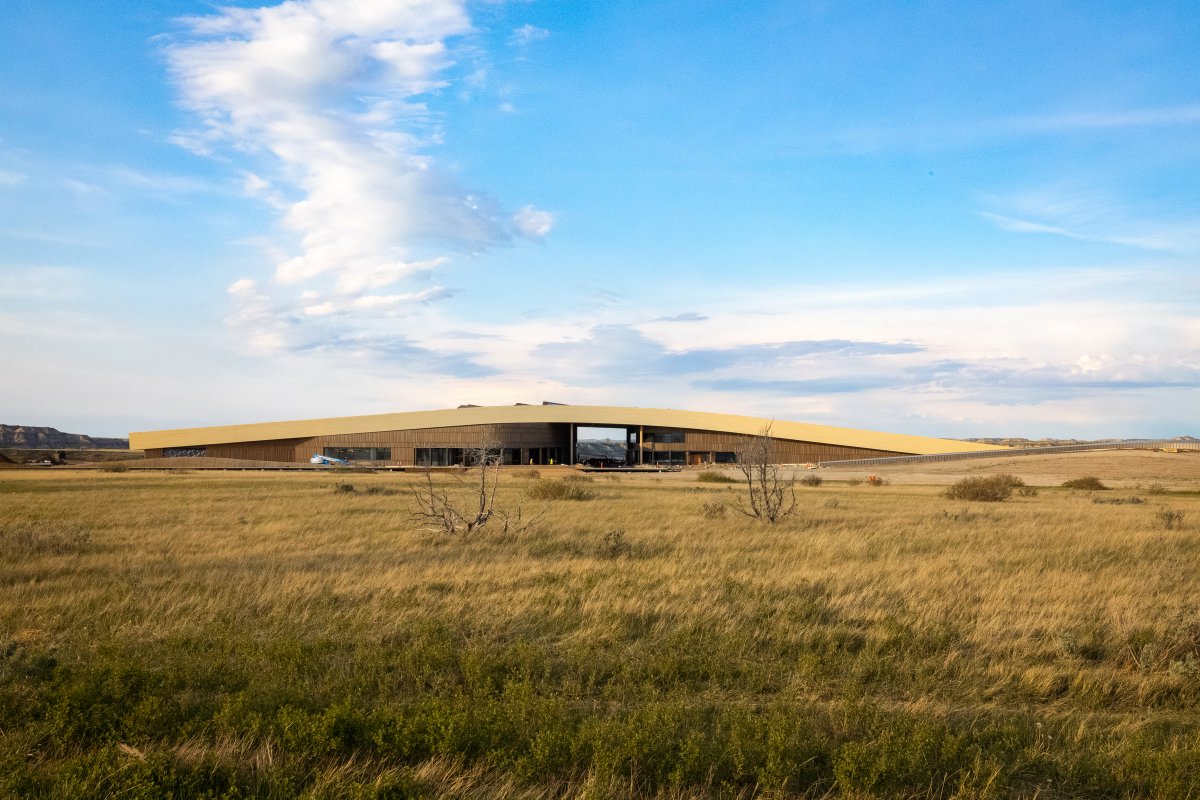
On July 4, 2026 — America's 250th birthday — the Theodore Roosevelt Presidential Library
opens its doors for the first time. The first new presidential library in over a decade, in
the same Badlands landscape that changed the man it's named for.
Opening day itself is sold out. But here's the good news: this isn't a one-day event. The
Library is open all summer, all fall, right through the end of the year — and tickets for
those dates are available right now.
So if you've been waiting for a sign to plan the trip, this is it. Pick your weekend. Tell
the people you'd want beside you when you walk out onto that boardwalk for the first time.
And get your tickets before your favorite dates fill in.
Reserve now: trlibrary.com/tickets
#TheodoreRoosevelt #GrandOpening #July4 #America250 #VisitMedora #DareGreatly
5
54
205
10,990
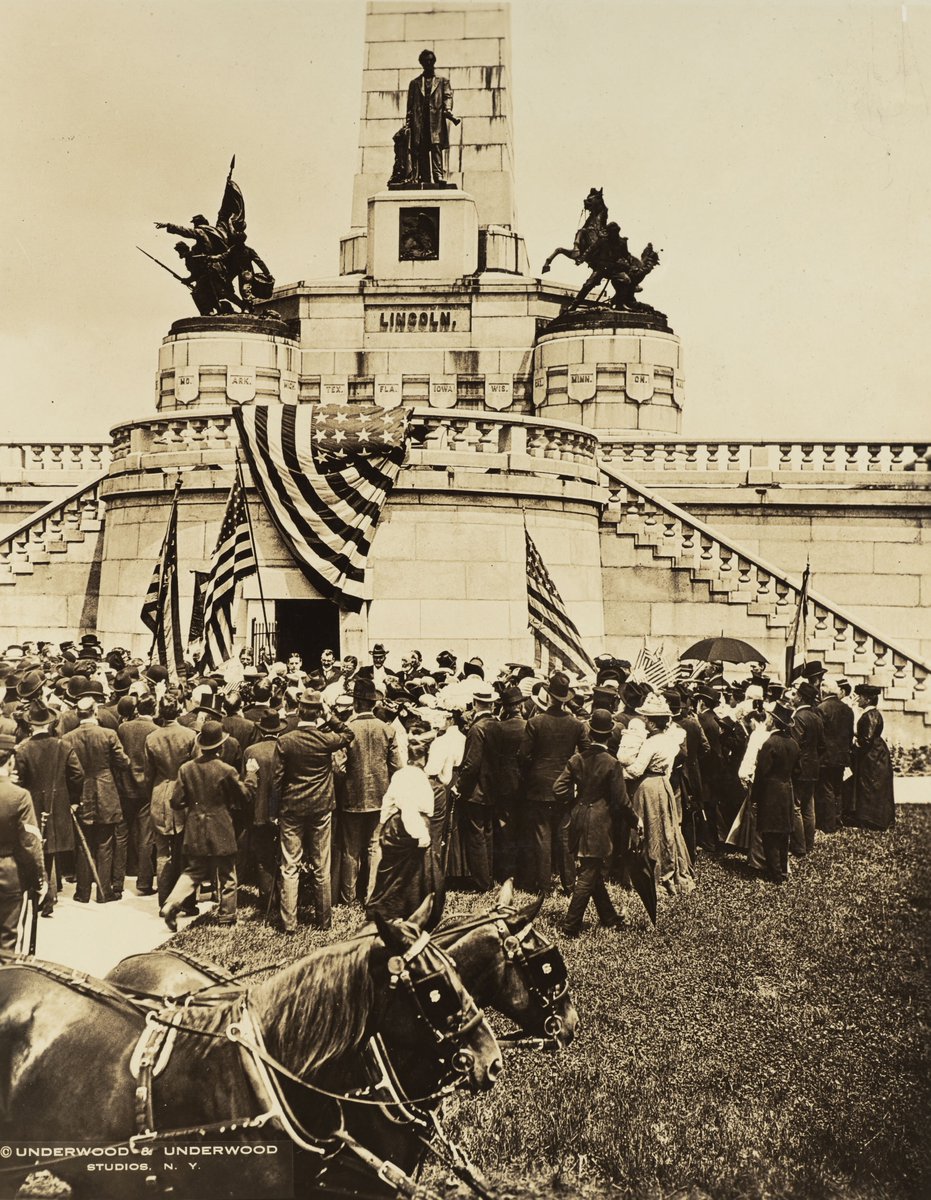
#OTD in 1903, Theodore Roosevelt stood at Lincoln's Tomb in Springfield, Illinois — and used the moment to say something he believed to his core.
Roosevelt noticed that the guard around Lincoln's tomb was made up of African American soldiers, and it moved him. He had served beside Black troops at Santiago in Cuba five years earlier, and he never forgot it. Standing there, he said: "A man who is good enough to shed his blood for the country is good enough to be given a square deal afterward. More than that no man is entitled to, and less than that no man shall have."
That phrase — the square deal — became one of the defining ideas of his presidency. It wasn't a promise that everyone would succeed. It was a promise that everyone would get a fair chance and an honest hand: no crookedness in the dealing.
There was real weight in saying it on that spot — Lincoln's tomb, in Lincoln's hometown, with Lincoln's legacy of union and freedom all around. Roosevelt was placing his own creed in that long line, and tying it directly to the men who had earned it under fire.
It was the next-to-last day of a 14,000-mile journey. Of all the hundreds of things he said on that tour, these are among the words best worth remembering.
#OTD #OnThisDay #TheodoreRoosevelt #SquareDeal #Lincoln #DareGreatly
2
25
94
2,559
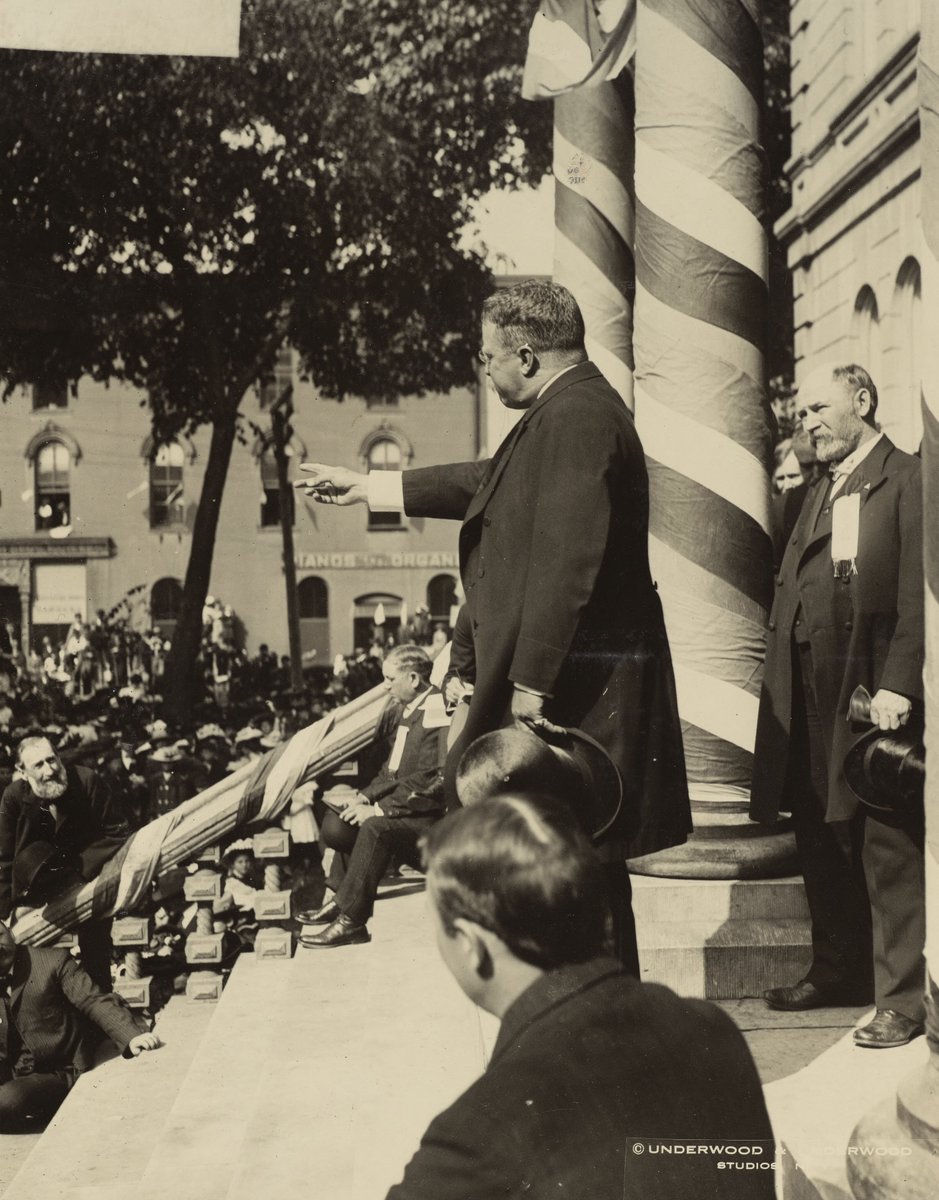
#OTD in 1903, Illinois turned out to see the President.
Theodore Roosevelt's Western Tour was nearly over, and June 3 was an Illinois marathon: Freeport, Rockford, Rochelle, Aurora, Joliet, Dwight, Pontiac, Lexington, Bloomington — a string of towns where crowds gathered at the depot to catch a few minutes with the man on the back of the train.
At Bloomington, Roosevelt talked about the things on his mind that spring — the lessons of the Spanish-American War, the building of a modern navy, and above all the character of the ordinary citizen. He had a knack for making big national themes feel personal: the country, he liked to say, would rise or fall not on its leaders but on the everyday honesty and grit of its people.
Picture it from the platform side: a farm family who'd driven in by wagon, kids hoisted on shoulders, the train hissing to a stop, and then that famous voice and flashing grin filling the space for five minutes before the wheels rolled on toward the next town.
By the next evening he'd be back in Washington. But days like this one are how a president in 1903 actually reached the people. No microphones. No screens. Just a train, a railing, and a crowd.
#OTD #OnThisDay #TheodoreRoosevelt #Illinois #WhistleStop #DareGreatly
9
37
694
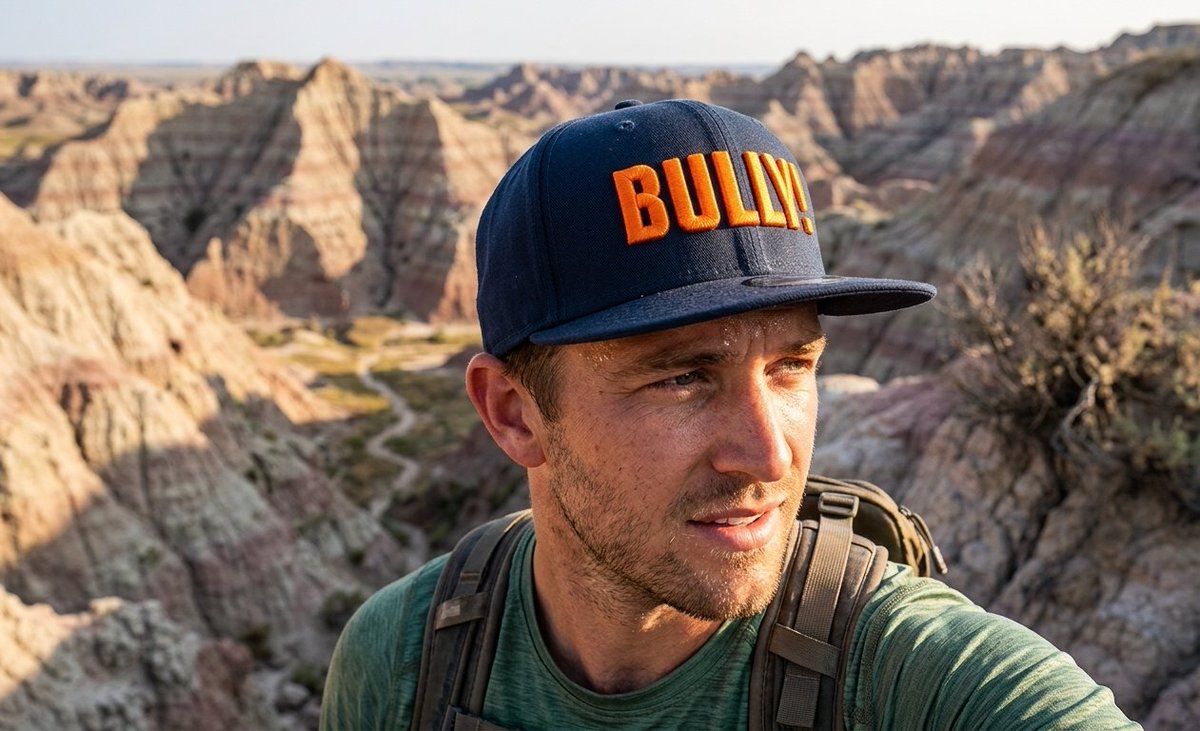
"Bully!" was Theodore Roosevelt's all-purpose word for excellent, first-rate, the very best — and he loved it so much he gave us a phrase we still use today. He called the presidency a "bully pulpit": a tremendous platform to rally people around big ideas. Bully meant good. The bully pulpit meant doing good, out loud.
Put that energy on your head. The Authentic Bully! Hat in navy is 100% cotton with a structured high crown, a flat bill, and a 7-position snapback for a sharp custom fit. Bold word, bold look — exactly the point.
Wear it loud. Every purchase supports the Library's own bully pulpit: telling T.R.'s story to the world.
🔗 shop.trlibrary.com/products/…
#TheodoreRoosevelt #TRLibrary #BullyPulpit #Bully
3
20
588
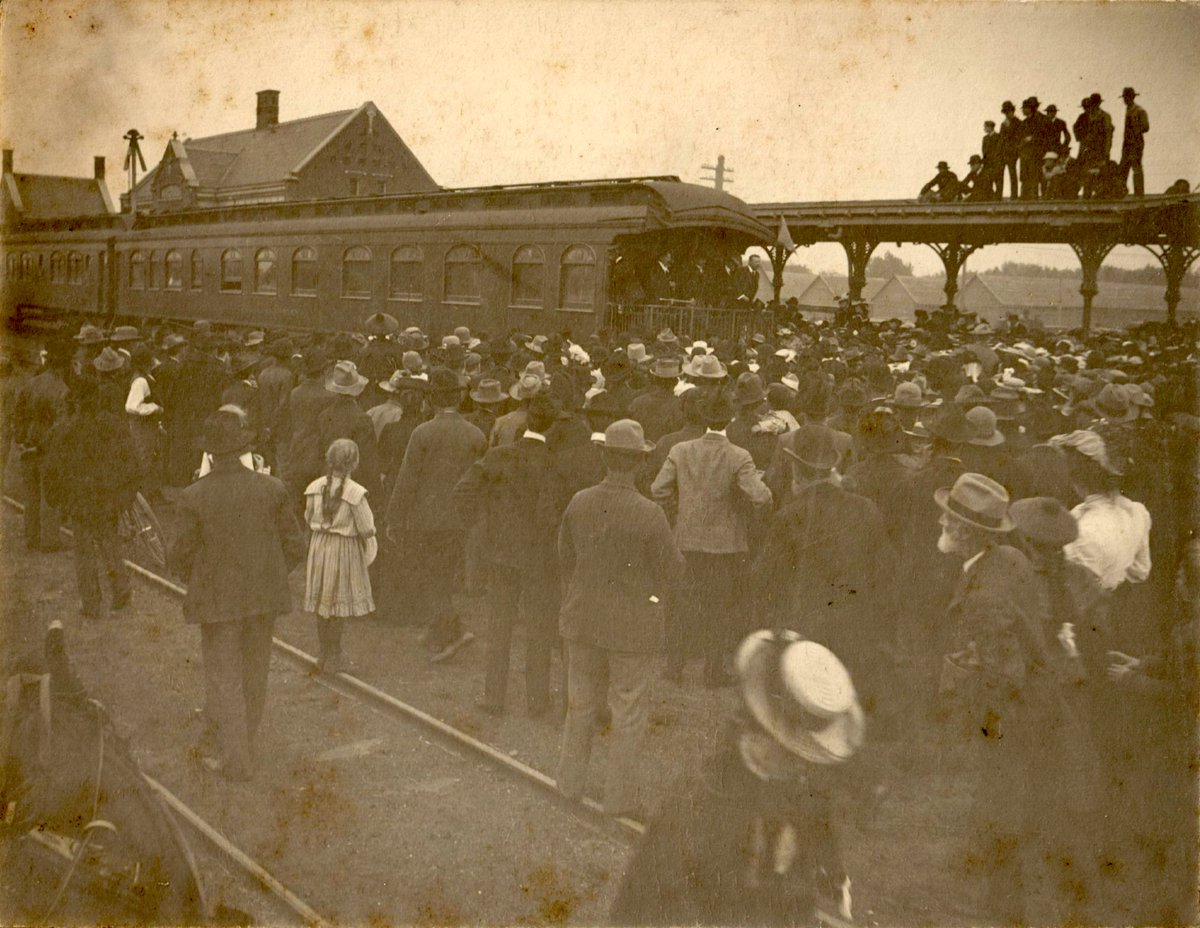
#OTD in 1903, the presidential train was rolling across Iowa on its way home.
Theodore Roosevelt had been gone from Washington for some nine weeks, covering roughly 14,000 miles by rail — the Badlands, Yellowstone, the Grand Canyon, the redwoods, the Pacific. Now the long loop was closing. June 2 alone carried him through Denison, Fort Dodge, Cedar Falls, Waterloo, and Dubuque.
These were "whistle-stops": the train would slow, a crowd would press up to the back platform, and the President would speak for a few minutes from the rear railing before the wheels turned again. He gave hundreds of these talks on the tour — sometimes seven or eight in a single day.
At Denison, Roosevelt didn't dwell on scenery. He spoke about the hard season the country was having — floods and storms that had battered the heartland — and about the steady virtues he returned to again and again: honesty in public life, fair dealing, and the plain decency of ordinary citizens helping one another through trouble.
It's a reminder that the bully pulpit wasn't only marble halls and grand occasions. Sometimes it was a man on the back of a train, hat in hand, talking straight to the people who came out to meet him.
#OTD #OnThisDay #TheodoreRoosevelt #Iowa #WhistleStop #BullyPulpit #DareGreatly
4
19
631